Category Archives: online courses

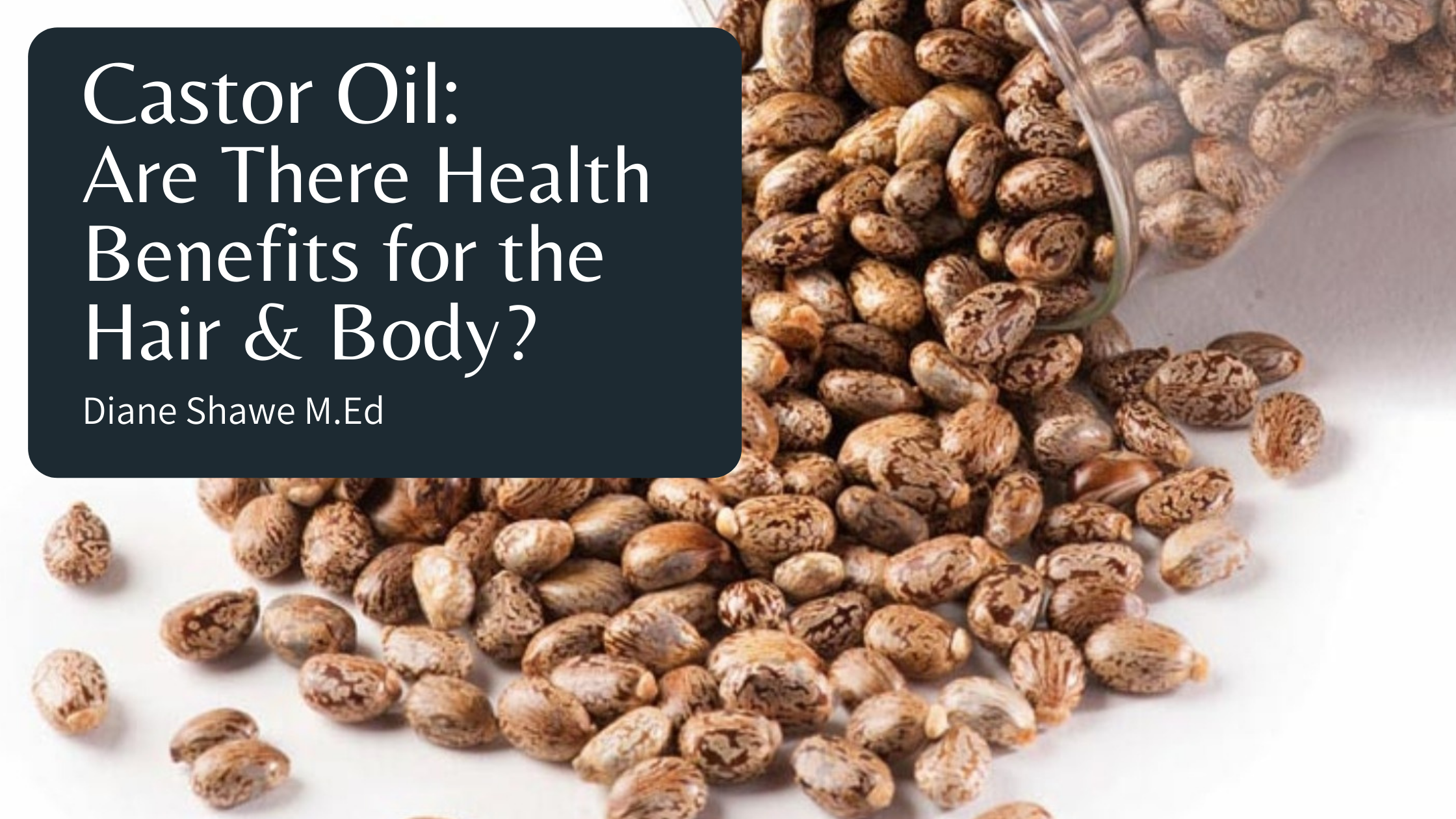
Castor Oil: Are There Health Benefits for the Hair & Body? by Diane Shawe

Don’t forget to follow my blog http://www.needahairmakeover.blog

I assist various clients from various backgrounds to overcome or disguise hair loss or damaged hair challenges. Most of them want to learn how to stimulate faster, stronger healthier hair growth. There are many hair growth products in the market place but, I am going to take a look at Castor Oil in particular today, mainly because it is a natural product and not many people understand it’s properties.

Castor oil is a thick, odorless oil made from the seeds of the castor plant. Its use dates back to ancient Egypt, where it was first used as lamp fuel and later for medicinal and beauty treatments — Cleopatra reportedly believed the oil would brighten the whites of her eyes.

Today, most of the world’s castor oil is produced in India. Modern research backs up some of its traditional uses, including laxative effects, anti-inflammatory properties, and the ability to help induce labor. 

While studies continue to investigate other potential health benefits, castor oil is considered safe if used as directed, and can be found in a range of skin and hair care products sold today. Pure castor oil is also available at many specialty health stores. 

You can put the oil directly on your skin and scalp or take it orally in small amounts. Some people also make castor “oil packs.” Castor oil packs are made of cloth that is soaked in castor oil and applied to affected areas. Because of its potency, castor oil is not used in cooking or added to food. 

Firstlys we must outline that there are two types of castor oil available.

• yellow castor oil, made by cold pressing fresh castor beans
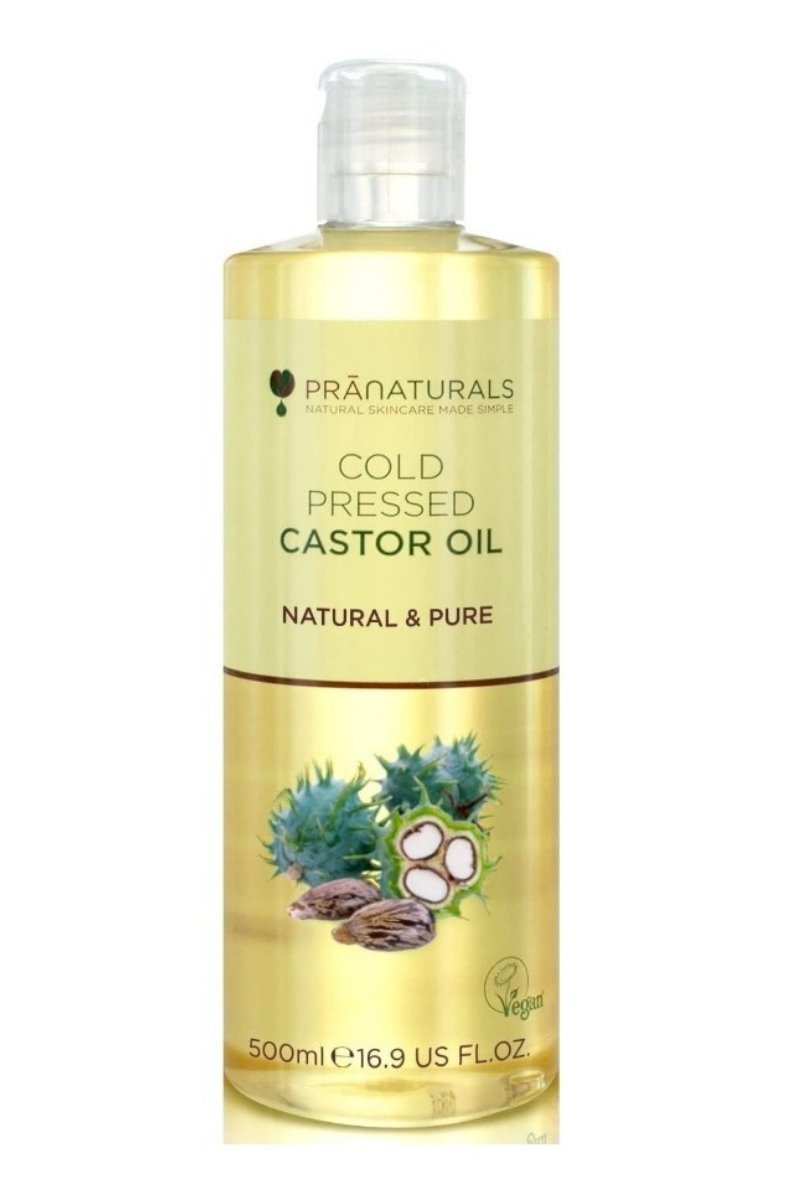
Click to purchase

• black castor oil, made by roasting the castor beans and then using heat to extract the oil

Click to purchase

Further on in this article we will outline the differences, uses, benefits and risks.

Nutrition Information

A one-tablespoon serving of castor oil contains: 

• Calories: 120

• Protein: 0 grams

• Fat: 14 grams

• Carbohydrates: 0 grams

• Fiber: 0 grams

• Sugar: 0 grams

Castor oil is a good source of: 

•  Vitamin E

•  Omega-9 f atty a cids

•  Omega-6 f atty a cids

More than 90% of castor oil’s fatty acid content is ricinoleic acid. Research shows that this omega-9 has pain relief and anti-inflammatory effects. When applied to the skin may help relieve issues like joint pain and menstrual cramps.

Potential Health Benefits of Castor Oil

Castor oil is a common ingredient in many beauty products. It’s rich in essential fatty acids that moisturize the skin, and research continues to study how their properties may be effective in treating common skin conditions. 

Castor oil has also been used to help pregnant women with delivery for centuries. In fact, a survey from 1999 found that 93% of midwives in the U.S. used castor oil to induce labor. While further research is needed, one study found that castor oil initiated labor in 91% of women with little to no childbirth complications. 

Other potential health benefits associated with castor oil include: 

Laxative Properties

One of castor oil’s most traditional uses is to stimulate digestion, relieving temporary constipation. Modern research has found that this effect is due to the oil’s high levels of ricinoleic acid, an omega-9 fatty acid that acts as a natural laxative. 

Anti-Inflammatory Effects

Studies show that castor oil’s ricinoleic acid reduces swelling and pain caused by inflammation. Research suggests that, when applied to the skin, castor oil may reduce arthritis symptoms more effectively than prescription topical treatments. More studies are needed to confirm this effect in humans.

May Heal Wounds

Castor oil’s fatty acids are natural humectants, substances used to moisturize the skin by preventing water loss. This effect can promote good skin health, relieve dryness, and soothe skin inflammation.

It may also have the potential to accelerate wound healing. Castor oil is a triglyceride that has antibacterial and antimicrobial properties. Research shows that, when applied to the skin, it may prevent infection, reduce inflammation, improve localized blood flow, and shed damaged skin cells — all of which help skin’s healing process.

We can help make your hair dreams come true

Treats Some Skin Conditions

Castor oil can benefit overall skin health, but may treat specific skin conditions as well. Though there’s a lack of clinical research, its combination of antibacterial, anti-inflammatory, and moisturizing effects is thought to help treat some causes of acne. One study showed that castor oil also fights fungal infections, which may help relieve hard-to-treat fungal acne. 

Other studies have found castor oil helpful in the treatment of melasma, dandruff, and ringworm. 

Potential Risks of Castor Oil

When applied to the skin, castor oil is considered safe for most people to use. However, its dermatological effects are still being studied, so be sure to follow your doctor’s advice when treating any skin conditions.

If you take it internally, castor oil’s potent fatty acids can pose health risks. Castor oil is a powerful laxative. It is recognized as safe by the U.S. Food and Drug Administration as a way to relieve temporary constipation, but it isn’t suitable for long-term treatment. Use castor oil in small amounts and be sure to consult with your doctor to make sure it’s safe for you.    

What is Ricin

Castor beans naturally contain the poison ricin. If you chew and swallow castor beans, ricin can be released and cause injury. Ricin is also in the waste that is produced in the manufacture of castor oil. Castor oil does not contain ricin.

The Centers for Disease Control and Prevention (CDC) suggests that it is highly unlikely to be intentionally exposed to ricin unless you were to actually eat castor beans. The CDC also indicates that ricin has been the focus of medical experiments to kill cancer cells.

Some health risks associated with castor oil use include:

Allergies

Some people may be allergic to the castor plant and experience itching, swelling, or rashes when using castor oil.

Physical Discomfort

Ingesting too much castor oil can cause nausea, cramps, dizziness, and muscle weakness. Use it as advised by your doctor and don’t take it on an empty stomach. 

Pregnancy Concerns

Because castor oil may help induce labor, pregnant women should avoid it. There is also a lack of research on its effects on infants, children, and breastfeeding women. 

Medication Interactions

If taken with diuretics, adrenal corticosteroids, or licorice root, castor oil may reduce the potassium content in your body to dangerously low levels.

Overdose

Taken orally, large amounts of castor oil can be poisonous. Symptoms of overdose include abdominal cramps, chest pain, and shortness of breath. Use castor oil as directed to avoid unintentional overdose. 

Digestive System Damage

Long-term laxative use can cause damage to your digestive system and can even cause electrolyte abnormalities or dehydration. While castor oil can provide occasional constipation relief, you should talk to your doctor to discuss treatment options before consuming it

Using Castor Oil for Hair Growth

The most popular oil for hair growth is Black castor oil, which is made by roasting the castor beans and then using heat to extract the oil

Read a related blog

Because the method of starting with roasted beans was developed in Jamaica, black castor oil is often referred to as Jamaican black castor oil.

There are, however, many people who, supported primarily by anecdotal evidence, feel that using black castor oil on their hair promotes hair health and hair growth.

One way that proponents of black castor oil support their position is by aligning it with the benefits of other essential oils.

Although there are indications that many oils, such as peppermint oil (according to a 2014 studyTrusted Source) and lavender oil (according to a 2016 studyTrusted Source), have potential as hair growth-promoting agents, there is a lack of qualified studies on black castor oil and its effect on human hair.

• Benefits

• How to Use It

• What to Look For

• Side Effects

• Precautions and Concerns

Castor oil is often praised as a natural solution for hair growth. An age-old remedy long used in traditional medicine, castor oil is said to moisturize the scalp, ease dandruff, and leave your hair smooth, strong, and shiny.

Sourced from the castor bean, castor oil is rich in ricinoleic acid—a type of fatty acid known to fight inflammation.1 When applied to the scalp, it is thought to promote healthy hair growth and prevent hair loss.

This section discusses the benefits of castor oil for your hair along with how to use it. It also covers what to look for when choosing a castor oil product and the possible side effects you may encounter.

Benefits

Some of the claims you may have heard about castor oil’s benefits for hair include:

• Castor oil increases blood flow to the scalp, which promotes healthier hair.

• Applying it just once a month can boost hair growth up to five times the usual rate.

• Castor oil can moisturize a dry, irritated scalp.

• Castor oil’s antibacterial and antifungal properties can reduce dandruff.

There is very little evidence to back up the claims that castor oil specifically can improve hair health and growth.

There is, however, evidence that individual nutrients in castor oil, including vitamin E (tocopheryl acetate), increase blood flow to the scalp and promote hair growth. This explains why vitamin E is so commonly used in hair loss products.2

Castor oil is also a potent antioxidant with anti-inflammatory properties. Antioxidants prevent free radicals from damaging the body’s healthy cells—a process known as oxidative stress that leads to hair loss.3

Additionally, castor oil contains omega-6 fatty acids—a type of essential fatty acid that promotes hair growth and reduces inflammation in the hair follicle.4

Recap

There is no scientific evidence that applying castor oil to your hair can boost hair health and growth. More research is needed, though, since specific nutrients in castor oil, like antioxidants and vitamin E, are well known to have these effects.

 Learn How and Why Hair Forms and Grows the Way It Does

How to Use It

If you’re interested in using castor oil for hair growth, try rubbing just a few drops of the oil into your scalp. You can also massage a few more drops into your hair’s midsection and ends. This may protect against breakage and improve your hair’s texture.

Castor oil is heavy and very sticky, making it difficult to remove from your hair. It’s best to dilute it with other natural oils like coconut or jojoba. This can also tone down the scent of castor oil, which many people find unpleasant. Simply mix one part castor oil with two parts of another “carrier oil.”

There are no exact guidelines for how long you should leave castor oil on your hair. Leaving it in too long can actually dry out your hair and scalp, though, so it’s best to wash it from your hair after two hours or so.

Many hair care experts recommend using castor oil no more than once a week. Using it more frequently than that can cause buildup and lead to issues like matting.

What to Look For

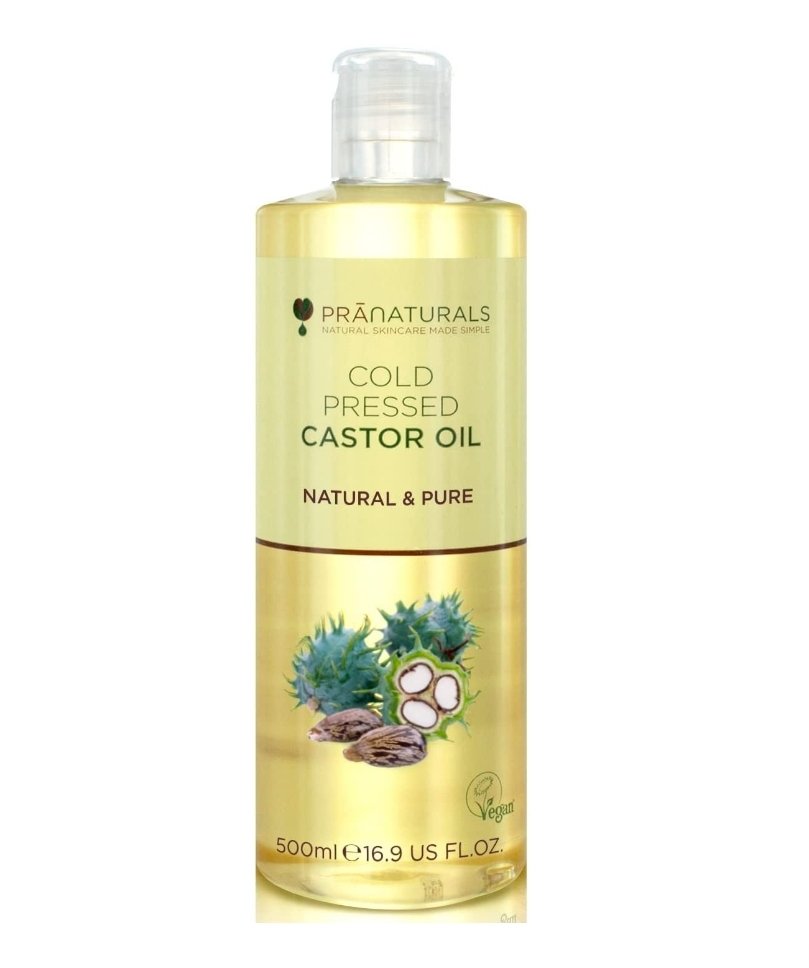
When shopping for castor oil, you might see some products that say “cold-pressed” on their labels. This means the castor seeds are pressed into oil without the use of heat or harsh chemicals. Many people say that cold-pressed oils are the best quality and more nutrient-rich than those processed with heat.

One of the most popular castor oil products for hair care is Jamaican black castor oil. This variety is made with roasted castor beans and the ash produced by the roasting process. Jamaican black castor oil is said to be especially good for thick, dry, and/or coarse hair.

Like any oil, castor oil has a shelf life. Once opened, it can start to go rancid after about one year, so keep that in mind when choosing a product and storing it at home.

Side Effects

There’s some concern that using castor oil as a hair treatment may lead to acute hair felting—a rare disorder in which the hair becomes tangled into a hard mass. Since the condition is irreversible, the only solution is to cut off the affected hair.5

It should also be noted that consuming large amounts of castor oil can be extremely harmful and trigger a number of adverse effects, including:

• Abdominal cramps

• Diarrhea

• Dizziness

• Fainting

• Hallucinations

• Nausea

• Shortness of breath and chest pain

• Skin rash

• Throat tightness

Applying castor oil to your hair shouldn’t cause these problems, but make sure that you or others don’t accidentally swallow it.

Precautions and Concerns

Castor oil can stain your clothes and towels. Take care to cover your head with a shower cap, an old t-shirt or towel until it’s time to wash your hair. This will prevent the oil from dripping onto your clothes or other items. Keep in mind that your hair may require two applications of shampoo in order to completely remove the castor oil.

If you’re thinking of using castor oil as a remedy for hair loss, remember that hair loss may be a sign of an underlying health problem. Therefore, it’s crucial to talk to your doctor as soon as possible if you notice unexplained hair loss.

Summary

Castor oil is popular among natural beauty enthusiasts, who claim that applying it to your hair can boost your hair’s health, shine, and growth. There is no scientific evidence to support these claims, although some nutrients in castor oil, like antioxidants and vitamin E, are known to be beneficial for hair health.

A Word From Diane Shawe

Hair loss is not just a symptom of getting older. There are many medical conditions that can lead to hair loss, including thyroid disease and alopecia areata. You can also lose noticeable amounts of hair during periods of severe mental or emotional stress.

If you find yourself losing large clumps of hair or you’re suddenly developing bald spots, get in contact with your doctor. When an underlying health condition is to blame, applying castor oil won’t help.

Types of Castor oil and Uses and

CASTOR OIL seeds

Castor oil, also known as a #1 grade Castor oil for products like soap making and general use- 

Castor oil is a widely used renewable, bio-degradable and eco-friendly product. It is useful in a wide range of D-I-Y applications including: Soap and lotion making, blending of lotions, salves, creams, shampoos, and more. It is  Vegetable Based, has no animal derived products, and there is No Animal Testing on our Castor Oil. It is GLuten free, and contains no Wheat, no Peanuts, no dairy, egg, fish, and is also solvent free .

On popular way to use castor oil is in soapmaking. It is a very useful, beneficial oil in soap making. It is typically used in relatively low percentages depending on the over-formulation and what other oils are used. The addition of the right amount of pure castor oil may enable soap to trace quicker, and make better soap. Plus. castor oil adds the benefit of better and more stable lather. Castor oil is an excellent moisturizer as it attracts and holds moisture to skin. Check your superfatting chart. Sometimes using castor oil will require more sodium hydroxide since it has a high ricinoleic acid content. In softer products, like shampoo bars and skin-care products it is excellent. In the right combination with over vegetable oils, however, it makes a very nice moisturizing and wonderfully emollient, hard bar of soap. Try castor oil in salves, balms, shampoos, hair oils, and other thick emulsions for the skin and hair. It is in all kinds of specialty formulations as a natural emollient and applied to the skin and hair as a softener.(keep away from eyes!)

Many customers tell us they use castor oil as a mole repellant in their yards. They blend it in  hose end yard sprayer  and spray in the mole holes to rid it of those pesky critters. One recipe passed along to us says to blend in 1 tablespoon of pure Decyl Glucoside with 12- 14 Oz of Pure Castor Oil. For a pump type sprayer add 1 Oz of Decyl Glucoside surfactant to every 32 Oz of Castor oil and then the balance of water up to 2 gallons to treat the mole holes. Spray at least half a gallon in and around the holes. Retreat as necessary. * In tougher situations try adding 2 Oz of natural NEEM OIL to the blend. This will also help with other pesky insects too.

Did you know that pure castor oil is a natural product, made from the beans of the castor plant which can be grown in any tropical region?. The world’s largest producer of castor oil is India, with China and Brazil being a far-distant second and third place.

It’s reported that castor Oil is one of the oldest,most versatile ingredients in use. The evidence of the use of castor oil  goes all the way back to ancient Egypt. It  has been found in tombs over 4,000 years old. There are other documented uses of castor oil in India, China and other ancient sites that date back thousands of years. In ancient times in the Netherlands, it was called “Wonder Oil” and was thought to be a cure for a multitude of ailments.

Castor Oil still has many useful applications today,from us as a cosmetic ingredient, to an industrial chemical and a specialty chemical. It is also a popular natural polyol, it is used in an increasing number of specialty applications, replacing traditional petroleum based polyols. Another advantage of Castor Oil is that it is not made from a food source so it is really not subject to the controversies that can arise with other plant based oils that are more traditionally used as a food source.

• CASTOR OIL INCI Name: Ricinus Communis Seed Oil

• CAS no: 8004-79-4

• EINECS no.: 232-293-8

What is SULFATED TURKEY RED CASTOR OIL

Sulfated Castor oil, is also called “Turkey red” castor oil

Sulfated Castor oil CAS 8002-33-3 Formula: C18H32Na2O2S

Sulfated Castor oil, also known as “Turkey Red” has a wide range of uses including: Soap and lotion making, blending of lotions, salves, creams, shampoos, and more. It is the only castor oil that completely disperses in water and will not leave an oily ring around the tub when you use it in your products to emulsify colors, fragrance and essential oils.

Features of Sulfated Castor/ Turkey Red

• Turkey Red Castor oil completely disperses in water.

• Use it to emulsify fragrance and essential oils so they disburse completely in other water-based products

• Use for superfatting liquid soap so it remains transparent

• Excellent humectant & moisturizing properties

• Has a typical sulfated castor oil odor but is easily disguised in formulations using typical fragrance and essential oils.

Sulfated castor oil. also known as Turkey Red oil is very useful since it will completely disperse in water. It contains all of the same humectant and moisturizing properties of Cosmetic Castor Oil but in a water soluble form. Castor Turkey Red is a common addition to bath products, natural soaps, lotions etc. Try using it to formulation balms, shampoos, hair oils, and other thick emulsions for the skin and hair.

Sulfated Castor Oil is also seen in formulations as a natural emollient and applied to the skin and hair as a softener. (keep away from eyes!)

PEG 40 HYDROGENATED CASTOR OIL

PEG 40 Hydrogenated Castor oil –  is also a very popular derivative of castor oil

PEG 40 Castor oil, also known as Castor oil ethoxylate (POE 40) is a Multifunctional Oil-in-Water Emulsifier, surfactant, foam booster.

PEG 40 Castor oil is a multifunctional non ionic surfactant used as fragrance builder and fragrance solubilizer, emulsifier. PEG 40 can be incorporated in to a formulation to help solubilize PLUS act as a foam booster, which benefits the formulator by possibly eliminating a secondary surfactant, or lessening the use of a secondary surfactant for example.

In some formulations it is a good replacement for polysorbates used to incorporate fragrances and oils in to water based blends like shampoos and body washes. Whether you are making creams and lotions, floral waters, room and fabric sprays, body washes, shampoos, even bath bombs, and need a good solubilizer for colors, fragrances, give PEG 40 Castor oil a try.

It is a safe, easy to use, vegetable derived non ionic surfactant, and serves a number of useful purposes.

Out side of uses in the personal care formulations, ethoxylated castor oil POE 40 is found in lubricants, specialty formulations that have applications in metals, textiles and other areas too.

Non Ionic – Compatible with non-ionic, anionic, and cationic ingredients and products.

Useful as a surfactant (foam booster.) As an emulsifier, solubilizer, and foam booster.
Miscible in both oils and in water
Use in a heated oil, or in cool down phase at 1% to 10%, although it’s safe to use up to 100% (Neat) on skin.

Cloud Point: 185°F (85.0°C) 

Black Castor oil (Jamaican Black Castor oil)

Cold pressed Black Castor Oil (Jamaican Black Castor oil) also known as JBCO

Jamaican Black Castor Oil, JBCO for short, is a liquid extracted and cold-pressed from roasted seeds of the castor plant, known by the botanical / latin name Ricinus communis Seed

The difference between “regular ” castor oil and Jamaican Black Castor oil are that the seeds are roasted before the liquid castor oil is extracted from the seeds, This roasting process means that the oil has a dark burnt orange to reddish-brown appearance. It also has a different fragrance – it is a roasted nutty fragrance.

Roasting the seeds  also raises the pH level of Black Castor Oil which results in a preferred ingredient for making many hair and cosmetic formulations.

Black Castor Oil, or JBCO is very popular in skin and hair care products and formulations. Many cite that the JBCO improves hair growth, and use it to massage in to the hair. Other sources cite that the black castor oil may improve circulation, to help stimulate follicles. Products made with the black castor oil often advertise that it helps moisturize the hair and eliminates hair  split ends, and it is used as an alternative to, or even in addition to traditional hair conditioners.

Typical Uses: Skin and Hair Care, hair conditioning, personal care products, Medicinal type topical products, Ayurveda

WHERE TO BUY CASTOR OIL 
8 Reasons to Drink Alkaline Water by Diane Shawe

The effects of drinking Alkaline water on our body

We’ve all heard that drinking water is good for us and we’re often told to drink around 2 litres a day. But all waters are not equal. What is good quality water and how can it norish the body?

I work with a lot of clients who are experiencing hair loss, low energy, joint aches and pains and even weak nails. I had those same issues until I started to explore the benefits of drinking good quality water. What I mean by this is alkaline water? 

I was reading and watching a lot of healthy eating books and videos by Dr Sebi  https://drsebiscellfood.com/ and he kept mentioning Alkaline foods and drinks. So I set out to find out how I could drink Alkaline water everyday effortlessly and came across pH Replenish which I will introduce you to later.  However what I  really wanted to do is share the benefit of drinking alkaline water.

So does alkaline water have even more health benefits than regular tap or bottled water?

Firstly, why is drinking all that water so good for us? 

Over half of our body is water! Our cells, organs and bones all need water to function properly. In fact, our brains and hearts are made up of about 70% water.

Although drinking water doesn’t seem very glamorous, if we become dehydrated we can quickly begin to lose concentration and focus, become lethargic and have sugar cravings. In the long term, dehydration can result in organ failure and humans can only survive for 3 or 4 days without water.

OK, So water is good for us. But what’s the difference between regular water from the tap and alkaline water?

Regular tap water usually has a neutral PH of 7 (although it can be lower) whilst alkaline water has a PH over 7. 

7 is neutral and any lower than 7 is acidic. As an example, corrosive liquids like lemon juice have a PH of around 2.5.

Water usually has a natural PH higher than 7 which comes from the minerals and salts found in the earth. But as the water passes through our man-made pipes and water distribution systems it loses a lot of it’s minerals and as a result the PH levels drop.

The blood in our bodies has a PH around 7.4 and the systems in our bodies work hard to maintain that level. Many alkaline water fans believe that drinking filtered water with a higher PH means that we are giving our bodies a helping hand to keep to that healthy PH of 7.4.

Are there any other advantages to drinking alkaline water? 

1 Reducing acid levels within our bodies

It’s widely believed that drinking alkaline water can help to reduce or balance the acid levels within our bodies.

Having too much acid in our body can result in a long list of issues including fatigue, confusion, joint pain and inflammation, headaches, an elevated heart rate and digestion problems. This ‘acidosis’ occurs when our kidneys cannot remove all the excess acid from our body.

Acid in our body can also strip important minerals like calcium and magnesium from our bones which can lead to diseases like osteoporosis.

Cancer is also known to thrive in acidic environments and struggles to survive in alkaline environments. The opportunity to reduce acid in the body could be a significant benefit of drinking alkaline water for many people.

2 Anti-oxidant effects

Alkaline water is high in anti-oxidants. Anti-oxidants are great for our body and our overall health. They help us to keep repairing our cells to keep us looking and feeling fit and healthy.

3 Anti-aging

Another benefit that drinking alkaline water can have for our bodies is an anti-ageing effect. A 2016 study on mice which ran for three years suggested that drinking alkaline water increased their life span significantly.

4 A treatment for acid reflux

A report by Dr. Jamie Koufman concluded that alkaline water with a PH of 8.8 can work as an effective treatment for people who suffer from acid reflux. Alkaline water has the ability to neutralise the stomach acid causing this unpleasant disease.

5 Hydration

The molecules in alkaline water are smaller than in our regular tap water. This means that our bodies can absorb alkaline water more easily without that bloated feeling that regular water can sometimes give you.

6 Reducing high blood pressure

One study carried out in Shanghai discovered that drinking alkaline water for 3 to 6 months brought high blood pressure, high blood sugar and high blood lipid levels back to normal.

7 Decreasing blood thickness

A paper Weidman et al found that drinking alkaline water after exercise helps to thin out the blood faster then normal water. This is useful to aid recovery after exercise and could be potentially life saving for individuals suffering from thickened or hardened arteries who want to improve their fitness with less risk.

8 Preventing obesity

Many alkaline water enthusiasts report that it helps with weight loss. Backing up this claim, a 2013 study found that when obese mice drank alkaline water for 7 weeks they lost weight compared with mice drinking regular water but eating the same diet.

The benefits of drinking alkaline water are very promising and many people who drink alkaline water report considerable health benefits. However, many of these studies and reports have only been carried out in labs or on a small scale so it would be nice to see more research demonstrating the many benefits of alkaline water.

Are there any side effects to drinking Alkaline water?

As with anything, if you consume too much there can be negative effects. Although it is extremely unusual, an over consumption of alkaline products could lead to alkalosis. Having too much alkaline in the body can bring on the symptoms of nausea and vomiting. However, if we drink alkaline water alongside a healthy and varied diet we would be very unlikely to experience this effect.

Slowly increasing the amount of alkaline water that we drink allows our bodies to adapt to the increased mineral content and higher PH and reduces the likelihood of any unwanted side effects.

How can I get alkaline water in my own home? 

Installing a water filter is the easiest way for us to access unlimited alkaline water and Invigorated Water offers a variety of alkaline water filter systems to suit every home.

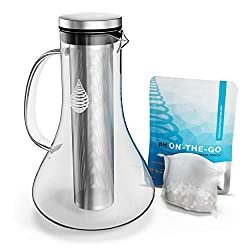
or you could start off with a pouch  https://amzn.to/3DtG5Aa or water pitcher.

Counter top filters for kitchens with plenty of space hold enough water for the entire family. Smaller pitcher filters will fit easily into the fridge door where you can keep them cool. 

Order from this link https://amzn.to/3GgX7mU

Or, there faucet filters are a great option to easily provide alkaline water in your home and are easy to install.

If you are on the go and want to make sure that you have your alkaline water with you, try one of our bottle filters. Not only do they make your water taste better, they also look great.

You can also benefit from using alkaline water in your shower. 

When you shower, water is vaporized into steam which you inhale as you shower. By installing a shower filter such as the PH Rejuvenate shower head filter,  which increases the PH of your water you’ll know that you are breathing in safe, alkaline steam rather than potentially harmful, acidic water.

Showering with alkaline water can also be good for your skin. One study found that applying alkaline water to the sun damaged skin of mice helped to reduce the damage. Alkaline water has an anti-inflammatory effect that was also seen in people bathing in high PH spring water. Many of our customers report that their hair and skin feels noticeably softer and smoother after showering under our shower head filters.

Another advantage of the Invigorated Water filters is that they can remove any unwanted toxins, chemicals and heavy metals from our drinking water whilst adding in healthy minerals like magnesium and calcium. 

Pollutants often work their way into our water supply and can be missed by our government water treatment stations, particularly if our water is carried through old pipes, across long distances.

Increasing the PH of your drinking water to make it alkaline, removing pollutants and adding in the healthy minerals allows your body to thrive. By choosing to drink filtered, alkaline water you are looking after your health in one simple, easy step.

So I hope you found this article useful, I have been drinking alkaline water for the past 18 months and have seen and felt the difference.

Award winning Hair Extensions Salon

A Dudley Top Hair Extensions Salon Reaches Finalists for the Inaugural Great British Hair & Beauty Awards 2021

Worthy contenders of the UK get shortlisted in the first ever Great British Hair & Beauty Awards 2021 after the Lockdown

HARD WORK REALLY PAYS OFF STATES DIANE SHAWE

Following the success of The Hair & Beauty Awards in Scotland, England, Northern Ireland and Wales, Creative Oceanic are proud to present The Great British Hair & Beauty Awards.

The Great British Hair and Beauty Awards 2021 are an exclusive celebration of the hair and beauty gurus that operate in this country. Following the overwhelming response from the public and the phenomenal number of nominations received, the full list with finalists from the South of the UK has now been revealed.

The glamorous ceremony will take place in November 2021 and will celebrate professionals known for their perfection that have gone above and beyond in the salon and made a real difference in the industry with their excellent services.

Diane Shawe owner of Need a Hair Makeover Hair Extensions & Hairloss Specialist Salon states “To be named as a finalist highlights how hardwork and commitment can pay off. With hundreds of capable candidates for each category and a panel of judges looking at the finer details, just to make the shortlist is an outstanding achievement. What also makes it more important is the fact that we have also had to deal with a pandemic and closure.”

The elegant event seeks to acknowledge and honour the talented individuals, teams and salons, whose sole aim is to provide their customers with innovative services and treatments that really work, improving their appearance and confidence.

Top beauticians, hair extensions consultants, hairstylists, freelancers and barbers amongst others will gather together to celebrate their achievements and their efforts that put in daily to leave their customers with the best of impressions. The black-tie ceremony promises to be one of the most memorable celebrations in the industry’s calendar this year, with many accolades ready to be presented to the deserving winners.

A spokesperson for The Great British Hair and Beauty Awards, said:  “We would like to thank the public for their participation in our nomination process.

“The Hair and Beauty Awards have become a stable event over the years and aim to showcase those who have shown great commitment, professionalism, creativity and care for the client. Therefore we are so excited to host the inaugural Great British Hair & Beauty Awards 2021.

Diane goes on further to state that “No matter who you are, your background, culture, age or gender, when you have problems with your hair, you want a non invasive quick solution to the problem which can help with ones own self esteem when you feel at your most vunerable. Even those who just simple want a makeover for a wedding, special occasion, work or for personal reasons can be helped”

The Hair and Beauty Awards state that “We hope to provide a platform to thank and appreciate the work of the professionals who have pushed the boundaries in a difficult time and had the continuous support of their customers.

“We wish all the finalists the best of luck.”

The finalists of The 1st ever Great British Hair and Beauty Awards 2021 – Volume 1 in Hair Extensions Category are:

West Midlands

Mane Goddess (Nuneaton)

Hair Fusion Extensions (Oldbury)

Too Perfect Hair Extensions (Walsall)

Hairs and Graces Extensions (Birmingham)

Need a Hair Makeover Hair Extension (Dudley)

Alexander James Hair and Beauty (Halesowen)

Colabella Unisex Hair Salon.. (Bilston)

Source https://creativeoceanicblog.wordpress.com/2021/09/29/finalists-of-the-inaugural-great-british-hair-beauty-awards-2022-south-are-announced/

https://g.page/needahairmakeover

Can Technology Help With Stimulating New Hair Growth?

Every year more and more people are suffering from hair loss caused by illness, medication, stress, chemical treatments, damaged hair. We help treat and or disguise thin, short, bald patches, damaged or sensitive scalp on all hair types, gender or age.

We offer a non evasive hair regrowth treatment with a REVOLUNARY equipment known as iGrow.

If you need help to start the hair regrowth journey to restore your edges, bald patches, thin hair or slow growing hair, book a consultation with Need a Hair Makeover and let’s see what we can do.

Checkout the IGrow 12 weeks plan

iGrow’s proprietary Low-Level Light Therapy (LLLT) technology utilises a highly effective combination of red laser and LED light diodes, to stimulate and energise cellular activity causing an uptake in the natural function of the hair follicle.

This three- to six-month process treats hair thinning and loss, by effectively growing new healthy hair that is thicker, fuller and more vibrant.

Checkout our online appointment booking system. Easily book a consultation online. http://bit.ly/3CuPzuO

You may also want to read our article on How #hairloss may be linked to a disfunctional liver by Diane Shawe https://bit.ly/2ADbMN6

How to Create Trackable Social Media Links For Your Business by Diane Shawe

We can all agree tht social media plays an important part in sharing your message, services or products. But how do you start tracking what you have posted and how can it help your business, product or brand. I was researching this and have the following this to share with you.

It is important to set up a social media strategy to align with your business goals, and pulled together either paid or free social monitoring services, you’ve got one more habit to get into: tracking. From one fellow community manager to another, you know how important it is to know how one tweet performed versus another, or if one blog post rocked on one social network over another. This can only happen by having the right tracking in place.

Why Use Trackable Sharing Buttons

Not all sharing buttons are created equal, which is why you should pick sharing buttons that will give you a good signal of what’s going on in your site. You may see some insight in your analytics that tell you people visited your site, and some of them were from social. But to really know how and where your community is sharing your content, your sharing buttons should tell you.

How To Create Your Own Share Links

1) Go to http://www.sharelinkgenerator.com/.

2) Choose the social network you want people to share your content on.

3) Fill in the blanks.

4) Download a social button icon.

5) Make the icons clickable using your share link.

By using the right sharing buttons to help you see which social network is most popular among your audience, you’re going to understand your community better. Who knows? There may be a strong niche community reading your content in a social network you’re not actively engaging. These are a community manager’s dream gems to find!

Why Use Trackable Follow Buttons

Do you know, off the top of your head, how many social followers your site got for you this week? If your follow buttons were trackable, you’d be able to get this number without much digging in your analytics. And wouldn’t it rock to be able to tell your teammates you know that most of your Instagram followers came from your site? (This happened to us, actually!) As a community manager, this is the type of understanding that’ll open your eyes into exactly how your audience is engaging with your content. Discover which social networks your audience is most engaged with, and how your site is helping you drive engagement off your domain with trackable follow buttons.

Why Us Trackable Chatbots

Don’t lift a finger and still deal with your enquiries 24/7

The next big thing to hit SME’s is Chatbots Using Artificial Intelegence.
The number 1 complaint about launching and running a online business or attracting responses to a posting is generating enough enquiries to make a sale or even responding to all the enquiries within 24 hours.!

Chatbots can assist you and there is “No Need To Lift a Finger Because some of the Proven System Will Do The Work And Get You More Leads!”
The data coming out now is that more and more people are moving to online communications and shows that you need to start leveraging Chatbots to streamline customer communications, problem solving and sales.
Individuals are using messaging Chatbots for many different reasons. However, the key things your customers want from any communication is quick response, help with there enquiry, ability to make appointments or make a purchase or have a problem attended to quickly.

Click here to try it out

Why Use Trackable URLs

You can automatically generate unique hashes appended to all of your site’s pages to help you generate unique links that you can then use to push to social. Address bar sharing adds a unique set of characters to the very end of your URL that will make that URL unique. (And don’t worry, this will not negatively affect your SEO.)

The reason you’ll want to do this is if you’re trying to monitor how the same content performs on different social networks, and which messaging performed best on the same topic.

There’s nothing more frustrating than spending so much time creating awesome content, and having tons of Tweets, tiktok and instagram out there to drive traffic to your pages, and then not being able to tell which phrasing or timing actually worked best.

Go beyond the pageviews and visits by making all your site’s URLs generate uniquely. You’ll then even be able to catch where a big segment of your traffic came from.

How to embed a tweet using the Twitter website

Open Twitter in a web browser, log in if necessary, and find the tweet you want to embed.

Click the three dots at the top right of the tweet.

In the dropdown menu, choose “Embed Tweet.”

The Twitter Publish page should appear. …

When you’re done, click “Update.”

How to embed a tweet on a website using Twitter’s embed tool

Why Use Analytics

Tying all of that data together into an easy-to-read dashboard is usually the hardest part of a community manager’s job, but lucky for you, AddThis’ dashboard pulls all of this information for you in one place.

The dashboard lays out in crisp and clear graphics how all of your audience members engaged with your site, which tools they used to engage, and which content they liked the most.

Know exactly which social network is growing the most from your site, and which is being shared to the most. Know all this by just scanning your dashboard (without drowning in search queries and exported spreadsheets).

Seven Integrative Mobile Friendly Business Accounting Software/Apps by Diane Shawe

8 Advantages Of Accounting Software Over Spreadsheets

Simplified Book keeping for Businesses
  • It saves time. …
  • It instantly generates key financial reports. …
  • It syncs all your financial data. …
  • It promotes data accuracy. …
  • It produces professional-looking financial statements. …
  • It simplifies payroll. …
  • It gives detailed insights. …
  • It streamlines tax filing.

FreeAgent’s online accounting software helps small businesses, freelancers, contractors and sole traders take control of their business finances.

Excellent ★ ★ ★ ★ ☆   1,622 reviews

FreeAgent online accounting software brings everything together, from invoice and expense management to VAT, payroll and self assessment tax return filing, so you can wave goodbye to fiddly templates and spreadsheets.

Start your free trial Visit Website

  • Cancel anytimeExport all of your data if you decide to cancel
  • Help always on handAny questions you have answered quickly
  • Making Tax Digital readyFreeAgent is fully compatible with the new Making Tax Digital (MTD) for VAT rules

FreshBooks – Affordable Accounting for Small UK Businesses

★ ★ ★ ★ ☆ (613)

Recurring billing, client retainers, and real-time reports into your small business’s health and accounts? FreshBooks not only does it all, but comes in a range of affordable pricing tiers to cater to growing small businesses.
Starting at £4.40

  • 60% off for 6 months
  • Automatic billing
  • Chat with clients

Visit website

Ember – An Accounting Solution To Scale With Your Startup

★ ★ ★ ★ ★ (651)

Automated filing, tax optimisations, easy invoicing, and more, Ember powers your SME’s potential, with chartered accountants on hand to help you manage your finances with ease. Run your business – we’ll take care of the rest.
£39.00 monthly

  • Accountant Included!
  • 5 stars on Trustpilot
  • Automate your expenses

Visit website

quickbooks

QuickBooks – Accounting for Small Businesses

★ ★ ★ ★ ★ (2509)

QuickBooks smart, simple, HMRC-recognised software helps you focus on running your business. Manage taxes, cash flow, invoicing and payroll, all in one place. There’s no contract and award-winning UK-based support is free.
Starting at £6.00

  • 50% off for 4 months
  • HMRC-recognised
  • Award-winning support

Visit website

ClearBooks

★ ★ ★ ★ ☆ (219)

Excellent Trustpilot reviews! Clearbooks gives you Invoicing, Purchasing & Financial Tracking. You’ll get a cross-section of your company’s accounts. Search, sort, and filter your supplier and purchase data, and share it easily!
Starting at £9.60

  • 5 stars on TrustPilot
  • Great value for money
  • 50% off for 3 months

visit website

Sage

Sage’s industry-leading software caters to a customer base of over six million. But go back to 1981, and Sage had just begun life in a basement, focusing solely on – you guessed accounting software.
£12.00 monthly

  • Inventory management
  • 24/7 phone support
  • Easy reconciliation

Visit website

www.virtualpersonalassistance.com

10 Health Benefits You Can Gain From Cassava (Jamaican Bammy)

What I did not know about Jamaican Bammy for instance it can help with weightloss and Migraines!

jamaican bammy 10 health benefits
What is Jamaican Bammy?

I have found myself looking back at some of the specially prepared dishes my granma and mum use to prepare to find out if there was any nutritional benefits to them or just trandition.

One of the dishes I remember was fried fish served with Bammy, I found it hard to chew but my grandad and dad seemed to enjoy it immencely.

So what is Bammy?

I found out that it is made from Cassava flour which is made from a root vegitable.

Cassava also call Manihot esculenta

Cassava or scientifically called Manihot esculenta is a type of vegetable root or tubers. Cassava is a food source that is rich in nutrients. Although there are not many devotees.

The carbohydrate content in the tuber is so high that it is third, after rice and corn. Because it has health benefits, cassava is a staple food in various developing countries.

A warning about the process

However, the wrong processing of cassava can reduce its nutritional value because vitamins, minerals, fiber, and starch tend to disappear when cooking.

Cassava in it’s raw state must be cooked properly before consumption, otherwise cassava can cause acute poisoning because of the naturally occurring cyanide content in the raw state.

If not prepared properly, tubers that are rich in carbohydrates can even cause paralysis or death.

With that said, I recommend it is better to buy the flour or flat bread instead of trying to make your own!

Nutrient content in cassava

The most effective way to maintain the health benefits of cassava and the nutritional value of cassava is to boil it.

The nutritional value of cassava for a dose of 100 grams of tuber contains 160 calories of energy, 0.3 g of fat, thiamine 0.087 mg, riboflavin 0.048 ml, niacin 0.854 mg, vitamin B6 0.088 mg, iron 0.27 mg, and zinc 0 , 34 mg

Other nutrients in cassava are as follows: 38.1g carbohydrates, 1.7g sugar, 1.8g food fiber, 1.4g protein, 60g water 27mcg folate 20.6mg vitamin C 16mg calcium 21mg magnesium 27mg phosphorus 271 potassium 14mg sodium.

10 Health Benefits Obtained

The health benefits of cassava are rich in calories, carbohydrates and iron as a good source of energy.

Incorporating cassava into a controlled healthy diet menu has turned out to have many positive effects on health. 

1. Cassava loses Your weight

Cassava which is rich in dietary fiber is the right choice if you can’t wait to lose weight.

Cassava can make you feel full for a longer period of time. Thus reducing the need to constantly snack on food so as to suppress weight gain.

2. Cassava cures migraines

The presence of vitamin B2 and riboflavin in tubers is useful for curing headaches and migraines. Eating cassava can help reduce constant migraine attacks.

The trick is to take 60 grams of roots or cassava leaves and soak them in water for 2 hours then make the juice. This will reduce the severity of your migraine.

3. Cassava improves digestive health

As mentioned above, cassava is rich in dietary fiber which is very beneficial for the body and its function.

Insoluble fiber helps in improving your digestive system by absorbing all the poisons stored in your intestine, and also by reducing inflammation in your digestive tract.

4. Cassava treats diarrhea

The antioxidant properties of the roots can help overcome flaccid stools.

If you suffer from diarrhea, boil the roots in water for one hour and consume them.

This will help to get rid of bacteria that cause stomach problems and reduce the symptoms of diarrhea as well.

5. Cassava improves vision

One of the other main benefits of cassava is that it is beneficial to your eye health.

Consumption of controlled cassava can help your body with the vitamins and minerals needed.

Filled with vitamin A content, cassava can help improve your vision, it can also prevent blindness or poor vision.

6. Cassava heals wounds

The whole cassava plant, namely the stems, leaves and roots are all useful in treating wounds.

Roots can help prevent wounds from becoming infected and speed healing.

7. Cassava cures fever

Cassava can be used to treat mild fever.

When boiled together with cassava leaves, it increases the ability to relieve fever. You can make potions from both of them and drink them to reduce your body temperature.

8. Cassava cleanses worms

Eating cassava can help relieve nematode lice in your stomach and intestines. Cassava roots help remove worms in your intestines and provide assistance.

9. Cassava increases appetite

Carbohydrates and fiber in cassava play an important role in regaining your appetite.

If you feel weak and have no appetite, maybe for emotional or physical reasons, try putting a few pieces of cassava into your menu.

Sart your own Hair Extensions and hairloss salon
Find us on Franchise Local

10. Cassava increases energy

Because cassava is rich in carbohydrates, edible tubers are very useful in instantly increasing your energy.

This helps improve the functioning of your brain and supplies energy.

How to cook Jamaican Bammy

Visit cooklikeajamican.com for more info

Preparation time 15m

Cooking time 15m

1 or 2 Packs of Jamaican Bammy

Jamaican Bammy is best described as a flat bread. It is traditionally eaten with Ackee and Saltfish,  Calaloo, steamed or fried fish.

There are two quick and easy ways to prepare bammy: Toasted in an oven or fried in hot oil. It’s a delicious gluten-free substitute for bread with your meal.

Instructions

1. Soaking: In a shallow dish soak 2 bammy in 1/2 cup of coconut milk or salted water. Pour half the liquid over bammy; flip bammy and pour the rest of the liquid; let stand for about 5 minutes. Note if you are using canned coconut milk dilute milk 50:50 with water

2. Toasting: Broil both sides of bammy until toasted. Cut open and spread inside with butter while still hot

3. Frying: Fry both sides of bammy in hot oil until golden brown. Cut in quarters

Great for Vegitarians

Vegetarian Recipe

• 1 packet(s) Grace Coconut Milk Powder

• 2 1/2 cup(s) water

• 2 stalk(s) escallion

• 3 clove(s) garlic

• 2 medium carrots

• 3 whole bammies

• 6 large okras

• 2 sprig(s) thyme

• 6 whole pimento berries

• 1 small green scotch bonnet pepper

• 1 packet(s) Grace Cock Soup Mix

Vegetarian Steamed Bammy Directions

• Rehydrate Grace Coconut Milk Powder with water and bring to a boil.

• Beat escallion, chop garlic, dice carrot, cut each bammy into 4 pieces and okras in halves.

• Add seasoning and carrots and steam for about 5 minutes then add bammies and okra.

• Sift in seasoning from the Grace Cock Soup Mix.

• Stir well, cover and steam for a further 10 minutes.

Where to buy online

This is what the pack looks like. There are 2 flatbreaded in each pack

https://shopcarib.co.uk/products/bammy

You can also shop on amazon.

50 Online Local Business Directories to list your Franchise or Business

Even Google Promotes itself!

Promoting a local business opportunity isn’t easy these days.

Whether it’s because of oversaturation or complicated search engine algorithms, it’s all too easy to feel like no one will find your business in the local or national search results.

Luckily, there’s an easy way to improve your local SEO. All you have to do is list your business in online business directories such as Yellow Pages, Manta, and more. This is called building citations, and it’s a critical piece of a local marketing strategy.

What is a business directory?

A business directory is an online list of businesses within a particular niche, location, or category. One way local businesses can get found by online searchers is through inclusion in business directories.

Why you need to get listed in multiple relevant  business directory?

Today, Google is inserting itself between consumer and local business websites much more often. For proof, you need to look no further than Google My Business, Accelerated Mobile Pages (AMP), featured snippets, and most importantly, local packs.

By building citations, you can make sure that you appear in these local packs when people look for businesses like yours in their area. Business directories may seem like a thing of the past, but they’re a great way to grow your presence online.

You can improve visibility by listing your local business’ NAP (Name, Address, Phone Number) on directories, online business listing sites, and citation sites. Aside from improving your local SEO, these can also improve your rankings on search engines because the listings usually link back to your site.

Make sure your company listing has the following information once you add it to a directory:

• Consistent NAP. If you add or update your business on multiple business listing sites, make sure you’re providing the same company information across each directory.

• A link to your website. Backlinks — also known as inbound links — are crucial to your company website’s Domain Rating. Consider adding a tracking link at the end of this URL as well, so you can see how much traffic your website specifically gets from the business directories that are linking to it.

• A company description. Make sure you have a detailed description of your business that reflects your organization’s mission, culture, and values.

• Multimedia. Give company searchers a visual taste of your business with a picture or video of your office, your employees, or your daily business operations.

There are plenty of location-specific and industry-specific business listing sites where you can submit your data. To start promoting your local business, however, you should start with the big sites and work your way toward the more niche directories.

First, let’s go over the top free business directories.

Make it Happen

Free Business Listings

• Facebook

• Apple Maps

• Google My Business

• LinkedIn Company Directory

• Bing

• Yelp

• MapQuest

• HubSpot

• Super Pages

• YellowBook.com

• Thumbtack

Online Directories for Local Businesses

• Facebook Pages (Domain Rating = 100)

• Instagram for Business (Domain Rating = 99)

• Google My Business (Domain Rating = 98)

• LinkedIn Company Directory (Domain Rating = 98)

• Apple Maps (Domain Rating = 97)

• Yelp (Domain Rating = 94)

• Bing (Domain Rating = 93)

• HubSpot’s Solutions Directory (Domain Rating = 93)

• Better Business Bureau (Domain Rating = 93)

• MapQuest (Domain Rating = 92)

• Foursquare (Domain Rating = 91)

• Yahoo! Local (Domain Rating = 91)

• Thumbtack (Domain Rating = 90)

• Yellow Pages (Domain Rating = 90)

• Angi, FKA Angie’s List ( Domain Rating = 91)

• Nextdoor (Domain Rating = 87)

• Manta (Domain Rating = 87)

• Merchant Circle (Domain Rating = 85)

• YellowBook.com (Domain Rating = 82)

• Dun & Bradstreet Business Directory (Domain Rating = 80)

• Local.com (Domain Rating = 79)

• Hotfrog (Domain Rating = 79)

• ChamberofCommerce.com (Domain Rating = 79)

• 2FindLocal (Domain Rating = 46)

• EZlocal (Domain Rating = 78)

• Brownbook.net (Domain Rating = 77)

About NAHM

Would you like to own your own Hair Extensions & Hair loss Business? Then you’ll find a massive opportunity here at Need A Hair Makeover & Hair loss Specialist Salon Franchise! You can make a comprehensive difference in someone’ life

https://www.franchiselocal.co.uk/nahm-specialist-salon/

Ready to Explore a New Opportunity?

What are the Top Behavioural Skills Needed in Todays Fluid Employment & Entrepreneurial Markets?

Learn how to Develop Executive Presence Course

article by Diane Shawe

Communication

Good communication actually consists of many different sub-skills, from appropriate patterns of body language and eye contact to the ability to write clear and accurate reports. Accurate listening and the ability to follow instructions are especially important but are often ignored or taken for granted. 

Many people simply do not pay close attention to what others communicate and fail to ask follow-up questions to understand fully. As a result, individuals act on their own inaccurate assumptions and create inefficiencies and frustrations at work. If you can really listen, your work will be a cut above many of your peers.

• Active Listening

• Oral Communication

• Written Communication

• Ability to Follow Instructions

• Investigation

• Attention to Detail

• Negotiation

• Nonverbal Communication

Goal-Setting and Planning

CHECKOUT OUR RANGE OF CPD COURSES

Anybody can wish for something to happen, but to accomplish anything (except by accident), you have to make a plan—which surprisingly few people know how to do. Planning requires setting concrete goals, identifying workable action steps, and making a commitment to see the plan through. 

• Organisational Skills

• Prioritisation

• Commitment

• Delegation

• Time Management

• Critical Thinking

• Logical Thinking

• Monitoring

• Analytical Skills

Empathy

https://www.virtualpersonalassistance.com/cpd-courses-store

Being an empathetic individual comes naturally to some, but is less natural to others. Behaving with empathy is more than feeling bad for someone who’s sad, or sharing in someone else’s joy. It means being able to step into someone else’s world to understand not just what their point of view is, but also to understand why they have that point of view.

• Integrity

• Interpersonal

• Patience

• People Skills

• Emotional Intelligence

• Respect

• Teamwork

• Trust

More Behavioral Skills

https://www.virtualpersonalassistance.com/cpd-courses-store

Here is a list of more behavioral skills. Required skills will vary based on the job for which you’re applying, so also review our list of skills listed by job and type of skill.

• Accountability

• Assertiveness

• Asking Questions

• Concentration

• Conceptual Thinking

• Conversing

• Persuasion

• Creative Thinking

• Customer Service

• Diplomacy

• Decision Making

• Flexibility

• Gathering Information

• Honesty

• Improvisation

• Initiative

• Interviewing

• Leadership

• Management

• Motivation

• Persistence

• Persuasion

• Planning

• Problem Management

• Problem Solving

• Sales

• Self-Esteem

• Self-Improvement

• Self-Management

• Strategic Planning

• Stress Management

• Tact

• Training

Conversational Marketing A.I technology for SME’s is here

Get ready to start finding out about this groundbreaking virtual tool called “Conversational Marketing Chatbot” using artificial intelligence. Findout how to skyrocket your sales, deal with your enquiries online 24/7 without lifting a finger! https://bit.ly/2OUgM7p

visit https://www.virtualpersonalassistance.com

Why Is My Food Getting Mouldy So Quickly? I Could Not Believe What I found Out!

Food does not seem to last long now a days. Why?

Why is my Food Growing Mould?

Article by Diane Shawe

I have been noticing that most of my food is going mouldy quicker, even in the jars!  I was curious to find out why, espcially as this is happening more and more in the fridge as well. I thought the fridge was designed to keep things cool and slow down the detiriation of our food.

I also wanted to know what mould did to the body if injected, my mind started to generate all types of conspiracy theory so I decided to do a little research based on facts.

We all grow up learning mold is gross. But is it just unpleasant, or is it actually dangerous? Isn’t it mould that makes blue cheese blue? And wasn’t penicillin first discovered in moldy bread?

Are we wasting perfectly safe food when we throw it out? Or are we gambling our health when we shrug our shoulders and eat that piece of cheese that had a dusting of white fuzz?

How does mould grow on food?

I found this bit scary because is the air we are breathing so toxic? Is that why we are getting sicker even though we are more health concious? I mean think about it, our lungs are very moist!

So back to the question: Tiny mould spores are carried in the air. When these spores land on food, they take root and grow until they produce patches of mould visible to the naked eye. Once they mature, they produce new spores and release them into the environment and the cycle continues!

What is mold on food?

Mould is a microscopic fungus, and yes—spoilers!—consuming it can be bad for our health. Like its cousin the mushroom, there are thousands of different species.

Some are safe to consume, but many produce poisonous mycotoxins that cause illness and even death. Additionally, some people are allergic to mould and need to steer clear of it. So dealing with mold on food is serious business.

Why does mould grow on food?

Mould requires three things to grow: organic matter, water and oxygen. Food provides the the first two ingredients. Exposed to air, mold has everything it needs to grow.

How long does it take for mould to grow on food?

Many factors affect the rate of growth of mould: the specific type of mould, the food it’s growing on, and the ambient temperature and humidity. Many species of mould like warmer temperatures and mould growing on fruit on your counter may develop in very few days, especially in the warm humid summer months. Other mould growing on food with less water content in the cool of a refrigerator might take several weeks.

How to handle mould on food?

Mould can grow on most types of food, but not all food is the same.

Red Flag Food

Red flag food items should be automatically discarded when mouldy. These items include most food items, particularly soft and moist foods:

  • Luncheon meats, hot dogs, bacon, etc.
  • Cooked leftover meat, poultry and fish
  • Cooked pasta and cooked grains
  • Casseroles
  • Sour cream and yoghurt
  • Soft fruits such as tomatoes, berries, cucumbers, etc.

Some other drier, harder foods fall into this category as well:

  • Nuts and legumes
  • Bread, baked goods and other highly porous items

In general, softer food with more moisture content is more prone to moulding, and can’t be safely salvaged. In addition to the mould itself, soft moist food can provide an ideal environment for dangerous bacteria to grow. For these foods, it’s important not to assume the problem is limited to the mould you see.

Throw away the mouldy food, and carefully inspect other nearby food, especially food in the same package. Do not sniff mouldy food: spores might get into your respiratory system. Wrap the spoiled items in plastic to contain the spores, and discard.

To eat or not to eat?

Moulds can grow in the fridge and will even survive freezing. They can also survive in salty, sugary and acidic environments. This is scary!

As mould on our food is so hard to avoid, here are some general guidelines from the most Food Safety and Inspection Service on responding to the problem:

Discard all of these foods if mouldy:

  • Luncheon meat, bacon, and hot dogs.
  • Yoghurt, sour cream and soft cheese.
  • Soft fruits and vegetables
  • Bread and baked goods.
  • Peanut butter, nuts and legumes.
  • Jams and jellies – but note Dr Hocking has a slightly different view for Australian jams.

These foods can be saved from mould:

  • Hard salami (the dry, aged type) – scrub mould from the surface.
  • Hard cheese – cut off at least 2.5 centimetres around and below the mould. Don’t let the knife touch the mould and recover the cheese with fresh wrap.
  • Firm fruit and veg – small mould spots can be cut off.

Cheeses made with mould

  • Blue cheese
  • Roquefort
  • Gorgonzola
  • Stilton
  • Brie
  • Camembert

The mould used in making these cheeses is safe for consumption. However, if other mold that is not part of the manufacturing process is present, these items should be discarded just like any other red flag food item. Some blue cheeses may be hard enough to be treated as a Yellow Flag item (see below for care). However, if you are unsure where to draw the line, remember: when in doubt, throw it out.

Note that while the mould that forms the blue veins inside blue cheeses is harmless when deprived of oxygen inside the cheese, the same strain of mold can form harmful mycotoxins if allowed to grow on surfaces exposed to air. Be careful of cross-contamination with these cheeses and keep them wrapped in cellophane while storing them.

Yellow Flag Food

Other foods, particularly harder and drier foods, can sometimes be kept once the mold is carefully removed. These include:

  • Hard cheese
  • Firm fruits and vegetables (cabbage, carrots, bell pepers, etc.)
  • Hard salami and dry-cured ham

If you’re going to cut away mould rather than discard the item, it’s important to remember that there is more mould present than what you can see. Below the surface, mould will have penetrated up to 2cm or more. For these food items, mould can be cut away but you should cut at least 2.5cm (1 inch) outside of and underneath any visible surface mould. Be careful to keep the knife clear of the mould to avoid contaminating the rest of the food as you cut.

Note that surface mould is a normal occurrence on certain hard salamis. In this case, scrubbing the mould off the surface is sufficient. Again, it never hurts to be cautious. When in doubt, throw it out.

Different types of food mould

Black mold on food

I did not like this bit, but if you are going to understand something, you can’t disguard the ugly sides. Well here goes.. Various strains of mould can have a black appearance. Homeowners know to watch out for black toxic mold, Stachybotrys chartarum, commonly found in attics.

However there are many non-toxic strains of black mould as well, including Rhizopus stolonifera, also known as black bread mould. You may encounter black mould on the rubber seals of your refrigerator or on food. While this doesn’t prove you have black toxic mould in your house, you are best to assume it may be harmful and discard the food item in question, meticulously scrub clean the refrigerator, and look for signs of black mould in your house.

Pink mould on food

Pink mouldy formations on food may not be mould at all, but rather bacteria growing. Aureobasidium and Fusarium are also two common fungi that grow with a pinkish colour.

Pink mould is most often seen on bread, dairy products and meat. Dangers of pink mold include infection of the respiratory, gastro-intestinal or urinary tracts.

White mould on food

White mould is seen on a variety of foods, from the white mould purposefully grown on the outside of certain cheeses, to fluffy white mold appearing on berries and other fruit.

Many strains of mould can appear white, and to complicate matters many coloured strains of mould may go through a phase where they appear white before developing the spores that give them their colour. Unless white mould is a purposeful part of a food’s production (e.g. brie and camembert cheese), assume it is toxic and handle affected food accordingly.

Green mould on food

Green mould is commonly found on citrus fruit and bread. Cladosporium is one particularly common species of green mould.

It can have a potent smell and be particularly irritating, particularly for people with mould allergies. This can lead to respiratory problems such as wheezing and coughing, as well as vomiting. Clodosporium mold can produce mycotoxins as well, so avoid exposure.

Orange mould on food

A variety of mould can take on an orange colour, including Fuligo septica and Aleuria aurantia. These orange moulds commonly have a slimy texture.

While they may be less dangerous than some other colours of mould, they can still cause respiratory problems, and where orange mould is present, bacteria are also likely to be found.

Furthermore, orange mould is particularly prone to growing on wood. So not only is orange mould a threat to your food, it is a threat to the wood in your house.

Red mould on food

While various strains of mould can be red, red mould on food is most commonly Neurospora. While this type of mould is typically less dangerous than other types of mould, some mycotoxin-producing moulds might appear red in certain conditions, or might be present alongside red mould. It’s therefore wisest to treat red mould on food with the same caution as other mould.

Blue mould on food

Blue mould on bread and the blue mould deliberately cultivated to make blue cheese are strains of the genus Penicillium. And yes, some species of Penicillium (but not all!) produce penicillin. Many species of Penicillium are innocuous, but some are not.

And while the blue mould in blue cheese, deprived of oxygen, is safe for consumption, that same strain of mould can produce mycotoxins when it grows on an outside surface exposed to air. So, eat that blue cheese but treat other blue mould as potentially toxic.

Consumers Select Food Based on Colour at the Supermarket

It is widely accepted that consumers select a food product with their eyes, so products need to look fresh and tasty.

Oxidation is the Enemy

Oxidation, a chain reaction that occurs in the presence of oxygen, is responsible for the deterioration of food products, including off-flavours and off-odours. This process is affected by processing, packaging and storing techniques, as well as product ingredients.

https://try-chatbots.virtualspeedyservices.uk/boot/hsEUlh/

What are Antioxidants?

Antioxidants are molecules that:

  • Significantly delay or prevent oxidation
  • Help maintain fresh appearance and colour
  • Extend shelf life

How Do They Work?

Antioxidants delay the onset of oxidation by donating hydrogen atoms to quench free radicals, forming a stable antioxidant radical that is unable to participate in propagation reactions, slowing down oxidation.

What happens if you eat mould?

what happens if you eat mold
You have to be really careful

Is it dangerous to inhale mould spores from food?

Inhaling mould visible on food is risky and should be avoided. It may cause allergic reactions or problems with the respiratory tract. When mould isn’t visible, sniffing may be a useful way to detect it—e.g. smelling dishcloths. However, once you’ve spotted mould, avoid inhaling.

Can mould on food make you sick?

Mould on food can be harmful in various ways. Some people are allergic to mould and could have a potentially serious reaction. However, even if you don’t have allergies, mould can cause irritation in the respiratory, gastro-intestinal or urinary tracts. And the mycotoxins created by some moulds are poisonous carcinogens that can prove fatal.

What are health symptoms you can get by eating mould on food?

Allergic reactions to mould can include sneezing, runny or stuffy nose, coughing, postnasal drip, irritated eyes, nose and throat and dry, scaly skin. Those with asthma may experience coughing, wheezing, shortness of breath and tightness in the chest.

Those without allergies may still experience respiratory problems such as wheezing, sneezing, tightness in the chest and difficulty breathing. In more severe cases, this can lead to respiratory infection and even hypersensitivity pneumonitis.

A particular concern is ingesting mould that produces mycotoxins. Signs of mycotoxin poisoning include reduced appetite, a general feeling of malaise, acute illness or death in rare cases.

Food mould facts and questions

Which food will mould fastest?

Storage conditions will have a significant effect on how quickly a given food turns mouldy. However, all things being equal, food with a high moisture content will mould first. Thus, in the fridge, fruits such as strawberries or cucumber might get mouldy before other foods. Stored at room temperature, natural bread (with no preservatives) can get mouldy quite quickly.

Is it safe to eat fruits with mould on a peel you discard?

It may be tempting to think that for fruit with a peel, simply removing and discarding the peel may be enough to protect you. In the case of a firm fruit like a pineapple, it can indeed be treated as a “yellow flag” food, carefully cutting away the affected area.

Fruits with a softer peel like oranges or bananas should be treated as “red flag” foods and discarded—underneath the visible mould, it may have penetrated the peel to the flesh of the fruit inside. In the case of an avocado, while the skin is quite tough mold can still get underneath and infect the fruit inside. Play it safe and discard it.

What temperature kills mould spores in food?

Most moulds are killed off by temperatures of 60-70°C (140-160°F). Thus, boiling water is generally enough to kill off mould. Remember, though, that mould doesn’t just grow on the surface: heat will have to penetrate into whatever the mould is growing in to kill it. Also keep in mind that the mycotoxins produced by certain mould can survive intense heat: boiling may kill the mould but leave its poisons still intact.

How to prevent mould on food?

Mold on Food
Putting Items in the fridge is good

Of course, far better than throwing out mouldy food is avoiding having your food get moldy to begin with! Fortunately there are steps you can take to keep your food fresh and mold-free:

  • It takes one mouldy food item to get the whole basket covered in mold! This is very important rule to remember the moment you are at the market. If you are buying nonpacked items, ensure each of them is fresh. If you notice mold on any single piece, simply don’t buy it. Examine each item for bruising, softness, oxidation or signs of mould before you buy it and avoid any items that look overly ripe.
  • On the other hand, when buying pre-packed food you cannot examine every single piece, meaning that mouldy items can go unseen. In that case, ensure you checked the date and chose the one that was most recently packed. Instead of buying processed or pre-packed food, where you often don’t have control of the freshness (the story of wrong dates is not rarely heard), choose local markets and stores you can trust.
  • Once you buy your delicious food, especially fresh fruit and veggies, it is important to keep it covered until you’re ready to eat it to minimize the risk of cross-contamination with bacteria, mold, dust and debris from the environment. Use plastic wrap to cover foods you want to keep for longest, such as fresh fruits, vegetables, salads and cheese.
  • Rinse the contents of canned goods under water and store them in your fridge in tightly sealed plastic or glass containers. Refrigerate leftovers and use them within four days.
  • Consume early to avoid mold. The first step you can take to prevent food going bad is to eat it before mould has time to take hold. Especially for moisture-rich and porous food like fruits and breads, buy in smaller quantities so you can consume it within a just a few days.
  • Keep food cold: the cooler the better. Keep food, especially soft moist food like fruit, in the refrigerator rather than at room temperature. Only take it out while you’re using it—under two hours. To keep food mould-free for longer periods, store it in the freezer rather than the fridge.
  • Use heat to kill mold. High acid foods such as fruits, jams and jellies can be made safe to preserve through heat treatment. A boiling water bath is a common practice to prepare them for a long shelf-life. The amount of time required for a water bath will vary depending on what and how much you’re canning, so be sure to adapt your method to the specific food you’re treating.
  • Keep kitchen tools and surfaces clean. Mould may thrive on food, but it can be found anywhere. The less mould in your kitchen, the less your food will get exposed. Clean your refrigerator and other kitchen surfaces with a mixture of 5ml of baking powder to 1L of water. Watch out for black-coloured mold on your fridge’s rubber seals and scrub carefully to clean it out.
  • Keep your dishcloths, tea towels, sponges, mops and other kitchen tools clean. Give them the sniff test: if they smell musty, they may be harbouring mould. Any item that you can’t get clean and fresh-smelling, discard and replace.

Mould proofing kitchen and cleaning tips

https://g.page/needahairmakeover

Since food is stored in the kitchen (most of the times), keeping your kitchen clean and well-aired will also have a big impact on your food’s life. For example, mould will develop anywhere where there is a leak, and if you are storing food close to that it can easily transfer from a corner and attack your favorite otherwise fresh food.

In order to prevent mould on food you will have to work on overall kitchen mould prevention. In most cases it includes either ensuring there is enough fresh air or regular cleaning. Here are a few tips that can help you prevent mold in the kitchen.

  • As said above – mould can grow in the fridge and, thus, it is important to keep the inside of the refrigerator clean. We suggest cleaning it every few months with one tablespoon of baking soda dissolved in a quart of water. Rinse with clean water and dry thoroughly before storing food again.
  • Ensure your food is still fresh by checking it every day or two. Toss away anything that has a sign of mould or that started rotting away.
  • Replace sponges at least once a week and always use clean dish clothes and towels. If you notice a musty smell coming from a sponge or towel, replace it immediately.
  • Wash the dishes at least once a day. Don’t leave food leftovers in your sink behind you once you are done with the meal. Throw them away immediately. If you are in a rush, keep your dishes under water to prevent food stains from hardening until you can wash them properly.
  • Mould can be found in dishwasher and garbage disposals. It can be the reason behind the odors, thus keeping it clean should be your priority. At least once a week pour baking soda, salt and vinegar (or lemon) own the sink and leave it for 10 minutes. You can add lemon or orange peels and even essential oils to give it a nice smell. After that all you have to do is pour boiled water to wash it up and your disposal and sink will be clean, mould-free and refreshed.
  • Kitchen tools, especially wooden ones should be washed and well dried before set aside, because wood is one of the favourite food for mould. All you have to do is simply wash them after you used them and leave them to dry well somewhere where it is not wet and it has enough fresh air and light. (for example if you are done with cooking and your stove is still warm, you can put it next to it to dry.
  • Don’t forget about unused kitchen appliances. They are often sealed and if not well dried, mould can form due to water evaporation inside. The best way to prevent mold from developing inside is to ensure it is well dried before storing and, if there is a possibility, keep it open.
  • And last but not least, make sure that the relative humidity in your home is between 30% and 50%, especially in the warmer months, when mold is known to flourish. The easiest thing you can do to control the humidity level is to keep your windows open as often as possible. If that is not possible your next steps should bes either air vents or even a dehumidifier.

Conclusion

As with mould in general, there are many strains of mould that can be found on food. While some are innocuous, many are not. While mould that’s purposefully introduced into certain cheeses can be safe, always treat other mould on food as a dangerous substance. Treat “yellow flag” foods with caution and for “red flag” foods, play it safe and discard it.

And remember, the same concerns about mould allergies and mould toxicity that applies to food mould also applies to other mould in your house. Keep watch for mould in your kitchen and whole house, and if you detect signs of mould, get informed as to the steps needed to eradicate it safely.

Keep thing clean

source Bust Mould