Why You Should Consider a Hair Extensions and Hair Loss Specialist Salon Franchise with Need a Hair Makeover
Are you passionate about beauty and helping people feel their best? Are you considering opening your own salon but unsure where to start? Look no further than Need a Hair Makeover’s hair extensions and hair loss specialist salon franchise. Here’s why this opportunity could be the perfect fit for your entrepreneurial ambitions.
The Rising Demand for Hair Extensions
Hair extensions have become a staple in the beauty industry, popularized by celebrities on red carpets and in magazines. Platforms like YouTube have also seen a surge in discussions and tutorials about hair extensions, highlighting their instant gratification. Unlike waiting for natural hair to grow, extensions provide immediate volume, length, and confidence. This trend isn’t just a passing fad; it’s a booming market with a continually growing customer base.
Addressing Hair Loss with Expertise
Hair loss is a common issue affecting millions in the UK, stemming from various causes such as illness, medication, or chemical damage. The emotional impact of hair loss can be profound, and the demand for specialized solutions is ever-increasing. At Need a Hair Makeover, we offer a range of services tailored to help those suffering from hair thinning and loss. By joining our franchise, you’ll be equipped to provide much-needed relief and boost the confidence of countless individuals.
Instant Confidence Boost for Clients
We all have days when we feel fantastic—our skin is glowing, our lashes are perfect, and our hair is behaving just right. But there are also those times when our look feels outdated and our confidence wanes. Hair extensions and hair loss treatments can provide a significant confidence boost for your clients, helping them feel beautiful and self-assured. As a salon owner, you’ll be at the forefront of this transformation, making a real difference in people’s lives.
Comprehensive Training and Support
Starting a new business can be daunting, but with Need a Hair Makeover, you’re never alone. We provide thorough training to equip you with the necessary skills to excel in this field. From mastering the latest extension techniques to understanding the complexities of hair loss treatments, our training programs are designed to ensure your success. Additionally, our ongoing support means you’ll always have someone to turn to for advice and guidance.
A Proven Business Model
One of the biggest advantages of joining a franchise is the proven business model. Need a Hair Makeover has a successful track record, which reduces the risks associated with starting a new business. You’ll benefit from our established brand, marketing strategies, and operational systems, giving you a solid foundation to build upon.
Financial Assistance for Your Dream
We understand that financial barriers can prevent many from pursuing their entrepreneurial dreams. That’s why Need a Hair Makeover is committed to assisting you in raising the necessary capital. We want to remove any obstacles and help you turn your vision into reality. With our support, you can focus on what you do best—making clients look and feel amazing.
The Opportunity to Be a Local Expert
Imagine being the go-to expert in your area for hair extensions and hair loss solutions. By establishing a specialist salon, you’ll not only fulfill a growing demand but also become an integral part of your community. Your salon will be a place where clients come to enhance their appearance and regain their confidence, and you’ll be the trusted professional they rely on.
Join Us and Transform Lives
If you’re intrigued by the potential of owning a hair extensions and hair loss specialist salon, we’d love to hear from you. Give us a call at 0330 043 0703 to arrange a viewing and get answers to any questions you might have. We’ll also provide you with a brochure to explore the full potential of this exciting opportunity.
At Need a Hair Makeover, we believe in the power of beauty to transform lives. Join our franchise and be part of a thriving industry, helping people look and feel their best every day. Your journey to success and fulfillment starts here! VisitTransform Hair, Boost Confidence: Discover Our Hair Extension & Hair Loss Solutions Franchise Today!
In Diane Shawe’s thrilling debut fiction, “Scrolling Shadows: Sucked into the Darkside of Instagramverse,” readers are plunged into the captivating yet perilous world of #socialmedia addiction. Meet Amy Richardson, a seemingly typical 17-year-old girl whose obsession with #Instagram takes a chilling turn one fateful night.
Alone in her room, cocooned under her quilt with only her mobile phone for company, Amy unwittingly finds herself drawn into a portal that transports her into the virtual realm of the Instagramverse. Suddenly, her digital sanctuary becomes a treacherous landscape filled with unexpected dangers and enigmatic challenges.
As Amy navigates this surreal world, she encounters mysterious #puzzles that must be solved to unlock the path back to reality. Along the way, she finds an unlikely ally in Nexus, a cryptic guide who offers guidance and assistance in her quest to escape the clutches of the #Instagramverse.
With each twist and turn, Amy delves deeper into the darkside of social media, confronting her addiction and unraveling the secrets that lie hidden within the pixels of Instagram. Will she have the strength and wit to overcome the obstacles in her path and find her way back #home? Join Amy on a pulse-pounding journey through the #digitalabyss, where the line between reality and fantasy blurs and only the brave dare to tread.
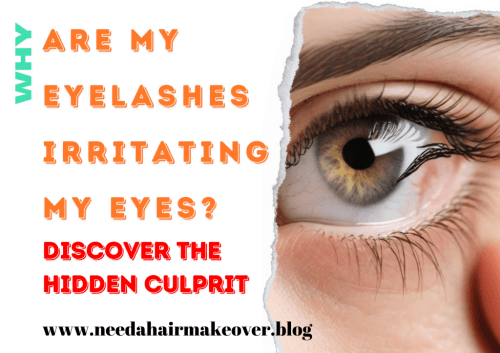
Are you tired of dealing with irritated eyes and wondering why your eyelashes are causing so much discomfort?
You might be surprised to learn that the culprit behind your eye irritation could be Trichiasis, a common condition where your eyelashes grow inward towards your eyes.
Want to learn more about Trichiasis and how to say goodbye to irritated eyes? Head to [read needahairmakeover.blog](http://readneedahairmakeover.blog) to discover the hidden causes and solutions to this pesky problem!
Misbehaving Eyelashes: What You Need to Know About Trichiasis
Trichiasis is a common eyelid abnormality in which eyelashes are misdirected and grow inward toward the eye. This condition can cause irritation, discomfort, and potential damage to the cornea and conjunctiva if left untreated.
Symptoms and Causes
Symptoms:
– Irritation or a feeling of a foreign body in the eye
– Redness and tearing
– Sensitivity to light
– Pain and discomfort
– Blurred vision (if corneal damage occurs)
– Visible inward-growing eyelashes
Causes:
– Chronic blepharitis (inflammation of the eyelids)
– Eye infections
– Autoimmune conditions such as Stevens-Johnson syndrome
– Trauma or injury to the eyelid
– Congenital abnormalities
– Aging-related changes to the eyelid structure
Diagnosis and Tests
Diagnosis:
– Physical examination by an eye specialist (ophthalmologist)
– Use of a slit-lamp microscope to get a detailed view of the eye and eyelids
– Fluorescein staining to check for corneal damage
Tests:
– Assessment of eyelid position and function
– Evaluation for underlying conditions that might contribute to trichiasis
Management and Treatment
Non-Surgical Treatment:
– Removal of the misdirected eyelashes (epilation) using forceps
– Application of lubricating eye drops or ointments to reduce irritation
– Use of antibiotic eye drops or ointments if infection is present
Surgical Treatment:
– Electrolysis: Uses electrical current to destroy hair follicles
– Cryotherapy: Freezing of hair follicles to prevent regrowth
– Radiofrequency ablation: Uses radio waves to remove misdirected eyelashes
– Laser treatment: Uses laser energy to remove and prevent regrowth of eyelashes
– Eyelid surgery: In severe cases, surgical repositioning or reconstruction of the eyelid
eyelashes
Prevention
Preventing trichiasis involves managing underlying conditions that can cause it, such as maintaining good eyelid hygiene to prevent blepharitis and promptly treating eye infections and injuries. Regular check-ups with an eye specialist can help detect and address issues before they become severe.
Outlook / Prognosis
The prognosis for trichiasis is generally good if treated appropriately. Non-surgical methods provide temporary relief, but eyelashes often regrow, requiring repeated treatments. Surgical methods offer a more permanent solution. Untreated trichiasis can lead to chronic eye irritation, corneal abrasions, and potentially vision loss.
Importance of Using the Right Eyelash Extensions and Glue
Safety and Health:
– Using high-quality eyelash extensions and glue reduces the risk of allergic reactions, irritation, and infection.
– Low-quality or improperly applied extensions can cause trichiasis by misdirecting natural lashes inward.
Comfort and Longevity:
– Proper extensions and glue ensure that the lashes remain comfortable and last longer without causing damage.
– Professional application techniques help avoid complications like lashes growing in the wrong direction.
Aesthetic Outcomes:
– High-quality products and professional application achieve a more natural and aesthetically pleasing look.
Booking your EyeLashes Extensions with us if you have sensitive eyes.
For a safe and professional eyelash extension experience, book your appointment at [Need a Hair Makeover](http://www.needahairmakeover.com). Their experienced technicians use high-quality products to ensure the health and beauty of your lashes.
Share with someone who’s struggling with eye irritation and help them find relief! #EyeCare Trichiasis #EyelashHealth #IrritatedEyes #needahairmakeover
Want to become a #entrepreneur? Start your own Business Startups & Promotions? Could you help someone like Sarah? Listen to her story
In a world where negativity and cynicism seem to dominate, it can be easy to fall into a negative mindset. We are bombarded with negative news headlines, social media comparisons, and stress from our daily lives. It’s no wonder that many of us struggle to see the positive side of things.
But what if I told you that a simple shift in mindset could transform your life? That the power of positivity is real and can bring about profound changes? It may sound too good to be true, but countless studies have shown that having a positive mindset can have a significant impact on our physical and mental well-being.
So, what exactly is a positive mindset? Simply put, it is an attitude of optimism and hope, focusing on the good in any situation. It’s about choosing to see the glass as half full rather than half empty. And while it may not always come naturally, it is a skill that can be learned and cultivated.
One of the most significant benefits of having a positive mindset is its impact on our mental health. When we approach life with a positive outlook, we are less likely to dwell on negative thoughts and emotions. Instead, we are more resilient and better equipped to deal with challenges and setbacks.
Research has also shown that a positive mindset can help reduce symptoms of anxiety and depression. By shifting our focus towards the good things in our lives and reframing negative thoughts, we can improve our overall well-being and emotional state.
But the benefits of positivity don’t stop there. Studies have also found that being optimistic can have physical health benefits. Positive people tend to have lower levels of stress hormones, which can help reduce the risk of chronic diseases such as heart disease and diabetes. They also have stronger immune systems, allowing them to fight off illnesses more effectively.
But how do we cultivate a positive mindset in a world that often seems to be filled with negativity? The first step is to become more aware of our thoughts and emotions. It’s essential to pay attention to the language we use when talking about ourselves and our lives. Are we constantly putting ourselves down or focusing on the negatives? If so, it’s time to start shifting our mindset.
We can also practice gratitude and appreciation daily. By focusing on the things we are grateful for in our lives, we can train our minds to see the good in all situations. Keeping a gratitude journal or expressing thanks to others can have a significant impact on our overall outlook.
Surrounding ourselves with positivity is also crucial. It’s essential to limit exposure to negative news and toxic people. Instead, seek out uplifting and optimistic individuals who inspire and motivate us.
But perhaps the most powerful way to cultivate a positive mindset is through self-talk. Our inner voice is incredibly influential, and what we tell ourselves can have a significant impact on our beliefs and actions. By practicing positive self-talk, we can reframe negative thoughts and start believing in ourselves and our abilities.
Of course, having a positive mindset doesn’t mean ignoring or suppressing negative emotions. It’s essential to acknowledge and process these feelings but not let them consume us. Instead, we can use them as opportunities for growth and learning.
In essence, having a positive mindset is about choosing to see the good in life, even when things may seem tough. It’s about being resilient and finding opportunities for growth in every situation. And while it may not come easily at first, with practice and determination, we can all learn to embrace the power of positivity.
So the next time you catch yourself falling into a negative mindset, remember that you have the power to change it. Choose to see the silver lining, practice gratitude, surround yourself with positivity, and use self-talk as a tool for growth. Embrace the power of positivity, and watch as your life transforms for the better.
Did you find Sarah’s story interesting?
Well finding a #business that aligns with your passion is key. The #hairindustry can help people regain their confidence, our #hairextensions and #hairloss #franchise offers the perfect opportunity. Findout more https://bit.ly/3vw8szC
Lace wigs are a great way to add a little bit of glamour to your everyday look or disguise thinning or bald patches. They come in all different styles and colors, and with the right wig, you can create any look you want. In this post, we are going to teach you how to wear lace wigs for the perfect look.
The lace wig designs have much improved over the years
We are going to cover the basics of how to put on a lace wig, how to style it, and how to get the perfect look every time. From basic styles to more daring looks, we will cover it all in this post. So if you are looking for a way to add a little bit of glamour to your look, lace wigs are the perfect choice. So come and learn how to wear lace wigs for the perfect look!
What is lace wig?
Lace wigs around the hair line gives the appearance of hair growing from the scalp because each strand of hair is knotted into a fine net made from either swiss lace or silk woven net. they are made of human hair and are a type of wig that is typically worn by women or sometime special toupee peices worn by bald men. They come in a variety of styles and colors, and can be worn for a variety of purposes.
Most lace wigs are made of human hair, though there are also lace wigs made of synthetic hair. Blended Synthetic hair is often more affordable than human hair, but it doesn’t have the same natural look and feel. Some lace wigs may need to be glued down, but there has been a range of glueless lace wigs launched in the markek place.
translucent lace for an invisible look
Lace wigs can be styled in a variety of ways, and they come in a variety of lengths. They can be styled straight or curly, and they can be styled in a variety of ways.
Lace wigs are a great way to add a new look to your wardrobe, and they can be a great way to change your look for a special occasion. They can also be a great way to add a new look to your hair.
Types of lace wigs
There are two types of lace wigs- human hair and synthetic hair. Blended Synthetic heat tollerant hair is made from man-made materials such as latex, polyester, and nylon. Human hair lace wigs are made from real hair and are the most natural looking option.
Which type of lace wig is best for you will largely depend on your hair type. If you have thin hair, a human hair lace wig will be the best choice. If you have thicker hair, a synthetic hair lace wig will be better.
There are also a variety of colours and styles to choose from, so you can find the perfect wig for your look. Whatever type of lace wig you choose, be sure to get a wig cap to keep your wig in place and protect it from damage.
How to match lace wig to your head size
Choosing the right lace wig for your hair is important. You don’t want to have to take it off every time you want to style your hair in a different way. When choosing a lace wig, make sure you have the right size cap. It needs to fit comfortably, not too loose or too tight. Lace wigs come in many different colours and some people might choose to wear an alternate colour to their own hair. This is not a problem and can save you from colouring your hair if you don’t want to damage it.
Once you find the right colour, make sure to style it. You don’t want to have to take the lace wig off every time you want to style your hair in a different way.
How to style lace wig
When wearing a lace wig, it is important to have a hairstyle that will compliment both the wig and your face. Wearing a wig will give you a new look and you want to make sure that the style you choose will help you look your best.
360 lace wig. Bonded down at the back by Need a Hair Makeover
There are many different ways to style a lace wig and it really depends on the look you are going for. If you are looking for a natural look, a simple bun will work perfectly. If you want to add a little bit of glamour, a ponytail will be a great option. If you want to rock a more dramatic look, curls will do the trick.
There are also many different ways to style a lace wig. You can rock a straight hair style, add a few waves, or curl your hair. Whatever look you choose, make sure it will compliment the lace wig and help you look your best.
Tips on how to wear lace wigs
There are many ways to wear lace wigs and every woman has her own personal style. Whether you choose to wear a lace wig as your everyday wig or for a special occasion, these tips will help you get the look you want.
When choosing a lace wig, it is important to make sure the hair is of the right quality. Lace wigs can be expensive, and if the hair is of poor quality, it will not last long and will not look good. Make sure to ask the seller if the hair is Remy human hair or synthetic hair. Remy human hair is the best quality and will last the longest, but blended synthetic hair is also good and looks just as good as Remy human hair and is heat tollerant.
When wearing a lace wig, it is important to keep in mind the style. Many women experiment and find what works best for you.
Conclusion
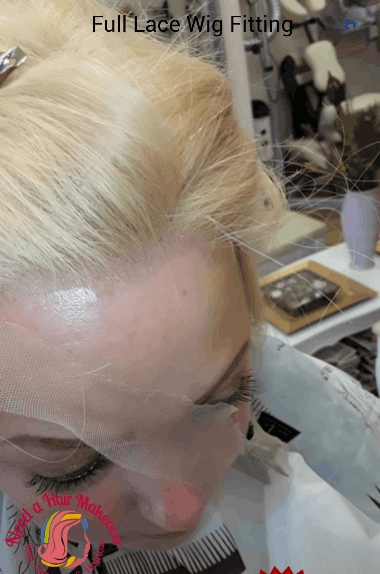
Clients hair braided away, lace wig applied and styled
Lace wigs are a great way to add a little extra glamour to your look. However, it is important to know how to fit them for the perfect look. Follow these tips and you’ll be looking like a million bucks in no time!
Find a specialist lace wig supplier or wig maker.
Get your head properly measured so you can have the perfect wig cap size.
If you have very long hair it might be helpful to visit a specialist lace wig fitter
If you have bald patches or want a semi permanent fitting, visit a specialist wig anchoring lace wig fitter
Get your hair professionally cut and styled so it looks natural.
Remember that using light non greasy products on lace wigs will help keep it conditioned and let the wig last longer.
We hope you enjoyed our blog post on how to wear lace wigs for the perfect look. Lace wigs are a great way to add a little bit of glamour to your look, and they come in many different styles and colors to suit everyone’s personality.
We walked you through the different steps you need to take to get the perfect look, and we are sure that you will love the finished product! Thanks for reading, and we can’t wait to see the amazing look you achieve with a lace wig.
The period begins from the day you felt symptoms – whether they be mild of strong. If you do not feel any symptoms, however, the isolation period begins from the day you got tested.
Upon entering your positive test result into the Covid-19 app, you will be advised on which date to isolate until and which you are legally obliged to follow. You will also receive a call or text from NHS Test and Trace if you do not have access to the app.
However, those who are double vaccinated and have been notified as coming into contact with someone infected by Covid-19, are exempt from self-isolation rules providing they take daily lateral flow tests for 7 days.
If at any point you test positive during the 7 day period, you will need to isolate from the day you received the positive result.
How can I claim financial support under the Test and Trace support payment scheme?
You might be able to get a payment of £500 to support you during self-isolation if you live in England and meet all the following criteria:
You’ve been told to stay at home and self-isolate by NHS Test and Trace or the NHS Covid-19 app, either because you’ve tested positive for Covid-19 or have recently been in close contact with someone who has tested positive
You’ve responded to messages from NHS Test and Trace and have provided any legally required information, such as details of your close recent contacts
You’re employed or self-employed
You’re unable to work from home and will lose income as a result of self-isolating
You’re currently receiving or are the partner of someone in the same household who is receiving, at least one of the following benefits:
Universal Credit
Working Tax Credit
Income-based Employment and Support Allowance
Income-based Jobseeker’s Allowance
Income Support
Housing Benefit
Pension Credit
If you’re not on one of these benefits, you might still be able to apply for a £500 discretionary payment if all the following apply:
You meet all the other criteria listed above
You’re on a low income
You will face financial hardship as a result of self-isolating
What if my child has been told to self-isolate?
If you have not contracted Covid-19 but are the parent or guardian of a child who is subject to self-isolation measures, you could be be eligible for the payment, if the following apply:
You’re the parent or guardian of a child in your household who is self-isolating, and you need to take time off work to care for them
Your child is aged 15 or under, or aged 25 or under with an Education, Health and Care (EHC) Plan, normally attends an education or childcare setting, and has been told to self-isolate by NHS Test and Trace or by their education or childcare setting
You’re unable to work from home and will lose income because you have to care for your child while they are self-isolating
You meet all the other eligibility criteria for a Test and Trace Support Payment or discretionary payment
You can claim up to 42 days after the first day of your, or your child’s self-isolation period.
For the application, you will need to provide the following:
An NHS Test and Trace Account ID, sometimes referred to as a CTAS number. If you test positive for Covid-19, or are told to self-isolate by contact tracers, you will be provided with an NHS Test and Trace Account ID
A bank statement
Proof of employment or, if you’re self-employed, evidence of self-assessment returns, trading income and proof that your business delivers services that cannot be undertaken without social contact
If applying for your child, you will need to input your child’s NHS Test and Trace Account ID or proof of communication from their education or childcare setting telling them to self-isolate.
What are the rules in self-isolation?
NHS Test and Trace will advise on when your isolation period starts and ends, but it typically lasts 10 days from the day contact was made.
Unless you are exempt it is illegal to not self-isolate if you have been contacted and you could be fined if you do not obide the rules.
You should not leave your home for any reason when you are self isolating.
Do not go to work, school or public places – work from home if you can
Do not go on public transport or use taxis
Do not go out to get food and medicine – order it online or by phone, or ask someone to bring it to your home
Do not have visitors in your home, including friends and family – except for people providing essential care
Do not go out to exercise – exercise at home or in your garden, if you have one
I have found that lots of face creams claim to be the “Fountain-of-Youth-Like Effects”
We all want our skin to stay looking healthy
The Age-Defying BeautySkin addresses all the biggest “frustration factors” that make skin look old when it doesn’t need to at all.
And it does so by providing you a unique and powerful non-toxic, natural, formula that means you’ll enjoy both fast and ongoing results!
Our skin is complex
Of course, when you soon experience the “fountain-of-youth-like” results of the Age-Defying BeautySkin on your own skin, your first-hand experience will speak volumes more than we can here.
Still, we know it’s important you understand WHY the Age-Defying BeautySkin works so well and unlike anything else out there.
On that note, you first need to know the basics on the two big problems causing so many people frustration and even heartbreak when it comes to their skin…
Your skin is complex, so it’s important to reiterate that this full range of different premiere ingredients is essential to address the various issues.
What’s not complex, though, is using your Age-Defying BeautySkin to enjoy its fast and longer-term results. Simply…
Apply your BeautySkin cream anywhere wrinkles, fine lines, dark spots, loose-looking, dull-looking, or dry-looking skin appears. Most often, this is on the neck, by the eyes, around the mouth, on the cheeks and forehead, and on the hands.
It is recommended you use your Age-Defying BeautySkin in the evening before bed, or when you awake. If you seek the fastest results, you can use it at both these times.
We can all agree tht social media plays an important part in sharing your message, services or products. But how do you start tracking what you have posted and how can it help your business, product or brand. I was researching this and have the following this to share with you.
It is important to set up a social media strategy to align with your business goals, and pulled together either paid or free social monitoring services, you’ve got one more habit to get into: tracking. From one fellow community manager to another, you know how important it is to know how one tweet performed versus another, or if one blog post rocked on one social network over another. This can only happen by having the right tracking in place.
Why Use Trackable Sharing Buttons
Not all sharing buttons are created equal, which is why you should pick sharing buttons that will give you a good signal of what’s going on in your site. You may see some insight in your analytics that tell you people visited your site, and some of them were from social. But to really know how and where your community is sharing your content, your sharing buttons should tell you.
2) Choose the social network you want people to share your content on.
3) Fill in the blanks.
4) Download a social button icon.
5) Make the icons clickable using your share link.
By using the right sharing buttons to help you see which social network is most popular among your audience, you’re going to understand your community better. Who knows? There may be a strong niche community reading your content in a social network you’re not actively engaging. These are a community manager’s dream gems to find!
Why Use Trackable Follow Buttons
Do you know, off the top of your head, how many social followers your site got for you this week? If your follow buttons were trackable, you’d be able to get this number without much digging in your analytics. And wouldn’t it rock to be able to tell your teammates you know that most of your Instagram followers came from your site? (This happened to us, actually!) As a community manager, this is the type of understanding that’ll open your eyes into exactly how your audience is engaging with your content. Discover which social networks your audience is most engaged with, and how your site is helping you drive engagement off your domain with trackable follow buttons.
Why Us Trackable Chatbots
Don’t lift a finger and still deal with your enquiries 24/7
The next big thing to hit SME’s is Chatbots Using Artificial Intelegence. The number 1 complaint about launching and running a online business or attracting responses to a posting is generating enough enquiries to make a sale or even responding to all the enquiries within 24 hours.!
Chatbots can assist you and there is “No Need To Lift a Finger Because some of the Proven System Will Do The Work And Get You More Leads!” The data coming out now is that more and more people are moving to online communications and shows that you need to start leveraging Chatbots to streamline customer communications, problem solving and sales. Individuals are using messaging Chatbots for many different reasons. However, the key things your customers want from any communication is quick response, help with there enquiry, ability to make appointments or make a purchase or have a problem attended to quickly.
You can automatically generate unique hashes appended to all of your site’s pages to help you generate unique links that you can then use to push to social. Address bar sharing adds a unique set of characters to the very end of your URL that will make that URL unique. (And don’t worry, this will not negatively affect your SEO.)
The reason you’ll want to do this is if you’re trying to monitor how the same content performs on different social networks, and which messaging performed best on the same topic.
There’s nothing more frustrating than spending so much time creating awesome content, and having tons of Tweets, tiktok and instagram out there to drive traffic to your pages, and then not being able to tell which phrasing or timing actually worked best.
Go beyond the pageviews and visits by making all your site’s URLs generate uniquely. You’ll then even be able to catch where a big segment of your traffic came from.
How to embed a tweet using the Twitter website
Open Twitter in a web browser, log in if necessary, and find the tweet you want to embed.
Click the three dots at the top right of the tweet.
In the dropdown menu, choose “Embed Tweet.”
The Twitter Publish page should appear. …
When you’re done, click “Update.”
How to embed a tweet on a website using Twitter’s embed tool
Why Use Analytics
Tying all of that data together into an easy-to-read dashboard is usually the hardest part of a community manager’s job, but lucky for you, AddThis’ dashboard pulls all of this information for you in one place.
The dashboard lays out in crisp and clear graphics how all of your audience members engaged with your site, which tools they used to engage, and which content they liked the most.
Know exactly which social network is growing the most from your site, and which is being shared to the most. Know all this by just scanning your dashboard (without drowning in search queries and exported spreadsheets).
8 Advantages Of Accounting Software Over Spreadsheets
Simplified Book keeping for Businesses
It saves time. …
It instantly generates key financial reports. …
It syncs all your financial data. …
It promotes data accuracy. …
It produces professional-looking financial statements. …
It simplifies payroll. …
It gives detailed insights. …
It streamlines tax filing.
FreeAgent’s online accounting software helps small businesses, freelancers, contractors and sole traders take control of their business finances.
Excellent ★ ★ ★ ★ ☆ 1,622 reviews
FreeAgent online accounting software brings everything together, from invoice and expense management to VAT, payroll and self assessment tax return filing, so you can wave goodbye to fiddly templates and spreadsheets.
Cancel anytimeExport all of your data if you decide to cancel
Help always on handAny questions you have answered quickly
Making Tax Digital readyFreeAgent is fully compatible with the new Making Tax Digital (MTD) for VAT rules
FreshBooks – Affordable Accounting for Small UK Businesses
★ ★ ★ ★ ☆ (613)
Recurring billing, client retainers, and real-time reports into your small business’s health and accounts? FreshBooks not only does it all, but comes in a range of affordable pricing tiers to cater to growing small businesses. Starting at £4.40
Ember – An Accounting Solution To Scale With Your Startup
★ ★ ★ ★ ★ (651)
Automated filing, tax optimisations, easy invoicing, and more, Ember powers your SME’s potential, with chartered accountants on hand to help you manage your finances with ease. Run your business – we’ll take care of the rest. £39.00 monthly
QuickBooks smart, simple, HMRC-recognised software helps you focus on running your business. Manage taxes, cash flow, invoicing and payroll, all in one place. There’s no contract and award-winning UK-based support is free. Starting at £6.00
Excellent Trustpilot reviews! Clearbooks gives you Invoicing, Purchasing & Financial Tracking. You’ll get a cross-section of your company’s accounts. Search, sort, and filter your supplier and purchase data, and share it easily! Starting at £9.60
Sage’s industry-leading software caters to a customer base of over six million. But go back to 1981, and Sage had just begun life in a basement, focusing solely on – you guessed accounting software. £12.00 monthly
I have been noticing that most of my food is going mouldy quicker, even in the jars! I was curious to find out why, espcially as this is happening more and more in the fridge as well. I thought the fridge was designed to keep things cool and slow down the detiriation of our food.
I also wanted to know what mould did to the body if injected, my mind started to generate all types of conspiracy theory so I decided to do a little research based on facts.
We all grow up learning mold is gross. But is it just unpleasant, or is it actually dangerous? Isn’t it mould that makes blue cheese blue? And wasn’t penicillin first discovered in moldy bread?
Are we wasting perfectly safe food when we throw it out? Or are we gambling our health when we shrug our shoulders and eat that piece of cheese that had a dusting of white fuzz?
How does mould grow on food?
I found this bit scary because is the air we are breathing so toxic? Is that why we are getting sicker even though we are more health concious? I mean think about it, our lungs are very moist!
So back to the question: Tiny mould spores are carried in the air. When these spores land on food, they take root and grow until they produce patches of mould visible to the naked eye. Once they mature, they produce new spores and release them into the environment and the cycle continues!
What is mold on food?
Mould is a microscopic fungus, and yes—spoilers!—consuming it can be bad for our health. Like its cousin the mushroom, there are thousands of different species.
Some are safe to consume, but many produce poisonous mycotoxins that cause illness and even death. Additionally, some people are allergic to mould and need to steer clear of it. So dealing with mold on food is serious business.
Mould requires three things to grow: organic matter, water and oxygen. Food provides the the first two ingredients. Exposed to air, mold has everything it needs to grow.
How long does it take for mould to grow on food?
Many factors affect the rate of growth of mould: the specific type of mould, the food it’s growing on, and the ambient temperature and humidity. Many species of mould like warmer temperatures and mould growing on fruit on your counter may develop in very few days, especially in the warm humid summer months. Other mould growing on food with less water content in the cool of a refrigerator might take several weeks.
How to handle mould on food?
Mould can grow on most types of food, but not all food is the same.
Red Flag Food
Red flag food items should be automatically discarded when mouldy. These items include most food items, particularly soft and moist foods:
Luncheon meats, hot dogs, bacon, etc.
Cooked leftover meat, poultry and fish
Cooked pasta and cooked grains
Casseroles
Sour cream and yoghurt
Soft fruits such as tomatoes, berries, cucumbers, etc.
Some other drier, harder foods fall into this category as well:
In general, softer food with more moisture content is more prone to moulding, and can’t be safely salvaged. In addition to the mould itself, soft moist food can provide an ideal environment for dangerous bacteria to grow. For these foods, it’s important not to assume the problem is limited to the mould you see.
Throw away the mouldy food, and carefully inspect other nearby food, especially food in the same package. Do not sniff mouldy food: spores might get into your respiratory system. Wrap the spoiled items in plastic to contain the spores, and discard.
To eat or not to eat?
Moulds can grow in the fridge and will even survive freezing. They can also survive in salty, sugary and acidic environments. This is scary!
As mould on our food is so hard to avoid, here are some general guidelines from the most Food Safety and Inspection Service on responding to the problem:
Discard all of these foods if mouldy:
Luncheon meat, bacon, and hot dogs.
Yoghurt, sour cream and soft cheese.
Soft fruits and vegetables
Bread and baked goods.
Peanut butter, nuts and legumes.
Jams and jellies – but note Dr Hocking has a slightly different view for Australian jams.
These foods can be saved from mould:
Hard salami (the dry, aged type) – scrub mould from the surface.
Hard cheese – cut off at least 2.5 centimetres around and below the mould. Don’t let the knife touch the mould and recover the cheese with fresh wrap.
Firm fruit and veg – small mould spots can be cut off.
The mould used in making these cheeses is safe for consumption. However, if other mold that is not part of the manufacturing process is present, these items should be discarded just like any other red flag food item. Some blue cheeses may be hard enough to be treated as a Yellow Flag item (see below for care). However, if you are unsure where to draw the line, remember: when in doubt, throw it out.
Note that while the mould that forms the blue veins inside blue cheeses is harmless when deprived of oxygen inside the cheese, the same strain of mold can form harmful mycotoxins if allowed to grow on surfaces exposed to air. Be careful of cross-contamination with these cheeses and keep them wrapped in cellophane while storing them.
Yellow Flag Food
Other foods, particularly harder and drier foods, can sometimes be kept once the mold is carefully removed. These include:
Hard cheese
Firm fruits and vegetables (cabbage, carrots, bell pepers, etc.)
If you’re going to cut away mould rather than discard the item, it’s important to remember that there is more mould present than what you can see. Below the surface, mould will have penetrated up to 2cm or more. For these food items, mould can be cut away but you should cut at least 2.5cm (1 inch) outside of and underneath any visible surface mould. Be careful to keep the knife clear of the mould to avoid contaminating the rest of the food as you cut.
Note that surface mould is a normal occurrence on certain hard salamis. In this case, scrubbing the mould off the surface is sufficient. Again, it never hurts to be cautious. When in doubt, throw it out.
Different types of food mould
Black mold on food
I did not like this bit, but if you are going to understand something, you can’t disguard the ugly sides. Well here goes.. Various strains of mould can have a black appearance. Homeowners know to watch out for black toxic mold, Stachybotrys chartarum, commonly found in attics.
However there are many non-toxic strains of black mould as well, including Rhizopus stolonifera, also known as black bread mould. You may encounter black mould on the rubber seals of your refrigerator or on food. While this doesn’t prove you have black toxic mould in your house, you are best to assume it may be harmful and discard the food item in question, meticulously scrub clean the refrigerator, and look for signs of black mould in your house.
Pink mould on food
Pink mouldy formations on food may not be mould at all, but rather bacteria growing. Aureobasidium and Fusarium are also two common fungi that grow with a pinkish colour.
Pink mould is most often seen on bread, dairy products and meat. Dangers of pink mold include infection of the respiratory, gastro-intestinal or urinary tracts.
White mould on food
White mould is seen on a variety of foods, from the white mould purposefully grown on the outside of certain cheeses, to fluffy white mold appearing on berries and other fruit.
Many strains of mould can appear white, and to complicate matters many coloured strains of mould may go through a phase where they appear white before developing the spores that give them their colour. Unless white mould is a purposeful part of a food’s production (e.g. brie and camembert cheese), assume it is toxic and handle affected food accordingly.
Green mould on food
Green mould is commonly found on citrus fruit and bread. Cladosporium is one particularly common species of green mould.
It can have a potent smell and be particularly irritating, particularly for people with mould allergies. This can lead to respiratory problems such as wheezing and coughing, as well as vomiting. Clodosporium mold can produce mycotoxins as well, so avoid exposure.
Orange mould on food
A variety of mould can take on an orange colour, including Fuligo septica and Aleuria aurantia. These orange moulds commonly have a slimy texture.
While they may be less dangerous than some other colours of mould, they can still cause respiratory problems, and where orange mould is present, bacteria are also likely to be found.
Furthermore, orange mould is particularly prone to growing on wood. So not only is orange mould a threat to your food, it is a threat to the wood in your house.
Red mould on food
While various strains of mould can be red, red mould on food is most commonly Neurospora. While this type of mould is typically less dangerous than other types of mould, some mycotoxin-producing moulds might appear red in certain conditions, or might be present alongside red mould. It’s therefore wisest to treat red mould on food with the same caution as other mould.
Blue mould on food
Blue mould on bread and the blue mould deliberately cultivated to make blue cheese are strains of the genus Penicillium. And yes, some species of Penicillium (but not all!) produce penicillin. Many species of Penicillium are innocuous, but some are not.
And while the blue mould in blue cheese, deprived of oxygen, is safe for consumption, that same strain of mould can produce mycotoxins when it grows on an outside surface exposed to air. So, eat that blue cheese but treat other blue mould as potentially toxic.
Consumers Select Food Based on Colour at the Supermarket
It is widely accepted that consumers select a food product with their eyes, so products need to look fresh and tasty.
Oxidation is the Enemy
Oxidation, a chain reaction that occurs in the presence of oxygen, is responsible for the deterioration of food products, including off-flavours and off-odours. This process is affected by processing, packaging and storing techniques, as well as product ingredients.
Antioxidants delay the onset of oxidation by donating hydrogen atoms to quench free radicals, forming a stable antioxidant radical that is unable to participate in propagation reactions, slowing down oxidation.
What happens if you eat mould?
You have to be really careful
Is it dangerous to inhale mould spores from food?
Inhaling mould visible on food is risky and should be avoided. It may cause allergic reactions or problems with the respiratory tract. When mould isn’t visible, sniffing may be a useful way to detect it—e.g. smelling dishcloths. However, once you’ve spotted mould, avoid inhaling.
Can mould on food make you sick?
Mould on food can be harmful in various ways. Some people are allergic to mould and could have a potentially serious reaction. However, even if you don’t have allergies, mould can cause irritation in the respiratory, gastro-intestinal or urinary tracts. And the mycotoxins created by some moulds are poisonous carcinogens that can prove fatal.
What are health symptoms you can get by eating mould on food?
Allergic reactions to mould can include sneezing, runny or stuffy nose, coughing, postnasal drip, irritated eyes, nose and throat and dry, scaly skin. Those with asthma may experience coughing, wheezing, shortness of breath and tightness in the chest.
Those without allergies may still experience respiratory problems such as wheezing, sneezing, tightness in the chest and difficulty breathing. In more severe cases, this can lead to respiratory infection and even hypersensitivity pneumonitis.
A particular concern is ingesting mould that produces mycotoxins. Signs of mycotoxin poisoning include reduced appetite, a general feeling of malaise, acute illness or death in rare cases.
Food mould facts and questions
Which food will mould fastest?
Storage conditions will have a significant effect on how quickly a given food turns mouldy. However, all things being equal, food with a high moisture content will mould first. Thus, in the fridge, fruits such as strawberries or cucumber might get mouldy before other foods. Stored at room temperature, natural bread (with no preservatives) can get mouldy quite quickly.
Is it safe to eat fruits with mould on a peel you discard?
It may be tempting to think that for fruit with a peel, simply removing and discarding the peel may be enough to protect you. In the case of a firm fruit like a pineapple, it can indeed be treated as a “yellow flag” food, carefully cutting away the affected area.
Fruits with a softer peel like oranges or bananas should be treated as “red flag” foods and discarded—underneath the visible mould, it may have penetrated the peel to the flesh of the fruit inside. In the case of an avocado, while the skin is quite tough mold can still get underneath and infect the fruit inside. Play it safe and discard it.
What temperature kills mould spores in food?
Most moulds are killed off by temperatures of 60-70°C (140-160°F). Thus, boiling water is generally enough to kill off mould. Remember, though, that mould doesn’t just grow on the surface: heat will have to penetrate into whatever the mould is growing in to kill it. Also keep in mind that the mycotoxins produced by certain mould can survive intense heat: boiling may kill the mould but leave its poisons still intact.
It takes one mouldy food item to get the whole basket covered in mold! This is very important rule to remember the moment you are at the market. If you are buying nonpacked items, ensure each of them is fresh. If you notice mold on any single piece, simply don’t buy it. Examine each item for bruising, softness, oxidation or signs of mould before you buy it and avoid any items that look overly ripe.
On the other hand, when buying pre-packed food you cannot examine every single piece, meaning that mouldy items can go unseen. In that case, ensure you checked the date and chose the one that was most recently packed. Instead of buying processed or pre-packed food, where you often don’t have control of the freshness (the story of wrong dates is not rarely heard), choose local markets and stores you can trust.
Once you buy your delicious food, especially fresh fruit and veggies, it is important to keep it covered until you’re ready to eat it to minimize the risk of cross-contamination with bacteria, mold, dust and debris from the environment. Use plastic wrap to cover foods you want to keep for longest, such as fresh fruits, vegetables, salads and cheese.
Rinse the contents of canned goods under water and store them in your fridge in tightly sealed plastic or glass containers. Refrigerate leftovers and use them within four days.
Consume early to avoid mold. The first step you can take to prevent food going bad is to eat it before mould has time to take hold. Especially for moisture-rich and porous food like fruits and breads, buy in smaller quantities so you can consume it within a just a few days.
Keep food cold: the cooler the better. Keep food, especially soft moist food like fruit, in the refrigerator rather than at room temperature. Only take it out while you’re using it—under two hours. To keep food mould-free for longer periods, store it in the freezer rather than the fridge.
Use heat to kill mold. High acid foods such as fruits, jams and jellies can be made safe to preserve through heat treatment. A boiling water bath is a common practice to prepare them for a long shelf-life. The amount of time required for a water bath will vary depending on what and how much you’re canning, so be sure to adapt your method to the specific food you’re treating.
Keep kitchen tools and surfaces clean. Mould may thrive on food, but it can be found anywhere. The less mould in your kitchen, the less your food will get exposed. Clean your refrigerator and other kitchen surfaces with a mixture of 5ml of baking powder to 1L of water. Watch out for black-coloured mold on your fridge’s rubber seals and scrub carefully to clean it out.
Keep your dishcloths, tea towels, sponges, mops and other kitchen tools clean. Give them the sniff test: if they smell musty, they may be harbouring mould. Any item that you can’t get clean and fresh-smelling, discard and replace.
In order to prevent mould on food you will have to work on overall kitchen mould prevention. In most cases it includes either ensuring there is enough fresh air or regular cleaning. Here are a few tips that can help you prevent mold in the kitchen.
As said above – mould can grow in the fridge and, thus, it is important to keep the inside of the refrigerator clean. We suggest cleaning it every few months with one tablespoon of baking soda dissolved in a quart of water. Rinse with clean water and dry thoroughly before storing food again.
Ensure your food is still fresh by checking it every day or two. Toss away anything that has a sign of mould or that started rotting away.
Replace sponges at least once a week and always use clean dish clothes and towels. If you notice a musty smell coming from a sponge or towel, replace it immediately.
Wash the dishes at least once a day. Don’t leave food leftovers in your sink behind you once you are done with the meal. Throw them away immediately. If you are in a rush, keep your dishes under water to prevent food stains from hardening until you can wash them properly.
Mould can be found in dishwasher and garbage disposals. It can be the reason behind the odors, thus keeping it clean should be your priority. At least once a week pour baking soda, salt and vinegar (or lemon) own the sink and leave it for 10 minutes. You can add lemon or orange peels and even essential oils to give it a nice smell. After that all you have to do is pour boiled water to wash it up and your disposal and sink will be clean, mould-free and refreshed.
Kitchen tools, especially wooden ones should be washed and well dried before set aside, because wood is one of the favourite food for mould. All you have to do is simply wash them after you used them and leave them to dry well somewhere where it is not wet and it has enough fresh air and light. (for example if you are done with cooking and your stove is still warm, you can put it next to it to dry.
Don’t forget about unused kitchen appliances. They are often sealed and if not well dried, mould can form due to water evaporation inside. The best way to prevent mold from developing inside is to ensure it is well dried before storing and, if there is a possibility, keep it open.
And last but not least, make sure that the relative humidity in your home is between 30% and 50%, especially in the warmer months, when mold is known to flourish. The easiest thing you can do to control the humidity level is to keep your windows open as often as possible. If that is not possible your next steps should bes either air vents or even a dehumidifier.
Conclusion
As with mould in general, there are many strains of mould that can be found on food. While some are innocuous, many are not. While mould that’s purposefully introduced into certain cheeses can be safe, always treat other mould on food as a dangerous substance. Treat “yellow flag” foods with caution and for “red flag” foods, play it safe and discard it.
And remember, the same concerns about mould allergies and mould toxicity that applies to food mould also applies to other mould in your house. Keep watch for mould in your kitchen and whole house, and if you detect signs of mould, get informed as to the steps needed to eradicate it safely.
Virtual Personal Assistance offer a range of #Services to help you get a #Job or #promotion, #startabusiness or #market your #business effectively. check our services http://bit.ly/3jObWBL #BusinessNews
#BusinessPlan #OnlineBusiness #lifehacks
Don’t start ore expand your business without a business plan

 Why You Should Consider a Hair Extensions and Hair Loss Specialist Salon Franchise with Need a Hair Makeover

 eyelashes




















































 All about Hair Extensions & Hairloss Courses and Franchise Opportunity by Diane Shawe
You must be logged in to post a comment.