Category Archives: business opportunity

Why Readers Should buy Diane Shawe’s latest book – “What happens when you stop Hiding”

What Happens When You Stop Hiding is a bold, uncompromising guide for women and marginalised people of colour who are tired of shrinking, second-guessing themselves, and carrying the emotional weight of systems never built for their thriving.

From a scholarly perspective, this book stands out because it merges psychological insight, cultural critique, and practical transformation tools, all while maintaining an accessible, compassionate voice.

From the very first pages, Shawe reframes visibility as a human right rather than a performance. She reminds us that labels—race, gender, sexuality—are social constructs created to confine rather than liberate . This human-first framing sets the tone: the reader is invited not to become someone new, but to return to the self that existed before shame, fear, and external judgment took root.

What Makes This Book So Impactful

🔥 1. It addresses the wounds no one talks about—honestly.

Each chapter tackles a form of “hiddenness” that affects women and people of colour daily:

Imposter syndrome and self-erasure (Chapter 1: “The Mask of Modesty”)

Unsafe family dynamics and childhood emotional neglect (Ch. 2–3)

Cultural and religious conditioning that punishes authenticity (Ch. 4)

Workplace tokenism and microaggressions (Ch. 8)

The silent burnout experienced by high-functioning achievers (Ch. 7)

Shawe does not shy away from the deeply personal or socially uncomfortable. The case studies—Amina the hidden tech genius, Tasha the undermined sister, Priya the overlooked community organiser—make the struggles tangible and relatable.

🔥 2. It’s not theory; it’s a blueprint.

Every chapter includes:

Reflection prompts

Practical steps to reclaim power

Behavioural patterns to recognise

Scripts, reframes, and healing exercises

Real-life stories that mirror the reader’s journey

For example, the “Are You Still Hiding?” assessment provides immediate self-diagnosis, inviting readers into awareness rather than blame .

🔥 3. It validates identities historically dismissed or silenced.

Shawe explicitly centres:

Black and Brown women

LGBTQ+ people navigating cultural and religious shame

Single mothers judged rather than supported

People navigating class, body-image, and professional bias

This inclusivity is not symbolic—it is woven into every page. The chapter on the “Silent Spiral” even explores mental health in the context of public visibility and societal expectation, capturing the emotional cost behind polished success .

🔥 4. It is written with both warmth and authority.

Shawe balances academic insight with a deeply compassionate tone. She doesn’t write at the reader; she writes with them. The text acknowledges pain without glorifying it, and offers practical liberation without minimising systemic realities.

🔥 5. It creates transformation, not just inspiration.

By the time the reader reaches the sections on rebuilding identity, creating new boundaries, detoxifying inherited beliefs, and rewriting their personal story (Ch. 16; Closing Sections) , the journey feels both emotional and actionable. This is not motivation; it is method.

⭐ Why Readers Should Buy This Book

Because it helps you stop apologising for your existence.

Because it names wounds you’ve carried quietly for years—cultural, familial, internal, spiritual—and gives you the tools to dismantle them.

Because it teaches you how to recognise emotional manipulation, systemic bias, family dynamics, and internalised fear, and then shows you how to reclaim your voice, dignity, and clarity.

Because it is a mirror and a map—a guide that reflects your hidden struggles and leads you toward a more visible, self-aligned future.

And because it speaks directly and powerfully to anyone who has ever felt undervalued, unseen, or underestimated.

Readers will walk away feeling understood, strengthened, and equipped to step into a new chapter of authenticity and empowerment.

📘 Ready to stop shrinking and start standing in your power?

Unlock your confidence, break old patterns, and reclaim your visibility with What Happens When You Stop Hiding — a transformational guide for women and marginalised people of colour.

🔥 Discover practical tools, real-life case studies, and powerful mindset shifts that help you stop apologising for your brilliance and start leading with authenticity.

👉 Take the first step toward your breakthrough — buy your copy today and begin the journey to a more confident, visible, and empowered you.🔗 Get the book now: What Happens When You Stop Hiding by Diane Shawe

Specialist Salon vs. General Salon: Which Model Wins in Today’s Market?

In a competitive beauty industry, salon owners face a criti Ical decision:
Do you aim to serve everyone, or do you specialise and dominate a niche?


As the founder of Need a Hair Makeover®, an award-winning Specialist Hair Extensions and Hair Loss Salon Franchise, I’ve seen both models up close — and the difference is striking.

If you’re thinking of opening your own salon or investing in a franchise, this direct comparison will help you choose the best path forward.


🏪 General Salons: The Jack-of-All-Trades Model

✅ Pros:

Serves a broad customer base
Familiar to most consumers
Easier to staff with general stylists
Variety of services from cuts to colours


❌ Cons:

High competition — every high street has one
Harder to stand out or build loyalty
Lower average spend per client
Must constantly discount to attract footfall
Vulnerable to economic downturns


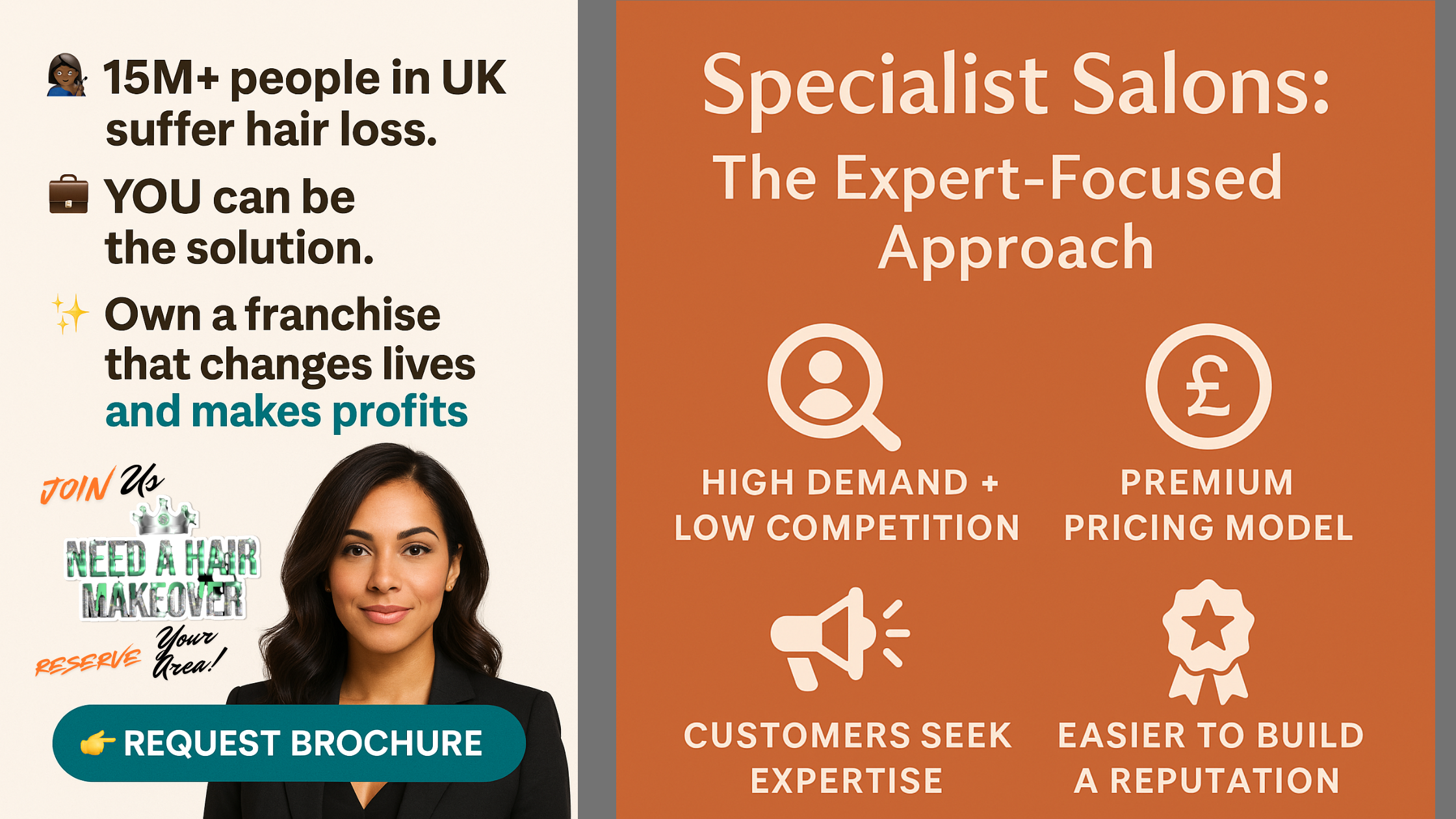
💼 Specialist Salons: The Expert-Focused Approach

A Specialist Salon focuses on solving a specific, high-impact problem — such as hair loss, extensions, or textured hair care.

At Need a Hair Makeover®, we cater to clients with hair loss, thinning, breakage, or post-chemo recovery, providing non-surgical solutions and instant confidence restoration. That changes everything.

✅ Pros:

High demand + low competition
Premium pricing model
Customers seek expertise, not just convenience
Easier to build a reputation and attract press
Supports specialised services, training, and innovation
Attracts loyal, high-value clients with ongoing needs

❌ Cons:

Requires specialist training (we provide this)
Must be positioned correctly in marketing
May limit walk-in traffic if not branded well


📊 Real Talk: Which Model Wins?

Factor General Salon Specialist Salon

Profit Margin Moderate High
Customer Loyalty Medium Very High
Ease of Startup Easy Supported via franchise
Market Saturation High Low
Scalability Moderate High (if franchised)
Marketing Edge Weak Strong — you’re solving a problem

💡 Verdict: In today’s economy, specialists win. The market craves experts — not generalists — especially when it comes to confidence, appearance, and identity.


🧩 The Gap in the Market

There are millions of people in the UK experiencing hair loss due to:

Alopecia
Chemotherapy
Hormonal changes
Stress
Ill health and medication
Hair damage from styling

Very few salons are trained or equipped to help — let alone in a dignified, professional, specialist setting.

That’s the gap. That’s the opportunity. People don’t just want creams and lotions, they are looking for instant gratification that makes them look normal and improves there self esteem.

🚀 Why We Chose the Specialist Franchise Model

Need a Hair Makeover® started from a personal experience of hair loss and evolved into a brand that empowers others — from clients seeking transformation to franchisees ready to own a purpose-led business.

Our model includes:
Full CPD-accredited training
Salon setup support
Product sourcing and supply chain access
Ongoing marketing and business coaching

We help you own your zone of genius — not compete in a race to the bottom.

📥 Ready to Step Into a Niche with Power?

🔓 Request and Download the franchise brochure:
👉 https://needahairmakeoverfranchise.co.uk

🎥 Watch our video
https://youtube.com/shorts/E2_xC_wGwu0?si=G11x23-AWQGJ5Uia

✍🏽 Final Word

Being a generalist may feel safe, but the future belongs to specialists.
In a world full of salons, it pays to be the one salon that truly solves a problem.


📣 Let’s Talk

👉 Interested in launching a specialist salon franchise?
👉 Curious about the real costs vs. benefits?
👉 Want to stand out in a saturated industry?

Message me or apply online — your expert salon journey starts here.

#HairExtensionsFranchise #HairLossSalon #SpecialistSalon #SalonStartup #DianeShawe #FranchiseWithSupport #BeautyBusinessUK #SalonOwners #HairLossHelp #AwardWinningSalon

“Feeling Sluggish? Meet the Natural Duo That Clears Toxins and Restores Your Energy”

Citrus shots. Herbal teas. Ginseng blends.
They promise “cleanse”… but do you actually FEEL better? 🤔
If you’re still stuck with brain fog, bloating, or aches, it’s time for a different approach.

In today’s world, we’re constantly taking in toxins — from the air we breathe, the food we eat, the water we drink, even the products we put on our skin. Over time, this build-up can leave us feeling tired, foggy, bloated, and not quite ourselves. While modern medicine offers solutions, sometimes the best answer is going back to nature’s pharmacy.

That’s where two natural powerhouses step in: zeolite and shilajit. What I’ve discovered is that when you pair these two bad boys together in a constructive way, they don’t just support your body — they help keep you in tip-top shape.

🌋 What is Zeolite?
Zeolite is a volcanic mineral formed when molten lava meets seawater. Over thousands of years, it develops a unique honeycomb-like structure that works like a natural magnet for toxins.
• Cleansing power: Zeolite binds to heavy metals, environmental pollutants, and harmful substances in the gut, escorting them safely out of the body.
• Alkalising: It helps balance the body’s pH levels.
• Digestive support: Its porous structure traps toxins without being absorbed into the bloodstream.
In simple terms, zeolite is like a deep clean for your system.


🏔 What is Shilajit?
Shilajit is a resin that seeps from rocks high in the Himalayas and other mountain ranges. It forms over centuries from compressed plant matter and is rich in fulvic acid, humic acid, and more than 80 trace minerals.
• Energy & stamina: Shilajit supports ATP production, giving your cells the fuel they need.
• Mineral replenishment: It restores vital nutrients often missing from modern diets.
• Adaptogen effect: It helps the body cope with stress.
• Cognitive boost: Linked with improved focus, memory, and clarity.
Shilajit acts as a replenisher and energizer, helping the body use nutrients more efficiently.

⚖️ The Key Difference
• Zeolite = Remover → It clears out toxins and heavy metals.
• Shilajit = Replenisher → It restores energy and nutrients.
This is why they complement each other so well: first you clear the house (zeolite), then you furnish it beautifully (shilajit).

Personal experience

“I had tried all sorts of detox teas and citrus cleanses before, but I always ended up feeling drained and foggy a few days later. When I added zeolite to clear toxins and shilajit to restore minerals, I finally felt the difference — lighter, clearer, and with more natural energy. It wasn’t just a quick fix, it felt like a real reset for my body.

How to Take Them Together
If you already take shilajit daily, adding zeolite can enhance your routine. To avoid overlap and maximise benefits:
• Take zeolite first thing in the morning or before meals — on an empty stomach works best for binding toxins.
• Take shilajit later in the day — after meals, with water or warm milk/tea, to support absorption and energy.
This way, zeolite does its cleansing job without pulling away the minerals that shilajit is delivering.


🌱 Final Thoughts
Zeolite and shilajit are powerful on their own — but together, they create a holistic balance: detox + nourish, cleanse + energize, remove + restore.
If you’re looking for a natural way to both clear your system and boost vitality, consider combining the two in your daily wellness routine.


👉 Get Zeolite here https://amzn.to/4mOewt2

Don’t just detox. Cleanse + restore. Your future body will thank you”

12 Health Red Flags & Natural Healing Options While You Wait for a Doctors Appointment”

“Your Body Speaks Before Illness Strikes—12 Health Red Flags & Natural Healing Options While You Wait for a Doctors Appointment”

Doctor Appointments Are Hard to Get—Here’s How to Read Your Body’s Warning Signs & Find Healing Support Now” Getting a GP appointment in the UK has become increasingly challenging in certain regions throughtout the UK, with many patients waiting many days or weeks just to be seen. But your body doesn’t always wait—it sends signals usually well in advance (that many of us ignore) when something isn’t right.

Learning to recognise these signs can help you take action early and seek support from alternative health advisors or natural remedies while you wait for medical care.

Note: Before i go on I must state that this is not medical advice. Please consult a doctor or qualified professional if you have serious symptoms.

In this article, we’ll discover together 12 warning signs your body may give you, including fatigue, weight changes, skin issues, hair loss, and more. We’ll also explore what you can do in the meantime to support your body’s internal healing and where to find trusted alternative health practitioners in the UK.

Your body is constantly communicating with you. Sometimes the signs are subtle—easy to ignore or brush off as “just stress” or “getting older.” But persistent or unusual changes may be your body’s way of waving a red flag, signaling that something deeper needs attention.

Here are 12 ways your body may be trying to tell you something is wrong, plus two extra signs that are often overlooked.

1. Persistent Fatigue Feeling drained all the time, even after a good night’s sleep, isn’t just about being busy. Chronic tiredness can signal conditions such as anemia, thyroid imbalances, sleep apnea, or chronic fatigue syndrome. If rest doesn’t restore your energy, it’s worth exploring with a doctor.

2. Unexplained Weight Changes Noticeable weight loss or gain without changes to diet or exercise can point to underlying issues like thyroid disease, hormonal imbalances, diabetes, or even gastrointestinal problems. Gradual weight changes are common, but sudden shifts deserve attention.

3. Skin Changes Your skin is a window into your overall health. Sudden rashes, unexplained bruises, persistent dryness, or new moles can indicate allergies, infections, autoimmune disorders, or even skin cancer. Never ignore changes that seem unusual or that don’t heal.

4. Digestive Upsets Frequent bloating, indigestion, diarrhea, or constipation could indicate food intolerances, irritable bowel syndrome (IBS), ulcers, or more serious conditions like Crohn’s disease. The gut is often called the “second brain,” and disturbances here can be an early clue of imbalance elsewhere in the body.

5. Chronic Pain Pain that lingers without an obvious cause—whether in the joints, muscles, or nerves—can signal arthritis, fibromyalgia, nerve damage, or hidden infections. Chronic pain should never be dismissed as “just getting older.”

“As a millennial with the long-term health conditions of a boomer, I can identify with this mindset. I’ve always been ideologically against private healthcare, to the extent that when that Bupa advert comes on the TV where the woman in remission from cancer dances joyfully, I involuntarily yell: “Parasites! Did she have to sell her home to pay for chemotherapy?!” But with NHS waiting lists still sky high, like many, I’ve found myself relying on private healthcare for the first time. When I had nerve damage in my arm and was struggling to type this column, I reluctantly booked an appointment with a private physiotherapist rather than waiting several months on the NHS. Without private insurance, I paid the £75 an hour cost and felt lucky that I could afford to.”
source: https://www.theguardian.com/commentisfree/2025/aug/20/private-healthcare-nhs-young-people?

6. Unusual Bleeding Blood in the stool, urine, or persistent vaginal bleeding (outside of a normal cycle) may indicate infections, hormonal issues, or cancers of the reproductive or digestive system. Even small amounts of unexplained bleeding should be checked.

7. Changes in Urination Going more often, experiencing pain when urinating, or noticing changes in color or odor may point to urinary tract infections, kidney problems, or diabetes. If these symptoms persist, it’s time for a medical evaluation.

8. Breathing Difficulties Shortness of breath, wheezing, or persistent coughs may indicate asthma, COPD, infections, or heart problems. If breathing becomes labored during normal activities, it’s an urgent warning sign.

9. Cognitive or Mood Changes Memory loss, confusion, difficulty concentrating, or sudden mood swings may be linked to neurological conditions such as Alzheimer’s, dementia, stroke, or even nutritional deficiencies. Mental changes should never be written off as “just stress.”

10. Irregular Heartbeat Heart palpitations, skipped beats, or a racing heart may indicate arrhythmia, cardiovascular disease, or even thyroid problems. Since heart conditions can be life-threatening, it’s important to seek medical advice if irregular rhythms are frequent.

11. Hair Loss and Thinning Hair is often described as a “barometer of health.” Excessive shedding or sudden thinning can signal stress, thyroid disorders, anemia, autoimmune diseases, or nutritional deficiencies (such as low iron, zinc, or protein). It may also indicate hormonal changes, especially in women during perimenopause or after pregnancy.

12. Brittle Nails and Weak Hair Quality Your nails and hair can reflect what’s happening internally. Nails that are brittle, ridged, or spoon-shaped may suggest anemia, thyroid problems, or vitamin deficiencies. Similarly, dull or breaking hair may be linked to poor diet, dehydration, or underlying endocrine imbalances.


Final Thoughts These signs do not automatically mean something serious is wrong, but they are worth paying attention to. Your body is wise—it sends early warning signals long before bigger problems arise. Don’t dismiss or ignore them.

Supporting Internal Healing While Waiting for a Doctor’s Appointment When medical access feels slow, it’s empowering to remember that you can take steps to care for your body while waiting. These practices won’t replace professional care, but they can support your immune system, lower stress, and create the best conditions for healing.

Natural Approaches to Support Internal Healing

1. Nutrition First Focus on whole foods: leafy greens, berries, nuts, seeds, lean proteins, and omega-rich foods like salmon or flaxseed. Reduce processed foods, refined sugar, and alcohol, which can aggravate inflammation. Consider short-term elimination of common irritants (gluten, dairy, excess caffeine) if you suspect food sensitivities.


2. Hydration & Detox Support Drink at least 6–8 glasses of water daily. Add lemon to water to support digestion and liver function. Herbal teas (like nettle, ginger, chamomile, or dandelion root) can gently aid detoxification and calm the nervous system.

3. Rest & Sleep Hygiene Prioritise 7–9 hours of quality sleep. Use simple practices such as limiting blue light before bed, keeping your bedroom cool, and creating a calming night routine.

4. Stress Reduction Chronic stress is linked to hair loss, poor immunity, and digestive problems. Try mindfulness, meditation, journaling, or deep-breathing exercises for 10 minutes daily. Even gentle walks in nature can reset your nervous system.

5. Movement & Circulation Engage in light to moderate exercise—yoga, swimming, brisk walking, or stretching. Exercise not only strengthens the heart but also boosts mental health and aids detox through sweating.

6. Supplements (with caution) General support: Vitamin D (especially in the UK’s darker months), Vitamin C, Omega-3, and Zinc. For hair/skin/nails: Biotin, Iron (if deficient), and B-complex vitamins. Always check labels for quality and avoid exceeding recommended daily amounts.


Alternative Health Advisors to Consider

If waiting lists are long, many people turn to complementary or holistic health professionals. Here are safe options:

Nutritionists & Nutritional Therapists – Help identify deficiencies or food intolerances, and create personalised diet plans.

Herbalists – Provide plant-based remedies to support immunity, digestion, stress, and hormonal balance. Acupuncturists – May support energy flow, pain relief, and stress reduction.

Osteopaths/Chiropractors – Focus on musculoskeletal health, posture, and alignment.

Reflexologists & Massage Therapists – Encourage relaxation and circulation.

Psychotherapists or Counsellors – Helpful for mental and emotional symptoms that affect physical health.

Functional Medicine Practitioners – Take a whole-body approach, often using advanced testing (private option).

🚨 When to Seek Urgent Help

While natural support is powerful, some symptoms require immediate attention. If you experience sudden chest pain, severe bleeding, difficulty breathing, vision loss, or confusion, call 999 or go to A&E immediately.

Takeaway:

You may not always be able to see a doctor right away, but you can still be proactive. Supporting your body with nutrition, rest, movement, and stress management—plus consulting reputable alternative practitioners—can bridge the gap until your appointment.

Where to Find Trusted Alternative Health Advisors in the UK

If you’re considering complementary or alternative therapies, it’s important to choose practitioners who are properly trained, insured, and registered with professional bodies. Here are some trusted directories and organisations in the UK to help you find the right support:


🥗 Nutritionists & Nutritional Therapists

British Association for Nutrition and Lifestyle Medicine (BANT)🔗 http://www.bant.org.uk

Registered nutritional therapists and functional medicine practitioners.

Association for Nutrition (AfN)🔗 http://www.associationfornutrition.org

Directory of degree-qualified nutritionists recognised by the NHS and public sector.

🌿 Herbal Medicine

National Institute of Medical Herbalists (NIMH)🔗 http://www.nimh.org.uk

Practitioners offering plant-based remedies for health concerns.

College of Practitioners of Phytotherapy (CPP)🔗 http://www.phytotherapists.orgHerbalists using evidence-based botanical medicine.

🪡 Acupuncture British Acupuncture Council (BAcC)🔗 http://www.acupuncture.org.uk

Find licensed acupuncturists regulated for safety and professionalism.

🧍 Osteopathy & Chiropractic Care

General Osteopathic Council (GOsC)🔗 http://www.osteopathy.org.uk

Search tool for registered osteopaths in the UK.

General Chiropractic Council (GCC)🔗 http://www.gcc-uk.orgFind registered chiropractors.

🦶 Reflexology & Massage Therapy

Association of Reflexologists (AoR)🔗 http://www.aor.org.uk

Directory of professional reflexologists. Federation of Holistic Therapists (FHT)🔗 http://www.fht.org.uk

UK’s largest professional association for holistic therapies (including massage, aromatherapy, reflexology).

🧠 Mental Health Support

British Association for Counselling and Psychotherapy (BACP)🔗 http://www.bacp.co.uk

Directory of qualified counsellors and psychotherapists. UK Council for Psychotherapy (UKCP)🔗 http://www.psychotherapy.org.uk

Search for accredited psychotherapists.

🌍 Functional & Integrative Medicine British Society for Ecological Medicine (BSEM)🔗 http://www.bsem.org.uk

Doctors and practitioners specialising in environmental and functional medicine.

The Institute for Functional Medicine (IFM) – Find a Practitioner🔗 http://www.ifm.org/find-a-practitionerGlobal directory (filter by UK) for functional medicine-trained clinicians.

⚠️ Tip for Safety:When booking, always check:

Registration/membership number Insurance cover Reviews or testimonials Whether they work alongside GPs or consultants

✅ Takeaway:While waiting for NHS appointments can feel discouraging, these resources empower you to find qualified alternative health professionals who can support your healing journey safely and effectively.

⚠️ Disclaimer: I am not a doctor or medical professional. I am simply sharing research and observations, experiences, and practical tools that can help while waiting for professional care. These suggestions are not a substitute for medical advice. If you are experiencing serious, worsening, or life-threatening symptoms, it is essential that you seek the support of a GP, qualified consultant, or emergency services as soon as possible.

https://www.theguardian.com/business/2024/apr/28/no-ones-being-honest-about-it-how-nhs-crisis-forces-patients-to-go-private?


✨ If you’ve noticed hair loss, thinning, or changes in your scalp health—don’t wait. Book a confidential consultation with Need a Hair Makeover Salon today and explore safe, effective solutions tailored to you. 👉 Visit: http://www.needahairmakeover.com | Call: 0330 043 0703

Why Celebrities Choose Protective Hairstyles

With insights from Diane Shawe, Founder of Need a Hair Makeover Hair Extensions & Hair Loss Specialist Salon

When you see celebrities like Zendaya, Issa Rae, Keke Palmer, Oprah or Beyoncé rocking a different look every week—from goddess locs to waist-length braids to flawless lace wigs—it’s easy to assume it’s all for glam. But beneath the style switch-up lies something far more intentional: protective styling.

Protective Styling: More Than a Trend

Protective styles, which include lace wigs, braids, twists, crochet installations, and faux locs, are designed to shield natural hair from damage caused by heat, environmental exposure, and excessive manipulation.

While it may seem counterintuitive to cover healthy hair, many high-profile women—and everyday queens—do so to preserve their hair, not hide it. “Afro-textured hair is beautiful and versatile, but it’s also incredibly delicate,” explains Diane Shawe, expert hairloss enhancement and founder of Need a Hair Makeover.

“People wrongly assume it’s strong because it’s thick or coily, but the curl structure makes it more prone to breakage, especially at the bends.”In fact, afro hair has fewer cuticle layers than straight hair, making it more vulnerable to dryness, tangling, and mechanical damage. And for celebrities whose schedules demand 5 a.m. call times, multiple weekly appearances, and frequent travel, managing natural hair daily becomes almost impossible and would end up irreversably damaged.

“Natural hair takes time—not just to style, but to protect, moisturise, stretch, and detangle,” Shawe adds. “Protective styling becomes a practical and empowering solution.”

What Regular Women Love About It Too

It’s not just celebrities turning to protective styles. Across the UK and beyond, thousands of Black women are embracing this method to grow out their hair, manage conditions like alopecia, or simply enjoy style versatility without stress. “Many of my clients want hair that’s low-maintenance but still beautiful,” says Diane. “Whether they’re dealing with hair thinning from medication, stress, or postpartum changes, protective styles allow them to feel confident again—without compromising their real hair.”

Tips for Choosing the Right Protective Style

Before jumping into any protective style, Shawe encourages thoughtful planning:

1. Choose your stylist wisely. “Not every braider or wig installer understands tension, density, and scalp health. If your style is too tight or heavy, it’s not protective—it’s destructive.”

protective styling, crochet need a hair makeover

2. Mind the material. Opt for quality synthetic or human hair, depending on your needs. “There’s a myth that synthetic braiding hair is carcinogenic,” (see my article covering that topic in another blog.)

Diane notes. “This stems from misinformation. The hair is made of fibers like kanekalon or toyokalon, which are non-toxic and used globally. The only issue is when people don’t wash it before use, causing scalp irritation—not cancer.”

3. Keep it clean. “Just because your hair is tucked away doesn’t mean you can ignore it. Cleanse your scalp, moisturise underneath, and avoid styles longer than 6–8 weeks.”

4. Listen to your hair. “If your edges are thinning or your scalp feels inflamed, don’t ignore it. Take breaks between installs and rotate with loose styles like crochet or glueless lace wig alternatives.”

The Confidence Factor

Protective styles aren’t just practical—they’re powerful. They allow Black women to reclaim their image on their own terms.

Lace wigs give the illusion of a flawless hairline.

Knotless braids reduce tension.

Crochet styles blend natural texture with flair. And all of them offer freedom of choice.

As Diane puts it: “Black hair is a crown, but how you wear it is your right. Protective styling gives women options, confidence, and control. Whether you’re walking a red carpet or down your high street—rock your style with pride.”

Ready to switch up your style or get expert guidance? Visit http://www.needahairmakeover.com to book a consultation or follow @NeedAHairMakeover on social media to explore 18+ professional protective styling methods, book a consultations, or get help with hair loss solutions.

There’s more to adding hair

Diane Shawe

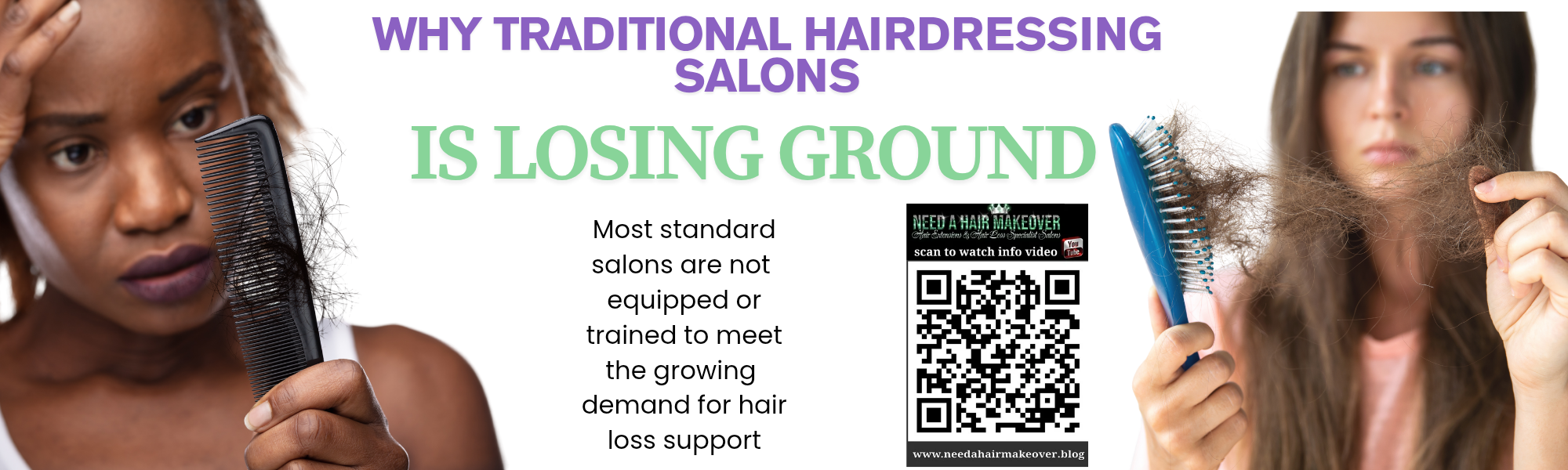
Why traditional hairdressing is losing ground

Most standard salons are not equipped or trained to meet the growing demand for hair loss support.

With their focus still on aesthetics, they often overlook the deep emotional and physical toll hair loss can bring. Clients facing hair thinning, alopecia, traction damage, or post-chemotherapy loss need more than a good blow-dry—they need specialists.
And this is where Need a Hair Makeover Specialist Salon Franchise steps in.

A Specialist Salon for a Specialist Market

At Need a Hair Makeover, they specialise in non-invasive, confidence-restoring hair loss disguising techniques:

Hair toppers, toupees, lace frontals, bespoke wigs, 18 integration hair extension systems and infrared and laser hair regrowth theraphy.

Customisable treatments for traction alopecia, hormonal hair loss, and post-chemo recovery

Ongoing care and support for long-term client relationships and producing supportive documents for insurance claims for cranial prostheses.

There approach is holistic, empathetic, and highly profitable—with specialist services clients are actively seeking but struggling to find in conventional salons.

Who We’re Looking For

We’re seeking passionate individuals and salon owners who want to:

Be part of the £88 billion hair loss solution economy

Offer transformational services that change lives

Join a proven brand led by industry pioneer Diane Shawe, an award-winning hair loss specialist, entrepreneur, and published author

Whether you’re an existing salon looking to expand or an entrepreneur ready for your next big move, this franchise opportunity is your gateway to a high-impact, future-proof business.

Treating thin, balding or damaged hair

Act Now: The Demand is Growing Daily

With waiting lists growing, regions being reserved, and awareness accelerating post-pandemic, now is the time to act. We offer full training, brand support, client acquisition tools, and a turnkey business model tailored for long-term success.

Register your interest today and secure your exclusive territory before it’s gone:
Have a quick chat at https://brochure.needahairmakeoverfranchise.co.uk or request more info at Franchise Association

For those ready to evolve, expand, and truly make a difference—Need a Hair Makeover is your next step.

… { … “@context”: “https://schema.org”, “@type”: “BlogPosting”, “headline”: “Why traditional hairdressing is losing ground”, “author”: { “@type”: “Person”, “name”: “Diane Shawe” }, “datePublished”: “2025-06-10”, “publisher”: { “@type”: “Organization”, “name”: “Need a Hair Makeover”, “logo”: { “@type”: “ImageObject”, “url”: “https://www.needahairmakeover.com/images/logo.png” } }, “mainEntityOfPage”: “https://www.needahairmakeover.blog/hair-extension-myths” }

Say Goodbye to Swelling and Pain with Leg Compression Therapy — Here’s Why It Works

Leg compression theraphy to reduce swelling, improve circulation

Swollen ankles, poor circulation, aching knees — they’re not just annoying. They can seriously affect your day, your sleep, and your quality of life. If you’ve been putting off treatment because getting a doctor’s appointment takes weeks (or costs too much), we’ve got good news: relief is closer and easier than you think.

Introducing Pulsio Compression Therapy, now available at Need a Hair Makeover Salon — a powerful, non-invasive treatment that’s helping people just like you feel better in just 30 minutes.

So, what exactly is compression therapy? And why does it work?

Let’s break it down. Pulsio Compression Therapy uses specially designed boots that rhythmically compress and release pressure up your legs, stimulating circulation and flushing out excess fluids. This mimics the natural way your body moves blood and lymph through your system — something that often slows down due to age, injury, or simply sitting too long. If you’re on your feet all day, or barely moving enough, your circulation suffers. That’s where this therapy comes in.

Here’s what it helps with:

Reduces swelling in feet, ankles, and calves

Eases joint and muscle pain in knees and legs

Improves blood flow, especially for those with poor circulation

Speeds up recovery for active individuals or anyone healing from injury

Relaxes tired, heavy legs so you can sleep better and move easier


And unlike bulky, time-consuming medical treatments, Pulsio Therapy is quick, comfortable, and effective — without the hassle of changing clothes, needles, or long waiting times. You just sit back in our relaxing salon, let the device do the work, and walk out feeling noticeably lighter and looser.

We’re offering 30-minute sessions for just £25 — making this one of the most affordable, accessible wellness treatments out there. Whether you’re dealing with post-workout fatigue, long-term swelling, or just want to feel better fast, this therapy is a game-changer.

Why at a salon? Because we believe wellness should be part of your everyday routine — not something you have to wait weeks for. At Need a Hair Makeover Salon, we’ve created a calming, welcoming space where you can address real issues without the stress of medical appointments. You don’t even need to undress — just slip on the compression boots over your clothes and relax.

Many clients feel relief after just one session. Over time, with regular use, the benefits stack up. Imagine your legs feeling energized again, your joints less stiff, and that persistent ache finally easing up.

You don’t have to suffer — and you definitely don’t have to wait. Book your Pulsio Compression Therapy session today and experience the difference for yourself.

Visit http://www.needahairmakeover.com to reserve your spot now.
£25 | 30 minutes | No changing required Book here http://www.needahairmakeover.com
Just pure relief — finally.

#LegRelief #CompressionTherapy #NoMoreSwelling #PainFreeLegs #CirculationBoost #WellnessAtTheSalon #Pulsiocompression

INeedAHairMakeover

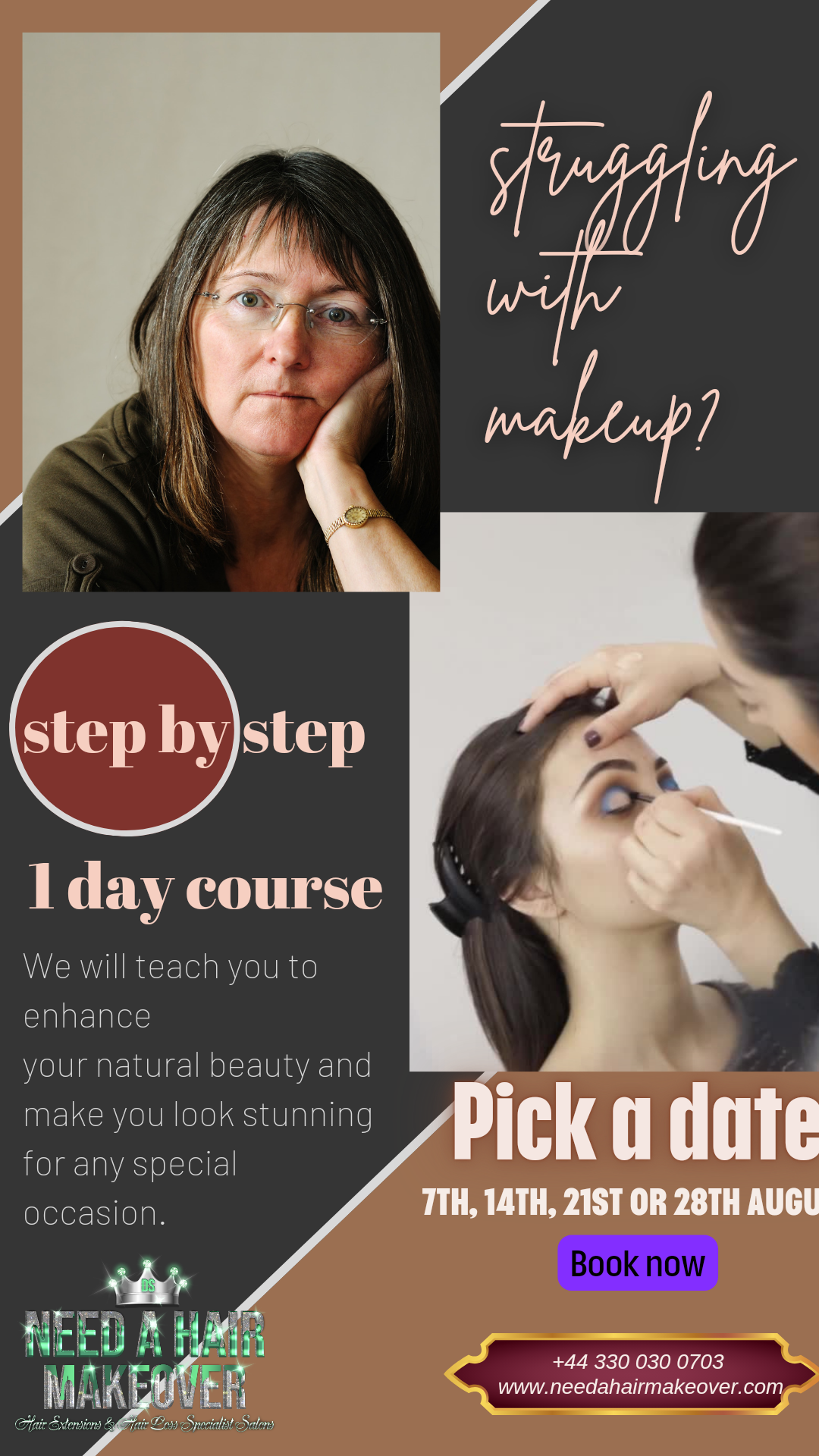
Transform Your Look with our Exclusive £55 One-Day Makeup Course!

Are you tired of the daily makeup struggle? Ready to transform your look and boost your confidence? Well, I am Diane Shawe of Need a Hair Makeover and we’ve got something exciting just for you! Because some of my clients asked, I am bringing you an exclusive one-day makeup course for just £55.00!

In this hands-on course, you’ll learn to master casual, elegant, and glamorous looks, step by step. Say goodbye to makeup frustration and hello to flawless beauty!

Join us from 10:30 AM to 4:00 PM, and yes, you can bring your favourite makeup products!

My expert guidance will help you enhance your natural beauty and feel fabulous every for all skin types.

Don’t miss out on this incredible opportunity! Request more info and register now at http://www.needahairmakeover.com. That’s http://www.needahairmakeover.com.

Unlock your makeup potential with me today on my one-day course. Sign up today and shine like never before! See you there! There’s more to adding hair!
book your spot today.

Unmasking the Underground World of Food Delivery Apps: A Shocking Investigation by i

Inside the Thriving Black Market for Illicit Deliveroo of Uber Eats and Just Eats Drivers

A delivery driver hands over your takeaway on a Friday night but you probably don’t give the exchange too much thought.

The convenience of food delivery apps like Deliveroo, Uber Eats, and Just Eat has revolutionised the way we order meals, but a dark underblly exists within the industry. Our blog post delved into the illicit black market of rented accounts, shedding light on the potential risks of unknowingly opening your door to substitute drivers. The investigation carried out by i revealed a concerning trend of individuals bypassing the rigorous vetting process by renting profiles, raising questions about the safety and security of customers. As you place your next food delivery order, it’s important to be aware of these challenges and consider the implications of who may be delivering your meal. Stay informed and vigilant in utilising these services to protect yourself and your family because the truth is you don’t really know who you’re opening your front door to.

An i investigation has uncovered a growing black market for renting accounts on apps including Deliveroo, Uber Eats and Just Eat, with more than 100,000 people subscribing to Facebook groups where people can rent, buy or sell profiles in the past three years.

Your food may have been dropped off by a ‘substitute’ rider, someone who has rented a profile on an app from another worker without having to register and will likely have avoided the strict vetting process official riders undergo.

It is a loophole that can be exploited by those who would fail a criminal background check or are in the country illegally, with activity on the Facebook groups, seen by i, indicating the majority of people wishing to rent out a profile on an app do not go through any level of vetting and do not meet the legal criteria to work in the UK.

Three women’s rights groups said they were concerned by the findings of i‘s investigation and warned that women were being put at risk of violence and sexual harassment by the practice of allowing substitute drivers to be effectively untraceable

They also fear that if an official account holder is blocked from using an app because of a complaint, they can go onto rent another account anonymously through the Facebook black market.

Andrea Simon, director of the End Violence Against Women Coalition (EVAW), urged the “multibillion pound corporations” to take urgent action and invest in making their services safer for women

“We also know women don’t usually report this kind of harassment for many reasons – including safety concerns when a perpetrator knows where you live, or the fear of not being believed or taken seriously,” she said.

There are also concerns that some substitute workers are being exploited by traffickers and gangs in breach of the Modern Slavery Act. One expert said that the UK’s “hostile immigration environment” is pushing people into precarious work and that more scrutiny should be on Government policy and the business model of food delivery companies.
Inside the thriving black market

Official delivery workers are also frustrated by the practice, arguing that undocumented migrants are willing to take the poorest paying jobs, which impacts efforts to campaign for better pay and working conditions from the food delivery giants. One union representative claimed the firms are exploiting both sets of workers for profit.

Zamir Dreni, a spokesperson for another union, the App Drivers and Couriers Union (ADCU) told i the “majority of workers are good people” but there is “this loophole that allows some bad people to come through.” “They are not vetted so they could do anything,” he added.

Food delivery giants not only know about the use of substitutes, but advertise it as a perk, saying it gives riders greater flexibility. Just Eat used to promote their scheme as “one of the many positives” of working with the company, but removed this line from its website following i’s investigation.

Currently none of the companies ask for a record of who a substitute rider is but i understands that Deliveroo is now committed to doing so in the future. Uber Eats and Just Eat did not say if they would also take similar action when asked.

There are 4.7 million gig economy workers in the UK, with figures for Deliveroo and Uber Eats in recent years suggesting the two companies have more 120,000 riders between them. Just Eat has under 2,000.

But firms are facing pressure to close this loophole entirely or to enforce stricter rules to ensure background checks are properly carried out. The Home Office said it already had agreements in place with delivery companies to strengthen recruitment and vetting processes and that it was working to crack down on “enablers of illegal migration”.

All three of the food delivery giants currently put the responsibility of background checks for substitutes on the rider who is officially registered to an account.

Deliveroo, Uber Eats and Just Eat all use specialist companies when they need to vet new riders. Once verified, they are permitted under employment law to give a substitute worker access to their account to carry out jobs on their behalf.

The companies do not extend the same resources to a person wishing to hire a substitute, however Deliveroo does offer some money towards the cost of a background check.

One prospective renter ran into problems with their background check and returned to the group asking to rent an account instead© Provided by The inews

Analysis by i shows demand for renting delivery app profiles through Facebook is growing. One such group has gained almost 28,000 members in less than 18 months.

People using these Facebook channels to find work can pay an up-front deposit and a weekly rental fee, which is usually between £70 to £100 a week, to get a rider account. Buying a profile is less common, with some fetching up to £5,000. There are no caps on how much a rider can charge but the rules state they must pay the courier.

A substitute rider operating in the black market is vulnerable on a number of levels. For example, they are required to hand over large sums of money up-front and they are reliant on the account holder honouring their agreement and transferring their earnings whether they are renting or have bought the profile.

The delivery companies said they are working with the Government to improve issues around substitute riders. They added that they have a “zero tolerance approach” towards those who are in breach of their legal obligations when working or who harass or harm customers.

INSIDE THE GROUPS

A rider receives a job, usually transporting food from restaurants and shops to people’s homes, through an app on their phone.

i spoke with eleven people looking for a substitute delivery app account on Facebook. All of them said they were undocumented migrants – people working in the UK illegally.

One man explained that he came to the UK on a tourist visa. He said: “I am a person who does not have papers, and now I am disabled, without work, without [a] residence, without money.”

“I have spent a lot of time and a lot of money in the Home Office and they always ask for proof and proof, I deliver it and they reject me”
Download a copy from amazon kindle

Download a copy from amazon

Others claimed they had worked legally before but had then been hit by administrative delays when they renewed their paperwork and had to find a way to keep earning money.

An Algerian man, who was looking for an account in north London, told i changes to immigration rules had confused him and his paperwork had expired. He said he is unable to pay for a solicitor to help so has turned to free sources of assistance while he tries to find work for the delivery apps through the black market. “I [have] been to the Citizens Advice bureau last week and they are going to help me and I’m waiting for a letter from HM Revenue.”

“My problem is I’m waiting for my share code [proof of right to work] from [the] immigration office because I had an old residence permit.”

He says when the UK left the EU, he didn’t realise this would mean he needed a new permit.

“I didn’t know. I sent a letter to the Home Office and they asked me for proof [of work] from 2010 to 2020. I don’t have the money to get a solicitor… I’m too old to chase all the companies I was working at [as] most of them have closed down.”

i identified 15 groups operating on Facebook that were trading profiles on delivery apps. The largest had almost 28,000 subscribers, while at least four others had more than 10,000 members. While not every person in these channels will be looking to trade an account, and some could be fake profiles, i excluded groups that had fewer than 200 people in them, were not active, not UK-focussed or did not have a large number of recent requests.

Most of these groups were created in 2023, but all were made in the last three years and had more than 100,000 members combined.

The practice is gaining in popularity. i analysed the date members joined the largest page and found a steady increase in the last few months.

It’s impossible to know how many riders use a rented account but anecdotally, official delivery workers complain that it is happening in large numbers.

One said: “A lot people here in Essex are renting. Most of them are here illegally with no visa in the UK. I don’t know how the police in the UK don’t check.”

Facebook removed all of the pages flagged by i. The platform’s rules do not permit listings that promote the sale of digital accounts.

WOMEN’S SAFETY

Official workers, substitutes and customers described incidents where riders had “flirted” or sexually harassed customers, which had led to complaints and the accounts they were using being shut down.

Becca* ordered groceries using her Deliveroo app when she caught the flu earlier this month. She opened the door in her pyjamas, not expecting to be out of her sick bed for long.

The rider checked her ID because she bought paracetamol but she claimed he stared at it for an unusually long time, to the point that she began to feel uncomfortable.

As he eventually handed her the bags, she said he came towards her to the point she felt forced to lean back.

“Then he said to me ‘beautiful girl, lovely girl’, and was leaning in,” she recalled.

Becca said, as a woman in her twenties who lives alone in London, she froze and felt panicked. She said she managed to shut the door, but that he quickly knocked again claiming he’d dropped his keys in one of the bags. He attempted to come into her flat but was interrupted when a friend entered the room. He then left.

“I haven’t reported him as I’m afraid because he knows where I live,” she said. Becca hadn’t checked if he matched the rider’s photo on the app but said knowing he may not be registered with Deliveroo was “a terrifying thought”.

Becca said: “It’s concerning because they can essentially do what they want without any repercussions. I can’t really do anything to stop it or prevent it from happening.”

“He said to me ‘beautiful girl, lovely girl’, and was leaning in”

*Becca, who was sexually harassed by a Deliveroo rider

She’s not the only one to have had an inappropriate experience with her rider. A search on X, previously known as Twitter, shows more than 20 posts from people complaining to UberEats, Deliveroo or Just Eat. While i has been unable to independently verify each complaint, some people provided screenshots as evidence.

One woman messaged Deliveroo to complain about being sent a message calling her “sexy”, as well as a winky face emoji and a smiling, devil horns emoji.

Another complained about a rider sending her his number after trying to flirt with her on the app about her appearance.

Jamie Klingler, co founder of social justice group Reclaim These Streets, told i she had a male Uber Eats rider arrive at her front door when the app had shown a woman would be delivering her food. She reported it but got an automated response.

“We shouldn’t have to worry if our delivery driver might use our addresses to scope our homes for burglaries or worse use our addresses to harass and stalk us; but it is a real concern. And when your delivery driver isn’t the person whose picture you have been supplied, it breaks the little social pact of agreement that they will deliver the food never to use our address in the future.

“We all know that there is calculated risk in sharing any of our personal data, but those risks go up exponentially if you are a woman living alone, but are we not meant to use services that can help our efficiency or convenience out of fear?”

Kay Wesley, deputy leader of the Women’s Equality Party, said: “This is clear evidence that men are abusing the system and that as a consequence women are facing sexual harassment and are feeling unsafe in their own homes.

“There are also risks for drivers… A system that allows this scale of abuse is clearly failing, this simply isn’t good enough.”

It’s not just women who have expressed concerns. One man contacted UberEats after having a male rider turn up despite a woman’s photo being on the account.

He wrote: “@UberEats twice now your drivers don’t much [match] the photos. This makes me feel unsafe. Drivers are using women’s accounts. You clearly have a safety loophole.”

EXPLOITED AND TRAFFICKED

There are concerns some of the substitute riders are being trafficked into the UK with promises of legitimate employment, only to find themselves trapped in a cycle of debt and threats.

One rider was helped by anti-trafficking charity, Hope for Justice. Daniel*, speaking through the charity, said he had paid nearly £15,000 to traffickers who moved him from South America to the UK with the offer of a well-paying job in construction.

When he landed in the UK, this promised job failed to materialise and his traffickers demanded more money. They made him work for a leading food delivery service, with them pocketing his earnings. They threatened his family if he refused to do what they said and beat him.

“The more I paid these men, the debt would just increase,” he said. “We were really scared.”

“My wife was taking my son to school and she was stopped by one of them and they told her ‘tell your husband not to tell anyone anything, not to open his mouth or to share any information, or the worst will happen.’”

It’s difficult to know how common it is for trafficking victims to be made to work under a different person’s account on a food delivery app.

Adam Hewitt, from Hope for Justice, told i that while the big delivery apps have published measures to tackle modern slavery because they know it is a high-risk industry for this type of crime, more needs to be done.

Some of the current measures the delivery firms say they use to protect against modern slavery include identity checks on riders who sign up with them directly and monitoring accounts for suspicious behaviour. Deliveroo, Uber Eats and Just Eat all feature commitments to tackling modern slavery on their websites.

“The more I paid these men, the debt would just increase… We were really scared.”

*Daniel, a trafficking survivor who was made to work for a gig economy app delivering food

Mr Hewitt said: “We have seen cases of criminal gangs who exploit vulnerable people through forced labour using fake profiles on delivery apps, so they get the money from their victims’ work.

“Real-world evidence from trafficking victims we support shows us that the companies are not all doing enough.”

It’s something other riders have noticed too. One man, who has an official delivery account, claimed there is a channel of people coming to the UK to work on Deliveroo and Uber Eats from South America.

“They are promised by other riders from [South America] who are already here.. that once they get here they will be given a delivery platform account so they can start making money straight away but it will cost them £5,000.”

There are not just concerns for those who have been trafficked into these jobs. Some campaigners say the UK’s immigration rules have created a “hostile environment” for people who can’t prove they have a right to work in the country by blocking their access to public services and pushing them into poverty.

Dr Ella Cockbain, an associate professor at University College London who researches human trafficking, smuggling and exploitation, told i: “The UK government’s hostile environment policies make life incredibly difficult for people who don’t have the legal ‘right to work’ or recourse to public funds.

“How else do we expect them to survive other than working in the margins of the labour market? But there, they are likely at greater risk of labour exploitation.”

She added that “people working in the gig economy need better rights and protections, but rather than blaming irregular migrants desperately trying to earn money to survive through account sharing, we should be focusing on companies that make huge profits off exploitative business models and a government that does too little to protect precarious workers”.

HOW THIS IMPACTS OTHER DELIVERY WORKERS

Delivery workers who are directly signed up to the apps said it is not just substitute riders who secured accounts for rent on the Facebook black market who are being exploited.

Many argue the food delivery app companies have deliberately turned a blind eye to undocumented workers because it makes it hard for riders to, as a group, push for higher earnings.

Zamir Dreni, a spokesperson for another union, the App Drivers and Couriers Union (ADCU) has alleged that: “This is the loophole [Uber Eats, Deliveroo and Just Eat] have created to benefit themselves because these guys are illegal. They will take anything given. They won’t raise their voice, they won’t put in a complaint.”

The three companies said they take background checks and lawful working seriously and reject any claims of unduly benefiting from the substitute system.

Some riders i spoke with say those who rent accounts are “desperate” to earn so they do not want to take the financial hit of striking for better conditions and are also willing to pick up the worst paid jobs.

David* said: “They take all the cheap orders so the delivery platform can see they can offer less and less money. Even those as low as £2.80 for a three mile job.”

Another named Elliot* accused some of those working illegally of stealing food from pick-ups to save money and said he was frustrated at those who don’t pay tax and ride without insurance.

Gig economy workers have been striking for better pay, improved working conditions and to be seen as employees rather than self-employed contractors.

Substitution is a key aspect of self employment and is common among contractors but the Independent Workers’ Union of Great Britain (IWGB) said the substitute scheme was used by gig economy companies to strengthen their case that riders are self-employed rather than employees.

This is something Uber Eats, Just Eat and Deliveroo have strenuously denied and argued that riders want to work with this flexibility.

Deliveroo uses facial recognition technology to confirm the identity of account holder riders and will be rolling this out to include substitutes once they have created a register for rented accounts. Uber Eats asks riders to submit photos of themselves for verification at different times, but does not require photo verification of substitutes.

In November last year (2023) , Uber Eats, Deliveroo and Just Eat were told by government officials to implement stricter controls on substitute accounts.

In response to i’s findings, a Home Office spokesperson said: “We have led engagement with these companies to end the use of unverified substitution. An agreement is already in place for businesses to strengthen existing recruitment and vetting processes, and we will continue this work to stamp out enablers of illegal migration, and prevent unacceptable exploitation of workers.”

The three food delivery giants said they were aware of concerns around the issue of substitution.

A Deliveroo spokesperson said the company takes a “zero tolerance approach” towards any rider in breach of their legal obligations when working with the company. They said the firm will immediately cease working with any rider found to be without the right to work in the UK.

“We take our responsibilities extremely seriously. We have introduced facial recognition technology which will help to counter any abuse on the platform and we are strengthening this in the coming months. We will continue to work in close collaboration with the Home Office to support efforts in this area,” they said.

“The safety of our customers is our top priority and Deliveroo has a zero-tolerance policy in place to deal with any harassing, discriminatory, or offensive behaviour. If we become aware of reports of this nature they are immediately escalated, we will work with the authorities to fully investigate if necessary, and cancel that riders’ Deliveroo account to prevent them from working with us again.”

An Uber Eats spokesperson said: “We understand that there are concerns around this issue, and we are working closely with the government and want to find a solution. All couriers who use the Uber Eats app must pass a criminal background check, be over the age of 18 and hold a valid right to work in the UK. Any courier that fails to meet these criteria will lose access to the app.”

A Just Eat spokesperson said: “At Just Eat, we have high standards and a robust criteria in place for couriers delivering on our behalf. This includes ensuring couriers are over the age of 18, carrying out basic criminal checks (DBS), and making sure they have the right to work in the UK.

“Under the UK’s employment law, self-employed independent couriers have the legal, unfettered right to use a substitute. Legally, this means the courier account-holder is responsible for ensuring their substitute meets the necessary standards to deliver on our network.

“If we find that our high expectations are not met, we will immediately take action, including removing couriers from our network.

“We are working closely with policymakers and others in the industry to develop solutions which ensure couriers substituting their work do so safely in accordance with the law.”

*Some names have been changed

Source https://www.msn.com/en-gb/news/world/inside-the-thriving-black-market-for-illicit-deliveroo-uber-eats-and-just-eat-drivers/ar-BB1jXFEC

© Provided by The i

Get a copy of #DianeShawe latest ebook. Visit available on #amazon #amazonkindle and #googlebooks https://www.amazon.co.uk/stores/Diane-Shawe/author/B0052WG8V6?


From Burnout to Breakthrough: Revive Your Business, Recharge Yourself by Diane Shawe


Exhausted, overwhelmed, and staring down the barrel of a business that feels like it’s running on fumes? You’re not alone. The post-pandemic landscape has become a graveyard for even the most resilient entrepreneurs. Customers demand more for less, good staff are rarer than unicorns, and online competition is a relentless beast gnawing at your market share. You’re juggling a thousand tasks, sacrificing sleep, sanity, and perhaps even your relationships, all while watching your bank account shrink faster than a wool sweater in a dryer.

But here’s the good news: it doesn’t have to be this way. From Burnout to Breakthrough is your roadmap to escaping the quicksand of entrepreneurial despair and reclaiming your passion, your energy, and your bottom line. This book isn’t about quick fixes or empty platitudes. It’s about real-world strategies, actionable steps, and a profound shift in mindset that will help you transform your business and, in turn, transform yourself.

Forget the hustle-and-grind mentality that got you here. We’re going to ditch the burnout blender and build a sustainable, thriving business that fuels your spirit, not drains it. We’ll explore:

• Identifying the hidden root causes of your business woes, so you can stop treating the symptoms and cure the disease.

• Rethinking your relationship with work and success, to break free from the hamster wheel and reclaim your time, energy, and well-being.

• Unleashing your inner innovator, to discover new revenue streams, attract ideal clients, and differentiate yourself from the competition.

• Building a team that inspires and empowers, so you can lighten your load and focus on what you do best.

• Developing resilience and adaptability, to weather any storm the market throws your way.

This book is your invitation to a revolution. A revolution where success isn’t measured by the size of your bank account, but by the joy you find in the journey. Where you’re not just surviving, but thriving, both personally and professionally. Where you wake up each morning with a spark in your eye and the fire of passion burning bright.

Are you ready to step off the burnout treadmill and onto the path to breakthrough? Then turn the page and let’s begin.

This is your story. This is your comeback. This is your time to rise from the ashes and create a business and a life that truly ignites your soul.

Welcome to the breakthrough.

This book is not a pep talk. It is a lifeline. A guide forged in the crucible of struggle, a map drawn with the sweat and tears of those who’ve stared into the abyss of failure and dared to climb back out, stronger, wiser, and more alive than 

Get your copy here https://amzn.to/3HWswxM