A positive mindset is important because it shapes how we perceive and respond to life’s challenges, influences our emotional well-being, and impacts our physical health.
When we maintain a positive outlook, we’re more likely to approach situations with resilience, creativity, and determination, making it easier to overcome obstacles and find solutions.
Positivity also reduces stress, enhances relationships, and can even improve productivity and success in personal and professional endeavors.
To develop a positive mindset, focus on the following areas:
1. Gratitude: Practicing gratitude helps shift your focus from what’s lacking to what you already have. A daily habit of listing things you’re thankful for can foster a sense of abundance and well-being.
2. Self-Talk: Pay attention to how you talk to yourself. Replace negative thoughts with constructive and affirming language. Positive affirmations can reshape your inner dialogue over time.
3. Surround Yourself with Positivity: Be mindful of the company you keep. Surround yourself with people who uplift and support you, as their energy will influence your mindset.
4. Focus on Solutions, Not Problems: When faced with challenges, direct your attention toward finding solutions rather than dwelling on the problem. This mindset encourages action and empowerment.
5. Practice Mindfulness: Being present and aware helps to reduce anxiety about the future or regret over the past. Mindfulness encourages you to appreciate the moment, creating a more grounded and positive outlook.
6. Embrace Challenges as Opportunities: Reframe setbacks as opportunities for growth and learning. This perspective builds resilience and helps you stay optimistic, even in difficult situations.
7. Set Realistic Goals: Setting and achieving small, realistic goals creates a sense of accomplishment and builds confidence, reinforcing a positive mindset.
By consistently focusing on these areas, you can gradually cultivate a more optimistic, resilient, and positive way of thinking.
Is Your Mindset Holding You Back? How Self-Limiting Beliefs Sabotage Success
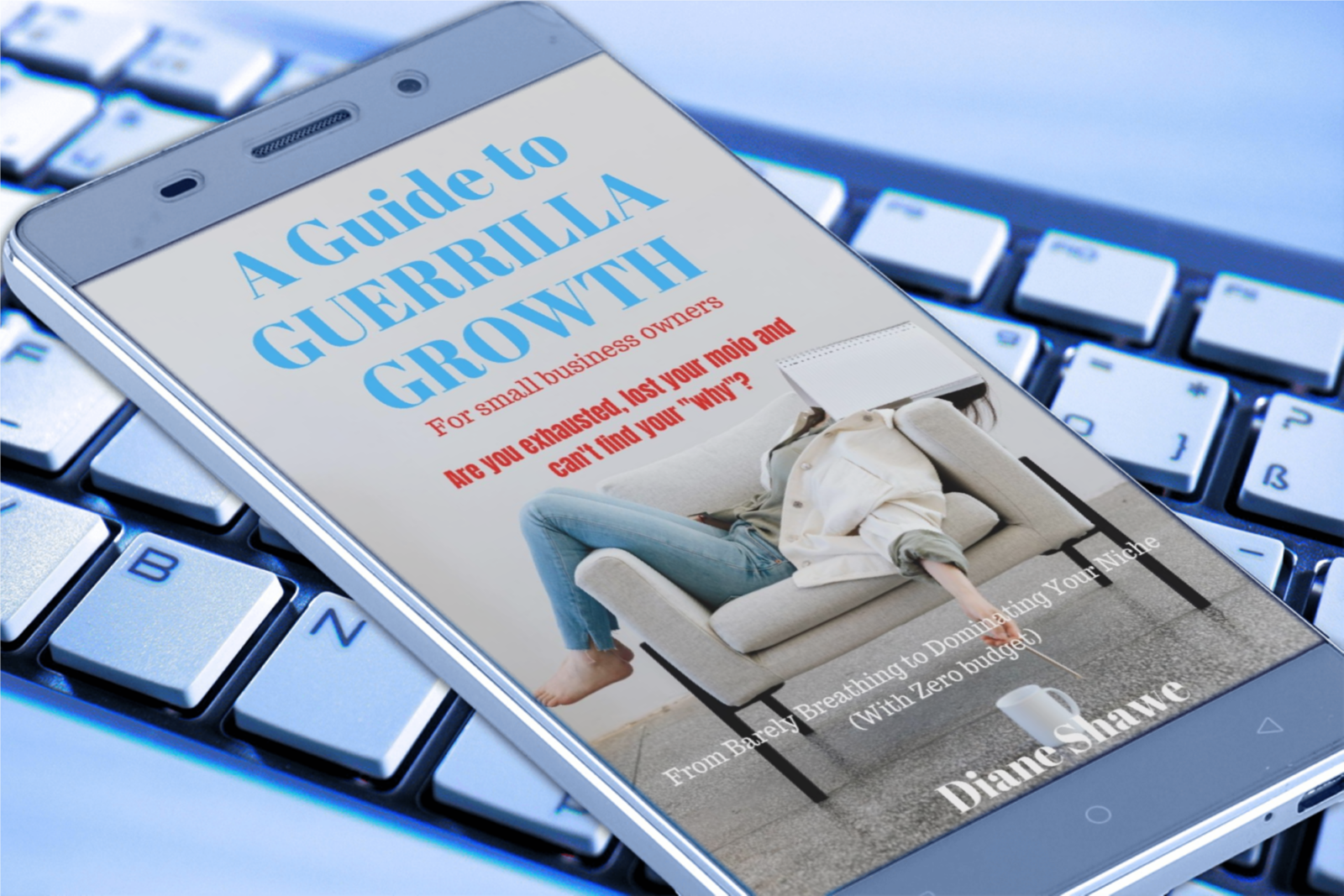
Introducing Diane Shawe’s latest ebook, “Guerrilla Growth: From Barely Breathing to Dominating Your Niche (With Zero Budget)”, available now on Amazon here https://amzn.to/3HWswxM.
This powerful guide is designed for entrepreneurs and business owners looking to grow their ventures without a significant financial outlay. It outlines strategic methods to carve out a niche in competitive markets, offering practical tips on how to innovate and scale with minimal resources.
The book delves deeply into the importance of mindset for business success. Diane emphasises that adopting a *guerrilla* mindset is crucial, meaning you must be adaptable, resourceful, and determined to succeed regardless of financial constraints. The mindset she advocates is one of relentless problem-solving, seeing every obstacle as an opportunity to think outside the box and maximize whatever resources are available. By cultivating resilience, creativity, and a laser focus on growth, readers can learn how to move from merely surviving in their industry to truly dominating it.
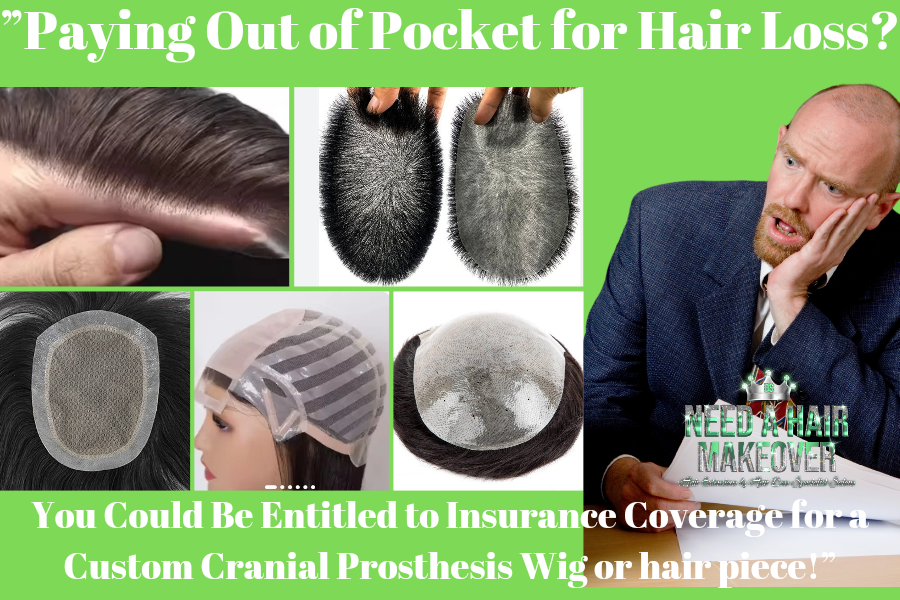
”Paying Out of Pocket for Hair Loss? You Could Be Entitled to Insurance Coverage for a Custom Wig!”
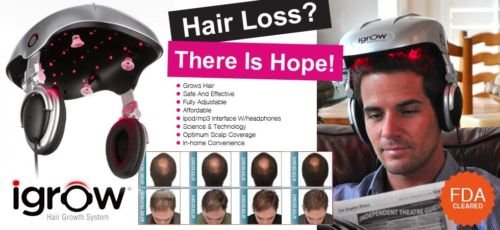
Thousands of men and women spend significant amounts of money on wigs and hairpieces each year to manage their hair loss, often without realising they may be eligible for insurance coverage. Hair loss, when left undiagnosed, can feel overwhelming, leading many to pay out-of-pocket for temporary solutions. However, with an official medical diagnosis, you may qualify for a cranial prosthesis that is covered by your insurance.
”Think You’re Not Eligible for Hair Loss Coverage? Here’s Why You Should Check Your Insurance Today!”
There are many types of diagnosable hair loss conditions, including:
– Alopecia Areata: Sudden patchy hair loss due to an autoimmune condition.
– Alopecia Totalis and Universalis: Complete hair loss on the scalp or entire body.
– Telogen Effluvium: Temporary hair shedding caused by stress, illness, or hormonal changes.
– Androgenetic Alopecia: Also known as male or female pattern baldness, caused by genetics.
– Traction Alopecia: Hair loss due to tight hairstyles or hair extensions.
– Chemotherapy-Induced Alopecia: Hair loss caused by cancer treatments.
– Scalp Psoriasis or Dermatitis: Skin conditions leading to hair loss due to inflammation or infection.
– Trichotillomania: A psychological condition where individuals pull out their own hair, leading to hair loss.
– Burn or Trauma-Related Hair Loss: Resulting from accidents, injuries or surgery scarring to the scalp.
Cranial Prosthesis, or hair systems, are custom-made solutions designed to address hair loss due to medical conditions like alopecia, chemotherapy, scaring from accident or surgery or trichotillomania. Many insurance plans cover these medical devices, potentially saving you thousands in the long runCranial Prosthesis, or hair systems, are custom-made solutions designed to address hair loss due to medical conditions like alopecia, chemotherapy, scaring from accident or surgery or trichotillomania. Many insurance plans cover these medical devices, potentially saving you thousands in the long run.
Click to gain access to a FREE 14-page guide to discover everything about cranial Prosthesis and how to claim through insurance at the following link https://bit.ly/3z2HqC6
Starting a business just before the pandemic presented unprecedented challenges, especially for women, particularly Black women, who often face additional barriers in the entrepreneurial landscape. As rising costs squeeze customers’ wallets, small businesses struggle to stay afloat. The last thing these businesses need is added pressure from banks, insurance companies, accountants, and regulatory bodies. These institutions, while focused on combating organised crime and corruption, must also develop strategies that champion genuine SMEs caught in this turmoil, rather than exacerbating their struggles. Where is the support for these resilient businesses fighting to survive? Why can’t the banks walk and chew gum and the same time?
Setting up a limited company in the UK is remarkably quick and easy, often taking just a few minutes online. However, the simplicity of the initial setup can be deceptive, as it doesn’t reveal the full extent of the responsibilities and potential pitfalls that lie ahead for small business owners. Beyond the excitement of having your own company name, there are numerous regulatory obligations that can catch new entrepreneurs off guard. These include regular filings with Companies House, maintaining accurate financial records, and ensuring compliance with tax obligations—whether or not your business is generating income.
Even if your business isn’t earning money, failing to meet these requirements can result in penalties, fines, or even the risk of your company being struck off the register. For instance, filing annual accounts and confirmation statements is mandatory, and missing deadlines can lead to significant fines. Additionally, the intricacies of VAT registration, understanding corporation tax, and dealing with PAYE (if you have employees) add layers of complexity that aren’t immediately obvious when you first set up your company.
Moreover, small business owners must be prepared for potential scrutiny from HMRC, especially as the government tightens regulations to combat financial crime and tax evasion. The reality is that running a limited company involves much more than just pursuing your business idea—it requires navigating a complex web of legal and financial responsibilities. Understanding these obligations from the outset is crucial to avoiding the unexpected consequences that can arise, ensuring your small business thrives rather than gets bogged down in regulatory challenges.
I was very excited when I started my small Specialist Salon business in 2016. The aim was to trade it for 3 years, and then develop a Franchise strategy and expand the services throughout the UK. However the Pandemic put a spanner in the works, not just for my business but many others. I persevered and then came the huge utility hike, my supplier took £10,000 for 6 months supply, there was nothing I could do, it left my account depleted and I had to start trading out of my cashflow. It has been a really challenging time navigating and micro managing the finances in order to meet all the outgoings, leaning in until I could turn the corner.
The next challenge was to get all the accounts up to date, filings etc., most of the costs for accountants have become expensive and eye watering, so I had to look at ways in which I could prepare my own accounts aided by online software which I had to learn and then update in between any spare time I got.
I could see the light at the end of the tunnel, managed to bring my VAT all up to date, Get my company accounts filed and in the process of filing the corporation tax once the reference number has been received via company house.
My next focus was on increasing revenue, I started to micro advertise, enquiries just starting to come in and now my biggest challenge is with my bank Starling.
The recent scrutiny of banks by financial regulatory bodies has led to a reactionary approach where banks are now indiscriminately targeting small businesses that are late with their filings. Instead of developing systems to guide and support genuine UK businesses—many of which may be unaware of their filing obligations—banks have opted for a sweeping purge strategy. (Barclays being the leader) By threatening account closures without proper explanation or support, they have created confusion and panic among small business owners who are often unsure of what is happening and how to resolve these issues.
This approach is particularly problematic because it fails to distinguish between businesses that are struggling due to genuine reasons, such as the pandemic and rising costs, and those that may be involved in nefarious activities. Many small business owners, already stretched thin with day-to-day operations, are not equipped to navigate the complex regulatory landscape without guidance. Instead of receiving the help they need to stay compliant, they are met with threats and closures that could devastate their business.
The banks’ strategy is short-sighted and fails to consider the long-term impact on the UK’s small business ecosystem. By alienating small businesses, many of which have the potential for future growth, banks are undermining the very sector that could contribute significantly to the economy. What’s needed is a more nuanced approach that provides education, support, and a clear path to compliance, rather than punitive measures that risk driving genuine businesses into insolvency or forcing them to shut down altogether. So I found out from a recent article highlighting Starling Bank’s crackdown on debtors following an investigation by the Financial Conduct Authority (FCA) into its financial crime controls.
While Starling justifies its actions as part of tightening financial discipline, this aggressive stance appears to disproportionately target small businesses (which was there main recruiting strategy when they launch there no physical location online solution), that may not yet be profitable but are long-standing, having survived through the pandemic and rising costs. This short-term approach by Starling Bank risks alienating small businesses that have potential for future growth, especially those that have already demonstrated resilience during challenging times. By indiscriminately pushing out these businesses without offering constructive support or alternatives, Starling Bank seems to be prioritising immediate financial metrics over long-term relationships, potentially causing harm to the broader business ecosystem.
The treatment of these small businesses, many of which have been established for over five years, raises concerns about discrimination and a lack of recourse. The bank’s actions overlook the fact that many of these businesses were severely impacted by the pandemic, which should warrant understanding and support rather than punitive measures. In essence, Starling’s approach along with other banks could be seen as merciless and unsupportive, especially for businesses still navigating the economic aftermath of the pandemic.
This strategy could backfire, damaging Starling’s reputation among small business owners who feel unfairly targeted and abandoned by a bank that once positioned itself as a champion of SMEs and built for us.
Suggested Measures: Banks must consider the well-being of SME owners, as many rely solely on a single business account for all their financial needs. Temporarily suspending an account can have devastating effects, leaving business owners without access to essential funds for daily operations, payroll, and personal expenses. Such actions can cause extreme stress and financial instability, potentially jeopardising the survival of the business. Banks should implement more empathetic and supportive approaches, offering guidance and alternatives rather than immediate suspensions, to ensure the financial health and stability of these entrepreneurs.
To address the issue of banks indiscriminately targeting small businesses for account closures due to missed filings, several measures can be implemented:
Enhanced Communication: Banks should proactively communicate with businesses about upcoming filing deadlines and offer reminders well in advance. Clear guidance on what needs to be done can prevent many issues. There is the technology to do this
Support Systems: Establish dedicated support teams or resources that provide step-by-step assistance to small businesses, helping them navigate the complexities of regulatory compliance. They might find that these businesses once they understand and have become use to the governance rules, that less and less support is needed.
Tiered Response: Instead of immediate threats of account closure, banks could implement a tiered response system, starting with warnings and offering assistance to rectify the situation before taking drastic measures. They need to be clear about the problem instead of hiding behind confidentiality rules.
Education and Training: Banks could partner with regulatory bodies to offer workshops or online training sessions for small business owners, ensuring they understand their obligations and how to fulfill them when they have set up a limited company, Enterprise company, not for profit or charity organisations.
The importance of having qualified banking staff available to address issues related to account compliance cannot be overstated. While customer service representatives play a crucial role in general inquiries, complex regulatory matters require expertise that goes beyond basic customer service training. Qualified banking professionals possess the knowledge and experience necessary to navigate the intricacies of financial regulations, offering tailored advice and solutions to small business owners. Without access to such expertise, customers may receive inadequate or incorrect guidance, exacerbating their problems and potentially leading to severe financial consequences. Ensuring that qualified staff are accessible is vital for maintaining trust and helping businesses remain compliant without undue stress.
Temporary Relief Programs: For businesses in distress, especially those with a long track record, banks could offer temporary relief or grace periods instead of immediate account suspension. Flexible Penalty Structures: Implementing a more flexible penalty structure that considers the size and history of the business can prevent unnecessary closures while still encouraging compliance.
Advocacy and Representation: Banks should advocate for small businesses with regulators, helping to ensure that compliance requirements are reasonable and that businesses have a clear path to meet them.
By adopting these strategies, banks can better support small businesses, ensuring they remain compliant without resorting to punitive measures that could harm their operations. This approach would foster a more supportive environment for small businesses, which are vital to the economy.
Here are some alternative solutions to address the issue of banks targeting small businesses for account closures:
Third-Party Mediation: Introduce independent third-party mediators to assess disputes between banks and small businesses, ensuring that decisions are fair and consider the specific circumstances of each business.
Government Intervention: The government could step in to create standardised guidelines for banks to follow when dealing with non-compliant businesses, preventing arbitrary closures.
Regulatory Sandbox: Establish a regulatory sandbox where small businesses can experiment with compliance strategies without the fear of penalties, allowing them to learn and adapt in a supportive environment.
Tailored Compliance Plans: Banks could work with small businesses to develop individualised compliance plans, setting realistic timelines for achieving full compliance without threatening immediate closure.
Collaborative Platforms: Create collaborative platforms where small businesses can access shared resources, tools, and expert advice, helping them stay compliant and avoid penalties.
These alternative solutions focus on creating a more supportive and cooperative environment, where small businesses are given the tools and guidance they need to succeed, rather than being penalized without adequate support.
In conclusion, the recent actions by banks, particularly the indiscriminate suspension of SME accounts, underscore a critical need for a more nuanced and supportive approach to banking in the small business sector. While banks must adhere to regulatory requirements and combat financial crime, their strategies should not inadvertently harm legitimate small businesses that are crucial to the economy. For many SME owners, their business account is not just a financial tool but a lifeline that supports both their personal and professional lives. The temporary suspension or closure of these accounts can have devastating consequences, exacerbating financial stress and potentially leading to business failure.
Qualified banking professionals, with a deep understanding of both regulatory obligations and the unique challenges faced by small businesses, should be readily accessible to provide guidance and support. This approach would prevent unnecessary disruptions and help SMEs navigate compliance issues effectively. Additionally, banks must recognize the well-being of SME owners, offering them the understanding and flexibility needed to maintain their operations, especially in the face of rising costs and economic challenges.
A shift towards a more empathetic and customer-centric banking model is essential. By doing so, banks can foster long-term relationships with SMEs, supporting their growth and contributing to a more resilient and thriving economy.
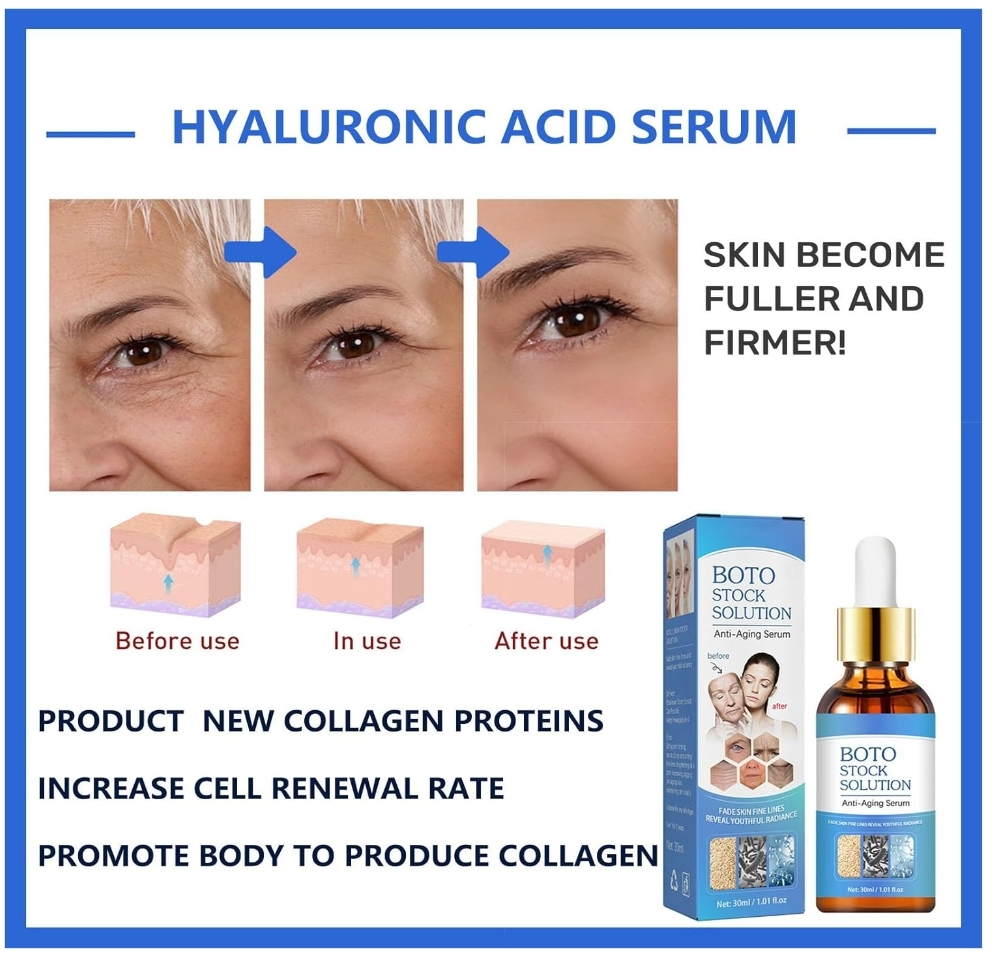
In recent years, the pursuit of youthful, radiant skin has seen a significant shift towards non-invasive solutions. As the desire for smoother, wrinkle-free skin grows, more and more individuals are turning to needleless options for their anti-aging needs.
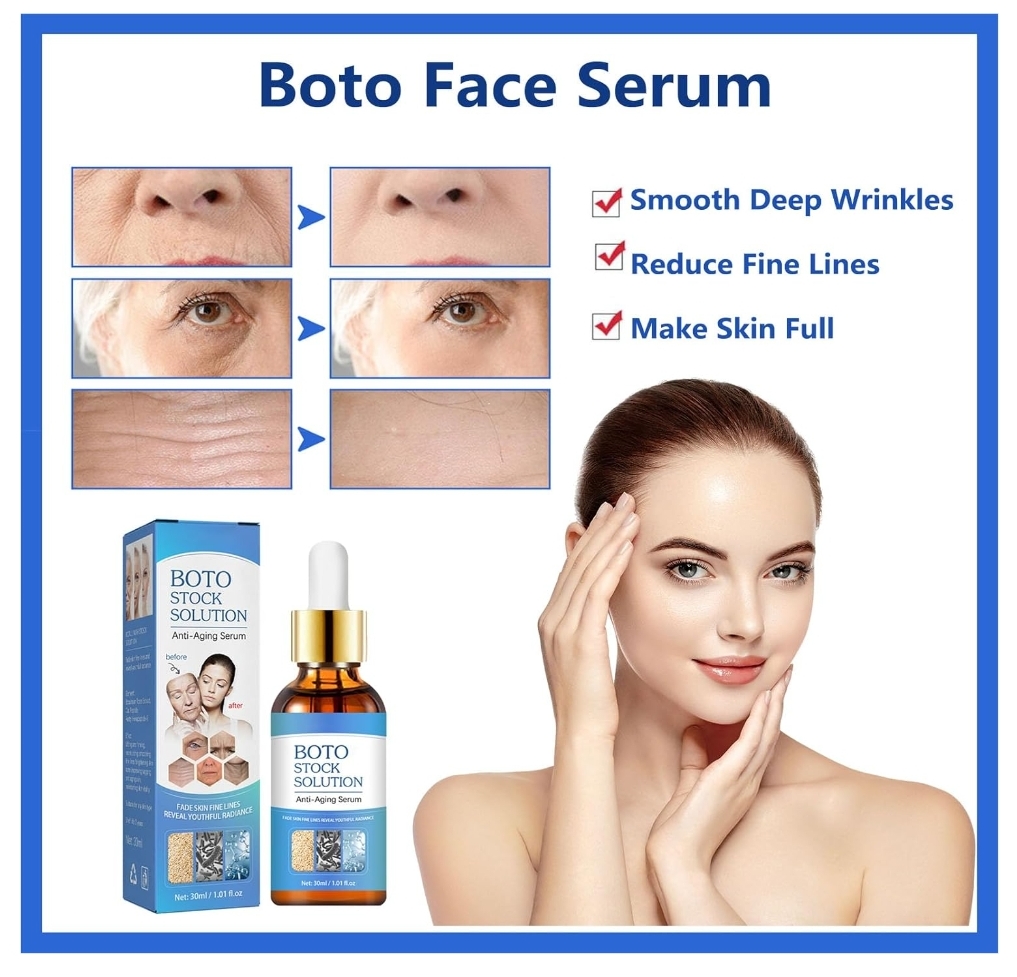
Among these, Botox stock solution anti-aging serums have emerged as a popular choice. Combining the power of Botox with advanced skincare ingredients like aqua collagen, hyaluronic acid, ceramides, and ascorbic acid, these serums promise effective results without the discomfort or risks associated with injections.
This innovative approach not only provides a convenient alternative but also caters to those seeking a gentler, more holistic path to maintaining a youthful appearance.
Let’s explore why this needleless option is gaining traction and how it can benefit your skin over time.
Skin anesthesia consultant, often advise that the benefits of using a Botox stock solution anti-aging serum that includes ingredients such as aqua collagen, hyaluronic acid, ceramides, and ascorbic acid over a three-month period.
Here’s what you can expect:
1. Reduction of Fine Lines and WrinklesBotox is renowned for its ability to relax facial muscles, helping to reduce the appearance of dynamic wrinkles like frown lines and crow’s feet.
This results in a smoother and younger-looking complexion. Additionally, ascorbic acid (Vitamin C), a powerful antioxidant, protects the skin from free radicals, promotes collagen production, and brightens the skin, further reducing the appearance of fine lines and wrinkles.
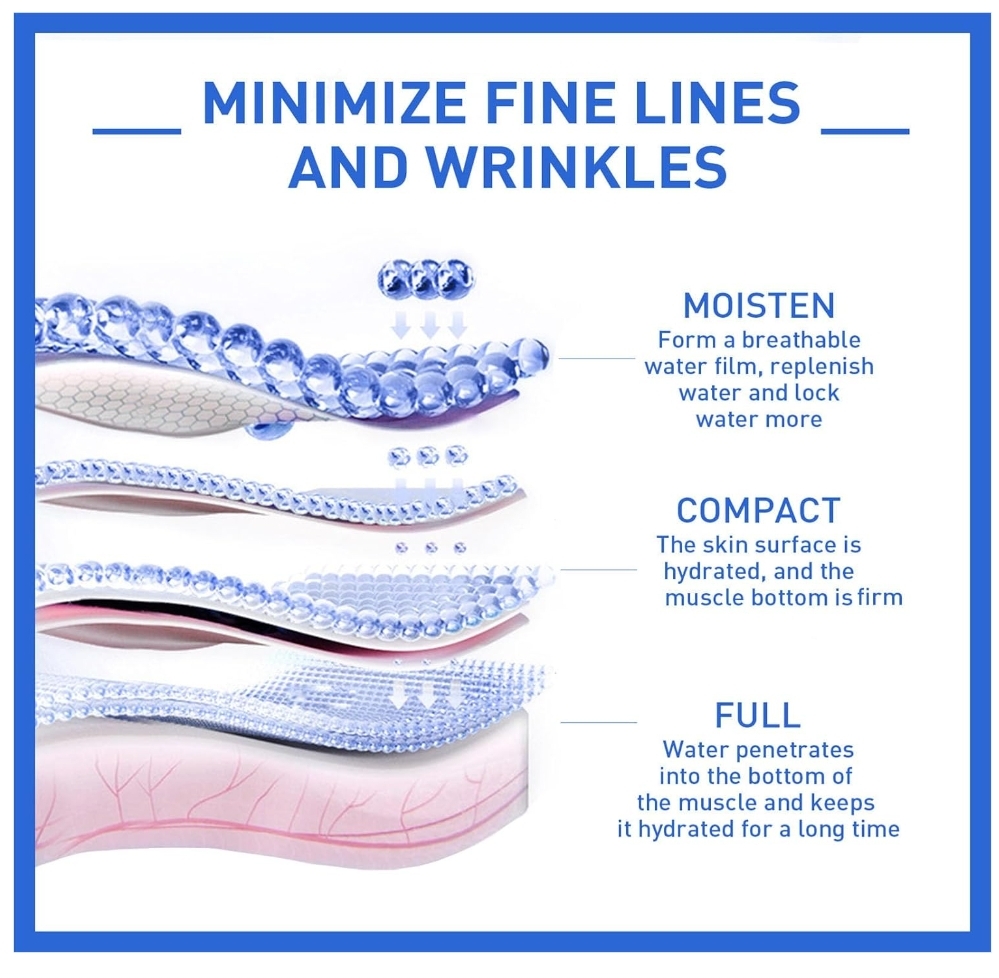
2. Enhanced Skin HydrationAqua collagen plays a crucial role in locking in moisture, which significantly improves the skin’s hydration levels. This ingredient ensures that well-hydrated skin appears plumper and more youthful. Similarly, hyaluronic acid, known for its remarkable ability to hold up to 1,000 times its weight in water, deeply hydrates the skin.
This reduces dryness and enhances the skin’s elasticity and firmness, contributing to a more vibrant and supple appearance.
3. Improved Skin Barrier FunctionCeramides, essential lipids, are crucial for maintaining the skin’s barrier function. They help retain moisture, protect against environmental damage, and reduce sensitivity, resulting in healthier and more resilient skin.
By reinforcing the skin barrier, ceramides ensure that the skin remains hydrated and protected from external irritants.
4. Brighter and More Even Skin ToneAscorbic acid also works to even out skin tone and reduce hyperpigmentation. Its brightening properties leave the skin looking more radiant and evenly toned.
This dual action of reducing fine lines while improving skin tone makes it a vital ingredient in the anti-aging serum.
Month 1: Initial improvements in skin hydration and texture can be observed. Fine lines may begin to appear less pronounced as the skin starts to benefit f rom the hydrating and smoothing effects of the serum.-
Month 2: Continued use results in further improvement in skin smoothness and hydration. Wrinkles may appear less deep, and an even skin tone becomes more noticeable.-
Month 3: Significant reduction in the appearance of fine lines and wrinkles is expected.
The skin appears firmer, brighter, and more youthful, with markedly improved texture and hydration.
Usage Tips- Consistency:
Applying the serum consistently as part of your daily skincare routine is essential for optimal results. Regular use ensures that the active ingredients have the desired effect on the skin.
– Sun Protection: Daily use of a broad-spectrum sunscreen is crucial to protect the skin from UV damage. This protection helps counteract the anti-aging benefits of the serum and prevents further damage.
– Complementary Products: Using a gentle cleanser and a moisturizer suited to your skin type can enhance the effects of the serum. These complementary products help maintain the skin’s health and amplify the benefits of the anti-aging serum.
By incorporating this Botox stock solution anti-aging serum into your skincare regimen, you can expect a comprehensive approach to anti-aging. It addresses hydration, texture, and skin tone, ultimately leading to a more youthful and radiant complexion.
In today’s fast-paced world, the beauty industry continues to grow and evolve, offering a wealth of opportunities for those passionate about hair, beauty, and wellness. If you’re someone who finds joy in transforming looks and boosting confidence, turning this passion into a thriving business might be your perfect path. Here’s how you can do it, drawing inspiration from successful entrepreneurs who have turned their love for beauty into profitable ventures.
Stories of Success
1. From Kitchen to Salon:
The Rise of a Haircare Empire Take the story of Rachel, who began her journey by experimenting with homemade haircare products in her kitchen. Her passion for creating natural, effective hair treatments quickly gained attention. With perseverance and a keen sense of market needs, she opened her first salon specialising in natural haircare products. Today, Rachel runs a successful franchise with multiple locations, all dedicated to enhancing the natural beauty of their clients.
2. Nails to Remember:
A Manicure Maven’s SuccessLisa had always been passionate about nail art and care. Starting with a small booth in a local market, she showcased her intricate designs and quality service. As her clientele grew, so did her ambitions. Lisa opened her first nail salon, focusing on innovative techniques and exceptional customer service. Her business flourished, and she now operates a chain of nail salons known for their artistic flair and customer satisfaction.
3. Skincare Solutions:
From Hobby to High-End Spa
David’s fascination with skincare began as a hobby, researching and developing products that addressed common skin problems. Recognising a gap in the market for effective, personalised skincare solutions, he opened a small spa. His commitment to understanding and addressing individual skin issues attracted a loyal customer base. David’s spa expanded into a franchise, renowned for its personalised skincare treatments and customer-centric approach.
Tips for Turning Your Passion into Profit
1. Identify Your Niche The beauty industry is vast, so it’s crucial to identify a specific niche that you’re passionate about and that has a demand. Whether it’s hair extensions, skincare treatments, or nail art, focus on an area where you can offer something unique.
2. Invest in Education and Training Stay ahead of trends and techniques by continuously educating yourself. Attend workshops, get certified in new methods, and stay informed about industry innovations. Your expertise will set you apart and build trust with your clients.
3. Build a Strong Brand Your brand should reflect your passion and professionalism. Create a memorable logo, design a user-friendly website, and maintain a consistent presence on social media. Showcase your work and share testimonials to attract and retain clients.
4. Focus on Customer Experience Exceptional customer service is key to building a loyal client base. Listen to your clients’ needs, provide personalised solutions, and ensure they leave your salon feeling satisfied and valued. Happy customers are your best marketing tool.
5. Expand Your Horisons Once your business is established, consider expanding through franchising. This allows you to reach a broader audience and increase your revenue streams.
For instance, the Need a Hair Makeover Hair Extensions and Hairloss Franchise offers a proven model for success in the hair extension and hair loss treatment market.
Take the Next Step
If you’re passionate about hair, beauty, and wellness and ready to turn your passion into a thriving business, now is the time to take action.
Learn from those who have walked the path before you and use their stories as inspiration. Interested in exploring more about starting your own franchise?
Request a brochure or have a quick chat with the experts at Need a Hair Makeover Hair Extensions and Hairloss Franchise by visiting www.hairextensionsfranchise.com.
Turning your love for beauty into a successful business is not only possible but incredibly rewarding. Embrace your passion, equip yourself with knowledge, and embark on the journey to entrepreneurial success.
How to Achieve Stylish, Low-Maintenance Hair with Kanekalon Synthetic Fiber Extensions
Need a Hair Makeover is thrilled to announce the launch of our Kanekalon blended hair extensions! These affordable, high-quality extensions are perfect for anyone looking to enhance their hair without stretching their budget.
Choosing between Remy human hair and Remy blended hair depends on your budget, how long you plan to use the extensions, and the level of maintenance you’re comfortable with. If you want high-quality, long-lasting extensions and are willing to invest more, Remy human hair is the best option. For a more budget-friendly, short-term solution, Remy blended hair can be a good choice and here’s why.
In today’s economic climate, where the prices of everyday essentials are steadily climbing, budgeting has become a critical aspect of our lives. As we navigate through these challenging times, many of us find ourselves making tough choices and prioritising our spending.
Luxuries such as hair treatments, manicures, and professional makeup sessions often take a backseat as we focus on the necessities. However, for those who still desire the transformative power of hair extensions, there’s an affordable and stylish alternative that doesn’t compromise on quality:
Kanekalon blended synthetic fiber extensions.Kanekalon blended synthetic fiber extensions offer an excellent solution for those seeking to enhance their look without breaking the bank. These extensions combine the best of both worlds – the affordability of synthetic hair and the natural appearance of human hair.
As you read on, we’ll explore why Kanekalon blended extensions are an ideal choice during these times of financial constraint, allowing you to maintain your beauty routine without sacrificing your budget.
Choosing between Remy human hair and Remy blended hair depends on your budget, how long you plan to use the extensions, and the level of maintenance you’re comfortable with. If you want high-quality, long-lasting extensions and are willing to invest more, Remy human hair is the best option.
For a more budget-friendly, short-term solution, Remy blended hair can be a good choice. Discover the Perfect Hair Transformation for Your Special Occasion with Kanekalon Blended Hair Extensions at Need a Hair Makeover!
Are you looking to enhance your look for an upcoming holiday, wedding, or special event? Look no further than our premium Kanekalon blended hair extensions at Need a Hair Makeover.
Here’s why our extensions are the perfect choice for your short-term hair transformation:
Unmatched Realism and Softness: Our Kanekalon blended hair extensions are expertly crafted to mimic the natural look and feel of real hair. With their soft texture and realistic appearance, you’ll enjoy a flawless, stunning look that’s perfect for any occasion.
Flexible Styling: Kanekalon fibers are heat-resistant, allowing you to style your hair with curling irons, straighteners, and other heat tools at low to moderate settings. Whether you desire elegant curls, sleek straight locks, or a trendy wavy look, our extensions can help you achieve the style you envision.
Vibrant Colour Options:Choose from a wide variety of colors to match your natural hair or experiment with bold, fashion-forward shades. Our extensions offer endless possibilities for creative and personalized styling, ensuring you stand out at your special event.
Affordability:Enjoy the luxurious look of high-quality hair extensions without breaking the bank. Our Kanekalon blended extensions provide an affordable option for those seeking a temporary yet stunning hair transformation.
Low Maintenance: Designed for ease of use, our Kanekalon extensions require minimal upkeep, making them ideal for busy schedules and short-term wear. Focus on enjoying your event without worrying about constant hair maintenance.
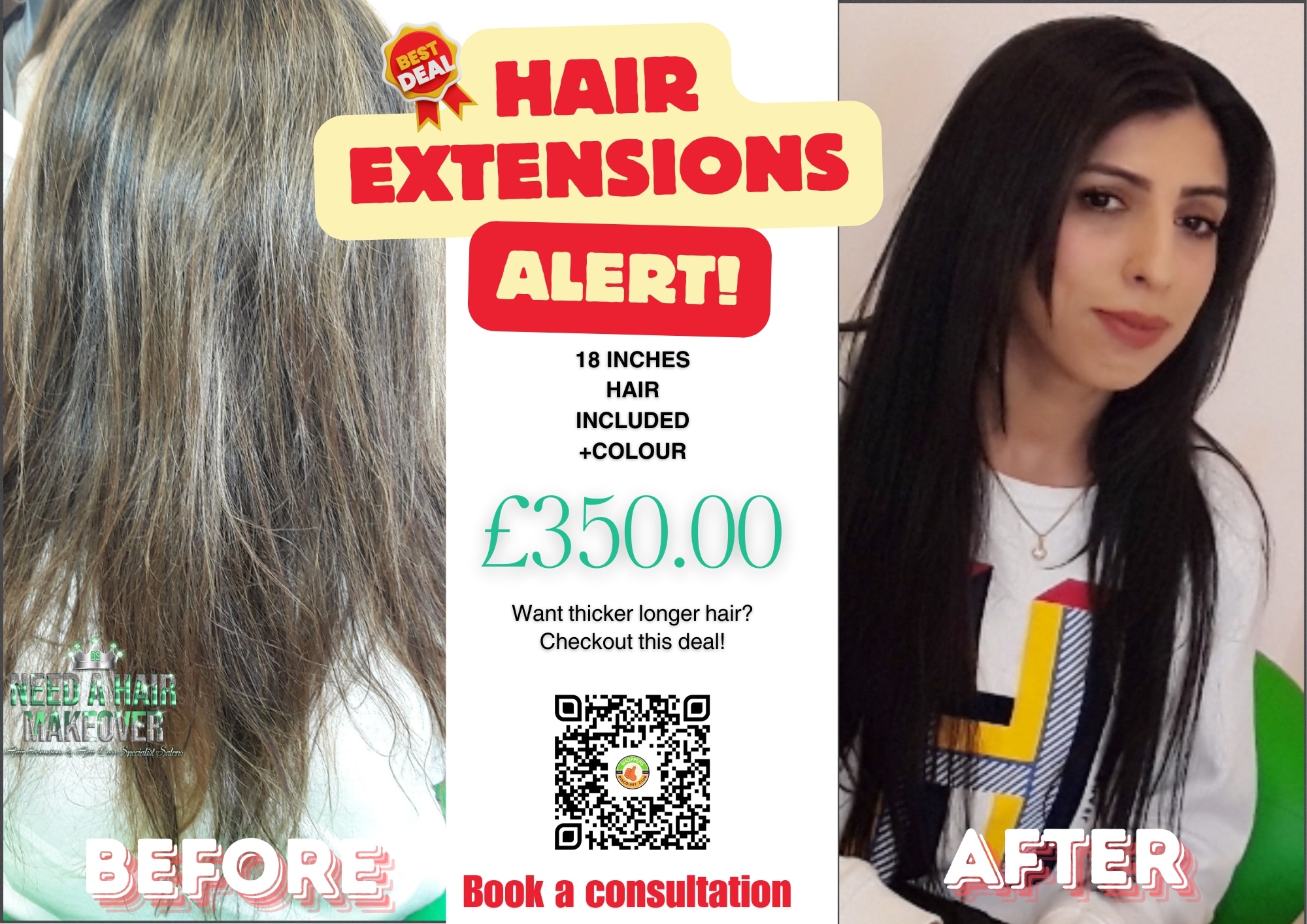
Looking for affordable yet high-quality hair extensions? Look no further! Our new Kanekalon blended hair range is here to make your dream hair a reality without breaking the bank. Get stunning 18-inch extensions at just £390, compared to £590 for human hair. That’s a huge saving without compromising on quality or style! Say hello to gorgeous hair extensions that won’t hurt your wallet! Our Kanekalon blended hair range offers incredible quality at an unbeatable price. Get ready to shine with beautiful, affordable hair.
Book Your Appointment Today: At Need a Hair Makeover, we pride ourselves on delivering exceptional service and transforming your hair dreams into reality. Our skilled specialists will work with you to achieve the perfect look tailored to your unique style and needs.
Ready to elevate your hair game for your upcoming event? Book an appointment with Need a Hair Makeover today and experience the beauty and versatility of Kanekalon blended hair extensions. Let us help you shine and make your special occasion truly unforgettable. www.needahairmakeover.com
Are you struggling with thick, unmanageable hair? Imagine seeing a gorgeous, free-flowing hairstyle on your phone and wanting it for yourself. At Need a Hair Makeover, our expert technicians can turn your hair dreams into reality. Watch as your hair is transformed right before your eyes, leaving you absolutely delighted with the results.
Managing very thick, unmanageable hair has long been a significant challenge for many women. Daily styling can be time-consuming, and achieving a sleek, polished look often feels like an impossible task. Over the years, the beauty industry has responded with an array of products and treatments designed to tame unruly locks. From chemical relaxers and texturisers to keratin treatments and advanced styling techniques, there are more options than ever to help manage and transform thick hair.
In the past, the focus was primarily on achieving straight, sleek hair, often at the expense of hair health. However, today’s trends reflect a shift towards embracing natural textures and enhancing what’s already there. Both women and men are seeking solutions that not only make hair more manageable but also maintain its health and vitality. The modern approach is about customisation and personalisation—finding the right balance between style and care.
What is a hair Relaxers and what it achieves: Expert Tips and Treatments by Diane Shawe
Relaxers are chemical treatments designed to straighten very thick, curly, or kinky hair by breaking down the hair’s natural structure. Here’s a closer look at what relaxers achieve and their impact on hair:
What Relaxers Achieve: – Straightening: Relaxers make hair straight and sleek by permanently altering its texture. – Manageability: They reduce volume and friss, making hair easier to style and maintain.
How Relaxers Alter the Hair: – Chemical Process: Relaxers use strong chemicals, typically sodium hydroxide or calcium hydroxide, to break the bonds in the hair shaft, resulting in straight hair. – Permanent Change: The process permanently changes the structure of the hair, so new growth will still be curly or kinky and will require touch-ups.
Pros: – Long-Lasting Results: Hair remains straight until it grows out, reducing the need for daily styling. – Reduced Friss: Helps manage friss, leading to a smoother appearance. – Sleek Look: Achieves a sleek, polished look that can be styled easily.
Cons: – Potential Damage: The strong chemicals can weaken hair, leading to breakage, dryness, and brittleness. – Scalp Irritation: May cause irritation or chemical burns on the scalp if not applied correctly. – Maintenance: Requires regular touch-ups every 6-8 weeks to manage new growth, which can be time-consuming and costly.
At Need a Hair Makeover, our specialists can help you achieve the look you desire while maintaining the health of your hair. Visit http://www.needahairmakeover.com to book an appointment and let us transform your hair into something you love.
What is a hair Texturiser and what it achieves: Expert Tips and Treatments by Diane Shawe
What It Achieves: A texturiser is a mild chemical treatment that loosens the natural curl pattern of very thick, unmanageable hair. It aims to make the hair more manageable while retaining some of its natural curl and volume.
How It Alters the Hair: Texturisers partially break down the hair’s protein bonds, reducing the curl’s tightness and making the hair easier to style. Unlike relaxers, which straighten hair completely, texturisers create a softer, looser curl pattern.
Pros: – Easier Styling: Hair becomes more manageable and easier to comb, style, and maintain. – Retains Natural Texture: Keeps some of the natural curl and volume, offering a more natural look than relaxers. – Less Damaging: Generally less harsh than relaxers, reducing the risk of severe hair damage and breakage.
Cons: – Unpredictable Results: The outcome can vary, sometimes leaving uneven curl patterns. – Maintenance: Requires regular touch-ups to maintain the desired texture as new hair grows in. – Potential Damage: While milder than relaxers, overuse or improper application can still damage hair and affect its health.
At Need a Hair Makeover, our specialist salon can guide you through the texturizing process to achieve the best results for your hair type. Visit us at http://www.needahairmakeover.com to book an appointment and start your hair transformation journey.
What is a Keratin Treatment and what it achieves: Expert Tips and Treatments by Diane Shawe
What it Achieves: A keratin treatment smooths and straightens hair by infusing keratin protein into the hair shaft, reducing friss, adding shine, and making hair more manageable. It retains some of the natural wave or curl while creating a sleek and polished look.
Perm
Perms How it Alters the Hair: The treatment coats the hair with a layer of keratin, which is a natural protein found in hair. This process helps to fill in porous spots, resulting in smoother and shinier hair. The keratin treatment temporarily alters the hair structure, making it easier to style and reducing the time needed for daily hair care.
Pros: – Smooths and straightens hair, reducing friss. – Adds shine and makes hair more manageable. – Reduces styling time. – Semi-permanent, lasting several weeks to a few months.
Cons: – Can be expensive. – Some treatments contain formaldehyde, which can be a health concern. – Results vary depending on hair type and condition. – Requires maintenance to prolong effects.
At Need a Hair Makeover, our specialist salon can help you achieve the smooth, manageable hair you desire with our expert keratin treatments. Visit http://www.needahairmakeover.com to book an appointment and experience the transformation.
What is hair Bleaching and what it achieves Expert Tips and Treatments by Diane Shawe
What It Achieves: Bleaching is a chemical process that lightens hair by removing its natural pigment. This allows for dramatic color changes, whether you’re aiming for a platinum blonde look or preparing your hair for a vibrant, unconventional colour.
How It Alters the Hair: Bleaching works by penetrating the hair shaft and breaking down the natural melanin (pigment) in the hair. This process strips the hair of its natural color, often leaving it more porous and susceptible to damage.
Pros: – Versatile Colour Options: Enables a wide range of color possibilities, from subtle highlights to bold, vibrant shades. – Dramatic Transformation: Provides a significant and noticeable change in hair color. – Customisation: Can be tailored to achieve various levels of lightness and different effects.
Cons: – Highly Damaging: Can make hair brittle, dry, and more prone to breakage. – Maintenance: Requires regular touch-ups and proper aftercare to maintain hair health and color. – Scalp Sensitivity: Can cause irritation or sensitivity during and after the process.
At Need a Hair Makeover, our specialist salon understands the intricacies of hair bleaching and can help you achieve your desired look while minimising damage. Our expert technicians are here to guide you through the process and provide the best care for your hair. Visit http://www.needahairmakeover.com to book an appointment and start your hair transformation journey.
What is hair Colouring and what it achieves Expert Tips and Treatments by Diane Shawe
Colouring: This treatment involves applying dyes to alter the natural color of hair, providing a wide range of shades from subtle changes to dramatic transformations.
What it Achieves: Colouring can cover grays, enhance natural hues, or completely change hair color, allowing for personal expression and style customisation. It can also add dimension and depth through techniques like highlights and lowlights.
How it Alters the Hair: The process involves opening the hair cuticle to deposit color into the hair shaft. Permanent dyes typically use ammonia and peroxide to achieve lasting results, while semi-permanent dyes offer less commitment with a gentler formula.
Pros: – Versatility: Wide range of color options and techniques. – Customisation: Personalised looks to suit individual preferences. – Gray Coverage: Effectively hides gray hairs for a youthful appearance. – Dimension: Adds depth and texture to the hair.
Cons: – Damage: Chemical processing can weaken and dry out hair. – Maintenance: Requires regular touch-ups to maintain color and prevent roots from showing.- Fading: Color can fade over time, especially with exposure to sunlight and frequent washing. – Allergic Reactions: Potential for allergic reactions to dye ingredients.
At Need a Hair Makeover, we specialise in professional hair coloring services tailored to your unique needs, ensuring vibrant and healthy-looking hair. Visit http://www.needahairmakeover.com to book an appointment and achieve the hair color of your dreams.
What is a hair Silk Press and what it achieves Expert Tips and Treatments by Diane Shawe
A silk press is a non-chemical hair treatment designed to straighten natural hair using a combination of heat and styling products. This technique involves washing, deep conditioning, blow-drying, and flat-ironing the hair to achieve a sleek, smooth, and shiny finish. Unlike chemical relaxers, a silk press does not alter the hair’s natural curl pattern permanently.
What it Achieves: The silk press method transforms thick, curly, or coily hair into straight, silky hair without the use of harsh chemicals. It provides a temporary straight style that can last until the next wash, offering a polished look while maintaining the hair’s natural integrity.
How it Alters the Hair: By using heat, a silk press smooths the hair cuticles and temporarily changes the texture, giving a straight, glossy appearance. The process involves careful heat application to prevent damage and maintain hair health.
Pros: – Temporary Straightening: Allows for versatility; hair can revert to its natural texture with washing. – No Chemical Damage: Avoids the potential damage associated with chemical treatments. – Smooth and Shiny Finish: Leaves hair looking sleek, smooth, and shiny. – Maintenance of Natural Texture: Hair remains natural, with no permanent alteration to the curl pattern.
Cons: – Heat Damage Risk: Frequent use can lead to heat damage, causing dryness or breakage. – Reverts with Moisture: Hair can quickly revert to its natural state in humid conditions or when exposed to water. – Time-Consuming: The process can be lengthy, particularly for very thick hair.
At Need a Hair Makeover, our specialists can expertly perform a silk press to give you the sleek, manageable hair you desire while ensuring your hair remains healthy and vibrant. Visit http://www.needahairmakeover.com to book an appointment and achieve your hair transformation.
What is a Perm and what it achieves Expert Tips and Treatments by Diane Shawe
A perm, short for permanent wave, is a chemical treatment that alters the structure of the hair to create curls or waves. This process involves applying a chemical solution to break down the hair’s natural bonds, wrapping the hair around rods or rollers to shape it, and then applying a neutraliser to reform the bonds in the new shape.
What It Achieves: A perm adds volume, body, and texture to very thick, unmanageable hair, creating lasting curls or waves that can make styling easier and more versatile.
How It Alters the Hair The chemicals used in a perm change the internal structure of the hair by breaking and reforming the disulfide bonds. This structural alteration makes the hair permanently adopt the shape of the curls or waves formed by the rods or rollers.
Pros: – Long-lasting curls or waves, reducing the need for daily styling. – Adds volume and body to hair. – Can create a variety of curl patterns, from loose waves to tight curls.
Cons: – Can cause damage and dryness, particularly with frequent treatments. – Requires maintenance as hair grows out, with touch-ups needed every few months. – Potential for uneven results if not done correctly, which can lead to friss or breakage At Need a Hair Makeover, we understand these evolving desires and offer specialised services to turn your hair dreams into reality. Whether you want to smooth out your curls, enhance your natural waves, or try a bold new colour, our expert technicians are here to help.
At Need a Hair Makeover, our specialist salon can guide you through these treatments to make your hair dreams come true. Visit us at http://www.needahairmakeover.com to book an appointment and achieve the look you deserve.
”Your Ultimate Guide to Taming Thick Hair: Products and Treatments That Wo
”The Rise of Offense Culture: Entitlement, Sensitivity, and Their Societal Impact”
“In recent years, it’s become increasingly apparent that society has undergone a profound shift in its collective psyche. We’ve entered an era where the slightest perceived slight can spark outrage, where the mere whisper of disagreement can be met with vitriolic backlash, and where the notion of personal responsibility has given way to a pervasive sense of entitlement. It’s as if we’ve become a society of hair-trigger sensitivities, where the faintest whisper of offense can set off a firestorm of indignation.
But is this perception merely a product of our own biases, or is there something more profound at play? Have we truly become more easily offended, or are we simply more aware of the offenses that have always existed? And what of this sense of entitlement that seems to permeate every aspect of modern life? Is it a natural response to the increasing complexity and uncertainty of our world, or is it a symptom of a deeper rot – a sense of privilege and expectation that has been fostered by our culture of instant gratification and social media echo chambers?
As we navigate the treacherous waters of modern discourse, it’s essential that we take a step back and examine the underlying dynamics that drive our behaviour. Are we truly more sensitive, or are we simply more sensitive to the sensitivities of others? And what are the consequences of this shift – not just for our individual relationships and communities, but for the very fabric of our society as a whole?
In this blog, we’ll delve into the heart of this debate, exploring the complex interplay of factors that have contributed to our current state of heightened sensitivity and entitlement. We’ll examine the role of social media, the impact of cultural and economic shifts, and the ways in which our own psychological biases shape our perceptions of the world around us. And we’ll ask the tough questions: What does it mean to be offended, and what does it mean to be entitled? Is there a way to strike a balance between empathy and accountability, or are we doomed to forever walk the tightrope between hurt feelings and hurtful words?
Join me on this journey as we explore the intricacies of modern society and the ways in which our perceptions of offense and entitlement shape our world – and ourselves.”
The perception that society has become more easily offended and possesses a heightened sense of entitlement is a topic of significant debate. This perception can be analysed from multiple angles:
Increased Sensitivity and Offense Factors Contributing to Increased Sensitivity: 1. Social Media Amplification: Platforms like Twitter, Facebook, and Instagram provide a space for rapid sharing and amplification of opinions, grievances, and calls for accountability. This can create a perception of widespread offense. 2. Cultural Shifts: There is a growing awareness and sensitivity towards issues of race, gender, sexuality, and other identity markers. Movements like #MeToo and Black Lives Matter have highlighted systemic issues, leading to heightened sensitivity and vigilance against perceived slights or injustices. 3. Polarisation and Echo Chambers: Social media and selective news consumption can create echo chambers where individuals are exposed mainly to views that reinforce their own, intensifying reactions to opposing views.
Sense of Entitlement Factors Contributing to a Sense of Entitlement: 1. Consumer Culture: The modern consumer culture emphasizes personal choice and satisfaction, potentially fostering a sense of entitlement where individuals expect their needs and preferences to be prioritized. 2. Individualism: Western societies, in particular, value individualism, which can sometimes translate into prioritizing personal rights and entitlements over communal responsibilities and consensus. 3. Educational and Parenting Trends: Some argue that certain educational and parenting approaches, which emphasize self-esteem and individual achievement, may contribute to a sense of entitlement among younger generations.
Ramifications Negative Ramifications: 1. Erosion of Discourse: A heightened sensitivity and sense of entitlement can stifle open dialogue and debate. Fear of offending others or being offended can lead to self-censorship or the silencing of differing opinions. 2. Increased Division: When people feel entitled to their views without compromise, it can lead to increased polarization and societal division, as seen in various political and cultural clashes. 3. Mental Health Concerns: Constantly navigating a landscape where offense is easily taken and given can contribute to stress and anxiety, both for individuals and communities.
Potential Positive Outcomes: 1. Greater Inclusivity: Increased sensitivity can lead to more inclusive and respectful environments, where marginalized voices are heard and considered. 2. Accountability: Holding individuals and institutions accountable for offensive or harmful behaviour can lead to positive social change and a more just society. 3. Empathy and Awareness: As society becomes more aware of diverse perspectives and experiences, there can be a growth in empathy and understanding across different social groups.
Conclusion The perception of increased sensitivity and entitlement in society is complex, with both positive and negative aspects. The key lies in finding a balance between respecting diverse perspectives and maintaining open, constructive discourse. Ensuring that sensitivity to offense does not inhibit free expression and that a sense of entitlement does not override communal responsibilities is crucial for social harmony and progress. As we conclude our thought-provoking discussion on the perceived rise of entitlement and offenses in today’s society, we’re left to ponder the far-reaching implications of this phenomenon. From the impact on our self-esteem to the way we interact with others, it’s clear that this shift in societal norms has far-reaching consequences. As we strive to cultivate a more empathetic and understanding world, it’s essential to acknowledge and address these underlying issues. Take a moment to reflect on your own experiences and biases – and how they may be influencing your relationships and interactions. And if you’re ready to shed old patterns and elevate your self-awareness, consider visiting our blog
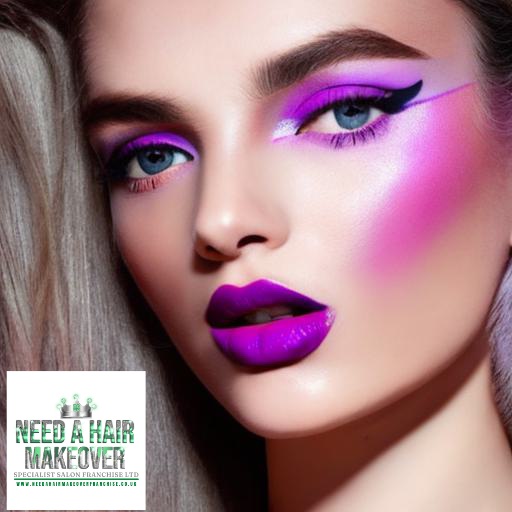
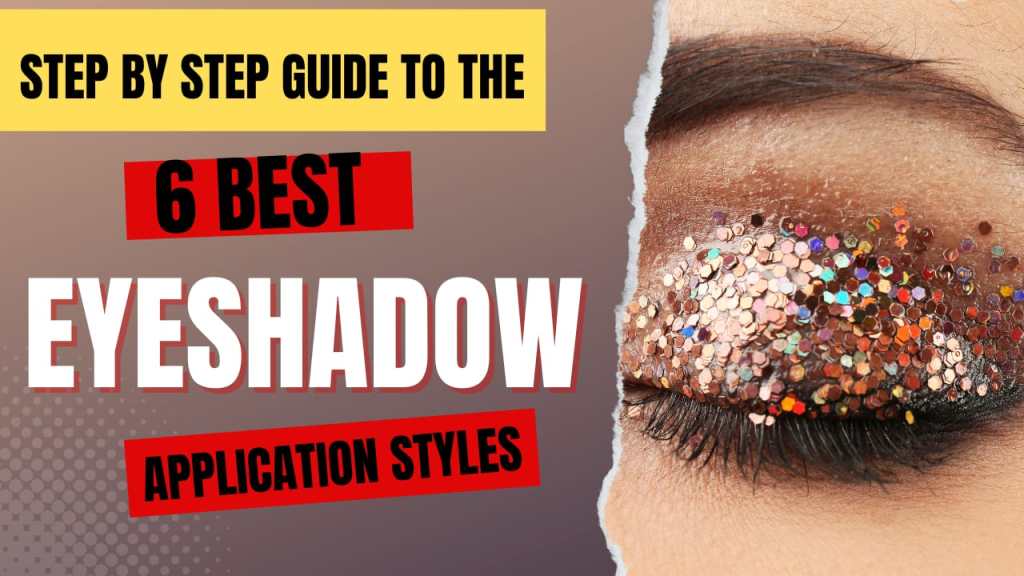
More and more women are wearing lash extensions, but how can you make your eyes pop more by using eye shadow?
In this blog we will explore 10 different eye shadow application style and demo 6 in our video.
You don’t necessarily need to be a professional makeup artist to create eye shadow applications. With practice and some basic knowledge of colour theory and blending techniques, anyone can learn to apply eye shadow effectively.
There are plenty of tutorials, guides, and resources available online to help you improve your skills.
Here are ten different eye shadow application styles:
1. Natural/Everyday: Soft, neutral shades applied lightly for a subtle, everyday look. 2. Smokey: Dark shades blended around the eyelid and crease for a dramatic, smokey effect. 3. Cut Crease: A defined line created in the crease with a lighter shade on the lid and a darker shade above the crease. 4. Halo: Dark shades on the inner and outer corners of the eye with a lighter shade in the centre of the lid, creating a halo effect. 5. Gradient: Colours blended seamlessly from light to dark or from one colour to another, creating a gradient effect. 6. Winged or cats eyes: Eye shadow extended outward and upward, mimicking the shape of a winged eyeliner. 7. Pop of Colour: Neutral shades with a bright or bold colour applied to the inner corner, lower lash line, or centre of the lid for a pop of colour.
8. Cut-Out: Negative space created by applying eye shadow in a specific shape or pattern, leaving some areas bare. 9. Graphic: Bold, geometric shapes or lines created with eye shadow for a high-impact, artistic look. 10. Glitter/Cut Glitter: Eye shadow with glitter applied all over the lid or concentrated in specific areas or applied with a precise, cut-crease technique for added sparkle. https://youtu.be/LT74vDc9dW4?si=pvs4h4jH-PBKq62V
Business Opportunity
Are you someone who has a passion for hair? Do you like to help people look good and maintain self-confidence?
Do you love doing makeovers?
Would you be interested in using your passion to set up an exclusive hair extension and hair loss specialist salon?
Then you’ll find a massive opportunity here at Need A Hair Makeover Franchise!
For many people in Britain and throughout Europe, hair loss, thin hair, and damaged hair are major problems. You can help them to get all the help that they need for a full-on hair makeover with the simplest of solutions.
A service that is massively in demand across the United Kingdom. From Glasgow to Bristol, Liverpool to Watford London to Paris
This is a genuine business opportunity with a proven chance of success. You don’t need to be qualified in hair extensions as full training is provided. If you would like to know more about the franchise and would be interested in setting up your own specialist salon for the long-term, you can request a brochure today. Help available with raising finance.
“Elevate your makeup game with our latest tutorial series! From subtle daytime glam to bold nighttime looks, we’ve got you covered. Dive into our step-by-step guides and master 6 stunning eye shadow styles that’ll have you feeling like a pro in no time! 💫
Yes, very thick hair can sometimes contribute to headaches, especially if it’s pulled tightly or if heavy hairstyles are worn frequently. The tension on the scalp from the weight or tightness can lead to discomfort or headaches.
What can you do? Here are some additional details and tips:
1. Loose Hairstyles: Opt for hairstyles that don’t pull your hair too tightly, such as loose braids, ponytails, or buns. This reduces the tension on your scalp and minimises the risk of headaches.
2. Avoid Heavy Accessories: Avoid using heavy hair accessories like large clips, heavy hairpins, or bulky headbands, as they can add extra weight and strain to your scalp.
3. Use Soft Hair Ties: Choose soft, fabric-covered hair ties or scrunchies instead of tight elastic bands, as they are gentler on your hair and scalp.
4. Regular Scalp Massage: Massaging your scalp regularly can help relax the muscles and relieve tension. You can use your fingers or a scalp massager to gently massage your scalp in circular motions.
5. Conditioning Treatments: Deep conditioning treatments can help keep your hair soft and manageable, reducing the need for tight hairstyles to control frizz or flyaways.
6. Trimming: Regular hair trims can help reduce the weight of your hair and prevent it from pulling on your scalp.
7. Consult a Hairstylist: If you frequently experience headaches due to your thick hair, consider consulting a hairstylist who specializes in thick or heavy hair. They can recommend hairstyles and products that are suitable for your hair type and scalp health.
By following these tips and making some adjustments to your hair care routine, you can help alleviate the tension on your scalp and reduce the likelihood of headaches caused by thick hair.
What about thinning out your hair?
Thinning out thick hair can potentially help reduce the weight and tension on the scalp, which may alleviate headaches caused by the hair’s thickness. Thinning out hair involves removing some of the bulk from the hair shafts to make them lighter and more manageable. Here are some considerations regarding thinning out hair and its potential long-term impacts:
1. Reduced Tension: Thinning out thick hair can reduce the strain and tension on the scalp, which may help alleviate headaches and discomfort associated with tight or heavy hairstyles.
2. Improved Styling: Thinning out hair can make it easier to style and manage, as it reduces bulk and makes the hair more flexible.
3. Long-Term Impact: Thinning out hair is generally safe when done by a skilled hairstylist using proper techniques and tools. However, excessive thinning or improper thinning methods can potentially damage the hair follicles and lead to long-term issues such as hair breakage, thinning, or scalp irritation.
4. Regrowth: Thinning out hair does not typically result in permanent hair loss, as the hair follicles remain intact. However, if the thinning process is overly aggressive or if there is underlying damage to the hair follicles, it may affect the regrowth of new hair.
5. Maintenance: Thinning out hair may require regular maintenance to maintain the desired thickness and style. This may involve periodic touch-ups by a hairstylist to trim or thin out regrowth and maintain the desired look.
6. Consultation: Before thinning out your hair, it’s advisable to consult with a professional hairstylist who can assess your hair type, thickness, and desired outcome. They can recommend appropriate thinning techniques and ensure that the process is performed safely to minimize any potential long-term impacts on your hair.
Overall, thinning out thick hair can be a viable option for reducing tension on the scalp and improving manageability, but it’s essential to approach the process with caution and seek guidance from a qualified hairstylist to ensure the best results and minimize any potential risks.
Can Hair Extensions cause headaches
Hair extensions can sometimes cause headaches, particularly if they are installed too tightly or if they are heavy.
Here’s why:
1. Tension on the Scalp: Hair extensions that are installed too tightly can exert excessive pressure on the scalp, leading to discomfort and headaches. This tension can strain the scalp muscles and nerves, causing pain.
2. Weight of the Extensions: Hair extensions, especially those made with heavy materials or attached in large quantities, can add extra weight to your natural hair. The additional weight can pull on your scalp and contribute to headaches, particularly if worn for extended periods. Clinics if worn very long can add up to 150g-200g of hair.
3. Improper Installation: If hair extensions are not installed correctly or if the attachment method is not suitable for your hair type, it can lead to discomfort and headaches. For example, extensions that are sewn or glued too close to the scalp can cause irritation and pain.
4. Sensitivity to Materials: Some individuals may be sensitive or allergic to the materials used in hair extensions, such as metal clips, glue, or synthetic fibers. This sensitivity can manifest as scalp irritation, inflammation, and headaches.
5. Poor Quality Extensions: Low-quality hair extensions that are stiff, rough, or prone to tangling can exacerbate scalp discomfort and headaches. They may also cause pulling and tugging on the hair, leading to pain and irritation.
To prevent headaches caused by hair extensions, it’s essential to choose high-quality extensions and have them installed by a skilled and experienced professional.
Additionally, opt for installation methods that minimise tension on the scalp and avoid wearing extensions for prolonged periods without breaks. If you experience persistent headaches or discomfort with your hair extensions, consider removing them and consulting with a hairstylist or healthcare professional for advice.
If thick hair is not the cause of your headaches,
Then other potential factors to consider, such as:
1. Tension or Stress: Stress and tension are common triggers for headaches. Tightness in the neck, shoulders, and scalp muscles can lead to tension headaches
2. Poor Posture: Poor posture, especially when sitting or standing for long periods, can strain the muscles in the neck and shoulders, leading to tension headaches.
3. Dehydration: Not drinking enough water can lead to dehydration, which can trigger headaches.
4. Eye Strain: Prolonged use of electronic devices or reading in poor lighting can strain the eyes and lead to tension headaches or eye strain headaches.
5. Caffeine Withdrawal: If you regularly consume caffeine and suddenly decrease your intake, you may experience withdrawal symptoms, including headaches.
6. Sleep Issues: Poor sleep quality or not getting enough sleep can contribute to headaches.
7. Dietary Factors: Certain foods and beverages, such as alcohol, processed foods, or those containing artificial additives, can trigger headaches in some people.
8. Sinus Issues: Sinus congestion or inflammation can cause sinus headaches, which may be mistaken for tension headaches.
9. Weather Changes: Changes in weather or barometric pressure can trigger headaches in some individuals.
10. Medical Conditions: Underlying medical conditions such as migraines, sinus infections, or temporomandibular joint (TMJ) disorder can also cause headaches.
If you experience frequent or severe headaches, it’s essential to consult with a healthcare professional to determine the underlying cause and develop an appropriate treatment plan. They can help diagnose any potential medical conditions and provide guidance on managing and preventing headaches effectively.










 What it Achieves:
 ”Your Ultimate Guide to Taming Thick Hair: Products and Treatments That Wo

 Yes, very thick hair can sometimes contribute to headaches, especially if it’s pulled tightly or if heavy hairstyles are worn frequently. The tension on the scalp from the weight or tightness can lead to discomfort or headaches.






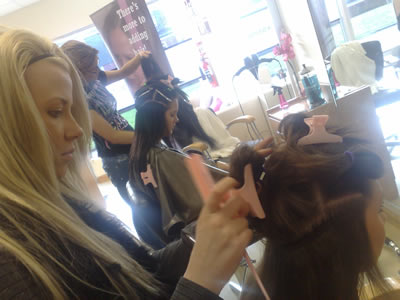








 All about Hair Extensions & Hairloss Courses and Franchise Opportunity by Diane Shawe
You must be logged in to post a comment.