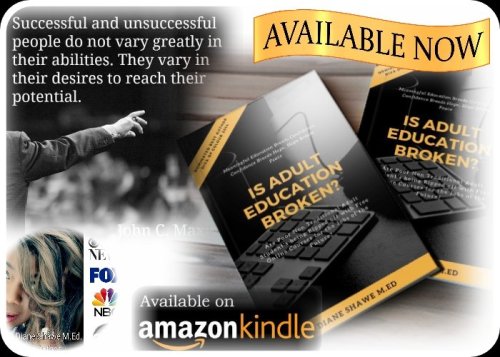
Diane Shawe’s latest publication ‘Is Adult Education Broken suggests that a 21st-century educational system must focus on the areas where humans can outclass computers—such as in cognitive skills, interpersonal skills, fine motor skills, or sophisticated coding skills.
It is not enough to leave everything up to our governments or educational institutions. Every adult should read this book because the questions outline in this publication affects us all, our children and how we decide to educate them and ourselves.
More and more top fortune company’s are giving way to automation primarily to drive costs down, improve reliability, security and accuracy.
Download your copy today
More and more get rich online schemes pop up each day as people are desperate to secure income to meet their daily needs and even aspirations. Sadly most of these schemes only leverage saving out of peoples accounts or worse they get into debt to try and secure a better future.
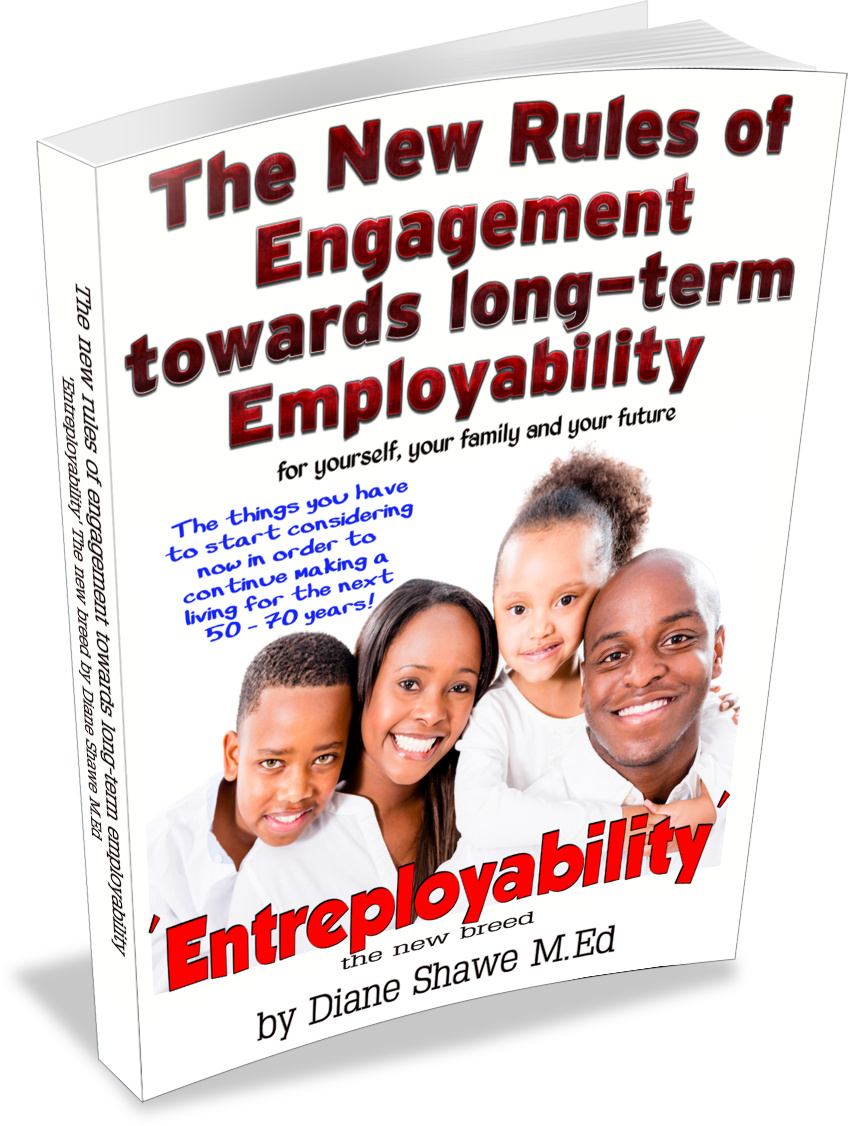
Diane believes that we need to make sure that the type of education supplied can keep a population in work or self-employment, performing meaningful tasks relevant to todays and tomorrow needs. Creating a new generation of ‘Entreployability’ Read ‘The new rules of engagement towards long term employability..by Diane Shawe
Education has to become student-centric and move away from solely institutional constructs that are not fluid to change.
Maybe we need to remind ourselves of the purpose of education by looking back in order to move constructively forward.
Is #Adult #Education Broken? #DianeShaweAuthor explores the main failings in education for an economy—powered by #technology, fueled by #information, driven by #knowledge and becoming #automated. A thought-provoking read.
Between 18 and 22, a woman is like Africa . Half discovered, half wild, fertile and naturally Beautiful!
Between 23 and 30, a woman is like Europe. Well developed and open to trade, especially for someone of real value.
Between 31 and 35, a woman is like Spain. Very hot, relaxed and convinced of her own beauty.
Between 36 and 40, a woman is like Greece. Gently aging but still a warm and desirable place to visit.
Between 41 and 50, a woman is like Great Britain. With a glorious and all conquering past.
Between 51 and 60, a woman is like Israel. Has been through war, doesn’t make the same mistakes twice, and takes care of business .
Between 61 and 70, a woman is like Canada. Self-preserving, but open to meeting new people.
After 70, she becomes Tibet.
Wildly beautiful, with a mysterious past and the wisdom of the ages.
An adventurous spirit and a thirst for spiritual knowledge.
THE GEOGRAPHY OF A MAN
Between 1 and 100, a man is like North Korea and the United States.
Ruled by a pair of nuts!!🙈🙈🙈🙈
THE END.
Send this to every woman for a high five and to every man who can deal with this.
Female entrepreneurs share how to avoid feeling isolated
‘Meeting up with mothers who were running small firms or freelancing made me feel connected to the real world again,’ says The Early Hour’s Anne Ridout
Annie Ridout had a one-year-old daughter when she launched her digital magazine for mothers, The Early Hour, in 2015. “The only time that I could commit to writing and doing admin was during the baby’s nap times and evenings,” she says.
It meant that she had no free time to socialise and spent most days at home, alone.
She was left feeling incredibly lonely and unmotivated, but all that changed when she started to attend some networking events, including Mothers Meeting and The Step Up Club.
“Meeting up with other mothers who were running small firms or freelancing made me feel connected to the real world again,” she says. “I had women to talk to, moan with and get ideas from.”
At first, Ms Ridout found it intimidating, but soon realised that the key to networking is arriving prepared. “Do some research beforehand about the theme or subject – and think about what can you offer around it,” she says.
Don’t forget to ask for contact details, she adds, explaining that it’s not enough to just hand your card out:
“Send an email after the event saying that it was so lovely to meet them and ask to stay in touch – and don’t worry about coming across too keen; people will almost always be pleased to hear from you.”
Find a mentor
For Victoria Usher, founder of GingerMay PR, leaving the buzz of an office and the comradeship of colleagues was unsettling when she started her own communications firm:
“It was a shock to realise that time-consuming tasks, such as admin and finances, needed to be factored into my schedule.”
Not having people around to discuss problems with was hard, she admits: “I felt lonely at points; I missed having a team.”
To help her through, she found a mentor, Jo Butcher, whom she met while working for Dentsu Aegis.
“We had a weekly Skype call and she would help me with everything from brainstorming ideas to sense-checking my work,” explains Ms Usher. “It was comforting to know that there was someone at the end of the phone who had gone through the same and had a successful business to show for it.”
When looking for a mentor, try to find someone who has run a business in a similar field, but has grown it much bigger, she advises. It also helps if they have worked in the same role as you, so they truly understand the pressures that you’re facing.
‘There were few people whom I could talk to about work,’ says Lenka Lutonska
Co-work with colleagues
Female business coach, Lenka Lutonska, thinks women in particular feel lonely when starting-up because they crave emotional connections with others – and that can be hard when working alone.
“When I started out, friends did not understand why I would leave a well-paid job, sell my house and sacrifice my lifestyle, only to work on a business with very little income,” she says. “There were few people whom I could talk to about work; my computer was my only companion.”
She decided to “buddy-up” with an old friend who had started their own business in a similar industry.
“We would create co-working days where she would come to my office for a day, or vice versa. We exchanged ideas, honest feedback, kept each other accountable and even partnered on projects,” says Ms Lutonska.
“Working not only became more enjoyable, but we also helped each other to become aware of our blind spots.”
She also started a Facebook group, which was initially made to attract clients but ended up becoming a great networking tool as word spread quickly and more women joined. Community members often ask for help with specific business issues.
“It can feel lonely to build a business on your own, and tough; there’s always something that you don’t know.
“That’s why support groups are a fantastic source for tips and for socialising – they’re great for creating meaningful relationships with other entrepreneurs.”
Take a breather
A final tip comes from Sarah Cooke, owner of silicone jewellery company, Halia Rose, who suggests yoga classes.
“I do a regular class to get some time out to myself and stave off burnout, and I can chat to people about things totally unrelated to my business and get away from it for a while.”
We can reassure you that the demand for private tuition across the board is increasing, and is required throughout the year.
Whilst the market is flooded with tutors supporting students in English, Maths and some STEM subjects, it is increasingly obvious that a lot of children are suffering because they do not have the much needed Social Skills to help them with communication, problem-solving, decision making, self-management, and peer relations abilities that allow one to initiate and maintain positive social relationships with others.
Deficits or excesses in social behavior interfere with learning, teaching, and the classroom’s orchestration and climate. Social competence is linked to peer acceptance, teacher acceptance, inclusion success, and post school success.
As we see the rise in school exclusions, there are many reasons suited for the rise in the UK. So now a more structured approach needs tho be taken to assist a wide crosses section of children experiencing problems outside of the curricula which in turn impacts there relationship with each other, their teachers, parents and the wider community.
Whilst the demand throughout the academic year for private tuition varies per subject and level, factors to consider are do you want to provide tutoring throughout the year, number of subjects and levels you tutor, if you are wishing to travel and how far you are prepared to travel if at all.
Starting A Private Tutoring Business – The Skills Needed By A Private Tutor
If you are interested in becoming a private tutor, you may wish to consider the following skills before setting up a private tuition service :-
Ability To Communicate & Help The Students Understanding
The key approach of private tuition is to improve the understanding of the student. An essential skill for a home tutor is that they are able to help the student grasp and fully understand any area of subject weakness by good communication. Whilst at the same time engaging the student’s interest and making the tutoring session fun will enhance their learning.
Ability To Listen
One of the major factors of one to one private tutoring is to tailor and deliver your lessons so that the student can understand areas of subject difficulty. For the student to improve, they must understand. Flexibility is the key. Just because you use a successful set protocol of how you tailor your tuition lessons for several of your students, does not mean this will work every time. Therefore if the student has difficulty in grasping certain areas of their syllabus, listen to their feedback and from this devise alternative ways of how you will tailor your tutoring for that particular student.
Good Grasp Of Your Subject Area
We would recommend that you only offer home lessons for the subjects that you are familiar with and enjoy and are passionate about. As a rule, the subjects that you enjoy, understand and feel most enthusiastic about are the ones which you will excel in at tutoring. Therefore you will have most success in improving the student’s grades and confidence.
Communication With All Age Groups – Especially Children and Teenagers
Most academic personal tutors provide private tuition for children or young adults. However if you specialise in tutoring students for GCSE upwards, you will be tutoring teenagers, young adults and possibly mature students. Therefore you will need to feel confident at communicating with all age groups. Even if you are only providing private tuition for primary or secondary level children, remember that you will often come into contact with and give feedback to their guardians or parents.
Good Command of The English Language and Literacy
That saying, a child whos first language is not English might benefit from a similar language tutor who might be able to get the point across much clearer until the students English improves.
Good Time Management & Self Motivation
As a freelance tutor, like any self employed profession, you will not have a clocking in machine! When you work for yourself you need to be self motivated and it is essential that you use your time effectively. Most students require tuition in the early evening on weekdays or at weekends. Keep these times free for tuition and carry out your admin such as filing, accounting etc at other times of the day or week. If you do not plan your time wisely, this may result in less time that you have available for one to one tuition and your private tuition business will generate less income.
Excellent Organisation Is Paramount
Excellent organisational skills go hand in hand with good time management. As you build up clientele, you will find that you are providing private tuition to several students for different syllabi and possibly several subjects. This can become rather confusing, especially near exam times when you are using similar examination papers for several students. We advise that you keep a record for every student you tutor. This record should include the work that you have covered, any marks received for questions or past examination papers. The reasons for this is it is of benefit when you need to update parents regarding their child’s progress. Another reason for keeping private tuition records per student is that it enables you to plan ahead, so that you can cover all topics that the student struggles with and leave time towards examinations to cover exam papers and examination questions.
How to Get Started
Request our free Tutors Prospectus Directory to see a list of all the course resources. Each package also includes a tutor manual, this covers the subject in detail and will assist you in delivering a quality and comprehensive course to your students.
When I was 8 years old I remember my teacher Mr Lester ripping up my homework and accusing me of copying the story I wrote for my homework that week. I remember it was a story about being lost in the woods at night, I use to be afraid of the dark back then.
I cried and said I hadn’t copied it, he gave me detention on top of that and called me a liar.
I was so embarrassed and ashamed I never did well in English Literature again just to spite him I thought but really he had squashed my confidence.
16 books later all published on Amazon with my most recent which took 3 years to write and a healthy vibrant blog with over 35k followers which I have been nurturing since 2010
Do you think adults in position of influence realise what they can do to a child?
Never let negative people define who you are or what you want to become.
Coaching is also important and if you want to propel your vision coaching can help you stay laser focused with a strategic plan
Black male graduates in London and throughout the UK are nearly twice as likely to be unemployed as their white counterparts, figures suggest. In 2016 there was an unemployment rate of 18% for black male graduates aged 16 to 24 in the capital.
According to the data from the Office for National Statistics (ONS), the rate for their white counterparts was 10%. A government spokesperson said the employment rate for ethnic minorities was “at a record high”. So if the graduates, the brightest and best are having such a hard time what about the lower skilled or unqualified black men?
But for now lets focus on London. More than 83,000 young men in London are from black and mixed black ethnic groups, making up about one in five of young men in the capital.
Research by the National Audit Office (NAO) has found that along with Pakistani and Bangladeshi women, black men consistently have the lowest employment rates in the UK.
BBC London contacted 50 of London 500 top graduate employers last year across the banking, accounting, medical, legal and retail sectors. Eleven were able to provide data relating to their employment of black men specifically. Those 11 organisations recruited 1,803 graduates in 2016. Of those, 30 were black men.
The NHS leadership academy, for trainee managers, was among those which did not recruit any among its intake of 112 graduates.
Larry Elliott Economics Editor for the Guardian headlined on 4th April 2018 that Workers at risk as robots set to replace 66m jobs, warns OECD he goes on to write:
The west’s leading economic thinktank has warned its members that they are failing to prepare workers for an automation revolution that will leave 66 million people at risk of being replaced by machines in the coming years.
A new report by the Paris-based Organisation for Economic Cooperation and Development found that the most vulnerable – one in seven workers on average across the 32 countries studied – were less likely to be receiving help than those whose jobs were more secure.
The OECD said 14% of jobs in developed countries were highly automatable, while a further 32% of jobs were likely to experience significant changes to the way they were carried out.
Low-skilled people and youth were among those most at risk, according to the report, with the jobs at highest risk tending to be in low-skill sectors such as food preparation, cleaning and labouring. Workers in fully automatable jobs were more than three times less likely to have participated in on-the-job training, over a 12-month period, than workers in non-automatable jobs. Those most at risk were also less likely to participate in formal education or distance learning.
In September 2017 Mr Lammy a Tottenham MP reviewed the BAME people in the criminal justice system and found that in the UK black people who make up just 3% of the UK population make up 12% of the people in prison at a cost to the tax payer of £309m each year.
Whilst the report highlighted failings on the part of police forces, courts and prisons, it was identified that other issues like one parenthood, school exclusions, low income and high unemployment disproportionately affect some ethnic minority groups and have been linked to higher levels of criminality.
Diane Shawe author of ‘Is Adult Education Broken?’ states that “the traditional belief that we must prepare ourselves to be ‘employable’ is under threat for all groups, but has always inexplicably affected the BAME groups. The counter argument encourages us to ‘gear up’ for earning our own money, rather than seeing income as someone else’s responsibility”.
It is clear that at this moment most educational systems are not keeping pace with changing technology and the ever-evolving world of work.
Isaac Asimov quote sharpens our focus
“If unemployment formed a country it would be the 5th largest in the world”
Not enough people are thinking strategically enough in this area. Fundamentally, we need to change what people learn, how people learn, when people learn, and even why people learn.
A recently published book by #DianeShaweAuthor ‘Is #Adult #Education Broken’? explores the main failings in the educational system for an economy powered by #technology, fueled by #information, driven by #knowledge and becoming #automated. What are the lessons to be learnt?
Adult education has become undervalued in an overpriced educational infrastructure.
The people who need the most help are already systematically ripped off by greedy loan companies, NHS parking, having to pay charges for drawing out their own money from private ATM machines in poorer boroughs, pre-paid electric meter’s to name but a few.
The more you seem to need help the more you seem to have to pay.
Off course, the arguments are always about risk, but to compound on top of their needs, a premium, just to make sure the risk is compensated for is questionable indeed. But another kind of ripping off is taking place. ‘Free online education’ you may ask ‘why is this a rip-off people”?
I will answer this from my perspective initially and then make further arguments as to why we should be very concerned about this un-policed, unchallenged butchery of the values originally infused into our adult educational system.
So if you all but think Adult Education is Broken and all but given up, this book spills the beans on what has gone wrong, what questions need to be addressed and if certain issues are tackled by Government, then there’s Hope,
As Isaac Asimov—a master of science fiction literature—once said:
“No sensible decision can be made any longer without taking into account not only the world as it is but the world as it will be.”
So the big Question is – What has happened?
Why have these large institutions priced education out of some fundamental principles?
Why on the other spectrum are all these free courses flooded the market?
How can we make the new economic age enhance, rather than diminish, our quality of learning?
How can we make this amazing innovation advance the prospects of all people especially those with or without experience and not just for the youth?
It is clear that at this moment most educational systems are not keeping pace with changing technology and the ever-evolving world of work.
“If unemployment formed a country it would be the 5th largest in the world”
Isaac Asimov
Not enough people are thinking strategically enough in this area. Fundamentally, we need to change what people learn, how people learn, when people learn, and even why people learn.
We must get beyond the traditional model of students sitting passively in classrooms, following instructions and memorising material that they are tested and scored on which sometimes turn out to be of little use in an every changing economy.
“It is not the strongest or the most intelligent who will survive but those who can best manage change.” Darwin
Throughout the ages, every human society has experienced challenges adjusting to population growth, maintaining structural order and creating channels for future generations. How well a society prepares the next generation for survival is imperative for the society as a whole but we have stalled in this process.
There seems to be a range of systemic failures such as
: failure to find a formula to develop teachers convergent and divergent facilitating skills : failure to consider cultural relevance : failure to develop enterprising and entrepreneurial skills : failure to prepare about taking personal responsibility : failure to provide adequate technology and supporting curriculum : failure to encourage international engagement : failure to manage growth of academic misconduct
Diane Shawe Author states that “the traditional belief that we must prepare ourselves to be ‘employable’ is under threat. The counter argument encourages us to ‘gear up’ for earning our own money, rather than seeing income as someone else’s responsibility”
With the population dramatically aging and low-level jobs increasingly swallowed up by machinery, entrepreneurship will be a necessity for many, rather than a lifestyle choice for some.
SMEs are of course already leading this charge but in order to gear up for the future we need to start off by asking a serious question, defining criteria’s and examining trends, impact these trends will have and plan a way to jointly prepare current and future generations to be both employable and entrepreneurial.
We are living in a new economy—powered by technology, fueled by information, and driven by knowledge. And we are entering the new century with an opportunity on our side but huge problems that require new thinking.
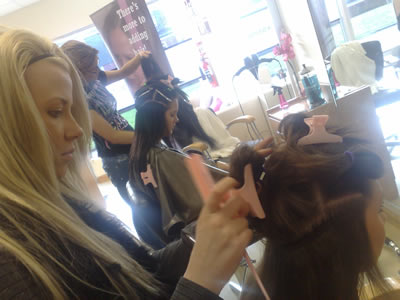
Would you like to learn how to apply a non evasive, won’t damage clients hair, flat looking undetectable hair extensions technique in one day using no glues, threads or cornrows on your clients head in under 3 hours? Then this is the course for you.
Learn how to apply this new technique in on our day course which is packed with lots of advice, theory and practical training.
You will simply be amazed at how you can help lots of clients around your location get lovely hair without damaging it and making impressive income at the same time.
This course is discounted from £450 which includes a starter kit down to £170.
The first 15 people to register will get a further 20% discount of this discounted price.
All you have to do is register your interest, there are lots of dates to choose from and pay your £25.00 admin enrolment fee to reserve and ensure your place.
Very few people have the natural ability or expertise to be efficient at all aspects of running a successful business. That is where the franchisor’s experience comes into play. Franchise organisations offer a structure for launching, operating and growing a business. Indeed, the successful franchisor will deliver the entire framework around which the business is built. Franchisors usually create comprehensive operations manuals and training programs for their franchise owners that cover marketing, operations, accounting, technology and other areas that are specific to the particular business model. These efficiencies are designed to enable franchise owners to earn more and spend less time and effort than otherwise would be required to open and operate a similar business on their own.
Collaboration
The franchise organisation model offers the franchisee the ability to grow under a common brand and share in the benefits of a larger group of business owners. Though each business is independently owned and managed, all franchisees share in the collaborative benefits of the organisation through the support and oversight of the franchisor including:
Group advertising resources not typically available to small, independent business owners
Owning your own business and making day-to-day decisions yourself, guided by the experience of a successful business enterprise
The ability to sell products and services to markets that company-owned outlets have difficulty serving because of higher operational costs and lower motivation of employees in company-owned outlets
The benefit of recognized and proven service marks, trademarks, proprietary information, patents and/or designs
Training from successful business operators
A lower risk of failure and/or loss of investments than if you were to start your own business from scratch
Being a part of a uniform operation, which means all franchises will share the same interior and exterior physical appearance, the same product, the same service and product quality and overall customer brand awareness
Operational support from the franchisor, both before and after launching your business venture, in areas such as financing, accounting, employee training and operational procedures
An opportunity to enhance your management abilities within an established business model that you couldn’t experience in most employment situations
From the franchisor’s perspective, this collaboration:
Offers the franchisor a method of rapid expansion
Spreads the brand messaging and awareness over a large network of franchise owners
Taps in to the franchise owner community’s “pride of ownership”
Allows the franchise owner community to grow due to a duplicable system and support
Features increased buying power for goods and services due to higher volume with suppliers
Enables new products and services to be developed in the field with more testing and input
Provides a steady cash flow to the franchisor to facilitate overall growth of the system
Can fund the brand recognition effort to grow nationally and globally
Franchising offers a better chance to succeed
The U.S. Department of Commerce and other authors of statistics concerning franchising have shown that the revenue from franchise establishments accounts for over one-third of all U.S. retail sales.
Government research over the years has indicated that the success rate for franchise-owned endeavors is significantly better than the rate for non-franchise-owned small businesses. In short, the good news is that franchising makes up a significant part of the national economy and presents a statistically better chance for success than other business options.
The freedom factor
Most individuals seek three common elements when choosing a franchised business:
Flexibility
Money
Status
These three elements are important for a variety of reasons and seem to be common denominators when people seek a new business as a career path. Flexibility has always been a hot button for entrepreneurs who exchange the stability of a “real job” for the freedom that comes with being their own boss. Money, or income, is always a factor but surprisingly is seldom the most important. We know many people who have left huge salaries behind because they were miserable, to pursue the American Dream and launch a business. Status is an all-encompassing category that includes not only titles and position, but more important, the feeling of purpose one has and being a part of something significant.
Owning a franchise can provide you with all three of these elements if you operate the business successfully and manage your time and resources properly.
Happy franchise owners make more money
It’s been said that if you love what you do, you can’t help but succeed. There’s a lot of truth to this statement. If you can align yourself with a franchise that really fits, you’ll be much happier, which in turn results in higher productivity. This is a simple philosophy that’s often overlooked. Some franchise organisations have suffered because they lost sight of this reality during the fast growth stages.
The explosive growth that many franchises experience is referred to as “hockey stick” growth due to the way it’s charted on a line graph. Sometimes companies are so successful and grow so fast that they seemingly forget about the little things that made them successful in the first place. In this case, their initial success can lead to their ultimate failure. A franchise organisation that forgets that their franchise-owner community is in fact their “customer” base (each of whom should be treated with respect and with an eye towards making them satisfied) usually comes down like a house of cards.
Think about this for just a moment: If the franchisor understands that its franchisees are the heart and soul of their success and understand a very basic premise — if the franchisees are happy then they’ll generate more revenue — then it will build on that reputation and financial model. But if the franchisor sees its franchisees merely as cogs in a wheel that deserve no respect, the system ultimately fails — and not because the end product is poor, but because the sales force that’s presenting the product to the general public is dissatisfied. We see this all too often.
Disclaimer: Rick Grossman’s Franchise exerts inside this blog are by no means an endorsement of any particular franchise.
Thin hair is frankly hard work! There are lots of products out there to help you thicken or volumise your Hair, but when you see your hair getting thinner and thinner each month I think it is time to take action to reverse the trend or disguise your hair problem so your self esteem can stay intact.
So here are six things you should checkout to help turn the tide:
1. Hair Extensions, Wigs or Hair Pieces
Hair Extensions have become very popular over the last 15 years, however many of the technique are either too heavy our cause more distress tho the client weak hair.
A technique pioneered by Diane called theHook and Latch uses no glue, thread or cornrow giving a flat undetectable look, no stress to the clients hair and very suitable for thin hair or patchy hair.
Pony tails and wigs can also offer a quick transformative look for special occassions.
This is a good way tho keep your confidence and self esteem up which will help keep your stress levels down
2. Meals
Now, this is easy! Hair thrives on protein, iron, zinc, and vitamin
B12. Get them from lean meats, leafy greens, nuts and beans
3. Blood Works
Routine blood work can test your ferritin (iron stored in the blood)
and vitamin D. Low levels can lead to hair loss, and the fix may be as
simple as adding an iron or vitamin supplement.
4. Hormone Help
Some women are genetically predisposed to female-pattern hair loss,
and birth control pills can suppress overproduction of male hormones.
5. Stress
Just breathe—seriously, it could help! Both sudden and chronic stress can
halt hair growth. If you’ve been through a challenging experience (divorce, job change, death in the family or house move), hair should
grow back.
6. Your Doctor
Every once in a while, hair loss is a symptom of something else that’s
going on with your body. Talk with your doctor about other
possibilities, including:






















































You must be logged in to post a comment.