Category Archives: mobile phone communications

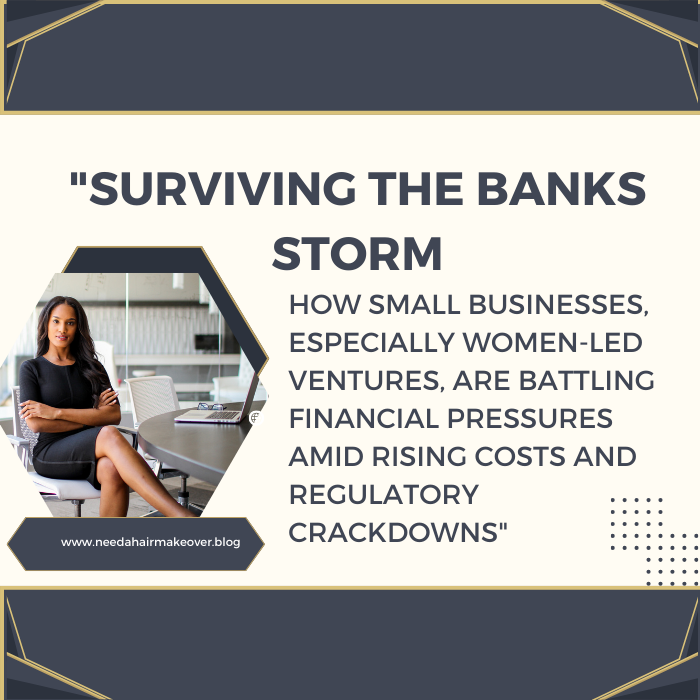
“Surviving the Banks Storm: How Small Businesses, Especially Women-Led Ventures, Are Battling Financial Pressures Amid Rising Costs and Regulatory Crackdowns”

Starting a business just before the pandemic presented unprecedented challenges, especially for women, particularly Black women, who often face additional barriers in the entrepreneurial landscape. As rising costs squeeze customers’ wallets, small businesses struggle to stay afloat. The last thing these businesses need is added pressure from banks, insurance companies, accountants, and regulatory bodies. These institutions, while focused on combating organised crime and corruption, must also develop strategies that champion genuine SMEs caught in this turmoil, rather than exacerbating their struggles. Where is the support for these resilient businesses fighting to survive? Why can’t the banks walk and chew gum and the same time?


Setting up a limited company in the UK is remarkably quick and easy, often taking just a few minutes online. However, the simplicity of the initial setup can be deceptive, as it doesn’t reveal the full extent of the responsibilities and potential pitfalls that lie ahead for small business owners. Beyond the excitement of having your own company name, there are numerous regulatory obligations that can catch new entrepreneurs off guard. These include regular filings with Companies House, maintaining accurate financial records, and ensuring compliance with tax obligations—whether or not your business is generating income.

Even if your business isn’t earning money, failing to meet these requirements can result in penalties, fines, or even the risk of your company being struck off the register. For instance, filing annual accounts and confirmation statements is mandatory, and missing deadlines can lead to significant fines. Additionally, the intricacies of VAT registration, understanding corporation tax, and dealing with PAYE (if you have employees) add layers of complexity that aren’t immediately obvious when you first set up your company.

Moreover, small business owners must be prepared for potential scrutiny from HMRC, especially as the government tightens regulations to combat financial crime and tax evasion. The reality is that running a limited company involves much more than just pursuing your business idea—it requires navigating a complex web of legal and financial responsibilities. Understanding these obligations from the outset is crucial to avoiding the unexpected consequences that can arise, ensuring your small business thrives rather than gets bogged down in regulatory challenges.

I was very excited when I started my small Specialist Salon business in 2016. The aim was to trade it for 3 years, and then develop a Franchise strategy and expand the services throughout the UK. However the Pandemic put a spanner in the works, not just for my business but many others. I persevered and then came the huge utility hike, my supplier took £10,000 for 6 months supply, there was nothing I could do, it left my account depleted and I had to start trading out of my cashflow. It has been a really challenging time navigating and micro managing the finances in order to meet all the outgoings, leaning in until I could turn the corner.

The next challenge was to get all the accounts up to date, filings etc., most of the costs for accountants have become expensive and eye watering, so I had to look at ways in which I could prepare my own accounts aided by online software which I had to learn and then update in between any spare time I got.
I could see the light at the end of the tunnel, managed to bring my VAT all up to date, Get my company accounts filed and in the process of filing the corporation tax once the reference number has been received via company house.

My next focus was on increasing revenue, I started to micro advertise, enquiries just starting to come in and now my biggest challenge is with my bank Starling.

The recent scrutiny of banks by financial regulatory bodies has led to a reactionary approach where banks are now indiscriminately targeting small businesses that are late with their filings. Instead of developing systems to guide and support genuine UK businesses—many of which may be unaware of their filing obligations—banks have opted for a sweeping purge strategy. (Barclays being the leader) By threatening account closures without proper explanation or support, they have created confusion and panic among small business owners who are often unsure of what is happening and how to resolve these issues.

This approach is particularly problematic because it fails to distinguish between businesses that are struggling due to genuine reasons, such as the pandemic and rising costs, and those that may be involved in nefarious activities. Many small business owners, already stretched thin with day-to-day operations, are not equipped to navigate the complex regulatory landscape without guidance. Instead of receiving the help they need to stay compliant, they are met with threats and closures that could devastate their business.

The banks’ strategy is short-sighted and fails to consider the long-term impact on the UK’s small business ecosystem. By alienating small businesses, many of which have the potential for future growth, banks are undermining the very sector that could contribute significantly to the economy. What’s needed is a more nuanced approach that provides education, support, and a clear path to compliance, rather than punitive measures that risk driving genuine businesses into insolvency or forcing them to shut down altogether.
So I found out from a recent article highlighting Starling Bank’s crackdown on debtors following an investigation by the Financial Conduct Authority (FCA) into its financial crime controls.

While Starling justifies its actions as part of tightening financial discipline, this aggressive stance appears to disproportionately target small businesses (which was there main recruiting strategy when they launch there no physical location online solution), that may not yet be profitable but are long-standing, having survived through the pandemic and rising costs. This short-term approach by Starling Bank risks alienating small businesses that have potential for future growth, especially those that have already demonstrated resilience during challenging times. By indiscriminately pushing out these businesses without offering constructive support or alternatives, Starling Bank seems to be prioritising immediate financial metrics over long-term relationships, potentially causing harm to the broader business ecosystem.

The treatment of these small businesses, many of which have been established for over five years, raises concerns about discrimination and a lack of recourse. The bank’s actions overlook the fact that many of these businesses were severely impacted by the pandemic, which should warrant understanding and support rather than punitive measures. In essence, Starling’s approach along with other banks could be seen as merciless and unsupportive, especially for businesses still navigating the economic aftermath of the pandemic.


This strategy could backfire, damaging Starling’s reputation among small business owners who feel unfairly targeted and abandoned by a bank that once positioned itself as a champion of SMEs and built for us.


Suggested Measures:
Banks must consider the well-being of SME owners, as many rely solely on a single business account for all their financial needs. Temporarily suspending an account can have devastating effects, leaving business owners without access to essential funds for daily operations, payroll, and personal expenses. Such actions can cause extreme stress and financial instability, potentially jeopardising the survival of the business.
Banks should implement more empathetic and supportive approaches, offering guidance and alternatives rather than immediate suspensions, to ensure the financial health and stability of these entrepreneurs.

To address the issue of banks indiscriminately targeting small businesses for account closures due to missed filings, several measures can be implemented:

  1. Enhanced Communication: Banks should proactively communicate with businesses about upcoming filing deadlines and offer reminders well in advance. Clear guidance on what needs to be done can prevent many issues. There is the technology to do this
  2. Support Systems: Establish dedicated support teams or resources that provide step-by-step assistance to small businesses, helping them navigate the complexities of regulatory compliance. They might find that these businesses once they understand and have become use to the governance rules, that less and less support is needed.
  3. Tiered Response: Instead of immediate threats of account closure, banks could implement a tiered response system, starting with warnings and offering assistance to rectify the situation before taking drastic measures. They need to be clear about the problem instead of hiding behind confidentiality rules.
  4. Education and Training: Banks could partner with regulatory bodies to offer workshops or online training sessions for small business owners, ensuring they understand their obligations and how to fulfill them when they have set up a limited company, Enterprise company, not for profit or charity organisations.

    The importance of having qualified banking staff available to address issues related to account compliance cannot be overstated. While customer service representatives play a crucial role in general inquiries, complex regulatory matters require expertise that goes beyond basic customer service training. Qualified banking professionals possess the knowledge and experience necessary to navigate the intricacies of financial regulations, offering tailored advice and solutions to small business owners. Without access to such expertise, customers may receive inadequate or incorrect guidance, exacerbating their problems and potentially leading to severe financial consequences. Ensuring that qualified staff are accessible is vital for maintaining trust and helping businesses remain compliant without undue stress.
  5. Temporary Relief Programs: For businesses in distress, especially those with a long track record, banks could offer temporary relief or grace periods instead of immediate account suspension. Flexible Penalty Structures: Implementing a more flexible penalty structure that considers the size and history of the business can prevent unnecessary closures while still encouraging compliance.
  6. Advocacy and Representation: Banks should advocate for small businesses with regulators, helping to ensure that compliance requirements are reasonable and that businesses have a clear path to meet them.

By adopting these strategies, banks can better support small businesses, ensuring they remain compliant without resorting to punitive measures that could harm their operations. This approach would foster a more supportive environment for small businesses, which are vital to the economy.

Here are some alternative solutions to address the issue of banks targeting small businesses for account closures:

  1. Third-Party Mediation: Introduce independent third-party mediators to assess disputes between banks and small businesses, ensuring that decisions are fair and consider the specific circumstances of each business.
  2. Government Intervention: The government could step in to create standardised guidelines for banks to follow when dealing with non-compliant businesses, preventing arbitrary closures.
  3. Regulatory Sandbox: Establish a regulatory sandbox where small businesses can experiment with compliance strategies without the fear of penalties, allowing them to learn and adapt in a supportive environment.
  4. Tailored Compliance Plans: Banks could work with small businesses to develop individualised compliance plans, setting realistic timelines for achieving full compliance without threatening immediate closure.
  5. Collaborative Platforms: Create collaborative platforms where small businesses can access shared resources, tools, and expert advice, helping them stay compliant and avoid penalties.

These alternative solutions focus on creating a more supportive and cooperative environment, where small businesses are given the tools and guidance they need to succeed, rather than being penalized without adequate support.

In conclusion, the recent actions by banks, particularly the indiscriminate suspension of SME accounts, underscore a critical need for a more nuanced and supportive approach to banking in the small business sector. While banks must adhere to regulatory requirements and combat financial crime, their strategies should not inadvertently harm legitimate small businesses that are crucial to the economy. For many SME owners, their business account is not just a financial tool but a lifeline that supports both their personal and professional lives. The temporary suspension or closure of these accounts can have devastating consequences, exacerbating financial stress and potentially leading to business failure.

Qualified banking professionals, with a deep understanding of both regulatory obligations and the unique challenges faced by small businesses, should be readily accessible to provide guidance and support. This approach would prevent unnecessary disruptions and help SMEs navigate compliance issues effectively. Additionally, banks must recognize the well-being of SME owners, offering them the understanding and flexibility needed to maintain their operations, especially in the face of rising costs and economic challenges.

A shift towards a more empathetic and customer-centric banking model is essential. By doing so, banks can foster long-term relationships with SMEs, supporting their growth and contributing to a more resilient and thriving economy.

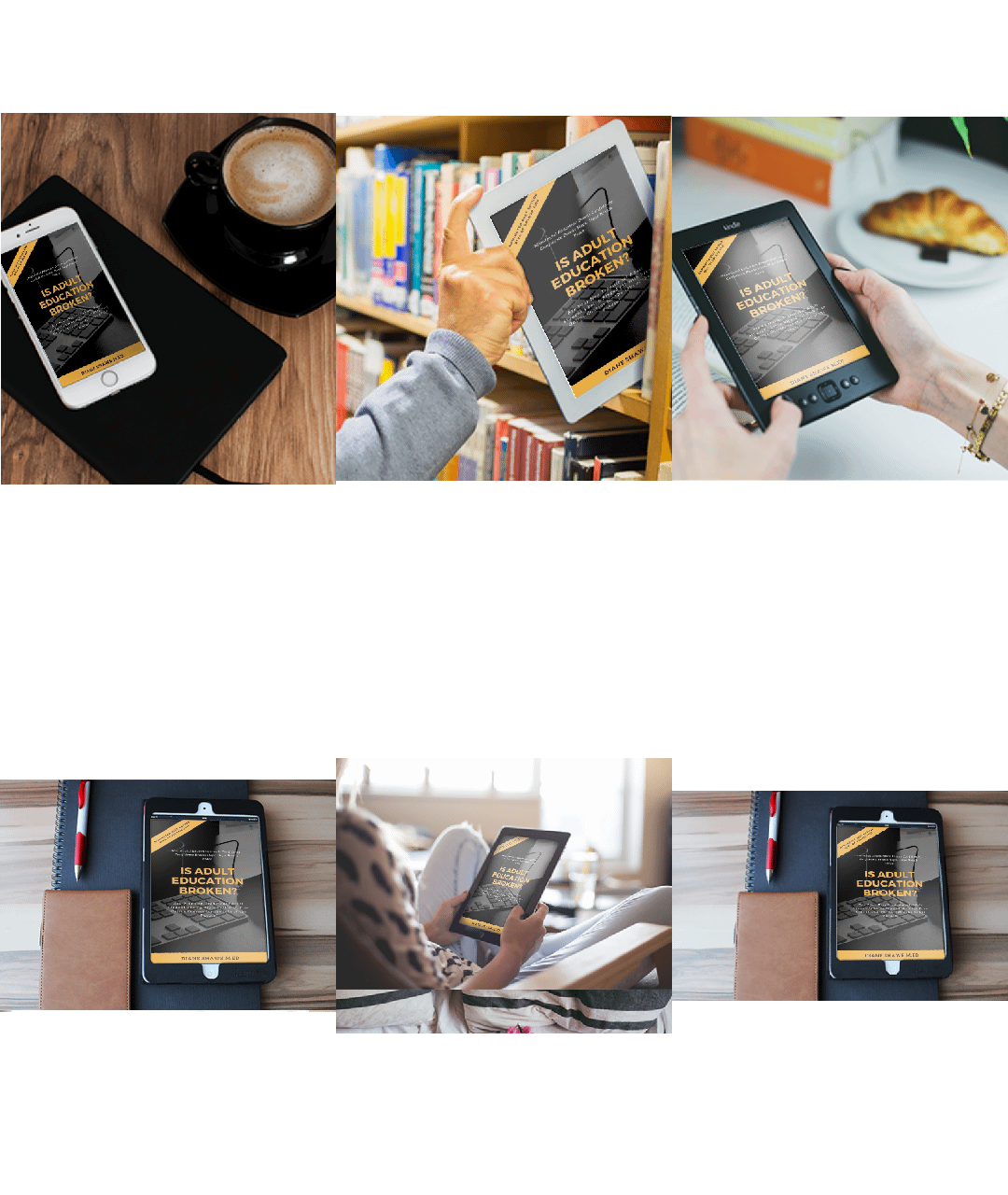
Here’s the Main Reasons Adult Education is Broken and I’ll Prove It To You

Is Adult Education Broken?

Is Adult Education Broken by Diane Shawe Author (4)

Adult education has become undervalued in an overpriced educational infrastructure.

The people who need the most help are already systematically ripped off by greedy loan companies, NHS parking, having to pay charges for drawing out their own money from private ATM machines in poorer boroughs, pre-paid electric meter’s to name but a few.

The more you seem to need help the more you seem to have to pay.

Off course, the arguments are always about risk, but to compound on top of their needs, a premium, just to make sure the risk is compensated for is questionable indeed. But another kind of ripping off is taking place. ‘Free online education’ you may ask ‘why is this a rip-off people”?
I will answer this from my perspective initially and then make further arguments as to why we should be very concerned about this un-policed, unchallenged butchery of the values originally infused into our adult educational system.

Is Adult Education Broken by Diane Shawe Author (2)So if you all but think Adult Education is Broken and all but given up, this book spills the beans on what has gone wrong, what questions need to be addressed and if certain issues are tackled by Government, then there’s Hope,

As Isaac Asimov—a master of science fiction literature—once said:

“No sensible decision can be made any longer without taking into
          account not only the world as it is but the world as it will be.”

So the big Question is – What has happened?

  • Why have these large institutions priced education out of some fundamental principles?
  • Why on the other spectrum are all these free courses flooded the market?
  • How can we make the new economic age enhance, rather than diminish, our quality of learning?
  • How can we make this amazing innovation advance the prospects of all people especially those with or without experience and not just for the youth?

It is clear that at this moment most educational systems are not keeping pace with changing technology and the ever-evolving world of work.

Is Adult Education Broken by Diane Shawe Author (5)
“If unemployment formed a country it would be the 5th largest in the world”

                                                  Isaac Asimov

 
Not enough people are thinking strategically enough in this area.  Fundamentally, we need to change what people learn, how people learn, when people learn, and even why people learn.

We must get beyond the traditional model of students sitting passively in classrooms, following instructions and memorising material that they are tested and scored on which sometimes turn out to be of little use in an every changing economy.

“It is not the strongest or the most intelligent who will survive but those
                                     who can best manage change.”                       Darwin

Throughout the ages, every human society has experienced challenges adjusting to population growth, maintaining structural order and creating channels for future generations. How well a society prepares the next generation for survival is imperative for the society as a whole but we have stalled in this process.

There seems to be a range of systemic failures such as

: failure to find a formula to develop teachers convergent and divergent Is Adult Education Broken by Diane Shawe Author (3)facilitating skills
: failure to consider cultural relevance
: failure to develop enterprising and entrepreneurial skills
: failure to prepare about taking personal responsibility
: failure to provide adequate technology and supporting curriculum
: failure to encourage international engagement
: failure to manage growth of academic misconduct

Diane Shawe Author states that “the traditional belief that we must prepare ourselves to be ‘employable’ is under threat. The counter argument encourages us to ‘gear up’ for earning our own money, rather than seeing income as someone else’s responsibility”

With the population dramatically aging and low-level jobs increasingly swallowed up by machinery, entrepreneurship will be a necessity for many, rather than a lifestyle choice for some.

SMEs are of course already leading this charge but in order to gear up for the future we need to start off by asking a serious question, defining criteria’s and examining trends, impact these trends will have and plan a way to jointly prepare current and future generations to be both employable and entrepreneurial.

We are living in a new economy—powered by technology, fueled by information, and driven by knowledge. And we are entering the new century with an opportunity on our side but huge problems that require new thinking.

claim free course now

Is Adult Education Broken by Diane Shawe Author (12)

Click to find out more about creating your own On Demand Digital Course Library

How to create a digital on demand course library


Outsourcing your knowledge

Albert EinsteinWhy knowing less helps you to do more.

Diane Shawe M.Ed. 

When you think about the power of your brain and how we learn, memorise and recall all those facts, it can get very confusing. Having taught for nearly 25 years and trained some of the brightest professionals over last 10 years, I believe that knowledge is divided in two distinct areas. We can either know about a subject ourselves or we know where we can retrieve information on that subject. The massive amount of information available online has opened an infinite library of easily and quickly retrievable information with simple search engines. I like to think of it as an organic external hard drive, an outsourced memory we can plug in at any time. Some have argued that the internet dilutes the most traditional kind of knowledge: knowing a subject ourselves. They argue that in some way it makes our brains less efficient, diminishing our intelligence and destroying our inner hard drives and memory.

You may remember (if you are of a certain age) that when you were young, you knew by heart the phone number of your closest friends. Since the introduction of digital directories on smartphones there is no longer any reason to memorise numbers by heart.   On the other hand, how many hundreds more contacts do you have now compared to then thanks to the digital directories? In reality, how much more connected are you? The real deal of the information age is not that it allows us to know more, but that it allows us to know less in terms of depth of what we know, as mentioned by David Brooks, a New York Times columnist, in his famous 2006 NY Times article[1] The Outsourced Brain.

neuroscience brain“Memory? I’ve externalised it.” He said, “I am one of those baby boomers who are making this the “It’s on the Tip of My Tongue Decade.” But now I no longer need to have a memory, for I have Google, Yahoo and Wikipedia. Now if I need to know some fact about the world, I tap a few keys and enjoy the vast resource of the external mind.”

I think the positive side of this is that we are free to expand our awareness of subjects we did not have space, or availability, to explore before. Our memory now has a different function: it is a digital index that remembers the existence of a subject and what are the best leads to find information on that subject. I too had thought that the magic of the information age was that it allowed us to know more facts. Then I realised that the magic of the information age is that it allows us to know less.

It provides us with external cognitive servants, silicon memory systems if you will, with collaborative online filters, consumer preference algorithms and networked knowledge. We thus can give these servants the massive raw data and liberate ourselves to think, explore and be creative. You can use your brain to learn new skills, the soft skills that are the true measure of success.

Your outsourced memory (the internet, the cloud and more) allows you to be aware of the existence of information you would never have come across before when you were limited to what your inner memory could hold. It allows you to increase the quantity (and thus the quality) of the information that you can process because you do not always have to worry about memorising every single detail of it. It allows you to use more brain power in linking concepts and applying them rather than remembering them. It empowers you to think and process information faster because your brain has the space to hold links to so much different information, and in doing so it expands your subjective time. Back in the analogue era, the difference between a deep brain and a shallow brain was the availability of information and the choice of whether to take in that information or not came second.

As an educationalist and technophile, combined with my outsourced memory I have the capacity to think deeper. Now that (nearly) everything is available, the power is back to you: it is up to you to take responsibility of what content goes into your mind and how you use your outsourced memory.

Now you have begun to outsource your brain and now have room to do something rather special with your neo-cortex. Enjoy.


Global Personal Bloggers of Influence for 2017

When twitter came out and account holders tweeted what they ate, we all thought twitter had a short life span.  Now the media rummages through top celebrities tweets to find something sensationable to report about.  Would be employers have been know to use candidates social media postings as evidence against them.
The era of the Personal style bloggers use to get caricatured as either geeks or pretty, brainless girls who dress up for their camera-wielding boyfriends and post their results to a WordPress blog.
But wait a minute, with instagram, Facebook, linkedin and twitter integration most of these bloggers have grown quiet influential with hundred of thousands of followers. Over the past decade, these independent publishers have become a real force in the fashion industry — not just snapping up front row seats at fashion shows, but landing major campaigns and collaborations with brands, becoming regular guests on TV shows like “Today” and “America’s Next Top Model,” and turning their blogs into multimillion-dollar businesses. Some have become household names. Independent European bloggers are harder to pin down as most of them are linked to magazines.
Chiara Ferragni, Hanneli Mustaparta and Nicole Warne. Photo: Clemens Bilan/Stringer

Chiara Ferragni, Hanneli Mustaparta and Nicole Warne. Photo: Clemens Bilan/Stringer

To determine the ranking, consideraction was given to:

  • Instagram, Twitter, Facebook, YouTube and Pinterest followers, as well as website traffic. These numbers gave us a snapshot of how many people these bloggers are reaching every day.
  • Brand extensions. We gave props to bloggers who have used their influence to create original products.
  • It factor. We talked to industry insiders about whom advertisers are loving right now, and who is moving the most products via affiliate links.
  • Google News searches. Headline makers were rewarded for extending their reach beyond their own network.
Chiara Ferragni. Photo: Jason Merritt for Getty Images Entertainment

Chiara Ferragni. Photo: Jason Merritt for Getty Images Entertainment

1. Chiara Ferragni, The Blonde Salad 
The 27-year-old Italian, who now lives in Los Angeles, has the broadest reach of any individual fashion blogger on our list, with more than 3 million Instagram followers. She’s a global star, as popular in Europe as she is in the U.S. What’s more, links from her site drive traffic and conversions, according to many of the brands with whom she has partnered. She was also recently named to an expert panel that will help determine the shortlist.

Oh, and she graced the cover of Lucky magazine’s February issue along with fellow bloggers Nicole Warne and Zanita Whittington.

2. Aimee Song, Song of Style 
Song, 28, is a Los Angeles-based interior designer whose straightforward street-style shots have made her popular with brands and readers alike. Song also has an incredible Instagram following — 1.9 million — and has worked hard to build her YouTube audience as well, with more than 28,000 subscribers to her channel.

3. Wendy Nguyen, Wendy’s Lookbook 
Yet another L.A.-based blogger, Nguyen, 31, is best known for her YouTube channel, which currently boasts 600,000-plus subscribers. (Her 2011 video, “25 Ways to Tie a Scarf” has been viewed over 29 million times.) Nguyen’s point of view is unique in that she grew up in the foster system, and has opened up about her experiences to her readers.

Kristina Bazan. Photo: Frazer Harrison for Getty Images Entertainment

Kristina Bazan. Photo: Frazer Harrison for Getty Images Entertainment

4. Kristina Bazan, Kayture 
This Swiss-model blogger, 21, has an impressive reach on Facebook — with more than 1.1 million likes — in addition to a major presence on Instagram, Twitter, etc. Bazan is a favorite of high-end brands: she’s worked with Louis Vuitton, Hugo Boss and Piaget, among others.

5. Julie Sariñana, Sincerely Jules
The 29-year-old blogger, who lives in Los Angeles, started her site in 2009 — early, compared to many of her peers. Her easy, approachable style has translated well into her own line of t-shirts, printed with often inspirational, occasionally irreverent, quotes.

6. Rumi Neely, Fashion Toast 
Neely, 31, launched Fashion Toast in 2007. Her particular style of blogging — photo-heavy posts featuring cool clothes and model poses — has greatly influenced the generation of influencers who have followed her. While Neely has collaborated with established brands in the past, she recently launched her own line. Are You Am I, a collection of slip dresses, tap pants and distinctly cut tees, is notable for its specificity. For fans who want to emulate Neely’s style — and there are plenty of them — there is nothing more perfect.

7. Nicole Warne, Gary Pepper Girl 
One of three bloggers to land Lucky‘s February 2015 cover, the Sydney-based Warne, 25, first launched Gary Pepper as a vintage e-commerce site in 2009. Warne started out blogging and modeling the clothes as a way to market the website, and by 2011, it was one of the largest online vintage retailers in Australia. However, the young entrepreneur’s side project soon became the main event, and in 2012 she shut down the e-commerce leg of Gary Pepper to focus on her blog-driven business.

Blair Eadie. Photo: Cindy Ord for Getty Images Entertainment

Blair Eadie. Photo: Cindy Ord for Getty Images Entertainment

8. Blair Eadie, Atlantic-Pacific 
The New York-based Eadie, 29, is best known for her accessible, yet educated, approach to fashion. Based in San Francisco when she launched the blog, Eadie has worked as a merchandiser for brands like Gap and Tory Burch, which means she has a professional edge when it comes to outfit posts. And brands like love working with her because she has a reputation for converting readers into shoppers.

9. Julia Engel, Gal Meets Glam 
The San Francisco-based Engel, 23, is seen as an up-and-comer in the space. She’s already amassed a large following across platforms, from Pinterest to Instagram. Appealing to the same sorts of readers who worship Lauren Conrad’s pretty aesthetic, Engel’s site is easy to navigate, with lots of opportunities to shop affiliate links.

10. Nicolette Mason 
Mason, who writes a monthly column for Marie Claire and designed her own collection for Modcloth last fall, is one of the most in-demand bloggers working right now. The 29-year-old writer played a role in the promotion and social media around Target’s new plus-size collection Ava & Viv and is also a budding TV personality, offering style advice on programs including “Today” and “Good Morning America.” Mason is notable because she uses her blog as a platform to discuss bigger social issues, including race, sexuality and body image.

11. Shea Marie: Peace, Love Shea 
The Los Angeles-based blogger and TV host, 27, has the high-fashion-meets-Southern-California look brands eat up. She’s worked with the likes of Dior, Gucci, H&M and Guess.

Bryanboy. Photo: Dimitrios Kambouris for Getty Images Entertainment

Bryanboy. Photo: Dimitrios Kambouris for Getty Images Entertainment

12. Bryanboy 
The OG fashion blogger and best friend of Fashion Toast‘s Rumi Neely, the New York-based, Philippines-bred Bryan Grey Yambao has transformed from an online-diary keeper to a celebrity and fashion insider. While other bloggers from his era have fallen off the map, Yambao, 32, has remained relevant by branching out. Memorable projects include a collection with furrier Adrienne Landau and a hosting spot on several seasons of “America’s Next Top Model.”

13. Elin Kling
The New York-based Kling, who is Swedish, was one of the first bloggers to collaborate with a brand on a collection. (In 2011, H&Mreleased a Kling-designed line.) But her fantastic stand-alone label, Toteme, has transformed Kling, 31, from a blogger to a full-fledged designer.

14. Zanita Whittington
The Stockholm-based Aussie, 28, was one of Lucky‘s February cover stars. Along with modeling and blogging, Whittington is also serious about photography. Her site is a sort of “how to” for aspiring bloggers, with service pieces on starting a blog and building an audience.

Gabi Gregg. Photo: Ilya S. Savenok for Getty Images Entertainment

Gabi Gregg. Photo: Ilya S. Savenok for Getty Images Entertainment

15. Gabi Gregg, Gabifresh
One of three plus-size bloggers chosen to star in the campaign for Target’s new Ava & Viv collection, Gregg started her blog in 2008 when she couldn’t find an entry-level job in fashion journalism. Now 28 and based in Los Angeles, the blogger has appeared on the “Today” show, designed a sell-out swimwear collection, and partnered with brands including Misguided, Nordstrom and Laura Mercier.

16. Danielle Bernstein, We Wore What
The New York-based blogger, 23, started her site as an FIT undergrad eager to capture the style of her fellow students. It soon transformed into a personal style forum, leading to a design project with Topshop.

17.  Jessica Stein, Tuula Vintage
This Sydney-based blogger, 25, spends a good chunk of her time traveling, and sharing her adventures via Instagram. (She’s currently parked in the Maldives.) Brands like Dior Beauty partner with her for the obvious reasons: she has great taste and an enviable life.

Susanna Lau. Photo: Cindy Ord for Getty Images Entertainment

Susanna Lau. Photo: Cindy Ord for Getty Images Entertainment

18. Susanna Lau, Style Bubble
Forever the no. 1 blogger to fashion insiders, the 31-year-old Lau is now one of the industry’s leading voices. While her creative outfit posts are still appreciated, she is even more loved for her sharp opinion, contributing to publications including Elle UK and Business of Fashion, as well as posting regularly on her own site.

19. Chriselle Lim, The Chriselle Factor
With a massive YouTube following, the Los Angeles-based wardrobe stylist, 29, offers her audience plenty of tips and tricks via video. She’s worked with brands including Coach and Banana Republic.

20. Jane Aldridge, Sea of Shoes
Another blogging pioneer, the Dallas-based Aldridge started her site at age 15. Eight years later, she’s still at it, partnering with brands like Lovegold and Cartier on a regular basis.

Don’t let others failures make a monkey out of you

Fear of failure and not standing out from the crowd will not get you far up the ladder of success

article by Diane Shawe M.Ed. Ed
Four monkeys were placed in a room that had a tall pole in the center. Suspended from the top of that pole was a bunch of bananas. One of the hungry monkeys started climbing the pole to get something to eat, but just as he reached out to grab a banana, he was doused with a torrent of cold water.

Squealing, he scampered down the pole and abandoned his attempt to feed himself.

Each monkey made a similar attempt, and each one was drenched with cold water. After making several attempts, they finally gave up.

Then researchers removed one of the monkeys from the room and replaced him with a new monkey. As the newcomer began to climb the pole, the other three grabbed him and pulled him down to the ground.

After trying to climb the pole several times and being dragged down by the others, he finally gave up and never attempted to climb the pole again.

recruiting and training winners for your busines

The researchers replaced the original monkeys, one by one, and each time a new monkey was brought in, he would be dragged down by the others before he could reach the bananas.

In time, the room was filled with monkeys who had never received a cold shower. None of them knew why.

DON’T LET FAILURE MAKE A MONKEY OUT OF YOU!


The Prince’s Trust launches new Achieve programme for 13-19 years old

Helping the youths to achieve more

Helping the youths to achieve more

The Prince’s Trust has launched a new programme designed to support young people who are at risk of underachieving at school or college to engage with and succeed in education.

The Prince’s Trust Achieve programme is a flexible provision for 13-19 year olds who are experiencing challenges with attendance, attainment or motivation and may be at risk of exclusion or not attaining the grades they are capable of. It incorporates the best of the youth charity’s existing xl and Fairbridge programmes, which have long helped young people of school age to reach their potential, both in education and in their future employment.

The need for alternative curriculum offerings like Achieve remains clear, with a third of school-leavers still not achieving five A*-C grade GCSEs and more than half of young people in Scotland not achieving 5 National Fives. The situation is even worse for young people from disadvantaged backgrounds, who are far more likely to fail to achieve at these levels than their peers.

The new Achieve programme is designed to help disadvantaged young people who are struggling to develop important character skills through relevant, engaging and informal learning. It will connect young people with the world of work and equip them with the transferrable skills and knowledge they need to succeed, focusing particularly on literacy, language and numeracy (LLN) and science, technology, engineering and maths (STEM).

According to Richard Chadwick, Director of Programmes and Development at The Prince’s Trust, “Too many students in the UK become disengaged with education and leave school or college with few qualifications, low levels of confidence and low aspirations for the future. We have a long history of working successfully with education providers to combat this problem and have drawn on our expertise in youth based work to develop our new Achieve programme, which is our most flexible provision yet for people of school age.”

Young people will be able to access Achieve from August 2016 in schools, colleges or, in some regions, at a Prince’s Trust Centre. Further Education providers can also deliver the programme as NEET prevention, either as a part time study programme or as part of a full time study programme.

This year, The Prince’s Trust will work with more than 500 partner schools and organisations to support almost 10,000 young people through the Achieve programme. More information about how a school, college or alternative education provider can deliver the Achieve programme can be found at https://www.princes-trust.org.uk/help-for-young-people/unlock-your-potential/achieve

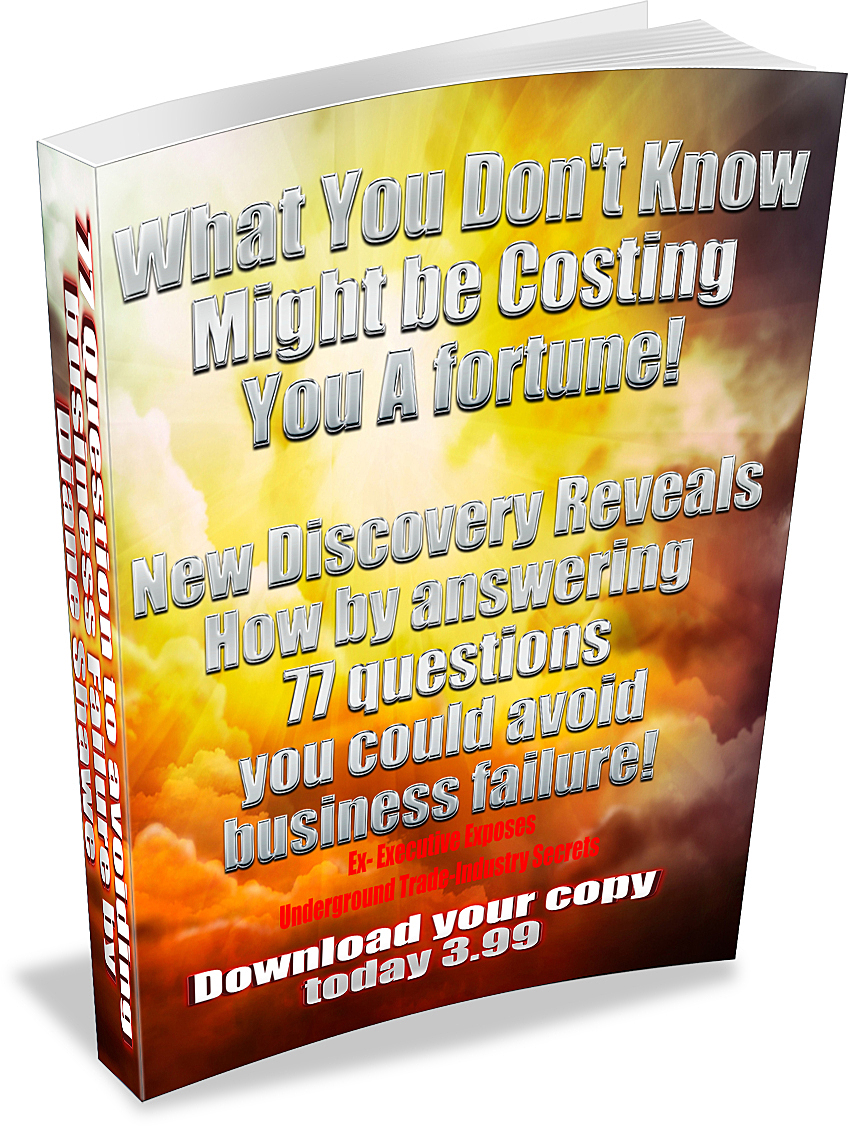
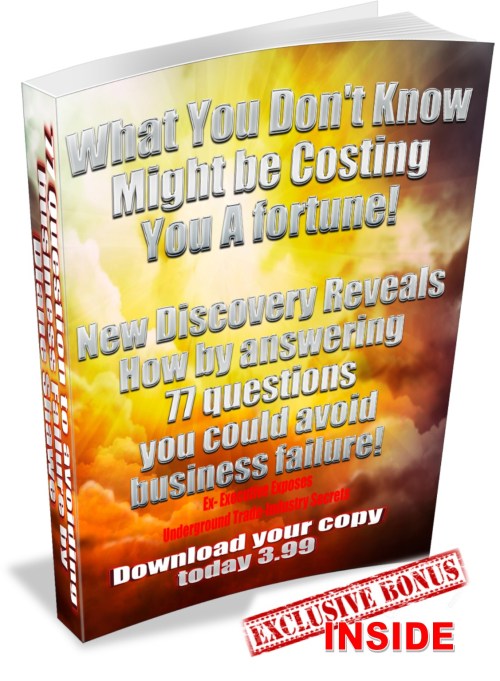
How answering 77 questions could help you avoid business failure

Out Now: 77 Ways to avoid Potential Business Failure77 Questions to avoid business failure by Diane Shawe white background

“Your work is going to fill a large part of your life, and the only way to be truly satisfied is to do what you believe is great work. And the only way to do great work is to love what you do.” –Steve Jobs, co-founder of Apple

Like you I Never Thought I Could answer 77 questions that would help me  avoid business failure  – But I Finally Discovered The Secret! Here’s How…

article by Diane Shawe Author

Are you ready? Is Entrepreneurship For You?
Are you the right person for your business idea?

In business, there are no guarantees. There is simply no way to eliminate all the risks associated with starting a small business – but you can improve your chances of success with good planning, preparation, and insight. Start by evaluating your strengths and weaknesses as a potential owner and manager of a small business. Carefully consider each of the following questions.

  • Are you a self-starter? It will be entirely up to you to develop projects, organise your time, and follow through on details.
  • How well do you get along with different personalities? Business owners need to develop working relationships with a variety of people including customers, vendors, staff, bankers, and professionals such as lawyers, accountants or consultants. Can you deal with a demanding client, an unreliable vendor, or a cranky receptionist if your business interests demand it?
  • How good are you at making decisions? Small business owners are required to make decisions constantly – often quickly, independently, and under pressure.
  • Do you have the physical and emotional stamina to run a business? Business ownership can be exciting, but it’s also a lot of work. Can you face six or seven 12-­hour work days every week?
  • How well do you plan and organise? Research indicates that poor planning is responsible for most business failures. Good organisation ­ of financials, inventory, schedules, and production ­ can help you avoid many pitfalls.
  • Is your drive strong enough? Running a business can wear you down emotionally. Some business owners burn out quickly from having to carry all the responsibility for the success of their business on their own shoulders. Strong motivation will help you survive slowdowns and periods of burnout.
  • How will the business affect your family? The first few years of business start­up can be hard on family life. It’s important for family members to know what to expect and for you to be able to trust that they will support you during this time. There also may be financial difficulties until the business becomes profitable, which could take months or years. You may have to adjust to a lower standard of living or put family assets at risk in the short-term.

So Before you start – Do you know the answer to these 77 questions?  Download your copy today it will be the best £3.99 you spend? 

I recommend you get a little notebook and start working on each question. For those you cannot answer, find the answer and make a note.  This is also an invaluabe excercise if you are already in business, it can help you clarify where you are today and help you plot where you need to get too and how to do it.

Get your exclusive copy today and save £3.00

Get your exclusive copy today and save £3.00


If you want to find out if you are right for your business, we have a surprise link hidden inside this little ebook.  All you have to do is Answer 10 questions and we will send you a full report which will also include your Personal Training Needs Analysis to develop your Entrepreneur skills.

Diane Shawe Author of 77 Question to avoid business failure Available from Amazon

Diane Shawe Author of 77 Question to avoid business failure Available from Amazon

Creating a Win Win situation is not just about Selling

Negotiations outside the box

Negotiations outside the box

Keeping an Open Mind

article by Diane Shawe M.Ed

Have you ever started working on a project and had someone come along with an idea you never thought of that made the project much better? Perhaps it sped up the process, gave it much more depth or meaning, or led to a richer result in some way.

If you were closed-minded about the project, you would not have even noticed that someone came to you with a better suggestion. Being open-minded, however, allowed you to recognise the value and merit of someone else’s ideas, and voila! Things worked out much better than you had ever imagined.

When you apply open-mindedness to negotiating, it helps to support your flexible and adaptable nature. For example, perhaps you set your mind to negotiate the best price you can, but your counterpart approaches you with a better price than you had imagined as your benchmark. If you are open-minded, you hear what your counterpart proposes. If you are closed-minded, you are so focused on the outcome that you might not hear what they offer at all, and you may actually negotiate yourself a weaker deal.

Not every negotiation is about reaching a win-win solution. Sometimes, not everyone can win. For example, when an organization is preparing to downsize, the employees may be looking for the most benefit they can get, but they know that they will not have a job in the end. In collaborative negotiations, your real objective is to reach the best possible result for all parties. This might include some compromise, and should always involve working toward relationships.

Long Term and Short Term Relationships

CPD FrameworkWhen you consider relationships in negotiating, the length of the relationship is very important. If you are negotiating with someone that you will never see again, and with whom you have no investment, go ahead and put everything on the table. This would be the case if you were bargaining about a one-time purchase (such as furniture or a television from a commission based salesman, for example). In many cases, however, you may be looking at a much longer-term relationship. In the case of labour negotiations, many unions have strong negotiators who work with them for many years.

The union negotiators are skilled professionals, and they may approach your meetings very confident that they, themselves, will be around much longer than the current group of managers and negotiators that the employer has. If you are an employer negotiator, you will want to consider the long-term effects of the relationship that you foster, as well as the specific terms that are agreed upon. Expect, for example, that if you are currently negotiating wage or benefit rollbacks, the union is going to be very resistant, and that if you are successful in negotiating those reductions, the union is going to negotiate their reinstatement at the next round.

Labour negotiations are about long-term relationships. Consider also that the terms that you bring up in this kind of negotiation will have a long lasting effect on the company and its employees. The union knows this too, and that it is important to realise that the negotiations are a part of a long-term relationship that can be strengthened or damaged by the results of the negotiations that you are taking part in.

When you are thinking in terms of relationships, be ready to leave some items on the table. That means that some items that you thought were important may not be considered in this round of negotiations. This is one of the times when detaching yourself from the outcome is important; there will be other opportunities to work with this contract or similar ones again, and those may be the times that you will be able to bring those other items to the fore.

Go back

Your message has been sent

Warning
Warning
Warning
Warning

Warning.

branding-mindfeed-ebook-by-diane-shawe
About the Author

Diane Shawe is a speaker, trainer, mentor, consultant, entrepreneur and author with 15 published titles on Amazon.   With more than 25 years of experience. She has personally trained over 2800 people around the world in a variety of fields and has published a number of works. She has contributed to over 100 Kiva Entrepreneur’s around the world.

She was also one of the producers of a Day time Ladies Talk Show in 2015 and Host of one of the UK’s best loved Annual Hair Extensions Awards.

Diane also enjoys oil painting, sailing and clay pigeon shooting. She focuses on topics that she is passionate about in her writing and has attracted over 36,000 followers on her popular blog.

Media Contact
Company Name: AVPT Short Courses
Contact Person: Diane Shawe MEd
Email: Send Email
Phone: +44 208 1333120
City: London
Country: United Kingdom
Blog Website: http://www.academyexpresscourses.com
Training http://www.hairextensionstraining.academy

Diane Shawe’s eBooks are available on Amazon right now at: https://www.amazon.com/Diane-Shawe/e/B0052WG8V6

Diane Shawe Social media links http://www.phollo.me.com/expresscourses


Why strategies for modernising corporate learning should focus on outcomes

there's never been a better time to start a short coureTHE SPEED OF CHANGE IN MODERN BUSINESS DEMANDS A NEW APPROACH TO SUPPORTING LEARNING AND PERFORMANCE AT THE POINT OF NEED.

article by Diane Shawe M.Ed

“THE IMPORTANCE AND EVIDENCE -BASED APPROACH TO
LEARNING USING MOBILE TECHNOLOGY IS INFLUENCING HOW INVESTMENT IN CONTINUED PROFESSIONAL DEVELOPMENT OF A WORKFORCE IS ACHIEVED”

New market opportunities open and close at blinding speed, new competitors emerge overnight, product lifecycles are getting shorter, and customers are more knowledgeable and sophisticated. This fast-changing environment has led to requirement to change learning and training. However more often than not, the task of aligning the learning organisation to the business can be challenging and the perception of how the business views the learning organisation in terms of aligning to strategic initiatives is different to how the learning organisation perceives itself.

Downsizing has resulted in a mass drainage and outflow of skills as employees or contractors are let go. To ensure that an organisation can compete globally and remains at par with the technological changes in the global market committing to the investment of on-going skill training is often viewed as a potential unnecessary incision into the bottom line
Start a short course to grow

Corporates, enterprises and charities all wish to run their operations at the minimum costs allowed. We all recognise that in today’s environment, business moves faster than ever. Most organisations now recognise the importance of developing a strategic approach to learning and harnessing the internal skills of their teams. Moving away from more tactical based activities associated with training such as measuring skills-based behaviours, to focusing on acquisition of knowledge and learning transfer that result in individual and organisational performance improvements.

With the explosion of mobile technology, organisations need to take advantage of the benefits, scalability, and viability of using mobile e-learning, using smart phones, tablets, and notepads that offer a blended solution.

E-learning has the potential to fully integrate the benefits of personal freedom with connectivity (belonging to a purposeful group of learners). From an educational perspective the “e” in e-learning stands for more than electronic; it can also stand for extending and enhancing the learning experience.

Fulfilling the buyers requirements

Corporate strategy for modernising learning free report by Diane ShaweThe four pillars that go to underpin the buyer’s requirements and therefore still define the industry offerings are centred on the following: • Compliance and accreditation

  • Scalable and flexible whilst achieving a real reduction in Cost
  • Improving, tracking and measuring Learners’ performance
  • Real time management, alignment and communication to support on-going changes.
  • The ability to track and report learner performance remains uppermost in many procurers’ minds.

Isaac Asimov’s quote is now more urgent and relevant if corporates are to gain a lean and competitive advantage with a progressive highly skilled workforce for the 21st century.

“No sensible decision can be made any longer without taking into account not only the world as it is, but the world as it will be.”

Why strategies for modernising corporate learning should focus on outcomes rather than input by Diane Shawe M.Ed

Is you mobile phone germ free?

Mucky mobile: Your phone could carry 10 times as many bugs as a lavatory seat

Next time you use you mobile phone, you might want to give it a little clean.

Researchers have discovered there are more bacteria on the average mobile than you will find in a toilet seat! Experts said the reason is that phones are often passed between people which spreads the germs around – but they are never cleaned which means the diseases keep on building up.

So when did you last clean your mobile phone on your sleeves or on your skirt?

Previous research has found that other things we assume are clean are in reality rather disgusting.

Keep germs at bay this winter

Keep germs at bay this winter

British scientists discovered that cash machines have similar levels of pseudomonads and bacillus, bacterias which are known to cause sickness and diarrhoea, as they found in public toilets.

Computer keyboards are also five times dirtier than the average lavatory seat.

Researchers from Which? swabbed 33 keyboards for food poisoning bugs e.coli, coliforms, staphylococcus aureus and enterobacteria and found four were a potential health hazard.

One was even ‘condemned’ because it was so infectious.

Remote controllers have also long been known as the grubbiest item in hotel rooms as they are never wiped down.
Read more: http://www.dailymail.co.uk/health/article-2196365/Mobile-phones-ger…