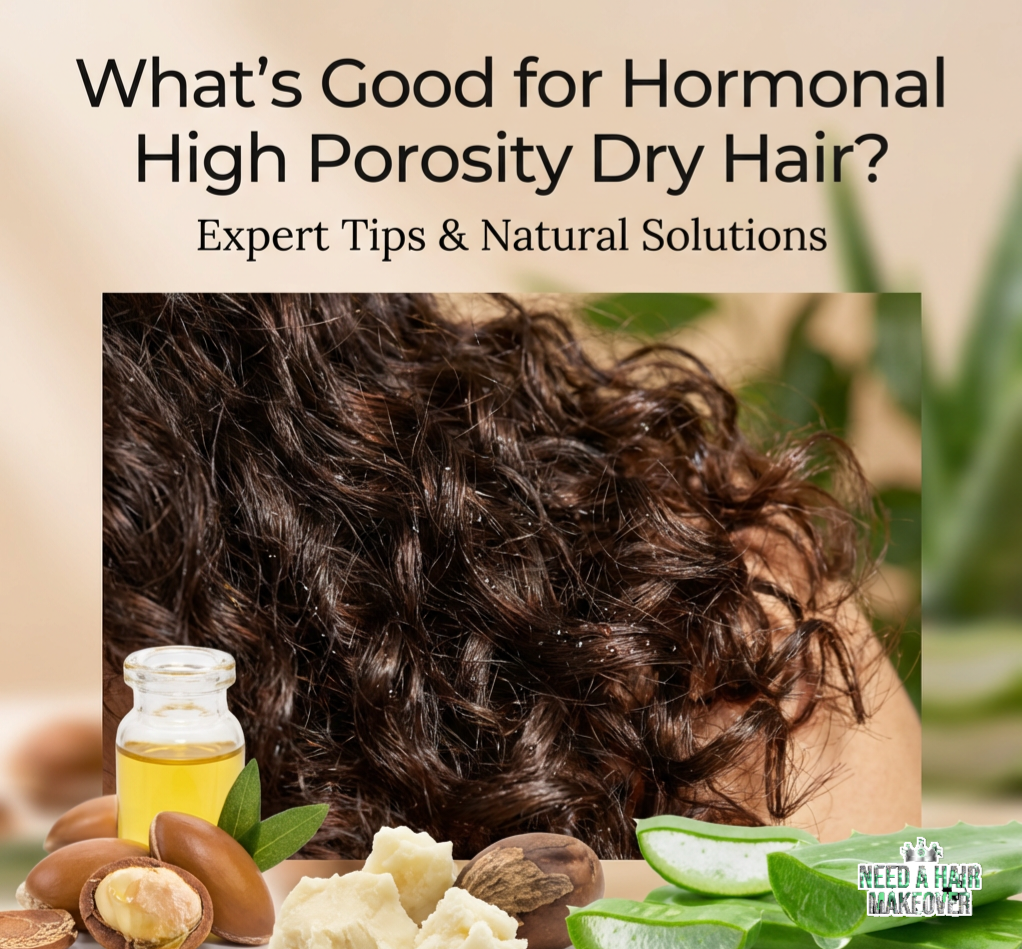
Hormonal shifts can significantly alter hair texture, often leading to high porosity, which means the hair cuticle is raised or “holey,” allowing moisture to enter easily but escape just as fast.
This results in hair that feels perpetually dry, frizzy, and brittle.
What Causes It?
Hormonal high porosity is primarily driven by changes in the endocrine system that affect the scalp’s natural oil production and the hair’s structural integrity:
1. Menopause and Perimenopause: A drop in estrogen reduces sebum (oil) production. Without enough sebum to coat and “seal” the hair shaft, the cuticle becomes more fragile and prone to lifting.
2. Thyroid Imbalances: Both hypo- and hyperthyroidism can interfere with the hair follicle’s growth cycle, leading to thinning and a more porous, “straw-like” texture.
3. Stress (Cortisol): High cortisol levels can disrupt the delivery of nutrients to the hair follicle, weakening the protein structure (keratin) of the hair as it grows.
4. Aging: Naturally decreasing levels of collagen and lipids in the body make the hair fiber less elastic and more porous over time.
Improving hair from the inside out focuses on providing the building blocks for a stronger, smoother cuticle.
– Omega-3 Fatty Acids: Found in fish oil, flaxseed, and walnuts. These help lubricate the hair from within by supporting the sebaceous glands.
– Collagen & Biotin: Supplements containing marine collagen or biotin can help strengthen the hair’s keratin structure, making the new growth less porous.
– Hyaluronic Acid Supplements: Known for holding 1,000 times its weight in water, oral hyaluronic acid can help improve systemic hydration, which reflects in the scalp and hair.
– Protein-Rich Foods: Since hair is 90% protein, ensuring you get enough lean meats, eggs, or plant-based proteins (like lentils) is vital for repairing the hair “cortex.”
– Zinc and Iron: Deficiencies in these minerals (common during hormonal shifts) lead to brittle, porous strands.
What Can You Treat It With?
High porosity hair needs products that fill the gaps in the cuticle and seal the moisture in.
1. Protein TreatmentsHigh porosity hair has “gaps” in the cuticle. Use a strengthening mask containing hydrolyzed keratin, silk, or wheat protein once every two weeks to temporarily patch those holes and add structure.
2. The L.O.C. MethodThis layering technique is highly effective for high porosity hair: – L (Liquid/Leave-in): Apply a water-based leave-in conditioner.- O (Oil): Apply a heavy oil like Argan, Avocado, or Jojoba to mimic natural sebum.- C (Cream): Finish with a thick styling cream or butter (like Shea butter) to “plug” the cuticle and lock everything in.
3. Apple Cider Vinegar (ACV) RinsesHigh porosity hair is often too alkaline. An ACV rinse (1 part vinegar to 4 parts water) helps lower the hair’s pH, which flattens the cuticle scales, making the hair smoother and shinier.
4. Seal with Cold WaterAlways finish your shower with a blast of cold water. This helps physically close the raised cuticles before you step out into the air.
5. Avoid Sulfates and High HeatSulfates strip the little oil you have left, and high heat further “pops” the cuticle open. Opt for sulfate-free “co-washes” and air-drying whenever possible.
For hormonal high porosity hair, you need a mask that provides both protein (to fill the gaps in the cuticle) and heavy lipids (to replace the natural oils lost due to hormonal shifts).
– 1 Egg Yolk: Contains lecithin and protein to “patch” the holes in the hair fiber.
– 2 Tablespoons Extra Virgin Olive Oil or Avocado Oil: These are “penetrating oils” that can actually get inside the hair shaft to provide deep moisture.
– 1 Tablespoon Raw Honey: A natural humectant that pulls moisture into the hair.
- 1 Teaspoon Apple Cider Vinegar (Optional): Helps lower the pH to flatten the hair cuticle.
Instructions:
1. Mix: Whisk the egg yolk and oil together until creamy, then stir in the honey and vinegar.
2. Apply: Start at your ends and work your way up. High porosity hair is usually most damaged at the tips.
3. Dwell: Cover your hair with a shower cap. The trapped body heat will help the treatment penetrate. Leave it on for 20–30 minutes.
4. Rinse (Important): Rinse with cool or lukewarm water. Never use hot water, as it will “cook” the egg in your hair and cause the cuticle to lift even further.
5. Wash: Follow with a sulfate-free shampoo to remove any residue.
Quick Tip for Application Since high porosity hair is “thirsty,” apply this to damp (not soaking wet) hair. If the hair is dripping wet, the water fills the gaps in the cuticle first, leaving no room for the mask to sink in.
Ready to restore your hair’s strength and seal in lasting hydration?
Experience the ultimate transformation by booking a Deep Hair Repair with Infrared Treatment at the award-winning Need a Hair Makeover Specialist Hair Extensions and Hair Loss Salon.
Our advanced infrared technology penetrates deep into the hair shaft to repair hormonal damage and smooth high-porosity strands from the inside out. Don’t let dry, brittle hair hold you back—visit http://www.needahairmakeover.com today to schedule your consultation with our specialist team and give your hair the professional care it deserves.
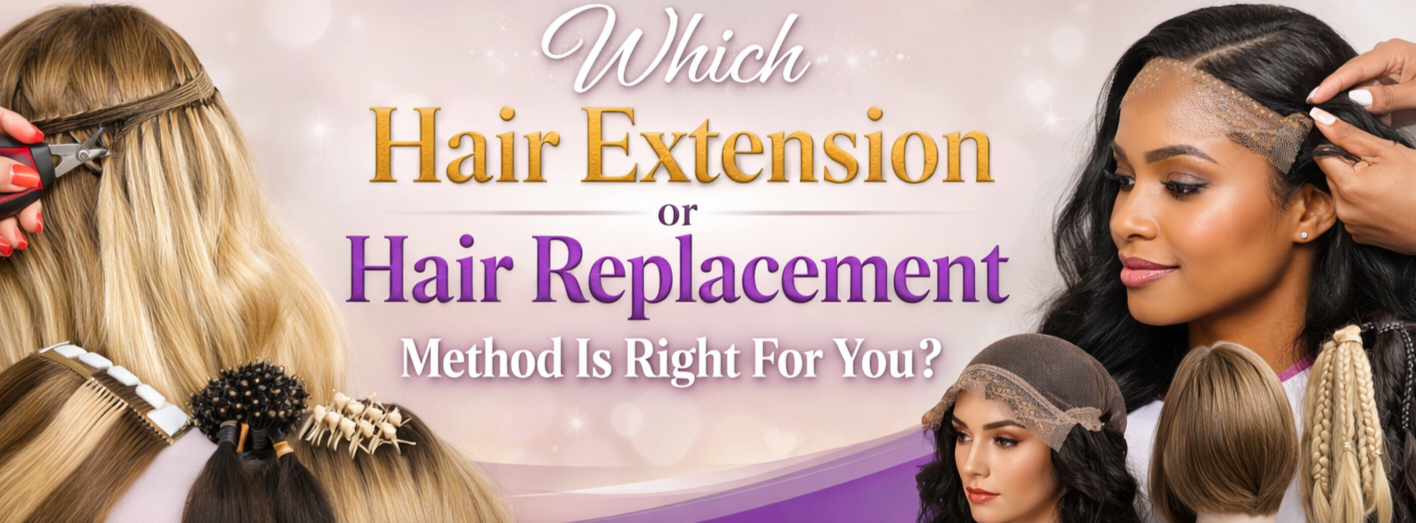
Thinking about hair extensions but its becoming confusing?
Losing your hair? Not sure which is best technique?Complete this assessment to receive your personalised result on the best solution for your hair type.
Selling is the lifeblood of any business — it comes before delivery, not after it. If your inner mantra is “I hate selling”, you’ve already lost the battle before it begins. Selling isn’t about pressure or persuasion; it’s about preparation, positioning, and clearly communicating value.
Over the years, I’ve learned that confidence in selling comes from structure, not personality. In this article, I share 10 key preparation points that have consistently helped me negotiate, sell, and lead with clarity — without compromising integrity or purpose.
If you don’t want to sound like you’re offering a bargain instead of a valued service or product, it’s important to understand that bargaining is only one stage of negotiation. True negotiation is a structured process shaped by timing, intuition, preparation, and flexibility.
It is far less about confrontation and far more about problem-solving, positioning, and value creation.The strongest negotiating position you can hold—especially in today’s economy—is being of service by solving a real problem. To do that effectively, here are 10 essential rules every woman negotiator should master.—
1. Do Your ResearchPreparation is power. Research should focus on three areas: facts, priorities, and principles. Collect data that supports your position—market rates, comparables, benchmarks, and past outcomes. Whether negotiating salary, contracts, property, or partnerships, information removes emotion and replaces it with authority.—
2. Know Your PrioritiesBe crystal clear about what you want and what the other party wants. Understand your non-negotiables versus your flex points. Knowing your own principles—and recognising theirs—allows you to frame proposals that are compelling, credible, and strategic rather than reactive.—
3. Define Your Walk Away Position (WAP)Your Walk Away Position protects you from poor decisions made under pressure. Know the minimum you’ll accept or the maximum you’ll pay before negotiations begin. This clarity prevents regret and strengthens confidence at the table.—
4. Establish Your BATNAYour Best Alternative to a Negotiated Agreement (BATNA) gives you leverage. Sometimes the best outcome is already on the table without prolonged bargaining. Over-negotiating can actually cost you opportunities—discernment matters.—
5. Work Within the ZOPAThe Zone of Possible Agreement (ZOPA) is where both parties’ acceptable outcomes overlap. Successful negotiators recognise when they’ve reached this zone and focus on closure rather than dominance. Winning doesn’t mean the other side loses.—
6. Control Timing, Not Just TermsTiming can outweigh price. Knowing when to negotiate, pause, or close is often more powerful than pushing harder. Strategic silence, delayed responses, and phased agreements are underused strengths.—
7. Lead With Value, Not DefenceDon’t justify—position. Frame your offer around outcomes, impact, and problem-solving. Value-led negotiation shifts the conversation from cost to return.—
8. Stay Flexible Without Losing AuthorityRigidity kills deals. Flexibility builds trust—but only when anchored in clear boundaries. Adapt your approach, not your standards.—
9. Document and De-PersonalisePut agreements in writing and keep discussions professional, not emotional. Detaching ego from outcome allows you to negotiate with clarity and confidence.—
10. Use AI & Automation to Strengthen Your PositionModern negotiation isn’t just human—it’s system-supported.
Platforms like http://www.explainer-video.uk help women entrepreneurs present proposals, services, and value clearly using AI-powered explainer videos, automation, and 24/7 digital engagement tools. When your offer is explained consistently, professionally, and at scale, you negotiate from a position of structure—not strain.—Negotiation isn’t about being aggressive.It’s about being prepared, positioned, and powerful.
The Truth Behind What Really Causes It By Diane Shawe
A quick reminder for anyone who wears human hair extensions 👇
✅ 100% Virgin Remy human hair has never been dyed or chemically treated ✅ It cannot release dye or ammonia unless something has been applied to it after installation (such as bleach, purple shampoo, or chemical-based products) ✅ The first 7 days are critical – extensions should not be washed or disturbed, as this can cause stress on the scalp and slippage
Hair extensions is at its most secure in the first week after application. Attempting to remove, bleach, or aggressively wash it too early can lead to irritation, redness, and even hair loss — not because of the fitting, but because the foundation has been disturbed before it has settled.
As an extension artist who designed the Hook & Latch™ system and has been recognised nationally for excellence in scalp-safe techniques, my number one priority is client safety.
🔒 Protect your hair. Protect your scalp. Always follow aftercare advice and never allow untrained hands to remove extensions prematurely.
If you’d like me to do a video breakdown of what can damage Remy extensions from home or salon misuse, comment “YES” below 👇
“Your Body Speaks Before Illness Strikes—12 Health Red Flags & Natural Healing Options While You Wait for a Doctors Appointment”
Doctor Appointments Are Hard to Get—Here’s How to Read Your Body’s Warning Signs & Find Healing Support Now” Getting a GP appointment in the UK has become increasingly challenging in certain regions throughtout the UK, with many patients waiting many days or weeks just to be seen. But your body doesn’t always wait—it sends signals usually well in advance (that many of us ignore) when something isn’t right.
Learning to recognise these signs can help you take action early and seek support from alternative health advisors or natural remedies while you wait for medical care.
Note: Before i go on I must state that this is not medical advice. Please consult a doctor or qualified professional if you have serious symptoms.
In this article, we’ll discover together 12 warning signs your body may give you, including fatigue, weight changes, skin issues, hair loss, and more. We’ll also explore what you can do in the meantime to support your body’s internal healing and where to find trusted alternative health practitioners in the UK.
Your body is constantly communicating with you. Sometimes the signs are subtle—easy to ignore or brush off as “just stress” or “getting older.” But persistent or unusual changes may be your body’s way of waving a red flag, signaling that something deeper needs attention.
Here are 12 ways your body may be trying to tell you something is wrong, plus two extra signs that are often overlooked.
1. Persistent Fatigue Feeling drained all the time, even after a good night’s sleep, isn’t just about being busy. Chronic tiredness can signal conditions such as anemia, thyroid imbalances, sleep apnea, or chronic fatigue syndrome. If rest doesn’t restore your energy, it’s worth exploring with a doctor.
2. Unexplained Weight Changes Noticeable weight loss or gain without changes to diet or exercise can point to underlying issues like thyroid disease, hormonal imbalances, diabetes, or even gastrointestinal problems. Gradual weight changes are common, but sudden shifts deserve attention.
3. Skin Changes Your skin is a window into your overall health. Sudden rashes, unexplained bruises, persistent dryness, or new moles can indicate allergies, infections, autoimmune disorders, or even skin cancer. Never ignore changes that seem unusual or that don’t heal.
4. Digestive Upsets Frequent bloating, indigestion, diarrhea, or constipation could indicate food intolerances, irritable bowel syndrome (IBS), ulcers, or more serious conditions like Crohn’s disease. The gut is often called the “second brain,” and disturbances here can be an early clue of imbalance elsewhere in the body.
5. Chronic Pain Pain that lingers without an obvious cause—whether in the joints, muscles, or nerves—can signal arthritis, fibromyalgia, nerve damage, or hidden infections. Chronic pain should never be dismissed as “just getting older.”
“As a millennial with the long-term health conditions of a boomer, I can identify with this mindset. I’ve always been ideologically against private healthcare, to the extent that when that Bupa advert comes on the TV where the woman in remission from cancer dances joyfully, I involuntarily yell: “Parasites! Did she have to sell her home to pay for chemotherapy?!” But with NHS waiting lists still sky high, like many, I’ve found myself relying on private healthcare for the first time. When I had nerve damage in my arm and was struggling to type this column, I reluctantly booked an appointment with a private physiotherapist rather than waiting several months on the NHS. Without private insurance, I paid the £75 an hour cost and felt lucky that I could afford to.” source: https://www.theguardian.com/commentisfree/2025/aug/20/private-healthcare-nhs-young-people?
6. Unusual Bleeding Blood in the stool, urine, or persistent vaginal bleeding (outside of a normal cycle) may indicate infections, hormonal issues, or cancers of the reproductive or digestive system. Even small amounts of unexplained bleeding should be checked.
7. Changes in Urination Going more often, experiencing pain when urinating, or noticing changes in color or odor may point to urinary tract infections, kidney problems, or diabetes. If these symptoms persist, it’s time for a medical evaluation.
8. Breathing Difficulties Shortness of breath, wheezing, or persistent coughs may indicate asthma, COPD, infections, or heart problems. If breathing becomes labored during normal activities, it’s an urgent warning sign.
9. Cognitive or Mood Changes Memory loss, confusion, difficulty concentrating, or sudden mood swings may be linked to neurological conditions such as Alzheimer’s, dementia, stroke, or even nutritional deficiencies. Mental changes should never be written off as “just stress.”
10. Irregular Heartbeat Heart palpitations, skipped beats, or a racing heart may indicate arrhythmia, cardiovascular disease, or even thyroid problems. Since heart conditions can be life-threatening, it’s important to seek medical advice if irregular rhythms are frequent.
11. Hair Loss and Thinning Hair is often described as a “barometer of health.” Excessive shedding or sudden thinning can signal stress, thyroid disorders, anemia, autoimmune diseases, or nutritional deficiencies (such as low iron, zinc, or protein). It may also indicate hormonal changes, especially in women during perimenopause or after pregnancy.
12. Brittle Nails and Weak Hair Quality Your nails and hair can reflect what’s happening internally. Nails that are brittle, ridged, or spoon-shaped may suggest anemia, thyroid problems, or vitamin deficiencies. Similarly, dull or breaking hair may be linked to poor diet, dehydration, or underlying endocrine imbalances.
Final Thoughts These signs do not automatically mean something serious is wrong, but they are worth paying attention to. Your body is wise—it sends early warning signals long before bigger problems arise. Don’t dismiss or ignore them.
Supporting Internal Healing While Waiting for a Doctor’s Appointment When medical access feels slow, it’s empowering to remember that you can take steps to care for your body while waiting. These practices won’t replace professional care, but they can support your immune system, lower stress, and create the best conditions for healing.
Natural Approaches to Support Internal Healing
1. Nutrition First Focus on whole foods: leafy greens, berries, nuts, seeds, lean proteins, and omega-rich foods like salmon or flaxseed. Reduce processed foods, refined sugar, and alcohol, which can aggravate inflammation. Consider short-term elimination of common irritants (gluten, dairy, excess caffeine) if you suspect food sensitivities.
2. Hydration & Detox Support Drink at least 6–8 glasses of water daily. Add lemon to water to support digestion and liver function. Herbal teas (like nettle, ginger, chamomile, or dandelion root) can gently aid detoxification and calm the nervous system.
3. Rest & Sleep Hygiene Prioritise 7–9 hours of quality sleep. Use simple practices such as limiting blue light before bed, keeping your bedroom cool, and creating a calming night routine.
4. Stress Reduction Chronic stress is linked to hair loss, poor immunity, and digestive problems. Try mindfulness, meditation, journaling, or deep-breathing exercises for 10 minutes daily. Even gentle walks in nature can reset your nervous system.
5. Movement & Circulation Engage in light to moderate exercise—yoga, swimming, brisk walking, or stretching. Exercise not only strengthens the heart but also boosts mental health and aids detox through sweating.
6. Supplements (with caution) General support: Vitamin D (especially in the UK’s darker months), Vitamin C, Omega-3, and Zinc. For hair/skin/nails: Biotin, Iron (if deficient), and B-complex vitamins. Always check labels for quality and avoid exceeding recommended daily amounts.
Alternative Health Advisors to Consider
If waiting lists are long, many people turn to complementary or holistic health professionals. Here are safe options:
Nutritionists & Nutritional Therapists – Help identify deficiencies or food intolerances, and create personalised diet plans.
Herbalists – Provide plant-based remedies to support immunity, digestion, stress, and hormonal balance. Acupuncturists – May support energy flow, pain relief, and stress reduction.
Osteopaths/Chiropractors – Focus on musculoskeletal health, posture, and alignment.
Reflexologists & Massage Therapists – Encourage relaxation and circulation.
Psychotherapists or Counsellors – Helpful for mental and emotional symptoms that affect physical health.
Functional Medicine Practitioners – Take a whole-body approach, often using advanced testing (private option).
🚨 When to Seek Urgent Help
While natural support is powerful, some symptoms require immediate attention. If you experience sudden chest pain, severe bleeding, difficulty breathing, vision loss, or confusion, call 999 or go to A&E immediately.
✅ Takeaway:
You may not always be able to see a doctor right away, but you can still be proactive. Supporting your body with nutrition, rest, movement, and stress management—plus consulting reputable alternative practitioners—can bridge the gap until your appointment.
Where to Find Trusted Alternative Health Advisors in the UK
If you’re considering complementary or alternative therapies, it’s important to choose practitioners who are properly trained, insured, and registered with professional bodies. Here are some trusted directories and organisations in the UK to help you find the right support:
Directory of qualified counsellors and psychotherapists. UK Council for Psychotherapy (UKCP)🔗 http://www.psychotherapy.org.uk
Search for accredited psychotherapists.
🌍 Functional & Integrative Medicine British Society for Ecological Medicine (BSEM)🔗 http://www.bsem.org.uk
Doctors and practitioners specialising in environmental and functional medicine.
The Institute for Functional Medicine (IFM) – Find a Practitioner🔗 http://www.ifm.org/find-a-practitionerGlobal directory (filter by UK) for functional medicine-trained clinicians.
⚠️ Tip for Safety:When booking, always check:
Registration/membership number Insurance cover Reviews or testimonials Whether they work alongside GPs or consultants
✅ Takeaway:While waiting for NHS appointments can feel discouraging, these resources empower you to find qualified alternative health professionals who can support your healing journey safely and effectively.
⚠️ Disclaimer: I am not a doctor or medical professional. I am simply sharing research and observations, experiences, and practical tools that can help while waiting for professional care. These suggestions are not a substitute for medical advice. If you are experiencing serious, worsening, or life-threatening symptoms, it is essential that you seek the support of a GP, qualified consultant, or emergency services as soon as possible.
✨ If you’ve noticed hair loss, thinning, or changes in your scalp health—don’t wait. Book a confidential consultation with Need a Hair Makeover Salon today and explore safe, effective solutions tailored to you. 👉 Visit: http://www.needahairmakeover.com | Call: 0330 043 0703
When the temperature rises, the last thing anyone wants is hair sticking to their neck or frizzing out of control. The solution? Chic up-styles that not only keep you cool but also elevate your entire look. Whether you’re heading to the office, a summer wedding, or just lounging by the pool, these hairstyles are easy, stylish, and heat-proof.
1. The Sleek High Bun
A timeless favourite, the sleek high bun pulls all your hair off your face and neck. Perfect for hot, sticky days, this look can be achieved with a smoothing serum and a little hairspray. It instantly gives you a polished, model-off-duty vibe.
2. Braided Crown
Wrap your hair into a crown braid around your head to achieve a soft, feminine style that also protects your hair from the heat. It’s practical, romantic, and looks great with summer dresses.
3. Messy Top Knot
This carefree style is your best friend when you’re on the go. Twist your hair into a knot at the top of your head and let a few tendrils fall out for that effortless “I woke up like this” look.
4. Low Twisted Chignon
A chic option for evenings out, the low twisted chignon sits neatly at the nape of your neck. It’s elegant, keeps hair off your back, and pairs beautifully with statement earrings.
5. Bubble Ponytail
Add some fun to your up-style with a bubble ponytail. Tie your hair in a high or mid pony, then add elastics every few inches down the length, puffing each section out slightly. Stylish, playful, and heat-proof!
6. French Twist with a Modern Edge
The French twist never goes out of style. For a modern take, leave some strands loose at the front or make it slightly undone for a more relaxed summer look.
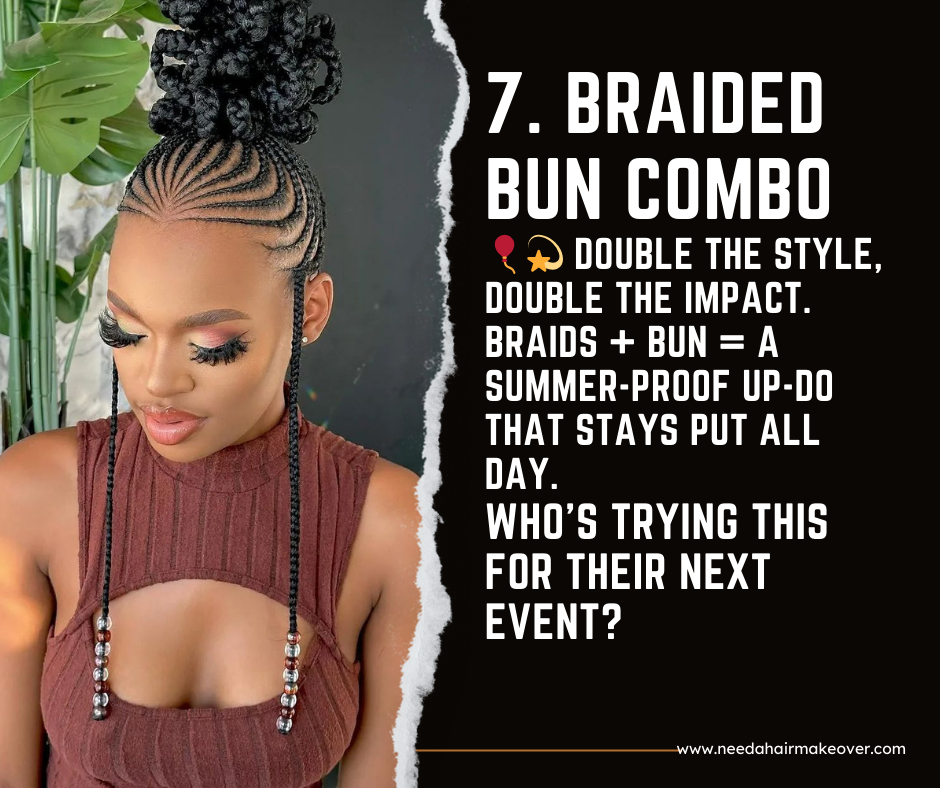
7. Braided Bun Combo
Combine two summer favourites — braids and buns. Braid your hair first and then wrap it into a bun for a secure style that stays put all day, even in humid weather.
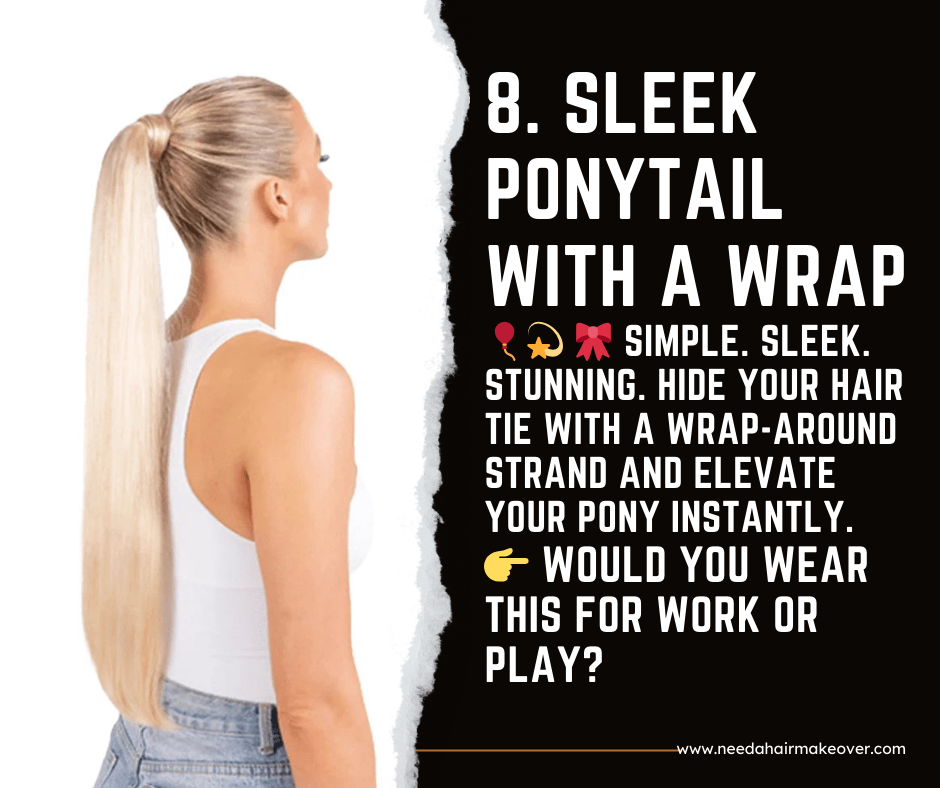
8. Sleek Ponytail with a Wrap
Keep it classy with a sleek ponytail, but hide the elastic by wrapping a strand of hair around it. Not only does it look refined, but it also keeps everything neat and off your face.
Tips for Summer-Proofing Your Up Styles
Common Mistakes to Avoid with Summer Up-Styles Even the most stylish up-do can quickly lose its charm if a few common mistakes are made. Here are pitfalls to watch out for: 1. Using Too Much Product Heavy gels, mousses, or hairsprays can weigh hair down, leaving it greasy or crunchy in hot weather. Opt for lightweight formulas to keep your style fresh. 2. Skipping Heat Protection If you’re curling or straightening before putting hair up, always use a heat protectant spray. Sun exposure plus styling tools can double the damage. 3. Pulling Hair Too Tight A tight bun or ponytail might look neat, but it can cause tension headaches and breakage around your hairline. Aim for secure, not strangled. 4. Forgetting to Prep Your Hair Oily or sweaty roots will make your style collapse faster. Start with clean, dry hair, or refresh with dry shampoo before styling. 5. Not Securing with the Right Tools Using cheap hair ties or pins that don’t hold properly means constant re-doing throughout the day. Invest in good grips, elastics, or scrunchies. 6. Neglecting UV Protection Just like skin, hair can get sun damage. Use a UV-protective spray or wear a hat when outdoors for long periods. 👉 Avoid these simple mistakes and your chic up-styles will last longer, feel lighter, and keep your hair healthier all summer.
• Use lightweight styling products to avoid buildup in the heat. • Keep a few stylish hairpins or scrunchies in your bag for quick touch-ups. • Dry shampoo or a little texturising spray helps maintain volume and grip. Hot weather doesn’t mean compromising on style. With these 8 chic up-dos, you can stay cool, confident, and camera-ready all summer long.
By Diane Shawe, CEO of Need a Hair Makeover Hair Extensions & Hair Loss Specialist Salon Author | Educator | Hair Extensions & Hair Loss Specialist
Recently, a viral video has sparked alarm by claiming that synthetic hair is carcinogenic. As a long-standing educator and practitioner in the hair industry—working with clients suffering from alopecia, stress-related hair loss, and chemotherapy-induced thinning—I feel it’s crucial to address this topic with fact-based clarity.
Here’s what you need to know before letting fear override science.
🧪 What is Synthetic Hair Made Of? Synthetic hair is typically made from polymer-based fibers such as:
Modacrylic (a blend of acrylic and PVC) Nylon (Polyamide) Polyester Acrylic fibers (PAN-based)
These materials are not unique to wigs. They’re used in clothing, carpets, medical-grade wigs, and even children’s toys. Once processed through polymerization, they become stable and non-toxic, posing no health threat under normal use.
⚠️ Understanding the Carcinogen Confusion Some of the panic stems from misunderstanding the difference between raw chemicals and final products. For instance, acrylonitrile is toxic in its raw form—but when transformed into polyacrylonitrile fibers, it becomes chemically stable. This is standard chemistry, similar to how crude oil becomes safe plastic.
📌 Fact Check: If synthetic hair were genuinely carcinogenic, it wouldn’t be used for medical wigs worn by chemotherapy patients worldwide.
🔥 The Real Risk? Burning – Not Wearing Like any material (cotton, wool, or even natural hair), synthetic hair can emit toxic fumes if burned. However, normal wear, heat styling within safe limits, or day-to-day usage poses no proven cancer risk.
The Consumer Reports test in 2023 found small traces of benzene and VOCs in some synthetic braiding hair brands, but: The sample size was limited It was not peer-reviewed No clinical studies confirmed these materials cause harm when simply worn
💡 At Need a Hair Makeover, we educate our clients on safe heat usage and only source from high-quality suppliers.
🌍 The Environmental Factor The real issue with synthetic hair is environmental, not health-based. Most synthetic hair is non-biodegradable, contributing to microplastic waste.
However, eco-friendly solutions are emerging:
♻️ Recycled synthetic fibers 🌿 Bio-based and plant-fiber blends 🧼 Wash-before-use practices to reduce residue exposure
As a specialist salon, we’re advocating for sustainability without shame.
📚 Further Learning from Diane Shawe If you’d like to deepen your understanding of the hair industry, sourcing ethics, and protective styling care, explore my published works:
🖥️ And be sure to follow my professional blog: ➡️ http://www.needahairmakeover.blog Here, we regularly post updates on hair safety, trends, tutorials, and client education.
✅ I While we should never ignore safety signals, it’s equally dangerous to accept viral claims as fact without scientific scrutiny. To date, there is no evidence that wearing synthetic hair causes cancer. Let’s be informed, not alarmed.
✨ Whether you wear synthetic hair for fashion, convenience, or necessity—you deserve to feel confident and safe in your choices.
Have questions or want expert advice on hair systems, wigs, or protective styling? 📩 Email me at needahairmakeover@gmail.com 🌐 Visit: http://www.needahairmakeover.com
With insights from Diane Shawe, Founder of Need a Hair Makeover Hair Extensions & Hair Loss Specialist Salon
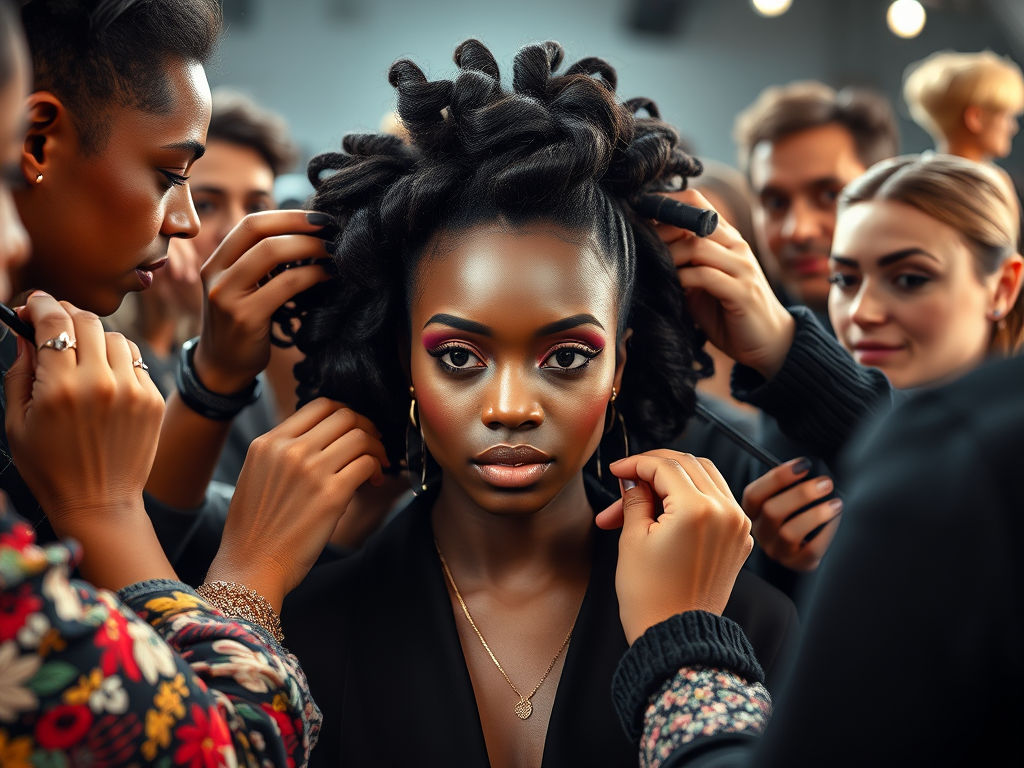
When you see celebrities like Zendaya, Issa Rae, Keke Palmer, Oprah or Beyoncé rocking a different look every week—from goddess locs to waist-length braids to flawless lace wigs—it’s easy to assume it’s all for glam. But beneath the style switch-up lies something far more intentional: protective styling.
Protective Styling: More Than a Trend
Protective styles, which include lace wigs, braids, twists, crochet installations, and faux locs, are designed to shield natural hair from damage caused by heat, environmental exposure, and excessive manipulation.
While it may seem counterintuitive to cover healthy hair, many high-profile women—and everyday queens—do so to preserve their hair, not hide it. “Afro-textured hair is beautiful and versatile, but it’s also incredibly delicate,” explains Diane Shawe, expert hairloss enhancement and founder of Need a Hair Makeover.
“People wrongly assume it’s strong because it’s thick or coily, but the curl structure makes it more prone to breakage, especially at the bends.”In fact, afro hair has fewer cuticle layers than straight hair, making it more vulnerable to dryness, tangling, and mechanical damage. And for celebrities whose schedules demand 5 a.m. call times, multiple weekly appearances, and frequent travel, managing natural hair daily becomes almost impossible and would end up irreversably damaged.
“Natural hair takes time—not just to style, but to protect, moisturise, stretch, and detangle,” Shawe adds. “Protective styling becomes a practical and empowering solution.”
What Regular Women Love About It Too
It’s not just celebrities turning to protective styles. Across the UK and beyond, thousands of Black women are embracing this method to grow out their hair, manage conditions like alopecia, or simply enjoy style versatility without stress. “Many of my clients want hair that’s low-maintenance but still beautiful,” says Diane. “Whether they’re dealing with hair thinning from medication, stress, or postpartum changes, protective styles allow them to feel confident again—without compromising their real hair.”
Tips for Choosing the Right Protective Style
Before jumping into any protective style, Shawe encourages thoughtful planning:
1. Choose your stylist wisely. “Not every braider or wig installer understands tension, density, and scalp health. If your style is too tight or heavy, it’s not protective—it’s destructive.”
2. Mind the material. Opt for quality synthetic or human hair, depending on your needs. “There’s a myth that synthetic braiding hair is carcinogenic,” (see my article covering that topic in another blog.)
Diane notes. “This stems from misinformation. The hair is made of fibers like kanekalon or toyokalon, which are non-toxic and used globally. The only issue is when people don’t wash it before use, causing scalp irritation—not cancer.”
3. Keep it clean. “Just because your hair is tucked away doesn’t mean you can ignore it. Cleanse your scalp, moisturise underneath, and avoid styles longer than 6–8 weeks.”
4. Listen to your hair. “If your edges are thinning or your scalp feels inflamed, don’t ignore it. Take breaks between installs and rotate with loose styles like crochet or glueless lace wig alternatives.”
The Confidence Factor
Protective styles aren’t just practical—they’re powerful. They allow Black women to reclaim their image on their own terms.
Lace wigs give the illusion of a flawless hairline.
Knotless braids reduce tension.
Crochet styles blend natural texture with flair. And all of them offer freedom of choice.
As Diane puts it: “Black hair is a crown, but how you wear it is your right. Protective styling gives women options, confidence, and control. Whether you’re walking a red carpet or down your high street—rock your style with pride.”
Ready to switch up your style or get expert guidance? Visit http://www.needahairmakeover.com to book a consultation or follow @NeedAHairMakeover on social media to explore 18+ professional protective styling methods, book a consultations, or get help with hair loss solutions.
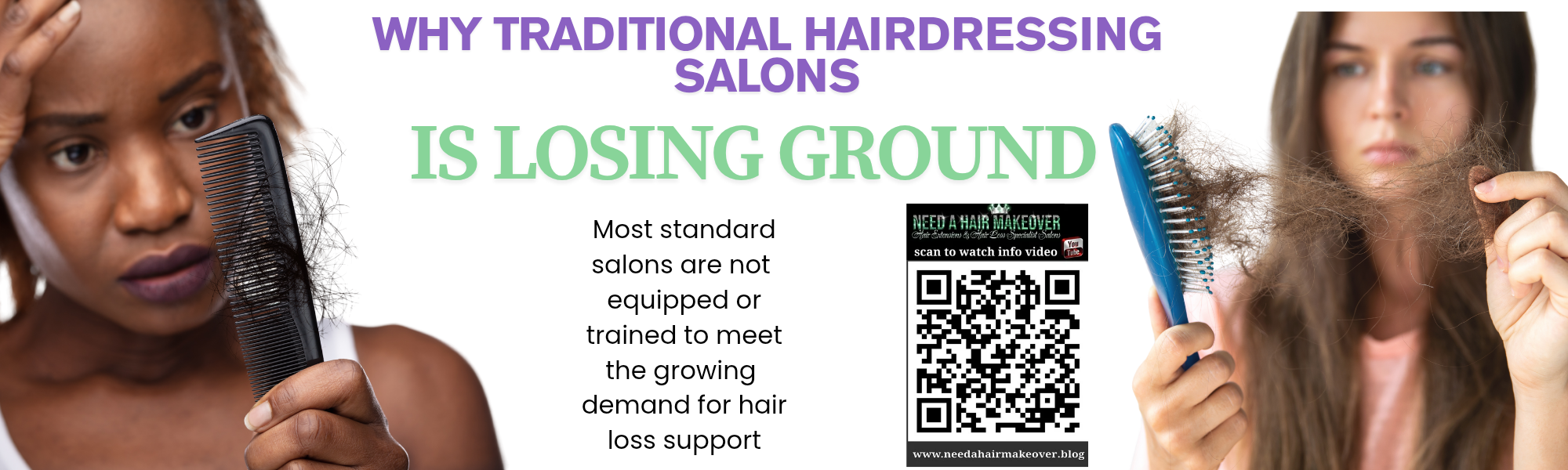
Most standard salons are not equipped or trained to meet the growing demand for hair loss support.
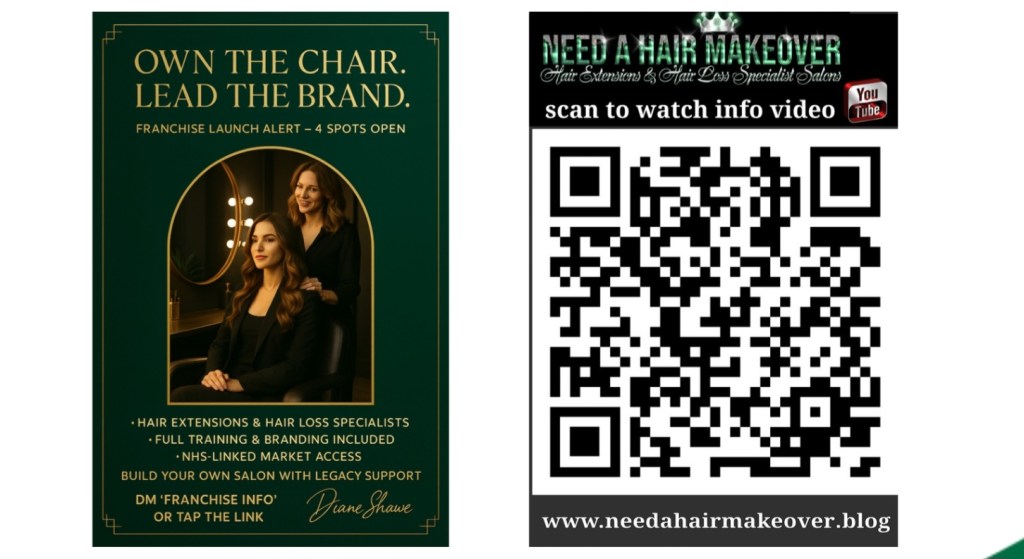
With their focus still on aesthetics, they often overlook the deep emotional and physical toll hair loss can bring. Clients facing hair thinning, alopecia, traction damage, or post-chemotherapy loss need more than a good blow-dry—they need specialists. And this is where Need a Hair Makeover Specialist Salon Franchise steps in.
A Specialist Salon for a Specialist Market
At Need a Hair Makeover, they specialise in non-invasive, confidence-restoring hair loss disguising techniques:
Hair toppers, toupees, lace frontals, bespoke wigs, 18 integration hair extension systems and infrared and laser hair regrowth theraphy.
Customisable treatments for traction alopecia, hormonal hair loss, and post-chemo recovery
Ongoing care and support for long-term client relationships and producing supportive documents for insurance claims for cranial prostheses.
There approach is holistic, empathetic, and highly profitable—with specialist services clients are actively seeking but struggling to find in conventional salons.
Who We’re Looking For
We’re seeking passionate individuals and salon owners who want to:
Be part of the £88 billion hair loss solution economy
Offer transformational services that change lives
Join a proven brand led by industry pioneer Diane Shawe, an award-winning hair loss specialist, entrepreneur, and published author
Whether you’re an existing salon looking to expand or an entrepreneur ready for your next big move, this franchise opportunity is your gateway to a high-impact, future-proof business.
Treating thin, balding or damaged hair
Act Now: The Demand is Growing Daily
With waiting lists growing, regions being reserved, and awareness accelerating post-pandemic, now is the time to act. We offer full training, brand support, client acquisition tools, and a turnkey business model tailored for long-term success.
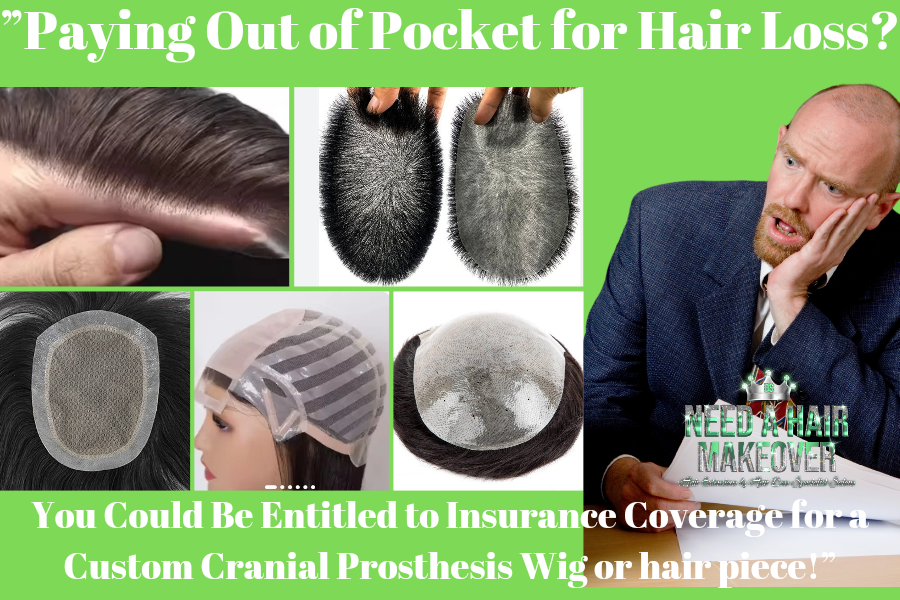
”Paying Out of Pocket for Hair Loss? You Could Be Entitled to Insurance Coverage for a Custom Wig!”
Thousands of men and women spend significant amounts of money on wigs and hairpieces each year to manage their hair loss, often without realising they may be eligible for insurance coverage. Hair loss, when left undiagnosed, can feel overwhelming, leading many to pay out-of-pocket for temporary solutions. However, with an official medical diagnosis, you may qualify for a cranial prosthesis that is covered by your insurance.
”Think You’re Not Eligible for Hair Loss Coverage? Here’s Why You Should Check Your Insurance Today!”
There are many types of diagnosable hair loss conditions, including:
– Alopecia Areata: Sudden patchy hair loss due to an autoimmune condition.
– Alopecia Totalis and Universalis: Complete hair loss on the scalp or entire body.
– Telogen Effluvium: Temporary hair shedding caused by stress, illness, or hormonal changes.
– Androgenetic Alopecia: Also known as male or female pattern baldness, caused by genetics.
– Traction Alopecia: Hair loss due to tight hairstyles or hair extensions.
– Chemotherapy-Induced Alopecia: Hair loss caused by cancer treatments.
– Scalp Psoriasis or Dermatitis: Skin conditions leading to hair loss due to inflammation or infection.
– Trichotillomania: A psychological condition where individuals pull out their own hair, leading to hair loss.
– Burn or Trauma-Related Hair Loss: Resulting from accidents, injuries or surgery scarring to the scalp.
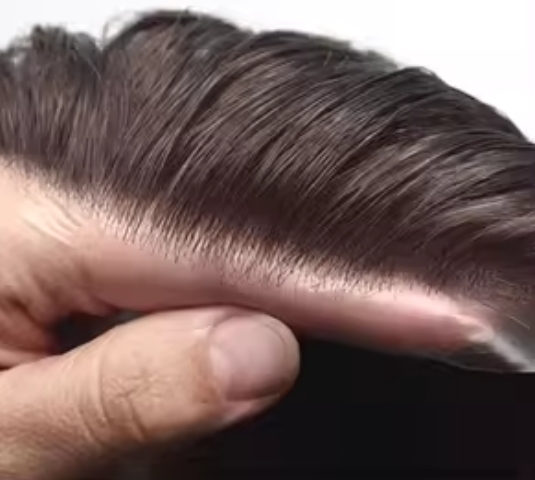
Cranial Prosthesis, or hair systems, are custom-made solutions designed to address hair loss due to medical conditions like alopecia, chemotherapy, scaring from accident or surgery or trichotillomania. Many insurance plans cover these medical devices, potentially saving you thousands in the long runCranial Prosthesis, or hair systems, are custom-made solutions designed to address hair loss due to medical conditions like alopecia, chemotherapy, scaring from accident or surgery or trichotillomania. Many insurance plans cover these medical devices, potentially saving you thousands in the long run.
Click to gain access to a FREE 14-page guide to discover everything about cranial Prosthesis and how to claim through insurance at the following link https://bit.ly/3z2HqC6
Become qualified in 3 days after completing your theory course.
Acrylic and gel nails are the flawless solution to chip-free, freshly polished nails that last for weeks on weeks. In today’s blog post, we will be explaining why now is the time to Set up your own Nail Extension Business.
Our CPD Nail Technician Course is the perfect launchpad to get you on your way to becoming a certified nail technician which can lead you to a number of different avenues within the nail extension industry from being able to successfully set up your own freelance nail business to being able to rent a station in a beauty salon to carry out nail treatments.
With the price of everything going up, every penny helps. Train to become a nail extensions technician and work from home or from a salon.
A Continued Professional Development Nail Technician course runs for in two parts and goes through the steps on nail artistry and the anatomical elements of nail care such as:
Part One: Theory Course 2 weeks
Health & Safety considerations & regulations
Hygiene & preparing the client, treatment room & trolley
Anatomy & physiology: structure of the skin, the structure of the nail
Nail diseases & disorders
Client consultations / contra-indications
Manicure & Pedicure
Marketing your Business
What is nail matrix?
The nail matrix is the area where your fingernails and toenails start to grow. The matrix creates new skin cells, which pushes out the old, dead skin cells to make your nails. As a result, injuries to the nail bed or disorders that affect the matrix can affect your nail growth.
This will be completed as a home theory study with the help of our Virtual tutor.
There will be practical and written assignments which have to be completed in the students own time before attending the 3 day practical training course.
Part Two: 1 Day Practical Nail Course
This will consisit of working on a training hand where you will learn how to prepare the nails, apply nail tips, blend nail tips, the different nail shape, apply acrylic and shape, apply gel and cure, how to use electric and manual files, how to apply nail polish or gel and cure under UV Light. Working on live models.











 Become qualified in 3 days after completing your theory course.














 All about Hair Extensions & Hairloss Courses and Franchise Opportunity by Diane Shawe

You must be logged in to post a comment.