Category Archives: blogging

Why Readers Should buy Diane Shawe’s latest book – “What happens when you stop Hiding”

What Happens When You Stop Hiding is a bold, uncompromising guide for women and marginalised people of colour who are tired of shrinking, second-guessing themselves, and carrying the emotional weight of systems never built for their thriving.

From a scholarly perspective, this book stands out because it merges psychological insight, cultural critique, and practical transformation tools, all while maintaining an accessible, compassionate voice.

From the very first pages, Shawe reframes visibility as a human right rather than a performance. She reminds us that labels—race, gender, sexuality—are social constructs created to confine rather than liberate . This human-first framing sets the tone: the reader is invited not to become someone new, but to return to the self that existed before shame, fear, and external judgment took root.

What Makes This Book So Impactful

🔥 1. It addresses the wounds no one talks about—honestly.

Each chapter tackles a form of “hiddenness” that affects women and people of colour daily:

Imposter syndrome and self-erasure (Chapter 1: “The Mask of Modesty”)

Unsafe family dynamics and childhood emotional neglect (Ch. 2–3)

Cultural and religious conditioning that punishes authenticity (Ch. 4)

Workplace tokenism and microaggressions (Ch. 8)

The silent burnout experienced by high-functioning achievers (Ch. 7)

Shawe does not shy away from the deeply personal or socially uncomfortable. The case studies—Amina the hidden tech genius, Tasha the undermined sister, Priya the overlooked community organiser—make the struggles tangible and relatable.

🔥 2. It’s not theory; it’s a blueprint.

Every chapter includes:

Reflection prompts

Practical steps to reclaim power

Behavioural patterns to recognise

Scripts, reframes, and healing exercises

Real-life stories that mirror the reader’s journey

For example, the “Are You Still Hiding?” assessment provides immediate self-diagnosis, inviting readers into awareness rather than blame .

🔥 3. It validates identities historically dismissed or silenced.

Shawe explicitly centres:

Black and Brown women

LGBTQ+ people navigating cultural and religious shame

Single mothers judged rather than supported

People navigating class, body-image, and professional bias

This inclusivity is not symbolic—it is woven into every page. The chapter on the “Silent Spiral” even explores mental health in the context of public visibility and societal expectation, capturing the emotional cost behind polished success .

🔥 4. It is written with both warmth and authority.

Shawe balances academic insight with a deeply compassionate tone. She doesn’t write at the reader; she writes with them. The text acknowledges pain without glorifying it, and offers practical liberation without minimising systemic realities.

🔥 5. It creates transformation, not just inspiration.

By the time the reader reaches the sections on rebuilding identity, creating new boundaries, detoxifying inherited beliefs, and rewriting their personal story (Ch. 16; Closing Sections) , the journey feels both emotional and actionable. This is not motivation; it is method.

⭐ Why Readers Should Buy This Book

Because it helps you stop apologising for your existence.

Because it names wounds you’ve carried quietly for years—cultural, familial, internal, spiritual—and gives you the tools to dismantle them.

Because it teaches you how to recognise emotional manipulation, systemic bias, family dynamics, and internalised fear, and then shows you how to reclaim your voice, dignity, and clarity.

Because it is a mirror and a map—a guide that reflects your hidden struggles and leads you toward a more visible, self-aligned future.

And because it speaks directly and powerfully to anyone who has ever felt undervalued, unseen, or underestimated.

Readers will walk away feeling understood, strengthened, and equipped to step into a new chapter of authenticity and empowerment.

📘 Ready to stop shrinking and start standing in your power?

Unlock your confidence, break old patterns, and reclaim your visibility with What Happens When You Stop Hiding — a transformational guide for women and marginalised people of colour.

🔥 Discover practical tools, real-life case studies, and powerful mindset shifts that help you stop apologising for your brilliance and start leading with authenticity.

👉 Take the first step toward your breakthrough — buy your copy today and begin the journey to a more confident, visible, and empowered you.🔗 Get the book now: What Happens When You Stop Hiding by Diane Shawe

Specialist Salon vs. General Salon: Which Model Wins in Today’s Market?

In a competitive beauty industry, salon owners face a criti Ical decision:
Do you aim to serve everyone, or do you specialise and dominate a niche?


As the founder of Need a Hair Makeover®, an award-winning Specialist Hair Extensions and Hair Loss Salon Franchise, I’ve seen both models up close — and the difference is striking.

If you’re thinking of opening your own salon or investing in a franchise, this direct comparison will help you choose the best path forward.


🏪 General Salons: The Jack-of-All-Trades Model

✅ Pros:

Serves a broad customer base
Familiar to most consumers
Easier to staff with general stylists
Variety of services from cuts to colours


❌ Cons:

High competition — every high street has one
Harder to stand out or build loyalty
Lower average spend per client
Must constantly discount to attract footfall
Vulnerable to economic downturns


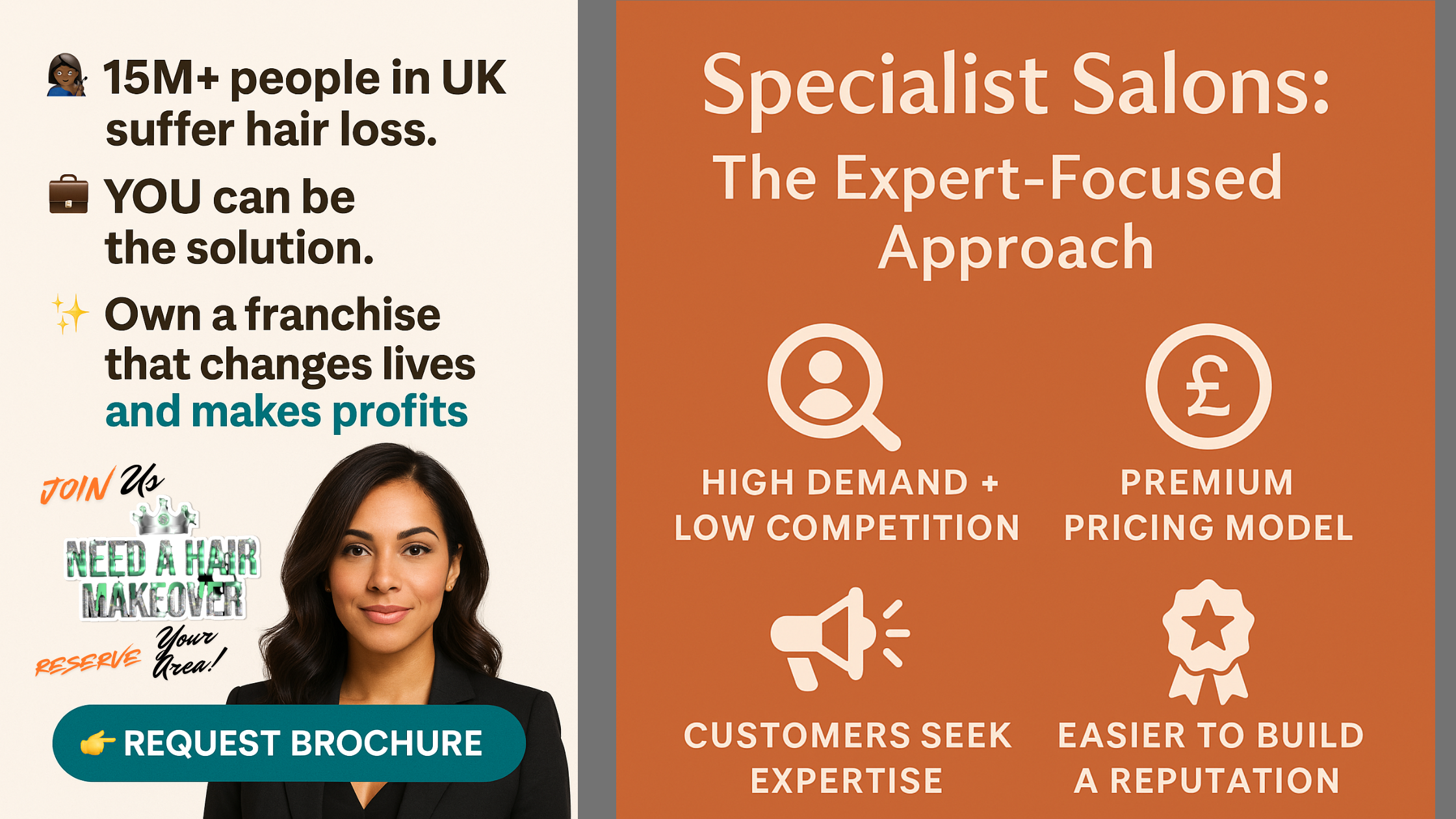
💼 Specialist Salons: The Expert-Focused Approach

A Specialist Salon focuses on solving a specific, high-impact problem — such as hair loss, extensions, or textured hair care.

At Need a Hair Makeover®, we cater to clients with hair loss, thinning, breakage, or post-chemo recovery, providing non-surgical solutions and instant confidence restoration. That changes everything.

✅ Pros:

High demand + low competition
Premium pricing model
Customers seek expertise, not just convenience
Easier to build a reputation and attract press
Supports specialised services, training, and innovation
Attracts loyal, high-value clients with ongoing needs

❌ Cons:

Requires specialist training (we provide this)
Must be positioned correctly in marketing
May limit walk-in traffic if not branded well


📊 Real Talk: Which Model Wins?

Factor General Salon Specialist Salon

Profit Margin Moderate High
Customer Loyalty Medium Very High
Ease of Startup Easy Supported via franchise
Market Saturation High Low
Scalability Moderate High (if franchised)
Marketing Edge Weak Strong — you’re solving a problem

💡 Verdict: In today’s economy, specialists win. The market craves experts — not generalists — especially when it comes to confidence, appearance, and identity.


🧩 The Gap in the Market

There are millions of people in the UK experiencing hair loss due to:

Alopecia
Chemotherapy
Hormonal changes
Stress
Ill health and medication
Hair damage from styling

Very few salons are trained or equipped to help — let alone in a dignified, professional, specialist setting.

That’s the gap. That’s the opportunity. People don’t just want creams and lotions, they are looking for instant gratification that makes them look normal and improves there self esteem.

🚀 Why We Chose the Specialist Franchise Model

Need a Hair Makeover® started from a personal experience of hair loss and evolved into a brand that empowers others — from clients seeking transformation to franchisees ready to own a purpose-led business.

Our model includes:
Full CPD-accredited training
Salon setup support
Product sourcing and supply chain access
Ongoing marketing and business coaching

We help you own your zone of genius — not compete in a race to the bottom.

📥 Ready to Step Into a Niche with Power?

🔓 Request and Download the franchise brochure:
👉 https://needahairmakeoverfranchise.co.uk

🎥 Watch our video
https://youtube.com/shorts/E2_xC_wGwu0?si=G11x23-AWQGJ5Uia

✍🏽 Final Word

Being a generalist may feel safe, but the future belongs to specialists.
In a world full of salons, it pays to be the one salon that truly solves a problem.


📣 Let’s Talk

👉 Interested in launching a specialist salon franchise?
👉 Curious about the real costs vs. benefits?
👉 Want to stand out in a saturated industry?

Message me or apply online — your expert salon journey starts here.

#HairExtensionsFranchise #HairLossSalon #SpecialistSalon #SalonStartup #DianeShawe #FranchiseWithSupport #BeautyBusinessUK #SalonOwners #HairLossHelp #AwardWinningSalon

“Feeling Sluggish? Meet the Natural Duo That Clears Toxins and Restores Your Energy”

Citrus shots. Herbal teas. Ginseng blends.
They promise “cleanse”… but do you actually FEEL better? 🤔
If you’re still stuck with brain fog, bloating, or aches, it’s time for a different approach.

In today’s world, we’re constantly taking in toxins — from the air we breathe, the food we eat, the water we drink, even the products we put on our skin. Over time, this build-up can leave us feeling tired, foggy, bloated, and not quite ourselves. While modern medicine offers solutions, sometimes the best answer is going back to nature’s pharmacy.

That’s where two natural powerhouses step in: zeolite and shilajit. What I’ve discovered is that when you pair these two bad boys together in a constructive way, they don’t just support your body — they help keep you in tip-top shape.

🌋 What is Zeolite?
Zeolite is a volcanic mineral formed when molten lava meets seawater. Over thousands of years, it develops a unique honeycomb-like structure that works like a natural magnet for toxins.
• Cleansing power: Zeolite binds to heavy metals, environmental pollutants, and harmful substances in the gut, escorting them safely out of the body.
• Alkalising: It helps balance the body’s pH levels.
• Digestive support: Its porous structure traps toxins without being absorbed into the bloodstream.
In simple terms, zeolite is like a deep clean for your system.


🏔 What is Shilajit?
Shilajit is a resin that seeps from rocks high in the Himalayas and other mountain ranges. It forms over centuries from compressed plant matter and is rich in fulvic acid, humic acid, and more than 80 trace minerals.
• Energy & stamina: Shilajit supports ATP production, giving your cells the fuel they need.
• Mineral replenishment: It restores vital nutrients often missing from modern diets.
• Adaptogen effect: It helps the body cope with stress.
• Cognitive boost: Linked with improved focus, memory, and clarity.
Shilajit acts as a replenisher and energizer, helping the body use nutrients more efficiently.

⚖️ The Key Difference
• Zeolite = Remover → It clears out toxins and heavy metals.
• Shilajit = Replenisher → It restores energy and nutrients.
This is why they complement each other so well: first you clear the house (zeolite), then you furnish it beautifully (shilajit).

Personal experience

“I had tried all sorts of detox teas and citrus cleanses before, but I always ended up feeling drained and foggy a few days later. When I added zeolite to clear toxins and shilajit to restore minerals, I finally felt the difference — lighter, clearer, and with more natural energy. It wasn’t just a quick fix, it felt like a real reset for my body.

How to Take Them Together
If you already take shilajit daily, adding zeolite can enhance your routine. To avoid overlap and maximise benefits:
• Take zeolite first thing in the morning or before meals — on an empty stomach works best for binding toxins.
• Take shilajit later in the day — after meals, with water or warm milk/tea, to support absorption and energy.
This way, zeolite does its cleansing job without pulling away the minerals that shilajit is delivering.


🌱 Final Thoughts
Zeolite and shilajit are powerful on their own — but together, they create a holistic balance: detox + nourish, cleanse + energize, remove + restore.
If you’re looking for a natural way to both clear your system and boost vitality, consider combining the two in your daily wellness routine.


👉 Get Zeolite here https://amzn.to/4mOewt2

Don’t just detox. Cleanse + restore. Your future body will thank you”

Pamper Your Feet: Five Luxurious Foot Soaks and Oils for Soft, Elegant Toes

Revitalise Your Routine and Step Out in Style

Our feet carry us through life’s journeys—whether it’s a dash to catch the morning train or a leisurely stroll through the park, they work tirelessly for us every day. Yet, how often do we show them the care and gratitude they truly deserve? If you’re longing for feet that are not only soft and elegant but also ready to shine in any season, you’re in the right place.

Dive into this relaxing ritual of five sumptuous foot soaks, each paired with a luxurious oil, and discover just how effortless it can be to give your feet the love they crave. And when you’re ready to take your routine to the next level, book a foot pedicure at needahairmakeover.com to experience pure pampering perfection.

  1. Lavender Epsom Salt Soak & Sweet Almond Oil
    There’s a reason lavender has remained a staple in spas across the world—it soothes both body and mind. Begin your journey with a classic lavender Epsom salt soak. Simply fill a basin with warm water, add half a cup of Epsom salt, and sprinkle in a tablespoon of dried lavender buds or a few drops of lavender essential oil. Let your feet soak for 15-20 minutes as the gentle scent calms your senses and the salts ease away aches.
    After drying your feet, massage in a generous amount of sweet almond oil. This lightweight, vitamin-rich oil absorbs quickly, leaving your skin silky-smooth without any greasy residue. Regular use helps soften calluses and encourages a radiant, healthy glow—perfect for showing off your feet in stylish sandals or strappy heels.
  2. Peppermint Tea Foot Soak & Coconut Oil
    For a refreshing pick-me-up, try a peppermint tea foot soak. Steep four peppermint tea bags in a bowl of hot water for ten minutes, then remove the bags and allow the water to cool to a comfortable temperature. The natural menthol in peppermint invigorates tired feet, reduces swelling, and helps banish odour. Soak your feet for 15 minutes and breathe in the energising aroma.
    Once your feet are dry, apply coconut oil liberally, focusing on heels and any rough patches. Coconut oil’s natural fatty acids provide deep hydration and protection against cracking. Plus, its subtle tropical scent lingers, transporting you to a mini paradise with every step.
  3. Rose and Milk Soak & Jojoba Oil
    Indulge in old-world luxury with a rose and milk soak. Pour two cups of warm whole milk into a basin, add half a cup of dried rose petals (or a few drops of rosewater), and swirl gently. The lactic acid in milk exfoliates dead skin, while rose soothes and hydrates. Soak for 20 minutes, and you’ll emerge with petals-soft feet and a sense of inner calm.
    Follow with a gentle massage using jojoba oil. This golden liquid is structurally similar to your skin’s natural sebum, making it perfect for deep, non-irritating moisturisation. It also helps to lock in moisture and enhance elasticity, giving your feet a refined, elegant appearance.
  4. Citrus and Sea Salt Soak & Olive Oil
    Brighten your mood and your feet with a zesty citrus and sea salt soak. Squeeze the juice of one lemon and one orange into a large bowl, add a handful of coarse sea salt, and fill with warm water. The natural acids from the citrus fruits gently exfoliate and lighten any dark spots, while sea salt purifies and refreshes.

    After your soak, use olive oil—one of nature’s oldest beauty secrets. Warm a little oil between your hands and massage thoroughly into your feet and ankles. Olive oil is loaded with antioxidants and vitamins A and E, which nourish the skin and promote a luminous, youthful look. Finish by slipping on a pair of cotton socks for at least 30 minutes to maximise absorption.


  5. Green Tea and Honey Soak & Argan Oil
    Harness the power of antioxidants with a green tea and honey soak. Brew two green tea bags in a basin of hot water, remove the bags, and stir in two tablespoons of raw honey. Let the mixture cool slightly, then soak your feet for 20 minutes. Green tea reduces inflammation and odour, while honey acts as a natural antibacterial and humectant, drawing moisture deep into the skin.

    To complete this ritual, apply a few drops of luxurious argan oil. Sourced from Moroccan argan trees, this oil is packed with vitamin E and essential fatty acids, making it ideal for overnight rejuvenation. Argan oil helps to repair cracked heels and soften tough skin, leaving your feet with a flawless, elegant finish.

    Aftercare Tips for Consistently Soft and Elegant Feet

    • Exfoliate weekly: Use a gentle foot scrub or pumice stone to remove rough skin and keep your feet smooth.
    • Moisturise daily: Always apply your chosen oil or foot cream before bed to lock in hydration.
    • Protect your feet: Wear comfortable shoes and breathable socks to prevent chafing and dryness.
    • Stay hydrated: Drinking plenty of water supports overall skin health from the inside out.
    • Book professional treatments: Treat yourself to a spa pedicure regularly for a truly indulgent experience.

    Ready to Step Up Your Foot Care?

    While these at-home soaks and oils offer a beautiful way to pamper your feet, nothing compares to the expert touch of a professional foot pedicure. At needahairmakeover.com, you’ll find skilled specialists ready to transform your feet with gentle care, nourishing treatments, and a dash of elegance. Give your feet the attention they deserve and walk confidently—book your foot pedicure today at http://www.needahairmakeover.com! Your next step will be your most beautiful yet.

Why Celebrities Choose Protective Hairstyles

With insights from Diane Shawe, Founder of Need a Hair Makeover Hair Extensions & Hair Loss Specialist Salon

When you see celebrities like Zendaya, Issa Rae, Keke Palmer, Oprah or Beyoncé rocking a different look every week—from goddess locs to waist-length braids to flawless lace wigs—it’s easy to assume it’s all for glam. But beneath the style switch-up lies something far more intentional: protective styling.

Protective Styling: More Than a Trend

Protective styles, which include lace wigs, braids, twists, crochet installations, and faux locs, are designed to shield natural hair from damage caused by heat, environmental exposure, and excessive manipulation.

While it may seem counterintuitive to cover healthy hair, many high-profile women—and everyday queens—do so to preserve their hair, not hide it. “Afro-textured hair is beautiful and versatile, but it’s also incredibly delicate,” explains Diane Shawe, expert hairloss enhancement and founder of Need a Hair Makeover.

“People wrongly assume it’s strong because it’s thick or coily, but the curl structure makes it more prone to breakage, especially at the bends.”In fact, afro hair has fewer cuticle layers than straight hair, making it more vulnerable to dryness, tangling, and mechanical damage. And for celebrities whose schedules demand 5 a.m. call times, multiple weekly appearances, and frequent travel, managing natural hair daily becomes almost impossible and would end up irreversably damaged.

“Natural hair takes time—not just to style, but to protect, moisturise, stretch, and detangle,” Shawe adds. “Protective styling becomes a practical and empowering solution.”

What Regular Women Love About It Too

It’s not just celebrities turning to protective styles. Across the UK and beyond, thousands of Black women are embracing this method to grow out their hair, manage conditions like alopecia, or simply enjoy style versatility without stress. “Many of my clients want hair that’s low-maintenance but still beautiful,” says Diane. “Whether they’re dealing with hair thinning from medication, stress, or postpartum changes, protective styles allow them to feel confident again—without compromising their real hair.”

Tips for Choosing the Right Protective Style

Before jumping into any protective style, Shawe encourages thoughtful planning:

1. Choose your stylist wisely. “Not every braider or wig installer understands tension, density, and scalp health. If your style is too tight or heavy, it’s not protective—it’s destructive.”

protective styling, crochet need a hair makeover

2. Mind the material. Opt for quality synthetic or human hair, depending on your needs. “There’s a myth that synthetic braiding hair is carcinogenic,” (see my article covering that topic in another blog.)

Diane notes. “This stems from misinformation. The hair is made of fibers like kanekalon or toyokalon, which are non-toxic and used globally. The only issue is when people don’t wash it before use, causing scalp irritation—not cancer.”

3. Keep it clean. “Just because your hair is tucked away doesn’t mean you can ignore it. Cleanse your scalp, moisturise underneath, and avoid styles longer than 6–8 weeks.”

4. Listen to your hair. “If your edges are thinning or your scalp feels inflamed, don’t ignore it. Take breaks between installs and rotate with loose styles like crochet or glueless lace wig alternatives.”

The Confidence Factor

Protective styles aren’t just practical—they’re powerful. They allow Black women to reclaim their image on their own terms.

Lace wigs give the illusion of a flawless hairline.

Knotless braids reduce tension.

Crochet styles blend natural texture with flair. And all of them offer freedom of choice.

As Diane puts it: “Black hair is a crown, but how you wear it is your right. Protective styling gives women options, confidence, and control. Whether you’re walking a red carpet or down your high street—rock your style with pride.”

Ready to switch up your style or get expert guidance? Visit http://www.needahairmakeover.com to book a consultation or follow @NeedAHairMakeover on social media to explore 18+ professional protective styling methods, book a consultations, or get help with hair loss solutions.

There’s more to adding hair

Diane Shawe

Say Goodbye to Swelling and Pain with Leg Compression Therapy — Here’s Why It Works

Leg compression theraphy to reduce swelling, improve circulation

Swollen ankles, poor circulation, aching knees — they’re not just annoying. They can seriously affect your day, your sleep, and your quality of life. If you’ve been putting off treatment because getting a doctor’s appointment takes weeks (or costs too much), we’ve got good news: relief is closer and easier than you think.

Introducing Pulsio Compression Therapy, now available at Need a Hair Makeover Salon — a powerful, non-invasive treatment that’s helping people just like you feel better in just 30 minutes.

So, what exactly is compression therapy? And why does it work?

Let’s break it down. Pulsio Compression Therapy uses specially designed boots that rhythmically compress and release pressure up your legs, stimulating circulation and flushing out excess fluids. This mimics the natural way your body moves blood and lymph through your system — something that often slows down due to age, injury, or simply sitting too long. If you’re on your feet all day, or barely moving enough, your circulation suffers. That’s where this therapy comes in.

Here’s what it helps with:

Reduces swelling in feet, ankles, and calves

Eases joint and muscle pain in knees and legs

Improves blood flow, especially for those with poor circulation

Speeds up recovery for active individuals or anyone healing from injury

Relaxes tired, heavy legs so you can sleep better and move easier


And unlike bulky, time-consuming medical treatments, Pulsio Therapy is quick, comfortable, and effective — without the hassle of changing clothes, needles, or long waiting times. You just sit back in our relaxing salon, let the device do the work, and walk out feeling noticeably lighter and looser.

We’re offering 30-minute sessions for just £25 — making this one of the most affordable, accessible wellness treatments out there. Whether you’re dealing with post-workout fatigue, long-term swelling, or just want to feel better fast, this therapy is a game-changer.

Why at a salon? Because we believe wellness should be part of your everyday routine — not something you have to wait weeks for. At Need a Hair Makeover Salon, we’ve created a calming, welcoming space where you can address real issues without the stress of medical appointments. You don’t even need to undress — just slip on the compression boots over your clothes and relax.

Many clients feel relief after just one session. Over time, with regular use, the benefits stack up. Imagine your legs feeling energized again, your joints less stiff, and that persistent ache finally easing up.

You don’t have to suffer — and you definitely don’t have to wait. Book your Pulsio Compression Therapy session today and experience the difference for yourself.

Visit http://www.needahairmakeover.com to reserve your spot now.
£25 | 30 minutes | No changing required Book here http://www.needahairmakeover.com
Just pure relief — finally.

#LegRelief #CompressionTherapy #NoMoreSwelling #PainFreeLegs #CirculationBoost #WellnessAtTheSalon #Pulsiocompression

INeedAHairMakeover

Youthful and Radiant Skin: Non-Invasive Botox Stock Solution Serum

Article by Diane Shawe

In recent years, the pursuit of youthful, radiant skin has seen a significant shift towards non-invasive solutions. As the desire for smoother, wrinkle-free skin grows, more and more individuals are turning to needleless options for their anti-aging needs.

Among these, Botox stock solution anti-aging serums have emerged as a popular choice. Combining the power of Botox with advanced skincare ingredients like aqua collagen, hyaluronic acid, ceramides, and ascorbic acid, these serums promise effective results without the discomfort or risks associated with injections.

This innovative approach not only provides a convenient alternative but also caters to those seeking a gentler, more holistic path to maintaining a youthful appearance.

Let’s explore why this needleless option is gaining traction and how it can benefit your skin over time.

Skin anesthesia consultant, often advise that the benefits of using a Botox stock solution anti-aging serum that includes ingredients such as aqua collagen, hyaluronic acid, ceramides, and ascorbic acid over a three-month period.

Here’s what you can expect:

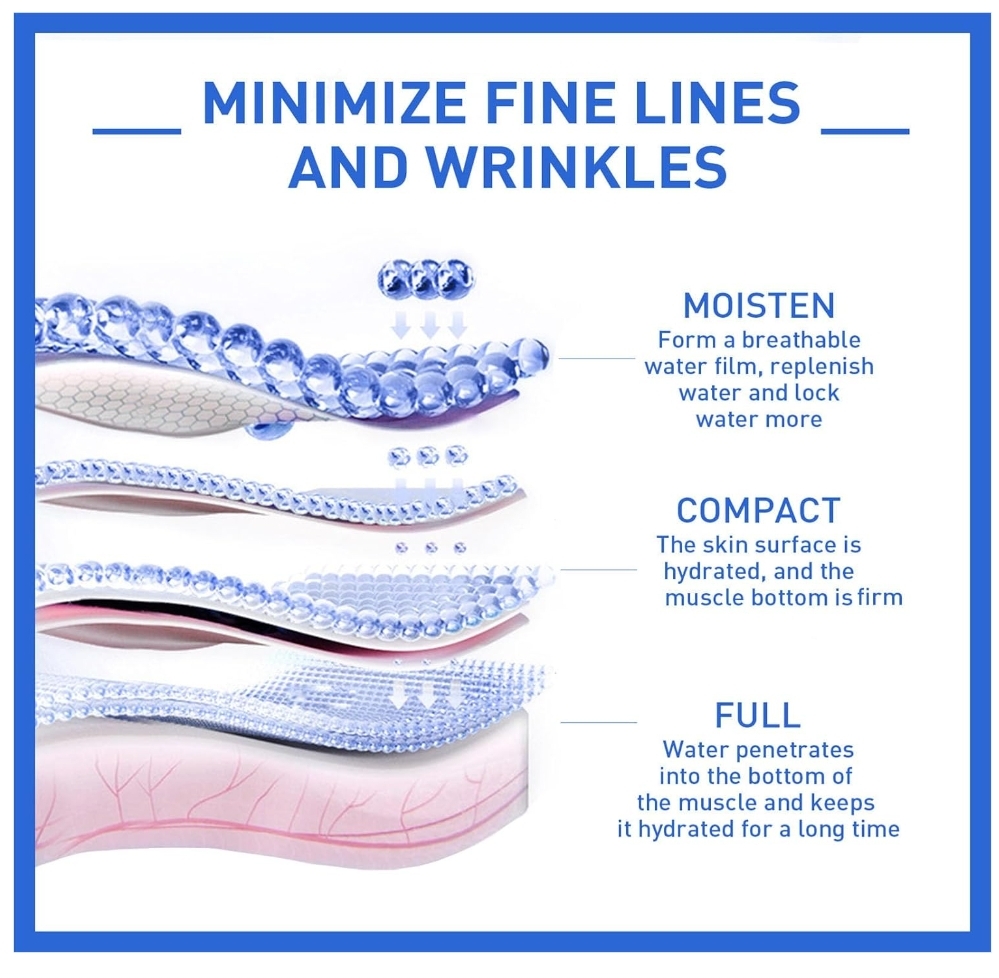
1. Reduction of Fine Lines and WrinklesBotox is renowned for its ability to relax facial muscles, helping to reduce the appearance of dynamic wrinkles like frown lines and crow’s feet.

This results in a smoother and younger-looking complexion. Additionally, ascorbic acid (Vitamin C), a powerful antioxidant, protects the skin from free radicals, promotes collagen production, and brightens the skin, further reducing the appearance of fine lines and wrinkles.

2. Enhanced Skin HydrationAqua collagen plays a crucial role in locking in moisture, which significantly improves the skin’s hydration levels. This ingredient ensures that well-hydrated skin appears plumper and more youthful. Similarly, hyaluronic acid, known for its remarkable ability to hold up to 1,000 times its weight in water, deeply hydrates the skin.

This reduces dryness and enhances the skin’s elasticity and firmness, contributing to a more vibrant and supple appearance.

3. Improved Skin Barrier FunctionCeramides, essential lipids, are crucial for maintaining the skin’s barrier function. They help retain moisture, protect against environmental damage, and reduce sensitivity, resulting in healthier and more resilient skin.

By reinforcing the skin barrier, ceramides ensure that the skin remains hydrated and protected from external irritants.

4. Brighter and More Even Skin ToneAscorbic acid also works to even out skin tone and reduce hyperpigmentation. Its brightening properties leave the skin looking more radiant and evenly toned.

This dual action of reducing fine lines while improving skin tone makes it a vital ingredient in the anti-aging serum.

Expected Results Over 3 Months

Month 1: Initial improvements in skin hydration and texture can be observed. Fine lines may begin to appear less pronounced as the skin starts to benefit f rom the hydrating and smoothing effects of the serum.-

Month 2: Continued use results in further improvement in skin smoothness and hydration. Wrinkles may appear less deep, and an even skin tone becomes more noticeable.-

Month 3: Significant reduction in the appearance of fine lines and wrinkles is expected.

The skin appears firmer, brighter, and more youthful, with markedly improved texture and hydration.

Usage Tips- Consistency:

Applying the serum consistently as part of your daily skincare routine is essential for optimal results. Regular use ensures that the active ingredients have the desired effect on the skin.

– Sun Protection: Daily use of a broad-spectrum sunscreen is crucial to protect the skin from UV damage. This protection helps counteract the anti-aging benefits of the serum and prevents further damage.

– Complementary Products: Using a gentle cleanser and a moisturizer suited to your skin type can enhance the effects of the serum. These complementary products help maintain the skin’s health and amplify the benefits of the anti-aging serum.

By incorporating this Botox stock solution anti-aging serum into your skincare regimen, you can expect a comprehensive approach to anti-aging. It addresses hydration, texture, and skin tone, ultimately leading to a more youthful and radiant complexion.

Need a hair makeover currently have this product in stock. If you would like to place an order, visit http://www.online-store.needahairmakeover.co. If you need a consultation then you can book an appointment on http://www.needahairmakeover.com bye for now

Eyes that Wow Step-by-Step Guide to 6 mesmerising eyeshadow styles by Diane Shawe

More and more women are wearing lash extensions, but how can you make your eyes pop more by using eye shadow?

In this blog we will explore 10 different eye shadow application style and demo 6 in our video.

You don’t necessarily need to be a professional makeup artist to create eye shadow applications. With practice and some basic knowledge of colour theory and blending techniques, anyone can learn to apply eye shadow effectively.

There are plenty of tutorials, guides, and resources available online to help you improve your skills.

Here are ten different eye shadow application styles:

1. Natural/Everyday: Soft, neutral shades applied lightly for a subtle, everyday look.
2. Smokey: Dark shades blended around the eyelid and crease for a dramatic, smokey effect.
3. Cut Crease: A defined line created in the crease with a lighter shade on the lid and a darker shade above the crease.
4. Halo: Dark shades on the inner and outer corners of the eye with a lighter shade in the centre of the lid, creating a halo effect.
5. Gradient: Colours blended seamlessly from light to dark or from one colour to another, creating a gradient effect.
6. Winged or cats eyes: Eye shadow extended outward and upward, mimicking the shape of a winged eyeliner.
7. Pop of Colour: Neutral shades with a bright or bold colour applied to the inner corner, lower lash line, or centre of the lid for a pop of colour.


8. Cut-Out: Negative space created by applying eye shadow in a specific shape or pattern, leaving some areas bare.
9. Graphic: Bold, geometric shapes or lines created with eye shadow for a high-impact, artistic look.
10. Glitter/Cut Glitter: Eye shadow with glitter applied all over the lid or concentrated in specific areas or applied with a precise, cut-crease technique for added sparkle.
https://youtu.be/LT74vDc9dW4?si=pvs4h4jH-PBKq62V

Business Opportunity

Are you someone who has a passion for hair?
Do you like to help people look good and maintain self-confidence?

Do you love doing makeovers?

Would you be interested in using your passion to set up an exclusive hair extension and hair loss specialist salon?

Then you’ll find a massive opportunity here at Need A Hair Makeover Franchise!


For many people in Britain and throughout Europe, hair loss, thin hair, and damaged hair are major problems. You can help them to get all the help that they need for a full-on hair makeover with the simplest of solutions.

A service that is massively in demand across the United Kingdom. From Glasgow to Bristol, Liverpool to Watford London to Paris

This is a genuine business opportunity with a proven chance of success. You don’t need to be qualified in hair extensions as full training is provided. If you would like to know more about the franchise and would be interested in setting up your own specialist salon for the long-term, you can request a brochure today. Help available with raising finance.

Franchise Opportunity http://www.hairextensionsfranchise.com

Training: http://www.hairextensionstraining.academy

Salon: http://www.needahairmakeover.com

Instagram @needahairmakeover


“Elevate your makeup game with our latest tutorial series! From subtle daytime glam to bold nighttime looks, we’ve got you covered. Dive into our step-by-step guides and master 6 stunning eye shadow styles that’ll have you feeling like a pro in no time! 💫

#MakeupMagic #EyeShadowMasterclass #GlamSquad #hairextensions 

Unmasking the Underground World of Food Delivery Apps: A Shocking Investigation by i

Inside the Thriving Black Market for Illicit Deliveroo of Uber Eats and Just Eats Drivers

A delivery driver hands over your takeaway on a Friday night but you probably don’t give the exchange too much thought.

The convenience of food delivery apps like Deliveroo, Uber Eats, and Just Eat has revolutionised the way we order meals, but a dark underblly exists within the industry. Our blog post delved into the illicit black market of rented accounts, shedding light on the potential risks of unknowingly opening your door to substitute drivers. The investigation carried out by i revealed a concerning trend of individuals bypassing the rigorous vetting process by renting profiles, raising questions about the safety and security of customers. As you place your next food delivery order, it’s important to be aware of these challenges and consider the implications of who may be delivering your meal. Stay informed and vigilant in utilising these services to protect yourself and your family because the truth is you don’t really know who you’re opening your front door to.

An i investigation has uncovered a growing black market for renting accounts on apps including Deliveroo, Uber Eats and Just Eat, with more than 100,000 people subscribing to Facebook groups where people can rent, buy or sell profiles in the past three years.

Your food may have been dropped off by a ‘substitute’ rider, someone who has rented a profile on an app from another worker without having to register and will likely have avoided the strict vetting process official riders undergo.

It is a loophole that can be exploited by those who would fail a criminal background check or are in the country illegally, with activity on the Facebook groups, seen by i, indicating the majority of people wishing to rent out a profile on an app do not go through any level of vetting and do not meet the legal criteria to work in the UK.

Three women’s rights groups said they were concerned by the findings of i‘s investigation and warned that women were being put at risk of violence and sexual harassment by the practice of allowing substitute drivers to be effectively untraceable

They also fear that if an official account holder is blocked from using an app because of a complaint, they can go onto rent another account anonymously through the Facebook black market.

Andrea Simon, director of the End Violence Against Women Coalition (EVAW), urged the “multibillion pound corporations” to take urgent action and invest in making their services safer for women

“We also know women don’t usually report this kind of harassment for many reasons – including safety concerns when a perpetrator knows where you live, or the fear of not being believed or taken seriously,” she said.

There are also concerns that some substitute workers are being exploited by traffickers and gangs in breach of the Modern Slavery Act. One expert said that the UK’s “hostile immigration environment” is pushing people into precarious work and that more scrutiny should be on Government policy and the business model of food delivery companies.

Inside the thriving black market

Official delivery workers are also frustrated by the practice, arguing that undocumented migrants are willing to take the poorest paying jobs, which impacts efforts to campaign for better pay and working conditions from the food delivery giants. One union representative claimed the firms are exploiting both sets of workers for profit.

Zamir Dreni, a spokesperson for another union, the App Drivers and Couriers Union (ADCU) told i the “majority of workers are good people” but there is “this loophole that allows some bad people to come through.” “They are not vetted so they could do anything,” he added.

Food delivery giants not only know about the use of substitutes, but advertise it as a perk, saying it gives riders greater flexibility. Just Eat used to promote their scheme as “one of the many positives” of working with the company, but removed this line from its website following i’s investigation.

Currently none of the companies ask for a record of who a substitute rider is but i understands that Deliveroo is now committed to doing so in the future. Uber Eats and Just Eat did not say if they would also take similar action when asked.

There are 4.7 million gig economy workers in the UK, with figures for Deliveroo and Uber Eats in recent years suggesting the two companies have more 120,000 riders between them. Just Eat has under 2,000.

But firms are facing pressure to close this loophole entirely or to enforce stricter rules to ensure background checks are properly carried out. The Home Office said it already had agreements in place with delivery companies to strengthen recruitment and vetting processes and that it was working to crack down on “enablers of illegal migration”.

All three of the food delivery giants currently put the responsibility of background checks for substitutes on the rider who is officially registered to an account.

Deliveroo, Uber Eats and Just Eat all use specialist companies when they need to vet new riders. Once verified, they are permitted under employment law to give a substitute worker access to their account to carry out jobs on their behalf.

The companies do not extend the same resources to a person wishing to hire a substitute, however Deliveroo does offer some money towards the cost of a background check.

One prospective renter ran into problems with their background check and returned to the group asking to rent an account instead© Provided by The inews

Analysis by i shows demand for renting delivery app profiles through Facebook is growing. One such group has gained almost 28,000 members in less than 18 months.

People using these Facebook channels to find work can pay an up-front deposit and a weekly rental fee, which is usually between £70 to £100 a week, to get a rider account. Buying a profile is less common, with some fetching up to £5,000. There are no caps on how much a rider can charge but the rules state they must pay the courier.

A substitute rider operating in the black market is vulnerable on a number of levels. For example, they are required to hand over large sums of money up-front and they are reliant on the account holder honouring their agreement and transferring their earnings whether they are renting or have bought the profile.

The delivery companies said they are working with the Government to improve issues around substitute riders. They added that they have a “zero tolerance approach” towards those who are in breach of their legal obligations when working or who harass or harm customers.

INSIDE THE GROUPS

A rider receives a job, usually transporting food from restaurants and shops to people’s homes, through an app on their phone.

i spoke with eleven people looking for a substitute delivery app account on Facebook. All of them said they were undocumented migrants – people working in the UK illegally.

One man explained that he came to the UK on a tourist visa. He said: “I am a person who does not have papers, and now I am disabled, without work, without [a] residence, without money.”

“I have spent a lot of time and a lot of money in the Home Office and they always ask for proof and proof, I deliver it and they reject me”

Download a copy from amazon kindle

Download a copy from amazon

Others claimed they had worked legally before but had then been hit by administrative delays when they renewed their paperwork and had to find a way to keep earning money.

An Algerian man, who was looking for an account in north London, told i changes to immigration rules had confused him and his paperwork had expired. He said he is unable to pay for a solicitor to help so has turned to free sources of assistance while he tries to find work for the delivery apps through the black market. “I [have] been to the Citizens Advice bureau last week and they are going to help me and I’m waiting for a letter from HM Revenue.”

“My problem is I’m waiting for my share code [proof of right to work] from [the] immigration office because I had an old residence permit.”

He says when the UK left the EU, he didn’t realise this would mean he needed a new permit.

“I didn’t know. I sent a letter to the Home Office and they asked me for proof [of work] from 2010 to 2020. I don’t have the money to get a solicitor… I’m too old to chase all the companies I was working at [as] most of them have closed down.”

i identified 15 groups operating on Facebook that were trading profiles on delivery apps. The largest had almost 28,000 subscribers, while at least four others had more than 10,000 members. While not every person in these channels will be looking to trade an account, and some could be fake profiles, i excluded groups that had fewer than 200 people in them, were not active, not UK-focussed or did not have a large number of recent requests.

Most of these groups were created in 2023, but all were made in the last three years and had more than 100,000 members combined.

The practice is gaining in popularity. i analysed the date members joined the largest page and found a steady increase in the last few months.

It’s impossible to know how many riders use a rented account but anecdotally, official delivery workers complain that it is happening in large numbers.

One said: “A lot people here in Essex are renting. Most of them are here illegally with no visa in the UK. I don’t know how the police in the UK don’t check.”

Facebook removed all of the pages flagged by i. The platform’s rules do not permit listings that promote the sale of digital accounts.

WOMEN’S SAFETY

Official workers, substitutes and customers described incidents where riders had “flirted” or sexually harassed customers, which had led to complaints and the accounts they were using being shut down.

Becca* ordered groceries using her Deliveroo app when she caught the flu earlier this month. She opened the door in her pyjamas, not expecting to be out of her sick bed for long.

The rider checked her ID because she bought paracetamol but she claimed he stared at it for an unusually long time, to the point that she began to feel uncomfortable.

As he eventually handed her the bags, she said he came towards her to the point she felt forced to lean back.

“Then he said to me ‘beautiful girl, lovely girl’, and was leaning in,” she recalled.

Becca said, as a woman in her twenties who lives alone in London, she froze and felt panicked. She said she managed to shut the door, but that he quickly knocked again claiming he’d dropped his keys in one of the bags. He attempted to come into her flat but was interrupted when a friend entered the room. He then left.

“I haven’t reported him as I’m afraid because he knows where I live,” she said. Becca hadn’t checked if he matched the rider’s photo on the app but said knowing he may not be registered with Deliveroo was “a terrifying thought”.

Becca said: “It’s concerning because they can essentially do what they want without any repercussions. I can’t really do anything to stop it or prevent it from happening.”

“He said to me ‘beautiful girl, lovely girl’, and was leaning in”

*Becca, who was sexually harassed by a Deliveroo rider

She’s not the only one to have had an inappropriate experience with her rider. A search on X, previously known as Twitter, shows more than 20 posts from people complaining to UberEats, Deliveroo or Just Eat. While i has been unable to independently verify each complaint, some people provided screenshots as evidence.

One woman messaged Deliveroo to complain about being sent a message calling her “sexy”, as well as a winky face emoji and a smiling, devil horns emoji.

Another complained about a rider sending her his number after trying to flirt with her on the app about her appearance.

Jamie Klingler, co founder of social justice group Reclaim These Streets, told i she had a male Uber Eats rider arrive at her front door when the app had shown a woman would be delivering her food. She reported it but got an automated response.

“We shouldn’t have to worry if our delivery driver might use our addresses to scope our homes for burglaries or worse use our addresses to harass and stalk us; but it is a real concern. And when your delivery driver isn’t the person whose picture you have been supplied, it breaks the little social pact of agreement that they will deliver the food never to use our address in the future.

“We all know that there is calculated risk in sharing any of our personal data, but those risks go up exponentially if you are a woman living alone, but are we not meant to use services that can help our efficiency or convenience out of fear?”

Kay Wesley, deputy leader of the Women’s Equality Party, said: “This is clear evidence that men are abusing the system and that as a consequence women are facing sexual harassment and are feeling unsafe in their own homes.

“There are also risks for drivers… A system that allows this scale of abuse is clearly failing, this simply isn’t good enough.”

It’s not just women who have expressed concerns. One man contacted UberEats after having a male rider turn up despite a woman’s photo being on the account.

He wrote: “@UberEats twice now your drivers don’t much [match] the photos. This makes me feel unsafe. Drivers are using women’s accounts. You clearly have a safety loophole.”

EXPLOITED AND TRAFFICKED

There are concerns some of the substitute riders are being trafficked into the UK with promises of legitimate employment, only to find themselves trapped in a cycle of debt and threats.

One rider was helped by anti-trafficking charity, Hope for Justice. Daniel*, speaking through the charity, said he had paid nearly £15,000 to traffickers who moved him from South America to the UK with the offer of a well-paying job in construction.

When he landed in the UK, this promised job failed to materialise and his traffickers demanded more money. They made him work for a leading food delivery service, with them pocketing his earnings. They threatened his family if he refused to do what they said and beat him.

“The more I paid these men, the debt would just increase,” he said. “We were really scared.”

“My wife was taking my son to school and she was stopped by one of them and they told her ‘tell your husband not to tell anyone anything, not to open his mouth or to share any information, or the worst will happen.’”

It’s difficult to know how common it is for trafficking victims to be made to work under a different person’s account on a food delivery app.

Adam Hewitt, from Hope for Justice, told i that while the big delivery apps have published measures to tackle modern slavery because they know it is a high-risk industry for this type of crime, more needs to be done.

Some of the current measures the delivery firms say they use to protect against modern slavery include identity checks on riders who sign up with them directly and monitoring accounts for suspicious behaviour. Deliveroo, Uber Eats and Just Eat all feature commitments to tackling modern slavery on their websites.

“The more I paid these men, the debt would just increase… We were really scared.”

*Daniel, a trafficking survivor who was made to work for a gig economy app delivering food

Mr Hewitt said: “We have seen cases of criminal gangs who exploit vulnerable people through forced labour using fake profiles on delivery apps, so they get the money from their victims’ work.

“Real-world evidence from trafficking victims we support shows us that the companies are not all doing enough.”

It’s something other riders have noticed too. One man, who has an official delivery account, claimed there is a channel of people coming to the UK to work on Deliveroo and Uber Eats from South America.

“They are promised by other riders from [South America] who are already here.. that once they get here they will be given a delivery platform account so they can start making money straight away but it will cost them £5,000.”

There are not just concerns for those who have been trafficked into these jobs. Some campaigners say the UK’s immigration rules have created a “hostile environment” for people who can’t prove they have a right to work in the country by blocking their access to public services and pushing them into poverty.

Dr Ella Cockbain, an associate professor at University College London who researches human trafficking, smuggling and exploitation, told i: “The UK government’s hostile environment policies make life incredibly difficult for people who don’t have the legal ‘right to work’ or recourse to public funds.

“How else do we expect them to survive other than working in the margins of the labour market? But there, they are likely at greater risk of labour exploitation.”

She added that “people working in the gig economy need better rights and protections, but rather than blaming irregular migrants desperately trying to earn money to survive through account sharing, we should be focusing on companies that make huge profits off exploitative business models and a government that does too little to protect precarious workers”.

HOW THIS IMPACTS OTHER DELIVERY WORKERS

Delivery workers who are directly signed up to the apps said it is not just substitute riders who secured accounts for rent on the Facebook black market who are being exploited.

Many argue the food delivery app companies have deliberately turned a blind eye to undocumented workers because it makes it hard for riders to, as a group, push for higher earnings.

Zamir Dreni, a spokesperson for another union, the App Drivers and Couriers Union (ADCU) has alleged that: “This is the loophole [Uber Eats, Deliveroo and Just Eat] have created to benefit themselves because these guys are illegal. They will take anything given. They won’t raise their voice, they won’t put in a complaint.”

The three companies said they take background checks and lawful working seriously and reject any claims of unduly benefiting from the substitute system.

Some riders i spoke with say those who rent accounts are “desperate” to earn so they do not want to take the financial hit of striking for better conditions and are also willing to pick up the worst paid jobs.

David* said: “They take all the cheap orders so the delivery platform can see they can offer less and less money. Even those as low as £2.80 for a three mile job.”

Another named Elliot* accused some of those working illegally of stealing food from pick-ups to save money and said he was frustrated at those who don’t pay tax and ride without insurance.

Gig economy workers have been striking for better pay, improved working conditions and to be seen as employees rather than self-employed contractors.

Substitution is a key aspect of self employment and is common among contractors but the Independent Workers’ Union of Great Britain (IWGB) said the substitute scheme was used by gig economy companies to strengthen their case that riders are self-employed rather than employees.

This is something Uber Eats, Just Eat and Deliveroo have strenuously denied and argued that riders want to work with this flexibility.

Deliveroo uses facial recognition technology to confirm the identity of account holder riders and will be rolling this out to include substitutes once they have created a register for rented accounts. Uber Eats asks riders to submit photos of themselves for verification at different times, but does not require photo verification of substitutes.

In November last year (2023) , Uber Eats, Deliveroo and Just Eat were told by government officials to implement stricter controls on substitute accounts.

In response to i’s findings, a Home Office spokesperson said: “We have led engagement with these companies to end the use of unverified substitution. An agreement is already in place for businesses to strengthen existing recruitment and vetting processes, and we will continue this work to stamp out enablers of illegal migration, and prevent unacceptable exploitation of workers.”

The three food delivery giants said they were aware of concerns around the issue of substitution.

A Deliveroo spokesperson said the company takes a “zero tolerance approach” towards any rider in breach of their legal obligations when working with the company. They said the firm will immediately cease working with any rider found to be without the right to work in the UK.

“We take our responsibilities extremely seriously. We have introduced facial recognition technology which will help to counter any abuse on the platform and we are strengthening this in the coming months. We will continue to work in close collaboration with the Home Office to support efforts in this area,” they said.

“The safety of our customers is our top priority and Deliveroo has a zero-tolerance policy in place to deal with any harassing, discriminatory, or offensive behaviour. If we become aware of reports of this nature they are immediately escalated, we will work with the authorities to fully investigate if necessary, and cancel that riders’ Deliveroo account to prevent them from working with us again.”

An Uber Eats spokesperson said: “We understand that there are concerns around this issue, and we are working closely with the government and want to find a solution. All couriers who use the Uber Eats app must pass a criminal background check, be over the age of 18 and hold a valid right to work in the UK. Any courier that fails to meet these criteria will lose access to the app.”

A Just Eat spokesperson said: “At Just Eat, we have high standards and a robust criteria in place for couriers delivering on our behalf. This includes ensuring couriers are over the age of 18, carrying out basic criminal checks (DBS), and making sure they have the right to work in the UK.

“Under the UK’s employment law, self-employed independent couriers have the legal, unfettered right to use a substitute. Legally, this means the courier account-holder is responsible for ensuring their substitute meets the necessary standards to deliver on our network.

“If we find that our high expectations are not met, we will immediately take action, including removing couriers from our network.

“We are working closely with policymakers and others in the industry to develop solutions which ensure couriers substituting their work do so safely in accordance with the law.”

*Some names have been changed

Source https://www.msn.com/en-gb/news/world/inside-the-thriving-black-market-for-illicit-deliveroo-uber-eats-and-just-eat-drivers/ar-BB1jXFEC

© Provided by The i

Get a copy of #DianeShawe latest ebook. Visit available on #amazon #amazonkindle and #googlebooks https://www.amazon.co.uk/stores/Diane-Shawe/author/B0052WG8V6?


How to Navigate your Education and Carer in the Age of A I by Diane Shawe

In the fast-paced world influenced by AI, staying informed about industry trends is crucial.

I would like to introduce Diane Shawe’s latest book “The Skill Renaissance” A I impact on education and the future of work as an essential companion for any student entering the job market, offering a roadmap to success in the era of AI disruption. It not only empowers you with knowledge but also provides actionable steps to thrive in a skill-centric future

In “The Skill Renaissance,” the author Diane Shawe has masterfully crafted a must-read for anyone seeking a nuanced understanding of how to incorporate AI constructively into their life and future. This book transcends traditional boundaries, offering valuable insights applicable to a diverse audience. Here’s why it’s a must-read:

  1. Accessible Language and In-Depth Content:

– The author strikes a perfect balance between accessibility and depth. Complex concepts related to AI are explained in a language that resonates with readers across different backgrounds, making it an inclusive read for both educational, tech enthusiasts and those less familiar with the subject.

  1. Practical Guidance for Skill Development:

– One of the book’s strengths lies in its ability to provide practical guidance on skill development. Whether you’re a student, a professional looking to upskill, or someone contemplating a career shift, the book offers actionable steps to harness the power of AI in enhancing your skill set.

  1. Real-World Case Studies:

– The inclusion of real-world case studies enriches the narrative, providing tangible examples of individuals and organisations successfully incorporating AI into their lives and work. These stories serve as inspiring benchmarks for readers looking to emulate constructive AI integration.

  1. Versatility for Various Audiences:

– What sets this book apart is its versatility. It’s not confined to a specific demographic. Whether you’re a educator exploring how to incorporate AI as a teaching or learning tool, a student navigating the education system, a professional seeking career growth, or an entrepreneur exploring innovative strategies, the book caters to a diverse audience with relevant and tailored insights.

  1. Futuristic Vision without Overwhelming Complexity:

– The book paints a futuristic vision of a world influenced by AI without overwhelming the reader with technical jargon. It navigates the complexities of AI’s impact on education and work with a forward-looking perspective, encouraging readers to envision and prepare for a skill-centric future.

  1. Holistic Approach to Personal Growth:

– Beyond its focus on AI, the book takes a holistic approach to personal growth. It emphasizes not only the development of technical skills but also the cultivation of critical thinking, adaptability, and creativity – attributes that will be invaluable in an AI-driven landscape.

  1. Relevance to Evolving Industries:

– For professionals in rapidly evolving industries, this book is a beacon of relevance. It doesn’t merely highlight the importance of AI; it demonstrates how industries are transforming and how individuals can proactively engage with these changes to stay ahead in their respective fields.

  1. Ethical Considerations and Responsible AI Use:

– The book doesn’t shy away from addressing the ethical considerations surrounding AI. It encourages readers to approach AI integration responsibly, fostering a sense of ethical awareness that is increasingly vital in our technologically advancing world.

  1. Self-Awareness and reflection

– This book also tackles how AI could enhance students self awareness and reflective practices, gaining insight into mental health and well being.

In conclusion, “The Skill Renaissance” transcends being a mere guide; it’s a roadmap for personal and professional empowerment in the age of AI. With its inclusive approach, practical insights, and futuristic vision, this book stands as an indispensable resource for anyone seeking to navigate and thrive in the evolving landscape shaped by artificial intelligence.

This book keeps you abreast of the latest developments, ensuring you can adapt and align your skills with the changing demands of your chosen field.

You can get your copy online from Google books or Amazon Kindle. Just search for Diane Shawe and you will find all her publications listed.