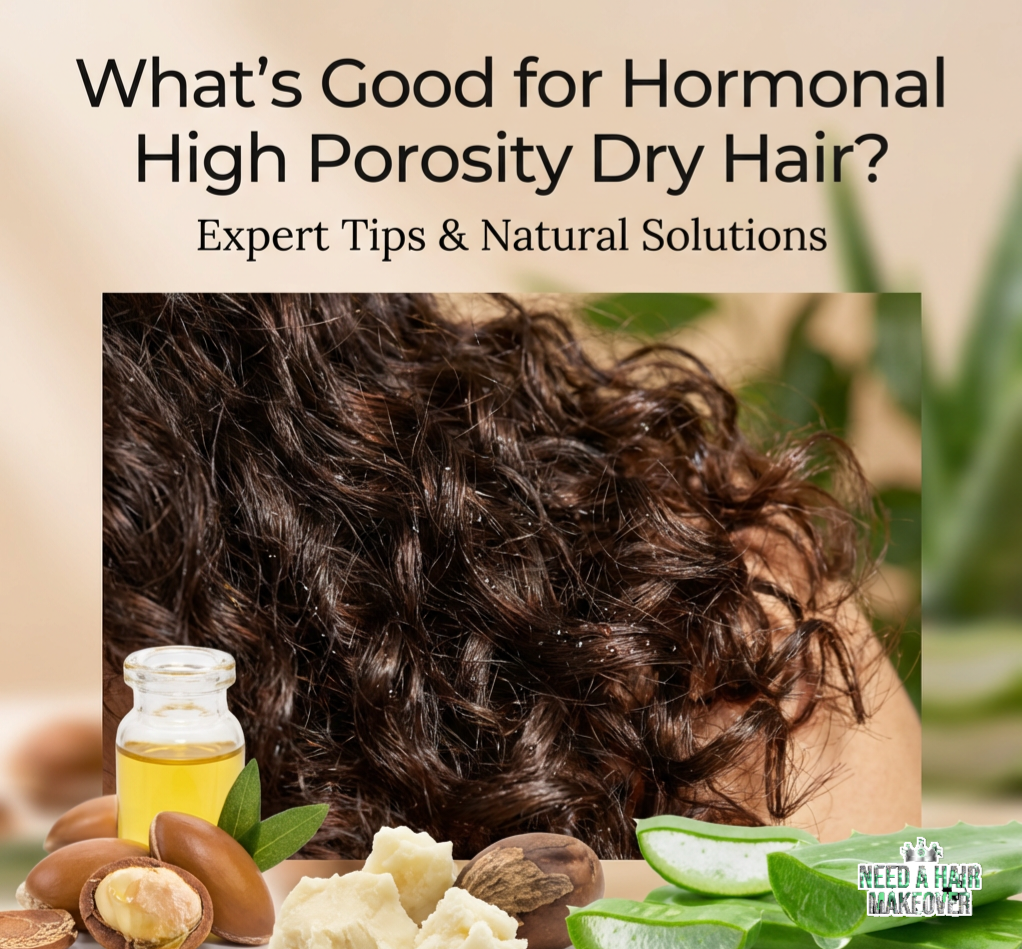
Hormonal shifts can significantly alter hair texture, often leading to high porosity, which means the hair cuticle is raised or “holey,” allowing moisture to enter easily but escape just as fast.
This results in hair that feels perpetually dry, frizzy, and brittle.
What Causes It?
Hormonal high porosity is primarily driven by changes in the endocrine system that affect the scalp’s natural oil production and the hair’s structural integrity:
1. Menopause and Perimenopause: A drop in estrogen reduces sebum (oil) production. Without enough sebum to coat and “seal” the hair shaft, the cuticle becomes more fragile and prone to lifting.
2. Thyroid Imbalances: Both hypo- and hyperthyroidism can interfere with the hair follicle’s growth cycle, leading to thinning and a more porous, “straw-like” texture.
3. Stress (Cortisol): High cortisol levels can disrupt the delivery of nutrients to the hair follicle, weakening the protein structure (keratin) of the hair as it grows.
4. Aging: Naturally decreasing levels of collagen and lipids in the body make the hair fiber less elastic and more porous over time.
Improving hair from the inside out focuses on providing the building blocks for a stronger, smoother cuticle.
– Omega-3 Fatty Acids: Found in fish oil, flaxseed, and walnuts. These help lubricate the hair from within by supporting the sebaceous glands.
– Collagen & Biotin: Supplements containing marine collagen or biotin can help strengthen the hair’s keratin structure, making the new growth less porous.
– Hyaluronic Acid Supplements: Known for holding 1,000 times its weight in water, oral hyaluronic acid can help improve systemic hydration, which reflects in the scalp and hair.
– Protein-Rich Foods: Since hair is 90% protein, ensuring you get enough lean meats, eggs, or plant-based proteins (like lentils) is vital for repairing the hair “cortex.”
– Zinc and Iron: Deficiencies in these minerals (common during hormonal shifts) lead to brittle, porous strands.
What Can You Treat It With?
High porosity hair needs products that fill the gaps in the cuticle and seal the moisture in.
1. Protein TreatmentsHigh porosity hair has “gaps” in the cuticle. Use a strengthening mask containing hydrolyzed keratin, silk, or wheat protein once every two weeks to temporarily patch those holes and add structure.
2. The L.O.C. MethodThis layering technique is highly effective for high porosity hair: – L (Liquid/Leave-in): Apply a water-based leave-in conditioner.- O (Oil): Apply a heavy oil like Argan, Avocado, or Jojoba to mimic natural sebum.- C (Cream): Finish with a thick styling cream or butter (like Shea butter) to “plug” the cuticle and lock everything in.
3. Apple Cider Vinegar (ACV) RinsesHigh porosity hair is often too alkaline. An ACV rinse (1 part vinegar to 4 parts water) helps lower the hair’s pH, which flattens the cuticle scales, making the hair smoother and shinier.
4. Seal with Cold WaterAlways finish your shower with a blast of cold water. This helps physically close the raised cuticles before you step out into the air.
5. Avoid Sulfates and High HeatSulfates strip the little oil you have left, and high heat further “pops” the cuticle open. Opt for sulfate-free “co-washes” and air-drying whenever possible.
For hormonal high porosity hair, you need a mask that provides both protein (to fill the gaps in the cuticle) and heavy lipids (to replace the natural oils lost due to hormonal shifts).
– 1 Egg Yolk: Contains lecithin and protein to “patch” the holes in the hair fiber.
– 2 Tablespoons Extra Virgin Olive Oil or Avocado Oil: These are “penetrating oils” that can actually get inside the hair shaft to provide deep moisture.
– 1 Tablespoon Raw Honey: A natural humectant that pulls moisture into the hair.
- 1 Teaspoon Apple Cider Vinegar (Optional): Helps lower the pH to flatten the hair cuticle.
Instructions:
1. Mix: Whisk the egg yolk and oil together until creamy, then stir in the honey and vinegar.
2. Apply: Start at your ends and work your way up. High porosity hair is usually most damaged at the tips.
3. Dwell: Cover your hair with a shower cap. The trapped body heat will help the treatment penetrate. Leave it on for 20–30 minutes.
4. Rinse (Important): Rinse with cool or lukewarm water. Never use hot water, as it will “cook” the egg in your hair and cause the cuticle to lift even further.
5. Wash: Follow with a sulfate-free shampoo to remove any residue.
Quick Tip for Application Since high porosity hair is “thirsty,” apply this to damp (not soaking wet) hair. If the hair is dripping wet, the water fills the gaps in the cuticle first, leaving no room for the mask to sink in.
Ready to restore your hair’s strength and seal in lasting hydration?
Experience the ultimate transformation by booking a Deep Hair Repair with Infrared Treatment at the award-winning Need a Hair Makeover Specialist Hair Extensions and Hair Loss Salon.
Our advanced infrared technology penetrates deep into the hair shaft to repair hormonal damage and smooth high-porosity strands from the inside out. Don’t let dry, brittle hair hold you back—visit http://www.needahairmakeover.com today to schedule your consultation with our specialist team and give your hair the professional care it deserves.
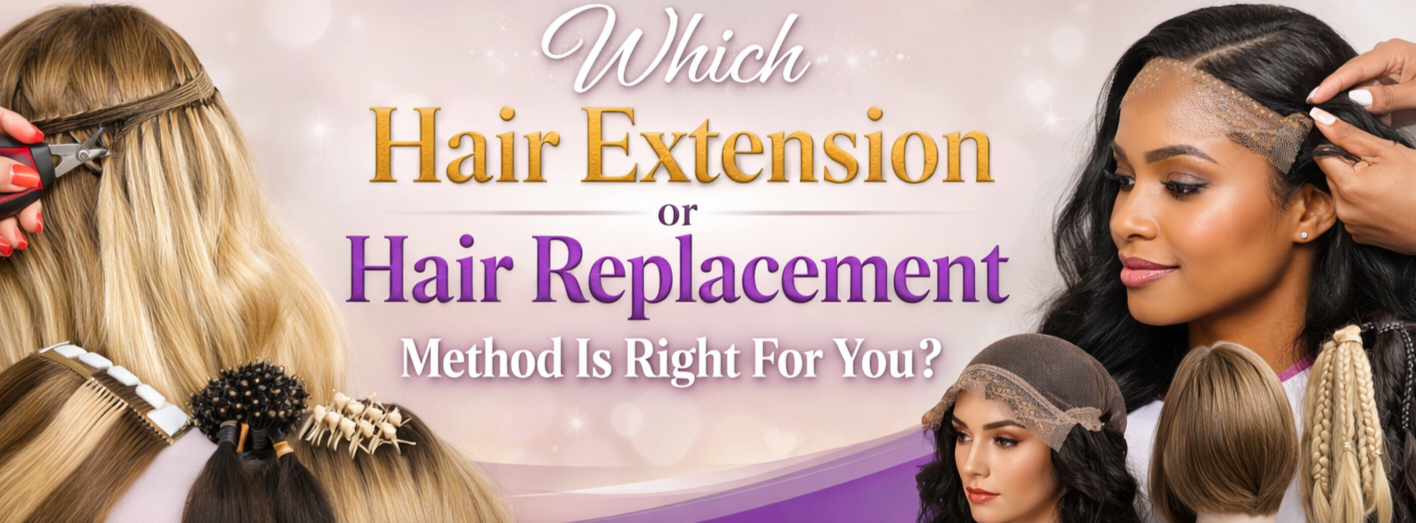
Thinking about hair extensions but its becoming confusing?
Losing your hair? Not sure which is best technique?Complete this assessment to receive your personalised result on the best solution for your hair type.
Maintaining the perfect flutter requires the right aftercare routine. Cluster lashes offer a dramatic, voluminous look, but because they are applied in small groups, they require specific care to stay secure and keep your natural lashes healthy. Here are the 6 best ways to care for your cluster eyelashes:
1. Keep Them Dry for 24–48 Hours
The adhesive used for clusters needs time to fully cure. Avoid water, steam, saunas, and intense workouts immediately after your appointment to prevent the bonds from softening and sliding off.
2. Ditch the Oil-Based Products
Oil is the ultimate enemy of lash glue. Switch to oil-free makeup removers and cleansers. When cleaning your face, use a cotton swab or a lint-free cloth around the eye area to ensure no oily residue touches the lash line.
3. Cleanse Gently and Regularly
Dust and oils can build up between the clusters. Use a specialised lash cleanser or diluted baby shampoo. Apply with a soft brush, rinsing gently with cool water, and pat (don’t rub) dry with a lint-free towel. 4. Avoid Mascara
One of the perks of clusters is that you don’t need mascara. Applying it adds unnecessary weight and makes cleaning nearly impossible, leading to bacterial buildup and premature shedding.
5. Don’t Rub or Pull
It’s tempting to itch, but friction will loosen the clusters and can cause traction alopecia on your natural lashes. If they feel uncomfortable, contact your technician rather than pulling them out yourself.
6. Sleep on Your Back
Sleeping face-down crushes the clusters, causing them to lose their shape or fall out. Try using a silk or satin pillowcase to reduce friction if you tend to roll over during the night.
Balayage. The word itself sounds effortlessly chic, doesn’t it? It’s the hair colour trend that seems to be everywhere, and for good reason. But before you rush off to the salon demanding sun-kissed strands, let’s talk about whether balayage is truly the right fit for you and your lifestyle.
But first lets be clear on what a balayage is. Balayage (pronounced bah-lee-AHZH) is a French word meaning “to sweep” or “to paint.” It’s a hair coloring technique where a stylist hand-paints or sweeps the color onto sections of your hair, creating a soft, graduated, and natural-looking highlight effect.
The color is often applied more heavily towards the ends of the hair and gradually blends into the roots. This technique results in a more subtle and personalized color placement compared to traditional highlighting which is Traditional Foil Highlights.Traditional highlighting involves separating strands of hair into sections and applying color to those strands.
The sections are often wrapped in foil (hence “foil highlights”) to keep them separate and to concentrate the heat, which can help the color process faster and more intensely.
So, how do you know if you should take the balayage plunge?
Here are some key signs:
1. You’re a Low-Maintenance Beauty (But Still Want to Make a Statement):This is perhaps the biggest reason why people fall in love with balayage. Tired of constant root touch-ups? Balayage is your answer! The hand-painted technique ensures a soft, blended transition from your natural roots to the lighter ends. This means less noticeable regrowth and fewer salon visits. You can rock a gorgeous colour without being chained to a strict maintenance schedule.
2. You Crave Dimension and Movement:One-dimensional hair colour can look flat and lifeless. Balayage adds depth and dimension by strategically placing highlights throughout your hair. This creates a natural, sun-kissed effect that makes your hair look fuller and more dynamic. Imagine hair that shimmers and moves with every turn of your head!
3. You Want to Brighten Up Your Face:A well-placed “money piece” – those lighter highlights around your face – can instantly brighten your complexion and draw attention to your best features. Balayage allows you to strategically lighten these sections, framing your face and adding a touch of radiance.
4. You’re Looking for a Natural Grow-Out:Forget harsh lines and obvious regrowth. Balayage is known for its seamless blend, making the grow-out process incredibly forgiving. The natural, gradual transition means you won’t be panicking about roots every few weeks. This is a huge win for busy individuals!
5. You’re Open to Different Levels of Brightness:Balayage is incredibly versatile. You can opt for a subtle, barely-there sun-kissed effect or go for a more dramatic, high-contrast look. The technique can be adapted to suit your personal preferences and hair colour goals. Talk to your stylist about the level of lightness you’re comfortable with.
In short, balayage is perfect for you if:
You value low maintenance and fewer salon visits.
You want to add dimension and movement to your hair.
You’re looking for a natural, sun-kissed effect.
You want to brighten your face with strategic highlights.
You appreciate a forgiving grow-out process.
Before you book that appointment:
Do your research:
Look at pictures of balayage styles that you like and bring them to your stylist.
Consult with a stylist:
A professional stylist can assess your hair type, texture, and colour and recommend the best balayage technique for you.
Be realistic:
Balayage may require multiple sessions to achieve your desired look, especially if you have dark hair.
So, are you ready to embrace the effortless chic of balayage? If you answered “yes” to most of these questions, then it’s definitely time to consider taking the plunge! Get ready to enjoy beautiful, low-maintenance hair that turns heads wherever you go.
If you’re ready to transform your look and experience the artistry of an award-winning salon, Www.needahairmakeover.com is your go-to destination for expert balayage colouring tailored to all hair types. Whether you’re seeking a subtle change or a bold new style, our skilled professionals are here to bring your vision to life. Don’t wait to give your hair the makeover it deserves—book your consultation or appointment online today and take the first step towards stunning, personalised hair that truly reflects you.
Selling is the lifeblood of any business — it comes before delivery, not after it. If your inner mantra is “I hate selling”, you’ve already lost the battle before it begins. Selling isn’t about pressure or persuasion; it’s about preparation, positioning, and clearly communicating value.
Over the years, I’ve learned that confidence in selling comes from structure, not personality. In this article, I share 10 key preparation points that have consistently helped me negotiate, sell, and lead with clarity — without compromising integrity or purpose.
If you don’t want to sound like you’re offering a bargain instead of a valued service or product, it’s important to understand that bargaining is only one stage of negotiation. True negotiation is a structured process shaped by timing, intuition, preparation, and flexibility.
It is far less about confrontation and far more about problem-solving, positioning, and value creation.The strongest negotiating position you can hold—especially in today’s economy—is being of service by solving a real problem. To do that effectively, here are 10 essential rules every woman negotiator should master.—
1. Do Your ResearchPreparation is power. Research should focus on three areas: facts, priorities, and principles. Collect data that supports your position—market rates, comparables, benchmarks, and past outcomes. Whether negotiating salary, contracts, property, or partnerships, information removes emotion and replaces it with authority.—
2. Know Your PrioritiesBe crystal clear about what you want and what the other party wants. Understand your non-negotiables versus your flex points. Knowing your own principles—and recognising theirs—allows you to frame proposals that are compelling, credible, and strategic rather than reactive.—
3. Define Your Walk Away Position (WAP)Your Walk Away Position protects you from poor decisions made under pressure. Know the minimum you’ll accept or the maximum you’ll pay before negotiations begin. This clarity prevents regret and strengthens confidence at the table.—
4. Establish Your BATNAYour Best Alternative to a Negotiated Agreement (BATNA) gives you leverage. Sometimes the best outcome is already on the table without prolonged bargaining. Over-negotiating can actually cost you opportunities—discernment matters.—
5. Work Within the ZOPAThe Zone of Possible Agreement (ZOPA) is where both parties’ acceptable outcomes overlap. Successful negotiators recognise when they’ve reached this zone and focus on closure rather than dominance. Winning doesn’t mean the other side loses.—
6. Control Timing, Not Just TermsTiming can outweigh price. Knowing when to negotiate, pause, or close is often more powerful than pushing harder. Strategic silence, delayed responses, and phased agreements are underused strengths.—
7. Lead With Value, Not DefenceDon’t justify—position. Frame your offer around outcomes, impact, and problem-solving. Value-led negotiation shifts the conversation from cost to return.—
8. Stay Flexible Without Losing AuthorityRigidity kills deals. Flexibility builds trust—but only when anchored in clear boundaries. Adapt your approach, not your standards.—
9. Document and De-PersonalisePut agreements in writing and keep discussions professional, not emotional. Detaching ego from outcome allows you to negotiate with clarity and confidence.—
10. Use AI & Automation to Strengthen Your PositionModern negotiation isn’t just human—it’s system-supported.
Platforms like http://www.explainer-video.uk help women entrepreneurs present proposals, services, and value clearly using AI-powered explainer videos, automation, and 24/7 digital engagement tools. When your offer is explained consistently, professionally, and at scale, you negotiate from a position of structure—not strain.—Negotiation isn’t about being aggressive.It’s about being prepared, positioned, and powerful.
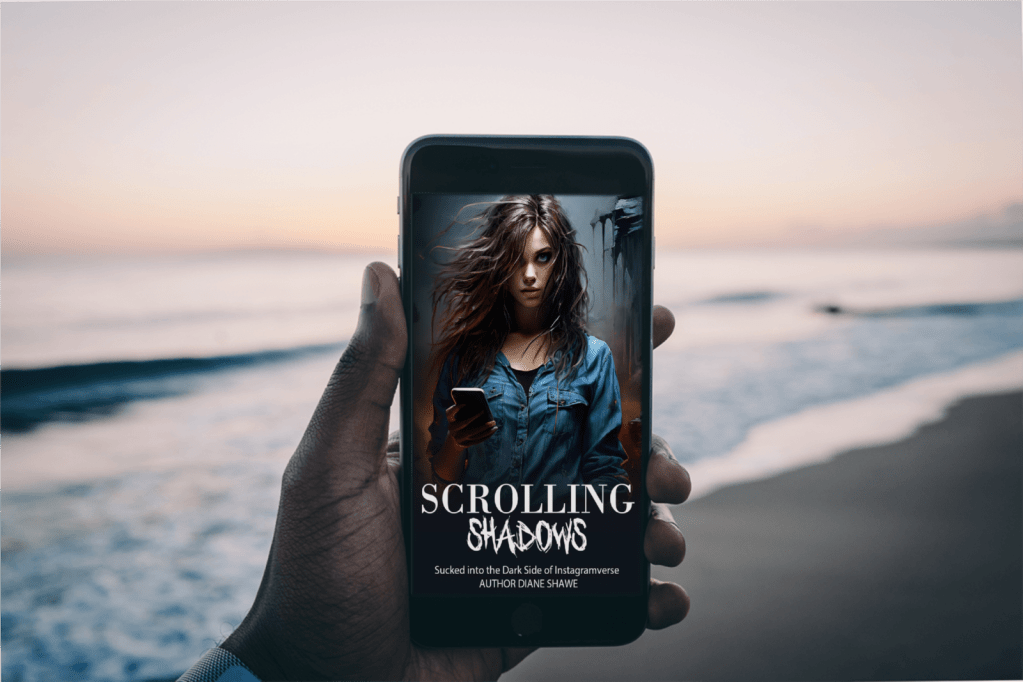
What Happens When You Stop Hiding is a bold, uncompromising guide for women and marginalised people of colour who are tired of shrinking, second-guessing themselves, and carrying the emotional weight of systems never built for their thriving.
From a scholarly perspective, this book stands out because it merges psychological insight, cultural critique, and practical transformation tools, all while maintaining an accessible, compassionate voice.
From the very first pages, Shawe reframes visibility as a human right rather than a performance. She reminds us that labels—race, gender, sexuality—are social constructs created to confine rather than liberate . This human-first framing sets the tone: the reader is invited not to become someone new, but to return to the self that existed before shame, fear, and external judgment took root.
What Makes This Book So Impactful
🔥 1. It addresses the wounds no one talks about—honestly.
Each chapter tackles a form of “hiddenness” that affects women and people of colour daily:
Imposter syndrome and self-erasure (Chapter 1: “The Mask of Modesty”)
Unsafe family dynamics and childhood emotional neglect (Ch. 2–3)
Cultural and religious conditioning that punishes authenticity (Ch. 4)
Workplace tokenism and microaggressions (Ch. 8)
The silent burnout experienced by high-functioning achievers (Ch. 7)
Shawe does not shy away from the deeply personal or socially uncomfortable. The case studies—Amina the hidden tech genius, Tasha the undermined sister, Priya the overlooked community organiser—make the struggles tangible and relatable.
🔥 2. It’s not theory; it’s a blueprint.
Every chapter includes:
Reflection prompts
Practical steps to reclaim power
Behavioural patterns to recognise
Scripts, reframes, and healing exercises
Real-life stories that mirror the reader’s journey
For example, the “Are You Still Hiding?” assessment provides immediate self-diagnosis, inviting readers into awareness rather than blame .
🔥 3. It validates identities historically dismissed or silenced.
Shawe explicitly centres:
Black and Brown women
LGBTQ+ people navigating cultural and religious shame
Single mothers judged rather than supported
People navigating class, body-image, and professional bias
This inclusivity is not symbolic—it is woven into every page. The chapter on the “Silent Spiral” even explores mental health in the context of public visibility and societal expectation, capturing the emotional cost behind polished success .
🔥 4. It is written with both warmth and authority.
Shawe balances academic insight with a deeply compassionate tone. She doesn’t write at the reader; she writes with them. The text acknowledges pain without glorifying it, and offers practical liberation without minimising systemic realities.
🔥 5. It creates transformation, not just inspiration.
By the time the reader reaches the sections on rebuilding identity, creating new boundaries, detoxifying inherited beliefs, and rewriting their personal story (Ch. 16; Closing Sections) , the journey feels both emotional and actionable. This is not motivation; it is method.
⭐ Why Readers Should Buy This Book
Because it helps you stop apologising for your existence.
Because it names wounds you’ve carried quietly for years—cultural, familial, internal, spiritual—and gives you the tools to dismantle them.
Because it teaches you how to recognise emotional manipulation, systemic bias, family dynamics, and internalised fear, and then shows you how to reclaim your voice, dignity, and clarity.
Because it is a mirror and a map—a guide that reflects your hidden struggles and leads you toward a more visible, self-aligned future.
And because it speaks directly and powerfully to anyone who has ever felt undervalued, unseen, or underestimated.
Readers will walk away feeling understood, strengthened, and equipped to step into a new chapter of authenticity and empowerment.
📘 Ready to stop shrinking and start standing in your power?
Unlock your confidence, break old patterns, and reclaim your visibility with What Happens When You Stop Hiding — a transformational guide for women and marginalised people of colour.
🔥 Discover practical tools, real-life case studies, and powerful mindset shifts that help you stop apologising for your brilliance and start leading with authenticity.
There’s a reason this cut is trending across Instagram, TikTok, and every celebrity red carpet — it’s the luxury layered volume cut that instantly makes your hair look fuller, healthier, and effortlessly expensive. And yes… it’s currently the most requested cut at Need a Hair Makeover® Salon.
Soft, bouncy, face-framing layers with a smooth blowout finish… this look is universally flattering and adds that “quiet luxury” touch everyone craves. Whether your hair is long, medium, or shoulder-length, this cut creates movement, body, and that irresistible swish effect.
But here’s the truth: Most people don’t naturally have the thickness required to get this look. That’s why so many clients are pairing the cut with our award-winning hair extensions to enhance volume, shape, and flow — without losing the natural finish.
WHO THIS CUT SUITS
This style is extremely versatile and suits:
✨ Oval and round faces: The sweeping layers elongate and balance facial features effortlessly.
✨ Heart-shaped faces: Face-framing layers soften the cheekbones and give a very feminine finish.
✨ Square jawlines: The flowing edges and subtle movement help soften angular lines.
✨ Mature clients: This cut lifts the face visually and adds youthful bounce without looking overstyled.
If you want your hair to look fuller, smoother, and more lifted around the face… this cut is your best friend.
THE TYPE OF HAIR THAT LOVES THIS CUT
This cut works beautifully with:
✔ Fine hair — gains instant body and shape with layered volume. ✔ Medium density hair — moves effortlessly and styles to perfection. ✔ Straight or lightly wavy hair — ideal for that salon-blowout effect. ✔ Short-to-medium length hair — transforms into chic, bouncy glamour.
However… if your hair is:
❗ Too fine ❗ Too short ❗ Lacking density ❗ Fragile from breakage
…you’ll struggle to get the full effect without help.
That’s where our Specialist Hair Extensions Service steps in.
WHY HAIR EXTENSIONS MAKE THIS CUT 10X BETTER
At Need a Hair Makeover® we use premium techniques to create:
✨ Invisible volume ✨ Natural movement ✨ A fuller blowout ✨ A thicker, healthier look instantly ✨ Longer-lasting styling power
Extensions allow the layers to fall properly, the ends to look plush, and the entire cut to look “expensive” instead of flat.
No one will know. But everyone will notice.
WHY WE’RE THE TOP CHOICE FOR THIS LOOK
We are officially the:
🏆 Winner: Hair Extensions Artist of the Year 2025 🏆 Winner: Hair Extensions Salon 2025 ✨ Recognised by UK Salon Awards ✨ Known for Hair Extensions, Hair Loss, and Toppers Expertise ✨ Home of custom volume transformations and natural blending
When you want flawless volume — you come to the specialists.
READY FOR YOUR TRANSFORMATION?
Whether you want:
💛 More length 💛 More volume 💛 A thicker blowout 💛 A brand-new, modern look 💛 Or the most requested cut right now…
We’ll create a bespoke transformation designed exactly for your face shape and your lifestyle.
The Truth Behind What Really Causes It By Diane Shawe
A quick reminder for anyone who wears human hair extensions 👇
✅ 100% Virgin Remy human hair has never been dyed or chemically treated ✅ It cannot release dye or ammonia unless something has been applied to it after installation (such as bleach, purple shampoo, or chemical-based products) ✅ The first 7 days are critical – extensions should not be washed or disturbed, as this can cause stress on the scalp and slippage
Hair extensions is at its most secure in the first week after application. Attempting to remove, bleach, or aggressively wash it too early can lead to irritation, redness, and even hair loss — not because of the fitting, but because the foundation has been disturbed before it has settled.
As an extension artist who designed the Hook & Latch™ system and has been recognised nationally for excellence in scalp-safe techniques, my number one priority is client safety.
🔒 Protect your hair. Protect your scalp. Always follow aftercare advice and never allow untrained hands to remove extensions prematurely.
If you’d like me to do a video breakdown of what can damage Remy extensions from home or salon misuse, comment “YES” below 👇
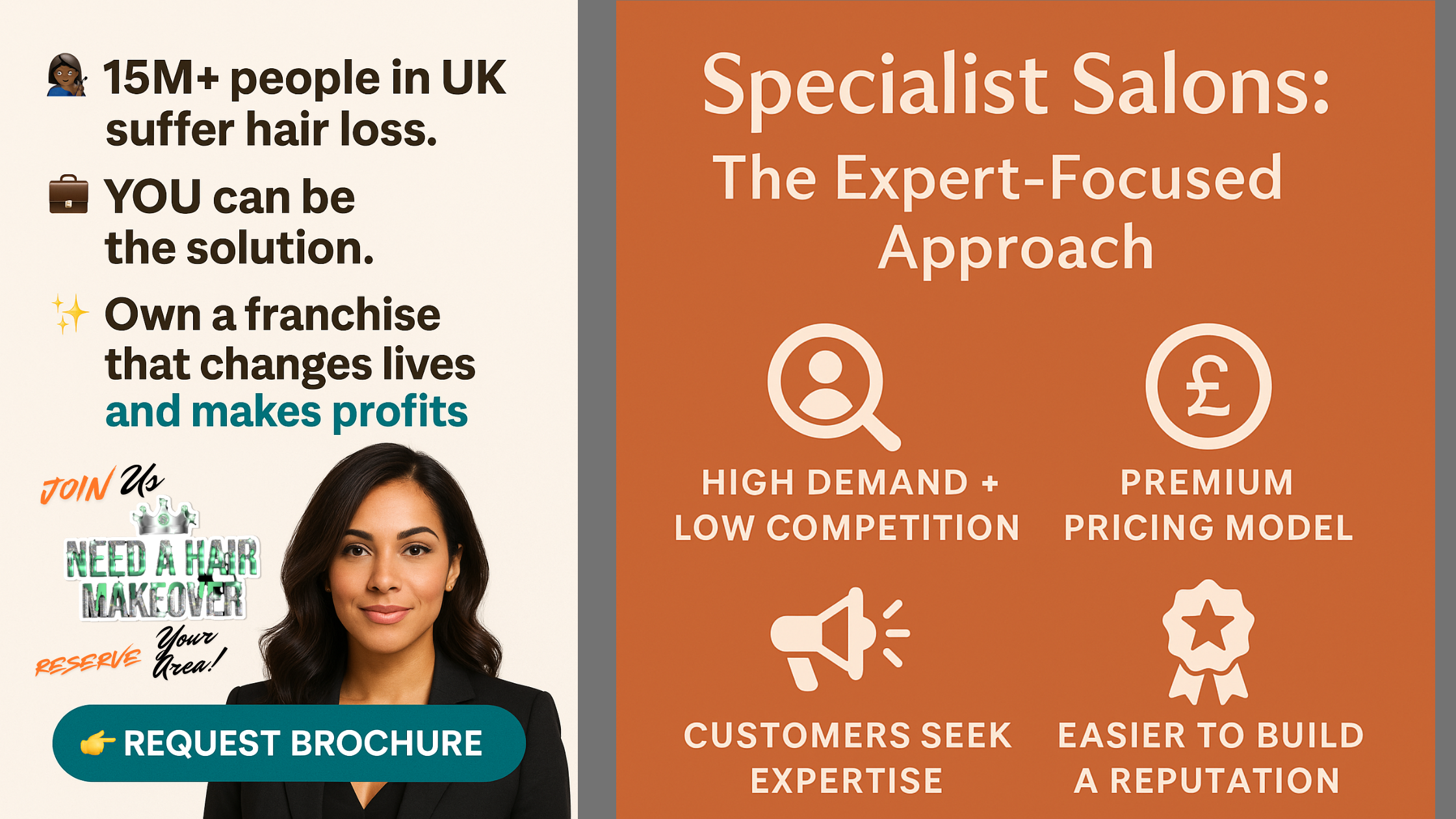
In a competitive beauty industry, salon owners face a criti Ical decision: Do you aim to serve everyone, or do you specialise and dominate a niche?
As the founder of Need a Hair Makeover®, an award-winning Specialist Hair Extensions and Hair Loss Salon Franchise, I’ve seen both models up close — and the difference is striking.
If you’re thinking of opening your own salon or investing in a franchise, this direct comparison will help you choose the best path forward.
🏪 General Salons: The Jack-of-All-Trades Model
✅ Pros:
Serves a broad customer base Familiar to most consumers Easier to staff with general stylists Variety of services from cuts to colours
❌ Cons:
High competition — every high street has one Harder to stand out or build loyalty Lower average spend per client Must constantly discount to attract footfall Vulnerable to economic downturns
💼 Specialist Salons: The Expert-Focused Approach
A Specialist Salon focuses on solving a specific, high-impact problem — such as hair loss, extensions, or textured hair care.
At Need a Hair Makeover®, we cater to clients with hair loss, thinning, breakage, or post-chemo recovery, providing non-surgical solutions and instant confidence restoration. That changes everything.
✅ Pros:
High demand + low competition Premium pricing model Customers seek expertise, not just convenience Easier to build a reputation and attract press Supports specialised services, training, and innovation Attracts loyal, high-value clients with ongoing needs
❌ Cons:
Requires specialist training (we provide this) Must be positioned correctly in marketing May limit walk-in traffic if not branded well
📊 Real Talk: Which Model Wins?
Factor General Salon Specialist Salon
Profit Margin Moderate High Customer Loyalty Medium Very High Ease of Startup Easy Supported via franchise Market Saturation High Low Scalability Moderate High (if franchised) Marketing Edge Weak Strong — you’re solving a problem
💡 Verdict: In today’s economy, specialists win. The market craves experts — not generalists — especially when it comes to confidence, appearance, and identity.
🧩 The Gap in the Market
There are millions of people in the UK experiencing hair loss due to:
Alopecia Chemotherapy Hormonal changes Stress Ill health and medication Hair damage from styling
Very few salons are trained or equipped to help — let alone in a dignified, professional, specialist setting.
That’s the gap. That’s the opportunity. People don’t just want creams and lotions, they are looking for instant gratification that makes them look normal and improves there self esteem.
🚀 Why We Chose the Specialist Franchise Model
Need a Hair Makeover® started from a personal experience of hair loss and evolved into a brand that empowers others — from clients seeking transformation to franchisees ready to own a purpose-led business.
Our model includes: Full CPD-accredited training Salon setup support Product sourcing and supply chain access Ongoing marketing and business coaching
We help you own your zone of genius — not compete in a race to the bottom.
Being a generalist may feel safe, but the future belongs to specialists. In a world full of salons, it pays to be the one salon that truly solves a problem.
📣 Let’s Talk
👉 Interested in launching a specialist salon franchise? 👉 Curious about the real costs vs. benefits? 👉 Want to stand out in a saturated industry?
Message me or apply online — your expert salon journey starts here.
Citrus shots. Herbal teas. Ginseng blends. They promise “cleanse”… but do you actually FEEL better? 🤔 If you’re still stuck with brain fog, bloating, or aches, it’s time for a different approach.
In today’s world, we’re constantly taking in toxins — from the air we breathe, the food we eat, the water we drink, even the products we put on our skin. Over time, this build-up can leave us feeling tired, foggy, bloated, and not quite ourselves. While modern medicine offers solutions, sometimes the best answer is going back to nature’s pharmacy.
That’s where two natural powerhouses step in: zeolite and shilajit. What I’ve discovered is that when you pair these two bad boys together in a constructive way, they don’t just support your body — they help keep you in tip-top shape.
🌋 What is Zeolite? Zeolite is a volcanic mineral formed when molten lava meets seawater. Over thousands of years, it develops a unique honeycomb-like structure that works like a natural magnet for toxins. • Cleansing power: Zeolite binds to heavy metals, environmental pollutants, and harmful substances in the gut, escorting them safely out of the body. • Alkalising: It helps balance the body’s pH levels. • Digestive support: Its porous structure traps toxins without being absorbed into the bloodstream. In simple terms, zeolite is like a deep clean for your system.
🏔 What is Shilajit? Shilajit is a resin that seeps from rocks high in the Himalayas and other mountain ranges. It forms over centuries from compressed plant matter and is rich in fulvic acid, humic acid, and more than 80 trace minerals. • Energy & stamina: Shilajit supports ATP production, giving your cells the fuel they need. • Mineral replenishment: It restores vital nutrients often missing from modern diets. • Adaptogen effect: It helps the body cope with stress. • Cognitive boost: Linked with improved focus, memory, and clarity. Shilajit acts as a replenisher and energizer, helping the body use nutrients more efficiently.
⚖️ The Key Difference • Zeolite = Remover → It clears out toxins and heavy metals. • Shilajit = Replenisher → It restores energy and nutrients. This is why they complement each other so well: first you clear the house (zeolite), then you furnish it beautifully (shilajit).
Personal experience
“I had tried all sorts of detox teas and citrus cleanses before, but I always ended up feeling drained and foggy a few days later. When I added zeolite to clear toxins and shilajit to restore minerals, I finally felt the difference — lighter, clearer, and with more natural energy. It wasn’t just a quick fix, it felt like a real reset for my body.
⏰ How to Take Them Together If you already take shilajit daily, adding zeolite can enhance your routine. To avoid overlap and maximise benefits: • Take zeolite first thing in the morning or before meals — on an empty stomach works best for binding toxins. • Take shilajit later in the day — after meals, with water or warm milk/tea, to support absorption and energy. This way, zeolite does its cleansing job without pulling away the minerals that shilajit is delivering.
🌱 Final Thoughts Zeolite and shilajit are powerful on their own — but together, they create a holistic balance: detox + nourish, cleanse + energize, remove + restore. If you’re looking for a natural way to both clear your system and boost vitality, consider combining the two in your daily wellness routine.
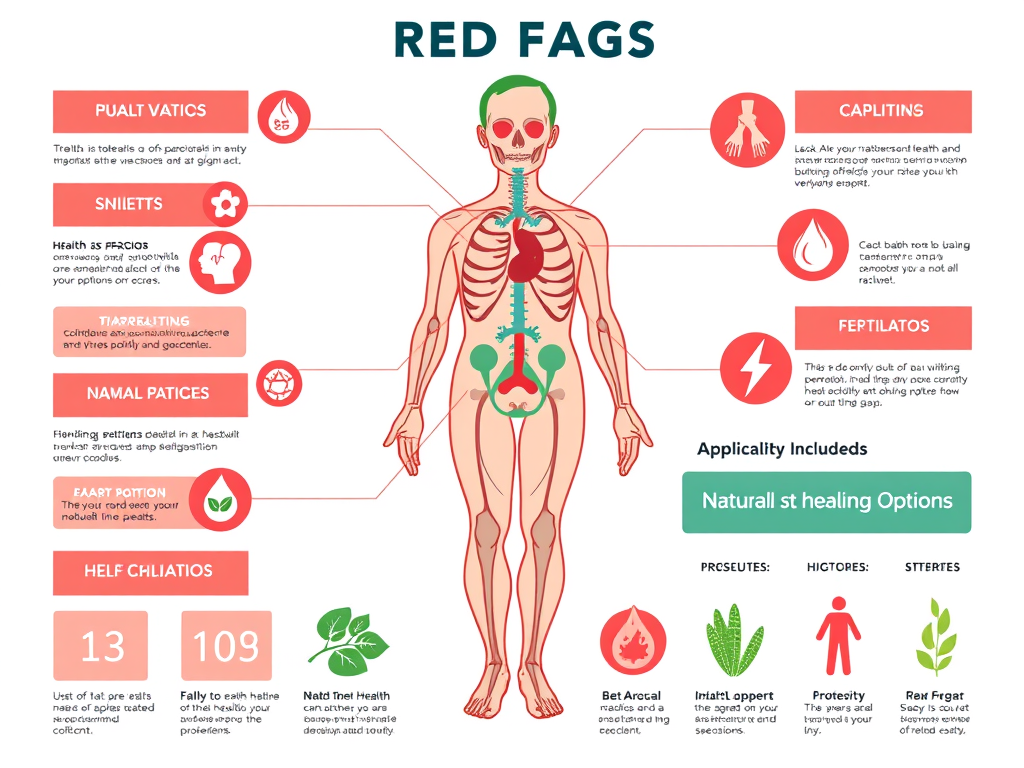
“Your Body Speaks Before Illness Strikes—12 Health Red Flags & Natural Healing Options While You Wait for a Doctors Appointment”
Doctor Appointments Are Hard to Get—Here’s How to Read Your Body’s Warning Signs & Find Healing Support Now” Getting a GP appointment in the UK has become increasingly challenging in certain regions throughtout the UK, with many patients waiting many days or weeks just to be seen. But your body doesn’t always wait—it sends signals usually well in advance (that many of us ignore) when something isn’t right.
Learning to recognise these signs can help you take action early and seek support from alternative health advisors or natural remedies while you wait for medical care.
Note: Before i go on I must state that this is not medical advice. Please consult a doctor or qualified professional if you have serious symptoms.
In this article, we’ll discover together 12 warning signs your body may give you, including fatigue, weight changes, skin issues, hair loss, and more. We’ll also explore what you can do in the meantime to support your body’s internal healing and where to find trusted alternative health practitioners in the UK.
Your body is constantly communicating with you. Sometimes the signs are subtle—easy to ignore or brush off as “just stress” or “getting older.” But persistent or unusual changes may be your body’s way of waving a red flag, signaling that something deeper needs attention.
Here are 12 ways your body may be trying to tell you something is wrong, plus two extra signs that are often overlooked.
1. Persistent Fatigue Feeling drained all the time, even after a good night’s sleep, isn’t just about being busy. Chronic tiredness can signal conditions such as anemia, thyroid imbalances, sleep apnea, or chronic fatigue syndrome. If rest doesn’t restore your energy, it’s worth exploring with a doctor.
2. Unexplained Weight Changes Noticeable weight loss or gain without changes to diet or exercise can point to underlying issues like thyroid disease, hormonal imbalances, diabetes, or even gastrointestinal problems. Gradual weight changes are common, but sudden shifts deserve attention.
3. Skin Changes Your skin is a window into your overall health. Sudden rashes, unexplained bruises, persistent dryness, or new moles can indicate allergies, infections, autoimmune disorders, or even skin cancer. Never ignore changes that seem unusual or that don’t heal.
4. Digestive Upsets Frequent bloating, indigestion, diarrhea, or constipation could indicate food intolerances, irritable bowel syndrome (IBS), ulcers, or more serious conditions like Crohn’s disease. The gut is often called the “second brain,” and disturbances here can be an early clue of imbalance elsewhere in the body.
5. Chronic Pain Pain that lingers without an obvious cause—whether in the joints, muscles, or nerves—can signal arthritis, fibromyalgia, nerve damage, or hidden infections. Chronic pain should never be dismissed as “just getting older.”
“As a millennial with the long-term health conditions of a boomer, I can identify with this mindset. I’ve always been ideologically against private healthcare, to the extent that when that Bupa advert comes on the TV where the woman in remission from cancer dances joyfully, I involuntarily yell: “Parasites! Did she have to sell her home to pay for chemotherapy?!” But with NHS waiting lists still sky high, like many, I’ve found myself relying on private healthcare for the first time. When I had nerve damage in my arm and was struggling to type this column, I reluctantly booked an appointment with a private physiotherapist rather than waiting several months on the NHS. Without private insurance, I paid the £75 an hour cost and felt lucky that I could afford to.” source: https://www.theguardian.com/commentisfree/2025/aug/20/private-healthcare-nhs-young-people?
6. Unusual Bleeding Blood in the stool, urine, or persistent vaginal bleeding (outside of a normal cycle) may indicate infections, hormonal issues, or cancers of the reproductive or digestive system. Even small amounts of unexplained bleeding should be checked.
7. Changes in Urination Going more often, experiencing pain when urinating, or noticing changes in color or odor may point to urinary tract infections, kidney problems, or diabetes. If these symptoms persist, it’s time for a medical evaluation.
8. Breathing Difficulties Shortness of breath, wheezing, or persistent coughs may indicate asthma, COPD, infections, or heart problems. If breathing becomes labored during normal activities, it’s an urgent warning sign.
9. Cognitive or Mood Changes Memory loss, confusion, difficulty concentrating, or sudden mood swings may be linked to neurological conditions such as Alzheimer’s, dementia, stroke, or even nutritional deficiencies. Mental changes should never be written off as “just stress.”
10. Irregular Heartbeat Heart palpitations, skipped beats, or a racing heart may indicate arrhythmia, cardiovascular disease, or even thyroid problems. Since heart conditions can be life-threatening, it’s important to seek medical advice if irregular rhythms are frequent.
11. Hair Loss and Thinning Hair is often described as a “barometer of health.” Excessive shedding or sudden thinning can signal stress, thyroid disorders, anemia, autoimmune diseases, or nutritional deficiencies (such as low iron, zinc, or protein). It may also indicate hormonal changes, especially in women during perimenopause or after pregnancy.
12. Brittle Nails and Weak Hair Quality Your nails and hair can reflect what’s happening internally. Nails that are brittle, ridged, or spoon-shaped may suggest anemia, thyroid problems, or vitamin deficiencies. Similarly, dull or breaking hair may be linked to poor diet, dehydration, or underlying endocrine imbalances.
Final Thoughts These signs do not automatically mean something serious is wrong, but they are worth paying attention to. Your body is wise—it sends early warning signals long before bigger problems arise. Don’t dismiss or ignore them.
Supporting Internal Healing While Waiting for a Doctor’s Appointment When medical access feels slow, it’s empowering to remember that you can take steps to care for your body while waiting. These practices won’t replace professional care, but they can support your immune system, lower stress, and create the best conditions for healing.
Natural Approaches to Support Internal Healing
1. Nutrition First Focus on whole foods: leafy greens, berries, nuts, seeds, lean proteins, and omega-rich foods like salmon or flaxseed. Reduce processed foods, refined sugar, and alcohol, which can aggravate inflammation. Consider short-term elimination of common irritants (gluten, dairy, excess caffeine) if you suspect food sensitivities.
2. Hydration & Detox Support Drink at least 6–8 glasses of water daily. Add lemon to water to support digestion and liver function. Herbal teas (like nettle, ginger, chamomile, or dandelion root) can gently aid detoxification and calm the nervous system.
3. Rest & Sleep Hygiene Prioritise 7–9 hours of quality sleep. Use simple practices such as limiting blue light before bed, keeping your bedroom cool, and creating a calming night routine.
4. Stress Reduction Chronic stress is linked to hair loss, poor immunity, and digestive problems. Try mindfulness, meditation, journaling, or deep-breathing exercises for 10 minutes daily. Even gentle walks in nature can reset your nervous system.
5. Movement & Circulation Engage in light to moderate exercise—yoga, swimming, brisk walking, or stretching. Exercise not only strengthens the heart but also boosts mental health and aids detox through sweating.
6. Supplements (with caution) General support: Vitamin D (especially in the UK’s darker months), Vitamin C, Omega-3, and Zinc. For hair/skin/nails: Biotin, Iron (if deficient), and B-complex vitamins. Always check labels for quality and avoid exceeding recommended daily amounts.
Alternative Health Advisors to Consider
If waiting lists are long, many people turn to complementary or holistic health professionals. Here are safe options:
Nutritionists & Nutritional Therapists – Help identify deficiencies or food intolerances, and create personalised diet plans.
Herbalists – Provide plant-based remedies to support immunity, digestion, stress, and hormonal balance. Acupuncturists – May support energy flow, pain relief, and stress reduction.
Osteopaths/Chiropractors – Focus on musculoskeletal health, posture, and alignment.
Reflexologists & Massage Therapists – Encourage relaxation and circulation.
Psychotherapists or Counsellors – Helpful for mental and emotional symptoms that affect physical health.
Functional Medicine Practitioners – Take a whole-body approach, often using advanced testing (private option).
🚨 When to Seek Urgent Help
While natural support is powerful, some symptoms require immediate attention. If you experience sudden chest pain, severe bleeding, difficulty breathing, vision loss, or confusion, call 999 or go to A&E immediately.
✅ Takeaway:
You may not always be able to see a doctor right away, but you can still be proactive. Supporting your body with nutrition, rest, movement, and stress management—plus consulting reputable alternative practitioners—can bridge the gap until your appointment.
Where to Find Trusted Alternative Health Advisors in the UK
If you’re considering complementary or alternative therapies, it’s important to choose practitioners who are properly trained, insured, and registered with professional bodies. Here are some trusted directories and organisations in the UK to help you find the right support:
Directory of qualified counsellors and psychotherapists. UK Council for Psychotherapy (UKCP)🔗 http://www.psychotherapy.org.uk
Search for accredited psychotherapists.
🌍 Functional & Integrative Medicine British Society for Ecological Medicine (BSEM)🔗 http://www.bsem.org.uk
Doctors and practitioners specialising in environmental and functional medicine.
The Institute for Functional Medicine (IFM) – Find a Practitioner🔗 http://www.ifm.org/find-a-practitionerGlobal directory (filter by UK) for functional medicine-trained clinicians.
⚠️ Tip for Safety:When booking, always check:
Registration/membership number Insurance cover Reviews or testimonials Whether they work alongside GPs or consultants
✅ Takeaway:While waiting for NHS appointments can feel discouraging, these resources empower you to find qualified alternative health professionals who can support your healing journey safely and effectively.
⚠️ Disclaimer: I am not a doctor or medical professional. I am simply sharing research and observations, experiences, and practical tools that can help while waiting for professional care. These suggestions are not a substitute for medical advice. If you are experiencing serious, worsening, or life-threatening symptoms, it is essential that you seek the support of a GP, qualified consultant, or emergency services as soon as possible.
✨ If you’ve noticed hair loss, thinning, or changes in your scalp health—don’t wait. Book a confidential consultation with Need a Hair Makeover Salon today and explore safe, effective solutions tailored to you. 👉 Visit: http://www.needahairmakeover.com | Call: 0330 043 0703



























 All about Hair Extensions & Hairloss Courses and Franchise Opportunity by Diane Shawe
You must be logged in to post a comment.