Tag Archives: express training courses

Something exciting is happening in the Property Crowdfunding sector and you should be involved

Do yThe property Vault Workshop Courseou dream of having a property business that you can run from home, or anywhere in the world?

Would you like to have a business that runs for you? even when you’re not “working” it still brings in money every single month?

Do you want to earn enough money, and have enough freedom to spend time with the most important people in your life?

If you are anything like me, then, creating joyful memories with your family and friends brings you great happiness… and I want to show you exactly how to make your dream a reality.

Spend The Weekend Discovering How To open a property crowdfunding  deals with only a laptop and an internet connection from anywhere in the world and walk away with your first investment on day two.

why property crowdfunding just got excited 6

You’ll Get EVERYTHING You Need To Skyrocket your business so you can start living the lifestyle you deserve.

NOW IS THE TIME TO STOP PAYING FOR TALK AND START PAYING FOR PROPERTY

NO MORE FREE SEMINARS WHERE THEY THEN TRY TO UPSELL YOU FOR THOUSANDS OF POUNDS TO DO EXACTLY WHAT YOU WENT THERE TO LEARN

NO MORE SIZZLING HOOKS YO ENTICE YOU TO SPEND A FORTUNE TO LEARN HOW TO GET STARTED

If you REALLY want to learn a subject, what do you think is the fastest path to mastery?

1) Read a ton of books from different experts, or go to tons of free seminars whilst trying to manage all their conflicting opinions, thoughts  and up-sell expensive solutions… and trying to make sense of all of it on your own … OR

2) Spending over 10+ hours in the SAME ROOM as experts who have “walked the talk”, having the chance to ask questions and interact in real time and make your investment there and then with the experts showing you how.

The answer is obvious.
why property crowdfunding just got excited 7
It’s MUCH more effective getting the information STRAIGHT from the source. Instead of reading or following advice that might be outdated from books and online courses or ending up paying thousands in advance to find out how to do it.

So you can either buy a bunch of books, go to another FREE seminar, watch youtube, get whipped up into spending hundreds of pounds on more talk and then go home to figure it out on your own.

Or you can spend two days with the experts “in the flesh” — and get the most up-to-date advice step-by-step interactive open and invest there and then course and walk away with your first investment with the skills and tools to carry on.

Lets look at some of the benefits of starting a Property Crowdfunding business right away

You don’t need to source your own property,
You don’t need to conduct due diligence,
You don’t need to find mortgages,
You don’t need to find funding partners,
You don’t need to become a master of negotiating,
You don’t need to become a propert flip expert
You don’t get massive heart attack type tax bills.

So with all that in mind you can get time to enjoy

Hassle free investment,
Higher returns than banks on monthly and on capital investment,
Options to invest in Prime location residential and or Business Property,
Wide range of properties to choose from,
Access and full control to your account online from anywhere so full transparency,
Mortgage free,
Make investments as small or large it’s your choice,
Ability to sell your shares and convert into cash,
A Choice of Investing with fully compliant and authorised by the FDA Property Crowdfunding Managing Companies

So if your serious about learning, investing and Earning come and spend a couple of days with The Property Vault Training Management Company and let us teach you how to turn your mobile device into a property magnet.

Visit http://www.thepropertyvault.management website for course dates and up to date blogs.

https://m.facebook.com/The-Property-Vault-Management-Training-470714283123566/
why property crowdfunding just got excited 3

IT’S TIME TO STOP PAYING FOR TALK AND START PAYING FOR PROPERTY

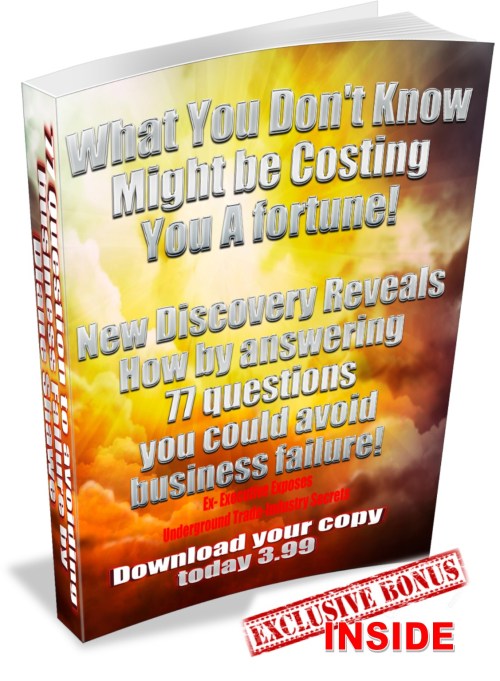
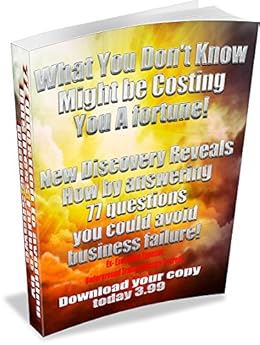
How answering 77 questions could help you avoid business failure

Out Now: 77 Ways to avoid Potential Business Failure77 Questions to avoid business failure by Diane Shawe white background

“Your work is going to fill a large part of your life, and the only way to be truly satisfied is to do what you believe is great work. And the only way to do great work is to love what you do.” –Steve Jobs, co-founder of Apple

Like you I Never Thought I Could answer 77 questions that would help me  avoid business failure  – But I Finally Discovered The Secret! Here’s How…

article by Diane Shawe Author

Are you ready? Is Entrepreneurship For You?
Are you the right person for your business idea?

In business, there are no guarantees. There is simply no way to eliminate all the risks associated with starting a small business – but you can improve your chances of success with good planning, preparation, and insight. Start by evaluating your strengths and weaknesses as a potential owner and manager of a small business. Carefully consider each of the following questions.

  • Are you a self-starter? It will be entirely up to you to develop projects, organise your time, and follow through on details.
  • How well do you get along with different personalities? Business owners need to develop working relationships with a variety of people including customers, vendors, staff, bankers, and professionals such as lawyers, accountants or consultants. Can you deal with a demanding client, an unreliable vendor, or a cranky receptionist if your business interests demand it?
  • How good are you at making decisions? Small business owners are required to make decisions constantly – often quickly, independently, and under pressure.
  • Do you have the physical and emotional stamina to run a business? Business ownership can be exciting, but it’s also a lot of work. Can you face six or seven 12-­hour work days every week?
  • How well do you plan and organise? Research indicates that poor planning is responsible for most business failures. Good organisation ­ of financials, inventory, schedules, and production ­ can help you avoid many pitfalls.
  • Is your drive strong enough? Running a business can wear you down emotionally. Some business owners burn out quickly from having to carry all the responsibility for the success of their business on their own shoulders. Strong motivation will help you survive slowdowns and periods of burnout.
  • How will the business affect your family? The first few years of business start­up can be hard on family life. It’s important for family members to know what to expect and for you to be able to trust that they will support you during this time. There also may be financial difficulties until the business becomes profitable, which could take months or years. You may have to adjust to a lower standard of living or put family assets at risk in the short-term.

So Before you start – Do you know the answer to these 77 questions?  Download your copy today it will be the best £3.99 you spend? 

I recommend you get a little notebook and start working on each question. For those you cannot answer, find the answer and make a note.  This is also an invaluabe excercise if you are already in business, it can help you clarify where you are today and help you plot where you need to get too and how to do it.

Get your exclusive copy today and save £3.00

Get your exclusive copy today and save £3.00


If you want to find out if you are right for your business, we have a surprise link hidden inside this little ebook.  All you have to do is Answer 10 questions and we will send you a full report which will also include your Personal Training Needs Analysis to develop your Entrepreneur skills.

Diane Shawe Author of 77 Question to avoid business failure Available from Amazon

Diane Shawe Author of 77 Question to avoid business failure Available from Amazon

Traction Alopecia – How You Can Stop It and is it Reversible by Diane Shawe

traction alopecia how to stop itAre YOU a Likely candidate for Traction Alopecia?

Anyone can be affected by traction alopecia – young or old, male or female. It’s more common within certain groups of the population, because they are more likely to use some of the hairstyling techniques listed above.

The reason I raise this article is because we are all living longer and some of the current fashionable trends in the younger groups are contributing to traction alopecia. Read about Clip ins and how they cause Traction Alopecia

For example, women and girls are more likely to notice the problem due to braids and weaves. Ballerinas – who tend to wear their hair pulled into very tight ponytails – sometimes suffer from traction alopecia around the hairline as a result.

In a nutshell – if you have a habit of doing something on a frequent basis that puts your hair under some sort of strain, then you are a candidate for traction alopecia.

Read on to discover the many ways you can prevent it from happening, or stop further damage if you’ve already noticed a problem.

Traction Alopecia Symptoms

Have you ever undone a ponytail and found your scalp feels sensitive to the touch afterwards?

Does untying your hair feel like a relief?

Does your scalp itch after you’ve had braids or a weave put in?

Have you ever taken painkillers because your hair is secured so tightly it’s given you a headache?

All of these are warning signs that your hair is under way too much tension. Your body is trying to tell you something… and you need to listen!

If not, the next thing you’ll notice is that sections of your hair are actually missing, or worryingly sparse. You can often see this more clearly around the hairline or behind the ears, but it can often happen around the crown, too. It really depends on what was causing the tension in the first place.

Some people even notice pustules (blisters filled with pus) or papules (little pimples) where the hair is under a lot of tension. This is because of the irritation being caused to the scalp and is a clear indicator that the follicles just can’t cope with the strain.

Can Traction Alopecia be Reversed?

Yes and no.

If you spot the warning signs of traction alopecia early enough and you put a stop to whatever’s causing it, then your hair will stop falling out and should – with time, patience and loving care – be completely restored to its former glory.

But if the hair follicles have been so badly traumatised for such a long period of time that they have scarred over, then the hair will not grow back by itself. Areas of the scalp where this is the case will likely look shiny.

In cases like this, you’ll need to think about some sort of surgical restoration – speak to your dermatologist to establish whether or not your traction alopecia has caused permanent scarring and to discuss the surgical options available to you.

When Traction Alopecia Compounds Other Hair Loss Problems

traction_alopecia_caused_by_hair_clipin_diane_shawe

If you are wearing a hairpiece – such as a clip on topper – to mask other hair problems like androgenetic alopecia, then you need to be very careful not to compound your problem with traction alopecia!

The best option is to ensure that the clips of your topper are firm, but not too tight, and that you rotate them. We also recommend undoing a couple of the clips when you’re at home – it gives your scalp a little rest from the tension.

Traction Alopecia Recovery Time

Most experts agree that your hair should recover within 6 to 9 months of you removing the cause of the problem.

If you’ve followed the guidelines given here and you are still not seeing regrowth, then it’s likely that the damage to your follicles was permanent – a fact your doctor/dermatologist can confirm. In that case, you might like to discuss the possibility of a hair transplant, which will effectively mask the problem.

What are the Causes of Traction Alopecia?

Traction alopecia is a type of hair loss that happens over time. It’s caused by putting the hair under constant strain or tension and is usually caused by one or more of the following…

  • Very tight ponytails or pigtails
  • Tight braids or cornrows
  • Dreadlocks
  • Extension (single) braids
  • Hair weaves or wigs attached with glue, clips or tape
  • Certain hair clips, slides or barrettes that hold the hair tightly and are worn in the same position every day
  • Headbands – even fabric ones – worn day after day
  • Tight hairpieces
  • Tight headgear like cycling helmets that are worn frequently or for long stretches of time and tend to rub or pull repeatedly on the same area of hair
  • Repeated use of hair rollers
  • Repeated pulling of the hair with the hands (this is an emotional condition called trichotillomania)

If you use or do any of the above, then you may find that the constant tension they cause has led to areas of thinning hair – usually around the temples or behind your ears. Alternatively, you might notice that the part in your hair looks wider than it used to.

If so, then it’s quite likely that you’re suffering from traction alopecia.

There’s more to this condition than hair simply breaking off. Instead, the constant tension in the affected area either pulls out the hairs’ roots completely, or causes the follicles to become inflamed. As time goes by, the damage to the follicles causes them to become atrophied (wasted away)… and if you don’t put a stop to the cause of the problem, they will reach the point where they no longer produce hair at all.

Reference: DermHairClinic – Traction Alopecia

Get your copy today from amazon.co.uk

Get your copy today from amazon.co.uk

Traction Alopecia Treatment

As discussed above, ‘treatment’ for traction alopecia is only effective before you’ve arrived at the stage of permanent damage.

But the good news is that ‘treatment’ – if you’ve caught the condition early enough – can be as simple as changing whatever hair styling and hair care practices you were using and really learning to CARE for this precious asset… your hair!

Wearing a weave

One of the biggest ironies about traction alopecia is that it’s the most common cause of hair loss for women wearing hair extension is due to the application being too tight when weaves and hairpieces are applied… yet those weaves and hairpieces are often used in the first place to enhance hair that may seem thin, or lacking in volume.

Weaves are generally applied through braiding, fusion, netting or bonding – and the sad fact is that any or all of these methods can lead to traction alopecia if used extensively, over long periods of time.

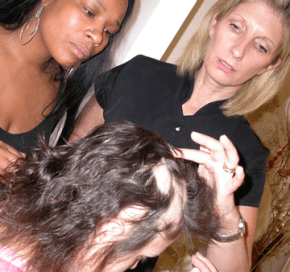
To minimize the risk of traction alopecia, or to try to prevent further damage and encourage regrowth, have your weave fitted by a state licensed professional. Yes, it may be more expensive, but you – and your hair – are worth it! Someone properly trained in hair care will keep damage to a minimum and will be able to spot potential problems and nip them in the bud.

The same goes for hair extensions, which can also cause hair loss problems in the lower half of the scalp. Have them fitted by a trained professional – don’t try to fit them yourself or have a friend do them for you.

Speak to your hairdresser about taking care of your scalp – some women find it difficult to maintain good scalp hygiene because the weave or extensions make it awkward… unfortunately, though, this can make the problem of traction alopecia worse.

When chemicals are the culprits

There’s a kind of alopecia called CCCA (central cicatricial centrifugal alopecia), also known as hot comb alopecia, or follicular degeneration syndrome. It’s almost exclusively seen in African American women and it’s often confused with female pattern baldness, because it starts at the crown and spreads to the surrounding areas.

The cause?

A mixture of too much stress (traction) on the hair along with the use of harsh chemicals like dyes, relaxers and bleaches. The chemicals actually damage the keratin structure of the follicle itself, causing hair LOSS, not just hair damage.

In fact, research conducted in 2008 showed that the highest prevalence of traction alopecia was in women with relaxed hair.

If you suspect this is a condition that’s affecting you, speak to your dermatologist. In addition to removing the cause of the traction and stopping the use of chemicals in your hair, you may be tested for any bacterial or viral infection and possibly be prescribed topical steroids, antibiotics or topical minoxidil to encourage regrowth.

NOTE: If you must use a relaxer on your hair, have it done professionally. Specialists are seeing more and more problems caused by home relaxer kits, because it’s tempting to leave the chemicals on longer than necessary, or accidentally use a stronger formula than you really need. (Make sure they have been certified)

Braiding, ponytails, pigtails and locs

The 2008 research into the prevalence of traction alopecia in African girls and women showed that braiding caused more problems than chemicals (although the two together were worse still).

Starting up a hair extension business Diane ShaweConstant, tight braiding – or other styles like ponytails that place hair under chronic tension – can affect any ethnic group. So it’s very important to take a new approach to styling hair that doesn’t rely on placing the hair under extreme tension.

The ideal solution, of course, is to allow the hair to be completely natural, without using any kind of clips, slides or ties.

The reality, though, is that this just isn’t possible for most of us. Our hair may either be unmanageable and wild looking when allowed to ‘do its own thing’ – or, like us, you may live in a climate where it’s simply too hot to have your hair hanging around your face all day.

The answer is that you can continue to secure back your hair, but you MUST change the way you do it from one week to the next. Traction alopecia is usually the result of CONTINUALLY putting the hair under EXACTLY the same tension in the same place, day after day.

How to Avoid Traction Alopecia (and still have beautiful hair!)

Change the location of your ponytail often – wear it high, low, on one side, then the other. Don’t wear a ponytail at all if your hair isn’t really long enough to need one… otherwise you’ll probably be pulling your too-short hair really hard in order to secure it.

Avoid using clipped in ponytails – the weight of them can – quite literally – tear out your hair.

Always use fabric covered hair bands – avoid bare rubber bands like the plague! And remove bands, clips and ponytail holders from the hair at night – this is when you may be putting your hair under tension without even realizing it.

Invest in satin pillowcases. They cause less friction on your hair than cotton or nylon ones – and, as an added bonus, they’re believed to help reduce wrinkles too!

Change the location of your partas often as you can. Even a simple part in the hair can trigger a problem when worn in the same position day after day.

Don’t retwist the roots of dreadlocks – watch this video for first-hand experience of how damaging this can be!

If you use hairspray or hair gel, wash it out before you next brush your hair.Brushing dried hairspray and gels out of your hair is damaging to the shaft and may cause further hair loss.

Make sure your hair is hydrated. If you’re in a dry climate – or you use air conditioning or central heating – the lack of moisture in the air can make your hair brittle and more likely to break

http://http://issuu.com/dianeshawe/docs/course_prospectus_hair_loss_consult

Other related Hair Loss Article by Diane Shawe

Want To Start showing off your most recent qualification?


Here’s How To Get Qualified in Days, not Years Now!

London, City – January, 19 2016 – Innovation is alive and kicking in London, according to the organisers of 2014 FSB London Business Awards, who announced the finalists. The shortlist included Diane Shawe founder of AVPT Short Courses that provides soft skills courses to people looking to get a job, get a promotion or start a business by them training on their mobile devices.


Whether you are a complete beginner or more experienced, on one of our career development short courses you will find yourself learning in our enjoyable and professional environment online or at one of our Express workshop. For time poor clients or customers wanting a newly recognised qualification, AVPT Short courses is the place to enrol.

Our courses allow you to take full advantage of our specialist facilities and the expert tuition at your fingertips with a full take away manual for further reading.Taking a short course is ideal if you want to add new skills to your tired CV, brush up on an old hobby or refresh your skills, build on your current practice develop expertise to help start your own business review your career build a portfolio for college or work. We have a range of different creative short courses available.

You can be confident in your future success with our fully trained and qualified tutors, they’re as dedicated to your personal development as you are about landing that big promotion, starting that passion project of a business venture, retraining or making that essential career move.

For the past ten years we have been consistently training time poor individuals, organisations and governments all over the world by supplying high-quality soft skills courses that are all globally accredited. At our Academy, we have taken out all the stress of retraining by offering over 390 globally accredited courses in a way that fits in with you and your lifestyle.

Once you’ve decided you want to invest in your professional development; it’s time to choose a study style that suits you. You can either work through a home study manual or online using your own device with an allocated personal tutor or in the classroom for a fast one, two or three-day course. Visit http://www.shortcourses.expert for more info

2 Tips on How To Put Optimism Into Practice On a Daily Basis

Practice being Optimistic each day

Practice being Optimistic each day

Can Optimism be taught?

Being optimistic does not mean forcing yourself to become persuaded that you should always look on the bright side of things. Becoming optimistic is something you can learn. It is a state of mind that is not so hard to assimilate, one that enables you to live quickly the life you want to live.

Optimism is a state of mind

Optimism is a concept that is often poorly explained. Having a high state of mind does not mean that you reject reality because you want everything to be rosy. It means that you can tackle any situation with a state of mind that gives you every chance to take advantage of it or to turn situations around in your favor if you need to.

People often think human beings are either optimistic or pessimistic by nature and that there is nothing we can do about it. This is specifically a cynical way of seeing things! Unfortunately, people often dwell on this incorrect observation.

There are obviously optimistic people. Admittedly, they have an advantage over others, but it does not mean that pessimistic people are destined to remain bleak.

Being optimistic, in a general manner, means that there is a way out of every situation, but it will only show if you do your best, so events turn in your favor.

Being optimistic is not a mere vision of life according to which everybody is good and that all is for the best in the best of all possible worlds, one that consists in denying reality – which often refutes this idyllic point of view.

Being optimistic requires first of all that you be realistic and accept the world as it is: that is, with its positive and negative aspects.

Likewise, you can’t say that people are inherently good because some are, while others are not.

In fact, the truth is more subtle than that because these two tendencies do reside in every one of us. Life consists in expressing our qualities for our own sake but also for that of our dear and near ones or humankind.

To become optimistic, you, first of all, have to be realistic and accept the ambivalence of this world and human beings – they can both be good and bad in turns. The second step is to take action by counting on favorable outcomes to arrive and hoping that the people you’ll meet will adopt a positive attitude. Seeing things this way is fundamental.

First of all, know that, if you are not optimistic by nature, as described in the definition above, you will need some time before you naturally become confident at being optimistic. So, summon your patience. But you may not have to wait for too long if you apply the advice you will find below.

Here is how to bolster your optimism or become optimistic. You may be confronted with two cases:

1.    You have already gone through a situation that did not turn in your favor:

– Do not feel guilty for this failure learn from the experience so you can deal with such a case differently next time.
– Approach the situation in question from a different perspective by visualizing it turning out in your favor and doing what you can so it turns in your favor.

2.    If a situation is unprecedented for you:

–    In this case, it is even easier: approach the situation by visualizing it turning out in your favor and by doing everything you can so things go your way!

These two ways of acting is a learning process which will gradually become second nature to you, helping you to earn one success after another.

Looking for a short course? why not tray five short courses and learn on the move. http://www.crashcourses.academy 

10 Top Tips on How to Influence Online buying by Diane Shawe

Try out 5 Courses this Christmas for just £25.00

Try out 5 Courses this Christmas for just £25.00

The trends and predictions are already in for 2016. Many digital advancements will be made in 2016, from the rise of mobile messaging apps to mobile commerce finally gaining some mojo. 

You the reader even you are becoming more savvy and intend to be heard when things are not going right.  Smartphone use is driving up the number of inbound calls to businesses. Voice-activated search has been rising steadily. Consumers are talking to personal assistants through their smartphones and cars, and those “assistants” are getting smarter. And with the rise of smart watches and connected home devices, they’re talking to a wider variety of devices from various locations.

Marketers need to be prepared and ready to optimise digital content for speech-based (not keyword) queries and learn how to make sure that content can be discovered by personal assistants.

– So what about small businesses, the lone sole trader, what can you do to influence online buying?

  1. Change your ads Your prospects could get bored seeing the same ad all the time. Statistics show people usually see the same ad 7 times before they actually buy. Just change them enough to keep them from being over-exposed. For example, if your ad said. “FREE Killer Marketing E-book!”, you could change it later on to “FREE Sizzling Marketing E-book!”
  2. Give people a deadline to order. Tell people if they order by January 15 2016, they will get a discount or free bonuses. This will create an urgency so they don’t put off buying. Another example, “Order before 8:00 p.m. and get a second product of your choice for free!”
  3. Publish testimonials on your ad copy. They will give your business credibility and you’ll gain people’s It’s important to include the person’s full name and location with the testimonial.
  4. Allow people to make money reselling the product or Tell people they can join your affiliate program if they order. You could pay them per sale, per click, per referral, etc. Just provide them with proven and tested marketing materials, detailed statistics and plenty of affiliate training.
  5. Offer a buy-one, get-one-free deal. If you sell more than one product, this type of deal works People will feel they are getting more for their money and will order quicker. You could also offer them a ‘buy one, get one half’, ‘buy two, get the third one free’, ‘buy two, get a free watch’.
  6. Have them sign up to get access to download a free e-book. The subject of the e-book should be related to your target audience. You could have them sign up to a opt-in list or your regular The e-book should have high perceived value so they’ll take the time to sign up. Landing pages are really good for this.
  7. Give your visitors a free membership inside your Members Only web site or closed membership group on LinkedIn or Facebook. Have them sign up to receive a user name and password or an exclusive invitation. Members groups are particularly good on LinkedIn and your blogs because each time you post some news they get an automatic update.
  8. Offer your visitors free consulting via e-mail. Have them fill out a web form to e-mail you with their When you answer their questions, include an offer for a product you sell or highly recommend products that could help them. You could join the product’s affiliate program to earn commission if they take your advice.
  9. Give people free bonuses when they order your product or The free bonuses could be books, jewelry, reports, newsletters, etc. Make their bonuses sound extra valuable by listing their retail value, either separately or together in one amount, or limiting how long you will offer the bonuses. (you can partner with free gift websites)
  10. Provide free package and postage with all orders. If you can’t afford it, you could offer free P&P on orders over a specific You could also offer a rebate on their P&P costs. Most customers probably won’t send in the rebate card unless it’s a huge shipping cost, for example, £30 or more

Try our Audio Courses this Christmas.

Niche Marketing Made Easy

Produce Persuasive Copyright

Building online Traffic and List Systems

Email Marketing secrets

How to set up and generate a powerful Blog website

The Affiliate Chemistry

7 Habits of Highly Effective People

Internet Business Optimisation

12 Effective selling techniques

50 Best and Worse Business Deals of all time

20 Advertising Tips

Art of Making money

Breakthrough Sales Solutions

Clever Profit Generating Insights

How to Combine Cooperation & Competition

Customer Tested – Buying Triggers

How to work with change

Explosive Influence Tactics

Extreme Persuasion Strategies

Manage your Intellectual Capital

The Servant Power Leadership

Visit www.crashcourses.academy and select 5 course and start listening, watching and learning today.

Bad habits that damage Hair Extensions by Diane Shawe

BAD HABITS THAT DO YOUR HAIR AND HAIR EXTENSIONS MORE HARM THAN GOOD

article by Diane Shawe M.Ed

There are common habits we knowing do that damages our hair. For instance like using a flat iron at the highest possible tempreture that will surely harm your hair.

Less common however is ponytails, super tight buns or braids, the sun, birth control pills, hair extension glues and hair extension clips and micro rings made from Nickel.

Let’s first talk about using flat irons or curling irons. These man-made styling equipment are very drying to hair extensions and not to mention, harmful too hair. This is because the temperature and heat in the irons are to unreasonably hot for the hair so you end up cooking your delicate hair whilst drying it out at the same time.

using hot iron damages hair extensionsHair ironing will damage the state of your already process hair extensions. It does not just dry the hair from head to tip, it makes your hair become frizzy and hard to manage especially if the hair is blended you end up melting the synthetic bonded in with the real hair which become crinkly. Once hair extension becomes too damaged, it is very hard to rejuvenate them back as they were already ‘dead hair’.

Trimming or cutting the damaged hair will work, but then you end up losing the length of your hair extension which would have cost you a lot of money to install in the first place. Doing hair treatments is crucial to hydrating the hair.  Hair treatments such as oil treatments are good for your natural hair but can end up making hair extensions heavy, clumpy and then eventually matting by themselves.

Hair extension Clip-in can also damage your hair if left in for over 5 hours a day

Diet also plays a role in the health of your hair too. Eating too much food that has little or no beneficial nutrition to your hair will cause your hair to be brittle and weak. Foods with good source of omega-3 is good for your hair whilst your hair extensions require a good non oil based leave in conditioner twice a day to keep it hydrated.

Pick up a a copy today from Amazon

Pick up a a copy today from Amazon

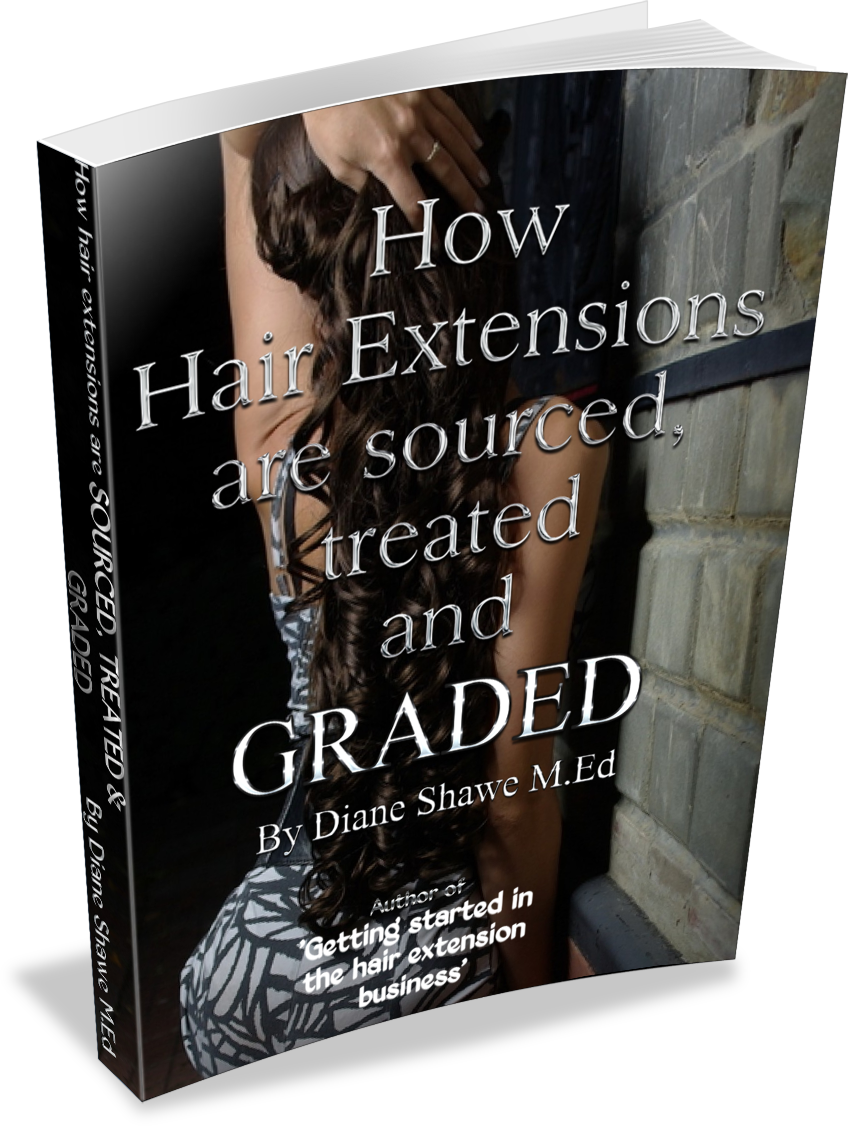
Getting started in the Hair Extension business

If you want to find out more about becoming a hair extension consultant, hair loss consultant or hair extension trainer, download our course prospectus for more information about the Hair extension training academy.


Ready to step out on your own and join the growing ranks of the self-employed? by Diane Shawe

So if you are seriously considering becoming Self-employed and leaving your PAYE job behind if this sounds like you, then you are probably half way out the door.

Does this sound like you?

  • Your boss is driving you crazy because of his short-sightedness.
  • You are sick of your great ideas being ignored.
  • You are frustrated at the status quo and the lack of innovation in your field.
  • Maybe you’ve been discriminated against, laid off, restructured, demoted and under-valued.

Well you must be thoroughly fed up and ready for a change.

Being self-employed is a way of life radically different from anything. To be successful at it you will have to make a real turn-about in how you both think and act. We can often be our hardest critic but remember….

“You are not judged on the height you have risen but from the depth which you have climbed.”

 Frederick Douglass, 1881

But will I be successful?

The little doubting voices inside your head start going off

So lets take a look at how we define success?  To some, is all about wealth. To some, success is all about achieving the perfect job, or the perfect marriage, or living the perfect life.

Let’s examine what Webster says about success:

  1. degree or measure of succeeding
  2. favourable or desired outcome,
  3. the attainment of wealth, favour or eminence.

There are many ways in which people have come to define success, but one thing is clear: in order for your success to be defined a goal must be set in order to measure your achievements and success.

So why do some people live their life and go through each days, wasting precious time, effort and other resources without defining their actual goal? The question may sound elementary, but many people live this way and wonder why they fail to achieve anything of substance.

Goal Setting Mistakes

A popular goal setting mistake people make is pursuing someone else’s goal. So I am going to use the driving analogy:

How could you arrive   at your own desired destination, if you focus on where other people are going? Would you get on the motorway and drive north just because other people are driving in that direction?

Where do you really want to go? In order to define your own destination in life, you must take the time to think about who you really are and what will really make you happy. Your success may be to teach small children to read and write, or your success may be to lead a girls football team to a national championship.

Resurrect latent skills and old interests!

Self-employment is a career alternative which requires mental and physically resilient, each moment can change the rest of your life and the course of your direction. If you are not intentional with your actions, you have already planned to fail. Successful people are driven by their vision which is fuelled by their passion. Successful people don’t become successful by accident-it’s sheer, practical application (although I agree that some element of luck goes a long way).

You have to do at least one thing toward your goal every single day. You have to dedicate yourself every day to doing what you love. Don’t just talk about it. Dreams are cheap, passion is Priceless. You may have no concept where you want to be other than theory, and that’s okay. You are guaranteed to get closer to your dreams if you just walk forward with confidence and passion and focus on being of service to those who want your assistance.

So what if you cannot see a way forward, well I am sure you have heard this saying, If you say you can’t your right, if you say you can your right.  So you might as well adopt the ‘I can’ mantra.

Using your imagination

Albert Einstein once said, “Your imagination is your preview of life’s coming attraction.” I believe he’s right. That phrase encapsulates so much of how I try to live each day.

Remember, when you think positively about your future, instead of living in the past which you cannot change, using your imagination in a positive way will help you attract what you desire toward you. It’s about your imagination and no one else’s. I challenge you to take what I’ve already given you this far and start to imagine your future in a constructive way.  To get you going just ponder upon the following question.

“What would you attempt to do if you knew you could not fail?”

Interested in personal development courses then click here.

THE THREE REASONS COMPANY STORIES FALL SHORT OF EXPECTATIONS

Develop your interviewing skills

Develop your interviewing skills

The company story is a composite of how you represent yourself to employees, supplier, customers, and the general public.

It is tied closely to your reputation, reinforced by your integrity, and defined by your behavior. Your story is the essence of who you are, what you believe in, and how you act out your character in a business play. Think of your story as if it were presented in a theater. Your story can be a comedy, a tragedy, or a musical. There will be a cast of characters, some good, others not so good, each telling their own version of the story.

article by Diane Shawe

Most organisations are in trouble because their main characters in the play, the managers or owners, tell stories that don’t  hang  together. Three problems are associated with their composite company story. First, the story is badly told; second, it is not acted out in a coherent manner; and third, it doesn’t ring true. The sales department is living one story while operations follows a different theme. Finance has its own world while marketing occupies still another cloud. Is it any wonder employees are confused? They seem to be working for different companies simultaneously.

When a Story Is Badly Told

A badly told story has its roots in an incomplete business plan. Most organisations have bits and pieces of the items making up the plan. Managers are usually proud they have a philosophy statement posted in the lobby. They point in triumph to the value statements listed in the company literature. Somewhere you will be shown a vision. Each of these elements is appropriate and necessary in both a well-constructed business plan and an authentic story.

If a single element is missing from the plan, the story is incomplete. The danger of an incomplete story is evidenced when the flaws show up in execution of the plan. An incomplete business plan results in a frag- ile document presenting a story that doesn’t ring true. An incomplete model implodes.

When there is no vision statement for instance in a story. any well-written plan with all the pieces will not stack up if the vision portion is lacking.

Time management Mindfeed 4 by Diane ShaweWhen the Story Pieces Don’t Add Up

Failure to virtually linked to the elements  also contributes to an incomplete story. Because the parts and pieces are not interconnected there is no coordinated, disciplined implementation. It is possible to actually have the elements working against each other. For example, values may contradict the philosophy. The vision and mission could be disconnected. Principles could be developed that cancel each other. These disconnected behaviors cause customers and employees to hold the company management suspect. They sense something is not right or it is just not working.

When the Story Isn’t Believable

Another equally fatal flaw in telling a story is to be incongruent. For example, you claim to love customers then treat them badly. You claim to value employees yet they become targets of opportunity for reengineering or down sizing, even in good times. You profess to provide the best products in your industry yet they don’t work as advertised.

People are astute and getting smarter especially with the powerful smartphone in the palm of their hands. They pick up on the fact you don’t live your own company hype. Your story simply isn’t believable. Consider public awareness of a company’s environmental protection position. Let one incident occur then watch the media have a field day with the inconsistencies. Politicians suffer the same fate when they make public promises they cannot keep. They become inconsistent with their story, telling each special interest group what the group needs to hear.

The Antidote to a Badly Managed Story

There is an antidote for a badly managed story. The key is building a congruent story by eliminating the very issues that create incon- gruence. The first step is to get a business plan in place. To do it as defined in this text, you will be forced to deal with the key planning elements as discrete elements and then again as an integrated framework. This is the only known process to make the message authentic, congruent, and believable.

Being authentic requires truth and hard work. It requires an acknowledgment of who you really are in terms of what you believe in, how you behave, and what you expect. If yours is a lethargic organisation, don’t claim high performance. Being authentic means identifying all the problems in your system, communicating to employees that you know the problems, and finally telling them how you intend to fix those problems. Everyone must share this hard work across the range of business activities and down the management structure. Everyone must participate in careful organisational analysis and the required actions to fix the problems.

Being congruent requires constant vigilance on the part of the whole management team. This means you must do what you say— every single time. There are situations where you will slip. Honest mistakes are okay. Employees do not expect their management to be perfect. They do expect them to live up to their word and match word and deed.

Reaching a state where you and your management team are believed is a journey with history working against you. A mis management example made public doesn’t help your case. Building trust to counter this history is not an overnight event. After your story is completed, communicated, and demonstrated you will experience hesitance and resistance from employees. They won’t be quick to jump on your train. There will be a test period to see if you really meant what you said or if this was simply an annual pep talk from upper management. Remember two points: Employees have heard it all before, and actions speak louder than words.

Are you focused, productive, transactional or inspirational? by Diane Shawe

shortcourses expert bannerBeing busy isn’t the same as being productive, but how do you assess what you need to do to improve both your productivity and your staff?

Would an online Personal Training Need Analysis that takes about 10 minutes help?

Then  CLICK HERE TO TRY ONE FREE Personal Training Needs Analysis and in as little as two hours you can judge for yourself if it would be of use in your business.

Would it help if you could find out how to get the best out of your employees?

Would it help to be able to speed up Pre-Interview selections, Staff Appraisals, Training Needs, Personal Development, Management Selection, Team building and any of those otherwise expensive long winded, time consuming and expensive process?

Well click on our complimentary link to see how it works, I promise you will not be disappointed.

What most people, employers, entrepreneurs and even some educational institutions do not have in today’s current environment is time, the necessary resources and the infrastructure they need to support and achieve learning objectives cost effectively.

Out with the Old in with the new but who is going to be ready at the ‘Start Line’ with all the right tools to assist with the new Continued Competences?

We can offer a person centric online Personal Training Needs analysis tools and  reports to aid in the development of any individuals or organisations growth. The profiles and learning programmes are designed to help reduce risk and to create action and results.  Goal setting is no good without implementation.

We invite you with our compliments to click and complete 10 simple questions and we will send you back a report so that you can see how it works and give us your feedback.

In order to better identify and appraise an individual to pinpoint specific training needs, the Speed of Implementation and adaption to change will confirm who gets ahead or sustain growth by using technology to help with self appraisal, self reflection and personal development.

However, the new skill set or competencies, aims to define the standards needed to enter, compete and remain in the profession which mainly comprise of the following:

  1. Ethics, professionalism and judgment;
  2. Financial Literacy and Technical ability;
  3. Managing yourself and your work;
  4. Working with other people.

That said, in order to meet these new core competencies, individuals and organisations will be required to undergo a process of self-reflection through a high-level Personal Training learning needs analysis to identify their own learning gaps; as well as identify gaps specific to those needed by the organisation they work with. Ideally, this process will be recorded and accompanied by an evaluation of the success of the learning completed and ultimately, organisations will be required to make an annual declaration that they have considered and taken action to address Point of Need training.

We look forward to your feedback once you get your free report back and then maybe we can discuss the speed of implementing this process throughout your business or consulting services.

Just click here now and in just 10 minutes you would have completed 10 questions and we will send you back the results.


Why strategies for modernising corporate learning should focus on learning outcome cover by diane shawe


“The only thing worse than training people and having them leave, is not training them and having them stay”


What do we do..

We specialise in resourcing short courses via a pre-populated LMS solution for Point of Need Training via mobile devices so that all different levels of staff can access training whilst on the move using their own device supported by one off our virtual tutors to help them complete their online 4 weeks course.