Category Archives: body language

How to identify your youtube target market

The largest search engine in the world

The largest search engine in the world

10 thing you need to clarify about what your business is all about, what your brand is, and what your purpose is in the marketing world.

Article by Diane Shawe M.Ed

The following questions will help you to clarify and understand what the marketing vision of your business is all about.

1. What kind of people are you trying to reach? I’m really sure you already know the type of people that your services are directed to. You see them constantly, they contact you as well if necessary, and that will tell you what kind of people they are and how you can treat them.

2. What do they look like? Are they fat or skinny? Male or female? Old, young or middle-aged?

3. What are they looking for? What is the final goal they are after based on the service you provide? What feeling are they trying to reach with it? Do they need it to feel happy? Do they need it to survive? A lot of needs must be taken care of for a person to survive.

4. What do you actually do for them? Maybe you are already offering a service for that audience. That will give you a great vision of what exactly you need to inform any new people that fit into that same audience.

5. What kind of information would they be interested to know about and pay for? You already know the needs of your customers. You know exactly what kind of information will be highly helpful to them in order to help them to satisfy those needs. Why don’t you just create a great info-product about it?

6. How much money are they actually paying you for it? Knowing how much you usually charge them for your service is a very important indicator, because if you decide to create a product like a report, a training video, software or something directly related to your audience, you may simply be able to figure out the price tag you can easily stamp to it.

7. How would they like to reach that content? Is it Video, mobile phone, Audio, Written, or Blogging? This is important to know. You may just think about it. Think on their limitations to read, hear, watch or use the computer. If they can do everything you can, just ask them what they would like to know about stuff. Do they like to read? Do they like to watch videos? Do they like to hear audio? Do they like to use YouTube?

8. Where are they from? Maybe you have an audience that comes from other cities or even countries. You need to target every one and adapt your information to all of them at the same time.

9. What are your competitors offering to your audience? In the marketing world, it is very important to study the competition that targets your exact audience. What do they generally offer? What things do they offer that you don’t? Do they have more clients? Do they work additional hours? Do they cover a lot more needs than you?

10. Can you offer a better service/product than your competitors?

Download your Free copy today

Download your Free copy today

Once your know everything about your successful competitors, you can just offer the same thing but with your personal touch plus a lot more great things that they are not offering. You can have special offers, free samples, free phone consultation, special discounts, etc.

These questions are very important in deciding how to establish your business over YouTube. You can position almost any kind of business over YouTube because YouTube is more than just a website; it is a large audience of people with real human needs who are waiting for you and your service to satisfy them.

Click here to download your YouTube Marketing Made Easy Training Guide by Short courses Expert

Could you Access match funding up to £2,000 for every director and senior manager?

leadership and management training by short courses expert

leadership and management training by short courses expert

GrowthAccelerator is a premium service that helps England’s brightest growing businesses achieve their ambitions with rapid, sustainable growth. It’s a partnership between private enterprise and the UK government. And it’s affordable.


GrowthAccelerator’s network of world-class growth experts work side by side with leaders of high-growth potential small and medium-sized businesses to provide them with the know-how and ability to achieve sustainable growth. The service helps business leaders discover the real issues that could be holding their businesses back, define the right growth plan and open doors to world class business experts and networks.

What will my business get from GrowthAccelerator?

Each Growth Managers and coaches will help you:

  • Appreciate your true potential for growth and set achievable goals
  • Attract investment by developing your funding proposition and introducing you to funder – identify and overcome the barriers holding you back
  • Stimulate product development, commercialise your innovation and motivate your employees
  • Energise your plans with one-to-one leadership and management advice
  • Connect with business experts and networks to achieve insight and build relationships

About Growth Coaches:

  • Have proven track records in helping small and medium-sized companies accelerate and sustain their growth, in every size, region and sector
  • Have made the same journey themselves so they know what it’s like to fight for success.
  • Know when to talk, when to listen, and how to lead you to ideas that will transform your business.

Leadership and Management

A great leader can make a business thrive. But having a whole team of great leaders could propel your business into rapid growth.

If investment in your leadership team is crucial to growing your business, GrowthAccelerator, with Government backing, can make a financial contribution that makes your commitment even more worthwhile – invest in your team and GrowthAccelerator will too.

This is where the Academy of Vocational & Professional Training can help as one of the registered training providers we can deliver your Leadership and Management training.

Access match funding up to £2,000 for every director and senior manager

To develop and empower your leadership team during your next drive for business growth, GrowthAccelerator offers match funding of up to £2,000 for every senior manager involved in the strategic direction of the business, to undertake leadership and management training recommended for your business.

Different directors and senior managers will be able to take different types of leadership and management training and you’ll be able to apply for training once you are signed up to GrowthAccelerator and have paid your invoice – with the proviso that training begins within 90 days of match funding being approved.

Any leadership and development training that you need will be given alongside other core workshops, masterclasses and coaching that your Growth Manager recommends in your growth plan. GrowthAccelerator has a team of Leadership and Management Specialists who will recommend the best training for your business needs.

Training eligible for match funding through GrowthAccelerator will fall under the following key areas:

  • Developing an effective personal leadership and management style
  • Leading and managing high performance
  • Planning and developing an effective organisation
  • Creating a joint enterprise culture
  • Sustaining growth and continuous improvement
  • Embedding a culture of innovation
  • New market entry

Is your business eligible?  

If your business is registered in England, has fewer than 250 employees and a turnover of less than £40m contact us on 0203 551 2621.

What do you have to invest?

This is done through the official GrowthAccelerator Managers. GrowthAccelerator is a partnership between private enterprise and government which means we can keep the service affordable. Because Government is investing with you in the growth of your business, the cost to you is significantly reduced. Your investment in GrowthAccelerator will reflect the size of your business:

Micro and start-up businesses (1 to 4 employees) – £600 + VAT

Small businesses (4 to 49 employees) – £1,500 + VAT

Medium-sized companies (50 to 249 employees) – £3,000 + VAT

source Main growthacceleraor website

If you would like to read about the GrowthAccelerator programme and what it has helped businesses achieve in its first year of operation please click here.


You will need to talk to a growth accelerator Manager initially in order for them to process your application and suitability. Call us and we will refer you to our Growth Accelerator Manager.

CPD pending? Pressed for time?

CPD on the move

CPD on the move

Continued Professional Development is entering a new phase for UK Law Firms.

At the Academy of Vocational & Professional Training we understand that you firm is often pressed for time, so nudge thinking, heuristic learning, or brain plasticity are great but, your law firm already have complex challenges, so we are going to keep it simple.

We train in soft skills courses like HR, PR, Management, Technology and Social Media to name but a few. CPD approved by the SRA to help you and your staff meet the challenges expected of skilled professionals.

Doing your CPD the smarter way

Doing your CPD the smarter way

You can study on the move using your smartphone, tablet or at our intense 1 day workshops.

Give us a call on 0203 551 2621 to request a quote or visit our http://www.avptglobal.com

How can employers help keep their work force healthy so as to avoid high healthcare costs?

5-natural-ingredients-for-preventing-lung-disease-expresstrainingcourses.co.ukWhether you’re talking about asthma, cancer, COPD, or even rare conditions, lung disease is on the rise.

The experts are calling lung disease a “time bomb waiting to explode.”

sourced: by Diane Shawe from the  Institute for natural healing

Whether you are creating a workplace wellness program from scratch, or enhancing what you already have, you’re already on the right track! With increasing costs of health care, a shrinking workforce, and aging workers, a savvy workplace understands the value in supporting workers to improve their conditioning and to live a fitter lifestyle.

For instance you could help by engaging with your workforce through your company blog by blogging about five natural ingredients to keep their lungs young and healthy as follows:

1. Milk Thistle: You might already know that it has the power to help your liver regenerate its cells. But milk thistle contains silymarin. It’s a compound that flushes toxins out of your liver. It also helps prevent lung cancer from forming and spreading.

Milk thistle also contains silibinin. Like silymarin, it protects you from lung cancer. But even better. These cancer cells spread quickly to other organs in your body. And they can become drug resistant. Silibinin doesn’t only reverse drug resistance in these cells… It causes natural cell death in cancerous lung tumors.2 You can find milk thistle extract pills in health stores and online. Organic milk thistle tea is another option.

2. Fiber: Oddly enough, fiber is critical to your lung health. It may help relieve symptoms of–and even prevent—asthma.

A high-fiber diet changes the makeup of your gut bacteria. The good bacteria feed on fiber. When you keep these bacteria well-fed, they produce short-chain fatty acids. These fatty acids reduce inflammation and irritation in the lungs. But don’t add grains to your diet for more fiber. They actually increase the amount of inflammation in your body—including your lungs. Instead, eat more organic artichokes, peas, raspberries, and blackberries.

3. Ginger: It’s full of antioxidant power. But two of these antioxidants in particular protect your lungs against inflammation and damage. Gingerols help clear your lungs by reducing the amount of mucous they produce.3 And 6-shagaol, the compound that gives ginger its flavor, stops bronchial tubes from tightening.4 This keeps airflow open and easy.

Ginger can be pretty intense if you aren’t used to it. Add it to your diet slowly if you don’t eat it on a regular basis. When it comes to ginger, fresh is always better. Cutting up some fresh ginger and adding it to a meal gives you antioxidant power and extra flavor. You can also juice with it or use it to brew your own tea to help soothe your lungs when you have a cough.

4. Broccoli Sprouts: Broccoli sprouts are rich in vitamins A, K, and C. But they also contain sulforaphane. It’s a compound that helps you fight the inflammation that causes asthma. One study found that it helped restore defective white blood cells in the lungs. More white blood cells mean less bacteria and inflammation.5

Broccoli sprouts have about 50 times more sulforaphane than regular broccoli. But you may not be able to find them at your grocery store. If that’s the case, look at your local farmer’s market. Or you could grow them yourself. Try them steamed or throw them raw into a salad. For convenience, you can also find broccoli sprout extract as a supplement online.

5. Bromelain: It’s an enzyme used to reduce inflammation of the sinuses after surgery. But it’s also a natural way to treat pulmonary edema.6 This condition prevents the fluid from draining out of your lungs. The result? Shortness of breath. If left untreated, it can cause deadly infections. One study found that bromelain reduces the amount of inflammatory neutrophils in the lung by up to 85 percent.7

The best way to start getting more bromelain in your diet is by eating fresh pineapple.8 And lots of it. Most of the bromelain in a pineapple is in the stem. Or you can supplement.

Pollution and secondhand smoke aren’t the only things that can irritate your lungs. Inflammation is a major factor in the development of most lung disease. Lowering it will help ensure that your lungs are working at their best. Using these five natural solutions will help keep you free of disease—and breathing a little easier.

So you can see the benefits of preparing a workplace wellness program.

Creating a Workplace Wellness Program

Whether you are creating a workplace wellness program from scratch, or enhancing what you already have, you’re already on the right track! With increasing costs of health care, a shrinking workforce, and aging workers, a savvy workplace understands the value in supporting workers to improve their conditioning and to live a fitter lifestyle. We have a  two-day course includes all aspects of designing or upgrading a workplace program, from concept through implementation, to review.

AVPT’s two-day workshop will help you  to:

o   Describe the necessity of workplace wellness programs
o   Create program elements that reflect the needs of employees and the objectives of the organisation
o   Select program elements that fit the context of current operations
o   Establish implementation and evaluation strategies

Getting you qualified in days not years!

Getting you qualified in days not years!


other article you might be interested in : Dangers of Hypertension to Founder owners of SME.

Does nine different kinds of intelligence make you any smarter?

In this article, I will talk about the different ways in which Multiple Intelligence Theory can be implemented in e-Learning to help the learner effectively acquire, retain, and utilise the information being provided within the e-Learning course.

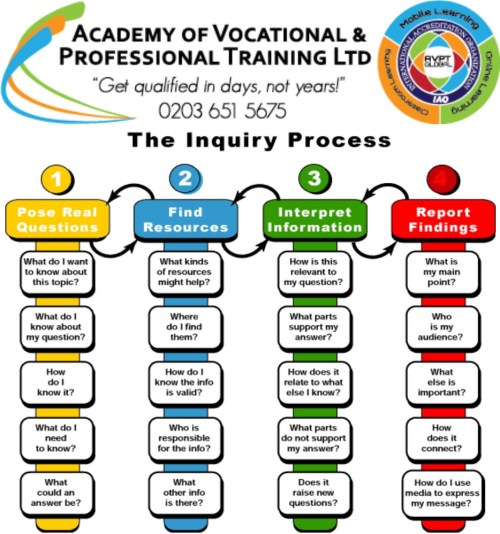
the enquiry process to soft skills training april 2014

The Multiple Intelligence Theory was developed by Dr. Howard Gardner in 1983. Dr. Gardner, a noted psychologist and professor of neuroscience from Harvard University, suggested that every human being interacts with their environment differently. We each possess nine different kinds of intelligence, but our experiences, cultural beliefs, and knowledge base determine their exact configuration.

What is “intelligence”, according to Multiple Intelligence Theory?

According to Gardner, there are three key elements that determine a person’s intelligence:

  1. The ability to create a service or product that will be valued in the person’s society of culture.

  2. A skill set that allows the person to solve real world problems that they may encounter in life.

  3. The ability to potentially create new solutions for problems or to utilize existing solutions. This typically involves the acquisition of new knowledge. 

Multiple Intelligence-Based Activities in eLearning

Multiple Intelligence Theory can be implemented in eLearning based upon the nine multiple intelligences. Let’s take a closer look at each category and which multiple intelligence-based activities can be utilized during instructional design to create the best possible eLearning experience for the learners:

  1. Musical (or Rhythmic) Intelligence
    This intelligence involves the capacity to think and learn in terms of music and rhythm, and to recognize and hear patterns. An activity that would appeal to this type of intelligence is a lesson that includes music or sound, such as a multimedia presentation. Try to use music that emphasizes the subject matter and creates a more immersive experience for the learner. Since there is more of an auditory aspect with this particular intelligence, lectures can also be very helpful. People who demonstrate a high degree of musical intelligence may be ideally suited for musical professions, such as composing or playing an instrument.

  2. Linguistic Intelligence
    This intelligence is associated with expression through language. These people tend to be able to eloquently convey their thoughts and to understand the words of others. Writers and speakers typically display a high degree of this sort of intelligence. Any activities that include discussion, such as online forums or group-based scenarios, are ideal for individuals who lean more toward linguistic intelligence.

  3. Mathematical (or Logical) Intelligence
    This involves the ability to identify principles or structures within a system. This intelligence is often associated with the logic or the manipulation of numbers.  Activities ideally suited for this intelligence may include diagrams, charts, or tables. Critical thinking scenarios are also useful with this group. Accountants and researchers often have a high level of mathematical intelligence.

  4. Kinesthetic (or Bodily) Intelligence
    Body Intelligence involves the use of a person’s entire body to figure out solutions or to create something. People who demonstrate a high degree of kinesthetic intelligence may be ideally suited for performing arts professions, such as dancing, or careers that require an innate knowledge of one’s own body, such as a doctor or athlete. Activities that are best suited for this sort of intelligence include games that involve hand-eye-coordination or interactive scenarios that require physical involvement. The thing to keep in mind about this group is that they are best able to learn when muscular movement is involved. So, include activities that require movement and physical response.

  5. Spatial Intelligence
    This intelligence pertains to a keen sense of space and how one can navigate those spaces. Activities that involve flow charts and graphics are ideal for this intelligence group, as well as games or multimedia that is visually appealing.  Architects, pilots, and sailors often have a high degree of spatial intelligence.

  6. Intrapersonal Intelligence
    This involves an in depth understanding of oneself, such as what you can accomplish and how you react to certain situations. As such, individuals with high intrapersonal intelligence often have a sense of what they should avoid and what they want to achieve in their lives. Professors and philosophers often possess high degrees of intrapersonal intelligence. Activities such as collaborative learning exercises (online forums) and chat programs enable intrapersonal intelligence learners to help others and to share experiences and ideas. This category responds well, first and foremost, to activities, which require introspection.

  7. Interpersonal Intelligence
    This is the capacity to understand and learn from others. People who demonstrate a high degree of intrapersonal intelligence may be ideally suited for service professions, such as teaching or politics. Those who identify more with this category of intelligence may benefit from group discussion activities and in depth questions that make them fully explore the topic. What’s important to remember about interpersonal intelligence is that these individuals are sensitive to others’ moods and feelings. They work well in-group settings and are often able to learn more effectively when collaborating.

  8. Naturalist Intelligence
    This intelligence involves the capacity to differentiate between living organisms and to view the connection between all natural things.  People with a high degree of naturalist intelligence usually have a close bond with nature. Botany and biology are two career fields that closely identify with this sort of intelligence. Activities that involve classification or organization appeal to these individuals.

  9. Existential Intelligence
    This particular intelligence was added later by Gardner, and is not commonly associated with learning environments, as it is geared more toward spiritual and philosophical views. For example, someone who has a high degree of existentialist intelligence may have a tendency to pose questions about life’s purpose or death. 

It’s important to note that instructional designers should not feel obligated to incorporate all of these multiple intelligence-based activities into their eLearning courses, just that it may be beneficial to offer a variety of multiple intelligence-based activities to more effectively illustrate the subject matter. If you are able to offer learners a diverse set of learning tools and eLearning strategies, then you gain the ability to increase comprehension and retention, not to mention enhance the overall eLearning experience.

Call us to enquiry about our soft skills courses

Call us to inquiry about our soft skills courses

Have you every wondered why people shy away from solving problems?

banner bbb aug 2013 avptglobalDo you spend a lot of time frowning?  are you even aware that you frown?

article by Diane Shawe M.Ed
CEO Academy of Vocational and Professional Ltd.

Do you think more people focus on the half empty glass or the half full. Which are you? At times, it would seem that we have more problems then we can handle, but this all boils down to self responsibility critical thinking skills and optimism. Taking the bull by the horn can be a scary things, so check out a few well know secrets?

1.      Smile!  It is impossible to hold a frown and smile at the same time, try it, you will be amazed at how your brain will help you look and keep on the bright side of life.

2. Separating negative feelings from positive thoughts. This is an important step in solving problems. Only after you have cleared your mind with unnecessary thoughts can you start solving your problems accordingly.

3.      Treat each problem as a challenge an opportunity for self-improvement.

4.      Lose the scapegoat attitude. Are you pointing your finger or blaming others for mishaps? Take responsibilities for your mistakes. No one is perfect, so never put the blames on others unless your trying to say that they are much smarter because they got you to do something you did not intend.

5.      Commit your problem with a pen and paper, and rate the depth of the problem and state the worse that could happen. Face the fear and then write down all the options of solving it.

6.      Keep a journal and treat it as a “secret friend” who is always willing to listen to your grievances. Write your feelings freely.

7.      Develop a noteworthy hobby, for this will help you lessen or minimise stress in your life.

8.      Take time off from work and create variations of your daily schedule. Relax and check out the best movies in town. Travel and meet new wonderful people. You will find these activities worthwhile in the long run.

AVPTGLOBAL almost 400 courses all globally accredited

AVPTGLOBAL almost 400 courses all globally accredited

 4 Steps problem solving tools

1.      To determine the root cause of the problem. Ask a question, answer it, then ask why, answer that, then ask what if, and so on until you run out, that might likely be the root of the problem.

2.      Draw up a strategy, then act upon it. (Pretend you was advising a friend and follow your own advice)

3.      Give yourself a deadline, and reward yourself when you have completed the task

4.      Reflect so you can avoid repeating the same mistakes .

Problems are problems. They are there not to annoy you; but problems are created when you fail to act upon them. Learn to  Let go and you will free yourself of  worry. Remember, less worries mean less stress, so you won’t just spend your time looking at problems, but working to solve them.

If you think that you really want some time out because of problems, visit the next room called “improvement.”

Why not take a look at some of our problem solving courses now.  Click here

AVPT HAIR EXTENSION DEPARTMENT LOGO JULY 2013

Revealed: How Improved Confidence Brings Powerful Success

group of people

Confidence can be your key to success.

Confidence in Life and Networking can be learned.

Article by Diane Shawe Author

If you don’t have any shadows, you’re not standing in the light.
Lady Gaga

1. Learn to USE YOUR INNER DNA confidence

I feel it’s something that is always there, something you’re born with that gets lost along the way, or stolen by others. Sometimes you have to dig deep to find it again.
Amy Lee Tempest

 When you were born you did not emerge unsure of your cry or insecure about your umbilical cord. You came out unaware of external judgement, concerned only with your own experience and needs. I’m not suggesting that you should be oblivious to other people. It is just that it may help to remember confidence was your original nature before time started chiselling away at it. When you start feeling unsure of yourself remember: we were all born with confidence, and we can all get it back if we learn to silence the thoughts that threaten it.

2. Success WILL HAPPEN

It might seem strange to say expect success since you can’t predict the future, although according to Peter Drucker, ‘the best way to predict the future is invent it’. Conventional wisdom suggests you should expect the worst because then you won’t be disappointed if you fail and you’ll be pleasantly surprised if you succeed. Research suggests this isn’t universally true; pessimism can undermine your performance creating a self-fulfilling prophecy. Find the successes in every day and you will notice over time that they increase.

3. The unknown IS OK

Control is an illusion, you infantile egomaniac. Nobody knows what’s gonna happen next: not on a free way  not in an airplane, not inside our own bodies and certainly not on a racetrack with 40 other infantile egomaniacs.
Nicole Kidman in Days of Thunder (playing Dr Claire Lewinski)

People often think confidence means knowing you can create the outcome you want. To some extent it does, but this idea is not universally true for everyone. Confidence comes from knowing your competence / skills and acknowledging it’s not solely responsible for creating your world. When you take that weight off your shoulders and realise that sometimes the twists and turns have nothing to do with what you did or should have done, it’s easier to feel confident in what you are trying to achieve. Networking becomes easier and you fear.

4. Learn to receive praise.

It’s amazing how easy it is to believe all the negative things people say and yet discredit the positive. Taking a compliment is an art. Sometimes, it’s instinctive to assume they’re just being nice or that maybe you aren’t really skilled—you just got lucky. Occasionally, this may be true, but for the most part you earn the praise you receive. Don’t talk yourself out of believing it. Instead, recycle it into confidence. You did a fantastic job on your project at work-that means you can do it again. You had an amazing performance-that means you can trust you’re talented. Other people want you to succeed; now you just have to believe them when they show you you’re worthy.

5. Practice WILL MAKE YOU MORE confident

The harder you practice, the luckier you get.
Gary Player (Golfer) 1964

Like anything else in life, your confidence will improve with practice. A great opportunity to do this is when you meet new people. Just like if you were the new kid in school, they have no idea who you are—meaning you have an opportunity to show them. As you shake their hand, introduce yourself, and listen to them speak, watch your internal monologue. If you start doubting yourself in your head, replace your thoughts with more confident ones. Ask yourself what a confident person would do, and then try to emulate that. Watch your posture and your tone. Hunching and mumbling will make you feel and look less confident, so stand up and speak slowly and clearly. People are more apt to see you how you want to be seen if they suspect you see yourself that way.

You may have confidence in some areas and not in others; that’s how it works for most of us. Draw from those areas where you’re self-assured. Above all, remember you are talented and have real ability regardless of what mistakes you think you may have made. Start by acknowledging it and it is the first step to believing it in your heart; believing it is the key to living it. Living it is the key to reaching your potential.

Visit amazon for a selection of Diane Shawe Mindfeed books https://www.amazon.co.uk/Diane-Shawe/e/B0052WG8V6


Are you tired of being everybody’s dartboard?

dart-board main

Learn how to stop getting darts thrown at you everyday

So how do you stay calm, composed and maintain your self-esteem when everyone around you is fire fighting?

Article by Diane Shawe MEd

Here are six tips you may wish to consider as a starting point.

Imagine yourself standing around as a Dart Board.

Now take a look around and see who has most recently thrown their dart at you.  What would you actually do if you saw a dart coming towards you? Would you just stand there and take the hit, run for cover or protect yourself whilst your on the move? Without protection these dart will destroy your self-esteem and pull you down.  So which dart pins should you avoid?

Dart Pin 1: Negative Work Environment

Beware of “dog eat dog” theory where everyone else is fighting just to get ahead. This is where non-appreciative people usually thrive. No one will appreciate your contributions even if you miss lunch and dinner, and stay up late. Most of the time you get to work too much without getting help from people concerned.  Stay out of this, it will ruin your self-esteem. Competition is at stake anywhere. Be healthy enough to compete, but in a healthy competition that is.

Dart Pin 2: Other People’s Behaviour

Bulldozers, gossipmongers, whiners, backstabbers, snipers, people walking wounded, controllers, naggers, complainers, exploders, patronisers, jealousy… all these kinds of people will pose bad vibes for your self-esteem, as well as to your self-improvement scheme.

Dart Pin 3: Stale or Stagnant Environment

You can’t be a green bug on a brown field. Changes challenge our paradigms. It tests our flexibility, adaptability and alters the way we think. Change can either inspire, motivate or be stressful when we resist but, only for a while. It is said that a change is as good as a rest, it will help you find ways to improve your self.  The world has changed right in front of our eyes, we must be susceptible to it.

Dart Pin 4: Past Experience

It’s okay to cry and say “ouch!” when we experience pain. But don’t let pain transform itself into fear, spite or vengeance. It might grab you by the tail and swing you around. Treat each painful experience, failure and mistake as a lesson. Stop and reflect and see what message you have been given or taught.  Decide how you can best use that experience to help you grow.

Dart Pin 5: Negative Biosphere

Look at what you’re looking at, absorbing and ingesting daily. Self-reflection.  Don’t wrap yourself up with all the negativeness of the world. In building self-esteem, you must learn how to make the best out of most situations.  How to separate who and what you are and how to repair and protect your self-esteem.  If you cut yourself, you would normally seek to clean the wound, cover it with a plaster until it heals, check it and then when it is much better remove the plaster.  If it’s a serious cut you would normally seek professional help.  Seek out the tools that can help lift you out of a negative mind set.

Dart Pin 6: Fait accompli

It’s not always your fault.  It does not always happen to you.  The way you are and your behavioral traits is said to be a mixture of your inherited traits (genetics), your upbringing (learnt), and your environmental surroundings such as your family, spouse, your job, the economy or your circle of friends. You have your own identity. If your father was a failure, it doesn’t mean you have to believe that your going to be a failure too. Learn from other people’s experience, so you can avoid or recognise mistakes and old patterns in advance.

In life, it’s hard to stay tough or unscathed especially when things and people around you keep pulling you down. Constantly firefighting without the right tools means you could continuously become burnt out.

There are three tools you need to keep polished:

lady with cup of tea

Nothing like a good dose of positive attitude

a) Your attitude,

b) Your behaviour

c) Your way of thinking.

Building self-esteem means we take responsibility for who we are, what we have and what we do. We become clear about our mission, values  all of which aids self-discipline.  You can start right away by thinking more positively, look for more things to be appreciative about and never miss an opportunity to compliment either yourself or others.

Building your self-esteem is essential for confidence and success and it all begins with you. Of all the judgments you make in life, none is as important as the one you make about yourself. Without some measure of self-worth life can be enormously painful. If you want to discover some simple techniques that will dramatically change how you feel about yourself such as how to recognise the importance of learning self-acceptance and nurturing your sense of self, take a look at our On Demand Course Directory and how you can start your own Private Tutors Business or create your own Directory. Click here for more information.

How to create a digital on demand course library


Is Mobile Technology re-wiring the brains of our Children?

Overload or Growth?

Overload or Growth?

Or is there hope in a BRAIN project funded by the President of the USA?

Well you do hear people say that mobile technology and smart tech is rewiring their brains brain, making a new breed of digital natives and even brain washing our children. The facts are that they will spend 11.5 hours a day using smart technology; whether that’s computers, tablets, television, mobile phones, or video games (and in my experience usually more than one at a time). That is a big chunk of their 15 or 16 waking hours. The media tend to exploit these facts and combine them with pseudo-science with outlandish claims of ‘brain rewiring’ and potential harm. I have heard this uttered in alarm, (usually by those concerned that children’s ability to learn and pay attention) and stated as a ‘good thing’ by others, convinced that a generation of digital natives has developed incredible powers of absorbing and applying information.

Indeed 4 years ago President Obama officially announced in 2013 that 100 million dollars in funding for arguably the most ambitious neuroscience initiative ever proposed. The project has the catchy name of Brain Research through Advancing Innovative Neuro-technologies, or BRAIN, and aims to reconstruct the activity of every single neuron as they fire simultaneously in different brain circuits, or perhaps even whole brains. If you have seen Iron Man 3 there is marvellous moment when the evil Aldrich Killian (played by Guy Pearce) shows the beautiful Gwyneth Paltrow inside his brain in real time; a must see moment. The next great project, as Obama called it, could help neuroscientists understand the origins of cognition, perception, and other brain activities, which may lead to new, more effective treatments for conditions like autism or mood disorders and could help veterans suffering from brain injuries. It also might just help people realise why they need to choose a great course and real focus.

neuroscience and nerve system neuroscience brainSo what are facts about neuroscience and mobile smart technology? Can we learn effectively using smart devices? Well, when our minds are engaged in a simple or complex task, the information relevant to that task is held in our STM or short-term memory. According to the late but great psychologist, George Miller, this mental holding space can only contain four to seven pieces of information at a time. To be retained it needs to be transferred to the LTM (long term memory). We can only move information from short-term to long-term memory using our attention; we have to be paying attention to, and thinking about, a fact or a concept in order for it to be encoded in memory.

To encode properly you need to eliminate distractions, which are often caused by multitasking events. Young people report frequent media multitasking (texting, emailing, surfing the web, Twitter and Facebook) while also doing homework. Their belief is they can do it effectively, but research shows otherwise. In fact, research demonstrates that individuals who multitask the most are actually the worst at it. Whether we’re learning with a tablet, smart device or a book, it’s best to give it our best attention.

The rapid evolution of mobile technology has placed quite a burden on our concentration. The day is constantly being challenged by external sources. Even the most pressing of matters can be interrupted at any moment by a familiar buzzing in the pocket. This gives a friendly nudge to pay attention that the brain responds to and many find virtually impossible to resist; alarmingly even while driving. These all too frequent interruptions, coupled with growing expectations for immediate responses (emails responded to at 2am), will challenge our cognitive control system at its very core.

The cognitive control system is our ability to focus on accomplishing a task in the context of competing demands. You might want to look at a course that explains this in more depth. This special ability is what has allowed humans to achieve remarkable achievements, from developing languages and building complex societies.

It doesn’t matter that we think children are growing up digital natives and somehow addicted to technology. It simply doesn’t change how we come to understand new information. Basic understanding happens when we process new information in terms of its meaning, rather than its surface features. Understanding happens when we connect new information to what we know already.

It seems that the competing noise and multitasking distractions, will have a more significant negative impact for those with undeveloped or impaired focus and cognitive control. Those that easily lose focus such as children and us older adults, or in the presence of neurological or psychiatric conditions like ADHD or Alzheimer’s disease. There is no doubt that we have to be careful about the influence of unending data streams of interference on our minds. We need to make more informed decisions about how best to interact with the technologies around learners and how we use the technology positively every day. Perhaps the BRAIN project will guide us on new ways being effective learners.

The lesson seems to be that when we are engaged in something that requires high quality attention (like one of our excellent express courses in critical thinking we should conduct ourselves in a manner that is most appropriate for how our brains function: in the absolute focus mode.
So it seems that despite all the real concerns, technology is not rewiring young people’s brains or brain washing them. Indeed mobile smart technology must and can be harnessed to improve our minds. This will come as a relief to some and a disappointment to others. This new brain research will shed light on our understanding, our attention and focus systems and better memory that can now be applied to a new generation of humans, not so different from the ones who came before.

Mindfeed ebooks by Diane Shawe

Get a copy of Diane Shawe book from Amazon


 Shawe’s eBooks are available on Amazon right now at: https://www.amazon.com/Diane-Shawe/e/B0052WG8V6

About the Author

Diane Shawe is an author, speaker, trainer, mentor, consultant and entrepreneur with more than 15 years of experience. She has personally trained over 2800 people around the world in a variety of fields and has published a number of works. She has contributed to over 100 Kiva Entrepreneur’s around the world.

She was also one of the producers of a Day time Ladies Talk Show in 2015 and Host of one of the UK’s best loved Annual Hair Extensions Awards.

Diane also enjoys oil painting, sailing and clay pigeon shooting. She focuses on topics that she is passionate about in her writing and has attracted over 36,000 followers on her popular blog.

Media Contact
Company Name: AVPT Short Courses & Hair Extension Training Academy
Contact Person: Diane Shawe MEd
Email: Send Email
Phone: +44 208 1333120
City: London
Country: United Kingdom
Website: http://www.academyexpresscourses.com

The kind of Leaders people want to follow by Diane Shawe

Get the skills you need to lead today

article by Diane Shawe M.Ed

Leadership can possibly be defined as the ability of an individual to influence, motivate, and enable others to contribute toward the effectiveness and success of the organisations of which they are representatives. Leadership is not dependant on title or formal authority and is often feared by some management teams as a potential threat to their job if opened up to other members within the team.

All too often we think of leadership as a higher order of management, something we will develop and apply subsequently rather than earlier in our profession.

This applies to both leadership within our chosen occupational discipline and leadership of our profession. In the early stages of a career, most people naturally focus on the practical aspects of their career. They begin their careers applying the vocational disciplinary information and skills they acquired in college or university and focus on those aspects that will ensure a job, promotion  and success early in their career. However Leadership is something that should be considered and fostered early and often throughout our entire professional career.

Leadership is a subject that has been studied, discussed, and debated across a wide variety of disciplines for centuries. There are numerous books, articles, and self-improvement courses on the subject – so many that the interested student on the subject of leadership might at first be discouraged.

The purpose of this article is not to be exhaustive but instead to signpost you to  a practical on-line training course that will introduce to you a fundamental training that forms the foundation for both the theory and practice of leadership and to outline some of my own tips.

So  what are my seven tips on The Kind of Leader Others Want to Follow

Well before I set out my tips, The key to becoming an effective leader is not to concentrate on making other people follow, but on making your own self the kind of person they want to follow. You will need to become someone others can trust to take them where they want to go.  The seven following tips are also useful:

1. Find out if your ego is getting in the way.

The truly great leaders are not in leadership for personal gain. They lead in order to serve other people.

2. Become a active listener.

Rare is the effective leader who didn’t learn because they could not effectively listen. There is a lot to be said about becoming an effective follower in order to become and effective leader, but you cannot achieve this without listening.

3. Being negative just does not cut it.

Leadership is influence, nothing more, nothing less. If you spend time using that influence to cause a destructive and negative result to an organisation then your potential leadership quality is flawed.

4. Work with excellence.

No one respects and follows mediocrity. Leaders who earn the right to lead give their all to what they do. They bring into play not only their skills and talents, but also great passion and hard work. They perform on the highest level of which they are capable.

5. Rely on intellect and discipline, not emotion.

Leadership is often easy during the good times. It’s when everything seems to be against you– when you’re out of energy, and you don’t want to lead– that you earn your place as a leader when all around you is flagging.

6. Added value, added value and more added value.

Men and women who helped people to live better lives and reach their potential are often revered long after they have gone. That is the highest calling of leadership– and its highest value.

7. Don’t hog your  power.

Leaders are like a river, not a reservoir. If you use your power to empower others, your leadership will extend far beyond your grasp.  People cannot live with air!