Category Archives: Smartphones

Are We Too Easily Offended? Navigating Modern Sensitivity and Entitlement”


”The Rise of Offense Culture: Entitlement, Sensitivity, and Their Societal Impact”

“In recent years, it’s become increasingly apparent that society has undergone a profound shift in its collective psyche. We’ve entered an era where the slightest perceived slight can spark outrage, where the mere whisper of disagreement can be met with vitriolic backlash, and where the notion of personal responsibility has given way to a pervasive sense of entitlement. It’s as if we’ve become a society of hair-trigger sensitivities, where the faintest whisper of offense can set off a firestorm of indignation.

But is this perception merely a product of our own biases, or is there something more profound at play? Have we truly become more easily offended, or are we simply more aware of the offenses that have always existed? And what of this sense of entitlement that seems to permeate every aspect of modern life? Is it a natural response to the increasing complexity and uncertainty of our world, or is it a symptom of a deeper rot – a sense of privilege and expectation that has been fostered by our culture of instant gratification and social media echo chambers?

As we navigate the treacherous waters of modern discourse, it’s essential that we take a step back and examine the underlying dynamics that drive our behaviour. Are we truly more sensitive, or are we simply more sensitive to the sensitivities of others? And what are the consequences of this shift – not just for our individual relationships and communities, but for the very fabric of our society as a whole?



In this blog, we’ll delve into the heart of this debate, exploring the complex interplay of factors that have contributed to our current state of heightened sensitivity and entitlement. We’ll examine the role of social media, the impact of cultural and economic shifts, and the ways in which our own psychological biases shape our perceptions of the world around us. And we’ll ask the tough questions: What does it mean to be offended, and what does it mean to be entitled? Is there a way to strike a balance between empathy and accountability, or are we doomed to forever walk the tightrope between hurt feelings and hurtful words?

Join me on this journey as we explore the intricacies of modern society and the ways in which our perceptions of offense and entitlement shape our world – and ourselves.”

The perception that society has become more easily offended and possesses a heightened sense of entitlement is a topic of significant debate. This perception can be analysed from multiple angles:

Increased Sensitivity and Offense
Factors Contributing to Increased Sensitivity:
1. Social Media Amplification: Platforms like Twitter, Facebook, and Instagram provide a space for rapid sharing and amplification of opinions, grievances, and calls for accountability. This can create a perception of widespread offense.
2. Cultural Shifts: There is a growing awareness and sensitivity towards issues of race, gender, sexuality, and other identity markers. Movements like #MeToo and Black Lives Matter have highlighted systemic issues, leading to heightened sensitivity and vigilance against perceived slights or injustices.
3. Polarisation and Echo Chambers: Social media and selective news consumption can create echo chambers where individuals are exposed mainly to views that reinforce their own, intensifying reactions to opposing views.


Sense of Entitlement
Factors Contributing to a Sense of Entitlement:
1. Consumer Culture: The modern consumer culture emphasizes personal choice and satisfaction, potentially fostering a sense of entitlement where individuals expect their needs and preferences to be prioritized.
2. Individualism: Western societies, in particular, value individualism, which can sometimes translate into prioritizing personal rights and entitlements over communal responsibilities and consensus.
3. Educational and Parenting Trends: Some argue that certain educational and parenting approaches, which emphasize self-esteem and individual achievement, may contribute to a sense of entitlement among younger generations.

Ramifications
Negative Ramifications:
1. Erosion of Discourse: A heightened sensitivity and sense of entitlement can stifle open dialogue and debate. Fear of offending others or being offended can lead to self-censorship or the silencing of differing opinions.
2. Increased Division: When people feel entitled to their views without compromise, it can lead to increased polarization and societal division, as seen in various political and cultural clashes.
3. Mental Health Concerns: Constantly navigating a landscape where offense is easily taken and given can contribute to stress and anxiety, both for individuals and communities.

Potential Positive Outcomes:
1. Greater Inclusivity: Increased sensitivity can lead to more inclusive and respectful environments, where marginalized voices are heard and considered.
2. Accountability: Holding individuals and institutions accountable for offensive or harmful behaviour can lead to positive social change and a more just society.
3. Empathy and Awareness: As society becomes more aware of diverse perspectives and experiences, there can be a growth in empathy and understanding across different social groups.

Conclusion
The perception of increased sensitivity and entitlement in society is complex, with both positive and negative aspects. The key lies in finding a balance between respecting diverse perspectives and maintaining open, constructive discourse. Ensuring that sensitivity to offense does not inhibit free expression and that a sense of entitlement does not override communal responsibilities is crucial for social harmony and progress.
As we conclude our thought-provoking discussion on the perceived rise of entitlement and offenses in today’s society, we’re left to ponder the far-reaching implications of this phenomenon. From the impact on our self-esteem to the way we interact with others, it’s clear that this shift in societal norms has far-reaching consequences. As we strive to cultivate a more empathetic and understanding world, it’s essential to acknowledge and address these underlying issues. Take a moment to reflect on your own experiences and biases – and how they may be influencing your relationships and interactions. And if you’re ready to shed old patterns and elevate your self-awareness, consider visiting our blog
The Power of Positivity: How a Positive Mindset Can Transform Your Life by Diane Shawe

Want to become a #entrepreneur? Start your own Business Startups & Promotions? Could you help someone like Sarah? Listen to her story

In a world where negativity and cynicism seem to dominate, it can be easy to fall into a negative mindset. We are bombarded with negative news headlines, social media comparisons, and stress from our daily lives. It’s no wonder that many of us struggle to see the positive side of things.

But what if I told you that a simple shift in mindset could transform your life? That the power of positivity is real and can bring about profound changes? It may sound too good to be true, but countless studies have shown that having a positive mindset can have a significant impact on our physical and mental well-being.

So, what exactly is a positive mindset? Simply put, it is an attitude of optimism and hope, focusing on the good in any situation. It’s about choosing to see the glass as half full rather than half empty. And while it may not always come naturally, it is a skill that can be learned and cultivated.

One of the most significant benefits of having a positive mindset is its impact on our mental health. When we approach life with a positive outlook, we are less likely to dwell on negative thoughts and emotions. Instead, we are more resilient and better equipped to deal with challenges and setbacks.

Research has also shown that a positive mindset can help reduce symptoms of anxiety and depression. By shifting our focus towards the good things in our lives and reframing negative thoughts, we can improve our overall well-being and emotional state.

But the benefits of positivity don’t stop there. Studies have also found that being optimistic can have physical health benefits. Positive people tend to have lower levels of stress hormones, which can help reduce the risk of chronic diseases such as heart disease and diabetes. They also have stronger immune systems, allowing them to fight off illnesses more effectively.

But how do we cultivate a positive mindset in a world that often seems to be filled with negativity? The first step is to become more aware of our thoughts and emotions. It’s essential to pay attention to the language we use when talking about ourselves and our lives. Are we constantly putting ourselves down or focusing on the negatives? If so, it’s time to start shifting our mindset.

We can also practice gratitude and appreciation daily. By focusing on the things we are grateful for in our lives, we can train our minds to see the good in all situations. Keeping a gratitude journal or expressing thanks to others can have a significant impact on our overall outlook.

Surrounding ourselves with positivity is also crucial. It’s essential to limit exposure to negative news and toxic people. Instead, seek out uplifting and optimistic individuals who inspire and motivate us.

But perhaps the most powerful way to cultivate a positive mindset is through self-talk. Our inner voice is incredibly influential, and what we tell ourselves can have a significant impact on our beliefs and actions. By practicing positive self-talk, we can reframe negative thoughts and start believing in ourselves and our abilities.

Of course, having a positive mindset doesn’t mean ignoring or suppressing negative emotions. It’s essential to acknowledge and process these feelings but not let them consume us. Instead, we can use them as opportunities for growth and learning.

In essence, having a positive mindset is about choosing to see the good in life, even when things may seem tough. It’s about being resilient and finding opportunities for growth in every situation. And while it may not come easily at first, with practice and determination, we can all learn to embrace the power of positivity.

So the next time you catch yourself falling into a negative mindset, remember that you have the power to change it. Choose to see the silver lining, practice gratitude, surround yourself with positivity, and use self-talk as a tool for growth. Embrace the power of positivity, and watch as your life transforms for the better.

Did you find Sarah’s story interesting?

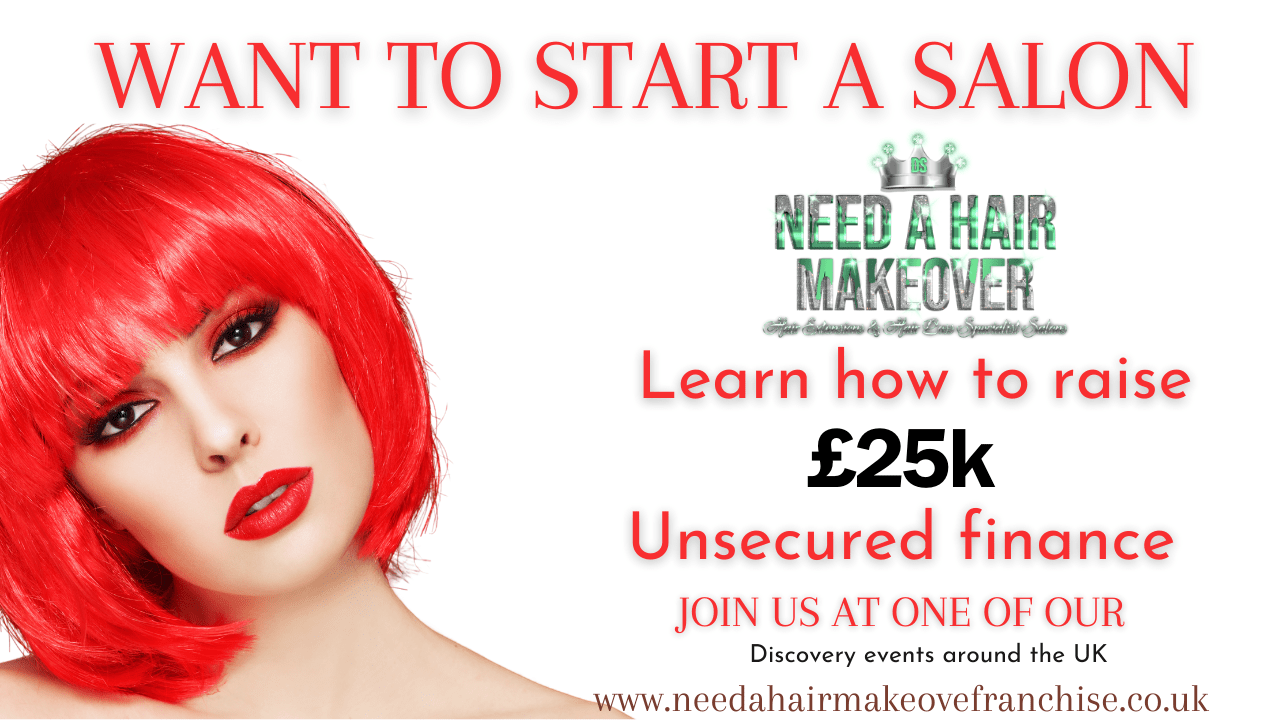
Well finding a #business that aligns with your passion is key. The #hairindustry can help people regain their confidence, our #hairextensions and #hairloss #franchise offers the perfect opportunity. Findout more https://bit.ly/3vw8szC


Shoppers Discount Club 2023 Finalist for Mobile & Emerging Technologies Startup Awards

Congratulations to Diane Shawe for becoming one of the 2023 Start Up Awards Finalists for her Shoppers Discount Club Business.

Dudley based startup Shoppers Discount Club has been named a finalist ahead of the Midland Final of the StartUp Awards.

The StartUp Awards has been launched to recognise the booming startup scene across the UK which has accelerated since the 2019 pandemic. Over 800,000 new businesses were founded in the UK since 2021, a 4.3% increase from the year before.

A record number of businesses applied to this year’s StartUp Awards, with 1,100 firms shortlisted across ten UK nations and regions. The contribution of these firms – all of which were started in the last three years – is significant, having created over 5,000 new jobs since they were established and generating annual sales of £584 million.

The Shoppers Discount Club is a using AI Conversational Chatbots and QR codes to help bricks and mortar retailers offer live discounts to shopper via their mobile phones in real time, helping retailers attract more footfall into their businesses founded by Diane Shawe in 2022. The business has been nominated for the Mobile and Emerging Technology StartUp of the Year.

Diane Shawe, founder of Shoppers Discount Club, said: “This is amazing. I have a business on the High Street and the idea came to me when I was trying to think of a way that us the retailers could compete with online discounts and offers in real time to attract more footfall. I focused on a solution using Artificial Intelligence Technology Chatbots and QR codes that could instantly engage passer-by in real time and entice them to claim their instant discount via their mobile phone and would not cost a fortune for retailers to use. Its been working for my business as customers are surprised that they can claim an instant discount on certain treatments. ”

Supported nationally by Starling Bank, British Business Bank, BT, Creative Ideaz, GS1 UK, Jeeves, Join Talent, ScoreApp and The Purposeful Project, the programme will celebrate the achievements of the amazing individuals who have turned an idea into an opportunity and taken the risk to launch a new product or service.

The cohort of finalists will be considered for the regional prizes by a panel of seasoned judges with experience founding or supporting entrepreneurial ventures.

Professor Dylan Jones-Evans OBE, the creator of the StartUp Awards, said:


“ Start-up businesses are the lifeblood of any economy, being responsible for new jobs, innovation and in supporting communities in every nation and region across the UK.

All of the finalists this year represent the best of those entrepreneurs who have spotted an opportunity and through their sheer hard work, talent and perseverance, have created an amazing new business that is creating real impact in its sector.”

The StartUp Awards was created in collaboration with the team behind the Great British Entrepreneur Awards, one of the most successful awards programmes in the UK. The StartUp Awards are running for the second year after launching in 2022.

This year’s StartUp Awards finalists can be found online at

https://www.freshbusinessthinking.com/national-startup-awards/finalists/2023-shortlist/the-midlands/mobile-and-emerging-technologies-startup

For more information or to request an interview, please contact Diane at order@shoppersdiscount.club or 07367431859. Office 0203 535 6505 select Shoppers Discount club. Visit https://shoppersdiscount.club

View sample https://more-customers.shoppersdiscount.club

About StartUp Awards

The StartUp Awards is a collaboration between the founders of the Great British Entrepreneur Awards – an established programme nationally receiving thousands applications annually – and the Wales Start-Up Awards, the only regional awards currently celebrating new businesses in the UK.

The StartUp Awards will recognise the achievements of those amazing individuals who have had a great idea, spotted the opportunity and taken the risks to launch a new product or service.

Already established and thriving in Wales, the StartUp Awards is now taking the passion and drive to celebrate new business and extending across the whole of the United Kingdom.
#chatbot #startupawards #shoppersdiscountclub #finalists
Retailers turning to A I technology to combat Recession

As the word recession is on the lips of so many economists and financial institutions, businesses are beginning to explore new and innovative ways to stay afloat. One of the most trending methods used in recent years is artificial intelligence chatbots. These chatbots allow customers to interact with a computer system that can mimic human conversation, providing them with real-time discounts on products and services.

There are many benefits of using AI chatbots for business owners. Some of these include:

1) Increased Sales: Chatbots can help businesses increase their sales and footfall by up to 30%. This is because they provide customers with instant access to discounts on products and services.

2) Greater Customer Engagement: Chatbots keep customers engaged by allowing them to actually talk to a computer system that mimics human conversation. This creates a more personal connection between customer and business owner, which can result in increased loyalty and repeat business.

3) Reduced Costs: The use of chatbots helps reduce costs for businesses by automating routine tasks such as customer service inquiries or sales enquiries. This allows business owners to focus on more important tasks while still providing great customer service.

4) Update offers, run promotions in real time without spending huge sums of investment in paper and ppc adverts

The Launch of the Shoppers Discount Club

After a significant period of closures during lockdown with many customers opting for online retailers to meet their needs, retailers have struggled to incentivise those shoppers back in-store.

Diane Shawe founder of the Shoppers Discount club App was inspired by the use of QR code technology in the hospitality sector, so the company set out to deliver a benefit to retailers using the same technology people had become so accustomed to. Diane was delighted to bring her background in technology and retail together to be able to offer retailers something which will truly make a difference and provide the much needed solution stores need to increase footfall again.”

The app provides bespoke, QR codes and POS material for shoppers to display intheir store fronts. These QR codes host live discounts which shoppers can redeem in-store and are fully-customisable to retailers, allowing them to discount certain products to yield increased profits.

“With the rising cost of living, everyone is looking for a deal” states Diane.

Additional benefits for retailers include the ability to personalise discounts to different target audiences, including pensioners, students, traders, local residents, or government workers, making offers as targeted and relevant as possible. Retailers also keep 100% of their profits compared to other online discount offerings.

Overall, conversational chatbots offer many benefits for businesses looking to survive the recession and thrive in today’s economy. They allow businesses to offer greater value to their customers while reducing costs, making them an essential tool for any company looking to stay competitive in today’s market .

If you would like to find out more about this new must-have app visit, https://more-customers.shoppersdiscount.club

Innovative Shoppers Discount Club App Launches To Support Struggling Retailers

Birmingham, England, United Kingdom., January 2, 2023 –  Innovative game changing Discount App has been launched Following the Covid-19 pandemic, as brick and mortar retailers have struggled to revert to the levels of footfall, and profits, they saw pre-pandemic

The Shoppers Discount Club aims to provide a solution to the decrease in customers, and profits, by providing a way for retailers to compete with online offers and discounts. The app will leverage popular QR code technology and chat bots to help struggling retailers provide live, in-person discounts.

The idea, born out of the covid-19 pandemic, is designed to support stores competing against large online retailers. After a significant period of closures during lockdown with many customers opting for online retailers to meet their needs, retailers have struggled to incentivise those shoppers back in-store. The app provides bespoke, QR codes and POS material for shoppers to display in their store fronts. These QR codes host live discounts which shoppers can redeem in-store and are fully-customisable to retailers, allowing them to discount certain products to yield increased profits.

By utilising QR code technology, Shoppers Discount Club is leveraging the tool which became popular during the pandemic, used by thousands of bars and restaurants to facilitate contactless payments. Diane Shawe founder of Shoppers Discount Club said: ‘The pandemic was a tough time for so many retailers, with less footfall on the high street and long period of closures.

Inspired by the use of QR code technology in the hospitality sector, the company set out to deliver a benefit to retailers using the same technology people had become so accustomed to. Diane was delighted to bring her background in technology and retail together to be able to offer retailers something which will truly make a difference and provide the much needed solution stores need to increase footfall again.”

As well as increasing footfall and sales for their business, retailers are also able to take advantage of the app to avoid costly advertising spend on point of sale merchandising, in store displays or flyers to promote their offers. By signing up to the app, users will get a uniquely designed A3 poster to display in their window, which features their QR code. Offers behind the QR code can be updated at any time to stay relevant and discount different products, without the need to update the advertising material, ultimately saving them on advertising spend.

Not only can retailers utilise the app to make fully customisable offers, users can also benefit from chat bot technology. Instant responses from chat bots are a much quicker, less resource intensive way for retailers to respond to customer enquiries and reduce long wait times for responses via telephone, social media or email. The technology will also free up retailers’ time to focus on

MORE%20FOOTFALL%20WITH%20SHOPPERS%20CLUB

other crucial tasks and increase overall efficiency of their business.

Additional benefits for retailers include the ability to personalise discounts to different target audiences including pensioners, students, traders, local residents or government workers, making offers as targeted and relevant as possible. Retailers also keep 100% of their profits, compared to other online discount offerings.

Annual subscriptions start from just £120. To find out more about this service contact the Shoppers Discount Club by emailing order@shoppersdiscount.club or to sign up, visit https://shoppersdiscount.club

50 Online Local Business Directories to list your Franchise or Business

Even Google Promotes itself!

Promoting a local business opportunity isn’t easy these days.

Whether it’s because of oversaturation or complicated search engine algorithms, it’s all too easy to feel like no one will find your business in the local or national search results.

Luckily, there’s an easy way to improve your local SEO. All you have to do is list your business in online business directories such as Yellow Pages, Manta, and more. This is called building citations, and it’s a critical piece of a local marketing strategy.

What is a business directory?

A business directory is an online list of businesses within a particular niche, location, or category. One way local businesses can get found by online searchers is through inclusion in business directories.

Why you need to get listed in multiple relevant  business directory?

Today, Google is inserting itself between consumer and local business websites much more often. For proof, you need to look no further than Google My Business, Accelerated Mobile Pages (AMP), featured snippets, and most importantly, local packs.

By building citations, you can make sure that you appear in these local packs when people look for businesses like yours in their area. Business directories may seem like a thing of the past, but they’re a great way to grow your presence online.

You can improve visibility by listing your local business’ NAP (Name, Address, Phone Number) on directories, online business listing sites, and citation sites. Aside from improving your local SEO, these can also improve your rankings on search engines because the listings usually link back to your site.

Make sure your company listing has the following information once you add it to a directory:

• Consistent NAP. If you add or update your business on multiple business listing sites, make sure you’re providing the same company information across each directory.

• A link to your website. Backlinks — also known as inbound links — are crucial to your company website’s Domain Rating. Consider adding a tracking link at the end of this URL as well, so you can see how much traffic your website specifically gets from the business directories that are linking to it.

• A company description. Make sure you have a detailed description of your business that reflects your organization’s mission, culture, and values.

• Multimedia. Give company searchers a visual taste of your business with a picture or video of your office, your employees, or your daily business operations.

There are plenty of location-specific and industry-specific business listing sites where you can submit your data. To start promoting your local business, however, you should start with the big sites and work your way toward the more niche directories.

First, let’s go over the top free business directories.

Make it Happen

Free Business Listings

• Facebook

• Apple Maps

• Google My Business

• LinkedIn Company Directory

• Bing

• Yelp

• MapQuest

• HubSpot

• Super Pages

• YellowBook.com

• Thumbtack

Online Directories for Local Businesses

• Facebook Pages (Domain Rating = 100)

• Instagram for Business (Domain Rating = 99)

• Google My Business (Domain Rating = 98)

• LinkedIn Company Directory (Domain Rating = 98)

• Apple Maps (Domain Rating = 97)

• Yelp (Domain Rating = 94)

• Bing (Domain Rating = 93)

• HubSpot’s Solutions Directory (Domain Rating = 93)

• Better Business Bureau (Domain Rating = 93)

• MapQuest (Domain Rating = 92)

• Foursquare (Domain Rating = 91)

• Yahoo! Local (Domain Rating = 91)

• Thumbtack (Domain Rating = 90)

• Yellow Pages (Domain Rating = 90)

• Angi, FKA Angie’s List ( Domain Rating = 91)

• Nextdoor (Domain Rating = 87)

• Manta (Domain Rating = 87)

• Merchant Circle (Domain Rating = 85)

• YellowBook.com (Domain Rating = 82)

• Dun & Bradstreet Business Directory (Domain Rating = 80)

• Local.com (Domain Rating = 79)

• Hotfrog (Domain Rating = 79)

• ChamberofCommerce.com (Domain Rating = 79)

• 2FindLocal (Domain Rating = 46)

• EZlocal (Domain Rating = 78)

• Brownbook.net (Domain Rating = 77)

About NAHM

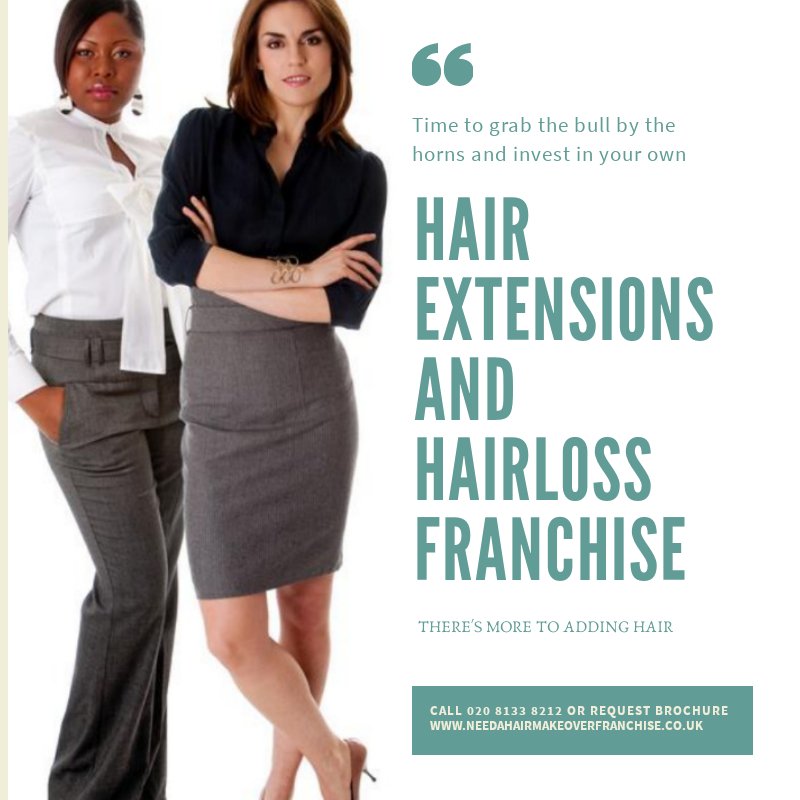
Would you like to own your own Hair Extensions & Hair loss Business? Then you’ll find a massive opportunity here at Need A Hair Makeover & Hair loss Specialist Salon Franchise! You can make a comprehensive difference in someone’ life

https://www.franchiselocal.co.uk/nahm-specialist-salon/

Ready to Explore a New Opportunity?

What Could Be Hurting Your Hair Growth by Diane Shawe

Diane Shawe AuthorThroughout this Lock-down it could be said that some people have made the most out of the lock-down by resting and doing things around the home, whilst others have found it really stressful, distressing and mentally painful.

Throughout this Lock-down it could be said that some people have made the most out of the lock-down by resting and doing things around the home, whilst others have found it really stressful, distressing and mentally painful.


Now it is said that the state of your hair can give an overview of how your health is, you can even get an idea of someone’s health by their nails.

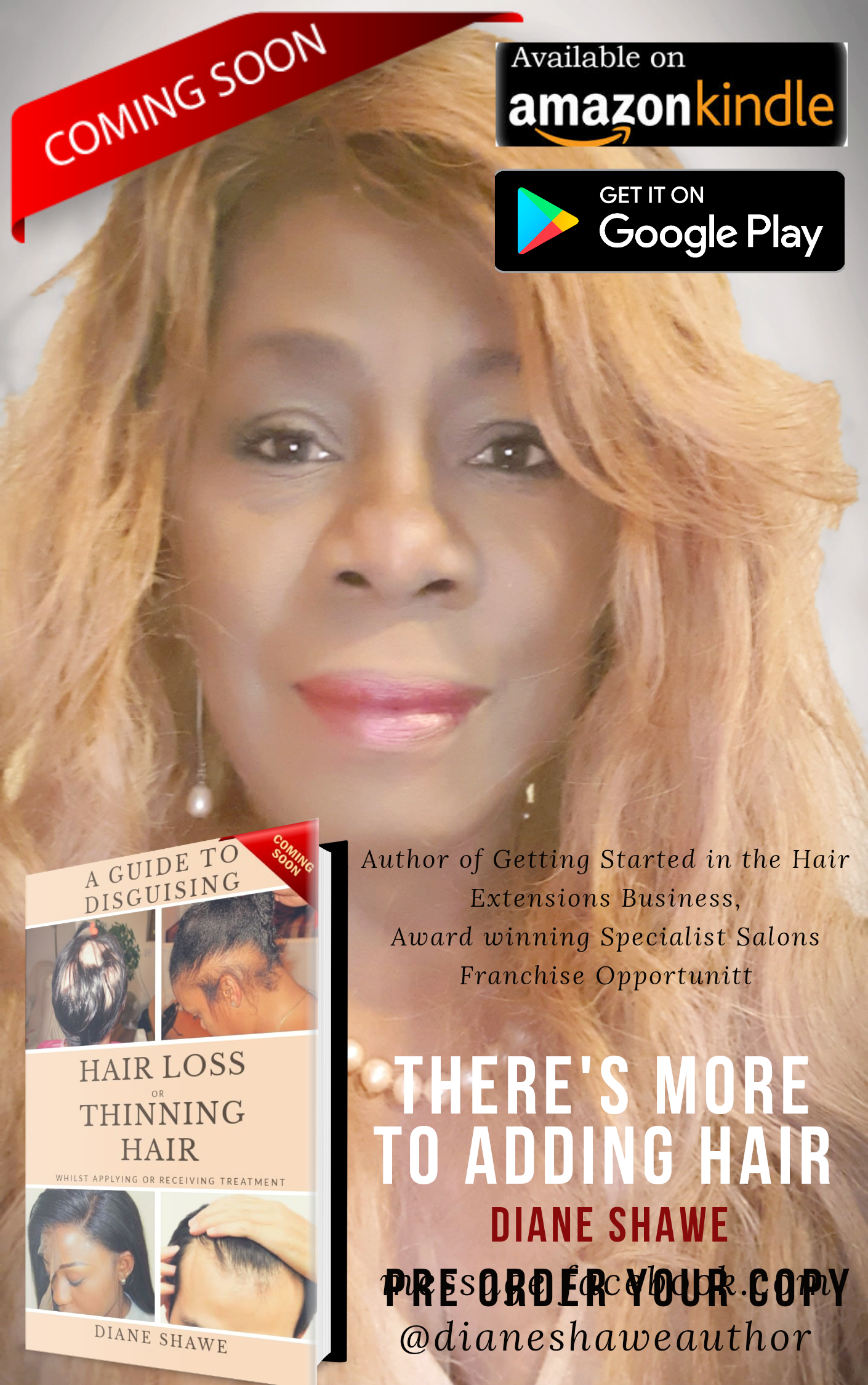
article by Diane Shawe Author of Getting Started in the hair extensions business

But lets take a look at some of the reasons that could be causing your hair to look or become unhealthy, thin or start to fall out. There is no single explanation for hair loss but reasons can include:

  • Natural ageing process
  • Poor nutrition
  • Nervous disorders
  • Hormonal imbalances
  • Serious illness
  • Certain medications
  • Chemotherapy and radiotherapy
  • Hereditary/genetic factors
  • Damaging Hair by over-processing using chemicals


Hair loss can have a devastating effect. It’s important to know that the earlier a hair loss problem is diagnosed, the better the chances are of treating it. We always recommend seeing a qualified hair specialist to diagnose conditions.

Common hair loss conditions include:

Androgenic Alopecia (‘Pattern Baldness’)

This is one of the most common forms of hair loss. It affects both men and women and occurs in distinct patterns. In men, this form of hair loss is very obvious. At the end of the process – which can take from 15-25yrs – the only hair remaining is at the sides and the back of the head. Roughly one third of all women are affected by this type of hair loss normally on the vertex (top of the head) with the front hairline often intact. The process of shedding is on average 50-100 hairs a day.

Alopecia Areata

This condition manifests itself in patchy hair loss, usually starting with a small spot that can spread. It is an auto-immune disease where the body attacks itself, killing off the hair. In general, the onset of alopecia can be caused by illness and raised temperature, shock, viruses, inoculations, medication or a period of extreme stress 2-6 months before a bald patch appears. It’s important to remember that early diagnosis and treatment can minimise the effects of the condition. Following diagnosis, many patients are extremely anxious which can also exacerbate the problem. It is advisable to seek specialist advice on how relieve stress and help hair growth to resume.

Alopecia Totalis

Alopecia Totalis is condition in which total loss of scalp hair occurs and can follow on from unchecked alopecia areata.

Alopecia Universalis

The result is a loss of all body hair including eyebrows and eyelashes. This form of hair loss is very distressing.

Telogen Effluvium or ‘Diffuse Hair Loss’

This condition manifests itself in shedding from all parts of the scalp. A great deal of hair is shed before the effects become noticeable. Telogen Effluvium can be caused by high fever, thyroid, postnatal depression, anaemia, surgery, medication, emotional stress, shock, dental treatment, surgery or dieting. During pregnancy, high levels of female hormones generate healthy hair. Some women can experience diffuse hair loss after childbirth.

Chemotherapy and radiotherapy hair loss

Chemotherapy or radiotherapy drugs work by attacking rapidly-growing cancer cells in the body. Because hair follicle cells also multiply very quickly – like cancer cells – chemotherapy drugs have difficulty in discerning the difference. This means that cancer treatment also destroys fast-growing hair cells and the hair falls out. Damage is not irreparable however and hair usually grows back 6-8 weeks after chemotherapy treatment has ended.

Trichotillomania

A rare form of Alopecia that is extremely stressful and caused by a patient self-harming i.e. pulling his or her own hair out. Given the psychology surrounding this condition, sufferers may not initially admit to pulling their hair out. Although young children can be particularly prone to Trichotillomania, it normally affects adolescent age groups.

Scarring Conditions

Several scarring conditions may includeLichen Planus, Lupus Erythematosus, Folliculitis Decalvans and Pseudo Pelade. These conditions can be slowly progressive and scarring of the scalp causes permanent hair loss.Different types of wig base by diane shawe

Traction Alopecia

A condition often caused by hair extensions or hair styles that cause physical trauma to the scalp e.g. cornrows, tight braiding which causes patchy to total hair loss prodominately around the hairline becomes weak and stops growing.

In addition to hair loss problems, scalp disorders can include:

Dandruff (Pityriasis capitis) – This condition is all too familiar and about half of all Caucasians will have had dandruff to some degree before they are 20. In most people, it disappears after the age of 50 or so. Dandruff is associated with a tiny yeast called pityrosporum ovale, which is normally permanently present on the scalp. In dandruff, there is an increase in the regular loss of cells from the skin surface and they are lost more quickly. As more cells are lost, the yeast grows more rapidly. These cells may clump together to produce the all-too-familiar flakes of dandruff.

Eczema and Dermatitis

Psoriasis – Chronic skin condition affecting 3% of the population. It appears as raised, inflamed skin topped with silvery white scales. In severe cases the whole of the scalp may be covered by scales and there may well be some hair loss. Severe cases are extremely uncomfortable and distressing.

Seborrhoeic Dermatitis – Scaling condition characterised by yellow, branny scales on the scalp and red, irritated skin. It is sometimes associated by an unusually greasy scalp. In babies, the condition is known as ‘Cradle Cap’. It can also affect the nose, eyebrows and ears. In severe cases, Seborrhoeic Dermatitis may lead to hair loss.

Infections

Head Lice (Pediculosis Capitis) – Infestation of parasites living off human hosts. The hosts are 6-legged creatures, 2 – 4 mm in size and grey in colour. They are found near the hairline, at the nape of the neck and around the ears. This condition is highly infectious (ova hatch within 5-8 days). Lice can live off the human scalp for up to 48 hours in scarves, hats, chair backs, combs, brushes etc.

Impetigo – Bacterial infection of the skin that results in weeping, crusted sores and produces itching. It is often seen in young children and is highly contagious.

Ringworm – Fungal infection which appears as pink, scaly patches on the skin. It is more likely to be caught from animals than from humans.

Chemical & Heat Damage

Throughout the Lock-down most people attempted to resolve their outgrown roots by purchasing do it yourself home kits for colouring or relaxing hair. Not using the right product or leaving it on to long can cause hair breaking, split ends and visibly unhealthy hair. The causes of chemically damaged hair can usually be attributed to hair colouring, perms and hair relaxants. … In order for this to happen the chemicals break down the disulphide bonds in your hair.
The causes of heat damaged hair can usually be attributed to hair being daily subjected to very high temperatures using straighteners or hot combs with no hair protector. This burns the hair cuticles which can often leave the ends split or frayed looking.

Find out how to start your own Hair Extensions Business today. Request a free brochure

Turning 50 isn’t the end of a business career – new wave of silvererpreneurs

Get qualified in days not years

The only way is up after a downturn

article by Diane Shawe M.Ed

Turning 50 isn’t the end of a business career – it’s the beginning. And an ever-growing wave of ‘olderpreneurs’, starting a business have 70% chance of surviving their first five years compared with only a 28% survival rate for those younger than them.

Nearly half the self-employment population is over 50, and one in six new businesses started in the UK are set up by post-half-centurions.

So what’s fuelling the entrepreneurial impetus of the ‘silver startup’, and why are they doing so well?

Necessity

The over-50s age group has been particularly hard-hit by the recession. Last year, the Office of National Statistics (ONS) revealed 28% of those aged between 50 and state pension age were out of work – compared with only 20% of those aged under 50.

Why? One of the biggest factors is the rife ageism that permeates practically every industry in the UK, that anyone over 50 who’s been forced to look for employment will testify to with a weary nod. The ONS estimates those who lose their job aged 50 or over have only a 10% chance of being re-employed.

Deciding to use their money from redundancies to fund ta company, over the course of two years the payout had trickled in its entirety into the business. But it was worth the investment – and they often don’t have to rely on the ineffective banks at the moment.

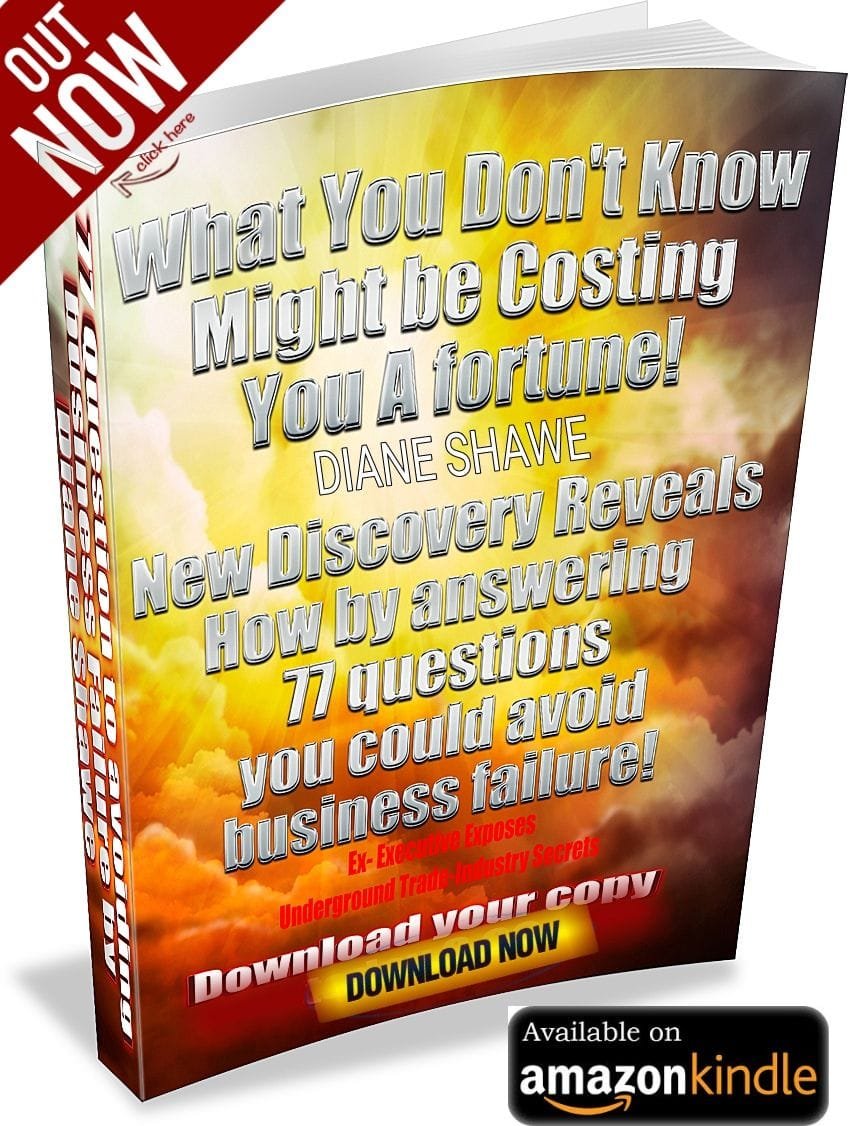
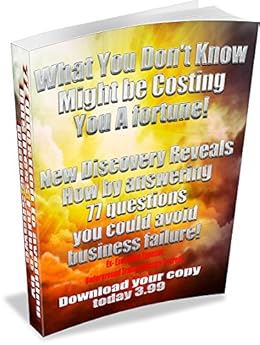
77 Questions to avoid business failure

Order your copy from Amazon

New challenge

At a fundamental level, sometimes people just want to do something different in their later years.

It’s interesting that recent YouGov and Standard Life research found the average age at which people feel totally confident in their working skills is 37, while the more elusive sense of fulfilment peaks at 50. Perhaps this climax of achievement and sense of ability leads to a need for a new direction, a new challenge, once a person passes the half-century mark.

You’re in good company if your over 50 and considering starting a business.

More than four out of 10 new businesses in the UK are started by people over 50, according to the Office for National Statistics. And it’s a growing trend. A recent report from Barclays highlighted that over 55s are now 63% more likely to start businesses than 10 years ago.

And this rise in business owners doesn’t just apply to founders in their 50s – the number of self-employed people aged 65 and over has more than doubled in the UK in the past five years.

While there’s never a ‘right time’ to pursue a business idea, an increasing number of people in their 50s and over – dubbed ‘olderpreneurs’ – are shifting to entrepreneurship. But why?

For starters, budding business owners in their 50s are capitalising on the government pension freedoms – first introduced back in 2015 – and are opting to take their tax free cash lump-sum to “create wealth” by using their pensions to start a business.

However, it’s not just pension-led funding which is boosting the numbers of  the UK’s older entrepreneurs.

Low-interest loans and mentoring, provided by the likes of , is playing an integral part in funding and supporting the growth of founders in their 50s with over 5,700 loans having been supplied to founders aged 50 and over by the organisation to date.

Supported by research from PRIME that those who start a business in their 50s are 42% more likely to be successful than their younger counterparts, we want to shake off the notion that starting a business in middle-age isn’t a good idea. On the contrary, older entrepreneurs have the advantage of being able to tap into wealth of experience and knowledge which they can put to use in a start-up venture.

To break down stereotypes, we’ve highlighted five inspiring businesses founded by entrepreneurs aged 50 and over, who each received a Start Up Loan to make their business dreams a reality.

Operating in industries ranging from domestic care to street food.

After every downturn there is alway a upturn because people really work hard along with banks, investors and government to make it work.

IQ scores are falling -It’s not that dumb people are having more kids than smart people

IQ scores are falling and have been for decades, new study finds

Guest Blogger: Rory Smith, CNN

IQ scores have been steadily falling for the past few decades, and environmental factors are to blame, a new study says.

The research suggests that genes aren’t what’s driving the decline in IQ scores, according to the study, published Monday.
Norwegian researchers analysed the IQ scores of Norwegian men born between 1962 and 1

991 and found that scores increased by almost 3 percentage points each decade for those born between 1962 to 1975 — but then saw a steady decline among those born after 1975.

Similar studies in Denmark, Britain, France, the Netherlands, Finland and Estonia have demonstrated a similar downward trend in IQ scores, said Ole Rogeberg, a senior research fellow at the Ragnar Frisch Center for Economic Research in Norway and co-author of the new study.

“The causes in IQ increases over time and now the decline is due to environmental factors,” said Rogeburg, who believes the change is not due to genetics.
“It’s not that dumb people are having more kids than smart people, to put it crudely. It’s something to do with the environment, because we’re seeing the same differences within families,” he said.

These environmental factors could include changes in the education system and media environment, nutrition, reading less and being online more, Rogeberg said.

The earlier rise in IQ scores follows the “Flynn effect,” a term for the long-term increase in intelligence levels that occurred during the 21st century, arguably the result of better access to education, according to Stuart Ritchie, a postdoctoral fellow in cognitive ageing at the University of Edinburgh whose research explores IQ scores and intelligence and who was not involved in the new study.

Researchers have long preferred to use genes to explain variations in intelligence over environmental factors. However, the new study turns this thinking on its head.

Intelligence is heritable, and for a long time, researchers assumed that people with high IQ scores would have kids who also scored above average. Moreover, it was thought that people with lower scores would have more kids than people with high IQ scores, which would contribute to a decline in IQ scores over time and a “dumbing down” of the general population, according to Rogeberg.

Anyone who has seen the film “Idiocracy” might already be familiar with these ideas. In the scientific community, the idea of unintelligent parents having more kids and dumbing-down the population is known as the dysgenic fertility theory, according to Ritchie.

The study looked at the IQ scores of brothers who were born in different years. Researchers found that, instead of being similar as suggested by a genetic explanation, IQ scores often differed significantly between the siblings.

“The main exciting finding isn’t that there was a decline in IQ,” Ritchie said. “The interesting thing about this paper is that they were able to show a difference in IQ scores within the same families.”

The study not only showed IQ variance between children the same parents, but because the authors had the IQ scores of various parents, it demonstrated that parents with higher IQs tended to have more kids, ruling out the dysgenic fertility theory as a driver of falling IQ scores and highlighting the role of environmental factors instead.

What specific environmental factors cause changes in intelligence remains relatively unexplored.

Access to education is currently the most conclusive factor explaining disparities in intelligence, according to Ritchie. In a separate study that has not been released, he and his colleagues looked at existing research in an effort to demonstrate that staying in school longer directly equates to higher IQ scores.

But more research is needed to better understand other environmental factors thought to be linked to intelligence. Robin Morris, a professor of psychology at Kings College in London who was not involved in Ritchie’s research, suggests that traditional measures of intelligence, such as the IQ test, might be outmoded in today’s fast-paced world of constant technological change.

Morris states that “we need to recognise that as time changes and people are exposed to different intellectual experiences, such as changes in the use of technology, for example social media, the way intelligence is expressed also changes. Educational methods need to adapt to such changes,” Morris said.

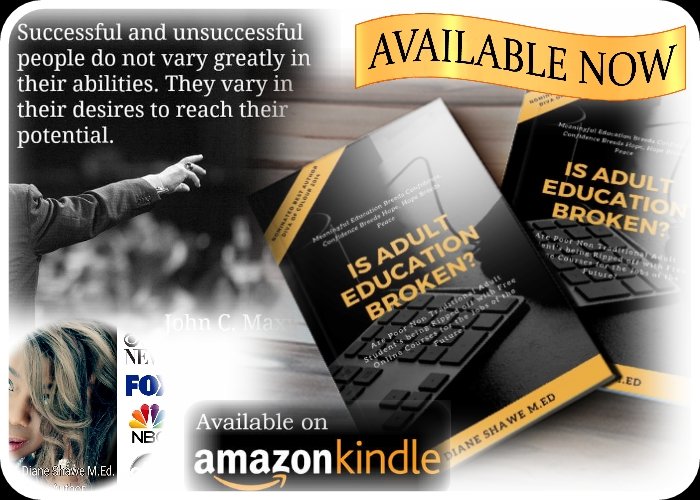
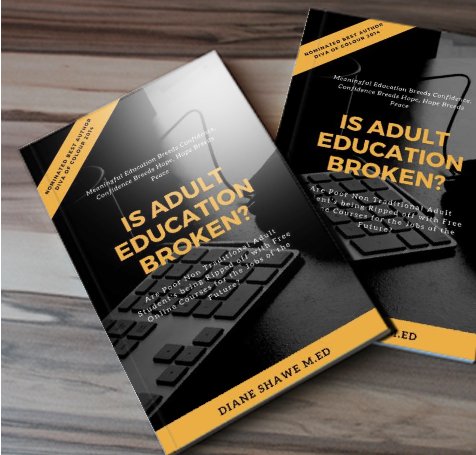
Diane Shawe author of ‘Is Adult Education Broken” goes on to state in her publication that “No sensible decision can be made any longer without taking into account not only the world as it is but the world as it will be.”

In her thought provoking book she explains that we are living in a new economy—powered by technology, fueled by information, and driven by knowledge which increasingly is increasingly becoming automated. We are entering the new century with opportunity on our side with huge problems that require new thinking.

How can we make the new economic age enhance, rather than diminish, our quality of learning?

How can we make this amazing innovation advance the prospects of all people especially those with experience and not just for the youth?

Fundamentally, we need to change what people learn, how people learn, when people learn, and even why people learn.

Inside her publication she explores

: Failure to find a fomular to develop teachers convergent and divergent facilitatingskills

: failure to consider cultural relevance

: failure to develop enterprising and entrepreneurial skills

: failure to prepare students about taking personal responsibility

: failure to encourage international engagement

:failure to manage growth of academic misconduct

Download your copy today https://www.amazon.co.uk/dp/B07BWBMGFM/

Finally a frightening statistic:

“If unemployment formed a country it would be the 5th largest in the world” Isaac Asimov

Starting A Private Tutoring Business – The Skills Needed By A Private Tutor

Current Demand For Private Tuition In The UK

We can reassure you that the demand for private tuition across the board is increasing, and is required throughout the year.

Whilst the market is flooded with tutors supporting students in English, Maths and some STEM subjects, it is increasingly obvious that a lot of children are suffering because they do not have the much needed Social Skills to help them  with communication, problem-solving, decision making, self-management, and peer relations abilities that allow one to initiate and maintain positive social relationships with others.

Deficits or excesses in social behavior interfere with learning, teaching, and the classroom’s orchestration and climate. Social competence is linked to peer acceptance, teacher acceptance, inclusion success, and post school success.

As we see the rise in school exclusions, there are many reasons suited for the rise in the UK. So now a more structured approach needs tho be taken to assist a wide crosses section of children experiencing problems outside of the curricula which in turn impacts there relationship with each other, their teachers, parents and the wider community.

Whilst the demand throughout the academic year for private tuition varies per subject and level, factors to consider are do you want to provide tutoring throughout the year, number of subjects and levels you tutor, if you are wishing to travel and how far you are prepared to travel if at all.

Starting A Private Tutoring Business – The Skills Needed By A Private Tutor

If you are interested in becoming a private tutor, you may wish to consider the following skills before setting up a private tuition service :-

Ability To Communicate & Help The Students Understanding
The key approach of private tuition is to improve the understanding of the student. An essential skill for a home tutor is that they are able to help the student grasp and fully understand any area of subject weakness by good communication. Whilst at the same time engaging the student’s interest and making the tutoring session fun will enhance their learning.

Ability To Listen
One of the major factors of one to one private tutoring is to tailor and deliver your lessons so that the student can understand areas of subject difficulty. For the student to improve, they must understand. Flexibility is the key. Just because you use a successful set protocol of how you tailor your tuition lessons for several of your students, does not mean this will work every time. Therefore if the student has difficulty in grasping certain areas of their syllabus, listen to their feedback and from this devise alternative ways of how you will tailor your tutoring for that particular student.

Good Grasp Of Your Subject Area
We would recommend that you only offer home lessons for the subjects that you are familiar with and enjoy and are passionate about. As a rule, the subjects that you enjoy, understand and feel most enthusiastic about are the ones which you will excel in at tutoring. Therefore you will have most success in improving the student’s grades and confidence.

Communication With All Age Groups – Especially Children and Teenagers
Most academic personal tutors provide private tuition for children or young adults. However if you specialise in tutoring students for GCSE upwards, you will be tutoring teenagers, young adults and possibly mature students. Therefore you will need to feel confident at communicating with all age groups. Even if you are only providing private tuition for primary or secondary level children, remember that you will often come into contact with and give feedback to their guardians or parents.

Good Command of The English Language and Literacy
That saying, a child whos first language is not English might benefit from a similar language tutor who might be able to get the point across much clearer until the students English improves.

Good Time Management & Self Motivation
As a freelance tutor, like any self employed profession, you will not have a clocking in machine! When you work for yourself you need to be self motivated and it is essential that you use your time effectively. Most students require tuition in the early evening on weekdays or at weekends. Keep these times free for tuition and carry out your admin such as filing, accounting etc at other times of the day or week. If you do not plan your time wisely, this may result in less time that you have available for one to one tuition and your private tuition business will generate less income.

Excellent Organisation Is Paramount
Excellent organisational skills go hand in hand with good time management. As you build up clientele, you will find that you are providing private tuition to several students for different syllabi and possibly several subjects. This can become rather confusing, especially near exam times when you are using similar examination papers for several students. We advise that you keep a record for every student you tutor. This record should include the work that you have covered, any marks received for questions or past examination papers. The reasons for this is it is of benefit when you need to update parents regarding their child’s progress. Another reason for keeping private tuition records per student is that it enables you to plan ahead, so that you can cover all topics that the student struggles with and leave time towards examinations to cover exam papers and examination questions.


How to  Get Started

Request our free Tutors Prospectus Directory to see a list of all the course resources. Each package also includes a tutor manual, this covers the subject in detail and will assist you in delivering a quality and comprehensive course to your students.

Go back

Your message has been sent

Warning
Warning
Warning
Warning

Warning.