Tag Archives: mobile learning

How to identify your youtube target market

The largest search engine in the world

The largest search engine in the world

10 thing you need to clarify about what your business is all about, what your brand is, and what your purpose is in the marketing world.

Article by Diane Shawe M.Ed

The following questions will help you to clarify and understand what the marketing vision of your business is all about.

1. What kind of people are you trying to reach? I’m really sure you already know the type of people that your services are directed to. You see them constantly, they contact you as well if necessary, and that will tell you what kind of people they are and how you can treat them.

2. What do they look like? Are they fat or skinny? Male or female? Old, young or middle-aged?

3. What are they looking for? What is the final goal they are after based on the service you provide? What feeling are they trying to reach with it? Do they need it to feel happy? Do they need it to survive? A lot of needs must be taken care of for a person to survive.

4. What do you actually do for them? Maybe you are already offering a service for that audience. That will give you a great vision of what exactly you need to inform any new people that fit into that same audience.

5. What kind of information would they be interested to know about and pay for? You already know the needs of your customers. You know exactly what kind of information will be highly helpful to them in order to help them to satisfy those needs. Why don’t you just create a great info-product about it?

6. How much money are they actually paying you for it? Knowing how much you usually charge them for your service is a very important indicator, because if you decide to create a product like a report, a training video, software or something directly related to your audience, you may simply be able to figure out the price tag you can easily stamp to it.

7. How would they like to reach that content? Is it Video, mobile phone, Audio, Written, or Blogging? This is important to know. You may just think about it. Think on their limitations to read, hear, watch or use the computer. If they can do everything you can, just ask them what they would like to know about stuff. Do they like to read? Do they like to watch videos? Do they like to hear audio? Do they like to use YouTube?

8. Where are they from? Maybe you have an audience that comes from other cities or even countries. You need to target every one and adapt your information to all of them at the same time.

9. What are your competitors offering to your audience? In the marketing world, it is very important to study the competition that targets your exact audience. What do they generally offer? What things do they offer that you don’t? Do they have more clients? Do they work additional hours? Do they cover a lot more needs than you?

10. Can you offer a better service/product than your competitors?

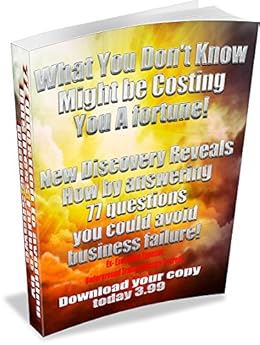
Download your Free copy today

Download your Free copy today

Once your know everything about your successful competitors, you can just offer the same thing but with your personal touch plus a lot more great things that they are not offering. You can have special offers, free samples, free phone consultation, special discounts, etc.

These questions are very important in deciding how to establish your business over YouTube. You can position almost any kind of business over YouTube because YouTube is more than just a website; it is a large audience of people with real human needs who are waiting for you and your service to satisfy them.

Click here to download your YouTube Marketing Made Easy Training Guide by Short courses Expert

Image

How to start 6 short courses in one step

Startet study pack 1 short courses

Diane Shawe launches online mentoring call preparation form for business startups

mentoring by diane shaweDiane Shawe’s passion for turning dreams into realities has been launching her clients beyond their limitations and into the lives they truly deserve since 2003.

She provides the benefits of mentoring through a number of career planning workshops and online mentor programs globally accredited by IAO

Because we are all busy people, once again Diane believes that technology can help bring about a better lever of convenience and speed to getting constructive assistance.  You can visit www.get.mentoring.dianeshawe.info to start the process or you can click here to complete your Call preparation and request form.

Since establishing her business through AVPT Diane has been committed to offering the benefits of mentoring to individuals and organisations and helping them overcome the range of challenges they face. By continually adding to her vast scope of knowledge, qualifications and experience her clients have been able to enjoy the workable tools she offers that lead to their desired personal and professional success.

Get mentoring with diane shawe business start up loans
Whether you’re looking to add structure to your career planning, provide your workers with professional training in areas such as conflict resolution, time management, and leadership skills you’ll appreciate the confidential, professional and friendly way all her materials are delivered. Diane’s holistic approach to making a positive difference has seen her broadening her scope of influence while giving back to philanthropic organisations such as the Kensington Chelsea and Business Club, Pink Shoe and Nexters.

Diane’s membership to some of the more prestigious bodies such as the Institute of Directors, Chartered Management Institute, Solicitors Regulation Authority and International Accreditation Organisation offers you the utmost peace of mind. As they’re member regulated by lawyers, CEOs and directors both in the private and public sectors you can rest assured that you’ll be enjoying approaches that have been proven to bring about success.

Over the year Diane has been passionate about supporting individuals around the world to become independant.

She is now proud to show you all how she have been able to support all types of people around the world via Kiva to help start or expand their business.

I have now supported over 96 loans in 37 countries and you can see them all by clicking here.

View copy Diane Shawe Draft-Mentoring-Contract

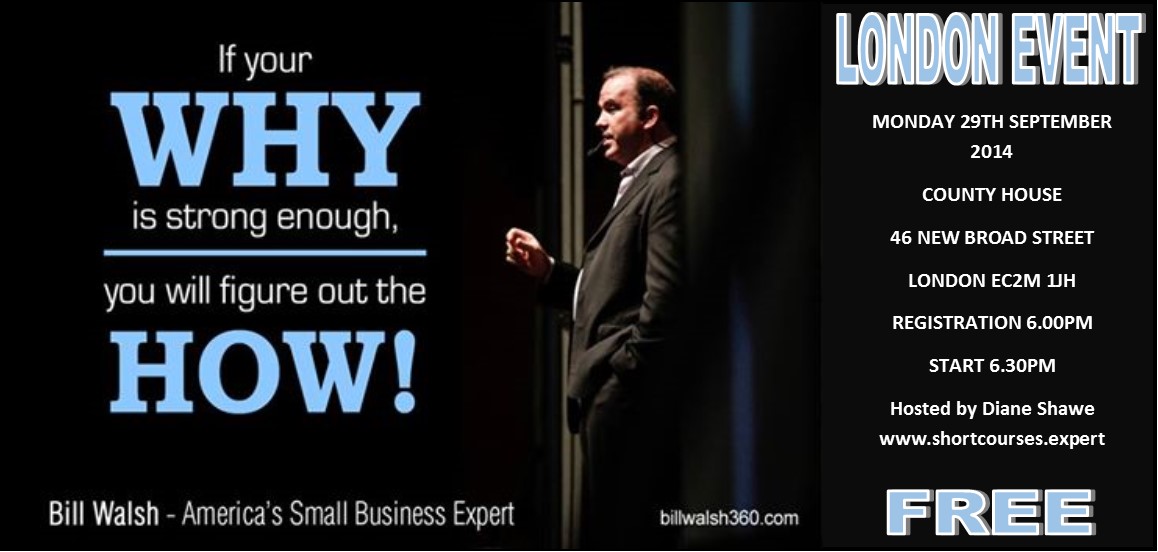
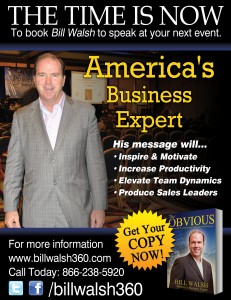
Worldclass Free Business Growth Bootcamp with Bill Walsh in London

Do you need to fine tune your big business idea?  Are you looking for a partner? Then this is an event not to be missed!

Bill Walsh free Business Growth Seminar in London hosted by Diane Shawe

Bill Walsh has agreed to come to the UK from the US and give a free Business Growth Session whilst I host a business success panel.To post your question to the panelists Click here 

Come to this free event and learn how to launch & build an even more successful business with one of the World’s most successful Business Coach. Normally to attend one of his sessions would cost over £1,000

When you attend you will have the opportunity to put your questions to our Business Panelist and network
with local business executives.

The educational focus is on Business Growth – Public Speaking and how to create your own VIP Masterminds. Plus everyone will receive some amazing gifts just for attending!

Here’s why you should attend:

Bill Walsh will discuss:

How to Monetise your Intellectual Property
How to Build a 12-Month Success Plan
How to Connect & Do deals with the Ultra-Successful
How to Become laser focused & ultra-productive
How to Monetise your Passion

For Complimentary Tickets visit CLICK HERE

Sponsored by Diane Shawe CEO of AVPT Ltd.

get mentoring with diane shawe business start up loans


Bill Walsh New book out now Oblivion Get your copy now

Do you have questions about Business Start up and Growth Bootcamp with Bill Walsh Millionaire Coach? Click here to register your question

If all the unemployed formed a country it would be the fifth largest in the world. Why does this matter?

Getting the world back to work with skills we can trust

Getting the world back to work with skills we can trust

Why the grip held by outdated educational institutions based on historical prestige needs to take a back seat and become student centric!

Article by Diane Shawe M.Ed

If we hadn’t had the most recent global economical crisis and the unrest in certain war torn regions had not occurred, there might have been 62 million more jobs in the world today, according to the International Labor Organisation as it is, there are over 200 million people looking for work across the globe.

To add to our worries: 75 million of these are young people, eager to take that first firm foothold in the ladder of success. We cannot allow them to become a “lost” generation.

The Great Recession has been particularly hard on older workers also, who have had difficulty finding new jobs after being unemployed for long spells. This is especially troubling because of their pressing needs for health care and retirement preparation.

It is also doubtful that the long-term unemployed are going to become more effective jobseekers simply by being forced to visit a Job centre daily if indeed they have a job centre in some parts of the world. But I am going to site that back in 1996, when the Jobseeker’s Allowance was introduced, the requirement to visit a Job centre every two weeks and provide detailed evidence of active job search did not raise overall job search effort among the unemployed.

If explicit job search requirements were not effective in a period of rapidly growing labour demand and falling unemployment, there is no good reason to expect them to be effective in the aftermath of a severe recession and one cannot certainly make a claim to recovery based on one geographical location sprinkled with opportunities driven by technology and property prices.

So clearly, jobs must be a preeminent priority in the years ahead. The major test of the new technological era is simple: can it provide decent livelihoods for all people?

Technology and rising inequality feeds into a broader concern: Technological advance creates a small cohort of big winners, leaving everybody else behind.

Certainly, those with the lowest skills are having the toughest time in today’s economy.

And yet, we also need to discuss what kind of growth this “right track” leads to. Will it be solid, sustainable, and balanced—or will it be fragile, erratic, and unbalanced?

To answer this question, we need to look at the patterns of economic activity in the years ahead, and especially the role of education, technology and innovation in driving us forward.

As Isaac Asimov—a master of science fiction literature—once said: “No sensible decision can be made any longer without taking into account not only the world as it is, but the world as it will be.” Isaac Asimov

So I have chosen a big topic and what I want to address in my blog today, in the form of three questions:

1. First, what does this new technological era mean for the economy, especially for jobs?

2. Second, how does it relate to one of the scourges of our age—rising inequality?

3. Third, what about some solutions, including vocational education and what I refer to as the growing need to foster a new thinking around “Entreployability”

The Interlinkages between Technology and the economy

Innovation is pushing ahead at warp speed. We are certainly living through one of the most exciting periods in human history. The pace of change is so fast that even the technology of five years ago seems prehistoric.

Those of you who are students probably do not even remember a time when phones were not smart, when cameras contained film, when texts meant school books, and when wireless was a word used for old-fashioned radio!

This advance is centered on the rise of a global digital network—the “hyperconnected world”—combined with the rise of genuine machine intelligence. Today’s smart phones are more powerful than yesterday’s supercomputers. We see cars driving themselves, printers making complicated three-dimensional parts, and robots doing the most complex tasks. “Science fiction” is rapidly becoming “science fact”.

What does this all mean for our lives and livelihoods, for our common economic future?

If the previous revolutions were about using machines for brawn, this is about using machines for brains. And since technology is powering a giant leap in global interconnectivity, these are “connected” brains! Just look at some of the trends.

Certainly, we can see some worrying trends. For a start, the effects of new machine technology are not showing up in productivity statistics—at least not yet—and productivity is by far the most important driver of long-term economic growth.

Now I am not an expert on the Economy, but we are all touched by it and using common sense I for one can see that there is a looming problem. For instance one of the biggest worries is how technological innovation affects jobs put simply will machines leave even more workers behind?

You may not want to give this a second glance but even seasoned professionals can find themselves cast adrift on an unfamiliar ocean.

Rising inequality

My second point about rising inequalities is going to be brief. But here’s a little statistic for you to consider. According to Oxfam, almost half the world’s wealth is owned by one percent of the population and, stunningly, the bottom half of the world’s population owns the same as the richest 85 people in the world.

What is causing such a convulsion in the distribution of income? There is no single factor here, although it seems clear that technology is one of the major factors—it can create huge rewards for the extraordinary visionaries at the top, and huge anxieties for the ordinary workers at the bottom. The speed at which information is sent around the world means that the average disgruntled people who make up the 5 largest country can amplify unrest as they all voice their fears to the small percentage of the world wealth holders.

What about some solutions?

So finally what is the purpose of education in today’s 21 Century, I quote Jane Stanford of Standford University — “with a “spirit of equality”. One of her goals for the university was “to resist the tendency to the stratification of society, by keeping open an avenue whereby the deserving and exceptional may rise through their own efforts from the lowest to the highest stations in life”.

What has happened? Why have these large institutions priced education out of these fundamental principles?

How can we make the new economic age enhance, rather than diminish, our humanity? How can we make this amazing innovation advance the prospects of all people?

It is clear that at the moment Educational systems are not keeping pace with changing technology and the ever-evolving world of work.

Not enough people are thinking strategically enough in this area. Fundamentally, we need to change what people learn, how people learn, when people learn, and even why people learn.

We must get beyond the traditional model of students sitting passively in classrooms, following instructions and memorising material. It is evident that computers can do that for us! A 21st century educational system must focus on the areas where humans can outclass computers—such as in cognitive skills, interpersonal skills, fine motor skills, or sophisticated coding skills. Maybe we need to remind ourselves of the purpose of education and vocational education. I summarise in my words the following:

The purpose of education

The first and foremost purpose of education is to educate and give everyone equal opportunity as a means to succeed in life. Education is a way of igniting and enlightening the thought of an individual.

It should help learners to discriminate between knowledge and ignorance, help to create a spark and create the sense of realisation with logic and a way to reason why the other things are illogical.

The purpose of vocational education

Every man must have a vocation – a trade, a business, or a profession – (if they are able too) in order to earn his livelihood so that they can support themselves, their family and people who cannot help themselves in our society. There are institutions for imparting various types of specialised training to help people qualify for this. The specialist is in demand everywhere, – in the office as well as in factories, in educational institutions and governments.

Conclusion.

The traditional belief that we must prepare ourselves to be ‘employable’ is under threat. The counter argument encourages us to ‘gear up’ for earning our own money, rather than seeing income as someone else’s responsibility.

With the population dramatically ageing and low-level jobs increasingly swallowed up by machinery, entrepreneurship will be a necessity for many, rather than a life-style choice for some.

SMEs are of course already leading this charge but in order to gear up for the future we need to start off by asking a serious question, defining criteria’s, and examining trends, impact these trends will have and plan a way to jointly prepare current and future generations to be both employable and entrepreneurial.

We are living in a new economy—powered by technology, fueled by information, and driven by knowledge. And we are entering the new century with opportunity on our side but huge problems that require new thinking.

The Question we should all ask ourselves?

Do you think you have another 20 – 30 years to live Yes [ ] No [ ]

Do you think you have another 30 – 50 years to live Yes [ ] No [ ]

Do you think you have another 50 – 70 years to live Yes [ ] No [ ]

Have you considered what you are going to do for the next 40- 70 years?

What will the job market look like in the next 20 years?

What will you be able to do to solve your problem which could be unemployment and patchy income streams?

What will you be able to do that will solve someone’s problem for which they will pay you a fee?

If computers might even replace our intelligence, they can never replace the capacities that make us truly human: our creativity and innovation, our passion.

So education must be the bridge between the present and future, the old and the new. But we must also build an enduring platform. By that I mean a new way of thinking about the global economy—the “new ©Entreployability the way forward.

Get your copy today from Amazon

This is helping an individual to develop their ‘©Entreployability assets’ which comprise of their knowledge (i.e. what they know), skills (what they do with what they know) and attitudes (how they do it).

To help them keep busy or at work; engaging their skills and attentions to employ themselves independently and maintain work.

To help them organise and manages their own business, contracts or employability.

To help them be available to be hired, provide them with a safe platform to encourage them to supply soft or hard skill for solving problems or being of service for which they will be paid by another party.

Making sure that the skill they have can be updated to help support them firstly, their family and community and economy.


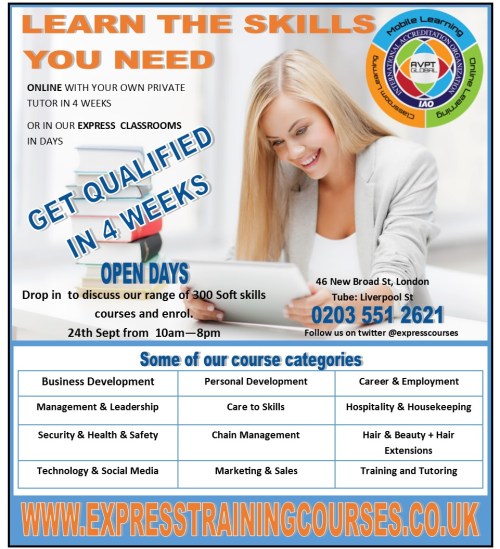
Looking for a short course this September to fit into your lifestyle?

Express Training courses (AVPT) have taken out all the stress of retraining by offering over 390 globally accredited courses in a way that fits in with you and your lifestyle. Now that you’ve decided to invest in your professional development it’s time to choose a study style that suits you. You can either work through a home study manual study online with an allocated personal tutor or in the classroom for an intensive one, two or three day course.

You can be confident in your future success with our fully trained and qualified

short course manuals from expresscoursestutors, they’re as dedicated to your personal development as you are about landing that big promotion, starting that passion project of a business venture, retraining or making that essential career move.

You don’t have to wait until you get home to pick up a text book and start learning, all you need is a tablet a smart phone and an eager mind. With AVPT studying and fitting your professional development around your work life and personal responsibilities has never been easier or more rewarding.

With courses covering everything from Hotel management, Leadership Skills, Marketing and Sales through to Hair extensions and of course becoming one of our virtual teaching facilitators, taking the first step towards being a better version of you has never been easier. Get in touch today and you can boost your skills and be qualified in a matter of hours instead of months

Start your own business in less than a month

Start your own business in less than a month


Diane Shawe M.Ed approved Business Start up Loan Mentor’ for Enterprising Women & Virgin Startup

Diane Shawe Host KCW Enterprise Womens Club

Diane Shawe Host KCW Enterprise Womens Club

PRESS RELEASE

Contact: Diane Shawe M.Ed

London UK, Tuesday 5th August 2014 – A successful UK entrepreneur and CEO has announces that she is now working with Enterprising Women to begin providing support and assistance to women from all walks of life who are looking to secure funding for brand new business ventures.

Diane Shawe Start up loan mentor

Diane Shawe Start up loan mentor

The range of supportive mentor services now available provides individuals with comprehensive guidance and support to identify and secure start-up funding, available from a range of providers. Diane Shawe is an accredited and certified ‘Enterprising Women’ startup loans mentor, ‘Virgin Startup Mentor’ and a registered leadership training provider for government backed ‘GrowthAccelerator’ initiative.

virgin startup loan mentors

Virgin startup loan mentors

The specific funding providers offer clients a viable means to secure the required capital to get their businesses off the ground through a range of financial contributions and matched funding. In addition to the practical support and advice to secure the startup loans required, Diane Shawe offers comprehensive mentoring which goes beyond forms and paperwork guidance. Drawing on her extensive experience in achieving decades of business success, she is able to pass on critical experience which money simply can’t buy.
About Diane Shaw M.Ed

leadership coursed for women diane shawe expresscourses

Growing your business? find out how GrowthAccelerator could help.

Diane Shawe M.Ed has proven her ability and aptitude in the business world with a string of successes and accolades including being the chief executive officer of a leading professional and vocational training provider, an acclaimed keynote speaker, published author, certified WEBE a member of the Chartered Management Institute (FCMI) and was recently a 2014 finalist at the Federation Small Business London for Innovation. For further information on the ‘business startup loan mentor’ program, please visit http://www.get.mentoring.dianeshawe.info or alternatively use the contact details shown with this release.


Why employers and training organisations need to take heed of this global trend

Diane Shawe CEO AVPT

Diane Shawe CEO

The Changing face of Skills and Training

article by Diane Shawe M.Ed CEO

In a report conducted by Kelly Global Workforce Index in 2013 over 120,000 respondents from 31 countries across the Americas, EMEA an APAC regions where asked several questions about Skills and Training.

When asked to identify the main motivation for earning new skills or undertaking training, the largest share of employees 57% cited the opportunity for promotion with their current employer. A further 47% cited the opportunity to work in another organisation, and 42% planned to enter a new field of work.

Globally, 60% of worker are either actively seeking further education or training (23%) or considering it (37%).  The APAC region stands out as a skilling hotspot, with 69% of those surveyed either considered or seeking further training for a new field.

Across the globe, there are markedly different approaches to the notion of additional training and professional development. The highest rates of planned upskilling are predominantly in developing economies, while the lowest rates tend to be in some of the most prosperous nations.

Russia heads the list for training intensity, with an astonishing 92% planning some form of training. Also high on the list are Thailand, Mexico, Brazil, Indonesia, Puerto Rico and Malaysia.

Surprisingly the lowest rates of planned training are in France, Luxembourg, the US and Switzerland.

Among professional and technical employees, those most likely to be actively seeking to upgrade their skills are in Math, Engineering and IT, while the least likely are in Science, Health Care and Education.

Investing in Training that Works

For training to be meaningful it needs to be relevant and practical – not “training for training sake”.

When asked to identify the mot desirable means of furhering their skills, the overwhelming preference was for on-the-job experience and training, identified by 70% of respondents, significantly ahead of the next hightest ranked “continued education and training” cited by 58%

Building a durable Skills base

The last two decades have radically altered the way skill are acquired and developed. Skill are no longer “front-end loaded” onto a career. Rather they are increasingly embedded as part of lifelong learning and development.

The upgrading and renewal of skills plays a critical role in personal and professional development. It also has a vital role in broader workforce development, which is the cornerstone of organisational efficiency and productivity.

All skills have a finite life, and in industries subject to high rates of technological change and innovation, the lifespan of skills is becoming shorter. Increasingly, new skills will need to be learned and deployed throughout a working life.

It is clear that decisions about training and professional development are now an integral part of the employment equation, and have an important bearing on employee moral, performance and retention.

What Employers can do

  • Consider opportunities for training and personal development.
  • Help to build a culture of continuous learning so that employees are encouraged to develop and use new skills
  • Encourage employees to think about career plans and the type of skills and training they need to stay equipped.
  • Consider training as a key element in employee attraction and retention.
  • Champion individuals who have devoted time to upskilling so they can become ambassadors for an organisation.

The landscape has changed

The scale and duration of the downturn has forced may employees to look afresh at the whole area of training and professional development – one that was previously guided by employers.  Employees now recognise that they cannot solely rely on an employer to direct in this important element of their lives.

A new generation of workers is taking on much greater responsibility for their training and professional development, including the way it is provided and funded.

The global economic shock-waves have unleashed a new orthodoxy and a unforeseen outcomes has a new generation of employees are more independent, globally focused and adaptive.  The new challenges for global employers is to understand why the landscape has changed and prudently look beyond the present and where the best skilled workforce will be and what work will look like in 10 or 15 years.

Call us to enquiry about our soft skills courses

Call us to enquiry about our soft skills courses


The power of a Bucket List – Stephen Sutton exceeded his raising over £3million

stephen sutton raises over 3 million report expresstraining coursesThe Power of a Bucket List

Have you made one, or thought about it? Maybe it includes a marathon or to dive in the Great Barrier Reef, walk the Wall of China or a skydive? Well then this should inspire you to get going on that list…

At the age of 15, Stephen Sutton was diagnosed with bowel cancer and two years later he was told it was terminal. Some teenagers would have quit there, given up on their hopes and dreams and let the b*stard that is cancer beat them. But not this one.

Instead, Stephen created a whopper bucket list with 46 tasks on it that he wanted to complete with all funds raised going to the Teenage Cancer Trust. It included:

 ─        Skydive for charity

─        Organize a charity party

─        Write a book

─        Organize a charity football match

─        Organize a charity gig

─        Go busking!

─        Persuade local schools to have a ‘get wiggy with it’ non uniform day

─        Charity quizzes at local pubs

─        Organize a charity ball

 All of which Stephen completed since being diagnosed, really quite amazing let’s be honest. But the best was yet to come. Stephen aimed to raise £10,000 for the trust but thanks to the wonderful world of social media the world spread with #ThumbsUpForStephen trending in the UK and one point donations were being made at a rate of £1,000 a minute.

The result
Stephen has now raised a total of £2,225,152 and it’s still going up. He really is quite the legend and we hope that Stephen feels proud of what he has done and it motivates him to continue fighting his cancer.

So have you created your own Bucket List  it is similar to setting goals, click here to find out how to go about setting your goals and creating your own fantastic bucket list.

1 AVPT Student Recruitment Advert

6 Things the Most Influential People on Social Media Do

Train to become a Linkd in specialist

Train to become a Linkd in specialist

How do you earn respect, stand out, and get noticed in noisy social-media circles? Take a cue from the Web’s biggest influencers.

Guest Blogger 

Influencers are among the most magical, powerful creatures in social media.

Within specific niches or across large audiences, they have the power to shape how people think about an issue, start important conversations, make businesses stand up and take notice, and more.

Outside of having a large following, how do they do it? And how did these influencers amass the following they have in the first place?

The ability to stand out in noisy social circles helps influencers build their audience and connect with them over and over again. It keeps them relevant. It keeps them influential.

Here are the six things influencers do to stand out:

1. They’re Superconnected and Almost Always On

Brand advocates, superfans, loyalists–influencers of all stripes–are hyperconnected to their audience. They have a passion for their topic of choice, which means they’re always on and use multiple devices to ensure they’re connected throughout the day.

Influencers use tools such as Topsy, Trackur, and Social Mention to find interesting conversations, stay on top of breaking news in their niche, and help them manage and schedule content for maximum exposure.

Influencers treat social like their j-o-b. (and sometimes it is). They get it; you have to invest time and money in yourself to help you scale if you are going to stay superconnected and become an influencer.

2. They Make Boring, Dry, or Otherwise Uninteresting Topics Fascinating

When everyone is saying the same thing, who grabs your attention? Influencers are the people coming up with a creative take on a topic, saying something different or contrary or funnier, etc.

Take Gretchen Rubin, for example. Rubin is a popular author, blogger, and speaker, but then a lot of people write and speak. How is she also one of LinkedIn’s 150 Most Influential People?

For one, while everyone else was writing self-help books, Rubin decided to parody them with her first book, Power Money Fame Sex: A User’s Guide.

See, while everyone else was trying to tell people how to be happy, Rubin decided to take a quirky, self-deprecating, and humorous approach.

When she tweets to her 92,000-plus followers, they listen and share because she’s not spouting the same old conventional wisdom. Her take is unique and makes something that could be tedious–finding happiness–an adventure in which her social connections can all participate.

3. They Create a Ton of Awesome Content

The killer content top influencers are banging out on a regular basis really helps them stand out in a sea of noise, regardless of the topic.

Influencers are great at creating content that people can’t help sharing.

They might do this by way of original research, powerful commentary, sharing a unique take on the news, turning information into stunning visuals, hosting webinars or online chats, or blogging prolifically.

Whichever medium they’re using, influencers love to create awesome content, and they have mastered techniques that allow them to scale their efforts. This might mean partnering with others to increase their reach and maximize their time, or building a great team around them to assist in their efforts.

There are a lot of people out there with something interesting or brilliant to say. The ones who garner influence, though, are incredibly skilled in how they get their message across to the greatest audience possible.

1 day social media and marketing course

4. They Know Who You Are and Want You Want

Influencers don’t operate in a vacuum, churning out social updates and content like traditional broadcasters. They know their audience and what you like–in fact, they often know what you’ll like before you do.

Knowing your audience goes far beyond demographics, and influencers totally get it. They listen, engage, and converse so they can truly understand what drives people. They’re thirsty for audience insights that will help them create that next amazing piece of content, or fuel their next groundbreaking research project.

They don’t get bogged down in popular opinion or go with the crowd, because they know you’re looking for something different. They know this because you’re telling them in a thousand different ways, and they’re actually paying attention.

It might be through social-media activity and sentiment tracking. It could be through website analytics. It may very well be gleaned through actual conversations with the real people who hang on their every word.

The difference is, they actually care about what would be most useful, helpful, or entertaining for you and go from there.

They’re more concerned with what you want to hear than what they want to say.

5. They’re Hip, They’re Happening, They’re Current

And they can’t help being all of these things, because they are so in tune with the topic on which they’re influential.

They read voraciously. They eat data and facts for breakfast. Influencers eat, sleep, and breathe their passion and are always at the forefront of the industry.

When everyone else is talking about what happened this morning, they’re already talking about what’s going to happen tomorrow. And they know what’s going to happen tomorrow, because they know just about everything there is to know about what’s already happened, who is working on what, which technologies or developments are on the horizon, and more.

6. They’re Trustworthy

And this is huge, massive, critical! They don’t waste words, publish fluff pieces, tell half-truths, or otherwise lead their audience astray.

People elevate others to the level of influencer because they trust them. It’s as simple as that.

It can take years to build that trust and one poorly thought out statement to break it, so influencers are incredibly careful about what they’re putting out to their networks.

They stand out in a sea of noise because time and again, they’ve proven their voice is worth listening to and their advice worth taking.

Call us to enquiry about our soft skills courses

Call us to enquiry about our soft skills courses Diane Shawe at express courses, London UK

source: http://www.inc.com/larry-kim/6-things-influencers-do-to-stand-out-in-social-media.html#ixzz2zldfZm9Q