Tag Archives: expresscourses

The dangers of being out-thought and out- manoeuvre by your competitors

soft skills training for sales team by diane shaweBuyers Don’t Follow a Linear Path anymore so why ask your sales team to do the same?

article by Diane Shawe M.Ed

The sales funnel relies on the theory that someone comes into the top of the funnel and sales fall out the bottom. But is that true in today’s world? Do we start at the top and make our way through to the end? Or do we start at the top, leave, jump levels, come back, leave again, come back at the beginning and some point come back and buy or totally just leave? Are sales people  following a linear purchase pattern or an erratic path of engagement that sometimes results in less and fewer sales?

Distraction is the Number One Barrier to Sale

Distraction is destroying the Sales Funnel. It’s clear that buyer behaviour is erratic, but they are also finicky and overloaded with information.. Distraction may very well be the number one barrier to a sale. We get distracted and abandon our cart. We stop reading the article that brought us to you. Simply put, any little distraction means we move on to something else and we may never come back. We are also finicky buyers, what we think one day may be dramatically changed by another piece of content that contradicts our previous opinion.

Let’s take a look at the Sales Funnel Concept.

The sales funnel has been around for as long as any of us has been in business. It is a tool that has been used to visualize everything from the sales process to marketing impact on an organization. I use to be a  fan of the sales funnel.  But the truth is, the traditional sales funnel model has been dead for years; we just haven’t come to accept it yet. They say a picture paints a thousand words, the problem is clients are overloaded with the same information.

SALES-Marketing-Funnels dead. avpt Diane Shawe

Buying patterns have changed drastically in the last decade. They’ve changed so much that they have truly broken the sales funnel as we know it.

Old habits die hard, so the big question is whether or not a sales funnel is still a viable model for sales concepts. Here are the biggest challenges I see with the sales funnel in today’s buying environment.

Selling the way your customer wants to buy…Not the way you like to sell

Sales Plan Mapping is all about Rapport.  Rapport is defined as:

“A state of mutual trust and respect existing between two or more people. Rapport is the primary basis for all successful communication.”

Sales Plan Mapping is all about Rapport.  Rapport is defined as: “A state of mutual trust and respect existing between two or more people. Rapport is the primary basis for all successful communication.”  To build rapport with someone you have not met face to face is a learned skill referred to as NLP.

Learning to Plan a Sales map requires knowledge in a new type of Consultative Selling.  Planning a Sale Map would mean learning new skills in 5 key areas:

  • Best Practices
  • Communication Skills
  • Strategy and Traction
  • Sales Project Management
  • Presentation

The strategic role of continuous education

One way to stay on top of a rapidly changing market is to implement a business strategy that maximises the synergies between lifelong learning and workforce productivity.

Without appropriate technological support, training programs appear to be less effective. No matter the size of your business, if you stand still and basque in your current success, this is surely the biggest route to new challenges.

Even though research has shown that E-Learning proves to be an excellent way to achieve quality results in a short timeframe, most users still only dabble with free flimsy or overbearing solutions that provide no tracking, evidence or further sign posting to continue competence training.

Getting the world back to work with skills we can trust

Getting the world back to work with skills we can trust

POINT OF NEED TRAINING

Point of Need Online-delivered learning, using mobile technology within a context of continuous education, is considered strategic because it:

  • Keeps the workforce appraised of their job functions’ developing requirements, enabling them to make a positive impact on their role individually and as a team and help that Organisation achieve its aims and goals
  • Aids succession planning, helping workers to acquire the knowledge and skills to help them progress within their Organisation
  • Allows Organisations to keep training budgets under tighter control, develop and retain existing employees and reduce the costs related to external human resources recruitment, selection and on-boarding

The current speed of change means that employees need to be trained continuously for Companies to avoid the dangers of being out-thought and out-manoeuvre by competitors especially on qualities such as leadership.

A poorly educated workforce results in decreased, indeed ever decreasing, levels of productivity and reduces their ability to deliver results. Ignorant and poorly skilled staff can’t (or, at least, shouldn’t) be promoted — since they don’t have the appropriate skills to help their company reach its business objectives. So Organisations need to go to the expense, in terms of time and trouble, of recruiting staff with new knowledge and competencies from outside the organisation to cover middle and senior level positions. It’s important to realise that not only does this practice have a negative impact on the organisation, regarding high costs per individual worker, but company results show that this approach isn’t always successful.

According to recent research (Lifelong Education and Labour Market Needs, published in The EvoLLLution online newspaper) examining the need for continuing education in the workforce, 64% of executives who are recruited externally fail within four years of joining the organisation.

Ideally, every company should have a Personal Training Needs Analysis plan in place for each of their employees. This project should engage the employee in identifying training programs that will enable the employees to develop the necessary knowledge and skills specific to them.

How can we help up-skill your sales team without them taking too much time of work?

Modernising your Sales Team – Project Manage Sales Mapping Whitepaper by Diane Shawe M.Ed

Want To Start showing off your most recent qualification?


Here’s How To Get Qualified in Days, not Years Now!

London, City – January, 19 2016 – Innovation is alive and kicking in London, according to the organisers of 2014 FSB London Business Awards, who announced the finalists. The shortlist included Diane Shawe founder of AVPT Short Courses that provides soft skills courses to people looking to get a job, get a promotion or start a business by them training on their mobile devices.


Whether you are a complete beginner or more experienced, on one of our career development short courses you will find yourself learning in our enjoyable and professional environment online or at one of our Express workshop. For time poor clients or customers wanting a newly recognised qualification, AVPT Short courses is the place to enrol.

Our courses allow you to take full advantage of our specialist facilities and the expert tuition at your fingertips with a full take away manual for further reading.Taking a short course is ideal if you want to add new skills to your tired CV, brush up on an old hobby or refresh your skills, build on your current practice develop expertise to help start your own business review your career build a portfolio for college or work. We have a range of different creative short courses available.

You can be confident in your future success with our fully trained and qualified tutors, they’re as dedicated to your personal development as you are about landing that big promotion, starting that passion project of a business venture, retraining or making that essential career move.

For the past ten years we have been consistently training time poor individuals, organisations and governments all over the world by supplying high-quality soft skills courses that are all globally accredited. At our Academy, we have taken out all the stress of retraining by offering over 390 globally accredited courses in a way that fits in with you and your lifestyle.

Once you’ve decided you want to invest in your professional development; it’s time to choose a study style that suits you. You can either work through a home study manual or online using your own device with an allocated personal tutor or in the classroom for a fast one, two or three-day course. Visit http://www.shortcourses.expert for more info

Can you Maintain Continuity of a Team in the face of personal ambitions and solicitations from other companies?

Building Better TeamsOne of the biggest problems team leaders face is maintaining the continuity of the team. Once the right people are in place on your staff, how do you keep them there in the face of their ambitions and solicitations from other companies?

article by Diane Shawe M.Ed   Accredited Clarity4d Business Partner

Clarity within the team can go a long way toward solving the first problem, and embedded processes that recognise peoples’ contributions can help with the second problem but this can often be a slow and costly procedure.

Well, I went on the most incredible 3-day accreditation course on this very matter, and I just had to blog about it before sending out some information to various organisations who might find it useful. In a nutshell Clarity4d help each member of staff become better at making the team more efficient through feedback and coaching, in days rather than weeks, it’s a game changer!

Research on why people leave companies or underperform found two key reasons: 1) they don’t like their boss,

2) they don’t feel appreciated.

Teaching managers to be “coaches” rather than “bosses”—asking questions rather than just telling someone what to do—would help to create UNITY WITHOUT UNIFORMITY. But where do you begin?  The Old fashion words such as Molding a Team of Leaders does not go down well in today’s working environment. Educating and bringing people along with you instead of dragging them is far healthier and cost effective in many ways.

GETTING YOUR TEAM TOGETHER

So you’ve taken the time and made the effort to spot, recruit, develop, and get in place a group of smart and talented people who are your direct reports. That’s crucial. But the bigger challenge is educating these high-energy, high -powered, high-ego people into a working team of leaders who synchronise their efforts and propel the business forward. Individual team members naturally focus on their own functional specialties and have their own personal ambitions, but those differences often cause them to pull in different directions especially considering the inherent tensions that exist between various silos of the business.

As the leader, you have to get your direct reports to submerge their egos, aggression, and personal agendas so they’re pulling together. You can’t mediate every dispute, ensure that every trade-off is properly made, or that information is flowing as it should on a daily basis. Clarity4d can provide the tools to help all team members learn how to develop team communication strategies, so the business will perform better as they focus and commit to the total business.

Clarity4d will help them create a common granular picture of the company in its external context as you see it or even more critical the way the market it moving. That way, they’ll know how their respective areas fit together, and they’ll have both the motivation and information they need to keep their efforts aligned. You have to mold people’s behavior as well. Too often, talented and ambitious people have a single-minded focus, little aware of what their colleagues in other silos are doing, at worst deeply suspicious of them.

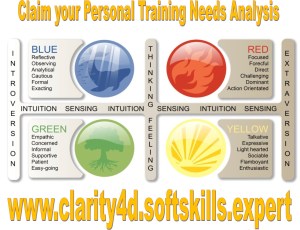
Claim your personal training need analysis

Resources and information are hoarded, and communication is sporadic and formalistic. You’re the one who tolerates or challenges narrow self-interest, big egos, and dominant personalities. Most of the work of educating a team happens in group settings, which may require that you change the way you lead. You can’t just work with your direct reports one to one, setting their budgets and goals in private and coaching them individually as you shift your attention from one part of the business to another. You have to help the group create a picture of the total business and correct any disruptive behaviors in the presence of the team, so you need the emotional strength to direct and stand up to powerful individuals on whom you depend on.

Many leaders think molding a team isn’t worth the effort, but they’re missing a tremendous opportunity to differentiate themselves and build the business. The more people can see the entire anatomy of the company, the team, each and the intersections of its moving parts, along with the broader context in which it operates, the better job they do. When they all see the same facts, discuss their observations and thoughts, and come to understand the interconnectedness of their functions and skills, they’re able to raise the bar, setting higher goals and achieving them faster

So how do you map out your teams strength and weakness and put them all to a positive use in a matter of days?  Clarity4d Profile and Team Profiling solution is designed to give strategies for communicating with people with different personality preferences.

SHAPING A COMMON VIEW OF THE TOTAL BUSINESS

A team of leaders starts being molded when everyone is on the same page. To be on the same page, you first need to understand more about yourself and know more about how others see you.  Once you have identified how personal influence can be enhanced by meeting the needs of others, the team can then move towards getting on the same page.  The key is to develop an internal team dialogue in which each member contributes to the discussion that shapes the team’s collective view of the business— its challenges and opportunities and the resources available. Getting on the same page tests the cognitive bandwidth of not only each member of the team but the team as a whole. Once drawn, however, the conventional picture channels the team’s energy and, more important, provides a reference point for future dialogue as the team members influence and are influenced by their colleagues. The stage is set for collaboration.

FEEDBACK BREEDS BETTER COLLABORATION

Contact us for a Consultation 0203 551 2621

Keep a mental inventory of the skills and methods for getting things done for each member of your team. One team member may be too blunt in arguing a point with others, another may be too shy to participate in debate, and yet another may have a habit of holding back information essential to reaching a good decision. All these impediments to effective teamwork must be clearly identified to the individual, and he or she must be counseled in overcoming them.

Feedback is most effective when given in written form and given frequently, but human beings typically can change only one or two behaviors at a time.

Most people don’t like to give feedback, but they have to look at it from the proper perspective.

Feedback says you’re committed to someone’s development.

Higher performers want to know how to get better, and the only way to achieve this is share numbers, reasoning, and results to share a single view of the business and its context. Having the intellectual courage to confront behaviors that harm the team’s effectiveness. Anticipate, surface, and resolve conflicts. Pick the right people. Provide prompt feedback and coaching. Recognise and avoid derailers.

Having all the right people and great processes isn’t enough. You also have to have the right behaviours and to get the right behaviour people need to understand more about team member’s preferences.

Everything we’ve covered so far needs to be translated into results. The first and most critical step in execution is choosing the right goals. This is where the buck starts. Many leaders are conceptual, high-level intuitive thinkers, this matters because understanding the other variable such as Sensing v Intuition,  Thinking v Feeling thinkers and Introversion thinking v Extroversion thinking can misalign people’s energy within a team.

ARE THE EIGHT KNOW-HOWS BURIED IN YOUR TEAM?
  • Positioning and Repositioning: Finding a central idea for the business that meets customer demands and that makes money.
  • Pinpointing External Change: Detecting patterns in a complex world to put the company on the offensive.
  • Leading the Social System: Getting the right people together with the right behaviors and the right information to make better, faster decisions and achieve business results.
  • Judging People: Calibrating people based on their actions, decisions, and behaviors and matching them to the non-negotiables of the job.
  • Molding a Team: Getting highly competent, high-ego leaders to coordinate seamlessly.
  • Setting Goals: Determining the set of goals that balances what the business can become with what it can realistically achieve.
  • Setting Laser-Sharp Priorities: Defining the path and aligning resources, actions, and energy to accomplish the goals.
  • Dealing with Forces Beyond the Market: Anticipating and responding to societal pressures you don’t control but that can affect your business.

DO YOU KNOW WHO’S PERSONAL TRAITS THAT CAN HELP OR INTERFERE WITH THE KNOW-HOWS IN YOUR TEAM?

  • Ambition—to accomplish something noteworthy BUT NOT win at all costs.
  • Drive and Tenacity—to search, persist, and follow through BUT NOT hold on too long.
  • Self-confidence—to overcome the fear of failure, fear of response, or the need to be liked and use power judiciously BUT NOT become arrogant and narcissistic.
  • Psychological Openness—to be receptive to new and different ideas AND NOT shut other people down.
  • Realism—to see what can actually be accomplished AND NOT gloss over problems or assume the worst.
  • Appetite for Learning—to continue to grow and improve the know-hows AND NOT repeat the same mistakes.

DO YOU KNOW WHO’S HAS THE COGNITIVE TRAITS IN YOUR TEAM THAT COULD IMPROVE THE KNOW-HOWS?

  • A Wide Range of Altitudes—to transition from the conceptual to the specific.
  • A Broad Cognitive Bandwidth—to take in a broad range of input and see the big picture. Ability to Reframe—to see things from different perspectives.

It can get really complicated, but with Clarity4D’s Profiling tools and range of workshops you will find your team members around the world, at home, school or socially easier to communicate with as you become clearer on how you can tend to their preference whilst appreciated your.

Try this simple questionnaire and we will send back your profile report.  We will then explore how it can be used in a team environment. Click here to start the journey to better team building.

http://www.clarity4d.softskills.expert

2 Tips on How To Put Optimism Into Practice On a Daily Basis

Practice being Optimistic each day

Practice being Optimistic each day

Can Optimism be taught?

Being optimistic does not mean forcing yourself to become persuaded that you should always look on the bright side of things. Becoming optimistic is something you can learn. It is a state of mind that is not so hard to assimilate, one that enables you to live quickly the life you want to live.

Optimism is a state of mind

Optimism is a concept that is often poorly explained. Having a high state of mind does not mean that you reject reality because you want everything to be rosy. It means that you can tackle any situation with a state of mind that gives you every chance to take advantage of it or to turn situations around in your favor if you need to.

People often think human beings are either optimistic or pessimistic by nature and that there is nothing we can do about it. This is specifically a cynical way of seeing things! Unfortunately, people often dwell on this incorrect observation.

There are obviously optimistic people. Admittedly, they have an advantage over others, but it does not mean that pessimistic people are destined to remain bleak.

Being optimistic, in a general manner, means that there is a way out of every situation, but it will only show if you do your best, so events turn in your favor.

Being optimistic is not a mere vision of life according to which everybody is good and that all is for the best in the best of all possible worlds, one that consists in denying reality – which often refutes this idyllic point of view.

Being optimistic requires first of all that you be realistic and accept the world as it is: that is, with its positive and negative aspects.

Likewise, you can’t say that people are inherently good because some are, while others are not.

In fact, the truth is more subtle than that because these two tendencies do reside in every one of us. Life consists in expressing our qualities for our own sake but also for that of our dear and near ones or humankind.

To become optimistic, you, first of all, have to be realistic and accept the ambivalence of this world and human beings – they can both be good and bad in turns. The second step is to take action by counting on favorable outcomes to arrive and hoping that the people you’ll meet will adopt a positive attitude. Seeing things this way is fundamental.

First of all, know that, if you are not optimistic by nature, as described in the definition above, you will need some time before you naturally become confident at being optimistic. So, summon your patience. But you may not have to wait for too long if you apply the advice you will find below.

Here is how to bolster your optimism or become optimistic. You may be confronted with two cases:

1.    You have already gone through a situation that did not turn in your favor:

– Do not feel guilty for this failure learn from the experience so you can deal with such a case differently next time.
– Approach the situation in question from a different perspective by visualizing it turning out in your favor and doing what you can so it turns in your favor.

2.    If a situation is unprecedented for you:

–    In this case, it is even easier: approach the situation by visualizing it turning out in your favor and by doing everything you can so things go your way!

These two ways of acting is a learning process which will gradually become second nature to you, helping you to earn one success after another.

Looking for a short course? why not tray five short courses and learn on the move. http://www.crashcourses.academy 

10 Top Tips on How to Influence Online buying by Diane Shawe

Try out 5 Courses this Christmas for just £25.00

Try out 5 Courses this Christmas for just £25.00

The trends and predictions are already in for 2016. Many digital advancements will be made in 2016, from the rise of mobile messaging apps to mobile commerce finally gaining some mojo. 

You the reader even you are becoming more savvy and intend to be heard when things are not going right.  Smartphone use is driving up the number of inbound calls to businesses. Voice-activated search has been rising steadily. Consumers are talking to personal assistants through their smartphones and cars, and those “assistants” are getting smarter. And with the rise of smart watches and connected home devices, they’re talking to a wider variety of devices from various locations.

Marketers need to be prepared and ready to optimise digital content for speech-based (not keyword) queries and learn how to make sure that content can be discovered by personal assistants.

– So what about small businesses, the lone sole trader, what can you do to influence online buying?

  1. Change your ads Your prospects could get bored seeing the same ad all the time. Statistics show people usually see the same ad 7 times before they actually buy. Just change them enough to keep them from being over-exposed. For example, if your ad said. “FREE Killer Marketing E-book!”, you could change it later on to “FREE Sizzling Marketing E-book!”
  2. Give people a deadline to order. Tell people if they order by January 15 2016, they will get a discount or free bonuses. This will create an urgency so they don’t put off buying. Another example, “Order before 8:00 p.m. and get a second product of your choice for free!”
  3. Publish testimonials on your ad copy. They will give your business credibility and you’ll gain people’s It’s important to include the person’s full name and location with the testimonial.
  4. Allow people to make money reselling the product or Tell people they can join your affiliate program if they order. You could pay them per sale, per click, per referral, etc. Just provide them with proven and tested marketing materials, detailed statistics and plenty of affiliate training.
  5. Offer a buy-one, get-one-free deal. If you sell more than one product, this type of deal works People will feel they are getting more for their money and will order quicker. You could also offer them a ‘buy one, get one half’, ‘buy two, get the third one free’, ‘buy two, get a free watch’.
  6. Have them sign up to get access to download a free e-book. The subject of the e-book should be related to your target audience. You could have them sign up to a opt-in list or your regular The e-book should have high perceived value so they’ll take the time to sign up. Landing pages are really good for this.
  7. Give your visitors a free membership inside your Members Only web site or closed membership group on LinkedIn or Facebook. Have them sign up to receive a user name and password or an exclusive invitation. Members groups are particularly good on LinkedIn and your blogs because each time you post some news they get an automatic update.
  8. Offer your visitors free consulting via e-mail. Have them fill out a web form to e-mail you with their When you answer their questions, include an offer for a product you sell or highly recommend products that could help them. You could join the product’s affiliate program to earn commission if they take your advice.
  9. Give people free bonuses when they order your product or The free bonuses could be books, jewelry, reports, newsletters, etc. Make their bonuses sound extra valuable by listing their retail value, either separately or together in one amount, or limiting how long you will offer the bonuses. (you can partner with free gift websites)
  10. Provide free package and postage with all orders. If you can’t afford it, you could offer free P&P on orders over a specific You could also offer a rebate on their P&P costs. Most customers probably won’t send in the rebate card unless it’s a huge shipping cost, for example, £30 or more

Try our Audio Courses this Christmas.

Niche Marketing Made Easy

Produce Persuasive Copyright

Building online Traffic and List Systems

Email Marketing secrets

How to set up and generate a powerful Blog website

The Affiliate Chemistry

7 Habits of Highly Effective People

Internet Business Optimisation

12 Effective selling techniques

50 Best and Worse Business Deals of all time

20 Advertising Tips

Art of Making money

Breakthrough Sales Solutions

Clever Profit Generating Insights

How to Combine Cooperation & Competition

Customer Tested – Buying Triggers

How to work with change

Explosive Influence Tactics

Extreme Persuasion Strategies

Manage your Intellectual Capital

The Servant Power Leadership

Visit www.crashcourses.academy and select 5 course and start listening, watching and learning today.

Where does the hair come from for Hair Extensions? by Diane Shawe

where does hair extensions come from by diane shaweDiane Shawe Author of “How Hair Extensions are Sourced, Treated and Graded” states that the first question all new customers ask is “where did the hair come from”?

They want to know about the geography and even history of the hair and so should you. In her book she covers this question by explaining the characteristics of each variety and summarises the pros and cons.

For instance dealing with the different hair origins.

Get your copy today from amazon.co.uk

Get your copy today from amazon.co.uk

· Origin: China, Eastern Europe, Russia and India

· Grade: Virgin, Cuticle, Non-Cuticle, Processed, Single Drawn, Double Drawn, Remy and Non-Remy

· Type: Caucasian, Asian

Diane’s book goes on to explain in some detail the differences, here we summarise the pros and cons from different regions.

Chinese Hair (Aka Asian Hair): A thick fibre that is naturally straight and dark brown to black in colour.

Advantages: High Quantity, Durability and Low Cost. It is the strongest human hair and is able to withstand multiple chemical and mechanical processes.

Disadvantages: Chinese hair requires extensive chemical processing to output hair that simulates European texture, colour and body. The majority of the hair is collected and processed as double drawn.

Indian Hair (aka Asian Hair, Italian Hair): A variety of fibre types from fine and straight, medium thick with body wave and curly to thick coarse hair. “Italian hair” is actually Indian hair that has been processed in Italy or Spain and then sold at premium prices.

Advantages: High Quantity, Good Quality, Variety and Low Manufacturing Cost. Indian hair is popular to use for custom made hairpieces because it can be made to resemble European hair. When not cuticle correct (non-remy) hair requires heavy-duty chemicals to remove cuticle layers. It is still at a high risk for severe tangling problems.

Disadvantages: Low Quality and Higher Retail Cost. Indian hair still requires quite a lot of chemical processing to make it appear as European hair. To reduce time and materials, many manufacturers choose to work with non-remy Indian hair that results in a poorer quality and most exporters handle the hair badly.

European Hair

(Aka Russian Hair, Caucasian Hair): A fine to medium density fibre that is naturally straight to slight wave and available in a variety of natural colours, most commonly dark blonds to medium browns. The Virgin colours will often be streaked with lighter shades or the ends will be much lighter than the roots due to weathering.

Advantages: High Quality. True Caucasian hair, whether originating from Russia, Eastern Europe or even the United States, is the best quality for the European and American market.

Disadvantages: Low Quantity and quantity and High Cost. It has always been an availability problem and is becoming more difficult to source lengths longer than 15 inches and of a good quality.

For more information about Diane’s extensive work on hair loss and consultancy, please see her website

For a copy of her book you can visit Amazon and download the full version or a sample “How Hair Extensions are Sourced, Treated and Graded”

Getting you qualified in the Hair Extension Sector

Getting you qualified in the Hair Extension Sector


Managing Pressure and Maintaining work balance

How to manage pressure at work 1 day course

When things are extremely busy at work and you have your hands full with many tasks and dealing with difficult people, having skills you can draw on are essential for peace of mind and growth. This one-day course will help participants understand the causes and costs of workplace pressure, the benefits of creating balance, and how to identify pressure points. They will also learn how to apply emotional intelligence, increase optimism and resilience, and develop strategies for getting ahead.

This one-day workshop will help participants learn how to:

  • o   Apply a direct understanding of pressure points and their costs and payoffs
  • o   Speak in terms related to emotional intelligence, optimism, and resilience
  • o   Create a personalized toolkit for managing stressors and anger
  • o   Work on priorities and achieve defined goals

 Cick to book your seat now.

Course Overview

You will spend the first part of the day getting to know participants and discussing what will take place during the workshop. Students will also have an opportunity to identify their personal learning objectives.

Under Pressure!

To begin the course, participants will explore the causes and costs of workplace pressure as well as the benefits of creating balance. Participants will also learn what their pre-assignment score means.

Getting to the Heart of the Matter

Next, participants will learn how to identify their pressure points and create an action plan to manage them. They will also learn some tips for facing problems and when to seek help.

Emotional Intelligence

In this session, participants will learn about the seven human emotions and Plutchik’s wheel of emotions. They will also learn how to validate emotions in others, build optimism, and develop resilience.

Coping Toolkit

This session will give participants some ways to manage stress, cope with anger, and express themselves assertively.

Getting Organised

To wrap things up, participants will learn some ways to get organised and reduce pressure set up a action plan.

Workshop Wrap-Up

At the end of the course, students will have an opportunity to ask questions and fill out an action plan.

http://academyexpresscourses.com/2014/03/28/high-blood-pressure-hypertension-the-new-aids-epidemic/

nido how to move forward

http://www.shortcourses.expert

0203 551 2621

THE THREE REASONS COMPANY STORIES FALL SHORT OF EXPECTATIONS

Develop your interviewing skills

Develop your interviewing skills

The company story is a composite of how you represent yourself to employees, supplier, customers, and the general public.

It is tied closely to your reputation, reinforced by your integrity, and defined by your behavior. Your story is the essence of who you are, what you believe in, and how you act out your character in a business play. Think of your story as if it were presented in a theater. Your story can be a comedy, a tragedy, or a musical. There will be a cast of characters, some good, others not so good, each telling their own version of the story.

article by Diane Shawe

Most organisations are in trouble because their main characters in the play, the managers or owners, tell stories that don’t  hang  together. Three problems are associated with their composite company story. First, the story is badly told; second, it is not acted out in a coherent manner; and third, it doesn’t ring true. The sales department is living one story while operations follows a different theme. Finance has its own world while marketing occupies still another cloud. Is it any wonder employees are confused? They seem to be working for different companies simultaneously.

When a Story Is Badly Told

A badly told story has its roots in an incomplete business plan. Most organisations have bits and pieces of the items making up the plan. Managers are usually proud they have a philosophy statement posted in the lobby. They point in triumph to the value statements listed in the company literature. Somewhere you will be shown a vision. Each of these elements is appropriate and necessary in both a well-constructed business plan and an authentic story.

If a single element is missing from the plan, the story is incomplete. The danger of an incomplete story is evidenced when the flaws show up in execution of the plan. An incomplete business plan results in a frag- ile document presenting a story that doesn’t ring true. An incomplete model implodes.

When there is no vision statement for instance in a story. any well-written plan with all the pieces will not stack up if the vision portion is lacking.

Time management Mindfeed 4 by Diane ShaweWhen the Story Pieces Don’t Add Up

Failure to virtually linked to the elements  also contributes to an incomplete story. Because the parts and pieces are not interconnected there is no coordinated, disciplined implementation. It is possible to actually have the elements working against each other. For example, values may contradict the philosophy. The vision and mission could be disconnected. Principles could be developed that cancel each other. These disconnected behaviors cause customers and employees to hold the company management suspect. They sense something is not right or it is just not working.

When the Story Isn’t Believable

Another equally fatal flaw in telling a story is to be incongruent. For example, you claim to love customers then treat them badly. You claim to value employees yet they become targets of opportunity for reengineering or down sizing, even in good times. You profess to provide the best products in your industry yet they don’t work as advertised.

People are astute and getting smarter especially with the powerful smartphone in the palm of their hands. They pick up on the fact you don’t live your own company hype. Your story simply isn’t believable. Consider public awareness of a company’s environmental protection position. Let one incident occur then watch the media have a field day with the inconsistencies. Politicians suffer the same fate when they make public promises they cannot keep. They become inconsistent with their story, telling each special interest group what the group needs to hear.

The Antidote to a Badly Managed Story

There is an antidote for a badly managed story. The key is building a congruent story by eliminating the very issues that create incon- gruence. The first step is to get a business plan in place. To do it as defined in this text, you will be forced to deal with the key planning elements as discrete elements and then again as an integrated framework. This is the only known process to make the message authentic, congruent, and believable.

Being authentic requires truth and hard work. It requires an acknowledgment of who you really are in terms of what you believe in, how you behave, and what you expect. If yours is a lethargic organisation, don’t claim high performance. Being authentic means identifying all the problems in your system, communicating to employees that you know the problems, and finally telling them how you intend to fix those problems. Everyone must share this hard work across the range of business activities and down the management structure. Everyone must participate in careful organisational analysis and the required actions to fix the problems.

Being congruent requires constant vigilance on the part of the whole management team. This means you must do what you say— every single time. There are situations where you will slip. Honest mistakes are okay. Employees do not expect their management to be perfect. They do expect them to live up to their word and match word and deed.

Reaching a state where you and your management team are believed is a journey with history working against you. A mis management example made public doesn’t help your case. Building trust to counter this history is not an overnight event. After your story is completed, communicated, and demonstrated you will experience hesitance and resistance from employees. They won’t be quick to jump on your train. There will be a test period to see if you really meant what you said or if this was simply an annual pep talk from upper management. Remember two points: Employees have heard it all before, and actions speak louder than words.

Are you focused, productive, transactional or inspirational? by Diane Shawe

shortcourses expert bannerBeing busy isn’t the same as being productive, but how do you assess what you need to do to improve both your productivity and your staff?

Would an online Personal Training Need Analysis that takes about 10 minutes help?

Then  CLICK HERE TO TRY ONE FREE Personal Training Needs Analysis and in as little as two hours you can judge for yourself if it would be of use in your business.

Would it help if you could find out how to get the best out of your employees?

Would it help to be able to speed up Pre-Interview selections, Staff Appraisals, Training Needs, Personal Development, Management Selection, Team building and any of those otherwise expensive long winded, time consuming and expensive process?

Well click on our complimentary link to see how it works, I promise you will not be disappointed.

What most people, employers, entrepreneurs and even some educational institutions do not have in today’s current environment is time, the necessary resources and the infrastructure they need to support and achieve learning objectives cost effectively.

Out with the Old in with the new but who is going to be ready at the ‘Start Line’ with all the right tools to assist with the new Continued Competences?

We can offer a person centric online Personal Training Needs analysis tools and  reports to aid in the development of any individuals or organisations growth. The profiles and learning programmes are designed to help reduce risk and to create action and results.  Goal setting is no good without implementation.

We invite you with our compliments to click and complete 10 simple questions and we will send you back a report so that you can see how it works and give us your feedback.

In order to better identify and appraise an individual to pinpoint specific training needs, the Speed of Implementation and adaption to change will confirm who gets ahead or sustain growth by using technology to help with self appraisal, self reflection and personal development.

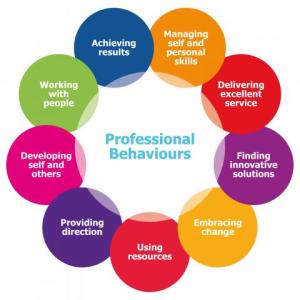
However, the new skill set or competencies, aims to define the standards needed to enter, compete and remain in the profession which mainly comprise of the following:

  1. Ethics, professionalism and judgment;
  2. Financial Literacy and Technical ability;
  3. Managing yourself and your work;
  4. Working with other people.

That said, in order to meet these new core competencies, individuals and organisations will be required to undergo a process of self-reflection through a high-level Personal Training learning needs analysis to identify their own learning gaps; as well as identify gaps specific to those needed by the organisation they work with. Ideally, this process will be recorded and accompanied by an evaluation of the success of the learning completed and ultimately, organisations will be required to make an annual declaration that they have considered and taken action to address Point of Need training.

We look forward to your feedback once you get your free report back and then maybe we can discuss the speed of implementing this process throughout your business or consulting services.

Just click here now and in just 10 minutes you would have completed 10 questions and we will send you back the results.


Why strategies for modernising corporate learning should focus on learning outcome cover by diane shawe


“The only thing worse than training people and having them leave, is not training them and having them stay”


What do we do..

We specialise in resourcing short courses via a pre-populated LMS solution for Point of Need Training via mobile devices so that all different levels of staff can access training whilst on the move using their own device supported by one off our virtual tutors to help them complete their online 4 weeks course.

Creating a Win Win situation is not just about Selling

Negotiations outside the box

Negotiations outside the box

Keeping an Open Mind

article by Diane Shawe M.Ed

Have you ever started working on a project and had someone come along with an idea you never thought of that made the project much better? Perhaps it sped up the process, gave it much more depth or meaning, or led to a richer result in some way.

If you were closed-minded about the project, you would not have even noticed that someone came to you with a better suggestion. Being open-minded, however, allowed you to recognise the value and merit of someone else’s ideas, and voila! Things worked out much better than you had ever imagined.

When you apply open-mindedness to negotiating, it helps to support your flexible and adaptable nature. For example, perhaps you set your mind to negotiate the best price you can, but your counterpart approaches you with a better price than you had imagined as your benchmark. If you are open-minded, you hear what your counterpart proposes. If you are closed-minded, you are so focused on the outcome that you might not hear what they offer at all, and you may actually negotiate yourself a weaker deal.

Not every negotiation is about reaching a win-win solution. Sometimes, not everyone can win. For example, when an organization is preparing to downsize, the employees may be looking for the most benefit they can get, but they know that they will not have a job in the end. In collaborative negotiations, your real objective is to reach the best possible result for all parties. This might include some compromise, and should always involve working toward relationships.

Long Term and Short Term Relationships

CPD FrameworkWhen you consider relationships in negotiating, the length of the relationship is very important. If you are negotiating with someone that you will never see again, and with whom you have no investment, go ahead and put everything on the table. This would be the case if you were bargaining about a one-time purchase (such as furniture or a television from a commission based salesman, for example). In many cases, however, you may be looking at a much longer-term relationship. In the case of labour negotiations, many unions have strong negotiators who work with them for many years.

The union negotiators are skilled professionals, and they may approach your meetings very confident that they, themselves, will be around much longer than the current group of managers and negotiators that the employer has. If you are an employer negotiator, you will want to consider the long-term effects of the relationship that you foster, as well as the specific terms that are agreed upon. Expect, for example, that if you are currently negotiating wage or benefit rollbacks, the union is going to be very resistant, and that if you are successful in negotiating those reductions, the union is going to negotiate their reinstatement at the next round.

Labour negotiations are about long-term relationships. Consider also that the terms that you bring up in this kind of negotiation will have a long lasting effect on the company and its employees. The union knows this too, and that it is important to realise that the negotiations are a part of a long-term relationship that can be strengthened or damaged by the results of the negotiations that you are taking part in.

When you are thinking in terms of relationships, be ready to leave some items on the table. That means that some items that you thought were important may not be considered in this round of negotiations. This is one of the times when detaching yourself from the outcome is important; there will be other opportunities to work with this contract or similar ones again, and those may be the times that you will be able to bring those other items to the fore.

Go back

Your message has been sent

Warning
Warning
Warning
Warning

Warning.

branding-mindfeed-ebook-by-diane-shawe
About the Author

Diane Shawe is a speaker, trainer, mentor, consultant, entrepreneur and author with 15 published titles on Amazon.   With more than 25 years of experience. She has personally trained over 2800 people around the world in a variety of fields and has published a number of works. She has contributed to over 100 Kiva Entrepreneur’s around the world.

She was also one of the producers of a Day time Ladies Talk Show in 2015 and Host of one of the UK’s best loved Annual Hair Extensions Awards.

Diane also enjoys oil painting, sailing and clay pigeon shooting. She focuses on topics that she is passionate about in her writing and has attracted over 36,000 followers on her popular blog.

Media Contact
Company Name: AVPT Short Courses
Contact Person: Diane Shawe MEd
Email: Send Email

Phone: +44 208 1333120
City: London
Country: United Kingdom
Blog Website: http://www.academyexpresscourses.com
Training http://www.hairextensionstraining.academy

Diane Shawe’s eBooks are available on Amazon right now at: https://www.amazon.com/Diane-Shawe/e/B0052WG8V6

Diane Shawe Social media links http://www.phollo.me.com/expresscourses