Tag Archives: books

Why Readers Should buy Diane Shawe’s latest book – “What happens when you stop Hiding”

What Happens When You Stop Hiding is a bold, uncompromising guide for women and marginalised people of colour who are tired of shrinking, second-guessing themselves, and carrying the emotional weight of systems never built for their thriving.

From a scholarly perspective, this book stands out because it merges psychological insight, cultural critique, and practical transformation tools, all while maintaining an accessible, compassionate voice.

From the very first pages, Shawe reframes visibility as a human right rather than a performance. She reminds us that labels—race, gender, sexuality—are social constructs created to confine rather than liberate . This human-first framing sets the tone: the reader is invited not to become someone new, but to return to the self that existed before shame, fear, and external judgment took root.

What Makes This Book So Impactful

🔥 1. It addresses the wounds no one talks about—honestly.

Each chapter tackles a form of “hiddenness” that affects women and people of colour daily:

Imposter syndrome and self-erasure (Chapter 1: “The Mask of Modesty”)

Unsafe family dynamics and childhood emotional neglect (Ch. 2–3)

Cultural and religious conditioning that punishes authenticity (Ch. 4)

Workplace tokenism and microaggressions (Ch. 8)

The silent burnout experienced by high-functioning achievers (Ch. 7)

Shawe does not shy away from the deeply personal or socially uncomfortable. The case studies—Amina the hidden tech genius, Tasha the undermined sister, Priya the overlooked community organiser—make the struggles tangible and relatable.

🔥 2. It’s not theory; it’s a blueprint.

Every chapter includes:

Reflection prompts

Practical steps to reclaim power

Behavioural patterns to recognise

Scripts, reframes, and healing exercises

Real-life stories that mirror the reader’s journey

For example, the “Are You Still Hiding?” assessment provides immediate self-diagnosis, inviting readers into awareness rather than blame .

🔥 3. It validates identities historically dismissed or silenced.

Shawe explicitly centres:

Black and Brown women

LGBTQ+ people navigating cultural and religious shame

Single mothers judged rather than supported

People navigating class, body-image, and professional bias

This inclusivity is not symbolic—it is woven into every page. The chapter on the “Silent Spiral” even explores mental health in the context of public visibility and societal expectation, capturing the emotional cost behind polished success .

🔥 4. It is written with both warmth and authority.

Shawe balances academic insight with a deeply compassionate tone. She doesn’t write at the reader; she writes with them. The text acknowledges pain without glorifying it, and offers practical liberation without minimising systemic realities.

🔥 5. It creates transformation, not just inspiration.

By the time the reader reaches the sections on rebuilding identity, creating new boundaries, detoxifying inherited beliefs, and rewriting their personal story (Ch. 16; Closing Sections) , the journey feels both emotional and actionable. This is not motivation; it is method.

⭐ Why Readers Should Buy This Book

Because it helps you stop apologising for your existence.

Because it names wounds you’ve carried quietly for years—cultural, familial, internal, spiritual—and gives you the tools to dismantle them.

Because it teaches you how to recognise emotional manipulation, systemic bias, family dynamics, and internalised fear, and then shows you how to reclaim your voice, dignity, and clarity.

Because it is a mirror and a map—a guide that reflects your hidden struggles and leads you toward a more visible, self-aligned future.

And because it speaks directly and powerfully to anyone who has ever felt undervalued, unseen, or underestimated.

Readers will walk away feeling understood, strengthened, and equipped to step into a new chapter of authenticity and empowerment.

📘 Ready to stop shrinking and start standing in your power?

Unlock your confidence, break old patterns, and reclaim your visibility with What Happens When You Stop Hiding — a transformational guide for women and marginalised people of colour.

🔥 Discover practical tools, real-life case studies, and powerful mindset shifts that help you stop apologising for your brilliance and start leading with authenticity.

👉 Take the first step toward your breakthrough — buy your copy today and begin the journey to a more confident, visible, and empowered you.🔗 Get the book now: What Happens When You Stop Hiding by Diane Shawe

Specialist Salon vs. General Salon: Which Model Wins in Today’s Market?

In a competitive beauty industry, salon owners face a criti Ical decision:
Do you aim to serve everyone, or do you specialise and dominate a niche?


As the founder of Need a Hair Makeover®, an award-winning Specialist Hair Extensions and Hair Loss Salon Franchise, I’ve seen both models up close — and the difference is striking.

If you’re thinking of opening your own salon or investing in a franchise, this direct comparison will help you choose the best path forward.


🏪 General Salons: The Jack-of-All-Trades Model

✅ Pros:

Serves a broad customer base
Familiar to most consumers
Easier to staff with general stylists
Variety of services from cuts to colours


❌ Cons:

High competition — every high street has one
Harder to stand out or build loyalty
Lower average spend per client
Must constantly discount to attract footfall
Vulnerable to economic downturns


💼 Specialist Salons: The Expert-Focused Approach

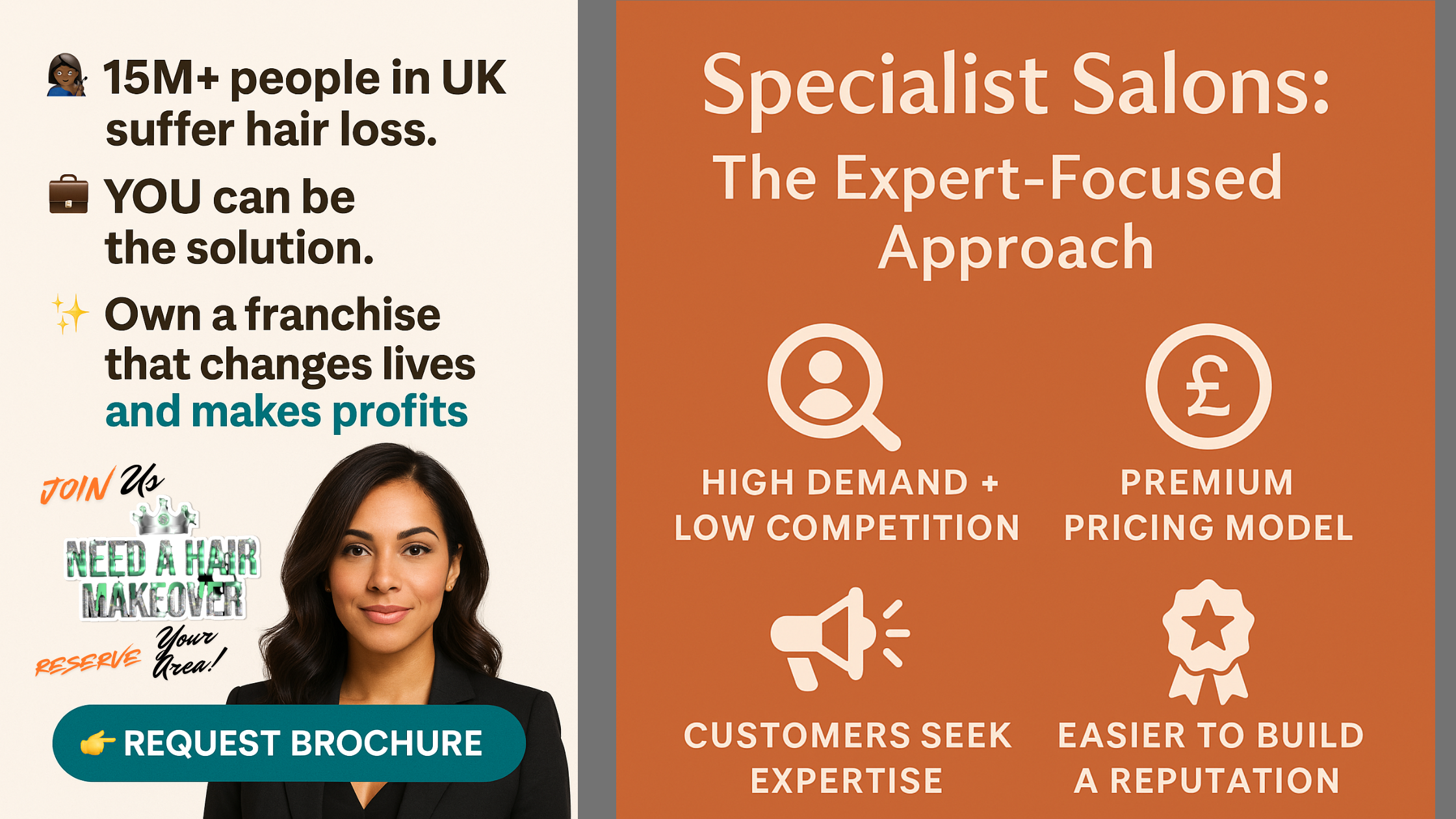
A Specialist Salon focuses on solving a specific, high-impact problem — such as hair loss, extensions, or textured hair care.

At Need a Hair Makeover®, we cater to clients with hair loss, thinning, breakage, or post-chemo recovery, providing non-surgical solutions and instant confidence restoration. That changes everything.

✅ Pros:

High demand + low competition
Premium pricing model
Customers seek expertise, not just convenience
Easier to build a reputation and attract press
Supports specialised services, training, and innovation
Attracts loyal, high-value clients with ongoing needs

❌ Cons:

Requires specialist training (we provide this)
Must be positioned correctly in marketing
May limit walk-in traffic if not branded well


📊 Real Talk: Which Model Wins?

Factor General Salon Specialist Salon

Profit Margin Moderate High
Customer Loyalty Medium Very High
Ease of Startup Easy Supported via franchise
Market Saturation High Low
Scalability Moderate High (if franchised)
Marketing Edge Weak Strong — you’re solving a problem

💡 Verdict: In today’s economy, specialists win. The market craves experts — not generalists — especially when it comes to confidence, appearance, and identity.


🧩 The Gap in the Market

There are millions of people in the UK experiencing hair loss due to:

Alopecia
Chemotherapy
Hormonal changes
Stress
Ill health and medication
Hair damage from styling

Very few salons are trained or equipped to help — let alone in a dignified, professional, specialist setting.

That’s the gap. That’s the opportunity. People don’t just want creams and lotions, they are looking for instant gratification that makes them look normal and improves there self esteem.

🚀 Why We Chose the Specialist Franchise Model

Need a Hair Makeover® started from a personal experience of hair loss and evolved into a brand that empowers others — from clients seeking transformation to franchisees ready to own a purpose-led business.

Our model includes:
Full CPD-accredited training
Salon setup support
Product sourcing and supply chain access
Ongoing marketing and business coaching

We help you own your zone of genius — not compete in a race to the bottom.

📥 Ready to Step Into a Niche with Power?

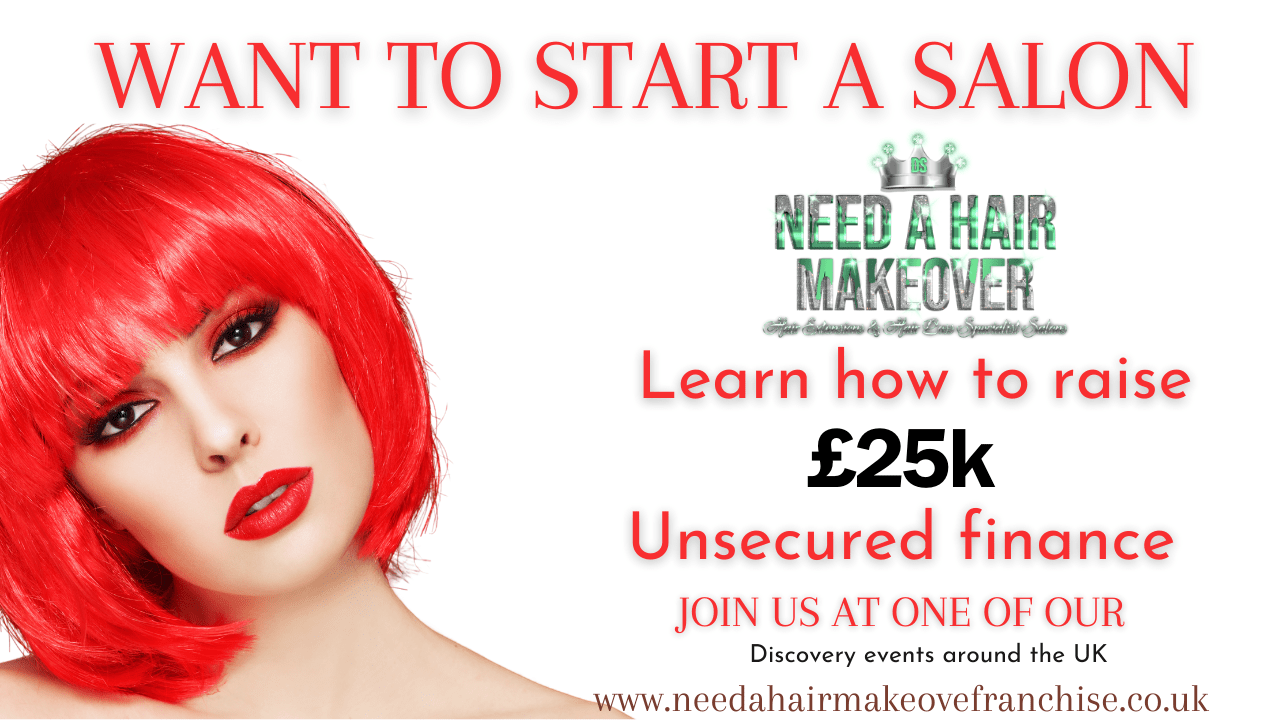
🔓 Request and Download the franchise brochure:
👉 https://needahairmakeoverfranchise.co.uk

🎥 Watch our video
https://youtube.com/shorts/E2_xC_wGwu0?si=G11x23-AWQGJ5Uia

✍🏽 Final Word

Being a generalist may feel safe, but the future belongs to specialists.
In a world full of salons, it pays to be the one salon that truly solves a problem.


📣 Let’s Talk

👉 Interested in launching a specialist salon franchise?
👉 Curious about the real costs vs. benefits?
👉 Want to stand out in a saturated industry?

Message me or apply online — your expert salon journey starts here.

#HairExtensionsFranchise #HairLossSalon #SpecialistSalon #SalonStartup #DianeShawe #FranchiseWithSupport #BeautyBusinessUK #SalonOwners #HairLossHelp #AwardWinningSalon

How My Teacher Almost Dashed My Dreams Of Writing

wear your pretty shoes well by diane shawe884346925..jpg

When I was 8 years old I remember my teacher Mr Lester ripping up my homework and accusing me of copying the story I wrote for my homework that week. I remember it was a story about being lost in the woods at night, I use to be afraid of the dark back then.

I cried and said I hadn’t copied it, he gave me detention on top of that and called me a liar.

I was so embarrassed and ashamed I never did well in English Literature again just to spite him I thought but really he had squashed my confidence.

16 books later all published on Amazon with my most recent which took 3 years to write and a healthy vibrant blog with over 35k followers which I have been nurturing since 2010

Do you think adults in position of influence realise what they can do to a child?

Never let negative people define who you are or what you want to become.

Coaching is also important and if you want to propel your vision coaching can help you stay laser focused with a strategic plan

Download your copy on #amazon today https://goo.gl/gm9t2U

Diane Shawe’s eBooks are available on Amazon right now at: https://www.amazon.com/Diane-Shawe/e/B0052WG8V6

Here’s the Main Reasons Adult Education is Broken and I’ll Prove It To You

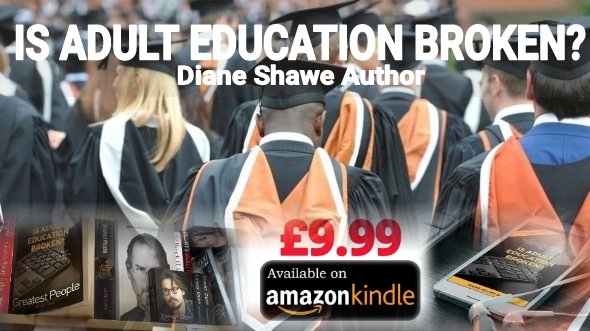
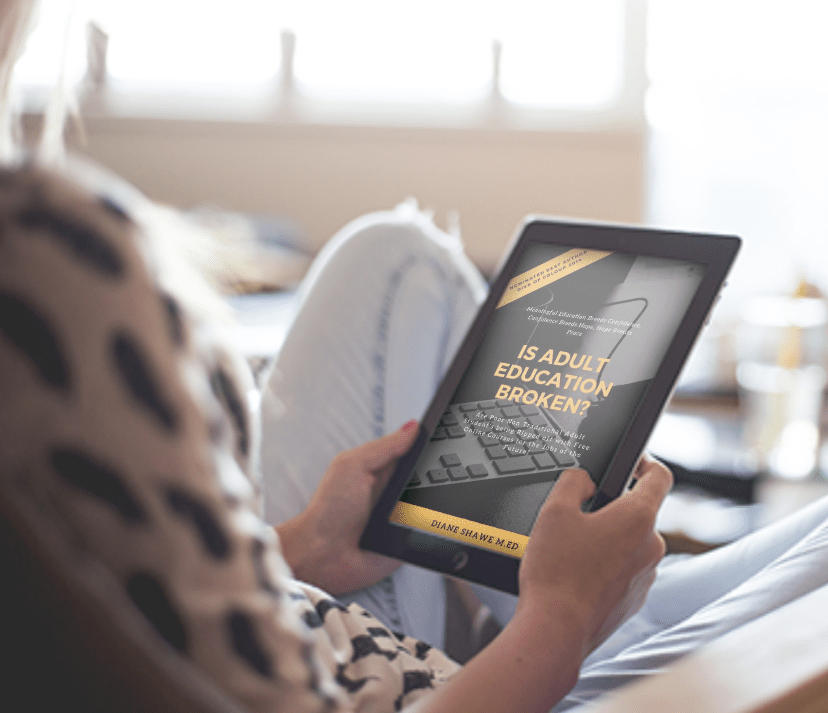
Is Adult Education Broken?

Is Adult Education Broken by Diane Shawe Author (4)
Adult education has become undervalued in an overpriced educational infrastructure.

The people who need the most help are already systematically ripped off by greedy loan companies, NHS parking, having to pay charges for drawing out their own money from private ATM machines in poorer boroughs, pre-paid electric meter’s to name but a few.

The more you seem to need help the more you seem to have to pay.

Off course, the arguments are always about risk, but to compound on top of their needs, a premium, just to make sure the risk is compensated for is questionable indeed. But another kind of ripping off is taking place. ‘Free online education’ you may ask ‘why is this a rip-off people”?
I will answer this from my perspective initially and then make further arguments as to why we should be very concerned about this un-policed, unchallenged butchery of the values originally infused into our adult educational system.

Is Adult Education Broken by Diane Shawe Author (2)So if you all but think Adult Education is Broken and all but given up, this book spills the beans on what has gone wrong, what questions need to be addressed and if certain issues are tackled by Government, then there’s Hope,

As Isaac Asimov—a master of science fiction literature—once said:

“No sensible decision can be made any longer without taking into
          account not only the world as it is but the world as it will be.”

So the big Question is – What has happened?

  • Why have these large institutions priced education out of some fundamental principles?
  • Why on the other spectrum are all these free courses flooded the market?
  • How can we make the new economic age enhance, rather than diminish, our quality of learning?
  • How can we make this amazing innovation advance the prospects of all people especially those with or without experience and not just for the youth?

It is clear that at this moment most educational systems are not keeping pace with changing technology and the ever-evolving world of work.

Is Adult Education Broken by Diane Shawe Author (5)

“If unemployment formed a country it would be the 5th largest in the world”

                                                  Isaac Asimov

 
Not enough people are thinking strategically enough in this area.  Fundamentally, we need to change what people learn, how people learn, when people learn, and even why people learn.

We must get beyond the traditional model of students sitting passively in classrooms, following instructions and memorising material that they are tested and scored on which sometimes turn out to be of little use in an every changing economy.

“It is not the strongest or the most intelligent who will survive but those
                                     who can best manage change.”                       Darwin

Throughout the ages, every human society has experienced challenges adjusting to population growth, maintaining structural order and creating channels for future generations. How well a society prepares the next generation for survival is imperative for the society as a whole but we have stalled in this process.

There seems to be a range of systemic failures such as

: failure to find a formula to develop teachers convergent and divergent Is Adult Education Broken by Diane Shawe Author (3)facilitating skills

: failure to consider cultural relevance
: failure to develop enterprising and entrepreneurial skills
: failure to prepare about taking personal responsibility
: failure to provide adequate technology and supporting curriculum
: failure to encourage international engagement
: failure to manage growth of academic misconduct

Diane Shawe Author states that “the traditional belief that we must prepare ourselves to be ‘employable’ is under threat. The counter argument encourages us to ‘gear up’ for earning our own money, rather than seeing income as someone else’s responsibility”
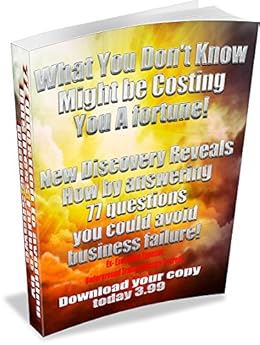
With the population dramatically aging and low-level jobs increasingly swallowed up by machinery, entrepreneurship will be a necessity for many, rather than a lifestyle choice for some.

SMEs are of course already leading this charge but in order to gear up for the future we need to start off by asking a serious question, defining criteria’s and examining trends, impact these trends will have and plan a way to jointly prepare current and future generations to be both employable and entrepreneurial.

We are living in a new economy—powered by technology, fueled by information, and driven by knowledge. And we are entering the new century with an opportunity on our side but huge problems that require new thinking.

claim free course now

Is Adult Education Broken by Diane Shawe Author (12)
Click to find out more about creating your own On Demand Digital Course Library

How to create a digital on demand course library


14 of the most inspirational books for entrepreneurs

Diane Shawe M.Ed

A man is just the product of his thoughts. What he thinks he becomes. Mahatma Gandhi

Can a book really inspire an entrepreneur?

article by Diane Shawe M.Ed
CEO of AVPT GLOBAL s.a.r.l

Every once in a while, you read a book that changes you — inspiring your career, clarifying your goals, challenging your thinking. The right book can give you the courage to start your business, the reality check that you’re not yet ready or the quiet affirmation that you’re not alone in your fears or ambitions. It can set you on your path to success.  I have chosen 14 books one of which includes my own. I hope you like them.

Who Moved My Cheese? is an amusing and enlightening story of four characters who live in a maze and look for cheese to nourish them and make them happy. Cheese is a metaphor for what you want to have in life – whether it is a good job, a loving relationship, money or a possession, health or spirital peace of mind. And the maze is where you look for what you want – the organisation you work in, or the family or community you live in.

This profound book from bestselling author, Spencer Johnson, will show you how to anticipate change, adapt to change quickly, enjoy change and be ready to change quickly again and again. Discover the secret for yourself and learn how to deal with change, so that you suffer from less stress and enjoy more success in your work and in life.

Written for all ages, this story takes less than an hour to read, but its unique insights can last for a lifetime.

Spencer Johnson Author Publisher: Vermilion; Reprinted Ed edition (4 Mar 1999)

Atlas Shruggedby Ayn Rand (Plume, 1999)

“To start a business, you just need to define a problem. But to wake up every day, no matter what, and DO that business, you need a reason. Ms. Rand taught me that focusing on a purpose is the best way to make a difference to my world.” — Jason Womack

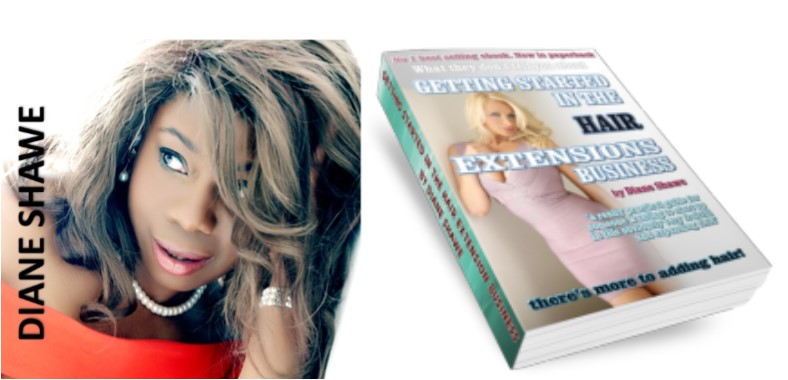
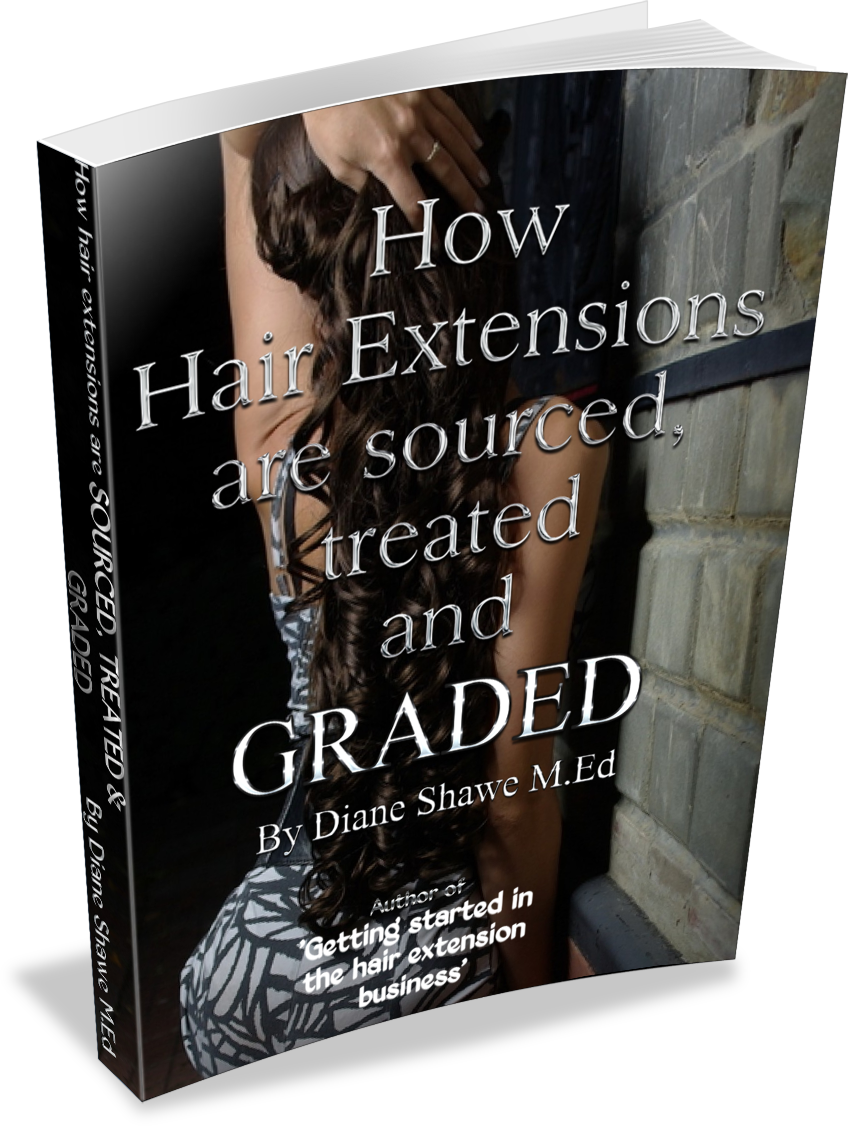
Getting started in the hair extension business by Diane Shawe 2007

Diane Shawe Author getting started in the hair extension business

The first ebook to advise you on ‘What they don’t tell you about Getting started in the hair extension business’ by Diane Shawe. Whether you are a beginner, been in business for a few years or want to explore how you can increase your annual turnover, this is an book designed to help you prepare yourself. A book for students, mobile hairdressers, professional hairdressers, beauticians, any one considering starting up in the hair business, hair consultants and specialist technicians. Useful for schools and colleges, private training schools and anyone currently running a hair and beauty business.

Diane Shawe Author Publisher: PMM Group (UK) Ltd (18 May 2011)

Ogilvy on Advertisingby David Ogilvy (Vintage, 1985)

“I read [this book] when I was in college, studying marketing. It helped me to cement that this was the field for me and that at the end of the day, it’s all about creativity. Although at the time it refered to advertising, it’s actually applicable to all parts of the marketing mix. Ogilvy gives rules, but then breaks them. I love it!” — Jim Joseph

The Richest Man in Babylonby George Clason (Megalodon Entertainment, 2012)

“This was one of the first business books I read and it taught me that ‘saving’ money is equally as important as ‘making’ money. I’m now requiring my teenage children to read the book and report back to me on how it impacted them.” — Mark Kohler

The Leadership Challenge, by James Kouzes and Barry Posner (Jossey-Bass, 2012)

“This book was seminal for me early in my business career. It brought structure and insight to the at-the-time mysterious subject of leadership, and it addressed matters of both the head and heart.” — Mark Sanborn

The 4-Hour Workweekby Tim Ferriss (Harmony, 2007)

“This book helped me in two very distinct ways. First, it opened my eyes to how business can be sourced and conducted globally for even the smallest of businesses — the global economy isn’t limited to the big corporations anymore. Second, it was life changing because it made me, as an entrepreneur, ask deeper questions about what I want out of life, not just the business.”
Shari Alexander

Tribal Leadership, by Dave Logan, John King and Halee Fischer-Wright (HarperBusiness, 2011)

“Despite conventional wisdom, research reveals that naturally forming small groups of people within organizations, and not leaders, drive success, quality and innovation. This book provides a great framework for companies to build a culture of success, quality and innovation.”
Ross Kimbarovsky

The Art of War, by Sun Tzu (Simon & Brown, 2013)

“I especially find this book to be helpful for businesses that are in the early stages of development as it teaches them to prepare for the many types of situations they may experience. As we all know, one of the biggest obstacles to overcome as an early-stage company is managing the element of the unknown. Strategy and preparation can, in many ways, guide a company and help mitigate future mistakes.” — Ryan Himmel

Thinking, Fast and Slowby Daniel Kahneman (Farrar, Straus and Girouxby, 2013)
The Seven-Day Weekendby Ricardo Semler (Century, 2004)
The Logic of Scientific Discoveryby Karl Popper (Routledge, 2002)
The Happiness Project, by Gretchen Rubin (Harper Paperbacks, 2011)
Crush It!, by Gary Vaynerchuk (Harper Studio, 2009)
Steve Jobs, by Walter Isaacson (Simon & Schuster, 2013)

1 a good deal