Category Archives: online colleges

Author Diane Shawe Mindfeed Coffee ebooks get featured on Fox News

Available from Amazon

Available from Amazon

October 10, 2016 – City of London, United Kingdom –Need help getting organized? Want to learn how to take a business into a global marketplace? Looking for ways to improve leadership skills? Then check outThe Little Coffee Break Mindfeed eBooks from IQ 2 EQ by Diane Shawe. This collection of eBooks exposes readers to new ideas and proven strategies, and each can be completed on a lunch break, over breakfast, or while enjoying a cup of coffee.

According to author Diane Shawe, “The idea for the short, powerful eBooks came to my mind when I realized how often people need to brush up on topics, but do not always have time to sit down to read 200 pages. As a result, I have authored several short yet effective eBooks that get right to the point with tips and advice.”

Readers from all across the globe have praised Diane for her eBooks, and the opportunity it gives them to learning new information or refreshing their memory quickly. And with topics ranging from stress management and problem solving, to public relations and networking, there is truly something for everyone.

Mindfeed ebooks by Diane Shawe

Shawe’s eBooks are available on Amazon right now at: https://www.amazon.com/Diane-Shawe/e/B0052WG8V6

Visit www.diane-shawe.co.uk for more information about her other publications, training courses, blogs and fundraising.

YouTube: https://www.youtube.com/watch?v=7wIU4tI8kw0

About the Author

Diane Shawe is an author, speaker, trainer, mentor, consultant and entrepreneur with more than 15 years of experience. She has personally trained over 1800 people around the world in a variety of fields and has published a number of works. She has contributed to over 100 Kiva Entrepreneur’s around the world.

She was also one of the producers of a Day time Ladies Talk Show in 2015 and Host of one of the UK’s best loved Annual Hair Extensions Awards.

Diane also enjoys oil painting, sailing and clay pigeon shooting. She focuses on topics that she is passionate about in her writing and has attracted over 36,000 followers on her popular blog.

Media Contact
Company Name: AVPT Short Courses
Contact Person: Diane Shawe MEd
Email: Send Email
Phone: +44 208 1333120
City: London
Country: United Kingdom
Website: www.academyexpresscourses.com

Press Release Distributed by ABNewswire.com

To view the original version on ABNewswire visit:15 Must-Own Books No Serious Entrepreneur Should Ignore

15 Must-Own Books No Serious Entrepreneur Should Ignore – FOX5 Vegas – KVVU
http://www.fox5vegas.com/story/33305573/15-must-own-books-no-serious-entrepreneur-should-ignore

Information contained on this page is provided by an independent third-party content provider. Frankly and this Station make no warranties or representations in connection therewith. If you are affiliated with this page and would like it removed please contactpressreleases@franklyinc.com

Why you should switch to Raw Cocoa

cocoa-powder-lead-jpg-653x0_q80_crop-smart

THE HEALTH BENEFITS OF RAW CACAO

Magnesium

Raw cacao is one of the best food sources of magnesium – a mineral that many of us don’t get enough of in our diets. Magnesium is essential for energy production, for a healthy brain and nervous system, for our muscles and for strong bones and teeth. Magnesium may also support a healthy blood pressure.

Iron

Cacao is also a source of iron, which builds the blood and helps to transport oxygen around our body, as well as potassium, copper, zinc, manganese and selenium.

Flavonoids

Cacao can also be high in flavonoids, which have antioxidant activity. Cacao and flavonoid-rich chocolate have been linked with heart health benefits including increasing the good form of cholesterol (HDL) in our blood, lowering blood pressure and even improving vascular function in patients with congestive heart failure. These effects are thought to be primarily due to the antioxidants contained in the cacao.

PEA

In addition, cacao contains a compound called phenylethylamine (PEA for short!). PEA is thought to elevate mood and support energy, and is said to be one of the reasons that many people love chocolate!

Raw cacao is also very low in sugar, and of course does not contain any milk, so is suitable for those who are milk-sensitive or following a low-sugar diet.

THE PROBLEM WITH CHOCOLATE

The cacao – or cocoa – part of a chocolate bar is not ‘unhealthy’ as such. The main factor that makes it less healthy is the sugar that’s added to it to create a standard chocolate bar. Also, when cacao is roasted to make a standard chocolate bar, you do lose some of the antioxidant flavonoids, beneficial enzymes and other nutrients – which of course doesn’t happen with raw cacao or raw chocolate.

So what about painfully dark chocolate, you know the 99% cocoa solids stuff? Cocoa solids are what’s left after the cacao butter (the oil in the cacao bean) has been separated from the ground up raw cacao beans. Cacao solids are used to make cacao powder. ‘Raw cacao’ can refer to the whole beans, opl

the solids, or the powder, as long as it is not heated during processing. It is this heating process that robs some of the nutrients.

Don't forget to use the Discount Code when you order

Don’t forget to use the Discount Code when you order

Source: http://www.womenshealthmag.co.uk/weight-loss/healthy-eating/2736/health-benefits-of-raw-cacao-over-chocolate#ixzz4MZm1GgNU

Read more: http://www.womenshealthmag.co.uk/weight-loss/healthy-eating/2736/health-benefits-of-raw-cacao-over-chocolate#ixzz4MZipYusd

Have you checked your business Energy Field lately?

Global Business Strategy

Global Business Strategy

THE INVISIBLE FORCES THAT HOLD YOUR COMPANY TOGETHER

I have recently read several articles about Storytelling.  I have however come to realise that the objective of a well-crafted , complete story is to create synergy.

article by Diane Shawe M.Ed

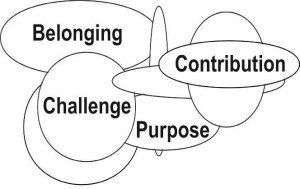
This combined effort or synergistic effect produces energy in many places within the company. These fields of energy become an invisible force that holds your company together (see Figure 1-). While the concepts of field theory are still relatively new as they are applied to an organisation, we must believe that people working together toward common goals display a different level of excitement than a loose collection of individuals with no defined purpose. That excitement is created by lots of leaders telling lots of good stories about the organisation. It is about leaders creating myths, legends, and fables of the company that tend to attract people. It’s the stories told around the coffee station. Leaders can create energy, synergy, and bonding to corporate stories by appealing to people’s sense of belonging, challenge, purpose, and contribution.

four feild of energy that generat passion by Diane Shawe


Figure 1. Four fields of energy that generate passion.


Fields of Belonging

People want to belong to something. That’s why they join clubs, work in groups, and live in communities. They want to be part of a winning work organisation. I’ve never met a single person who said, “I think I’ll go to work for a losing company.” Use this basic human need to create a field of energy around membership in your organisation. If you work by yourself, then connect with groups with like minded people.

Fields of Challenge

People want to experience challenge in work and life. That’s why they search for the cure for cancer or participate in extreme sports. Give people a challenge. Ask them to do the impossible. Stretch their knowledge and ability. Tap into their unused energy. Channel it toward your goals. Again if you work for yourself, then reach for the stars, stretch yourself so you can grow. You will be surprised at the results.

Fields of Purpose

People want to know that their work has meaning. That’s why they need to know if what they do has relevance. Even if you work alone and for yourself, knowing that you are appreciated goes a long way to motivating you. Show everyone how he or she fits into your business plan and why it is important for every employee to be successful. It is amasing how easily your goals will then be accomplished.

Fields of Contribution

People want to know if their work has contributed to the activity. Have they made a difference? Show employees where their individual efforts help the team achieve its goal and you have a satisfied workforce. If I can make a difference I will work at a different level than if I believe that my work is just part of a giant struggle that leads to no conclusive end game.

Belonging, Challenges, Purpose and Contribution are some of the key drivers to becoming self employed or doing something that you love.  If you find that these ingredients are missing from your daily cycle, this could be some of the reasons why your self esteem could be low. So let us take a look at nine tools.

THE  NINE  TOOLS  FOR  GENERATING  EFFECTIVE BUSINESS ENERGY FIELDS


According to many articles, effective leaders can use the elements of a business plan to create the necessary energy to make things happen. They know energy fields and business plans cannot operate independently. A business plan that has an inconsistent story will be flat, lackluster, and boring not to mention under believable. There will be no passion or sense of purpose. Employees will not work with pride or display enthusiasm above and beyond. There will be no sense of urgency to complete the plan. Lethargy toward the written plan will be evidenced.

On the other hand, well-crafted business plans generate all the human power you need for accomplishing ambitious goals. Turning people on turns on the business plan. I know business plans can be a pain, but revising them can help refocus you and recharge your energy. Each of the nine element has a unique value to your business plan and the underlying company story. Margaret J. Wheatley describes our present understanding of energy fields.

“We have moved deeper into a field view of reality by our present focus on culture, vision, and values as the means for man- aging organisations. We know that this works, even when we don’t know how to do it well.”

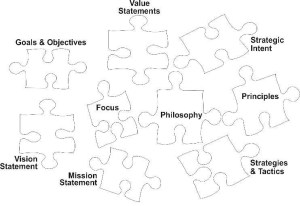
9 elements to create energy by Diane Shawe

Figure 2

Here are nine critical elements ( Figure 2.) I believe are core to any organisation’s ability to create energy fields:

  • Vision Statement (creates passion)
  • Mission Statement (creates purpose)
  • Strategic Goals and Objectives (set direction)
  • Strategies and Tactics (generate action)
  • Philosophy Statement (creates ethical boundaries)
  • Focus (creates efficiency)
  • Value Statements (create a scale of importance)
  • Principles (benchmark behavior)
  • Strategic Intent (signals commitment)

Without beating the rug anymore, when was the last time any of your nine elements updated?

Get your exclusive copy today and save £3.00

Get your exclusive copy today and save £3.00

Six tips to encourage your hair clients to come back

Tweet Campaign Crash Courses Academy (31)What you can do to encourage clients to come back so you meet your weekly minimum thresh hold.

 extracted from Getting Started in the Hair Extension Business by Diane Shawe

Your database has much more marketing potential than you probably realise. You can refer to it when doing promotions and it will act as a reminder system. I have always captured my client’s details so that I can send them special offers and guess what by creating a Whatsapp group you can reach them in the click of a button.

It is a way of keeping records of client’s visits with you. You will keep dates, services and products used or recommended customers’ goals and important dates. If a client rings for an appointment, but isn’t sure what to book for, you will have the answer by checking your well-kept records.  Also take a nice photo of your finished work, email it to the client it does not cost much and they can use it on their facebook.  Show them how good you made their hair look when they last visited.

When running competitions or conducting a survey, make sure to get the prospects’ details. Every time you get a new enquiry, complete a proper consultation form. When collecting details, always ask for name, address, phone number, e-mail address and birthday. It’s very useful for marketing afterwards. Get as much detail as you can.

The more you can find out about clients, the better you will be able to serve them. Make sure you inform the client that their information will not be sold or passed on to any other party and will remain confidential.

As an incentive for them to give you their details you could offer a gift voucher or discount coupon for each survey that is completed and returned.

Keep in regular contact with your customers by e-mail or by post. Don’t let them forget about you which they may do if you don’t keep reminding them about your business.

It’s important to refresh your database regularly. Any clients that haven’t been heard from in over six months could be given a courtesy call. Check everyone’s details and if you find that some customers have moved, remove them from the database.

You don’t want to waste money sending mail-shots to people who havemoved.

1.  Send reminders

Use your database as a reminder system. It is a good idea to send text messages as reminders to appointments.  Keep detailed records of each client’s product and service history, so that you know when they are due for an appointment and also, what type of service they are due for. It’s also wise to record what prices you have charged them.

Send your clients a reminder text message if they are overdue for an appointment. Tell them how long it’s been since they last had their hair done. Tell them that they are overdue and tell them what service their hair is due for. A cheap and easy way to keep them updated it by creating a whatapp group. So don’t forget to get their numbers.

When you write to them, advise them of any promotions you are offering. If you have any news like new products, new services or new staff, mention that as well.

2. Questionnaire questions

It is a good idea to consider sending out a questionnaire at least once a year to find out what you are doing wrong so that you can change it, or doing right so that you can improve or upgrade it.

 

Sometimes it’s a good idea to ask them to give answers with a rating, where you give them a box to tick. Also give them room to explain their answer.

 Here are a few examples of questions you could ask:

  • Was your last appointment carried out to your full expectation?

  • Was your last appointment carried out on time?

  • Were you happy with the technician who attended to you?

  • Were you made to feel important?

  • Did you receive a full consultation about your service?

  • Were you advised of suitable retail products for your hair?

  • Were you attended to immediately upon arriving?

  • Are there any services you would like to see improved?

  • Are there other services you would like to see provided?

You could add the following to quality check your products and services.

 Please rate the following as either: poor, average, good, very good, excellent.

  • overall customer service

  • hair extension appearance

  • hair extension cleanliness

  • staff appearance

  • staff attitude

  • friendliness of staff

  • quality of service

  • quality of products used

  • choice of retail products

  • value for money

3. Teach clients about hair maintenance

Get your clients to come in more often by telling them when to come back.

Tell them how often they should have their hair re tightened or for barbers you could look at intervals and suggest special allocated times for them.

Teach them how to look after their hair with retail products. Teach them about the benefits of the products, so that they feel the need to buy them.

Get them into the habit of booking you to do their hair for special occasions.

Sometimes clients just need a bit of nudging.

Provide a ‘frequently asked questions’ list

Present your clients with a well presented FAQ list. Do this at regular intervals, changing the look of the list and some of the questions each time. Offer some free advice and promote your services and products at the same time.

If you make a list of questions and answers, you can educate your clients about the latest styles, hair maintenance, retail products and the services you provide.  You could post it on your website.

Give any information that will help promote your business, making it as detailed as you like, but be careful not to bore the clients.

By asking the right questions you can plant ideas about services or products that the clients might not have thought of before.

When giving answers make them short and clear, but add a reason for each answer.

Always explain the benefits. If clients can see a benefit or extra value in doing or using something, they are more likely to take your advice. Anyone can tell them that a product is great, but they need to know what’s in it for them.

Remember your clients at Christmas time

At Christmas time send your customers a Christmas card. Thank them for their past custom and tell them how much you are looking forward to seeing them next year.

Some customers might expect you to close you studio around holiday time. Quote the days that you will be closed and also, mention any extra hours that the hair extension will be open.  If you are going away, tell them which of your staff can look after them in the meantime.

Christmas is a good time to also take some nice photos of your clients and either print them out or email it to them in the form of an online Christmas card that they could send to friends.

 4. Look ahead, book ahead

All clients should be asked if they would like to book their next appointment.

Tell them that by booking ahead, they can book their preferred day, time and technician. This might be more convenient for them, rather than having to wait for an appointment if their technician is booked out when they call for an appointment.

In the course of the conversation, find out if the client has any function or special occasion coming up. Ask if the client would like sprucing up for the occasion and if so, book the appointment before the client leaves the hair extension studio.

The client may be attending a function in a few months. This might give you a chance to book in a couple of appointments a bit closer to each other than usual so that the client’s hair is done just in time for the function. It’s more profitable to squeeze in an extra booking like this, than to let the client wait longer and only have one appointment.

 5. Provide loyalty cards

 One way of getting clients to keep coming back is to give them a free service every now and then. Give the clients a loyalty card each and explain how the concept works. For example, the loyalty card contains boxes that are stamped each time the client visits you. You could offer differing numbers depending on spend and after reaching a certain number the client receives a service to a specified value free.

Alternatively you could give free products with the cards or you could even give a gift certificate from another business that you have an alliance with.

6. Follow up

When clients have been to the hair extension studio for the first time, it’s good to call them up a few days later and ask if they are happy with their hair.

This is a way to show them that you value them as clients. They will be pleased that you made the effort.

If they’re not happy with their hair, it gives you a chance to offer to make

changes, so that you don’t lose them as clients.  If you find out that clients aren’t pleased with the hair extensions, you have the opportunity to change things, so that other clients aren’t affected by the same problems.

Any feedback is good feedback. Make sure to use the feedback to your advantage.

Is free online courses dumbing down adult education?

Ignorance is not bliss

Ignorance is not bliss

Is free online courses dumbing down adult education?

Adult education has become under-valued in an overpriced educational infrastructure.

The people who need the most help are already systematically ripped off by greedy loan companies, NHS parking, having to pay charges for drawing out their own money from private ATM machines in poorer boroughs, pre-paid electric meter’s to name but a few.  The more you seem to need help the more you seem to have to pay.

Off course the arguments are always about risk, but to compound on top of their needs, a premium, just to make sure the risk is compensated for is questionable indeed.

But another kind of ripping off is taking place. ‘Free online education’ you may ask ‘why is this a rip off?’

I will answer this from my prospective initially and then make further arguments as to why we should be very concerned about this unpoliced, unchallenged butchery of the values originally infused into our adult educational system.

As Isaac Asimov—a master of science fiction literature—once said:

“No sensible decision can be made any longer without taking into account not only the world as it is, but the world as it will be.”

What has happened?  Why have these large institutions priced education out of some fundamental principles?

How can we make the new economic age enhance, rather than diminish, our quality of learning? How can we make this amazing innovation advance the prospects of all people especially those with experience and not just youth?

It is clear that at this moment most educational systems are not keeping pace with changing technology and the ever-evolving world of work.

Not enough people are thinking strategically enough in this area.  Fundamentally, we need to innovate what people learn, how people learn, when people learn, and even why people learn.

We must get beyond the traditional model of students sitting passively in classrooms, following instructions and memorising material that they are tested and scored on which sometimes turn out to be of little use in an ever changing economy. It is evident that computers can do that for us!

What should a 21st Pedagogy for Adult Education Look Like?

A 21st century educational system must focus on the areas where humans can outclass computers—such as in cognitive skills, interpersonal skills, fine motor skills, or sophisticated coding skills.

We need to make sure that the type of education can keep a population in work or self-employment, performing meaningful tasks relevant to todays and tomorrow needs within a community.

I believe that education has to become student centric and move away from solely institutional constructs that are not fluid to change.

There has always been a great deal of lip service given to the idea of learning by doing, but not much has been done about it. In fact, John Dewey remarked in 1916, in his book, Democracy and Education:  

“Why is it that, in spite of the fact that teaching by pouring in, learning by passive absorption, are universally condemned, that they are still so entrenched in practice? That education is not an affair of “telling” and being told, but an active constructive process, is a principle almost as generally violated in practice as conceded in theory”


I think it is imperative that this century focuses on Adult Transformative Learning because, if we don’t, we are already seeing the internet unintenionally affect the minds of some of our  impressional adults who have no sence of usefulness within our society and can be easily motivated in learned stimulative blended information that could be perceived as devisive withing many communities.

“Transformative learning is a structured way forward in time of crisis when Individuals face Collective Challenges”

                                                 Diane Shawe M.Ed.

During the last twenty years, the use of the word “crisis” seems to have increased around the world. Referring to sudden and intense political, economic, social, psychological, cultural or environmental changes, this term emerges now more frequently in everyday vocabulary.

According to transformative learning theory, the emergence of a crisis represents a potential opportunity for personal and/ or collective transformation, grounded in the capacity of individuals and groups to revisit the perspectives through which they interpret their own experience.

Considering recent history, how does the emergence of social, economic, political, cultural, intellectual or environmental crisis manifest an opportunity, or an expression, of transformative learning?

In the mean time I think that some of these fundlemental questions need to be addressed:

  • How does the experience of individual or collective crisis affect the way one learns to critically interpret one’s own experiences?
  • What are the learning resources required in order to overcome the experience of individual or collective crisis?
  • What kinds of learning opportunities facilitate the management of personal and collective transformations triggered by a crisis?
  • What are the emerging issues and how do they affect research on transformative learning?

How can we effectively deal with some of these burning question when we are constantly dumbing down Adult education?

If you would like a copy of  my full essay on this topic fill in the form below to request a copy be sent to you.

Go back

Your message has been sent

Warning
Warning
Warning

Warning.

Top 10 Money Making Hair Extension Techniques

Starting a Hair Extension business

Starting a Hair Extension business

WHICH 5 HAIR EXTENSIONS TECHNIQUES  ARE THE MOST PROFITABLE?

With the growth of Hair Extensions let us examine the most profitable techniques for your mobile business or Salon

Article written by Diane Shawe M.Ed
Founder www.hairextensionstraining.academy

We have seen the hair extension market grow over the past 15 years, now there are more hair extension techniques than ever before and it can be confusing to decide which is the right one for your business or for your clients.

If you are thinking of becoming a qualified technician, it is important to consider how potential clients might make their decision.  Some people will make a decision based on their budget, others on their hair type and life style, some on what their friends recommended.  Whilst these points are interesting, it is important for you to consider techniques that will service your clients and keep them coming back.

Here are just a few tips to help with your decision making process.

traction_alopecia_caused_by_hair_clipin_3_diane_shawe1. Wigs:  Wigs are a quick and easy way to give a client a quick makeover.  What you need to bear in mind is that the cheaper the wig the more un-natural it will look.  If you have a client with special needs then it might be possible to make at least 28% profit.  We know that the internet has changed a lot of shopping habits and clients can sources their own wigs on line or in some of the high street hair supplier shops for as little as £25.00.  Sourcing or even making a custom wig for a client is an alternate route and they will pay between £220 – £600 for a good quality wig which could last for up to 12 months. MAKING WIG 4HOURS, INSTALLATION 1 HOUR – NOT PROFITABLE

2. Hair Pieces: There are lots of different hair pieces from pony tails to rear hair attachments in all different shades, curly, straight or plaits. There are also specialist hair pieces for thinning hair that can help disguise any  thinning hair problems.  The thing to bear in mind is that hair pieces are not often very secure and could make a client feel a little self concious.  Some of the ponytail pieces can be securely fixed, for a temporary look.  INSTALLATION 45 MINS. NOT PROFITABLE

popular integrated weave

3. Integrated Weaves: This is when wefts of hair is sewn onto a fine cornrow which is then hide by the bulk of your hair on top.  It is a popular technique because if done correctly it can look very natural and offer up a robust and secure hair enhancement solution.  If the client looks after the hair they can reuse it when they get it re-tightened. Clients could pay between £190 – £430 for the integrated weave and £60 – £120 for a retighten every 8 weeks. INSTALLATION 2 HOURS – RETIGHTEN 1 HOUR – VERY PROFITABLE

4. Pre-tips: This is small pieces of hair that have been pre bonded together.  They can be added in sections all over the head to aid thickening, give the impression of highlights or lowlight and length.  Pre-tips can be applied using heat, micro rings or even small elastic bands.  Be aware that they have to be professionally removed so as not to damage your own hair. Client could pay between £160 – £500 for installation. Retighten every 10 – 12 weeks can be expensive as it involves removing and reapplying (sometimes new hair) £55 per hour.
MAKING PRE-TIPS 1 HOUR – INSTALLATION 2 HOURS – RETIGHTEN – 4 HOURS – SLIGHTLY PROFITABLE

5. Strand by Strand (glue gun): This is when hot bond heated up in a glue gun is used to bond small sections of hair to the recipients own hair.  It was a very popular technique in 6 years ago, but requires professional application and removal by a qualified technician.  Can give the appearance of flyaway hair that client could somewhat run their fingers through.  It is a very time consuming technique and is much better for a long term wear over 3-4 months. Clients could pay anything between £400 – £2100. INSTALLATION – UPTO 5 HOURS – RETIGHTEN – 6 HOURS – MODERATELY PROFITABLE.

6) Clip in hair extensions: These are now very popular.  They are best used for lengthening mid should length hair.  If the hair is shorter they don’t sit very well because they can be a little bulky in appearance.  They don’t offer up much security unless they have been professionally fitted.  This is when a very small cornrow is done and the clips are slipped through for much added security.  Great for an evening occasion but not advisable for long term wear.  Clients can now buy these themselves or even make them from purchasing wefted hair.  NOT PROFITABLE

20121208_180137

7) Net Weave:  This technique is used when the client wants to partially extend just a section of their hair or if the client suffers from patchy alopecia.  This technique is suitable for 2-4 months wear. Clients can expect to pay between £190 – £500 INSTALLATION 3 HOURS – RETIGHTEN 4 HOURS. PROFITABLE

8) Hook and Latch: This technique does not use any glues or threads. It is a beautiful technique, flat to the touch and hair could be worn up.  It works well with shorter hair especially the Micro ring track technique. Clients can expect to pay between £160 – £550. INSTALLATION 2 HOURS, RETIHTEN 1 HOUR – VERY PROFITABLE

9) Lace Wigs: Lace wigs have become very popular. They are really good for girls with short thin hair, damaged hair, hair damaged by medication or cancer. they can be used for hair that needs a rest or a complete makeover for a client who does not want to use chemicals.  Top celebrities have made them really popular and you can see why from the video testimonial below. See Radio TV presenters new lace wig

Clients can expect to pay anywhere between £400 – £3000 (included the Lace wig)  If the clients looks after the hair the lace wig could last up to 6 months. INSTALLATION 3 HOURS – REFIT 2 HOURS – PROFITABLE

alopeciaconsultant

10) Braides and Plaits: Braides and Plaits have been around for hundreds of years.  A technique that can look very simple or quite exotic.  Braids can be worn for a number of months until the hair grows out, they can even have beads added to the end for that extra special look. Clients can expect to pay from £90 – £400. INSTALLATION UPTO 5 HOURS – RETIGHTEN – 7 HOURS – NOT PROFITABLE

Hair Loss Specialists
One of the up and coming growth sector is the Non Surgical Hair Enhancement using Hair Extensions.  For now you can download a training course Catalogue which will go into more details about the different hair enhancement techniques.

If you are professionally qualified, this is a very profitable and fulfilling service.  My favourite sector.

Why life coaching is a really really hard sell

Coaching - Specialise and gain more clients

Coaching – Specialise and gain more clients

What they don’t tell you in coaching school? Is that “life coaching” is a really, really hard sell.

article by Diane Shawe M.Ed

I know some excellent life coaches – they’ve written best-selling books, they’ve got 75k+ likes on Facebook, they’ve done everything right, business-wise – they have more of a reach than I will ever have in my business – and they still struggle to get clients. They are still living month to month. And they have to hustle every  day to find new ways to make coaching a viable business.

Why? Because they are generalied “life coaches”. And life coaching isn’t something that people really “get”.  Here are 10 Definitions of Coaching

  1. “Unlocking a person’s potential to maximize their own performance.  It is helping them to learn rather than teaching them” (Whitmore 2003)
  2. “A collaborative, solution focused, result-orientated and systematic process in which the coach facilitates the enhancement of work performance, life experience, self-directed learning and person growth of the coachee”  (Grant 1999, basic definition also referred to by the Association for Coaching, 2005).
  3. “A professional partnership between a qualified coach and an individual or team that support the achievement of extra-ordinary results, based on goals set by the individual or team “(ICF, 2005)
  4.  “The art of facilitating the performance, learning and development of another” (Downey, 2003)
  5.  “Coaching is directly concenred with the immediate improvement of performance and development of skills by a form of tutoring or instruction”  (Parsloe, 1995).
  6. “Coaching psychology is for enhancing well-being and performance in personal life and work domains underpinned by models of coaching grounded in established adult and child learning or psychological approaches” (Special Group of Coaching Psychologists, part of the British Psychological Society)
  7. “Coaching is about developing a person’s skills and knowledge so that their job performance improves, hopefully leading to the achievement of organisational objectives. It targets high performance and improvement at work, although it may also have an impact on an individual’s private life. It usually lasts for a short period and focuses on specific skills and goals.” (CIPD 2009)
  8. “Psychological skills and methods are employed in a one-on-one relationship to help someone become a more effective manager or leader.  These skills are typically applied to a specific present-moment work-related issues….in a way that enable this client to incorporate them into his or her permanent management or leadership repertoire” (Peltier 2010)
  9. [Co-active] coaching is “a powerful alliance designed to forward and enhance a life-long process of human learning, effectiveness and fulfilment”  Whitworth et al (2007)
  10. “Coaching is about enabling individuals to make conscious decisions and empowering them to become leaders in their own lives” (Wise 2010 – sorry couldn’t help sneaking one in myself!).

So after reviewing the definitions, which one would you say best sums up your offering? The truth is that people will be coming to you because of YOU and what you have accomplished. Your story is important. Your skills and expertise are just as important. And while coaching isn’t about telling people what to do – sometimes people will need guidance, advice, and hand holding. And you are 100% allowed to be their coach, their mentor, their teacher, and  advisor.

You might be veering away from what you learned in coaching school, but in order to stand out from the crowd it will help you fast-track your business success by playing to your strengths and personality and the need of your specific and targeted client base.

So I am going to call out the elephant in the room: The majority of coaches who are killing it in business are doing one of several things:

1. They coach and/or mentor other coaches

2. They coach specialist clients (sports, personalities, celebrities)

3. They coach executives within large companies.

Unfortunately many small businesses who would really like to have a coach cannot commit the resources, this is why most coaches are also starving.

People are interestd in you

People are interestd in you

Here’s what you can do to make the life coaching business easier on yourself:

  • Get specific about who you work with and what problem you solve for them.
  • Drop the jargon STAT of what other coaches have achieved
  • Stop doing open ended, ongoing coaching. It’s hard to sell and doesn’t get you known for anything.
  • Learn the common mistakes people make in creating packages, and then don’t make them.
  • Create ONE specific package for a specific market (based on your unique expertise) and get really, really good at it.
  • Build a solid client base, and THEN you can expand.
  • Create a blog and don’t be afraid to give away step by step advice, it will get you known.
  • And in the meantime, keep your day job.

Home Study Courses to help refine your Specialism for Coaching. Fully accredited. Request course outlineand price by clicking here

Change Management: Change and How to Deal With It Managers traditionally have had the task of contributing to the effectiveness of their organization while maintaining high morale. Today, these roles often have to be balanced off with the reality of implementing changes imposed by senior management. Managers who have an understanding of the dynamics of change are better equipped to analyze the factors at play in their own particular circumstances, and to adopt practical strategies to deal with resistance. This one-day workshop will help you deal with change and will give you strategies to bring back to your employees.
Coaching: A Leadership Skill Coach, Role Model, Counselor, Supporter, Guide…do these words ring a bell? Being a coach involves being a role model, sometimes a counselor or supporter, and always a guide. Coaching is based on a partnership that involves giving both support and challenging opportunities to employees. Knowing how and when to coach is an essential skill that can benefit both you and your organization. This one-day workshop will help you become a better coach in all senses of the word.
Communication Strategies This course is designed to help you improve your interactions with other people in your workplace or at home. This course wil help you guide your clients on how to improve the critical communication skills of listening, asking questions and being aware of nonverbal messages. To help your clients who are struggling to find that middle ground between being too aggressive and too passive, and how to counter the manipulative tactics of difficult people.  Your clients will  also learn more about the elements of our communication with others that help us reveal appropriate information about ourselves, and how to get a handle on how to better manage ourselves for a professional image.

 The Art of Delegating Effectively  Delegation is often one of the hardest skills for a manager to master. However, the skill can be learned. You will explore many of the facets of delegation: when to delegate, and who to delegate to. We will also go through the delegation process step by step, to see where the pitfalls lie, and what we can do about getting around them.  These are useful tools for your clients.
Networking for success  Business networking is an effective and efficient way for business people to connect, develop meaningful relationships, and grow their businesses. These achievements don’t come through a direct sales approach, however. They come from being interested in helping others, in listening, and in purposefully meeting and introducing people to one another. You will  learn the essential ingredients to help your clients with business networking, including in-person, people-centered connections and online spaces such as LinkedIn.
Conflict Resolution There are two major myths about conflict: that it always involves anger and that it’s always negative. Conflict can actually be a positive tool for growth if you know how to manage it properly. This course will help you specialise in helping your clients develop quality mediation skills.
Dealing with Difficult People All of us experience conflict. We argue with our spouses, disagree with our friends, and sometimes even quarrel with strangers at a hockey game. At times we lose sight of the fact that all this conflict is normal. So long as people are individuals there will be the potential for conflict. Since you can’t prevent conflict, the most important thing is to learn how to handle or manage it in productive ways. What is critical for resolving conflict is developing an understanding of, and a trust in, shared goals. It requires openness, discipline, and creativity. Showing respect for other people and not blaming them enables people to work for mutual benefit.
Conflict Resolution: Getting Along in the Workplace Conflict Resolution: Getting Along in the Workplace
Conquering Your Fear of Speaking in Public Do you get nervous when presenting at company meetings? Do you find it hard to make conversation at gatherings and social events? Do you lock up in awkward social situations? If so, this one day workshop is just for you! It’s aimed at anybody who wants to improve their speaking skills in informal situations. We’ll give you the confidence and the skills to interact with others and to speak in informal situations and in front of small groups.
Controlling Anger Before It Controls You – A One Day Primer Everyone gets angry; it’s a completely natural response. But do you know how to manage that anger constructively? Most individuals throughout coaching need a set of tools to help them with this problem.
Core Negotiation Skills Negotiation is a key skill that, when mastered, can enhance communications and provide better results from communication. You can specialise in helping your client on how to prepare to negotiate, ways to respond to negotiation challenges, how to create win-win solutions, and how to create sustainable agreements.
Creating a Dynamic Job Portfolio The job market continues to change, as does the way we look for work. This course examines the value of presenting yourself as a complete package by using a resume as an introduction to an employer and backing it up with a portfolio presented at the interview.

You can learn to help to executives for instance prepare themselves for new challenges.

Critical Thinking In today’s society, many people experience information overload. We are bombarded with messages to believe various ideas, purchase things, support causes, and lead our lifestyle in a particular way. How do you know what to believe? How do you separate the truth from the myths?

Help your clients with constructive tools on how to put their thoughts into order.

Go back

Your message has been sent

Warning
Warning
Warning
Warning

Warning.

Are Emerging Demographics reshaping New Emerging Markets

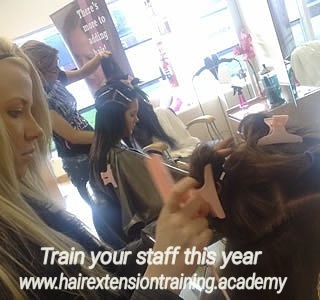
Hair extension staff training (1)

Creative ways to find new customers

Emerging Demographics Are the New Emerging Markets

Guest Blog Richard Dobbs Jaana RemesJonathan Woetzel

Marketing savvy just isn’t enough to track consumers anymore. Companies will need a more detailed portrait of target customer groups than ever, including their age, income, ethnicity, and shopping preferences. But what could this mean for small businesses?
A radical demographic shift is transforming the nature of consumer markets. Until the turn of the century, population growth powered more than half of global consumption. As population growth slows, that will fall to only one-quarter in the next 15 years.

Per capita spending will be the engine of consumption growth. In this new world, companies need to know which consumers have the purchasing firepower, where they are, what they want to buy, and what drives their spending.

There are surprises. For example, people aged over 50 bought nearly two-thirds of the new cars sold in the United States in 2011. McKinsey Glog research finds that China is expected to spend 12.5% of all consumption growth on education for those under 30 — higher than any other country apart from Sweden. Young people in China are learning to love coffee. And North American millennials don’t trust company claims about their products, but are happy to let a room in their house to a stranger who they trust because of an Airbnb rating.

A recent report by the McKinsey Global Institute, Urban World: The Global Consumers to Watch, has identified three key groups of urban consumers with the numbers and purchasing power to shape the consumer landscape over the next 15 years. One thing common to all the groups is their location in cities. Over 91% of world consumption growth over this period will come from city-dwelling consumers.

The first of these is the 60-plus age group in the United States, Western Europe, and Northeast Asia. Their number will grow by more than one-third to stand at 222 million in 2030. In those 15 years, they will generate more than one-third of global consumption growth. In comparison, European millennials, for instance, will contribute less than 2%. The young may be the darlings of marketers, but for companies chasing growth, the truly glamorous market is the elderly.

To give an idea of their dominance, the 60-plus age group will account for 60% of total urban consumption growth in Western Europe and Northeast Asia, the latter comprised of Japan and South Korea. This group, not surprisingly, spends heavily on healthcare, but that’s not all. In the United States, these consumers will contribute more than 40% of consumption growth in housing, transport, and entertainment. A decade ago, those aged 55 and older accounted for less than one-third of all U.S. spending on home improvement. By 2011, this share was more than 45%. Companies in every sector — some of which have never been associated with the elderly — will need to prioritize this market as never before.

The second group is China’s working-age consumers age 15–59. Their numbers are set to rise by 20% or 100 million people in just the next 15 years and their per capita consumption is expected to double. By 2030, they will be spending 12 cents of every $1 spent in cities worldwide. These individuals are more optimistic about their financial future and willing to spend a greater share of their disposable income than their counterparts in previous generations.

The 2016 McKinsey Global Sentiment Survey of more than 22,000 consumers finds that nearly 30% of these Chinese consumers are willing to pay more for new and innovative household products—double the share of their counterparts in North America and Western Europe. These consumers are the successors to Western baby boomers who were, in their time, the richest in history in their prime years.

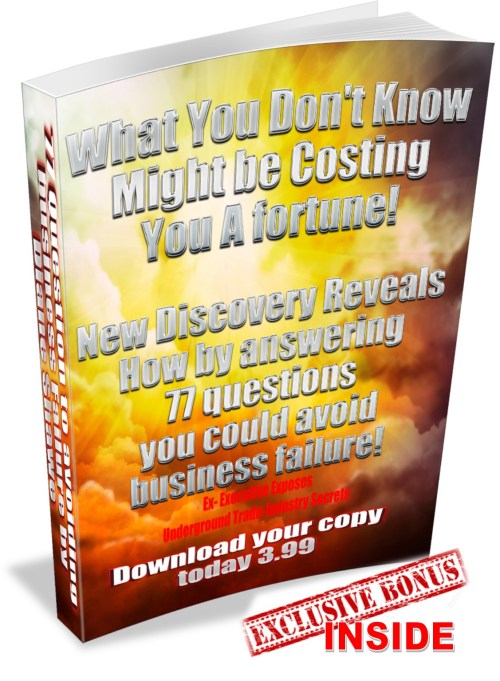
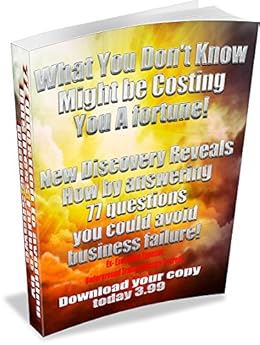
77 Questions to avoid business failure by Diane Shawe with Exclusive Bonus

Get your exclusive copy today and save £3.00

Third is North America’s working-age consumers. They already constitute a major market, and will continue to grow modestly in number and per capita spending. But they also pose new challenges to companies, because inequality is rising, and most incomes are under increasing pressure. Today, the median net worth of the top 20% of young adult households is eight times that of the other 80%; as recently as 2000, that multiple was four times. That means companies need to work harder to offer goods and services at very different price points. Compared with older cohorts, young adults are 10 to 20 percentage points more likely to consider and use sharing economy services from accommodation to car rental to furnishing. The behavioral differences for this age group require new customized strategies from companies seeking their dollars.

The consumer markets that matter have arguably never been more varied and complex. Rising inequality is one challenge. Another is that, as population growth slows, city demographics — and therefore their growth prospects — are diverging. Companies need to be in the right places. Cities are where 91% of global consumption will take place over the next 15 years – the trick will be knowing which cities, and even which neighborhoods within cities will house the highest-spending consumers.
Richard Dobbs is a senior partner in McKinsey & Company’s London office.

Jaana Remes is a partner at the McKinsey Global Institute.
Jonathan Woetzel is a director at the McKinsey Global Institute.


The Secret of Learning New Skills Faster

black lady excercising listening to business infoGet Motivated, Push Your Boundaries, and Step Into Your Greatness but keep moving.

Too often in life, things get in the way.  People often say time, but time does not care about you it just keeps ticking.   How many times have we told ourselves, “I’m too busy to learn X…” or “I don’t have enough time to do X…” well just take 5 minutes to try and figure out why and when you quit learning on purpose.

By understanding why you quit in the past, you can take actionable measures to ensure you’re setting yourself up for success.

“The definition of insanity is doing the same thing over and
over again and expecting different results” –
Albert Einstein

We get it, it’s easier said than done. But if we want to upgrade our life and advance our business, continuous learning is a vital ingredient in the process.

So Luckily for all of us, there are science-backed strategies and tactics we can use to fit learning a new skill into our busy lifestyles.  Instead of listening to wonderful music, take a look at the following bundles and select which one is going to give you the most benefit.

Just for Confirmation sited in Proverbs 23:12

‘Apply thine heart into instruction, and thine ears to the word of knowledge’.

For as little as £2.50 each, download, plugin the earphone and watch your business start to explode….

Business Marketing Bundle

  • Niche Marketing Made Easy
  • Creating your Information Product
  • Produce Persuasive Copyright
  • Building online Traffic and List Systems
  • Email Marketing secrets

Business Evolution

  • How to set up and generate a powerful Blog website
  • The Affiliate Chemistry7 Habits of Highly Effective People
  • Internet Business Optimisation
  • 12 Effective selling techniques
  • 50 Best and Worse Business Deals of all time

Business Breakthrough Bundle

  • 20 Advertising Tips
  • Art of Making money
  • Breakthrough Sales Solutions
  • Clever Profit Generating Insights
  • How to Combine Cooperation & Competition

Business Communication Bundle

  • Covert Product Selling Principles
  • Customer Tested – Buying Triggers
  • How to work with change
  • Explosive Influence Tactics
  • Six rules for getting people to like you

Business Persuasion Bundle

  • Extreme Persuasion Strategies
  • How to win friends
  • How to Manage your Intellectual Capital
  • The Servant Power Leadership
  • Suntzu and the art of business


Please select which business bundle you would like to purchase
Business Marketing Bundle £20.00 GBP
Business Evolution Bundle £20.00 GBP
Business Breakthrough Bundle £20.00 GBP
Business Communication Bundle £20.00 GBP
Business Persuasion Bundle £20.00 GBP
Try one Title Course £9.99 GBP

 Just reply with your email  to let me know which bundle you want and I will send you payment request.

BONUS GIFT WHEN YOU MAKE A SMALL PURCHASE:

Download your Free copy today

The biggest Search Engine in the World.  Learn how to establish your business on Youtube.

About the Author Diane Shawe

Don’t let others failures make a monkey out of you

Fear of failure and not standing out from the crowd will not get you far up the ladder of success

article by Diane Shawe M.Ed. Ed
Four monkeys were placed in a room that had a tall pole in the center. Suspended from the top of that pole was a bunch of bananas. One of the hungry monkeys started climbing the pole to get something to eat, but just as he reached out to grab a banana, he was doused with a torrent of cold water.

Squealing, he scampered down the pole and abandoned his attempt to feed himself.

Each monkey made a similar attempt, and each one was drenched with cold water. After making several attempts, they finally gave up.

Then researchers removed one of the monkeys from the room and replaced him with a new monkey. As the newcomer began to climb the pole, the other three grabbed him and pulled him down to the ground.

After trying to climb the pole several times and being dragged down by the others, he finally gave up and never attempted to climb the pole again.

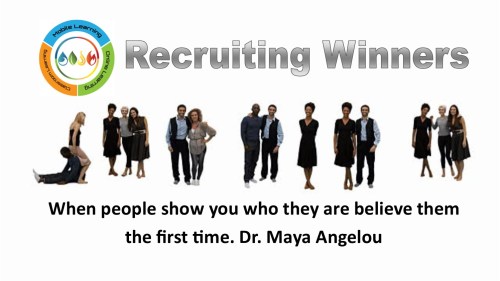
recruiting and training winners for your busines

The researchers replaced the original monkeys, one by one, and each time a new monkey was brought in, he would be dragged down by the others before he could reach the bananas.

In time, the room was filled with monkeys who had never received a cold shower. None of them knew why.

DON’T LET FAILURE MAKE A MONKEY OUT OF YOU!