Category Archives: health apps

14 solutions to help solve why your hair is thinning

suffering-from-thin-limp-hair

Solutions to thinning hair

Thinning hair help

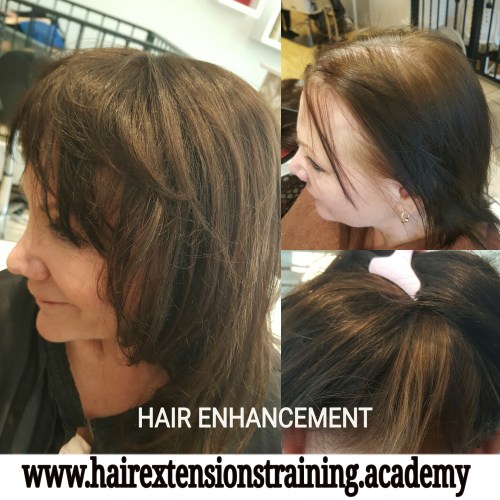
Whilst your hair brush seems like it is packed with more and more loose strands of your hair or an ever-scrawnier ponytail can be startling but doesn’t necessarily mean anything’s wrong. By age 50, half of women will complain of hair loss. “As we age, overall hair density changes and individual strands become finer,” says dermatologist Doris J. Day. But just because thinning is natural doesn’t mean you have to accept it. Here are 12 solutions to help you keep the hair out of your brush and on your head.

healthymealsMeals

Now, this is easy! Hair thrives on protein, iron, zinc, and vitamin B12. Get them from lean meats, leafy greens, nuts, beans, and fish. 


washing-and-massaging-hairMassage

You’re halfway there every time you shampoo: massaging your head in the shower improves blood flow to the scalp. This means a better environment for hair growth, but it also aids the penetration of any treatment shampoos you use.

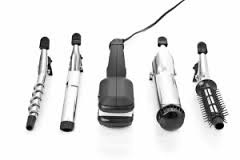
 1-styling-equipmentStyling

It’s the easiest fix you never considered. Hair dryers and irons, especially if you already color, can cause breakage and thinning, so reduce your use however you can.


1-minoxidil-for-thinning-hairMinoxidil

As the only FDA-approved proven ingredient, the drug has years of research to back it up—and about 50% of women using it see improvement. “Minoxidil can enhance the size of the follicle so that it produces a bigger strand of hair,” says Diane Shawe.

Try Pantene Expert Minoxidil Topical Solution Hair Regrowth Treatment for Women

1-viviscal-to-thicken-hair Viviscal

Sometimes a supplement is all you need. The combination of fish protein, vitamin C, zinc, biotin, and niacin in Viviscal supplements encourages the body to produce healthier, thicker strands.

Blood Work

blood-test-tubesRoutine blood work can test your ferritin (iron stored in the blood) and vitamin D. Low levels can lead to hair loss, and the fix may be as simple as adding an iron or vitamin supplement. And hey, you’re probably overdue for a checkup anyway!

 
1-laser-hair-loss-treatmentLasers

Laser treatments reduce the inflammation in follicles that inhibits them from regenerating. In a recent study, researchers saw significant increases in density after 26 weeks of twice-weekly treatments with a medical-grade lasers.


destressing-beathingStress Relief

Just breathe—seriously, it could help! Both sudden and chronic stress can halt hair growth. If you’ve been through a challenging experience (divorce, job change, death in the family or house move), hair should grow back. If you’re under constant pressure, master meditation—easier said than done, but your hair will thank you.

Hormone Help
 
Hormone Help

If it’s serious, consider an Rx. Some women are genetically predisposed to female-pattern hair loss, and birth control pills can suppress overproduction of male hormones. At menopause, thinning increases; if you’re on hormone therapy, it may minimise hair loss.

1-cortisone-shotsCortisone Shots

They hurt, but they work. lnjecting cortisone directly into the scalp blocks the hormonal activity that induces hair thinning. This works especially well in patients with inflammatory scalp disease. However this should be done by a qualified practitioner.

1-chinese-medicine-for-circulation-and-hair-lossBad Blood?

According to practitioners of traditional Chinese medicine, hair health is tied to two things: kidney energy and the blood, which nourish the hair. The solution: acupuncture and Chinese herbs.

doctors-adviceThe Doctor Will See You Now

Every once in a while, hair loss is a symptom of something else that’s going on with your body. If your hair loss is sudden and excessive or simple solutions aren’t working, talk with your doctor about other possibilities, including:

  • Hormone irregularities
  • Thyroid abnormalities
  • Lupus
  • Anemia
Change your hairstyle

There are some hairstyles that contribute to hair-loss and thinning hair.

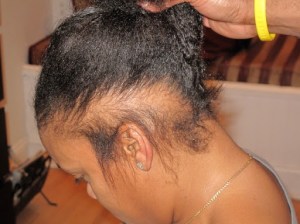
Very tight cornrows for instance can cause traction alopecia.  Try avoiding tight cornrows or heavy braids on thin hair.

Other techniques used in styling such as glues. nickle micro rings and clip ins can also irritate the scalp and inflame the hair follicles resulting in hair loss.

It is also worth considering the type of hair extensions being used as some wigs and braiding hair can cause irritation because the user has a nylon allergy.

Want more information and a free consultation email hairextensions@europe.com

descreet-hair-extensions-by-diane-shawe

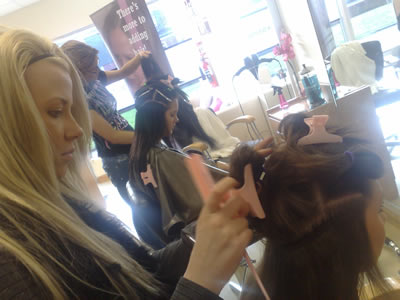
There’s more to adding hai

Are Emerging Demographics reshaping New Emerging Markets

Hair extension staff training (1)

Creative ways to find new customers

Emerging Demographics Are the New Emerging Markets

Guest Blog Richard Dobbs Jaana RemesJonathan Woetzel

Marketing savvy just isn’t enough to track consumers anymore. Companies will need a more detailed portrait of target customer groups than ever, including their age, income, ethnicity, and shopping preferences. But what could this mean for small businesses?
A radical demographic shift is transforming the nature of consumer markets. Until the turn of the century, population growth powered more than half of global consumption. As population growth slows, that will fall to only one-quarter in the next 15 years.

Per capita spending will be the engine of consumption growth. In this new world, companies need to know which consumers have the purchasing firepower, where they are, what they want to buy, and what drives their spending.

There are surprises. For example, people aged over 50 bought nearly two-thirds of the new cars sold in the United States in 2011. McKinsey Glog research finds that China is expected to spend 12.5% of all consumption growth on education for those under 30 — higher than any other country apart from Sweden. Young people in China are learning to love coffee. And North American millennials don’t trust company claims about their products, but are happy to let a room in their house to a stranger who they trust because of an Airbnb rating.

A recent report by the McKinsey Global Institute, Urban World: The Global Consumers to Watch, has identified three key groups of urban consumers with the numbers and purchasing power to shape the consumer landscape over the next 15 years. One thing common to all the groups is their location in cities. Over 91% of world consumption growth over this period will come from city-dwelling consumers.

The first of these is the 60-plus age group in the United States, Western Europe, and Northeast Asia. Their number will grow by more than one-third to stand at 222 million in 2030. In those 15 years, they will generate more than one-third of global consumption growth. In comparison, European millennials, for instance, will contribute less than 2%. The young may be the darlings of marketers, but for companies chasing growth, the truly glamorous market is the elderly.

To give an idea of their dominance, the 60-plus age group will account for 60% of total urban consumption growth in Western Europe and Northeast Asia, the latter comprised of Japan and South Korea. This group, not surprisingly, spends heavily on healthcare, but that’s not all. In the United States, these consumers will contribute more than 40% of consumption growth in housing, transport, and entertainment. A decade ago, those aged 55 and older accounted for less than one-third of all U.S. spending on home improvement. By 2011, this share was more than 45%. Companies in every sector — some of which have never been associated with the elderly — will need to prioritize this market as never before.

The second group is China’s working-age consumers age 15–59. Their numbers are set to rise by 20% or 100 million people in just the next 15 years and their per capita consumption is expected to double. By 2030, they will be spending 12 cents of every $1 spent in cities worldwide. These individuals are more optimistic about their financial future and willing to spend a greater share of their disposable income than their counterparts in previous generations.

The 2016 McKinsey Global Sentiment Survey of more than 22,000 consumers finds that nearly 30% of these Chinese consumers are willing to pay more for new and innovative household products—double the share of their counterparts in North America and Western Europe. These consumers are the successors to Western baby boomers who were, in their time, the richest in history in their prime years.

77 Questions to avoid business failure by Diane Shawe with Exclusive Bonus

Get your exclusive copy today and save £3.00

Third is North America’s working-age consumers. They already constitute a major market, and will continue to grow modestly in number and per capita spending. But they also pose new challenges to companies, because inequality is rising, and most incomes are under increasing pressure. Today, the median net worth of the top 20% of young adult households is eight times that of the other 80%; as recently as 2000, that multiple was four times. That means companies need to work harder to offer goods and services at very different price points. Compared with older cohorts, young adults are 10 to 20 percentage points more likely to consider and use sharing economy services from accommodation to car rental to furnishing. The behavioral differences for this age group require new customized strategies from companies seeking their dollars.

The consumer markets that matter have arguably never been more varied and complex. Rising inequality is one challenge. Another is that, as population growth slows, city demographics — and therefore their growth prospects — are diverging. Companies need to be in the right places. Cities are where 91% of global consumption will take place over the next 15 years – the trick will be knowing which cities, and even which neighborhoods within cities will house the highest-spending consumers.

Richard Dobbs is a senior partner in McKinsey & Company’s London office.
Jaana Remes is a partner at the McKinsey Global Institute.
Jonathan Woetzel is a director at the McKinsey Global Institute.


Don’t let others failures make a monkey out of you

Fear of failure and not standing out from the crowd will not get you far up the ladder of success

article by Diane Shawe M.Ed. Ed
Four monkeys were placed in a room that had a tall pole in the center. Suspended from the top of that pole was a bunch of bananas. One of the hungry monkeys started climbing the pole to get something to eat, but just as he reached out to grab a banana, he was doused with a torrent of cold water.

Squealing, he scampered down the pole and abandoned his attempt to feed himself.

Each monkey made a similar attempt, and each one was drenched with cold water. After making several attempts, they finally gave up.

Then researchers removed one of the monkeys from the room and replaced him with a new monkey. As the newcomer began to climb the pole, the other three grabbed him and pulled him down to the ground.

After trying to climb the pole several times and being dragged down by the others, he finally gave up and never attempted to climb the pole again.

recruiting and training winners for your busines

The researchers replaced the original monkeys, one by one, and each time a new monkey was brought in, he would be dragged down by the others before he could reach the bananas.

In time, the room was filled with monkeys who had never received a cold shower. None of them knew why.

DON’T LET FAILURE MAKE A MONKEY OUT OF YOU!


Traction Alopecia – How You Can Stop It and is it Reversible by Diane Shawe

traction alopecia how to stop itAre YOU a Likely candidate for Traction Alopecia?

Anyone can be affected by traction alopecia – young or old, male or female. It’s more common within certain groups of the population, because they are more likely to use some of the hairstyling techniques listed above.

The reason I raise this article is because we are all living longer and some of the current fashionable trends in the younger groups are contributing to traction alopecia. Read about Clip ins and how they cause Traction Alopecia

For example, women and girls are more likely to notice the problem due to braids and weaves. Ballerinas – who tend to wear their hair pulled into very tight ponytails – sometimes suffer from traction alopecia around the hairline as a result.

In a nutshell – if you have a habit of doing something on a frequent basis that puts your hair under some sort of strain, then you are a candidate for traction alopecia.

Read on to discover the many ways you can prevent it from happening, or stop further damage if you’ve already noticed a problem.

Traction Alopecia Symptoms

Have you ever undone a ponytail and found your scalp feels sensitive to the touch afterwards?

Does untying your hair feel like a relief?

Does your scalp itch after you’ve had braids or a weave put in?

Have you ever taken painkillers because your hair is secured so tightly it’s given you a headache?

All of these are warning signs that your hair is under way too much tension. Your body is trying to tell you something… and you need to listen!

If not, the next thing you’ll notice is that sections of your hair are actually missing, or worryingly sparse. You can often see this more clearly around the hairline or behind the ears, but it can often happen around the crown, too. It really depends on what was causing the tension in the first place.

Some people even notice pustules (blisters filled with pus) or papules (little pimples) where the hair is under a lot of tension. This is because of the irritation being caused to the scalp and is a clear indicator that the follicles just can’t cope with the strain.

Can Traction Alopecia be Reversed?

Yes and no.

If you spot the warning signs of traction alopecia early enough and you put a stop to whatever’s causing it, then your hair will stop falling out and should – with time, patience and loving care – be completely restored to its former glory.

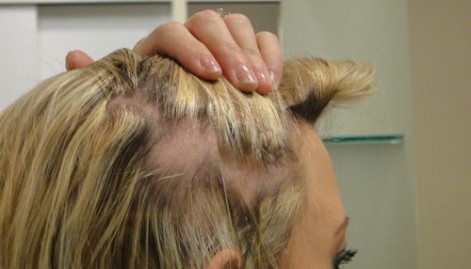
But if the hair follicles have been so badly traumatised for such a long period of time that they have scarred over, then the hair will not grow back by itself. Areas of the scalp where this is the case will likely look shiny.

In cases like this, you’ll need to think about some sort of surgical restoration – speak to your dermatologist to establish whether or not your traction alopecia has caused permanent scarring and to discuss the surgical options available to you.

When Traction Alopecia Compounds Other Hair Loss Problems

traction_alopecia_caused_by_hair_clipin_diane_shawe

If you are wearing a hairpiece – such as a clip on topper – to mask other hair problems like androgenetic alopecia, then you need to be very careful not to compound your problem with traction alopecia!

The best option is to ensure that the clips of your topper are firm, but not too tight, and that you rotate them. We also recommend undoing a couple of the clips when you’re at home – it gives your scalp a little rest from the tension.

Traction Alopecia Recovery Time

Most experts agree that your hair should recover within 6 to 9 months of you removing the cause of the problem.

If you’ve followed the guidelines given here and you are still not seeing regrowth, then it’s likely that the damage to your follicles was permanent – a fact your doctor/dermatologist can confirm. In that case, you might like to discuss the possibility of a hair transplant, which will effectively mask the problem.

What are the Causes of Traction Alopecia?

Traction alopecia is a type of hair loss that happens over time. It’s caused by putting the hair under constant strain or tension and is usually caused by one or more of the following…

  • Very tight ponytails or pigtails
  • Tight braids or cornrows
  • Dreadlocks
  • Extension (single) braids
  • Hair weaves or wigs attached with glue, clips or tape
  • Certain hair clips, slides or barrettes that hold the hair tightly and are worn in the same position every day
  • Headbands – even fabric ones – worn day after day
  • Tight hairpieces
  • Tight headgear like cycling helmets that are worn frequently or for long stretches of time and tend to rub or pull repeatedly on the same area of hair
  • Repeated use of hair rollers
  • Repeated pulling of the hair with the hands (this is an emotional condition called trichotillomania)

If you use or do any of the above, then you may find that the constant tension they cause has led to areas of thinning hair – usually around the temples or behind your ears. Alternatively, you might notice that the part in your hair looks wider than it used to.

If so, then it’s quite likely that you’re suffering from traction alopecia.

There’s more to this condition than hair simply breaking off. Instead, the constant tension in the affected area either pulls out the hairs’ roots completely, or causes the follicles to become inflamed. As time goes by, the damage to the follicles causes them to become atrophied (wasted away)… and if you don’t put a stop to the cause of the problem, they will reach the point where they no longer produce hair at all.

Reference: DermHairClinic – Traction Alopecia

Get your copy today from amazon.co.uk

Get your copy today from amazon.co.uk

Traction Alopecia Treatment

As discussed above, ‘treatment’ for traction alopecia is only effective before you’ve arrived at the stage of permanent damage.

But the good news is that ‘treatment’ – if you’ve caught the condition early enough – can be as simple as changing whatever hair styling and hair care practices you were using and really learning to CARE for this precious asset… your hair!

Wearing a weave

One of the biggest ironies about traction alopecia is that it’s the most common cause of hair loss for women wearing hair extension is due to the application being too tight when weaves and hairpieces are applied… yet those weaves and hairpieces are often used in the first place to enhance hair that may seem thin, or lacking in volume.

Weaves are generally applied through braiding, fusion, netting or bonding – and the sad fact is that any or all of these methods can lead to traction alopecia if used extensively, over long periods of time.

To minimize the risk of traction alopecia, or to try to prevent further damage and encourage regrowth, have your weave fitted by a state licensed professional. Yes, it may be more expensive, but you – and your hair – are worth it! Someone properly trained in hair care will keep damage to a minimum and will be able to spot potential problems and nip them in the bud.

The same goes for hair extensions, which can also cause hair loss problems in the lower half of the scalp. Have them fitted by a trained professional – don’t try to fit them yourself or have a friend do them for you.

Speak to your hairdresser about taking care of your scalp – some women find it difficult to maintain good scalp hygiene because the weave or extensions make it awkward… unfortunately, though, this can make the problem of traction alopecia worse.

When chemicals are the culprits

There’s a kind of alopecia called CCCA (central cicatricial centrifugal alopecia), also known as hot comb alopecia, or follicular degeneration syndrome. It’s almost exclusively seen in African American women and it’s often confused with female pattern baldness, because it starts at the crown and spreads to the surrounding areas.

The cause?

A mixture of too much stress (traction) on the hair along with the use of harsh chemicals like dyes, relaxers and bleaches. The chemicals actually damage the keratin structure of the follicle itself, causing hair LOSS, not just hair damage.

In fact, research conducted in 2008 showed that the highest prevalence of traction alopecia was in women with relaxed hair.

If you suspect this is a condition that’s affecting you, speak to your dermatologist. In addition to removing the cause of the traction and stopping the use of chemicals in your hair, you may be tested for any bacterial or viral infection and possibly be prescribed topical steroids, antibiotics or topical minoxidil to encourage regrowth.

NOTE: If you must use a relaxer on your hair, have it done professionally. Specialists are seeing more and more problems caused by home relaxer kits, because it’s tempting to leave the chemicals on longer than necessary, or accidentally use a stronger formula than you really need. (Make sure they have been certified)

Braiding, ponytails, pigtails and locs

The 2008 research into the prevalence of traction alopecia in African girls and women showed that braiding caused more problems than chemicals (although the two together were worse still).

Starting up a hair extension business Diane ShaweConstant, tight braiding – or other styles like ponytails that place hair under chronic tension – can affect any ethnic group. So it’s very important to take a new approach to styling hair that doesn’t rely on placing the hair under extreme tension.

The ideal solution, of course, is to allow the hair to be completely natural, without using any kind of clips, slides or ties.

The reality, though, is that this just isn’t possible for most of us. Our hair may either be unmanageable and wild looking when allowed to ‘do its own thing’ – or, like us, you may live in a climate where it’s simply too hot to have your hair hanging around your face all day.

The answer is that you can continue to secure back your hair, but you MUST change the way you do it from one week to the next. Traction alopecia is usually the result of CONTINUALLY putting the hair under EXACTLY the same tension in the same place, day after day.

How to Avoid Traction Alopecia (and still have beautiful hair!)

Change the location of your ponytail often – wear it high, low, on one side, then the other. Don’t wear a ponytail at all if your hair isn’t really long enough to need one… otherwise you’ll probably be pulling your too-short hair really hard in order to secure it.

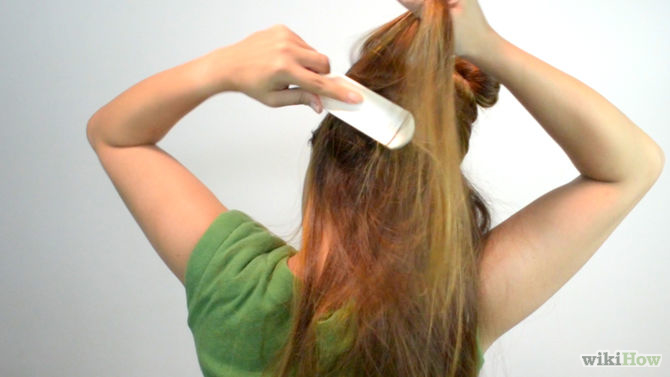
Avoid using clipped in ponytails – the weight of them can – quite literally – tear out your hair.

Always use fabric covered hair bands – avoid bare rubber bands like the plague! And remove bands, clips and ponytail holders from the hair at night – this is when you may be putting your hair under tension without even realizing it.

Invest in satin pillowcases. They cause less friction on your hair than cotton or nylon ones – and, as an added bonus, they’re believed to help reduce wrinkles too!

Change the location of your partas often as you can. Even a simple part in the hair can trigger a problem when worn in the same position day after day.

Don’t retwist the roots of dreadlocks – watch this video for first-hand experience of how damaging this can be!

If you use hairspray or hair gel, wash it out before you next brush your hair.Brushing dried hairspray and gels out of your hair is damaging to the shaft and may cause further hair loss.

Make sure your hair is hydrated. If you’re in a dry climate – or you use air conditioning or central heating – the lack of moisture in the air can make your hair brittle and more likely to break

http://http://issuu.com/dianeshawe/docs/course_prospectus_hair_loss_consult

Other related Hair Loss Article by Diane Shawe

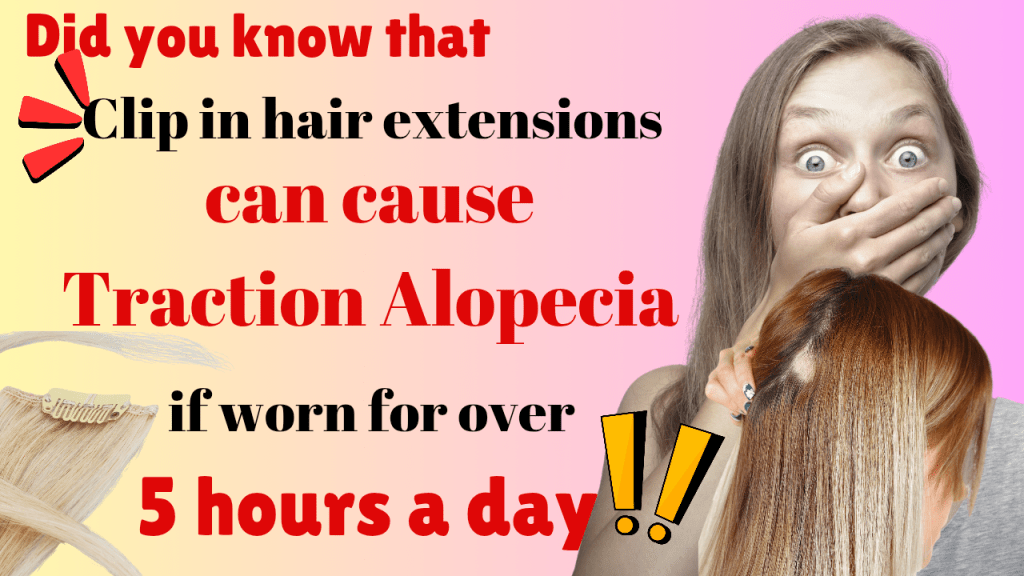
Clip in hair extensions can cause traction alopecia if worn for over 5 hours a day by Diane Shawe

Nickle Clips can irritate the scalp

Nickle Clips can irritate the scalp

If nickle clip-in extensions are continually worn and the tension on your hair is not regularly alleviated, scarring can occur as well as permanent hair loss, leaving the wearer with a less then desirable appearance they’ll be forced to deal with for the rest of their lives.

article by Diane Shawe M.Ed

Almost all of these clips are made from nickle and if the wearer is allergic to nickle, wearing them for over 5 hours a day will eventually cause traction alopecia and scarring.

In today’s modern society, most people think only of the final appearance of their hair.

backcombing-to-Attach-Clip-in-Hair-Extensions-causes-traction-alopecia-diane shaweHours spent back combing and coating the scalp with lots of hair spray so that the clips can stay in longer, or even wearing really heavy hair extensions caused by the length of the hair purchased continually irritates the scalp all day whilst at the same time slowly pulling the hair out of it’s follicles.

Cheryl Guttman (2) research found that the continual over processing with Chemical treatment such as bleaches, dyes, or strengtheners disrupts the keratin structure in a manner that reduces its tensile strength.

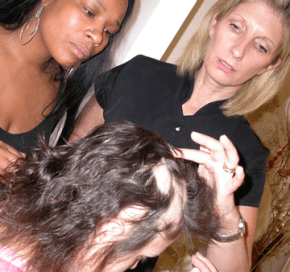
traction_alopecia_caused_by_hair_clipin_diane_shaweThe hair follicles can become fragile. At first the hair fall out is not so noticeable because the clip on extensions are disguising it. Add brushing and combing your hair, you will note a difference in the reduced thickness of your hair line but ignore it initially. Later on some people might experience heavy fall out which can occur with brushing, combing and washing your hair. On top of that using extreme heat to fashion each day can also permanently damage the hair follicle.

If detected early, traction alopecia is reversible if diagnosed early. However, permanent loss can occur too slowly for immediate detection. Hair loss is often occurs in the front, but is also subject to the immediate adjacent area to where the clip in extension were pulling and damaging the hair root.

According to Basil M Hantash, MD, PhD (1)  The sad truth of the matter is that permanent traction alopecia does not respond to medical treatment such as minoxidil or finasteride since by its nature, the loss is different then genetic hair loss.
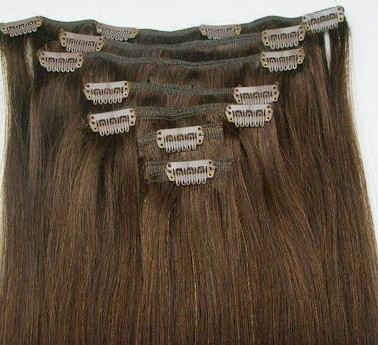
The only way one can treat traction alopecia is with transplants. Follicular unit hair grafting has been identified as the only practical solution to treating traction alopecia. Hair transplant clinics are reportedly seeing a rise in the number of patients with traction alopecia and say the results can be good to excellent.

nickle-clipins-damage-scalp-diane shaweHowever this can be a costly approach especially whilst clip in extensions appear so cheap. What you have to consider is whether wearing clip on extensions for over 5 hours a day versus the value of your own hair. Which is worth more?

There are over 16 different extension techniques. It is important that you find a technique that is suitable for your type and life style. There is a misconception that hair extensions can be worn permanently for up to 6 months at a time.

In today’s society, you need to hold on to what you’ve got, look after what you have and start being kinder to your hair.

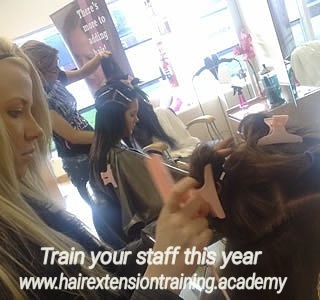
Want to find out how to train to become a Hair Loss Hair Extension Consultant then click to view our course prospectus

Get your copy today from amazon.co.uk

Get your copy today from Get a copy of #DianeShawe latest ebook. Visit available on #amazon #amazonkindle and #googlebooks

Sources:
1. Basil M Hantash, MD, PhD, Robert A Schwartz, MD, MPH. (2005) Traction Alopecia, Emedicine.com

2. Cheryl Guttman, May 1, 2003 Alopecia Options for Black Women, Dermatology Times,