Category Archives: Coupons and vouchers

Traction Alopecia – How You Can Stop It and is it Reversible by Diane Shawe

traction alopecia how to stop itAre YOU a Likely candidate for Traction Alopecia?

Anyone can be affected by traction alopecia – young or old, male or female. It’s more common within certain groups of the population, because they are more likely to use some of the hairstyling techniques listed above.

The reason I raise this article is because we are all living longer and some of the current fashionable trends in the younger groups are contributing to traction alopecia. Read about Clip ins and how they cause Traction Alopecia

For example, women and girls are more likely to notice the problem due to braids and weaves. Ballerinas – who tend to wear their hair pulled into very tight ponytails – sometimes suffer from traction alopecia around the hairline as a result.

In a nutshell – if you have a habit of doing something on a frequent basis that puts your hair under some sort of strain, then you are a candidate for traction alopecia.

Read on to discover the many ways you can prevent it from happening, or stop further damage if you’ve already noticed a problem.

Traction Alopecia Symptoms

Have you ever undone a ponytail and found your scalp feels sensitive to the touch afterwards?

Does untying your hair feel like a relief?

Does your scalp itch after you’ve had braids or a weave put in?

Have you ever taken painkillers because your hair is secured so tightly it’s given you a headache?

All of these are warning signs that your hair is under way too much tension. Your body is trying to tell you something… and you need to listen!

If not, the next thing you’ll notice is that sections of your hair are actually missing, or worryingly sparse. You can often see this more clearly around the hairline or behind the ears, but it can often happen around the crown, too. It really depends on what was causing the tension in the first place.

Some people even notice pustules (blisters filled with pus) or papules (little pimples) where the hair is under a lot of tension. This is because of the irritation being caused to the scalp and is a clear indicator that the follicles just can’t cope with the strain.

Can Traction Alopecia be Reversed?

Yes and no.

If you spot the warning signs of traction alopecia early enough and you put a stop to whatever’s causing it, then your hair will stop falling out and should – with time, patience and loving care – be completely restored to its former glory.

But if the hair follicles have been so badly traumatised for such a long period of time that they have scarred over, then the hair will not grow back by itself. Areas of the scalp where this is the case will likely look shiny.

In cases like this, you’ll need to think about some sort of surgical restoration – speak to your dermatologist to establish whether or not your traction alopecia has caused permanent scarring and to discuss the surgical options available to you.

When Traction Alopecia Compounds Other Hair Loss Problems

traction_alopecia_caused_by_hair_clipin_diane_shawe

If you are wearing a hairpiece – such as a clip on topper – to mask other hair problems like androgenetic alopecia, then you need to be very careful not to compound your problem with traction alopecia!

The best option is to ensure that the clips of your topper are firm, but not too tight, and that you rotate them. We also recommend undoing a couple of the clips when you’re at home – it gives your scalp a little rest from the tension.

Traction Alopecia Recovery Time

Most experts agree that your hair should recover within 6 to 9 months of you removing the cause of the problem.

If you’ve followed the guidelines given here and you are still not seeing regrowth, then it’s likely that the damage to your follicles was permanent – a fact your doctor/dermatologist can confirm. In that case, you might like to discuss the possibility of a hair transplant, which will effectively mask the problem.

What are the Causes of Traction Alopecia?

Traction alopecia is a type of hair loss that happens over time. It’s caused by putting the hair under constant strain or tension and is usually caused by one or more of the following…

  • Very tight ponytails or pigtails
  • Tight braids or cornrows
  • Dreadlocks
  • Extension (single) braids
  • Hair weaves or wigs attached with glue, clips or tape
  • Certain hair clips, slides or barrettes that hold the hair tightly and are worn in the same position every day
  • Headbands – even fabric ones – worn day after day
  • Tight hairpieces
  • Tight headgear like cycling helmets that are worn frequently or for long stretches of time and tend to rub or pull repeatedly on the same area of hair
  • Repeated use of hair rollers
  • Repeated pulling of the hair with the hands (this is an emotional condition called trichotillomania)

If you use or do any of the above, then you may find that the constant tension they cause has led to areas of thinning hair – usually around the temples or behind your ears. Alternatively, you might notice that the part in your hair looks wider than it used to.

If so, then it’s quite likely that you’re suffering from traction alopecia.

There’s more to this condition than hair simply breaking off. Instead, the constant tension in the affected area either pulls out the hairs’ roots completely, or causes the follicles to become inflamed. As time goes by, the damage to the follicles causes them to become atrophied (wasted away)… and if you don’t put a stop to the cause of the problem, they will reach the point where they no longer produce hair at all.

Reference: DermHairClinic – Traction Alopecia

Get your copy today from amazon.co.uk

Get your copy today from amazon.co.uk

Traction Alopecia Treatment

As discussed above, ‘treatment’ for traction alopecia is only effective before you’ve arrived at the stage of permanent damage.

But the good news is that ‘treatment’ – if you’ve caught the condition early enough – can be as simple as changing whatever hair styling and hair care practices you were using and really learning to CARE for this precious asset… your hair!

Wearing a weave

One of the biggest ironies about traction alopecia is that it’s the most common cause of hair loss for women wearing hair extension is due to the application being too tight when weaves and hairpieces are applied… yet those weaves and hairpieces are often used in the first place to enhance hair that may seem thin, or lacking in volume.

Weaves are generally applied through braiding, fusion, netting or bonding – and the sad fact is that any or all of these methods can lead to traction alopecia if used extensively, over long periods of time.

To minimize the risk of traction alopecia, or to try to prevent further damage and encourage regrowth, have your weave fitted by a state licensed professional. Yes, it may be more expensive, but you – and your hair – are worth it! Someone properly trained in hair care will keep damage to a minimum and will be able to spot potential problems and nip them in the bud.

The same goes for hair extensions, which can also cause hair loss problems in the lower half of the scalp. Have them fitted by a trained professional – don’t try to fit them yourself or have a friend do them for you.

Speak to your hairdresser about taking care of your scalp – some women find it difficult to maintain good scalp hygiene because the weave or extensions make it awkward… unfortunately, though, this can make the problem of traction alopecia worse.

When chemicals are the culprits

There’s a kind of alopecia called CCCA (central cicatricial centrifugal alopecia), also known as hot comb alopecia, or follicular degeneration syndrome. It’s almost exclusively seen in African American women and it’s often confused with female pattern baldness, because it starts at the crown and spreads to the surrounding areas.

The cause?

A mixture of too much stress (traction) on the hair along with the use of harsh chemicals like dyes, relaxers and bleaches. The chemicals actually damage the keratin structure of the follicle itself, causing hair LOSS, not just hair damage.

In fact, research conducted in 2008 showed that the highest prevalence of traction alopecia was in women with relaxed hair.

If you suspect this is a condition that’s affecting you, speak to your dermatologist. In addition to removing the cause of the traction and stopping the use of chemicals in your hair, you may be tested for any bacterial or viral infection and possibly be prescribed topical steroids, antibiotics or topical minoxidil to encourage regrowth.

NOTE: If you must use a relaxer on your hair, have it done professionally. Specialists are seeing more and more problems caused by home relaxer kits, because it’s tempting to leave the chemicals on longer than necessary, or accidentally use a stronger formula than you really need. (Make sure they have been certified)

Braiding, ponytails, pigtails and locs

The 2008 research into the prevalence of traction alopecia in African girls and women showed that braiding caused more problems than chemicals (although the two together were worse still).

Starting up a hair extension business Diane ShaweConstant, tight braiding – or other styles like ponytails that place hair under chronic tension – can affect any ethnic group. So it’s very important to take a new approach to styling hair that doesn’t rely on placing the hair under extreme tension.

The ideal solution, of course, is to allow the hair to be completely natural, without using any kind of clips, slides or ties.

The reality, though, is that this just isn’t possible for most of us. Our hair may either be unmanageable and wild looking when allowed to ‘do its own thing’ – or, like us, you may live in a climate where it’s simply too hot to have your hair hanging around your face all day.

The answer is that you can continue to secure back your hair, but you MUST change the way you do it from one week to the next. Traction alopecia is usually the result of CONTINUALLY putting the hair under EXACTLY the same tension in the same place, day after day.

How to Avoid Traction Alopecia (and still have beautiful hair!)

Change the location of your ponytail often – wear it high, low, on one side, then the other. Don’t wear a ponytail at all if your hair isn’t really long enough to need one… otherwise you’ll probably be pulling your too-short hair really hard in order to secure it.

Avoid using clipped in ponytails – the weight of them can – quite literally – tear out your hair.

Always use fabric covered hair bands – avoid bare rubber bands like the plague! And remove bands, clips and ponytail holders from the hair at night – this is when you may be putting your hair under tension without even realizing it.

Invest in satin pillowcases. They cause less friction on your hair than cotton or nylon ones – and, as an added bonus, they’re believed to help reduce wrinkles too!

Change the location of your partas often as you can. Even a simple part in the hair can trigger a problem when worn in the same position day after day.

Don’t retwist the roots of dreadlocks – watch this video for first-hand experience of how damaging this can be!

If you use hairspray or hair gel, wash it out before you next brush your hair.Brushing dried hairspray and gels out of your hair is damaging to the shaft and may cause further hair loss.

Make sure your hair is hydrated. If you’re in a dry climate – or you use air conditioning or central heating – the lack of moisture in the air can make your hair brittle and more likely to break

http://http://issuu.com/dianeshawe/docs/course_prospectus_hair_loss_consult

Other related Hair Loss Article by Diane Shawe

Creating a Win Win situation is not just about Selling

Negotiations outside the box

Negotiations outside the box

Keeping an Open Mind

article by Diane Shawe M.Ed

Have you ever started working on a project and had someone come along with an idea you never thought of that made the project much better? Perhaps it sped up the process, gave it much more depth or meaning, or led to a richer result in some way.
If you were closed-minded about the project, you would not have even noticed that someone came to you with a better suggestion. Being open-minded, however, allowed you to recognise the value and merit of someone else’s ideas, and voila! Things worked out much better than you had ever imagined.

When you apply open-mindedness to negotiating, it helps to support your flexible and adaptable nature. For example, perhaps you set your mind to negotiate the best price you can, but your counterpart approaches you with a better price than you had imagined as your benchmark. If you are open-minded, you hear what your counterpart proposes. If you are closed-minded, you are so focused on the outcome that you might not hear what they offer at all, and you may actually negotiate yourself a weaker deal.

Not every negotiation is about reaching a win-win solution. Sometimes, not everyone can win. For example, when an organization is preparing to downsize, the employees may be looking for the most benefit they can get, but they know that they will not have a job in the end. In collaborative negotiations, your real objective is to reach the best possible result for all parties. This might include some compromise, and should always involve working toward relationships.

Long Term and Short Term Relationships

CPD FrameworkWhen you consider relationships in negotiating, the length of the relationship is very important. If you are negotiating with someone that you will never see again, and with whom you have no investment, go ahead and put everything on the table. This would be the case if you were bargaining about a one-time purchase (such as furniture or a television from a commission based salesman, for example). In many cases, however, you may be looking at a much longer-term relationship. In the case of labour negotiations, many unions have strong negotiators who work with them for many years.

The union negotiators are skilled professionals, and they may approach your meetings very confident that they, themselves, will be around much longer than the current group of managers and negotiators that the employer has. If you are an employer negotiator, you will want to consider the long-term effects of the relationship that you foster, as well as the specific terms that are agreed upon. Expect, for example, that if you are currently negotiating wage or benefit rollbacks, the union is going to be very resistant, and that if you are successful in negotiating those reductions, the union is going to negotiate their reinstatement at the next round.

Labour negotiations are about long-term relationships. Consider also that the terms that you bring up in this kind of negotiation will have a long lasting effect on the company and its employees. The union knows this too, and that it is important to realise that the negotiations are a part of a long-term relationship that can be strengthened or damaged by the results of the negotiations that you are taking part in.

When you are thinking in terms of relationships, be ready to leave some items on the table. That means that some items that you thought were important may not be considered in this round of negotiations. This is one of the times when detaching yourself from the outcome is important; there will be other opportunities to work with this contract or similar ones again, and those may be the times that you will be able to bring those other items to the fore.

Go back

Your message has been sent

Warning
Warning
Warning
Warning

Warning.

branding-mindfeed-ebook-by-diane-shawe
About the Author

Diane Shawe is a speaker, trainer, mentor, consultant, entrepreneur and author with 15 published titles on Amazon.   With more than 25 years of experience. She has personally trained over 2800 people around the world in a variety of fields and has published a number of works. She has contributed to over 100 Kiva Entrepreneur’s around the world.

She was also one of the producers of a Day time Ladies Talk Show in 2015 and Host of one of the UK’s best loved Annual Hair Extensions Awards.

Diane also enjoys oil painting, sailing and clay pigeon shooting. She focuses on topics that she is passionate about in her writing and has attracted over 36,000 followers on her popular blog.

Media Contact
Company Name: AVPT Short Courses
Contact Person: Diane Shawe MEd
Email: Send Email
Phone: +44 208 1333120
City: London
Country: United Kingdom
Blog Website: http://www.academyexpresscourses.com
Training http://www.hairextensionstraining.academy

Diane Shawe’s eBooks are available on Amazon right now at: https://www.amazon.com/Diane-Shawe/e/B0052WG8V6

Diane Shawe Social media links http://www.phollo.me.com/expresscourses


10 Tips for Becoming a Social Media Influencer by Diane Shawe

10 tips on becoming social media influencer by Diane ShaweAre you trying to become a social media influencer?

article by:

CEO at AVPT Ltd. Business Growth Training Provider & CPD Approved by SRA. Startup Loan Mentor

To be considered an influencer, people need to see you as a resource. Consider your audience and share content that they’ll find useful. Post original articles, plus posts from other trusted sources.

Publishing on social media is a great way to share expert knowledge and develop your influencer status.

In this article I’ll share ten tips that can help you become a social media influencer.

Discover ten tips for becoming a social media influencer.

1: Focus on one area and one specialism

To become an influencer, master a specific topic within your niche. If you cast your net too wide, it will be difficult to gain the level of knowledge necessary to be considered an expert.

If your goal is to be an expert in the digital space and become known as an influencer, there are plenty of things you can do to raise your profile. Develop your expertise and use social media to raise yourself to influencer status. To help you find your focus here are some points to consider.

What do you think?
What is your niche?
What platforms get the most engagement?
How have you developed your reputation as an influencer?
In what ways will you engaged your audience and shared your expertise

Either focus on one social media industry such as social media marketing or public relations, or on a single platform like Facebook, Twitter, LinkedIn, Pinterest or Instagram. The Vine is also good for short video clips from your Youtube account.

1: Master one topic to become a true expert.

Get your copy today from Amazon

Start small and learn as much as you can about your desired niche through research and experimentation. That way, you’ll be able to discover the ins and outs of your specialty and form your own ideas, as opposed to simply restating others’ opinions. This is a very important step on your way to influencer status.

Oh and try not to drill down too much in your articles, more and more people access using a mobile device so think about what you would want to see if it was you reading someone else’s blog.

2: Subscribe to Platform Blogs

Social media is unique because it is in constant flux. Stay on top of the latest platform updates, such as algorithm changes, new analytics and added features, as they can drastically change a social channel and the way it’s navigated.

Whether you want to be viewed as the authority on a social channel or a broader industry, read platform blogs regularly: Facebook, Twitter, LinkedIn, Pinterest and Instagram. There’s no better way to keep tabs on any social media channel.

3: Familiarise and Read Relevant Blogs Daily

In addition to platform blogs, read other information outlets to gain valuable insights into your niche. Study news, expert opinions and case studies that are published or shared by people you trust.

Makes subscribing to and reading multiple blogs easy.

By using a tool like Feedly to subscribe to a variety of relevant industry blogs, you will benefit from different viewpoints and helpful advice.

4: Do you use your Alert Settings?

Reading press releases, news alerts and relevant posts is key to staying informed. When you know what’s happening, you can keep your followers in the know.

Since it is impossible to keep track of all of the information from platform blogs and your favourite outlets, invest time into creating alerts directly related to your specialism. A couple of tools that make it easy to stay on top of relevant news are Google Alerts and Social Mention.

5: Populate Your Blog

There is nothing worse than a blog that is several weeks out of date! Write blog posts and publish consistently. You should shoot to publish at least two to three times each week.

To stay on track, create an editorial calendar and stick to it.

Partner with other influencers and reblog them. Interview them, (over the phone, on skype or send them 5 questions to answer. Invite them to contribute to your blog or run a promotion together that gets shared on everyone’s sites.

6: Publish on LinkedIn

In addition to your own blog, re-create your posts on LinkedIn’s publishing platform. Cut and paste your previously published blog posts and add a headline, image and keywords. (I hope you have a linkedin account)

Remember, people generally assume LinkedIn posts are only from the most influential thought leaders. Now, when people in your network and beyond see your articles on LinkedIn, it is likely they will view you as an authority too.

Share your knowledge and get noticed by publishing on LinkedIn.

Through its publishing platform, LinkedIn has created a prime opportunity for influencers to get noticed.

7: Use Sharing tools to share Valuable Content

I repeat again, share content. Once you’ve determined your focus and have implemented a system for keeping on top of the latest news and information within your niche, start sharing high-value influencer content with your audience via social media.

8: Seek out and Contribute to Other Sites

One of the quickest ways to gain influencer status is to contribute your unique content to other blogs and publications. Guest posting increases your visibility, bolsters your credibility and increases traffic to your own blog.

After your content is published, let people in your network know. Tweet a link, share it on Facebook, tell your other online communities and add it to your LinkedIn profile publications. Dare I say it but +google plus is fast becoming a really influential content showcase. Have you got your account set up yet?

9: Be Seen Engaging Online

To be an influencer, you need to be seen and also be engaging. Social media influencers regularly take part in relevant conversations across a variety of networks. Attend and participate in Twitter chats and webinars (and host Twitter chats too), answer questions on Quora and share ideas in LinkedIn groups. Be constructive and you don’t always have to be controversial for the sake of it.

10: Safeguard your Reputation

This area is not often looked at, getting misquoted, having the wrong type of media attached to your blog can often flag up in the search engine above all of your positive content.

Make sure you sign up to a online reputation notify. They are good because they sweep the internet each week and give you a report on any new content found linked to you or uploaded by you. I use www.naymz.com It’s worth becoming a premium user.

Sharing your knowledge is how you’ll truly stand out as an influencer.

How can we help?

We have a Social Media Course that you might find very beneficial. Visit www.shortcourses.expert or give us a call and we will send you the course outline. 0208 1333120

To busy to Market your business and get new clients? by Diane Shawe

Without new customers your business dies.

Without new customers your business dies.

No business can grow or survive without new customers!
article by Diane Shawe M.ED

If lead generation – in other words – getting more clients and growing your business – is something you keep put off and try to put right in a panic (when it’s too late!)  because you are too busy the rest of the time, then it is essential that you adopt a system that generates new leads – even when marketing is at the bottom of your priority list.

That’s why websites such as pagewiz.com have done so well over the past 3 years.

But before you can even look at setting up  your marketing strategy – the web pages, videos, emails and all the other things you need – here’s how we can help you, for a very small fee (£9.99 + vat) to shape up your campaign in a 3 hour bootcamp.

  • Step One: Visit http://www.clarity4d.softskills.expert and skroll down to the Bootcamp courses
  • Step Two: Select the bootcamps you would like to attend that will give you the most benefit.
  • Step Three: Complete the form and submit it to us and we will send you an invoice.
  • Step Four: We will confirm the venue details, you have already selected the time

As you can see there is no big sales pitch, you either need it or you don’t.  We wont waste your time.

These will be the most constructive 3hours you have every spent in moving your business on.

This is deliberately designed to give the busy business owner world-class marketing – without the effort, hassle, time and stress needed to do it all by yourself.

I know a good deal 3 hours workshop diane shawe

Hot summer hijacks heat on hair extensions by Diane Shawe

Become a qualified hair extension technician this summer

Become a qualified hair extension technician this summer

As the heat turns up this summer, celebrity hair stylist Diane Shawe offers exceptional training in the summer’s latest hair trend.

Predictions abound for the coming summer to be another scorcher, the trend for hair extensions is hitting headlines with TOWIE and Miley Cyrus amongst others. An expert in extensions, Diane Shawe has teamed up with Groupon to offer cut price courses to professionally train salon owners, stylists and enthusiasts in natural looking hair extensions.

Previous years have seen summer styles favour the short; taking the heat off the head. But… Oh! Those summer nights. Tell me more. As the evenings close in, unpinning long locks to wrap around shoulders is the perfect solution to shivering in the evening calm.

Specifically designed to showcase the most natural and seamless hair extensions, Diane’s courses range from a half day preparatory course at just £49 to the full day special, where delegates will gain globally recognised accreditation from the IAO for £99. Both courses are designed to bolster professional qualifications, and can be used to practise as a hair extension trainer or consultant; earning up to £30,000 a year.

Expert in hair extensions and stylist to the stars, Diane Shawe said, “This is a great way to empower people with an interest in extensions to create longer hair, in just a day. I’ve trained for 10 years to distil the secrets into these cut price courses.”

Diane was featured on the popular Jeremy Kyle show as the UK’s top wig maker, to help a young lady who was being bullied at school replenish her hair. From wigs to extensions, Diane is an expert in hair loss and consultancy.

Get this special deal from Groupon

Get this special deal from Groupon

Designed to ensure that hair is pleasingly soft to the touch with a subtle finish, the hair extensions training academy courses divulge 16 different techniques that epitomise discretion, comfort and allure. Impervious to an outsider’s eye, the natural looking hair flows, creating the season’s hottest look for clients, friends and enthusiasts.

Investing in the low cost courses will provide high return on investment for those interested, since their current pricing, in collaboration with Groupon can lead to savings of up to £350! For existing hairdressers and salon owners, the courses enable additional income, and they are also designed to teach novice hair extension consultants and technicians too.

One satisfied student, Stacey said, “When I felt I had acquired all of the knowledge and information to start my new business venture rolling! Diane gave me information on how hair is formed, where hair is sourced from, the difference between Synthetic and Human hair, I literally wrote a training manual for myself whilst on this course.”

Having previously run courses on Wowcher, Diane has been amazed at the success of her courses and is excited to be offering this excellent price in the run up to scorching summer. She said, “I’ve had wedding stylists, photographers and total hair novices come on my courses, and because I run them in small groups, they have all received some personalised training.”

Hair extension course prospectus 2015 - 2016

With availability all over the UK, interested people can snap up Diane’s bargain by using the Groupon link

For more information about Diane’s extensive work on hair loss and consultancy, please see her website at http://www.hairextensionstraining.academy/

Why strategies for modernising corporate learning should focus on outcomes

there's never been a better time to start a short coureTHE SPEED OF CHANGE IN MODERN BUSINESS DEMANDS A NEW APPROACH TO SUPPORTING LEARNING AND PERFORMANCE AT THE POINT OF NEED.

article by Diane Shawe M.Ed

“THE IMPORTANCE AND EVIDENCE -BASED APPROACH TO
LEARNING USING MOBILE TECHNOLOGY IS INFLUENCING HOW INVESTMENT IN CONTINUED PROFESSIONAL DEVELOPMENT OF A WORKFORCE IS ACHIEVED”

New market opportunities open and close at blinding speed, new competitors emerge overnight, product lifecycles are getting shorter, and customers are more knowledgeable and sophisticated. This fast-changing environment has led to requirement to change learning and training. However more often than not, the task of aligning the learning organisation to the business can be challenging and the perception of how the business views the learning organisation in terms of aligning to strategic initiatives is different to how the learning organisation perceives itself.

Downsizing has resulted in a mass drainage and outflow of skills as employees or contractors are let go. To ensure that an organisation can compete globally and remains at par with the technological changes in the global market committing to the investment of on-going skill training is often viewed as a potential unnecessary incision into the bottom line
Start a short course to grow

Corporates, enterprises and charities all wish to run their operations at the minimum costs allowed. We all recognise that in today’s environment, business moves faster than ever. Most organisations now recognise the importance of developing a strategic approach to learning and harnessing the internal skills of their teams. Moving away from more tactical based activities associated with training such as measuring skills-based behaviours, to focusing on acquisition of knowledge and learning transfer that result in individual and organisational performance improvements.

With the explosion of mobile technology, organisations need to take advantage of the benefits, scalability, and viability of using mobile e-learning, using smart phones, tablets, and notepads that offer a blended solution.

E-learning has the potential to fully integrate the benefits of personal freedom with connectivity (belonging to a purposeful group of learners). From an educational perspective the “e” in e-learning stands for more than electronic; it can also stand for extending and enhancing the learning experience.

Fulfilling the buyers requirements

Corporate strategy for modernising learning free report by Diane ShaweThe four pillars that go to underpin the buyer’s requirements and therefore still define the industry offerings are centred on the following: • Compliance and accreditation

  • Scalable and flexible whilst achieving a real reduction in Cost
  • Improving, tracking and measuring Learners’ performance
  • Real time management, alignment and communication to support on-going changes.
  • The ability to track and report learner performance remains uppermost in many procurers’ minds.

Isaac Asimov’s quote is now more urgent and relevant if corporates are to gain a lean and competitive advantage with a progressive highly skilled workforce for the 21st century.

“No sensible decision can be made any longer without taking into account not only the world as it is, but the world as it will be.”

Why strategies for modernising corporate learning should focus on outcomes rather than input by Diane Shawe M.Ed

Innovation is alive and kicking as FSB 2014 London Business Awards announced

Express training courses diane shawe finalist

Express training courses diane shawe finalist

Innovation is alive and kicking in London, according to the organisers of this year’s FSB London Business Awards, who have just announced the finalists.

The shortlist includes Express training courses who provides soft skills courses to people looking to get a job, get a promotion or start a business by them training on their mobile devices.  Rockflower Ltd, who sell fresh flowers from kiosks and vending machines, Mum2mum market Ltd where mums sell nearly new baby and children’s clothes to other mothers and Cyclehoop, award-winning designers and architects who are changing the face of indoor and outdoor cycle parking.

Steve Warwick, London regional chairman of the FSB (Federation of Small Businesses) said: “The four businesses we’ve picked out here are just the tip of the London innovation iceberg. We’ve been blown away by the ingenuity and innovation shown by this year’s finalists.

“Yet again London’s small businesses have shown that they are leading the way in finding new markets and providing services and products that customers didn’t even know they wanted! We’re all looking forward to the awards final, which is set to be a celebration of London business success.”

The overall winner as well as the category winners will be announced at the final at the plush Hotel Pullman London St Pancras, on Saturday, July 19, 2014.

The full shortlist is:

Busisess Innovation Award

Geeks Ltd

Express Training Courses (AVPT Ltd

Mum2mum market Ltd

Orange Money Ltd

MarketInvoice

Best New Business

Advantage Business Partnerships Ltd

GATE8 Luggage

IDEX Consulting (London) LLP

My TutorWeb

Rockflower Ltd

Service Excellence

Cafe Buzz

Edward James London Aveda Salon & Spa

FM Cosmetics UK Ltd

MSH Wellbeing

RIG Locums Limited

Training and Development

Myers & Co Accountants Limited

RIG Locums Limited

Edward James London Aveda Salon & Spa

Optimity Limited

Gina Conway Aveda Lifestyle Salons and Spas

Young Person of the Year

Daryl Woodhouse, Advantage Business Partnerships Ltd

Kerry Cannadine, Chic Dreams

Louise Clarke, Dot Net Solutions

Katie Newman, Havering Beauty Academy

Shubber Raja, Medilink Consulting Limited

Enterprising Business

GeoLytix

Cyclehoop Ltd

Promo2u

Wildwash

Medilink Consulting Limited

Merton Council

Geeks Ltd

Cannizaro House

Flying Fantastic

MaByLand

Mum2mum market Ltd

Enfield Business of the Year

Love Your DoorStep Ltd

Tessa Stevens health & Beauty Clinic

Employee of the Year

Tracey Reece, Balance Recruitment Ltd

Richard Walker-Taylor, Burns Carlton Ltd

Real Life Entrepreneur

Daryl Woodhouse, Advantage Business Partnerships Ltd

Anita Sieniuc, FM Cosmetics UK Ltd

Gina Conway, Gina Conway Aveda Lifestyle Salons and Spas

Lars Andersen, My Nametags Ltd

Cath Harrop, Mum2mum market Ltd

Express courses online courses

CPD pending? Pressed for time?

CPD on the move

CPD on the move

Continued Professional Development is entering a new phase for UK Law Firms.

At the Academy of Vocational & Professional Training we understand that you firm is often pressed for time, so nudge thinking, heuristic learning, or brain plasticity are great but, your law firm already have complex challenges, so we are going to keep it simple.

We train in soft skills courses like HR, PR, Management, Technology and Social Media to name but a few. CPD approved by the SRA to help you and your staff meet the challenges expected of skilled professionals.

Doing your CPD the smarter way

Doing your CPD the smarter way

You can study on the move using your smartphone, tablet or at our intense 1 day workshops.

Give us a call on 0203 551 2621 to request a quote or visit our http://www.avptglobal.com

How can employers help keep their work force healthy so as to avoid high healthcare costs?

5-natural-ingredients-for-preventing-lung-disease-expresstrainingcourses.co.ukWhether you’re talking about asthma, cancer, COPD, or even rare conditions, lung disease is on the rise.

The experts are calling lung disease a “time bomb waiting to explode.”

sourced: by Diane Shawe from the  Institute for natural healing

Whether you are creating a workplace wellness program from scratch, or enhancing what you already have, you’re already on the right track! With increasing costs of health care, a shrinking workforce, and aging workers, a savvy workplace understands the value in supporting workers to improve their conditioning and to live a fitter lifestyle.

For instance you could help by engaging with your workforce through your company blog by blogging about five natural ingredients to keep their lungs young and healthy as follows:

1. Milk Thistle: You might already know that it has the power to help your liver regenerate its cells. But milk thistle contains silymarin. It’s a compound that flushes toxins out of your liver. It also helps prevent lung cancer from forming and spreading.

Milk thistle also contains silibinin. Like silymarin, it protects you from lung cancer. But even better. These cancer cells spread quickly to other organs in your body. And they can become drug resistant. Silibinin doesn’t only reverse drug resistance in these cells… It causes natural cell death in cancerous lung tumors.2 You can find milk thistle extract pills in health stores and online. Organic milk thistle tea is another option.

2. Fiber: Oddly enough, fiber is critical to your lung health. It may help relieve symptoms of–and even prevent—asthma.

A high-fiber diet changes the makeup of your gut bacteria. The good bacteria feed on fiber. When you keep these bacteria well-fed, they produce short-chain fatty acids. These fatty acids reduce inflammation and irritation in the lungs. But don’t add grains to your diet for more fiber. They actually increase the amount of inflammation in your body—including your lungs. Instead, eat more organic artichokes, peas, raspberries, and blackberries.

3. Ginger: It’s full of antioxidant power. But two of these antioxidants in particular protect your lungs against inflammation and damage. Gingerols help clear your lungs by reducing the amount of mucous they produce.3 And 6-shagaol, the compound that gives ginger its flavor, stops bronchial tubes from tightening.4 This keeps airflow open and easy.

Ginger can be pretty intense if you aren’t used to it. Add it to your diet slowly if you don’t eat it on a regular basis. When it comes to ginger, fresh is always better. Cutting up some fresh ginger and adding it to a meal gives you antioxidant power and extra flavor. You can also juice with it or use it to brew your own tea to help soothe your lungs when you have a cough.

4. Broccoli Sprouts: Broccoli sprouts are rich in vitamins A, K, and C. But they also contain sulforaphane. It’s a compound that helps you fight the inflammation that causes asthma. One study found that it helped restore defective white blood cells in the lungs. More white blood cells mean less bacteria and inflammation.5

Broccoli sprouts have about 50 times more sulforaphane than regular broccoli. But you may not be able to find them at your grocery store. If that’s the case, look at your local farmer’s market. Or you could grow them yourself. Try them steamed or throw them raw into a salad. For convenience, you can also find broccoli sprout extract as a supplement online.

5. Bromelain: It’s an enzyme used to reduce inflammation of the sinuses after surgery. But it’s also a natural way to treat pulmonary edema.6 This condition prevents the fluid from draining out of your lungs. The result? Shortness of breath. If left untreated, it can cause deadly infections. One study found that bromelain reduces the amount of inflammatory neutrophils in the lung by up to 85 percent.7

The best way to start getting more bromelain in your diet is by eating fresh pineapple.8 And lots of it. Most of the bromelain in a pineapple is in the stem. Or you can supplement.

Pollution and secondhand smoke aren’t the only things that can irritate your lungs. Inflammation is a major factor in the development of most lung disease. Lowering it will help ensure that your lungs are working at their best. Using these five natural solutions will help keep you free of disease—and breathing a little easier.

So you can see the benefits of preparing a workplace wellness program.

Creating a Workplace Wellness Program

Whether you are creating a workplace wellness program from scratch, or enhancing what you already have, you’re already on the right track! With increasing costs of health care, a shrinking workforce, and aging workers, a savvy workplace understands the value in supporting workers to improve their conditioning and to live a fitter lifestyle. We have a  two-day course includes all aspects of designing or upgrading a workplace program, from concept through implementation, to review.

AVPT’s two-day workshop will help you  to:

o   Describe the necessity of workplace wellness programs
o   Create program elements that reflect the needs of employees and the objectives of the organisation
o   Select program elements that fit the context of current operations
o   Establish implementation and evaluation strategies

Getting you qualified in days not years!

Getting you qualified in days not years!


other article you might be interested in : Dangers of Hypertension to Founder owners of SME.

Does nine different kinds of intelligence make you any smarter?

In this article, I will talk about the different ways in which Multiple Intelligence Theory can be implemented in e-Learning to help the learner effectively acquire, retain, and utilise the information being provided within the e-Learning course.

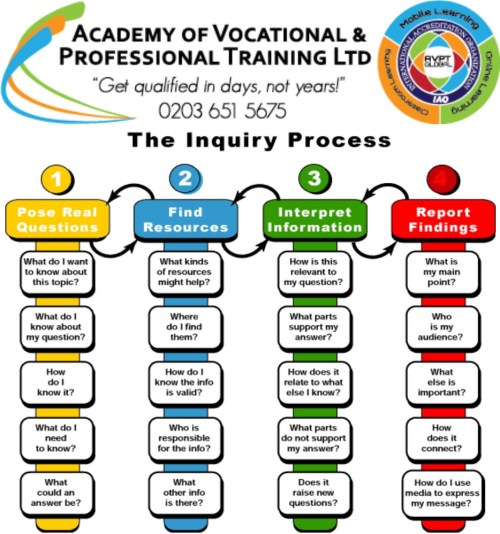
the enquiry process to soft skills training april 2014

The Multiple Intelligence Theory was developed by Dr. Howard Gardner in 1983. Dr. Gardner, a noted psychologist and professor of neuroscience from Harvard University, suggested that every human being interacts with their environment differently. We each possess nine different kinds of intelligence, but our experiences, cultural beliefs, and knowledge base determine their exact configuration.

What is “intelligence”, according to Multiple Intelligence Theory?

According to Gardner, there are three key elements that determine a person’s intelligence:

  1. The ability to create a service or product that will be valued in the person’s society of culture.

  2. A skill set that allows the person to solve real world problems that they may encounter in life.

  3. The ability to potentially create new solutions for problems or to utilize existing solutions. This typically involves the acquisition of new knowledge. 

Multiple Intelligence-Based Activities in eLearning

Multiple Intelligence Theory can be implemented in eLearning based upon the nine multiple intelligences. Let’s take a closer look at each category and which multiple intelligence-based activities can be utilized during instructional design to create the best possible eLearning experience for the learners:

  1. Musical (or Rhythmic) Intelligence
    This intelligence involves the capacity to think and learn in terms of music and rhythm, and to recognize and hear patterns. An activity that would appeal to this type of intelligence is a lesson that includes music or sound, such as a multimedia presentation. Try to use music that emphasizes the subject matter and creates a more immersive experience for the learner. Since there is more of an auditory aspect with this particular intelligence, lectures can also be very helpful. People who demonstrate a high degree of musical intelligence may be ideally suited for musical professions, such as composing or playing an instrument.

  2. Linguistic Intelligence
    This intelligence is associated with expression through language. These people tend to be able to eloquently convey their thoughts and to understand the words of others. Writers and speakers typically display a high degree of this sort of intelligence. Any activities that include discussion, such as online forums or group-based scenarios, are ideal for individuals who lean more toward linguistic intelligence.

  3. Mathematical (or Logical) Intelligence
    This involves the ability to identify principles or structures within a system. This intelligence is often associated with the logic or the manipulation of numbers.  Activities ideally suited for this intelligence may include diagrams, charts, or tables. Critical thinking scenarios are also useful with this group. Accountants and researchers often have a high level of mathematical intelligence.

  4. Kinesthetic (or Bodily) Intelligence
    Body Intelligence involves the use of a person’s entire body to figure out solutions or to create something. People who demonstrate a high degree of kinesthetic intelligence may be ideally suited for performing arts professions, such as dancing, or careers that require an innate knowledge of one’s own body, such as a doctor or athlete. Activities that are best suited for this sort of intelligence include games that involve hand-eye-coordination or interactive scenarios that require physical involvement. The thing to keep in mind about this group is that they are best able to learn when muscular movement is involved. So, include activities that require movement and physical response.

  5. Spatial Intelligence
    This intelligence pertains to a keen sense of space and how one can navigate those spaces. Activities that involve flow charts and graphics are ideal for this intelligence group, as well as games or multimedia that is visually appealing.  Architects, pilots, and sailors often have a high degree of spatial intelligence.

  6. Intrapersonal Intelligence
    This involves an in depth understanding of oneself, such as what you can accomplish and how you react to certain situations. As such, individuals with high intrapersonal intelligence often have a sense of what they should avoid and what they want to achieve in their lives. Professors and philosophers often possess high degrees of intrapersonal intelligence. Activities such as collaborative learning exercises (online forums) and chat programs enable intrapersonal intelligence learners to help others and to share experiences and ideas. This category responds well, first and foremost, to activities, which require introspection.

  7. Interpersonal Intelligence
    This is the capacity to understand and learn from others. People who demonstrate a high degree of intrapersonal intelligence may be ideally suited for service professions, such as teaching or politics. Those who identify more with this category of intelligence may benefit from group discussion activities and in depth questions that make them fully explore the topic. What’s important to remember about interpersonal intelligence is that these individuals are sensitive to others’ moods and feelings. They work well in-group settings and are often able to learn more effectively when collaborating.

  8. Naturalist Intelligence
    This intelligence involves the capacity to differentiate between living organisms and to view the connection between all natural things.  People with a high degree of naturalist intelligence usually have a close bond with nature. Botany and biology are two career fields that closely identify with this sort of intelligence. Activities that involve classification or organization appeal to these individuals.

  9. Existential Intelligence
    This particular intelligence was added later by Gardner, and is not commonly associated with learning environments, as it is geared more toward spiritual and philosophical views. For example, someone who has a high degree of existentialist intelligence may have a tendency to pose questions about life’s purpose or death. 

It’s important to note that instructional designers should not feel obligated to incorporate all of these multiple intelligence-based activities into their eLearning courses, just that it may be beneficial to offer a variety of multiple intelligence-based activities to more effectively illustrate the subject matter. If you are able to offer learners a diverse set of learning tools and eLearning strategies, then you gain the ability to increase comprehension and retention, not to mention enhance the overall eLearning experience.

Call us to enquiry about our soft skills courses

Call us to inquiry about our soft skills courses