Category Archives: become a trainer

10 most profitable hair extension techniques to learn for 2017 by Diane Shawe

Why setting up a hair extension business could give you a long term career?

Article written by Diane Shawe M.Ed

Getting started in the hair extension business by Diane ShaweWe have seen the hair extension market grow over the past 15 years, now there are more hair extension techniques than ever before and it can be confusing to decide which is the right one for you to either apply to your own hair or become a qualified technician.

If you are thinking of becoming a qualified technician, it is important to consider how potential clients might make their decision.  Some people will make a decision based on price, others on their hair type and some based on what they need to achieve. Click to see our training school video

Here are just a few tips to help with your decision making process.

1. Wigs Wigs are a quick and easy way to give yourself a quick makeover.  What you need to bear in mind is that the cheaper the wig the more un-natural it will look.  You don’t need to spend a lot of money but it is worth investing in a wig that you can use from time to time.  Client will pay between £120 – £300 for a good quality wig which could last for up to 12 months.

2. Hair Pieces: There are lots of different hair pieces from pony tails to rear hair attachments in all different shades, curly, straight or plaits. There are also specialist hair pieces for thinning hair that can help disguise any problems.  The thing to bear in mind is that hair pieces are not often very secure and could make you feel a little uncomfortable.  Some of the ponytail pieces can be securely fixed, so if you want a demure look go for a ponytail.

popular integrated weave

3. Integrated Weaves: This is when wefts of hair is sewn onto a fine cornrow which is then hide by the bulk of your hair on top.  It is a popular technique because if done correctly it can look very natural and offer up a robust and secure hair enhancement solution.  If you look after the hair you can reuse it when you go back to have it re tightened. Clients could pay between £190 – £330 for the integrated weave.

How hair extensions are sourced treated and graded by diane shawe M.Ed 2014 price4. Pre-tips: This is small pieces of hair that have been pre bonded together.  They can be added in sections all over the head to aid thickening, give the impression of highlights or lowlight and length.  Pre-tips can be applied using heat, micro rings or even small elastic bands.  Be aware that they have to be professionally removed so as not to damage your own hair.

5. Strand by Strand (glue gun): This is when hot bond is used to bond small sections of hair to the recipients own hair.  It was a very popular technique in 6 years ago, but requires professional application and removal by a qualified technician.  Can give the appearance of flyaway hair that you could somewhat run your fingers through.  It is a very time consuming technique and is much better for a long term wear over 3-4 months.

6) Clip in hair extensions: These are now very popular.  They are best used for lengthening mid should length hair.  If the hair is shorter they don’t sit very well because they can be a little bulky in appearance.  They don’t offer up much security unless they have been professionally fitted.  This is when a very small cornrow is done and the clips are slipped through for much added security.  Great for an evening occasion but not advisable for long term wear.  click to read more

20121208_180137

7) Net Weave:  This technique is used when the client wants to partially extend just a section of their hair or if the client suffers from patchy alopecia.  This technique is suitable for 2-4 months wear.

8) Hook and Latch: This technique does not use any glues or threads. It is a beautiful technique, flat to the touch and hair could be worn up.  It works well with shorter hair especially the Micro ring track technique.

9) Lace Wigs: Lace wigs have become very popular. They are really good for girls with short thin hair, damaged hair, hair that needs a rest or a complete makeover.  Top celebrities have made them really popular and you can see why from the video testimonial below. See Radio TV presenters new lace wig

alopeciaconsultant

10) Braides and PlaitsBraides and Plaits have been around for hundreds of years.  A technique that can look very simple or quite exotic.  Braids can be worn for a number of months until the hair grows out, they can even have beads added to the end for that extra special look.

Hair Loss Specialists
Clients also suffer from thinning hair can be helped, click here to hear what one client had to say.

As we see an aging population, people are becoming more confident about getting help to resolve short term or long term hair problems.
HAIR EXTENSION TRAINERS
There is s shortage of qualified hair extension trainers in the UK. Visit this link to find out more and how you can become qualified.


Go back

Your message has been sent

Warning
Warning
Warning
Warning

Warning.


avpt membership and approved status 2014 jpeg

6 Things the Most Influential People on Social Media Do

Train to become a Linkd in specialist

Train to become a Linkd in specialist

How do you earn respect, stand out, and get noticed in noisy social-media circles? Take a cue from the Web’s biggest influencers.

Guest Blogger 

Influencers are among the most magical, powerful creatures in social media.

Within specific niches or across large audiences, they have the power to shape how people think about an issue, start important conversations, make businesses stand up and take notice, and more.

Outside of having a large following, how do they do it? And how did these influencers amass the following they have in the first place?

The ability to stand out in noisy social circles helps influencers build their audience and connect with them over and over again. It keeps them relevant. It keeps them influential.

Here are the six things influencers do to stand out:

1. They’re Superconnected and Almost Always On

Brand advocates, superfans, loyalists–influencers of all stripes–are hyperconnected to their audience. They have a passion for their topic of choice, which means they’re always on and use multiple devices to ensure they’re connected throughout the day.

Influencers use tools such as Topsy, Trackur, and Social Mention to find interesting conversations, stay on top of breaking news in their niche, and help them manage and schedule content for maximum exposure.

Influencers treat social like their j-o-b. (and sometimes it is). They get it; you have to invest time and money in yourself to help you scale if you are going to stay superconnected and become an influencer.

2. They Make Boring, Dry, or Otherwise Uninteresting Topics Fascinating

When everyone is saying the same thing, who grabs your attention? Influencers are the people coming up with a creative take on a topic, saying something different or contrary or funnier, etc.

Take Gretchen Rubin, for example. Rubin is a popular author, blogger, and speaker, but then a lot of people write and speak. How is she also one of LinkedIn’s 150 Most Influential People?

For one, while everyone else was writing self-help books, Rubin decided to parody them with her first book, Power Money Fame Sex: A User’s Guide.

See, while everyone else was trying to tell people how to be happy, Rubin decided to take a quirky, self-deprecating, and humorous approach.

When she tweets to her 92,000-plus followers, they listen and share because she’s not spouting the same old conventional wisdom. Her take is unique and makes something that could be tedious–finding happiness–an adventure in which her social connections can all participate.

3. They Create a Ton of Awesome Content

The killer content top influencers are banging out on a regular basis really helps them stand out in a sea of noise, regardless of the topic.

Influencers are great at creating content that people can’t help sharing.

They might do this by way of original research, powerful commentary, sharing a unique take on the news, turning information into stunning visuals, hosting webinars or online chats, or blogging prolifically.

Whichever medium they’re using, influencers love to create awesome content, and they have mastered techniques that allow them to scale their efforts. This might mean partnering with others to increase their reach and maximize their time, or building a great team around them to assist in their efforts.

There are a lot of people out there with something interesting or brilliant to say. The ones who garner influence, though, are incredibly skilled in how they get their message across to the greatest audience possible.

1 day social media and marketing course

4. They Know Who You Are and Want You Want

Influencers don’t operate in a vacuum, churning out social updates and content like traditional broadcasters. They know their audience and what you like–in fact, they often know what you’ll like before you do.

Knowing your audience goes far beyond demographics, and influencers totally get it. They listen, engage, and converse so they can truly understand what drives people. They’re thirsty for audience insights that will help them create that next amazing piece of content, or fuel their next groundbreaking research project.

They don’t get bogged down in popular opinion or go with the crowd, because they know you’re looking for something different. They know this because you’re telling them in a thousand different ways, and they’re actually paying attention.

It might be through social-media activity and sentiment tracking. It could be through website analytics. It may very well be gleaned through actual conversations with the real people who hang on their every word.

The difference is, they actually care about what would be most useful, helpful, or entertaining for you and go from there.

They’re more concerned with what you want to hear than what they want to say.

5. They’re Hip, They’re Happening, They’re Current

And they can’t help being all of these things, because they are so in tune with the topic on which they’re influential.

They read voraciously. They eat data and facts for breakfast. Influencers eat, sleep, and breathe their passion and are always at the forefront of the industry.

When everyone else is talking about what happened this morning, they’re already talking about what’s going to happen tomorrow. And they know what’s going to happen tomorrow, because they know just about everything there is to know about what’s already happened, who is working on what, which technologies or developments are on the horizon, and more.

6. They’re Trustworthy

And this is huge, massive, critical! They don’t waste words, publish fluff pieces, tell half-truths, or otherwise lead their audience astray.

People elevate others to the level of influencer because they trust them. It’s as simple as that.

It can take years to build that trust and one poorly thought out statement to break it, so influencers are incredibly careful about what they’re putting out to their networks.

They stand out in a sea of noise because time and again, they’ve proven their voice is worth listening to and their advice worth taking.

Call us to enquiry about our soft skills courses

Call us to enquiry about our soft skills courses Diane Shawe at express courses, London UK

source: http://www.inc.com/larry-kim/6-things-influencers-do-to-stand-out-in-social-media.html#ixzz2zldfZm9Q

CPD pending? Pressed for time?

CPD on the move

CPD on the move

Continued Professional Development is entering a new phase for UK Law Firms.

At the Academy of Vocational & Professional Training we understand that you firm is often pressed for time, so nudge thinking, heuristic learning, or brain plasticity are great but, your law firm already have complex challenges, so we are going to keep it simple.

We train in soft skills courses like HR, PR, Management, Technology and Social Media to name but a few. CPD approved by the SRA to help you and your staff meet the challenges expected of skilled professionals.

Doing your CPD the smarter way

Doing your CPD the smarter way

You can study on the move using your smartphone, tablet or at our intense 1 day workshops.

Give us a call on 0203 551 2621 to request a quote or visit our http://www.avptglobal.com

How can employers help keep their work force healthy so as to avoid high healthcare costs?

5-natural-ingredients-for-preventing-lung-disease-expresstrainingcourses.co.ukWhether you’re talking about asthma, cancer, COPD, or even rare conditions, lung disease is on the rise.

The experts are calling lung disease a “time bomb waiting to explode.”

sourced: by Diane Shawe from the  Institute for natural healing

Whether you are creating a workplace wellness program from scratch, or enhancing what you already have, you’re already on the right track! With increasing costs of health care, a shrinking workforce, and aging workers, a savvy workplace understands the value in supporting workers to improve their conditioning and to live a fitter lifestyle.

For instance you could help by engaging with your workforce through your company blog by blogging about five natural ingredients to keep their lungs young and healthy as follows:

1. Milk Thistle: You might already know that it has the power to help your liver regenerate its cells. But milk thistle contains silymarin. It’s a compound that flushes toxins out of your liver. It also helps prevent lung cancer from forming and spreading.

Milk thistle also contains silibinin. Like silymarin, it protects you from lung cancer. But even better. These cancer cells spread quickly to other organs in your body. And they can become drug resistant. Silibinin doesn’t only reverse drug resistance in these cells… It causes natural cell death in cancerous lung tumors.2 You can find milk thistle extract pills in health stores and online. Organic milk thistle tea is another option.

2. Fiber: Oddly enough, fiber is critical to your lung health. It may help relieve symptoms of–and even prevent—asthma.

A high-fiber diet changes the makeup of your gut bacteria. The good bacteria feed on fiber. When you keep these bacteria well-fed, they produce short-chain fatty acids. These fatty acids reduce inflammation and irritation in the lungs. But don’t add grains to your diet for more fiber. They actually increase the amount of inflammation in your body—including your lungs. Instead, eat more organic artichokes, peas, raspberries, and blackberries.

3. Ginger: It’s full of antioxidant power. But two of these antioxidants in particular protect your lungs against inflammation and damage. Gingerols help clear your lungs by reducing the amount of mucous they produce.3 And 6-shagaol, the compound that gives ginger its flavor, stops bronchial tubes from tightening.4 This keeps airflow open and easy.

Ginger can be pretty intense if you aren’t used to it. Add it to your diet slowly if you don’t eat it on a regular basis. When it comes to ginger, fresh is always better. Cutting up some fresh ginger and adding it to a meal gives you antioxidant power and extra flavor. You can also juice with it or use it to brew your own tea to help soothe your lungs when you have a cough.

4. Broccoli Sprouts: Broccoli sprouts are rich in vitamins A, K, and C. But they also contain sulforaphane. It’s a compound that helps you fight the inflammation that causes asthma. One study found that it helped restore defective white blood cells in the lungs. More white blood cells mean less bacteria and inflammation.5

Broccoli sprouts have about 50 times more sulforaphane than regular broccoli. But you may not be able to find them at your grocery store. If that’s the case, look at your local farmer’s market. Or you could grow them yourself. Try them steamed or throw them raw into a salad. For convenience, you can also find broccoli sprout extract as a supplement online.

5. Bromelain: It’s an enzyme used to reduce inflammation of the sinuses after surgery. But it’s also a natural way to treat pulmonary edema.6 This condition prevents the fluid from draining out of your lungs. The result? Shortness of breath. If left untreated, it can cause deadly infections. One study found that bromelain reduces the amount of inflammatory neutrophils in the lung by up to 85 percent.7

The best way to start getting more bromelain in your diet is by eating fresh pineapple.8 And lots of it. Most of the bromelain in a pineapple is in the stem. Or you can supplement.

Pollution and secondhand smoke aren’t the only things that can irritate your lungs. Inflammation is a major factor in the development of most lung disease. Lowering it will help ensure that your lungs are working at their best. Using these five natural solutions will help keep you free of disease—and breathing a little easier.

So you can see the benefits of preparing a workplace wellness program.

Creating a Workplace Wellness Program

Whether you are creating a workplace wellness program from scratch, or enhancing what you already have, you’re already on the right track! With increasing costs of health care, a shrinking workforce, and aging workers, a savvy workplace understands the value in supporting workers to improve their conditioning and to live a fitter lifestyle. We have a  two-day course includes all aspects of designing or upgrading a workplace program, from concept through implementation, to review.

AVPT’s two-day workshop will help you  to:

o   Describe the necessity of workplace wellness programs
o   Create program elements that reflect the needs of employees and the objectives of the organisation
o   Select program elements that fit the context of current operations
o   Establish implementation and evaluation strategies

Getting you qualified in days not years!

Getting you qualified in days not years!


other article you might be interested in : Dangers of Hypertension to Founder owners of SME.

Does nine different kinds of intelligence make you any smarter?

In this article, I will talk about the different ways in which Multiple Intelligence Theory can be implemented in e-Learning to help the learner effectively acquire, retain, and utilise the information being provided within the e-Learning course.

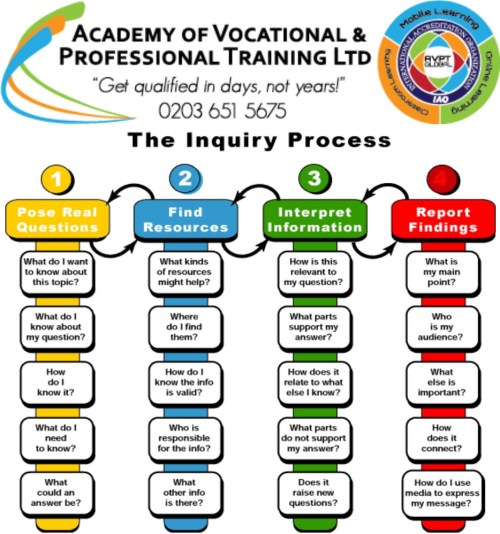
the enquiry process to soft skills training april 2014

The Multiple Intelligence Theory was developed by Dr. Howard Gardner in 1983. Dr. Gardner, a noted psychologist and professor of neuroscience from Harvard University, suggested that every human being interacts with their environment differently. We each possess nine different kinds of intelligence, but our experiences, cultural beliefs, and knowledge base determine their exact configuration.

What is “intelligence”, according to Multiple Intelligence Theory?

According to Gardner, there are three key elements that determine a person’s intelligence:

  1. The ability to create a service or product that will be valued in the person’s society of culture.

  2. A skill set that allows the person to solve real world problems that they may encounter in life.

  3. The ability to potentially create new solutions for problems or to utilize existing solutions. This typically involves the acquisition of new knowledge. 

Multiple Intelligence-Based Activities in eLearning

Multiple Intelligence Theory can be implemented in eLearning based upon the nine multiple intelligences. Let’s take a closer look at each category and which multiple intelligence-based activities can be utilized during instructional design to create the best possible eLearning experience for the learners:

  1. Musical (or Rhythmic) Intelligence
    This intelligence involves the capacity to think and learn in terms of music and rhythm, and to recognize and hear patterns. An activity that would appeal to this type of intelligence is a lesson that includes music or sound, such as a multimedia presentation. Try to use music that emphasizes the subject matter and creates a more immersive experience for the learner. Since there is more of an auditory aspect with this particular intelligence, lectures can also be very helpful. People who demonstrate a high degree of musical intelligence may be ideally suited for musical professions, such as composing or playing an instrument.

  2. Linguistic Intelligence
    This intelligence is associated with expression through language. These people tend to be able to eloquently convey their thoughts and to understand the words of others. Writers and speakers typically display a high degree of this sort of intelligence. Any activities that include discussion, such as online forums or group-based scenarios, are ideal for individuals who lean more toward linguistic intelligence.

  3. Mathematical (or Logical) Intelligence
    This involves the ability to identify principles or structures within a system. This intelligence is often associated with the logic or the manipulation of numbers.  Activities ideally suited for this intelligence may include diagrams, charts, or tables. Critical thinking scenarios are also useful with this group. Accountants and researchers often have a high level of mathematical intelligence.

  4. Kinesthetic (or Bodily) Intelligence
    Body Intelligence involves the use of a person’s entire body to figure out solutions or to create something. People who demonstrate a high degree of kinesthetic intelligence may be ideally suited for performing arts professions, such as dancing, or careers that require an innate knowledge of one’s own body, such as a doctor or athlete. Activities that are best suited for this sort of intelligence include games that involve hand-eye-coordination or interactive scenarios that require physical involvement. The thing to keep in mind about this group is that they are best able to learn when muscular movement is involved. So, include activities that require movement and physical response.

  5. Spatial Intelligence
    This intelligence pertains to a keen sense of space and how one can navigate those spaces. Activities that involve flow charts and graphics are ideal for this intelligence group, as well as games or multimedia that is visually appealing.  Architects, pilots, and sailors often have a high degree of spatial intelligence.

  6. Intrapersonal Intelligence
    This involves an in depth understanding of oneself, such as what you can accomplish and how you react to certain situations. As such, individuals with high intrapersonal intelligence often have a sense of what they should avoid and what they want to achieve in their lives. Professors and philosophers often possess high degrees of intrapersonal intelligence. Activities such as collaborative learning exercises (online forums) and chat programs enable intrapersonal intelligence learners to help others and to share experiences and ideas. This category responds well, first and foremost, to activities, which require introspection.

  7. Interpersonal Intelligence
    This is the capacity to understand and learn from others. People who demonstrate a high degree of intrapersonal intelligence may be ideally suited for service professions, such as teaching or politics. Those who identify more with this category of intelligence may benefit from group discussion activities and in depth questions that make them fully explore the topic. What’s important to remember about interpersonal intelligence is that these individuals are sensitive to others’ moods and feelings. They work well in-group settings and are often able to learn more effectively when collaborating.

  8. Naturalist Intelligence
    This intelligence involves the capacity to differentiate between living organisms and to view the connection between all natural things.  People with a high degree of naturalist intelligence usually have a close bond with nature. Botany and biology are two career fields that closely identify with this sort of intelligence. Activities that involve classification or organization appeal to these individuals.

  9. Existential Intelligence
    This particular intelligence was added later by Gardner, and is not commonly associated with learning environments, as it is geared more toward spiritual and philosophical views. For example, someone who has a high degree of existentialist intelligence may have a tendency to pose questions about life’s purpose or death. 

It’s important to note that instructional designers should not feel obligated to incorporate all of these multiple intelligence-based activities into their eLearning courses, just that it may be beneficial to offer a variety of multiple intelligence-based activities to more effectively illustrate the subject matter. If you are able to offer learners a diverse set of learning tools and eLearning strategies, then you gain the ability to increase comprehension and retention, not to mention enhance the overall eLearning experience.

Call us to enquiry about our soft skills courses

Call us to inquiry about our soft skills courses

Glossophobia: The number one fear in the UK!

fear of public speaking course

Speaking presentation survival school course

Got to make a presentation? Make a wedding speech? Say something at an event? Nervous? How AVPT Global can help you right now with the fear of public speaking.

Tim T Dingle BSc (Hons) MIBiol PGCE MBA

Chief Development Officer, Academy of Vocational and Professional Training

Having trained hundreds of people in brilliant public speaking (and many more to be Standup comics) I am often asked about the causes of Glossophobia. This is a type of speech anxiety and is most commonly the fear of public speaking or of speaking in general. An estimated 75% of all people experience some degree of anxiety and nervousness when public speaking. I am lucky and don’t suffer- whatever size the audience. The good news is it can be cured and overcome.

The more specific symptoms of speech anxiety can be grouped into three categories: verbal, physical and non-verbal. The verbal symptoms include, but are not limited to a tense voice, a quivering voice, and vocalised pauses, which tend to comfort anxious speakers.

The symptoms I see the most in training are the physical ones. These result from the sympathetic part of the autonomic nervous system responding to the situation with a fight-or-flight adrenalin reaction. Since the sympathetic system is all-or-nothing, adrenaline secretion produces a wide array of symptoms at once – all of which are supposed to enhance a student’s ability to fight or escape a dangerous scenario. These symptoms include acute hearing, increased heart rate, increased blood pressure, dilated pupils, increased perspiration, increased oxygen intake, stiffening of upper back muscles and the classic dry mouth. None of which are much good when you are about to give a wedding speech. The good news is they can be relieved with training and some skilled guidance.

learning to speak under pressure

Looking good when speaking under pressure

Public speaking experts agree that one of the most important steps in preparing for a speech is practice. Yet after giving the same speech so many times, it can be difficult to maintain an authentic voice, especially once nerves kick in. More than anything, a successful speech hinges on your ability to know your audience and establish a connection. Shape your speech around a subject that you genuinely care about and try to focus on what you have to offer your audience.

Your concentration will naturally shift away from what is at stake for you personally, calming your nerves and allowing you to connect to your audience in a real way. Then, tell a story. Take the audience on a journey. While there are many aspects that will contribute to the success of your speech, it is the authentic, heartfelt moments that will be remembered most.

The importance of learning to speak in front of an audience is undeniable; invariably intertwined with leadership, motivation, and change. While Glossophobia is common, in fact the most common phobia in the UK, it is certainly a fear that can be overcome. But the power of spoken word is reason in itself to push past that fear.

So remember that nerves are natural: use your nerves to propel you through the speech, and know that your physical response to stress will only make the speech all that much more rewarding once you finally step down from that stage. Remember to be authentic: pick a topic that you truly care about, and the audience will be stirred to care as well. And finally, don’t be afraid to aim big. You were chosen to speak for a reason, and you have a meaningful story to tell. So take slow, rhythmic breaths and change the world- and take this course in conquering your fear of public speaking!

Why Study With Us Unemployed Poster

AVPT Attracted Dozens of Enquiries from Prestigious Beauty Academies in a Successful Exhibit at This Year’s Wales Hair & Beauty Show


H&BWales before&after No2AVPT attracted dozens of enquiries from prestigious beauty academies in a successful exhibit at this year’s Wales Hair & Beauty Show.

by Arub Masoodi BA (Hons)
Public Relations (Social Media Focus) Intern,
AVPT Global Ltd

Diane Shawe CEO, Georgina Marumahoko head of hair & beauty department, and their team at AVPT Global exhibited at the Wales Hair & Beauty show in its second year running. The show allows a platform for hair, beauty, and holistic professionals to network and bring top brands and innovations from the industry together to help grow business. It took place in City Hall Cardiff, Wales on 30th June.

The Wales Hair & Beauty Show, after having a successful first show in 2012, will now be an annual show bringing the leading names in hair and beauty together in a cost effective manner to showcase their ideas, network, and grow their businesses by connecting with experts in the field.

At the show, AVPT showcased their skills and knowledge, attracting a number of enquiries ranging from people looking to start a business, possible collaborations, or those who are already in business and looking to expand.
Emily, who won a free makeover worth £400 from Georgina, couldn’t believe how different she looked.

 wales beauty show before shotwales beauty show after shot

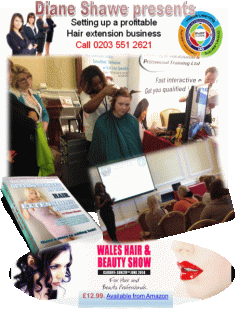
Diane Shawe, CEO & founder of AVPT Global, spoke on how to set up and run a profitable hair extensions business.

H&BWales Diane Shawe presents

After attending the show, Georgina stated this was an exciting time for the quickly growing hair industry as she saw how much of an increasing awareness and strong interest there is in hair extensions.

AVPT attracted well over 35 enquiries from prestigious companies such as Bath Academy of Media Makeup (BAMM) and Coleg Gwent inviting many new and exciting possibilities!

AVPTLTD LOGO 7

The Third Gulf Education Conference Hosted Many Educational Ministers From Around the World in London

20130619_111059

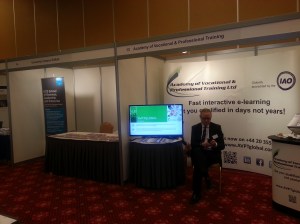
AVPT at Gulf Educational Conference 2013

The Third Gulf Education Conference Hosted Many Educational Ministers From Around the World in London


by Arub Masoodi BA (Hons)
Public Relations (Social Media Focus) Intern, AVPT Global Ltd

Diane Shawe CEO & her team were exhibitors at this prestigious event where ministers and the heads of department met to discuss rethinking higher education in a global and digital age.
The conference took place on 19th and 20th June at the fabulous Millennium Gloucester Hotel in London.

The Gulf Education Conference, now in its third year, is an unrivaled occasion for leaders of education to meet and exchange ideas to further develop and enhance education around the world. The Conference allows a platform to collaborate on a global scale with leaders in education from the Gulf, Mena, UK & US in attendance while also creating a platform to address weak spots and key problem areas in order to implement better plans for improvement. Leaders of education such as, H.E. Ali Adeeb, Minister of Higher Education & Scientific Research Iraq, and Anjum Malik, cofounder Alhambra US Chamber Director, Global Marketing, GIEL University of Texas Austin, were in attendance.

AVPT attracted high levels of interest in their soft skills course when several ministers felt more attention was needed to develop these skills in their country.
Enquiries came flooding in from the Embassy of the Republic of Iraq, the American University in Cairo, the British Embassy in Doha and the Logic Institute CEO Husain Fateel who wants to create a joint venture with AVPT Global. AVPT attracted over 30 enquiries that are now being followed up.

AVPT, along with ministers of education, Chancellors and heads of corporation were able to engage directly with one another and discuss the future of education while collaborating on ideas and extending links to better global education.  

AVPTLTD LOGO 7

12 Benefits of Mobile Learning

Next generation of mobile learning

Learning on the move with
http://www.avptglobal.com

Rapid technology change is here to stay.

article by Diane Shawe M.Ed  CEO Academy of Vocational and Professional Training.

No sense in trying to change the way the world wants to learn. Access to broadband, smartphone, the growth of the mobile tablet has changed the face of how we access knowledge.

But rather than simply program designers and consumers–or even ecological threats–this kind of change also introduces significant threats  or should we say opportunities to education. Throughout the Industrialised delivery of education, there is likely very little that can be actively done to reduce the perceived threats by many faculty heads, especially as the advancement is firstly driven by economic issues. But we can begin to understand them better and view them as opportunities.

Watch the Hard Facts behind Soft Skills by Professor James Heckman

As learning practices and technology tools change, mobile learning itself will continue to evolve. For 2013, the focus is on a variety of challenges, from how learners access content to how the idea of a “curriculum” is defined.

The rapid growth of Technology like tablets, smartphones, apps, and access to broadband internet are lubricating the shift to mobile learning, but a truly asynchronous mobile learning environment goes beyond the tools for learning to the lives and communities valued by each individual learner.

PA9C1822
Training for the jobs yet to be created

It is only within these communities that the native context of each learner can be fully understood. Here, in these communities that are both local and digital, a ”need to learn” is born, knowledge accrues incrementally, progress resonates naturally, and a full picture of each learner as a human being fully emerges as we embark on the true essence of Life Long Learning.

1. Access – Aids voluntary and active learning

A mobile learning environment is about access to content, peers, experts, portfolio artifacts, credible sources, and previous thinking on relevant topics. It can be actuated via a smartphone or tablet, laptop or in-person, but access is constant–which in turn shifts a unique burden to learn on the shoulders of the student.

2. Metrics – Performance of Knowledge

As mobile learning is a blend of the digital and physical, diverse metrics (i.e., measures) of understanding and “performance of knowledge” will be available. It is important that mobile learning supplies and validate that learning has taken place.

3. Cloud – Increased collaboration

The cloud is the enabler of “smart” mobility. With access to the cloud, all data sources and project materials are constantly available, allowing for previously inaccessible levels and styles of revision and collaboration. This also reduces the burden of data storage in the immediate device enabling speed of access to be maintained. Also no complex disaster recovery procedures.

4. Transparent

Transparency is the natural by product of connectivity, mobility, and collaboration. As planning, thinking, performance, evaluation and reflection are both mobile and digital, they gain an immediate audience with both local and global communities through social media platforms from twitter to facebook, linkedin to Pinterest.

5. Play – Learning by doing

Play is one of the primary characteristics of authentic, progressive learning, both a cause and effect of an engaged mind. In a mobile learning environment learners are encountering a dynamic and often unplanned set of data, domains, and collaborators, changing the tone of learning from academic and compliant to personal and playful means that soft skills training is becoming even more apparent.

6. Asynchronous Learning

Among the most powerful principles of mobile learning is asynchronous access. This unbolts an educational environment from a school floor and allows it to move anywhere, anytime in pursuit of truly entrepreneurial learning. It also enables a learning experience that is increasingly personalised: just in time, just enough, just for me reducing the length of time one can qualify.

7. Self-Actuated

With asynchronous access to content, peers, and experts comes the potential for self-actuation. Here, learners plan topic, sequence, audience, and application via facilitation of teachers who now act as experts of resource and assessment.

8. Divergent Thinking

With mobility comes diversity. As learning environments change constantly, that fluidity becomes a norm that provides a stream of new ideas, unexpected challenges, and constant opportunities for revision and application of thinking. Audiences are diverse, thinking is diverse, as are the environments data is being gleaned from by both the student and the teacher.

9. Curation – Evidence storage and Management

Apps and mobile devices can not only support curation, but can do so better than even the most efficient teacher might hope to do. By design, these technologies adapt to learners, store files, compare and evaluate, publish thinking, and connect learners, making curation a matter of process rather than ability.

10. Blending the Learning Styles

A mobile learning environment will always represent a much better path to the whole concept of blended learning. –physical movement, personal communication, Learning styles and digital interaction.

11. Always-On – Classroom never full

AppleAVPTGlobalLogo516Always-on 24hr learning is self-actuated, spontaneous, iterative, and recursive. There is a persistent need for information access, cognitive reflection, and interdependent function through mobile devices. It is also embedded in communities capable of intimate and natural interaction with students.

12. Authentic Learning

All of the previous 11 principles yield an authenticity to learning that is impossible to reproduce in a classroom using the industrialised teaching methods. They ultimately converge to enable experiences that are truly personalised changing the way we think about learning and teaching.

AVPTGLOBAL almost 400 courses all globally accredited

Wales Hair & Beauty Show 2013

hairandbeautybanner2013

Wales Hair & Beauty Show 2013

AVPT Global is going to Wales for the Hair and Beauty Show in its 2nd year running on 30th June 2013.

by Arub Masoodi BA (Hons)
Public Relations Intern, AVPT Global Ltd

AVPT will be exhibiting a hair extension and beauty stand to showcase all that our experts in hair and beauty, Diane Shawe and Georgina Maramuhoko, can teach you.

The event will be held at City Hall Cardiff in the heart of Cardiff, Wales, 30th June from 10am-5:30pm. There will be 36 exhibition stands allowing for a more intimate venue and a demonstration stage to showcase the latest and greatest hair and beauty treatments. There will also be a professional seminar program where you can find out the latest information or growing and marketing your business from leading industry professionals.
You can also hear hair and beauty expert, Diane Shawe, author of ‘Getting Started in the Hair Extension Business’ speak about how you can make it big in hair extensions as a professional trainer!

Register to be one of our hair extension models for a chance to win free hair extensions!

Reserve your seat at the Hair Extension Fashion Show to see how you can wear hair extensions!

Entrance fee: £10

Buy your ticket at the door and come visit us at stand 37!

AVPTLTD LOGO  6