Category Archives: micro teaching

How My Teacher Almost Dashed My Dreams Of Writing

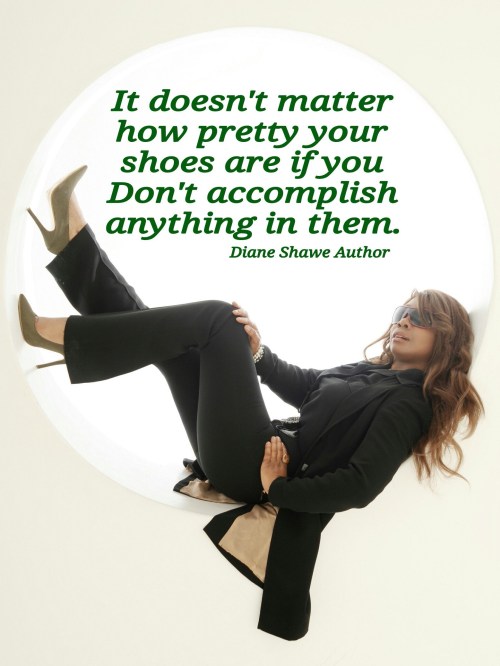
wear your pretty shoes well by diane shawe884346925..jpg

When I was 8 years old I remember my teacher Mr Lester ripping up my homework and accusing me of copying the story I wrote for my homework that week. I remember it was a story about being lost in the woods at night, I use to be afraid of the dark back then.

I cried and said I hadn’t copied it, he gave me detention on top of that and called me a liar.

I was so embarrassed and ashamed I never did well in English Literature again just to spite him I thought but really he had squashed my confidence.

16 books later all published on Amazon with my most recent which took 3 years to write and a healthy vibrant blog with over 35k followers which I have been nurturing since 2010

Do you think adults in position of influence realise what they can do to a child?

Never let negative people define who you are or what you want to become.

Coaching is also important and if you want to propel your vision coaching can help you stay laser focused with a strategic plan

Download your copy on #amazon today https://goo.gl/gm9t2U

Diane Shawe’s eBooks are available on Amazon right now at: https://www.amazon.com/Diane-Shawe/e/B0052WG8V6

Why Black men will be Disproportionately Devastated by Industries drive towards Automation

 Black men and disproportionate employment

Black male graduates in London and throughout the UK are nearly twice as likely to be unemployed as their white counterparts, figures suggest. In 2016 there was an unemployment rate of 18% for black male graduates aged 16 to 24 in the capital.

According to the data from the Office for National Statistics (ONS), the rate for their white counterparts was 10%. A government spokesperson said the employment rate for ethnic minorities was “at a record high”. So if the graduates, the brightest and best are having such a hard time what about the lower skilled or unqualified black men?

But for now lets focus on London. More than 83,000 young men in London are from black and mixed black ethnic groups, making up about one in five of young men in the capital.

Research by the National Audit Office (NAO) has found that along with Pakistani and Bangladeshi women, black men consistently have the lowest employment rates in the UK.

BBC London contacted 50 of London 500 top graduate employers last year across the banking, accounting, medical, legal and retail sectors. Eleven were able to provide data relating to their employment of black men specifically. Those 11 organisations recruited 1,803 graduates in 2016. Of those, 30 were black men.

The NHS leadership academy, for trainee managers, was among those which did not recruit any among its intake of 112 graduates.

Larry Elliott Economics Editor for the Guardian headlined on 4th April 2018 that Workers at risk as robots set to replace 66m jobs, warns OECD he goes on to write:

The west’s leading economic thinktank has warned its members that they are failing to prepare workers for an automation revolution that will leave 66 million people at risk of being replaced by machines in the coming years.

A new report by the Paris-based Organisation for Economic Cooperation and Development found that the most vulnerable – one in seven workers on average across the 32 countries studied – were less likely to be receiving help than those whose jobs were more secure.

The OECD said 14% of jobs in developed countries were highly automatable, while a further 32% of jobs were likely to experience significant changes to the way they were carried out.

Low-skilled people and youth were among those most at risk, according to the report, with the jobs at highest risk tending to be in low-skill sectors such as food preparation, cleaning and labouring. Workers in fully automatable jobs were more than three times less likely to have participated in on-the-job training, over a 12-month period, than workers in non-automatable jobs. Those most at risk were also less likely to participate in formal education or distance learning.

In September 2017 Mr Lammy a Tottenham MP reviewed the BAME people in the criminal justice system and found that in the UK black people who make up just 3% of the UK population make up 12% of the people in prison at a cost to the tax payer of £309m each year.

Whilst the report highlighted failings on the part of police forces, courts and prisons, it was identified that other issues like one parenthood, school exclusions, low income and high unemployment disproportionately affect some ethnic minority groups and have been linked to higher levels of criminality.

Is Adult Education for Graduates BrokenDiane Shawe author of ‘Is Adult Education Broken?’ states that “the traditional belief that we must prepare ourselves to be ‘employable’ is under threat for all groups, but has always inexplicably affected the BAME groups. The counter argument encourages us to ‘gear up’ for earning our own money, rather than seeing income as someone else’s responsibility”.

It is clear that at this moment most educational systems are not keeping pace with changing technology and the ever-evolving world of work.

Isaac Asimov quote sharpens our focus

“If unemployment formed a country it would be the 5th largest in the world”

Not enough people are thinking strategically enough in this area. Fundamentally, we need to change what people learn, how people learn, when people learn, and even why people learn.

A recently published book by #DianeShaweAuthor ‘Is #Adult #Education Broken’?  explores the main failings in the educational system for an economy powered by #technology, fueled by #information, driven by #knowledge and becoming #automated. What are the lessons to be learnt?

Download a copy from #amazon today Claim you copy now

Here’s the Main Reasons Adult Education is Broken and I’ll Prove It To You

Is Adult Education Broken?

Is Adult Education Broken by Diane Shawe Author (4)

Adult education has become undervalued in an overpriced educational infrastructure.

The people who need the most help are already systematically ripped off by greedy loan companies, NHS parking, having to pay charges for drawing out their own money from private ATM machines in poorer boroughs, pre-paid electric meter’s to name but a few.

The more you seem to need help the more you seem to have to pay.

Off course, the arguments are always about risk, but to compound on top of their needs, a premium, just to make sure the risk is compensated for is questionable indeed. But another kind of ripping off is taking place. ‘Free online education’ you may ask ‘why is this a rip-off people”?
I will answer this from my perspective initially and then make further arguments as to why we should be very concerned about this un-policed, unchallenged butchery of the values originally infused into our adult educational system.

Is Adult Education Broken by Diane Shawe Author (2)So if you all but think Adult Education is Broken and all but given up, this book spills the beans on what has gone wrong, what questions need to be addressed and if certain issues are tackled by Government, then there’s Hope,

As Isaac Asimov—a master of science fiction literature—once said:

“No sensible decision can be made any longer without taking into
          account not only the world as it is but the world as it will be.”

So the big Question is – What has happened?

  • Why have these large institutions priced education out of some fundamental principles?
  • Why on the other spectrum are all these free courses flooded the market?
  • How can we make the new economic age enhance, rather than diminish, our quality of learning?
  • How can we make this amazing innovation advance the prospects of all people especially those with or without experience and not just for the youth?

It is clear that at this moment most educational systems are not keeping pace with changing technology and the ever-evolving world of work.

Is Adult Education Broken by Diane Shawe Author (5)
“If unemployment formed a country it would be the 5th largest in the world”

                                                  Isaac Asimov

 
Not enough people are thinking strategically enough in this area.  Fundamentally, we need to change what people learn, how people learn, when people learn, and even why people learn.

We must get beyond the traditional model of students sitting passively in classrooms, following instructions and memorising material that they are tested and scored on which sometimes turn out to be of little use in an every changing economy.

“It is not the strongest or the most intelligent who will survive but those
                                     who can best manage change.”                       Darwin

Throughout the ages, every human society has experienced challenges adjusting to population growth, maintaining structural order and creating channels for future generations. How well a society prepares the next generation for survival is imperative for the society as a whole but we have stalled in this process.

There seems to be a range of systemic failures such as

: failure to find a formula to develop teachers convergent and divergent Is Adult Education Broken by Diane Shawe Author (3)facilitating skills
: failure to consider cultural relevance
: failure to develop enterprising and entrepreneurial skills
: failure to prepare about taking personal responsibility
: failure to provide adequate technology and supporting curriculum
: failure to encourage international engagement
: failure to manage growth of academic misconduct

Diane Shawe Author states that “the traditional belief that we must prepare ourselves to be ‘employable’ is under threat. The counter argument encourages us to ‘gear up’ for earning our own money, rather than seeing income as someone else’s responsibility”

With the population dramatically aging and low-level jobs increasingly swallowed up by machinery, entrepreneurship will be a necessity for many, rather than a lifestyle choice for some.

SMEs are of course already leading this charge but in order to gear up for the future we need to start off by asking a serious question, defining criteria’s and examining trends, impact these trends will have and plan a way to jointly prepare current and future generations to be both employable and entrepreneurial.

We are living in a new economy—powered by technology, fueled by information, and driven by knowledge. And we are entering the new century with an opportunity on our side but huge problems that require new thinking.

claim free course now

Is Adult Education Broken by Diane Shawe Author (12)

Click to find out more about creating your own On Demand Digital Course Library

How to create a digital on demand course library


9 Steps to The Killer Covering Letter

It has become almost common knowledge that most potential employers do not even bother responding to unsuccessful candidates that apply for vacant jobs.

Sometimes you need to give yourself the winning edge. Think Clint Eastwood with the sun behind him in a gun fight. Sometimes in giving massive importance to the CV, the value of a strong cover letter is often neglected. The key to securing that dream job is a combination of a well-crafted CV and a killer cover letter. While the CV lists your important achievements and skills, the cover letter coerces your prospective employer into hiring you. The cover letter very finely articulates your desire to work for the company. To stand apart from the competition and make yourself an attractive hire, you need to draft a killer cover letter. Here are the 9 Steps to landing that job…

  1. 1.     Knowing what they want, what they really really want

The cover letter offers a window to your personality and qualifications. But apart from that, it is also a way to demonstrate how much you really know about your prospective employer. To do this, you need to research on the company, the financial growth statistics, the industries that your employer serves, etc. Learn about your potential firm and showcase that. Only when you know what they want and who they are looking for, will you be able to portray that in your cover letter.

  1. 2.     Giving it that personal touch

When you are searching for a job and have focused on one, make sure you find out the name of the contact person. Beginning your cover letters with formal salutations such as “Dear Sir or Madam”, gives the impression that you don’t know whom the letter should be addressed to. Personalise your cover letters while retaining a semi-formal tone. Lack of knowledge in these areas can significantly impact your chances of getting the job you want.

  1. 3.     The Art of the Powerful Opening

Avoid the clichéd opening paragraphs and instead strive to make an impact with the introduction. In a powerful opening paragraph, you have to briefly state your objective in applying for the job and how you heard about the opening. While being creative in your openings, don’t forget that cute introductions do not work. Give your cover letter the necessary gravitas without being too sycophantic.

  1. 4.     Start Right

After the introduction, comes the body of the cover letter where you detail your achievements without repetition. In this part of the cover letter, you are expected to expand upon your achievements as mentioned in the CV and provide further examples of how you can help your potential company grow. For example, if you are applying for marketing positions then be sure to explain how you can develop a marketing strategy to bring in additional revenue for the company. Simply said, put your best foot forward.

  1. 5.     Finish Strong

The closing of the letter should definitely express gratitude for the HR manager’s time and patience. End the letter by outlining the next steps on your part. Never expect a potential employer to follow up with you. Demonstrate your proactive nature by stating that you will follow up for the job. This will also indicate your enthusiasm for the job. Remember to include a phone number or email address so that the firm can get in touch with you first if required.

  1. 6.     Money Later

The motivation behind taking up any job is money. To be happy in your job you need to be paid well. Don’t become hasty and quote any figures in the letter. Wait for a formal meeting to discuss salary issues.

  1. 7.     Details Matter

Remember to spell-check your cover letters and get them proof-read from friends or family. Be sure to thoroughly check your cover letters till you are completely satisfied with them.

  1. 8.     How does it Look?

In case you are submitting your cover letter by email, make use of word processing software such as MS Word. Write your cover letters in Word, making use of a standardized format. Align the text correctly and ensure that the letter is cleanly formatted. Punctuation should be in place. While you spend a tremendous amount of time on preparing the CV, you sometimes end up neglecting the cover letter. Formatting is essential otherwise the HR manager reading your cover letter might just have to spend his or her time deciphering it.

  1. 9.     Check That Grammar

Make sure that you adhere to grammar rules and make use of them while writing your cover letter. Incorrect grammar used in the wrong places can not only create a wrong impression, but also change the meaning of what you intended to convey.

These are such simple steps to write a killer covering letter.

ü Draft your letter so that it highlights your skills, achievements, goals, and motivations.

ü Don’t meander from the main topic.

ü Stick to the basics and be direct in your approach.

Do the above and nothing can stop you from getting that job.


Outsourcing your knowledge

Albert EinsteinWhy knowing less helps you to do more.

Diane Shawe M.Ed. 

When you think about the power of your brain and how we learn, memorise and recall all those facts, it can get very confusing. Having taught for nearly 25 years and trained some of the brightest professionals over last 10 years, I believe that knowledge is divided in two distinct areas. We can either know about a subject ourselves or we know where we can retrieve information on that subject. The massive amount of information available online has opened an infinite library of easily and quickly retrievable information with simple search engines. I like to think of it as an organic external hard drive, an outsourced memory we can plug in at any time. Some have argued that the internet dilutes the most traditional kind of knowledge: knowing a subject ourselves. They argue that in some way it makes our brains less efficient, diminishing our intelligence and destroying our inner hard drives and memory.

You may remember (if you are of a certain age) that when you were young, you knew by heart the phone number of your closest friends. Since the introduction of digital directories on smartphones there is no longer any reason to memorise numbers by heart.   On the other hand, how many hundreds more contacts do you have now compared to then thanks to the digital directories? In reality, how much more connected are you? The real deal of the information age is not that it allows us to know more, but that it allows us to know less in terms of depth of what we know, as mentioned by David Brooks, a New York Times columnist, in his famous 2006 NY Times article[1] The Outsourced Brain.

neuroscience brain“Memory? I’ve externalised it.” He said, “I am one of those baby boomers who are making this the “It’s on the Tip of My Tongue Decade.” But now I no longer need to have a memory, for I have Google, Yahoo and Wikipedia. Now if I need to know some fact about the world, I tap a few keys and enjoy the vast resource of the external mind.”

I think the positive side of this is that we are free to expand our awareness of subjects we did not have space, or availability, to explore before. Our memory now has a different function: it is a digital index that remembers the existence of a subject and what are the best leads to find information on that subject. I too had thought that the magic of the information age was that it allowed us to know more facts. Then I realised that the magic of the information age is that it allows us to know less.

It provides us with external cognitive servants, silicon memory systems if you will, with collaborative online filters, consumer preference algorithms and networked knowledge. We thus can give these servants the massive raw data and liberate ourselves to think, explore and be creative. You can use your brain to learn new skills, the soft skills that are the true measure of success.

Your outsourced memory (the internet, the cloud and more) allows you to be aware of the existence of information you would never have come across before when you were limited to what your inner memory could hold. It allows you to increase the quantity (and thus the quality) of the information that you can process because you do not always have to worry about memorising every single detail of it. It allows you to use more brain power in linking concepts and applying them rather than remembering them. It empowers you to think and process information faster because your brain has the space to hold links to so much different information, and in doing so it expands your subjective time. Back in the analogue era, the difference between a deep brain and a shallow brain was the availability of information and the choice of whether to take in that information or not came second.

As an educationalist and technophile, combined with my outsourced memory I have the capacity to think deeper. Now that (nearly) everything is available, the power is back to you: it is up to you to take responsibility of what content goes into your mind and how you use your outsourced memory.

Now you have begun to outsource your brain and now have room to do something rather special with your neo-cortex. Enjoy.


14 solutions to help solve why your hair is thinning by Diane Shawe

suffering-from-thin-limp-hair

Solutions to thinning hair

Thinning hair help

Whilst your hair brush seems like it is packed with more and more loose strands of your hair or an ever-scrawnier ponytail can be startling but doesn’t necessarily mean anything’s wrong. By age 50, half of women will complain of hair loss. “As we age, overall hair density changes and individual strands become finer,” says dermatologist Doris J. Day. But just because thinning is natural doesn’t mean you have to accept it. Here are 14 solutions to help you keep the hair out of your brush and on your head.

healthymealsMeals

Now, this is easy! Hair thrives on protein, iron, zinc, and vitamin B12. Get them from lean meats, leafy greens, nuts, beans, and fish. 


washing-and-massaging-hairMassage

You’re halfway there every time you shampoo: massaging your head in the shower improves blood flow to the scalp. This means a better environment for hair growth, but it also aids the penetration of any treatment shampoos you use.

 1-styling-equipmentStyling

It’s the easiest fix you never considered. Hair dryers and irons, especially if you already color, can cause breakage and thinning, so reduce your use however you can.


1-minoxidil-for-thinning-hairMinoxidil

As the only FDA-approved proven ingredient, the drug has years of research to back it up—and about 50% of women using it see improvement. “Minoxidil can enhance the size of the follicle so that it produces a bigger strand of hair,” says Diane Shawe.

Try Pantene Expert Minoxidil Topical Solution Hair Regrowth Treatment for Women

1-viviscal-to-thicken-hair Viviscal

Sometimes a supplement is all you need. The combination of fish protein, vitamin C, zinc, biotin, and niacin in Viviscal supplements encourages the body to produce healthier, thicker strands.

Blood Work

blood-test-tubesRoutine blood work can test your ferritin (iron stored in the blood) and vitamin D. Low levels can lead to hair loss, and the fix may be as simple as adding an iron or vitamin supplement. And hey, you’re probably overdue for a checkup anyway!

 
1-laser-hair-loss-treatmentLasers

Laser treatments reduce the inflammation in follicles that inhibits them from regenerating. In a recent study, researchers saw significant increases in density after 26 weeks of twice-weekly treatments with a medical-grade lasers.


destressing-beathingStress Relief

Just breathe—seriously, it could help! Both sudden and chronic stress can halt hair growth. If you’ve been through a challenging experience (divorce, job change, death in the family or house move), hair should grow back. If you’re under constant pressure, master meditation—easier said than done, but your hair will thank you.

 
Hormone Help

If it’s serious, consider an Rx. Some women are genetically predisposed to female-pattern hair loss, and birth control pills can suppress overproduction of male hormones. At menopause, thinning increases; if you’re on hormone therapy, it may minimise hair loss.

1-cortisone-shotsCortisone Shots

They hurt, but they work. lnjecting cortisone directly into the scalp blocks the hormonal activity that induces hair thinning. This works especially well in patients with inflammatory scalp disease. However this should be done by a qualified practitioner.

1-chinese-medicine-for-circulation-and-hair-lossBad Blood?

According to practitioners of traditional Chinese medicine, hair health is tied to two things: kidney energy and the blood, which nourish the hair. The solution: acupuncture and Chinese herbs.

doctors-adviceThe Doctor Will See You Now

Every once in a while, hair loss is a symptom of something else that’s going on with your body. If your hair loss is sudden and excessive or simple solutions aren’t working, talk with your doctor about other possibilities, including:

  • Hormone irregularities
  • Thyroid abnormalities
  • Lupus
  • Anemia
Change your hairstyle

There are some hairstyles that contribute to hair-loss and thinning hair.

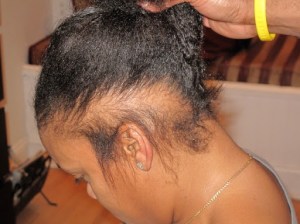
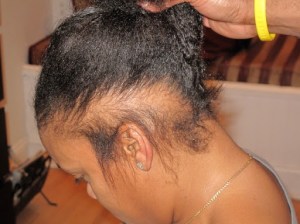
Very tight cornrows for instance can cause traction alopecia.  Try avoiding tight cornrows or heavy braids on thin hair.

Other techniques used in styling such as glues. nickle micro rings and clip ins can also irritate the scalp and inflame the hair follicles resulting in hair loss.

It is also worth considering the type of hair extensions being used as some wigs and braiding hair can cause irritation because the user has a nylon allergy.

Want more information and a free consultation email https://make-an-appointment.needahairmakeover.co

Get Hair Extensions

descreet-hair-extensions-by-diane-shawe

There’s more to adding hai

14 solutions to help solve why your hair is thinning

suffering-from-thin-limp-hair

Solutions to thinning hair

Thinning hair help

Whilst your hair brush seems like it is packed with more and more loose strands of your hair or an ever-scrawnier ponytail can be startling but doesn’t necessarily mean anything’s wrong. By age 50, half of women will complain of hair loss. “As we age, overall hair density changes and individual strands become finer,” says dermatologist Doris J. Day. But just because thinning is natural doesn’t mean you have to accept it. Here are 12 solutions to help you keep the hair out of your brush and on your head.

healthymealsMeals

Now, this is easy! Hair thrives on protein, iron, zinc, and vitamin B12. Get them from lean meats, leafy greens, nuts, beans, and fish. 


washing-and-massaging-hairMassage

You’re halfway there every time you shampoo: massaging your head in the shower improves blood flow to the scalp. This means a better environment for hair growth, but it also aids the penetration of any treatment shampoos you use.

 1-styling-equipmentStyling

It’s the easiest fix you never considered. Hair dryers and irons, especially if you already color, can cause breakage and thinning, so reduce your use however you can.


1-minoxidil-for-thinning-hairMinoxidil

As the only FDA-approved proven ingredient, the drug has years of research to back it up—and about 50% of women using it see improvement. “Minoxidil can enhance the size of the follicle so that it produces a bigger strand of hair,” says Diane Shawe.

Try Pantene Expert Minoxidil Topical Solution Hair Regrowth Treatment for Women

1-viviscal-to-thicken-hair Viviscal

Sometimes a supplement is all you need. The combination of fish protein, vitamin C, zinc, biotin, and niacin in Viviscal supplements encourages the body to produce healthier, thicker strands.

Blood Work

blood-test-tubesRoutine blood work can test your ferritin (iron stored in the blood) and vitamin D. Low levels can lead to hair loss, and the fix may be as simple as adding an iron or vitamin supplement. And hey, you’re probably overdue for a checkup anyway!

 
1-laser-hair-loss-treatmentLasers

Laser treatments reduce the inflammation in follicles that inhibits them from regenerating. In a recent study, researchers saw significant increases in density after 26 weeks of twice-weekly treatments with a medical-grade lasers.


destressing-beathingStress Relief

Just breathe—seriously, it could help! Both sudden and chronic stress can halt hair growth. If you’ve been through a challenging experience (divorce, job change, death in the family or house move), hair should grow back. If you’re under constant pressure, master meditation—easier said than done, but your hair will thank you.

Hormone Help
 
Hormone Help

If it’s serious, consider an Rx. Some women are genetically predisposed to female-pattern hair loss, and birth control pills can suppress overproduction of male hormones. At menopause, thinning increases; if you’re on hormone therapy, it may minimise hair loss.

1-cortisone-shotsCortisone Shots

They hurt, but they work. lnjecting cortisone directly into the scalp blocks the hormonal activity that induces hair thinning. This works especially well in patients with inflammatory scalp disease. However this should be done by a qualified practitioner.

1-chinese-medicine-for-circulation-and-hair-lossBad Blood?

According to practitioners of traditional Chinese medicine, hair health is tied to two things: kidney energy and the blood, which nourish the hair. The solution: acupuncture and Chinese herbs.

doctors-adviceThe Doctor Will See You Now

Every once in a while, hair loss is a symptom of something else that’s going on with your body. If your hair loss is sudden and excessive or simple solutions aren’t working, talk with your doctor about other possibilities, including:

  • Hormone irregularities
  • Thyroid abnormalities
  • Lupus
  • Anemia
Change your hairstyle

There are some hairstyles that contribute to hair-loss and thinning hair.

Very tight cornrows for instance can cause traction alopecia.  Try avoiding tight cornrows or heavy braids on thin hair.

Other techniques used in styling such as glues. nickle micro rings and clip ins can also irritate the scalp and inflame the hair follicles resulting in hair loss.

It is also worth considering the type of hair extensions being used as some wigs and braiding hair can cause irritation because the user has a nylon allergy.

Want more information and a free consultation email hairextensions@europe.com

descreet-hair-extensions-by-diane-shawe

There’s more to adding hai

Can Hair Extensions give you more confidence or make you feel self conscious?

descreet-hair-extensions-by-diane-shaweHair Extensions have been trending from Hollywood red carpets, Global awards through to a local person within your inner circles for the past 15 years. Why?

Article by Diane Shawe’s Author

Celebrities on Red carpets and magazines have normalised hair extensions. Hair extensions has been a trending topic among many women as youtube has helped catapult the good, bad and ugly of the fake it market. But is it all vanity vanity as some parts of the media suggests?

It is arguable that the main reason for the popularity of hair extensions is that one can get instant gratification. That extension adds to the thickness and fullness of your hair in a shorter period of time than waiting for your hair to grow.

Beauty Confidence Boosters: Hair Extensions

As a woman, confidence is in constant flux. We all have those days that we just feel great. Our skin is glowing, our eyeliner went on just right, and our hair is lying the right way. And then we have those weeks where we just feel like our look has passed its expiration date. We “need a change.”

There spot lighthe seems to be forever turned on and time is now a precious commodity.

Hair Extensions

So for some women this is a no-brainer. If you’re tired of your hair style and sick of waiting for your hair to get to the length you want, sick of chemicals, sick of thin lack lustra hair? then with over 16 different hair extensions techniques there is bound to be one technique that can help achieve their goal.

For instance Clip in hair extensions are very popular and operate with pressure-sensitive clips, you can apply these for everyday use or special occasions but they must not be worn for over 5 hours per day These products will give you the ultimate beauty boost, allowing you to defy biology and get the thick, long locks you’ve always wanted.

It is claimed that the extensions can add up to 10-inches 0-inches of hair to an individual which would translate to an awesome look.

Beauty Confidence Hair Extensions Busters:

Incorrectly applied hair extensions can damage hair

Incorrectly applied hair extensions can damage hair

Well we have all heard and seen the desaster stories. This is not unique to this industry but the self taught by youtube suppliers have given the industry a bad name and scared quiet a few women forever!

I’ll fitted hair extensions or even using the wrong technique can traumatised a person far worse than their original hair problem. It can also lead to clients loosing their hair as a result.

Getting you qualified in the Hair Extension Sector

Getting you qualified in the Hair Extension Sector

There isnt a internationally recognised directory for qualified and properly trained hair extensions technicians but there are reputable private training schools which could point you in the right direction.

Diane Shawe is an author of 15 books, speaker, trainer, mentor, consultant and entrepreneur with more than 25 years of experience. She has personally trained over 2800 people around the world in a variety of fields and has published a number of works. She has contributed to over 100 Kiva Entrepreneur’s around the world.

She was also one of the producers of a Day time Ladies Talk Show in 2015 and Host of one of the UK’s best loved Annual Hair Extensions Awards.

Diane also enjoys oil painting, sailing and clay pigeon shooting. She focuses on topics that she is passionate about in her writing and has attracted over 36,000 followers on her popular blog.

Media Contact
Company Name: AVPT Short Courses (Hair Extensions Training Academy)
Contact Person: Diane Shawe MEd
Email: Send Email
Phone: +44 208 1333120
Country: United Kingdom
Website: http://www.hairextensionstraining.academy

Mindfeed ebooks by Diane Shawe

How hair extensions are sourced

How hair extensions are sourced

Starting a Hair Extension business

Starting a Hair Extension business

Are Emerging Demographics reshaping New Emerging Markets

Hair extension staff training (1)

Creative ways to find new customers

Emerging Demographics Are the New Emerging Markets

Guest Blog Richard Dobbs Jaana RemesJonathan Woetzel

Marketing savvy just isn’t enough to track consumers anymore. Companies will need a more detailed portrait of target customer groups than ever, including their age, income, ethnicity, and shopping preferences. But what could this mean for small businesses?
A radical demographic shift is transforming the nature of consumer markets. Until the turn of the century, population growth powered more than half of global consumption. As population growth slows, that will fall to only one-quarter in the next 15 years.

Per capita spending will be the engine of consumption growth. In this new world, companies need to know which consumers have the purchasing firepower, where they are, what they want to buy, and what drives their spending.

There are surprises. For example, people aged over 50 bought nearly two-thirds of the new cars sold in the United States in 2011. McKinsey Glog research finds that China is expected to spend 12.5% of all consumption growth on education for those under 30 — higher than any other country apart from Sweden. Young people in China are learning to love coffee. And North American millennials don’t trust company claims about their products, but are happy to let a room in their house to a stranger who they trust because of an Airbnb rating.

A recent report by the McKinsey Global Institute, Urban World: The Global Consumers to Watch, has identified three key groups of urban consumers with the numbers and purchasing power to shape the consumer landscape over the next 15 years. One thing common to all the groups is their location in cities. Over 91% of world consumption growth over this period will come from city-dwelling consumers.

The first of these is the 60-plus age group in the United States, Western Europe, and Northeast Asia. Their number will grow by more than one-third to stand at 222 million in 2030. In those 15 years, they will generate more than one-third of global consumption growth. In comparison, European millennials, for instance, will contribute less than 2%. The young may be the darlings of marketers, but for companies chasing growth, the truly glamorous market is the elderly.

To give an idea of their dominance, the 60-plus age group will account for 60% of total urban consumption growth in Western Europe and Northeast Asia, the latter comprised of Japan and South Korea. This group, not surprisingly, spends heavily on healthcare, but that’s not all. In the United States, these consumers will contribute more than 40% of consumption growth in housing, transport, and entertainment. A decade ago, those aged 55 and older accounted for less than one-third of all U.S. spending on home improvement. By 2011, this share was more than 45%. Companies in every sector — some of which have never been associated with the elderly — will need to prioritize this market as never before.

The second group is China’s working-age consumers age 15–59. Their numbers are set to rise by 20% or 100 million people in just the next 15 years and their per capita consumption is expected to double. By 2030, they will be spending 12 cents of every $1 spent in cities worldwide. These individuals are more optimistic about their financial future and willing to spend a greater share of their disposable income than their counterparts in previous generations.

The 2016 McKinsey Global Sentiment Survey of more than 22,000 consumers finds that nearly 30% of these Chinese consumers are willing to pay more for new and innovative household products—double the share of their counterparts in North America and Western Europe. These consumers are the successors to Western baby boomers who were, in their time, the richest in history in their prime years.

77 Questions to avoid business failure by Diane Shawe with Exclusive Bonus

Get your exclusive copy today and save £3.00

Third is North America’s working-age consumers. They already constitute a major market, and will continue to grow modestly in number and per capita spending. But they also pose new challenges to companies, because inequality is rising, and most incomes are under increasing pressure. Today, the median net worth of the top 20% of young adult households is eight times that of the other 80%; as recently as 2000, that multiple was four times. That means companies need to work harder to offer goods and services at very different price points. Compared with older cohorts, young adults are 10 to 20 percentage points more likely to consider and use sharing economy services from accommodation to car rental to furnishing. The behavioral differences for this age group require new customized strategies from companies seeking their dollars.


The consumer markets that matter have arguably never been more varied and complex. Rising inequality is one challenge. Another is that, as population growth slows, city demographics — and therefore their growth prospects — are diverging. Companies need to be in the right places. Cities are where 91% of global consumption will take place over the next 15 years – the trick will be knowing which cities, and even which neighborhoods within cities will house the highest-spending consumers.

Richard Dobbs is a senior partner in McKinsey & Company’s London office.
Jaana Remes is a partner at the McKinsey Global Institute.
Jonathan Woetzel is a director at the McKinsey Global Institute.


Don’t let others failures make a monkey out of you

Fear of failure and not standing out from the crowd will not get you far up the ladder of success

article by Diane Shawe M.Ed. Ed
Four monkeys were placed in a room that had a tall pole in the center. Suspended from the top of that pole was a bunch of bananas. One of the hungry monkeys started climbing the pole to get something to eat, but just as he reached out to grab a banana, he was doused with a torrent of cold water.

Squealing, he scampered down the pole and abandoned his attempt to feed himself.

Each monkey made a similar attempt, and each one was drenched with cold water. After making several attempts, they finally gave up.

Then researchers removed one of the monkeys from the room and replaced him with a new monkey. As the newcomer began to climb the pole, the other three grabbed him and pulled him down to the ground.

After trying to climb the pole several times and being dragged down by the others, he finally gave up and never attempted to climb the pole again.

recruiting and training winners for your busines

The researchers replaced the original monkeys, one by one, and each time a new monkey was brought in, he would be dragged down by the others before he could reach the bananas.

In time, the room was filled with monkeys who had never received a cold shower. None of them knew why.

DON’T LET FAILURE MAKE A MONKEY OUT OF YOU!