Category Archives: micro Learning

Are Emerging Demographics reshaping New Emerging Markets

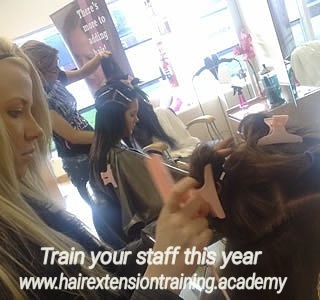
Hair extension staff training (1)

Creative ways to find new customers

Emerging Demographics Are the New Emerging Markets

Guest Blog Richard Dobbs Jaana RemesJonathan Woetzel

Marketing savvy just isn’t enough to track consumers anymore. Companies will need a more detailed portrait of target customer groups than ever, including their age, income, ethnicity, and shopping preferences. But what could this mean for small businesses?
A radical demographic shift is transforming the nature of consumer markets. Until the turn of the century, population growth powered more than half of global consumption. As population growth slows, that will fall to only one-quarter in the next 15 years.

Per capita spending will be the engine of consumption growth. In this new world, companies need to know which consumers have the purchasing firepower, where they are, what they want to buy, and what drives their spending.

There are surprises. For example, people aged over 50 bought nearly two-thirds of the new cars sold in the United States in 2011. McKinsey Glog research finds that China is expected to spend 12.5% of all consumption growth on education for those under 30 — higher than any other country apart from Sweden. Young people in China are learning to love coffee. And North American millennials don’t trust company claims about their products, but are happy to let a room in their house to a stranger who they trust because of an Airbnb rating.

A recent report by the McKinsey Global Institute, Urban World: The Global Consumers to Watch, has identified three key groups of urban consumers with the numbers and purchasing power to shape the consumer landscape over the next 15 years. One thing common to all the groups is their location in cities. Over 91% of world consumption growth over this period will come from city-dwelling consumers.

The first of these is the 60-plus age group in the United States, Western Europe, and Northeast Asia. Their number will grow by more than one-third to stand at 222 million in 2030. In those 15 years, they will generate more than one-third of global consumption growth. In comparison, European millennials, for instance, will contribute less than 2%. The young may be the darlings of marketers, but for companies chasing growth, the truly glamorous market is the elderly.

To give an idea of their dominance, the 60-plus age group will account for 60% of total urban consumption growth in Western Europe and Northeast Asia, the latter comprised of Japan and South Korea. This group, not surprisingly, spends heavily on healthcare, but that’s not all. In the United States, these consumers will contribute more than 40% of consumption growth in housing, transport, and entertainment. A decade ago, those aged 55 and older accounted for less than one-third of all U.S. spending on home improvement. By 2011, this share was more than 45%. Companies in every sector — some of which have never been associated with the elderly — will need to prioritize this market as never before.

The second group is China’s working-age consumers age 15–59. Their numbers are set to rise by 20% or 100 million people in just the next 15 years and their per capita consumption is expected to double. By 2030, they will be spending 12 cents of every $1 spent in cities worldwide. These individuals are more optimistic about their financial future and willing to spend a greater share of their disposable income than their counterparts in previous generations.

The 2016 McKinsey Global Sentiment Survey of more than 22,000 consumers finds that nearly 30% of these Chinese consumers are willing to pay more for new and innovative household products—double the share of their counterparts in North America and Western Europe. These consumers are the successors to Western baby boomers who were, in their time, the richest in history in their prime years.

77 Questions to avoid business failure by Diane Shawe with Exclusive Bonus

Get your exclusive copy today and save £3.00

Third is North America’s working-age consumers. They already constitute a major market, and will continue to grow modestly in number and per capita spending. But they also pose new challenges to companies, because inequality is rising, and most incomes are under increasing pressure. Today, the median net worth of the top 20% of young adult households is eight times that of the other 80%; as recently as 2000, that multiple was four times. That means companies need to work harder to offer goods and services at very different price points. Compared with older cohorts, young adults are 10 to 20 percentage points more likely to consider and use sharing economy services from accommodation to car rental to furnishing. The behavioral differences for this age group require new customized strategies from companies seeking their dollars.

The consumer markets that matter have arguably never been more varied and complex. Rising inequality is one challenge. Another is that, as population growth slows, city demographics — and therefore their growth prospects — are diverging. Companies need to be in the right places. Cities are where 91% of global consumption will take place over the next 15 years – the trick will be knowing which cities, and even which neighborhoods within cities will house the highest-spending consumers.

Richard Dobbs is a senior partner in McKinsey & Company’s London office.
Jaana Remes is a partner at the McKinsey Global Institute.
Jonathan Woetzel is a director at the McKinsey Global Institute.


Don’t let others failures make a monkey out of you

Fear of failure and not standing out from the crowd will not get you far up the ladder of success

article by Diane Shawe M.Ed. Ed
Four monkeys were placed in a room that had a tall pole in the center. Suspended from the top of that pole was a bunch of bananas. One of the hungry monkeys started climbing the pole to get something to eat, but just as he reached out to grab a banana, he was doused with a torrent of cold water.

Squealing, he scampered down the pole and abandoned his attempt to feed himself.

Each monkey made a similar attempt, and each one was drenched with cold water. After making several attempts, they finally gave up.

Then researchers removed one of the monkeys from the room and replaced him with a new monkey. As the newcomer began to climb the pole, the other three grabbed him and pulled him down to the ground.

After trying to climb the pole several times and being dragged down by the others, he finally gave up and never attempted to climb the pole again.

recruiting and training winners for your busines

The researchers replaced the original monkeys, one by one, and each time a new monkey was brought in, he would be dragged down by the others before he could reach the bananas.

In time, the room was filled with monkeys who had never received a cold shower. None of them knew why.

DON’T LET FAILURE MAKE A MONKEY OUT OF YOU!


The Prince’s Trust launches new Achieve programme for 13-19 years old

Helping the youths to achieve more

Helping the youths to achieve more

The Prince’s Trust has launched a new programme designed to support young people who are at risk of underachieving at school or college to engage with and succeed in education.

The Prince’s Trust Achieve programme is a flexible provision for 13-19 year olds who are experiencing challenges with attendance, attainment or motivation and may be at risk of exclusion or not attaining the grades they are capable of. It incorporates the best of the youth charity’s existing xl and Fairbridge programmes, which have long helped young people of school age to reach their potential, both in education and in their future employment.

The need for alternative curriculum offerings like Achieve remains clear, with a third of school-leavers still not achieving five A*-C grade GCSEs and more than half of young people in Scotland not achieving 5 National Fives. The situation is even worse for young people from disadvantaged backgrounds, who are far more likely to fail to achieve at these levels than their peers.

The new Achieve programme is designed to help disadvantaged young people who are struggling to develop important character skills through relevant, engaging and informal learning. It will connect young people with the world of work and equip them with the transferrable skills and knowledge they need to succeed, focusing particularly on literacy, language and numeracy (LLN) and science, technology, engineering and maths (STEM).

According to Richard Chadwick, Director of Programmes and Development at The Prince’s Trust, “Too many students in the UK become disengaged with education and leave school or college with few qualifications, low levels of confidence and low aspirations for the future. We have a long history of working successfully with education providers to combat this problem and have drawn on our expertise in youth based work to develop our new Achieve programme, which is our most flexible provision yet for people of school age.”

Young people will be able to access Achieve from August 2016 in schools, colleges or, in some regions, at a Prince’s Trust Centre. Further Education providers can also deliver the programme as NEET prevention, either as a part time study programme or as part of a full time study programme.

This year, The Prince’s Trust will work with more than 500 partner schools and organisations to support almost 10,000 young people through the Achieve programme. More information about how a school, college or alternative education provider can deliver the Achieve programme can be found at https://www.princes-trust.org.uk/help-for-young-people/unlock-your-potential/achieve

How answering 77 questions could help you avoid business failure

Out Now: 77 Ways to avoid Potential Business Failure77 Questions to avoid business failure by Diane Shawe white background

“Your work is going to fill a large part of your life, and the only way to be truly satisfied is to do what you believe is great work. And the only way to do great work is to love what you do.” –Steve Jobs, co-founder of Apple

Like you I Never Thought I Could answer 77 questions that would help me  avoid business failure  – But I Finally Discovered The Secret! Here’s How…

article by Diane Shawe Author

Are you ready? Is Entrepreneurship For You?
Are you the right person for your business idea?

In business, there are no guarantees. There is simply no way to eliminate all the risks associated with starting a small business – but you can improve your chances of success with good planning, preparation, and insight. Start by evaluating your strengths and weaknesses as a potential owner and manager of a small business. Carefully consider each of the following questions.

  • Are you a self-starter? It will be entirely up to you to develop projects, organise your time, and follow through on details.
  • How well do you get along with different personalities? Business owners need to develop working relationships with a variety of people including customers, vendors, staff, bankers, and professionals such as lawyers, accountants or consultants. Can you deal with a demanding client, an unreliable vendor, or a cranky receptionist if your business interests demand it?
  • How good are you at making decisions? Small business owners are required to make decisions constantly – often quickly, independently, and under pressure.
  • Do you have the physical and emotional stamina to run a business? Business ownership can be exciting, but it’s also a lot of work. Can you face six or seven 12-­hour work days every week?
  • How well do you plan and organise? Research indicates that poor planning is responsible for most business failures. Good organisation ­ of financials, inventory, schedules, and production ­ can help you avoid many pitfalls.
  • Is your drive strong enough? Running a business can wear you down emotionally. Some business owners burn out quickly from having to carry all the responsibility for the success of their business on their own shoulders. Strong motivation will help you survive slowdowns and periods of burnout.
  • How will the business affect your family? The first few years of business start­up can be hard on family life. It’s important for family members to know what to expect and for you to be able to trust that they will support you during this time. There also may be financial difficulties until the business becomes profitable, which could take months or years. You may have to adjust to a lower standard of living or put family assets at risk in the short-term.

So Before you start – Do you know the answer to these 77 questions?  Download your copy today it will be the best £3.99 you spend? 

I recommend you get a little notebook and start working on each question. For those you cannot answer, find the answer and make a note.  This is also an invaluabe excercise if you are already in business, it can help you clarify where you are today and help you plot where you need to get too and how to do it.

Get your exclusive copy today and save £3.00

Get your exclusive copy today and save £3.00


If you want to find out if you are right for your business, we have a surprise link hidden inside this little ebook.  All you have to do is Answer 10 questions and we will send you a full report which will also include your Personal Training Needs Analysis to develop your Entrepreneur skills.

Diane Shawe Author of 77 Question to avoid business failure Available from Amazon

Diane Shawe Author of 77 Question to avoid business failure Available from Amazon

10 Secrets To How To Earn £4000 a month consistently And Start attracting high net work clients every month by Diane Shawe

Hair extension staff training (1)

Creative ways to find new customers

New IS MAKING A STATEMENT OR CREATING A SIGNATURE MORE IMPORTANT? We want to Help You Start attracting high net work clients every month…

Leaving your SIGNATURE as a professional is important if you want to leave a legacy and or be the trendsetter knowing who to work with and how to network is vital and important to your business growth and success.

Search for our bootcamps and we will let you into 10 secrets.   Click here to book your at one of our events.  https://www.signature-masterclasses.com

Learn the art of collaborations and branding. Hear from global Trend setters and designer about the correlation between the fashion world, hair and makeup.

Network and meet your future industry colleagues

HAIR EXTENSIONS THE WAY FORWARD

LEARN HOW TO CONSISTENTLY ATTRACT THE RIGHT TYPE OF CLIENTS AND TURN THEM INTO YOUR NET WORTH BUSINESS IN HAIR EXTENSIONS

It is estimated that the UK and European market for Hair Extensions, Makeup and cosmetics is worth a staggering 400 billion per annum of which the majority expenditure comes from around 20% of the population. WHY because 80% of the female population around the world do not wear makeup or Hair Extensions.

The growing Hair extension and Makeup industry has paved the way to one of the greatest opportunity for Experts in that field to expand their businesses.  Evidence is everywhere that marketers of this segment are dominating retail sales and targeting women with hair and skin problems,

Just check out these stats below:

  • 7 BILLION PEOPLE IN THE WORLD
  • 60 MILLION IN UK
  • £400 BILLION SPENT WORLD WIDE ON COSMETIC
  • 80% OF THE FEMALE POPULATION DO NOT WEAR MAKEUP
  • THE COSMETIC INDUSTRY IN UK WORK APPROX 17 BILLION
  • AVERAGE WOMEN SPENDS 200 PER YEAR ON MAKEUP
  • AVERAGE WOMEN SPEND 600 PER YEAR ON HAIR EXTENSIONS
  • AVERAGE MAKEUP PRODUCT IS MANUFACTURED TO LAST ONE YEAR
  • AVERAGE HAIR EXTENSIONS PRODUCT LAST APPROX 4 MONTHS
  • WOMEN TEND TO KEEP THEIR MAKEUP PRODUCT ON AVERAGE 3 YEARS
  • WOMEN TEND TO CHANGE THEIR HAIR EXTENSION EVERY 4 MONTHS
  • 70% WOMEN DO NOT KNOW HOW TO LOOK AFTER THEIR SKIN
  • 80% WOMEN DO NOT KNOW WHICH HAIR EXTENSION TECHNIQUE IS BEST FOR THEIR HAIR
  • GIRLS FROM THE AGE OF 7 ASPIRE TO WEAR MAKEUP
  • WOMEN FROM THE AGE OF 30 NEED HAIR ENHANCEMENT
  • 90% OF MAKEUP ARTIST ATE NOT COMFORTABLE DOING MAKEUP THAT IS NOT THEIR OWN SKIN COLOUR
  • 90% OF PROFESSIONAL HAIRDRESSERS DO NOT KNOW HOW TO APPLY MORE THAN 3 HAIR EXTENSION TECHNIQUES

WHAT DO YOU PICK UP FROM THESE FACTS?

Just Imagine Being Able To:

  • Provide an addition premium Hair Extension & High profile in under 3 hours
  • Stop having to send on average 4 clients a month away who would spend on average £250 each on hair extensions
  • Introducing a hair extension technique that uses No Glues, Threads or Cornrows and is good for business
  • Offering your current client a safe, non evasive and natural looking hair extensions
  • Being able to help clients with real hair problems and seeing them leaving your salon with a smile
  • Beign able to help clients with all types of skin tone and issues and leaving your salon with a smile

…And that’s just for starters!

Check out our Main website for more details on other conference http://www.signature-masterclasses.com download the latest prospectus here

1 start a hair extension business earn 1000 with 6 clients by diane shawe


Getting started in the hair extension business by Diane Shawe

Starting a Hair Extension business by this ebook from amazon.Co. uk

Are you focused, productive, transactional or inspirational? by Diane Shawe

shortcourses expert bannerBeing busy isn’t the same as being productive, but how do you assess what you need to do to improve both your productivity and your staff?

Would an online Personal Training Need Analysis that takes about 10 minutes help?

Then  CLICK HERE TO TRY ONE FREE Personal Training Needs Analysis and in as little as two hours you can judge for yourself if it would be of use in your business.

Would it help if you could find out how to get the best out of your employees?

Would it help to be able to speed up Pre-Interview selections, Staff Appraisals, Training Needs, Personal Development, Management Selection, Team building and any of those otherwise expensive long winded, time consuming and expensive process?

Well click on our complimentary link to see how it works, I promise you will not be disappointed.

What most people, employers, entrepreneurs and even some educational institutions do not have in today’s current environment is time, the necessary resources and the infrastructure they need to support and achieve learning objectives cost effectively.

Out with the Old in with the new but who is going to be ready at the ‘Start Line’ with all the right tools to assist with the new Continued Competences?

We can offer a person centric online Personal Training Needs analysis tools and  reports to aid in the development of any individuals or organisations growth. The profiles and learning programmes are designed to help reduce risk and to create action and results.  Goal setting is no good without implementation.

We invite you with our compliments to click and complete 10 simple questions and we will send you back a report so that you can see how it works and give us your feedback.

In order to better identify and appraise an individual to pinpoint specific training needs, the Speed of Implementation and adaption to change will confirm who gets ahead or sustain growth by using technology to help with self appraisal, self reflection and personal development.

However, the new skill set or competencies, aims to define the standards needed to enter, compete and remain in the profession which mainly comprise of the following:

  1. Ethics, professionalism and judgment;
  2. Financial Literacy and Technical ability;
  3. Managing yourself and your work;
  4. Working with other people.

That said, in order to meet these new core competencies, individuals and organisations will be required to undergo a process of self-reflection through a high-level Personal Training learning needs analysis to identify their own learning gaps; as well as identify gaps specific to those needed by the organisation they work with. Ideally, this process will be recorded and accompanied by an evaluation of the success of the learning completed and ultimately, organisations will be required to make an annual declaration that they have considered and taken action to address Point of Need training.

We look forward to your feedback once you get your free report back and then maybe we can discuss the speed of implementing this process throughout your business or consulting services.

Just click here now and in just 10 minutes you would have completed 10 questions and we will send you back the results.


Why strategies for modernising corporate learning should focus on learning outcome cover by diane shawe


“The only thing worse than training people and having them leave, is not training them and having them stay”


What do we do..

We specialise in resourcing short courses via a pre-populated LMS solution for Point of Need Training via mobile devices so that all different levels of staff can access training whilst on the move using their own device supported by one off our virtual tutors to help them complete their online 4 weeks course.

12 Do’s and Don’t Tips For Getting And Keeping High-Net Worth-Clients by Diane Shawe

Hair Extension and Makep masterclasses Diane ShaweThere are just over 500,000 millionaire households in Britain, more than in any other European country but fewer than in China, Japan and of course the US.

article by Diane Shawe M.Ed and Eryca Freemantle

As for billionaires, the UK has 1,044 and is second only to the US, though as we all know most of those billionaires are people who made their money elsewhere and then moved to the UK, rather than the home-grown variety.

Worldwide there were 16.3m millionaire households at the end of last year, up from 13.7m at the end of 2012.

Those are three of the conclusions from the latest study by Boston Consulting Group of global wealth – it does it every year and 2013 was notable as the rich got quite a lot richer.

Total global private wealth grew by 14.6 per cent to reach $152bn, the two main drivers being the rise in equity markets and the continuing strong economic growth in the emerging world. The region in which wealth grew fastest, unsurprisingly, was the Asia-Pacific. Since the financial crisis China has passed both Germany and Japan in terms of total household wealth.

So with all that pool of statistics, how do you go about bagging a High Networth Client and keeping them?

  1. Do work at Knowing the trends and your product.When selling a product or service to an athlete or celebrity, it’s all about referrals. You won’t get far going directly to the client, Instead, you need to build relationships with trusted sources of the client. For example, find a way to connect with an agent or financial advisor. If you can get these people sold on you, you have a much better chance of getting a referral.
  2. Don’t Scream – No need to scream. Stay cool, calm and collected. After all, they are human.
  3. Do learn to get around the gatekeeper.To approach a client’s trusted sources, you have to find a way in. Social media makes it easier than ever to find connections, but the power of the phone is still the better route, but you need to plan what your going to offer. Remember the gatekeeper can also get bombarded by lots of enquiries every day on social media so be smarter and look at how you can develop  point 7
  4. Don’t say “OMG” – Some people say “Oh my God” to everything, you sound juvenile
  5. Do try and beat the receptionist to the office. A little clever secrets is to make early morning phone calls, before the office opens. If the company has a dial-by-name directory, you can often catch the person you want to reach at their desk, especially if their name is on the door. You’d be amazed at who picks up the phone at 5:30 a.m.”
  6. Don’t Stare: Its rude and frightening
  7. Do try to stand out.When you’re selling a commodity such as makeup, you’re working with the same inventory as every other artist. That means your value comes from standing out.No matter what your industry, work on developing your qualifications and personality, Have an excellent commitment to client, and find a niche and exploit it.
  8. Do not ever say – “I love You” Do you know how silly you sound?  They will no doubt think your crazy
  9. Do say a memorable ‘thank you.’ Often people do things prior to selling to be remembered, but often when you get the sale, doing a memorable thank you can result in other referrals coming your way.
  10. Don’t take Photos –  Do not take photos of them while working on them without asking their permission
  11. Do have a higher mission.It’s not always about making money just to pay your bills, giving back can also encourage high net worth clients feel good about working with you and support any project that is dear to your heart and help people or animals around the world.
  12. Don’t Cry – Professionals do not cry on the job- especially for nothing
Want to learn how to earn £4000 a month?

Want to learn how to earn £4000 a month?

How can prisoners improve if the internal educational system fails them? by Diane Shawe

Michael Gove short courses expert blogPrison education must improve, Michael Gove says, failures were “indefensible”

article by Diane Shawe

Education in prisons must be overhauled in order to tackle a “persistent failure to reduce re-offending”, the justice secretary is to say. Michael Gove stressed in a speech that helping prisoners become literate and numerate makes them “employable”.

Diane Shawe states “The only thing worse than training prisoners and having them stay, is not training them and having them leave”

Whilst the Prison Governors Association welcomed the proposals, as usally after making no practical contribution to change in terms of prisons education,  raised concerns about how changes would work in practice.

Earlier this week, chief inspector of prisons Nick Hardwick said the government’s “rehabilitation revolution”, launched five years ago at the outset of the coalition, had not even started.

He said in his last annual report that prisons were in their worst state for a decade and some jails were “places of violence, squalor and idleness”.

Prison education, work and re-offending

  • £145m spent every year in England and Wales on prison education
  • 95,300 offenders over 18 were in education in 2013/14
  • Almost half of adult prisoners re-offend within one year of their release
  • 60% re-offend if they serve sentences of less than a year
  • Two-thirds of offenders under 18 re-offend within twelve months of release

In his first speech on the issue since being appointed as justice secretary in May, Mr Gove is expected to say that society is collectively to blame for the failure to “redeem and rehabilitate” offenders, and he will call for an end to the “idleness and futility” of prison life.

The justice secretary says he wants to look at “earned release” for offenders who are committed to education and gain qualifications that are respected by employers.

prisons reoffending and education by diane shaweIf prisons moved to such a system, it would be a major change from the current policy under which most prisoners are automatically released on licence at the halfway point of their sentence.

Juliet Lyon, director of the Prison Reform Trust, said: “The challenge now is to translate this marked new reflective tone set by the Justice Secretary into sensible policy and to create a just, humane and effective penal system.”

Educating prisoners can turn them into “contributors to society”

“No government serious about building one nation, no minister concerned with greater social justice, can be anything other than horrified by our persistent failure to reduce re-offending,” Mr Gove is expected to say at the event in London, hosted by the Prisoner Learning Alliance.

“In prisons there is a – literally – captive population whose inability to read properly or master basic mathematics makes them prime candidates for re-offending.

“Ensuring those offenders become literate and numerate makes them employable and thus contributors to society, not a problem for our communities.

Diane Shawe CEO of Express Training Courses (AVPT short courses Ltd) is concerned that once again emphasis is placed on numeracy and literacy which failed most of them at school and not enough critical thinking is placed on providing life skills and soft skills.

Gove states “The failure to teach our prisoners a proper lesson is indefensible. I fear the reason for that is, as things stand, we do not have the right incentives for prisoners to learn or for prison staff to prioritise education. And that’s got to change.”

Mr Gove is also expected to use the speech to propose giving governors more control and rewarding them if offenders do well.

He will say that one of the “biggest brakes on progress” in all prisons is the “lack of operational autonomy and genuine independence enjoyed by governors” – who are often set very tight criteria on how prison life should be managed.

“Yet we know from other public services – from the success of foundation hospitals and academy schools – that operational freedom for good professionals drives innovation and improvement. So we should explore how to give governors greater freedom – and one of the areas ripest for innovation must be prison education.”

It is about time we had some proper joined up thinking, Gove as usual like to deal with the problem straight on whilst some around him loves to keep the mother of all restriction and red tap rolling even when they can see there is no progress.

What do we do..

We specialise in resourcing short courses via a pre-populated LMS solution for Point of Need Training via mobile devices so that all different levels of student can access training whilst on the move using their own device supported by one off our virtual tutors to help them complete their online 4 weeks course. We also specials is short intense classroom style training with student manuals and supportive adult educational material for Learning by Doing in a range of Soft Skills courses.

Source: http://www.bbc.co.uk/news/uk-33554573  17th June 2015

Is you mobile phone germ free?

Mucky mobile: Your phone could carry 10 times as many bugs as a lavatory seat

Next time you use you mobile phone, you might want to give it a little clean.

Researchers have discovered there are more bacteria on the average mobile than you will find in a toilet seat! Experts said the reason is that phones are often passed between people which spreads the germs around – but they are never cleaned which means the diseases keep on building up.

So when did you last clean your mobile phone on your sleeves or on your skirt?

Previous research has found that other things we assume are clean are in reality rather disgusting.

Keep germs at bay this winter

Keep germs at bay this winter

British scientists discovered that cash machines have similar levels of pseudomonads and bacillus, bacterias which are known to cause sickness and diarrhoea, as they found in public toilets.

Computer keyboards are also five times dirtier than the average lavatory seat.

Researchers from Which? swabbed 33 keyboards for food poisoning bugs e.coli, coliforms, staphylococcus aureus and enterobacteria and found four were a potential health hazard.

One was even ‘condemned’ because it was so infectious.

Remote controllers have also long been known as the grubbiest item in hotel rooms as they are never wiped down.
Read more: http://www.dailymail.co.uk/health/article-2196365/Mobile-phones-ger…

Diane Shawe launches online mentoring call preparation form for business startups

mentoring by diane shaweDiane Shawe’s passion for turning dreams into realities has been launching her clients beyond their limitations and into the lives they truly deserve since 2003.

She provides the benefits of mentoring through a number of career planning workshops and online mentor programs globally accredited by IAO

Because we are all busy people, once again Diane believes that technology can help bring about a better lever of convenience and speed to getting constructive assistance.  You can visit www.get.mentoring.dianeshawe.info to start the process or you can click here to complete your Call preparation and request form.

Since establishing her business through AVPT Diane has been committed to offering the benefits of mentoring to individuals and organisations and helping them overcome the range of challenges they face. By continually adding to her vast scope of knowledge, qualifications and experience her clients have been able to enjoy the workable tools she offers that lead to their desired personal and professional success.

Get mentoring with diane shawe business start up loans
Whether you’re looking to add structure to your career planning, provide your workers with professional training in areas such as conflict resolution, time management, and leadership skills you’ll appreciate the confidential, professional and friendly way all her materials are delivered. Diane’s holistic approach to making a positive difference has seen her broadening her scope of influence while giving back to philanthropic organisations such as the Kensington Chelsea and Business Club, Pink Shoe and Nexters.
Diane’s membership to some of the more prestigious bodies such as the Institute of Directors, Chartered Management Institute, Solicitors Regulation Authority and International Accreditation Organisation offers you the utmost peace of mind. As they’re member regulated by lawyers, CEOs and directors both in the private and public sectors you can rest assured that you’ll be enjoying approaches that have been proven to bring about success.

Over the year Diane has been passionate about supporting individuals around the world to become independant.

She is now proud to show you all how she have been able to support all types of people around the world via Kiva to help start or expand their business.

I have now supported over 96 loans in 37 countries and you can see them all by clicking here.

View copy Diane Shawe Draft-Mentoring-Contract