Tag Archives: virtual classroom

Why the legal profession is changing – Part-time partners

CPD on the move with expresscourses

CPD on the move with expresscourses

Only 9.4% of equity partners in law firms are women, despite equal numbers of men and women entering the profession

Article by Nicky Richmond Guardian Professional,

The statue of justice at the Old Bailey court in London. Photograph: Martin Argles for the Guardian

In the world of big law, equity partnership is broadly equivalent to being on a board of directors. In the top 100 law firms in the UK, just 9.4% of equity partners are women. This is even lower than the percentage of board members at FTSE 250 companies who are women, at 9.6%.

Given that equal numbers of women and men enter the legal profession, why is it that so many women don’t reach equity partnership? The Women’s Business Council – set up to advise the government on how to get more women into executive positions – came up with some interesting conclusions in a recent report.

They reveal an overwhelmingly masculine, patriarchal corporate culture, and point to the double burden of work and domestic responsibilities, the “anytime, anywhere” model of management and, a particular curse in the UK, the long hours working culture wired into city law firms.

A large proportion of women who drop out of law do so because they decide to have a family. Many women feel that they simply cannot combine the demands of life in a law firm with the demands of their families.

It’s little surprise they reach this depressing conclusion; at most law firms it is either full-time or nothing. A law firm may offer a woman a career downgrade to ‘support lawyer’ status but for many the cut in remuneration for part-time working or a lesser role are options not worth considering. Factor in the expense of childcare, and it’s little wonder many women conclude that the high cost simply isn’t worth it.

The goal of a partnership becomes more distant for many women once they decide to have a family. In many firms there is no route to partnership for lawyers who work part time. It just isn’t allowed. This is not only morally wrong, it is nonsensical.

There is no reason why a part-time lawyer – female or male – cannot make an outstanding contribution as a partner in their practice. Critical to a woman’s decision as to whether or not she returns to work following maternity leave must be the availability of flexible working. This means flexibility in both hours and location.

In order for things to change in law firms, firms must prioritise retaining their best people for as long as possible. This could include accommodating requests for part-time or flexible working. Given the demands of clients this isn’t always easy, but in most cases – with a real will on both sides – it can be done.

I work for a law firm that is owned equally between men and women. This is key to the day-to-day operations. A number of our lawyers work on a part-time basis. Some work certain days from home, others are consultants who hardly ever come into the office. We try to accommodate people’s real lives and ultimately, it’s the service to the client that counts.

Equality in the law will not happen on its own. In the 25 years I have been in practice I have seen all sorts of attempts to deal with ‘the women issue’, but evidently none of them have worked. Suddenly, however, it has become clear to City law firms that losing women is losing them money. So now, in line with the government’s recommendations, some of those firms have introduced their own targets for senior women. Money talks, and that’s what will drive the change.


AVPT CPD PRESSED FOR TIME LAW FIRMS

Check out Merchant Cash Advance Services for small businesses

365 business financeMerchant Cash Advances, also known as Business Cash Advances, are a quick and easy way to convert your future credit and debit card sales into immediate cash to spend on any of your business’ requirements. They are a simple alternative to unsecured bank loans and overdrafts.

At 365 Business Finance, they’ve helped businesses across many sectors get the finance they need. they’ve provided cash advances to cycle shops, convenience stores, butchers, greengrocers,  pet care stores, garden centres, sports shops,  off-licenses, shoe repairs, cash and carry, and just about any other business that accepts credit and debit cards.

As a business owner, are you considering expanding  your store or making costly refurbishments?  Are your suppliers  unwilling to provide you with the credit line that you previously received? Or maybe  you need to purchase stock ahead of a busy sales period? Perhaps you’d like to launch a new website or run an advertising campaign? Whatever the reason,  you need cash now, but you’re not sure how to proceed. You’ve thought about a small business loan, but some banks have imposed tighter restrictions, some require security and detailed business plans,  and even if you do qualify, you may have to wait for months to get the funds.

With our Cash Advances,  you can avoid some of the hassles of a traditional business loan by utilising your future credit and debit card sales to secure thousands of pounds of ongoing finance for your business. Our unique repayment plan takes a percentage of your daily card sales (typically between 5% and 20%) until the advance is paid off. A traditional loan requires fixed monthly payments irrespective of how your business is performing, but our financing process is designed to match your business’s performance, so during quieter periods, you pay back less. The process happens automatically so there isn’t an extra bill to keep track of each month. Our application process is fast and simple, and you can have your money in days.

business-other

Here are a few examples of how our cash advances can be utilised:

  • Expansions;
  • Refurbishments;
  • Equipment purchases;
  • Bulk stock purchases;
  • Marketing and advertising;
  • Website development;
  • Recruiting staff;
  • General working capital needs

3 Steps to Growing Your Business

Step one

1. Monetise your future card sales

They will  buy a fixed amount of your future (credit and/or debit) card sales

Step two

2. Get your cash in days

You’ll receive the lump sum directly into your bank account to use on any business requirement.

Step three

3. Watch your business grow

You repay a small  percentage of your card sales. Repayments are  automatically processed and hassle-free.

Learn More….

Click to Check our our Budgeting & Accounts Soft Skills courses for your business.

1 day social media and marketing course

The not so golden rule of recruiment for small Entrepreneurs

Recruiting is not what it use to be in the 60's

Recruiting is not what it use to be in the 60’s

When it comes to recruitment, I have made every mistake in the book…and then some!

A fascinating blog was sent to me and I just had to reblog it because it is so important for expanding businesses.

Over the years I have signed psychopaths, nymphomaniacs, super depressives, dishonest reprobates, cheats, scoundrels and lazy-good-for-nothings.

I have also hired some of the most talented people in the universe – people with the intelligence, energy, determination and moral character to make a difference and achieve great things.

The golden rule of recruitment is that there is no golden rule! There is no secret formula for pinpointing the perfect person or for identifying the world’s worst worker.

Nonetheless, I have picked up a few nuggets of recruitment wisdom in my journey through life. I’m afraid, however, my methods are not for the faint of heart or the puritans of the planet so, if you are easily offended, STOP READING NOW.

If, on the other hand, your goal is to cease hiring ordinary people and begin hiring extraordinary people – read on!

In the recruitment game, the starting point is realising that every employee will either increase or decrease the profitability of your business.

It’s a fact of life that every employee will either make you money or cost you money.

So, resolve from now on to recruit only employees who will positively impact your business and, at the same time, start weeding out existing employees who are not contributing.

The ten million dollar question is – how do you identify the winners from the losers, the right people from the wrong people?

It’s not easy but it becomes a lot simpler when you realise there are only three categories of employee:

  • People who work against your business.
  • People who work for your business.
  • People who work with your business.

You obviously don’t want people who work against your business and, fortunately, they are as easy to spot as male peacocks during mating season.

Here are a few of their characteristics:

  • They are always happy to lend a listening ear to moaners and groaners.
  • They often have a hidden agenda.
  • They are lazy but they are good at making themselves look busy.
  • They sabotage success.
  • They undermine successful colleagues by gossiping behind their backs.
  • They tend to run in packs with others just like them.

These people are the devil in disguise. They are a cost, not an asset. Don’t hire them and, if you’ve already got them, get rid of them because a leopard can’t change its spots!

Let’s now move onto the second category – employees who work for your business.

Surely these people are OK?

They might be if you are prepared to settle for ordinary people rather than extraordinary people but if you want to build a great business they are not good enough!

The hallmark of people who work for your business is that they are not truly committed. They do what’s necessary to get by and they usually have some excuse for not going the extra mile such as doctor appointments and childcare demands.

They want to get paid for doing the job but their hearts are not in it. In sports parlance, they are people who are happy to settle for a draw. They are not losers but they are not winners either.

This may sound harsh but in my book – you don’t want them in your company unless you are prepared to settle for second best.

Employees who work with the business are the only people you should be hiring.

Here are the characteristics of the men and women you should be recruiting:

  • They are committed.
  • They always go the extra mile.
  • They feel responsible.
  • They are loyal.
  • They love to get involved.
  • They want to win.

In short, they know that the more they put into life, the more they will get out of life. That’s what makes them extraordinary.

Next time you are recruiting, resolve not to settle for ordinary people, instead be determined to hire only extraordinary people.

To ensure you identify these superstars, here are some questions to ask yourself about each candidate you interview:

  1. Will you enjoy working with this individual?
  2. Did they demonstrate an enthusiasm for your company and a passion for the job?
  3. Will they be dedicated to working shoulder-to-shoulder with you to help you achieve your goals?
  4. Will they inspire their colleagues?
  5. Will they be compatible with your team?
  6. Do they have the character to do what it takes?
  7. Will they be loyal through thick & thin?
  8. Will your customers and clients like them?
  9. Will they be industrious and hard working?
  10. Will they be ambitious for success?

If you can put a tick in the ten boxes, you may have found yourself the perfect employee.

There is, however, one more question you might want to ask yourself: “Could they be better than me?”

If the answer is yes – hire them immediately!

6 Things the Most Influential People on Social Media Do

Train to become a Linkd in specialist

Train to become a Linkd in specialist

How do you earn respect, stand out, and get noticed in noisy social-media circles? Take a cue from the Web’s biggest influencers.

Guest Blogger 

Influencers are among the most magical, powerful creatures in social media.

Within specific niches or across large audiences, they have the power to shape how people think about an issue, start important conversations, make businesses stand up and take notice, and more.

Outside of having a large following, how do they do it? And how did these influencers amass the following they have in the first place?

The ability to stand out in noisy social circles helps influencers build their audience and connect with them over and over again. It keeps them relevant. It keeps them influential.

Here are the six things influencers do to stand out:

1. They’re Superconnected and Almost Always On

Brand advocates, superfans, loyalists–influencers of all stripes–are hyperconnected to their audience. They have a passion for their topic of choice, which means they’re always on and use multiple devices to ensure they’re connected throughout the day.

Influencers use tools such as Topsy, Trackur, and Social Mention to find interesting conversations, stay on top of breaking news in their niche, and help them manage and schedule content for maximum exposure.

Influencers treat social like their j-o-b. (and sometimes it is). They get it; you have to invest time and money in yourself to help you scale if you are going to stay superconnected and become an influencer.

2. They Make Boring, Dry, or Otherwise Uninteresting Topics Fascinating

When everyone is saying the same thing, who grabs your attention? Influencers are the people coming up with a creative take on a topic, saying something different or contrary or funnier, etc.

Take Gretchen Rubin, for example. Rubin is a popular author, blogger, and speaker, but then a lot of people write and speak. How is she also one of LinkedIn’s 150 Most Influential People?

For one, while everyone else was writing self-help books, Rubin decided to parody them with her first book, Power Money Fame Sex: A User’s Guide.

See, while everyone else was trying to tell people how to be happy, Rubin decided to take a quirky, self-deprecating, and humorous approach.

When she tweets to her 92,000-plus followers, they listen and share because she’s not spouting the same old conventional wisdom. Her take is unique and makes something that could be tedious–finding happiness–an adventure in which her social connections can all participate.

3. They Create a Ton of Awesome Content

The killer content top influencers are banging out on a regular basis really helps them stand out in a sea of noise, regardless of the topic.

Influencers are great at creating content that people can’t help sharing.

They might do this by way of original research, powerful commentary, sharing a unique take on the news, turning information into stunning visuals, hosting webinars or online chats, or blogging prolifically.

Whichever medium they’re using, influencers love to create awesome content, and they have mastered techniques that allow them to scale their efforts. This might mean partnering with others to increase their reach and maximize their time, or building a great team around them to assist in their efforts.

There are a lot of people out there with something interesting or brilliant to say. The ones who garner influence, though, are incredibly skilled in how they get their message across to the greatest audience possible.

1 day social media and marketing course

4. They Know Who You Are and Want You Want

Influencers don’t operate in a vacuum, churning out social updates and content like traditional broadcasters. They know their audience and what you like–in fact, they often know what you’ll like before you do.

Knowing your audience goes far beyond demographics, and influencers totally get it. They listen, engage, and converse so they can truly understand what drives people. They’re thirsty for audience insights that will help them create that next amazing piece of content, or fuel their next groundbreaking research project.

They don’t get bogged down in popular opinion or go with the crowd, because they know you’re looking for something different. They know this because you’re telling them in a thousand different ways, and they’re actually paying attention.

It might be through social-media activity and sentiment tracking. It could be through website analytics. It may very well be gleaned through actual conversations with the real people who hang on their every word.

The difference is, they actually care about what would be most useful, helpful, or entertaining for you and go from there.

They’re more concerned with what you want to hear than what they want to say.

5. They’re Hip, They’re Happening, They’re Current

And they can’t help being all of these things, because they are so in tune with the topic on which they’re influential.

They read voraciously. They eat data and facts for breakfast. Influencers eat, sleep, and breathe their passion and are always at the forefront of the industry.

When everyone else is talking about what happened this morning, they’re already talking about what’s going to happen tomorrow. And they know what’s going to happen tomorrow, because they know just about everything there is to know about what’s already happened, who is working on what, which technologies or developments are on the horizon, and more.

6. They’re Trustworthy

And this is huge, massive, critical! They don’t waste words, publish fluff pieces, tell half-truths, or otherwise lead their audience astray.

People elevate others to the level of influencer because they trust them. It’s as simple as that.

It can take years to build that trust and one poorly thought out statement to break it, so influencers are incredibly careful about what they’re putting out to their networks.

They stand out in a sea of noise because time and again, they’ve proven their voice is worth listening to and their advice worth taking.

Call us to enquiry about our soft skills courses

Call us to enquiry about our soft skills courses Diane Shawe at express courses, London UK

source: http://www.inc.com/larry-kim/6-things-influencers-do-to-stand-out-in-social-media.html#ixzz2zldfZm9Q

How can employers help keep their work force healthy so as to avoid high healthcare costs?

5-natural-ingredients-for-preventing-lung-disease-expresstrainingcourses.co.ukWhether you’re talking about asthma, cancer, COPD, or even rare conditions, lung disease is on the rise.

The experts are calling lung disease a “time bomb waiting to explode.”

sourced: by Diane Shawe from the  Institute for natural healing

Whether you are creating a workplace wellness program from scratch, or enhancing what you already have, you’re already on the right track! With increasing costs of health care, a shrinking workforce, and aging workers, a savvy workplace understands the value in supporting workers to improve their conditioning and to live a fitter lifestyle.

For instance you could help by engaging with your workforce through your company blog by blogging about five natural ingredients to keep their lungs young and healthy as follows:

1. Milk Thistle: You might already know that it has the power to help your liver regenerate its cells. But milk thistle contains silymarin. It’s a compound that flushes toxins out of your liver. It also helps prevent lung cancer from forming and spreading.

Milk thistle also contains silibinin. Like silymarin, it protects you from lung cancer. But even better. These cancer cells spread quickly to other organs in your body. And they can become drug resistant. Silibinin doesn’t only reverse drug resistance in these cells… It causes natural cell death in cancerous lung tumors.2 You can find milk thistle extract pills in health stores and online. Organic milk thistle tea is another option.

2. Fiber: Oddly enough, fiber is critical to your lung health. It may help relieve symptoms of–and even prevent—asthma.

A high-fiber diet changes the makeup of your gut bacteria. The good bacteria feed on fiber. When you keep these bacteria well-fed, they produce short-chain fatty acids. These fatty acids reduce inflammation and irritation in the lungs. But don’t add grains to your diet for more fiber. They actually increase the amount of inflammation in your body—including your lungs. Instead, eat more organic artichokes, peas, raspberries, and blackberries.

3. Ginger: It’s full of antioxidant power. But two of these antioxidants in particular protect your lungs against inflammation and damage. Gingerols help clear your lungs by reducing the amount of mucous they produce.3 And 6-shagaol, the compound that gives ginger its flavor, stops bronchial tubes from tightening.4 This keeps airflow open and easy.

Ginger can be pretty intense if you aren’t used to it. Add it to your diet slowly if you don’t eat it on a regular basis. When it comes to ginger, fresh is always better. Cutting up some fresh ginger and adding it to a meal gives you antioxidant power and extra flavor. You can also juice with it or use it to brew your own tea to help soothe your lungs when you have a cough.

4. Broccoli Sprouts: Broccoli sprouts are rich in vitamins A, K, and C. But they also contain sulforaphane. It’s a compound that helps you fight the inflammation that causes asthma. One study found that it helped restore defective white blood cells in the lungs. More white blood cells mean less bacteria and inflammation.5

Broccoli sprouts have about 50 times more sulforaphane than regular broccoli. But you may not be able to find them at your grocery store. If that’s the case, look at your local farmer’s market. Or you could grow them yourself. Try them steamed or throw them raw into a salad. For convenience, you can also find broccoli sprout extract as a supplement online.

5. Bromelain: It’s an enzyme used to reduce inflammation of the sinuses after surgery. But it’s also a natural way to treat pulmonary edema.6 This condition prevents the fluid from draining out of your lungs. The result? Shortness of breath. If left untreated, it can cause deadly infections. One study found that bromelain reduces the amount of inflammatory neutrophils in the lung by up to 85 percent.7

The best way to start getting more bromelain in your diet is by eating fresh pineapple.8 And lots of it. Most of the bromelain in a pineapple is in the stem. Or you can supplement.

Pollution and secondhand smoke aren’t the only things that can irritate your lungs. Inflammation is a major factor in the development of most lung disease. Lowering it will help ensure that your lungs are working at their best. Using these five natural solutions will help keep you free of disease—and breathing a little easier.

So you can see the benefits of preparing a workplace wellness program.

Creating a Workplace Wellness Program

Whether you are creating a workplace wellness program from scratch, or enhancing what you already have, you’re already on the right track! With increasing costs of health care, a shrinking workforce, and aging workers, a savvy workplace understands the value in supporting workers to improve their conditioning and to live a fitter lifestyle. We have a  two-day course includes all aspects of designing or upgrading a workplace program, from concept through implementation, to review.

AVPT’s two-day workshop will help you  to:

o   Describe the necessity of workplace wellness programs
o   Create program elements that reflect the needs of employees and the objectives of the organisation
o   Select program elements that fit the context of current operations
o   Establish implementation and evaluation strategies

Getting you qualified in days not years!

Getting you qualified in days not years!


other article you might be interested in : Dangers of Hypertension to Founder owners of SME.

Leading Training Provider ‘AVPT’ Approved To Deliver CPD ‘Soft Skills’ Courses To The UK Legal Industry

CPD does not have to be hard anymore

CPD does not have to be hard anymore

Press Release  Press Release

London UK, Thursday 3rd April 2014 – A national organisation specialising in the delivery of vocational and professional training has been approved to deliver recognised ‘soft skills’ courses to the legal profession, following formal assessment and accreditation by the Solicitors Regulatory Authority.

The Academy of Vocational and Professional Training (AVPT) now offer ‘soft skill’ courses within the legal sector after successfully becoming the latest organisation in the UK to reach the expecting standards required by the national regulatory body. Not only are the courses approved and recognised industry wide, but also count towards CPD certification of course candidates.

Within professional development arenas, it is now widely accepted the development of ‘soft skills’ within a workforce plays a significant part in the performance and continued success of companies and organisations across every niche. This has lead to an upsurge in organisations looking to complement the traditional ‘hard skill’ base with ‘soft skill’ development programmes.

Law firms begin to up skill their staff with soft skills

Law firms begin to up skill their staff with soft skills

In contrast to the occupational ‘hard-skills’ – those needed to physically undertake a role, ‘soft skills’ focus on the personal characteristic traits which allow individuals to excel in the work place, such as communication, empathy, emotional intelligence and social interaction.

As the legal industry settles after a fundamental reshaping which has resulted in a considerable increase in competition from smaller firms and individuals, law firms across the country are adapting their approach by improving the soft skill abilities of their employees and partners. Modernisation has helped them recognise the importance of technology in the learning environment to overcome geographical, language barriers and time constraint when up-skilling their entire business, so as to become more customer and user friendly.

The current range of ‘soft skill’ development packages for the legal profession have been specifically tailored to meet the needs and requirements of clients working in legal niches. Skills such as HR, Marketing with Social Media, Information management, Leadership & Management skills, Business development, Negotiations and customer services to name but a few from the list of 300 which can now count towards their annual CPD requirements.

Diane Shawe, CEO of AVPT commented “in 2013 the Legal Services Policy Institute estimate as many as 3,000 high street law firms (or 35% of the total) will have to disappear in the subsequent upheaval, law firms with good local reputations will be able to withstand competition if they can successfully reach the demands of clients for greater convenience and ease of access to services by generating greater efficiencies within their practices.”

AVPT is the only UK globally accredited online and workshop based provider of over 300 Soft Skills courses, which uses a cutting edge proprietary online learning management system. Workshop courses are professionally executed in 1-3 days which are delivered as foundation to expert levels.

AVPTLTD LOGO  6As a provider of Soft Skill training courses which are accredited by the Solicitors Regulatory Authority and globally by the IAO, AVPT are now offering CPD applicable courses to the legal profession. For further information please visit the official website at www.academy-of-vocational-and-professional-training.comor get in touch using the details shown with this release.

Social Media – Delivering targeted messages Part 1:

 Localise, segment and personalise your social media engagement for more effective marketing

By our Guest Blogger:  Tamsin Oxford on Sep 24, 2013

For organisations to effectively engage with their consumers, segmenting and then personalising social media content is vital

The core of any business is the customer. What corporations and their brand stakeholders have realised is that the traditional broadcast model for engagement is no longer effective or efficient.

Organisations need to gain insight into audiences, segment their social engagement into specific groups and appeal to a diverse demographic without compromising brand integrity or messaging.

This feature is the first of three examining how to create customised experiences for customers across different platforms. In this feature we are considering how a business can accurately identify core groups, get to know their audiences and segment customers into niche collections. Sound complex? Not necessarily.

“Social media offers interaction that traditional media could never give to the marketer,” says Devon Stanton, PR and Promotions Manager at Megarom [www.megarom.co.za], “In addition, there is an impressive range of toolsets available that can analyse your social media audience and pull out vital demographic and interaction data. By utilising this information, you’ll be able to craft your social media to best suit your audience.”

A white paper by Experian offers a superb breakdown as to what segmentation is and why it is of value to the business. They define it as “the process of dividing your database into groups based on single or multiple criteria.”

This offers value in that you can drill down into the essentials of the client for improved targeting and flexibility. What better way to locate and address the most profitable customers and ensure that there is relevance in this communication? The right message to the right people at the right time – it works, that’s why it’s a cliché.

The business can no longer afford to be generic. A bland message directed across all social platforms may hit one or two people along the way, but it is unlikely to generate brand loyalty or encourage customers to identify with the brand itself.

“Take the time to understand what motivates people to share and talk about topics,” says Scott Gray, Head of Planning at Quirk [www.quirk.biz], “Interests are so fragmented that being generic doesn’t work anymore. To get messages to spread across social networks, brands have to have a point of view and get this to the most relevant group of people. If you’re not relevant, you’re dead.”

Steps to segmentation

Jeremy Waite, Head of Social Strategy at Adobe EMEA, offers a four-step process by which organisations can identify core groups and segment them efficiently that include:

  1. Influence – build relationships with key influencers
  2. Data – data helps brands identify which content drives conversation
  3. Optimising content – using this information helps to streamline content development that says the right things
  4. Measuring impact – stay aware of the impact of social efforts to continually drive conversation and stay relevant and targeted

The many faces of influence

“Building relationships with key influencers is vital,” says Waite, “Data shows that only 6% of fans regularly engage with companies they like on Facebook. By identifying the people most likely to drive conversation, and the types of posts and messages that engage these influences, this helps to increase engagement.”

Veronica Gross del Rio, EMEAI Social Media Manager at Interface  [http://www.interface.com/neteffect], agrees and adds, “Begin determining which social sites you should participate in and what topics are trending or popular. Track how your customers are using social media. We are a B2B company that designs and makes carpet tiles, for us interior designers and architects are the key people who specify our products so we need to convince them more than we need to convince the final buyer. Having the most accurate profile of them on social media is vital.”

It may be obvious that a business needs to identify its core markets and platforms to ensure it markets products effectively, but social media analysis and communications are not the forte of every organisation. It is here that solutions such as Quirk, Codestar and Adobe Social come into play. These companies have made it their business to understand the market and what the organisation needs in order to effectively understand, track and target their customers.

“Successful brands like Starbucks, Xbox and Dell have reduced most of their reporting to only one page that includes all the relevant metrics and information that they need to know about their customers,” says Waite, “These are known as the five ‘W’ – a strategy that Adobe Consulting has also adopted.”

These five ‘W’ are:

  • Who
  • What
  • When
  • Why
  • Where

Who are people talking about, what are they saying, why are they talking about you, when did the conversations begin and where did they take place.

“We design specific apps and landing pages for various products and services advertised on Facebook and often for specific consumer groups,” says Vinny Pianna, Director of Facebook specialists Codastar. “We find that ads for specific customer groups are far more successful than general ones. To segment this effectively we have looked at where we are successful and worked hard to build on this. The key to success is to tailor your messaging, advertising and landing pages for each group.”

Understand the core

To succeed in creating an effective marketing strategy across social media your organisation must ensure it is relevant, targeted, on trend and specific. To do so you need to listen to your customers and understand what they are interested in and make sure that you are communicating with them on the right platforms.

“The web has allowed people to form groups and communities around common interests,” says Gray, “If you’re into dressing up like Batman and singing karaoke, there’s probably a community of people like you. I think that more effective targeting is driven along lines of interest and passions rather than race, gender or age. People are the new conduits of media.”

Interface used these tactics to develop a targeted social media campaign to launch a new product. They created specific content for each social media channel that tapped into their unique qualities and the campaign has been a huge success as a result. Gross del Rio believes that it is this very targeted approach that has made all the difference to the success of their campaign.

“I think that knowing who your audience is and understanding the goals of the campaign will net you far better return on investment,” concludes Stanton, “The data is there to help you make better marketing decisions so use it to maximise results.”

In part two of this series will ask the experts how to take this concept one step further to tailor social media messaging to ensure you appeal to different needs, motives and preferences.

The 4th annual Corporate Social Media Summit Europe

Dec 4, 2013 – Dec 5, 2013, London

Become a social business: For superior marketing response, sharper corporate decision-making, enhanced innovation and a happier, more loyal customer

Related Articles

Why do your customers Like your brand?

We mean to help you so that in turn you help us

We mean to help you so that in turn you help us

Importance of developing a strategic approach to learning and harnessing the internal skills

Download your free copy today

Download your free copy today

Corporates, enterprises and charities all wish to run their operations at the minimum costs allowed.

Article  by Diane Shawe M.Ed
CEO of AVPTGLOBAL

We all recognise that in today’s environment, business moves faster than ever. Most organisations now recognise the importance of developing a strategic approach to learning and harnessing the internal skills of their teams. Moving away from more tactical based activities associated with training such as measuring skills-based behaviours, to focusing on acquisition of knowledge and learning transfer that result in individual and organisational performance improvements.

E-learning has the potential to fully integrate the benefits of personal freedom with connectivity (belonging to a purposeful group of learners). From an educational perspective the “e” in e-learning stands for more than electronic; it can also stand for extending and enhancing the learning experience.

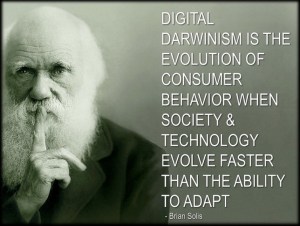
Quote by Darwin rapid-technology-social-changeNew market opportunities open and close at blinding speed, new competitors emerge overnight, product life cycles are getting shorter, and customers are more knowledgeable and sophisticated. This fast-changing environment has led to requirement to change learning and training.  However more often than not, the task of aligning the learning organisation to the business can be challenging and the perception of how the business views the learning organisation in terms of aligning to strategic initiatives is different to how the learning organisation perceives itself.

Downsizing has resulted in a mass drainage and outflow of skills as employees or contractors are let go.  To ensure that an organisation can compete globally and remains at par with the technological changes in the global market committing to the investment of on-going skill training is often viewed as a potential unnecessary incision into the bottom line.  This continued way of thinking comes at a cost because of the risks involved in

developing the professionalism of the staff (Lucey, 2004). The fear of poaching of the staff by other companies after significant investment has been made in upskilling and training from the said company is of real concern, because skilled, experienced staff when pulled in can respond faster to problems brought forward by the customers and ensure high productivity and efficiency in the long run (Corbett & Huggett, 2009).

With the explosion of mobile technology, organisations need to take advantage of the benefits, scalability, and viability of using mobile e-learning, using smart phones, tablets, and notepads that offer a blended solution  to read more click to download white paper…

AVPTGLOBAL almost 400 courses all globally accredited

AVPTGLOBAL almost 400 courses all globally accredited

The Currency of Digital Learning

Using technology for life long learning

Using technology for life long learning

How do we digitally learn?  How do you learn effectively in a workshop? What is the currency of digital learning?

By Tim T Dingle BSc (Hons) MIBiol PGCE MBA

Chief Development Officer at  the Academy of Vocational and Professional Training.

When you want to acquire a new skill or apply some new knowledge, do you learn by passively sitting and listening to an expert lecture for 90 minutes without a break and 150 Power point slides? What do you actually retain that enhances the value and the currency of your learning. The currency is defined  as something of value, or something that represents value: knowledge, gold, respect, or social media following, all represent different kinds of currency. In 2013 it could be that the currencies in digital and workshop learning are changing.

Learning is evolving and not simply by the tools that actuate it. The process of adopting new learning domains and materials (many digital) has exposed the need for new skills. It is debatable whether or not such skills need to be expressly taught, or if they’re simply the residue of intense, well-designed learning experiences. Whether or not they are old learning (content) with a new coat of paint, or genuinely represent a paradigm shift in learning priorities, it is difficult to doubt their constant application in a 21st century world that is super fast connected, digital, omni-social and multi-faceted.

No longer is it considered sufficient to teach children to simply read and write, and fill in the middle with discrete facts about history, mathematics, and scientific processes. There are new skills that transcend content areas, in this way functioning as natural pathways out of old thinking: creativity, problem-solving and collaboration. One can problem-solve across and within topics formerly thought of as science and history and moving between them both moves them beyond academia, and back to the real world. This is possible because flexible cognitive and creative capacities are not rigid.

The brain science literature suggests that workshop learners understand and remember more when they talk about what they are learning.  However, there are some people who attend workshop and training seem to have information wash over them and are uncomfortable with talking or moving.   So, to get improved retention and learning in both digital and workshops:

1.  Do something physical when you learn: incorporate some sort of movement or body activity every 20 minutes, on line or face-to-face.

2.   Walk and talk, walk and learn: I do this a lot in half-day or full-day trainings.   Participants might do an exercise, but the results are on the wall for a debrief. Using a tablet for true learning as you move.

3.  Flip Chart Products: This is where participants will write specific responses on labelled charts on the wall at designated times.    It can be an answer to a question, a question learners still have, a summary statement, an opinion about the content, facts they want to remember, or how they plan to use the content.  Then stick it on the wall. It works with digital media as well- plaster the wall with paper!

With the proper technologies and thoughtful new methodologies, courses can become content infinite. When the learning goals supersede the content areas, things begin to change. As the currencies in digital learning evolve, they necessarily evolve the learning with them.

AVPTLTD LOGO  6


Check out our 1 day business bootcamp

The Academy Of Vocational And Professional Training look forward to the year ahead after a year of success and achievements

Lord Ahmed congraulate students and AVPT on achievements

Lord Ahmed congratulates students and AVPT on achievements

The Academy of Vocational and Professional Training (AVPT) have had an exceptional year, with a huge list of positive achievements. A year in which AVPT launched globally was marked the first cohort of students being presented with their certificates by  Baroness Uddin followed by congratulations from Lord Ahmed, in the impressive setting of the House of Lords.

“This was a huge achievement for us,” explains Diane Shawe, the CEO, “Our 395 courses are all globally accredited by the International Accreditation Organisation, meaning that they are accepted anywhere around the world. We’ve achieved so much this year and we felt very excited for the future when watching the first generation of our students receive their beautiful and meaningful certificates.”

The globally accredited status given to AVPT by the International Accreditation Organisation in June 2012 means that the courses available hold a big draw to students that want to travel. Diane sees this as recognition of the significant rise in e-learning.  This has also meant that AVPT’s launch of its Scholarship Den initiative hasStudent pitching to judges at ASVPT Scholarship DenStudent pitching to judges for scholarship happened at just the right time; young people, with a desire to better themselves or start a business are awarded with £2,000 of AVPT training. This has led to the continued and dynamic success of the academy’s offering.

In October 2012, AVPT was the main sponsor of the education section of the Youth Enterprise Live Show 2012 at Earl’s Court in PA9C1793London and had the Mayor of Hammersmith and Fulham as the guest of honour to officially open the AVPT stand where they attracted over 350 enquiries for the short courses.

To finish off an already exceptional year, AVPT won a contract with a Middle-Eastern Government to provide crisis management and leadership training to the government heads of departments.  After a highly successful training programme, AVPT was also added to the official procurement list for the UK’s Ministry of Justice and Department for Work and Pensions and so is able to provide training for these two large departments.

Rachel Fanshawe receives her certificate from Baroness Uddin

Rachel Fanshawe receives her certificate from Baroness Uddin at the House of Lords

This remarkable success story has continued into 2013 and the AVPT team are already setting their sights on the next target. The company has begun work towards striking up a partnership with The Department of Business, Innovation and Skills to carry on its successes with departments of the UK government.

Diane explains, “We have built solid relationships with all that we work with, and over the course of 2013 we want to be able to offer students from across the world a larger platform of study. We believe by building foundations with The Department of Business, Innovation and Skills, we can do this efficiently.”

AVPT is dedicated to helping students in reaching their full potential and have launched the first UK voucher code website offering customers the chance to find special offers and deals on short courses. The website, expresscoursevouchers.com, allows the general public to take advantage of new education and training deals everyday.

Tim Dingle, the Chief Development Officer at AVPT says, “We’ve been extremely busy this year and have created a paradigm shift for online adult education.  Our Social Enterprise division, known as ACEE, will also begin to deliver training courses to the wider community, by awarding bursaries to people who are disadvantaged or cannot afford to up-skill. We are totally committed to life-long learning  and to helping students better themselves. We are passionate is this goal and believe we have a unique and powerful product that people are connecting with very quickly.”  The National Lottery has view our proposition in a positive light has it helps the wider community.

Next generation of mobile learning

Next generation of mobile learning

The Social Enterprise division of AVPT  ‘ACEE’ will launch a project in July 2013 called ‘Switch Momentum’.  ‘Switch Momentum’ is targeting the areas where knife crime and gang problems pose a real threat for teenagers who do not want to get involved but are locked into their homes in order to be safe.

Diane says, “Switch Momentum will provide teenagers with a way out of challenging and pressurised situations. We believe everybody can fulfill their potential given the right opportunities and we believe we can offer this positive environment.”

Diane Shawe finishes by saying, “This is targeting young people in the summer vacation who may not be going on holiday, a projects like ‘Switch Momentum’  can offer that inclusive learning experience in a calm environment to them”.

As a natural progression of their growth, AVPT is also looking to inspire and train  a new workforce of Virtual Tutor Facilitators (VTFs). AVPT  has already trained several individuals and have found that they help create a seamless bond between the student and their studies. By May 2013, AVPT will have created 300 jobs.

Tim Dingle explains, “The VTF is a revolutionary new idea. Teaching is changing, and we are creating dynamic change. We have created a jobs and helped people to work creatively and passionately in adult life-long learning. We’re extremely pleased with this.”

AVPTGLOBAL almost 400 courses all globally accredited

AVPTGLOBAL almost 400 courses all globally accredited

AVPT will be present at three major exhibitions throughout 2013.

The Scottish Beauty Show 2013, which takes place in the heart of Edinburgh  and the Wales Hair and Beauty Show 2013 which is in Cardiff. Finally in this busy year, AVPT will be presenting at the Business Start Up Show 2013, at the Excel centre, London.

Visit www.avptglobal.com to view our range of courses and services and see if we can help you upskill yourself or team.