Tag Archives: mobile marketing

2 Tips on How To Put Optimism Into Practice On a Daily Basis

Practice being Optimistic each day

Practice being Optimistic each day

Can Optimism be taught?

Being optimistic does not mean forcing yourself to become persuaded that you should always look on the bright side of things. Becoming optimistic is something you can learn. It is a state of mind that is not so hard to assimilate, one that enables you to live quickly the life you want to live.

Optimism is a state of mind

Optimism is a concept that is often poorly explained. Having a high state of mind does not mean that you reject reality because you want everything to be rosy. It means that you can tackle any situation with a state of mind that gives you every chance to take advantage of it or to turn situations around in your favor if you need to.

People often think human beings are either optimistic or pessimistic by nature and that there is nothing we can do about it. This is specifically a cynical way of seeing things! Unfortunately, people often dwell on this incorrect observation.

There are obviously optimistic people. Admittedly, they have an advantage over others, but it does not mean that pessimistic people are destined to remain bleak.

Being optimistic, in a general manner, means that there is a way out of every situation, but it will only show if you do your best, so events turn in your favor.

Being optimistic is not a mere vision of life according to which everybody is good and that all is for the best in the best of all possible worlds, one that consists in denying reality – which often refutes this idyllic point of view.

Being optimistic requires first of all that you be realistic and accept the world as it is: that is, with its positive and negative aspects.

Likewise, you can’t say that people are inherently good because some are, while others are not.

In fact, the truth is more subtle than that because these two tendencies do reside in every one of us. Life consists in expressing our qualities for our own sake but also for that of our dear and near ones or humankind.

To become optimistic, you, first of all, have to be realistic and accept the ambivalence of this world and human beings – they can both be good and bad in turns. The second step is to take action by counting on favorable outcomes to arrive and hoping that the people you’ll meet will adopt a positive attitude. Seeing things this way is fundamental.

First of all, know that, if you are not optimistic by nature, as described in the definition above, you will need some time before you naturally become confident at being optimistic. So, summon your patience. But you may not have to wait for too long if you apply the advice you will find below.

Here is how to bolster your optimism or become optimistic. You may be confronted with two cases:

1.    You have already gone through a situation that did not turn in your favor:

– Do not feel guilty for this failure learn from the experience so you can deal with such a case differently next time.
– Approach the situation in question from a different perspective by visualizing it turning out in your favor and doing what you can so it turns in your favor.

2.    If a situation is unprecedented for you:

–    In this case, it is even easier: approach the situation by visualizing it turning out in your favor and by doing everything you can so things go your way!

These two ways of acting is a learning process which will gradually become second nature to you, helping you to earn one success after another.

Looking for a short course? why not tray five short courses and learn on the move. http://www.crashcourses.academy 

10 Top Tips on How to Influence Online buying by Diane Shawe

Try out 5 Courses this Christmas for just £25.00

Try out 5 Courses this Christmas for just £25.00

The trends and predictions are already in for 2016. Many digital advancements will be made in 2016, from the rise of mobile messaging apps to mobile commerce finally gaining some mojo. 

You the reader even you are becoming more savvy and intend to be heard when things are not going right.  Smartphone use is driving up the number of inbound calls to businesses. Voice-activated search has been rising steadily. Consumers are talking to personal assistants through their smartphones and cars, and those “assistants” are getting smarter. And with the rise of smart watches and connected home devices, they’re talking to a wider variety of devices from various locations.

Marketers need to be prepared and ready to optimise digital content for speech-based (not keyword) queries and learn how to make sure that content can be discovered by personal assistants.

– So what about small businesses, the lone sole trader, what can you do to influence online buying?

  1. Change your ads Your prospects could get bored seeing the same ad all the time. Statistics show people usually see the same ad 7 times before they actually buy. Just change them enough to keep them from being over-exposed. For example, if your ad said. “FREE Killer Marketing E-book!”, you could change it later on to “FREE Sizzling Marketing E-book!”
  2. Give people a deadline to order. Tell people if they order by January 15 2016, they will get a discount or free bonuses. This will create an urgency so they don’t put off buying. Another example, “Order before 8:00 p.m. and get a second product of your choice for free!”
  3. Publish testimonials on your ad copy. They will give your business credibility and you’ll gain people’s It’s important to include the person’s full name and location with the testimonial.
  4. Allow people to make money reselling the product or Tell people they can join your affiliate program if they order. You could pay them per sale, per click, per referral, etc. Just provide them with proven and tested marketing materials, detailed statistics and plenty of affiliate training.
  5. Offer a buy-one, get-one-free deal. If you sell more than one product, this type of deal works People will feel they are getting more for their money and will order quicker. You could also offer them a ‘buy one, get one half’, ‘buy two, get the third one free’, ‘buy two, get a free watch’.
  6. Have them sign up to get access to download a free e-book. The subject of the e-book should be related to your target audience. You could have them sign up to a opt-in list or your regular The e-book should have high perceived value so they’ll take the time to sign up. Landing pages are really good for this.
  7. Give your visitors a free membership inside your Members Only web site or closed membership group on LinkedIn or Facebook. Have them sign up to receive a user name and password or an exclusive invitation. Members groups are particularly good on LinkedIn and your blogs because each time you post some news they get an automatic update.
  8. Offer your visitors free consulting via e-mail. Have them fill out a web form to e-mail you with their When you answer their questions, include an offer for a product you sell or highly recommend products that could help them. You could join the product’s affiliate program to earn commission if they take your advice.
  9. Give people free bonuses when they order your product or The free bonuses could be books, jewelry, reports, newsletters, etc. Make their bonuses sound extra valuable by listing their retail value, either separately or together in one amount, or limiting how long you will offer the bonuses. (you can partner with free gift websites)
  10. Provide free package and postage with all orders. If you can’t afford it, you could offer free P&P on orders over a specific You could also offer a rebate on their P&P costs. Most customers probably won’t send in the rebate card unless it’s a huge shipping cost, for example, £30 or more

Try our Audio Courses this Christmas.

Niche Marketing Made Easy

Produce Persuasive Copyright

Building online Traffic and List Systems

Email Marketing secrets

How to set up and generate a powerful Blog website

The Affiliate Chemistry

7 Habits of Highly Effective People

Internet Business Optimisation

12 Effective selling techniques

50 Best and Worse Business Deals of all time

20 Advertising Tips

Art of Making money

Breakthrough Sales Solutions

Clever Profit Generating Insights

How to Combine Cooperation & Competition

Customer Tested – Buying Triggers

How to work with change

Explosive Influence Tactics

Extreme Persuasion Strategies

Manage your Intellectual Capital

The Servant Power Leadership

Visit www.crashcourses.academy and select 5 course and start listening, watching and learning today.

THE THREE REASONS COMPANY STORIES FALL SHORT OF EXPECTATIONS

Develop your interviewing skills

Develop your interviewing skills

The company story is a composite of how you represent yourself to employees, supplier, customers, and the general public.

It is tied closely to your reputation, reinforced by your integrity, and defined by your behavior. Your story is the essence of who you are, what you believe in, and how you act out your character in a business play. Think of your story as if it were presented in a theater. Your story can be a comedy, a tragedy, or a musical. There will be a cast of characters, some good, others not so good, each telling their own version of the story.

article by Diane Shawe

Most organisations are in trouble because their main characters in the play, the managers or owners, tell stories that don’t  hang  together. Three problems are associated with their composite company story. First, the story is badly told; second, it is not acted out in a coherent manner; and third, it doesn’t ring true. The sales department is living one story while operations follows a different theme. Finance has its own world while marketing occupies still another cloud. Is it any wonder employees are confused? They seem to be working for different companies simultaneously.

When a Story Is Badly Told

A badly told story has its roots in an incomplete business plan. Most organisations have bits and pieces of the items making up the plan. Managers are usually proud they have a philosophy statement posted in the lobby. They point in triumph to the value statements listed in the company literature. Somewhere you will be shown a vision. Each of these elements is appropriate and necessary in both a well-constructed business plan and an authentic story.

If a single element is missing from the plan, the story is incomplete. The danger of an incomplete story is evidenced when the flaws show up in execution of the plan. An incomplete business plan results in a frag- ile document presenting a story that doesn’t ring true. An incomplete model implodes.

When there is no vision statement for instance in a story. any well-written plan with all the pieces will not stack up if the vision portion is lacking.

Time management Mindfeed 4 by Diane ShaweWhen the Story Pieces Don’t Add Up

Failure to virtually linked to the elements  also contributes to an incomplete story. Because the parts and pieces are not interconnected there is no coordinated, disciplined implementation. It is possible to actually have the elements working against each other. For example, values may contradict the philosophy. The vision and mission could be disconnected. Principles could be developed that cancel each other. These disconnected behaviors cause customers and employees to hold the company management suspect. They sense something is not right or it is just not working.

When the Story Isn’t Believable

Another equally fatal flaw in telling a story is to be incongruent. For example, you claim to love customers then treat them badly. You claim to value employees yet they become targets of opportunity for reengineering or down sizing, even in good times. You profess to provide the best products in your industry yet they don’t work as advertised.

People are astute and getting smarter especially with the powerful smartphone in the palm of their hands. They pick up on the fact you don’t live your own company hype. Your story simply isn’t believable. Consider public awareness of a company’s environmental protection position. Let one incident occur then watch the media have a field day with the inconsistencies. Politicians suffer the same fate when they make public promises they cannot keep. They become inconsistent with their story, telling each special interest group what the group needs to hear.

The Antidote to a Badly Managed Story

There is an antidote for a badly managed story. The key is building a congruent story by eliminating the very issues that create incon- gruence. The first step is to get a business plan in place. To do it as defined in this text, you will be forced to deal with the key planning elements as discrete elements and then again as an integrated framework. This is the only known process to make the message authentic, congruent, and believable.

Being authentic requires truth and hard work. It requires an acknowledgment of who you really are in terms of what you believe in, how you behave, and what you expect. If yours is a lethargic organisation, don’t claim high performance. Being authentic means identifying all the problems in your system, communicating to employees that you know the problems, and finally telling them how you intend to fix those problems. Everyone must share this hard work across the range of business activities and down the management structure. Everyone must participate in careful organisational analysis and the required actions to fix the problems.

Being congruent requires constant vigilance on the part of the whole management team. This means you must do what you say— every single time. There are situations where you will slip. Honest mistakes are okay. Employees do not expect their management to be perfect. They do expect them to live up to their word and match word and deed.

Reaching a state where you and your management team are believed is a journey with history working against you. A mis management example made public doesn’t help your case. Building trust to counter this history is not an overnight event. After your story is completed, communicated, and demonstrated you will experience hesitance and resistance from employees. They won’t be quick to jump on your train. There will be a test period to see if you really meant what you said or if this was simply an annual pep talk from upper management. Remember two points: Employees have heard it all before, and actions speak louder than words.

Creating a Win Win situation is not just about Selling

Negotiations outside the box

Negotiations outside the box

Keeping an Open Mind

article by Diane Shawe M.Ed

Have you ever started working on a project and had someone come along with an idea you never thought of that made the project much better? Perhaps it sped up the process, gave it much more depth or meaning, or led to a richer result in some way.

If you were closed-minded about the project, you would not have even noticed that someone came to you with a better suggestion. Being open-minded, however, allowed you to recognise the value and merit of someone else’s ideas, and voila! Things worked out much better than you had ever imagined.

When you apply open-mindedness to negotiating, it helps to support your flexible and adaptable nature. For example, perhaps you set your mind to negotiate the best price you can, but your counterpart approaches you with a better price than you had imagined as your benchmark. If you are open-minded, you hear what your counterpart proposes. If you are closed-minded, you are so focused on the outcome that you might not hear what they offer at all, and you may actually negotiate yourself a weaker deal.

Not every negotiation is about reaching a win-win solution. Sometimes, not everyone can win. For example, when an organization is preparing to downsize, the employees may be looking for the most benefit they can get, but they know that they will not have a job in the end. In collaborative negotiations, your real objective is to reach the best possible result for all parties. This might include some compromise, and should always involve working toward relationships.

Long Term and Short Term Relationships

CPD FrameworkWhen you consider relationships in negotiating, the length of the relationship is very important. If you are negotiating with someone that you will never see again, and with whom you have no investment, go ahead and put everything on the table. This would be the case if you were bargaining about a one-time purchase (such as furniture or a television from a commission based salesman, for example). In many cases, however, you may be looking at a much longer-term relationship. In the case of labour negotiations, many unions have strong negotiators who work with them for many years.

The union negotiators are skilled professionals, and they may approach your meetings very confident that they, themselves, will be around much longer than the current group of managers and negotiators that the employer has. If you are an employer negotiator, you will want to consider the long-term effects of the relationship that you foster, as well as the specific terms that are agreed upon. Expect, for example, that if you are currently negotiating wage or benefit rollbacks, the union is going to be very resistant, and that if you are successful in negotiating those reductions, the union is going to negotiate their reinstatement at the next round.

Labour negotiations are about long-term relationships. Consider also that the terms that you bring up in this kind of negotiation will have a long lasting effect on the company and its employees. The union knows this too, and that it is important to realise that the negotiations are a part of a long-term relationship that can be strengthened or damaged by the results of the negotiations that you are taking part in.

When you are thinking in terms of relationships, be ready to leave some items on the table. That means that some items that you thought were important may not be considered in this round of negotiations. This is one of the times when detaching yourself from the outcome is important; there will be other opportunities to work with this contract or similar ones again, and those may be the times that you will be able to bring those other items to the fore.

Go back

Your message has been sent

Warning
Warning
Warning
Warning

Warning.

branding-mindfeed-ebook-by-diane-shawe
About the Author

Diane Shawe is a speaker, trainer, mentor, consultant, entrepreneur and author with 15 published titles on Amazon.   With more than 25 years of experience. She has personally trained over 2800 people around the world in a variety of fields and has published a number of works. She has contributed to over 100 Kiva Entrepreneur’s around the world.

She was also one of the producers of a Day time Ladies Talk Show in 2015 and Host of one of the UK’s best loved Annual Hair Extensions Awards.

Diane also enjoys oil painting, sailing and clay pigeon shooting. She focuses on topics that she is passionate about in her writing and has attracted over 36,000 followers on her popular blog.

Media Contact
Company Name: AVPT Short Courses
Contact Person: Diane Shawe MEd
Email: Send Email
Phone: +44 208 1333120
City: London
Country: United Kingdom
Blog Website: http://www.academyexpresscourses.com
Training http://www.hairextensionstraining.academy

Diane Shawe’s eBooks are available on Amazon right now at: https://www.amazon.com/Diane-Shawe/e/B0052WG8V6

Diane Shawe Social media links http://www.phollo.me.com/expresscourses


To busy to Market your business and get new clients? by Diane Shawe

Without new customers your business dies.

Without new customers your business dies.

No business can grow or survive without new customers!
article by Diane Shawe M.ED

If lead generation – in other words – getting more clients and growing your business – is something you keep put off and try to put right in a panic (when it’s too late!)  because you are too busy the rest of the time, then it is essential that you adopt a system that generates new leads – even when marketing is at the bottom of your priority list.

That’s why websites such as pagewiz.com have done so well over the past 3 years.

But before you can even look at setting up  your marketing strategy – the web pages, videos, emails and all the other things you need – here’s how we can help you, for a very small fee (£9.99 + vat) to shape up your campaign in a 3 hour bootcamp.

  • Step One: Visit http://www.clarity4d.softskills.expert and skroll down to the Bootcamp courses
  • Step Two: Select the bootcamps you would like to attend that will give you the most benefit.
  • Step Three: Complete the form and submit it to us and we will send you an invoice.
  • Step Four: We will confirm the venue details, you have already selected the time

As you can see there is no big sales pitch, you either need it or you don’t.  We wont waste your time.

These will be the most constructive 3hours you have every spent in moving your business on.

This is deliberately designed to give the busy business owner world-class marketing – without the effort, hassle, time and stress needed to do it all by yourself.

I know a good deal 3 hours workshop diane shawe

10 Questions You Absolutely Must Ask Before Accepting a Job Offer

Need help with sharpening up your interviewing skills?

Need help with sharpening up your interviewing skills?

Black Friday hot deals on 50 short courses

black-friday-hot-deal-on-courses

Now’s your chance to pick up 4 quality courses for just £25.00!

 Buy today

and get over £500 worth of courses for just £25.00.

Click and select today

3 Audio Courses

2 Video Courses

1 Downloadable accredited course
with tutor support!!

and that’s not all….

 FREE BONUS COURSES

Get this complimentary Youtube course also

Download your Free copy today

Download your Free copy today

yes all for just an incredible £25.00 no gimmick no hidden costs.

Black Friday weekend only. Ends at midnight, Sunday November 30. Don’t wait!
all you need is your bank details

enroll with express courses with card payment

Disruptive cloud e-learning has positive implications for employers

start a short course with avpt using mobile phoneThe current speed of change means that employees need to be trained continuously in order for Companies to avoid the dangers of being out-thought and out-maneuvered by competitors.

article by Diane Shawe M.Ed

Real and tangible data proving the argument and the added value of E-Learning initiatives to stakeholders constantly endorse the use of online technologies to:

  • Keep the workforce appraised of their job functions’ developing requirements, enabling them to make a positive impact within their Organization and help that Organization achieve its aims and goals;
  • Aid succession planning, helping workers to acquire the knowledge and skills to help them progress within their Organization;
  • Allow Organisations to keep training budgets under tighter control, develop and retain existing employees and reduce the costs related to external human resources recruitment, selection and on-boarding.

This system of Training management — often referred to as a learning management system (LMS) — is a key element of an effective professional development plan as well as being a key element of an Organisation’s human resources strategy.

There seems to be universal agreement that the worldwide E-Learning market will show fast and significant growth over the next three years. The worldwide market for Self-Paced E-Learning reached $35.6 billion in 2011. The five-year compound annual growth rate is estimated at around 7.6% so revenues should reach some $51.5 billion by 2016. While the aggregate growth rate is 7.6%, several world regions appear to have significantly higher growth rates. According to recent regional studies, the highest growth rate is in Asia at 17.3%, followed by Eastern Europe, Africa, and Latin America at 16.9%, 15.2%, and 14.6%, respectively.

Each of the world’s regions has its idiosyncrasies In terms of the factors that drive this market. The U.S. and Western Europe markets are the most mature. The U.S.A. spent more on Self-Paced E-Learning than anywhere else in the world. Western Europe is the world’s second largest buying region for E-Learning products and services but Asia is predicted to outspend Western Europe in E-Learning terms by 2016. In 2012, Bersin & Associates stated that there were some 500 providers in the LMS market and only five of them have more than a 4% market share. According to this, the LMS market was expected to reach $1.9 billion in 2013. However the growth exceeded expectations, closing the year at $2.55 billion.

The Cloud is changing the way Organisations, Employees and Partners interact and collaborate. Within the Cloud solutions universe, Software-as-a-Service (SaaS) is playing a major role. According to Gartner, SaaS will continue to experience healthy growth through 2014 and 2015, when worldwide revenue is projected to reach around $22 billion. Gartner has stated that many Enterprises are now replacing their legacy systems with SaaS-based CRM systems. Enterprise clients also report that SaaS-based CRM systems are delivering new applications that deliver complementary functions which are not possible with older, legacy CRM platforms.

Various surveys and analyses into the reasons behind this big growth in SaaS agree on at least three. SaaS brings:

  • Speed of implementation
  • Savings on capital expenditures
  • Savings in terms of operational expenses

The SaaS model is also playing a major role in helping to increase the size of the E-Learning market. Small and Medium-sized Enterprises (SMEs), as well as large Corporations are making the adoption of a SaaS LMS a key priority. In particular, large Corporations are switching to a SaaS LMS from in-house LMS solutions or they are now using a SaaS LMS as a secondary learning system for special training purposes.

E-Learning is subjected to the influences of sales trends related to smart connected devices and the Internet megatrend (that is, the spread of the Internet in the world).

According to IDC, the number of PCs will fall from 28.7% of the device market in 2013 to 13% in 2017. Tablets will increase from 11.8% in 2013 to 16.5% by 2017, and smartphones will increase from 59.5% to 70.5%.

The new frontier to address is the trend towards Bring Your Own Device (BYOD) — where individuals take their personal (usually mobile) devices to workplaces. Increasingly, these seem to be being used to help their owners perform work activities (including formal training), both in and out of the workplace. Smartphones are the most common examples of these devices but employees often also use their tablets or laptops in the workplace.

While the corporate-training market has lagged behind other education-based sectors, it continues to represent a viable investment opportunity.

The corporate-training market is among the most cyclical within the education industry. Since 2010, employers’ total spending on training and the amount spent per employee — the key data used to measure this sector — have been declining. However, the corporate market related to outsourced services (net of all ancillary costs) has grown to reach 42% of total expenditure.

Download report here Strategies for Modernising Corporate Learning by Diane Shawe M.Ed Dec 2014

Within the training industry, the E-Learning sector has grown consistently in recent years. All its subsectors (Packaged Content, Platform, and Authoring tools) show positive annual growth. Market acceptance of E-Learning has resulted in its increased use for both large and small companies. SaaS/ Cloud E-Learning solutions are particularly suitable for Organizations ranging from SMEs to large institutions.

General budget constraints appear to be the main drivers of the shift towards using E-Learning. However, E-Learning is not merely a solution which is attractive during an economic downturn but it is also an efficient and cost-effective solution when workers — especially those in Organisations with a widely geographically distributed workforce — need to be brought up-to-speed quickly on relevant knowledge and skills.

With the inflow of an estimated $6 billion of venture capital over the past five years, E-Learning is being driven not only by startup dot-com entrepreneurs but also by big corporations, for-profit spin-off ventures, as well as big and small universities

AVPT, a disruptive Cloud E-Learning solutions provider with over 400 courses. We welcome the opportunity to further the conversation with you to discuss the white labelling of a LMS system populated with bespoke softskills courses or access to a

Our training initiatives (incorporating individual and group training activities) are monitored and managed via a consistent and reliable tracking system that can be stored, consulted and analysed as required. The system’s data will be useful for management reports on productivity and for assessing individuals’ career advancement.

Please contact us to learn more about how an integrated learning management system can empower your employees to greater effectiveness without incurring massive development cost and extensive lead time. www.startashortcourse.uk or call 0203 551 2621

Sources:

  • GSV, Education Factbook 2012
  • IBIS Capital, E-Learning lesson for the future
  • Tower Watson, Global Workforce study 2012
  • Accenture, Technology Vision 2014
  • BMO Capital Markets, US Education Research 2011
  • The EvoLLLution ,
  • Lifelong Education and Labor Market needs
  • Georgetown University, Projections of Jobs and Education requirements through 2018

Why strategies for modernising corporate learning should focus on outcomes

there's never been a better time to start a short coureTHE SPEED OF CHANGE IN MODERN BUSINESS DEMANDS A NEW APPROACH TO SUPPORTING LEARNING AND PERFORMANCE AT THE POINT OF NEED.

article by Diane Shawe M.Ed

“THE IMPORTANCE AND EVIDENCE -BASED APPROACH TO
LEARNING USING MOBILE TECHNOLOGY IS INFLUENCING HOW INVESTMENT IN CONTINUED PROFESSIONAL DEVELOPMENT OF A WORKFORCE IS ACHIEVED”

New market opportunities open and close at blinding speed, new competitors emerge overnight, product lifecycles are getting shorter, and customers are more knowledgeable and sophisticated. This fast-changing environment has led to requirement to change learning and training. However more often than not, the task of aligning the learning organisation to the business can be challenging and the perception of how the business views the learning organisation in terms of aligning to strategic initiatives is different to how the learning organisation perceives itself.

Downsizing has resulted in a mass drainage and outflow of skills as employees or contractors are let go. To ensure that an organisation can compete globally and remains at par with the technological changes in the global market committing to the investment of on-going skill training is often viewed as a potential unnecessary incision into the bottom line
Start a short course to grow

Corporates, enterprises and charities all wish to run their operations at the minimum costs allowed. We all recognise that in today’s environment, business moves faster than ever. Most organisations now recognise the importance of developing a strategic approach to learning and harnessing the internal skills of their teams. Moving away from more tactical based activities associated with training such as measuring skills-based behaviours, to focusing on acquisition of knowledge and learning transfer that result in individual and organisational performance improvements.

With the explosion of mobile technology, organisations need to take advantage of the benefits, scalability, and viability of using mobile e-learning, using smart phones, tablets, and notepads that offer a blended solution.

E-learning has the potential to fully integrate the benefits of personal freedom with connectivity (belonging to a purposeful group of learners). From an educational perspective the “e” in e-learning stands for more than electronic; it can also stand for extending and enhancing the learning experience.

Fulfilling the buyers requirements

Corporate strategy for modernising learning free report by Diane ShaweThe four pillars that go to underpin the buyer’s requirements and therefore still define the industry offerings are centred on the following: • Compliance and accreditation

  • Scalable and flexible whilst achieving a real reduction in Cost
  • Improving, tracking and measuring Learners’ performance
  • Real time management, alignment and communication to support on-going changes.
  • The ability to track and report learner performance remains uppermost in many procurers’ minds.

Isaac Asimov’s quote is now more urgent and relevant if corporates are to gain a lean and competitive advantage with a progressive highly skilled workforce for the 21st century.

“No sensible decision can be made any longer without taking into account not only the world as it is, but the world as it will be.”

Why strategies for modernising corporate learning should focus on outcomes rather than input by Diane Shawe M.Ed

How to identify your youtube target market

The largest search engine in the world

The largest search engine in the world

10 thing you need to clarify about what your business is all about, what your brand is, and what your purpose is in the marketing world.

Article by Diane Shawe M.Ed

The following questions will help you to clarify and understand what the marketing vision of your business is all about.

1. What kind of people are you trying to reach? I’m really sure you already know the type of people that your services are directed to. You see them constantly, they contact you as well if necessary, and that will tell you what kind of people they are and how you can treat them.

2. What do they look like? Are they fat or skinny? Male or female? Old, young or middle-aged?

3. What are they looking for? What is the final goal they are after based on the service you provide? What feeling are they trying to reach with it? Do they need it to feel happy? Do they need it to survive? A lot of needs must be taken care of for a person to survive.

4. What do you actually do for them? Maybe you are already offering a service for that audience. That will give you a great vision of what exactly you need to inform any new people that fit into that same audience.

5. What kind of information would they be interested to know about and pay for? You already know the needs of your customers. You know exactly what kind of information will be highly helpful to them in order to help them to satisfy those needs. Why don’t you just create a great info-product about it?

6. How much money are they actually paying you for it? Knowing how much you usually charge them for your service is a very important indicator, because if you decide to create a product like a report, a training video, software or something directly related to your audience, you may simply be able to figure out the price tag you can easily stamp to it.

7. How would they like to reach that content? Is it Video, mobile phone, Audio, Written, or Blogging? This is important to know. You may just think about it. Think on their limitations to read, hear, watch or use the computer. If they can do everything you can, just ask them what they would like to know about stuff. Do they like to read? Do they like to watch videos? Do they like to hear audio? Do they like to use YouTube?

8. Where are they from? Maybe you have an audience that comes from other cities or even countries. You need to target every one and adapt your information to all of them at the same time.

9. What are your competitors offering to your audience? In the marketing world, it is very important to study the competition that targets your exact audience. What do they generally offer? What things do they offer that you don’t? Do they have more clients? Do they work additional hours? Do they cover a lot more needs than you?

10. Can you offer a better service/product than your competitors?

Download your Free copy today

Download your Free copy today

Once your know everything about your successful competitors, you can just offer the same thing but with your personal touch plus a lot more great things that they are not offering. You can have special offers, free samples, free phone consultation, special discounts, etc.

These questions are very important in deciding how to establish your business over YouTube. You can position almost any kind of business over YouTube because YouTube is more than just a website; it is a large audience of people with real human needs who are waiting for you and your service to satisfy them.

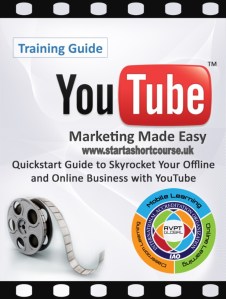
Click here to download your YouTube Marketing Made Easy Training Guide by Short courses Expert