Tag Archives: big sociiety policy

New business partnership set up for Dudley town centre

A new multi-stakeholder partnership has been formed with local businesses to stimulate the local economy and improve the vibrancy of Dudley town centre.

The Dudley Town Centre Partnership Group is supported by Dudley Council with national government funding from the UK Shared Prosperity Fund and will work in conjunction with key stakeholders including Dudley Council.

The business-led steering group has an allocated budget and meets monthly to drive change, working collaboratively to deliver projects recommended by businesses to activate and improve the town.

Cllr Paul Bradley, deputy leader of Dudley Council said:

“Collaborative stakeholder groups help to enable change on our high streets but a recent report from High Streets Task Force found that 40 per cent of towns do not have local partnerships in place.

“We know it has been a difficult few years for businesses but we hope this new group aims to give Dudley town businesses a voice and platform to come together while identifying ways to improve the vibrancy of our town centre.

“We’ve already seen positive change including improved cleaning with the introduction of a dedicated full time neighbourhood services operative.”

Dudley Council recently appointed independent advisors ‘Heartflood’ and ‘Save the High Street’ to facilitate formation of the new Town Centre Partnership. The group also holds quarterly open focus groups on particular topics and town centre businesses are encouraged to get involved in the coming months.

Julie Holden, Community Director at Save the High Street added:

“Now more than ever we need to encourage collaboration and work together to strengthen and improve our town centres and high streets.

We are delighted to be partnering with Heartflood to deliver this valuable project, and to be continuing our work to support Dudley town centre businesses.”

Businesses in the town centre are welcome to join the group and can find out more by contacting Dudley Business First on info@dudleybusinessfirst.org.uk

Diane Shawe a member of the steering group for Dudle Town Centre Partnership explains that the UK Shared Prosperity Fund is a central pillar of the UK government’s Levelling Up agenda and provides £2.6 billion of funding for local investment by March 2025. The Fund aims to improve pride in place and increase life chances across the UK investing in communities and place, supporting local businesses, and people and skills. For more information, visit UK Shared Prosperity Fund.

Business support may be available for local businesses, including a free business diagnostic, by registering with a business advisor at https://www.businessgrowthwestmidlands.org.uk/

Visit www.savethehighstree.org website to find out more about forthcoming events and meetings.

Unmasking the Underground World of Food Delivery Apps: A Shocking Investigation by i

Inside the Thriving Black Market for Illicit Deliveroo of Uber Eats and Just Eats Drivers

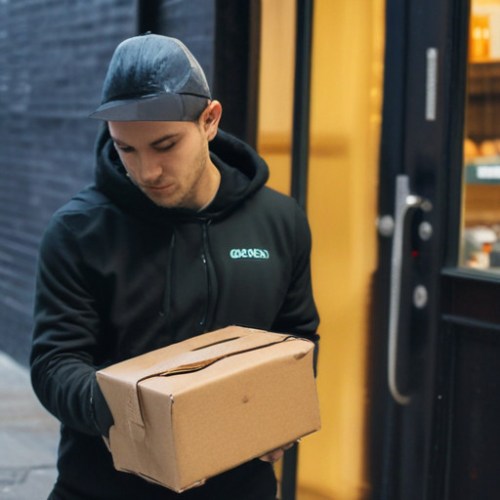
A delivery driver hands over your takeaway on a Friday night but you probably don’t give the exchange too much thought.

The convenience of food delivery apps like Deliveroo, Uber Eats, and Just Eat has revolutionised the way we order meals, but a dark underblly exists within the industry. Our blog post delved into the illicit black market of rented accounts, shedding light on the potential risks of unknowingly opening your door to substitute drivers. The investigation carried out by i revealed a concerning trend of individuals bypassing the rigorous vetting process by renting profiles, raising questions about the safety and security of customers. As you place your next food delivery order, it’s important to be aware of these challenges and consider the implications of who may be delivering your meal. Stay informed and vigilant in utilising these services to protect yourself and your family because the truth is you don’t really know who you’re opening your front door to.

An i investigation has uncovered a growing black market for renting accounts on apps including Deliveroo, Uber Eats and Just Eat, with more than 100,000 people subscribing to Facebook groups where people can rent, buy or sell profiles in the past three years.

Your food may have been dropped off by a ‘substitute’ rider, someone who has rented a profile on an app from another worker without having to register and will likely have avoided the strict vetting process official riders undergo.

It is a loophole that can be exploited by those who would fail a criminal background check or are in the country illegally, with activity on the Facebook groups, seen by i, indicating the majority of people wishing to rent out a profile on an app do not go through any level of vetting and do not meet the legal criteria to work in the UK.

Three women’s rights groups said they were concerned by the findings of i‘s investigation and warned that women were being put at risk of violence and sexual harassment by the practice of allowing substitute drivers to be effectively untraceable

They also fear that if an official account holder is blocked from using an app because of a complaint, they can go onto rent another account anonymously through the Facebook black market.

Andrea Simon, director of the End Violence Against Women Coalition (EVAW), urged the “multibillion pound corporations” to take urgent action and invest in making their services safer for women

“We also know women don’t usually report this kind of harassment for many reasons – including safety concerns when a perpetrator knows where you live, or the fear of not being believed or taken seriously,” she said.

There are also concerns that some substitute workers are being exploited by traffickers and gangs in breach of the Modern Slavery Act. One expert said that the UK’s “hostile immigration environment” is pushing people into precarious work and that more scrutiny should be on Government policy and the business model of food delivery companies.

Inside the thriving black market

Official delivery workers are also frustrated by the practice, arguing that undocumented migrants are willing to take the poorest paying jobs, which impacts efforts to campaign for better pay and working conditions from the food delivery giants. One union representative claimed the firms are exploiting both sets of workers for profit.

Zamir Dreni, a spokesperson for another union, the App Drivers and Couriers Union (ADCU) told i the “majority of workers are good people” but there is “this loophole that allows some bad people to come through.” “They are not vetted so they could do anything,” he added.

Food delivery giants not only know about the use of substitutes, but advertise it as a perk, saying it gives riders greater flexibility. Just Eat used to promote their scheme as “one of the many positives” of working with the company, but removed this line from its website following i’s investigation.

Currently none of the companies ask for a record of who a substitute rider is but i understands that Deliveroo is now committed to doing so in the future. Uber Eats and Just Eat did not say if they would also take similar action when asked.

There are 4.7 million gig economy workers in the UK, with figures for Deliveroo and Uber Eats in recent years suggesting the two companies have more 120,000 riders between them. Just Eat has under 2,000.

But firms are facing pressure to close this loophole entirely or to enforce stricter rules to ensure background checks are properly carried out. The Home Office said it already had agreements in place with delivery companies to strengthen recruitment and vetting processes and that it was working to crack down on “enablers of illegal migration”.

All three of the food delivery giants currently put the responsibility of background checks for substitutes on the rider who is officially registered to an account.

Deliveroo, Uber Eats and Just Eat all use specialist companies when they need to vet new riders. Once verified, they are permitted under employment law to give a substitute worker access to their account to carry out jobs on their behalf.

The companies do not extend the same resources to a person wishing to hire a substitute, however Deliveroo does offer some money towards the cost of a background check.

One prospective renter ran into problems with their background check and returned to the group asking to rent an account instead© Provided by The inews

Analysis by i shows demand for renting delivery app profiles through Facebook is growing. One such group has gained almost 28,000 members in less than 18 months.

People using these Facebook channels to find work can pay an up-front deposit and a weekly rental fee, which is usually between £70 to £100 a week, to get a rider account. Buying a profile is less common, with some fetching up to £5,000. There are no caps on how much a rider can charge but the rules state they must pay the courier.

A substitute rider operating in the black market is vulnerable on a number of levels. For example, they are required to hand over large sums of money up-front and they are reliant on the account holder honouring their agreement and transferring their earnings whether they are renting or have bought the profile.

The delivery companies said they are working with the Government to improve issues around substitute riders. They added that they have a “zero tolerance approach” towards those who are in breach of their legal obligations when working or who harass or harm customers.

INSIDE THE GROUPS

A rider receives a job, usually transporting food from restaurants and shops to people’s homes, through an app on their phone.

i spoke with eleven people looking for a substitute delivery app account on Facebook. All of them said they were undocumented migrants – people working in the UK illegally.

One man explained that he came to the UK on a tourist visa. He said: “I am a person who does not have papers, and now I am disabled, without work, without [a] residence, without money.”

“I have spent a lot of time and a lot of money in the Home Office and they always ask for proof and proof, I deliver it and they reject me”

Download a copy from amazon kindle

Download a copy from amazon

Others claimed they had worked legally before but had then been hit by administrative delays when they renewed their paperwork and had to find a way to keep earning money.

An Algerian man, who was looking for an account in north London, told i changes to immigration rules had confused him and his paperwork had expired. He said he is unable to pay for a solicitor to help so has turned to free sources of assistance while he tries to find work for the delivery apps through the black market. “I [have] been to the Citizens Advice bureau last week and they are going to help me and I’m waiting for a letter from HM Revenue.”

“My problem is I’m waiting for my share code [proof of right to work] from [the] immigration office because I had an old residence permit.”

He says when the UK left the EU, he didn’t realise this would mean he needed a new permit.

“I didn’t know. I sent a letter to the Home Office and they asked me for proof [of work] from 2010 to 2020. I don’t have the money to get a solicitor… I’m too old to chase all the companies I was working at [as] most of them have closed down.”

i identified 15 groups operating on Facebook that were trading profiles on delivery apps. The largest had almost 28,000 subscribers, while at least four others had more than 10,000 members. While not every person in these channels will be looking to trade an account, and some could be fake profiles, i excluded groups that had fewer than 200 people in them, were not active, not UK-focussed or did not have a large number of recent requests.

Most of these groups were created in 2023, but all were made in the last three years and had more than 100,000 members combined.

The practice is gaining in popularity. i analysed the date members joined the largest page and found a steady increase in the last few months.

It’s impossible to know how many riders use a rented account but anecdotally, official delivery workers complain that it is happening in large numbers.

One said: “A lot people here in Essex are renting. Most of them are here illegally with no visa in the UK. I don’t know how the police in the UK don’t check.”

Facebook removed all of the pages flagged by i. The platform’s rules do not permit listings that promote the sale of digital accounts.

WOMEN’S SAFETY

Official workers, substitutes and customers described incidents where riders had “flirted” or sexually harassed customers, which had led to complaints and the accounts they were using being shut down.

Becca* ordered groceries using her Deliveroo app when she caught the flu earlier this month. She opened the door in her pyjamas, not expecting to be out of her sick bed for long.

The rider checked her ID because she bought paracetamol but she claimed he stared at it for an unusually long time, to the point that she began to feel uncomfortable.

As he eventually handed her the bags, she said he came towards her to the point she felt forced to lean back.

“Then he said to me ‘beautiful girl, lovely girl’, and was leaning in,” she recalled.

Becca said, as a woman in her twenties who lives alone in London, she froze and felt panicked. She said she managed to shut the door, but that he quickly knocked again claiming he’d dropped his keys in one of the bags. He attempted to come into her flat but was interrupted when a friend entered the room. He then left.

“I haven’t reported him as I’m afraid because he knows where I live,” she said. Becca hadn’t checked if he matched the rider’s photo on the app but said knowing he may not be registered with Deliveroo was “a terrifying thought”.

Becca said: “It’s concerning because they can essentially do what they want without any repercussions. I can’t really do anything to stop it or prevent it from happening.”

“He said to me ‘beautiful girl, lovely girl’, and was leaning in”

*Becca, who was sexually harassed by a Deliveroo rider

She’s not the only one to have had an inappropriate experience with her rider. A search on X, previously known as Twitter, shows more than 20 posts from people complaining to UberEats, Deliveroo or Just Eat. While i has been unable to independently verify each complaint, some people provided screenshots as evidence.

One woman messaged Deliveroo to complain about being sent a message calling her “sexy”, as well as a winky face emoji and a smiling, devil horns emoji.

Another complained about a rider sending her his number after trying to flirt with her on the app about her appearance.

Jamie Klingler, co founder of social justice group Reclaim These Streets, told i she had a male Uber Eats rider arrive at her front door when the app had shown a woman would be delivering her food. She reported it but got an automated response.

“We shouldn’t have to worry if our delivery driver might use our addresses to scope our homes for burglaries or worse use our addresses to harass and stalk us; but it is a real concern. And when your delivery driver isn’t the person whose picture you have been supplied, it breaks the little social pact of agreement that they will deliver the food never to use our address in the future.

“We all know that there is calculated risk in sharing any of our personal data, but those risks go up exponentially if you are a woman living alone, but are we not meant to use services that can help our efficiency or convenience out of fear?”

Kay Wesley, deputy leader of the Women’s Equality Party, said: “This is clear evidence that men are abusing the system and that as a consequence women are facing sexual harassment and are feeling unsafe in their own homes.

“There are also risks for drivers… A system that allows this scale of abuse is clearly failing, this simply isn’t good enough.”

It’s not just women who have expressed concerns. One man contacted UberEats after having a male rider turn up despite a woman’s photo being on the account.

He wrote: “@UberEats twice now your drivers don’t much [match] the photos. This makes me feel unsafe. Drivers are using women’s accounts. You clearly have a safety loophole.”

EXPLOITED AND TRAFFICKED

There are concerns some of the substitute riders are being trafficked into the UK with promises of legitimate employment, only to find themselves trapped in a cycle of debt and threats.

One rider was helped by anti-trafficking charity, Hope for Justice. Daniel*, speaking through the charity, said he had paid nearly £15,000 to traffickers who moved him from South America to the UK with the offer of a well-paying job in construction.

When he landed in the UK, this promised job failed to materialise and his traffickers demanded more money. They made him work for a leading food delivery service, with them pocketing his earnings. They threatened his family if he refused to do what they said and beat him.

“The more I paid these men, the debt would just increase,” he said. “We were really scared.”

“My wife was taking my son to school and she was stopped by one of them and they told her ‘tell your husband not to tell anyone anything, not to open his mouth or to share any information, or the worst will happen.’”

It’s difficult to know how common it is for trafficking victims to be made to work under a different person’s account on a food delivery app.

Adam Hewitt, from Hope for Justice, told i that while the big delivery apps have published measures to tackle modern slavery because they know it is a high-risk industry for this type of crime, more needs to be done.

Some of the current measures the delivery firms say they use to protect against modern slavery include identity checks on riders who sign up with them directly and monitoring accounts for suspicious behaviour. Deliveroo, Uber Eats and Just Eat all feature commitments to tackling modern slavery on their websites.

“The more I paid these men, the debt would just increase… We were really scared.”

*Daniel, a trafficking survivor who was made to work for a gig economy app delivering food

Mr Hewitt said: “We have seen cases of criminal gangs who exploit vulnerable people through forced labour using fake profiles on delivery apps, so they get the money from their victims’ work.

“Real-world evidence from trafficking victims we support shows us that the companies are not all doing enough.”

It’s something other riders have noticed too. One man, who has an official delivery account, claimed there is a channel of people coming to the UK to work on Deliveroo and Uber Eats from South America.

“They are promised by other riders from [South America] who are already here.. that once they get here they will be given a delivery platform account so they can start making money straight away but it will cost them £5,000.”

There are not just concerns for those who have been trafficked into these jobs. Some campaigners say the UK’s immigration rules have created a “hostile environment” for people who can’t prove they have a right to work in the country by blocking their access to public services and pushing them into poverty.

Dr Ella Cockbain, an associate professor at University College London who researches human trafficking, smuggling and exploitation, told i: “The UK government’s hostile environment policies make life incredibly difficult for people who don’t have the legal ‘right to work’ or recourse to public funds.

“How else do we expect them to survive other than working in the margins of the labour market? But there, they are likely at greater risk of labour exploitation.”

She added that “people working in the gig economy need better rights and protections, but rather than blaming irregular migrants desperately trying to earn money to survive through account sharing, we should be focusing on companies that make huge profits off exploitative business models and a government that does too little to protect precarious workers”.

HOW THIS IMPACTS OTHER DELIVERY WORKERS

Delivery workers who are directly signed up to the apps said it is not just substitute riders who secured accounts for rent on the Facebook black market who are being exploited.

Many argue the food delivery app companies have deliberately turned a blind eye to undocumented workers because it makes it hard for riders to, as a group, push for higher earnings.

Zamir Dreni, a spokesperson for another union, the App Drivers and Couriers Union (ADCU) has alleged that: “This is the loophole [Uber Eats, Deliveroo and Just Eat] have created to benefit themselves because these guys are illegal. They will take anything given. They won’t raise their voice, they won’t put in a complaint.”

The three companies said they take background checks and lawful working seriously and reject any claims of unduly benefiting from the substitute system.

Some riders i spoke with say those who rent accounts are “desperate” to earn so they do not want to take the financial hit of striking for better conditions and are also willing to pick up the worst paid jobs.

David* said: “They take all the cheap orders so the delivery platform can see they can offer less and less money. Even those as low as £2.80 for a three mile job.”

Another named Elliot* accused some of those working illegally of stealing food from pick-ups to save money and said he was frustrated at those who don’t pay tax and ride without insurance.

Gig economy workers have been striking for better pay, improved working conditions and to be seen as employees rather than self-employed contractors.

Substitution is a key aspect of self employment and is common among contractors but the Independent Workers’ Union of Great Britain (IWGB) said the substitute scheme was used by gig economy companies to strengthen their case that riders are self-employed rather than employees.

This is something Uber Eats, Just Eat and Deliveroo have strenuously denied and argued that riders want to work with this flexibility.

Deliveroo uses facial recognition technology to confirm the identity of account holder riders and will be rolling this out to include substitutes once they have created a register for rented accounts. Uber Eats asks riders to submit photos of themselves for verification at different times, but does not require photo verification of substitutes.

In November last year (2023) , Uber Eats, Deliveroo and Just Eat were told by government officials to implement stricter controls on substitute accounts.

In response to i’s findings, a Home Office spokesperson said: “We have led engagement with these companies to end the use of unverified substitution. An agreement is already in place for businesses to strengthen existing recruitment and vetting processes, and we will continue this work to stamp out enablers of illegal migration, and prevent unacceptable exploitation of workers.”

The three food delivery giants said they were aware of concerns around the issue of substitution.

A Deliveroo spokesperson said the company takes a “zero tolerance approach” towards any rider in breach of their legal obligations when working with the company. They said the firm will immediately cease working with any rider found to be without the right to work in the UK.

“We take our responsibilities extremely seriously. We have introduced facial recognition technology which will help to counter any abuse on the platform and we are strengthening this in the coming months. We will continue to work in close collaboration with the Home Office to support efforts in this area,” they said.

“The safety of our customers is our top priority and Deliveroo has a zero-tolerance policy in place to deal with any harassing, discriminatory, or offensive behaviour. If we become aware of reports of this nature they are immediately escalated, we will work with the authorities to fully investigate if necessary, and cancel that riders’ Deliveroo account to prevent them from working with us again.”

An Uber Eats spokesperson said: “We understand that there are concerns around this issue, and we are working closely with the government and want to find a solution. All couriers who use the Uber Eats app must pass a criminal background check, be over the age of 18 and hold a valid right to work in the UK. Any courier that fails to meet these criteria will lose access to the app.”

A Just Eat spokesperson said: “At Just Eat, we have high standards and a robust criteria in place for couriers delivering on our behalf. This includes ensuring couriers are over the age of 18, carrying out basic criminal checks (DBS), and making sure they have the right to work in the UK.

“Under the UK’s employment law, self-employed independent couriers have the legal, unfettered right to use a substitute. Legally, this means the courier account-holder is responsible for ensuring their substitute meets the necessary standards to deliver on our network.

“If we find that our high expectations are not met, we will immediately take action, including removing couriers from our network.

“We are working closely with policymakers and others in the industry to develop solutions which ensure couriers substituting their work do so safely in accordance with the law.”

*Some names have been changed

Source https://www.msn.com/en-gb/news/world/inside-the-thriving-black-market-for-illicit-deliveroo-uber-eats-and-just-eat-drivers/ar-BB1jXFEC

© Provided by The i

Get a copy of #DianeShawe latest ebook. Visit available on #amazon #amazonkindle and #googlebooks https://www.amazon.co.uk/stores/Diane-Shawe/author/B0052WG8V6?



The Stigmatisation of Racism in 8 minutes and 46 Seconds by Diane Shawe

Why are some people on different sides of the isle  stigmatised and do not understand racism? Is Racism really being oppressed or is it oppression?Is racism really oppression

Article by Diane Shawe

8 minutes and 46 seconds struck a match globally and for most people after being in lockdown for 2 months, a time to slow down, digest, rest and reflect, this 8 minutes and 46 seconds removed the pink tinted glasses around the world about race relations, justice and inequality.

Firstly I needed to look up and define the different faces of stigma.

a) Public stigma is the reaction that the general population has to people with mental illness.

b) Self-stigma is the prejudice which people with mental illness turn against themselves.

c) Both public and self-stigma may be understood in terms of three components: stereotypes, prejudice, and discrimination

An example of  stigma is the spot on an otherwise blemish-free potato. So when a person maintains they have not experienced racism, or they have black friends or I just don’t get it, they are in some way claiming that in accordance to their blemish free experience it does not exist.  Probably not a fabulous example, but we can all improvise.

I have been impressed and recently stimulated by George Baldwin a author who used his distinct perspective and lyrical writing to shed light on issues of race, homosexuality, and religion in a way that placed him ahead of his time when it came to social commentary. One of his poignant quotes ‘times’ as follows:

“What is it you want me to reconcile myself to? I was born here almost sixty years ago. I’m not going to live another sixty years. You always told me it takes time. It has taken my father’s time, my mother’s time. My uncle’s time. My brother’s and sister’s time. My niece’s and my nephew’s time.

How much time do you want for your…’progress’?”

So I want to try and reframe the argument for racism by describing it as Social Oppression. Maybe this way more individuals might be able to see, feel and put into context the often  intangible experiences of racism which is alien to some.

Social oppression is a concept that describes the relationship between two categories of people in which one benefits from the systematic abuse and exploitation of the other. Because social oppression is something that occurs between categories of people, it should not be confused with the oppressive behaviour of individuals. In cases of social oppression, all members of the dominant and subordinate groups are involved, regardless of individual attitudes or behaviour.

The outcome of social oppression is that groups in society are sorted into different positions within the social hierarchies of race, class, gender, sexuality, and ability. Those in the controlling, or dominant group, benefit from the oppression of other groups through heightened privileges relative to others, greater access to rights and resources, a better quality of life, and overall greater life chances. Those who experience the brunt of oppression have fewer rights, less access to resources, less political power, lower economic potential, worse health and higher mortality rates, and lower overall life chances.

Groups that experience oppression within the United States and other Countries include racial and ethnic minorities, women, poor LGBT people, and the lower classes and the poor. Groups that benefit from oppression in the U.S. include white people (and sometimes light-skinned racial and ethnic minorities), men, heterosexual people, and the middle and upper classes.

One thing we should be able to agree on

All humans belong to the same species (Homo sapiens) and sub-species (Homo sapiens sapiens), but small genetic variations trigger varying physical appearances.

Another prospective for instance – in the sea and rivers around the world it is filled with thousands of different fish’s but they are all still fishes because primarily they can only survive in water. Just imagine a group of fishes deciding that another group of fishes did not deserve or fit the criteria to exist in water? They devised strategies to segregate, disenfranchise, starve, degrade and kill, what do you think would happen?

Though humans often are subdivided into races, the actual morphological variations don’t indicate major differences in DNA.

The DNA of two humans chosen at random generally varies by less than 0.1%. Because racial genetic differences aren’t strong, some scientists describe all humans as belonging to a single race: the human race.

Race vs. Ethnicity

Examples of ethnicity include being labelled as Irish, Jewish, or Cambodian, regardless of race. Ethnicity is considered an anthropological term because it is based on learned behaviours, not biological factors. Many people have mixed cultural backgrounds and can share in more than one ethnicity.

Race and ethnicity can overlap. For example, a Japanese-American would probably consider herself a member of the Japanese or Asian race, but, if she doesn’t engage in any practices or customs of her ancestors, she might not identify with the ethnicity, instead considering herself an American.

Another way to look at the difference is to consider people who share the same ethnicity. Two people might identify their ethnicity as American, yet one is black and the other white. A person born of Asian descent growing up in Britain might identify racially as Asian and ethnically as British.

Race Trumps Ethnicity

New York University sociology professor Dalton Conley spoke to PBS about the difference between race and ethnicity for the program “Race: The Power of an Illusion”: “The fundamental difference is that race is socially imposed and hierarchical. There is an inequality built into the system. Furthermore, you have no control over your race; it’s how you’re perceived by others.”

Conley, like other sociologists, argues that ethnicity is more fluid and crosses racial lines:

“I have a friend who was born in Korea to Korean parents, but as an infant, she was adopted by an Italian family in Italy. Ethnically, she feels Italian: She eats Italian food, she speaks Italian, she knows Italian history and culture. She knows nothing about Korean history and culture. But when she comes to the United States, she’s treated racially as Asian.”

Key Takeaways

Differences between race and ethnicity:

Race is biological, while ethnicity is cultural.

Ethnicity can be displayed or hidden, while race generally cannot be.

Ethnicity can be adopted, ignored, or broadened, while racial characteristics cannot.

Ethnicity has subcategories, while races no longer do.

Both have been used to subjugate or persecute people.

Some sociologists believe that racial divisions are based more on sociological concepts than biological principles.

All groups make up a society, social oppression disenfranchised the interconnect structure.

A lone brick cannot build a house, collective brick can, but it has to be based on a strong foundation.

So what needs to be put right

To start with to put in place procedures and policies with zero tolerance to being misinterpreted to correct the collective failure of any institution or organisation to provide an appropriate and professional service to people because of their colour, culture, or ethnic origin.

We have seen the rise of diversity employees and training, but this is often window dressing.

When institutions and organisations prepare there risk assessment, there SWOT analysis there ISO 9001 the findings are then written into the DNA of the company or organisation to ensure there survival.

Educational institutions are important because they need to equally inform their students about the truth of history so that it does not keep repeating the warped narrowing that perpetuates ignorance, victimisation, intolerance and oppressive entitlement behaviours.

I finish with scripture

Suppose a man comes into your meeting wearing a gold ring and fine clothes, and a poor man in shabby clothes also comes in. If you show special attention to the man wearing fine clothes and say, ‘Here’s a good seat for you,’ but say to the poor man, ‘You stand there’ or ‘Sit on the floor by my feet,’ have you not discriminated among yourselves and becomes judges with evil thoughts? Listen, my dear brothers: Has not God chosen those who are poor in the eyes of the world to be rich in faith and to inherit the kingdom He promised those who love Him? But you have insulted the poor. Is it not the rich who are exploiting you? Are they not the ones who are dragging you into court?” James 2:2-6

I I can't breath george floyd cried with his last breath

Sources:

https://www.worldatlas.com/articles/what-is-the-difference-between-race-and-ethnicity.html

https://www.diffen.com/difference/Ethnicity_vs_Race

https://www.livescience.com/33903-difference-race-ethnicity.html

The “epidemic” of dementia as a killer of older people to be given more public attention.

David Baddiel has called for the “epidemic” of dementia as a killer of older people to be given more public attention. I agree!

The 52-year-old, whose father Colin is housebound and receives 24-hour care, has made a television programme exploring the impact dementia has on close family members of sufferers.

He said creating The Trouble With Dad was hard but decided there must be a wider dialogue about the disease.

Baddiel told the Radio Times: “T here is no situation where it is straightforwardly OK to put someone on camera who is not totally informed about it due to dementia, as is the case here.

“But the alternative is that nobody ever talks about this, and we must. It’s an epidemic – the largest killer of older people, bigger than cancer. We must bring that into the light.”

His father, 82, suffers from Pick’s disease – a rare type of dementia that can see sufferers become sexually disinhibited and prone to swearing and rude behaviour.

The film, was aired on Channel 4 in February, focusing on the relationship between Colin and Baddiel and his brother Ivor

The comedian, who is probably best known for his work with Frank Skinner, said he feels “exhausted” after weekly visits with his father.

“He’s hard work. Some times he’s not too mad, but others he’s very thankless. He can be extremely exasperating.”

The father of two added: “He doesn’t understand who the kids are any more. He was never a cuddly grandpa. He doesn’t always know Ivor and me.

“He understands he has sons, and can recognise pictures of us from our teens, but he seems to think we should still look like that.”

Source: http://www.belfasttelegraph.co.uk/entertainment/news/david-baddiel-warns-of-dementia-epidemic-as-he-launches-film-on-disease-impact-35449459.html

So my biggest question here is “why in the early to mid development of this disease in patients do doctors, social services, carers, banks and administrator speak to dementia sufferers as though they will remember a single word?”

“Why do they expect them to read small print leaflets instead of writing to them?

Outsourcing your knowledge

Albert EinsteinWhy knowing less helps you to do more.

Diane Shawe M.Ed. 

When you think about the power of your brain and how we learn, memorise and recall all those facts, it can get very confusing. Having taught for nearly 25 years and trained some of the brightest professionals over last 10 years, I believe that knowledge is divided in two distinct areas. We can either know about a subject ourselves or we know where we can retrieve information on that subject. The massive amount of information available online has opened an infinite library of easily and quickly retrievable information with simple search engines. I like to think of it as an organic external hard drive, an outsourced memory we can plug in at any time. Some have argued that the internet dilutes the most traditional kind of knowledge: knowing a subject ourselves. They argue that in some way it makes our brains less efficient, diminishing our intelligence and destroying our inner hard drives and memory.

You may remember (if you are of a certain age) that when you were young, you knew by heart the phone number of your closest friends. Since the introduction of digital directories on smartphones there is no longer any reason to memorise numbers by heart.   On the other hand, how many hundreds more contacts do you have now compared to then thanks to the digital directories? In reality, how much more connected are you? The real deal of the information age is not that it allows us to know more, but that it allows us to know less in terms of depth of what we know, as mentioned by David Brooks, a New York Times columnist, in his famous 2006 NY Times article[1] The Outsourced Brain.

neuroscience brain“Memory? I’ve externalised it.” He said, “I am one of those baby boomers who are making this the “It’s on the Tip of My Tongue Decade.” But now I no longer need to have a memory, for I have Google, Yahoo and Wikipedia. Now if I need to know some fact about the world, I tap a few keys and enjoy the vast resource of the external mind.”

I think the positive side of this is that we are free to expand our awareness of subjects we did not have space, or availability, to explore before. Our memory now has a different function: it is a digital index that remembers the existence of a subject and what are the best leads to find information on that subject. I too had thought that the magic of the information age was that it allowed us to know more facts. Then I realised that the magic of the information age is that it allows us to know less.

It provides us with external cognitive servants, silicon memory systems if you will, with collaborative online filters, consumer preference algorithms and networked knowledge. We thus can give these servants the massive raw data and liberate ourselves to think, explore and be creative. You can use your brain to learn new skills, the soft skills that are the true measure of success.

Your outsourced memory (the internet, the cloud and more) allows you to be aware of the existence of information you would never have come across before when you were limited to what your inner memory could hold. It allows you to increase the quantity (and thus the quality) of the information that you can process because you do not always have to worry about memorising every single detail of it. It allows you to use more brain power in linking concepts and applying them rather than remembering them. It empowers you to think and process information faster because your brain has the space to hold links to so much different information, and in doing so it expands your subjective time. Back in the analogue era, the difference between a deep brain and a shallow brain was the availability of information and the choice of whether to take in that information or not came second.

As an educationalist and technophile, combined with my outsourced memory I have the capacity to think deeper. Now that (nearly) everything is available, the power is back to you: it is up to you to take responsibility of what content goes into your mind and how you use your outsourced memory.

Now you have begun to outsource your brain and now have room to do something rather special with your neo-cortex. Enjoy.


The Secret of Learning New Skills Faster

black lady excercising listening to business infoGet Motivated, Push Your Boundaries, and Step Into Your Greatness but keep moving.

Too often in life, things get in the way.  People often say time, but time does not care about you it just keeps ticking.   How many times have we told ourselves, “I’m too busy to learn X…” or “I don’t have enough time to do X…” well just take 5 minutes to try and figure out why and when you quit learning on purpose.

By understanding why you quit in the past, you can take actionable measures to ensure you’re setting yourself up for success.

“The definition of insanity is doing the same thing over and
over again and expecting different results” –
Albert Einstein

We get it, it’s easier said than done. But if we want to upgrade our life and advance our business, continuous learning is a vital ingredient in the process.

So Luckily for all of us, there are science-backed strategies and tactics we can use to fit learning a new skill into our busy lifestyles.  Instead of listening to wonderful music, take a look at the following bundles and select which one is going to give you the most benefit.

Just for Confirmation sited in Proverbs 23:12

‘Apply thine heart into instruction, and thine ears to the word of knowledge’.

For as little as £2.50 each, download, plugin the earphone and watch your business start to explode….

Business Marketing Bundle

  • Niche Marketing Made Easy
  • Creating your Information Product
  • Produce Persuasive Copyright
  • Building online Traffic and List Systems
  • Email Marketing secrets

Business Evolution

  • How to set up and generate a powerful Blog website
  • The Affiliate Chemistry7 Habits of Highly Effective People
  • Internet Business Optimisation
  • 12 Effective selling techniques
  • 50 Best and Worse Business Deals of all time

Business Breakthrough Bundle

  • 20 Advertising Tips
  • Art of Making money
  • Breakthrough Sales Solutions
  • Clever Profit Generating Insights
  • How to Combine Cooperation & Competition

Business Communication Bundle

  • Covert Product Selling Principles
  • Customer Tested – Buying Triggers
  • How to work with change
  • Explosive Influence Tactics
  • Six rules for getting people to like you

Business Persuasion Bundle

  • Extreme Persuasion Strategies
  • How to win friends
  • How to Manage your Intellectual Capital
  • The Servant Power Leadership
  • Suntzu and the art of business


Please select which business bundle you would like to purchase
Business Marketing Bundle £20.00 GBP
Business Evolution Bundle £20.00 GBP
Business Breakthrough Bundle £20.00 GBP
Business Communication Bundle £20.00 GBP
Business Persuasion Bundle £20.00 GBP
Try one Title Course £9.99 GBP

 Just reply with your email  to let me know which bundle you want and I will send you payment request.

BONUS GIFT WHEN YOU MAKE A SMALL PURCHASE:

Download your Free copy today

The biggest Search Engine in the World.  Learn how to establish your business on Youtube.

About the Author Diane Shawe

3 Personality Types that will Suck your Positive Energy out of your business

recruiting and training winners for your busines

Don’t let toxic people kill your business or energy

It will come as no surprise to some of you but, there are three personality types that could end up sabotaging your small business, management committee or think tank team to the point where you end up not working on your business or project but working in it.

Most of us have been there.  That one personality that just drives you to distraction and no matter what you do, they seem to be in complete denial.

A staggering number of small businesses have sprung up since 2014 according to the FSB 2015 report.

  • There were a record 5.4 million private sector businesses at the start of 2015.
  • This is an increase of 146,000 since 2014 and 1.9 million more since 2000.
  • The number of employing businesses increased by 35,000 and the number of non-employing businesses by 112,000, with the annual growth for both groups being around +3%.
  • Small businesses accounted for 99.3% of all private sector businesses at the start of 2015 and 99.9% were small or medium-sized (SMEs).
  • Total employment in SMEs was 15.6 million; 60% of all private sector employment in the UK.
  • The combined annual turnover of SMEs was £1.8 trillion, 47% of all private sector turnover in the UK.

Most of these business owners would have experienced high staff turnover, partnership problems, customer complaints all of which then culminate into cash flow problems or problems with people who become perpetual saboteurs.

Lets take a look at the personality types

1 People Who Like to Be Right

2 People Who Like to Be Comfortable

3 People Who Like to Be Liked

4 People Who Like to WIN

So most of us when we are looking for someone to join the team, we are often working with a low budget which does not stretch to complicated personality assessment or expensive recruitment companies who want large upfront fees. So we tend to end up going on the ‘Oh you CV is impressive’ or ‘WoW we really get on’ or ‘Yes you so get my business needs’

But is that really enough?

Here are some key indicators that the person you’re working with or about the hire may have such a  personality type:

#1 People Who Like To Be Right

  • They challenge your coaching
  • They argue with you
  • They say “I know that” but then do not take action
  • Have difficulty receiving feedback
  • Need to have the last word
  • Need to justify their choices

This personality type will make it difficult when it comes to creating duplication, receiving and implementing constructive ideas if they’re building a business with you.  At the interview they may make you feel uncomfortable, but impress you at the same time.

#2 People Who Like To Be Comfortable

Here are some key indicators that the person you’re speaking with fits this personality type:

  • Afraid to take risks
  • Fine with watching TV every night instead of focusing on their business growth
  • Has difficulty implementing coaching
  • Comfortable in the current situation that they’re in
  • Very specific on task and hours of work

This style of person will struggle with being a self-starter and will consistently need motivation from YOU in order to build and grow the business. At the interview they may state a lot about the type of people they don’t like which could be describing themself.

#3 People Who Like To Be Liked

Here are some key indicators that the person you’re speaking with fits this personality type:

  • Need approval from others
  • Don’t want to rock the boat
  • People pleaser
  • Loves life when everyone is happy around them
  • Will say yes to others even if they disagree
  • Are afraid of going against the grain and looking different

This personality will have a very hard time with difficult conversations will often appear very latargic and not very helpful.  They don’t want to be seen as the bad guy or gal. At the interview you may not be able to quiet put your finger on it, but you might like them because they seem as though they might not give you any trouble.

The Ultimate Personality For Building A Massive Army Of Implementers

#4 People Who Like To WIN

Here are some key indicators that the person you’re speaking with fits this personality type:

  • Ready to take on challenges
  • Have a clear vision of what they want and how they’re going to get there
  • Coachable
  • Adapt quickly
  • Competitive
  • Have a thick skin and don’t care about what others think
  • Desire for self growth

When you identify this kind of personality, act fast and figure out how to work with them, because they’re going to be successful with or without you. At the interview they may come across as enthusiastic and focused.  Might also want to bring ideas to the table even before they have the job.

Can People Change?

Do you really think it’s possible to change someone’s personality to make them someone who wants to win?

What if there was an easy way to take a look at a  personality type so you could better plan how to work with them and help them become a winner?

Check out our Clarity4d Profiler and learn how it could benefit you and your team

Diane Shawe makes finalist list for Diva Author Award for 2016

divas of colour diane shawe finalist 2016 Author CatogoryDivas of colour releases names of all finalists and award recipients for the 2016 award.

London, January 20, 2016. Organisers of Divas of colour has shortlisted the names of the finalists and recognition recipients for the 2016 award.

“The third edition of Divas of colour awards is the toughest yet with over 200 nominations, some awards with over 50 nominees. It has not been easy for the team to bring each category down to the final four maximum.

We would like to thank all those who took time to put forward names of these women and don’t be disappointed if your nominee is not shortlisted, rather stay in touch for dates for 2017 nominations.” Faustina Anyanwu , founder.

Diane Shawe Author, Founder and Speaker has been shortlisted in the Authors category along with Atiya K Jones, Chioma Nnani and Caroline Bell Foster. we’re happy to present to you our finalists up for Divas of colour 2016 awards. Congratulations to all nominees and all recognition recipients.

Faustina , founder states “we’re happy to present to you our finalists up for Divas of colour 2016 awards. Congratulations to all nominees and all recognition recipients”

All nominees and guests are cordially invited to the grand ceremony on the 26th of March 2016 at Hilton Hotel Tower Bridge , No5 Tooley street, More London, SE1 2BY. Tickets are now available to buy here.

The lists are as follows;

RECOGNITION CATEGORIES

LIFETIME ACHIEVER
Diane Abbott MP.

WOMEN OF HONOUR

Patti Boulaye (OBE)
Mayor Patricia Ekechi
Mandy Sanghera
Prof F. N Obasi
Sponsored by DIAL- A- CARER

GLOBAL LEADERSHIP

Stephanie Busari
Debbie Ariyo (OBE)
Pauline Long
Sponsored by NURUH SKINCARE.

– DIVA AMBASSADOR (Role model for women).

Akua Gyamfi
Nurse Chioma Okeke
Carol Jiani
Grace Alexander

Award CATEGORY FINALISTS


– ENTREPRENEUR DIVA

Placida Acheru
Nefateri Asantewa
Savita Kayê
Bianca Miller

– INSPIRATIONAL DIVA

Salome Ahenkora
Ini Usanga
Polly Harrar
Trishna Bharadia

– OUTSTANDING DIVA

Funke Abimbola
Vivian Timothy
Christy Amalu
Sheila Gatonye

– INTERNATIONAL DIVA

Sonia Poleon
Funke Abimbola
Paulette Harris German
Bibi Owusu- Shadbolt

– COMMUNITY LEADER

Rani Bilkhu
Lena Marshall
Manisha Tailor
Jennifer Okafor

– YOUNG ROLE MODEL

Cherie Johnson
Anaya Kamara
Elizabeth Boampong
Julia Bwoma

Diane Shawe ebooks and published books

– DIVA AUTHOR

Diane Shawe
Atiya K Jones
Chioma Nnani
Caroline Bell Foster

– DIVA ARTIST
Katongo Temba
Euphemia Chukwu
Precious Ngwu
Ijeoma Amazin

– DIVA TV/RADIO PRESENTER

Denise Nurse
Leah Charles King
Tomi Badejoko
Claire Clottey

– DIVA EDITOR

Delia Mayrschofer
Venicia Stelle- Guinot
Gold Ola

– DIVA FASHION STYLIST

Kaft Trendz
Afi Boateng

– DIVA MAKE UP ARTIST

Mercy Kudakwashe

Ends.

For any interviews or media queries, please contact us on

02035321354

pr@mbwpr.com
press@fauntee.com

– See more at: http://www.mbwpr.com/divas-of-colour-2016-award-finalists/#sthash.O0g1FE3F.dpuf

How to become a Ace Networker by Diane Shawe

CPD FrameworkYou know, sometimes all you need is 20 seconds of insane courage.  Just literally 20 seconds of just embarrassing bravery.  And I promise you, something great will come of it.

Life is meant to be an adventure.

article by Diane Shawe M.Ed

If your life is anything less than interesting and inspiring to other people, you’re doing something wrong. The range of possible thrills and spills at your disposal is limited only by your imagination and the choices you make. You are not too old. You are not too young. You don’t need to wait until you get a promotion, Get that big deal, have a funny success story. You don’t need more savings. You don’t need to wait until you’re finished university. You don’t need to wait for a better time.

Right now is the only moment you ever have. You can apply this to so many aspects of your life. 

Don’t you hate when you’ve showed up at a networking event late or on your own and you’re the only person who isn’t part of the conversation? Every time you try to say something you seem to get interrupted or ignored; and the more you try to take part, the more awkward things get. So you stare off into space, pretend to watch something or pull out your mobile phone and act like you just got a text message.

Nobody enjoys being a networking wallflower. No matter how shy or introverted you claim to be, beyond our fragile, wounded egos, we all so badly want to be a part of the conversation, to be paid attention, to have as much fun as everyone else. Sitting on the side lines is just boring and uncomfortable.

Sometimes all you need is 20 seconds of insane courage.

You reduce your nerves by mastering your start. This is essential because people can get so nervous before a communication that they:

  • Don’t make a good job of it.  For example, their presentations become a robotic read-through of boring slides, with zero personality and charm;
  • Or don’t even do it at all.  For example, when people say “I’m just too busy to go to that networking event”, but really mean “I’m too nervous, so I’ve de-prioritised it”

Both are understandable.  You can often reduce or even eliminate your nerves when you know how to start.  After all, if you’re clear what your first three sentences are and, by clear, I mean you know them word-for-word – you know you’ll start well.  So you do.  And then things tend to go well through the rest of it.

Networking?  You only need to know (1) who you’ll approach and (2) what you’ll say when you do:

  • If you see someone you know and like, go up to them and say “hello”!
  • If you don’t know/like anyone, go to someone standing on their own and say “mind if I join you?”

You’ll choose your own opening lines of course.  But do choose them.  Don’t hope it will turn out well when it matters, because it probably won’t.  Or it won’t be as good as it could have been.  Or you won’t even do it.

The key to making the transition from networking wallflower to networking Ace is to develop strong social skills, a great opening 20 seconds and to go in with the right mind set. The art of talking to strangers is a learnable skill. Through practice, you can go from frustrated networker to choosing your own adventure, by taking massive action to meet new people. It is the core skill of moving from the social side lines to centre stage. If you go out to social gatherings, but are uncomfortable anywhere but in your tiny little bubble of friends, those fake text message moments are virtually guaranteed.

10 tips on becoming social media influencer by Diane Shawe

When you go networking, make it your goal to amuse yourself by exchanging energy with people. This is the state of mind from which your entire social experience will flow. Instead of hanging out, treat networking as an intense form of play. Striving for acceptance is torture. It turns you into an energy vampire and only further annoys people who already weren’t that interested in you. Instead of seeking others’ approval, become the CEO of your own networking environment. Invest your attention into only those people, places, and things that amplify your energy and show you a good time.

Don’t ask yourself what the world needs; ask yourself what makes you come alive. And then go and do that. Because what the world needs is people who have come alive.

Howard Thurman

Identify a communication you’re nervous about. Script, edit and practise how you’ll start. After that, it only takes 20 seconds of bravery and some planning.

Are you ready?

THE THREE REASONS COMPANY STORIES FALL SHORT OF EXPECTATIONS

Develop your interviewing skills

Develop your interviewing skills

The company story is a composite of how you represent yourself to employees, supplier, customers, and the general public.

It is tied closely to your reputation, reinforced by your integrity, and defined by your behavior. Your story is the essence of who you are, what you believe in, and how you act out your character in a business play. Think of your story as if it were presented in a theater. Your story can be a comedy, a tragedy, or a musical. There will be a cast of characters, some good, others not so good, each telling their own version of the story.

article by Diane Shawe

Most organisations are in trouble because their main characters in the play, the managers or owners, tell stories that don’t  hang  together. Three problems are associated with their composite company story. First, the story is badly told; second, it is not acted out in a coherent manner; and third, it doesn’t ring true. The sales department is living one story while operations follows a different theme. Finance has its own world while marketing occupies still another cloud. Is it any wonder employees are confused? They seem to be working for different companies simultaneously.

When a Story Is Badly Told

A badly told story has its roots in an incomplete business plan. Most organisations have bits and pieces of the items making up the plan. Managers are usually proud they have a philosophy statement posted in the lobby. They point in triumph to the value statements listed in the company literature. Somewhere you will be shown a vision. Each of these elements is appropriate and necessary in both a well-constructed business plan and an authentic story.

If a single element is missing from the plan, the story is incomplete. The danger of an incomplete story is evidenced when the flaws show up in execution of the plan. An incomplete business plan results in a frag- ile document presenting a story that doesn’t ring true. An incomplete model implodes.

When there is no vision statement for instance in a story. any well-written plan with all the pieces will not stack up if the vision portion is lacking.

Time management Mindfeed 4 by Diane ShaweWhen the Story Pieces Don’t Add Up

Failure to virtually linked to the elements  also contributes to an incomplete story. Because the parts and pieces are not interconnected there is no coordinated, disciplined implementation. It is possible to actually have the elements working against each other. For example, values may contradict the philosophy. The vision and mission could be disconnected. Principles could be developed that cancel each other. These disconnected behaviors cause customers and employees to hold the company management suspect. They sense something is not right or it is just not working.

When the Story Isn’t Believable

Another equally fatal flaw in telling a story is to be incongruent. For example, you claim to love customers then treat them badly. You claim to value employees yet they become targets of opportunity for reengineering or down sizing, even in good times. You profess to provide the best products in your industry yet they don’t work as advertised.

People are astute and getting smarter especially with the powerful smartphone in the palm of their hands. They pick up on the fact you don’t live your own company hype. Your story simply isn’t believable. Consider public awareness of a company’s environmental protection position. Let one incident occur then watch the media have a field day with the inconsistencies. Politicians suffer the same fate when they make public promises they cannot keep. They become inconsistent with their story, telling each special interest group what the group needs to hear.

The Antidote to a Badly Managed Story

There is an antidote for a badly managed story. The key is building a congruent story by eliminating the very issues that create incon- gruence. The first step is to get a business plan in place. To do it as defined in this text, you will be forced to deal with the key planning elements as discrete elements and then again as an integrated framework. This is the only known process to make the message authentic, congruent, and believable.

Being authentic requires truth and hard work. It requires an acknowledgment of who you really are in terms of what you believe in, how you behave, and what you expect. If yours is a lethargic organisation, don’t claim high performance. Being authentic means identifying all the problems in your system, communicating to employees that you know the problems, and finally telling them how you intend to fix those problems. Everyone must share this hard work across the range of business activities and down the management structure. Everyone must participate in careful organisational analysis and the required actions to fix the problems.

Being congruent requires constant vigilance on the part of the whole management team. This means you must do what you say— every single time. There are situations where you will slip. Honest mistakes are okay. Employees do not expect their management to be perfect. They do expect them to live up to their word and match word and deed.

Reaching a state where you and your management team are believed is a journey with history working against you. A mis management example made public doesn’t help your case. Building trust to counter this history is not an overnight event. After your story is completed, communicated, and demonstrated you will experience hesitance and resistance from employees. They won’t be quick to jump on your train. There will be a test period to see if you really meant what you said or if this was simply an annual pep talk from upper management. Remember two points: Employees have heard it all before, and actions speak louder than words.