Category Archives: ipad

Academy of Vocational and Professional Training signs a Five Year Contract with Deputy Vice Chancellor of Cambodian Mekong University

Diane Shawe and Dr. Philip Dews

Diane Shawe and Dr.Philip Dews

To deliver Softskills training to it’s students throughout Cambodia

25th May 2013, Diane Shawe, United Kingdom

Dr. Philip Dews, the Deputy Vice Chancellor for Cambodian Mekong University  signed a 5 year exclusive contract with Diane Shawe the founder and CEO of Academy of Vocational & Professional Training (AVPTGLOBAL), the leader in delivering of over 300 soft skills globally accredited courses.

The agreement was signed by Dr. Philip Dews, the Deputy Vice Chancellor for Cambodian Mekong University and Diane Shawe the founder and CEO of Academy of Vocational & Professional Training, at their offices in the City of London, UK.

With the new contract in place, through the CHE college and Cambodia Mekong University student can apply online to study with AVPT’s UK Virtual Tutor Facilitators who will support them during the course they have registered to undertake.

With a population of over 15 million and a anticipated growth rate of 8%, over 50 of Cambodia’s population is under the age of 18 and even those who have already attained a degree do not have the necessary soft skills to meet the needs of a variety of employers.

This lack of skills will prove a particular challenge as the country is expanding rapidly as a tourist destination and yet does not have the hospitality courses necessary to train the number of staff large enough to satisfy the demand.

The Cambodian Prime Minister Hun Sen is aware of this situation and has declared that the educational institutes must find ways to support the development of the variety of skills required in the tourism sector.

Dr. Dews said: “Inspired by the Prime Ministers vision, I discovered AVPT whilst researching for UK  soft skill training providers. [whilst in Cambodia] I then did my due diligence of the organisation itself online. When I came to the UK, I arranged a meeting with Diane Shawe and had the opportunity to be shown the unique learning management system and some of the course materials. I am confident that I have found the solution for the soft skills training for the Cambodia population.”

AVPT delivers a wide range of soft skills courses through it’s cutting edge learning management system which work fluently and securely with various mobile devices.

Diane Shawe said: “We are passionate about education and how technology can play a part in helping to upskill people around the world.  When Dr. Dews shared the problem they wanted to rectify in Cambodia, I knew we could help.  What most people, employers, entrepreneurs and even some educational institutions do not have today is the time, the necessary resources and the infrastructure they need to support and deliver a cost effective broad selection of soft skill courses, but we have already created them.  AVPT have streamlined the process and make learning quicker because we have made the investment to design, research, write, and create the system which is student (user) centric and time sensitive.  All our courses can be completed in days not years.”

Diane also believes that: “Our online courses transcend multiple barriers to learning, because they can be scalable which consequently reduces the cost of acquisition of knowledge per person.  The knowledge gained is also measurable, which encourages the student to progress and allows their online tutor VTF (or workshop leader) to provide the flexible support system most beneficial for motivation.  And additionally online training is environmentally friendly and adds to the accessible and inclusive nature of the courses.”

Dr. Dews also confirmed that the CHE will want to cement this long term commitment by sending its first group of 200 students to the UK for workshop training very soon.  This will be a reward for some of the thousands of students in the college giving them the chance to study here and experience British culture in advance of greeting tourists in their own country.  Such large numbers of students coming to the UK will help Cambodia cater for the huge demand within their hospitality sector as several large resorts open this summer.

AVPTLTD LOGO  6

Revealed: How Improved Confidence Brings Powerful Success

group of people

Confidence can be your key to success.

Confidence in Life and Networking can be learned.

Article by Diane Shawe Author

If you don’t have any shadows, you’re not standing in the light.
Lady Gaga

1. Learn to USE YOUR INNER DNA confidence

I feel it’s something that is always there, something you’re born with that gets lost along the way, or stolen by others. Sometimes you have to dig deep to find it again.
Amy Lee Tempest

 When you were born you did not emerge unsure of your cry or insecure about your umbilical cord. You came out unaware of external judgement, concerned only with your own experience and needs. I’m not suggesting that you should be oblivious to other people. It is just that it may help to remember confidence was your original nature before time started chiselling away at it. When you start feeling unsure of yourself remember: we were all born with confidence, and we can all get it back if we learn to silence the thoughts that threaten it.

2. Success WILL HAPPEN

It might seem strange to say expect success since you can’t predict the future, although according to Peter Drucker, ‘the best way to predict the future is invent it’. Conventional wisdom suggests you should expect the worst because then you won’t be disappointed if you fail and you’ll be pleasantly surprised if you succeed. Research suggests this isn’t universally true; pessimism can undermine your performance creating a self-fulfilling prophecy. Find the successes in every day and you will notice over time that they increase.

3. The unknown IS OK

Control is an illusion, you infantile egomaniac. Nobody knows what’s gonna happen next: not on a free way  not in an airplane, not inside our own bodies and certainly not on a racetrack with 40 other infantile egomaniacs.
Nicole Kidman in Days of Thunder (playing Dr Claire Lewinski)

People often think confidence means knowing you can create the outcome you want. To some extent it does, but this idea is not universally true for everyone. Confidence comes from knowing your competence / skills and acknowledging it’s not solely responsible for creating your world. When you take that weight off your shoulders and realise that sometimes the twists and turns have nothing to do with what you did or should have done, it’s easier to feel confident in what you are trying to achieve. Networking becomes easier and you fear.

4. Learn to receive praise.

It’s amazing how easy it is to believe all the negative things people say and yet discredit the positive. Taking a compliment is an art. Sometimes, it’s instinctive to assume they’re just being nice or that maybe you aren’t really skilled—you just got lucky. Occasionally, this may be true, but for the most part you earn the praise you receive. Don’t talk yourself out of believing it. Instead, recycle it into confidence. You did a fantastic job on your project at work-that means you can do it again. You had an amazing performance-that means you can trust you’re talented. Other people want you to succeed; now you just have to believe them when they show you you’re worthy.

5. Practice WILL MAKE YOU MORE confident

The harder you practice, the luckier you get.
Gary Player (Golfer) 1964

Like anything else in life, your confidence will improve with practice. A great opportunity to do this is when you meet new people. Just like if you were the new kid in school, they have no idea who you are—meaning you have an opportunity to show them. As you shake their hand, introduce yourself, and listen to them speak, watch your internal monologue. If you start doubting yourself in your head, replace your thoughts with more confident ones. Ask yourself what a confident person would do, and then try to emulate that. Watch your posture and your tone. Hunching and mumbling will make you feel and look less confident, so stand up and speak slowly and clearly. People are more apt to see you how you want to be seen if they suspect you see yourself that way.

You may have confidence in some areas and not in others; that’s how it works for most of us. Draw from those areas where you’re self-assured. Above all, remember you are talented and have real ability regardless of what mistakes you think you may have made. Start by acknowledging it and it is the first step to believing it in your heart; believing it is the key to living it. Living it is the key to reaching your potential.

Visit amazon for a selection of Diane Shawe Mindfeed books https://www.amazon.co.uk/Diane-Shawe/e/B0052WG8V6


The Currency of Digital Learning

Using technology for life long learning

Using technology for life long learning

How do we digitally learn?  How do you learn effectively in a workshop? What is the currency of digital learning?

By Tim T Dingle BSc (Hons) MIBiol PGCE MBA

Chief Development Officer at  the Academy of Vocational and Professional Training.

When you want to acquire a new skill or apply some new knowledge, do you learn by passively sitting and listening to an expert lecture for 90 minutes without a break and 150 Power point slides? What do you actually retain that enhances the value and the currency of your learning. The currency is defined  as something of value, or something that represents value: knowledge, gold, respect, or social media following, all represent different kinds of currency. In 2013 it could be that the currencies in digital and workshop learning are changing.

Learning is evolving and not simply by the tools that actuate it. The process of adopting new learning domains and materials (many digital) has exposed the need for new skills. It is debatable whether or not such skills need to be expressly taught, or if they’re simply the residue of intense, well-designed learning experiences. Whether or not they are old learning (content) with a new coat of paint, or genuinely represent a paradigm shift in learning priorities, it is difficult to doubt their constant application in a 21st century world that is super fast connected, digital, omni-social and multi-faceted.

No longer is it considered sufficient to teach children to simply read and write, and fill in the middle with discrete facts about history, mathematics, and scientific processes. There are new skills that transcend content areas, in this way functioning as natural pathways out of old thinking: creativity, problem-solving and collaboration. One can problem-solve across and within topics formerly thought of as science and history and moving between them both moves them beyond academia, and back to the real world. This is possible because flexible cognitive and creative capacities are not rigid.

The brain science literature suggests that workshop learners understand and remember more when they talk about what they are learning.  However, there are some people who attend workshop and training seem to have information wash over them and are uncomfortable with talking or moving.   So, to get improved retention and learning in both digital and workshops:

1.  Do something physical when you learn: incorporate some sort of movement or body activity every 20 minutes, on line or face-to-face.

2.   Walk and talk, walk and learn: I do this a lot in half-day or full-day trainings.   Participants might do an exercise, but the results are on the wall for a debrief. Using a tablet for true learning as you move.

3.  Flip Chart Products: This is where participants will write specific responses on labelled charts on the wall at designated times.    It can be an answer to a question, a question learners still have, a summary statement, an opinion about the content, facts they want to remember, or how they plan to use the content.  Then stick it on the wall. It works with digital media as well- plaster the wall with paper!

With the proper technologies and thoughtful new methodologies, courses can become content infinite. When the learning goals supersede the content areas, things begin to change. As the currencies in digital learning evolve, they necessarily evolve the learning with them.

AVPTLTD LOGO  6


Check out our 1 day business bootcamp

Are you tired of being everybody’s dartboard?

dart-board main

Learn how to stop getting darts thrown at you everyday

So how do you stay calm, composed and maintain your self-esteem when everyone around you is fire fighting?

Article by Diane Shawe MEd

Here are six tips you may wish to consider as a starting point.

Imagine yourself standing around as a Dart Board.

Now take a look around and see who has most recently thrown their dart at you.  What would you actually do if you saw a dart coming towards you? Would you just stand there and take the hit, run for cover or protect yourself whilst your on the move? Without protection these dart will destroy your self-esteem and pull you down.  So which dart pins should you avoid?

Dart Pin 1: Negative Work Environment

Beware of “dog eat dog” theory where everyone else is fighting just to get ahead. This is where non-appreciative people usually thrive. No one will appreciate your contributions even if you miss lunch and dinner, and stay up late. Most of the time you get to work too much without getting help from people concerned.  Stay out of this, it will ruin your self-esteem. Competition is at stake anywhere. Be healthy enough to compete, but in a healthy competition that is.

Dart Pin 2: Other People’s Behaviour

Bulldozers, gossipmongers, whiners, backstabbers, snipers, people walking wounded, controllers, naggers, complainers, exploders, patronisers, jealousy… all these kinds of people will pose bad vibes for your self-esteem, as well as to your self-improvement scheme.

Dart Pin 3: Stale or Stagnant Environment

You can’t be a green bug on a brown field. Changes challenge our paradigms. It tests our flexibility, adaptability and alters the way we think. Change can either inspire, motivate or be stressful when we resist but, only for a while. It is said that a change is as good as a rest, it will help you find ways to improve your self.  The world has changed right in front of our eyes, we must be susceptible to it.

Dart Pin 4: Past Experience

It’s okay to cry and say “ouch!” when we experience pain. But don’t let pain transform itself into fear, spite or vengeance. It might grab you by the tail and swing you around. Treat each painful experience, failure and mistake as a lesson. Stop and reflect and see what message you have been given or taught.  Decide how you can best use that experience to help you grow.

Dart Pin 5: Negative Biosphere

Look at what you’re looking at, absorbing and ingesting daily. Self-reflection.  Don’t wrap yourself up with all the negativeness of the world. In building self-esteem, you must learn how to make the best out of most situations.  How to separate who and what you are and how to repair and protect your self-esteem.  If you cut yourself, you would normally seek to clean the wound, cover it with a plaster until it heals, check it and then when it is much better remove the plaster.  If it’s a serious cut you would normally seek professional help.  Seek out the tools that can help lift you out of a negative mind set.

Dart Pin 6: Fait accompli

It’s not always your fault.  It does not always happen to you.  The way you are and your behavioral traits is said to be a mixture of your inherited traits (genetics), your upbringing (learnt), and your environmental surroundings such as your family, spouse, your job, the economy or your circle of friends. You have your own identity. If your father was a failure, it doesn’t mean you have to believe that your going to be a failure too. Learn from other people’s experience, so you can avoid or recognise mistakes and old patterns in advance.

In life, it’s hard to stay tough or unscathed especially when things and people around you keep pulling you down. Constantly firefighting without the right tools means you could continuously become burnt out.

There are three tools you need to keep polished:

lady with cup of tea

Nothing like a good dose of positive attitude

a) Your attitude,

b) Your behaviour

c) Your way of thinking.

Building self-esteem means we take responsibility for who we are, what we have and what we do. We become clear about our mission, values  all of which aids self-discipline.  You can start right away by thinking more positively, look for more things to be appreciative about and never miss an opportunity to compliment either yourself or others.

Building your self-esteem is essential for confidence and success and it all begins with you. Of all the judgments you make in life, none is as important as the one you make about yourself. Without some measure of self-worth life can be enormously painful. If you want to discover some simple techniques that will dramatically change how you feel about yourself such as how to recognise the importance of learning self-acceptance and nurturing your sense of self, take a look at our On Demand Course Directory and how you can start your own Private Tutors Business or create your own Directory. Click here for more information.

How to create a digital on demand course library


Is Mobile Technology re-wiring the brains of our Children?

Overload or Growth?

Overload or Growth?

Or is there hope in a BRAIN project funded by the President of the USA?

Well you do hear people say that mobile technology and smart tech is rewiring their brains brain, making a new breed of digital natives and even brain washing our children. The facts are that they will spend 11.5 hours a day using smart technology; whether that’s computers, tablets, television, mobile phones, or video games (and in my experience usually more than one at a time). That is a big chunk of their 15 or 16 waking hours. The media tend to exploit these facts and combine them with pseudo-science with outlandish claims of ‘brain rewiring’ and potential harm. I have heard this uttered in alarm, (usually by those concerned that children’s ability to learn and pay attention) and stated as a ‘good thing’ by others, convinced that a generation of digital natives has developed incredible powers of absorbing and applying information.

Indeed 4 years ago President Obama officially announced in 2013 that 100 million dollars in funding for arguably the most ambitious neuroscience initiative ever proposed. The project has the catchy name of Brain Research through Advancing Innovative Neuro-technologies, or BRAIN, and aims to reconstruct the activity of every single neuron as they fire simultaneously in different brain circuits, or perhaps even whole brains. If you have seen Iron Man 3 there is marvellous moment when the evil Aldrich Killian (played by Guy Pearce) shows the beautiful Gwyneth Paltrow inside his brain in real time; a must see moment. The next great project, as Obama called it, could help neuroscientists understand the origins of cognition, perception, and other brain activities, which may lead to new, more effective treatments for conditions like autism or mood disorders and could help veterans suffering from brain injuries. It also might just help people realise why they need to choose a great course and real focus.

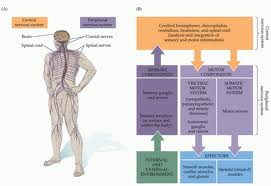
neuroscience and nerve system neuroscience brainSo what are facts about neuroscience and mobile smart technology? Can we learn effectively using smart devices? Well, when our minds are engaged in a simple or complex task, the information relevant to that task is held in our STM or short-term memory. According to the late but great psychologist, George Miller, this mental holding space can only contain four to seven pieces of information at a time. To be retained it needs to be transferred to the LTM (long term memory). We can only move information from short-term to long-term memory using our attention; we have to be paying attention to, and thinking about, a fact or a concept in order for it to be encoded in memory.

To encode properly you need to eliminate distractions, which are often caused by multitasking events. Young people report frequent media multitasking (texting, emailing, surfing the web, Twitter and Facebook) while also doing homework. Their belief is they can do it effectively, but research shows otherwise. In fact, research demonstrates that individuals who multitask the most are actually the worst at it. Whether we’re learning with a tablet, smart device or a book, it’s best to give it our best attention.

The rapid evolution of mobile technology has placed quite a burden on our concentration. The day is constantly being challenged by external sources. Even the most pressing of matters can be interrupted at any moment by a familiar buzzing in the pocket. This gives a friendly nudge to pay attention that the brain responds to and many find virtually impossible to resist; alarmingly even while driving. These all too frequent interruptions, coupled with growing expectations for immediate responses (emails responded to at 2am), will challenge our cognitive control system at its very core.

The cognitive control system is our ability to focus on accomplishing a task in the context of competing demands. You might want to look at a course that explains this in more depth. This special ability is what has allowed humans to achieve remarkable achievements, from developing languages and building complex societies.

It doesn’t matter that we think children are growing up digital natives and somehow addicted to technology. It simply doesn’t change how we come to understand new information. Basic understanding happens when we process new information in terms of its meaning, rather than its surface features. Understanding happens when we connect new information to what we know already.

It seems that the competing noise and multitasking distractions, will have a more significant negative impact for those with undeveloped or impaired focus and cognitive control. Those that easily lose focus such as children and us older adults, or in the presence of neurological or psychiatric conditions like ADHD or Alzheimer’s disease. There is no doubt that we have to be careful about the influence of unending data streams of interference on our minds. We need to make more informed decisions about how best to interact with the technologies around learners and how we use the technology positively every day. Perhaps the BRAIN project will guide us on new ways being effective learners.

The lesson seems to be that when we are engaged in something that requires high quality attention (like one of our excellent express courses in critical thinking we should conduct ourselves in a manner that is most appropriate for how our brains function: in the absolute focus mode.
So it seems that despite all the real concerns, technology is not rewiring young people’s brains or brain washing them. Indeed mobile smart technology must and can be harnessed to improve our minds. This will come as a relief to some and a disappointment to others. This new brain research will shed light on our understanding, our attention and focus systems and better memory that can now be applied to a new generation of humans, not so different from the ones who came before.

Mindfeed ebooks by Diane Shawe

Get a copy of Diane Shawe book from Amazon


 Shawe’s eBooks are available on Amazon right now at: https://www.amazon.com/Diane-Shawe/e/B0052WG8V6

About the Author

Diane Shawe is an author, speaker, trainer, mentor, consultant and entrepreneur with more than 15 years of experience. She has personally trained over 2800 people around the world in a variety of fields and has published a number of works. She has contributed to over 100 Kiva Entrepreneur’s around the world.

She was also one of the producers of a Day time Ladies Talk Show in 2015 and Host of one of the UK’s best loved Annual Hair Extensions Awards.

Diane also enjoys oil painting, sailing and clay pigeon shooting. She focuses on topics that she is passionate about in her writing and has attracted over 36,000 followers on her popular blog.

Media Contact
Company Name: AVPT Short Courses & Hair Extension Training Academy
Contact Person: Diane Shawe MEd
Email: Send Email
Phone: +44 208 1333120
City: London
Country: United Kingdom
Website: http://www.academyexpresscourses.com

Can you train to become a Virtual Tutor?

could you do with some additional income!

Because your skills and experience are worth it

Because your skills and experience are worth it

Teaching and Learning has changed!  
Employment has Changed!
The World has Changed!
Could you manage up to 20 virtual students each month
and help them qualify from your PC
iPad or Tablet?
Using the latest interactive
Learning Management System
we have over 260 specialist on-line
and classroom fast track workshops
all accredited to Global Standards
You may be a professional, or retired
a graduate, personal coach, a consultant
or a teacher wanting to work from anywhere.
  • You make the investment and
  • We will Train you,
  • Register you,
  • and even Pay you when we
  • send students to you throughout the year

This two day workshop will enable you to follow procedure, e-monitor, e-mentor and e-access your students progress and help them to complete their online course using a cutting edge Learning Management System. Statistics have shown that institutions of higher learning increasingly embrace online education, with 65.5 percent of chief academic officers now calling online education ‘critical’ to their institutions! long-term strategy, an opinion that’s risen more than 15% over eight years.

After you qualify you will be able to work with our students online as a one of our Virtual Tutor Facilitators using your Global Accredited certificate by the IAO.


Turning 50 isn’t the end of a business career – new wave of olderpreneurs

Get qualified in days not years

Get qualified in days not years

article by Diane Shawe M.Ed

Turning 50 isn’t the end of a business career – it’s the beginning. And an ever-growing wave of ‘olderpreneurs’, starting a business have 70% chance of surviving their first five years compared with only a 28% survival rate for those younger than them.

Nearly half the self-employment population is over 50, and one in six new businesses started in the UK are set up by post-half-centurions.

So what’s fuelling the entrepreneurial impetus of the ‘silver startup’, and why are they doing so well?

Necessity

The over-50s age group has been particularly hard-hit by the recession. Last year, the Office of National Statistics (ONS) revealed 28% of those aged between 50 and state pension age were out of work – compared with only 20% of those aged under 50.

Why? One of the biggest factors is the rife ageism that permeates practically every industry in the UK, that anyone over 50 who’s been forced to look for employment will testify to with a weary nod. The ONS estimates those who lose their job aged 50 or over have only a 10% chance of being re-employed.

Deciding to use their money from redundancies to fund ta company, over the course of two years the payout had trickled in its entirety into the business. But it was worth the investment – and they often don’t have to rely on the ineffective banks at the moment.

Become a Virtual Teacher Facilitator

Become a Virtual Teacher Facilitator

New challenge

At a fundamental level, sometimes people just want to do something different in their later years.

It’s interesting that recent YouGov and Standard Life research found the average age at which people feel totally confident in their working skills is 37, while the more elusive sense of fulfilment peaks at 50. Perhaps this climax of achievement and sense of ability leads to a need for a new direction, a new challenge, once a person passes the half-century mark.

If  we take a look at the Government statistics below it will give us an overview  Source Office of National Statistics

Summary of labour market statistics published on 23 January 2013

Between June to August 2012 and September to November 2012:

  • the number of people in full-time employment increased by 113,000,
  • the number of people in part-time employment fell by 23,000,
  • the number of unemployed people fell by 37,000, and
  • the number of economically inactive people, aged from 16 to 64, fell by 13,000.

Between September to November 2007 and September to November 2012:

  • the number of people in full-time employment fell by 341,000,
  • the number of people in part-time employment increased by 660,000,
  • the number of unemployed people increased by 854,000, and
  • the number of economically inactive people, aged from 16 to 64, fell by 75,000.

Chart 1: Changes in number of people in the labour market between September to November 2007 and September to November 2012, seasonally adjusted

Changes over 5 years

Source: Labour Force Survey – Office for National Statistics

The employment rate for those aged from 16 to 64 for September to November 2012 was 71.4%. This was up 0.1 percentage point on June to August 2012 and up 1.1 on a year earlier, but it was lower than the pre-recession peak of 73.0% recorded for March to May 2008. The number of people in full-time employment aged 16 and over increased by 113,000 between June to August and September to November 2012 to reach 21.57 million but the number of people in part-time employment fell by 23,000 to reach 8.11 million. Compared with a year earlier:

  • the number of men in full-time employment increased by 237,000,
  • the number of men in part-time employment increased by 95,000,
  • the number of women in full-time employment increased by 77,000,
  • the number of women in part-time employment increased by 144,000, and
  • the total number of people in employment increased by 552,000, the largest annual increase since 1989.

Chart 2: Changes in number of people in employment between September to November 2011 and September to November 2012, seasonally adjusted

Annual employment changes

Source: Labour Force Survey – Office for National Statistics

The unemployment rate for September to November 2012 was 7.7% of the economically active population, down 0.1 on June to August 2012 and down 0.7 on a year earlier. The number of unemployed men aged 16 and over fell by 37,000 between June to August and September to November 2012 to reach 1.41 million, but the number of unemployed women was unchanged at 1.08 million. The number of women unemployed for up to six months increased by 26,000 to reach 571,000. This may reflect changes to the benefits system resulting in more single mothers starting to look for work (see Claimant Count section of this Bulletin for further details).

The economic inactivity rate for those aged from 16 to 64 for September to November 2012 was 22.5%, unchanged on June to August 2012 but down 0.7 on a year earlier. The number of economically inactive people aged from 16 to 64 fell by 13,000 between June to August and September to November 2012 to reach 9.03 million.

The number of people claiming Jobseeker’s Allowance fell by 12,100 between November and December 2012 to reach 1.56 million.

Between July to September 2012 and October to December 2012, the number of vacancies increased by 10,000 to reach 494,000. This is the highest number of vacancies since October to December 2008, but it is 200,000 lower than the pre-recession peak of 694,000 recorded for January to March 2008.

Between September to November 2011 and September to November 2012, total pay for employees in Great Britain rose by 1.5%. This annual growth rate for earnings was lower than the increase of 2.7% in the Consumer Prices Index between November 2011 and November 2012.
Source Office of National Statistics

Breaking News….. Standby for the roll out of Master Practitioner VTF

master vtf by AVPT Global

AVPT Global about to launch Master VTF practitioner Course

The ultimate course that over an intense and amazing week will develop all the skills necessary to work around the world training new Virtual Tutor Facilitator in their new career. Course topics include: Advanced Facilitation, Body Language, Teaching & Learning Skills, Mediation, Communication, Presentation Excellence and Assessment and online LMS systems.

It is brand new and uses all the latest techniques, theory and experience to deliver simply the best training course (train the trainer) out there. Graduates will get to spend a full day shadowing the professionals and learning the insight track for delivering excellence in learning.

The course will allow the trainers to deliver the workshops anywhere in the world having gained their IAO  global accredited certificate. The demand for such a course has been intense and we are delight to be taking enquiries and reservations for the first course dates. Become the best in the field, be the person you want to be and never except anything less than excellence.

To receive the latest updates for the launch of the  Master Practitioner VTF Course click here

Why Stress can stop you from achieving excellence in 2013

managing your stress

managing your stress

Article by Diane Shawe M.Ed.

Take 5 minutes a day to keep your stress level down

Everything seems much faster, urgent and possibly unfulfilling! Just after Christmas and heading into the New Year it can often be a stressful time for lots of people for lots of reasons.

Stress is created by worrying about things in the future or things that have already happened, both of which you cannot change at the very moment you are worrying about it.

Before you read any further do this little test.  ‘At this very very moment whist you are reading this is there a problem affecting you reading this article at this moment in time that is stopping you from reading it? If your answer is ‘no’ then this is because you are living in the ‘NOW’

Living too much into the future or reliving the past are both causes of fear and pain. You would probably find yourself concerned with some of the following thoughts…

  • How can I stop the pain?
  • How can I switch your mind off,
  • How can I stop worrying?
  • How can I relax?
  • How can I be happy?

Well I invite you to explore two words ‘acceptance’ and ‘surrender’ a good place to start.

Become fully present is very empowering and helps you live in the higher order of thinking.

If only our lives was like typing when we can simply undo, delete or Hyperlink to a quick useful reference but alas, lots of things are unavoidable in life.  Never before has it become more important to find ways to decrease and prevent stressful incidents and decrease negative reactions to stress, especially as they can lead to short or long term illnesses.

Here are some of the things that can be done instantly by just remembering to be conscious of them.

Managing time

Time management skills can allow you more time with your family and friends and possibly increase your performance and productivity. This will help reduce your stress.

To improve your stress management:

  • Save time by focusing and concentrating, delegating, and scheduling time for yourself.
  • Keep a record of how you spend your time, including work, family, and leisure time.
  • Prioritise your time by rating tasks by importance and urgency.
  • Redirect your time to those activities that are important and meaningful to you.
  • Manage your commitments by not over- or under committing. Don’t commit to what is not important to you.
  • Deal with procrastination by using a day planner, breaking large projects into smaller ones, and setting short-term deadlines.
  • Examine your beliefs to reduce conflict between what you believe and what your life is like.
  • Build healthy coping strategies

It is important that you identify your coping strategies. One way to do this is by recording the stressful event, your reaction, and how you cope in a stress journal. With this information, you can work to change unhealthy coping strategies into healthy ones-those that help you focus on the positive and what you can change or control in your life.

Lifestyle

Some behaviors and lifestyle choices affect your stress level. They may not cause stress directly, but they can interfere with the ways your body seeks relief from stress. Try to:

  • Balance personal, work, and family needs and obligations.
  • Have a sense of purpose in life.
  • Get enough sleep, since your body recovers from the stresses of the day while you are sleeping.
  • Eat a balanced diet for a nutritional defense against stress.
  • Get moderate exercise throughout the week.
  • Limit your consumption of alcohol.
  • Don’t smoke.

Social support

Social support is a major factor in how we experience stress. Social support is the positive support you receive from family, friends, and the community. It is the knowledge that you are cared for, loved, esteemed, and valued. More and more research indicates a strong relationship between social support and better mental and physical health.

Changing your thinking pattern

When an event triggers negative thoughts, you may experience fear, insecurity, anxiety, depression, rage, guilt, and a sense of worthlessness or powerlessness. These emotions trigger the body’s stress, just as an actual threat does. Dealing with your negative thoughts and how you see things can help reduce stress.

  • Thought-catching helps you stop a negative thought to help eliminate stress.
  • Disproving irrational thoughts helps you to avoid exaggerating the negative thought, anticipating the worst, and interpreting an event incorrectly.
  • Problem solving helps you identify all aspects of a stressful event and find ways to deal with it.
  • Changing your communication style helps you communicate in a way that makes your views known without making others feel put down, hostile, or intimidated. This reduces the stress that comes from poor communication. Use the assertiveness ladder to improve your communication style.

Why Continued Personal Development is important

Lifelong learning it’s important to your continued growth and smiley to core with lives every changing environment, circumstances and economical. Everyday life can often present challenges and like any thing in life if you don’t equip yourself with the right tools trying to fix the problem with the wrong tools can itself be the greater source of frustration.

www.expressingtrainingcourses.com

Four Pillars that underpin buyers requirements for eLearning

Get qualified in days not years

article by Diane Shawe M.Ed

Whilst I am in the industry and excited by the latest trends in e-learning  through blended Learning Management Systems (LMS)  learning being hugely of interest at present, I believe that the four  pillars that go to underpin the buyers requirements and therefore still define the industry offerings are centered around the following:

• Compliance and accreditation
• Scalable and flexible whilst achieving a real reduction in Cost
• Improving , track and measuring Learners performance
• Real time management, alignment and communication to support ongoing changes.

The ability to track and report learner performance remains upper most in many procurers mind.

It will become increasingly important to have specified learning strategy which can deliver effectively against all of these requirements, and getting the “e-learning mix” of technologies obviously including content, collaboration and communication environments (social learning) and control mechanisms will be the key to further industry growth.

Under-pining these trends we are seeing growing interest in how e-learning can address softer skills and this is why we have concentrated our LMS content to this area of learning.

Some vendors are following the vertical market and configuring the offer to meet specific needs, others are differentiating by adding social media and social learning functionalists, and others such as us are aligning the LMS to the latest technologies being colonised by the e-learning industry – mobile/smart devices and video driven content. The trend from the USA is strongly toward talent management and we are often lagging behind.

The smart vendors in my view are aligning and integrating with other solutions: HR, ERP, CRM etc…. Content or Content, which to choose…..?

These developments can only be positive for the industry, as the demand for quality and quantative content will grow and grow.

My one but final view is that we will progress from blending to mixing the content provision as this will be the key challenge to the e-learning industry. The importance of content won’t go away, its just changing faster becoming more “Re-purposable” , “Flexible”, “Interoperable”, and “Accessible” learning content!

Now get this, I am so loving the fact that on its way to us is 3 Dimensional technologies, simulation, holographic all of which will increase the demand for new genres of learning content into a learning reality!

http://www.expresstrainingcourses.co.uk