Category Archives: assisted technology

Check out Merchant Cash Advance Services for small businesses

365 business financeMerchant Cash Advances, also known as Business Cash Advances, are a quick and easy way to convert your future credit and debit card sales into immediate cash to spend on any of your business’ requirements. They are a simple alternative to unsecured bank loans and overdrafts.

At 365 Business Finance, they’ve helped businesses across many sectors get the finance they need. they’ve provided cash advances to cycle shops, convenience stores, butchers, greengrocers,  pet care stores, garden centres, sports shops,  off-licenses, shoe repairs, cash and carry, and just about any other business that accepts credit and debit cards.

As a business owner, are you considering expanding  your store or making costly refurbishments?  Are your suppliers  unwilling to provide you with the credit line that you previously received? Or maybe  you need to purchase stock ahead of a busy sales period? Perhaps you’d like to launch a new website or run an advertising campaign? Whatever the reason,  you need cash now, but you’re not sure how to proceed. You’ve thought about a small business loan, but some banks have imposed tighter restrictions, some require security and detailed business plans,  and even if you do qualify, you may have to wait for months to get the funds.

With our Cash Advances,  you can avoid some of the hassles of a traditional business loan by utilising your future credit and debit card sales to secure thousands of pounds of ongoing finance for your business. Our unique repayment plan takes a percentage of your daily card sales (typically between 5% and 20%) until the advance is paid off. A traditional loan requires fixed monthly payments irrespective of how your business is performing, but our financing process is designed to match your business’s performance, so during quieter periods, you pay back less. The process happens automatically so there isn’t an extra bill to keep track of each month. Our application process is fast and simple, and you can have your money in days.

business-other

Here are a few examples of how our cash advances can be utilised:

  • Expansions;
  • Refurbishments;
  • Equipment purchases;
  • Bulk stock purchases;
  • Marketing and advertising;
  • Website development;
  • Recruiting staff;
  • General working capital needs

3 Steps to Growing Your Business

Step one

1. Monetise your future card sales

They will  buy a fixed amount of your future (credit and/or debit) card sales

Step two

2. Get your cash in days

You’ll receive the lump sum directly into your bank account to use on any business requirement.

Step three

3. Watch your business grow

You repay a small  percentage of your card sales. Repayments are  automatically processed and hassle-free.

Learn More….

Click to Check our our Budgeting & Accounts Soft Skills courses for your business.

1 day social media and marketing course

6 Things the Most Influential People on Social Media Do

Train to become a Linkd in specialist

Train to become a Linkd in specialist

How do you earn respect, stand out, and get noticed in noisy social-media circles? Take a cue from the Web’s biggest influencers.

Guest Blogger 

Influencers are among the most magical, powerful creatures in social media.

Within specific niches or across large audiences, they have the power to shape how people think about an issue, start important conversations, make businesses stand up and take notice, and more.

Outside of having a large following, how do they do it? And how did these influencers amass the following they have in the first place?

The ability to stand out in noisy social circles helps influencers build their audience and connect with them over and over again. It keeps them relevant. It keeps them influential.

Here are the six things influencers do to stand out:

1. They’re Superconnected and Almost Always On

Brand advocates, superfans, loyalists–influencers of all stripes–are hyperconnected to their audience. They have a passion for their topic of choice, which means they’re always on and use multiple devices to ensure they’re connected throughout the day.

Influencers use tools such as Topsy, Trackur, and Social Mention to find interesting conversations, stay on top of breaking news in their niche, and help them manage and schedule content for maximum exposure.

Influencers treat social like their j-o-b. (and sometimes it is). They get it; you have to invest time and money in yourself to help you scale if you are going to stay superconnected and become an influencer.

2. They Make Boring, Dry, or Otherwise Uninteresting Topics Fascinating

When everyone is saying the same thing, who grabs your attention? Influencers are the people coming up with a creative take on a topic, saying something different or contrary or funnier, etc.

Take Gretchen Rubin, for example. Rubin is a popular author, blogger, and speaker, but then a lot of people write and speak. How is she also one of LinkedIn’s 150 Most Influential People?

For one, while everyone else was writing self-help books, Rubin decided to parody them with her first book, Power Money Fame Sex: A User’s Guide.

See, while everyone else was trying to tell people how to be happy, Rubin decided to take a quirky, self-deprecating, and humorous approach.

When she tweets to her 92,000-plus followers, they listen and share because she’s not spouting the same old conventional wisdom. Her take is unique and makes something that could be tedious–finding happiness–an adventure in which her social connections can all participate.

3. They Create a Ton of Awesome Content

The killer content top influencers are banging out on a regular basis really helps them stand out in a sea of noise, regardless of the topic.

Influencers are great at creating content that people can’t help sharing.

They might do this by way of original research, powerful commentary, sharing a unique take on the news, turning information into stunning visuals, hosting webinars or online chats, or blogging prolifically.

Whichever medium they’re using, influencers love to create awesome content, and they have mastered techniques that allow them to scale their efforts. This might mean partnering with others to increase their reach and maximize their time, or building a great team around them to assist in their efforts.

There are a lot of people out there with something interesting or brilliant to say. The ones who garner influence, though, are incredibly skilled in how they get their message across to the greatest audience possible.

1 day social media and marketing course

4. They Know Who You Are and Want You Want

Influencers don’t operate in a vacuum, churning out social updates and content like traditional broadcasters. They know their audience and what you like–in fact, they often know what you’ll like before you do.

Knowing your audience goes far beyond demographics, and influencers totally get it. They listen, engage, and converse so they can truly understand what drives people. They’re thirsty for audience insights that will help them create that next amazing piece of content, or fuel their next groundbreaking research project.

They don’t get bogged down in popular opinion or go with the crowd, because they know you’re looking for something different. They know this because you’re telling them in a thousand different ways, and they’re actually paying attention.

It might be through social-media activity and sentiment tracking. It could be through website analytics. It may very well be gleaned through actual conversations with the real people who hang on their every word.

The difference is, they actually care about what would be most useful, helpful, or entertaining for you and go from there.

They’re more concerned with what you want to hear than what they want to say.

5. They’re Hip, They’re Happening, They’re Current

And they can’t help being all of these things, because they are so in tune with the topic on which they’re influential.

They read voraciously. They eat data and facts for breakfast. Influencers eat, sleep, and breathe their passion and are always at the forefront of the industry.

When everyone else is talking about what happened this morning, they’re already talking about what’s going to happen tomorrow. And they know what’s going to happen tomorrow, because they know just about everything there is to know about what’s already happened, who is working on what, which technologies or developments are on the horizon, and more.

6. They’re Trustworthy

And this is huge, massive, critical! They don’t waste words, publish fluff pieces, tell half-truths, or otherwise lead their audience astray.

People elevate others to the level of influencer because they trust them. It’s as simple as that.

It can take years to build that trust and one poorly thought out statement to break it, so influencers are incredibly careful about what they’re putting out to their networks.

They stand out in a sea of noise because time and again, they’ve proven their voice is worth listening to and their advice worth taking.


Call us to enquiry about our soft skills courses

Call us to enquiry about our soft skills courses Diane Shawe at express courses, London UK

source: http://www.inc.com/larry-kim/6-things-influencers-do-to-stand-out-in-social-media.html#ixzz2zldfZm9Q

CPD pending? Pressed for time?

CPD on the move

CPD on the move

Continued Professional Development is entering a new phase for UK Law Firms.

At the Academy of Vocational & Professional Training we understand that you firm is often pressed for time, so nudge thinking, heuristic learning, or brain plasticity are great but, your law firm already have complex challenges, so we are going to keep it simple.

We train in soft skills courses like HR, PR, Management, Technology and Social Media to name but a few. CPD approved by the SRA to help you and your staff meet the challenges expected of skilled professionals.

Doing your CPD the smarter way

Doing your CPD the smarter way

You can study on the move using your smartphone, tablet or at our intense 1 day workshops.

Give us a call on 0203 551 2621 to request a quote or visit our http://www.avptglobal.com

How can employers help keep their work force healthy so as to avoid high healthcare costs?

5-natural-ingredients-for-preventing-lung-disease-expresstrainingcourses.co.ukWhether you’re talking about asthma, cancer, COPD, or even rare conditions, lung disease is on the rise.

The experts are calling lung disease a “time bomb waiting to explode.”

sourced: by Diane Shawe from the  Institute for natural healing

Whether you are creating a workplace wellness program from scratch, or enhancing what you already have, you’re already on the right track! With increasing costs of health care, a shrinking workforce, and aging workers, a savvy workplace understands the value in supporting workers to improve their conditioning and to live a fitter lifestyle.

For instance you could help by engaging with your workforce through your company blog by blogging about five natural ingredients to keep their lungs young and healthy as follows:

1. Milk Thistle: You might already know that it has the power to help your liver regenerate its cells. But milk thistle contains silymarin. It’s a compound that flushes toxins out of your liver. It also helps prevent lung cancer from forming and spreading.

Milk thistle also contains silibinin. Like silymarin, it protects you from lung cancer. But even better. These cancer cells spread quickly to other organs in your body. And they can become drug resistant. Silibinin doesn’t only reverse drug resistance in these cells… It causes natural cell death in cancerous lung tumors.2 You can find milk thistle extract pills in health stores and online. Organic milk thistle tea is another option.

2. Fiber: Oddly enough, fiber is critical to your lung health. It may help relieve symptoms of–and even prevent—asthma.

A high-fiber diet changes the makeup of your gut bacteria. The good bacteria feed on fiber. When you keep these bacteria well-fed, they produce short-chain fatty acids. These fatty acids reduce inflammation and irritation in the lungs. But don’t add grains to your diet for more fiber. They actually increase the amount of inflammation in your body—including your lungs. Instead, eat more organic artichokes, peas, raspberries, and blackberries.

3. Ginger: It’s full of antioxidant power. But two of these antioxidants in particular protect your lungs against inflammation and damage. Gingerols help clear your lungs by reducing the amount of mucous they produce.3 And 6-shagaol, the compound that gives ginger its flavor, stops bronchial tubes from tightening.4 This keeps airflow open and easy.

Ginger can be pretty intense if you aren’t used to it. Add it to your diet slowly if you don’t eat it on a regular basis. When it comes to ginger, fresh is always better. Cutting up some fresh ginger and adding it to a meal gives you antioxidant power and extra flavor. You can also juice with it or use it to brew your own tea to help soothe your lungs when you have a cough.

4. Broccoli Sprouts: Broccoli sprouts are rich in vitamins A, K, and C. But they also contain sulforaphane. It’s a compound that helps you fight the inflammation that causes asthma. One study found that it helped restore defective white blood cells in the lungs. More white blood cells mean less bacteria and inflammation.5

Broccoli sprouts have about 50 times more sulforaphane than regular broccoli. But you may not be able to find them at your grocery store. If that’s the case, look at your local farmer’s market. Or you could grow them yourself. Try them steamed or throw them raw into a salad. For convenience, you can also find broccoli sprout extract as a supplement online.

5. Bromelain: It’s an enzyme used to reduce inflammation of the sinuses after surgery. But it’s also a natural way to treat pulmonary edema.6 This condition prevents the fluid from draining out of your lungs. The result? Shortness of breath. If left untreated, it can cause deadly infections. One study found that bromelain reduces the amount of inflammatory neutrophils in the lung by up to 85 percent.7

The best way to start getting more bromelain in your diet is by eating fresh pineapple.8 And lots of it. Most of the bromelain in a pineapple is in the stem. Or you can supplement.

Pollution and secondhand smoke aren’t the only things that can irritate your lungs. Inflammation is a major factor in the development of most lung disease. Lowering it will help ensure that your lungs are working at their best. Using these five natural solutions will help keep you free of disease—and breathing a little easier.

So you can see the benefits of preparing a workplace wellness program.

Creating a Workplace Wellness Program

Whether you are creating a workplace wellness program from scratch, or enhancing what you already have, you’re already on the right track! With increasing costs of health care, a shrinking workforce, and aging workers, a savvy workplace understands the value in supporting workers to improve their conditioning and to live a fitter lifestyle. We have a  two-day course includes all aspects of designing or upgrading a workplace program, from concept through implementation, to review.

AVPT’s two-day workshop will help you  to:

o   Describe the necessity of workplace wellness programs
o   Create program elements that reflect the needs of employees and the objectives of the organisation
o   Select program elements that fit the context of current operations
o   Establish implementation and evaluation strategies

Getting you qualified in days not years!

Getting you qualified in days not years!


other article you might be interested in : Dangers of Hypertension to Founder owners of SME.

Does nine different kinds of intelligence make you any smarter?

In this article, I will talk about the different ways in which Multiple Intelligence Theory can be implemented in e-Learning to help the learner effectively acquire, retain, and utilise the information being provided within the e-Learning course.

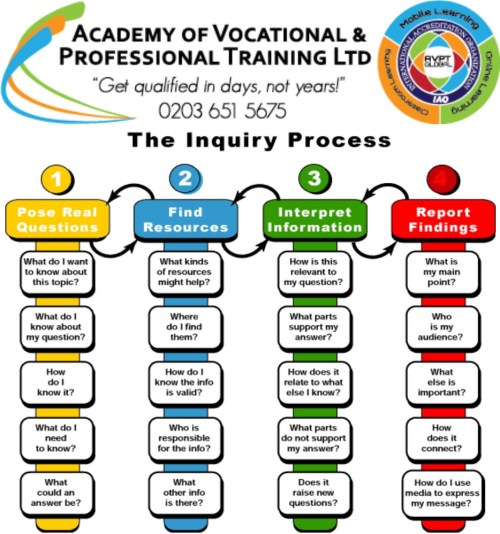
the enquiry process to soft skills training april 2014

The Multiple Intelligence Theory was developed by Dr. Howard Gardner in 1983. Dr. Gardner, a noted psychologist and professor of neuroscience from Harvard University, suggested that every human being interacts with their environment differently. We each possess nine different kinds of intelligence, but our experiences, cultural beliefs, and knowledge base determine their exact configuration.

What is “intelligence”, according to Multiple Intelligence Theory?

According to Gardner, there are three key elements that determine a person’s intelligence:

  1. The ability to create a service or product that will be valued in the person’s society of culture.

  2. A skill set that allows the person to solve real world problems that they may encounter in life.

  3. The ability to potentially create new solutions for problems or to utilize existing solutions. This typically involves the acquisition of new knowledge. 

Multiple Intelligence-Based Activities in eLearning

Multiple Intelligence Theory can be implemented in eLearning based upon the nine multiple intelligences. Let’s take a closer look at each category and which multiple intelligence-based activities can be utilized during instructional design to create the best possible eLearning experience for the learners:

  1. Musical (or Rhythmic) Intelligence
    This intelligence involves the capacity to think and learn in terms of music and rhythm, and to recognize and hear patterns. An activity that would appeal to this type of intelligence is a lesson that includes music or sound, such as a multimedia presentation. Try to use music that emphasizes the subject matter and creates a more immersive experience for the learner. Since there is more of an auditory aspect with this particular intelligence, lectures can also be very helpful. People who demonstrate a high degree of musical intelligence may be ideally suited for musical professions, such as composing or playing an instrument.

  2. Linguistic Intelligence
    This intelligence is associated with expression through language. These people tend to be able to eloquently convey their thoughts and to understand the words of others. Writers and speakers typically display a high degree of this sort of intelligence. Any activities that include discussion, such as online forums or group-based scenarios, are ideal for individuals who lean more toward linguistic intelligence.

  3. Mathematical (or Logical) Intelligence
    This involves the ability to identify principles or structures within a system. This intelligence is often associated with the logic or the manipulation of numbers.  Activities ideally suited for this intelligence may include diagrams, charts, or tables. Critical thinking scenarios are also useful with this group. Accountants and researchers often have a high level of mathematical intelligence.

  4. Kinesthetic (or Bodily) Intelligence
    Body Intelligence involves the use of a person’s entire body to figure out solutions or to create something. People who demonstrate a high degree of kinesthetic intelligence may be ideally suited for performing arts professions, such as dancing, or careers that require an innate knowledge of one’s own body, such as a doctor or athlete. Activities that are best suited for this sort of intelligence include games that involve hand-eye-coordination or interactive scenarios that require physical involvement. The thing to keep in mind about this group is that they are best able to learn when muscular movement is involved. So, include activities that require movement and physical response.

  5. Spatial Intelligence
    This intelligence pertains to a keen sense of space and how one can navigate those spaces. Activities that involve flow charts and graphics are ideal for this intelligence group, as well as games or multimedia that is visually appealing.  Architects, pilots, and sailors often have a high degree of spatial intelligence.

  6. Intrapersonal Intelligence
    This involves an in depth understanding of oneself, such as what you can accomplish and how you react to certain situations. As such, individuals with high intrapersonal intelligence often have a sense of what they should avoid and what they want to achieve in their lives. Professors and philosophers often possess high degrees of intrapersonal intelligence. Activities such as collaborative learning exercises (online forums) and chat programs enable intrapersonal intelligence learners to help others and to share experiences and ideas. This category responds well, first and foremost, to activities, which require introspection.

  7. Interpersonal Intelligence
    This is the capacity to understand and learn from others. People who demonstrate a high degree of intrapersonal intelligence may be ideally suited for service professions, such as teaching or politics. Those who identify more with this category of intelligence may benefit from group discussion activities and in depth questions that make them fully explore the topic. What’s important to remember about interpersonal intelligence is that these individuals are sensitive to others’ moods and feelings. They work well in-group settings and are often able to learn more effectively when collaborating.

  8. Naturalist Intelligence
    This intelligence involves the capacity to differentiate between living organisms and to view the connection between all natural things.  People with a high degree of naturalist intelligence usually have a close bond with nature. Botany and biology are two career fields that closely identify with this sort of intelligence. Activities that involve classification or organization appeal to these individuals.

  9. Existential Intelligence
    This particular intelligence was added later by Gardner, and is not commonly associated with learning environments, as it is geared more toward spiritual and philosophical views. For example, someone who has a high degree of existentialist intelligence may have a tendency to pose questions about life’s purpose or death. 

It’s important to note that instructional designers should not feel obligated to incorporate all of these multiple intelligence-based activities into their eLearning courses, just that it may be beneficial to offer a variety of multiple intelligence-based activities to more effectively illustrate the subject matter. If you are able to offer learners a diverse set of learning tools and eLearning strategies, then you gain the ability to increase comprehension and retention, not to mention enhance the overall eLearning experience.

Call us to enquiry about our soft skills courses

Call us to inquiry about our soft skills courses

Have you every wondered why people shy away from solving problems?

banner bbb aug 2013 avptglobalDo you spend a lot of time frowning?  are you even aware that you frown?

article by Diane Shawe M.Ed
CEO Academy of Vocational and Professional Ltd.

Do you think more people focus on the half empty glass or the half full. Which are you? At times, it would seem that we have more problems then we can handle, but this all boils down to self responsibility critical thinking skills and optimism. Taking the bull by the horn can be a scary things, so check out a few well know secrets?

1.      Smile!  It is impossible to hold a frown and smile at the same time, try it, you will be amazed at how your brain will help you look and keep on the bright side of life.

2. Separating negative feelings from positive thoughts. This is an important step in solving problems. Only after you have cleared your mind with unnecessary thoughts can you start solving your problems accordingly.

3.      Treat each problem as a challenge an opportunity for self-improvement.

4.      Lose the scapegoat attitude. Are you pointing your finger or blaming others for mishaps? Take responsibilities for your mistakes. No one is perfect, so never put the blames on others unless your trying to say that they are much smarter because they got you to do something you did not intend.

5.      Commit your problem with a pen and paper, and rate the depth of the problem and state the worse that could happen. Face the fear and then write down all the options of solving it.

6.      Keep a journal and treat it as a “secret friend” who is always willing to listen to your grievances. Write your feelings freely.

7.      Develop a noteworthy hobby, for this will help you lessen or minimise stress in your life.

8.      Take time off from work and create variations of your daily schedule. Relax and check out the best movies in town. Travel and meet new wonderful people. You will find these activities worthwhile in the long run.

AVPTGLOBAL almost 400 courses all globally accredited

AVPTGLOBAL almost 400 courses all globally accredited

 4 Steps problem solving tools

1.      To determine the root cause of the problem. Ask a question, answer it, then ask why, answer that, then ask what if, and so on until you run out, that might likely be the root of the problem.

2.      Draw up a strategy, then act upon it. (Pretend you was advising a friend and follow your own advice)

3.      Give yourself a deadline, and reward yourself when you have completed the task

4.      Reflect so you can avoid repeating the same mistakes .

Problems are problems. They are there not to annoy you; but problems are created when you fail to act upon them. Learn to  Let go and you will free yourself of  worry. Remember, less worries mean less stress, so you won’t just spend your time looking at problems, but working to solve them.

If you think that you really want some time out because of problems, visit the next room called “improvement.”

Why not take a look at some of our problem solving courses now.  Click here

AVPT HAIR EXTENSION DEPARTMENT LOGO JULY 2013

Importance of developing a strategic approach to learning and harnessing the internal skills

Download your free copy today

Download your free copy today

Corporates, enterprises and charities all wish to run their operations at the minimum costs allowed.

Article  by Diane Shawe M.Ed
CEO of AVPTGLOBAL

We all recognise that in today’s environment, business moves faster than ever. Most organisations now recognise the importance of developing a strategic approach to learning and harnessing the internal skills of their teams. Moving away from more tactical based activities associated with training such as measuring skills-based behaviours, to focusing on acquisition of knowledge and learning transfer that result in individual and organisational performance improvements.

E-learning has the potential to fully integrate the benefits of personal freedom with connectivity (belonging to a purposeful group of learners). From an educational perspective the “e” in e-learning stands for more than electronic; it can also stand for extending and enhancing the learning experience.

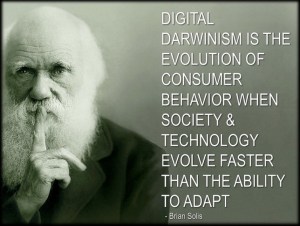
Quote by Darwin rapid-technology-social-changeNew market opportunities open and close at blinding speed, new competitors emerge overnight, product life cycles are getting shorter, and customers are more knowledgeable and sophisticated. This fast-changing environment has led to requirement to change learning and training.  However more often than not, the task of aligning the learning organisation to the business can be challenging and the perception of how the business views the learning organisation in terms of aligning to strategic initiatives is different to how the learning organisation perceives itself.

Downsizing has resulted in a mass drainage and outflow of skills as employees or contractors are let go.  To ensure that an organisation can compete globally and remains at par with the technological changes in the global market committing to the investment of on-going skill training is often viewed as a potential unnecessary incision into the bottom line.  This continued way of thinking comes at a cost because of the risks involved in

developing the professionalism of the staff (Lucey, 2004). The fear of poaching of the staff by other companies after significant investment has been made in upskilling and training from the said company is of real concern, because skilled, experienced staff when pulled in can respond faster to problems brought forward by the customers and ensure high productivity and efficiency in the long run (Corbett & Huggett, 2009).

With the explosion of mobile technology, organisations need to take advantage of the benefits, scalability, and viability of using mobile e-learning, using smart phones, tablets, and notepads that offer a blended solution  to read more click to download white paper…

AVPTGLOBAL almost 400 courses all globally accredited

AVPTGLOBAL almost 400 courses all globally accredited

12 Benefits of Mobile Learning

Next generation of mobile learning

Learning on the move with
http://www.avptglobal.com

Rapid technology change is here to stay.

article by Diane Shawe M.Ed  CEO Academy of Vocational and Professional Training.

No sense in trying to change the way the world wants to learn. Access to broadband, smartphone, the growth of the mobile tablet has changed the face of how we access knowledge.

But rather than simply program designers and consumers–or even ecological threats–this kind of change also introduces significant threats  or should we say opportunities to education. Throughout the Industrialised delivery of education, there is likely very little that can be actively done to reduce the perceived threats by many faculty heads, especially as the advancement is firstly driven by economic issues. But we can begin to understand them better and view them as opportunities.

Watch the Hard Facts behind Soft Skills by Professor James Heckman

As learning practices and technology tools change, mobile learning itself will continue to evolve. For 2013, the focus is on a variety of challenges, from how learners access content to how the idea of a “curriculum” is defined.

The rapid growth of Technology like tablets, smartphones, apps, and access to broadband internet are lubricating the shift to mobile learning, but a truly asynchronous mobile learning environment goes beyond the tools for learning to the lives and communities valued by each individual learner.

PA9C1822
Training for the jobs yet to be created

It is only within these communities that the native context of each learner can be fully understood. Here, in these communities that are both local and digital, a ”need to learn” is born, knowledge accrues incrementally, progress resonates naturally, and a full picture of each learner as a human being fully emerges as we embark on the true essence of Life Long Learning.

1. Access – Aids voluntary and active learning

A mobile learning environment is about access to content, peers, experts, portfolio artifacts, credible sources, and previous thinking on relevant topics. It can be actuated via a smartphone or tablet, laptop or in-person, but access is constant–which in turn shifts a unique burden to learn on the shoulders of the student.

2. Metrics – Performance of Knowledge

As mobile learning is a blend of the digital and physical, diverse metrics (i.e., measures) of understanding and “performance of knowledge” will be available. It is important that mobile learning supplies and validate that learning has taken place.

3. Cloud – Increased collaboration

The cloud is the enabler of “smart” mobility. With access to the cloud, all data sources and project materials are constantly available, allowing for previously inaccessible levels and styles of revision and collaboration. This also reduces the burden of data storage in the immediate device enabling speed of access to be maintained. Also no complex disaster recovery procedures.

4. Transparent

Transparency is the natural by product of connectivity, mobility, and collaboration. As planning, thinking, performance, evaluation and reflection are both mobile and digital, they gain an immediate audience with both local and global communities through social media platforms from twitter to facebook, linkedin to Pinterest.

5. Play – Learning by doing

Play is one of the primary characteristics of authentic, progressive learning, both a cause and effect of an engaged mind. In a mobile learning environment learners are encountering a dynamic and often unplanned set of data, domains, and collaborators, changing the tone of learning from academic and compliant to personal and playful means that soft skills training is becoming even more apparent.

6. Asynchronous Learning

Among the most powerful principles of mobile learning is asynchronous access. This unbolts an educational environment from a school floor and allows it to move anywhere, anytime in pursuit of truly entrepreneurial learning. It also enables a learning experience that is increasingly personalised: just in time, just enough, just for me reducing the length of time one can qualify.

7. Self-Actuated

With asynchronous access to content, peers, and experts comes the potential for self-actuation. Here, learners plan topic, sequence, audience, and application via facilitation of teachers who now act as experts of resource and assessment.

8. Divergent Thinking

With mobility comes diversity. As learning environments change constantly, that fluidity becomes a norm that provides a stream of new ideas, unexpected challenges, and constant opportunities for revision and application of thinking. Audiences are diverse, thinking is diverse, as are the environments data is being gleaned from by both the student and the teacher.

9. Curation – Evidence storage and Management

Apps and mobile devices can not only support curation, but can do so better than even the most efficient teacher might hope to do. By design, these technologies adapt to learners, store files, compare and evaluate, publish thinking, and connect learners, making curation a matter of process rather than ability.

10. Blending the Learning Styles

A mobile learning environment will always represent a much better path to the whole concept of blended learning. –physical movement, personal communication, Learning styles and digital interaction.

11. Always-On – Classroom never full

AppleAVPTGlobalLogo516Always-on 24hr learning is self-actuated, spontaneous, iterative, and recursive. There is a persistent need for information access, cognitive reflection, and interdependent function through mobile devices. It is also embedded in communities capable of intimate and natural interaction with students.

12. Authentic Learning

All of the previous 11 principles yield an authenticity to learning that is impossible to reproduce in a classroom using the industrialised teaching methods. They ultimately converge to enable experiences that are truly personalised changing the way we think about learning and teaching.

AVPTGLOBAL almost 400 courses all globally accredited

The Academy Of Vocational And Professional Training look forward to the year ahead after a year of success and achievements

Lord Ahmed congraulate students and AVPT on achievements

Lord Ahmed congratulates students and AVPT on achievements

The Academy of Vocational and Professional Training (AVPT) have had an exceptional year, with a huge list of positive achievements. A year in which AVPT launched globally was marked the first cohort of students being presented with their certificates by  Baroness Uddin followed by congratulations from Lord Ahmed, in the impressive setting of the House of Lords.

“This was a huge achievement for us,” explains Diane Shawe, the CEO, “Our 395 courses are all globally accredited by the International Accreditation Organisation, meaning that they are accepted anywhere around the world. We’ve achieved so much this year and we felt very excited for the future when watching the first generation of our students receive their beautiful and meaningful certificates.”

The globally accredited status given to AVPT by the International Accreditation Organisation in June 2012 means that the courses available hold a big draw to students that want to travel. Diane sees this as recognition of the significant rise in e-learning.  This has also meant that AVPT’s launch of its Scholarship Den initiative hasStudent pitching to judges at ASVPT Scholarship DenStudent pitching to judges for scholarship happened at just the right time; young people, with a desire to better themselves or start a business are awarded with £2,000 of AVPT training. This has led to the continued and dynamic success of the academy’s offering.

In October 2012, AVPT was the main sponsor of the education section of the Youth Enterprise Live Show 2012 at Earl’s Court in PA9C1793London and had the Mayor of Hammersmith and Fulham as the guest of honour to officially open the AVPT stand where they attracted over 350 enquiries for the short courses.

To finish off an already exceptional year, AVPT won a contract with a Middle-Eastern Government to provide crisis management and leadership training to the government heads of departments.  After a highly successful training programme, AVPT was also added to the official procurement list for the UK’s Ministry of Justice and Department for Work and Pensions and so is able to provide training for these two large departments.

Rachel Fanshawe receives her certificate from Baroness Uddin

Rachel Fanshawe receives her certificate from Baroness Uddin at the House of Lords

This remarkable success story has continued into 2013 and the AVPT team are already setting their sights on the next target. The company has begun work towards striking up a partnership with The Department of Business, Innovation and Skills to carry on its successes with departments of the UK government.

Diane explains, “We have built solid relationships with all that we work with, and over the course of 2013 we want to be able to offer students from across the world a larger platform of study. We believe by building foundations with The Department of Business, Innovation and Skills, we can do this efficiently.”

AVPT is dedicated to helping students in reaching their full potential and have launched the first UK voucher code website offering customers the chance to find special offers and deals on short courses. The website, expresscoursevouchers.com, allows the general public to take advantage of new education and training deals everyday.

Tim Dingle, the Chief Development Officer at AVPT says, “We’ve been extremely busy this year and have created a paradigm shift for online adult education.  Our Social Enterprise division, known as ACEE, will also begin to deliver training courses to the wider community, by awarding bursaries to people who are disadvantaged or cannot afford to up-skill. We are totally committed to life-long learning  and to helping students better themselves. We are passionate is this goal and believe we have a unique and powerful product that people are connecting with very quickly.”  The National Lottery has view our proposition in a positive light has it helps the wider community.

Next generation of mobile learning

Next generation of mobile learning

The Social Enterprise division of AVPT  ‘ACEE’ will launch a project in July 2013 called ‘Switch Momentum’.  ‘Switch Momentum’ is targeting the areas where knife crime and gang problems pose a real threat for teenagers who do not want to get involved but are locked into their homes in order to be safe.

Diane says, “Switch Momentum will provide teenagers with a way out of challenging and pressurised situations. We believe everybody can fulfill their potential given the right opportunities and we believe we can offer this positive environment.”

Diane Shawe finishes by saying, “This is targeting young people in the summer vacation who may not be going on holiday, a projects like ‘Switch Momentum’  can offer that inclusive learning experience in a calm environment to them”.

As a natural progression of their growth, AVPT is also looking to inspire and train  a new workforce of Virtual Tutor Facilitators (VTFs). AVPT  has already trained several individuals and have found that they help create a seamless bond between the student and their studies. By May 2013, AVPT will have created 300 jobs.

Tim Dingle explains, “The VTF is a revolutionary new idea. Teaching is changing, and we are creating dynamic change. We have created a jobs and helped people to work creatively and passionately in adult life-long learning. We’re extremely pleased with this.”

AVPTGLOBAL almost 400 courses all globally accredited

AVPTGLOBAL almost 400 courses all globally accredited

AVPT will be present at three major exhibitions throughout 2013.

The Scottish Beauty Show 2013, which takes place in the heart of Edinburgh  and the Wales Hair and Beauty Show 2013 which is in Cardiff. Finally in this busy year, AVPT will be presenting at the Business Start Up Show 2013, at the Excel centre, London.

Visit www.avptglobal.com to view our range of courses and services and see if we can help you upskill yourself or team.


Turning 50 isn’t the end of a business career – new wave of olderpreneurs

Get qualified in days not years

Get qualified in days not years

article by Diane Shawe M.Ed

Turning 50 isn’t the end of a business career – it’s the beginning. And an ever-growing wave of ‘olderpreneurs’, starting a business have 70% chance of surviving their first five years compared with only a 28% survival rate for those younger than them.

Nearly half the self-employment population is over 50, and one in six new businesses started in the UK are set up by post-half-centurions.

So what’s fuelling the entrepreneurial impetus of the ‘silver startup’, and why are they doing so well?

Necessity

The over-50s age group has been particularly hard-hit by the recession. Last year, the Office of National Statistics (ONS) revealed 28% of those aged between 50 and state pension age were out of work – compared with only 20% of those aged under 50.

Why? One of the biggest factors is the rife ageism that permeates practically every industry in the UK, that anyone over 50 who’s been forced to look for employment will testify to with a weary nod. The ONS estimates those who lose their job aged 50 or over have only a 10% chance of being re-employed.

Deciding to use their money from redundancies to fund ta company, over the course of two years the payout had trickled in its entirety into the business. But it was worth the investment – and they often don’t have to rely on the ineffective banks at the moment.

Become a Virtual Teacher Facilitator

Become a Virtual Teacher Facilitator

New challenge

At a fundamental level, sometimes people just want to do something different in their later years.

It’s interesting that recent YouGov and Standard Life research found the average age at which people feel totally confident in their working skills is 37, while the more elusive sense of fulfilment peaks at 50. Perhaps this climax of achievement and sense of ability leads to a need for a new direction, a new challenge, once a person passes the half-century mark.

If  we take a look at the Government statistics below it will give us an overview  Source Office of National Statistics

Summary of labour market statistics published on 23 January 2013

Between June to August 2012 and September to November 2012:

  • the number of people in full-time employment increased by 113,000,
  • the number of people in part-time employment fell by 23,000,
  • the number of unemployed people fell by 37,000, and
  • the number of economically inactive people, aged from 16 to 64, fell by 13,000.

Between September to November 2007 and September to November 2012:

  • the number of people in full-time employment fell by 341,000,
  • the number of people in part-time employment increased by 660,000,
  • the number of unemployed people increased by 854,000, and
  • the number of economically inactive people, aged from 16 to 64, fell by 75,000.

Chart 1: Changes in number of people in the labour market between September to November 2007 and September to November 2012, seasonally adjusted

Changes over 5 years

Source: Labour Force Survey – Office for National Statistics

The employment rate for those aged from 16 to 64 for September to November 2012 was 71.4%. This was up 0.1 percentage point on June to August 2012 and up 1.1 on a year earlier, but it was lower than the pre-recession peak of 73.0% recorded for March to May 2008. The number of people in full-time employment aged 16 and over increased by 113,000 between June to August and September to November 2012 to reach 21.57 million but the number of people in part-time employment fell by 23,000 to reach 8.11 million. Compared with a year earlier:

  • the number of men in full-time employment increased by 237,000,
  • the number of men in part-time employment increased by 95,000,
  • the number of women in full-time employment increased by 77,000,
  • the number of women in part-time employment increased by 144,000, and
  • the total number of people in employment increased by 552,000, the largest annual increase since 1989.

Chart 2: Changes in number of people in employment between September to November 2011 and September to November 2012, seasonally adjusted

Annual employment changes

Source: Labour Force Survey – Office for National Statistics

The unemployment rate for September to November 2012 was 7.7% of the economically active population, down 0.1 on June to August 2012 and down 0.7 on a year earlier. The number of unemployed men aged 16 and over fell by 37,000 between June to August and September to November 2012 to reach 1.41 million, but the number of unemployed women was unchanged at 1.08 million. The number of women unemployed for up to six months increased by 26,000 to reach 571,000. This may reflect changes to the benefits system resulting in more single mothers starting to look for work (see Claimant Count section of this Bulletin for further details).

The economic inactivity rate for those aged from 16 to 64 for September to November 2012 was 22.5%, unchanged on June to August 2012 but down 0.7 on a year earlier. The number of economically inactive people aged from 16 to 64 fell by 13,000 between June to August and September to November 2012 to reach 9.03 million.

The number of people claiming Jobseeker’s Allowance fell by 12,100 between November and December 2012 to reach 1.56 million.

Between July to September 2012 and October to December 2012, the number of vacancies increased by 10,000 to reach 494,000. This is the highest number of vacancies since October to December 2008, but it is 200,000 lower than the pre-recession peak of 694,000 recorded for January to March 2008.

Between September to November 2011 and September to November 2012, total pay for employees in Great Britain rose by 1.5%. This annual growth rate for earnings was lower than the increase of 2.7% in the Consumer Prices Index between November 2011 and November 2012.
Source Office of National Statistics