Tag Archives: personal development

THE THREE REASONS COMPANY STORIES FALL SHORT OF EXPECTATIONS

Develop your interviewing skills

Develop your interviewing skills

The company story is a composite of how you represent yourself to employees, supplier, customers, and the general public.

It is tied closely to your reputation, reinforced by your integrity, and defined by your behavior. Your story is the essence of who you are, what you believe in, and how you act out your character in a business play. Think of your story as if it were presented in a theater. Your story can be a comedy, a tragedy, or a musical. There will be a cast of characters, some good, others not so good, each telling their own version of the story.

article by Diane Shawe

Most organisations are in trouble because their main characters in the play, the managers or owners, tell stories that don’t  hang  together. Three problems are associated with their composite company story. First, the story is badly told; second, it is not acted out in a coherent manner; and third, it doesn’t ring true. The sales department is living one story while operations follows a different theme. Finance has its own world while marketing occupies still another cloud. Is it any wonder employees are confused? They seem to be working for different companies simultaneously.

When a Story Is Badly Told

A badly told story has its roots in an incomplete business plan. Most organisations have bits and pieces of the items making up the plan. Managers are usually proud they have a philosophy statement posted in the lobby. They point in triumph to the value statements listed in the company literature. Somewhere you will be shown a vision. Each of these elements is appropriate and necessary in both a well-constructed business plan and an authentic story.

If a single element is missing from the plan, the story is incomplete. The danger of an incomplete story is evidenced when the flaws show up in execution of the plan. An incomplete business plan results in a frag- ile document presenting a story that doesn’t ring true. An incomplete model implodes.

When there is no vision statement for instance in a story. any well-written plan with all the pieces will not stack up if the vision portion is lacking.

Time management Mindfeed 4 by Diane ShaweWhen the Story Pieces Don’t Add Up

Failure to virtually linked to the elements  also contributes to an incomplete story. Because the parts and pieces are not interconnected there is no coordinated, disciplined implementation. It is possible to actually have the elements working against each other. For example, values may contradict the philosophy. The vision and mission could be disconnected. Principles could be developed that cancel each other. These disconnected behaviors cause customers and employees to hold the company management suspect. They sense something is not right or it is just not working.

When the Story Isn’t Believable

Another equally fatal flaw in telling a story is to be incongruent. For example, you claim to love customers then treat them badly. You claim to value employees yet they become targets of opportunity for reengineering or down sizing, even in good times. You profess to provide the best products in your industry yet they don’t work as advertised.

People are astute and getting smarter especially with the powerful smartphone in the palm of their hands. They pick up on the fact you don’t live your own company hype. Your story simply isn’t believable. Consider public awareness of a company’s environmental protection position. Let one incident occur then watch the media have a field day with the inconsistencies. Politicians suffer the same fate when they make public promises they cannot keep. They become inconsistent with their story, telling each special interest group what the group needs to hear.

The Antidote to a Badly Managed Story

There is an antidote for a badly managed story. The key is building a congruent story by eliminating the very issues that create incon- gruence. The first step is to get a business plan in place. To do it as defined in this text, you will be forced to deal with the key planning elements as discrete elements and then again as an integrated framework. This is the only known process to make the message authentic, congruent, and believable.

Being authentic requires truth and hard work. It requires an acknowledgment of who you really are in terms of what you believe in, how you behave, and what you expect. If yours is a lethargic organisation, don’t claim high performance. Being authentic means identifying all the problems in your system, communicating to employees that you know the problems, and finally telling them how you intend to fix those problems. Everyone must share this hard work across the range of business activities and down the management structure. Everyone must participate in careful organisational analysis and the required actions to fix the problems.

Being congruent requires constant vigilance on the part of the whole management team. This means you must do what you say— every single time. There are situations where you will slip. Honest mistakes are okay. Employees do not expect their management to be perfect. They do expect them to live up to their word and match word and deed.

Reaching a state where you and your management team are believed is a journey with history working against you. A mis management example made public doesn’t help your case. Building trust to counter this history is not an overnight event. After your story is completed, communicated, and demonstrated you will experience hesitance and resistance from employees. They won’t be quick to jump on your train. There will be a test period to see if you really meant what you said or if this was simply an annual pep talk from upper management. Remember two points: Employees have heard it all before, and actions speak louder than words.

Are you focused, productive, transactional or inspirational? by Diane Shawe

shortcourses expert bannerBeing busy isn’t the same as being productive, but how do you assess what you need to do to improve both your productivity and your staff?

Would an online Personal Training Need Analysis that takes about 10 minutes help?

Then  CLICK HERE TO TRY ONE FREE Personal Training Needs Analysis and in as little as two hours you can judge for yourself if it would be of use in your business.

Would it help if you could find out how to get the best out of your employees?

Would it help to be able to speed up Pre-Interview selections, Staff Appraisals, Training Needs, Personal Development, Management Selection, Team building and any of those otherwise expensive long winded, time consuming and expensive process?

Well click on our complimentary link to see how it works, I promise you will not be disappointed.

What most people, employers, entrepreneurs and even some educational institutions do not have in today’s current environment is time, the necessary resources and the infrastructure they need to support and achieve learning objectives cost effectively.

Out with the Old in with the new but who is going to be ready at the ‘Start Line’ with all the right tools to assist with the new Continued Competences?

We can offer a person centric online Personal Training Needs analysis tools and  reports to aid in the development of any individuals or organisations growth. The profiles and learning programmes are designed to help reduce risk and to create action and results.  Goal setting is no good without implementation.

We invite you with our compliments to click and complete 10 simple questions and we will send you back a report so that you can see how it works and give us your feedback.

In order to better identify and appraise an individual to pinpoint specific training needs, the Speed of Implementation and adaption to change will confirm who gets ahead or sustain growth by using technology to help with self appraisal, self reflection and personal development.

However, the new skill set or competencies, aims to define the standards needed to enter, compete and remain in the profession which mainly comprise of the following:

  1. Ethics, professionalism and judgment;
  2. Financial Literacy and Technical ability;
  3. Managing yourself and your work;
  4. Working with other people.

That said, in order to meet these new core competencies, individuals and organisations will be required to undergo a process of self-reflection through a high-level Personal Training learning needs analysis to identify their own learning gaps; as well as identify gaps specific to those needed by the organisation they work with. Ideally, this process will be recorded and accompanied by an evaluation of the success of the learning completed and ultimately, organisations will be required to make an annual declaration that they have considered and taken action to address Point of Need training.

We look forward to your feedback once you get your free report back and then maybe we can discuss the speed of implementing this process throughout your business or consulting services.

Just click here now and in just 10 minutes you would have completed 10 questions and we will send you back the results.


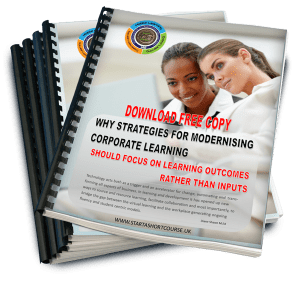
Why strategies for modernising corporate learning should focus on learning outcome cover by diane shawe


“The only thing worse than training people and having them leave, is not training them and having them stay”


What do we do..

We specialise in resourcing short courses via a pre-populated LMS solution for Point of Need Training via mobile devices so that all different levels of staff can access training whilst on the move using their own device supported by one off our virtual tutors to help them complete their online 4 weeks course.

10 Traits That Help Kill a Potential Sale by Diane Shawe

Learn to develop positive communication style

Learn to develop positive communication style

Here are 10 tips on how not to leave 10 Strong worst impressions.

Article by Diane Shawe M.Ed

1. Not knowing your Audience

Trying to sell something to someone that you don’t really know, you don’t know if there is a need or indeed if they have already got what you are selling will kill a potential sale or recommendation.

Persuasive people know their audience inside and out, and they use this knowledge to speak their audience’s language. Everyone is different, and catching on to these subtleties goes a long way toward getting them to hear your point of view.

2. Not getting Connected

The person you are speaking with is a person, not an opponent or a target. No matter how compelling your argument, if you fail to connect on a personal level, he or she will doubt everything you say.

People are much more likely to accept what you have to say once they have a sense of what kind of person you are.

Note: In a negotiation study, Stanford students were asked to reach agreement in class. Without instruction of any kind, 55% of the students successfully reached agreement. However, when students were instructed to introduce themselves and share their background before attempting to reach agreement, 90% of the students did so successfully.

3. Being Pushy

If you tend to come across as too aggressive, don’t be impatient and overly persistent. Pushy people are a huge turn off. The in-your-face approach starts the recipient back pedalling, and before long, they’re running for the hills.

Persuasive people establish their ideas assertively and confidently, without being aggressive or pushy. Focus on being confident but calm. Persuasive people don’t ask for much, and they don’t argue vehemently for their position because they know that subtlety is what wins people over in the long run. Know that if your idea is really a good one, people will catch on if you give them time. If you don’t, they won’t catch on at all.

4. Being Mousy

Constantly seeking approval because you present your ideas as questions or as though they need approval. Using phrases like “I think” or “It is possible that.” makes them seem flawed and unconvincing.

If you tend to be shy, focus on presenting your ideas as statements and interesting facts for the other party to mull over. Also, remove qualifiers from your speech. When you are trying to be persuasive.

5. Negative Body Language

Being unaware of your body movements, posture and gestures can send out the wrong messages.

Get your mindfeed copy today. Available from Amazon
Becoming conscious of your gestures, facial expressions, and tone of voice (and making certain they’re positive) will engage people and open them up to your arguments

6. Sounding unclear and vague

It is not impressive to use phrases such as ‘A little bit of this and that’ when asked what you do.

Persuasive people are able to communicate their ideas quickly and clearly. When you have a firm grasp on what you’re talking about, it’s fun and easy to explain it to those who don’t understand. A good strategy here is to know your subject so well that you could explain it to a child.

7Not coming across as Genuine

Some of the above points could have the result of making you come across and not being genuine. Being genuine and honest is essential to being persuasive. No one likes a fake. People gravitate toward those who are genuine because they know they can trust them. When was the last time you met someone you did not think was genuine and a) welcomed them with opened arms b) had something positive to say about them?

Persuasive people know who they are. They are confident enough to be comfortable in their own skin. By concentrating on what drives you and makes you happy as an individual, you become a much more interesting and persuasive person than if you attempt to win people over by trying to be the characteristics of what is trending on twitter.

8. Not acknowledging that others have a Point of View

Stubbornly sticking to your point of view will demonstrate that you might not be a active listener. An extremely powerful tactic of persuasion is to concede the point. Admit that your argument is not perfect. This shows that you are open minded and willing to make adjustments. You want your audience to know that you have their best interests at heart. Try using statements such as, “I see where you are coming from,” and “That makes a lot of sense.” This shows that you are actively listening to what they are saying, and you won’t just force your ideas upon them. Persuasive people allow others to be entitled to their opinions and they treat these opinions as valid. They do this because it shows respect, which makes the other person more likely to consider their point of view.

9. Asking stupid Questions

How many times have you experienced being asked a ‘non’ question?

The biggest mistake people make when it comes to listening is failing to hear what’s being said because they are focusing on what they’re going to say next or how what the other person is saying is going to affect them. People like to know you’re listening, and something as simple as a clarification question shows not only that you are listening but also that you care about what they’re saying. You’ll be surprised how much respect and appreciation you gain just by asking questions.

10. Leaving a Strong worst Impression

Research shows that most people decide whether or not they like you within the first seven seconds of meeting you. They then spend the rest of the conversation internally justifying their initial reaction. This may sound terrifying, but admit it, you have done this yourself subconsciously! By knowing this, you can take advantage of it to make huge gains in your likeability and ability to persuade. First impressions are intimately tied to positive body language. Strong posture, a firm handshake, a smile, and opening your shoulders to the person you are talking to will help ensure that your first impression is a good one.

Conclusion

People naturally (and unconsciously) mirror the body language of the person they’re talking to. If you want people to like you and believe in you, smile at them during a conversation, and they will unconsciously return the favour and feel good as a result. Persuasive people smile a lot because they have genuine enthusiasm for their ideas. This has a contagious effect on everyone they encounter. Doing this one thing will help to align all the other points and you will be happy when researching your ideal audience.

About the Author

15 Must-Own Books No Serious Entrepreneur Should Ignore

Need help getting organized? Want to learn how to take a business into a global marketplace? Looking for ways to improve leadership skills? Then check out The Little Coffee Break Mindfeed eBooks from IQ 2 EQ by Diane Shawe. This collection of eBooks exposes readers to new ideas and proven strategies, and each can be completed on a lunch break, over breakfast, or while enjoying a cup of coffee.

According to author Diane Shawe, “The idea for the short, powerful eBooks came to my mind when I realized how often people need to brush up on topics, but do not always have time to sit down to read 200 pages. As a result, I have authored several short yet effective eBooks that get right to the point with tips and advice.”

Diane Shawe’s eBooks are available on Amazon right now at: https://www.amazon.com/Diane-Shawe/e/B0052WG8V6

10 Tips for Becoming a Social Media Influencer by Diane Shawe

10 tips on becoming social media influencer by Diane ShaweAre you trying to become a social media influencer?

article by:

CEO at AVPT Ltd. Business Growth Training Provider & CPD Approved by SRA. Startup Loan Mentor

To be considered an influencer, people need to see you as a resource. Consider your audience and share content that they’ll find useful. Post original articles, plus posts from other trusted sources.

Publishing on social media is a great way to share expert knowledge and develop your influencer status.

In this article I’ll share ten tips that can help you become a social media influencer.

Discover ten tips for becoming a social media influencer.

1: Focus on one area and one specialism

To become an influencer, master a specific topic within your niche. If you cast your net too wide, it will be difficult to gain the level of knowledge necessary to be considered an expert.

If your goal is to be an expert in the digital space and become known as an influencer, there are plenty of things you can do to raise your profile. Develop your expertise and use social media to raise yourself to influencer status. To help you find your focus here are some points to consider.

What do you think?
What is your niche?
What platforms get the most engagement?
How have you developed your reputation as an influencer?
In what ways will you engaged your audience and shared your expertise

Either focus on one social media industry such as social media marketing or public relations, or on a single platform like Facebook, Twitter, LinkedIn, Pinterest or Instagram. The Vine is also good for short video clips from your Youtube account.

1: Master one topic to become a true expert.

Get your copy today from Amazon

Start small and learn as much as you can about your desired niche through research and experimentation. That way, you’ll be able to discover the ins and outs of your specialty and form your own ideas, as opposed to simply restating others’ opinions. This is a very important step on your way to influencer status.

Oh and try not to drill down too much in your articles, more and more people access using a mobile device so think about what you would want to see if it was you reading someone else’s blog.

2: Subscribe to Platform Blogs

Social media is unique because it is in constant flux. Stay on top of the latest platform updates, such as algorithm changes, new analytics and added features, as they can drastically change a social channel and the way it’s navigated.

Whether you want to be viewed as the authority on a social channel or a broader industry, read platform blogs regularly: Facebook, Twitter, LinkedIn, Pinterest and Instagram. There’s no better way to keep tabs on any social media channel.

3: Familiarise and Read Relevant Blogs Daily

In addition to platform blogs, read other information outlets to gain valuable insights into your niche. Study news, expert opinions and case studies that are published or shared by people you trust.

Makes subscribing to and reading multiple blogs easy.

By using a tool like Feedly to subscribe to a variety of relevant industry blogs, you will benefit from different viewpoints and helpful advice.

4: Do you use your Alert Settings?

Reading press releases, news alerts and relevant posts is key to staying informed. When you know what’s happening, you can keep your followers in the know.

Since it is impossible to keep track of all of the information from platform blogs and your favourite outlets, invest time into creating alerts directly related to your specialism. A couple of tools that make it easy to stay on top of relevant news are Google Alerts and Social Mention.

5: Populate Your Blog

There is nothing worse than a blog that is several weeks out of date! Write blog posts and publish consistently. You should shoot to publish at least two to three times each week.

To stay on track, create an editorial calendar and stick to it.

Partner with other influencers and reblog them. Interview them, (over the phone, on skype or send them 5 questions to answer. Invite them to contribute to your blog or run a promotion together that gets shared on everyone’s sites.

6: Publish on LinkedIn

In addition to your own blog, re-create your posts on LinkedIn’s publishing platform. Cut and paste your previously published blog posts and add a headline, image and keywords. (I hope you have a linkedin account)

Remember, people generally assume LinkedIn posts are only from the most influential thought leaders. Now, when people in your network and beyond see your articles on LinkedIn, it is likely they will view you as an authority too.

Share your knowledge and get noticed by publishing on LinkedIn.

Through its publishing platform, LinkedIn has created a prime opportunity for influencers to get noticed.

7: Use Sharing tools to share Valuable Content

I repeat again, share content. Once you’ve determined your focus and have implemented a system for keeping on top of the latest news and information within your niche, start sharing high-value influencer content with your audience via social media.

8: Seek out and Contribute to Other Sites

One of the quickest ways to gain influencer status is to contribute your unique content to other blogs and publications. Guest posting increases your visibility, bolsters your credibility and increases traffic to your own blog.

After your content is published, let people in your network know. Tweet a link, share it on Facebook, tell your other online communities and add it to your LinkedIn profile publications. Dare I say it but +google plus is fast becoming a really influential content showcase. Have you got your account set up yet?

9: Be Seen Engaging Online

To be an influencer, you need to be seen and also be engaging. Social media influencers regularly take part in relevant conversations across a variety of networks. Attend and participate in Twitter chats and webinars (and host Twitter chats too), answer questions on Quora and share ideas in LinkedIn groups. Be constructive and you don’t always have to be controversial for the sake of it.

10: Safeguard your Reputation

This area is not often looked at, getting misquoted, having the wrong type of media attached to your blog can often flag up in the search engine above all of your positive content.

Make sure you sign up to a online reputation notify. They are good because they sweep the internet each week and give you a report on any new content found linked to you or uploaded by you. I use www.naymz.com It’s worth becoming a premium user.

Sharing your knowledge is how you’ll truly stand out as an influencer.

How can we help?

We have a Social Media Course that you might find very beneficial. Visit www.shortcourses.expert or give us a call and we will send you the course outline. 0208 1333120

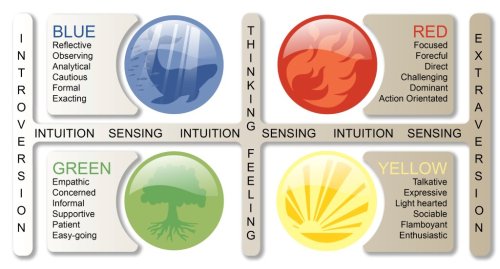
Personality Profiling Highlights Personal Training Needs Analysis

What is your colour combination?

What is your colour combination?

What does your colour say about you?

article by Diane Shawe M.Ed

The Academy of Vocational and Professional Training has teamed up with Clarity4D to offer an affordable, accessible, Personality Profiling to assist with identifying Individuals Communication style and Personal Training Needs Analysis in April 2015.  Both solution incorporating a behavioural model and psychometric tool based on the work of Carl Jung and uses colour to identify the four basic personality traits, supported by a L.M.S Point of Need Training Courses in Softskills is set to improve the direct needs of Individual from small businesses to corporates.

Steve Davies Director of Clarity4d states that ‘Personality profiling helps people to raise self-awareness, to understand their preferred style of communication and to recognise the personality and styles of communication of their work colleagues, suppliers and customers’.

Clarity4D profiles are easy to understand and provide a good basis for a personal development plan and when used in conjunction with personal/professional training and coaching which can maximise the potential of individuals and teams.

Clarity4D is used by many organisations in the following ways:

  1. To improve teamwork and leadership
  2. For management development
  3. To understand how some behaviour could be perceived as “bullying”
  4. To introduce the concept of diversity and inclusion into corporate cultures
  5. For recruitment, appraisals and coaching
  6. To help organisations through cultural change

AVTP specialises in Soft Skills courses which can assist in Continued Competence and Point of Need Training via a mobile device or Short Intense courses. The advantage to the individual is that the courses are colour coded and the candidate can decide if they want to strengthen a low colour grade or improve a medium high colour grade with the most appropriate soft skill.

AVPT is used by many organisation in the following ways:

  1. We understand the business sector inside out – that is why Point of Need training for Clarity4dour main focus is placed upon providing the highest quality training of your staff, in the shortest possible time and to ensure that every person who trains with us goes out more effective than when they came in.
  2. We Are very flexible, student centric and time sensitive.
  3. We Can help you with both compliance and accreditation issues.
  4. Allow real time tracking, monitorng and measure staff progress and achievements.
  5. Impressive lead times that can be delivered over different time scales to suit individual learning needs.
  6. Mobile phone and tablet compliant and secure with no advertising to suck up bandwidth.
  7. We have immediate availability at the very last minute for a large number of effective tailored one day courses including social media marketing, building self esteem, information management, writing reports and proposals, minute taking, business marketing, leadership skills, sales & negotiation and much more!
  8. We are IAO accredited so certificates are recognised around the world.

So if you are involved with young people, teams, individuals, couples or appraisals what have you got to lose? try out one of our quick online profiling now. Click here or you can call us on 0203 551 2621 for a free consultation.

10 Questions You Absolutely Must Ask Before Accepting a Job Offer

Need help with sharpening up your interviewing skills?

Need help with sharpening up your interviewing skills?

Daily mindfeeds will help you discover the truth behind every single choice you make as a human being!

“ Daily miTime management Mindfeed 4 by Diane Shawendfeeds can help develop your Awareness based on Facts Which Can Have Amazing Benefits For Your Life And Success!”

article by Diane Shawe M.Ed

From low to high, every day and each week we experience several degrees of emotions such as: embarrassment, disgrace, feeling guilty, apathy, sorrow, dread, want, anger, pride, bravery, disinterest, willingness, acceptance, understanding, love, delight, peace, enlightenment.

Altho we  jump in and out of different emotions throughout each week, generally there’s a prevailing “normal” state that we live in or preceive it to be normal.

The truth is:

If You Want To Skyrocket Your Success With Business And Improve Your Overall Life…You Need To Have A Look At You Daily Mindfeed!

Why do most people have a tendency to not achieve the success they desire or deserve in their business and overall life?

well there is a saying “Garbage in, Garbage Stays!”

Which brings us to the next important aspect here:

You Can Have Better Success In Business And Life If  You Put Some Energy Into Your Daily Mindfeed!

People who struggle in business and life will find these things in common:

They don’t know Maslow’s hierarchy of needs and how it fits into their own daily life.
They have no idea how to handle failure and guilt
They are living in flight mode instead of Fight Mode
They also don’t understand the anatomy of Fear


Stress Management Strategies Mindfeed 6 by Diane ShaweWhat did Abraham Maslow Hypothesis


Psychologist Abraham Maslow first introduced his concept of a hierarchy of needs in his 1943 paper “A Theory of Human Motivation”1 and his subsequent book, Motivation and Personality.2 This hierarchy proposes that individuals are motivated to fulfill basic needs before moving on to extra needs.

Maslow thought that these needs are like instincts and play a major role in motivating conduct.  I am not going to set out each need but concentrate on one in partcular.

Why is Self- Actualising Needs Important?

This is the highest level of Maslow’s hierarchy of needs. Self-actualising individuals are self-conscious, concerned with personal growth, less worried with the opinions of other people and interested in satisfying their potential  WHY.

Daily constructive Mindfeed can often be viewed as the mental and spiritual ingestion needed to perpetuate self awareness, happiness and success.

80% students get qualified sothey can get a job, promotion or start a business


Do women still derail each other in the workplace?

women derailing women by Diane Shawe 2015Are women other women’s own worst enemies at work?

article by Diane Shawe M.Ed

There was an interesting essay a few weeks ago in the New York Times about workplace infighting among women. The piece describes how women can sometimes derail each other in the office. Is this true? One study by the Workplace Bullying Institute, for example, found that female office bullies, who commit verbal abuse, sabotage performance or hurt relationships, aim at other women more than 70% of the time. (Male workplace bullies, by contrast, tend to be equal-opportunity offenders, targeting both men and women.)

There are several theories why some women hurt other women in the workplace, but surely this must also apply to men… so lets check out some of the theories

Scarcity:

One is scarcity: there are few spots at the top, so women at higher levels are reluctant to help other women who could potentially usurp them.

D.I.Y Bootstrap Theory:

Another reason a bit more basic is called the “D.I.Y. Bootstrap Theory.” Some women reason that if they had to pull themselves up on their own, why should they help anyone else?

Fear of showing Favoritism;

Women may also be worried about showing favoritism toward other women, so instead, they can end up going too far in the other direction and go out of their way to not help their female colleagues.

Over Emotional:

And then there’s the idea that some women are over-emotional, which leads them to take challenges or criticism personally, hold grudges or get caught up in petty arguments.

The way forward

Becoming simply aware of these habits is not quite enough anymore “If we really want to clear one of the last remaining hurdles to gender parity and career success, let’s start by really understanding how to be resilient, focused, leadership skills, personal wealth management and personal profiling.

Readers, what do you think? If you’re a woman, have you experienced being derailed or undermined at a time of importance both to you career and self-esteem? How did you handle it? Have managers or colleagues been more supportive of your performance or do you feel like games are being played well if your tired of being tired here is a seminar for you…

Five Steps to avoiding being undermined and derailed Seminar 17th February 2015 at the Doubletree Hilton Westminster Hotel.
Five experienced speakers who will focus on:

How can you make yourself be heard without shouting?
Do you feel like you are constantly being derailed?
Are you uncomfortable about how to present yourself in front of a camera?
Do you need clarity on what type of Manager/leader you are?
Are you at that point in your life where you seriously need to carve out a financial haven for the future?

Disruptive cloud e-learning has positive implications for employers

start a short course with avpt using mobile phoneThe current speed of change means that employees need to be trained continuously in order for Companies to avoid the dangers of being out-thought and out-maneuvered by competitors.

article by Diane Shawe M.Ed

Real and tangible data proving the argument and the added value of E-Learning initiatives to stakeholders constantly endorse the use of online technologies to:

  • Keep the workforce appraised of their job functions’ developing requirements, enabling them to make a positive impact within their Organization and help that Organization achieve its aims and goals;
  • Aid succession planning, helping workers to acquire the knowledge and skills to help them progress within their Organization;
  • Allow Organisations to keep training budgets under tighter control, develop and retain existing employees and reduce the costs related to external human resources recruitment, selection and on-boarding.

This system of Training management — often referred to as a learning management system (LMS) — is a key element of an effective professional development plan as well as being a key element of an Organisation’s human resources strategy.

There seems to be universal agreement that the worldwide E-Learning market will show fast and significant growth over the next three years. The worldwide market for Self-Paced E-Learning reached $35.6 billion in 2011. The five-year compound annual growth rate is estimated at around 7.6% so revenues should reach some $51.5 billion by 2016. While the aggregate growth rate is 7.6%, several world regions appear to have significantly higher growth rates. According to recent regional studies, the highest growth rate is in Asia at 17.3%, followed by Eastern Europe, Africa, and Latin America at 16.9%, 15.2%, and 14.6%, respectively.

Each of the world’s regions has its idiosyncrasies In terms of the factors that drive this market. The U.S. and Western Europe markets are the most mature. The U.S.A. spent more on Self-Paced E-Learning than anywhere else in the world. Western Europe is the world’s second largest buying region for E-Learning products and services but Asia is predicted to outspend Western Europe in E-Learning terms by 2016. In 2012, Bersin & Associates stated that there were some 500 providers in the LMS market and only five of them have more than a 4% market share. According to this, the LMS market was expected to reach $1.9 billion in 2013. However the growth exceeded expectations, closing the year at $2.55 billion.

The Cloud is changing the way Organisations, Employees and Partners interact and collaborate. Within the Cloud solutions universe, Software-as-a-Service (SaaS) is playing a major role. According to Gartner, SaaS will continue to experience healthy growth through 2014 and 2015, when worldwide revenue is projected to reach around $22 billion. Gartner has stated that many Enterprises are now replacing their legacy systems with SaaS-based CRM systems. Enterprise clients also report that SaaS-based CRM systems are delivering new applications that deliver complementary functions which are not possible with older, legacy CRM platforms.

Various surveys and analyses into the reasons behind this big growth in SaaS agree on at least three. SaaS brings:

  • Speed of implementation
  • Savings on capital expenditures
  • Savings in terms of operational expenses

The SaaS model is also playing a major role in helping to increase the size of the E-Learning market. Small and Medium-sized Enterprises (SMEs), as well as large Corporations are making the adoption of a SaaS LMS a key priority. In particular, large Corporations are switching to a SaaS LMS from in-house LMS solutions or they are now using a SaaS LMS as a secondary learning system for special training purposes.

E-Learning is subjected to the influences of sales trends related to smart connected devices and the Internet megatrend (that is, the spread of the Internet in the world).

According to IDC, the number of PCs will fall from 28.7% of the device market in 2013 to 13% in 2017. Tablets will increase from 11.8% in 2013 to 16.5% by 2017, and smartphones will increase from 59.5% to 70.5%.

The new frontier to address is the trend towards Bring Your Own Device (BYOD) — where individuals take their personal (usually mobile) devices to workplaces. Increasingly, these seem to be being used to help their owners perform work activities (including formal training), both in and out of the workplace. Smartphones are the most common examples of these devices but employees often also use their tablets or laptops in the workplace.

While the corporate-training market has lagged behind other education-based sectors, it continues to represent a viable investment opportunity.

The corporate-training market is among the most cyclical within the education industry. Since 2010, employers’ total spending on training and the amount spent per employee — the key data used to measure this sector — have been declining. However, the corporate market related to outsourced services (net of all ancillary costs) has grown to reach 42% of total expenditure.

Download report here Strategies for Modernising Corporate Learning by Diane Shawe M.Ed Dec 2014

Within the training industry, the E-Learning sector has grown consistently in recent years. All its subsectors (Packaged Content, Platform, and Authoring tools) show positive annual growth. Market acceptance of E-Learning has resulted in its increased use for both large and small companies. SaaS/ Cloud E-Learning solutions are particularly suitable for Organizations ranging from SMEs to large institutions.

General budget constraints appear to be the main drivers of the shift towards using E-Learning. However, E-Learning is not merely a solution which is attractive during an economic downturn but it is also an efficient and cost-effective solution when workers — especially those in Organisations with a widely geographically distributed workforce — need to be brought up-to-speed quickly on relevant knowledge and skills.

With the inflow of an estimated $6 billion of venture capital over the past five years, E-Learning is being driven not only by startup dot-com entrepreneurs but also by big corporations, for-profit spin-off ventures, as well as big and small universities

AVPT, a disruptive Cloud E-Learning solutions provider with over 400 courses. We welcome the opportunity to further the conversation with you to discuss the white labelling of a LMS system populated with bespoke softskills courses or access to a

Our training initiatives (incorporating individual and group training activities) are monitored and managed via a consistent and reliable tracking system that can be stored, consulted and analysed as required. The system’s data will be useful for management reports on productivity and for assessing individuals’ career advancement.

Please contact us to learn more about how an integrated learning management system can empower your employees to greater effectiveness without incurring massive development cost and extensive lead time. www.startashortcourse.uk or call 0203 551 2621

Sources:

  • GSV, Education Factbook 2012
  • IBIS Capital, E-Learning lesson for the future
  • Tower Watson, Global Workforce study 2012
  • Accenture, Technology Vision 2014
  • BMO Capital Markets, US Education Research 2011
  • The EvoLLLution ,
  • Lifelong Education and Labor Market needs
  • Georgetown University, Projections of Jobs and Education requirements through 2018

Diane Shawe launches online mentoring call preparation form for business startups

mentoring by diane shaweDiane Shawe’s passion for turning dreams into realities has been launching her clients beyond their limitations and into the lives they truly deserve since 2003.

She provides the benefits of mentoring through a number of career planning workshops and online mentor programs globally accredited by IAO

Because we are all busy people, once again Diane believes that technology can help bring about a better lever of convenience and speed to getting constructive assistance.  You can visit www.get.mentoring.dianeshawe.info to start the process or you can click here to complete your Call preparation and request form.

Since establishing her business through AVPT Diane has been committed to offering the benefits of mentoring to individuals and organisations and helping them overcome the range of challenges they face. By continually adding to her vast scope of knowledge, qualifications and experience her clients have been able to enjoy the workable tools she offers that lead to their desired personal and professional success.

Get mentoring with diane shawe business start up loans
Whether you’re looking to add structure to your career planning, provide your workers with professional training in areas such as conflict resolution, time management, and leadership skills you’ll appreciate the confidential, professional and friendly way all her materials are delivered. Diane’s holistic approach to making a positive difference has seen her broadening her scope of influence while giving back to philanthropic organisations such as the Kensington Chelsea and Business Club, Pink Shoe and Nexters.

Diane’s membership to some of the more prestigious bodies such as the Institute of Directors, Chartered Management Institute, Solicitors Regulation Authority and International Accreditation Organisation offers you the utmost peace of mind. As they’re member regulated by lawyers, CEOs and directors both in the private and public sectors you can rest assured that you’ll be enjoying approaches that have been proven to bring about success.

Over the year Diane has been passionate about supporting individuals around the world to become independant.

She is now proud to show you all how she have been able to support all types of people around the world via Kiva to help start or expand their business.

I have now supported over 96 loans in 37 countries and you can see them all by clicking here.

View copy Diane Shawe Draft-Mentoring-Contract