Tag Archives: online training

Personality Profiling Highlights Personal Training Needs Analysis

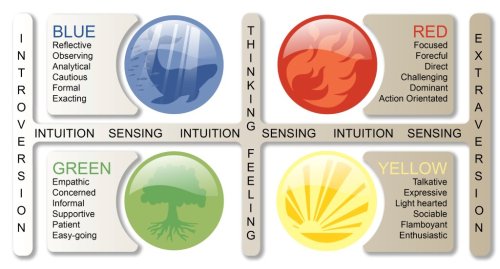
What is your colour combination?

What is your colour combination?

What does your colour say about you?

article by Diane Shawe M.Ed

The Academy of Vocational and Professional Training has teamed up with Clarity4D to offer an affordable, accessible, Personality Profiling to assist with identifying Individuals Communication style and Personal Training Needs Analysis in April 2015.  Both solution incorporating a behavioural model and psychometric tool based on the work of Carl Jung and uses colour to identify the four basic personality traits, supported by a L.M.S Point of Need Training Courses in Softskills is set to improve the direct needs of Individual from small businesses to corporates.

Steve Davies Director of Clarity4d states that ‘Personality profiling helps people to raise self-awareness, to understand their preferred style of communication and to recognise the personality and styles of communication of their work colleagues, suppliers and customers’.

Clarity4D profiles are easy to understand and provide a good basis for a personal development plan and when used in conjunction with personal/professional training and coaching which can maximise the potential of individuals and teams.

Clarity4D is used by many organisations in the following ways:

  1. To improve teamwork and leadership
  2. For management development
  3. To understand how some behaviour could be perceived as “bullying”
  4. To introduce the concept of diversity and inclusion into corporate cultures
  5. For recruitment, appraisals and coaching
  6. To help organisations through cultural change

AVTP specialises in Soft Skills courses which can assist in Continued Competence and Point of Need Training via a mobile device or Short Intense courses. The advantage to the individual is that the courses are colour coded and the candidate can decide if they want to strengthen a low colour grade or improve a medium high colour grade with the most appropriate soft skill.

AVPT is used by many organisation in the following ways:

  1. We understand the business sector inside out – that is why Point of Need training for Clarity4dour main focus is placed upon providing the highest quality training of your staff, in the shortest possible time and to ensure that every person who trains with us goes out more effective than when they came in.
  2. We Are very flexible, student centric and time sensitive.
  3. We Can help you with both compliance and accreditation issues.
  4. Allow real time tracking, monitorng and measure staff progress and achievements.
  5. Impressive lead times that can be delivered over different time scales to suit individual learning needs.
  6. Mobile phone and tablet compliant and secure with no advertising to suck up bandwidth.
  7. We have immediate availability at the very last minute for a large number of effective tailored one day courses including social media marketing, building self esteem, information management, writing reports and proposals, minute taking, business marketing, leadership skills, sales & negotiation and much more!
  8. We are IAO accredited so certificates are recognised around the world.

So if you are involved with young people, teams, individuals, couples or appraisals what have you got to lose? try out one of our quick online profiling now. Click here or you can call us on 0203 551 2621 for a free consultation.

10 Questions You Absolutely Must Ask Before Accepting a Job Offer

Need help with sharpening up your interviewing skills?

Need help with sharpening up your interviewing skills?

How to become a Self Employed Hair Extensions Technician

Becoming a Self Employed Mobile Hair Extension Technician

getting started in the hair extensions business 141364929463..jpgIf you are currently working and are considering going it alone as a hair extension technician, working on a mobile basis can be a fantastic way to go about it. No matter how bad the economy gets, people will always need haircuts and, given the lower overheads involved in visiting people at home, mobile hair extension technicians can generally offer a more affordable service. Traveling to a location that suits your customers also gives you a far larger client base than you would have if you limited yourself to working from a single salon. Sounds good so far? Here’s how to get started.

article by Diane Shawe

What to do next if you have just qualified: the nuts and bolts

A. Create a Business Name
B. Identify the sector that you come under ( hair and beauty, Hairdressing, mobile business)
C. Consider a Trading address other than your private address
D. What services are you going to offer
E. Website with contact details and prices ( try http://www.wahanda.com free websites for beauty/hairdressing)
F. Open a Business bank account
G. Proof of qualifications or experience
H. Data Management registration
I.  Create a Facebook fan page
J. Create a YouTube channel
K. Cost and value of equipment

What do insurance company’s cover?

Insurance companies insure the following

  1. Businesses
  2. Public Liability
  3. Equipment
  4. Professional indemnity (need 5 years experience to qualify for this)

They do not cover specific certificates, however they will want to know if you are qualified or experienced in your chosen field.  But primarily they are going to cover a business and the services you provide.  Ringing up an insurance company without a business name etc as specified above will not get you very far.

How much insurance cover will you get?

AUTOMATIC COVERS WITH MOST MOBILE HAIRDRESSING INSURANCES

  • Public Liability – £3 million or £5 million
  • Products Liability – £3 million or £5 million
  • Treatment Risk – £3 million
  • Financial Loss – £10,000 or £50,000

OPTIONAL COVERS

  • Employers Liability
  • Money
  • Legal Expenses
  • Personal Accident for hands
  • Stock/Equipment

Think about ways to make yourself even more attractive to potential clients:

  • If you’ve specialised in styling hair, could you take a more advanced colourist course?
  • Could mastering intricate hairstyles and up-dos open a whole new market of wedding and special event clients?

There are also various other aspects of being self-employed to consider; it won’t only be about cutting, styling and colouring hair. You will need to learn about self-assessment tax returns, salon management and how to set your prices at a level which is affordable to your clients, attractive enough to have them switch from their current hairdresser and enough to cover your expenses and salary.

Of course, there are some further education courses you could take to help make your self-employment dream a reality – a diploma or even a BA in Salon Management could be perfect. Browse the websites and prospectuses of local colleges and universities to see what you could get yourself enrolled in.

From the beginning of your new venture

We cannot emphasise enough how important organisation is to the self-employed, no matter what industry you are working in.

As soon as you start working as a self-employed hairdresser, make sure to notify HMRC about your self-employed status. Keep an accurate record of every penny that comes in or goes out of your business; you’ll need it when it comes to completing your self-assessment at the end of the tax year, and also when reviewing your finances to make sure your prices and wages are set at an appropriate level.

Don’t forget to record your mileage!

This freelancer take-home pay calculator may also come in handy.

Always, ALWAYS, remember to keep back-ups of all of your records (including your appointments and client details). Don’t rely on any one type of recording – paper can get damaged and computer files or devices can be wiped or destroyed.

Drumming up new business

At first, you will probably find it easiest and most cost effective to promote your new found services on facebook to your friends for a special offer.

There are also quite a few other routes to explore:

  • Bridal/special occasion packagesLearn new hair extensions technique in one day 3
  • School prom or university ball specials
  • Contacting local wedding or ball venues to inquire about becoming one of their preferred suppliers
  • Advertising on bridal or local message boards or forums
  • Delivering leaflets in your local area or advertising in shops, community centres and clubs
  • Working as a advisor with other specialist hairdressers

Remember that, the more you can offer your clients, the more attractive you will be to them. Would it be an option for you to train in nails, spray-tanning or eyebrow threading? This could open up a whole new market to you, particularly when it comes to bridal packages, pamper days and even pampering birthday parties girls Hen Parties.

You could also consider renting a chair in a salon for a day or two a week to give you some guaranteed business and income.

Going forward

The world is your oyster – all you need is a little imagination and a lot of hard work. Good luck in your new venture! Once it is up and running, it’s time to start working on your five year plan…

Online insurances to check out:

Direct Line for Mobile Hairdressers

Simply Business for Hairdressers

Association of Beauty Therapist

Salon Savers (need to be qualified hairdresser)

We are not affiliated to any of the above company’s this is just a guideline to get you going.

Visit our website for more information on our 1, 2 or 3 day hair extensions courses.

The importance of keep in-touch with enquirers

Explore different ways to engage your online enquirers

Explore different ways to engage your online enquirers

In my previous blog Why the Money is in the list If you have taken on board my last piece of advice and have started to build a list then congratulations!

article by Diane Shawe M.Ed

I have been using pagewiz and have found it to be very productive as I receive at least 8 – 12 new enquires each day.

If you do the same then you you will greatly increased your chances of making a real business online for yourself that you can grow and develop.

There is one key element though that you will need to take on board if you really want your list to bear the fruits of your hard labour. You will need to stay in contact with them and build a relationship with them. You can do this by introducing them to your blog or a newsletter management solution.

That’s rights guys, this is a relationship like any other and you will need to work on it and keep in contact with your list if you really want them to buy from you. Just like you would keep in contact with your boyfriend and girlfriend on a regular basis and would suffer the consequences if you didn’t it’s the same with your list.

That’s because having a list is not enough but rather having a loyal trusting list is worth its weight in gold. There have been examples online of guys with less than 1000 people on their list outselling others with thousands of people of theirs. And the difference here is trust and relationship building.

When you have the trust levels and relationship built up by staying in touch with them you can maximise the potential of this list of buyers.

try 5 short courses for £25.00 at www.crashcourses.academy 1

Watct out for my next lesson: Why auto responders are must for your online business.

How to identify your youtube target market

The largest search engine in the world

The largest search engine in the world

10 thing you need to clarify about what your business is all about, what your brand is, and what your purpose is in the marketing world.

Article by Diane Shawe M.Ed

The following questions will help you to clarify and understand what the marketing vision of your business is all about.

1. What kind of people are you trying to reach? I’m really sure you already know the type of people that your services are directed to. You see them constantly, they contact you as well if necessary, and that will tell you what kind of people they are and how you can treat them.

2. What do they look like? Are they fat or skinny? Male or female? Old, young or middle-aged?

3. What are they looking for? What is the final goal they are after based on the service you provide? What feeling are they trying to reach with it? Do they need it to feel happy? Do they need it to survive? A lot of needs must be taken care of for a person to survive.

4. What do you actually do for them? Maybe you are already offering a service for that audience. That will give you a great vision of what exactly you need to inform any new people that fit into that same audience.

5. What kind of information would they be interested to know about and pay for? You already know the needs of your customers. You know exactly what kind of information will be highly helpful to them in order to help them to satisfy those needs. Why don’t you just create a great info-product about it?

6. How much money are they actually paying you for it? Knowing how much you usually charge them for your service is a very important indicator, because if you decide to create a product like a report, a training video, software or something directly related to your audience, you may simply be able to figure out the price tag you can easily stamp to it.

7. How would they like to reach that content? Is it Video, mobile phone, Audio, Written, or Blogging? This is important to know. You may just think about it. Think on their limitations to read, hear, watch or use the computer. If they can do everything you can, just ask them what they would like to know about stuff. Do they like to read? Do they like to watch videos? Do they like to hear audio? Do they like to use YouTube?

8. Where are they from? Maybe you have an audience that comes from other cities or even countries. You need to target every one and adapt your information to all of them at the same time.

9. What are your competitors offering to your audience? In the marketing world, it is very important to study the competition that targets your exact audience. What do they generally offer? What things do they offer that you don’t? Do they have more clients? Do they work additional hours? Do they cover a lot more needs than you?

10. Can you offer a better service/product than your competitors?

Download your Free copy today

Download your Free copy today

Once your know everything about your successful competitors, you can just offer the same thing but with your personal touch plus a lot more great things that they are not offering. You can have special offers, free samples, free phone consultation, special discounts, etc.

These questions are very important in deciding how to establish your business over YouTube. You can position almost any kind of business over YouTube because YouTube is more than just a website; it is a large audience of people with real human needs who are waiting for you and your service to satisfy them.

Click here to download your YouTube Marketing Made Easy Training Guide by Short courses Expert

If all the unemployed formed a country it would be the fifth largest in the world. Why does this matter?

Getting the world back to work with skills we can trust

Getting the world back to work with skills we can trust

Why the grip held by outdated educational institutions based on historical prestige needs to take a back seat and become student centric!

Article by Diane Shawe M.Ed

If we hadn’t had the most recent global economical crisis and the unrest in certain war torn regions had not occurred, there might have been 62 million more jobs in the world today, according to the International Labor Organisation as it is, there are over 200 million people looking for work across the globe.

To add to our worries: 75 million of these are young people, eager to take that first firm foothold in the ladder of success. We cannot allow them to become a “lost” generation.

The Great Recession has been particularly hard on older workers also, who have had difficulty finding new jobs after being unemployed for long spells. This is especially troubling because of their pressing needs for health care and retirement preparation.

It is also doubtful that the long-term unemployed are going to become more effective jobseekers simply by being forced to visit a Job centre daily if indeed they have a job centre in some parts of the world. But I am going to site that back in 1996, when the Jobseeker’s Allowance was introduced, the requirement to visit a Job centre every two weeks and provide detailed evidence of active job search did not raise overall job search effort among the unemployed.

If explicit job search requirements were not effective in a period of rapidly growing labour demand and falling unemployment, there is no good reason to expect them to be effective in the aftermath of a severe recession and one cannot certainly make a claim to recovery based on one geographical location sprinkled with opportunities driven by technology and property prices.

So clearly, jobs must be a preeminent priority in the years ahead. The major test of the new technological era is simple: can it provide decent livelihoods for all people?

Technology and rising inequality feeds into a broader concern: Technological advance creates a small cohort of big winners, leaving everybody else behind.

Certainly, those with the lowest skills are having the toughest time in today’s economy.

And yet, we also need to discuss what kind of growth this “right track” leads to. Will it be solid, sustainable, and balanced—or will it be fragile, erratic, and unbalanced?

To answer this question, we need to look at the patterns of economic activity in the years ahead, and especially the role of education, technology and innovation in driving us forward.

As Isaac Asimov—a master of science fiction literature—once said: “No sensible decision can be made any longer without taking into account not only the world as it is, but the world as it will be.” Isaac Asimov

So I have chosen a big topic and what I want to address in my blog today, in the form of three questions:

1. First, what does this new technological era mean for the economy, especially for jobs?

2. Second, how does it relate to one of the scourges of our age—rising inequality?

3. Third, what about some solutions, including vocational education and what I refer to as the growing need to foster a new thinking around “Entreployability”

The Interlinkages between Technology and the economy

Innovation is pushing ahead at warp speed. We are certainly living through one of the most exciting periods in human history. The pace of change is so fast that even the technology of five years ago seems prehistoric.

Those of you who are students probably do not even remember a time when phones were not smart, when cameras contained film, when texts meant school books, and when wireless was a word used for old-fashioned radio!

This advance is centered on the rise of a global digital network—the “hyperconnected world”—combined with the rise of genuine machine intelligence. Today’s smart phones are more powerful than yesterday’s supercomputers. We see cars driving themselves, printers making complicated three-dimensional parts, and robots doing the most complex tasks. “Science fiction” is rapidly becoming “science fact”.

What does this all mean for our lives and livelihoods, for our common economic future?

If the previous revolutions were about using machines for brawn, this is about using machines for brains. And since technology is powering a giant leap in global interconnectivity, these are “connected” brains! Just look at some of the trends.

Certainly, we can see some worrying trends. For a start, the effects of new machine technology are not showing up in productivity statistics—at least not yet—and productivity is by far the most important driver of long-term economic growth.

Now I am not an expert on the Economy, but we are all touched by it and using common sense I for one can see that there is a looming problem. For instance one of the biggest worries is how technological innovation affects jobs put simply will machines leave even more workers behind?

You may not want to give this a second glance but even seasoned professionals can find themselves cast adrift on an unfamiliar ocean.

Rising inequality

My second point about rising inequalities is going to be brief. But here’s a little statistic for you to consider. According to Oxfam, almost half the world’s wealth is owned by one percent of the population and, stunningly, the bottom half of the world’s population owns the same as the richest 85 people in the world.

What is causing such a convulsion in the distribution of income? There is no single factor here, although it seems clear that technology is one of the major factors—it can create huge rewards for the extraordinary visionaries at the top, and huge anxieties for the ordinary workers at the bottom. The speed at which information is sent around the world means that the average disgruntled people who make up the 5 largest country can amplify unrest as they all voice their fears to the small percentage of the world wealth holders.

What about some solutions?

So finally what is the purpose of education in today’s 21 Century, I quote Jane Stanford of Standford University — “with a “spirit of equality”. One of her goals for the university was “to resist the tendency to the stratification of society, by keeping open an avenue whereby the deserving and exceptional may rise through their own efforts from the lowest to the highest stations in life”.

What has happened? Why have these large institutions priced education out of these fundamental principles?

How can we make the new economic age enhance, rather than diminish, our humanity? How can we make this amazing innovation advance the prospects of all people?

It is clear that at the moment Educational systems are not keeping pace with changing technology and the ever-evolving world of work.

Not enough people are thinking strategically enough in this area. Fundamentally, we need to change what people learn, how people learn, when people learn, and even why people learn.

We must get beyond the traditional model of students sitting passively in classrooms, following instructions and memorising material. It is evident that computers can do that for us! A 21st century educational system must focus on the areas where humans can outclass computers—such as in cognitive skills, interpersonal skills, fine motor skills, or sophisticated coding skills. Maybe we need to remind ourselves of the purpose of education and vocational education. I summarise in my words the following:

The purpose of education

The first and foremost purpose of education is to educate and give everyone equal opportunity as a means to succeed in life. Education is a way of igniting and enlightening the thought of an individual.

It should help learners to discriminate between knowledge and ignorance, help to create a spark and create the sense of realisation with logic and a way to reason why the other things are illogical.

The purpose of vocational education

Every man must have a vocation – a trade, a business, or a profession – (if they are able too) in order to earn his livelihood so that they can support themselves, their family and people who cannot help themselves in our society. There are institutions for imparting various types of specialised training to help people qualify for this. The specialist is in demand everywhere, – in the office as well as in factories, in educational institutions and governments.

Conclusion.

The traditional belief that we must prepare ourselves to be ‘employable’ is under threat. The counter argument encourages us to ‘gear up’ for earning our own money, rather than seeing income as someone else’s responsibility.

With the population dramatically ageing and low-level jobs increasingly swallowed up by machinery, entrepreneurship will be a necessity for many, rather than a life-style choice for some.

SMEs are of course already leading this charge but in order to gear up for the future we need to start off by asking a serious question, defining criteria’s, and examining trends, impact these trends will have and plan a way to jointly prepare current and future generations to be both employable and entrepreneurial.

We are living in a new economy—powered by technology, fueled by information, and driven by knowledge. And we are entering the new century with opportunity on our side but huge problems that require new thinking.

The Question we should all ask ourselves?

Do you think you have another 20 – 30 years to live Yes [ ] No [ ]

Do you think you have another 30 – 50 years to live Yes [ ] No [ ]

Do you think you have another 50 – 70 years to live Yes [ ] No [ ]

Have you considered what you are going to do for the next 40- 70 years?

What will the job market look like in the next 20 years?

What will you be able to do to solve your problem which could be unemployment and patchy income streams?

What will you be able to do that will solve someone’s problem for which they will pay you a fee?

If computers might even replace our intelligence, they can never replace the capacities that make us truly human: our creativity and innovation, our passion.

So education must be the bridge between the present and future, the old and the new. But we must also build an enduring platform. By that I mean a new way of thinking about the global economy—the “new ©Entreployability the way forward.

Get your copy today from Amazon

This is helping an individual to develop their ‘©Entreployability assets’ which comprise of their knowledge (i.e. what they know), skills (what they do with what they know) and attitudes (how they do it).

To help them keep busy or at work; engaging their skills and attentions to employ themselves independently and maintain work.

To help them organise and manages their own business, contracts or employability.

To help them be available to be hired, provide them with a safe platform to encourage them to supply soft or hard skill for solving problems or being of service for which they will be paid by another party.

Making sure that the skill they have can be updated to help support them firstly, their family and community and economy.

10 most profitable hair extension techniques to learn for 2017 by Diane Shawe

Why setting up a hair extension business could give you a long term career?

Article written by Diane Shawe M.Ed

Getting started in the hair extension business by Diane ShaweWe have seen the hair extension market grow over the past 15 years, now there are more hair extension techniques than ever before and it can be confusing to decide which is the right one for you to either apply to your own hair or become a qualified technician.

If you are thinking of becoming a qualified technician, it is important to consider how potential clients might make their decision.  Some people will make a decision based on price, others on their hair type and some based on what they need to achieve. Click to see our training school video

Here are just a few tips to help with your decision making process.

1. Wigs Wigs are a quick and easy way to give yourself a quick makeover.  What you need to bear in mind is that the cheaper the wig the more un-natural it will look.  You don’t need to spend a lot of money but it is worth investing in a wig that you can use from time to time.  Client will pay between £120 – £300 for a good quality wig which could last for up to 12 months.

2. Hair Pieces: There are lots of different hair pieces from pony tails to rear hair attachments in all different shades, curly, straight or plaits. There are also specialist hair pieces for thinning hair that can help disguise any problems.  The thing to bear in mind is that hair pieces are not often very secure and could make you feel a little uncomfortable.  Some of the ponytail pieces can be securely fixed, so if you want a demure look go for a ponytail.

popular integrated weave

3. Integrated Weaves: This is when wefts of hair is sewn onto a fine cornrow which is then hide by the bulk of your hair on top.  It is a popular technique because if done correctly it can look very natural and offer up a robust and secure hair enhancement solution.  If you look after the hair you can reuse it when you go back to have it re tightened. Clients could pay between £190 – £330 for the integrated weave.

How hair extensions are sourced treated and graded by diane shawe M.Ed 2014 price4. Pre-tips: This is small pieces of hair that have been pre bonded together.  They can be added in sections all over the head to aid thickening, give the impression of highlights or lowlight and length.  Pre-tips can be applied using heat, micro rings or even small elastic bands.  Be aware that they have to be professionally removed so as not to damage your own hair.

5. Strand by Strand (glue gun): This is when hot bond is used to bond small sections of hair to the recipients own hair.  It was a very popular technique in 6 years ago, but requires professional application and removal by a qualified technician.  Can give the appearance of flyaway hair that you could somewhat run your fingers through.  It is a very time consuming technique and is much better for a long term wear over 3-4 months.

6) Clip in hair extensions: These are now very popular.  They are best used for lengthening mid should length hair.  If the hair is shorter they don’t sit very well because they can be a little bulky in appearance.  They don’t offer up much security unless they have been professionally fitted.  This is when a very small cornrow is done and the clips are slipped through for much added security.  Great for an evening occasion but not advisable for long term wear.  click to read more

20121208_180137

7) Net Weave:  This technique is used when the client wants to partially extend just a section of their hair or if the client suffers from patchy alopecia.  This technique is suitable for 2-4 months wear.

8) Hook and Latch: This technique does not use any glues or threads. It is a beautiful technique, flat to the touch and hair could be worn up.  It works well with shorter hair especially the Micro ring track technique.

9) Lace Wigs: Lace wigs have become very popular. They are really good for girls with short thin hair, damaged hair, hair that needs a rest or a complete makeover.  Top celebrities have made them really popular and you can see why from the video testimonial below. See Radio TV presenters new lace wig

alopeciaconsultant

10) Braides and PlaitsBraides and Plaits have been around for hundreds of years.  A technique that can look very simple or quite exotic.  Braids can be worn for a number of months until the hair grows out, they can even have beads added to the end for that extra special look.

Hair Loss Specialists
Clients also suffer from thinning hair can be helped, click here to hear what one client had to say.

As we see an aging population, people are becoming more confident about getting help to resolve short term or long term hair problems.
HAIR EXTENSION TRAINERS
There is s shortage of qualified hair extension trainers in the UK. Visit this link to find out more and how you can become qualified.


Go back

Your message has been sent

Warning
Warning
Warning
Warning

Warning.


avpt membership and approved status 2014 jpeg

Does nine different kinds of intelligence make you any smarter?

In this article, I will talk about the different ways in which Multiple Intelligence Theory can be implemented in e-Learning to help the learner effectively acquire, retain, and utilise the information being provided within the e-Learning course.

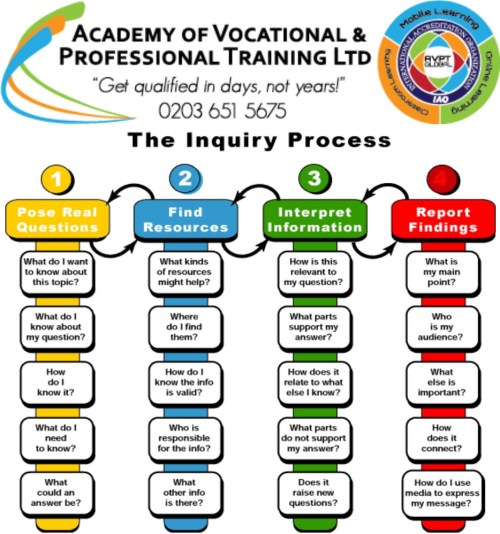
the enquiry process to soft skills training april 2014

The Multiple Intelligence Theory was developed by Dr. Howard Gardner in 1983. Dr. Gardner, a noted psychologist and professor of neuroscience from Harvard University, suggested that every human being interacts with their environment differently. We each possess nine different kinds of intelligence, but our experiences, cultural beliefs, and knowledge base determine their exact configuration.

What is “intelligence”, according to Multiple Intelligence Theory?

According to Gardner, there are three key elements that determine a person’s intelligence:

  1. The ability to create a service or product that will be valued in the person’s society of culture.

  2. A skill set that allows the person to solve real world problems that they may encounter in life.

  3. The ability to potentially create new solutions for problems or to utilize existing solutions. This typically involves the acquisition of new knowledge. 

Multiple Intelligence-Based Activities in eLearning

Multiple Intelligence Theory can be implemented in eLearning based upon the nine multiple intelligences. Let’s take a closer look at each category and which multiple intelligence-based activities can be utilized during instructional design to create the best possible eLearning experience for the learners:

  1. Musical (or Rhythmic) Intelligence
    This intelligence involves the capacity to think and learn in terms of music and rhythm, and to recognize and hear patterns. An activity that would appeal to this type of intelligence is a lesson that includes music or sound, such as a multimedia presentation. Try to use music that emphasizes the subject matter and creates a more immersive experience for the learner. Since there is more of an auditory aspect with this particular intelligence, lectures can also be very helpful. People who demonstrate a high degree of musical intelligence may be ideally suited for musical professions, such as composing or playing an instrument.

  2. Linguistic Intelligence
    This intelligence is associated with expression through language. These people tend to be able to eloquently convey their thoughts and to understand the words of others. Writers and speakers typically display a high degree of this sort of intelligence. Any activities that include discussion, such as online forums or group-based scenarios, are ideal for individuals who lean more toward linguistic intelligence.

  3. Mathematical (or Logical) Intelligence
    This involves the ability to identify principles or structures within a system. This intelligence is often associated with the logic or the manipulation of numbers.  Activities ideally suited for this intelligence may include diagrams, charts, or tables. Critical thinking scenarios are also useful with this group. Accountants and researchers often have a high level of mathematical intelligence.

  4. Kinesthetic (or Bodily) Intelligence
    Body Intelligence involves the use of a person’s entire body to figure out solutions or to create something. People who demonstrate a high degree of kinesthetic intelligence may be ideally suited for performing arts professions, such as dancing, or careers that require an innate knowledge of one’s own body, such as a doctor or athlete. Activities that are best suited for this sort of intelligence include games that involve hand-eye-coordination or interactive scenarios that require physical involvement. The thing to keep in mind about this group is that they are best able to learn when muscular movement is involved. So, include activities that require movement and physical response.

  5. Spatial Intelligence
    This intelligence pertains to a keen sense of space and how one can navigate those spaces. Activities that involve flow charts and graphics are ideal for this intelligence group, as well as games or multimedia that is visually appealing.  Architects, pilots, and sailors often have a high degree of spatial intelligence.

  6. Intrapersonal Intelligence
    This involves an in depth understanding of oneself, such as what you can accomplish and how you react to certain situations. As such, individuals with high intrapersonal intelligence often have a sense of what they should avoid and what they want to achieve in their lives. Professors and philosophers often possess high degrees of intrapersonal intelligence. Activities such as collaborative learning exercises (online forums) and chat programs enable intrapersonal intelligence learners to help others and to share experiences and ideas. This category responds well, first and foremost, to activities, which require introspection.

  7. Interpersonal Intelligence
    This is the capacity to understand and learn from others. People who demonstrate a high degree of intrapersonal intelligence may be ideally suited for service professions, such as teaching or politics. Those who identify more with this category of intelligence may benefit from group discussion activities and in depth questions that make them fully explore the topic. What’s important to remember about interpersonal intelligence is that these individuals are sensitive to others’ moods and feelings. They work well in-group settings and are often able to learn more effectively when collaborating.

  8. Naturalist Intelligence
    This intelligence involves the capacity to differentiate between living organisms and to view the connection between all natural things.  People with a high degree of naturalist intelligence usually have a close bond with nature. Botany and biology are two career fields that closely identify with this sort of intelligence. Activities that involve classification or organization appeal to these individuals.

  9. Existential Intelligence
    This particular intelligence was added later by Gardner, and is not commonly associated with learning environments, as it is geared more toward spiritual and philosophical views. For example, someone who has a high degree of existentialist intelligence may have a tendency to pose questions about life’s purpose or death. 

It’s important to note that instructional designers should not feel obligated to incorporate all of these multiple intelligence-based activities into their eLearning courses, just that it may be beneficial to offer a variety of multiple intelligence-based activities to more effectively illustrate the subject matter. If you are able to offer learners a diverse set of learning tools and eLearning strategies, then you gain the ability to increase comprehension and retention, not to mention enhance the overall eLearning experience.

Call us to enquiry about our soft skills courses

Call us to inquiry about our soft skills courses

Social Media – Delivering targeted messages Part 1:

 Localise, segment and personalise your social media engagement for more effective marketing

By our Guest Blogger:  Tamsin Oxford on Sep 24, 2013

For organisations to effectively engage with their consumers, segmenting and then personalising social media content is vital

The core of any business is the customer. What corporations and their brand stakeholders have realised is that the traditional broadcast model for engagement is no longer effective or efficient.

Organisations need to gain insight into audiences, segment their social engagement into specific groups and appeal to a diverse demographic without compromising brand integrity or messaging.

This feature is the first of three examining how to create customised experiences for customers across different platforms. In this feature we are considering how a business can accurately identify core groups, get to know their audiences and segment customers into niche collections. Sound complex? Not necessarily.

“Social media offers interaction that traditional media could never give to the marketer,” says Devon Stanton, PR and Promotions Manager at Megarom [www.megarom.co.za], “In addition, there is an impressive range of toolsets available that can analyse your social media audience and pull out vital demographic and interaction data. By utilising this information, you’ll be able to craft your social media to best suit your audience.”

A white paper by Experian offers a superb breakdown as to what segmentation is and why it is of value to the business. They define it as “the process of dividing your database into groups based on single or multiple criteria.”

This offers value in that you can drill down into the essentials of the client for improved targeting and flexibility. What better way to locate and address the most profitable customers and ensure that there is relevance in this communication? The right message to the right people at the right time – it works, that’s why it’s a cliché.

The business can no longer afford to be generic. A bland message directed across all social platforms may hit one or two people along the way, but it is unlikely to generate brand loyalty or encourage customers to identify with the brand itself.

“Take the time to understand what motivates people to share and talk about topics,” says Scott Gray, Head of Planning at Quirk [www.quirk.biz], “Interests are so fragmented that being generic doesn’t work anymore. To get messages to spread across social networks, brands have to have a point of view and get this to the most relevant group of people. If you’re not relevant, you’re dead.”

Steps to segmentation

Jeremy Waite, Head of Social Strategy at Adobe EMEA, offers a four-step process by which organisations can identify core groups and segment them efficiently that include:

  1. Influence – build relationships with key influencers
  2. Data – data helps brands identify which content drives conversation
  3. Optimising content – using this information helps to streamline content development that says the right things
  4. Measuring impact – stay aware of the impact of social efforts to continually drive conversation and stay relevant and targeted

The many faces of influence

“Building relationships with key influencers is vital,” says Waite, “Data shows that only 6% of fans regularly engage with companies they like on Facebook. By identifying the people most likely to drive conversation, and the types of posts and messages that engage these influences, this helps to increase engagement.”

Veronica Gross del Rio, EMEAI Social Media Manager at Interface  [http://www.interface.com/neteffect], agrees and adds, “Begin determining which social sites you should participate in and what topics are trending or popular. Track how your customers are using social media. We are a B2B company that designs and makes carpet tiles, for us interior designers and architects are the key people who specify our products so we need to convince them more than we need to convince the final buyer. Having the most accurate profile of them on social media is vital.”

It may be obvious that a business needs to identify its core markets and platforms to ensure it markets products effectively, but social media analysis and communications are not the forte of every organisation. It is here that solutions such as Quirk, Codestar and Adobe Social come into play. These companies have made it their business to understand the market and what the organisation needs in order to effectively understand, track and target their customers.

“Successful brands like Starbucks, Xbox and Dell have reduced most of their reporting to only one page that includes all the relevant metrics and information that they need to know about their customers,” says Waite, “These are known as the five ‘W’ – a strategy that Adobe Consulting has also adopted.”

These five ‘W’ are:

  • Who
  • What
  • When
  • Why
  • Where

Who are people talking about, what are they saying, why are they talking about you, when did the conversations begin and where did they take place.

“We design specific apps and landing pages for various products and services advertised on Facebook and often for specific consumer groups,” says Vinny Pianna, Director of Facebook specialists Codastar. “We find that ads for specific customer groups are far more successful than general ones. To segment this effectively we have looked at where we are successful and worked hard to build on this. The key to success is to tailor your messaging, advertising and landing pages for each group.”

Understand the core

To succeed in creating an effective marketing strategy across social media your organisation must ensure it is relevant, targeted, on trend and specific. To do so you need to listen to your customers and understand what they are interested in and make sure that you are communicating with them on the right platforms.

“The web has allowed people to form groups and communities around common interests,” says Gray, “If you’re into dressing up like Batman and singing karaoke, there’s probably a community of people like you. I think that more effective targeting is driven along lines of interest and passions rather than race, gender or age. People are the new conduits of media.”

Interface used these tactics to develop a targeted social media campaign to launch a new product. They created specific content for each social media channel that tapped into their unique qualities and the campaign has been a huge success as a result. Gross del Rio believes that it is this very targeted approach that has made all the difference to the success of their campaign.

“I think that knowing who your audience is and understanding the goals of the campaign will net you far better return on investment,” concludes Stanton, “The data is there to help you make better marketing decisions so use it to maximise results.”

In part two of this series will ask the experts how to take this concept one step further to tailor social media messaging to ensure you appeal to different needs, motives and preferences.

The 4th annual Corporate Social Media Summit Europe

Dec 4, 2013 – Dec 5, 2013, London

Become a social business: For superior marketing response, sharper corporate decision-making, enhanced innovation and a happier, more loyal customer

Related Articles

Why do your customers Like your brand?

We mean to help you so that in turn you help us

We mean to help you so that in turn you help us

The Currency of Digital Learning

Using technology for life long learning

Using technology for life long learning

How do we digitally learn?  How do you learn effectively in a workshop? What is the currency of digital learning?

By Tim T Dingle BSc (Hons) MIBiol PGCE MBA

Chief Development Officer at  the Academy of Vocational and Professional Training.

When you want to acquire a new skill or apply some new knowledge, do you learn by passively sitting and listening to an expert lecture for 90 minutes without a break and 150 Power point slides? What do you actually retain that enhances the value and the currency of your learning. The currency is defined  as something of value, or something that represents value: knowledge, gold, respect, or social media following, all represent different kinds of currency. In 2013 it could be that the currencies in digital and workshop learning are changing.

Learning is evolving and not simply by the tools that actuate it. The process of adopting new learning domains and materials (many digital) has exposed the need for new skills. It is debatable whether or not such skills need to be expressly taught, or if they’re simply the residue of intense, well-designed learning experiences. Whether or not they are old learning (content) with a new coat of paint, or genuinely represent a paradigm shift in learning priorities, it is difficult to doubt their constant application in a 21st century world that is super fast connected, digital, omni-social and multi-faceted.

No longer is it considered sufficient to teach children to simply read and write, and fill in the middle with discrete facts about history, mathematics, and scientific processes. There are new skills that transcend content areas, in this way functioning as natural pathways out of old thinking: creativity, problem-solving and collaboration. One can problem-solve across and within topics formerly thought of as science and history and moving between them both moves them beyond academia, and back to the real world. This is possible because flexible cognitive and creative capacities are not rigid.

The brain science literature suggests that workshop learners understand and remember more when they talk about what they are learning.  However, there are some people who attend workshop and training seem to have information wash over them and are uncomfortable with talking or moving.   So, to get improved retention and learning in both digital and workshops:

1.  Do something physical when you learn: incorporate some sort of movement or body activity every 20 minutes, on line or face-to-face.

2.   Walk and talk, walk and learn: I do this a lot in half-day or full-day trainings.   Participants might do an exercise, but the results are on the wall for a debrief. Using a tablet for true learning as you move.

3.  Flip Chart Products: This is where participants will write specific responses on labelled charts on the wall at designated times.    It can be an answer to a question, a question learners still have, a summary statement, an opinion about the content, facts they want to remember, or how they plan to use the content.  Then stick it on the wall. It works with digital media as well- plaster the wall with paper!

With the proper technologies and thoughtful new methodologies, courses can become content infinite. When the learning goals supersede the content areas, things begin to change. As the currencies in digital learning evolve, they necessarily evolve the learning with them.

AVPTLTD LOGO  6


Check out our 1 day business bootcamp