Tag Archives: hair extension

Where does the hair come from for Hair Extensions? by Diane Shawe

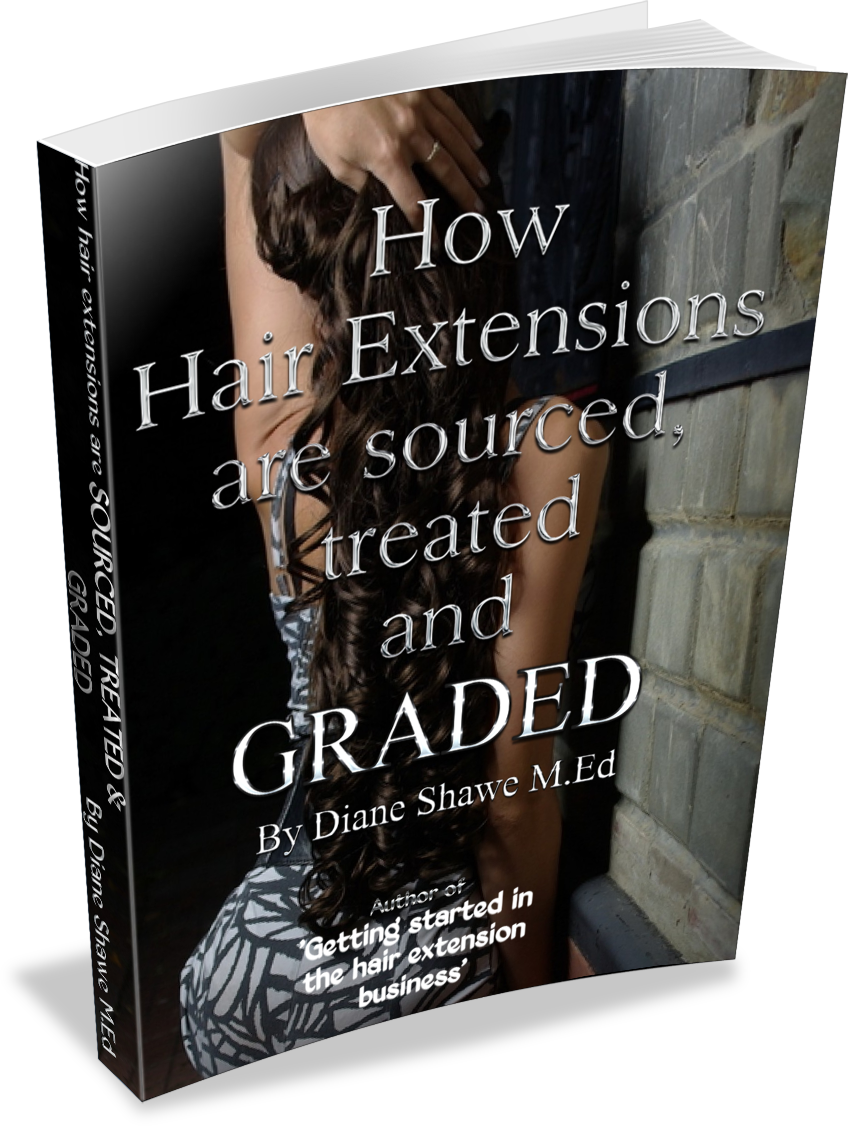
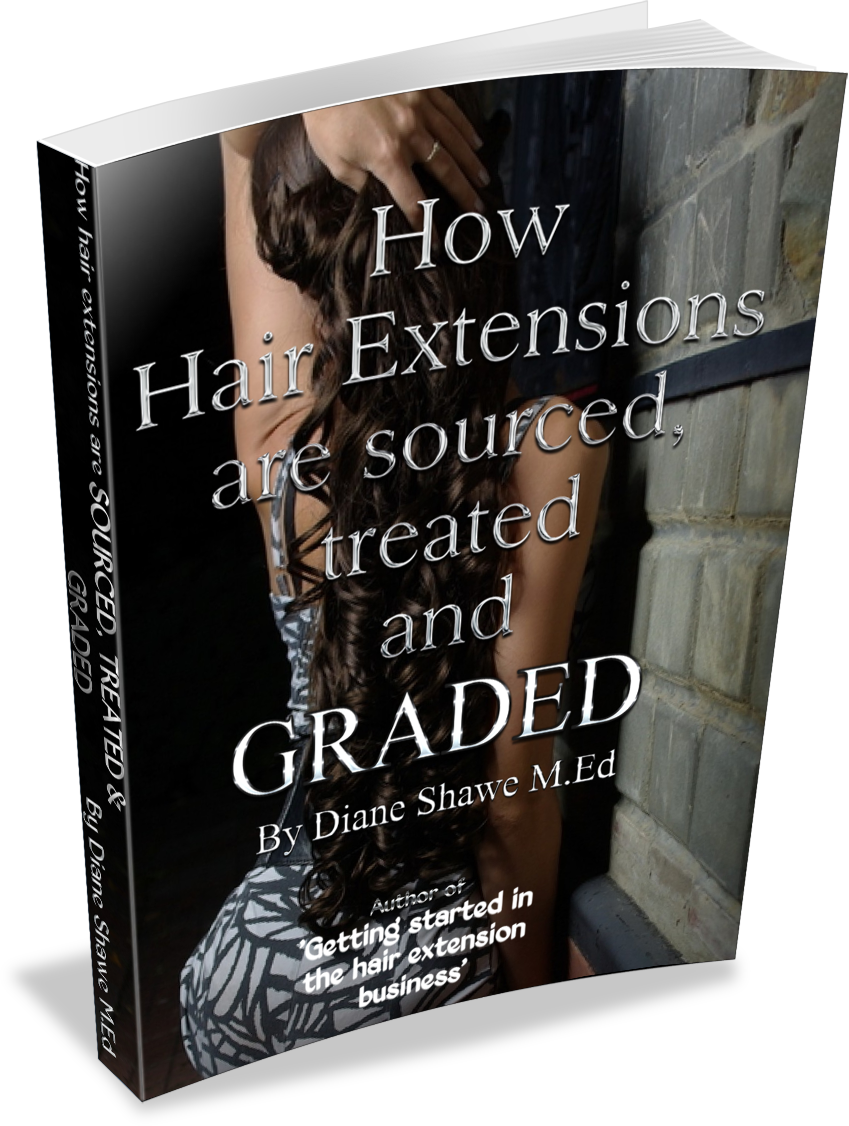
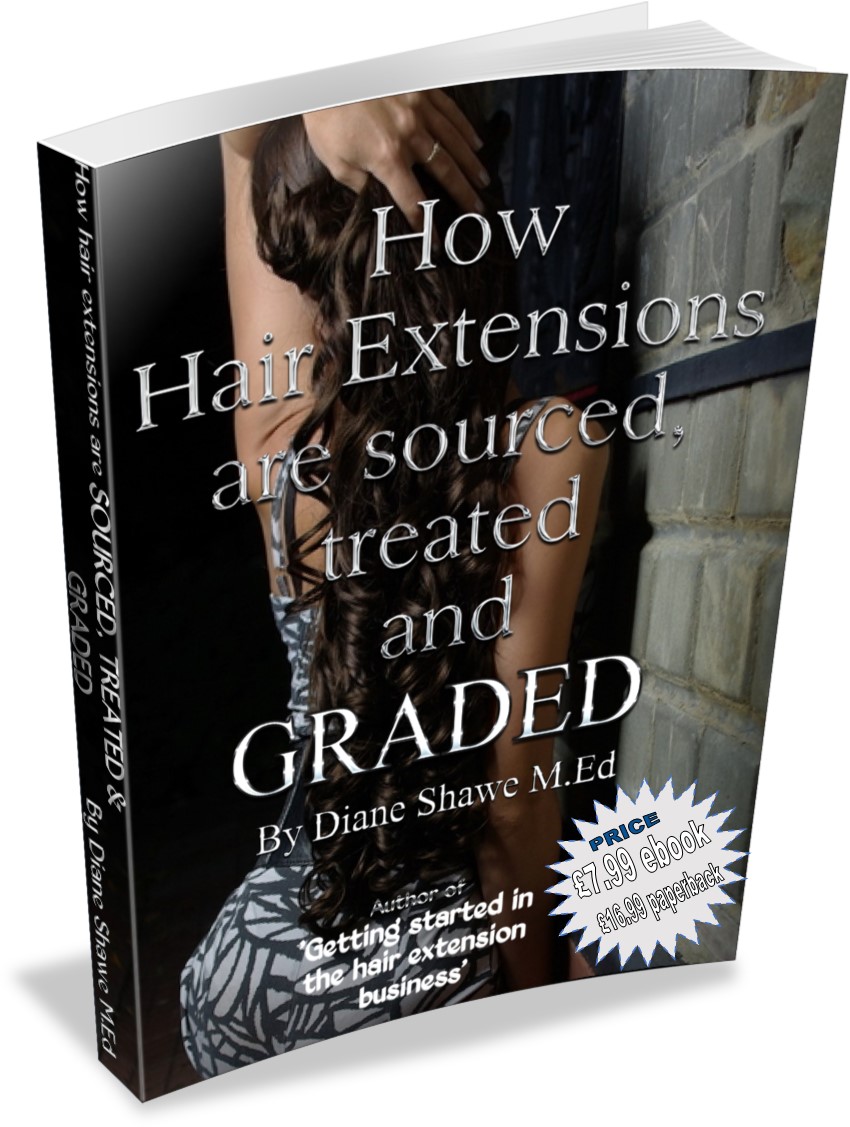
where does hair extensions come from by diane shaweDiane Shawe Author of “How Hair Extensions are Sourced, Treated and Graded” states that the first question all new customers ask is “where did the hair come from”?

They want to know about the geography and even history of the hair and so should you. In her book she covers this question by explaining the characteristics of each variety and summarises the pros and cons.

For instance dealing with the different hair origins.
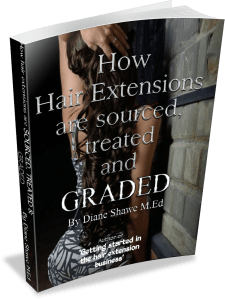
Get your copy today from amazon.co.uk

Get your copy today from amazon.co.uk

· Origin: China, Eastern Europe, Russia and India

· Grade: Virgin, Cuticle, Non-Cuticle, Processed, Single Drawn, Double Drawn, Remy and Non-Remy

· Type: Caucasian, Asian

Diane’s book goes on to explain in some detail the differences, here we summarise the pros and cons from different regions.

Chinese Hair (Aka Asian Hair): A thick fibre that is naturally straight and dark brown to black in colour.

Advantages: High Quantity, Durability and Low Cost. It is the strongest human hair and is able to withstand multiple chemical and mechanical processes.

Disadvantages: Chinese hair requires extensive chemical processing to output hair that simulates European texture, colour and body. The majority of the hair is collected and processed as double drawn.

Indian Hair (aka Asian Hair, Italian Hair): A variety of fibre types from fine and straight, medium thick with body wave and curly to thick coarse hair. “Italian hair” is actually Indian hair that has been processed in Italy or Spain and then sold at premium prices.

Advantages: High Quantity, Good Quality, Variety and Low Manufacturing Cost. Indian hair is popular to use for custom made hairpieces because it can be made to resemble European hair. When not cuticle correct (non-remy) hair requires heavy-duty chemicals to remove cuticle layers. It is still at a high risk for severe tangling problems.

Disadvantages: Low Quality and Higher Retail Cost. Indian hair still requires quite a lot of chemical processing to make it appear as European hair. To reduce time and materials, many manufacturers choose to work with non-remy Indian hair that results in a poorer quality and most exporters handle the hair badly.

European Hair

(Aka Russian Hair, Caucasian Hair): A fine to medium density fibre that is naturally straight to slight wave and available in a variety of natural colours, most commonly dark blonds to medium browns. The Virgin colours will often be streaked with lighter shades or the ends will be much lighter than the roots due to weathering.

Advantages: High Quality. True Caucasian hair, whether originating from Russia, Eastern Europe or even the United States, is the best quality for the European and American market.

Disadvantages: Low Quantity and quantity and High Cost. It has always been an availability problem and is becoming more difficult to source lengths longer than 15 inches and of a good quality.

For more information about Diane’s extensive work on hair loss and consultancy, please see her website

For a copy of her book you can visit Amazon and download the full version or a sample “How Hair Extensions are Sourced, Treated and Graded”

Getting you qualified in the Hair Extension Sector


Getting you qualified in the Hair Extension Sector


Managing Pressure and Maintaining work balance

How to manage pressure at work 1 day course

When things are extremely busy at work and you have your hands full with many tasks and dealing with difficult people, having skills you can draw on are essential for peace of mind and growth. This one-day course will help participants understand the causes and costs of workplace pressure, the benefits of creating balance, and how to identify pressure points. They will also learn how to apply emotional intelligence, increase optimism and resilience, and develop strategies for getting ahead.

This one-day workshop will help participants learn how to:

  • o   Apply a direct understanding of pressure points and their costs and payoffs
  • o   Speak in terms related to emotional intelligence, optimism, and resilience
  • o   Create a personalized toolkit for managing stressors and anger
  • o   Work on priorities and achieve defined goals

 Cick to book your seat now.

Course Overview

You will spend the first part of the day getting to know participants and discussing what will take place during the workshop. Students will also have an opportunity to identify their personal learning objectives.

Under Pressure!

To begin the course, participants will explore the causes and costs of workplace pressure as well as the benefits of creating balance. Participants will also learn what their pre-assignment score means.

Getting to the Heart of the Matter

Next, participants will learn how to identify their pressure points and create an action plan to manage them. They will also learn some tips for facing problems and when to seek help.

Emotional Intelligence

In this session, participants will learn about the seven human emotions and Plutchik’s wheel of emotions. They will also learn how to validate emotions in others, build optimism, and develop resilience.

Coping Toolkit

This session will give participants some ways to manage stress, cope with anger, and express themselves assertively.

Getting Organised

To wrap things up, participants will learn some ways to get organised and reduce pressure set up a action plan.

Workshop Wrap-Up

At the end of the course, students will have an opportunity to ask questions and fill out an action plan.

http://academyexpresscourses.com/2014/03/28/high-blood-pressure-hypertension-the-new-aids-epidemic/

nido how to move forward

http://www.shortcourses.expert

0203 551 2621

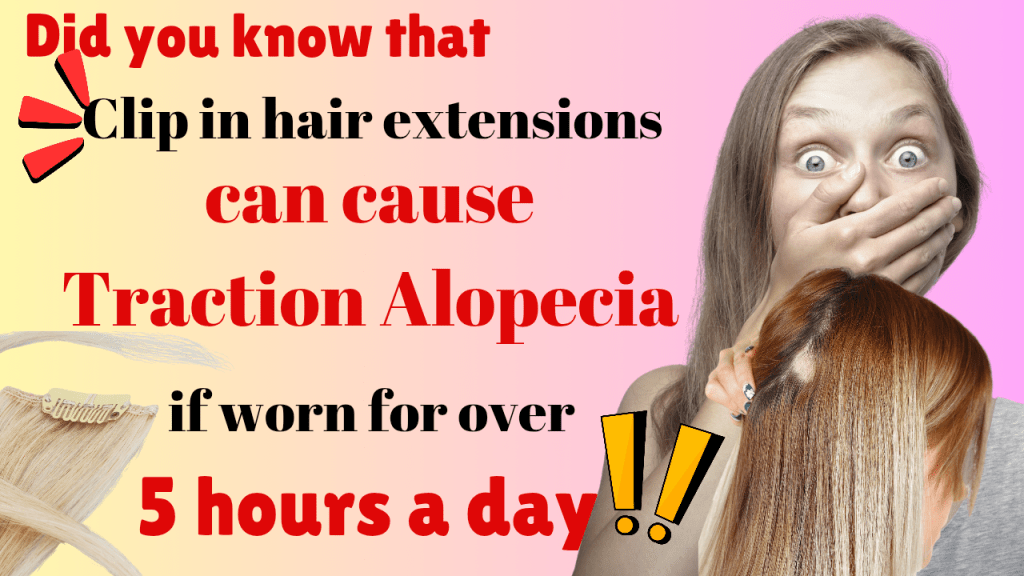
Clip in hair extensions can cause traction alopecia if worn for over 5 hours a day by Diane Shawe

Nickle Clips can irritate the scalp

Nickle Clips can irritate the scalp

If nickle clip-in extensions are continually worn and the tension on your hair is not regularly alleviated, scarring can occur as well as permanent hair loss, leaving the wearer with a less then desirable appearance they’ll be forced to deal with for the rest of their lives.

article by Diane Shawe M.Ed

Almost all of these clips are made from nickle and if the wearer is allergic to nickle, wearing them for over 5 hours a day will eventually cause traction alopecia and scarring.

In today’s modern society, most people think only of the final appearance of their hair.

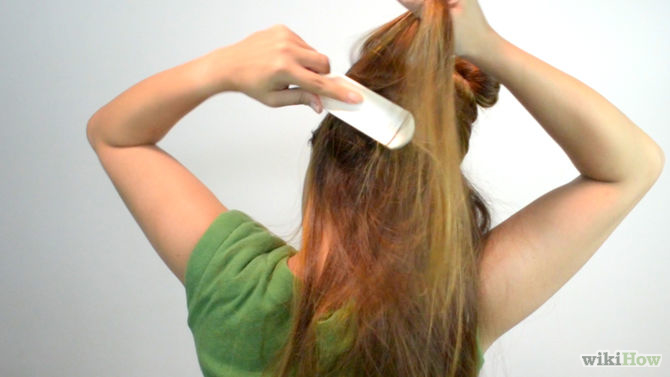
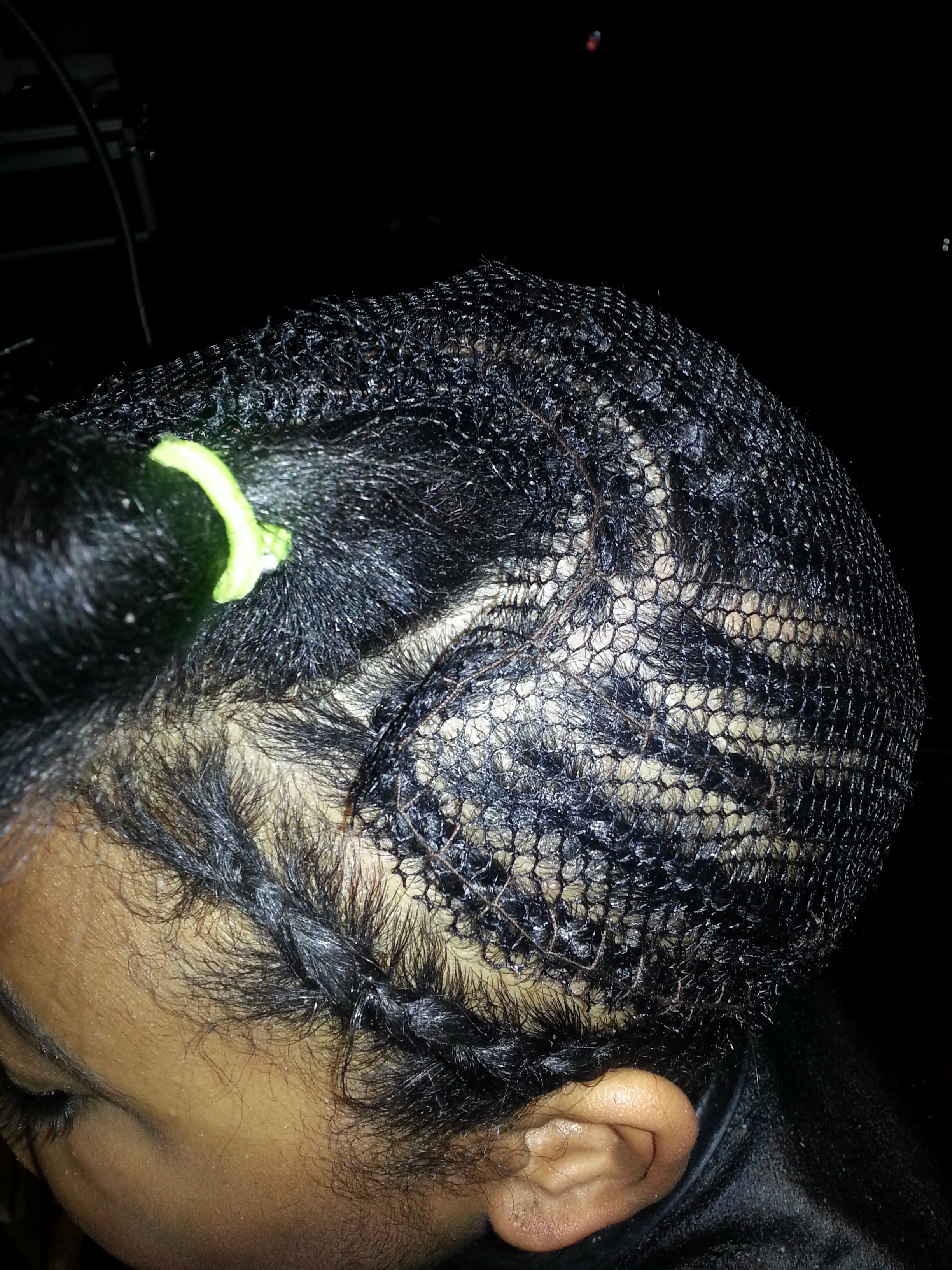
backcombing-to-Attach-Clip-in-Hair-Extensions-causes-traction-alopecia-diane shaweHours spent back combing and coating the scalp with lots of hair spray so that the clips can stay in longer, or even wearing really heavy hair extensions caused by the length of the hair purchased continually irritates the scalp all day whilst at the same time slowly pulling the hair out of it’s follicles.

Cheryl Guttman (2) research found that the continual over processing with Chemical treatment such as bleaches, dyes, or strengtheners disrupts the keratin structure in a manner that reduces its tensile strength.

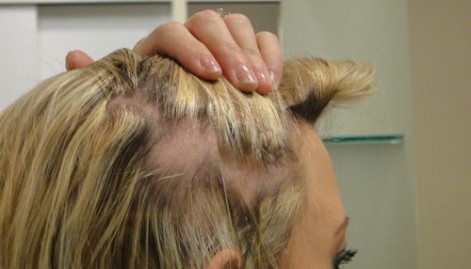
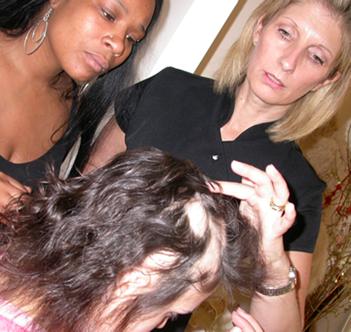
traction_alopecia_caused_by_hair_clipin_diane_shaweThe hair follicles can become fragile. At first the hair fall out is not so noticeable because the clip on extensions are disguising it. Add brushing and combing your hair, you will note a difference in the reduced thickness of your hair line but ignore it initially. Later on some people might experience heavy fall out which can occur with brushing, combing and washing your hair. On top of that using extreme heat to fashion each day can also permanently damage the hair follicle.

If detected early, traction alopecia is reversible if diagnosed early. However, permanent loss can occur too slowly for immediate detection. Hair loss is often occurs in the front, but is also subject to the immediate adjacent area to where the clip in extension were pulling and damaging the hair root.

According to Basil M Hantash, MD, PhD (1)  The sad truth of the matter is that permanent traction alopecia does not respond to medical treatment such as minoxidil or finasteride since by its nature, the loss is different then genetic hair loss.
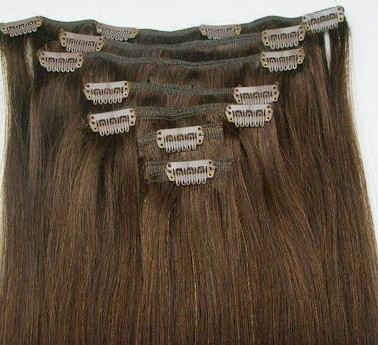
The only way one can treat traction alopecia is with transplants. Follicular unit hair grafting has been identified as the only practical solution to treating traction alopecia. Hair transplant clinics are reportedly seeing a rise in the number of patients with traction alopecia and say the results can be good to excellent.

nickle-clipins-damage-scalp-diane shaweHowever this can be a costly approach especially whilst clip in extensions appear so cheap. What you have to consider is whether wearing clip on extensions for over 5 hours a day versus the value of your own hair. Which is worth more?

There are over 16 different extension techniques. It is important that you find a technique that is suitable for your type and life style. There is a misconception that hair extensions can be worn permanently for up to 6 months at a time.

In today’s society, you need to hold on to what you’ve got, look after what you have and start being kinder to your hair.

Want to find out how to train to become a Hair Loss Hair Extension Consultant then click to view our course prospectus

Get your copy today from amazon.co.uk

Get your copy today from Get a copy of #DianeShawe latest ebook. Visit available on #amazon #amazonkindle and #googlebooks

Sources:
1. Basil M Hantash, MD, PhD, Robert A Schwartz, MD, MPH. (2005) Traction Alopecia, Emedicine.com

2. Cheryl Guttman, May 1, 2003 Alopecia Options for Black Women, Dermatology Times,