Tag Archives: express courses

Could you Access match funding up to £2,000 for every director and senior manager?

leadership and management training by short courses expert

leadership and management training by short courses expert

GrowthAccelerator is a premium service that helps England’s brightest growing businesses achieve their ambitions with rapid, sustainable growth. It’s a partnership between private enterprise and the UK government. And it’s affordable.


GrowthAccelerator’s network of world-class growth experts work side by side with leaders of high-growth potential small and medium-sized businesses to provide them with the know-how and ability to achieve sustainable growth. The service helps business leaders discover the real issues that could be holding their businesses back, define the right growth plan and open doors to world class business experts and networks.

What will my business get from GrowthAccelerator?

Each Growth Managers and coaches will help you:

  • Appreciate your true potential for growth and set achievable goals
  • Attract investment by developing your funding proposition and introducing you to funder – identify and overcome the barriers holding you back
  • Stimulate product development, commercialise your innovation and motivate your employees
  • Energise your plans with one-to-one leadership and management advice
  • Connect with business experts and networks to achieve insight and build relationships

About Growth Coaches:

  • Have proven track records in helping small and medium-sized companies accelerate and sustain their growth, in every size, region and sector
  • Have made the same journey themselves so they know what it’s like to fight for success.
  • Know when to talk, when to listen, and how to lead you to ideas that will transform your business.

Leadership and Management

A great leader can make a business thrive. But having a whole team of great leaders could propel your business into rapid growth.

If investment in your leadership team is crucial to growing your business, GrowthAccelerator, with Government backing, can make a financial contribution that makes your commitment even more worthwhile – invest in your team and GrowthAccelerator will too.

This is where the Academy of Vocational & Professional Training can help as one of the registered training providers we can deliver your Leadership and Management training.

Access match funding up to £2,000 for every director and senior manager

To develop and empower your leadership team during your next drive for business growth, GrowthAccelerator offers match funding of up to £2,000 for every senior manager involved in the strategic direction of the business, to undertake leadership and management training recommended for your business.

Different directors and senior managers will be able to take different types of leadership and management training and you’ll be able to apply for training once you are signed up to GrowthAccelerator and have paid your invoice – with the proviso that training begins within 90 days of match funding being approved.

Any leadership and development training that you need will be given alongside other core workshops, masterclasses and coaching that your Growth Manager recommends in your growth plan. GrowthAccelerator has a team of Leadership and Management Specialists who will recommend the best training for your business needs.

Training eligible for match funding through GrowthAccelerator will fall under the following key areas:

  • Developing an effective personal leadership and management style
  • Leading and managing high performance
  • Planning and developing an effective organisation
  • Creating a joint enterprise culture
  • Sustaining growth and continuous improvement
  • Embedding a culture of innovation
  • New market entry

Is your business eligible?  

If your business is registered in England, has fewer than 250 employees and a turnover of less than £40m contact us on 0203 551 2621.

What do you have to invest?

This is done through the official GrowthAccelerator Managers. GrowthAccelerator is a partnership between private enterprise and government which means we can keep the service affordable. Because Government is investing with you in the growth of your business, the cost to you is significantly reduced. Your investment in GrowthAccelerator will reflect the size of your business:

Micro and start-up businesses (1 to 4 employees) – £600 + VAT

Small businesses (4 to 49 employees) – £1,500 + VAT

Medium-sized companies (50 to 249 employees) – £3,000 + VAT

source Main growthacceleraor website

If you would like to read about the GrowthAccelerator programme and what it has helped businesses achieve in its first year of operation please click here.


You will need to talk to a growth accelerator Manager initially in order for them to process your application and suitability. Call us and we will refer you to our Growth Accelerator Manager.

Does managing change manangement change anything

order your home study manualIt would seem that the world is changing fast, but has it been any slower than it was before?  Technology has helped to give the perception of  speed.  Sometimes we can feel out of control as things around us shift an often the ground from under our feet tremble with change.

article by Diane Shawe M.Ed

Responding to today’s kind of changes requires a new set of skills. Different levels of understanding, self leadership and governance.

What are the seven key areas one needs to consider and build into a Change management programme to aid collective understanding and collaborative progress?

Defining Change?

  • Why organisations or people fail?
  • What are various types of change?
  • What are various phases of growth?
  • What are major established theories on change management and how do they compare with each other?
  • What is the difference between leading and managing?

How Change Affects People

  • How do people respond to change?
  • What goes through people’s mind when they are confronted with change in different stages?
  • How ideas spread and what does this mean for change management?

How Organisational Change Works

  • What are the 8 stages of change and what should you consider in each stage to maximise the likelihood of success?
  • What are the principles of effective change?
  • What are the common problems when managing changes that if neglected can seriously impact the change process?

Managing Resistance

  • Why people resist change?
  • How can you deal with this resistance?
  • What are the techniques available to persuade people on change?
  • How can you engage stakeholders considering their power and interest?

How to Manage Change

  • What are the critical three components of a change management programme?
  • What tools can you use to manage and monitor employee skills and identify skill gaps?
  • How to develop employee skill profile?
  • What are various options in filling these skill gaps and what are each methods advantages and disadvantages?

Mentoring, Coaching and Motivating

  • How critical is motivation in the context of change management?
  • What is Skill/Will Matrix and how can you use it for coaching and managing change?
  • What is mentoring, what is coaching and what is the difference between them?
  • How can you use the GROW model to provide effective coaching?

Management Tools

  • What are the tools used for brainstorming ideas on change and structuring your plans and activities?
  • What tools can you use to identify what works for change and what works against it?
  • What tools can you use to monitor the scope of change and make sure that your plans are consistent and are applied at the right level?

Business Managing public relations home study course Conflict resolution, dealing witn difficult people home study course effective feedback home study course Entrepreneurship home study course Influence and persuasion home study course

Why employers and training organisations need to take heed of this global trend

Diane Shawe CEO AVPT

Diane Shawe CEO

The Changing face of Skills and Training

article by Diane Shawe M.Ed CEO

In a report conducted by Kelly Global Workforce Index in 2013 over 120,000 respondents from 31 countries across the Americas, EMEA an APAC regions where asked several questions about Skills and Training.

When asked to identify the main motivation for earning new skills or undertaking training, the largest share of employees 57% cited the opportunity for promotion with their current employer. A further 47% cited the opportunity to work in another organisation, and 42% planned to enter a new field of work.

Globally, 60% of worker are either actively seeking further education or training (23%) or considering it (37%).  The APAC region stands out as a skilling hotspot, with 69% of those surveyed either considered or seeking further training for a new field.

Across the globe, there are markedly different approaches to the notion of additional training and professional development. The highest rates of planned upskilling are predominantly in developing economies, while the lowest rates tend to be in some of the most prosperous nations.

Russia heads the list for training intensity, with an astonishing 92% planning some form of training. Also high on the list are Thailand, Mexico, Brazil, Indonesia, Puerto Rico and Malaysia.

Surprisingly the lowest rates of planned training are in France, Luxembourg, the US and Switzerland.

Among professional and technical employees, those most likely to be actively seeking to upgrade their skills are in Math, Engineering and IT, while the least likely are in Science, Health Care and Education.

Investing in Training that Works

For training to be meaningful it needs to be relevant and practical – not “training for training sake”.

When asked to identify the mot desirable means of furhering their skills, the overwhelming preference was for on-the-job experience and training, identified by 70% of respondents, significantly ahead of the next hightest ranked “continued education and training” cited by 58%

Building a durable Skills base

The last two decades have radically altered the way skill are acquired and developed. Skill are no longer “front-end loaded” onto a career. Rather they are increasingly embedded as part of lifelong learning and development.

The upgrading and renewal of skills plays a critical role in personal and professional development. It also has a vital role in broader workforce development, which is the cornerstone of organisational efficiency and productivity.

All skills have a finite life, and in industries subject to high rates of technological change and innovation, the lifespan of skills is becoming shorter. Increasingly, new skills will need to be learned and deployed throughout a working life.

It is clear that decisions about training and professional development are now an integral part of the employment equation, and have an important bearing on employee moral, performance and retention.

What Employers can do

  • Consider opportunities for training and personal development.
  • Help to build a culture of continuous learning so that employees are encouraged to develop and use new skills
  • Encourage employees to think about career plans and the type of skills and training they need to stay equipped.
  • Consider training as a key element in employee attraction and retention.
  • Champion individuals who have devoted time to upskilling so they can become ambassadors for an organisation.

The landscape has changed

The scale and duration of the downturn has forced may employees to look afresh at the whole area of training and professional development – one that was previously guided by employers.  Employees now recognise that they cannot solely rely on an employer to direct in this important element of their lives.

A new generation of workers is taking on much greater responsibility for their training and professional development, including the way it is provided and funded.

The global economic shock-waves have unleashed a new orthodoxy and a unforeseen outcomes has a new generation of employees are more independent, globally focused and adaptive.  The new challenges for global employers is to understand why the landscape has changed and prudently look beyond the present and where the best skilled workforce will be and what work will look like in 10 or 15 years.

Call us to enquiry about our soft skills courses

Call us to enquiry about our soft skills courses


‘Enterprising Women’s Business Group’ Host Diane Shawe Offers A CPD Lifeline To Professional Women Working In The Legal Sector

Join us in May for a productive event

London UK, Thursday 12th May 2014 – An innovative UK based business women has successfully achieved CPD training provider status and recognition through the Solicitors Regulatory Authority (SRA)

Diane Shawe, host of the KCW Enterprising Women’s Business Club will now be offering a comprehensive range of recognised CPD soft skills courses aimed at supporting female legal professionals in a bid to help them establish, develop and grow despite to compete with some of the difficulties and challenges law firms are now facing.

As a traditionally male orientated arena, the legal industry now attracts as many talented female professionals as it does male counterparts, however workplaces are still unfairly weighted towards male work-life balances and working models.

As a result, it’s accepted that female legal professionals often face gender related difficulties in terms of promotion and development (Diversity in the Legal Profession in England and Wales: A Qualitative Study of Barriers and Individual Choices 2013).

The wide range of CPD courses now available have been specifically tailored to support and nurture women looking to achieve and fulfil their potential in the legal industry either as a partner, employee or independent practice.

The ‘Enterprising Women Business Club‘ has over 45,000 members nationally and has a remit to help women achieve the success they want by empowering, connecting, training, inspiring and supporting. The next Kensington, Chelsea & Westminster business club meeting is set for the 15th May. For more information please visit http://academyexpresscourses.com/2014/04/09/kensington-chelsea-and-westminster-enterprise-womens-business-club-meeting-15th-may-2014/

About AVPT

As a leading provider of over 390 soft skills training courses approved and accredited by the IAO, IoSCM, and  Solicitors Regulatory, ‘AVPT’ are now offering CPD applicable courses to the legal profession. For further information on the Enterprising Women’s Business Club, please visit the official website at http://www.enterprising-women.org/local-business-clubs/kcw-business-club.  Contact: Farhana Jaman of Enterprising Women 01223 903913 farhana@enterprising-women.org

Or more info on CPD Softskills courses visit www.cpdforlawfirms.com

Check out Merchant Cash Advance Services for small businesses

365 business financeMerchant Cash Advances, also known as Business Cash Advances, are a quick and easy way to convert your future credit and debit card sales into immediate cash to spend on any of your business’ requirements. They are a simple alternative to unsecured bank loans and overdrafts.

At 365 Business Finance, they’ve helped businesses across many sectors get the finance they need. they’ve provided cash advances to cycle shops, convenience stores, butchers, greengrocers,  pet care stores, garden centres, sports shops,  off-licenses, shoe repairs, cash and carry, and just about any other business that accepts credit and debit cards.

As a business owner, are you considering expanding  your store or making costly refurbishments?  Are your suppliers  unwilling to provide you with the credit line that you previously received? Or maybe  you need to purchase stock ahead of a busy sales period? Perhaps you’d like to launch a new website or run an advertising campaign? Whatever the reason,  you need cash now, but you’re not sure how to proceed. You’ve thought about a small business loan, but some banks have imposed tighter restrictions, some require security and detailed business plans,  and even if you do qualify, you may have to wait for months to get the funds.

With our Cash Advances,  you can avoid some of the hassles of a traditional business loan by utilising your future credit and debit card sales to secure thousands of pounds of ongoing finance for your business. Our unique repayment plan takes a percentage of your daily card sales (typically between 5% and 20%) until the advance is paid off. A traditional loan requires fixed monthly payments irrespective of how your business is performing, but our financing process is designed to match your business’s performance, so during quieter periods, you pay back less. The process happens automatically so there isn’t an extra bill to keep track of each month. Our application process is fast and simple, and you can have your money in days.

business-other

Here are a few examples of how our cash advances can be utilised:

  • Expansions;
  • Refurbishments;
  • Equipment purchases;
  • Bulk stock purchases;
  • Marketing and advertising;
  • Website development;
  • Recruiting staff;
  • General working capital needs

3 Steps to Growing Your Business

Step one

1. Monetise your future card sales

They will  buy a fixed amount of your future (credit and/or debit) card sales

Step two

2. Get your cash in days

You’ll receive the lump sum directly into your bank account to use on any business requirement.

Step three

3. Watch your business grow

You repay a small  percentage of your card sales. Repayments are  automatically processed and hassle-free.

Learn More….

Click to Check our our Budgeting & Accounts Soft Skills courses for your business.

1 day social media and marketing course

The power of a Bucket List – Stephen Sutton exceeded his raising over £3million

stephen sutton raises over 3 million report expresstraining coursesThe Power of a Bucket List

Have you made one, or thought about it? Maybe it includes a marathon or to dive in the Great Barrier Reef, walk the Wall of China or a skydive? Well then this should inspire you to get going on that list…

At the age of 15, Stephen Sutton was diagnosed with bowel cancer and two years later he was told it was terminal. Some teenagers would have quit there, given up on their hopes and dreams and let the b*stard that is cancer beat them. But not this one.

Instead, Stephen created a whopper bucket list with 46 tasks on it that he wanted to complete with all funds raised going to the Teenage Cancer Trust. It included:

 ─        Skydive for charity

─        Organize a charity party

─        Write a book

─        Organize a charity football match

─        Organize a charity gig

─        Go busking!

─        Persuade local schools to have a ‘get wiggy with it’ non uniform day

─        Charity quizzes at local pubs

─        Organize a charity ball

 All of which Stephen completed since being diagnosed, really quite amazing let’s be honest. But the best was yet to come. Stephen aimed to raise £10,000 for the trust but thanks to the wonderful world of social media the world spread with #ThumbsUpForStephen trending in the UK and one point donations were being made at a rate of £1,000 a minute.

The result
Stephen has now raised a total of £2,225,152 and it’s still going up. He really is quite the legend and we hope that Stephen feels proud of what he has done and it motivates him to continue fighting his cancer.

So have you created your own Bucket List  it is similar to setting goals, click here to find out how to go about setting your goals and creating your own fantastic bucket list.

1 AVPT Student Recruitment Advert

How can employers help keep their work force healthy so as to avoid high healthcare costs?

5-natural-ingredients-for-preventing-lung-disease-expresstrainingcourses.co.ukWhether you’re talking about asthma, cancer, COPD, or even rare conditions, lung disease is on the rise.

The experts are calling lung disease a “time bomb waiting to explode.”

sourced: by Diane Shawe from the  Institute for natural healing

Whether you are creating a workplace wellness program from scratch, or enhancing what you already have, you’re already on the right track! With increasing costs of health care, a shrinking workforce, and aging workers, a savvy workplace understands the value in supporting workers to improve their conditioning and to live a fitter lifestyle.

For instance you could help by engaging with your workforce through your company blog by blogging about five natural ingredients to keep their lungs young and healthy as follows:

1. Milk Thistle: You might already know that it has the power to help your liver regenerate its cells. But milk thistle contains silymarin. It’s a compound that flushes toxins out of your liver. It also helps prevent lung cancer from forming and spreading.

Milk thistle also contains silibinin. Like silymarin, it protects you from lung cancer. But even better. These cancer cells spread quickly to other organs in your body. And they can become drug resistant. Silibinin doesn’t only reverse drug resistance in these cells… It causes natural cell death in cancerous lung tumors.2 You can find milk thistle extract pills in health stores and online. Organic milk thistle tea is another option.

2. Fiber: Oddly enough, fiber is critical to your lung health. It may help relieve symptoms of–and even prevent—asthma.

A high-fiber diet changes the makeup of your gut bacteria. The good bacteria feed on fiber. When you keep these bacteria well-fed, they produce short-chain fatty acids. These fatty acids reduce inflammation and irritation in the lungs. But don’t add grains to your diet for more fiber. They actually increase the amount of inflammation in your body—including your lungs. Instead, eat more organic artichokes, peas, raspberries, and blackberries.

3. Ginger: It’s full of antioxidant power. But two of these antioxidants in particular protect your lungs against inflammation and damage. Gingerols help clear your lungs by reducing the amount of mucous they produce.3 And 6-shagaol, the compound that gives ginger its flavor, stops bronchial tubes from tightening.4 This keeps airflow open and easy.

Ginger can be pretty intense if you aren’t used to it. Add it to your diet slowly if you don’t eat it on a regular basis. When it comes to ginger, fresh is always better. Cutting up some fresh ginger and adding it to a meal gives you antioxidant power and extra flavor. You can also juice with it or use it to brew your own tea to help soothe your lungs when you have a cough.

4. Broccoli Sprouts: Broccoli sprouts are rich in vitamins A, K, and C. But they also contain sulforaphane. It’s a compound that helps you fight the inflammation that causes asthma. One study found that it helped restore defective white blood cells in the lungs. More white blood cells mean less bacteria and inflammation.5

Broccoli sprouts have about 50 times more sulforaphane than regular broccoli. But you may not be able to find them at your grocery store. If that’s the case, look at your local farmer’s market. Or you could grow them yourself. Try them steamed or throw them raw into a salad. For convenience, you can also find broccoli sprout extract as a supplement online.


5. Bromelain: It’s an enzyme used to reduce inflammation of the sinuses after surgery. But it’s also a natural way to treat pulmonary edema.6 This condition prevents the fluid from draining out of your lungs. The result? Shortness of breath. If left untreated, it can cause deadly infections. One study found that bromelain reduces the amount of inflammatory neutrophils in the lung by up to 85 percent.7

The best way to start getting more bromelain in your diet is by eating fresh pineapple.8 And lots of it. Most of the bromelain in a pineapple is in the stem. Or you can supplement.

Pollution and secondhand smoke aren’t the only things that can irritate your lungs. Inflammation is a major factor in the development of most lung disease. Lowering it will help ensure that your lungs are working at their best. Using these five natural solutions will help keep you free of disease—and breathing a little easier.

So you can see the benefits of preparing a workplace wellness program.

Creating a Workplace Wellness Program

Whether you are creating a workplace wellness program from scratch, or enhancing what you already have, you’re already on the right track! With increasing costs of health care, a shrinking workforce, and aging workers, a savvy workplace understands the value in supporting workers to improve their conditioning and to live a fitter lifestyle. We have a  two-day course includes all aspects of designing or upgrading a workplace program, from concept through implementation, to review.

AVPT’s two-day workshop will help you  to:

o   Describe the necessity of workplace wellness programs
o   Create program elements that reflect the needs of employees and the objectives of the organisation
o   Select program elements that fit the context of current operations
o   Establish implementation and evaluation strategies

Getting you qualified in days not years!

Getting you qualified in days not years!


other article you might be interested in : Dangers of Hypertension to Founder owners of SME.

Does nine different kinds of intelligence make you any smarter?

In this article, I will talk about the different ways in which Multiple Intelligence Theory can be implemented in e-Learning to help the learner effectively acquire, retain, and utilise the information being provided within the e-Learning course.

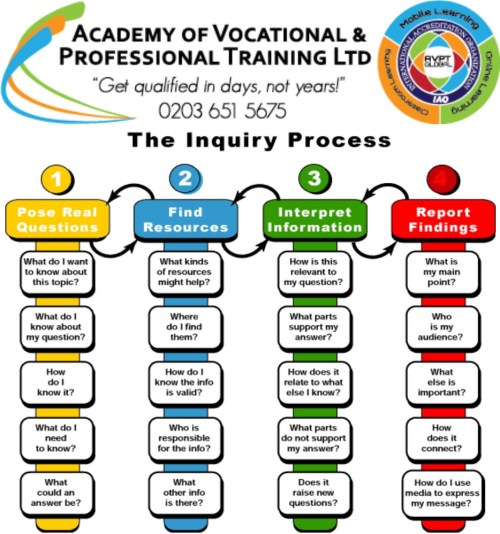
the enquiry process to soft skills training april 2014

The Multiple Intelligence Theory was developed by Dr. Howard Gardner in 1983. Dr. Gardner, a noted psychologist and professor of neuroscience from Harvard University, suggested that every human being interacts with their environment differently. We each possess nine different kinds of intelligence, but our experiences, cultural beliefs, and knowledge base determine their exact configuration.

What is “intelligence”, according to Multiple Intelligence Theory?

According to Gardner, there are three key elements that determine a person’s intelligence:

  1. The ability to create a service or product that will be valued in the person’s society of culture.

  2. A skill set that allows the person to solve real world problems that they may encounter in life.

  3. The ability to potentially create new solutions for problems or to utilize existing solutions. This typically involves the acquisition of new knowledge. 

Multiple Intelligence-Based Activities in eLearning

Multiple Intelligence Theory can be implemented in eLearning based upon the nine multiple intelligences. Let’s take a closer look at each category and which multiple intelligence-based activities can be utilized during instructional design to create the best possible eLearning experience for the learners:

  1. Musical (or Rhythmic) Intelligence
    This intelligence involves the capacity to think and learn in terms of music and rhythm, and to recognize and hear patterns. An activity that would appeal to this type of intelligence is a lesson that includes music or sound, such as a multimedia presentation. Try to use music that emphasizes the subject matter and creates a more immersive experience for the learner. Since there is more of an auditory aspect with this particular intelligence, lectures can also be very helpful. People who demonstrate a high degree of musical intelligence may be ideally suited for musical professions, such as composing or playing an instrument.

  2. Linguistic Intelligence
    This intelligence is associated with expression through language. These people tend to be able to eloquently convey their thoughts and to understand the words of others. Writers and speakers typically display a high degree of this sort of intelligence. Any activities that include discussion, such as online forums or group-based scenarios, are ideal for individuals who lean more toward linguistic intelligence.

  3. Mathematical (or Logical) Intelligence
    This involves the ability to identify principles or structures within a system. This intelligence is often associated with the logic or the manipulation of numbers.  Activities ideally suited for this intelligence may include diagrams, charts, or tables. Critical thinking scenarios are also useful with this group. Accountants and researchers often have a high level of mathematical intelligence.

  4. Kinesthetic (or Bodily) Intelligence
    Body Intelligence involves the use of a person’s entire body to figure out solutions or to create something. People who demonstrate a high degree of kinesthetic intelligence may be ideally suited for performing arts professions, such as dancing, or careers that require an innate knowledge of one’s own body, such as a doctor or athlete. Activities that are best suited for this sort of intelligence include games that involve hand-eye-coordination or interactive scenarios that require physical involvement. The thing to keep in mind about this group is that they are best able to learn when muscular movement is involved. So, include activities that require movement and physical response.

  5. Spatial Intelligence
    This intelligence pertains to a keen sense of space and how one can navigate those spaces. Activities that involve flow charts and graphics are ideal for this intelligence group, as well as games or multimedia that is visually appealing.  Architects, pilots, and sailors often have a high degree of spatial intelligence.

  6. Intrapersonal Intelligence
    This involves an in depth understanding of oneself, such as what you can accomplish and how you react to certain situations. As such, individuals with high intrapersonal intelligence often have a sense of what they should avoid and what they want to achieve in their lives. Professors and philosophers often possess high degrees of intrapersonal intelligence. Activities such as collaborative learning exercises (online forums) and chat programs enable intrapersonal intelligence learners to help others and to share experiences and ideas. This category responds well, first and foremost, to activities, which require introspection.

  7. Interpersonal Intelligence
    This is the capacity to understand and learn from others. People who demonstrate a high degree of intrapersonal intelligence may be ideally suited for service professions, such as teaching or politics. Those who identify more with this category of intelligence may benefit from group discussion activities and in depth questions that make them fully explore the topic. What’s important to remember about interpersonal intelligence is that these individuals are sensitive to others’ moods and feelings. They work well in-group settings and are often able to learn more effectively when collaborating.

  8. Naturalist Intelligence
    This intelligence involves the capacity to differentiate between living organisms and to view the connection between all natural things.  People with a high degree of naturalist intelligence usually have a close bond with nature. Botany and biology are two career fields that closely identify with this sort of intelligence. Activities that involve classification or organization appeal to these individuals.

  9. Existential Intelligence
    This particular intelligence was added later by Gardner, and is not commonly associated with learning environments, as it is geared more toward spiritual and philosophical views. For example, someone who has a high degree of existentialist intelligence may have a tendency to pose questions about life’s purpose or death. 

It’s important to note that instructional designers should not feel obligated to incorporate all of these multiple intelligence-based activities into their eLearning courses, just that it may be beneficial to offer a variety of multiple intelligence-based activities to more effectively illustrate the subject matter. If you are able to offer learners a diverse set of learning tools and eLearning strategies, then you gain the ability to increase comprehension and retention, not to mention enhance the overall eLearning experience.

Call us to enquiry about our soft skills courses

Call us to inquiry about our soft skills courses

Kensington, Chelsea and Westminster Enterprise Womens Business Club Meeting – 15th May 2014

Join us in May for a productive event

Join us in May for a productive event

Please join us for the next Kensington, Chelsea and Westminster Women’s Business Club on Thursday 15th May.

Date: Thursday, May 15, 2014 – 10:00 to 12:00

Venue: County House

Venue address: 46 New Broad St, London, EC2M 1JH

Price: £25.80 inc VAT (includes refreshments)

 “9 Deadly Mistakes that can kill your Linkedin Professional Profile”

Diane Shawe Host KCW Enterprise Womens Club

Diane Shawe Host KCW Enterprise Womens Club

Local host Diane Shawe will discuss with you all why LinkedIn is easily one of the most overlooked of the social networking sites for effective online marketing. Yet, if you get it right, it could also be one of the most lucrative.

She will demonstrate why LinkedIn really does have the power to help you promote your business to the right people. It helps to increase awareness of your brand and gets word out about your products  and services. So many LinkedIn members make crucial marketing mistakes when using LinkedIn that really can affect how your profile is perceived along with knocking your profitability. This social networking platform isn’t about accruing lots of friends or fans or ‘Likes’, as you would with Facebook. It’s not about finding people to ‘follow’ you, as you would with Twitter.

Instead, those people who find real success with LinkedIn are those who focus on building solid long-term business relationships.

Diane is Chief Executive Officer of the Academy of Vocational and Professional Training Ltd, which provides online and workshop fast-track soft skills training courses, Ms. Shawe is passionate about technology and the impact it will have on delivering training to students on the move that can be measured and proven. In addition Diane sits on several executive committee which includes the Conservative Education Society. As well as being a published author of several business books including, “The 10 habits of a successful women Rainmaker – which is about to be launch in June 2014!

Explorer, International Speaker, Author, Arctic Leadership Challenges

Explorer, International Speaker, Author, Arctic Leadership Challenges

We are delighted to announce that the inspirational guest speaker will be Rona Cant, Explorer, International Speaker, Author, Arctic Leadership Challenges, who will speak about her experiences and how she helps organisations and individuals across the world get a better understanding of what works and what doesn’t work in leadership and teamwork and how you can overcome your obstacles and challenges using examples from her very diverse expeditions and her life through the medium of talks and master classes to help you become the best you can be.

Diane offers you a warm welcome to join her at the Kensington, Chelsea and Westminster Women’s Business Club meeting. The event is for women who are looking for that extra special support, advice, collaborative relations to help them develop and expand their business.  Join us on LinkedIn.

Available

Leading Training Provider ‘AVPT’ Approved To Deliver CPD ‘Soft Skills’ Courses To The UK Legal Industry

CPD does not have to be hard anymore

CPD does not have to be hard anymore

Press Release  Press Release

London UK, Thursday 3rd April 2014 – A national organisation specialising in the delivery of vocational and professional training has been approved to deliver recognised ‘soft skills’ courses to the legal profession, following formal assessment and accreditation by the Solicitors Regulatory Authority.

The Academy of Vocational and Professional Training (AVPT) now offer ‘soft skill’ courses within the legal sector after successfully becoming the latest organisation in the UK to reach the expecting standards required by the national regulatory body. Not only are the courses approved and recognised industry wide, but also count towards CPD certification of course candidates.

Within professional development arenas, it is now widely accepted the development of ‘soft skills’ within a workforce plays a significant part in the performance and continued success of companies and organisations across every niche. This has lead to an upsurge in organisations looking to complement the traditional ‘hard skill’ base with ‘soft skill’ development programmes.

Law firms begin to up skill their staff with soft skills

Law firms begin to up skill their staff with soft skills

In contrast to the occupational ‘hard-skills’ – those needed to physically undertake a role, ‘soft skills’ focus on the personal characteristic traits which allow individuals to excel in the work place, such as communication, empathy, emotional intelligence and social interaction.

As the legal industry settles after a fundamental reshaping which has resulted in a considerable increase in competition from smaller firms and individuals, law firms across the country are adapting their approach by improving the soft skill abilities of their employees and partners. Modernisation has helped them recognise the importance of technology in the learning environment to overcome geographical, language barriers and time constraint when up-skilling their entire business, so as to become more customer and user friendly.

The current range of ‘soft skill’ development packages for the legal profession have been specifically tailored to meet the needs and requirements of clients working in legal niches. Skills such as HR, Marketing with Social Media, Information management, Leadership & Management skills, Business development, Negotiations and customer services to name but a few from the list of 300 which can now count towards their annual CPD requirements.

Diane Shawe, CEO of AVPT commented “in 2013 the Legal Services Policy Institute estimate as many as 3,000 high street law firms (or 35% of the total) will have to disappear in the subsequent upheaval, law firms with good local reputations will be able to withstand competition if they can successfully reach the demands of clients for greater convenience and ease of access to services by generating greater efficiencies within their practices.”

AVPT is the only UK globally accredited online and workshop based provider of over 300 Soft Skills courses, which uses a cutting edge proprietary online learning management system. Workshop courses are professionally executed in 1-3 days which are delivered as foundation to expert levels.

AVPTLTD LOGO  6As a provider of Soft Skill training courses which are accredited by the Solicitors Regulatory Authority and globally by the IAO, AVPT are now offering CPD applicable courses to the legal profession. For further information please visit the official website at www.academy-of-vocational-and-professional-training.comor get in touch using the details shown with this release.