Tag Archives: diane shawe

Why strategies for modernising corporate learning should focus on outcomes

there's never been a better time to start a short coureTHE SPEED OF CHANGE IN MODERN BUSINESS DEMANDS A NEW APPROACH TO SUPPORTING LEARNING AND PERFORMANCE AT THE POINT OF NEED.

article by Diane Shawe M.Ed

“THE IMPORTANCE AND EVIDENCE -BASED APPROACH TO
LEARNING USING MOBILE TECHNOLOGY IS INFLUENCING HOW INVESTMENT IN CONTINUED PROFESSIONAL DEVELOPMENT OF A WORKFORCE IS ACHIEVED”

New market opportunities open and close at blinding speed, new competitors emerge overnight, product lifecycles are getting shorter, and customers are more knowledgeable and sophisticated. This fast-changing environment has led to requirement to change learning and training. However more often than not, the task of aligning the learning organisation to the business can be challenging and the perception of how the business views the learning organisation in terms of aligning to strategic initiatives is different to how the learning organisation perceives itself.

Downsizing has resulted in a mass drainage and outflow of skills as employees or contractors are let go. To ensure that an organisation can compete globally and remains at par with the technological changes in the global market committing to the investment of on-going skill training is often viewed as a potential unnecessary incision into the bottom line
Start a short course to grow

Corporates, enterprises and charities all wish to run their operations at the minimum costs allowed. We all recognise that in today’s environment, business moves faster than ever. Most organisations now recognise the importance of developing a strategic approach to learning and harnessing the internal skills of their teams. Moving away from more tactical based activities associated with training such as measuring skills-based behaviours, to focusing on acquisition of knowledge and learning transfer that result in individual and organisational performance improvements.

With the explosion of mobile technology, organisations need to take advantage of the benefits, scalability, and viability of using mobile e-learning, using smart phones, tablets, and notepads that offer a blended solution.

E-learning has the potential to fully integrate the benefits of personal freedom with connectivity (belonging to a purposeful group of learners). From an educational perspective the “e” in e-learning stands for more than electronic; it can also stand for extending and enhancing the learning experience.

Fulfilling the buyers requirements

Corporate strategy for modernising learning free report by Diane ShaweThe four pillars that go to underpin the buyer’s requirements and therefore still define the industry offerings are centred on the following: • Compliance and accreditation

  • Scalable and flexible whilst achieving a real reduction in Cost
  • Improving, tracking and measuring Learners’ performance
  • Real time management, alignment and communication to support on-going changes.
  • The ability to track and report learner performance remains uppermost in many procurers’ minds.

Isaac Asimov’s quote is now more urgent and relevant if corporates are to gain a lean and competitive advantage with a progressive highly skilled workforce for the 21st century.

“No sensible decision can be made any longer without taking into account not only the world as it is, but the world as it will be.”

Why strategies for modernising corporate learning should focus on outcomes rather than input by Diane Shawe M.Ed

How to identify your youtube target market

The largest search engine in the world

The largest search engine in the world

10 thing you need to clarify about what your business is all about, what your brand is, and what your purpose is in the marketing world.

Article by Diane Shawe M.Ed

The following questions will help you to clarify and understand what the marketing vision of your business is all about.

1. What kind of people are you trying to reach? I’m really sure you already know the type of people that your services are directed to. You see them constantly, they contact you as well if necessary, and that will tell you what kind of people they are and how you can treat them.

2. What do they look like? Are they fat or skinny? Male or female? Old, young or middle-aged?

3. What are they looking for? What is the final goal they are after based on the service you provide? What feeling are they trying to reach with it? Do they need it to feel happy? Do they need it to survive? A lot of needs must be taken care of for a person to survive.

4. What do you actually do for them? Maybe you are already offering a service for that audience. That will give you a great vision of what exactly you need to inform any new people that fit into that same audience.

5. What kind of information would they be interested to know about and pay for? You already know the needs of your customers. You know exactly what kind of information will be highly helpful to them in order to help them to satisfy those needs. Why don’t you just create a great info-product about it?

6. How much money are they actually paying you for it? Knowing how much you usually charge them for your service is a very important indicator, because if you decide to create a product like a report, a training video, software or something directly related to your audience, you may simply be able to figure out the price tag you can easily stamp to it.

7. How would they like to reach that content? Is it Video, mobile phone, Audio, Written, or Blogging? This is important to know. You may just think about it. Think on their limitations to read, hear, watch or use the computer. If they can do everything you can, just ask them what they would like to know about stuff. Do they like to read? Do they like to watch videos? Do they like to hear audio? Do they like to use YouTube?

8. Where are they from? Maybe you have an audience that comes from other cities or even countries. You need to target every one and adapt your information to all of them at the same time.

9. What are your competitors offering to your audience? In the marketing world, it is very important to study the competition that targets your exact audience. What do they generally offer? What things do they offer that you don’t? Do they have more clients? Do they work additional hours? Do they cover a lot more needs than you?

10. Can you offer a better service/product than your competitors?

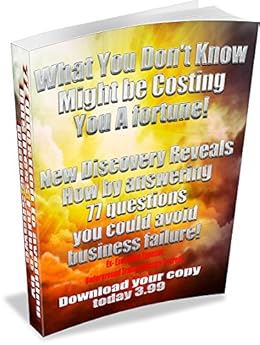
Download your Free copy today

Download your Free copy today

Once your know everything about your successful competitors, you can just offer the same thing but with your personal touch plus a lot more great things that they are not offering. You can have special offers, free samples, free phone consultation, special discounts, etc.

These questions are very important in deciding how to establish your business over YouTube. You can position almost any kind of business over YouTube because YouTube is more than just a website; it is a large audience of people with real human needs who are waiting for you and your service to satisfy them.

Click here to download your YouTube Marketing Made Easy Training Guide by Short courses Expert

Image

How to start 6 short courses in one step

Startet study pack 1 short courses

Is you mobile phone germ free?

Mucky mobile: Your phone could carry 10 times as many bugs as a lavatory seat

Next time you use you mobile phone, you might want to give it a little clean.

Researchers have discovered there are more bacteria on the average mobile than you will find in a toilet seat! Experts said the reason is that phones are often passed between people which spreads the germs around – but they are never cleaned which means the diseases keep on building up.

So when did you last clean your mobile phone on your sleeves or on your skirt?

Previous research has found that other things we assume are clean are in reality rather disgusting.

Keep germs at bay this winter

Keep germs at bay this winter

British scientists discovered that cash machines have similar levels of pseudomonads and bacillus, bacterias which are known to cause sickness and diarrhoea, as they found in public toilets.

Computer keyboards are also five times dirtier than the average lavatory seat.

Researchers from Which? swabbed 33 keyboards for food poisoning bugs e.coli, coliforms, staphylococcus aureus and enterobacteria and found four were a potential health hazard.

One was even ‘condemned’ because it was so infectious.

Remote controllers have also long been known as the grubbiest item in hotel rooms as they are never wiped down.
Read more: http://www.dailymail.co.uk/health/article-2196365/Mobile-phones-ger…

Grants for further Education and Short courses

Call us to enquiry about our soft skills courses

Call us to enquiry about our soft skills courses

Loads of grants and bursaries go unclaimed each year in the UK, so we’ve created this guide so you can bag the cash you’re entitled to.

Further education loans for mature students in England

If you’re 24 or over, you can apply for a 24+ Advanced Learning Loan to help with college or training tuition costs in England.

You’ll need to be studying a Level 3 or 4 course – these include A-levels, Access to Higher Education Diplomas and many apprenticeships You can take a loan for each A-level, but you can’t take them all at once. You must also have lived anywhere in the UK for the last three years.

There’s no credit check to get the loan, and it doesn’t depend on your household income. How much you get depends on what you’re studying and what your college charges in tuition fees. The minimum loan is £300. The loan will be paid directly to the college.

There’s also a 24+ Advanced Learning Loans Bursary Fund, which you can apply to if you need learning help, or to cover childcare or residential costs.

If you’re studying an Access to Higher Education diploma, then go on to complete a higher education course, your 24+ Advanced Learning Loan is written off.

You start paying the loan back when you earn £21,000 a year or more. Interest is charged at RPI+3% while you’re studying, then at RPI.

Who can apply? Anyone over the age of 24 studying a Level 3 or 4 course.

What’s the maximum award? £300 upwards. What does it cover? Tuition fees/training costs.

Free short courses

Fee-free tuition for Scottish students

If you live in Scotland and decide to study at a university in Scotland, you won’t have to pay anything towards tuition fees, you’ll be guaranteed to get a maintenance loan and may be eligible for a bursary. But if you live in England, Wales or Northern Ireland, you’ll still have to pay up to £9,000 a year to study in Scotland.

The Student Awards Agency for Scotland (SAAS) offers the Young Students’ Bursary, which covers day-to-day living costs if your family’s household income is less than £34,000 a year. Those on an income of less than £17,000 will get the full bursary of £1,750.

Anyone who applies through SAAS will be eligible for a loan of at least £4,750 if their household income is £34,000 or above, while others will receive £5,750.

There’s also an Independent Students’ Bursary and student loan for those who are 25 or over, are married or living with a partner, or responsible for a child. Here, you’ll get a bursary of £750 if your household income is under £17,000.

Loans work in the same way for mature students – you’ll get at least £4,750 if your household income is over £34,000, while those with an income under £17,000 can borrow up to £6,750.

Who can apply? Loans: Everyone. Bursary: Households earning under £34,000 a year.
What’s the maximum award? £300 upwards. What does it cover? Living or studying costs.

Why Study With Us Unemployed PosterIndividual Learning Accounts for Scottish adults

If you live in Scotland and earn less than £22,000 a year, you could get some funding from ILA Scotland.

This provides a grant of £200 towards the cost of learning something new at any approved provider, including learning centres, colleges, universities and private training companies.

Who can apply? Adults in Scotland. What’s the maximum award? £200. What does it cover? Learning costs.

Discretionary Learner Support

You can apply for Discretionary Learner Support from your education provider if you’re 19 or over, studying for a further education course, and facing financial hardship. This money can go towards childcare, accommodation, travel or course materials & equipment.

Your school or college decides how much you’ll get, and which scheme you’ll be put on, ie it could be a direct payment (you don’t have to pay it back), a loan, or paid directly to your landlord.

Who can apply? Anyone over 19. How much can you get? Varies. What does it cover? Any costs associated with studying

Care to Learn

There is help for those who have to bear the cost of course fees and childcare through the Government’s Care to Learn scheme. You must be 20 years or over at the start of your course to be eligible for the scheme, and be the main carer for your child. This is not suitable for those studying a higher education course at university.

The sum covers childcare, deposit and registration fees, travel costs for taking your child to the provider, and keeping your childcare place over the holidays. Childcare providers must be registered with Ofsted.

Payments of £160 per child per week (£175 if you live in London) will stop if you stop studying, you finish the course, or your child stops attending childcare.

Who can apply? Aged 20 or over, studying publicly-funded course in England. How much can you get? £160 or £175 per child per week. What does it cover? Childcare costs.

Professional and Career Development Loans

If you think grants and loans are only for university students, think again. These loans are offered at a reduced interest rate, which the Government pays while you’re studying, and are there to help those who want to top up their training.

To be eligible, you need to be over 18 and must have been living in anywhere in the UK for at least three years before the start of your course. Your course must last two years, or up to three years with a year of work experience.

The snag is that the course must be provided by an organisation on the Professional Career and Development Loan Register, so you’ll need to check.

Be careful of imposters – only Barclays and Co-op currently offer these loans. For more information, take a look at our Career Development Loans guide.

Who can apply? Anyone over 18. How much can you get? Between £300 and £10,000. What does it cover? Any tuition costs associated with developing your career.

Mobile Learning, Mobile Earning

Mobile Learning, Mobile Earning

Local council grants

Your local council may offer grants to advance your education. As councils can assign funding to different areas, search for local training providers using the Gov.uk website.

Quick Stats: Who can apply? Varies. What’s the maximum award? Varies. What does it cover? Depends on the type of grant available.

Setting up your own business

Over 50 and interested in setting up your own business?

The Prince’s Initiative, a charity that supports people who are out of work or facing redundancy, offers a Preparing to Run Your Own Business Course for the over-50s. It’s free but requires an £80 deposit, reduced to £25 if you’re claiming an employment-related benefit, which is refunded when you’ve finished the course.

The course runs all over the UK and includes areas such as marketing and finance. For more information, or to book a place, see the Prime website or call 0845 862 2023.

Who can apply? Over-50s. What’s the maximum award? N/A. What does it cover? 6-7 week course with 3 training days and coursework.

Want to improve your maths and English skills?

A simple maths equationIf you’ve ever wanted to improve your maths and English skills, virtually every college in the country offers free courses to help you from basic literacy and numeracy up to GCSE level. Check on the National Careers Service website or call 0800 100 900 for classes in your area.

Try this online quiz from Move On and the BBC SkillsWise site to see if you could improve your skills.

Who can apply? Anyone What’s the maximum award? n/a What does it cover? Free daytime and evening classes in maths and English (reading, writing)


How mobile hair extension technician could rent a salon chair

How hair extensions are sourced, treated and graded by Diane Shawe 2014Renting a chair has become so popular that it is estimated around 70% of the salons are following this business model. What made the salon chair rental so popular and why it is rapidly expanding. It use to be looked down on, but this negative profile has been changed as more and more salons are taking advantage of this opportunity.

article by Diane Shawe M.Ed

Obviously, there are benefits to starting your own salon chair rental service over the traditional method of doing business. Here are some of them listed.

1. When you rent a chair in your salon, you become the landlord of that chair rather than an employer consequently, all you’re concerned with is collecting your rent each month. Similarly, if you decide to sell your salon chair rental, the buyer only has to be consumed with the same task… collecting rent! They wont be worried about transferring all of your employees’ entitlements.

2. Your salon chair renters will govern their own business. No longer will you have to arrange lunch breaks for your stylists. Whatever the stylist decide, they have to pay you the for renting that chair at the end of the month.

3. You do not have to worry about paying your stylists for working over time. In this rent a chair model, the stylists can choose to work for as long as they want or as little as they want. They can even choose to come only when they have an appointment scheduled with their client. Nothing makes a difference as long as you receive the salon rent at the end of each month whether the stylist does business or not.

4. Your record keeping pertaining to your employees such as the wage records, time sheets, pay slips and other records will not have to be maintained. That itself will eliminate a lot of clutter from your office or wherever you keep them. A great weight lifted from your shoulder because the salon chair renter is responsible for all her own records.

5. There can be a lot of red tape and procedures to be followed with employees and apprentices. With renting a chair to other stylist you do not have to worry about a variety of rules and regulations apart from insurance and your salon security.

Those traditionally operated salons use to look down upon the renting a chair model. But with benefits such as these, and the high turnover of staff and increased running cost (minimum way bills)and naturally making money, I don’t think we’re ever going see a decline in the industry. In fact, this is turning out to be a blessing in disguise for many hairdressing business who have seen a decline in revenue streams due to the recession.

Equally there are benefits to why you should consider renting a chair in a salon.

1. This can give you credibility if you are able to establish yourself in a reputable salon

2) You can tend to more customers in one day as appose to the travel time allocated to traffic problems.

3) Other staff in the salon could support you in other areas you are weak in.

4) Clients could feel much more confident in using your service because you have an established and reachable business address.

5) You could benefit from joint advertising and promotional campaigns.

If your thinking of setting up in business or expanding your business during these economically challenging time, a couple of publication may be of benefit to your business.
Getting started in the hair extension business by Diane Shawe

However there are certain things potential renters should also look out for in order to evaluate the financial commitment when renting a chair.


1) How long has the salon been established

2) What type of customer base do they attract and are they similar to the client base you want.

3) What level of footfall do they have each day

4) Does their opening time work with your client base

5) What level of support would you be getting e.g appointment book, telephone answering, availability of working space and facilities

6) How many rent a chair clients have they had in the past and how long have they stayed

7) Do they do any advertising?

8) Are they in financial trouble hence why they are renting a chair?

9) Who would you be reporting too and could you get on

10) How much money would you have to pay up front and what are the guarantees.

It is estimated that the hairdressing sector is set to grown over the next 3 years by 15% especially specialist areas such as hair extensions, hair enhancement and specialist technicians and consultants.

Training is now available to assist anyone wanting to expand into this market and then take the opportunity to rent a chair in many of these salons today.

Visit http://www.hairextensiontraining.academy

become a hair extension technician

Is crowdfunding all that it’s cracked up to be?

Kick starting your business with crowd sourcing 1 day course

Crowdfunding is the newest way to raise money for startups who need capital. But not all crowdfunding is alike. Learn how to determine which crowdfunding platform is the best one for your business.

article by Diane Shawe M.Ed

All kinds of projects such as Businesses, nonprofits, artists, and entrepreneurs have all succeeded in raising some startup or expansion funds by presenting their campaigns on one of the many crowd funding platforms that have sprung up in recent years mainly due to the failure of banks to champion real business growth that requires an element of risk.

But as it becomes even more popular, the organisers are now wanting to ensure that their investors get a return on their often small investments. Crowdfunding isn’t a simply process of signing up for a service and listing your financial needs. The first step is finding the platform that is just right for your business and one other thing to take into consideration is the crowdfunding body assessing if your right for them.

Listed below is a brief Introduction to Various Types of Crowdfunding Sites and their links.

Like many other things, crowdfunding sites come in a lot of different shapes and sizes. There are crowdfunding sites for nonprofits and social causes: crowdfunding the peer to peer piggy bank

These are just a few. There are plenty more.

Crowdfunding sites for independent artists and people spearheading creative projects include:

If you want to start a business or find investors for your million dollar project, then perhaps one of these crowdfunding sites will be more your speed:crowd funding Growing_Fund by

LendInvest is a marketplace lending platform for residential and commercial mortgages. All loans on the LendInvest platform are secured by a registered legal charge against property in the UK.
Mortagage Peer to Peer Lending

Crowdfunding sites such as Kickstarter, Fundable and Indiegogo are responsible for some of the coolest projects coming out right now. The sky’s the limit when it comes to these projects. Everything from a music label deal to food companies, there is something for everyone.

Just check out the coolest top ten successes listed by Matthew Toren,
Serial Entrepreneur, Mentor and co-founder of YoungEntrepreneur.com
whiteboard schema : crowdfunding cs5

Diane Shawe launches online mentoring call preparation form for business startups

mentoring by diane shaweDiane Shawe’s passion for turning dreams into realities has been launching her clients beyond their limitations and into the lives they truly deserve since 2003.

She provides the benefits of mentoring through a number of career planning workshops and online mentor programs globally accredited by IAO

Because we are all busy people, once again Diane believes that technology can help bring about a better lever of convenience and speed to getting constructive assistance.  You can visit www.get.mentoring.dianeshawe.info to start the process or you can click here to complete your Call preparation and request form.

Since establishing her business through AVPT Diane has been committed to offering the benefits of mentoring to individuals and organisations and helping them overcome the range of challenges they face. By continually adding to her vast scope of knowledge, qualifications and experience her clients have been able to enjoy the workable tools she offers that lead to their desired personal and professional success.

Get mentoring with diane shawe business start up loans
Whether you’re looking to add structure to your career planning, provide your workers with professional training in areas such as conflict resolution, time management, and leadership skills you’ll appreciate the confidential, professional and friendly way all her materials are delivered. Diane’s holistic approach to making a positive difference has seen her broadening her scope of influence while giving back to philanthropic organisations such as the Kensington Chelsea and Business Club, Pink Shoe and Nexters.

Diane’s membership to some of the more prestigious bodies such as the Institute of Directors, Chartered Management Institute, Solicitors Regulation Authority and International Accreditation Organisation offers you the utmost peace of mind. As they’re member regulated by lawyers, CEOs and directors both in the private and public sectors you can rest assured that you’ll be enjoying approaches that have been proven to bring about success.

Over the year Diane has been passionate about supporting individuals around the world to become independant.

She is now proud to show you all how she have been able to support all types of people around the world via Kiva to help start or expand their business.

I have now supported over 96 loans in 37 countries and you can see them all by clicking here.

View copy Diane Shawe Draft-Mentoring-Contract

Worldclass Free Business Growth Bootcamp with Bill Walsh in London

Do you need to fine tune your big business idea?  Are you looking for a partner? Then this is an event not to be missed!

Bill Walsh free Business Growth Seminar in London hosted by Diane Shawe

Bill Walsh has agreed to come to the UK from the US and give a free Business Growth Session whilst I host a business success panel.To post your question to the panelists Click here 

Come to this free event and learn how to launch & build an even more successful business with one of the World’s most successful Business Coach. Normally to attend one of his sessions would cost over £1,000

When you attend you will have the opportunity to put your questions to our Business Panelist and network
with local business executives.

The educational focus is on Business Growth – Public Speaking and how to create your own VIP Masterminds. Plus everyone will receive some amazing gifts just for attending!

Here’s why you should attend:

Bill Walsh will discuss:

How to Monetise your Intellectual Property
How to Build a 12-Month Success Plan
How to Connect & Do deals with the Ultra-Successful
How to Become laser focused & ultra-productive
How to Monetise your Passion

For Complimentary Tickets visit CLICK HERE

Sponsored by Diane Shawe CEO of AVPT Ltd.

get mentoring with diane shawe business start up loans


Bill Walsh New book out now Oblivion Get your copy now

Do you have questions about Business Start up and Growth Bootcamp with Bill Walsh Millionaire Coach? Click here to register your question

If all the unemployed formed a country it would be the fifth largest in the world. Why does this matter?

Getting the world back to work with skills we can trust

Getting the world back to work with skills we can trust

Why the grip held by outdated educational institutions based on historical prestige needs to take a back seat and become student centric!

Article by Diane Shawe M.Ed

If we hadn’t had the most recent global economical crisis and the unrest in certain war torn regions had not occurred, there might have been 62 million more jobs in the world today, according to the International Labor Organisation as it is, there are over 200 million people looking for work across the globe.

To add to our worries: 75 million of these are young people, eager to take that first firm foothold in the ladder of success. We cannot allow them to become a “lost” generation.

The Great Recession has been particularly hard on older workers also, who have had difficulty finding new jobs after being unemployed for long spells. This is especially troubling because of their pressing needs for health care and retirement preparation.

It is also doubtful that the long-term unemployed are going to become more effective jobseekers simply by being forced to visit a Job centre daily if indeed they have a job centre in some parts of the world. But I am going to site that back in 1996, when the Jobseeker’s Allowance was introduced, the requirement to visit a Job centre every two weeks and provide detailed evidence of active job search did not raise overall job search effort among the unemployed.

If explicit job search requirements were not effective in a period of rapidly growing labour demand and falling unemployment, there is no good reason to expect them to be effective in the aftermath of a severe recession and one cannot certainly make a claim to recovery based on one geographical location sprinkled with opportunities driven by technology and property prices.

So clearly, jobs must be a preeminent priority in the years ahead. The major test of the new technological era is simple: can it provide decent livelihoods for all people?

Technology and rising inequality feeds into a broader concern: Technological advance creates a small cohort of big winners, leaving everybody else behind.

Certainly, those with the lowest skills are having the toughest time in today’s economy.

And yet, we also need to discuss what kind of growth this “right track” leads to. Will it be solid, sustainable, and balanced—or will it be fragile, erratic, and unbalanced?

To answer this question, we need to look at the patterns of economic activity in the years ahead, and especially the role of education, technology and innovation in driving us forward.

As Isaac Asimov—a master of science fiction literature—once said: “No sensible decision can be made any longer without taking into account not only the world as it is, but the world as it will be.” Isaac Asimov

So I have chosen a big topic and what I want to address in my blog today, in the form of three questions:

1. First, what does this new technological era mean for the economy, especially for jobs?

2. Second, how does it relate to one of the scourges of our age—rising inequality?

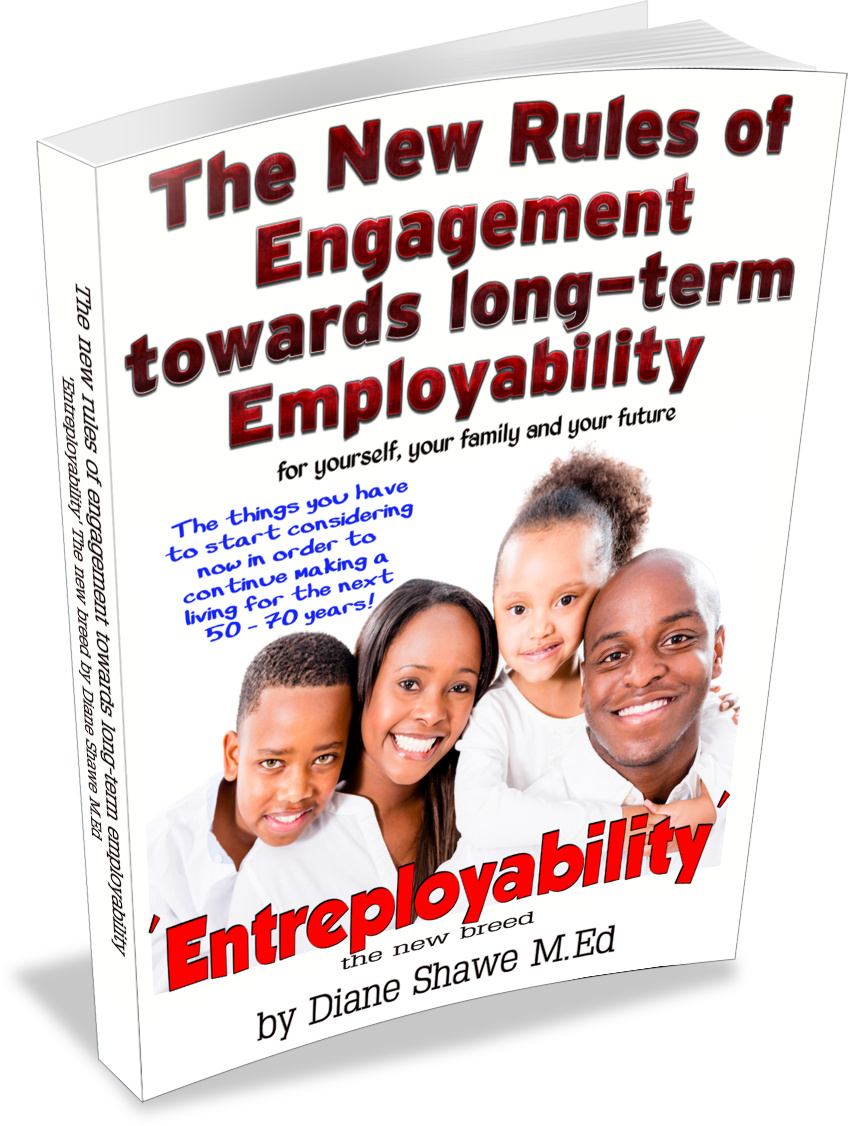
3. Third, what about some solutions, including vocational education and what I refer to as the growing need to foster a new thinking around “Entreployability”

The Interlinkages between Technology and the economy

Innovation is pushing ahead at warp speed. We are certainly living through one of the most exciting periods in human history. The pace of change is so fast that even the technology of five years ago seems prehistoric.

Those of you who are students probably do not even remember a time when phones were not smart, when cameras contained film, when texts meant school books, and when wireless was a word used for old-fashioned radio!

This advance is centered on the rise of a global digital network—the “hyperconnected world”—combined with the rise of genuine machine intelligence. Today’s smart phones are more powerful than yesterday’s supercomputers. We see cars driving themselves, printers making complicated three-dimensional parts, and robots doing the most complex tasks. “Science fiction” is rapidly becoming “science fact”.

What does this all mean for our lives and livelihoods, for our common economic future?

If the previous revolutions were about using machines for brawn, this is about using machines for brains. And since technology is powering a giant leap in global interconnectivity, these are “connected” brains! Just look at some of the trends.

Certainly, we can see some worrying trends. For a start, the effects of new machine technology are not showing up in productivity statistics—at least not yet—and productivity is by far the most important driver of long-term economic growth.

Now I am not an expert on the Economy, but we are all touched by it and using common sense I for one can see that there is a looming problem. For instance one of the biggest worries is how technological innovation affects jobs put simply will machines leave even more workers behind?

You may not want to give this a second glance but even seasoned professionals can find themselves cast adrift on an unfamiliar ocean.

Rising inequality

My second point about rising inequalities is going to be brief. But here’s a little statistic for you to consider. According to Oxfam, almost half the world’s wealth is owned by one percent of the population and, stunningly, the bottom half of the world’s population owns the same as the richest 85 people in the world.

What is causing such a convulsion in the distribution of income? There is no single factor here, although it seems clear that technology is one of the major factors—it can create huge rewards for the extraordinary visionaries at the top, and huge anxieties for the ordinary workers at the bottom. The speed at which information is sent around the world means that the average disgruntled people who make up the 5 largest country can amplify unrest as they all voice their fears to the small percentage of the world wealth holders.

What about some solutions?

So finally what is the purpose of education in today’s 21 Century, I quote Jane Stanford of Standford University — “with a “spirit of equality”. One of her goals for the university was “to resist the tendency to the stratification of society, by keeping open an avenue whereby the deserving and exceptional may rise through their own efforts from the lowest to the highest stations in life”.

What has happened? Why have these large institutions priced education out of these fundamental principles?

How can we make the new economic age enhance, rather than diminish, our humanity? How can we make this amazing innovation advance the prospects of all people?

It is clear that at the moment Educational systems are not keeping pace with changing technology and the ever-evolving world of work.

Not enough people are thinking strategically enough in this area. Fundamentally, we need to change what people learn, how people learn, when people learn, and even why people learn.

We must get beyond the traditional model of students sitting passively in classrooms, following instructions and memorising material. It is evident that computers can do that for us! A 21st century educational system must focus on the areas where humans can outclass computers—such as in cognitive skills, interpersonal skills, fine motor skills, or sophisticated coding skills. Maybe we need to remind ourselves of the purpose of education and vocational education. I summarise in my words the following:

The purpose of education

The first and foremost purpose of education is to educate and give everyone equal opportunity as a means to succeed in life. Education is a way of igniting and enlightening the thought of an individual.

It should help learners to discriminate between knowledge and ignorance, help to create a spark and create the sense of realisation with logic and a way to reason why the other things are illogical.

The purpose of vocational education

Every man must have a vocation – a trade, a business, or a profession – (if they are able too) in order to earn his livelihood so that they can support themselves, their family and people who cannot help themselves in our society. There are institutions for imparting various types of specialised training to help people qualify for this. The specialist is in demand everywhere, – in the office as well as in factories, in educational institutions and governments.

Conclusion.

The traditional belief that we must prepare ourselves to be ‘employable’ is under threat. The counter argument encourages us to ‘gear up’ for earning our own money, rather than seeing income as someone else’s responsibility.

With the population dramatically ageing and low-level jobs increasingly swallowed up by machinery, entrepreneurship will be a necessity for many, rather than a life-style choice for some.

SMEs are of course already leading this charge but in order to gear up for the future we need to start off by asking a serious question, defining criteria’s, and examining trends, impact these trends will have and plan a way to jointly prepare current and future generations to be both employable and entrepreneurial.

We are living in a new economy—powered by technology, fueled by information, and driven by knowledge. And we are entering the new century with opportunity on our side but huge problems that require new thinking.

The Question we should all ask ourselves?

Do you think you have another 20 – 30 years to live Yes [ ] No [ ]

Do you think you have another 30 – 50 years to live Yes [ ] No [ ]

Do you think you have another 50 – 70 years to live Yes [ ] No [ ]

Have you considered what you are going to do for the next 40- 70 years?

What will the job market look like in the next 20 years?

What will you be able to do to solve your problem which could be unemployment and patchy income streams?

What will you be able to do that will solve someone’s problem for which they will pay you a fee?

If computers might even replace our intelligence, they can never replace the capacities that make us truly human: our creativity and innovation, our passion.

So education must be the bridge between the present and future, the old and the new. But we must also build an enduring platform. By that I mean a new way of thinking about the global economy—the “new ©Entreployability the way forward.

Get your copy today from Amazon

This is helping an individual to develop their ‘©Entreployability assets’ which comprise of their knowledge (i.e. what they know), skills (what they do with what they know) and attitudes (how they do it).

To help them keep busy or at work; engaging their skills and attentions to employ themselves independently and maintain work.

To help them organise and manages their own business, contracts or employability.

To help them be available to be hired, provide them with a safe platform to encourage them to supply soft or hard skill for solving problems or being of service for which they will be paid by another party.

Making sure that the skill they have can be updated to help support them firstly, their family and community and economy.