Tag Archives: bluetooth proximity marketing

How Blended Education Makes Learning Process More Efficient

Photo courtesy of Guilia Frsythe

Photo courtesy of Guilia Frsythe

As internet connectivity and smart devices become every human being’s daily companion, with 1.75 billion users worldwide as eMarketer reported, more and more academic institutions are now leveraging the power of technology to re-invent the traditional classroom learning model.

The 2013’s United States Education & Workforce Committee study said that 31 states are now offering full-time eLearning tools to almost 275,000 K-12 students and 70% of all US school districts are now integrating blended learning (BL) programs in their curriculum.

One of the biggest trends in the academy, BL is a teaching approach that combines face-to-face learning through online-based instructions/activities. To facilitate, students are allowed to use their smart devices to do research, work on activities, complete their assignments, seek consultations, and consume digital learning resources in or outside the campus. But, how can this teaching methodology make learning efficient? Read on our discussion below as we further elaborate the topic.
Learners Are More Engaged

The infusion of online learning tools and traditional classroom lectures expands the learning resources being offered to the students. Apart from textbooks, teachers can pull out relevant video materials online and project it in front of their students to explain the topics further. Educators can also showcase online slideshows and interactive web applications to further strengthen their class discussions.

With BL, the possibilities of getting a reliable learning resource are endless. With the advent of video conferencing, students and teachers can go beyond the four corners the classroom. For instance, in foreign language topics, this innovative tech solution can be maximized in arranging live language lessons from native speakers worldwide. It can also be utilized when facilitating lectures on different cultures worldwide.
Students are safely browsing

The common concern with this learning strategy is that students are widely open to various content online, such as social media and online games that are deemed to be distracting in class. However, with the latest mobile technology today, we are now presented with devices that can block or curate content specifically for students only. One of the biggest brands Apple launched its own Kid’s App Store where students can only access curated educational apps and games. The latest Samsung smartphones, including the Galaxy S5, are also equipped with Kids Mode that let’s one set some parental control on the device, as featured on this source. As for Nokia’s Lumia range of Windows Phone devices, Microsoft also designed a special feature called Kid’s Corner which allows parents to choose the kind of apps and digital content they can only view and access. These innovations minimize the apprehensions that most parents and traditional educators have towards smart devices.

Teachers Can Access and Create Various Educational Content

Since the Bring Your Own Device (BYOD) policy is a part of this learning strategy, educators are given the opportunity to easily design a variety of content types tailored to their students. Apart from online blogs and Massive Open Online Courses (MOOCs) where professors can access a myriad of educational content (infographics and video lectures), they can also access mobile applications and e-Books to accompany their lectures.

The Academy of Vocational and Professional training are also currently the leaders on online Soft skills courses which are mobile device compliant, globally accredited and accessible 24/7

Since mobile devices nowadays are equipped with media creation tools, teachers can even create or design their own content to accompany their discussion. For instance, with many of the apple and android tablets,  are empowered to create slide shows with engaging music. The free movie making tool can also help them create video presentations combining photograph, audio, and text element.  It’s worth checking out the Samsung and iPad apps.
Makes Students More Engaged

Timothy HuneyCutt of National Math + Science Initiative pointed out that when “technology is integrated into school lessons, learners are more likely to be interested in, focused on, and excited about the subjects they are studying.” In subjects that may appear monotonous to selected students (such as Science and Math), teachers can use virtual lessons and one-on-one tutoring to encourage them to learn.

how to get your online website to attract clients free seminar 2014

Students Can Learn At Their Own Pace

Failure to digest the educator’s lecture can lead to students’ discouragement towards learning. With BL, if they fail to understand a particular lecture, they can ask their instructor to give them individualised instruction or learning materials through emails, video-conferencing, and social media channels. Students who are shy to speak out in the class through face-to-face on-campus discussion are also given the opportunity to shine and excel in class through BL.

BL can further enhance students’ learning by integrating technology and online resources to support the traditional face-to-face lectures. As we move to a more digital era, where handsets are now wearable and voice command accessible, we should see more improvements in educational technology in the coming years.

Blog by Jennifer Birch

Blog by Jennifer Birch

About the Author

As an EdTech advocate, Jennifer Birch believes in the power of Blended Learning. For her, the infusion of online learning tools and traditional classroom expands the learning resources being offered to the students. Connect with Jenni via Google +.

6 Things the Most Influential People on Social Media Do

Train to become a Linkd in specialist

Train to become a Linkd in specialist

How do you earn respect, stand out, and get noticed in noisy social-media circles? Take a cue from the Web’s biggest influencers.

Guest Blogger 

Influencers are among the most magical, powerful creatures in social media.

Within specific niches or across large audiences, they have the power to shape how people think about an issue, start important conversations, make businesses stand up and take notice, and more.

Outside of having a large following, how do they do it? And how did these influencers amass the following they have in the first place?

The ability to stand out in noisy social circles helps influencers build their audience and connect with them over and over again. It keeps them relevant. It keeps them influential.

Here are the six things influencers do to stand out:

1. They’re Superconnected and Almost Always On

Brand advocates, superfans, loyalists–influencers of all stripes–are hyperconnected to their audience. They have a passion for their topic of choice, which means they’re always on and use multiple devices to ensure they’re connected throughout the day.

Influencers use tools such as Topsy, Trackur, and Social Mention to find interesting conversations, stay on top of breaking news in their niche, and help them manage and schedule content for maximum exposure.

Influencers treat social like their j-o-b. (and sometimes it is). They get it; you have to invest time and money in yourself to help you scale if you are going to stay superconnected and become an influencer.

2. They Make Boring, Dry, or Otherwise Uninteresting Topics Fascinating

When everyone is saying the same thing, who grabs your attention? Influencers are the people coming up with a creative take on a topic, saying something different or contrary or funnier, etc.

Take Gretchen Rubin, for example. Rubin is a popular author, blogger, and speaker, but then a lot of people write and speak. How is she also one of LinkedIn’s 150 Most Influential People?

For one, while everyone else was writing self-help books, Rubin decided to parody them with her first book, Power Money Fame Sex: A User’s Guide.

See, while everyone else was trying to tell people how to be happy, Rubin decided to take a quirky, self-deprecating, and humorous approach.

When she tweets to her 92,000-plus followers, they listen and share because she’s not spouting the same old conventional wisdom. Her take is unique and makes something that could be tedious–finding happiness–an adventure in which her social connections can all participate.

3. They Create a Ton of Awesome Content

The killer content top influencers are banging out on a regular basis really helps them stand out in a sea of noise, regardless of the topic.

Influencers are great at creating content that people can’t help sharing.

They might do this by way of original research, powerful commentary, sharing a unique take on the news, turning information into stunning visuals, hosting webinars or online chats, or blogging prolifically.

Whichever medium they’re using, influencers love to create awesome content, and they have mastered techniques that allow them to scale their efforts. This might mean partnering with others to increase their reach and maximize their time, or building a great team around them to assist in their efforts.

There are a lot of people out there with something interesting or brilliant to say. The ones who garner influence, though, are incredibly skilled in how they get their message across to the greatest audience possible.

1 day social media and marketing course

4. They Know Who You Are and Want You Want

Influencers don’t operate in a vacuum, churning out social updates and content like traditional broadcasters. They know their audience and what you like–in fact, they often know what you’ll like before you do.

Knowing your audience goes far beyond demographics, and influencers totally get it. They listen, engage, and converse so they can truly understand what drives people. They’re thirsty for audience insights that will help them create that next amazing piece of content, or fuel their next groundbreaking research project.

They don’t get bogged down in popular opinion or go with the crowd, because they know you’re looking for something different. They know this because you’re telling them in a thousand different ways, and they’re actually paying attention.

It might be through social-media activity and sentiment tracking. It could be through website analytics. It may very well be gleaned through actual conversations with the real people who hang on their every word.

The difference is, they actually care about what would be most useful, helpful, or entertaining for you and go from there.

They’re more concerned with what you want to hear than what they want to say.

5. They’re Hip, They’re Happening, They’re Current

And they can’t help being all of these things, because they are so in tune with the topic on which they’re influential.

They read voraciously. They eat data and facts for breakfast. Influencers eat, sleep, and breathe their passion and are always at the forefront of the industry.

When everyone else is talking about what happened this morning, they’re already talking about what’s going to happen tomorrow. And they know what’s going to happen tomorrow, because they know just about everything there is to know about what’s already happened, who is working on what, which technologies or developments are on the horizon, and more.

6. They’re Trustworthy

And this is huge, massive, critical! They don’t waste words, publish fluff pieces, tell half-truths, or otherwise lead their audience astray.

People elevate others to the level of influencer because they trust them. It’s as simple as that.

It can take years to build that trust and one poorly thought out statement to break it, so influencers are incredibly careful about what they’re putting out to their networks.

They stand out in a sea of noise because time and again, they’ve proven their voice is worth listening to and their advice worth taking.

Call us to enquiry about our soft skills courses

Call us to enquiry about our soft skills courses Diane Shawe at express courses, London UK

source: http://www.inc.com/larry-kim/6-things-influencers-do-to-stand-out-in-social-media.html#ixzz2zldfZm9Q

Does nine different kinds of intelligence make you any smarter?

In this article, I will talk about the different ways in which Multiple Intelligence Theory can be implemented in e-Learning to help the learner effectively acquire, retain, and utilise the information being provided within the e-Learning course.

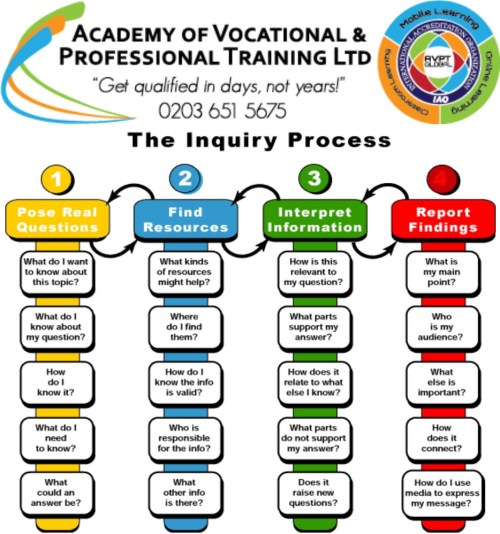
the enquiry process to soft skills training april 2014

The Multiple Intelligence Theory was developed by Dr. Howard Gardner in 1983. Dr. Gardner, a noted psychologist and professor of neuroscience from Harvard University, suggested that every human being interacts with their environment differently. We each possess nine different kinds of intelligence, but our experiences, cultural beliefs, and knowledge base determine their exact configuration.

What is “intelligence”, according to Multiple Intelligence Theory?

According to Gardner, there are three key elements that determine a person’s intelligence:

  1. The ability to create a service or product that will be valued in the person’s society of culture.

  2. A skill set that allows the person to solve real world problems that they may encounter in life.

  3. The ability to potentially create new solutions for problems or to utilize existing solutions. This typically involves the acquisition of new knowledge. 

Multiple Intelligence-Based Activities in eLearning

Multiple Intelligence Theory can be implemented in eLearning based upon the nine multiple intelligences. Let’s take a closer look at each category and which multiple intelligence-based activities can be utilized during instructional design to create the best possible eLearning experience for the learners:

  1. Musical (or Rhythmic) Intelligence
    This intelligence involves the capacity to think and learn in terms of music and rhythm, and to recognize and hear patterns. An activity that would appeal to this type of intelligence is a lesson that includes music or sound, such as a multimedia presentation. Try to use music that emphasizes the subject matter and creates a more immersive experience for the learner. Since there is more of an auditory aspect with this particular intelligence, lectures can also be very helpful. People who demonstrate a high degree of musical intelligence may be ideally suited for musical professions, such as composing or playing an instrument.

  2. Linguistic Intelligence
    This intelligence is associated with expression through language. These people tend to be able to eloquently convey their thoughts and to understand the words of others. Writers and speakers typically display a high degree of this sort of intelligence. Any activities that include discussion, such as online forums or group-based scenarios, are ideal for individuals who lean more toward linguistic intelligence.

  3. Mathematical (or Logical) Intelligence
    This involves the ability to identify principles or structures within a system. This intelligence is often associated with the logic or the manipulation of numbers.  Activities ideally suited for this intelligence may include diagrams, charts, or tables. Critical thinking scenarios are also useful with this group. Accountants and researchers often have a high level of mathematical intelligence.

  4. Kinesthetic (or Bodily) Intelligence
    Body Intelligence involves the use of a person’s entire body to figure out solutions or to create something. People who demonstrate a high degree of kinesthetic intelligence may be ideally suited for performing arts professions, such as dancing, or careers that require an innate knowledge of one’s own body, such as a doctor or athlete. Activities that are best suited for this sort of intelligence include games that involve hand-eye-coordination or interactive scenarios that require physical involvement. The thing to keep in mind about this group is that they are best able to learn when muscular movement is involved. So, include activities that require movement and physical response.

  5. Spatial Intelligence
    This intelligence pertains to a keen sense of space and how one can navigate those spaces. Activities that involve flow charts and graphics are ideal for this intelligence group, as well as games or multimedia that is visually appealing.  Architects, pilots, and sailors often have a high degree of spatial intelligence.

  6. Intrapersonal Intelligence
    This involves an in depth understanding of oneself, such as what you can accomplish and how you react to certain situations. As such, individuals with high intrapersonal intelligence often have a sense of what they should avoid and what they want to achieve in their lives. Professors and philosophers often possess high degrees of intrapersonal intelligence. Activities such as collaborative learning exercises (online forums) and chat programs enable intrapersonal intelligence learners to help others and to share experiences and ideas. This category responds well, first and foremost, to activities, which require introspection.

  7. Interpersonal Intelligence
    This is the capacity to understand and learn from others. People who demonstrate a high degree of intrapersonal intelligence may be ideally suited for service professions, such as teaching or politics. Those who identify more with this category of intelligence may benefit from group discussion activities and in depth questions that make them fully explore the topic. What’s important to remember about interpersonal intelligence is that these individuals are sensitive to others’ moods and feelings. They work well in-group settings and are often able to learn more effectively when collaborating.

  8. Naturalist Intelligence
    This intelligence involves the capacity to differentiate between living organisms and to view the connection between all natural things.  People with a high degree of naturalist intelligence usually have a close bond with nature. Botany and biology are two career fields that closely identify with this sort of intelligence. Activities that involve classification or organization appeal to these individuals.

  9. Existential Intelligence
    This particular intelligence was added later by Gardner, and is not commonly associated with learning environments, as it is geared more toward spiritual and philosophical views. For example, someone who has a high degree of existentialist intelligence may have a tendency to pose questions about life’s purpose or death. 

It’s important to note that instructional designers should not feel obligated to incorporate all of these multiple intelligence-based activities into their eLearning courses, just that it may be beneficial to offer a variety of multiple intelligence-based activities to more effectively illustrate the subject matter. If you are able to offer learners a diverse set of learning tools and eLearning strategies, then you gain the ability to increase comprehension and retention, not to mention enhance the overall eLearning experience.

Call us to enquiry about our soft skills courses

Call us to inquiry about our soft skills courses

Social Media – Delivering targeted messages Part 1:

 Localise, segment and personalise your social media engagement for more effective marketing

By our Guest Blogger:  Tamsin Oxford on Sep 24, 2013

For organisations to effectively engage with their consumers, segmenting and then personalising social media content is vital

The core of any business is the customer. What corporations and their brand stakeholders have realised is that the traditional broadcast model for engagement is no longer effective or efficient.

Organisations need to gain insight into audiences, segment their social engagement into specific groups and appeal to a diverse demographic without compromising brand integrity or messaging.

This feature is the first of three examining how to create customised experiences for customers across different platforms. In this feature we are considering how a business can accurately identify core groups, get to know their audiences and segment customers into niche collections. Sound complex? Not necessarily.

“Social media offers interaction that traditional media could never give to the marketer,” says Devon Stanton, PR and Promotions Manager at Megarom [www.megarom.co.za], “In addition, there is an impressive range of toolsets available that can analyse your social media audience and pull out vital demographic and interaction data. By utilising this information, you’ll be able to craft your social media to best suit your audience.”

A white paper by Experian offers a superb breakdown as to what segmentation is and why it is of value to the business. They define it as “the process of dividing your database into groups based on single or multiple criteria.”

This offers value in that you can drill down into the essentials of the client for improved targeting and flexibility. What better way to locate and address the most profitable customers and ensure that there is relevance in this communication? The right message to the right people at the right time – it works, that’s why it’s a cliché.

The business can no longer afford to be generic. A bland message directed across all social platforms may hit one or two people along the way, but it is unlikely to generate brand loyalty or encourage customers to identify with the brand itself.

“Take the time to understand what motivates people to share and talk about topics,” says Scott Gray, Head of Planning at Quirk [www.quirk.biz], “Interests are so fragmented that being generic doesn’t work anymore. To get messages to spread across social networks, brands have to have a point of view and get this to the most relevant group of people. If you’re not relevant, you’re dead.”

Steps to segmentation

Jeremy Waite, Head of Social Strategy at Adobe EMEA, offers a four-step process by which organisations can identify core groups and segment them efficiently that include:

  1. Influence – build relationships with key influencers
  2. Data – data helps brands identify which content drives conversation
  3. Optimising content – using this information helps to streamline content development that says the right things
  4. Measuring impact – stay aware of the impact of social efforts to continually drive conversation and stay relevant and targeted

The many faces of influence

“Building relationships with key influencers is vital,” says Waite, “Data shows that only 6% of fans regularly engage with companies they like on Facebook. By identifying the people most likely to drive conversation, and the types of posts and messages that engage these influences, this helps to increase engagement.”

Veronica Gross del Rio, EMEAI Social Media Manager at Interface  [http://www.interface.com/neteffect], agrees and adds, “Begin determining which social sites you should participate in and what topics are trending or popular. Track how your customers are using social media. We are a B2B company that designs and makes carpet tiles, for us interior designers and architects are the key people who specify our products so we need to convince them more than we need to convince the final buyer. Having the most accurate profile of them on social media is vital.”

It may be obvious that a business needs to identify its core markets and platforms to ensure it markets products effectively, but social media analysis and communications are not the forte of every organisation. It is here that solutions such as Quirk, Codestar and Adobe Social come into play. These companies have made it their business to understand the market and what the organisation needs in order to effectively understand, track and target their customers.

“Successful brands like Starbucks, Xbox and Dell have reduced most of their reporting to only one page that includes all the relevant metrics and information that they need to know about their customers,” says Waite, “These are known as the five ‘W’ – a strategy that Adobe Consulting has also adopted.”

These five ‘W’ are:

  • Who
  • What
  • When
  • Why
  • Where

Who are people talking about, what are they saying, why are they talking about you, when did the conversations begin and where did they take place.

“We design specific apps and landing pages for various products and services advertised on Facebook and often for specific consumer groups,” says Vinny Pianna, Director of Facebook specialists Codastar. “We find that ads for specific customer groups are far more successful than general ones. To segment this effectively we have looked at where we are successful and worked hard to build on this. The key to success is to tailor your messaging, advertising and landing pages for each group.”

Understand the core

To succeed in creating an effective marketing strategy across social media your organisation must ensure it is relevant, targeted, on trend and specific. To do so you need to listen to your customers and understand what they are interested in and make sure that you are communicating with them on the right platforms.

“The web has allowed people to form groups and communities around common interests,” says Gray, “If you’re into dressing up like Batman and singing karaoke, there’s probably a community of people like you. I think that more effective targeting is driven along lines of interest and passions rather than race, gender or age. People are the new conduits of media.”

Interface used these tactics to develop a targeted social media campaign to launch a new product. They created specific content for each social media channel that tapped into their unique qualities and the campaign has been a huge success as a result. Gross del Rio believes that it is this very targeted approach that has made all the difference to the success of their campaign.

“I think that knowing who your audience is and understanding the goals of the campaign will net you far better return on investment,” concludes Stanton, “The data is there to help you make better marketing decisions so use it to maximise results.”

In part two of this series will ask the experts how to take this concept one step further to tailor social media messaging to ensure you appeal to different needs, motives and preferences.

The 4th annual Corporate Social Media Summit Europe

Dec 4, 2013 – Dec 5, 2013, London

Become a social business: For superior marketing response, sharper corporate decision-making, enhanced innovation and a happier, more loyal customer

Related Articles

Why do your customers Like your brand?

We mean to help you so that in turn you help us

We mean to help you so that in turn you help us

The Academy Of Vocational And Professional Training look forward to the year ahead after a year of success and achievements

Lord Ahmed congraulate students and AVPT on achievements

Lord Ahmed congratulates students and AVPT on achievements

The Academy of Vocational and Professional Training (AVPT) have had an exceptional year, with a huge list of positive achievements. A year in which AVPT launched globally was marked the first cohort of students being presented with their certificates by  Baroness Uddin followed by congratulations from Lord Ahmed, in the impressive setting of the House of Lords.

“This was a huge achievement for us,” explains Diane Shawe, the CEO, “Our 395 courses are all globally accredited by the International Accreditation Organisation, meaning that they are accepted anywhere around the world. We’ve achieved so much this year and we felt very excited for the future when watching the first generation of our students receive their beautiful and meaningful certificates.”

The globally accredited status given to AVPT by the International Accreditation Organisation in June 2012 means that the courses available hold a big draw to students that want to travel. Diane sees this as recognition of the significant rise in e-learning.  This has also meant that AVPT’s launch of its Scholarship Den initiative hasStudent pitching to judges at ASVPT Scholarship DenStudent pitching to judges for scholarship happened at just the right time; young people, with a desire to better themselves or start a business are awarded with £2,000 of AVPT training. This has led to the continued and dynamic success of the academy’s offering.

In October 2012, AVPT was the main sponsor of the education section of the Youth Enterprise Live Show 2012 at Earl’s Court in PA9C1793London and had the Mayor of Hammersmith and Fulham as the guest of honour to officially open the AVPT stand where they attracted over 350 enquiries for the short courses.

To finish off an already exceptional year, AVPT won a contract with a Middle-Eastern Government to provide crisis management and leadership training to the government heads of departments.  After a highly successful training programme, AVPT was also added to the official procurement list for the UK’s Ministry of Justice and Department for Work and Pensions and so is able to provide training for these two large departments.

Rachel Fanshawe receives her certificate from Baroness Uddin

Rachel Fanshawe receives her certificate from Baroness Uddin at the House of Lords

This remarkable success story has continued into 2013 and the AVPT team are already setting their sights on the next target. The company has begun work towards striking up a partnership with The Department of Business, Innovation and Skills to carry on its successes with departments of the UK government.

Diane explains, “We have built solid relationships with all that we work with, and over the course of 2013 we want to be able to offer students from across the world a larger platform of study. We believe by building foundations with The Department of Business, Innovation and Skills, we can do this efficiently.”

AVPT is dedicated to helping students in reaching their full potential and have launched the first UK voucher code website offering customers the chance to find special offers and deals on short courses. The website, expresscoursevouchers.com, allows the general public to take advantage of new education and training deals everyday.

Tim Dingle, the Chief Development Officer at AVPT says, “We’ve been extremely busy this year and have created a paradigm shift for online adult education.  Our Social Enterprise division, known as ACEE, will also begin to deliver training courses to the wider community, by awarding bursaries to people who are disadvantaged or cannot afford to up-skill. We are totally committed to life-long learning  and to helping students better themselves. We are passionate is this goal and believe we have a unique and powerful product that people are connecting with very quickly.”  The National Lottery has view our proposition in a positive light has it helps the wider community.

Next generation of mobile learning

Next generation of mobile learning

The Social Enterprise division of AVPT  ‘ACEE’ will launch a project in July 2013 called ‘Switch Momentum’.  ‘Switch Momentum’ is targeting the areas where knife crime and gang problems pose a real threat for teenagers who do not want to get involved but are locked into their homes in order to be safe.

Diane says, “Switch Momentum will provide teenagers with a way out of challenging and pressurised situations. We believe everybody can fulfill their potential given the right opportunities and we believe we can offer this positive environment.”

Diane Shawe finishes by saying, “This is targeting young people in the summer vacation who may not be going on holiday, a projects like ‘Switch Momentum’  can offer that inclusive learning experience in a calm environment to them”.

As a natural progression of their growth, AVPT is also looking to inspire and train  a new workforce of Virtual Tutor Facilitators (VTFs). AVPT  has already trained several individuals and have found that they help create a seamless bond between the student and their studies. By May 2013, AVPT will have created 300 jobs.

Tim Dingle explains, “The VTF is a revolutionary new idea. Teaching is changing, and we are creating dynamic change. We have created a jobs and helped people to work creatively and passionately in adult life-long learning. We’re extremely pleased with this.”

AVPTGLOBAL almost 400 courses all globally accredited

AVPTGLOBAL almost 400 courses all globally accredited

AVPT will be present at three major exhibitions throughout 2013.

The Scottish Beauty Show 2013, which takes place in the heart of Edinburgh  and the Wales Hair and Beauty Show 2013 which is in Cardiff. Finally in this busy year, AVPT will be presenting at the Business Start Up Show 2013, at the Excel centre, London.

Visit www.avptglobal.com to view our range of courses and services and see if we can help you upskill yourself or team.


Launching marketing apps can backfire for retailers

by Diane Shawe

more than just a phone

For a growing number of UK shoppers, the difference between off-line and on-line shopping will be no line at all.

What does this mean for retailers and marketing companies?

With an inundation of new smart phone apps these hand-held shopping tools are redefining the shopping experience and blurring the distinction between the in-store experience and the virtual world of information now available in the palm of your hand.

Advances in location-based technology, price-comparison apps, bar-code scanning apps and social-networking tools have turned the mobile device into a real-time third channel of commerce, empowering consumers while challenging retailers to rethink the way they do business.

The appetite for new apps seems voracious. A recent survey by comparison-shopping site Price Grabber revealed that 36 percent of consumers plan to use their mobile phones for shopping-related activities this holiday season.

Around 4.2m of us in the UK are already using our mobiles to access the internet and browse retailer’s e Commerce sites

Recession-wary consumers are embracing new tools that can instantly call up product specs, reviews, price comparisons and input from Facebook friends and Twitter followers, all while they’re standing in the aisle.

David Dorf the Director of Technology Strategy states ” The United Nations estimates about 60 percent of the world’s population has access to a mobile communications device. More Americans have a mobile phone than own a credit card, and an increasing number of those are smart phones capable of Internet access. This proliferation is so unlike that of any other modern-day consumer technology that it is difficult to fully measure the impact on consumers and the industries that serve them.

With what is effectively a computer in the palm of their hands, consumers are finding new ways to do everything from banking to managing healthcare and household services. Shopping is a natural fit, and the retail industry has emerged as a front line for innovation in mobile applications. The mobile commerce revolution has changed almost every aspect of the retail business, from the way that we think about customer relationships to the way that we manage inventory and complete transactions”

So where are the retailers in all this? Playing catch-up with their customers as fast as possible in most cases, often looking for the quick wins.

Shopping is changing, and while the urge to please customers, capture sales and compete with competitors is very hard to resist, as the Interactive Media in Retail Group (IMRG) pointed out in a recent survey of 57 retailers, only four had fully mobile-optimised websites.

Chris Brassington is CEO ofStarfish360 stated in a recent article “It ’s true that many retailers are launching apps and/or a mobile site in an effort to capture the mobile customer, but the survey showed that a tactical approach to mobile marketing is likely to backfire, as 82 per cent of consumers said that if a retailer’s website performed badly, it would dissuade them from buying goods from that organisation, on the web or even in store.

And in today’s social media-driven society, a poor, fragmented customer experience could turn off not only the customer who experiences it, but many more too, if that customer chooses to share their experience on the web. So getting the customer experience wrong on mobile carries a big risk”

Many retailers, instead of providing a joined up mobile experience that will enhance customer service and reduce costs, have instead bolted on a piece of technology that does not provide an integrated shopping experience. These are often bespoke builds from marketing agencies, with one eye on what the competition is doing and increasing revenue for themselves, rather than a clear focus on how their clients customers’ behaviour is changing.

We have all used the phrase ‘blind leading the blind’. In this case we often see no integration, no alignment to the business’ challenges; no strategy in terms ownership; and no cyber psychology lead program to customers needs. So instead of mobile potentially being a progressive channel, it has, in most cases, provided only frustration for the shopper.

Mobile marketing roadmap

Diane Shawe the Project Director for i-send proximity is passionate about helping not only retailers benefit from proximity based mobile commerce and marketing, but how to address the retail sector’s operational challenges when implementing a mobile commerce strategy which can be measured in real time and assist a wide cross section of mobile phone users.

I-send proximity is leading the way towards helping different Boroughs to build a private Bluetooth wide area broadcasting network within a geographical area that will benefit consumers and visitors. By using this low energy, green, permission based and wireless controlled broadcasting network , retail town centre management teams and local authority regeneration departments can implement a cost effective and cost neutral solution. Click to read more

Because we believe that playing catch-up will be significantly more expensive than taking the strategic approach. Adopting the strategic approach will provide the blueprint and the roadmap to ensure the successful implementation of mobile marketing as a consumer channel, from both a business and a strategic viewpoint.

//

Mobile Phones soon to become credit cards!

Not so very long ago, you may recall, mobile phones were used exclusively for, well, ‘phoning.  Then the launch of texting on the mobile phone became a phenomena, you could text someone you didn’t really want to speak to.. and then to compete with the camera industry the mobile became our camera and photo album rolled into one. Then it became our music player. And our games device.  And our personal organiser. And – the crème de la crème – our means of accessing the Internet, allowing us to send emails, watch TV, tweet, update face book and buy items from our phones.

Oh, and by the way it’s going to be a credit card.

Well, it’s already a means of accessing your bank balance, isn’t it? So why not take things that one step further: forget that little plastic oblong tucked inside your wallet, simply swipe your handset over a bar code reader, the money comes out of your account and the new sofa is yours.

We have just seen Tesco’s advertising the iphone reading bar codes and dropping the item into your smart phone shopping basket!

I know that m-commerce is more simply brimming over with developments for the future but the simple question of whether or not mobiles can replace credit cards is an interesting proposition especially when the theft of mobile phones is on the increase. Because the mobile has become much more than the a simple talk and text communication tool therein lies the problem.

As the handset becomes the point of access to, and indeed default storage locker for, the myriad minutiae of our existence, the potential loss of that handset becomes a far more traumatising then moving home! I think the stress list needs to be rearranged to read a) loss of mobile phone, b) moving c) getting divorced etc.

Speaking personally, I love this new technology, I love the fact that you can do so much from a little handset which simplifies one life and even though the concept sounds great! (less for me to carry in my handbag) how is this method of payment from your mobile phone going to be guaranteed secure?

Because phones are relatively cheap to come by now (especially if you take out a contract) most teenagers are carrying the latest models.  I don’t want to be negative, but I don’t fancy getting mugged for my phone because they can swipe it for a packet of cigarettes.

This is part of the wider problem that we face: managing the transition to a mobile-centric world. It ain’t easy, it won’t be easy, but we have to do it, because – whether we like it or not – that transition is happening. I can’t pretend to have the solution to the credit card conundrum, but I suspect that is a conundrum that will be taxing a lot more of us in the medium term as new organisation raise up to help solve and charge us for the privilege.

With this in mind, more and more retailers need to look at how they can communicate with smart phones.

Free Wi-Fi is it worth Implementing?

14 Oct 2010 by Diane Shawe

The Effects of EU Directive on Free Wi-Fi

Extract from i-send.co proximity White Paper ‘Enabling Bluetooth technology to aid location-based Big Society Partnerships for Prosperity’ October 2010
As the Prime Minister David Cameron said:

“Super-fast broadband is the electricity of the digital age….it must be for all-not just for some…We have already decided to commit public funding to ensure existing broadband reaches nearly every household in Britain by 2012”.

Many councils and commercial businesses around the UK are exploring the opportunity to deliver free wi-fi to their customers, visitors, residents and businesses.

However, there are two main points to consider.

A. Taking Wi-Fi interoperability for granted

Wi-Fi Interoperability should never be assumed. As 802.11n makes its way onto new smartphones and tablets, wireless administrators should stay sceptical about interoperability, warns Andrew Garcia from e week Europe publications.

Most of the mobile phone devices have not received Wi-Fi interoperability certification from the Wi-Fi Alliance especially if they are more than 18 months old. Nevertheless, devices such as Apple’s iPad and iPhone 4, Motorola’s Droid X, and the BlackBerry Torch 9800 are a sampling of new 802.11n-enabled devices likely to be connected to enterprise Wi-Fi networks.

B. Retention of Data

Summary of Directive 2006/24/EC (15 March 2006)
on the retention of data generated or processed with the provision of publicly available electronic communication services or of public communications networks

The requirements apply to retention of data in relation to all providers of Internet access, Internet email and Internet telephony services.

The Directive requires that data necessary to trace the source of a communication is stored. This means that the individual user ID, telephone number, and name and address of the subscriber using the service at the time of a communication must be stored. In addition, the same data must be stored so that the destination of a communication can be traced. Data must also be stored so that the date, time and duration of the communication can be traced, including the date and time of the log-in and log-off of the user.

The data must be stored for a minimum of 6 months, and destroyed after 2 years. The data must be stored securely, which means that service providers must ensure that it cannot be tampered with or altered, and that only specially authorised personnel can access the data. It must be stored in such a way that it can be supplied without undue delay to law enforcement authorities.

When did it come into force in the UK?

The Directive will be enacted into UK law before it becomes effective. This had to happen between 15 September 2007 and 15 March 2009 at the latest. Given the UK’s stance and concerns about combating terrorism, as well as their recent enthusiasm for enacting anti-terrorism legislation it seems likely that they will implement the directive reasonably quickly

Who will have to pay for implementation of this new law?

The company or county providing the Internet access to the end-user will have to bear the cost of setting up, maintaining and managing the retention of data, whether the Wi-Fi service is charged for or not.

As the objective of the EU directive is combating terrorism, it will apply to those locations that offer free Wi-Fi services even if their core business is as an Internet Service Provider and they do not profit from their service.
Importantly the EU Directive will now govern service providers not previously obligated to retain data stipulations, Frost & Sullivan notes 4.

To comply with the law the business will need the following equipment:

• Radius server for authenticating users
• Storage server for holding data
• Database to store user details and internet data

The cost of setting up such a service will increase astronomically, with hardware and labour setup costs running well into thousands of pounds, and monthly hosting, storage and data management fees exceeding hundreds of pounds per month.

This high level of cost and management will deter independent establishments wishing to entice customers to their coffee shop or hotel with free Wi-Fi from providing such a service in the future. So exploring alternate ways of communicating directly with mobile phone users is essential.

i-send intends to introduce emerging technologies that can aid location-based communication for greater prosperity. If you are interested in exploring the aspects of bluetooth proximity marketing and the advantages, then request a copy of our White Paper 2010.

Contents of White Paper                                Click to request a copy
* The Big Society Policy and Challenges for Collaborative Prosperity.
* Councils and Mobile Technology
* Technology saves Councils Quarter of a billion by using Location based technology
* Leicestershire piloted Bluetooth proximity for it Safer Community Strategy.
* Helping the local economy respond to the recession.
* How is Bluetooth developing?
* Bluetooth to launch version 4 for 2011/12
* No need for Cabling
* EU R&TTE Directive (Radio and Telecommunication Terminal Equipment)
* The Effects of EU Directive on Free Wi-Fi
* Taking Wi-Fi interoperability for granted
* Retention of Data
* Print v Digital Marketing & Data Collection.
* The rapid evolution of Mobile Smartphones
* Intelligent Mobile Marketing
* Intelligent targeting
* Access for the Visually Impaired
* Bluetooth Location Based Technology a Breakthrough
* Commissioning the launch of a Proximity or Pilot Schemes
* I-send Conclusion

Click to request copy of White Paper

Is Bluetooth better than SMS Marketing?

Bluetooth vs SMS Mobile Phone Marketing.

I get asked this question a lot, so I have set out the differences between them, you can make up your mind which you think is better value for money and targets your customer directly.

What is Mobile Marketing?

Mobile Marketing is a set of practices that enables organisations to communicate and engage with their audience in an interactive and relevant manner through any mobile device or network.

Why use Mobile Marketing?

With over 60 Million mobile phone users in the UK it makes Mobile Marketing the most effective and cost efficient strategy available with a high Return on Investment (ROI) when used correctly.
MOBILE MARKETING FAQ’S What information can we send to people?

You can send a variety of rich media to consumers (images, text, videos, sound, games etc.) Contact can be made to promote and inform a customer of special offers, product information and event news.

What is Bluetooth Mobile Marketing?

Bluetooth Marketing is the localised wireless distribution of advertising content assocaited with a particulur place. Information can be pushed towards users who have their devices enabled for bluetooth and then transmitted once the user has agreed to receive. Information sent can be text, audio, images or video and will hold information that is place or time specific.

How many people use Bluetooth?

95% of mobile phones sold today are bluetooth enabled which has increased by 5% since 2008. Statistics show that over 70% of consumers leave their bluetooth switched on throughout the day and through incentives this number has potential to increase.

Where can we use Bluetooth?

Bluetooth technology can be used both indoors and outdoors with equal success. Areas such as retail centres, exhibitions, sports stadiums and public areas are ideal, but equally people use our solution for private networks and information distribution.

What does it cost to send and receive Bluetooth messages?

Bluetooth is free to use and therefore once you have invested in the equipment , training and maintainence solution the number of transmissions are free no matter whether it is 1 or 1 million people you connect with.

Is Bluetooth permission based?

Yes – All content is delivered on an opt-in permission basis. Unlike SMS and Email it is not technically possible to fully transmit content over Bluetooth without first receiving permission from the end user.

Are Bluetooth messages SPAM?

No – Because people have to give permission to receive data this means that only people who accept the transfer will receive it. The server recognises and saves any phones that have rejected a transfer to ensure that the message is not re-sent to them.

How much data can I send?

Files up to 1MB work better, files larger than this can take longer to transmit.

How many people can I contact via Bluetooth?

Our technology can link with up to 105 people simulteaneously every few seconds per broadcasting server. There is no limit as to how many contacts can be made
per day.

Can I manage my own campaign?

Yes – You can upload your own content and schedule the delivery by time, day and date.

Can I measure how successful the method is?

Yes – The server logs all downloaded messages, so you know exactly how many and which customers have received your marketing content. Reports can be pulled down in PDF, Excel or word format using different types of graph be it by time, campaign, product or daily reporting.

How far will the Bluetooth signal reach?

The standard rules are that delivery distance works based on 3 classes:
Class 1, up to 100 metres
Class 2, up to 10 metres
Class 3 up to 1 metre

Atenna Boosters can also be used to increase delivery distance.

Here at isend we work with a team of developers meaning there is no upper or lower limit on the distance that we can deliver Bluetooth messages to. We always advise that a more targeted strategy is more beneficial as the recipient is in the right area of the offer when they receive the data meaning data is kept relevant and in real time.

What is SMS Mobile Marketing?

Brands use this service to promote brand awareness, services, offers and products by sending out a text style message to the recipient.

Does it cost to receive a SMS message?

Most SMS providers require a fee for this service for each individual message. Costs are usually associated with competition, music or subscriptions of some sort. Whilst there is not much initial investment upfront for equipment (maybe software if you chose to self manage) the on going costs in relations to bluetooth can be quite expensive.

How effective is SMS Marketing?

Information from the Mobile Data Association (MDA) shows that circa 217 Million texts are sent daily in the UK meaning this is one of the more effective ways of communicating. Statistics also show that 75% of texts are read immediantly showing this as 4 times higher than email readings.

Can we send data to our existing customer base?

Yes – We have the knowledge and experience of database integration, so you can send out marketing offers to your existing customers who have given you their contact details and agreed for contact to be made.

How many SMS Messages can I send?

There is no limit on how many SMS messages you send, this is entirely up to the company as to how much you would like to budget for SMS marketing

How much information can I send in 1 SMS?

Here at Orgatise we use a credits facility for charging usage. 1 credit is 160 characters. There is no limit as to how many characters can be sent but we advise that less is more and information should be direct and straight to the point.

What is a SMS shortcode?

Short codes, also known as short numbers are special telephone numbers, significantly shorter than full telephone numbers that can be used to address SMS messages. Short codes are designed to be easier to read and remember than normal telephone numbers. Like telephone numbers, short codes are unique.

Smartphones to help visually impaired and elderly see

www.i-send.co

Retail Theraphy Bluetooth Style

A consultant from i-send came across a most recent press release by LookTel announcing that two mobile solutions companies, Ipplex and LinkMe Mobile, have partnered to create mobile applications for elderly and vision-impaired consumers.
“LookTel allows users to instantly interact with their world through their mobile phone – recognizing everyday objects such as text, money, packaged goods, CDs or medication bottles, even signs and landmarks,” explained Ipplex in a March 24 press release.

The application also provides additional support to the vision-impaired by way of live video, audio chat, push-to-talk audio, and GPS-tracking data.

Their groundbreaking application was selected as a finalist in the CTIA Wireless Emerging Technology Awards Healthcare/Public Safety/Transportation Category in 2010.

Augmented reality-like technology has previously been used to help vision-impaired and blind people see with their ears. Almost 10 years ago, a senior scientist at Philips Research Laboratories in the Netherlands developed a “seeing” system called The vOICe.

The vision technology offered totally blind users a sonic representation of visual sensations by way of image-to-sound renderings. The technology is now available as an Android application from the Seeing With Sound website, http://www.seeingwithsound.com/.

I-send White Paper 2010: Access for the Visually Impaired.  If you would like a copy please email promote@i-send.co to request a copy.