Category Archives: mLearning

How My Teacher Almost Dashed My Dreams Of Writing

wear your pretty shoes well by diane shawe884346925..jpg

When I was 8 years old I remember my teacher Mr Lester ripping up my homework and accusing me of copying the story I wrote for my homework that week. I remember it was a story about being lost in the woods at night, I use to be afraid of the dark back then.

I cried and said I hadn’t copied it, he gave me detention on top of that and called me a liar.

I was so embarrassed and ashamed I never did well in English Literature again just to spite him I thought but really he had squashed my confidence.

16 books later all published on Amazon with my most recent which took 3 years to write and a healthy vibrant blog with over 35k followers which I have been nurturing since 2010

Do you think adults in position of influence realise what they can do to a child?

Never let negative people define who you are or what you want to become.

Coaching is also important and if you want to propel your vision coaching can help you stay laser focused with a strategic plan

Download your copy on #amazon today https://goo.gl/gm9t2U

Diane Shawe’s eBooks are available on Amazon right now at: https://www.amazon.com/Diane-Shawe/e/B0052WG8V6

Here’s the Main Reasons Adult Education is Broken and I’ll Prove It To You

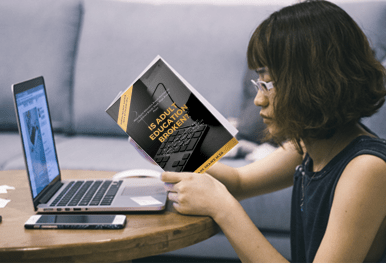
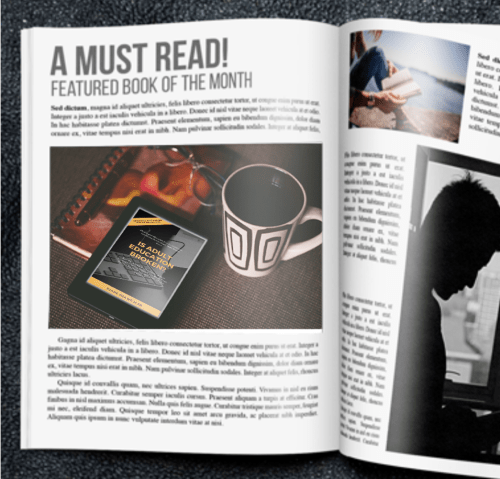
Is Adult Education Broken?

Is Adult Education Broken by Diane Shawe Author (4)

Adult education has become undervalued in an overpriced educational infrastructure.

The people who need the most help are already systematically ripped off by greedy loan companies, NHS parking, having to pay charges for drawing out their own money from private ATM machines in poorer boroughs, pre-paid electric meter’s to name but a few.

The more you seem to need help the more you seem to have to pay.

Off course, the arguments are always about risk, but to compound on top of their needs, a premium, just to make sure the risk is compensated for is questionable indeed. But another kind of ripping off is taking place. ‘Free online education’ you may ask ‘why is this a rip-off people”?
I will answer this from my perspective initially and then make further arguments as to why we should be very concerned about this un-policed, unchallenged butchery of the values originally infused into our adult educational system.

Is Adult Education Broken by Diane Shawe Author (2)So if you all but think Adult Education is Broken and all but given up, this book spills the beans on what has gone wrong, what questions need to be addressed and if certain issues are tackled by Government, then there’s Hope,

As Isaac Asimov—a master of science fiction literature—once said:

“No sensible decision can be made any longer without taking into
          account not only the world as it is but the world as it will be.”

So the big Question is – What has happened?

  • Why have these large institutions priced education out of some fundamental principles?
  • Why on the other spectrum are all these free courses flooded the market?
  • How can we make the new economic age enhance, rather than diminish, our quality of learning?
  • How can we make this amazing innovation advance the prospects of all people especially those with or without experience and not just for the youth?

It is clear that at this moment most educational systems are not keeping pace with changing technology and the ever-evolving world of work.

Is Adult Education Broken by Diane Shawe Author (5)
“If unemployment formed a country it would be the 5th largest in the world”

                                                  Isaac Asimov

 
Not enough people are thinking strategically enough in this area.  Fundamentally, we need to change what people learn, how people learn, when people learn, and even why people learn.

We must get beyond the traditional model of students sitting passively in classrooms, following instructions and memorising material that they are tested and scored on which sometimes turn out to be of little use in an every changing economy.

“It is not the strongest or the most intelligent who will survive but those
                                     who can best manage change.”                       Darwin

Throughout the ages, every human society has experienced challenges adjusting to population growth, maintaining structural order and creating channels for future generations. How well a society prepares the next generation for survival is imperative for the society as a whole but we have stalled in this process.

There seems to be a range of systemic failures such as

: failure to find a formula to develop teachers convergent and divergent Is Adult Education Broken by Diane Shawe Author (3)facilitating skills
: failure to consider cultural relevance
: failure to develop enterprising and entrepreneurial skills
: failure to prepare about taking personal responsibility
: failure to provide adequate technology and supporting curriculum
: failure to encourage international engagement
: failure to manage growth of academic misconduct

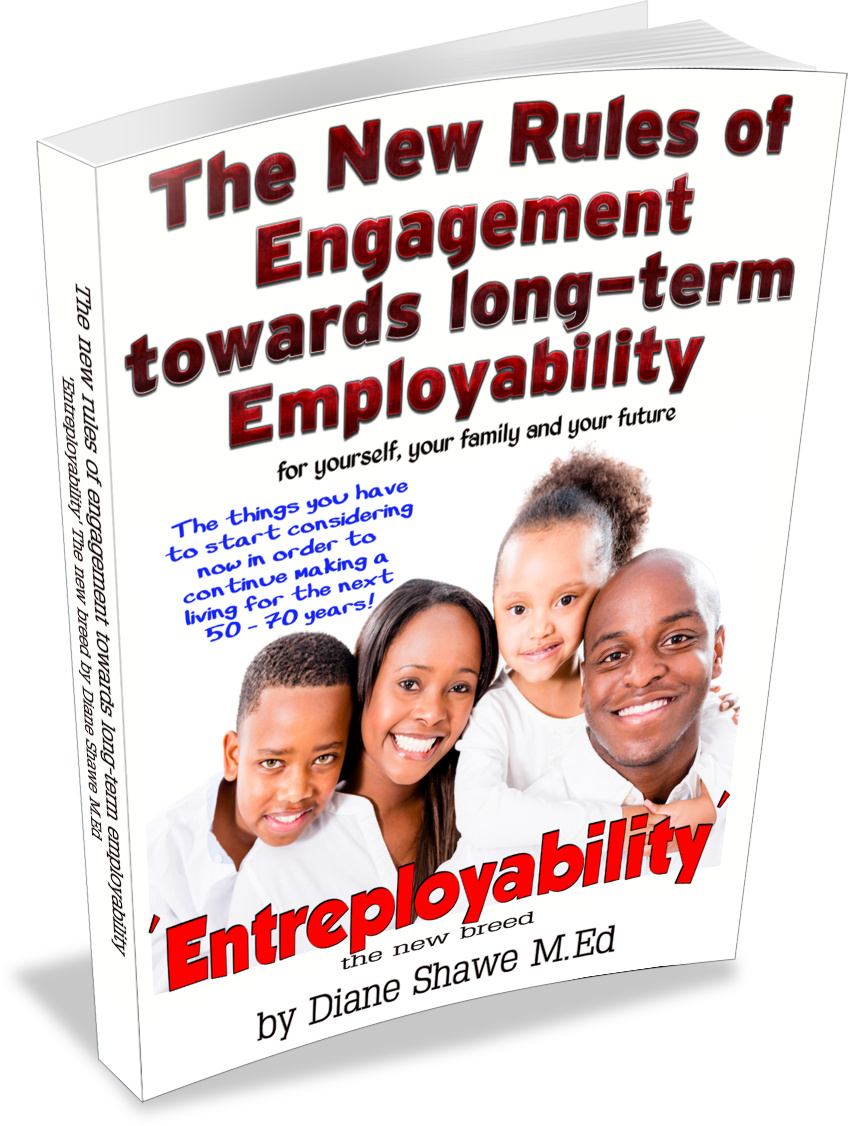
Diane Shawe Author states that “the traditional belief that we must prepare ourselves to be ‘employable’ is under threat. The counter argument encourages us to ‘gear up’ for earning our own money, rather than seeing income as someone else’s responsibility”

With the population dramatically aging and low-level jobs increasingly swallowed up by machinery, entrepreneurship will be a necessity for many, rather than a lifestyle choice for some.

SMEs are of course already leading this charge but in order to gear up for the future we need to start off by asking a serious question, defining criteria’s and examining trends, impact these trends will have and plan a way to jointly prepare current and future generations to be both employable and entrepreneurial.

We are living in a new economy—powered by technology, fueled by information, and driven by knowledge. And we are entering the new century with an opportunity on our side but huge problems that require new thinking.

claim free course now

Is Adult Education Broken by Diane Shawe Author (12)

Click to find out more about creating your own On Demand Digital Course Library

How to create a digital on demand course library


9 Steps to The Killer Covering Letter

It has become almost common knowledge that most potential employers do not even bother responding to unsuccessful candidates that apply for vacant jobs.

Sometimes you need to give yourself the winning edge. Think Clint Eastwood with the sun behind him in a gun fight. Sometimes in giving massive importance to the CV, the value of a strong cover letter is often neglected. The key to securing that dream job is a combination of a well-crafted CV and a killer cover letter. While the CV lists your important achievements and skills, the cover letter coerces your prospective employer into hiring you. The cover letter very finely articulates your desire to work for the company. To stand apart from the competition and make yourself an attractive hire, you need to draft a killer cover letter. Here are the 9 Steps to landing that job…

  1. 1.     Knowing what they want, what they really really want

The cover letter offers a window to your personality and qualifications. But apart from that, it is also a way to demonstrate how much you really know about your prospective employer. To do this, you need to research on the company, the financial growth statistics, the industries that your employer serves, etc. Learn about your potential firm and showcase that. Only when you know what they want and who they are looking for, will you be able to portray that in your cover letter.

  1. 2.     Giving it that personal touch

When you are searching for a job and have focused on one, make sure you find out the name of the contact person. Beginning your cover letters with formal salutations such as “Dear Sir or Madam”, gives the impression that you don’t know whom the letter should be addressed to. Personalise your cover letters while retaining a semi-formal tone. Lack of knowledge in these areas can significantly impact your chances of getting the job you want.

  1. 3.     The Art of the Powerful Opening

Avoid the clichéd opening paragraphs and instead strive to make an impact with the introduction. In a powerful opening paragraph, you have to briefly state your objective in applying for the job and how you heard about the opening. While being creative in your openings, don’t forget that cute introductions do not work. Give your cover letter the necessary gravitas without being too sycophantic.

  1. 4.     Start Right

After the introduction, comes the body of the cover letter where you detail your achievements without repetition. In this part of the cover letter, you are expected to expand upon your achievements as mentioned in the CV and provide further examples of how you can help your potential company grow. For example, if you are applying for marketing positions then be sure to explain how you can develop a marketing strategy to bring in additional revenue for the company. Simply said, put your best foot forward.

  1. 5.     Finish Strong

The closing of the letter should definitely express gratitude for the HR manager’s time and patience. End the letter by outlining the next steps on your part. Never expect a potential employer to follow up with you. Demonstrate your proactive nature by stating that you will follow up for the job. This will also indicate your enthusiasm for the job. Remember to include a phone number or email address so that the firm can get in touch with you first if required.

  1. 6.     Money Later

The motivation behind taking up any job is money. To be happy in your job you need to be paid well. Don’t become hasty and quote any figures in the letter. Wait for a formal meeting to discuss salary issues.

  1. 7.     Details Matter

Remember to spell-check your cover letters and get them proof-read from friends or family. Be sure to thoroughly check your cover letters till you are completely satisfied with them.

  1. 8.     How does it Look?

In case you are submitting your cover letter by email, make use of word processing software such as MS Word. Write your cover letters in Word, making use of a standardized format. Align the text correctly and ensure that the letter is cleanly formatted. Punctuation should be in place. While you spend a tremendous amount of time on preparing the CV, you sometimes end up neglecting the cover letter. Formatting is essential otherwise the HR manager reading your cover letter might just have to spend his or her time deciphering it.

  1. 9.     Check That Grammar

Make sure that you adhere to grammar rules and make use of them while writing your cover letter. Incorrect grammar used in the wrong places can not only create a wrong impression, but also change the meaning of what you intended to convey.

These are such simple steps to write a killer covering letter.

ü Draft your letter so that it highlights your skills, achievements, goals, and motivations.

ü Don’t meander from the main topic.

ü Stick to the basics and be direct in your approach.

Do the above and nothing can stop you from getting that job.


Outsourcing your knowledge

Albert EinsteinWhy knowing less helps you to do more.

Diane Shawe M.Ed. 

When you think about the power of your brain and how we learn, memorise and recall all those facts, it can get very confusing. Having taught for nearly 25 years and trained some of the brightest professionals over last 10 years, I believe that knowledge is divided in two distinct areas. We can either know about a subject ourselves or we know where we can retrieve information on that subject. The massive amount of information available online has opened an infinite library of easily and quickly retrievable information with simple search engines. I like to think of it as an organic external hard drive, an outsourced memory we can plug in at any time. Some have argued that the internet dilutes the most traditional kind of knowledge: knowing a subject ourselves. They argue that in some way it makes our brains less efficient, diminishing our intelligence and destroying our inner hard drives and memory.

You may remember (if you are of a certain age) that when you were young, you knew by heart the phone number of your closest friends. Since the introduction of digital directories on smartphones there is no longer any reason to memorise numbers by heart.   On the other hand, how many hundreds more contacts do you have now compared to then thanks to the digital directories? In reality, how much more connected are you? The real deal of the information age is not that it allows us to know more, but that it allows us to know less in terms of depth of what we know, as mentioned by David Brooks, a New York Times columnist, in his famous 2006 NY Times article[1] The Outsourced Brain.

neuroscience brain“Memory? I’ve externalised it.” He said, “I am one of those baby boomers who are making this the “It’s on the Tip of My Tongue Decade.” But now I no longer need to have a memory, for I have Google, Yahoo and Wikipedia. Now if I need to know some fact about the world, I tap a few keys and enjoy the vast resource of the external mind.”

I think the positive side of this is that we are free to expand our awareness of subjects we did not have space, or availability, to explore before. Our memory now has a different function: it is a digital index that remembers the existence of a subject and what are the best leads to find information on that subject. I too had thought that the magic of the information age was that it allowed us to know more facts. Then I realised that the magic of the information age is that it allows us to know less.

It provides us with external cognitive servants, silicon memory systems if you will, with collaborative online filters, consumer preference algorithms and networked knowledge. We thus can give these servants the massive raw data and liberate ourselves to think, explore and be creative. You can use your brain to learn new skills, the soft skills that are the true measure of success.

Your outsourced memory (the internet, the cloud and more) allows you to be aware of the existence of information you would never have come across before when you were limited to what your inner memory could hold. It allows you to increase the quantity (and thus the quality) of the information that you can process because you do not always have to worry about memorising every single detail of it. It allows you to use more brain power in linking concepts and applying them rather than remembering them. It empowers you to think and process information faster because your brain has the space to hold links to so much different information, and in doing so it expands your subjective time. Back in the analogue era, the difference between a deep brain and a shallow brain was the availability of information and the choice of whether to take in that information or not came second.

As an educationalist and technophile, combined with my outsourced memory I have the capacity to think deeper. Now that (nearly) everything is available, the power is back to you: it is up to you to take responsibility of what content goes into your mind and how you use your outsourced memory.

Now you have begun to outsource your brain and now have room to do something rather special with your neo-cortex. Enjoy.


Six tips on how to avoid water retension

What Causes Water Retention and How to Avoid It

Are your feet, ankles, hands, or legs often swollen? This happens because of water retention, a condition known as edema. It is characterized by the accumulation of fluids in the tissues, circulatory system, and cavities.
Water retention, also known as fluid retention refers to an excessive build up of fluid in the circulatory system, body tissues, or cavities in the body. Up to 70% of the human body consists of waterwater exists both inside and outside our body’s cells. Edema is the medical term for swelling.

The main causes of edema are pregnancy, not being physically active, premenstrual syndrome, sedentary lifestyle, and certain medications. But, swelling can also occur during a long flight.

Most cases of edema are not serious. However, sometimes it can indicate heart failure or kidney disease, so it’s important to treat it on time.

Here are the main causes of edema as well as suggested ways of how to reduce the swelling and avoid water retention, as long as there’s no underlying condition.

6 Causes of Edema and suggested solutions

1. Excessive Sodium Intake

If your diet is based on sodium-rich foods and if you don’t drink enough water, your body will use its water reserves. This, in turn, results in water retention. The human cells can expand up to 20 times with the help of water. So, the important thing here is to know which foods contain high amounts of sodium, so you can start avoiding them.

Besides salt, sodium can also be found in canned vegetables, some condiments, processed meat, and other processed foods. On the other hand, Celtic and Himalayan sea salt can reverse the water retention caused by table salt.

2. Magnesium Deficiency

Lack of magnesium can lead to edema. This mineral is vital for most functions in the body, so insufficient amounts of it can hinder the proper function of the body. This will eventually lead to water retention.

One research showed that taking 200 milligrams as a daily dose of magnesium can reduce water retention in women with premenstrual symptoms. Increasing the intake of magnesium-rich foods or taking it as a supplement can relieve this condition.

Here are the foods which contain the highest amount of magnesium: dried fruits, spinach, dark green veggies, dark chocolate, nuts, avocados, peas, and whole grains.

3. Lack of Vitamin B6

Deficiency in vitamin B6 can lead to edema since it’s involved in many aspects of water balance in the body.

A study published in the Journal of Caring Sciences involved women who experienced water retention caused by premenstrual syndrome. They took vitamin B6 on a daily basis, and their condition was soon improved. This vitamin is water-soluble, so it requires many cofactors to function properly. Therefore, it’s best to obtain it from whole foods.

Foods high in this vitamin are potatoes with skin, chicken, lean beef, turkey, tuna, dried fruit, bananas, sunflower seeds, and pistachio nuts.

4. Lack of Potassium

This mineral is vital for the proper function of cells, tissues, and organs in the body. It plays a significant role in the maintenance of normal water balance in the body.

Potassium deficiency can result from not consuming enough potassium-rich foods but high amounts of salt. This will eventually lead to edema. Lack of this mineral can cause weight gain, muscle spasms, and cramps. Potassium can reduce water retention due to its ability to reduce the sodium levels.

You can find this mineral in most fruits, especially in watermelon, honey melon, and rockmelon.

5. Dehydration

Dehydration occurs when you don’t drink enough water. This condition forces the body to retain water in order to survive, resulting in swellings in your feet, ankles, hands, or legs. Luckily, it’s not hard to improve your condition. Just drink enough water and potassium-rich juices, and avoid soda drinks and coffee.

6. Excessive Consumption of Processed Foods

As we mentioned, processed foods are full of sugar and sodium – one of the leading causes of water retention. But, they also contain artificial food additives whose toxic nature puts a load on the kidneys and the liver.

Foods which contain high amounts of sugar including artificial sweeteners can cause spikes in the levels of insulin and blood sugar.

Therefore, we recommend avoiding processed foods as much as you can.

How to help organise brain development in adolescents

Helping the youths to achieve more

Helping the youths to achieve more

Brain Development and Adolescent Growth Spurts

Judy Willis MD

Neurologist/Teacher/Grad School Ed faculty/Author/Guest Blogger

As your students move through adolescence, their brains are going through a dynamic change from chaos to clarity. These developmental changes have profound implications for how you’ll be able to guide students during these transformative years.

Brain Remodeling: Chaos to Clarity

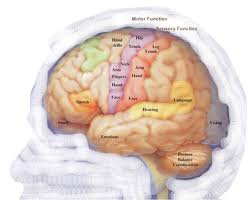
The brain first goes through a rapid maturation phase in the months before and after birth, and a second maturation phase throughout later childhood and adolescence. During this second phase of increased brain growth, the prefrontal cortex is the site of the brain’s most active reorganization and growth. Before building your understanding of what is taking place in the prefrontal cortex during its adolescent growth spurt, let’s explore what is housed in this late-developing part of the brain.

The prefrontal cortex is where the highest cognitive and emotional control networks are being constructed, especially during the school years. These networks are what neurologists call executive functions.

The networks of the executive functions direct the complex mental processes that you see emerging as students grow. Executive functions can be thought of as the skills that would make a corporate executive successful, abilities that allow them to:

  • Organize
  • Prioritize
  • Communicate effectively
  • Accurately interpret validity and value of information
  • Make long-range plans to achieve goals
  • Assess risk
  • Solve problems creatively
  • Innovate

These networks do not reach full effectiveness until early adulthood. When well nurtured by use, executive functions ultimately guide the brain’s abilities to:

  • Manage emotional stability
  • Control impulses
  • Plan
  • Respond productively to corrective feedback
  • Learn from mistakes
  • Remain resilient to setbacks
  • Reflect thoughtfully before making decisions and choices.

Early adolescence (ages 10-12) is a good time to build students’ skills of organizing and prioritizing information and time management. The opportunities you provide to guide them in using these executive functions also provide the activation to strengthen these networks when they are at peak neuroplastic responsiveness. As a result of this strengthening, your students will build more skills en route to becoming self-directed learners.

Helping Students Organize Themselves

Successful organization is needed for preparing and completing most activities related to school. The development of this executive function becomes even more critical as the responsibilities and requirements of school and extracurricular activities increase each year. Using strategies that increase student awareness of these skills and providing guided opportunities to use them will help adolescents build the brainpower that they need.

Start by promoting student awareness of their existing organizing skills. Ask questions such as:

  • How do you sort your music on playlists?
  • How do you organize your files on your computer?

Also, ask questions about familiar things that are already organized systematically, such as:

  • How is the content of this book organized into chapters?
  • What organization do you see in the periodic table of elements or in dividing plants and animals into classifications such as kingdoms, genus, and species?

Other Strategies

1. Teacher Modeling and Discussion

Model your systems of organization (filing, recording progress, how you set up the classroom, etc.). Draw students’ attention to the organizational strategies that you use during instruction.

2. Clear Instructions

Initially, when providing organizational strategies, emphasize them both verbally and in writing. Give students clear instructions for procedures, projects, or class transitions as you model organizational structure.

3. Student Modeling

Assign selected students to model the procedures that you’ve described, such as the right way and the wrong way to organize their class groups during collaborative work time.

4. Checking for Understanding

Stop between segments of complex or multi-step instructions, allowing students to organize their thoughts and ask questions. Ask students to repeat back their understanding of the instructions so that they can respond to your feedback and reorganize appropriately.

5. Gradual Release of Responsibility

Throughout the year, plan a gradual decrease in the scaffolding that you provide for student organization of time and goals. For example, back away from giving them your timeline schedule for parts of a book report or project, let them plan and write their own timelines, and revise these as you help them monitor their progress.

6. Feedback

Observe student progress and setbacks and provide feedback with opportunities for them to revise their organizational systems.

The Case for Investing in Executive Functions

As the caretaker of your students’ brains during the years of rapid prefrontal cortex development, the opportunities that you provide for them to use these critical neural networks are precious gifts. The tools and skills that you help them build will empower them to achieve their highest potential now, and will increase their satisfaction and success as they inherit the challenges and opportunities of the 21st century.

How to increase the odds for your business

diane-shawe-elle-magazineIn business, there are no guarantees. There is simply no way to eliminate all the risks associated with starting a small business – but you can improve your chances of success with good planning, preparation, and insight.

Diane Shawe Author

Like you I Never Thought I Could answer 77 questions that would help me avoid business failure  – But I Finally Discovered The Secret! Here’s How… Are you really ready? Is Entrepreneurship For You?

Are you the right person for the business you have chosen?

I would advise you don’t skip the 77 questions, why? Well it would be like short changing your potentially new clients.
So persevere, some you will answer quickly, others you will need to do a little research, but believe it, it’s worth it, you will be clearer and more focused about what you are going to do.

Here are 10 questions related to Number 50 – 59 from the recently published ebook  What you don’t know might be costing you a fortune New Discovery reveals how by answering 77 questions you could avoid Business Failure by Diane Shawe

  1. Where do you see bottlenecks developing?
  2. How important is quality control?
  3. What is the current backlog?
  4. Is the product assembly line based or individually customized?
  5. What are the health and safety concerns in producing this product?
  6. Who are your suppliers and how long have they been in business?
  7. How many sources of suppliers are there?
  8. Currently, are there any shortages in components?
  9. How old is your company’s equipment?
  10. What is the yearly maintenance costs?

I recommend you get a little notebook and start working on each question. For those you cannot answer a specific question, stop do some research, find the answer and make a note.

This is also an invaluable exercise if you are already in business, it can help you clarify where you are today and help you plot where you need to get too and how to do it.

77 Questions to avoid business failure by Diane Shawe white background

Get your copy from Amazon Today

Mindfeed ebooks by Diane Shawe

Why what we do with 30% of our life matters

  1. four feild of energy that generat passion by Diane ShaweWhen we die, our money remains in the bank…
    Yet, when we are alive, we don’t have enough money to spend.
    In reality, when we are gone, there is still a lot of money not spent.

The cruel reality is only 30% of what we do matters and this is why?:
It is more important to live longer than to have more wealth.
So, we must strive to have a strong and healthy body, It really doesn’t matter who is working for who.

For instance…

□ In a high end hand phone, 70% of the functions are useless because we don’t use them!
□ For an expensive car, 70% of the speed and gadgets are not needed.
□ If you own a luxurious villa or mansion, 70% of the space is usually not used or occupied.
□ How about your wardrobes of clothes?
70% of them are not worn regularly!

A whole life of work and earning…

70% is for other people to spend.
So, we must protect and make full use of our 30%.

👉Go for medical check-ups even if not sick.
👉Drink more water, even if not thirsty.
👉Learn to let go, even if faced with grave   problems.
👉Endeavour to give in, even if you are in the right.
👉Remain humble, even if you are very rich and powerful.
👉learn to be contented, even if you are not rich.
👉Exercise your mind and body, even if you are very busy.
👉Make time for people you care about

Mindfeed ebooks by Diane Shawe


Author Diane Shawe Mindfeed Coffee ebooks get featured on Fox News

Available from Amazon

Available from Amazon

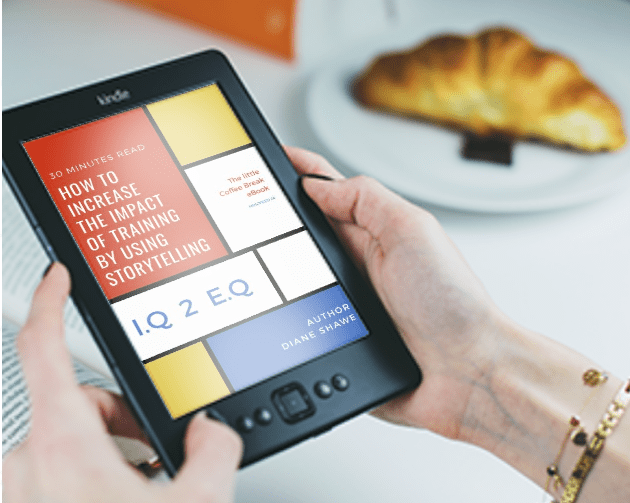
October 10, 2016 – City of London, United Kingdom –Need help getting organized? Want to learn how to take a business into a global marketplace? Looking for ways to improve leadership skills? Then check outThe Little Coffee Break Mindfeed eBooks from IQ 2 EQ by Diane Shawe. This collection of eBooks exposes readers to new ideas and proven strategies, and each can be completed on a lunch break, over breakfast, or while enjoying a cup of coffee.

According to author Diane Shawe, “The idea for the short, powerful eBooks came to my mind when I realized how often people need to brush up on topics, but do not always have time to sit down to read 200 pages. As a result, I have authored several short yet effective eBooks that get right to the point with tips and advice.”

Readers from all across the globe have praised Diane for her eBooks, and the opportunity it gives them to learning new information or refreshing their memory quickly. And with topics ranging from stress management and problem solving, to public relations and networking, there is truly something for everyone.

Mindfeed ebooks by Diane Shawe

Shawe’s eBooks are available on Amazon right now at: https://www.amazon.com/Diane-Shawe/e/B0052WG8V6

Visit www.diane-shawe.co.uk for more information about her other publications, training courses, blogs and fundraising.

YouTube: https://www.youtube.com/watch?v=7wIU4tI8kw0

About the Author

Diane Shawe is an author, speaker, trainer, mentor, consultant and entrepreneur with more than 15 years of experience. She has personally trained over 1800 people around the world in a variety of fields and has published a number of works. She has contributed to over 100 Kiva Entrepreneur’s around the world.

She was also one of the producers of a Day time Ladies Talk Show in 2015 and Host of one of the UK’s best loved Annual Hair Extensions Awards.

Diane also enjoys oil painting, sailing and clay pigeon shooting. She focuses on topics that she is passionate about in her writing and has attracted over 36,000 followers on her popular blog.

Media Contact
Company Name: AVPT Short Courses
Contact Person: Diane Shawe MEd
Email: Send Email
Phone: +44 208 1333120
City: London
Country: United Kingdom
Website: www.academyexpresscourses.com

Press Release Distributed by ABNewswire.com

To view the original version on ABNewswire visit:15 Must-Own Books No Serious Entrepreneur Should Ignore

15 Must-Own Books No Serious Entrepreneur Should Ignore – FOX5 Vegas – KVVU
http://www.fox5vegas.com/story/33305573/15-must-own-books-no-serious-entrepreneur-should-ignore

Information contained on this page is provided by an independent third-party content provider. Frankly and this Station make no warranties or representations in connection therewith. If you are affiliated with this page and would like it removed please contactpressreleases@franklyinc.com

Why you should switch to Raw Cocoa

cocoa-powder-lead-jpg-653x0_q80_crop-smart

THE HEALTH BENEFITS OF RAW CACAO

Magnesium

Raw cacao is one of the best food sources of magnesium – a mineral that many of us don’t get enough of in our diets. Magnesium is essential for energy production, for a healthy brain and nervous system, for our muscles and for strong bones and teeth. Magnesium may also support a healthy blood pressure.

Iron

Cacao is also a source of iron, which builds the blood and helps to transport oxygen around our body, as well as potassium, copper, zinc, manganese and selenium.

Flavonoids

Cacao can also be high in flavonoids, which have antioxidant activity. Cacao and flavonoid-rich chocolate have been linked with heart health benefits including increasing the good form of cholesterol (HDL) in our blood, lowering blood pressure and even improving vascular function in patients with congestive heart failure. These effects are thought to be primarily due to the antioxidants contained in the cacao.

PEA

In addition, cacao contains a compound called phenylethylamine (PEA for short!). PEA is thought to elevate mood and support energy, and is said to be one of the reasons that many people love chocolate!

Raw cacao is also very low in sugar, and of course does not contain any milk, so is suitable for those who are milk-sensitive or following a low-sugar diet.

THE PROBLEM WITH CHOCOLATE

The cacao – or cocoa – part of a chocolate bar is not ‘unhealthy’ as such. The main factor that makes it less healthy is the sugar that’s added to it to create a standard chocolate bar. Also, when cacao is roasted to make a standard chocolate bar, you do lose some of the antioxidant flavonoids, beneficial enzymes and other nutrients – which of course doesn’t happen with raw cacao or raw chocolate.

So what about painfully dark chocolate, you know the 99% cocoa solids stuff? Cocoa solids are what’s left after the cacao butter (the oil in the cacao bean) has been separated from the ground up raw cacao beans. Cacao solids are used to make cacao powder. ‘Raw cacao’ can refer to the whole beans, opl

the solids, or the powder, as long as it is not heated during processing. It is this heating process that robs some of the nutrients.

Don't forget to use the Discount Code when you order

Don’t forget to use the Discount Code when you order

Source: http://www.womenshealthmag.co.uk/weight-loss/healthy-eating/2736/health-benefits-of-raw-cacao-over-chocolate#ixzz4MZm1GgNU

Read more: http://www.womenshealthmag.co.uk/weight-loss/healthy-eating/2736/health-benefits-of-raw-cacao-over-chocolate#ixzz4MZipYusd