Category Archives: eLearning

Why the legal profession is changing – Part-time partners

CPD on the move with expresscourses

CPD on the move with expresscourses

Only 9.4% of equity partners in law firms are women, despite equal numbers of men and women entering the profession

Article by Nicky Richmond Guardian Professional,

The statue of justice at the Old Bailey court in London. Photograph: Martin Argles for the Guardian

In the world of big law, equity partnership is broadly equivalent to being on a board of directors. In the top 100 law firms in the UK, just 9.4% of equity partners are women. This is even lower than the percentage of board members at FTSE 250 companies who are women, at 9.6%.

Given that equal numbers of women and men enter the legal profession, why is it that so many women don’t reach equity partnership? The Women’s Business Council – set up to advise the government on how to get more women into executive positions – came up with some interesting conclusions in a recent report.

They reveal an overwhelmingly masculine, patriarchal corporate culture, and point to the double burden of work and domestic responsibilities, the “anytime, anywhere” model of management and, a particular curse in the UK, the long hours working culture wired into city law firms.

A large proportion of women who drop out of law do so because they decide to have a family. Many women feel that they simply cannot combine the demands of life in a law firm with the demands of their families.

It’s little surprise they reach this depressing conclusion; at most law firms it is either full-time or nothing. A law firm may offer a woman a career downgrade to ‘support lawyer’ status but for many the cut in remuneration for part-time working or a lesser role are options not worth considering. Factor in the expense of childcare, and it’s little wonder many women conclude that the high cost simply isn’t worth it.

The goal of a partnership becomes more distant for many women once they decide to have a family. In many firms there is no route to partnership for lawyers who work part time. It just isn’t allowed. This is not only morally wrong, it is nonsensical.

There is no reason why a part-time lawyer – female or male – cannot make an outstanding contribution as a partner in their practice. Critical to a woman’s decision as to whether or not she returns to work following maternity leave must be the availability of flexible working. This means flexibility in both hours and location.

In order for things to change in law firms, firms must prioritise retaining their best people for as long as possible. This could include accommodating requests for part-time or flexible working. Given the demands of clients this isn’t always easy, but in most cases – with a real will on both sides – it can be done.

I work for a law firm that is owned equally between men and women. This is key to the day-to-day operations. A number of our lawyers work on a part-time basis. Some work certain days from home, others are consultants who hardly ever come into the office. We try to accommodate people’s real lives and ultimately, it’s the service to the client that counts.

Equality in the law will not happen on its own. In the 25 years I have been in practice I have seen all sorts of attempts to deal with ‘the women issue’, but evidently none of them have worked. Suddenly, however, it has become clear to City law firms that losing women is losing them money. So now, in line with the government’s recommendations, some of those firms have introduced their own targets for senior women. Money talks, and that’s what will drive the change.


AVPT CPD PRESSED FOR TIME LAW FIRMS

CPD pending? Pressed for time?

CPD on the move

CPD on the move

Continued Professional Development is entering a new phase for UK Law Firms.

At the Academy of Vocational & Professional Training we understand that you firm is often pressed for time, so nudge thinking, heuristic learning, or brain plasticity are great but, your law firm already have complex challenges, so we are going to keep it simple.

We train in soft skills courses like HR, PR, Management, Technology and Social Media to name but a few. CPD approved by the SRA to help you and your staff meet the challenges expected of skilled professionals.

Doing your CPD the smarter way

Doing your CPD the smarter way

You can study on the move using your smartphone, tablet or at our intense 1 day workshops.

Give us a call on 0203 551 2621 to request a quote or visit our http://www.avptglobal.com

Kensington, Chelsea and Westminster Enterprise Womens Business Club Meeting – 15th May 2014

Join us in May for a productive event

Join us in May for a productive event

Please join us for the next Kensington, Chelsea and Westminster Women’s Business Club on Thursday 15th May.

Date: Thursday, May 15, 2014 – 10:00 to 12:00

Venue: County House

Venue address: 46 New Broad St, London, EC2M 1JH

Price: £25.80 inc VAT (includes refreshments)

 “9 Deadly Mistakes that can kill your Linkedin Professional Profile”

Diane Shawe Host KCW Enterprise Womens Club

Diane Shawe Host KCW Enterprise Womens Club

Local host Diane Shawe will discuss with you all why LinkedIn is easily one of the most overlooked of the social networking sites for effective online marketing. Yet, if you get it right, it could also be one of the most lucrative.

She will demonstrate why LinkedIn really does have the power to help you promote your business to the right people. It helps to increase awareness of your brand and gets word out about your products  and services. So many LinkedIn members make crucial marketing mistakes when using LinkedIn that really can affect how your profile is perceived along with knocking your profitability. This social networking platform isn’t about accruing lots of friends or fans or ‘Likes’, as you would with Facebook. It’s not about finding people to ‘follow’ you, as you would with Twitter.

Instead, those people who find real success with LinkedIn are those who focus on building solid long-term business relationships.

Diane is Chief Executive Officer of the Academy of Vocational and Professional Training Ltd, which provides online and workshop fast-track soft skills training courses, Ms. Shawe is passionate about technology and the impact it will have on delivering training to students on the move that can be measured and proven. In addition Diane sits on several executive committee which includes the Conservative Education Society. As well as being a published author of several business books including, “The 10 habits of a successful women Rainmaker – which is about to be launch in June 2014!

Explorer, International Speaker, Author, Arctic Leadership Challenges

Explorer, International Speaker, Author, Arctic Leadership Challenges

We are delighted to announce that the inspirational guest speaker will be Rona Cant, Explorer, International Speaker, Author, Arctic Leadership Challenges, who will speak about her experiences and how she helps organisations and individuals across the world get a better understanding of what works and what doesn’t work in leadership and teamwork and how you can overcome your obstacles and challenges using examples from her very diverse expeditions and her life through the medium of talks and master classes to help you become the best you can be.

Diane offers you a warm welcome to join her at the Kensington, Chelsea and Westminster Women’s Business Club meeting. The event is for women who are looking for that extra special support, advice, collaborative relations to help them develop and expand their business.  Join us on LinkedIn.

Available

Leading Training Provider ‘AVPT’ Approved To Deliver CPD ‘Soft Skills’ Courses To The UK Legal Industry

CPD does not have to be hard anymore

CPD does not have to be hard anymore

Press Release  Press Release

London UK, Thursday 3rd April 2014 – A national organisation specialising in the delivery of vocational and professional training has been approved to deliver recognised ‘soft skills’ courses to the legal profession, following formal assessment and accreditation by the Solicitors Regulatory Authority.

The Academy of Vocational and Professional Training (AVPT) now offer ‘soft skill’ courses within the legal sector after successfully becoming the latest organisation in the UK to reach the expecting standards required by the national regulatory body. Not only are the courses approved and recognised industry wide, but also count towards CPD certification of course candidates.

Within professional development arenas, it is now widely accepted the development of ‘soft skills’ within a workforce plays a significant part in the performance and continued success of companies and organisations across every niche. This has lead to an upsurge in organisations looking to complement the traditional ‘hard skill’ base with ‘soft skill’ development programmes.

Law firms begin to up skill their staff with soft skills

Law firms begin to up skill their staff with soft skills

In contrast to the occupational ‘hard-skills’ – those needed to physically undertake a role, ‘soft skills’ focus on the personal characteristic traits which allow individuals to excel in the work place, such as communication, empathy, emotional intelligence and social interaction.

As the legal industry settles after a fundamental reshaping which has resulted in a considerable increase in competition from smaller firms and individuals, law firms across the country are adapting their approach by improving the soft skill abilities of their employees and partners. Modernisation has helped them recognise the importance of technology in the learning environment to overcome geographical, language barriers and time constraint when up-skilling their entire business, so as to become more customer and user friendly.

The current range of ‘soft skill’ development packages for the legal profession have been specifically tailored to meet the needs and requirements of clients working in legal niches. Skills such as HR, Marketing with Social Media, Information management, Leadership & Management skills, Business development, Negotiations and customer services to name but a few from the list of 300 which can now count towards their annual CPD requirements.

Diane Shawe, CEO of AVPT commented “in 2013 the Legal Services Policy Institute estimate as many as 3,000 high street law firms (or 35% of the total) will have to disappear in the subsequent upheaval, law firms with good local reputations will be able to withstand competition if they can successfully reach the demands of clients for greater convenience and ease of access to services by generating greater efficiencies within their practices.”

AVPT is the only UK globally accredited online and workshop based provider of over 300 Soft Skills courses, which uses a cutting edge proprietary online learning management system. Workshop courses are professionally executed in 1-3 days which are delivered as foundation to expert levels.

AVPTLTD LOGO  6As a provider of Soft Skill training courses which are accredited by the Solicitors Regulatory Authority and globally by the IAO, AVPT are now offering CPD applicable courses to the legal profession. For further information please visit the official website at www.academy-of-vocational-and-professional-training.comor get in touch using the details shown with this release.

Can traditional law firms innovate on-time to save their practices?

Can legal services face up to the 21st Century challenges?

Can legal services face up to the 21st Century challenges? it’s clear that the web is now an important channel for law firms and this trend will only continue.

By now the severe challenges facing the legal profession will be familiar to all but the most complacent of high street firms. The UK’s regulatory environment which once protected solicitors from competition has just undergone the most radical shakeup in its history, a moment akin to the big bang in financial services of the mid-eighties.

article by Richard Cohen Chairman of Epoq Group

Is it time to herald the death of the high street? When accessing legal services consumers prize expertise, trust and local knowledge; all the key values of a smaller firm. This suggests that law firms with good local reputations with be able to withstand competition if they can successfully reach out to and meet the needs of this potential client base. To do so will require these firms to overcome two major obstacles; the demands of clients for greater convenience and ease of access to services and the now pressing need to generate greater efficiencies within the practice. With advances in technology both are now within the capabilities of small firms.

the scales adjust for the legal services

Legal Services Policy Institute estimate as many as 3,000 high street law firms (or 35% of the total) will have to disappear in the subsequent upheaval

The small size of most firms and a set of engrained cultural problems have prevented many from investing sufficiently in customer service. The result has been a very high number of complaints and a poor public reputation.

It’s clear that innovation is required but many firms still operate only during traditional office hours and require clients to visit the office; a practice which is more and more out of step with the modern lifestyle. A large segment of today’s consumers of legal services are part of an ‘internet generation’ which is highly receptive to new methods of online delivery. Our own research, conducted by YouGov, revealed that 56% of consumers expect good law firms to give customers the ability to use their services online in the next couple of years.

Far from being peripheral, it’s clear that the web is now an important channel for law firms and this trend will only continue. The question is can law firms offer more than just brochureware for their online presence? Technology platforms have come to market which operate on a ‘software as a service’  (SaaS) model,  which allow a law firm’s clients to collaborate with their solicitor and perform legal tasks over the internet.

The impact of these web-based, interactive applications is to save lawyer time and often increase lawyer productivity and profit margins, while providing a more convenient and satisfying experience for the client. Small law firms can now adapt their business model without prohibitive capital investment, service their clients in a very different way to the traditional high street firm and overcome many of the barriers described above.

An example of this new model is DirectLaw, an online legal document drafting solution  which uses pre-programmed logic to ask the user the same questions a lawyer would ask in a client interview. As the user answers these, the system determines the right language and clauses to be inserted into the document to reflect the client’s circumstances. The end product is a highly detailed first draft of the legal  document which has been individually tailored for the client. Once completed, the draft can be securely sent through to the solicitor for review and further changes. The client is also able to log into a secure client extranet, communicate electronically with the firm, pay fees and check the progress of their matter.

Using this approach, legal documents can be produced at a fraction of the internal cost thus increasing a law firm’s recoverable hourly rates. The time that solicitors have to spend on the interview process is massively reduced, yet from the clients perspective, the firm is providing a more convenient and accessible way of delivering law.

Furthermore, by shifting a proportion of the legal work onto the client fee-earner time can be freed up to concentrate on more complex matters and consultative elements of the solicitor-client relationship. And, as the service can be paid for online, further cost savings can be achieved by negating the need to issue and chase up invoices.

cpd soft skills training for legal firmsFor law firms implementing this model the website is increasingly becoming the primary way to relate to clients and manage the flow of legal work. Firms can add information to their home page about their interactive capabilities, which save clients time and money. These will set firms apart from others and increasingly attract a client base that prefers to do business over the Internet.

Another area of opportunity is that of pricing. With an online strategy that reduces internal costs, law firms could use their improved margins to address client demand for clarity of price as they will be able to provide certain document services at a fixed fee.

The market in which we have been used to operating is changing beyond all recognition. The entrance of retailers, banks and insurers into the market will introduce consumers to new models of legal service delivery; multiple service levels, legal packages, efficient customer service and greater accessibility. However this can serve as a catalyst for change amongst traditional law firms, offering scope for some real innovation, and affording firms the opportunity to build better relationships with clients, generate new revenue streams, and tap into latent markets.

What key areas should Diversity courses cover?

DIVERSITY IN THE WORKPLACE 1 DAY TRAINING COURSE BY AVPT

Empowering your Workforce

Is there cause for Celebrating Diversity in the Workplace?

When looking for a course that covers some of the  Grey shaded areas, what is it that we should strive to help participants explore and learn?

article by Diane Shawe M.Ed AVPT

I would like to present  the  10 pointers that I believe need clarification in a Diversity training course.

  1. What diversity and its related terms mean
  2. To be aware of how aware they are of diversity and where they can improve
  3. Understand how changes in the world can affect them and their view
  4. To identify their stereotypes
  5. What terms are politically correct and which are not, and why
  6. The four cornerstones of diversity
  7. What the pitfalls are relating to diversity and how to avoid them
  8. A technique for dealing with inappropriate behavior
  9. A management style to encourage diversity
  10. What to do if they or one of their employees feels discriminated against

Defining Diversity

Participants will begin by defining diversity and related terms, including affirmative action, bias, stereotype, and Equal Employment Opportunity.

How Does Diversity Affect Me?

Help participants identify how a changing world has affected them. Participants will also complete a self-awareness inventory to identify possible areas for improvement.


Leadership: Becoming management material

Identifying Stereotypes

Identifying Stereotypes

Identifying Stereotypes

Help participants to explore stereotypes from different angles through a lecture and group exercises.

Wise Words

In this era of political correctness, it’s sometimes hard to keep up with words that have become inappropriate. It is important to take a look at some phrases that are considered universally incorrect and some basic guidelines. It is also important to take a humorous look at some phrases that have gone too far.

The Cornerstones of Diversity

Diversity experts Armida Russell, Amy Tolbert, and Frank Wilderman have identified four cornerstones of diversity development. They are knowledge, acceptance, understanding, and behavior. These need to be examined in more detail.

How to Discourage Diversity

There are some practices that discourage diversity more than they encourage it. We need to  look at four common mistakes and how to avoid them.

The STOP Technique

Diversity expert Lenora Billings-Harris has developed a four-step technique that you can use when someone is behaving in an inappropriate manner. It’s called STOP. Participants will learn about this technique.

Managing for Diversity

We need to look at some simple things managers and employees can do to encourage diversity in their workplace.

Dealing with Discrimination

Gather ideas on how to deal with discrimination as a manager and an employee.

1 day course: Diversity in the workplace

In the past ten years, the workforce has changed dramatically. More than ever, a workplace is a diverse collection of individuals proud of who they are: their gender, their sexual orientation, their religion, their ethnic background and all the other components that make an individual unique. In order for your workplace to succeed, your employees must be able to appreciate and celebrate those differences.  Click here to read more about our online or workshop course


Order your in-house Kit today

Order your in-house Kit today

The development of Soft Skills helps to compliment Hard Skills

Softskills image with avpt logo

Soft Skills the new Hard Skills

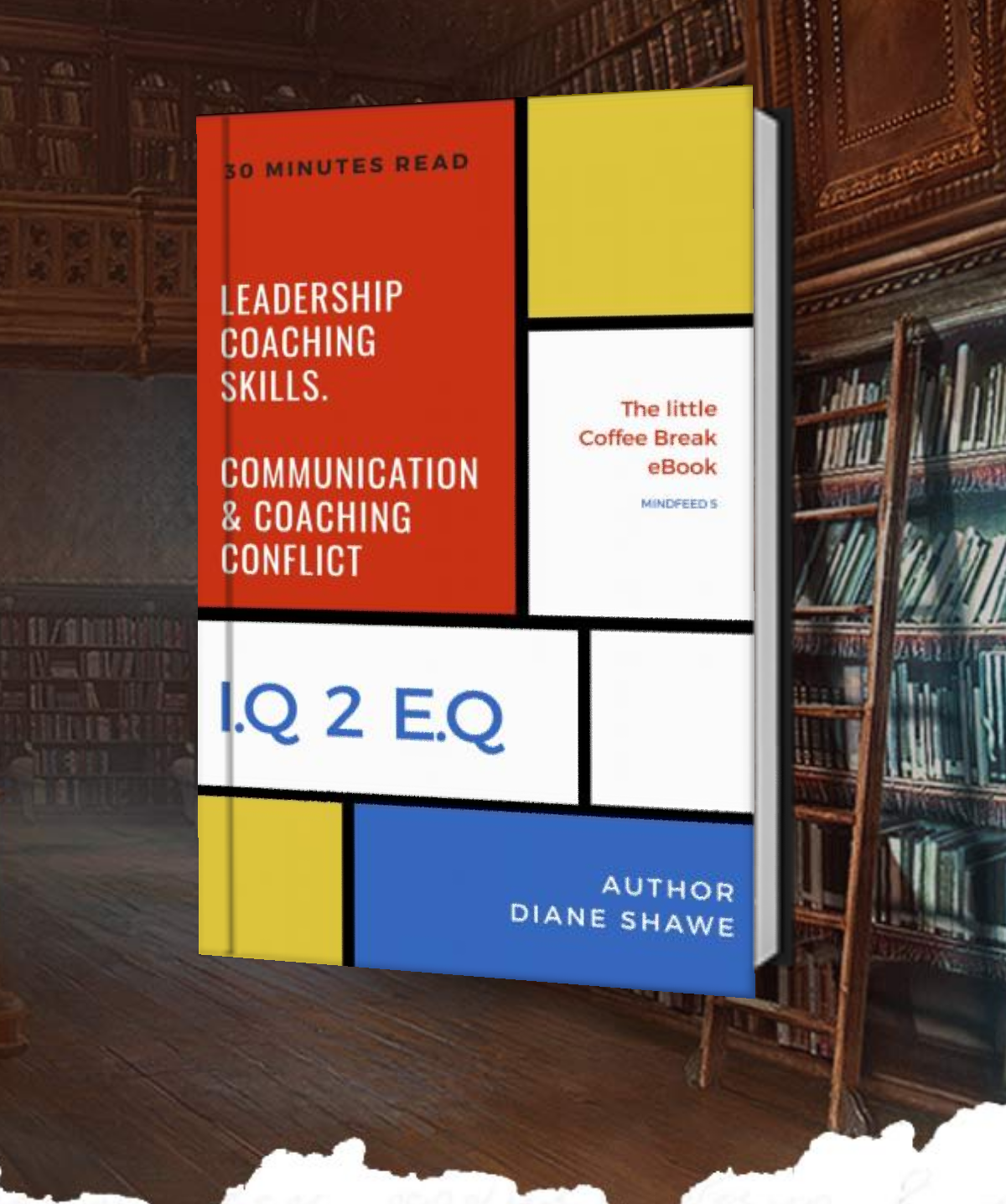
Soft skills is a sociological term relating to a person’s “EQ” (Emotional Intelligence Quotient), the cluster of personality traits, social graces, communication, language, personal habits, friendliness, and optimism that characterise relationships with other people.

article by Diane Shawe M.Ed

Soft skills complement hard skills (part of a person’s IQ), which are the occupational requirements of a job and many other activities.

So why does contemporary society place great value on standardised achievement tests to sift and sort people, to evaluate schools, and to assess the performance of nations?

Despite the widespread use of standardised achievement tests, the traits that they measure are not well-understood. Cognitive ability like IQ the important skills that achievement tests miss or mismeasure, are now being recognised as the skills that also matter in life.

Achievement tests miss, or more accurately, do not adequately capture, soft skills— personality traits, goals, motivations, and preferences that are valued in the labour market, in school, and in many other domains.

The larger message is that soft skills predict success in life, that they produce that success, and that programs that enhance soft skills have an important place in an effective portfolio of public policies.

Teacher Facilitated Learning Strategy AVPTMeasurement of cognition and educational attainment has been refined during the past century. Psychometricians have shown that cognitive ability has multiple facets.

Many social scientists—even many psychologists— continue to use IQ tests, standardised achievement tests, and grades. Even though scores on IQ tests, standardised achievement tests, and grades are positively correlated with each other,  recent literature shows that they measure different skills and depend on different facets of cognitive ability. Recent research also shows that all three measures are associated with personality, but to different degrees across various cognitive measures.

Standardised achievement tests were designed to capture “general knowledge” produced in schools and through life experiences. Such knowledge is thought to be relevant to success inside and outside of the classroom. However, achievement tests are often validated using other standardised achievement tests or other measures of cognitive ability—surely a circular practice.

Success in life depends on personality traits that are not well captured by measures of cognition. Conscientiousness, perseverance, sociability, and curiosity matter. While economist  up until now have largely ignored these traits, personality psychologists have studied them over the last century.  They have constructed measures of them and provide evidence that these traits predict meaningful life outcomes.

Many scholars—inside and outside of psychology—have questioned the existence of stable personality traits, arguing that constraints and incentives in situations almost entirely on the magnitudes of measurement error on a variety of economic measures, see Bound et al. (2001).

These authors report that at most 15–30% of earnings variance is due to measurement error.

Some early studies in economics are Bowles and Gintis (1976), and Bowles et al. (2001). An important study in sociology is Jencks (1979). Work in psychology going back to Terman et al. (1925) shows that personality traits matter (see Murray, 1938; Terman et al., 1947; and the discussion in Gensowski, 2012).

There is no tape measure for perseverance, no caliper for intelligence. All cognitive and personality traits are measured using performance on “tasks,” broadly defined. Different tasks require different traits in different combinations. Some distinguish between measurements of traits and measurements of outcomes, but this distinction is often misleading.

However, traits are not set in stone. They change over the life cycle and can be enhanced by education, parenting, and environment to different degrees at different ages.  It is my opinion  people try harder when doing  achievement tests so you can scores and capture both cognitive and personality traits.

Promoting Alternative Thinking Strategies within educational institutes will help with promoting self- control, emotional awareness, and social problem-solving skills. 

80% students get qualified

High Blood Pressure, Hypertension: The New AIDS Epidemic?

high blood pressure check your now

Strokes, Heart attack, thinning arteries

High blood pressure could be as devastating to global health as AIDS, causing more deaths over the next two decades than the infectious disease, a group of international experts is warning.

article by Diane Shawe M.Ed

Writing in the International Journal of Epidemiology, three British experts in international health said most governments and aid agencies around the world are doing too little to combat high blood pressure, and that current efforts to target the condition mirror the halting global reaction to HIV/AIDS 20 years ago.

hypertension can move you towards high blood pressure

Manage your Hypertension

In an editorial entitled “Is hypertension the new HIV epidemic? ” the authors — Peter Lloyd-Sherlock from the University of East Anglia, and Shah Ebrahim and Heiner Grosskurth of the London School of Hygiene and Tropical Medicine — suggest that “valuable lessons for hypertension could be taken from HIV/AIDS policies,” but health officials are not applying them to the growing rate of high blood pressure.

“Our response to the global epidemic of hypertension seems little better than our response to HIV/AIDS two decades ago: too little too late,” they write. “Can we not wake up earlier this time, before millions have died?

Hypertension is seen as a disease of the West, of prosperity and therefore of little relevance to poorer countries. This is despite the growing body of evidence that prevalences in poorer countries are quickly catching up.” They noted that hypertension is a non-communicable (NCD) disease and argued that the behavioral factors associated with it —obesity, lack of physical exercise, and poor diet — make it difficult to persuade funders and taxpayers to help people who “eat and smoke too much.”

They added that the situation is reminiscent of the slow response to AIDS prior to 1990. “HIV was faced with political denial and public misunderstanding in the early years of the pandemic, especially in some poorer countries,” they said. “There is a similar pattern of denial with hypertension … based on the misguided view that hypertension does not affect poorer social groups.”

“Yet there is substantial evidence that hypertension is highly prevalent among poorer groups and that they are less likely to have access to effective treatment. As with HIV, hypertension can be both a cause and a consequence of poverty, over work, non satisfaction in your job, debt, no job.”

hypertension caused by stress at work  can move you towards high blood pressure

Job burnout and stress in epidemic proportions

Managing your stress and Hypertension in the West.

Today’s workforce is experiencing job burnout and stress in epidemic proportions. Workers at all levels feel stressed out, insecure and misunderstood. Many people feel the demands of the workplace, combined with the demands of home, have become too much to handle. A one-day workshop explores the causes of such stress and suggests general and specific stress management strategies that people can use every day.


Sourced from © 2014 NewsmaxHealth. All rights reserved.

Available from Amazon and Google Books

Social Media challenges for Rainmakers’ How to use linkedin even when you hate selling!

solicitorsgroup logo

LAW2014 18-20 MARCH 2014
KENSINGTON TOWN HALL, LONDON

Although some professional often think that social media is a tacky way of selling,  it is not. Negotiating the process of how you introduce your company and services is just  one stage of that process. There are three  stages  timing, intuition, and flexibility.  Law2014 Strategies for Success conference will be looking at some of the threats posed to the high street law firm by the introduction of ABS it is more important than ever for the high street law firm to maintain their customer base and effectively market themselves.

The Strategies for Success conference is the essential conference for all Management and Marketing personnel working within high street law firms and will provide the busy high street law firm professional with practical marketing tips in an increasingly competitive market place.

The conference will focus on strategies the high street law firm can adopt not only to ensure their survival in the face of fresh competition but to prosper in the new legal landscape. A line up of impressive spreakers on the topics to be covered will be:

Diane Shawe 1Social Media Challenges for RainMakers – how to use Linked In even when you hate selling!
Diane as a founder and CEO of two successful Training Companies based in London and Luxembourg Diane has built the company from a standing start in 2003 to a globally recognised training provider with an impressive year on year growt

john espley

John Espley, Peapod Legal Office

Strategies For Success for Small Law Firms
John has been working in the legal market for 10 years and has always helped small law firms to become more profitable

Alan Joenn

Alan Joenn, Collier Pickard

Fee earners and CRM – why both?
Alan Joenn is the Marketing Director at Collier Pickard. He has over 35 years’ experience in business automation, office automation and personal productivity within the IT sector and the commercial arena.

Phil Dedman

Phil Dedman, Mediaworks

Demystifying SEO 

Phil has worked with many global companies over the last 25 years and continues to be involved with companies internationally for both SME’s & Blue Chip companies

Roger Lane

Roger Lane, Actionstep UK

Modern Practice Management Go Beyond Managing the Matter 

Roger Lane, has spent over 30 years in the IT industry in a wide range of roles, including sales & sales management (including international), product marketing, strategic marketing and general management

Mark Scane

Mark Scane  ITM

Rani Sur

Rani Sur ITM

How to ease the burden of Auto Enrolment – The role of middleware 

Mark is a highly experienced consultant in corporate employee benefits with over 12 years within the pension and benefits market. Whilst Rani is a Senior Technical Consultant at ITM, the leading independent pension data and administration consultants. Rani works with the development and innovations team designing and developing the Auto Enrolment solution at ITM

Clwyd Probert

Clwyd Probert, Whitehat

The Google Zoo: Effective Internet Marketing Strategies For Law Firms 
Clwyd Probert is the founder, CEO and chief technical architect of Whitehat SEO. He is a technologist and marketer with international experience in London and New York

Each speaker is going to set out some of the real nuggets high street solicitors should put in place to establish a firm ground for all considerations once you decide to seriously utilise some of the benefits of Social Media and through the internet.

Diane Shawe M.Ed will be speaking on Thursday 20th March 2014 at 9.30am.

The LAW2014 event is to be held at Kensington Town Hall
Hornton Street, Kensington. London, W8 7NX

Open times

18th March – Day 1 – The event will be open between 8.30am – 5.30pm.

19th March – Day 2 – The event will be open between 8.30am – 5.30pm.

20th March – Day 3 – The event will be open between 8.30am – 4.00pm.

Successful Rainmakers do not focus on selling, successful rainmakers take time to understand what their clients’ needs are—not what they hope or think the clients’ needs are—. The only way to discover what clients require is to communicate, collaborate and then listen to their answers. Only after clarifying their clients’ needs do successful rainmakers try to provide a services to fit their needs.

Diane will report on the 9 mistakes businesses make with Linkedin.

Solicitors can book their 1 day course on how to set up a prime linkedin profile at stand 6.

Solicitors can book their 1 day course on how to set up a prime linkedin profile at stand 6.

express training courses membership and accreditation diane shawe

Is there really a global skill race?

new rules of engagement towards long term employability-Entreployability the new breed by Diane Shawe jan 2014If there is a global skill race, who’s winning?

Governments all over the world want their countries to have high-value, high-skill economies, and they realise that the first step towards this aim is to have a well-educated workforce. In the UK, an appreciation of the connection between economic success and education has led to widening participation in university, as well as lifelong learning, being politicised as a priority.

But many Commentary from the organisations such as the Teaching and Learning Research Programme shows that this policy prescription may not be enough to avert a significant attack on skilled and professional employment in the UK.

Policy-makers have yet to appreciate the fundamental shifts which are now taking place in the way companies use skilled people. Large firms are increasingly aware that emerging economies, especially but not exclusively India and China, are building up their education systems at a rapid rate. Leading corporations are abandoning the idea that high-end activities such as research and design have to go on in the high-cost economies of Europe, North America or Japan. Instead, they are developing ways in which high-value work can be standardised, as manual work already has been. Once this is achieved, high-skill people in low-cost countries suddenly become an attractive option for multinationals.

This means that we may be entering an era in which many of the young people now investing heavily in their education across the developed world may struggle to attain the comfortable jobs and careers to which they aspire. They risk being bypassed by decisions to send work that would once have come their way naturally to people in Asia and elsewhere, who bring the same skills to employers at much lower prices.

We know that many people would argue that UK employers should provide work for UK people, but with the global competitive markets forcing prices down, UK employers need to remain competitive if they are indeed wanting to sell any of their services.

The Challenge

At least 26 million unemployed people have been looking for work across Europe during the long, hot summer of 2013. They will not be the only ones looking.

Millions of school and university leavers will join them in the search. Millions more are looking for more work than they already have – another part-time job, or a full-time job in place of part-time work.

And millions of others are not registered as unemployed but are also searching for paid work to supplement their income: pensioners in need; partners of someone in work whose wage has fallen; students who are studying full-time but cannot survive without a job on the side; children who are officially too young to work but whose families need the money.

Four key components that contribute to the challenges we all face ahead:

  1. Multi-Generational Workplace
  2. Technological Development
  3. Inexperienced
  4. Globalisation

13 Questions governments around the world will need to address that will affect you and your children’s children.

In order to help shape the
debate over labour and entrepreneurial policy for the twenty-first century we need to get involved in asking these questions throughout our communities, educational institute’s and economists. Questions such as:

  1. How do we ensure that workers get the skills they need to succeed in the twenty-first century workplace? (Not just the young people but those unemployed now)
  2. Will employers hire and train workers who initially lack skills?
  3. What happens to the worker laid off from a manufacturing job at age 55 —does he get training in new technologies or is he stuck in lower-wage jobs like groundskeeper, security guard, and warehouse stock controller?
  4. How do we make sure that people with disabilities have access to the technologies that facilitate their participation in the workplace?
  5. How will e-commerce impact employment?

To find out more, order your copy of ‘The new rules of engagement for long term employability’ By Diane Shawe

new rules of engagement towards long term employability-Entreployability the new breed by Diane Shawe jan 2014