Category Archives: credit cards

CPD pending? Pressed for time?

CPD on the move

CPD on the move

Continued Professional Development is entering a new phase for UK Law Firms.

At the Academy of Vocational & Professional Training we understand that you firm is often pressed for time, so nudge thinking, heuristic learning, or brain plasticity are great but, your law firm already have complex challenges, so we are going to keep it simple.

We train in soft skills courses like HR, PR, Management, Technology and Social Media to name but a few. CPD approved by the SRA to help you and your staff meet the challenges expected of skilled professionals.

Doing your CPD the smarter way

Doing your CPD the smarter way

You can study on the move using your smartphone, tablet or at our intense 1 day workshops.

Give us a call on 0203 551 2621 to request a quote or visit our http://www.avptglobal.com

How can employers help keep their work force healthy so as to avoid high healthcare costs?

5-natural-ingredients-for-preventing-lung-disease-expresstrainingcourses.co.ukWhether you’re talking about asthma, cancer, COPD, or even rare conditions, lung disease is on the rise.

The experts are calling lung disease a “time bomb waiting to explode.”

sourced: by Diane Shawe from the  Institute for natural healing

Whether you are creating a workplace wellness program from scratch, or enhancing what you already have, you’re already on the right track! With increasing costs of health care, a shrinking workforce, and aging workers, a savvy workplace understands the value in supporting workers to improve their conditioning and to live a fitter lifestyle.

For instance you could help by engaging with your workforce through your company blog by blogging about five natural ingredients to keep their lungs young and healthy as follows:

1. Milk Thistle: You might already know that it has the power to help your liver regenerate its cells. But milk thistle contains silymarin. It’s a compound that flushes toxins out of your liver. It also helps prevent lung cancer from forming and spreading.

Milk thistle also contains silibinin. Like silymarin, it protects you from lung cancer. But even better. These cancer cells spread quickly to other organs in your body. And they can become drug resistant. Silibinin doesn’t only reverse drug resistance in these cells… It causes natural cell death in cancerous lung tumors.2 You can find milk thistle extract pills in health stores and online. Organic milk thistle tea is another option.

2. Fiber: Oddly enough, fiber is critical to your lung health. It may help relieve symptoms of–and even prevent—asthma.

A high-fiber diet changes the makeup of your gut bacteria. The good bacteria feed on fiber. When you keep these bacteria well-fed, they produce short-chain fatty acids. These fatty acids reduce inflammation and irritation in the lungs. But don’t add grains to your diet for more fiber. They actually increase the amount of inflammation in your body—including your lungs. Instead, eat more organic artichokes, peas, raspberries, and blackberries.

3. Ginger: It’s full of antioxidant power. But two of these antioxidants in particular protect your lungs against inflammation and damage. Gingerols help clear your lungs by reducing the amount of mucous they produce.3 And 6-shagaol, the compound that gives ginger its flavor, stops bronchial tubes from tightening.4 This keeps airflow open and easy.

Ginger can be pretty intense if you aren’t used to it. Add it to your diet slowly if you don’t eat it on a regular basis. When it comes to ginger, fresh is always better. Cutting up some fresh ginger and adding it to a meal gives you antioxidant power and extra flavor. You can also juice with it or use it to brew your own tea to help soothe your lungs when you have a cough.

4. Broccoli Sprouts: Broccoli sprouts are rich in vitamins A, K, and C. But they also contain sulforaphane. It’s a compound that helps you fight the inflammation that causes asthma. One study found that it helped restore defective white blood cells in the lungs. More white blood cells mean less bacteria and inflammation.5

Broccoli sprouts have about 50 times more sulforaphane than regular broccoli. But you may not be able to find them at your grocery store. If that’s the case, look at your local farmer’s market. Or you could grow them yourself. Try them steamed or throw them raw into a salad. For convenience, you can also find broccoli sprout extract as a supplement online.

5. Bromelain: It’s an enzyme used to reduce inflammation of the sinuses after surgery. But it’s also a natural way to treat pulmonary edema.6 This condition prevents the fluid from draining out of your lungs. The result? Shortness of breath. If left untreated, it can cause deadly infections. One study found that bromelain reduces the amount of inflammatory neutrophils in the lung by up to 85 percent.7

The best way to start getting more bromelain in your diet is by eating fresh pineapple.8 And lots of it. Most of the bromelain in a pineapple is in the stem. Or you can supplement.

Pollution and secondhand smoke aren’t the only things that can irritate your lungs. Inflammation is a major factor in the development of most lung disease. Lowering it will help ensure that your lungs are working at their best. Using these five natural solutions will help keep you free of disease—and breathing a little easier.

So you can see the benefits of preparing a workplace wellness program.

Creating a Workplace Wellness Program

Whether you are creating a workplace wellness program from scratch, or enhancing what you already have, you’re already on the right track! With increasing costs of health care, a shrinking workforce, and aging workers, a savvy workplace understands the value in supporting workers to improve their conditioning and to live a fitter lifestyle. We have a  two-day course includes all aspects of designing or upgrading a workplace program, from concept through implementation, to review.

AVPT’s two-day workshop will help you  to:

o   Describe the necessity of workplace wellness programs
o   Create program elements that reflect the needs of employees and the objectives of the organisation
o   Select program elements that fit the context of current operations
o   Establish implementation and evaluation strategies

Getting you qualified in days not years!

Getting you qualified in days not years!


other article you might be interested in : Dangers of Hypertension to Founder owners of SME.

Does nine different kinds of intelligence make you any smarter?

In this article, I will talk about the different ways in which Multiple Intelligence Theory can be implemented in e-Learning to help the learner effectively acquire, retain, and utilise the information being provided within the e-Learning course.

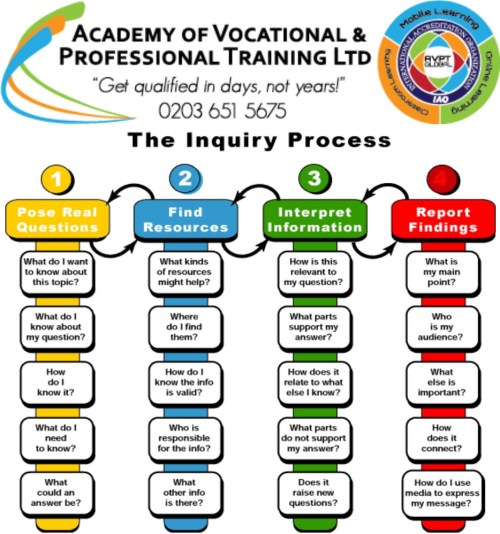
the enquiry process to soft skills training april 2014

The Multiple Intelligence Theory was developed by Dr. Howard Gardner in 1983. Dr. Gardner, a noted psychologist and professor of neuroscience from Harvard University, suggested that every human being interacts with their environment differently. We each possess nine different kinds of intelligence, but our experiences, cultural beliefs, and knowledge base determine their exact configuration.

What is “intelligence”, according to Multiple Intelligence Theory?

According to Gardner, there are three key elements that determine a person’s intelligence:

  1. The ability to create a service or product that will be valued in the person’s society of culture.

  2. A skill set that allows the person to solve real world problems that they may encounter in life.

  3. The ability to potentially create new solutions for problems or to utilize existing solutions. This typically involves the acquisition of new knowledge. 

Multiple Intelligence-Based Activities in eLearning

Multiple Intelligence Theory can be implemented in eLearning based upon the nine multiple intelligences. Let’s take a closer look at each category and which multiple intelligence-based activities can be utilized during instructional design to create the best possible eLearning experience for the learners:

  1. Musical (or Rhythmic) Intelligence
    This intelligence involves the capacity to think and learn in terms of music and rhythm, and to recognize and hear patterns. An activity that would appeal to this type of intelligence is a lesson that includes music or sound, such as a multimedia presentation. Try to use music that emphasizes the subject matter and creates a more immersive experience for the learner. Since there is more of an auditory aspect with this particular intelligence, lectures can also be very helpful. People who demonstrate a high degree of musical intelligence may be ideally suited for musical professions, such as composing or playing an instrument.

  2. Linguistic Intelligence
    This intelligence is associated with expression through language. These people tend to be able to eloquently convey their thoughts and to understand the words of others. Writers and speakers typically display a high degree of this sort of intelligence. Any activities that include discussion, such as online forums or group-based scenarios, are ideal for individuals who lean more toward linguistic intelligence.

  3. Mathematical (or Logical) Intelligence
    This involves the ability to identify principles or structures within a system. This intelligence is often associated with the logic or the manipulation of numbers.  Activities ideally suited for this intelligence may include diagrams, charts, or tables. Critical thinking scenarios are also useful with this group. Accountants and researchers often have a high level of mathematical intelligence.

  4. Kinesthetic (or Bodily) Intelligence
    Body Intelligence involves the use of a person’s entire body to figure out solutions or to create something. People who demonstrate a high degree of kinesthetic intelligence may be ideally suited for performing arts professions, such as dancing, or careers that require an innate knowledge of one’s own body, such as a doctor or athlete. Activities that are best suited for this sort of intelligence include games that involve hand-eye-coordination or interactive scenarios that require physical involvement. The thing to keep in mind about this group is that they are best able to learn when muscular movement is involved. So, include activities that require movement and physical response.

  5. Spatial Intelligence
    This intelligence pertains to a keen sense of space and how one can navigate those spaces. Activities that involve flow charts and graphics are ideal for this intelligence group, as well as games or multimedia that is visually appealing.  Architects, pilots, and sailors often have a high degree of spatial intelligence.

  6. Intrapersonal Intelligence
    This involves an in depth understanding of oneself, such as what you can accomplish and how you react to certain situations. As such, individuals with high intrapersonal intelligence often have a sense of what they should avoid and what they want to achieve in their lives. Professors and philosophers often possess high degrees of intrapersonal intelligence. Activities such as collaborative learning exercises (online forums) and chat programs enable intrapersonal intelligence learners to help others and to share experiences and ideas. This category responds well, first and foremost, to activities, which require introspection.

  7. Interpersonal Intelligence
    This is the capacity to understand and learn from others. People who demonstrate a high degree of intrapersonal intelligence may be ideally suited for service professions, such as teaching or politics. Those who identify more with this category of intelligence may benefit from group discussion activities and in depth questions that make them fully explore the topic. What’s important to remember about interpersonal intelligence is that these individuals are sensitive to others’ moods and feelings. They work well in-group settings and are often able to learn more effectively when collaborating.

  8. Naturalist Intelligence
    This intelligence involves the capacity to differentiate between living organisms and to view the connection between all natural things.  People with a high degree of naturalist intelligence usually have a close bond with nature. Botany and biology are two career fields that closely identify with this sort of intelligence. Activities that involve classification or organization appeal to these individuals.

  9. Existential Intelligence
    This particular intelligence was added later by Gardner, and is not commonly associated with learning environments, as it is geared more toward spiritual and philosophical views. For example, someone who has a high degree of existentialist intelligence may have a tendency to pose questions about life’s purpose or death. 

It’s important to note that instructional designers should not feel obligated to incorporate all of these multiple intelligence-based activities into their eLearning courses, just that it may be beneficial to offer a variety of multiple intelligence-based activities to more effectively illustrate the subject matter. If you are able to offer learners a diverse set of learning tools and eLearning strategies, then you gain the ability to increase comprehension and retention, not to mention enhance the overall eLearning experience.

Call us to enquiry about our soft skills courses

Call us to inquiry about our soft skills courses

The Currency of Digital Learning

Using technology for life long learning

Using technology for life long learning

How do we digitally learn?  How do you learn effectively in a workshop? What is the currency of digital learning?

By Tim T Dingle BSc (Hons) MIBiol PGCE MBA

Chief Development Officer at  the Academy of Vocational and Professional Training.

When you want to acquire a new skill or apply some new knowledge, do you learn by passively sitting and listening to an expert lecture for 90 minutes without a break and 150 Power point slides? What do you actually retain that enhances the value and the currency of your learning. The currency is defined  as something of value, or something that represents value: knowledge, gold, respect, or social media following, all represent different kinds of currency. In 2013 it could be that the currencies in digital and workshop learning are changing.

Learning is evolving and not simply by the tools that actuate it. The process of adopting new learning domains and materials (many digital) has exposed the need for new skills. It is debatable whether or not such skills need to be expressly taught, or if they’re simply the residue of intense, well-designed learning experiences. Whether or not they are old learning (content) with a new coat of paint, or genuinely represent a paradigm shift in learning priorities, it is difficult to doubt their constant application in a 21st century world that is super fast connected, digital, omni-social and multi-faceted.

No longer is it considered sufficient to teach children to simply read and write, and fill in the middle with discrete facts about history, mathematics, and scientific processes. There are new skills that transcend content areas, in this way functioning as natural pathways out of old thinking: creativity, problem-solving and collaboration. One can problem-solve across and within topics formerly thought of as science and history and moving between them both moves them beyond academia, and back to the real world. This is possible because flexible cognitive and creative capacities are not rigid.

The brain science literature suggests that workshop learners understand and remember more when they talk about what they are learning.  However, there are some people who attend workshop and training seem to have information wash over them and are uncomfortable with talking or moving.   So, to get improved retention and learning in both digital and workshops:

1.  Do something physical when you learn: incorporate some sort of movement or body activity every 20 minutes, on line or face-to-face.

2.   Walk and talk, walk and learn: I do this a lot in half-day or full-day trainings.   Participants might do an exercise, but the results are on the wall for a debrief. Using a tablet for true learning as you move.

3.  Flip Chart Products: This is where participants will write specific responses on labelled charts on the wall at designated times.    It can be an answer to a question, a question learners still have, a summary statement, an opinion about the content, facts they want to remember, or how they plan to use the content.  Then stick it on the wall. It works with digital media as well- plaster the wall with paper!

With the proper technologies and thoughtful new methodologies, courses can become content infinite. When the learning goals supersede the content areas, things begin to change. As the currencies in digital learning evolve, they necessarily evolve the learning with them.

AVPTLTD LOGO  6


Check out our 1 day business bootcamp

E-learning growth ‘set to rise to £19 billion by 2015

Get qualified whilst on the move with AVPT

article by Diane Shawe M.Ed.

Academy of Vocational and Professional Training (AVPT) finds that the market for e-learning just keeps growing and growing, according to various research and sales figure surveys

A survey by Ambient Insight Research has showed that the worldwide market for e-learning products was $32.1 billion (£20.5 billion) in 2010 and is expected to rise to $49.9 billion by 2015.

Products and methods of online learning that were deemed the most successful in sales rates included “how to” videos, step-by-step interactive guides and course notes which have multi-media inserts and annotations which directed learners to other resources.

Writer for Gadget magazine, Andre Joubert of MWEB Business said that he thinks the availability of media-rich, interactive e-learning content on the internet – and the advent of uncapped, business-strength broadband connectivity is changing the face of e-learning. He based his analysis on South Africa, but his principles apply worldwide as global sales figures show.

We noted from our research that Mr Joubert said: “E-learning has long been recognised as offering considerable advantages over conventional classroom-based training when it comes to training employees and management quickly, efficiently and conveniently.

So what about the Virtual Classroom?

We see 2012/13 as being the breakthrough year for virtual classrooms, as organisations move on from webinars (which are increasingly commonplace) to more interactive environments offered by virtual classrooms.

I am certainly excited by our  online courses which are recognised and accredited in over 200 subject matters.  As  result of this growing trend AVPT has launched the first globally accredited Virtual Tutor Facilitator course. To train

A New Career Opportunity as a VTF

professionals in becoming a qualified online Tutor who want flexibility and positive earning potential to assist individuals gain a professional recognised certificate  using a mobile learning Management solutions through facilitating their online learning.

Training through online learning is now widely available on the internet and can be beneficial to anything from flower arranging, PowerPoint presentations through to health and safety.

Soft skills is now becoming the new hard skills and offering mobile training and  advice  through e-learning are valuable to many people and a range of businesses globally.

Tim Dingle AVPT Chief Development Officer cited many benefits of the virtual classroom, such as convenience, relevance, immediacy, affordability and ease of use. He added that beginning the learning experience can be as easy as starting up an internet browser.

According to research by Key Note from last year, instructor-led training represents the largest sector of the market, although e-learning teaching – which includes blended learning – showed the highest growth over the review period between 2005 and 2009.

Mobile Learning forging forward.

A 2009 research report summarised that they thought mobile learning could be a “maybe just maybe”, In 2010  a definite trend was being recorded and in 2011 they saw mobile learning as a major driver for the growth of the e-learning market.

The driver is not one of simple learning enhancement and support but driven by a requirement for portability and availability made possible by smart phones and tablet devices, the learning “additionality”. The PC might still remain key to many learners for some years to come but I believe that the call for mobility, flexibility and the trends to workforce mobility will win the day.

We are particularly taken with the concept of second screen learning, in that learners will use mobile devices i-pads, smart phones etc… in conjunction with other forms media such as skype, bluetooth and appliances imbedded in a variety of devices such as the TV, car or even on your fridge.

I do not see mobile learning as a straight replacement to existing genres, and accordingly iIdo not advise organisations to rush headlong into mobile learning solutions because they can be an expensive option if not properly planned out.

Mobile learning in appropriate additional ways  can be used to enhance the learning mix. One principle game changer is our ability to upload current or new courses into our LMS, cutting down on project development planning time and costs and enabling a blended Learning proposition to commence not only laterally but securely, scalable and in real time.

For instance the unemployed, people of disability, prison population, senior citizens and excluded children from the educational system could all benefit in real time whilst keeping the overall unit costs down by scaling and up-skilling with an emphasis on inclusion and virtual support.

Content can now increasingly be authored or in many cases converted to become fit for all purpose all range device delivery and in real time.

HTML5 coupled with Cloud based services will further embed e-learning into the all- pervasive always on internet. Indeed the terminology of mobile learning/ e-learning will lose differentiation, as will the nature of the device that the learning is undertaken upon.

Technology coupled with the growing importance of social media learning will lead to greater learner acceptance. I for one have seen a pattern stemming from the services we are offering to date and look forward to 2013 as we believe it is going to be a bumper year for mobile learning.

Visit us on http://www.expresstrainingcourses.com or call us if you would like more information on 0203 551 2621.

Join us now with over 200 courses

What Impression do you make? How to develop your personal brand

group of people

How to develop your personal brand

Have you given much thought about the impression you make? How much leeway do you have to express yourself at work, at home, and via your social media?

By Diane Shawe, M.Ed. IEBE

If you go to the hospital, they are dressed a certain way, the staff may even speak to each other in a certain way. If you stop at most petrol stations, the salesperson is probably dressed quite differently than your physician, and yet still in a way that reflects and supports the business. You go to these people in order to receive a service or a product, and you probably go to them specifically because they have left some kind of impression on you. We refer to this impression as their personal impact.

Have you given much thought about the impression that you make? How much leeway do you have to express yourself at work, at home, or even via the social media? While the impact you have can be derived from the way you present yourself (through how you behave and what you wear), we also have to look at ways that reflect your personality and individualism. Have you considered yourself to be a brand, and have your considered how you could strengthen your brand in work, business and socially?

When you plan to take a short holiday and ask your neighbor to watch your home for you, what is it that makes you ask that particular neighbor? Are they trustworthy? Friendly? Do they consistently conduct themselves in a way that leads you to think they are a good person? If so, you are feeling some of the impact of their personality.

They present themselves in a particular way, and unless you see some demonstration of inconsistency (which may lead you to question their credibility), to you their impact seems quite clear.

What kind of impact trail are you leaving behind, What impact do you want to make and leave with others?

For more information on personal impact and how to create your personal brand, visit us at http://www.expresstrainingcourses.co.uk

Personal Branding 2 Day training course

Just click HERE to tell us what information you would like us to send you.


The rise of the Andriod Smartphones

Smartphone are here to stay!  Whilst most people will bow down to the supreme way iPhone has dominated the market, lets take a look at the top 10 android smartphones.

After doing a little research on what’s happening in the market, i-send came across some info set up by  Street.com.

Street.com claims that Apple’s iPhone had a good run atop the smartphone league, but 10 Google Androids aim to bury the tuckered-out leader this year.

Motorola Mobility, Samsung, HTC and LG have promised to deliver supercharged, ultra-thin, 4G Android devices in the coming weeks and months.  (It’s interesting that they don’t mention any Nokia phones but let’s watch this space)

But not always. Before the mobile phone industry got all busy with design makeovers and tummy tucks, there were — and still are — some delightfully hideous phones that represented the other side of the beauty trend. The Street has gone back through the past decade to dig up some of the best examples of designs that make you wince and stare in disbelief. The clueless stylings, the flights of fancy into odd shapes, the obsession with square versus rounded — it is a wonderfully colorful history.

The giant Android attack features bigger screens, better cameras, faster processors and speedier 4G connections than the upcoming iPhone.

The Android’s phone screens, for example, start at 4 inches and go to 4.5 inches, advancing the size standard for this generation of touchscreens. By comparison, Apple’s next iPhone is expected to have a 3.5-inch screen.

The new Androids are 4G phones either on AT&T HSDPA-Plus network or Verizon’s LTE network, and four of the 10 will come with dual core processors.

Apple, on the other hand, is expected to upgrade to a dual-core processor this year, but the 4G LTE iPhone has been delayed to 2012, as first reported.

The presumed delay of the next iPhone from June to September, and the decision to wait a year on 4G LTE upgrade highlight just a few of the areas where Apple has been lagging behind the leaders in the Android pack.

“The processor and display quality improvement in the Android camp is proceeding at such a clip that Apple will be under a lot of pressure to deliver a substantial jump in iPhone specs next autumn,” MKM Partners’ analyst Tero Kuittinen.

“It’s not clear how Apple can battle the rapid Android evolution,” says Kuittinen, “unless it picks up the pace of its iPhone launches.”

Here’s a look at the top 10 Androids that could dwarf the iPhone:

More from
TheStreet.com : 
The Ugliest Phones of the Mobile Era 17 Products That Were Invented by Accident

10 Cities Unaffected by a Bad Economy

Nokia 3620
Samsung Nexus S

Samsung Nexus S, Sprint

This is Google’s second run at making its own phone, only this time Samsung is manufacturing the device and Sprint is selling it. Two years ago, the Nexus One was made by HTC and sold online by Google. It was an experiment in retailing that was far less revolutionary than Google hoped.

The Nexus S runs on Google Android 2.3 Gingerbread operating system and works on Sprint’s WiMax 4G service. Because it is a phone built to Google’s specifications, it includes some of Google’s favorite projects including NFC or near field communications that may one day allow phones to make purchases with a swipe at a sales counter.

The Nexus phones are big among Android fans who see them as more purely Android than other versions in the market. The Gingerbread system has been a little hard to find and the Nexus S will continue to be among the most advanced Androids until Ice Cream Sandwich arrives as early as year-end.

Samsung Cleo
LG Optimus

LG Optimus

The LG Optimus is one of the sleeker members of the new Android class. Even though it has a 4-inch screen, the phone is nearly a third of an inch thick, and at 3.8 ounces, it is a full ounce lighter than the iPhone.

The LG Optimus runs on Android 2.2 or Froyo and is powered by a 1-gigahertz OMAP processor from Texas Instruments, one of the key wins for TI in the most recent round of Androids.

The LG Optimus is expected to debut in Europe this month and arrive in the U.S. later this year. AT&T and possibly T-Mobile will likely get the phone since it is configured for the HSDPA network.

Research In Motion BlackBerry 8700
Samsung Droid Charge

Samsung Droid Charge, Verizon

After a little delay, No. 2 phone maker Samsung finally gets into Verizon’s Droid franchise and continues the robotic theme for another year.

The Droid Charge runs on Android 2.2, has a 4.3-inch LED screen and is powered by a 1-gigahertz Samsung Cortex A8 processor. According to analysts, Samsung has built the phone to consume about half as much battery power than its 4G LTE predecessor the HTC Thunderbolt.

Another area where it exceeds the Thunderbolt is on price. Verizon has a $300 price tag on the phone with a two-year contract.

Nokia 3620
Samsung Function, Verizon

Samsung Function, Verizon

Samsung is pushing hard to get on the 4G LTE bandwagon where Verizon has a speedy lead over the rest of the telco field. The Function is a member of the Samsung Galaxy family and a follow up to the 3G Fascinate, which debuted last year at Verizon.

The Function is a truly muscular phone. It runs on Android Gingerbread, it is powered by a dual-core 1.2-gigahertz processor, with 1-gigabyte of memory and another 32-gigabytes of built-in storage. And the 8-megapixel camera shoots 1080p HD video.

The Function is due later this year, and depending on the timing, may be one of the more formidable opponents to the iPhone next iPhone.

Sony Ericsson t61z
Motorola Mobility Targa, Verizon

Motorola Mobility Targa, Verizon

Speaking of formidable, Motorola Mobility apparently wasn’t happy with how the Bionic was coming together and reworked the phone under the code name Targa. Bionic was expected to be the blockbuster 4G LTE phone for Verizon from Motorola, and aimed not just at the iPhone but at the Android superphones from Samsung and HTC.

There’s not much information about what powers the Targa, but the specs are likely to be similar to the Bionic. That list would include a dual-core processor, and an 8-megapixel camera.

Verizon and Motorola were expected to have the Bionic available by the end of June, but a revamped Targa will likely be a pre-holiday fall arrival. This would also pit it squarely against the next iPhone.

Motorola Nextel i500
HTC Sensation, AT&T

HTC Sensation

When and if it arrives at T-Mobile, the HTC Sensation promises to be a big step up from the HTC Thunderbolt. And that’s no small feat. The Sensation is expected to have one of the first dual-core 1.2-gigahertz Qualcomm Snapdragon processors, which holds big promise for Qualcomm.

The Sensation has a 4.3-inch display, a 8-megapixel camera and it runs on Android’s Gingerbread operating system. The phone has an aluminum unibody structure, a trend Apple started with its laptops.

The Sensation runs on the HSDPA network that AT&T and T-Mobile call 4G. The phone is expected to arrive as early as next month.

Motorola Flipout
LG Revolution, Verizon

LG Revolution, Verizon

LG’s focus on feature phones made it a weak player in the smartphone game, but the Korean electronics giant now wants to make up for lost ground in the super-phone category.

The LG Revolution is the heaviest of the five Androids, weighing 6 ounces. But it carries the weight well in a sleek half-inch-thick form with a large 4.3-inch display screen.

The phone runs on Qualcomm Snapdragon 1-gigahertz processor and has a whopping 16 gigabytes of storage. It has two cameras, one front-facing for video chats and the rear a less-than-robust 5-megapixel shooter.

The Revolution is a 4G LTE phone that was expected to start selling at Verizon in the first quarter.

LG VX9800
Samsung Infuse, AT&T

Samsung Infuse, AT&T

Samsung seems to be trying extra hard to be the iPhone replacement for AT&T. By appearances, the Samsung Infuse looks very much like a large version of the iPhone 4, at least from the front.

Samsung had reasonable success with Android phones in its Galaxy series; with the Infuse, it hopes to take that one more step higher. The phone has a massive 4.5-inch super-AMOLED-plus screen that is designed to provide better resolution and easier daylight viewing.

The Infuse runs on a speedy 1.2-gigahertz Hummingbird single-core processor. Its front-facing camera is a wimpy 1.3-megapixels, but the rear camera captures 8-megapixels. The Infuse runs on the HSDPA-Plus wireless technology, which AT&T started calling 4G.

The Infuse, sort of like the 5-inch Dell Streak, attempts to push the limits of super-phone sizes in an effort to skirt the fringes of the larger tablet market.

AT&T starts selling the Infuse this spring.

 HTC Apache
HTC Thunderbolt, Verizon

HTC Thunderbolt, Verizon

We got our hands on the HTC Thunderbolt when it arrived in March. Its speed is astonishing, but its battery life is terrible.

The Thunderbolt has the best name of the new crop of 4G devices that Verizon has introduced so far. The Thunderbolt looks very much like HTC’s popular EVO at Sprint, with the same convex back and kickstand.

The Thunderbolt runs on Qualcomm’s 1-gigahertz Snapdragon processor, has a 4.3-inch screen and a front-facing camera as well as an 8-megapixel rear camera. All those specs, by the way, are identical to its 4G WiMax brother, the EVO at Sprint.

The difference with the Thunderbolt is that it runs on Verizon’s 4G LTE network. The Thunderbolt arrived in March quarter and was hailed as the first Verizon 4G LTE phone.

LG VX9800
Motorola Atrix, AT&T

Motorola Atrix, AT&T

If there was one phone that caught the most attention at CES, it was the Motorola Atrix, which AT&T had been promoting like crazy.

This Atrix uses a dual-core Nvidia processor like its sister phone the Bionic, and has similar specs. But it also features 1-gigabyte of RAM, the same deployed by small laptops. And curiously, that’s how Motorola is pitching this device — as a pocket computer.

During the Motorola demonstration, the Atrix was docked in an empty laptop shell, which, powered by a keyboard and big screen, made the Atrix the core of a notebook computer. The Atrix is designed to serve as both your super-phone and through a docking system, your PC.

With processing power and memory comparable to a netbook, the Atrix may help push Motorola devices further into the workplace, bumping up against Research In Motion and Hewlett-Packard’s Palm business.

Well they all look very good, but I am a Nokia fan and I am looking forward to purchasing my N7.  It works so well for business users.
In the mean time, as we see the rise of the smart phone, every business needs to look at how they can cost effectively advertise within proximity.  Click here to learn more.
Research In Motion BlackBerry 8700
Samsung Droid Char

British Leisure Show launch apps to connect exhibitors & visitors

Welcome to the British Leisure Show who have launched there first apps to help promote their event and will be using Bluetooth location based broadcasting throughout the event to drive visitors to exhibitors stands.

By Diane Shawe

Click on the image below to Download the British Leisure Show Apps and find out more about the event.

This exciting, three day family friendly festival, provides entertainment and interaction for visitors of all ages. It’s packed with an exciting variety of things to SEE, TRY AND BUY, with the latest product models and accessories, competitions and demonstrations to watch and activities to try.

i-send will be holding a meeting designed to help business learn about apps and how it could help improve mobile marketing.

On of many events will be held throughout the year with the first one on the 10th March 2011 in London. Click to register

For a growing number of UK shoppers, the difference between off-line and on-line shopping will be no line at all.

What does this mean for retailers, sole traders, enterprise business and the retail sector?

Come join us at this free event when you will be able to listen, learn and ask.

With an inundation of new smart phone apps these hand held shopping tools are redefining the shopping experience and blurring the distinction between the in-store experience and the virtual world of information now available in the palm of your hand.

Advances in location-based technology, price-comparison apps, bar-code scanning apps and social-networking tools have turned the mobile device into a real-time third channel of commerce, empowering consumers while challenging retailers to rethink the way they do business.

The appetite for new apps seems voracious. A recent survey by comparison-shopping site PriceGrabber revealed that 36 percent of consumers plan to use their mobile phones for shopping-related activities this holiday season.

Around 4.2m of us in the UK are already using our mobiles to access the internet and browse retailer’s eCommerce sites.

This event will look at the pros of cons about introducing a apps into your business and all the pointers one should consider.  Specialist speaks will be available to give you golden nugget advise.

Introducing our Panellist Speakers

Andrew Lamont

Cllr Andrew Lamont ‘Access Champion for the Royal Borough of Kenisigton & Chelsea’

Topic:  Why Access & Apps go together

Partially sighted as a result of optic atrophy, Cllr Lamont is a seasoned campaigner on behalf of the blind and partially sighted. As a trustee of the charity BlindArt he has worked to remove barriers to the visual arts for all, inclusive of visually impaired people.

Andrew is currently the Access Consultant for i-send proximity and plays an important role in advising local authorities and Town Centre’s on managing the implimentation of Access.

Andrew is concerned about the new technolgy and feels that Apps and the new type of Smartphones should take into consideration access for over 2 million people throughout the UK

Diane Shawe

Diane Shawe Author of ‘How to Cyber kiss your business to Success’

Topic: Discovering the Pros & Cons for implementing Apps into your business

Project Director for i-send proximity, Diane has over 16 years experience in the Telecoms Fibre Optic and Microwave technology. Smartcard and internet audience measurement solutions.

Diane is often a guest speaker and training in business development and is currently working on several City and Town Centre Projects who want to build a PWAN Bluetooth Broadcasting Network.

The world of promoting your business has pivoted in a way that could leave a lot of  businesses behind if they don’t implement a structured apps program.

Jason Cobine

Jason Cobine Founder of  Beyond Networking runs a series of revolutionary, unique, branded workshop.

Topic: Apps & Profit and protecting infringed intellectual property rights.

Jason Cobine for the last 20 years have helped organisations around London with business insurance, indemnity insurance and reputation protection.

Jason has also helped businesses reduce the time and money spent finding new opportunities through business networking.

Jason is often a speaker and trainer at business related events and is going to shed some light on the protection of Intellectual property rights when using apps to promote your business.

Jason come’s highly recommended and will help you navigate yourself through this complex arena.

Abel Hussain Author Speaker

Abul Hussain Author of Grow your business with Internet Marketing

Topic:  Why SEO don’t work so for some businesses

A Managing Partner at the Middle Man Marketing Group,  Abul is an experienced marketing consultant, who consults with the marketing departments of many FTSE 100 companies.

His specialities include SEO, Pay Per Click Marketing, Social Media Marketing, amongst other marketing areas.

He often is a guest speaker at business association events and a guest author around the marketing blogosphere.

Abul will discuss the importance of implementing certain strategies to insure that localised and regionalised businesses can make better use of the SEO online strategy.

Jonathan Greensted

Jonathan Greensted Founder and CEO  of Sentient

Topic:Apps defining the shopping experience

Sentient has help many large organisations such as AstraZeneca, Virgin Holidays, Pfizer, Commerzbank, Microsoft, MCI and Centrica leverage IT to increase profits, optimise costs or increase their business agility.

Sentient’s innovation incubator has pioneered retail energy management (1995), web content management (1997), teleco billing (1999), social networking (2002), mobile software (2004), GPS tracking (2006) and Software + Services (2008).

He often is a guest speaker at business events.

Jonathan wil discuss the changing face of the retail business as the inundation of new smart phone apps enter the market.

US Wireless Data Market Grows 23 Per Cent Year-on-year

All I can say is WAKE-UP SME’s and start smelling the COFFEE!

by Diane Shawe

I-send was sent a recent post from the the analyst, Chetan Sharma, who released its US Mobile Data Market Update for Q4 2010 and 2011.

The report reveals that the US wireless data market grew 5 per cent quarter-on-quarter, and 23 per cent year-on-year, to reach $14.8bn (£9.1bn) in mobile data service revenues in Q4 2010. The final tally for the 2010 year was $55bn, which the analyst expects to increase by 22 per cent to $67bn in 2011.

US mobile subscriptions officially crossed the 100 per cent penetration mark in Q4 2010. The connected device category (including tablets, M2M, telematics, eReaders, etc.), registered the highest growth at 55 per cent, while postpaid subscriptions grew by only 3 per cent for the calendar year. Connected devices now account for 7 per cent of the installed base.

Smartphone shipments overtake computers
The report notes that 2010 marked the milestone of the start of a new computing and communications era. For the first time in the US, smartphone shipments exceeded the traditional computer segments (desktops, notebooks and netbooks). In 2011, the smartphone segment, along with connected devices will not only exceed the computer segment in unit shipment but more importantly, in overall revenues as well.

While connected devices ARPU is low, Chetan Sharma believes this segment will prove to be the most profitable in the coming years, due to higher margins. By the end of 2011, connected devices will be commanding double digit market share.

However, not all sub-segments are going to be successful in the operator channel, until multi-device data pricing plans are introduced. Most of the tablets and eReaders can work well with only wi-fi most of the time. Monthly data plans make sense for enterprise users but not for consumers who might use these devices occasionally. As such, the report says, tablets will be more successful in direct and traditional retail channels. Operators who start to bundle multiple devices by single data plans and data buckets are going to see a better yield in this category. Similarly, OEMs who rely on operators for sell-through of tablets/eReaders will see low volumes compared to players who have more diverse distribution channels, such as Apple and HP.

As previously noted by Chetan Sharma, the iPad and other tablets are making Netbooks irrelevant. In fact, tablets are starting to eat into the laptop category as well. As expected, the device has been a hit with many enterprises with mobile workers. Many enterprises are giving out iPads to their workforce instead of laptops or Netbooks. The analyst expects iPad to dominate the space in 2011 as competitors will find it hard to compete across all dimensions – price, performance, ecosystem, distribution, and brand power.

Data traffic more than doubles
Mobile data consumption continued to grow across all networks, increasing by 2-5 times on major US networks. While average data consumption in the US at the end of 2010 was 350 MB/month, many of the superphones introduced in the second half of 2010 are clocking 1-1.5GB/month on average. Thus, while data revenues for the year increased by 23 per cent, mobile data traffic grew by 132 per cent.

The significant rise in smartphone sales and usage in the US market – over 50 per cent of devices sold in the US in 2010 were smartphones, almost twice the global average – means that by the end of 2011, in the US, the smartphones will consume more data than data cards for the first time. Chetan Sharma also expects the US to become the number 1 nation in mobile data consumption this year, edging out Sweden.

The report notes also that the center of gravity of the mobile market has shifted back to the US, which is also the most dominant market in terms of revenue generation for the industry. While the US represents less than 6 per cent of the subscription base, it accounts for over 21 per cent of data revenues, with Verizon Wireless becoming the number one mobile data operator in 2010, edging past the decade-long leader, NTT DoCoMo. AT&T also went past China Mobile to gain its current number three ranking. By the end of 2013, the US market will account for 25 per cent of global mobile data services revenues.

Wake-up call
Chetan Sharma calls the Nokia-Microsoft announcement “a wake-up call to many in the industry who were in denial”, and praises Nokia for decisiveness, and for moving quickly under pressure. But it concludes that the impact on Nokia remains uncertain, saying: “While there were risks with Android, going with Win7 is not an assured path to resurrection either. It all comes down to execution…Nokia has significant talent and it’s a proud company, but jumping into the shark-infested cold waters miles away from the shore will require all the stamina, good weather, and skill it can muster to make landfall before thanksgiving”.

Looking ahead, the report notes that Android and iOS are completely dominating the developer and ecosystem mindshare, and says the race to become a viable third option is on, with operators keen to see another competitive force emerge in the market. Chetan Sharma will be discussing how the  industry is going to evolve in the next decade at its mobile thought leadership summit – Mobile Future Forward, in September.

I-send proximity is launching a series of workshop/expert forums to discuss the implementation and road mapping of apps into any type of business, visit http://www.i-send.co events page for more information.

Invitation to our forthcoming Apps Network Event

Come along and join us at our informal networking meeting on Thursday 10th March 2011 in London to take a closer look at apps and how they could impact on your future business.

For a growing number of UK shoppers, the difference between off-line and on-line shopping will be no line at all.

What does this mean for retailers, sole traders, enterprise business and the retail sector?

Come join us at this free event when you will be able to listen, learn and ask.

With an inundation of new smart phone apps these hand held shopping tools are redefining the shopping experience and blurring the distinction between the in-store experience and the virtual world of information now available in the palm of your hand.

Advances in location-based technology, price-comparison apps, bar-code scanning apps and social-networking tools have turned the mobile device into a real-time third channel of commerce, empowering consumers while challenging retailers to rethink the way they do business.

The appetite for new apps seems voracious. A recent survey by comparison-shopping site PriceGrabber revealed that 36 percent of consumers plan to use their mobile phones for shopping-related activities this holiday season.

Around 4.2m of us in the UK are already using our mobiles to access the internet and browse retailer’s eCommerce sites.

This event will look at the pros of cons about introducing a apps into your business and all the pointers one should consider.  Specialist speaks will be available to give you golden nugget advise.

Introducing our Panellist Speakers

Andrew Lamont

Andrew Lamont ‘Access Champion for the Royal Borough of Kenisigton & Chelsea’

Topic:  Why Access & Apps go together

Partially sighted as a result of optic atrophy, Cllr Lamont is a seasoned campaigner on behalf of the blind and partially sighted. As a trustee of the charity BlindArt he has worked to remove barriers to the visual arts for all, inclusive of visually impaired people.

Andrew is currently the Access Consultant for i-send proximity and plays an important role in advising local authorities and Town Centre’s on managing the implimentation of Access.

Andrew is concerned about the new technolgy and feels that Apps and the new type of Smartphones should take into consideration access for over 2 million people throughout the UK


Diane Shawe

Diane Shawe Author of ‘How to Cyber kiss your business to Success’

Topic: Discovering the Pros & Cons for implementing Apps into your business

Project Director for i-send proximity, Diane has over 16 years experience in the Telecoms Fibre Optic and Microwave technology. Smartcard and internet audience measurement solutions.

Diane is often a guest speaker and training in business development and is currently working on several City and Town Centre Projects who want to build a PWAN Bluetooth Broadcasting Network.

The world of promoting your business has pivoted in a way that could leave a lot of  businesses behind if they don’t implement a structured apps program.


Abel Hussain Author Speaker

Abul Hussain Author of Grow your business with Internet Marketing

Topic:  Why SEO don’t work so for some businesses

A Managing Partner at the Middle Man Marketing Group,  Abul is an experienced marketing consultant, who consults with the marketing departments of many FTSE 100 companies.

His specialities include SEO, Pay Per Click Marketing, Social Media Marketing, amongst other marketing areas.

He often is a guest speaker at business association events and a guest author around the marketing blogosphere.

Abul will discuss the importance of implementing certain strategies to insure that localised and regionalised businesses can make better use of the SEO online strategy.