Tag Archives: online courses

Why the legal profession is changing – Part-time partners

CPD on the move with expresscourses

CPD on the move with expresscourses

Only 9.4% of equity partners in law firms are women, despite equal numbers of men and women entering the profession

Article by Nicky Richmond Guardian Professional,

The statue of justice at the Old Bailey court in London. Photograph: Martin Argles for the Guardian

In the world of big law, equity partnership is broadly equivalent to being on a board of directors. In the top 100 law firms in the UK, just 9.4% of equity partners are women. This is even lower than the percentage of board members at FTSE 250 companies who are women, at 9.6%.

Given that equal numbers of women and men enter the legal profession, why is it that so many women don’t reach equity partnership? The Women’s Business Council – set up to advise the government on how to get more women into executive positions – came up with some interesting conclusions in a recent report.

They reveal an overwhelmingly masculine, patriarchal corporate culture, and point to the double burden of work and domestic responsibilities, the “anytime, anywhere” model of management and, a particular curse in the UK, the long hours working culture wired into city law firms.

A large proportion of women who drop out of law do so because they decide to have a family. Many women feel that they simply cannot combine the demands of life in a law firm with the demands of their families.

It’s little surprise they reach this depressing conclusion; at most law firms it is either full-time or nothing. A law firm may offer a woman a career downgrade to ‘support lawyer’ status but for many the cut in remuneration for part-time working or a lesser role are options not worth considering. Factor in the expense of childcare, and it’s little wonder many women conclude that the high cost simply isn’t worth it.

The goal of a partnership becomes more distant for many women once they decide to have a family. In many firms there is no route to partnership for lawyers who work part time. It just isn’t allowed. This is not only morally wrong, it is nonsensical.

There is no reason why a part-time lawyer – female or male – cannot make an outstanding contribution as a partner in their practice. Critical to a woman’s decision as to whether or not she returns to work following maternity leave must be the availability of flexible working. This means flexibility in both hours and location.

In order for things to change in law firms, firms must prioritise retaining their best people for as long as possible. This could include accommodating requests for part-time or flexible working. Given the demands of clients this isn’t always easy, but in most cases – with a real will on both sides – it can be done.

I work for a law firm that is owned equally between men and women. This is key to the day-to-day operations. A number of our lawyers work on a part-time basis. Some work certain days from home, others are consultants who hardly ever come into the office. We try to accommodate people’s real lives and ultimately, it’s the service to the client that counts.

Equality in the law will not happen on its own. In the 25 years I have been in practice I have seen all sorts of attempts to deal with ‘the women issue’, but evidently none of them have worked. Suddenly, however, it has become clear to City law firms that losing women is losing them money. So now, in line with the government’s recommendations, some of those firms have introduced their own targets for senior women. Money talks, and that’s what will drive the change.

AVPT CPD PRESSED FOR TIME LAW FIRMS

Check out Merchant Cash Advance Services for small businesses

365 business financeMerchant Cash Advances, also known as Business Cash Advances, are a quick and easy way to convert your future credit and debit card sales into immediate cash to spend on any of your business’ requirements. They are a simple alternative to unsecured bank loans and overdrafts.

At 365 Business Finance, they’ve helped businesses across many sectors get the finance they need. they’ve provided cash advances to cycle shops, convenience stores, butchers, greengrocers,  pet care stores, garden centres, sports shops,  off-licenses, shoe repairs, cash and carry, and just about any other business that accepts credit and debit cards.

As a business owner, are you considering expanding  your store or making costly refurbishments?  Are your suppliers  unwilling to provide you with the credit line that you previously received? Or maybe  you need to purchase stock ahead of a busy sales period? Perhaps you’d like to launch a new website or run an advertising campaign? Whatever the reason,  you need cash now, but you’re not sure how to proceed. You’ve thought about a small business loan, but some banks have imposed tighter restrictions, some require security and detailed business plans,  and even if you do qualify, you may have to wait for months to get the funds.

With our Cash Advances,  you can avoid some of the hassles of a traditional business loan by utilising your future credit and debit card sales to secure thousands of pounds of ongoing finance for your business. Our unique repayment plan takes a percentage of your daily card sales (typically between 5% and 20%) until the advance is paid off. A traditional loan requires fixed monthly payments irrespective of how your business is performing, but our financing process is designed to match your business’s performance, so during quieter periods, you pay back less. The process happens automatically so there isn’t an extra bill to keep track of each month. Our application process is fast and simple, and you can have your money in days.

business-other

Here are a few examples of how our cash advances can be utilised:

  • Expansions;
  • Refurbishments;
  • Equipment purchases;
  • Bulk stock purchases;
  • Marketing and advertising;
  • Website development;
  • Recruiting staff;
  • General working capital needs

3 Steps to Growing Your Business

Step one

1. Monetise your future card sales

They will  buy a fixed amount of your future (credit and/or debit) card sales

Step two

2. Get your cash in days

You’ll receive the lump sum directly into your bank account to use on any business requirement.

Step three

3. Watch your business grow

You repay a small  percentage of your card sales. Repayments are  automatically processed and hassle-free.

Learn More….

Click to Check our our Budgeting & Accounts Soft Skills courses for your business.

1 day social media and marketing course

6 Things the Most Influential People on Social Media Do

Train to become a Linkd in specialist

Train to become a Linkd in specialist

How do you earn respect, stand out, and get noticed in noisy social-media circles? Take a cue from the Web’s biggest influencers.

Guest Blogger 

Influencers are among the most magical, powerful creatures in social media.

Within specific niches or across large audiences, they have the power to shape how people think about an issue, start important conversations, make businesses stand up and take notice, and more.

Outside of having a large following, how do they do it? And how did these influencers amass the following they have in the first place?

The ability to stand out in noisy social circles helps influencers build their audience and connect with them over and over again. It keeps them relevant. It keeps them influential.

Here are the six things influencers do to stand out:

1. They’re Superconnected and Almost Always On

Brand advocates, superfans, loyalists–influencers of all stripes–are hyperconnected to their audience. They have a passion for their topic of choice, which means they’re always on and use multiple devices to ensure they’re connected throughout the day.

Influencers use tools such as Topsy, Trackur, and Social Mention to find interesting conversations, stay on top of breaking news in their niche, and help them manage and schedule content for maximum exposure.

Influencers treat social like their j-o-b. (and sometimes it is). They get it; you have to invest time and money in yourself to help you scale if you are going to stay superconnected and become an influencer.

2. They Make Boring, Dry, or Otherwise Uninteresting Topics Fascinating

When everyone is saying the same thing, who grabs your attention? Influencers are the people coming up with a creative take on a topic, saying something different or contrary or funnier, etc.

Take Gretchen Rubin, for example. Rubin is a popular author, blogger, and speaker, but then a lot of people write and speak. How is she also one of LinkedIn’s 150 Most Influential People?

For one, while everyone else was writing self-help books, Rubin decided to parody them with her first book, Power Money Fame Sex: A User’s Guide.

See, while everyone else was trying to tell people how to be happy, Rubin decided to take a quirky, self-deprecating, and humorous approach.

When she tweets to her 92,000-plus followers, they listen and share because she’s not spouting the same old conventional wisdom. Her take is unique and makes something that could be tedious–finding happiness–an adventure in which her social connections can all participate.

3. They Create a Ton of Awesome Content

The killer content top influencers are banging out on a regular basis really helps them stand out in a sea of noise, regardless of the topic.

Influencers are great at creating content that people can’t help sharing.

They might do this by way of original research, powerful commentary, sharing a unique take on the news, turning information into stunning visuals, hosting webinars or online chats, or blogging prolifically.

Whichever medium they’re using, influencers love to create awesome content, and they have mastered techniques that allow them to scale their efforts. This might mean partnering with others to increase their reach and maximize their time, or building a great team around them to assist in their efforts.

There are a lot of people out there with something interesting or brilliant to say. The ones who garner influence, though, are incredibly skilled in how they get their message across to the greatest audience possible.

1 day social media and marketing course

4. They Know Who You Are and Want You Want

Influencers don’t operate in a vacuum, churning out social updates and content like traditional broadcasters. They know their audience and what you like–in fact, they often know what you’ll like before you do.

Knowing your audience goes far beyond demographics, and influencers totally get it. They listen, engage, and converse so they can truly understand what drives people. They’re thirsty for audience insights that will help them create that next amazing piece of content, or fuel their next groundbreaking research project.

They don’t get bogged down in popular opinion or go with the crowd, because they know you’re looking for something different. They know this because you’re telling them in a thousand different ways, and they’re actually paying attention.

It might be through social-media activity and sentiment tracking. It could be through website analytics. It may very well be gleaned through actual conversations with the real people who hang on their every word.

The difference is, they actually care about what would be most useful, helpful, or entertaining for you and go from there.

They’re more concerned with what you want to hear than what they want to say.

5. They’re Hip, They’re Happening, They’re Current

And they can’t help being all of these things, because they are so in tune with the topic on which they’re influential.

They read voraciously. They eat data and facts for breakfast. Influencers eat, sleep, and breathe their passion and are always at the forefront of the industry.

When everyone else is talking about what happened this morning, they’re already talking about what’s going to happen tomorrow. And they know what’s going to happen tomorrow, because they know just about everything there is to know about what’s already happened, who is working on what, which technologies or developments are on the horizon, and more.

6. They’re Trustworthy

And this is huge, massive, critical! They don’t waste words, publish fluff pieces, tell half-truths, or otherwise lead their audience astray.

People elevate others to the level of influencer because they trust them. It’s as simple as that.

It can take years to build that trust and one poorly thought out statement to break it, so influencers are incredibly careful about what they’re putting out to their networks.

They stand out in a sea of noise because time and again, they’ve proven their voice is worth listening to and their advice worth taking.

Call us to enquiry about our soft skills courses

Call us to enquiry about our soft skills courses Diane Shawe at express courses, London UK

source: http://www.inc.com/larry-kim/6-things-influencers-do-to-stand-out-in-social-media.html#ixzz2zldfZm9Q

Does nine different kinds of intelligence make you any smarter?

In this article, I will talk about the different ways in which Multiple Intelligence Theory can be implemented in e-Learning to help the learner effectively acquire, retain, and utilise the information being provided within the e-Learning course.

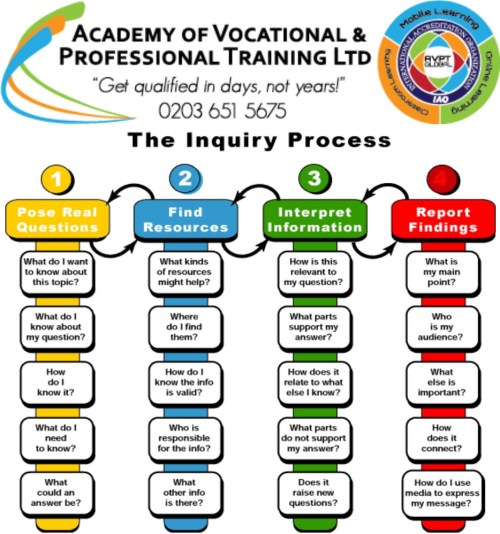
the enquiry process to soft skills training april 2014

The Multiple Intelligence Theory was developed by Dr. Howard Gardner in 1983. Dr. Gardner, a noted psychologist and professor of neuroscience from Harvard University, suggested that every human being interacts with their environment differently. We each possess nine different kinds of intelligence, but our experiences, cultural beliefs, and knowledge base determine their exact configuration.

What is “intelligence”, according to Multiple Intelligence Theory?

According to Gardner, there are three key elements that determine a person’s intelligence:

  1. The ability to create a service or product that will be valued in the person’s society of culture.

  2. A skill set that allows the person to solve real world problems that they may encounter in life.

  3. The ability to potentially create new solutions for problems or to utilize existing solutions. This typically involves the acquisition of new knowledge. 

Multiple Intelligence-Based Activities in eLearning

Multiple Intelligence Theory can be implemented in eLearning based upon the nine multiple intelligences. Let’s take a closer look at each category and which multiple intelligence-based activities can be utilized during instructional design to create the best possible eLearning experience for the learners:

  1. Musical (or Rhythmic) Intelligence
    This intelligence involves the capacity to think and learn in terms of music and rhythm, and to recognize and hear patterns. An activity that would appeal to this type of intelligence is a lesson that includes music or sound, such as a multimedia presentation. Try to use music that emphasizes the subject matter and creates a more immersive experience for the learner. Since there is more of an auditory aspect with this particular intelligence, lectures can also be very helpful. People who demonstrate a high degree of musical intelligence may be ideally suited for musical professions, such as composing or playing an instrument.

  2. Linguistic Intelligence
    This intelligence is associated with expression through language. These people tend to be able to eloquently convey their thoughts and to understand the words of others. Writers and speakers typically display a high degree of this sort of intelligence. Any activities that include discussion, such as online forums or group-based scenarios, are ideal for individuals who lean more toward linguistic intelligence.

  3. Mathematical (or Logical) Intelligence
    This involves the ability to identify principles or structures within a system. This intelligence is often associated with the logic or the manipulation of numbers.  Activities ideally suited for this intelligence may include diagrams, charts, or tables. Critical thinking scenarios are also useful with this group. Accountants and researchers often have a high level of mathematical intelligence.

  4. Kinesthetic (or Bodily) Intelligence
    Body Intelligence involves the use of a person’s entire body to figure out solutions or to create something. People who demonstrate a high degree of kinesthetic intelligence may be ideally suited for performing arts professions, such as dancing, or careers that require an innate knowledge of one’s own body, such as a doctor or athlete. Activities that are best suited for this sort of intelligence include games that involve hand-eye-coordination or interactive scenarios that require physical involvement. The thing to keep in mind about this group is that they are best able to learn when muscular movement is involved. So, include activities that require movement and physical response.

  5. Spatial Intelligence
    This intelligence pertains to a keen sense of space and how one can navigate those spaces. Activities that involve flow charts and graphics are ideal for this intelligence group, as well as games or multimedia that is visually appealing.  Architects, pilots, and sailors often have a high degree of spatial intelligence.

  6. Intrapersonal Intelligence
    This involves an in depth understanding of oneself, such as what you can accomplish and how you react to certain situations. As such, individuals with high intrapersonal intelligence often have a sense of what they should avoid and what they want to achieve in their lives. Professors and philosophers often possess high degrees of intrapersonal intelligence. Activities such as collaborative learning exercises (online forums) and chat programs enable intrapersonal intelligence learners to help others and to share experiences and ideas. This category responds well, first and foremost, to activities, which require introspection.

  7. Interpersonal Intelligence
    This is the capacity to understand and learn from others. People who demonstrate a high degree of intrapersonal intelligence may be ideally suited for service professions, such as teaching or politics. Those who identify more with this category of intelligence may benefit from group discussion activities and in depth questions that make them fully explore the topic. What’s important to remember about interpersonal intelligence is that these individuals are sensitive to others’ moods and feelings. They work well in-group settings and are often able to learn more effectively when collaborating.

  8. Naturalist Intelligence
    This intelligence involves the capacity to differentiate between living organisms and to view the connection between all natural things.  People with a high degree of naturalist intelligence usually have a close bond with nature. Botany and biology are two career fields that closely identify with this sort of intelligence. Activities that involve classification or organization appeal to these individuals.

  9. Existential Intelligence
    This particular intelligence was added later by Gardner, and is not commonly associated with learning environments, as it is geared more toward spiritual and philosophical views. For example, someone who has a high degree of existentialist intelligence may have a tendency to pose questions about life’s purpose or death. 

It’s important to note that instructional designers should not feel obligated to incorporate all of these multiple intelligence-based activities into their eLearning courses, just that it may be beneficial to offer a variety of multiple intelligence-based activities to more effectively illustrate the subject matter. If you are able to offer learners a diverse set of learning tools and eLearning strategies, then you gain the ability to increase comprehension and retention, not to mention enhance the overall eLearning experience.

Call us to enquiry about our soft skills courses

Call us to inquiry about our soft skills courses

Leading Training Provider ‘AVPT’ Approved To Deliver CPD ‘Soft Skills’ Courses To The UK Legal Industry

CPD does not have to be hard anymore

CPD does not have to be hard anymore

Press Release  Press Release

London UK, Thursday 3rd April 2014 – A national organisation specialising in the delivery of vocational and professional training has been approved to deliver recognised ‘soft skills’ courses to the legal profession, following formal assessment and accreditation by the Solicitors Regulatory Authority.

The Academy of Vocational and Professional Training (AVPT) now offer ‘soft skill’ courses within the legal sector after successfully becoming the latest organisation in the UK to reach the expecting standards required by the national regulatory body. Not only are the courses approved and recognised industry wide, but also count towards CPD certification of course candidates.

Within professional development arenas, it is now widely accepted the development of ‘soft skills’ within a workforce plays a significant part in the performance and continued success of companies and organisations across every niche. This has lead to an upsurge in organisations looking to complement the traditional ‘hard skill’ base with ‘soft skill’ development programmes.

Law firms begin to up skill their staff with soft skills

Law firms begin to up skill their staff with soft skills

In contrast to the occupational ‘hard-skills’ – those needed to physically undertake a role, ‘soft skills’ focus on the personal characteristic traits which allow individuals to excel in the work place, such as communication, empathy, emotional intelligence and social interaction.

As the legal industry settles after a fundamental reshaping which has resulted in a considerable increase in competition from smaller firms and individuals, law firms across the country are adapting their approach by improving the soft skill abilities of their employees and partners. Modernisation has helped them recognise the importance of technology in the learning environment to overcome geographical, language barriers and time constraint when up-skilling their entire business, so as to become more customer and user friendly.

The current range of ‘soft skill’ development packages for the legal profession have been specifically tailored to meet the needs and requirements of clients working in legal niches. Skills such as HR, Marketing with Social Media, Information management, Leadership & Management skills, Business development, Negotiations and customer services to name but a few from the list of 300 which can now count towards their annual CPD requirements.

Diane Shawe, CEO of AVPT commented “in 2013 the Legal Services Policy Institute estimate as many as 3,000 high street law firms (or 35% of the total) will have to disappear in the subsequent upheaval, law firms with good local reputations will be able to withstand competition if they can successfully reach the demands of clients for greater convenience and ease of access to services by generating greater efficiencies within their practices.”

AVPT is the only UK globally accredited online and workshop based provider of over 300 Soft Skills courses, which uses a cutting edge proprietary online learning management system. Workshop courses are professionally executed in 1-3 days which are delivered as foundation to expert levels.

AVPTLTD LOGO  6As a provider of Soft Skill training courses which are accredited by the Solicitors Regulatory Authority and globally by the IAO, AVPT are now offering CPD applicable courses to the legal profession. For further information please visit the official website at www.academy-of-vocational-and-professional-training.comor get in touch using the details shown with this release.

What key areas should Diversity courses cover?

DIVERSITY IN THE WORKPLACE 1 DAY TRAINING COURSE BY AVPT

Empowering your Workforce

Is there cause for Celebrating Diversity in the Workplace?

When looking for a course that covers some of the  Grey shaded areas, what is it that we should strive to help participants explore and learn?

article by Diane Shawe M.Ed AVPT

I would like to present  the  10 pointers that I believe need clarification in a Diversity training course.

  1. What diversity and its related terms mean
  2. To be aware of how aware they are of diversity and where they can improve
  3. Understand how changes in the world can affect them and their view
  4. To identify their stereotypes
  5. What terms are politically correct and which are not, and why
  6. The four cornerstones of diversity
  7. What the pitfalls are relating to diversity and how to avoid them
  8. A technique for dealing with inappropriate behavior
  9. A management style to encourage diversity
  10. What to do if they or one of their employees feels discriminated against

Defining Diversity

Participants will begin by defining diversity and related terms, including affirmative action, bias, stereotype, and Equal Employment Opportunity.

How Does Diversity Affect Me?

Help participants identify how a changing world has affected them. Participants will also complete a self-awareness inventory to identify possible areas for improvement.


Leadership: Becoming management material

Identifying Stereotypes

Identifying Stereotypes

Identifying Stereotypes

Help participants to explore stereotypes from different angles through a lecture and group exercises.

Wise Words

In this era of political correctness, it’s sometimes hard to keep up with words that have become inappropriate. It is important to take a look at some phrases that are considered universally incorrect and some basic guidelines. It is also important to take a humorous look at some phrases that have gone too far.

The Cornerstones of Diversity

Diversity experts Armida Russell, Amy Tolbert, and Frank Wilderman have identified four cornerstones of diversity development. They are knowledge, acceptance, understanding, and behavior. These need to be examined in more detail.

How to Discourage Diversity

There are some practices that discourage diversity more than they encourage it. We need to  look at four common mistakes and how to avoid them.

The STOP Technique

Diversity expert Lenora Billings-Harris has developed a four-step technique that you can use when someone is behaving in an inappropriate manner. It’s called STOP. Participants will learn about this technique.

Managing for Diversity

We need to look at some simple things managers and employees can do to encourage diversity in their workplace.

Dealing with Discrimination

Gather ideas on how to deal with discrimination as a manager and an employee.

1 day course: Diversity in the workplace

In the past ten years, the workforce has changed dramatically. More than ever, a workplace is a diverse collection of individuals proud of who they are: their gender, their sexual orientation, their religion, their ethnic background and all the other components that make an individual unique. In order for your workplace to succeed, your employees must be able to appreciate and celebrate those differences.  Click here to read more about our online or workshop course


Order your in-house Kit today

Order your in-house Kit today

Why Soft Skills matter to your employability

“The only thing worse than training people and having them leave, is not training them and having them stay”

“The only thing worse than training people and having them leave, is not training them and having them stay”

The hard truth about softskills

article by Diane Shawe M.Ed
CEO AVPT Global S.a.r.l

Though the benefits of soft skills training may be hard to measure in the short term, individuals and organisations need to look beyond simple pain relief, from a symptom of a much bigger problem and toward a long term, system-wide wellness approach. Soft skills training is the key to job security and a healthy organisation, a successful economy that help people into work. There is a quick, effective and surprisingly quick solution offered by the Academy of Professional and Vocational training. Read on…

You may have heard the saying, that in business that you are either selling aspirin (making a customer’s pain go away) or vitamins (by making the customer’s existing situation better). The work at the Academy of Professional and Vocational training (AVPT) involves helping individuals and organisations with soft skills or behavioral competencies; things like interpersonal communication, self-awareness, conflict negotiation, collaboration and leadership. These soft skills are typically considered vitamins more than aspirin. But why should they?

Many organisations suffer a great deal of pain because employees lack proficiency in many of these interpersonal skill and all too often the only thing that has been transferable is bad habits, poor performance and ineffective execution of tasks.  The pain may be as obvious and sometime quantifiable, but that doesn’t lessen its impact on the bottom line both for the company and the individuals earning power.

The downturn in the UK and global economy resulted in slashed budgets of training and development departments, and many departments jettisoned altogether. But what is the cost of not focusing on these people skills both now and in the near future? So which is more important: technical skills or soft skills? It seems that you need technical skills to get taken on by a company (which can be a big ‘if’) or to do an apprentice course, but soft skills are what help you succeed once you are hired. Both are ultimately important, but technical skills get a lot more attention, especially in a poor economy where securing a job is paramount.

Indeed it has been suggested by various people that in a number of professions soft skills may be more important over the long term than occupational skills. The legal profession is one example where the ability to deal with people effectively and politely, more than their mere occupational skills, can determine the professional success of a lawyer  (See the rather marvelous article by Giuseppe Giusti: Soft Skills for Lawyers, Chelsea Publishing ([2]), 2008)

A recent survey conducted by the Graduate Management Admission Council found that although MBA’s were strong in analytical aptitude, quantitative expertise, and information-gathering ability, they were sorely lacking in other critical areas that employers find equally attractive: strategic thinking, written and oral communication, leadership, and adaptability.

To get, and keep, a job you typically need a repertoire of technical skills. Dentists need to know how to fill cavities. Secretaries need to type 100+ words per minute. Accountants need to take long term qualifications. But beyond the technical skills, though, which dentist do you go to?

The current state of Europe

At least 26 million unemployed people have been looking for work across Europe during the long, hot summer of 2013. They will not be the only ones looking. Millions of school and university leavers will join them in the search. Millions more are looking for more work than they already have – another part-time job, or a full-time job in place of part-time work.

Have you planned to join that group  or stay a member of that group or are you planning to solve your problem?

While your technical skills may get your foot in the door, your people skills are what open most of the doors to come. Your work ethic, your attitude, your communication skills, your emotional intelligence and a whole host of other personal attributes are the soft skills that are crucial for career success.

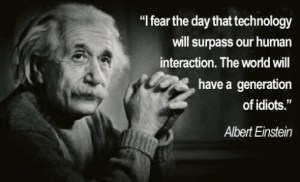
Albert  Einstein

Interact with Soft Skills and get the new Hard Skills of the future

Traditionally, people don’t receive adequate soft skills training – either during vocational instruction or as part of on-the-job training. That’s why services like those of AVPT are great for helping people build great people-skills. What is a huge bonus for employers is that courses in soft skills are cheap, quick (none last more than 4 weeks), effective and have global accreditation.

As an apprentice, development of these skills should be encouraged alongside regular training and study. The development of these skills is about learning through guidance, practice and working out which areas you could improve on. Excellent online courses in communication can be very important in gaining a vital interpersonal skill.

Just take a look at what the future is going to look like with big data?  What type of jobs could you create for yourself\/

Working as a team is key to the success of any company and something that you can be taught by the latest online courses. If you are not used to it, it can be difficult to cope with people with different personality traits who you may clash with in the outside world. Teamwork development will come as you work on different projects and learn the best ways to negotiate and liaise with others.

For an apprentice it is essential that they have the opportunity to develop their soft skills and through an online (but guided system of virtual tutors) like that offered by AVPT) it can be done quickly and cost effectively alongside the technical training.  Being proactive is a personality trait that some people are born with while others have to work on its development. It is the difference between being the person who is always being told what to do or being the person that goes out there and figures it out for themselves. It is a skill that is valued amongst employers as it makes companies more productive.

Although building workforce competency is generally focused on first-time employees, human resource professionals say in Critical Skills Needs and Resources for the Changing Workforce—a poll released in June 2008 by the Society for Human Resource Management (SHRM) found that many workplace soft skills have become more important for experienced employees than for new workers. These skills include critical thinking/problem solving, leadership, professionalism/work ethic, teamwork/collaboration, and adaptability/flexibility.

Become a Virtual Teacher Facilitator

Become a Virtual Teacher Facilitator

Proficiency in these soft skills separate organisations who may survive yet another year versus those who grow, adapt and are able to compete in a global economy. Employees proficient in soft skills demonstrate higher employee engagement, greater productivity, and help make an entire organisation more competitive in the marketplace. It makes sense to look at the new training paradigm offered by Academy of Vocational and Professional Training Ltd.

Social Media – Delivering targeted messages Part 1:

 Localise, segment and personalise your social media engagement for more effective marketing

By our Guest Blogger:  Tamsin Oxford on Sep 24, 2013

For organisations to effectively engage with their consumers, segmenting and then personalising social media content is vital

The core of any business is the customer. What corporations and their brand stakeholders have realised is that the traditional broadcast model for engagement is no longer effective or efficient.

Organisations need to gain insight into audiences, segment their social engagement into specific groups and appeal to a diverse demographic without compromising brand integrity or messaging.

This feature is the first of three examining how to create customised experiences for customers across different platforms. In this feature we are considering how a business can accurately identify core groups, get to know their audiences and segment customers into niche collections. Sound complex? Not necessarily.

“Social media offers interaction that traditional media could never give to the marketer,” says Devon Stanton, PR and Promotions Manager at Megarom [www.megarom.co.za], “In addition, there is an impressive range of toolsets available that can analyse your social media audience and pull out vital demographic and interaction data. By utilising this information, you’ll be able to craft your social media to best suit your audience.”

A white paper by Experian offers a superb breakdown as to what segmentation is and why it is of value to the business. They define it as “the process of dividing your database into groups based on single or multiple criteria.”

This offers value in that you can drill down into the essentials of the client for improved targeting and flexibility. What better way to locate and address the most profitable customers and ensure that there is relevance in this communication? The right message to the right people at the right time – it works, that’s why it’s a cliché.

The business can no longer afford to be generic. A bland message directed across all social platforms may hit one or two people along the way, but it is unlikely to generate brand loyalty or encourage customers to identify with the brand itself.

“Take the time to understand what motivates people to share and talk about topics,” says Scott Gray, Head of Planning at Quirk [www.quirk.biz], “Interests are so fragmented that being generic doesn’t work anymore. To get messages to spread across social networks, brands have to have a point of view and get this to the most relevant group of people. If you’re not relevant, you’re dead.”

Steps to segmentation

Jeremy Waite, Head of Social Strategy at Adobe EMEA, offers a four-step process by which organisations can identify core groups and segment them efficiently that include:

  1. Influence – build relationships with key influencers
  2. Data – data helps brands identify which content drives conversation
  3. Optimising content – using this information helps to streamline content development that says the right things
  4. Measuring impact – stay aware of the impact of social efforts to continually drive conversation and stay relevant and targeted

The many faces of influence

“Building relationships with key influencers is vital,” says Waite, “Data shows that only 6% of fans regularly engage with companies they like on Facebook. By identifying the people most likely to drive conversation, and the types of posts and messages that engage these influences, this helps to increase engagement.”

Veronica Gross del Rio, EMEAI Social Media Manager at Interface  [http://www.interface.com/neteffect], agrees and adds, “Begin determining which social sites you should participate in and what topics are trending or popular. Track how your customers are using social media. We are a B2B company that designs and makes carpet tiles, for us interior designers and architects are the key people who specify our products so we need to convince them more than we need to convince the final buyer. Having the most accurate profile of them on social media is vital.”

It may be obvious that a business needs to identify its core markets and platforms to ensure it markets products effectively, but social media analysis and communications are not the forte of every organisation. It is here that solutions such as Quirk, Codestar and Adobe Social come into play. These companies have made it their business to understand the market and what the organisation needs in order to effectively understand, track and target their customers.

“Successful brands like Starbucks, Xbox and Dell have reduced most of their reporting to only one page that includes all the relevant metrics and information that they need to know about their customers,” says Waite, “These are known as the five ‘W’ – a strategy that Adobe Consulting has also adopted.”

These five ‘W’ are:

  • Who
  • What
  • When
  • Why
  • Where

Who are people talking about, what are they saying, why are they talking about you, when did the conversations begin and where did they take place.

“We design specific apps and landing pages for various products and services advertised on Facebook and often for specific consumer groups,” says Vinny Pianna, Director of Facebook specialists Codastar. “We find that ads for specific customer groups are far more successful than general ones. To segment this effectively we have looked at where we are successful and worked hard to build on this. The key to success is to tailor your messaging, advertising and landing pages for each group.”

Understand the core

To succeed in creating an effective marketing strategy across social media your organisation must ensure it is relevant, targeted, on trend and specific. To do so you need to listen to your customers and understand what they are interested in and make sure that you are communicating with them on the right platforms.

“The web has allowed people to form groups and communities around common interests,” says Gray, “If you’re into dressing up like Batman and singing karaoke, there’s probably a community of people like you. I think that more effective targeting is driven along lines of interest and passions rather than race, gender or age. People are the new conduits of media.”

Interface used these tactics to develop a targeted social media campaign to launch a new product. They created specific content for each social media channel that tapped into their unique qualities and the campaign has been a huge success as a result. Gross del Rio believes that it is this very targeted approach that has made all the difference to the success of their campaign.

“I think that knowing who your audience is and understanding the goals of the campaign will net you far better return on investment,” concludes Stanton, “The data is there to help you make better marketing decisions so use it to maximise results.”

In part two of this series will ask the experts how to take this concept one step further to tailor social media messaging to ensure you appeal to different needs, motives and preferences.

The 4th annual Corporate Social Media Summit Europe

Dec 4, 2013 – Dec 5, 2013, London

Become a social business: For superior marketing response, sharper corporate decision-making, enhanced innovation and a happier, more loyal customer

Related Articles

Why do your customers Like your brand?

We mean to help you so that in turn you help us

We mean to help you so that in turn you help us

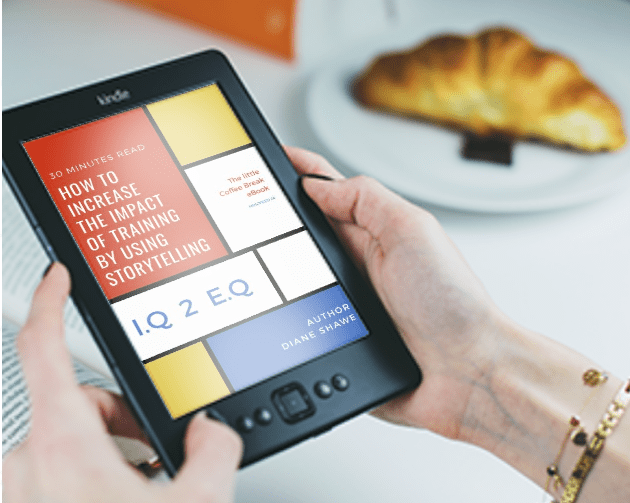
E- Book Culture Gaining Momentum spearheaded by Amazon

Article by Diane Shawe M.Ed MIod

Historical evidence has shown that over the past 5 years, some universities had tried to break away from the traditional textbook model in the past—and failed, due to a lack of feasible alternatives. But many academic teachers and private training schools are finding that the online materials now available allow them to teach entire courses without textbooks, with no negative consequences to student learning. In some cases, digital materials may be even better than traditional texts because of their variety and timeliness and media.

Technological revolution has change the way students are educated. Diane Shawe the founder and CEO of Academy of Vocational and Professional training has demonstrated time and time again that the tablet and the e-book has change how students learn through their Learning Management Solution. LMS.

A recent Tech event lists several advantages for tablets and e-book:

  • Tablets are lightweight compared to textbooks. This is true given that we can store a large number of books on a single tablet.
  •  E-books are cheaper than traditional textbooks. This is a somewhat fallacious argument. Textbooks can be used standalone while tablets require electricity and the initial cost of a tablet is still pretty high. E-books will probably be sold at a cheaper price than traditional textbooks, but e-books cannot be resold once the class is over and thus the overall cost for the student could be as high as today. A major advantage of e-books for publishers is that they might be able to kill the second-hand market
  •  E-books provide richer content. This is potentially true. For some topics, multimedia content will be a benefit. However, this argument was also given when the first e-learning software were distributed, for hyper-card, CDs and other types of technologies
  •  E-books can be automatically updated. This is both an advantage and a drawback. For the student, this means that it can get the latest content. Note that this does not require a tablet and nature has introduced a principle of biology textbook that is hosted on its servers and also regularly updated. For the teacher, it means that he/she has to check the updates of the e-book each year and reflect them for his/her classes.

I think that it is useful for teachers and even the educational departments throughout the UK begin to experiment with the utilisation of e-books in classes as well. Instead of storing lots of paperback text books, the saving could be stealth like which the saving could be redirected to other much needed resources short of funding. The courses are packaged in a chunk-able format so that blended learning can take place whilst the student is on the move and help young people into work quickly.”

Academy of Vocational and Professional Training Ltd has expanded it online suite of courses  to help students access whilst on the move a range of soft skills courses.  Tim Dingle the Chief Development Officer states: “The ‘Chunk-able format’an  Introduction to a new kind of Learning  in which the courses are designed in, allows students to work on the move using their tablet, smartphone or notebook, rather than committing to a 2000-word essay and most courses can even be completed in just one month! Every student is assisted by a live Virtual Tutor Facilitator so as to ensure every student completes there course in four weeks”

As initiatives such as those mentioned above are expanded, they just might be catalysts for growth in the market for low-cost or free digital textbooks. And as far as the educators who’ve created their own digital alternatives are concerned, these efforts have the potential to replace textbooks altogether.

Can the use of non-verbal signatures be imported into the business and HR arena?

Body Language in HR, Interviews, Business and Negotiation.

By Tim T Dingle BSc (Hons) MIBiol PGCE Mediator MBA
CDO at Academy of Vocational and Professional Training Ltd

With limited resources, a changing global environment, reading body language has taken on a different meaning and has become increasingly important as more and more people are taught to become impressive interviewees.

For employers placing the right person in the appropriate position  has a more strategic approach as we see the need for multi skilled and the emphasis on leadership qualities being sought.

I believe that the delivery and emphasis through training is about to change and the understanding of body language will be crucial for those undertaking training. Speaking at a conference in Birmingham last year, a leading HR director observed that there was nothing as important as understanding the language of business.  That must mean the non-verbal as much as the verbal language.  Non-verbal communication is commonly known as “body language”.  So what is this “body language”?  Can it be read and used by individuals, managers and directors- or indeed in their wider professional or social lives?

Body language is a broad term for forms of communication using dress, body movements or gestures instead of, or in addition to, sounds, verbal language, or other forms of communication.  It is part of the category of para  language, which describes all forms of human communication that are not verbal language. This includes the most subtle of movements that many people are not aware of, including, for example, a discreet smile or a slight movement of the eyebrows.

Non-verbal communication is usually understood as the process of sending and receiving wordless messages. Such messages can be communicated instantly and silently through gesture; body movement or posture; facial expression and eye gaze.   Many things unconsciously communicate a great deal about us, such as our clothing, our hairstyle, our use of symbols and info graphics, and the prosodic features of our speech such as intonation, stress and tone.

Henry Higgins and Eliza Doolittle would not have recognised it, perhaps, but just watching an accomplished politician, actor, or shopping channel salesperson can give you some insight into the power of gestures or facial inferenceSuch gestures can add to the stagecraft, amplify the message and can provide surprisingly magnetic assurance about what you are being told.

As in politics, so in the world of gambling.  Poker players will talk of “tells”- these are movements that are traditionally associated with a person’s subconscious self which can give away the strength of the hand.  For example, when a poor player puts a hand over his mouth, it generally means that he has a strong hand – it may mean that he is concealing a subconscious smile.  A player reaching for a drink, however, is usually a sign of being nervous; it is a displacement, but when a poor or weak player ‘stares you down,’ it generally it means he is bluffing.  These ‘tells’ or signatures can give you away, even when you are trying your best to conceal them. These aspects are just as relevant in sales, personal development, business and management development , career and employment.

Can the use of these non-verbal signatures be imported into the business and HR arena?  It can be a risky strategy to attempt to read and rely upon body language signatures without some training and practice.  For just as at the poker table, a wrong call could be disastrous.  Should individuals then be aware of the power of non-verbal communication and seek to harness this aspect in negotiation? If our desire, as individuals in business or HR, is to produce our optimum performance then we should employ all of the communication and interpersonal skills with which we individually have been gifted.  We may well consider investing our time to improve our oral questioning and language skills, but very few individuals seem to give much thought to developing the skill of both reading and transmitting non-verbal clues.

This is surely an oversight where negotiation at a face to face level is concerned – academics tell us that around 65% of a human being’s communication is non-verbal.  Whilst we use our mouths and pens to communicate facts and information, we use our bodies to communicate our emotions.  In the field of business we are generally dealing with individuals whose emotions are most definitely engaged, and therefore we should have a working ability to read those emotions and respond to them.

Developing those reading skills would be much easier if all our clients were between three and nine years of age – this is rare of course, even if sometimes a negotiation has something of a playground quality about them.  Children wear their emotions on their sleeves and are, except perhaps to other children or their doting grandparents, pretty easy to read.  Tightly crossed arms, a screwed-up face and a stamped foot quickly clues you into the internal voice of the child, even if their response to the question, “Are you OK” is “Yes”.

A parent’s “sixth sense” is often nothing more than a demonstration of the superior body language reading skills that child carer’s, of necessity, have learned to develop.  It becomes less effective in the teenage years as more sophistication develops – and for most people, that is when they stop listening non-verbally.  Adults are much more challenging subjects to observe.  The older we grow the more we learn how to mask our true feelings, which unconsciously includes the toning-down of our body language as well.  Whilst we can try and make our non-verbal communication less obvious, very few people can completely mask it.

HR directors, business people and individuals, might want to learn to look for those more subtle, but tell-tale, signs of stress, hope, agreement, confidence, resistance, and fear in the body language of the clients, and indeed their own clients.  Picking up on these signs could allow us to make progress in a situation of stale-mate and could save a negotiation that is about to crash.  These skills can allow us to zero-in our questioning, to know when a private meeting or a break is essential, and to see the evident bridges and agreements, even when the other side have yet to verbalise them.

The other aspect of non-verbal communication in Business, of course, relates to us as individuals: what we give away, suggest, or infer, without even opening our mouths, can be crucial.  If we, consciously or unconsciously, read other people’s body language, we can be sure that the clients and customers might be reading ours.  Does our dress style, for example, coincide with our role – are we in a dark suit or unprofessional in scruffy shoes?  Should we dress in dark colours or in more open, warm, and friendly attire?  We might not think anything of our style of dress, in fact many of us wear the same style, without a thought, to every event – but be assured that those around us are impacted by what we wear!

From the moment that they first see us, our contacts, clients, and staff are using our dress, our language, our confidence, and our personal approach to assess whether they should have confidence in the negotiation or the business process.  If we appear a shambles, with papers everywhere and our files are a mess, then we are likely to give the impression we are unprepared.

How too are we at listening to clients, staff and business partners when they speak to us?  Are we fully engaged with them, having turned our chair, and thus our whole body towards the speaker, leaning forward and maintaining good eye contact?  If you want to be heard in your turn – you need to be seen to be listening.

People will usually only tell us what is really on their mind if they believe that we are really listening.  Do we really listen?  Taking notes whilst staring at our  iPad as the person tells their story, does nothing to build confidence in us or the process.  Active listening skills such as reflecting back a summary of what has just been said by the speaker may just persuade, non verbally, a client to listen to you – and thereby facilitate success.

HR directors, managers and individuals should be encouraged, therefore, think about using their body language positively to enhance the oral skills that they already have, allowing them to maximise their potential as conflict resolution practitioners.

Tim Dingle BSc (Hons), PGCE, MIBiol, Mediator, MBA has been involved in education, management and training for the last 30 years. He was appointed as the Chief Development Officer by CEO Diane Shawe in June 2012. Tim is a former Headmaster of a top school and gained an MBA with a distinction. His dissertation was on Body Language and Interview skills. He has a unique insight into teaching, leadership and management and has now written 24 books on a variety of topics in education. His background in management also includes being Chairman on England Schools Rugby and running a successful Comedy venue. He is rained in NLP and other advanced brain strategies and lectures on these topics around the world.  His academic pedigree (in Biology, Teaching and Body Language) combined with his Mediation skills, gained him a place on the Board of the Global Negotiation Insight Institute (which used to be the Harvard Negotiation project). He has an inspirational style and his enthusiasm for learning is infectious. Tim was an officer in the Royal Navy Reserves for 20 years and is a Yachtmaster and successful sailor. He is a successful executive and business coach and works with clients in a variety of industries.

www.expresstrainingcourses.com