Tag Archives: mobile marketing

Why Are My Eyelashes Irritating My Eyes? Discover the Hidden Culprit by Diane Shawe

Eye Care Alert!

Are you tired of dealing with irritated eyes and wondering why your eyelashes are causing so much discomfort?

You might be surprised to learn that the culprit behind your eye irritation could be Trichiasis, a common condition where your eyelashes grow inward towards your eyes.

Want to learn more about Trichiasis and how to say goodbye to irritated eyes? Head to [read needahairmakeover.blog](http://readneedahairmakeover.blog) to discover the hidden causes and solutions to this pesky problem!

Misbehaving Eyelashes: What You Need to Know About Trichiasis

Trichiasis is a common eyelid abnormality in which eyelashes are misdirected and grow inward toward the eye. This condition can cause irritation, discomfort, and potential damage to the cornea and conjunctiva if left untreated.

Symptoms and Causes

Symptoms:

– Irritation or a feeling of a foreign body in the eye

– Redness and tearing

– Sensitivity to light

– Pain and discomfort

– Blurred vision (if corneal damage occurs)

– Visible inward-growing eyelashes

Causes:

– Chronic blepharitis (inflammation of the eyelids)

– Eye infections

– Autoimmune conditions such as Stevens-Johnson syndrome

– Trauma or injury to the eyelid

– Congenital abnormalities

– Aging-related changes to the eyelid structure

Diagnosis and Tests

Diagnosis:

– Physical examination by an eye specialist (ophthalmologist)

– Use of a slit-lamp microscope to get a detailed view of the eye and eyelids

– Fluorescein staining to check for corneal damage

Tests:

– Assessment of eyelid position and function

– Evaluation for underlying conditions that might contribute to trichiasis

Management and Treatment

Non-Surgical Treatment:

– Removal of the misdirected eyelashes (epilation) using forceps

– Application of lubricating eye drops or ointments to reduce irritation

– Use of antibiotic eye drops or ointments if infection is present

Surgical Treatment:

– Electrolysis: Uses electrical current to destroy hair follicles

– Cryotherapy: Freezing of hair follicles to prevent regrowth

– Radiofrequency ablation: Uses radio waves to remove misdirected eyelashes

– Laser treatment: Uses laser energy to remove and prevent regrowth of eyelashes

– Eyelid surgery: In severe cases, surgical repositioning or reconstruction of the eyelid

eyelashes

Prevention

Preventing trichiasis involves managing underlying conditions that can cause it, such as maintaining good eyelid hygiene to prevent blepharitis and promptly treating eye infections and injuries. Regular check-ups with an eye specialist can help detect and address issues before they become severe.

Outlook / Prognosis

The prognosis for trichiasis is generally good if treated appropriately. Non-surgical methods provide temporary relief, but eyelashes often regrow, requiring repeated treatments. Surgical methods offer a more permanent solution. Untreated trichiasis can lead to chronic eye irritation, corneal abrasions, and potentially vision loss.

Importance of Using the Right Eyelash Extensions and Glue

Safety and Health:

– Using high-quality eyelash extensions and glue reduces the risk of allergic reactions, irritation, and infection.

– Low-quality or improperly applied extensions can cause trichiasis by misdirecting natural lashes inward.

Comfort and Longevity:

– Proper extensions and glue ensure that the lashes remain comfortable and last longer without causing damage.

– Professional application techniques help avoid complications like lashes growing in the wrong direction.

Aesthetic Outcomes:

– High-quality products and professional application achieve a more natural and aesthetically pleasing look.

Booking your EyeLashes Extensions with us if you have sensitive eyes.


For a safe and professional eyelash extension experience, book your appointment at [Need a Hair Makeover](http://www.needahairmakeover.com). Their experienced technicians use high-quality products to ensure the health and beauty of your lashes.

Share with someone who’s struggling with eye irritation and help them find relief! #EyeCare Trichiasis #EyelashHealth #IrritatedEyes #needahairmakeover


Unmasking the Underground World of Food Delivery Apps: A Shocking Investigation by i

Inside the Thriving Black Market for Illicit Deliveroo of Uber Eats and Just Eats Drivers

A delivery driver hands over your takeaway on a Friday night but you probably don’t give the exchange too much thought.

The convenience of food delivery apps like Deliveroo, Uber Eats, and Just Eat has revolutionised the way we order meals, but a dark underblly exists within the industry. Our blog post delved into the illicit black market of rented accounts, shedding light on the potential risks of unknowingly opening your door to substitute drivers. The investigation carried out by i revealed a concerning trend of individuals bypassing the rigorous vetting process by renting profiles, raising questions about the safety and security of customers. As you place your next food delivery order, it’s important to be aware of these challenges and consider the implications of who may be delivering your meal. Stay informed and vigilant in utilising these services to protect yourself and your family because the truth is you don’t really know who you’re opening your front door to.

An i investigation has uncovered a growing black market for renting accounts on apps including Deliveroo, Uber Eats and Just Eat, with more than 100,000 people subscribing to Facebook groups where people can rent, buy or sell profiles in the past three years.

Your food may have been dropped off by a ‘substitute’ rider, someone who has rented a profile on an app from another worker without having to register and will likely have avoided the strict vetting process official riders undergo.

It is a loophole that can be exploited by those who would fail a criminal background check or are in the country illegally, with activity on the Facebook groups, seen by i, indicating the majority of people wishing to rent out a profile on an app do not go through any level of vetting and do not meet the legal criteria to work in the UK.

Three women’s rights groups said they were concerned by the findings of i‘s investigation and warned that women were being put at risk of violence and sexual harassment by the practice of allowing substitute drivers to be effectively untraceable

They also fear that if an official account holder is blocked from using an app because of a complaint, they can go onto rent another account anonymously through the Facebook black market.

Andrea Simon, director of the End Violence Against Women Coalition (EVAW), urged the “multibillion pound corporations” to take urgent action and invest in making their services safer for women

“We also know women don’t usually report this kind of harassment for many reasons – including safety concerns when a perpetrator knows where you live, or the fear of not being believed or taken seriously,” she said.

There are also concerns that some substitute workers are being exploited by traffickers and gangs in breach of the Modern Slavery Act. One expert said that the UK’s “hostile immigration environment” is pushing people into precarious work and that more scrutiny should be on Government policy and the business model of food delivery companies.

Inside the thriving black market

Official delivery workers are also frustrated by the practice, arguing that undocumented migrants are willing to take the poorest paying jobs, which impacts efforts to campaign for better pay and working conditions from the food delivery giants. One union representative claimed the firms are exploiting both sets of workers for profit.

Zamir Dreni, a spokesperson for another union, the App Drivers and Couriers Union (ADCU) told i the “majority of workers are good people” but there is “this loophole that allows some bad people to come through.” “They are not vetted so they could do anything,” he added.

Food delivery giants not only know about the use of substitutes, but advertise it as a perk, saying it gives riders greater flexibility. Just Eat used to promote their scheme as “one of the many positives” of working with the company, but removed this line from its website following i’s investigation.

Currently none of the companies ask for a record of who a substitute rider is but i understands that Deliveroo is now committed to doing so in the future. Uber Eats and Just Eat did not say if they would also take similar action when asked.

There are 4.7 million gig economy workers in the UK, with figures for Deliveroo and Uber Eats in recent years suggesting the two companies have more 120,000 riders between them. Just Eat has under 2,000.

But firms are facing pressure to close this loophole entirely or to enforce stricter rules to ensure background checks are properly carried out. The Home Office said it already had agreements in place with delivery companies to strengthen recruitment and vetting processes and that it was working to crack down on “enablers of illegal migration”.

All three of the food delivery giants currently put the responsibility of background checks for substitutes on the rider who is officially registered to an account.

Deliveroo, Uber Eats and Just Eat all use specialist companies when they need to vet new riders. Once verified, they are permitted under employment law to give a substitute worker access to their account to carry out jobs on their behalf.

The companies do not extend the same resources to a person wishing to hire a substitute, however Deliveroo does offer some money towards the cost of a background check.

One prospective renter ran into problems with their background check and returned to the group asking to rent an account instead© Provided by The inews

Analysis by i shows demand for renting delivery app profiles through Facebook is growing. One such group has gained almost 28,000 members in less than 18 months.

People using these Facebook channels to find work can pay an up-front deposit and a weekly rental fee, which is usually between £70 to £100 a week, to get a rider account. Buying a profile is less common, with some fetching up to £5,000. There are no caps on how much a rider can charge but the rules state they must pay the courier.

A substitute rider operating in the black market is vulnerable on a number of levels. For example, they are required to hand over large sums of money up-front and they are reliant on the account holder honouring their agreement and transferring their earnings whether they are renting or have bought the profile.

The delivery companies said they are working with the Government to improve issues around substitute riders. They added that they have a “zero tolerance approach” towards those who are in breach of their legal obligations when working or who harass or harm customers.

INSIDE THE GROUPS

A rider receives a job, usually transporting food from restaurants and shops to people’s homes, through an app on their phone.

i spoke with eleven people looking for a substitute delivery app account on Facebook. All of them said they were undocumented migrants – people working in the UK illegally.

One man explained that he came to the UK on a tourist visa. He said: “I am a person who does not have papers, and now I am disabled, without work, without [a] residence, without money.”

“I have spent a lot of time and a lot of money in the Home Office and they always ask for proof and proof, I deliver it and they reject me”

Download a copy from amazon kindle

Download a copy from amazon

Others claimed they had worked legally before but had then been hit by administrative delays when they renewed their paperwork and had to find a way to keep earning money.

An Algerian man, who was looking for an account in north London, told i changes to immigration rules had confused him and his paperwork had expired. He said he is unable to pay for a solicitor to help so has turned to free sources of assistance while he tries to find work for the delivery apps through the black market. “I [have] been to the Citizens Advice bureau last week and they are going to help me and I’m waiting for a letter from HM Revenue.”

“My problem is I’m waiting for my share code [proof of right to work] from [the] immigration office because I had an old residence permit.”

He says when the UK left the EU, he didn’t realise this would mean he needed a new permit.

“I didn’t know. I sent a letter to the Home Office and they asked me for proof [of work] from 2010 to 2020. I don’t have the money to get a solicitor… I’m too old to chase all the companies I was working at [as] most of them have closed down.”

i identified 15 groups operating on Facebook that were trading profiles on delivery apps. The largest had almost 28,000 subscribers, while at least four others had more than 10,000 members. While not every person in these channels will be looking to trade an account, and some could be fake profiles, i excluded groups that had fewer than 200 people in them, were not active, not UK-focussed or did not have a large number of recent requests.

Most of these groups were created in 2023, but all were made in the last three years and had more than 100,000 members combined.

The practice is gaining in popularity. i analysed the date members joined the largest page and found a steady increase in the last few months.

It’s impossible to know how many riders use a rented account but anecdotally, official delivery workers complain that it is happening in large numbers.

One said: “A lot people here in Essex are renting. Most of them are here illegally with no visa in the UK. I don’t know how the police in the UK don’t check.”

Facebook removed all of the pages flagged by i. The platform’s rules do not permit listings that promote the sale of digital accounts.

WOMEN’S SAFETY

Official workers, substitutes and customers described incidents where riders had “flirted” or sexually harassed customers, which had led to complaints and the accounts they were using being shut down.

Becca* ordered groceries using her Deliveroo app when she caught the flu earlier this month. She opened the door in her pyjamas, not expecting to be out of her sick bed for long.

The rider checked her ID because she bought paracetamol but she claimed he stared at it for an unusually long time, to the point that she began to feel uncomfortable.

As he eventually handed her the bags, she said he came towards her to the point she felt forced to lean back.

“Then he said to me ‘beautiful girl, lovely girl’, and was leaning in,” she recalled.

Becca said, as a woman in her twenties who lives alone in London, she froze and felt panicked. She said she managed to shut the door, but that he quickly knocked again claiming he’d dropped his keys in one of the bags. He attempted to come into her flat but was interrupted when a friend entered the room. He then left.

“I haven’t reported him as I’m afraid because he knows where I live,” she said. Becca hadn’t checked if he matched the rider’s photo on the app but said knowing he may not be registered with Deliveroo was “a terrifying thought”.

Becca said: “It’s concerning because they can essentially do what they want without any repercussions. I can’t really do anything to stop it or prevent it from happening.”

“He said to me ‘beautiful girl, lovely girl’, and was leaning in”

*Becca, who was sexually harassed by a Deliveroo rider

She’s not the only one to have had an inappropriate experience with her rider. A search on X, previously known as Twitter, shows more than 20 posts from people complaining to UberEats, Deliveroo or Just Eat. While i has been unable to independently verify each complaint, some people provided screenshots as evidence.

One woman messaged Deliveroo to complain about being sent a message calling her “sexy”, as well as a winky face emoji and a smiling, devil horns emoji.

Another complained about a rider sending her his number after trying to flirt with her on the app about her appearance.

Jamie Klingler, co founder of social justice group Reclaim These Streets, told i she had a male Uber Eats rider arrive at her front door when the app had shown a woman would be delivering her food. She reported it but got an automated response.

“We shouldn’t have to worry if our delivery driver might use our addresses to scope our homes for burglaries or worse use our addresses to harass and stalk us; but it is a real concern. And when your delivery driver isn’t the person whose picture you have been supplied, it breaks the little social pact of agreement that they will deliver the food never to use our address in the future.

“We all know that there is calculated risk in sharing any of our personal data, but those risks go up exponentially if you are a woman living alone, but are we not meant to use services that can help our efficiency or convenience out of fear?”

Kay Wesley, deputy leader of the Women’s Equality Party, said: “This is clear evidence that men are abusing the system and that as a consequence women are facing sexual harassment and are feeling unsafe in their own homes.

“There are also risks for drivers… A system that allows this scale of abuse is clearly failing, this simply isn’t good enough.”

It’s not just women who have expressed concerns. One man contacted UberEats after having a male rider turn up despite a woman’s photo being on the account.

He wrote: “@UberEats twice now your drivers don’t much [match] the photos. This makes me feel unsafe. Drivers are using women’s accounts. You clearly have a safety loophole.”

EXPLOITED AND TRAFFICKED

There are concerns some of the substitute riders are being trafficked into the UK with promises of legitimate employment, only to find themselves trapped in a cycle of debt and threats.

One rider was helped by anti-trafficking charity, Hope for Justice. Daniel*, speaking through the charity, said he had paid nearly £15,000 to traffickers who moved him from South America to the UK with the offer of a well-paying job in construction.

When he landed in the UK, this promised job failed to materialise and his traffickers demanded more money. They made him work for a leading food delivery service, with them pocketing his earnings. They threatened his family if he refused to do what they said and beat him.

“The more I paid these men, the debt would just increase,” he said. “We were really scared.”

“My wife was taking my son to school and she was stopped by one of them and they told her ‘tell your husband not to tell anyone anything, not to open his mouth or to share any information, or the worst will happen.’”

It’s difficult to know how common it is for trafficking victims to be made to work under a different person’s account on a food delivery app.

Adam Hewitt, from Hope for Justice, told i that while the big delivery apps have published measures to tackle modern slavery because they know it is a high-risk industry for this type of crime, more needs to be done.

Some of the current measures the delivery firms say they use to protect against modern slavery include identity checks on riders who sign up with them directly and monitoring accounts for suspicious behaviour. Deliveroo, Uber Eats and Just Eat all feature commitments to tackling modern slavery on their websites.

“The more I paid these men, the debt would just increase… We were really scared.”

*Daniel, a trafficking survivor who was made to work for a gig economy app delivering food

Mr Hewitt said: “We have seen cases of criminal gangs who exploit vulnerable people through forced labour using fake profiles on delivery apps, so they get the money from their victims’ work.

“Real-world evidence from trafficking victims we support shows us that the companies are not all doing enough.”

It’s something other riders have noticed too. One man, who has an official delivery account, claimed there is a channel of people coming to the UK to work on Deliveroo and Uber Eats from South America.

“They are promised by other riders from [South America] who are already here.. that once they get here they will be given a delivery platform account so they can start making money straight away but it will cost them £5,000.”

There are not just concerns for those who have been trafficked into these jobs. Some campaigners say the UK’s immigration rules have created a “hostile environment” for people who can’t prove they have a right to work in the country by blocking their access to public services and pushing them into poverty.

Dr Ella Cockbain, an associate professor at University College London who researches human trafficking, smuggling and exploitation, told i: “The UK government’s hostile environment policies make life incredibly difficult for people who don’t have the legal ‘right to work’ or recourse to public funds.

“How else do we expect them to survive other than working in the margins of the labour market? But there, they are likely at greater risk of labour exploitation.”

She added that “people working in the gig economy need better rights and protections, but rather than blaming irregular migrants desperately trying to earn money to survive through account sharing, we should be focusing on companies that make huge profits off exploitative business models and a government that does too little to protect precarious workers”.

HOW THIS IMPACTS OTHER DELIVERY WORKERS

Delivery workers who are directly signed up to the apps said it is not just substitute riders who secured accounts for rent on the Facebook black market who are being exploited.

Many argue the food delivery app companies have deliberately turned a blind eye to undocumented workers because it makes it hard for riders to, as a group, push for higher earnings.

Zamir Dreni, a spokesperson for another union, the App Drivers and Couriers Union (ADCU) has alleged that: “This is the loophole [Uber Eats, Deliveroo and Just Eat] have created to benefit themselves because these guys are illegal. They will take anything given. They won’t raise their voice, they won’t put in a complaint.”

The three companies said they take background checks and lawful working seriously and reject any claims of unduly benefiting from the substitute system.

Some riders i spoke with say those who rent accounts are “desperate” to earn so they do not want to take the financial hit of striking for better conditions and are also willing to pick up the worst paid jobs.

David* said: “They take all the cheap orders so the delivery platform can see they can offer less and less money. Even those as low as £2.80 for a three mile job.”

Another named Elliot* accused some of those working illegally of stealing food from pick-ups to save money and said he was frustrated at those who don’t pay tax and ride without insurance.

Gig economy workers have been striking for better pay, improved working conditions and to be seen as employees rather than self-employed contractors.

Substitution is a key aspect of self employment and is common among contractors but the Independent Workers’ Union of Great Britain (IWGB) said the substitute scheme was used by gig economy companies to strengthen their case that riders are self-employed rather than employees.

This is something Uber Eats, Just Eat and Deliveroo have strenuously denied and argued that riders want to work with this flexibility.

Deliveroo uses facial recognition technology to confirm the identity of account holder riders and will be rolling this out to include substitutes once they have created a register for rented accounts. Uber Eats asks riders to submit photos of themselves for verification at different times, but does not require photo verification of substitutes.

In November last year (2023) , Uber Eats, Deliveroo and Just Eat were told by government officials to implement stricter controls on substitute accounts.

In response to i’s findings, a Home Office spokesperson said: “We have led engagement with these companies to end the use of unverified substitution. An agreement is already in place for businesses to strengthen existing recruitment and vetting processes, and we will continue this work to stamp out enablers of illegal migration, and prevent unacceptable exploitation of workers.”

The three food delivery giants said they were aware of concerns around the issue of substitution.

A Deliveroo spokesperson said the company takes a “zero tolerance approach” towards any rider in breach of their legal obligations when working with the company. They said the firm will immediately cease working with any rider found to be without the right to work in the UK.

“We take our responsibilities extremely seriously. We have introduced facial recognition technology which will help to counter any abuse on the platform and we are strengthening this in the coming months. We will continue to work in close collaboration with the Home Office to support efforts in this area,” they said.

“The safety of our customers is our top priority and Deliveroo has a zero-tolerance policy in place to deal with any harassing, discriminatory, or offensive behaviour. If we become aware of reports of this nature they are immediately escalated, we will work with the authorities to fully investigate if necessary, and cancel that riders’ Deliveroo account to prevent them from working with us again.”

An Uber Eats spokesperson said: “We understand that there are concerns around this issue, and we are working closely with the government and want to find a solution. All couriers who use the Uber Eats app must pass a criminal background check, be over the age of 18 and hold a valid right to work in the UK. Any courier that fails to meet these criteria will lose access to the app.”

A Just Eat spokesperson said: “At Just Eat, we have high standards and a robust criteria in place for couriers delivering on our behalf. This includes ensuring couriers are over the age of 18, carrying out basic criminal checks (DBS), and making sure they have the right to work in the UK.

“Under the UK’s employment law, self-employed independent couriers have the legal, unfettered right to use a substitute. Legally, this means the courier account-holder is responsible for ensuring their substitute meets the necessary standards to deliver on our network.

“If we find that our high expectations are not met, we will immediately take action, including removing couriers from our network.

“We are working closely with policymakers and others in the industry to develop solutions which ensure couriers substituting their work do so safely in accordance with the law.”

*Some names have been changed

Source https://www.msn.com/en-gb/news/world/inside-the-thriving-black-market-for-illicit-deliveroo-uber-eats-and-just-eat-drivers/ar-BB1jXFEC

© Provided by The i

Get a copy of #DianeShawe latest ebook. Visit available on #amazon #amazonkindle and #googlebooks https://www.amazon.co.uk/stores/Diane-Shawe/author/B0052WG8V6?




Outsourcing your knowledge

Albert EinsteinWhy knowing less helps you to do more.

Diane Shawe M.Ed. 

When you think about the power of your brain and how we learn, memorise and recall all those facts, it can get very confusing. Having taught for nearly 25 years and trained some of the brightest professionals over last 10 years, I believe that knowledge is divided in two distinct areas. We can either know about a subject ourselves or we know where we can retrieve information on that subject. The massive amount of information available online has opened an infinite library of easily and quickly retrievable information with simple search engines. I like to think of it as an organic external hard drive, an outsourced memory we can plug in at any time. Some have argued that the internet dilutes the most traditional kind of knowledge: knowing a subject ourselves. They argue that in some way it makes our brains less efficient, diminishing our intelligence and destroying our inner hard drives and memory.

You may remember (if you are of a certain age) that when you were young, you knew by heart the phone number of your closest friends. Since the introduction of digital directories on smartphones there is no longer any reason to memorise numbers by heart.   On the other hand, how many hundreds more contacts do you have now compared to then thanks to the digital directories? In reality, how much more connected are you? The real deal of the information age is not that it allows us to know more, but that it allows us to know less in terms of depth of what we know, as mentioned by David Brooks, a New York Times columnist, in his famous 2006 NY Times article[1] The Outsourced Brain.

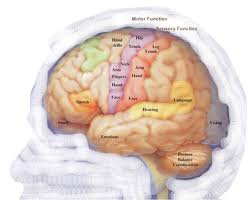
neuroscience brain“Memory? I’ve externalised it.” He said, “I am one of those baby boomers who are making this the “It’s on the Tip of My Tongue Decade.” But now I no longer need to have a memory, for I have Google, Yahoo and Wikipedia. Now if I need to know some fact about the world, I tap a few keys and enjoy the vast resource of the external mind.”

I think the positive side of this is that we are free to expand our awareness of subjects we did not have space, or availability, to explore before. Our memory now has a different function: it is a digital index that remembers the existence of a subject and what are the best leads to find information on that subject. I too had thought that the magic of the information age was that it allowed us to know more facts. Then I realised that the magic of the information age is that it allows us to know less.

It provides us with external cognitive servants, silicon memory systems if you will, with collaborative online filters, consumer preference algorithms and networked knowledge. We thus can give these servants the massive raw data and liberate ourselves to think, explore and be creative. You can use your brain to learn new skills, the soft skills that are the true measure of success.

Your outsourced memory (the internet, the cloud and more) allows you to be aware of the existence of information you would never have come across before when you were limited to what your inner memory could hold. It allows you to increase the quantity (and thus the quality) of the information that you can process because you do not always have to worry about memorising every single detail of it. It allows you to use more brain power in linking concepts and applying them rather than remembering them. It empowers you to think and process information faster because your brain has the space to hold links to so much different information, and in doing so it expands your subjective time. Back in the analogue era, the difference between a deep brain and a shallow brain was the availability of information and the choice of whether to take in that information or not came second.

As an educationalist and technophile, combined with my outsourced memory I have the capacity to think deeper. Now that (nearly) everything is available, the power is back to you: it is up to you to take responsibility of what content goes into your mind and how you use your outsourced memory.

Now you have begun to outsource your brain and now have room to do something rather special with your neo-cortex. Enjoy.


How to increase the odds for your business

diane-shawe-elle-magazineIn business, there are no guarantees. There is simply no way to eliminate all the risks associated with starting a small business – but you can improve your chances of success with good planning, preparation, and insight.

Diane Shawe Author

Like you I Never Thought I Could answer 77 questions that would help me avoid business failure  – But I Finally Discovered The Secret! Here’s How… Are you really ready? Is Entrepreneurship For You?

Are you the right person for the business you have chosen?

I would advise you don’t skip the 77 questions, why? Well it would be like short changing your potentially new clients.

So persevere, some you will answer quickly, others you will need to do a little research, but believe it, it’s worth it, you will be clearer and more focused about what you are going to do.

Here are 10 questions related to Number 50 – 59 from the recently published ebook  What you don’t know might be costing you a fortune New Discovery reveals how by answering 77 questions you could avoid Business Failure by Diane Shawe

  1. Where do you see bottlenecks developing?
  2. How important is quality control?
  3. What is the current backlog?
  4. Is the product assembly line based or individually customized?
  5. What are the health and safety concerns in producing this product?
  6. Who are your suppliers and how long have they been in business?
  7. How many sources of suppliers are there?
  8. Currently, are there any shortages in components?
  9. How old is your company’s equipment?
  10. What is the yearly maintenance costs?

I recommend you get a little notebook and start working on each question. For those you cannot answer a specific question, stop do some research, find the answer and make a note.

This is also an invaluable exercise if you are already in business, it can help you clarify where you are today and help you plot where you need to get too and how to do it.

77 Questions to avoid business failure by Diane Shawe white background

Get your copy from Amazon Today

Mindfeed ebooks by Diane Shawe

Is free online courses dumbing down adult education?

Ignorance is not bliss

Ignorance is not bliss

Is free online courses dumbing down adult education?

Adult education has become under-valued in an overpriced educational infrastructure.

The people who need the most help are already systematically ripped off by greedy loan companies, NHS parking, having to pay charges for drawing out their own money from private ATM machines in poorer boroughs, pre-paid electric meter’s to name but a few.  The more you seem to need help the more you seem to have to pay.

Off course the arguments are always about risk, but to compound on top of their needs, a premium, just to make sure the risk is compensated for is questionable indeed.

But another kind of ripping off is taking place. ‘Free online education’ you may ask ‘why is this a rip off?’

I will answer this from my prospective initially and then make further arguments as to why we should be very concerned about this unpoliced, unchallenged butchery of the values originally infused into our adult educational system.

As Isaac Asimov—a master of science fiction literature—once said:

“No sensible decision can be made any longer without taking into account not only the world as it is, but the world as it will be.”

What has happened?  Why have these large institutions priced education out of some fundamental principles?

How can we make the new economic age enhance, rather than diminish, our quality of learning? How can we make this amazing innovation advance the prospects of all people especially those with experience and not just youth?

It is clear that at this moment most educational systems are not keeping pace with changing technology and the ever-evolving world of work.

Not enough people are thinking strategically enough in this area.  Fundamentally, we need to innovate what people learn, how people learn, when people learn, and even why people learn.

We must get beyond the traditional model of students sitting passively in classrooms, following instructions and memorising material that they are tested and scored on which sometimes turn out to be of little use in an ever changing economy. It is evident that computers can do that for us!

What should a 21st Pedagogy for Adult Education Look Like?

A 21st century educational system must focus on the areas where humans can outclass computers—such as in cognitive skills, interpersonal skills, fine motor skills, or sophisticated coding skills.

We need to make sure that the type of education can keep a population in work or self-employment, performing meaningful tasks relevant to todays and tomorrow needs within a community.

I believe that education has to become student centric and move away from solely institutional constructs that are not fluid to change.

There has always been a great deal of lip service given to the idea of learning by doing, but not much has been done about it. In fact, John Dewey remarked in 1916, in his book, Democracy and Education:  

“Why is it that, in spite of the fact that teaching by pouring in, learning by passive absorption, are universally condemned, that they are still so entrenched in practice? That education is not an affair of “telling” and being told, but an active constructive process, is a principle almost as generally violated in practice as conceded in theory”


I think it is imperative that this century focuses on Adult Transformative Learning because, if we don’t, we are already seeing the internet unintenionally affect the minds of some of our  impressional adults who have no sence of usefulness within our society and can be easily motivated in learned stimulative blended information that could be perceived as devisive withing many communities.

“Transformative learning is a structured way forward in time of crisis when Individuals face Collective Challenges”

                                                 Diane Shawe M.Ed.

During the last twenty years, the use of the word “crisis” seems to have increased around the world. Referring to sudden and intense political, economic, social, psychological, cultural or environmental changes, this term emerges now more frequently in everyday vocabulary.

According to transformative learning theory, the emergence of a crisis represents a potential opportunity for personal and/ or collective transformation, grounded in the capacity of individuals and groups to revisit the perspectives through which they interpret their own experience.

Considering recent history, how does the emergence of social, economic, political, cultural, intellectual or environmental crisis manifest an opportunity, or an expression, of transformative learning?

In the mean time I think that some of these fundlemental questions need to be addressed:

  • How does the experience of individual or collective crisis affect the way one learns to critically interpret one’s own experiences?
  • What are the learning resources required in order to overcome the experience of individual or collective crisis?
  • What kinds of learning opportunities facilitate the management of personal and collective transformations triggered by a crisis?
  • What are the emerging issues and how do they affect research on transformative learning?

How can we effectively deal with some of these burning question when we are constantly dumbing down Adult education?

If you would like a copy of  my full essay on this topic fill in the form below to request a copy be sent to you.

Go back

Your message has been sent

Warning
Warning
Warning

Warning.

Why are they contaminating bottled spring water?

Bottle-of-water-and-floride doane shawe
Most Bottled Water is FILLED With Fluoride, Here’s a Complete List of Brands to Avoid

“Fluoride seems to fit in with lead, mercury, and other poisons that cause chemical brain drain,”Grandjean says.
“The effect of each toxicant may seem small, but the combined damage on a population scale can be serious, especially because the brain power of the next generation is crucial to all of us.”

As with other fresh water supplies (e.g., spring water, lake water, river water), bottled waters have low levels of fluoride.
Fresh surface water contains an average of just 0.05 ppm. To put this in perspective, artificially fluoridated water (using industrial-grade fluoride chemicals) contains 0.7 to 1.2 ppm fluoride, which is 14 to 24 times more than the average natural level.

Fluoride Health Problems

There is a lot of controversy surrounding the presence of fluoride in public drinking water (fluoridation). For starters, before fluoride was used to fight cavities, it was (and still is) used in insecticides and rat poision.

Fluorosis is a condition that wears down the enamal of the tooth, leaving behind white spots, making the teeth more vulnerable to cavities and decay. Fluorosis is a very real health condition that can effect both children and adults. More and more evidence is mounting against the use of fluoride, even in small amounts. But it doesn’t appear to be a critical issue according to the US Surgeon Generals, as the last 5 Surgeon Generals have supported the fluoridation of drinking water. Incidentally, the claimed health benefits almost always point to oral health. Fortunately, the CDC is calling for new labeling rules requiring manufacturers to list a product’s fluoride content, which we have found to be missing in some cases.

What is too much Fluoride?

Fluoride itself is actually required by our bodies in low doses. When consumed in high amounts, specifically the man-made fluoride that is in public drinking water, can cause problems.

An estimated 5-10g of sodium fluoride can be lethal for some adults. While fluoride provides benefits to your oral health, it can also come with adverse side effects, that vary in severity depending upon the amount of fluoride consumed. Excessive consumption of fluoride can lead to gastrointestinal discomfort. This can occur with doses 15 to 20 times lower than actual lethal doses (0.2-0.3mg/kg). Fluoride in exessive amounts can also cause problems in the formation bone.

Here are some bottled water brands that contain little to no fluoride:

  • A Better Water
  • Agromas Natural Mineral Water
  • Albertsons
  • Alpina
  • American Fare
  • American Star
  • Appco
  • Aqua Fresca
  • Aqua Panna
  • Aqua Pure
  • Aquarius Natural Mineral Water
  • Arbor Springs
  • Arlington Springs
  • Aquafina Water
  • Aqua Systems
  • Aqua Von
  • Artesian Wells
  • Augusta Medical – Daniels
  • Badger Water
  • Besco Pure Premium Drinking Water
  • BIOTA Colorado Pure Spring Water
  • Bio-2
  • Black Berry Farms
  • Blue Ice Natural Mineral Water
  • Boney’s
  • BORNEO
  • Bountyland
  • Buches

  • Calistoga
  • Callaway Blue
  • CAPA
  • Cascade
  • Century Springs
  • Chemung
  • Chippewa Spring Water
  • Citi Stop
  • Classic Selection
  • Clearly Arctic
  • Clear Mountain Spring Water
  • Clover Company Limited
  • Coach
  • Cold Country
  • Cohutta Mountain Spring Water
  • Cowboy Squeeze
  • Crowne Plaza Drinking Water
  • Crowne Plaza Natural Mineral Water
  • Cruel Jacks Spring Water
  • Crystal Mountain Spring Water
  • Crystal Point
  • Crystal Ridge
  • Crystal Spring Natural Spring Water
  • Culligan Water
  • Dakota Splash
  • Dannon
  • Deep Rock
  • Deep Rock Crystal Drop
  • Deep Rock Fontenelle
  • Deja Blue
  • Desert Quench
  • East Phils
  • Eco Quest
  • Elite
  • Equatorial Natural Mineral Water
  • Essentia Water
  • Eureka
  • Evian
  • E Water
  • Family Pantry
  • Famous Ramona Water
  • Flowing Springs
  • Food Club
  • Founders Square Bank
  • Fresh Brands Artesian
  • Fresh Brands Distilled Water
  • Fresh Brands Drinking Water
  • Fresh Market
  • Get-N-Go
  • Glacier Bay
  • Glen Summit Springs Water
  • Glen Summit Distilled Water
  • Glenwood Inglewood
  • Gordon Food Service
  • Great Bear
  • Great Value
  • Harvey’s
  • H2O4U
  • Henry’s
  • Hidden Valley Natural Mineral Water
  • Hillcrest Distilled Water
  • Hillcrest Drinking Water
  • Hillcrest Spring Water
  • Hilton PJ Natural Mineral Water
  • Hinckley Springs
  • HINT
  • Hi-Sprint Drinking Water
  • Hi-Sprint Natural Mineral Water
  • Hog Wash
  • Hon Less Natural Mineral Water
  • Ice Jam
  • Inland
  • Istana Natural Mineral Water
  • Joe Muggs
  • Joe Ragan’s Pure Water
  • Junior Johnson
  • Just Squeezed
  • KLGCC Natural Mineral Water
  • Kroger Bottled Water (Reverse Osmosis)
  • Krystal J Artesian Water
  • Krystal J Distilled Water
  • Laure
  • Leroy Jenkins Ministries

  • Logansport Savings Bank
  • Lowe’s
  • Martins
  • Masafi Pure Natural Mineral Water
  • Mercurio Produce
  • Mesra Drinking Water
  • Mesra Natural Mineral Water
  • Misty Mountain
  • Monadnock Mountain Spring Water
  • Montclair
  • Mountain Energy
  • Mountain Forest
  • Mountain Valley Spring Water
  • Mutiara Natural Mineral Water
  • Nantze Springs
  • New Frontier Bank
  • Niagra Mist
  • Nicolet Distilled
  • Northern Illinois University
  • Oasis Pure Drinking Water
  • Oasis Sparkling Water
  • Ogallala – Clear Cool Water
  • OUI Drinking Water
  • OUI Natural Mineral Water
  • Paiges
  • Parmer Pure H2O
  • Patriots Choice
  • Pelangi Natural Mineral Water
  • Penta Ultra Premium Purified Drinking Water
  • Piggly Wiggly
  • Polaris Water
  • Pristine Natural Artesian
  • Purely Sedona
  • Quick Stop
  • Rain Soft
  • Refresh Natural Mineral Water
  • Reiser Drinking Water
  • Request Foods, Inc.
  • Rip Time
  • Roundy’s “Purified Water”
  • Safeway – Refreshe
  • Sam’s Wine & Spirits
  • San Faustino Natural Mineral Water
  • San Pellegrino
  • Santee Springs
  • Scheopner’s Water
  • Sequoia Springs
  • Scotts
  • Shamrock
  • Shop-N-Cart
  • Shur-Fine
  • Silver Creek Purified Water
  • Silver Creek Spring Water
  • Sky Drinking Water
  • Smart Water
  • Snow Valley
  • Spinx
  • Stator Bros. Markets
  • Summit Mountain
  • Summit Springs
  • Summit Valley
  • T-Rex
  • Teton Mountain Lodge Spring Water
  • Tweetsie
  • United Dairy Farmers
  • Volvic
  • Vitamin Water
  • Veta Drinking Water
  • Valutime
  • Whistler Water
  • Whole Foods 365
  • Woodland Spring Water
  • Wyoming Machinery “Catipillar” Spring Water
  • Zodiac

List of brands to avoid that are known to be high in fluoride:

  • Alhambra
  • Arrowhead
  • Belmont Springs
  • Crystal Rock
  • Crystal Springs
  • Deer Park
  • Diamond Springs
  • Hindley Spri
  • Ice Mountain
  • Kandiyohi
  • Kentwood Springs
  • Mayer Bros.
  • Mount Olympus
  • Nursery Water
  • Ozarka
  • Poland Spring
  • Pure Flo
  • Puritan Springs
  • Shenandoah
  • Sierra Springs
  • Sparkletts
  • Zephyrhills

The list contains data provided by the International Bottled Water Association that you can use to make sure you’re not feeding fluoride to yourself and your family.

Source: http://www.foodandourhealth.com/

 SHORT COURSES TRAINING

The dangers of being out-thought and out- manoeuvre by your competitors

soft skills training for sales team by diane shaweBuyers Don’t Follow a Linear Path anymore so why ask your sales team to do the same?

article by Diane Shawe M.Ed

The sales funnel relies on the theory that someone comes into the top of the funnel and sales fall out the bottom. But is that true in today’s world? Do we start at the top and make our way through to the end? Or do we start at the top, leave, jump levels, come back, leave again, come back at the beginning and some point come back and buy or totally just leave? Are sales people  following a linear purchase pattern or an erratic path of engagement that sometimes results in less and fewer sales?

Distraction is the Number One Barrier to Sale

Distraction is destroying the Sales Funnel. It’s clear that buyer behaviour is erratic, but they are also finicky and overloaded with information.. Distraction may very well be the number one barrier to a sale. We get distracted and abandon our cart. We stop reading the article that brought us to you. Simply put, any little distraction means we move on to something else and we may never come back. We are also finicky buyers, what we think one day may be dramatically changed by another piece of content that contradicts our previous opinion.

Let’s take a look at the Sales Funnel Concept.

The sales funnel has been around for as long as any of us has been in business. It is a tool that has been used to visualize everything from the sales process to marketing impact on an organization. I use to be a  fan of the sales funnel.  But the truth is, the traditional sales funnel model has been dead for years; we just haven’t come to accept it yet. They say a picture paints a thousand words, the problem is clients are overloaded with the same information.

SALES-Marketing-Funnels dead. avpt Diane Shawe

Buying patterns have changed drastically in the last decade. They’ve changed so much that they have truly broken the sales funnel as we know it.

Old habits die hard, so the big question is whether or not a sales funnel is still a viable model for sales concepts. Here are the biggest challenges I see with the sales funnel in today’s buying environment.

Selling the way your customer wants to buy…Not the way you like to sell

Sales Plan Mapping is all about Rapport.  Rapport is defined as:

“A state of mutual trust and respect existing between two or more people. Rapport is the primary basis for all successful communication.”

Sales Plan Mapping is all about Rapport.  Rapport is defined as: “A state of mutual trust and respect existing between two or more people. Rapport is the primary basis for all successful communication.”  To build rapport with someone you have not met face to face is a learned skill referred to as NLP.

Learning to Plan a Sales map requires knowledge in a new type of Consultative Selling.  Planning a Sale Map would mean learning new skills in 5 key areas:

  • Best Practices
  • Communication Skills
  • Strategy and Traction
  • Sales Project Management
  • Presentation

The strategic role of continuous education

One way to stay on top of a rapidly changing market is to implement a business strategy that maximises the synergies between lifelong learning and workforce productivity.

Without appropriate technological support, training programs appear to be less effective. No matter the size of your business, if you stand still and basque in your current success, this is surely the biggest route to new challenges.

Even though research has shown that E-Learning proves to be an excellent way to achieve quality results in a short timeframe, most users still only dabble with free flimsy or overbearing solutions that provide no tracking, evidence or further sign posting to continue competence training.

Getting the world back to work with skills we can trust

Getting the world back to work with skills we can trust

POINT OF NEED TRAINING

Point of Need Online-delivered learning, using mobile technology within a context of continuous education, is considered strategic because it:

  • Keeps the workforce appraised of their job functions’ developing requirements, enabling them to make a positive impact on their role individually and as a team and help that Organisation achieve its aims and goals
  • Aids succession planning, helping workers to acquire the knowledge and skills to help them progress within their Organisation
  • Allows Organisations to keep training budgets under tighter control, develop and retain existing employees and reduce the costs related to external human resources recruitment, selection and on-boarding

The current speed of change means that employees need to be trained continuously for Companies to avoid the dangers of being out-thought and out-manoeuvre by competitors especially on qualities such as leadership.

A poorly educated workforce results in decreased, indeed ever decreasing, levels of productivity and reduces their ability to deliver results. Ignorant and poorly skilled staff can’t (or, at least, shouldn’t) be promoted — since they don’t have the appropriate skills to help their company reach its business objectives. So Organisations need to go to the expense, in terms of time and trouble, of recruiting staff with new knowledge and competencies from outside the organisation to cover middle and senior level positions. It’s important to realise that not only does this practice have a negative impact on the organisation, regarding high costs per individual worker, but company results show that this approach isn’t always successful.

According to recent research (Lifelong Education and Labour Market Needs, published in The EvoLLLution online newspaper) examining the need for continuing education in the workforce, 64% of executives who are recruited externally fail within four years of joining the organisation.

Ideally, every company should have a Personal Training Needs Analysis plan in place for each of their employees. This project should engage the employee in identifying training programs that will enable the employees to develop the necessary knowledge and skills specific to them.

How can we help up-skill your sales team without them taking too much time of work?

Modernising your Sales Team – Project Manage Sales Mapping Whitepaper by Diane Shawe M.Ed

Diane Shawe makes finalist list for Diva Author Award for 2016

divas of colour diane shawe finalist 2016 Author CatogoryDivas of colour releases names of all finalists and award recipients for the 2016 award.

London, January 20, 2016. Organisers of Divas of colour has shortlisted the names of the finalists and recognition recipients for the 2016 award.

“The third edition of Divas of colour awards is the toughest yet with over 200 nominations, some awards with over 50 nominees. It has not been easy for the team to bring each category down to the final four maximum.

We would like to thank all those who took time to put forward names of these women and don’t be disappointed if your nominee is not shortlisted, rather stay in touch for dates for 2017 nominations.” Faustina Anyanwu , founder.

Diane Shawe Author, Founder and Speaker has been shortlisted in the Authors category along with Atiya K Jones, Chioma Nnani and Caroline Bell Foster. we’re happy to present to you our finalists up for Divas of colour 2016 awards. Congratulations to all nominees and all recognition recipients.

Faustina , founder states “we’re happy to present to you our finalists up for Divas of colour 2016 awards. Congratulations to all nominees and all recognition recipients”

All nominees and guests are cordially invited to the grand ceremony on the 26th of March 2016 at Hilton Hotel Tower Bridge , No5 Tooley street, More London, SE1 2BY. Tickets are now available to buy here.

The lists are as follows;

RECOGNITION CATEGORIES

LIFETIME ACHIEVER
Diane Abbott MP.

WOMEN OF HONOUR

Patti Boulaye (OBE)
Mayor Patricia Ekechi
Mandy Sanghera
Prof F. N Obasi
Sponsored by DIAL- A- CARER

GLOBAL LEADERSHIP

Stephanie Busari
Debbie Ariyo (OBE)
Pauline Long
Sponsored by NURUH SKINCARE.

– DIVA AMBASSADOR (Role model for women).

Akua Gyamfi
Nurse Chioma Okeke
Carol Jiani
Grace Alexander

Award CATEGORY FINALISTS


– ENTREPRENEUR DIVA

Placida Acheru
Nefateri Asantewa
Savita Kayê
Bianca Miller

– INSPIRATIONAL DIVA

Salome Ahenkora
Ini Usanga
Polly Harrar
Trishna Bharadia

– OUTSTANDING DIVA

Funke Abimbola
Vivian Timothy
Christy Amalu
Sheila Gatonye

– INTERNATIONAL DIVA

Sonia Poleon
Funke Abimbola
Paulette Harris German
Bibi Owusu- Shadbolt

– COMMUNITY LEADER

Rani Bilkhu
Lena Marshall
Manisha Tailor
Jennifer Okafor

– YOUNG ROLE MODEL

Cherie Johnson
Anaya Kamara
Elizabeth Boampong
Julia Bwoma

Diane Shawe ebooks and published books

– DIVA AUTHOR

Diane Shawe
Atiya K Jones
Chioma Nnani
Caroline Bell Foster

– DIVA ARTIST
Katongo Temba
Euphemia Chukwu
Precious Ngwu
Ijeoma Amazin

– DIVA TV/RADIO PRESENTER

Denise Nurse
Leah Charles King
Tomi Badejoko
Claire Clottey

– DIVA EDITOR

Delia Mayrschofer
Venicia Stelle- Guinot
Gold Ola

– DIVA FASHION STYLIST

Kaft Trendz
Afi Boateng

– DIVA MAKE UP ARTIST

Mercy Kudakwashe

Ends.

For any interviews or media queries, please contact us on

02035321354

pr@mbwpr.com
press@fauntee.com

– See more at: http://www.mbwpr.com/divas-of-colour-2016-award-finalists/#sthash.O0g1FE3F.dpuf

Want To Start showing off your most recent qualification?


Here’s How To Get Qualified in Days, not Years Now!

London, City – January, 19 2016 – Innovation is alive and kicking in London, according to the organisers of 2014 FSB London Business Awards, who announced the finalists. The shortlist included Diane Shawe founder of AVPT Short Courses that provides soft skills courses to people looking to get a job, get a promotion or start a business by them training on their mobile devices.


Whether you are a complete beginner or more experienced, on one of our career development short courses you will find yourself learning in our enjoyable and professional environment online or at one of our Express workshop. For time poor clients or customers wanting a newly recognised qualification, AVPT Short courses is the place to enrol.

Our courses allow you to take full advantage of our specialist facilities and the expert tuition at your fingertips with a full take away manual for further reading.Taking a short course is ideal if you want to add new skills to your tired CV, brush up on an old hobby or refresh your skills, build on your current practice develop expertise to help start your own business review your career build a portfolio for college or work. We have a range of different creative short courses available.

You can be confident in your future success with our fully trained and qualified tutors, they’re as dedicated to your personal development as you are about landing that big promotion, starting that passion project of a business venture, retraining or making that essential career move.

For the past ten years we have been consistently training time poor individuals, organisations and governments all over the world by supplying high-quality soft skills courses that are all globally accredited. At our Academy, we have taken out all the stress of retraining by offering over 390 globally accredited courses in a way that fits in with you and your lifestyle.

Once you’ve decided you want to invest in your professional development; it’s time to choose a study style that suits you. You can either work through a home study manual or online using your own device with an allocated personal tutor or in the classroom for a fast one, two or three-day course. Visit http://www.shortcourses.expert for more info

Can you Maintain Continuity of a Team in the face of personal ambitions and solicitations from other companies?

Building Better TeamsOne of the biggest problems team leaders face is maintaining the continuity of the team. Once the right people are in place on your staff, how do you keep them there in the face of their ambitions and solicitations from other companies?

article by Diane Shawe M.Ed   Accredited Clarity4d Business Partner

Clarity within the team can go a long way toward solving the first problem, and embedded processes that recognise peoples’ contributions can help with the second problem but this can often be a slow and costly procedure.

Well, I went on the most incredible 3-day accreditation course on this very matter, and I just had to blog about it before sending out some information to various organisations who might find it useful. In a nutshell Clarity4d help each member of staff become better at making the team more efficient through feedback and coaching, in days rather than weeks, it’s a game changer!

Research on why people leave companies or underperform found two key reasons: 1) they don’t like their boss,

2) they don’t feel appreciated.

Teaching managers to be “coaches” rather than “bosses”—asking questions rather than just telling someone what to do—would help to create UNITY WITHOUT UNIFORMITY. But where do you begin?  The Old fashion words such as Molding a Team of Leaders does not go down well in today’s working environment. Educating and bringing people along with you instead of dragging them is far healthier and cost effective in many ways.

GETTING YOUR TEAM TOGETHER

So you’ve taken the time and made the effort to spot, recruit, develop, and get in place a group of smart and talented people who are your direct reports. That’s crucial. But the bigger challenge is educating these high-energy, high -powered, high-ego people into a working team of leaders who synchronise their efforts and propel the business forward. Individual team members naturally focus on their own functional specialties and have their own personal ambitions, but those differences often cause them to pull in different directions especially considering the inherent tensions that exist between various silos of the business.

As the leader, you have to get your direct reports to submerge their egos, aggression, and personal agendas so they’re pulling together. You can’t mediate every dispute, ensure that every trade-off is properly made, or that information is flowing as it should on a daily basis. Clarity4d can provide the tools to help all team members learn how to develop team communication strategies, so the business will perform better as they focus and commit to the total business.

Clarity4d will help them create a common granular picture of the company in its external context as you see it or even more critical the way the market it moving. That way, they’ll know how their respective areas fit together, and they’ll have both the motivation and information they need to keep their efforts aligned. You have to mold people’s behavior as well. Too often, talented and ambitious people have a single-minded focus, little aware of what their colleagues in other silos are doing, at worst deeply suspicious of them.

Claim your personal training need analysis

Resources and information are hoarded, and communication is sporadic and formalistic. You’re the one who tolerates or challenges narrow self-interest, big egos, and dominant personalities. Most of the work of educating a team happens in group settings, which may require that you change the way you lead. You can’t just work with your direct reports one to one, setting their budgets and goals in private and coaching them individually as you shift your attention from one part of the business to another. You have to help the group create a picture of the total business and correct any disruptive behaviors in the presence of the team, so you need the emotional strength to direct and stand up to powerful individuals on whom you depend on.

Many leaders think molding a team isn’t worth the effort, but they’re missing a tremendous opportunity to differentiate themselves and build the business. The more people can see the entire anatomy of the company, the team, each and the intersections of its moving parts, along with the broader context in which it operates, the better job they do. When they all see the same facts, discuss their observations and thoughts, and come to understand the interconnectedness of their functions and skills, they’re able to raise the bar, setting higher goals and achieving them faster

So how do you map out your teams strength and weakness and put them all to a positive use in a matter of days?  Clarity4d Profile and Team Profiling solution is designed to give strategies for communicating with people with different personality preferences.

SHAPING A COMMON VIEW OF THE TOTAL BUSINESS

A team of leaders starts being molded when everyone is on the same page. To be on the same page, you first need to understand more about yourself and know more about how others see you.  Once you have identified how personal influence can be enhanced by meeting the needs of others, the team can then move towards getting on the same page.  The key is to develop an internal team dialogue in which each member contributes to the discussion that shapes the team’s collective view of the business— its challenges and opportunities and the resources available. Getting on the same page tests the cognitive bandwidth of not only each member of the team but the team as a whole. Once drawn, however, the conventional picture channels the team’s energy and, more important, provides a reference point for future dialogue as the team members influence and are influenced by their colleagues. The stage is set for collaboration.

FEEDBACK BREEDS BETTER COLLABORATION

Contact us for a Consultation 0203 551 2621

Keep a mental inventory of the skills and methods for getting things done for each member of your team. One team member may be too blunt in arguing a point with others, another may be too shy to participate in debate, and yet another may have a habit of holding back information essential to reaching a good decision. All these impediments to effective teamwork must be clearly identified to the individual, and he or she must be counseled in overcoming them.

Feedback is most effective when given in written form and given frequently, but human beings typically can change only one or two behaviors at a time.

Most people don’t like to give feedback, but they have to look at it from the proper perspective.

Feedback says you’re committed to someone’s development.

Higher performers want to know how to get better, and the only way to achieve this is share numbers, reasoning, and results to share a single view of the business and its context. Having the intellectual courage to confront behaviors that harm the team’s effectiveness. Anticipate, surface, and resolve conflicts. Pick the right people. Provide prompt feedback and coaching. Recognise and avoid derailers.

Having all the right people and great processes isn’t enough. You also have to have the right behaviours and to get the right behaviour people need to understand more about team member’s preferences.

Everything we’ve covered so far needs to be translated into results. The first and most critical step in execution is choosing the right goals. This is where the buck starts. Many leaders are conceptual, high-level intuitive thinkers, this matters because understanding the other variable such as Sensing v Intuition,  Thinking v Feeling thinkers and Introversion thinking v Extroversion thinking can misalign people’s energy within a team.

ARE THE EIGHT KNOW-HOWS BURIED IN YOUR TEAM?
  • Positioning and Repositioning: Finding a central idea for the business that meets customer demands and that makes money.
  • Pinpointing External Change: Detecting patterns in a complex world to put the company on the offensive.
  • Leading the Social System: Getting the right people together with the right behaviors and the right information to make better, faster decisions and achieve business results.
  • Judging People: Calibrating people based on their actions, decisions, and behaviors and matching them to the non-negotiables of the job.
  • Molding a Team: Getting highly competent, high-ego leaders to coordinate seamlessly.
  • Setting Goals: Determining the set of goals that balances what the business can become with what it can realistically achieve.
  • Setting Laser-Sharp Priorities: Defining the path and aligning resources, actions, and energy to accomplish the goals.
  • Dealing with Forces Beyond the Market: Anticipating and responding to societal pressures you don’t control but that can affect your business.

DO YOU KNOW WHO’S PERSONAL TRAITS THAT CAN HELP OR INTERFERE WITH THE KNOW-HOWS IN YOUR TEAM?

  • Ambition—to accomplish something noteworthy BUT NOT win at all costs.
  • Drive and Tenacity—to search, persist, and follow through BUT NOT hold on too long.
  • Self-confidence—to overcome the fear of failure, fear of response, or the need to be liked and use power judiciously BUT NOT become arrogant and narcissistic.
  • Psychological Openness—to be receptive to new and different ideas AND NOT shut other people down.
  • Realism—to see what can actually be accomplished AND NOT gloss over problems or assume the worst.
  • Appetite for Learning—to continue to grow and improve the know-hows AND NOT repeat the same mistakes.

DO YOU KNOW WHO’S HAS THE COGNITIVE TRAITS IN YOUR TEAM THAT COULD IMPROVE THE KNOW-HOWS?

  • A Wide Range of Altitudes—to transition from the conceptual to the specific.
  • A Broad Cognitive Bandwidth—to take in a broad range of input and see the big picture. Ability to Reframe—to see things from different perspectives.

It can get really complicated, but with Clarity4D’s Profiling tools and range of workshops you will find your team members around the world, at home, school or socially easier to communicate with as you become clearer on how you can tend to their preference whilst appreciated your.

Try this simple questionnaire and we will send back your profile report.  We will then explore how it can be used in a team environment. Click here to start the journey to better team building.

http://www.clarity4d.softskills.expert