Tag Archives: big sociiety policy

What are the 10 less flashy skills employers want?

It can take up to 3 days to gain a new soft skill with expresscourses.co.uk

It can take up to 3 days to gain a new soft skill with expresscourses.co.uk

The less flashy skills are the ones really dominating employers selection criteria.

article by Diane Shawe CEO AVPT

“Knowing which skills are in high demand can help guide decisions around education and work experience,” says Diane Shawe CEO of Academy of Vocational and Professional Training UK. “It can help workers identify where they can potentially transfer their current skill sets or supplement their education to prepare for future opportunities.”

No. 1 Critical Thinking (found in 9 out of the 10 most in-demand jobs)

Using logic and reasoning to identify the strengths and weaknesses of alternative solutions, conclusions or approaches to problems.

No. 2 Complex Problem Solving (found in 9 out of the 10 most in-demand jobs)

Identifying complex problems and reviewing related information to develop and evaluate options and implement solutions.

No. 3 Judgment and Decision-Making (found in 9 out of the 10 most in-demand jobs)

Considering the relative costs and benefits of potential actions to choose the most appropriate ones.

No. 4 Active Listening (found in 9 out of the 10 most in-demand jobs)

Giving full attention to what other people are saying, taking time to understand the points being made, asking questions as appropriate and not interrupting.

No. 5 Computers and Electronics (found in 8 out of the 10 most in-demand jobs)

Knowledge of circuit boards, processors, electronic equipment and computer hardware including applications and programs.

No. 6 Mathematics (found in 6 out of the 10 most in-demand jobs)

Knowledge of arithmetic, algebra, geometry, calculus, statistics and their application.

No. 7 Operations and Systems Analysis (found in 5 out of the 10 most in-demand jobs)

Determining how a system or operation should work and how changes in conditions, operations and environments will affect outcomes. Understanding the needs and product requirements of a particular design.

No. 8 Monitoring (found in 5 out of the 10 most in-demand jobs)

Monitoring and assessing performance of yourself, other individuals or organizations to make improvement or take corrective action.

No. 9 Programming (found in 3 out of the 10 most in-demand jobs)

Writing computer programming for various purposes.

No. 10 Sales and Marketing (found in 2 out of the 10 most in-demand jobs)

Knowledge of principles and methods for showing, promoting and selling products or services. Includes marketing strategy and tactics, product demonstration, sales techniques and sales control systems.

Click to order your copy today


Click to order your copy today


Why employers and training organisations need to take heed of this global trend

Diane Shawe CEO AVPT

Diane Shawe CEO

The Changing face of Skills and Training

article by Diane Shawe M.Ed CEO

In a report conducted by Kelly Global Workforce Index in 2013 over 120,000 respondents from 31 countries across the Americas, EMEA an APAC regions where asked several questions about Skills and Training.

When asked to identify the main motivation for earning new skills or undertaking training, the largest share of employees 57% cited the opportunity for promotion with their current employer. A further 47% cited the opportunity to work in another organisation, and 42% planned to enter a new field of work.

Globally, 60% of worker are either actively seeking further education or training (23%) or considering it (37%).  The APAC region stands out as a skilling hotspot, with 69% of those surveyed either considered or seeking further training for a new field.

Across the globe, there are markedly different approaches to the notion of additional training and professional development. The highest rates of planned upskilling are predominantly in developing economies, while the lowest rates tend to be in some of the most prosperous nations.

Russia heads the list for training intensity, with an astonishing 92% planning some form of training. Also high on the list are Thailand, Mexico, Brazil, Indonesia, Puerto Rico and Malaysia.

Surprisingly the lowest rates of planned training are in France, Luxembourg, the US and Switzerland.

Among professional and technical employees, those most likely to be actively seeking to upgrade their skills are in Math, Engineering and IT, while the least likely are in Science, Health Care and Education.

Investing in Training that Works

For training to be meaningful it needs to be relevant and practical – not “training for training sake”.

When asked to identify the mot desirable means of furhering their skills, the overwhelming preference was for on-the-job experience and training, identified by 70% of respondents, significantly ahead of the next hightest ranked “continued education and training” cited by 58%

Building a durable Skills base

The last two decades have radically altered the way skill are acquired and developed. Skill are no longer “front-end loaded” onto a career. Rather they are increasingly embedded as part of lifelong learning and development.

The upgrading and renewal of skills plays a critical role in personal and professional development. It also has a vital role in broader workforce development, which is the cornerstone of organisational efficiency and productivity.

All skills have a finite life, and in industries subject to high rates of technological change and innovation, the lifespan of skills is becoming shorter. Increasingly, new skills will need to be learned and deployed throughout a working life.

It is clear that decisions about training and professional development are now an integral part of the employment equation, and have an important bearing on employee moral, performance and retention.

What Employers can do

  • Consider opportunities for training and personal development.
  • Help to build a culture of continuous learning so that employees are encouraged to develop and use new skills
  • Encourage employees to think about career plans and the type of skills and training they need to stay equipped.
  • Consider training as a key element in employee attraction and retention.
  • Champion individuals who have devoted time to upskilling so they can become ambassadors for an organisation.

The landscape has changed

The scale and duration of the downturn has forced may employees to look afresh at the whole area of training and professional development – one that was previously guided by employers.  Employees now recognise that they cannot solely rely on an employer to direct in this important element of their lives.

A new generation of workers is taking on much greater responsibility for their training and professional development, including the way it is provided and funded.

The global economic shock-waves have unleashed a new orthodoxy and a unforeseen outcomes has a new generation of employees are more independent, globally focused and adaptive.  The new challenges for global employers is to understand why the landscape has changed and prudently look beyond the present and where the best skilled workforce will be and what work will look like in 10 or 15 years.

Call us to enquiry about our soft skills courses

Call us to enquiry about our soft skills courses


How Blended Education Makes Learning Process More Efficient

Photo courtesy of Guilia Frsythe

Photo courtesy of Guilia Frsythe

As internet connectivity and smart devices become every human being’s daily companion, with 1.75 billion users worldwide as eMarketer reported, more and more academic institutions are now leveraging the power of technology to re-invent the traditional classroom learning model.

The 2013’s United States Education & Workforce Committee study said that 31 states are now offering full-time eLearning tools to almost 275,000 K-12 students and 70% of all US school districts are now integrating blended learning (BL) programs in their curriculum.

One of the biggest trends in the academy, BL is a teaching approach that combines face-to-face learning through online-based instructions/activities. To facilitate, students are allowed to use their smart devices to do research, work on activities, complete their assignments, seek consultations, and consume digital learning resources in or outside the campus. But, how can this teaching methodology make learning efficient? Read on our discussion below as we further elaborate the topic.
Learners Are More Engaged

The infusion of online learning tools and traditional classroom lectures expands the learning resources being offered to the students. Apart from textbooks, teachers can pull out relevant video materials online and project it in front of their students to explain the topics further. Educators can also showcase online slideshows and interactive web applications to further strengthen their class discussions.

With BL, the possibilities of getting a reliable learning resource are endless. With the advent of video conferencing, students and teachers can go beyond the four corners the classroom. For instance, in foreign language topics, this innovative tech solution can be maximized in arranging live language lessons from native speakers worldwide. It can also be utilized when facilitating lectures on different cultures worldwide.
Students are safely browsing

The common concern with this learning strategy is that students are widely open to various content online, such as social media and online games that are deemed to be distracting in class. However, with the latest mobile technology today, we are now presented with devices that can block or curate content specifically for students only. One of the biggest brands Apple launched its own Kid’s App Store where students can only access curated educational apps and games. The latest Samsung smartphones, including the Galaxy S5, are also equipped with Kids Mode that let’s one set some parental control on the device, as featured on this source. As for Nokia’s Lumia range of Windows Phone devices, Microsoft also designed a special feature called Kid’s Corner which allows parents to choose the kind of apps and digital content they can only view and access. These innovations minimize the apprehensions that most parents and traditional educators have towards smart devices.

Teachers Can Access and Create Various Educational Content

Since the Bring Your Own Device (BYOD) policy is a part of this learning strategy, educators are given the opportunity to easily design a variety of content types tailored to their students. Apart from online blogs and Massive Open Online Courses (MOOCs) where professors can access a myriad of educational content (infographics and video lectures), they can also access mobile applications and e-Books to accompany their lectures.

The Academy of Vocational and Professional training are also currently the leaders on online Soft skills courses which are mobile device compliant, globally accredited and accessible 24/7

Since mobile devices nowadays are equipped with media creation tools, teachers can even create or design their own content to accompany their discussion. For instance, with many of the apple and android tablets,  are empowered to create slide shows with engaging music. The free movie making tool can also help them create video presentations combining photograph, audio, and text element.  It’s worth checking out the Samsung and iPad apps.
Makes Students More Engaged

Timothy HuneyCutt of National Math + Science Initiative pointed out that when “technology is integrated into school lessons, learners are more likely to be interested in, focused on, and excited about the subjects they are studying.” In subjects that may appear monotonous to selected students (such as Science and Math), teachers can use virtual lessons and one-on-one tutoring to encourage them to learn.
how to get your online website to attract clients free seminar 2014

Students Can Learn At Their Own Pace

Failure to digest the educator’s lecture can lead to students’ discouragement towards learning. With BL, if they fail to understand a particular lecture, they can ask their instructor to give them individualised instruction or learning materials through emails, video-conferencing, and social media channels. Students who are shy to speak out in the class through face-to-face on-campus discussion are also given the opportunity to shine and excel in class through BL.

BL can further enhance students’ learning by integrating technology and online resources to support the traditional face-to-face lectures. As we move to a more digital era, where handsets are now wearable and voice command accessible, we should see more improvements in educational technology in the coming years.

Blog by Jennifer Birch

Blog by Jennifer Birch

About the Author

As an EdTech advocate, Jennifer Birch believes in the power of Blended Learning. For her, the infusion of online learning tools and traditional classroom expands the learning resources being offered to the students. Connect with Jenni via Google +.

Chinese Entrepreneurs Scoops Business Award

Chinese investment hotting up in UK

BCC LinkToChina's avatarBCC LinkToChina

A Chinese student-entrepreneur-led proposal Evercise won a £110,000 award at the UK CTC Entrepreneurship Award on 11th May in London.

Chinese investment in the UK is heating up and investing in UK is no longer the exclusive territory for the seasonal businessmen or large corporates. Five Chinese young entrepreneur groups battled it out in a tense final after winning through two previous rounds against hundreds of competitors in the last two months.

Dr Kegang Wu, who represents BCC LinkToChina, was among the judges in the final, encouraged more young Chinese entrepreneurs to set up businesses in the UK and offered support. The final and his post-award comments can be viewed on Youtube and PropellerTV which is a Chinese invested company and free on Skye 189.

View original post

Why the legal profession is changing – Part-time partners

CPD on the move with expresscourses

CPD on the move with expresscourses

Only 9.4% of equity partners in law firms are women, despite equal numbers of men and women entering the profession

Article by Nicky Richmond Guardian Professional,

The statue of justice at the Old Bailey court in London. Photograph: Martin Argles for the Guardian

In the world of big law, equity partnership is broadly equivalent to being on a board of directors. In the top 100 law firms in the UK, just 9.4% of equity partners are women. This is even lower than the percentage of board members at FTSE 250 companies who are women, at 9.6%.

Given that equal numbers of women and men enter the legal profession, why is it that so many women don’t reach equity partnership? The Women’s Business Council – set up to advise the government on how to get more women into executive positions – came up with some interesting conclusions in a recent report.

They reveal an overwhelmingly masculine, patriarchal corporate culture, and point to the double burden of work and domestic responsibilities, the “anytime, anywhere” model of management and, a particular curse in the UK, the long hours working culture wired into city law firms.

A large proportion of women who drop out of law do so because they decide to have a family. Many women feel that they simply cannot combine the demands of life in a law firm with the demands of their families.

It’s little surprise they reach this depressing conclusion; at most law firms it is either full-time or nothing. A law firm may offer a woman a career downgrade to ‘support lawyer’ status but for many the cut in remuneration for part-time working or a lesser role are options not worth considering. Factor in the expense of childcare, and it’s little wonder many women conclude that the high cost simply isn’t worth it.

The goal of a partnership becomes more distant for many women once they decide to have a family. In many firms there is no route to partnership for lawyers who work part time. It just isn’t allowed. This is not only morally wrong, it is nonsensical.

There is no reason why a part-time lawyer – female or male – cannot make an outstanding contribution as a partner in their practice. Critical to a woman’s decision as to whether or not she returns to work following maternity leave must be the availability of flexible working. This means flexibility in both hours and location.

In order for things to change in law firms, firms must prioritise retaining their best people for as long as possible. This could include accommodating requests for part-time or flexible working. Given the demands of clients this isn’t always easy, but in most cases – with a real will on both sides – it can be done.

I work for a law firm that is owned equally between men and women. This is key to the day-to-day operations. A number of our lawyers work on a part-time basis. Some work certain days from home, others are consultants who hardly ever come into the office. We try to accommodate people’s real lives and ultimately, it’s the service to the client that counts.

Equality in the law will not happen on its own. In the 25 years I have been in practice I have seen all sorts of attempts to deal with ‘the women issue’, but evidently none of them have worked. Suddenly, however, it has become clear to City law firms that losing women is losing them money. So now, in line with the government’s recommendations, some of those firms have introduced their own targets for senior women. Money talks, and that’s what will drive the change.

AVPT CPD PRESSED FOR TIME LAW FIRMS

The not so golden rule of recruiment for small Entrepreneurs

Recruiting is not what it use to be in the 60's

Recruiting is not what it use to be in the 60’s

When it comes to recruitment, I have made every mistake in the book…and then some!

A fascinating blog was sent to me and I just had to reblog it because it is so important for expanding businesses.

Over the years I have signed psychopaths, nymphomaniacs, super depressives, dishonest reprobates, cheats, scoundrels and lazy-good-for-nothings.

I have also hired some of the most talented people in the universe – people with the intelligence, energy, determination and moral character to make a difference and achieve great things.

The golden rule of recruitment is that there is no golden rule! There is no secret formula for pinpointing the perfect person or for identifying the world’s worst worker.

Nonetheless, I have picked up a few nuggets of recruitment wisdom in my journey through life. I’m afraid, however, my methods are not for the faint of heart or the puritans of the planet so, if you are easily offended, STOP READING NOW.

If, on the other hand, your goal is to cease hiring ordinary people and begin hiring extraordinary people – read on!

In the recruitment game, the starting point is realising that every employee will either increase or decrease the profitability of your business.

It’s a fact of life that every employee will either make you money or cost you money.

So, resolve from now on to recruit only employees who will positively impact your business and, at the same time, start weeding out existing employees who are not contributing.

The ten million dollar question is – how do you identify the winners from the losers, the right people from the wrong people?

It’s not easy but it becomes a lot simpler when you realise there are only three categories of employee:

  • People who work against your business.
  • People who work for your business.
  • People who work with your business.

You obviously don’t want people who work against your business and, fortunately, they are as easy to spot as male peacocks during mating season.

Here are a few of their characteristics:

  • They are always happy to lend a listening ear to moaners and groaners.
  • They often have a hidden agenda.
  • They are lazy but they are good at making themselves look busy.
  • They sabotage success.
  • They undermine successful colleagues by gossiping behind their backs.
  • They tend to run in packs with others just like them.

These people are the devil in disguise. They are a cost, not an asset. Don’t hire them and, if you’ve already got them, get rid of them because a leopard can’t change its spots!

Let’s now move onto the second category – employees who work for your business.

Surely these people are OK?

They might be if you are prepared to settle for ordinary people rather than extraordinary people but if you want to build a great business they are not good enough!

The hallmark of people who work for your business is that they are not truly committed. They do what’s necessary to get by and they usually have some excuse for not going the extra mile such as doctor appointments and childcare demands.

They want to get paid for doing the job but their hearts are not in it. In sports parlance, they are people who are happy to settle for a draw. They are not losers but they are not winners either.

This may sound harsh but in my book – you don’t want them in your company unless you are prepared to settle for second best.

Employees who work with the business are the only people you should be hiring.

Here are the characteristics of the men and women you should be recruiting:

  • They are committed.
  • They always go the extra mile.
  • They feel responsible.
  • They are loyal.
  • They love to get involved.
  • They want to win.

In short, they know that the more they put into life, the more they will get out of life. That’s what makes them extraordinary.

Next time you are recruiting, resolve not to settle for ordinary people, instead be determined to hire only extraordinary people.

To ensure you identify these superstars, here are some questions to ask yourself about each candidate you interview:

  1. Will you enjoy working with this individual?
  2. Did they demonstrate an enthusiasm for your company and a passion for the job?
  3. Will they be dedicated to working shoulder-to-shoulder with you to help you achieve your goals?
  4. Will they inspire their colleagues?
  5. Will they be compatible with your team?
  6. Do they have the character to do what it takes?
  7. Will they be loyal through thick & thin?
  8. Will your customers and clients like them?
  9. Will they be industrious and hard working?
  10. Will they be ambitious for success?

If you can put a tick in the ten boxes, you may have found yourself the perfect employee.

There is, however, one more question you might want to ask yourself: “Could they be better than me?”

If the answer is yes – hire them immediately!

The power of a Bucket List – Stephen Sutton exceeded his raising over £3million

stephen sutton raises over 3 million report expresstraining coursesThe Power of a Bucket List

Have you made one, or thought about it? Maybe it includes a marathon or to dive in the Great Barrier Reef, walk the Wall of China or a skydive? Well then this should inspire you to get going on that list…

At the age of 15, Stephen Sutton was diagnosed with bowel cancer and two years later he was told it was terminal. Some teenagers would have quit there, given up on their hopes and dreams and let the b*stard that is cancer beat them. But not this one.

Instead, Stephen created a whopper bucket list with 46 tasks on it that he wanted to complete with all funds raised going to the Teenage Cancer Trust. It included:

 ─        Skydive for charity

─        Organize a charity party

─        Write a book

─        Organize a charity football match

─        Organize a charity gig

─        Go busking!

─        Persuade local schools to have a ‘get wiggy with it’ non uniform day

─        Charity quizzes at local pubs

─        Organize a charity ball

 All of which Stephen completed since being diagnosed, really quite amazing let’s be honest. But the best was yet to come. Stephen aimed to raise £10,000 for the trust but thanks to the wonderful world of social media the world spread with #ThumbsUpForStephen trending in the UK and one point donations were being made at a rate of £1,000 a minute.

The result
Stephen has now raised a total of £2,225,152 and it’s still going up. He really is quite the legend and we hope that Stephen feels proud of what he has done and it motivates him to continue fighting his cancer.

So have you created your own Bucket List  it is similar to setting goals, click here to find out how to go about setting your goals and creating your own fantastic bucket list.

1 AVPT Student Recruitment Advert

CPD pending? Pressed for time?

CPD on the move

CPD on the move

Continued Professional Development is entering a new phase for UK Law Firms.

At the Academy of Vocational & Professional Training we understand that you firm is often pressed for time, so nudge thinking, heuristic learning, or brain plasticity are great but, your law firm already have complex challenges, so we are going to keep it simple.

We train in soft skills courses like HR, PR, Management, Technology and Social Media to name but a few. CPD approved by the SRA to help you and your staff meet the challenges expected of skilled professionals.

Doing your CPD the smarter way

Doing your CPD the smarter way

You can study on the move using your smartphone, tablet or at our intense 1 day workshops.

Give us a call on 0203 551 2621 to request a quote or visit our http://www.avptglobal.com

Does nine different kinds of intelligence make you any smarter?

In this article, I will talk about the different ways in which Multiple Intelligence Theory can be implemented in e-Learning to help the learner effectively acquire, retain, and utilise the information being provided within the e-Learning course.

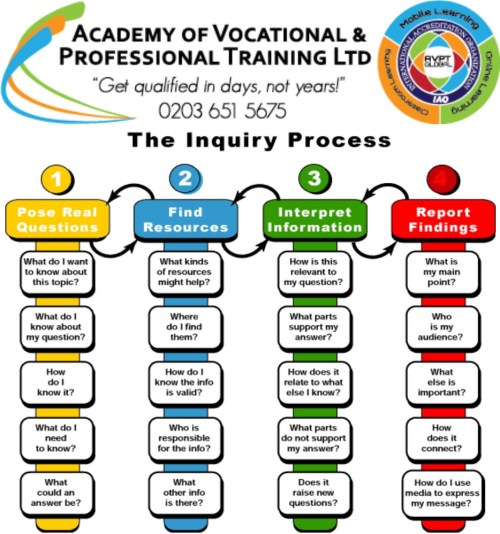
the enquiry process to soft skills training april 2014

The Multiple Intelligence Theory was developed by Dr. Howard Gardner in 1983. Dr. Gardner, a noted psychologist and professor of neuroscience from Harvard University, suggested that every human being interacts with their environment differently. We each possess nine different kinds of intelligence, but our experiences, cultural beliefs, and knowledge base determine their exact configuration.

What is “intelligence”, according to Multiple Intelligence Theory?

According to Gardner, there are three key elements that determine a person’s intelligence:

  1. The ability to create a service or product that will be valued in the person’s society of culture.

  2. A skill set that allows the person to solve real world problems that they may encounter in life.

  3. The ability to potentially create new solutions for problems or to utilize existing solutions. This typically involves the acquisition of new knowledge. 

Multiple Intelligence-Based Activities in eLearning

Multiple Intelligence Theory can be implemented in eLearning based upon the nine multiple intelligences. Let’s take a closer look at each category and which multiple intelligence-based activities can be utilized during instructional design to create the best possible eLearning experience for the learners:

  1. Musical (or Rhythmic) Intelligence
    This intelligence involves the capacity to think and learn in terms of music and rhythm, and to recognize and hear patterns. An activity that would appeal to this type of intelligence is a lesson that includes music or sound, such as a multimedia presentation. Try to use music that emphasizes the subject matter and creates a more immersive experience for the learner. Since there is more of an auditory aspect with this particular intelligence, lectures can also be very helpful. People who demonstrate a high degree of musical intelligence may be ideally suited for musical professions, such as composing or playing an instrument.

  2. Linguistic Intelligence
    This intelligence is associated with expression through language. These people tend to be able to eloquently convey their thoughts and to understand the words of others. Writers and speakers typically display a high degree of this sort of intelligence. Any activities that include discussion, such as online forums or group-based scenarios, are ideal for individuals who lean more toward linguistic intelligence.

  3. Mathematical (or Logical) Intelligence
    This involves the ability to identify principles or structures within a system. This intelligence is often associated with the logic or the manipulation of numbers.  Activities ideally suited for this intelligence may include diagrams, charts, or tables. Critical thinking scenarios are also useful with this group. Accountants and researchers often have a high level of mathematical intelligence.

  4. Kinesthetic (or Bodily) Intelligence
    Body Intelligence involves the use of a person’s entire body to figure out solutions or to create something. People who demonstrate a high degree of kinesthetic intelligence may be ideally suited for performing arts professions, such as dancing, or careers that require an innate knowledge of one’s own body, such as a doctor or athlete. Activities that are best suited for this sort of intelligence include games that involve hand-eye-coordination or interactive scenarios that require physical involvement. The thing to keep in mind about this group is that they are best able to learn when muscular movement is involved. So, include activities that require movement and physical response.

  5. Spatial Intelligence
    This intelligence pertains to a keen sense of space and how one can navigate those spaces. Activities that involve flow charts and graphics are ideal for this intelligence group, as well as games or multimedia that is visually appealing.  Architects, pilots, and sailors often have a high degree of spatial intelligence.

  6. Intrapersonal Intelligence
    This involves an in depth understanding of oneself, such as what you can accomplish and how you react to certain situations. As such, individuals with high intrapersonal intelligence often have a sense of what they should avoid and what they want to achieve in their lives. Professors and philosophers often possess high degrees of intrapersonal intelligence. Activities such as collaborative learning exercises (online forums) and chat programs enable intrapersonal intelligence learners to help others and to share experiences and ideas. This category responds well, first and foremost, to activities, which require introspection.

  7. Interpersonal Intelligence
    This is the capacity to understand and learn from others. People who demonstrate a high degree of intrapersonal intelligence may be ideally suited for service professions, such as teaching or politics. Those who identify more with this category of intelligence may benefit from group discussion activities and in depth questions that make them fully explore the topic. What’s important to remember about interpersonal intelligence is that these individuals are sensitive to others’ moods and feelings. They work well in-group settings and are often able to learn more effectively when collaborating.

  8. Naturalist Intelligence
    This intelligence involves the capacity to differentiate between living organisms and to view the connection between all natural things.  People with a high degree of naturalist intelligence usually have a close bond with nature. Botany and biology are two career fields that closely identify with this sort of intelligence. Activities that involve classification or organization appeal to these individuals.

  9. Existential Intelligence
    This particular intelligence was added later by Gardner, and is not commonly associated with learning environments, as it is geared more toward spiritual and philosophical views. For example, someone who has a high degree of existentialist intelligence may have a tendency to pose questions about life’s purpose or death. 

It’s important to note that instructional designers should not feel obligated to incorporate all of these multiple intelligence-based activities into their eLearning courses, just that it may be beneficial to offer a variety of multiple intelligence-based activities to more effectively illustrate the subject matter. If you are able to offer learners a diverse set of learning tools and eLearning strategies, then you gain the ability to increase comprehension and retention, not to mention enhance the overall eLearning experience.

Call us to enquiry about our soft skills courses

Call us to inquiry about our soft skills courses

Leading Training Provider ‘AVPT’ Approved To Deliver CPD ‘Soft Skills’ Courses To The UK Legal Industry

CPD does not have to be hard anymore

CPD does not have to be hard anymore

Press Release  Press Release

London UK, Thursday 3rd April 2014 – A national organisation specialising in the delivery of vocational and professional training has been approved to deliver recognised ‘soft skills’ courses to the legal profession, following formal assessment and accreditation by the Solicitors Regulatory Authority.

The Academy of Vocational and Professional Training (AVPT) now offer ‘soft skill’ courses within the legal sector after successfully becoming the latest organisation in the UK to reach the expecting standards required by the national regulatory body. Not only are the courses approved and recognised industry wide, but also count towards CPD certification of course candidates.

Within professional development arenas, it is now widely accepted the development of ‘soft skills’ within a workforce plays a significant part in the performance and continued success of companies and organisations across every niche. This has lead to an upsurge in organisations looking to complement the traditional ‘hard skill’ base with ‘soft skill’ development programmes.

Law firms begin to up skill their staff with soft skills

Law firms begin to up skill their staff with soft skills

In contrast to the occupational ‘hard-skills’ – those needed to physically undertake a role, ‘soft skills’ focus on the personal characteristic traits which allow individuals to excel in the work place, such as communication, empathy, emotional intelligence and social interaction.

As the legal industry settles after a fundamental reshaping which has resulted in a considerable increase in competition from smaller firms and individuals, law firms across the country are adapting their approach by improving the soft skill abilities of their employees and partners. Modernisation has helped them recognise the importance of technology in the learning environment to overcome geographical, language barriers and time constraint when up-skilling their entire business, so as to become more customer and user friendly.

The current range of ‘soft skill’ development packages for the legal profession have been specifically tailored to meet the needs and requirements of clients working in legal niches. Skills such as HR, Marketing with Social Media, Information management, Leadership & Management skills, Business development, Negotiations and customer services to name but a few from the list of 300 which can now count towards their annual CPD requirements.

Diane Shawe, CEO of AVPT commented “in 2013 the Legal Services Policy Institute estimate as many as 3,000 high street law firms (or 35% of the total) will have to disappear in the subsequent upheaval, law firms with good local reputations will be able to withstand competition if they can successfully reach the demands of clients for greater convenience and ease of access to services by generating greater efficiencies within their practices.”

AVPT is the only UK globally accredited online and workshop based provider of over 300 Soft Skills courses, which uses a cutting edge proprietary online learning management system. Workshop courses are professionally executed in 1-3 days which are delivered as foundation to expert levels.

AVPTLTD LOGO  6As a provider of Soft Skill training courses which are accredited by the Solicitors Regulatory Authority and globally by the IAO, AVPT are now offering CPD applicable courses to the legal profession. For further information please visit the official website at www.academy-of-vocational-and-professional-training.comor get in touch using the details shown with this release.