Category Archives: mLearning

‘Enterprising Women’s Business Group’ Host Diane Shawe Offers A CPD Lifeline To Professional Women Working In The Legal Sector

Join us in May for a productive event

London UK, Thursday 12th May 2014 – An innovative UK based business women has successfully achieved CPD training provider status and recognition through the Solicitors Regulatory Authority (SRA)

Diane Shawe, host of the KCW Enterprising Women’s Business Club will now be offering a comprehensive range of recognised CPD soft skills courses aimed at supporting female legal professionals in a bid to help them establish, develop and grow despite to compete with some of the difficulties and challenges law firms are now facing.

As a traditionally male orientated arena, the legal industry now attracts as many talented female professionals as it does male counterparts, however workplaces are still unfairly weighted towards male work-life balances and working models.

As a result, it’s accepted that female legal professionals often face gender related difficulties in terms of promotion and development (Diversity in the Legal Profession in England and Wales: A Qualitative Study of Barriers and Individual Choices 2013).

The wide range of CPD courses now available have been specifically tailored to support and nurture women looking to achieve and fulfil their potential in the legal industry either as a partner, employee or independent practice.

The ‘Enterprising Women Business Club‘ has over 45,000 members nationally and has a remit to help women achieve the success they want by empowering, connecting, training, inspiring and supporting. The next Kensington, Chelsea & Westminster business club meeting is set for the 15th May. For more information please visit http://academyexpresscourses.com/2014/04/09/kensington-chelsea-and-westminster-enterprise-womens-business-club-meeting-15th-may-2014/

About AVPT

As a leading provider of over 390 soft skills training courses approved and accredited by the IAO, IoSCM, and  Solicitors Regulatory, ‘AVPT’ are now offering CPD applicable courses to the legal profession. For further information on the Enterprising Women’s Business Club, please visit the official website at http://www.enterprising-women.org/local-business-clubs/kcw-business-club.  Contact: Farhana Jaman of Enterprising Women 01223 903913 farhana@enterprising-women.org

Or more info on CPD Softskills courses visit www.cpdforlawfirms.com

Why the legal profession is changing – Part-time partners

CPD on the move with expresscourses

CPD on the move with expresscourses

Only 9.4% of equity partners in law firms are women, despite equal numbers of men and women entering the profession

Article by Nicky Richmond Guardian Professional,

The statue of justice at the Old Bailey court in London. Photograph: Martin Argles for the Guardian

In the world of big law, equity partnership is broadly equivalent to being on a board of directors. In the top 100 law firms in the UK, just 9.4% of equity partners are women. This is even lower than the percentage of board members at FTSE 250 companies who are women, at 9.6%.

Given that equal numbers of women and men enter the legal profession, why is it that so many women don’t reach equity partnership? The Women’s Business Council – set up to advise the government on how to get more women into executive positions – came up with some interesting conclusions in a recent report.

They reveal an overwhelmingly masculine, patriarchal corporate culture, and point to the double burden of work and domestic responsibilities, the “anytime, anywhere” model of management and, a particular curse in the UK, the long hours working culture wired into city law firms.

A large proportion of women who drop out of law do so because they decide to have a family. Many women feel that they simply cannot combine the demands of life in a law firm with the demands of their families.

It’s little surprise they reach this depressing conclusion; at most law firms it is either full-time or nothing. A law firm may offer a woman a career downgrade to ‘support lawyer’ status but for many the cut in remuneration for part-time working or a lesser role are options not worth considering. Factor in the expense of childcare, and it’s little wonder many women conclude that the high cost simply isn’t worth it.

The goal of a partnership becomes more distant for many women once they decide to have a family. In many firms there is no route to partnership for lawyers who work part time. It just isn’t allowed. This is not only morally wrong, it is nonsensical.

There is no reason why a part-time lawyer – female or male – cannot make an outstanding contribution as a partner in their practice. Critical to a woman’s decision as to whether or not she returns to work following maternity leave must be the availability of flexible working. This means flexibility in both hours and location.

In order for things to change in law firms, firms must prioritise retaining their best people for as long as possible. This could include accommodating requests for part-time or flexible working. Given the demands of clients this isn’t always easy, but in most cases – with a real will on both sides – it can be done.

I work for a law firm that is owned equally between men and women. This is key to the day-to-day operations. A number of our lawyers work on a part-time basis. Some work certain days from home, others are consultants who hardly ever come into the office. We try to accommodate people’s real lives and ultimately, it’s the service to the client that counts.

Equality in the law will not happen on its own. In the 25 years I have been in practice I have seen all sorts of attempts to deal with ‘the women issue’, but evidently none of them have worked. Suddenly, however, it has become clear to City law firms that losing women is losing them money. So now, in line with the government’s recommendations, some of those firms have introduced their own targets for senior women. Money talks, and that’s what will drive the change.

AVPT CPD PRESSED FOR TIME LAW FIRMS

6 Things the Most Influential People on Social Media Do

Train to become a Linkd in specialist

Train to become a Linkd in specialist

How do you earn respect, stand out, and get noticed in noisy social-media circles? Take a cue from the Web’s biggest influencers.

Guest Blogger 

Influencers are among the most magical, powerful creatures in social media.

Within specific niches or across large audiences, they have the power to shape how people think about an issue, start important conversations, make businesses stand up and take notice, and more.

Outside of having a large following, how do they do it? And how did these influencers amass the following they have in the first place?

The ability to stand out in noisy social circles helps influencers build their audience and connect with them over and over again. It keeps them relevant. It keeps them influential.

Here are the six things influencers do to stand out:

1. They’re Superconnected and Almost Always On

Brand advocates, superfans, loyalists–influencers of all stripes–are hyperconnected to their audience. They have a passion for their topic of choice, which means they’re always on and use multiple devices to ensure they’re connected throughout the day.

Influencers use tools such as Topsy, Trackur, and Social Mention to find interesting conversations, stay on top of breaking news in their niche, and help them manage and schedule content for maximum exposure.

Influencers treat social like their j-o-b. (and sometimes it is). They get it; you have to invest time and money in yourself to help you scale if you are going to stay superconnected and become an influencer.

2. They Make Boring, Dry, or Otherwise Uninteresting Topics Fascinating

When everyone is saying the same thing, who grabs your attention? Influencers are the people coming up with a creative take on a topic, saying something different or contrary or funnier, etc.

Take Gretchen Rubin, for example. Rubin is a popular author, blogger, and speaker, but then a lot of people write and speak. How is she also one of LinkedIn’s 150 Most Influential People?

For one, while everyone else was writing self-help books, Rubin decided to parody them with her first book, Power Money Fame Sex: A User’s Guide.

See, while everyone else was trying to tell people how to be happy, Rubin decided to take a quirky, self-deprecating, and humorous approach.

When she tweets to her 92,000-plus followers, they listen and share because she’s not spouting the same old conventional wisdom. Her take is unique and makes something that could be tedious–finding happiness–an adventure in which her social connections can all participate.

3. They Create a Ton of Awesome Content

The killer content top influencers are banging out on a regular basis really helps them stand out in a sea of noise, regardless of the topic.

Influencers are great at creating content that people can’t help sharing.

They might do this by way of original research, powerful commentary, sharing a unique take on the news, turning information into stunning visuals, hosting webinars or online chats, or blogging prolifically.

Whichever medium they’re using, influencers love to create awesome content, and they have mastered techniques that allow them to scale their efforts. This might mean partnering with others to increase their reach and maximize their time, or building a great team around them to assist in their efforts.

There are a lot of people out there with something interesting or brilliant to say. The ones who garner influence, though, are incredibly skilled in how they get their message across to the greatest audience possible.

1 day social media and marketing course

4. They Know Who You Are and Want You Want

Influencers don’t operate in a vacuum, churning out social updates and content like traditional broadcasters. They know their audience and what you like–in fact, they often know what you’ll like before you do.

Knowing your audience goes far beyond demographics, and influencers totally get it. They listen, engage, and converse so they can truly understand what drives people. They’re thirsty for audience insights that will help them create that next amazing piece of content, or fuel their next groundbreaking research project.

They don’t get bogged down in popular opinion or go with the crowd, because they know you’re looking for something different. They know this because you’re telling them in a thousand different ways, and they’re actually paying attention.

It might be through social-media activity and sentiment tracking. It could be through website analytics. It may very well be gleaned through actual conversations with the real people who hang on their every word.

The difference is, they actually care about what would be most useful, helpful, or entertaining for you and go from there.

They’re more concerned with what you want to hear than what they want to say.

5. They’re Hip, They’re Happening, They’re Current

And they can’t help being all of these things, because they are so in tune with the topic on which they’re influential.

They read voraciously. They eat data and facts for breakfast. Influencers eat, sleep, and breathe their passion and are always at the forefront of the industry.

When everyone else is talking about what happened this morning, they’re already talking about what’s going to happen tomorrow. And they know what’s going to happen tomorrow, because they know just about everything there is to know about what’s already happened, who is working on what, which technologies or developments are on the horizon, and more.

6. They’re Trustworthy

And this is huge, massive, critical! They don’t waste words, publish fluff pieces, tell half-truths, or otherwise lead their audience astray.

People elevate others to the level of influencer because they trust them. It’s as simple as that.

It can take years to build that trust and one poorly thought out statement to break it, so influencers are incredibly careful about what they’re putting out to their networks.

They stand out in a sea of noise because time and again, they’ve proven their voice is worth listening to and their advice worth taking.

Call us to enquiry about our soft skills courses

Call us to enquiry about our soft skills courses Diane Shawe at express courses, London UK

source: http://www.inc.com/larry-kim/6-things-influencers-do-to-stand-out-in-social-media.html#ixzz2zldfZm9Q

CPD pending? Pressed for time?

CPD on the move

CPD on the move

Continued Professional Development is entering a new phase for UK Law Firms.

At the Academy of Vocational & Professional Training we understand that you firm is often pressed for time, so nudge thinking, heuristic learning, or brain plasticity are great but, your law firm already have complex challenges, so we are going to keep it simple.

We train in soft skills courses like HR, PR, Management, Technology and Social Media to name but a few. CPD approved by the SRA to help you and your staff meet the challenges expected of skilled professionals.

Doing your CPD the smarter way

Doing your CPD the smarter way

You can study on the move using your smartphone, tablet or at our intense 1 day workshops.

Give us a call on 0203 551 2621 to request a quote or visit our http://www.avptglobal.com

How can employers help keep their work force healthy so as to avoid high healthcare costs?

5-natural-ingredients-for-preventing-lung-disease-expresstrainingcourses.co.ukWhether you’re talking about asthma, cancer, COPD, or even rare conditions, lung disease is on the rise.

The experts are calling lung disease a “time bomb waiting to explode.”

sourced: by Diane Shawe from the  Institute for natural healing

Whether you are creating a workplace wellness program from scratch, or enhancing what you already have, you’re already on the right track! With increasing costs of health care, a shrinking workforce, and aging workers, a savvy workplace understands the value in supporting workers to improve their conditioning and to live a fitter lifestyle.

For instance you could help by engaging with your workforce through your company blog by blogging about five natural ingredients to keep their lungs young and healthy as follows:

1. Milk Thistle: You might already know that it has the power to help your liver regenerate its cells. But milk thistle contains silymarin. It’s a compound that flushes toxins out of your liver. It also helps prevent lung cancer from forming and spreading.

Milk thistle also contains silibinin. Like silymarin, it protects you from lung cancer. But even better. These cancer cells spread quickly to other organs in your body. And they can become drug resistant. Silibinin doesn’t only reverse drug resistance in these cells… It causes natural cell death in cancerous lung tumors.2 You can find milk thistle extract pills in health stores and online. Organic milk thistle tea is another option.

2. Fiber: Oddly enough, fiber is critical to your lung health. It may help relieve symptoms of–and even prevent—asthma.

A high-fiber diet changes the makeup of your gut bacteria. The good bacteria feed on fiber. When you keep these bacteria well-fed, they produce short-chain fatty acids. These fatty acids reduce inflammation and irritation in the lungs. But don’t add grains to your diet for more fiber. They actually increase the amount of inflammation in your body—including your lungs. Instead, eat more organic artichokes, peas, raspberries, and blackberries.

3. Ginger: It’s full of antioxidant power. But two of these antioxidants in particular protect your lungs against inflammation and damage. Gingerols help clear your lungs by reducing the amount of mucous they produce.3 And 6-shagaol, the compound that gives ginger its flavor, stops bronchial tubes from tightening.4 This keeps airflow open and easy.

Ginger can be pretty intense if you aren’t used to it. Add it to your diet slowly if you don’t eat it on a regular basis. When it comes to ginger, fresh is always better. Cutting up some fresh ginger and adding it to a meal gives you antioxidant power and extra flavor. You can also juice with it or use it to brew your own tea to help soothe your lungs when you have a cough.

4. Broccoli Sprouts: Broccoli sprouts are rich in vitamins A, K, and C. But they also contain sulforaphane. It’s a compound that helps you fight the inflammation that causes asthma. One study found that it helped restore defective white blood cells in the lungs. More white blood cells mean less bacteria and inflammation.5

Broccoli sprouts have about 50 times more sulforaphane than regular broccoli. But you may not be able to find them at your grocery store. If that’s the case, look at your local farmer’s market. Or you could grow them yourself. Try them steamed or throw them raw into a salad. For convenience, you can also find broccoli sprout extract as a supplement online.

5. Bromelain: It’s an enzyme used to reduce inflammation of the sinuses after surgery. But it’s also a natural way to treat pulmonary edema.6 This condition prevents the fluid from draining out of your lungs. The result? Shortness of breath. If left untreated, it can cause deadly infections. One study found that bromelain reduces the amount of inflammatory neutrophils in the lung by up to 85 percent.7

The best way to start getting more bromelain in your diet is by eating fresh pineapple.8 And lots of it. Most of the bromelain in a pineapple is in the stem. Or you can supplement.

Pollution and secondhand smoke aren’t the only things that can irritate your lungs. Inflammation is a major factor in the development of most lung disease. Lowering it will help ensure that your lungs are working at their best. Using these five natural solutions will help keep you free of disease—and breathing a little easier.

So you can see the benefits of preparing a workplace wellness program.

Creating a Workplace Wellness Program

Whether you are creating a workplace wellness program from scratch, or enhancing what you already have, you’re already on the right track! With increasing costs of health care, a shrinking workforce, and aging workers, a savvy workplace understands the value in supporting workers to improve their conditioning and to live a fitter lifestyle. We have a  two-day course includes all aspects of designing or upgrading a workplace program, from concept through implementation, to review.

AVPT’s two-day workshop will help you  to:

o   Describe the necessity of workplace wellness programs
o   Create program elements that reflect the needs of employees and the objectives of the organisation
o   Select program elements that fit the context of current operations
o   Establish implementation and evaluation strategies

Getting you qualified in days not years!

Getting you qualified in days not years!


other article you might be interested in : Dangers of Hypertension to Founder owners of SME.

Kensington, Chelsea and Westminster Enterprise Womens Business Club Meeting – 15th May 2014

Join us in May for a productive event

Join us in May for a productive event

Please join us for the next Kensington, Chelsea and Westminster Women’s Business Club on Thursday 15th May.

Date: Thursday, May 15, 2014 – 10:00 to 12:00

Venue: County House

Venue address: 46 New Broad St, London, EC2M 1JH

Price: £25.80 inc VAT (includes refreshments)

 “9 Deadly Mistakes that can kill your Linkedin Professional Profile”

Diane Shawe Host KCW Enterprise Womens Club

Diane Shawe Host KCW Enterprise Womens Club

Local host Diane Shawe will discuss with you all why LinkedIn is easily one of the most overlooked of the social networking sites for effective online marketing. Yet, if you get it right, it could also be one of the most lucrative.
She will demonstrate why LinkedIn really does have the power to help you promote your business to the right people. It helps to increase awareness of your brand and gets word out about your products  and services. So many LinkedIn members make crucial marketing mistakes when using LinkedIn that really can affect how your profile is perceived along with knocking your profitability. This social networking platform isn’t about accruing lots of friends or fans or ‘Likes’, as you would with Facebook. It’s not about finding people to ‘follow’ you, as you would with Twitter.

Instead, those people who find real success with LinkedIn are those who focus on building solid long-term business relationships.

Diane is Chief Executive Officer of the Academy of Vocational and Professional Training Ltd, which provides online and workshop fast-track soft skills training courses, Ms. Shawe is passionate about technology and the impact it will have on delivering training to students on the move that can be measured and proven. In addition Diane sits on several executive committee which includes the Conservative Education Society. As well as being a published author of several business books including, “The 10 habits of a successful women Rainmaker – which is about to be launch in June 2014!

Explorer, International Speaker, Author, Arctic Leadership Challenges

Explorer, International Speaker, Author, Arctic Leadership Challenges

We are delighted to announce that the inspirational guest speaker will be Rona Cant, Explorer, International Speaker, Author, Arctic Leadership Challenges, who will speak about her experiences and how she helps organisations and individuals across the world get a better understanding of what works and what doesn’t work in leadership and teamwork and how you can overcome your obstacles and challenges using examples from her very diverse expeditions and her life through the medium of talks and master classes to help you become the best you can be.

Diane offers you a warm welcome to join her at the Kensington, Chelsea and Westminster Women’s Business Club meeting. The event is for women who are looking for that extra special support, advice, collaborative relations to help them develop and expand their business.  Join us on LinkedIn.

Available

Leading Training Provider ‘AVPT’ Approved To Deliver CPD ‘Soft Skills’ Courses To The UK Legal Industry

CPD does not have to be hard anymore

CPD does not have to be hard anymore

Press Release  Press Release

London UK, Thursday 3rd April 2014 – A national organisation specialising in the delivery of vocational and professional training has been approved to deliver recognised ‘soft skills’ courses to the legal profession, following formal assessment and accreditation by the Solicitors Regulatory Authority.

The Academy of Vocational and Professional Training (AVPT) now offer ‘soft skill’ courses within the legal sector after successfully becoming the latest organisation in the UK to reach the expecting standards required by the national regulatory body. Not only are the courses approved and recognised industry wide, but also count towards CPD certification of course candidates.

Within professional development arenas, it is now widely accepted the development of ‘soft skills’ within a workforce plays a significant part in the performance and continued success of companies and organisations across every niche. This has lead to an upsurge in organisations looking to complement the traditional ‘hard skill’ base with ‘soft skill’ development programmes.

Law firms begin to up skill their staff with soft skills

Law firms begin to up skill their staff with soft skills

In contrast to the occupational ‘hard-skills’ – those needed to physically undertake a role, ‘soft skills’ focus on the personal characteristic traits which allow individuals to excel in the work place, such as communication, empathy, emotional intelligence and social interaction.

As the legal industry settles after a fundamental reshaping which has resulted in a considerable increase in competition from smaller firms and individuals, law firms across the country are adapting their approach by improving the soft skill abilities of their employees and partners. Modernisation has helped them recognise the importance of technology in the learning environment to overcome geographical, language barriers and time constraint when up-skilling their entire business, so as to become more customer and user friendly.

The current range of ‘soft skill’ development packages for the legal profession have been specifically tailored to meet the needs and requirements of clients working in legal niches. Skills such as HR, Marketing with Social Media, Information management, Leadership & Management skills, Business development, Negotiations and customer services to name but a few from the list of 300 which can now count towards their annual CPD requirements.

Diane Shawe, CEO of AVPT commented “in 2013 the Legal Services Policy Institute estimate as many as 3,000 high street law firms (or 35% of the total) will have to disappear in the subsequent upheaval, law firms with good local reputations will be able to withstand competition if they can successfully reach the demands of clients for greater convenience and ease of access to services by generating greater efficiencies within their practices.”

AVPT is the only UK globally accredited online and workshop based provider of over 300 Soft Skills courses, which uses a cutting edge proprietary online learning management system. Workshop courses are professionally executed in 1-3 days which are delivered as foundation to expert levels.

AVPTLTD LOGO  6As a provider of Soft Skill training courses which are accredited by the Solicitors Regulatory Authority and globally by the IAO, AVPT are now offering CPD applicable courses to the legal profession. For further information please visit the official website at www.academy-of-vocational-and-professional-training.comor get in touch using the details shown with this release.

Can traditional law firms innovate on-time to save their practices?

Can legal services face up to the 21st Century challenges?

Can legal services face up to the 21st Century challenges? it’s clear that the web is now an important channel for law firms and this trend will only continue.

By now the severe challenges facing the legal profession will be familiar to all but the most complacent of high street firms. The UK’s regulatory environment which once protected solicitors from competition has just undergone the most radical shakeup in its history, a moment akin to the big bang in financial services of the mid-eighties.

article by Richard Cohen Chairman of Epoq Group

Is it time to herald the death of the high street? When accessing legal services consumers prize expertise, trust and local knowledge; all the key values of a smaller firm. This suggests that law firms with good local reputations with be able to withstand competition if they can successfully reach out to and meet the needs of this potential client base. To do so will require these firms to overcome two major obstacles; the demands of clients for greater convenience and ease of access to services and the now pressing need to generate greater efficiencies within the practice. With advances in technology both are now within the capabilities of small firms.

the scales adjust for the legal services

Legal Services Policy Institute estimate as many as 3,000 high street law firms (or 35% of the total) will have to disappear in the subsequent upheaval

The small size of most firms and a set of engrained cultural problems have prevented many from investing sufficiently in customer service. The result has been a very high number of complaints and a poor public reputation.

It’s clear that innovation is required but many firms still operate only during traditional office hours and require clients to visit the office; a practice which is more and more out of step with the modern lifestyle. A large segment of today’s consumers of legal services are part of an ‘internet generation’ which is highly receptive to new methods of online delivery. Our own research, conducted by YouGov, revealed that 56% of consumers expect good law firms to give customers the ability to use their services online in the next couple of years.

Far from being peripheral, it’s clear that the web is now an important channel for law firms and this trend will only continue. The question is can law firms offer more than just brochureware for their online presence? Technology platforms have come to market which operate on a ‘software as a service’  (SaaS) model,  which allow a law firm’s clients to collaborate with their solicitor and perform legal tasks over the internet.

The impact of these web-based, interactive applications is to save lawyer time and often increase lawyer productivity and profit margins, while providing a more convenient and satisfying experience for the client. Small law firms can now adapt their business model without prohibitive capital investment, service their clients in a very different way to the traditional high street firm and overcome many of the barriers described above.

An example of this new model is DirectLaw, an online legal document drafting solution  which uses pre-programmed logic to ask the user the same questions a lawyer would ask in a client interview. As the user answers these, the system determines the right language and clauses to be inserted into the document to reflect the client’s circumstances. The end product is a highly detailed first draft of the legal  document which has been individually tailored for the client. Once completed, the draft can be securely sent through to the solicitor for review and further changes. The client is also able to log into a secure client extranet, communicate electronically with the firm, pay fees and check the progress of their matter.

Using this approach, legal documents can be produced at a fraction of the internal cost thus increasing a law firm’s recoverable hourly rates. The time that solicitors have to spend on the interview process is massively reduced, yet from the clients perspective, the firm is providing a more convenient and accessible way of delivering law.

Furthermore, by shifting a proportion of the legal work onto the client fee-earner time can be freed up to concentrate on more complex matters and consultative elements of the solicitor-client relationship. And, as the service can be paid for online, further cost savings can be achieved by negating the need to issue and chase up invoices.

cpd soft skills training for legal firmsFor law firms implementing this model the website is increasingly becoming the primary way to relate to clients and manage the flow of legal work. Firms can add information to their home page about their interactive capabilities, which save clients time and money. These will set firms apart from others and increasingly attract a client base that prefers to do business over the Internet.

Another area of opportunity is that of pricing. With an online strategy that reduces internal costs, law firms could use their improved margins to address client demand for clarity of price as they will be able to provide certain document services at a fixed fee.

The market in which we have been used to operating is changing beyond all recognition. The entrance of retailers, banks and insurers into the market will introduce consumers to new models of legal service delivery; multiple service levels, legal packages, efficient customer service and greater accessibility. However this can serve as a catalyst for change amongst traditional law firms, offering scope for some real innovation, and affording firms the opportunity to build better relationships with clients, generate new revenue streams, and tap into latent markets.

What key areas should Diversity courses cover?

DIVERSITY IN THE WORKPLACE 1 DAY TRAINING COURSE BY AVPT

Empowering your Workforce

Is there cause for Celebrating Diversity in the Workplace?

When looking for a course that covers some of the  Grey shaded areas, what is it that we should strive to help participants explore and learn?

article by Diane Shawe M.Ed AVPT

I would like to present  the  10 pointers that I believe need clarification in a Diversity training course.

  1. What diversity and its related terms mean
  2. To be aware of how aware they are of diversity and where they can improve
  3. Understand how changes in the world can affect them and their view
  4. To identify their stereotypes
  5. What terms are politically correct and which are not, and why
  6. The four cornerstones of diversity
  7. What the pitfalls are relating to diversity and how to avoid them
  8. A technique for dealing with inappropriate behavior
  9. A management style to encourage diversity
  10. What to do if they or one of their employees feels discriminated against

Defining Diversity

Participants will begin by defining diversity and related terms, including affirmative action, bias, stereotype, and Equal Employment Opportunity.

How Does Diversity Affect Me?

Help participants identify how a changing world has affected them. Participants will also complete a self-awareness inventory to identify possible areas for improvement.


Leadership: Becoming management material

Identifying Stereotypes

Identifying Stereotypes

Identifying Stereotypes

Help participants to explore stereotypes from different angles through a lecture and group exercises.

Wise Words

In this era of political correctness, it’s sometimes hard to keep up with words that have become inappropriate. It is important to take a look at some phrases that are considered universally incorrect and some basic guidelines. It is also important to take a humorous look at some phrases that have gone too far.

The Cornerstones of Diversity

Diversity experts Armida Russell, Amy Tolbert, and Frank Wilderman have identified four cornerstones of diversity development. They are knowledge, acceptance, understanding, and behavior. These need to be examined in more detail.

How to Discourage Diversity

There are some practices that discourage diversity more than they encourage it. We need to  look at four common mistakes and how to avoid them.

The STOP Technique

Diversity expert Lenora Billings-Harris has developed a four-step technique that you can use when someone is behaving in an inappropriate manner. It’s called STOP. Participants will learn about this technique.

Managing for Diversity

We need to look at some simple things managers and employees can do to encourage diversity in their workplace.

Dealing with Discrimination

Gather ideas on how to deal with discrimination as a manager and an employee.

1 day course: Diversity in the workplace

In the past ten years, the workforce has changed dramatically. More than ever, a workplace is a diverse collection of individuals proud of who they are: their gender, their sexual orientation, their religion, their ethnic background and all the other components that make an individual unique. In order for your workplace to succeed, your employees must be able to appreciate and celebrate those differences.  Click here to read more about our online or workshop course


Order your in-house Kit today

Order your in-house Kit today

The development of Soft Skills helps to compliment Hard Skills

Softskills image with avpt logo

Soft Skills the new Hard Skills

Soft skills is a sociological term relating to a person’s “EQ” (Emotional Intelligence Quotient), the cluster of personality traits, social graces, communication, language, personal habits, friendliness, and optimism that characterise relationships with other people.

article by Diane Shawe M.Ed

Soft skills complement hard skills (part of a person’s IQ), which are the occupational requirements of a job and many other activities.

So why does contemporary society place great value on standardised achievement tests to sift and sort people, to evaluate schools, and to assess the performance of nations?

Despite the widespread use of standardised achievement tests, the traits that they measure are not well-understood. Cognitive ability like IQ the important skills that achievement tests miss or mismeasure, are now being recognised as the skills that also matter in life.

Achievement tests miss, or more accurately, do not adequately capture, soft skills— personality traits, goals, motivations, and preferences that are valued in the labour market, in school, and in many other domains.

The larger message is that soft skills predict success in life, that they produce that success, and that programs that enhance soft skills have an important place in an effective portfolio of public policies.

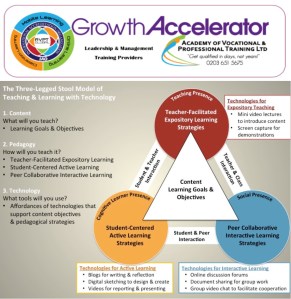
Teacher Facilitated Learning Strategy AVPTMeasurement of cognition and educational attainment has been refined during the past century. Psychometricians have shown that cognitive ability has multiple facets.

Many social scientists—even many psychologists— continue to use IQ tests, standardised achievement tests, and grades. Even though scores on IQ tests, standardised achievement tests, and grades are positively correlated with each other,  recent literature shows that they measure different skills and depend on different facets of cognitive ability. Recent research also shows that all three measures are associated with personality, but to different degrees across various cognitive measures.

Standardised achievement tests were designed to capture “general knowledge” produced in schools and through life experiences. Such knowledge is thought to be relevant to success inside and outside of the classroom. However, achievement tests are often validated using other standardised achievement tests or other measures of cognitive ability—surely a circular practice.

Success in life depends on personality traits that are not well captured by measures of cognition. Conscientiousness, perseverance, sociability, and curiosity matter. While economist  up until now have largely ignored these traits, personality psychologists have studied them over the last century.  They have constructed measures of them and provide evidence that these traits predict meaningful life outcomes.

Many scholars—inside and outside of psychology—have questioned the existence of stable personality traits, arguing that constraints and incentives in situations almost entirely on the magnitudes of measurement error on a variety of economic measures, see Bound et al. (2001).

These authors report that at most 15–30% of earnings variance is due to measurement error.

Some early studies in economics are Bowles and Gintis (1976), and Bowles et al. (2001). An important study in sociology is Jencks (1979). Work in psychology going back to Terman et al. (1925) shows that personality traits matter (see Murray, 1938; Terman et al., 1947; and the discussion in Gensowski, 2012).

There is no tape measure for perseverance, no caliper for intelligence. All cognitive and personality traits are measured using performance on “tasks,” broadly defined. Different tasks require different traits in different combinations. Some distinguish between measurements of traits and measurements of outcomes, but this distinction is often misleading.

However, traits are not set in stone. They change over the life cycle and can be enhanced by education, parenting, and environment to different degrees at different ages.  It is my opinion  people try harder when doing  achievement tests so you can scores and capture both cognitive and personality traits.

Promoting Alternative Thinking Strategies within educational institutes will help with promoting self- control, emotional awareness, and social problem-solving skills. 

80% students get qualified