Tag Archives: hair extension courses

20 Different Hairloss Conditions you should know about

washing-and-massaging-hair

Spotting the signs

13 HAIR LOSS CONDITIONS

article by Diane Shawe Author of Getting Started in the hair extensions business

There is no single explanation for hair loss but reasons can include:

  • Natural ageing process
  • Poor nutrition
  • Nervous disorders
  • Hormonal imbalances
  • Serious illness
  • Certain medications
  • Chemotherapy and radiotherapy
  • Hereditary/genetic factors

Hair loss can have a devastating effect.  It’s important to know that the earlier a hair loss problem is diagnosed, the better the chances are of treating it.  We always recommend seeing a qualified hair specialist to diagnose conditions.

Common hair loss conditions include:

Androgenic Alopecia (‘Pattern Baldness’)

This is one of the most common forms of hair loss.  It affects both men and women and occurs in distinct patterns. In men, this form of hair loss is very obvious.  At the end of the process – which can take from 15-25yrs – the only hair remaining is at the sides and the back of the head. Roughly one third of all women are affected by this type of hair loss normally on the vertex (top of the head) with the front hairline often intact.  The process of shedding is on average 50-100 hairs a day.


Alopecia Areata

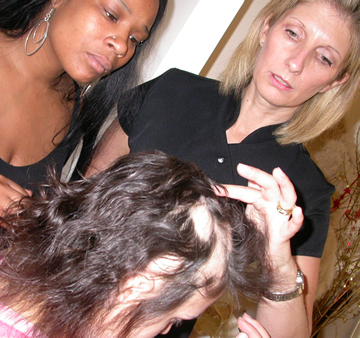
This condition manifests itself in patchy hair loss, usually starting with a small spot that can spread.  It is an auto-immune disease where the body attacks itself, killing off the hair. In general, the onset of alopecia can be caused by illness and raised temperature, shock, viruses, inoculations, medication or a period of extreme stress 2-6 months before a bald patch appears. It’s important to remember that early diagnosis and treatment can minimise the effects of the condition.  Following diagnosis, many patients are extremely anxious which can also exacerbate the problem.  It is advisable to seek specialist advice on how relieve stress and help hair growth to resume.

Alopecia Totalis

Alopecia Totalis is condition in which total loss of scalp hair occurs and can follow on from unchecked alopecia areata.

Alopecia Universalis

The result is a loss of all body hair including eyebrows and eyelashes.  This form of hair loss is very distressing.

Telogen Effluvium or ‘Diffuse Hair Loss’

This condition manifests itself in shedding from all parts of the scalp.  A great deal of hair is shed before the effects become noticeable.  Telogen Effluvium can be caused by high fever, thyroid, postnatal depression, anaemia, surgery, medication, emotional stress, shock, dental treatment, surgery or dieting.  During pregnancy, high levels of female hormones generate healthy hair.  Some women can experience diffuse hair loss after childbirth.

Chemotherapy and radiotherapy hair loss

Chemotherapy or radiotherapy drugs work by attacking rapidly-growing cancer cells in the body.  Because hair follicle cells also multiply very quickly – like cancer cells – chemotherapy drugs have difficulty in discerning the difference.  This means that cancer treatment also destroys fast-growing hair cells and the hair falls out.  Damage is not irreparable however and hair usually grows back 6-8 weeks after chemotherapy treatment has ended.

Trichotillomania

A rare form of Alopecia that is extremely stressful and caused by a patient self-harming i.e. pulling his or her own hair out.  Given the psychology surrounding this condition, sufferers may not initially admit to pulling their hair out.  Although young children can be particularly prone to Trichotillomania, it normally affects adolescent age groups.

Scarring Conditions

Several scarring conditions may includeLichen Planus, Lupus Erythematosus, Folliculitis Decalvans and Pseudo Pelade.  These conditions can be slowly progressive and scarring of the scalp causes permanent hair loss.

Traction Alopecia

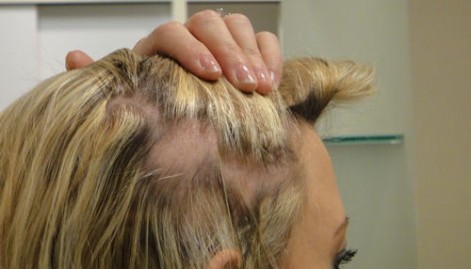
A condition often caused by hair extensions or hair styles that cause physical trauma to the scalp e.g. cornrows, tight braiding which causes patchy to total hair loss prodominately around the hairline becomes weak and stops growing.

In addition to hair loss problems, scalp disorders can include:

Dandruff (Pityriasis capitis)This condition is all too familiar and about half of all Caucasians will have had dandruff to some degree before they are 20.  In most people, it disappears after the age of 50 or so. Dandruff is associated with a tiny yeast called pityrosporum ovale, which is normally permanently present on the scalp.  In dandruff, there is an increase in the regular loss of cells from the skin surface and they are lost more quickly.  As more cells are lost, the yeast grows more rapidly.  These cells may clump together to produce the all-too-familiar flakes of dandruff. 

Eczema and Dermatitis

Psoriasis – Chronic skin condition affecting 3% of the population.  It appears as raised, inflamed skin topped with silvery white scales.  In severe cases the whole of the scalp may be covered by scales and there may well be some hair loss.  Severe cases are extremely uncomfortable and distressing.

Seborrhoeic Dermatitis – Scaling condition characterised by yellow, branny scales on the scalp and red, irritated skin.  It is sometimes associated by an unusually greasy scalp.  In babies, the condition is known as ‘Cradle Cap’. It can also affect the nose, eyebrows and ears.  In severe cases, Seborrhoeic Dermatitis may lead to hair loss.

Infections

Head Lice (Pediculosis Capitis) – Infestation of parasites living off human hosts.  The hosts are 6-legged creatures, 2 – 4 mm in size and grey in colour.  They are found near the hairline, at the nape of the neck and around the ears.  This condition is highly infectious (ova hatch within 5-8 days).  Lice can live off the human scalp for up to 48 hours in scarves, hats, chair backs, combs, brushes etc.

Impetigo – Bacterial infection of the skin that results in weeping, crusted sores and produces itching.  It is often seen in young children and is highly contagious.

Ringworm – Fungal infection which appears as pink, scaly patches on the skin.  It is more likely to be caught from animals than from humans.

Reassuringly, many scalp conditions can be prevented or cured and there are a number of treatments available.  It is always advisable to act quickly.  For further in-depth information call us on 0121 318 2880
Book an appointment

Visit our Main website

Visit our GPage

Can Hair Extensions give you more confidence or make you feel self conscious?

descreet-hair-extensions-by-diane-shaweHair Extensions have been trending from Hollywood red carpets, Global awards through to a local person within your inner circles for the past 15 years. Why?

Article by Diane Shawe’s Author

Celebrities on Red carpets and magazines have normalised hair extensions. Hair extensions has been a trending topic among many women as youtube has helped catapult the good, bad and ugly of the fake it market. But is it all vanity vanity as some parts of the media suggests?

It is arguable that the main reason for the popularity of hair extensions is that one can get instant gratification. That extension adds to the thickness and fullness of your hair in a shorter period of time than waiting for your hair to grow.

Beauty Confidence Boosters: Hair Extensions

As a woman, confidence is in constant flux. We all have those days that we just feel great. Our skin is glowing, our eyeliner went on just right, and our hair is lying the right way. And then we have those weeks where we just feel like our look has passed its expiration date. We “need a change.”

There spot lighthe seems to be forever turned on and time is now a precious commodity.

Hair Extensions

So for some women this is a no-brainer. If you’re tired of your hair style and sick of waiting for your hair to get to the length you want, sick of chemicals, sick of thin lack lustra hair? then with over 16 different hair extensions techniques there is bound to be one technique that can help achieve their goal.

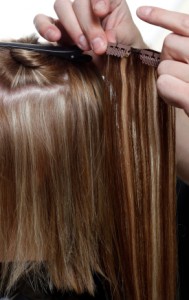
For instance Clip in hair extensions are very popular and operate with pressure-sensitive clips, you can apply these for everyday use or special occasions but they must not be worn for over 5 hours per day These products will give you the ultimate beauty boost, allowing you to defy biology and get the thick, long locks you’ve always wanted.

It is claimed that the extensions can add up to 10-inches 0-inches of hair to an individual which would translate to an awesome look.

Beauty Confidence Hair Extensions Busters:

Incorrectly applied hair extensions can damage hair

Incorrectly applied hair extensions can damage hair

Well we have all heard and seen the desaster stories. This is not unique to this industry but the self taught by youtube suppliers have given the industry a bad name and scared quiet a few women forever!

I’ll fitted hair extensions or even using the wrong technique can traumatised a person far worse than their original hair problem. It can also lead to clients loosing their hair as a result.

Getting you qualified in the Hair Extension Sector

Getting you qualified in the Hair Extension Sector

There isnt a internationally recognised directory for qualified and properly trained hair extensions technicians but there are reputable private training schools which could point you in the right direction.

Diane Shawe is an author of 15 books, speaker, trainer, mentor, consultant and entrepreneur with more than 25 years of experience. She has personally trained over 2800 people around the world in a variety of fields and has published a number of works. She has contributed to over 100 Kiva Entrepreneur’s around the world.

She was also one of the producers of a Day time Ladies Talk Show in 2015 and Host of one of the UK’s best loved Annual Hair Extensions Awards.

Diane also enjoys oil painting, sailing and clay pigeon shooting. She focuses on topics that she is passionate about in her writing and has attracted over 36,000 followers on her popular blog.

Media Contact
Company Name: AVPT Short Courses (Hair Extensions Training Academy)
Contact Person: Diane Shawe MEd
Email: Send Email
Phone: +44 208 1333120
Country: United Kingdom
Website: http://www.hairextensionstraining.academy

Mindfeed ebooks by Diane Shawe

How hair extensions are sourced

How hair extensions are sourced

Starting a Hair Extension business

Starting a Hair Extension business

How to increase the odds for your business

diane-shawe-elle-magazineIn business, there are no guarantees. There is simply no way to eliminate all the risks associated with starting a small business – but you can improve your chances of success with good planning, preparation, and insight.

Diane Shawe Author

Like you I Never Thought I Could answer 77 questions that would help me avoid business failure  – But I Finally Discovered The Secret! Here’s How… Are you really ready? Is Entrepreneurship For You?

Are you the right person for the business you have chosen?

I would advise you don’t skip the 77 questions, why? Well it would be like short changing your potentially new clients.

So persevere, some you will answer quickly, others you will need to do a little research, but believe it, it’s worth it, you will be clearer and more focused about what you are going to do.

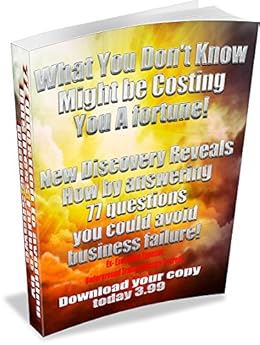
Here are 10 questions related to Number 50 – 59 from the recently published ebook  What you don’t know might be costing you a fortune New Discovery reveals how by answering 77 questions you could avoid Business Failure by Diane Shawe

  1. Where do you see bottlenecks developing?
  2. How important is quality control?
  3. What is the current backlog?
  4. Is the product assembly line based or individually customized?
  5. What are the health and safety concerns in producing this product?
  6. Who are your suppliers and how long have they been in business?
  7. How many sources of suppliers are there?
  8. Currently, are there any shortages in components?
  9. How old is your company’s equipment?
  10. What is the yearly maintenance costs?

I recommend you get a little notebook and start working on each question. For those you cannot answer a specific question, stop do some research, find the answer and make a note.

This is also an invaluable exercise if you are already in business, it can help you clarify where you are today and help you plot where you need to get too and how to do it.

77 Questions to avoid business failure by Diane Shawe white background

Get your copy from Amazon Today

Mindfeed ebooks by Diane Shawe

Why you should switch to Raw Cocoa

cocoa-powder-lead-jpg-653x0_q80_crop-smart

THE HEALTH BENEFITS OF RAW CACAO

Magnesium

Raw cacao is one of the best food sources of magnesium – a mineral that many of us don’t get enough of in our diets. Magnesium is essential for energy production, for a healthy brain and nervous system, for our muscles and for strong bones and teeth. Magnesium may also support a healthy blood pressure.

Iron

Cacao is also a source of iron, which builds the blood and helps to transport oxygen around our body, as well as potassium, copper, zinc, manganese and selenium.

Flavonoids

Cacao can also be high in flavonoids, which have antioxidant activity. Cacao and flavonoid-rich chocolate have been linked with heart health benefits including increasing the good form of cholesterol (HDL) in our blood, lowering blood pressure and even improving vascular function in patients with congestive heart failure. These effects are thought to be primarily due to the antioxidants contained in the cacao.

PEA

In addition, cacao contains a compound called phenylethylamine (PEA for short!). PEA is thought to elevate mood and support energy, and is said to be one of the reasons that many people love chocolate!

Raw cacao is also very low in sugar, and of course does not contain any milk, so is suitable for those who are milk-sensitive or following a low-sugar diet.

THE PROBLEM WITH CHOCOLATE

The cacao – or cocoa – part of a chocolate bar is not ‘unhealthy’ as such. The main factor that makes it less healthy is the sugar that’s added to it to create a standard chocolate bar. Also, when cacao is roasted to make a standard chocolate bar, you do lose some of the antioxidant flavonoids, beneficial enzymes and other nutrients – which of course doesn’t happen with raw cacao or raw chocolate.

So what about painfully dark chocolate, you know the 99% cocoa solids stuff? Cocoa solids are what’s left after the cacao butter (the oil in the cacao bean) has been separated from the ground up raw cacao beans. Cacao solids are used to make cacao powder. ‘Raw cacao’ can refer to the whole beans, opl

the solids, or the powder, as long as it is not heated during processing. It is this heating process that robs some of the nutrients.

Don't forget to use the Discount Code when you order

Don’t forget to use the Discount Code when you order

Source: http://www.womenshealthmag.co.uk/weight-loss/healthy-eating/2736/health-benefits-of-raw-cacao-over-chocolate#ixzz4MZm1GgNU

Read more: http://www.womenshealthmag.co.uk/weight-loss/healthy-eating/2736/health-benefits-of-raw-cacao-over-chocolate#ixzz4MZipYusd

Top 10 Money Making Hair Extension Techniques

Starting a Hair Extension business

Starting a Hair Extension business

WHICH 5 HAIR EXTENSIONS TECHNIQUES  ARE THE MOST PROFITABLE?

With the growth of Hair Extensions let us examine the most profitable techniques for your mobile business or Salon

Article written by Diane Shawe M.Ed
Founder www.hairextensionstraining.academy

We have seen the hair extension market grow over the past 15 years, now there are more hair extension techniques than ever before and it can be confusing to decide which is the right one for your business or for your clients.

If you are thinking of becoming a qualified technician, it is important to consider how potential clients might make their decision.  Some people will make a decision based on their budget, others on their hair type and life style, some on what their friends recommended.  Whilst these points are interesting, it is important for you to consider techniques that will service your clients and keep them coming back.

Here are just a few tips to help with your decision making process.

traction_alopecia_caused_by_hair_clipin_3_diane_shawe1. Wigs:  Wigs are a quick and easy way to give a client a quick makeover.  What you need to bear in mind is that the cheaper the wig the more un-natural it will look.  If you have a client with special needs then it might be possible to make at least 28% profit.  We know that the internet has changed a lot of shopping habits and clients can sources their own wigs on line or in some of the high street hair supplier shops for as little as £25.00.  Sourcing or even making a custom wig for a client is an alternate route and they will pay between £220 – £600 for a good quality wig which could last for up to 12 months. MAKING WIG 4HOURS, INSTALLATION 1 HOUR – NOT PROFITABLE

2. Hair Pieces: There are lots of different hair pieces from pony tails to rear hair attachments in all different shades, curly, straight or plaits. There are also specialist hair pieces for thinning hair that can help disguise any  thinning hair problems.  The thing to bear in mind is that hair pieces are not often very secure and could make a client feel a little self concious.  Some of the ponytail pieces can be securely fixed, for a temporary look.  INSTALLATION 45 MINS. NOT PROFITABLE

popular integrated weave

3. Integrated Weaves: This is when wefts of hair is sewn onto a fine cornrow which is then hide by the bulk of your hair on top.  It is a popular technique because if done correctly it can look very natural and offer up a robust and secure hair enhancement solution.  If the client looks after the hair they can reuse it when they get it re-tightened. Clients could pay between £190 – £430 for the integrated weave and £60 – £120 for a retighten every 8 weeks. INSTALLATION 2 HOURS – RETIGHTEN 1 HOUR – VERY PROFITABLE

4. Pre-tips: This is small pieces of hair that have been pre bonded together.  They can be added in sections all over the head to aid thickening, give the impression of highlights or lowlight and length.  Pre-tips can be applied using heat, micro rings or even small elastic bands.  Be aware that they have to be professionally removed so as not to damage your own hair. Client could pay between £160 – £500 for installation. Retighten every 10 – 12 weeks can be expensive as it involves removing and reapplying (sometimes new hair) £55 per hour.
MAKING PRE-TIPS 1 HOUR – INSTALLATION 2 HOURS – RETIGHTEN – 4 HOURS – SLIGHTLY PROFITABLE

5. Strand by Strand (glue gun): This is when hot bond heated up in a glue gun is used to bond small sections of hair to the recipients own hair.  It was a very popular technique in 6 years ago, but requires professional application and removal by a qualified technician.  Can give the appearance of flyaway hair that client could somewhat run their fingers through.  It is a very time consuming technique and is much better for a long term wear over 3-4 months. Clients could pay anything between £400 – £2100. INSTALLATION – UPTO 5 HOURS – RETIGHTEN – 6 HOURS – MODERATELY PROFITABLE.

6) Clip in hair extensions: These are now very popular.  They are best used for lengthening mid should length hair.  If the hair is shorter they don’t sit very well because they can be a little bulky in appearance.  They don’t offer up much security unless they have been professionally fitted.  This is when a very small cornrow is done and the clips are slipped through for much added security.  Great for an evening occasion but not advisable for long term wear.  Clients can now buy these themselves or even make them from purchasing wefted hair.  NOT PROFITABLE

20121208_180137

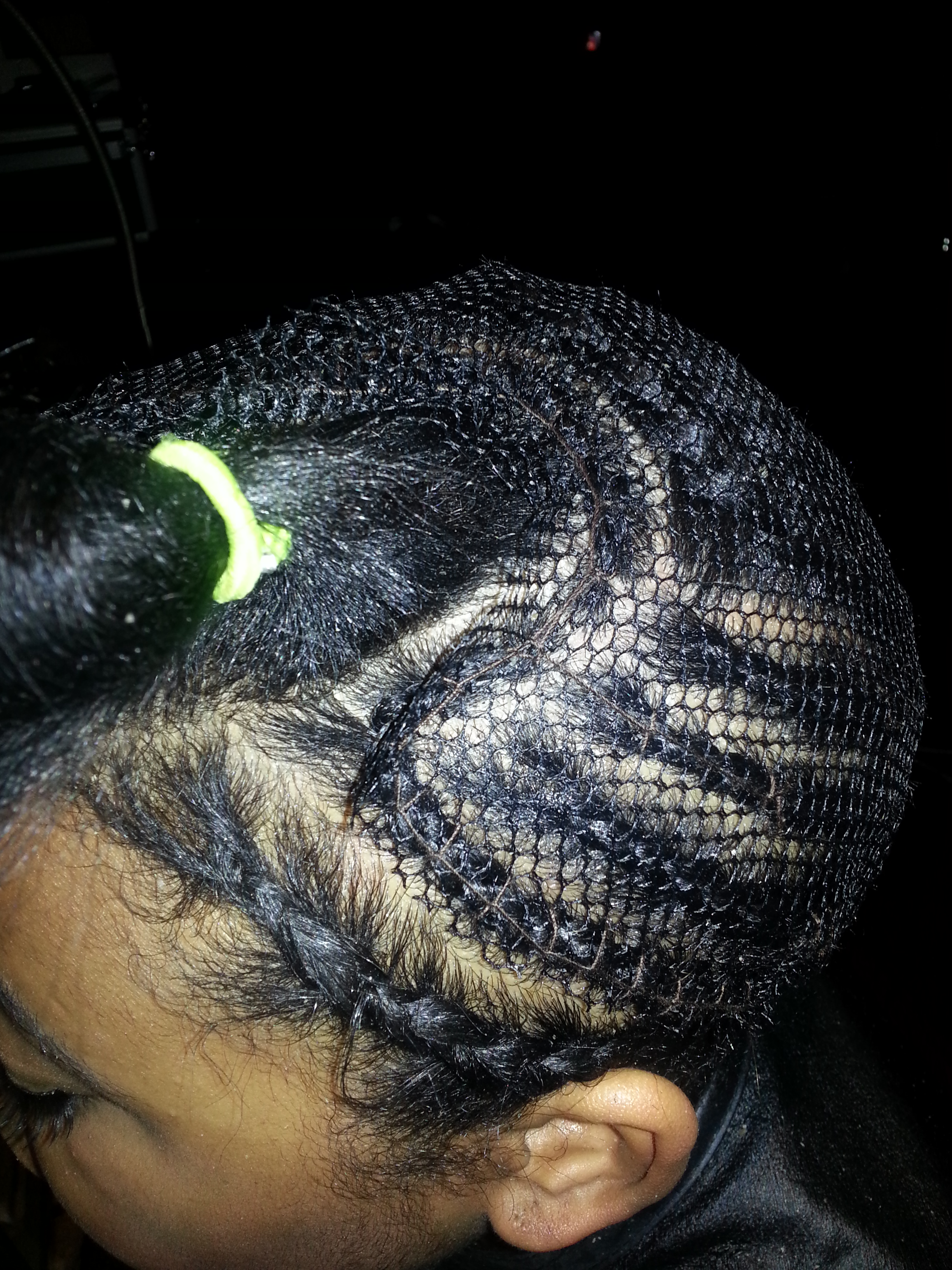
7) Net Weave:  This technique is used when the client wants to partially extend just a section of their hair or if the client suffers from patchy alopecia.  This technique is suitable for 2-4 months wear. Clients can expect to pay between £190 – £500 INSTALLATION 3 HOURS – RETIGHTEN 4 HOURS. PROFITABLE

8) Hook and Latch: This technique does not use any glues or threads. It is a beautiful technique, flat to the touch and hair could be worn up.  It works well with shorter hair especially the Micro ring track technique. Clients can expect to pay between £160 – £550. INSTALLATION 2 HOURS, RETIHTEN 1 HOUR – VERY PROFITABLE

9) Lace Wigs: Lace wigs have become very popular. They are really good for girls with short thin hair, damaged hair, hair damaged by medication or cancer. they can be used for hair that needs a rest or a complete makeover for a client who does not want to use chemicals.  Top celebrities have made them really popular and you can see why from the video testimonial below. See Radio TV presenters new lace wig

Clients can expect to pay anywhere between £400 – £3000 (included the Lace wig)  If the clients looks after the hair the lace wig could last up to 6 months. INSTALLATION 3 HOURS – REFIT 2 HOURS – PROFITABLE

alopeciaconsultant

10) Braides and Plaits: Braides and Plaits have been around for hundreds of years.  A technique that can look very simple or quite exotic.  Braids can be worn for a number of months until the hair grows out, they can even have beads added to the end for that extra special look. Clients can expect to pay from £90 – £400. INSTALLATION UPTO 5 HOURS – RETIGHTEN – 7 HOURS – NOT PROFITABLE

Hair Loss Specialists
One of the up and coming growth sector is the Non Surgical Hair Enhancement using Hair Extensions.  For now you can download a training course Catalogue which will go into more details about the different hair enhancement techniques.

If you are professionally qualified, this is a very profitable and fulfilling service.  My favourite sector.

Traction Alopecia – How You Can Stop It and is it Reversible by Diane Shawe

traction alopecia how to stop itAre YOU a Likely candidate for Traction Alopecia?

Anyone can be affected by traction alopecia – young or old, male or female. It’s more common within certain groups of the population, because they are more likely to use some of the hairstyling techniques listed above.

The reason I raise this article is because we are all living longer and some of the current fashionable trends in the younger groups are contributing to traction alopecia. Read about Clip ins and how they cause Traction Alopecia

For example, women and girls are more likely to notice the problem due to braids and weaves. Ballerinas – who tend to wear their hair pulled into very tight ponytails – sometimes suffer from traction alopecia around the hairline as a result.

In a nutshell – if you have a habit of doing something on a frequent basis that puts your hair under some sort of strain, then you are a candidate for traction alopecia.

Read on to discover the many ways you can prevent it from happening, or stop further damage if you’ve already noticed a problem.

Traction Alopecia Symptoms

Have you ever undone a ponytail and found your scalp feels sensitive to the touch afterwards?

Does untying your hair feel like a relief?

Does your scalp itch after you’ve had braids or a weave put in?

Have you ever taken painkillers because your hair is secured so tightly it’s given you a headache?

All of these are warning signs that your hair is under way too much tension. Your body is trying to tell you something… and you need to listen!

If not, the next thing you’ll notice is that sections of your hair are actually missing, or worryingly sparse. You can often see this more clearly around the hairline or behind the ears, but it can often happen around the crown, too. It really depends on what was causing the tension in the first place.

Some people even notice pustules (blisters filled with pus) or papules (little pimples) where the hair is under a lot of tension. This is because of the irritation being caused to the scalp and is a clear indicator that the follicles just can’t cope with the strain.

Can Traction Alopecia be Reversed?

Yes and no.

If you spot the warning signs of traction alopecia early enough and you put a stop to whatever’s causing it, then your hair will stop falling out and should – with time, patience and loving care – be completely restored to its former glory.

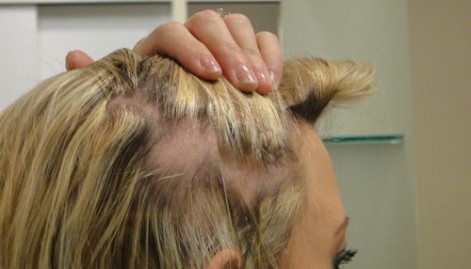
But if the hair follicles have been so badly traumatised for such a long period of time that they have scarred over, then the hair will not grow back by itself. Areas of the scalp where this is the case will likely look shiny.

In cases like this, you’ll need to think about some sort of surgical restoration – speak to your dermatologist to establish whether or not your traction alopecia has caused permanent scarring and to discuss the surgical options available to you.

When Traction Alopecia Compounds Other Hair Loss Problems

traction_alopecia_caused_by_hair_clipin_diane_shawe

If you are wearing a hairpiece – such as a clip on topper – to mask other hair problems like androgenetic alopecia, then you need to be very careful not to compound your problem with traction alopecia!

The best option is to ensure that the clips of your topper are firm, but not too tight, and that you rotate them. We also recommend undoing a couple of the clips when you’re at home – it gives your scalp a little rest from the tension.

Traction Alopecia Recovery Time

Most experts agree that your hair should recover within 6 to 9 months of you removing the cause of the problem.

If you’ve followed the guidelines given here and you are still not seeing regrowth, then it’s likely that the damage to your follicles was permanent – a fact your doctor/dermatologist can confirm. In that case, you might like to discuss the possibility of a hair transplant, which will effectively mask the problem.

What are the Causes of Traction Alopecia?

Traction alopecia is a type of hair loss that happens over time. It’s caused by putting the hair under constant strain or tension and is usually caused by one or more of the following…

  • Very tight ponytails or pigtails
  • Tight braids or cornrows
  • Dreadlocks
  • Extension (single) braids
  • Hair weaves or wigs attached with glue, clips or tape
  • Certain hair clips, slides or barrettes that hold the hair tightly and are worn in the same position every day
  • Headbands – even fabric ones – worn day after day
  • Tight hairpieces
  • Tight headgear like cycling helmets that are worn frequently or for long stretches of time and tend to rub or pull repeatedly on the same area of hair
  • Repeated use of hair rollers
  • Repeated pulling of the hair with the hands (this is an emotional condition called trichotillomania)

If you use or do any of the above, then you may find that the constant tension they cause has led to areas of thinning hair – usually around the temples or behind your ears. Alternatively, you might notice that the part in your hair looks wider than it used to.

If so, then it’s quite likely that you’re suffering from traction alopecia.

There’s more to this condition than hair simply breaking off. Instead, the constant tension in the affected area either pulls out the hairs’ roots completely, or causes the follicles to become inflamed. As time goes by, the damage to the follicles causes them to become atrophied (wasted away)… and if you don’t put a stop to the cause of the problem, they will reach the point where they no longer produce hair at all.

Reference: DermHairClinic – Traction Alopecia

Get your copy today from amazon.co.uk

Get your copy today from amazon.co.uk

Traction Alopecia Treatment

As discussed above, ‘treatment’ for traction alopecia is only effective before you’ve arrived at the stage of permanent damage.

But the good news is that ‘treatment’ – if you’ve caught the condition early enough – can be as simple as changing whatever hair styling and hair care practices you were using and really learning to CARE for this precious asset… your hair!

Wearing a weave

One of the biggest ironies about traction alopecia is that it’s the most common cause of hair loss for women wearing hair extension is due to the application being too tight when weaves and hairpieces are applied… yet those weaves and hairpieces are often used in the first place to enhance hair that may seem thin, or lacking in volume.

Weaves are generally applied through braiding, fusion, netting or bonding – and the sad fact is that any or all of these methods can lead to traction alopecia if used extensively, over long periods of time.

To minimize the risk of traction alopecia, or to try to prevent further damage and encourage regrowth, have your weave fitted by a state licensed professional. Yes, it may be more expensive, but you – and your hair – are worth it! Someone properly trained in hair care will keep damage to a minimum and will be able to spot potential problems and nip them in the bud.

The same goes for hair extensions, which can also cause hair loss problems in the lower half of the scalp. Have them fitted by a trained professional – don’t try to fit them yourself or have a friend do them for you.

Speak to your hairdresser about taking care of your scalp – some women find it difficult to maintain good scalp hygiene because the weave or extensions make it awkward… unfortunately, though, this can make the problem of traction alopecia worse.

When chemicals are the culprits

There’s a kind of alopecia called CCCA (central cicatricial centrifugal alopecia), also known as hot comb alopecia, or follicular degeneration syndrome. It’s almost exclusively seen in African American women and it’s often confused with female pattern baldness, because it starts at the crown and spreads to the surrounding areas.

The cause?

A mixture of too much stress (traction) on the hair along with the use of harsh chemicals like dyes, relaxers and bleaches. The chemicals actually damage the keratin structure of the follicle itself, causing hair LOSS, not just hair damage.

In fact, research conducted in 2008 showed that the highest prevalence of traction alopecia was in women with relaxed hair.

If you suspect this is a condition that’s affecting you, speak to your dermatologist. In addition to removing the cause of the traction and stopping the use of chemicals in your hair, you may be tested for any bacterial or viral infection and possibly be prescribed topical steroids, antibiotics or topical minoxidil to encourage regrowth.

NOTE: If you must use a relaxer on your hair, have it done professionally. Specialists are seeing more and more problems caused by home relaxer kits, because it’s tempting to leave the chemicals on longer than necessary, or accidentally use a stronger formula than you really need. (Make sure they have been certified)

Braiding, ponytails, pigtails and locs

The 2008 research into the prevalence of traction alopecia in African girls and women showed that braiding caused more problems than chemicals (although the two together were worse still).

Starting up a hair extension business Diane ShaweConstant, tight braiding – or other styles like ponytails that place hair under chronic tension – can affect any ethnic group. So it’s very important to take a new approach to styling hair that doesn’t rely on placing the hair under extreme tension.

The ideal solution, of course, is to allow the hair to be completely natural, without using any kind of clips, slides or ties.

The reality, though, is that this just isn’t possible for most of us. Our hair may either be unmanageable and wild looking when allowed to ‘do its own thing’ – or, like us, you may live in a climate where it’s simply too hot to have your hair hanging around your face all day.

The answer is that you can continue to secure back your hair, but you MUST change the way you do it from one week to the next. Traction alopecia is usually the result of CONTINUALLY putting the hair under EXACTLY the same tension in the same place, day after day.

How to Avoid Traction Alopecia (and still have beautiful hair!)

Change the location of your ponytail often – wear it high, low, on one side, then the other. Don’t wear a ponytail at all if your hair isn’t really long enough to need one… otherwise you’ll probably be pulling your too-short hair really hard in order to secure it.

Avoid using clipped in ponytails – the weight of them can – quite literally – tear out your hair.

Always use fabric covered hair bands – avoid bare rubber bands like the plague! And remove bands, clips and ponytail holders from the hair at night – this is when you may be putting your hair under tension without even realizing it.

Invest in satin pillowcases. They cause less friction on your hair than cotton or nylon ones – and, as an added bonus, they’re believed to help reduce wrinkles too!

Change the location of your partas often as you can. Even a simple part in the hair can trigger a problem when worn in the same position day after day.

Don’t retwist the roots of dreadlocks – watch this video for first-hand experience of how damaging this can be!

If you use hairspray or hair gel, wash it out before you next brush your hair.Brushing dried hairspray and gels out of your hair is damaging to the shaft and may cause further hair loss.

Make sure your hair is hydrated. If you’re in a dry climate – or you use air conditioning or central heating – the lack of moisture in the air can make your hair brittle and more likely to break

http://http://issuu.com/dianeshawe/docs/course_prospectus_hair_loss_consult

Other related Hair Loss Article by Diane Shawe

10 Top Tips on How to Influence Online buying by Diane Shawe

Try out 5 Courses this Christmas for just £25.00

Try out 5 Courses this Christmas for just £25.00

The trends and predictions are already in for 2016. Many digital advancements will be made in 2016, from the rise of mobile messaging apps to mobile commerce finally gaining some mojo. 

You the reader even you are becoming more savvy and intend to be heard when things are not going right.  Smartphone use is driving up the number of inbound calls to businesses. Voice-activated search has been rising steadily. Consumers are talking to personal assistants through their smartphones and cars, and those “assistants” are getting smarter. And with the rise of smart watches and connected home devices, they’re talking to a wider variety of devices from various locations.

Marketers need to be prepared and ready to optimise digital content for speech-based (not keyword) queries and learn how to make sure that content can be discovered by personal assistants.

– So what about small businesses, the lone sole trader, what can you do to influence online buying?

  1. Change your ads Your prospects could get bored seeing the same ad all the time. Statistics show people usually see the same ad 7 times before they actually buy. Just change them enough to keep them from being over-exposed. For example, if your ad said. “FREE Killer Marketing E-book!”, you could change it later on to “FREE Sizzling Marketing E-book!”
  2. Give people a deadline to order. Tell people if they order by January 15 2016, they will get a discount or free bonuses. This will create an urgency so they don’t put off buying. Another example, “Order before 8:00 p.m. and get a second product of your choice for free!”
  3. Publish testimonials on your ad copy. They will give your business credibility and you’ll gain people’s It’s important to include the person’s full name and location with the testimonial.
  4. Allow people to make money reselling the product or Tell people they can join your affiliate program if they order. You could pay them per sale, per click, per referral, etc. Just provide them with proven and tested marketing materials, detailed statistics and plenty of affiliate training.
  5. Offer a buy-one, get-one-free deal. If you sell more than one product, this type of deal works People will feel they are getting more for their money and will order quicker. You could also offer them a ‘buy one, get one half’, ‘buy two, get the third one free’, ‘buy two, get a free watch’.
  6. Have them sign up to get access to download a free e-book. The subject of the e-book should be related to your target audience. You could have them sign up to a opt-in list or your regular The e-book should have high perceived value so they’ll take the time to sign up. Landing pages are really good for this.
  7. Give your visitors a free membership inside your Members Only web site or closed membership group on LinkedIn or Facebook. Have them sign up to receive a user name and password or an exclusive invitation. Members groups are particularly good on LinkedIn and your blogs because each time you post some news they get an automatic update.
  8. Offer your visitors free consulting via e-mail. Have them fill out a web form to e-mail you with their When you answer their questions, include an offer for a product you sell or highly recommend products that could help them. You could join the product’s affiliate program to earn commission if they take your advice.
  9. Give people free bonuses when they order your product or The free bonuses could be books, jewelry, reports, newsletters, etc. Make their bonuses sound extra valuable by listing their retail value, either separately or together in one amount, or limiting how long you will offer the bonuses. (you can partner with free gift websites)
  10. Provide free package and postage with all orders. If you can’t afford it, you could offer free P&P on orders over a specific You could also offer a rebate on their P&P costs. Most customers probably won’t send in the rebate card unless it’s a huge shipping cost, for example, £30 or more

Try our Audio Courses this Christmas.

Niche Marketing Made Easy

Produce Persuasive Copyright

Building online Traffic and List Systems

Email Marketing secrets

How to set up and generate a powerful Blog website

The Affiliate Chemistry

7 Habits of Highly Effective People

Internet Business Optimisation

12 Effective selling techniques

50 Best and Worse Business Deals of all time

20 Advertising Tips

Art of Making money

Breakthrough Sales Solutions

Clever Profit Generating Insights

How to Combine Cooperation & Competition

Customer Tested – Buying Triggers

How to work with change

Explosive Influence Tactics

Extreme Persuasion Strategies

Manage your Intellectual Capital

The Servant Power Leadership

Visit www.crashcourses.academy and select 5 course and start listening, watching and learning today.

Ready to step out on your own and join the growing ranks of the self-employed? by Diane Shawe

So if you are seriously considering becoming Self-employed and leaving your PAYE job behind if this sounds like you, then you are probably half way out the door.

Does this sound like you?

  • Your boss is driving you crazy because of his short-sightedness.
  • You are sick of your great ideas being ignored.
  • You are frustrated at the status quo and the lack of innovation in your field.
  • Maybe you’ve been discriminated against, laid off, restructured, demoted and under-valued.

Well you must be thoroughly fed up and ready for a change.

Being self-employed is a way of life radically different from anything. To be successful at it you will have to make a real turn-about in how you both think and act. We can often be our hardest critic but remember….

“You are not judged on the height you have risen but from the depth which you have climbed.”

 Frederick Douglass, 1881

But will I be successful?

The little doubting voices inside your head start going off

So lets take a look at how we define success?  To some, is all about wealth. To some, success is all about achieving the perfect job, or the perfect marriage, or living the perfect life.

Let’s examine what Webster says about success:

  1. degree or measure of succeeding
  2. favourable or desired outcome,
  3. the attainment of wealth, favour or eminence.

There are many ways in which people have come to define success, but one thing is clear: in order for your success to be defined a goal must be set in order to measure your achievements and success.

So why do some people live their life and go through each days, wasting precious time, effort and other resources without defining their actual goal? The question may sound elementary, but many people live this way and wonder why they fail to achieve anything of substance.

Goal Setting Mistakes

A popular goal setting mistake people make is pursuing someone else’s goal. So I am going to use the driving analogy:

How could you arrive   at your own desired destination, if you focus on where other people are going? Would you get on the motorway and drive north just because other people are driving in that direction?

Where do you really want to go? In order to define your own destination in life, you must take the time to think about who you really are and what will really make you happy. Your success may be to teach small children to read and write, or your success may be to lead a girls football team to a national championship.

Resurrect latent skills and old interests!

Self-employment is a career alternative which requires mental and physically resilient, each moment can change the rest of your life and the course of your direction. If you are not intentional with your actions, you have already planned to fail. Successful people are driven by their vision which is fuelled by their passion. Successful people don’t become successful by accident-it’s sheer, practical application (although I agree that some element of luck goes a long way).

You have to do at least one thing toward your goal every single day. You have to dedicate yourself every day to doing what you love. Don’t just talk about it. Dreams are cheap, passion is Priceless. You may have no concept where you want to be other than theory, and that’s okay. You are guaranteed to get closer to your dreams if you just walk forward with confidence and passion and focus on being of service to those who want your assistance.

So what if you cannot see a way forward, well I am sure you have heard this saying, If you say you can’t your right, if you say you can your right.  So you might as well adopt the ‘I can’ mantra.

Using your imagination

Albert Einstein once said, “Your imagination is your preview of life’s coming attraction.” I believe he’s right. That phrase encapsulates so much of how I try to live each day.

Remember, when you think positively about your future, instead of living in the past which you cannot change, using your imagination in a positive way will help you attract what you desire toward you. It’s about your imagination and no one else’s. I challenge you to take what I’ve already given you this far and start to imagine your future in a constructive way.  To get you going just ponder upon the following question.

“What would you attempt to do if you knew you could not fail?”

Interested in personal development courses then click here.

10 Secrets To How To Earn £4000 a month consistently And Start attracting high net work clients every month by Diane Shawe

Hair extension staff training (1)

Creative ways to find new customers

New IS MAKING A STATEMENT OR CREATING A SIGNATURE MORE IMPORTANT? We want to Help You Start attracting high net work clients every month…

Leaving your SIGNATURE as a professional is important if you want to leave a legacy and or be the trendsetter knowing who to work with and how to network is vital and important to your business growth and success.

Search for our bootcamps and we will let you into 10 secrets.   Click here to book your at one of our events.  https://www.signature-masterclasses.com

Learn the art of collaborations and branding. Hear from global Trend setters and designer about the correlation between the fashion world, hair and makeup.

Network and meet your future industry colleagues

HAIR EXTENSIONS THE WAY FORWARD

LEARN HOW TO CONSISTENTLY ATTRACT THE RIGHT TYPE OF CLIENTS AND TURN THEM INTO YOUR NET WORTH BUSINESS IN HAIR EXTENSIONS

It is estimated that the UK and European market for Hair Extensions, Makeup and cosmetics is worth a staggering 400 billion per annum of which the majority expenditure comes from around 20% of the population. WHY because 80% of the female population around the world do not wear makeup or Hair Extensions.

The growing Hair extension and Makeup industry has paved the way to one of the greatest opportunity for Experts in that field to expand their businesses.  Evidence is everywhere that marketers of this segment are dominating retail sales and targeting women with hair and skin problems,

Just check out these stats below:

  • 7 BILLION PEOPLE IN THE WORLD
  • 60 MILLION IN UK
  • £400 BILLION SPENT WORLD WIDE ON COSMETIC
  • 80% OF THE FEMALE POPULATION DO NOT WEAR MAKEUP
  • THE COSMETIC INDUSTRY IN UK WORK APPROX 17 BILLION
  • AVERAGE WOMEN SPENDS 200 PER YEAR ON MAKEUP
  • AVERAGE WOMEN SPEND 600 PER YEAR ON HAIR EXTENSIONS
  • AVERAGE MAKEUP PRODUCT IS MANUFACTURED TO LAST ONE YEAR
  • AVERAGE HAIR EXTENSIONS PRODUCT LAST APPROX 4 MONTHS
  • WOMEN TEND TO KEEP THEIR MAKEUP PRODUCT ON AVERAGE 3 YEARS
  • WOMEN TEND TO CHANGE THEIR HAIR EXTENSION EVERY 4 MONTHS
  • 70% WOMEN DO NOT KNOW HOW TO LOOK AFTER THEIR SKIN
  • 80% WOMEN DO NOT KNOW WHICH HAIR EXTENSION TECHNIQUE IS BEST FOR THEIR HAIR
  • GIRLS FROM THE AGE OF 7 ASPIRE TO WEAR MAKEUP
  • WOMEN FROM THE AGE OF 30 NEED HAIR ENHANCEMENT
  • 90% OF MAKEUP ARTIST ATE NOT COMFORTABLE DOING MAKEUP THAT IS NOT THEIR OWN SKIN COLOUR
  • 90% OF PROFESSIONAL HAIRDRESSERS DO NOT KNOW HOW TO APPLY MORE THAN 3 HAIR EXTENSION TECHNIQUES

WHAT DO YOU PICK UP FROM THESE FACTS?

Just Imagine Being Able To:

  • Provide an addition premium Hair Extension & High profile in under 3 hours
  • Stop having to send on average 4 clients a month away who would spend on average £250 each on hair extensions
  • Introducing a hair extension technique that uses No Glues, Threads or Cornrows and is good for business
  • Offering your current client a safe, non evasive and natural looking hair extensions
  • Being able to help clients with real hair problems and seeing them leaving your salon with a smile
  • Beign able to help clients with all types of skin tone and issues and leaving your salon with a smile

…And that’s just for starters!

Check out our Main website for more details on other conference http://www.signature-masterclasses.com download the latest prospectus here

1 start a hair extension business earn 1000 with 6 clients by diane shawe


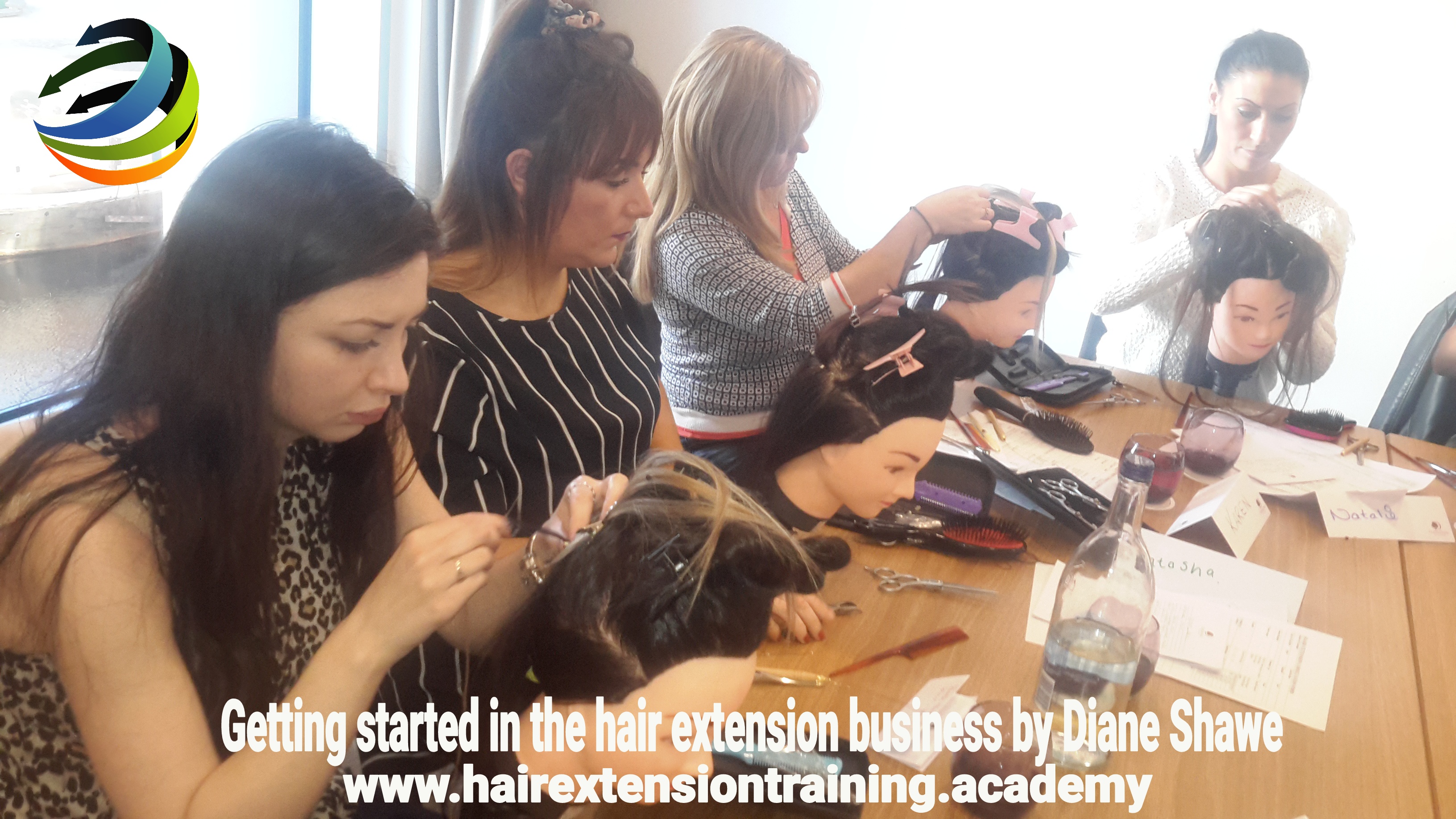
Getting started in the hair extension business by Diane Shawe

Starting a Hair Extension business by this ebook from amazon.Co. uk

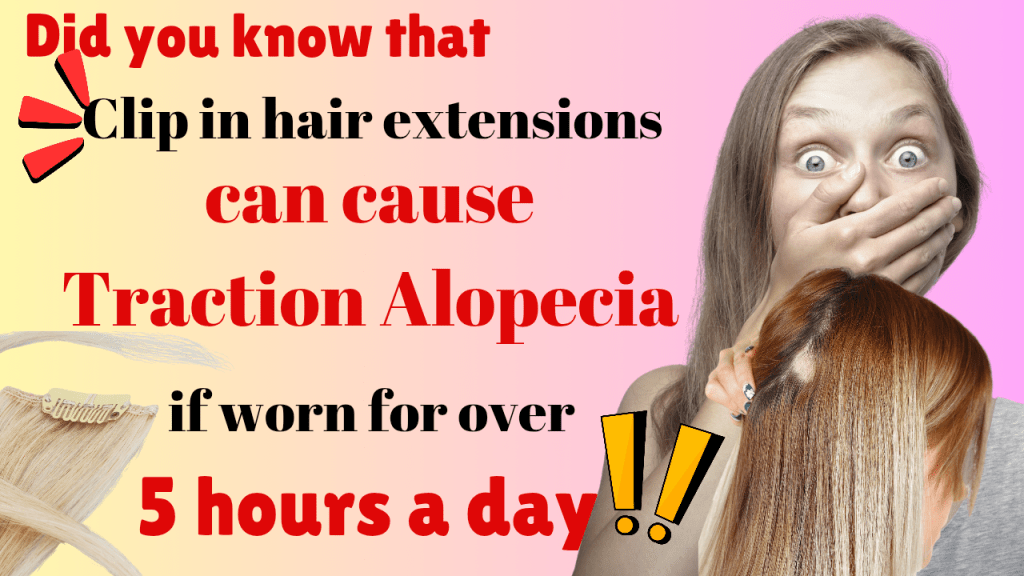
Clip in hair extensions can cause traction alopecia if worn for over 5 hours a day by Diane Shawe

Nickle Clips can irritate the scalp

Nickle Clips can irritate the scalp

If nickle clip-in extensions are continually worn and the tension on your hair is not regularly alleviated, scarring can occur as well as permanent hair loss, leaving the wearer with a less then desirable appearance they’ll be forced to deal with for the rest of their lives.

article by Diane Shawe M.Ed

Almost all of these clips are made from nickle and if the wearer is allergic to nickle, wearing them for over 5 hours a day will eventually cause traction alopecia and scarring.

In today’s modern society, most people think only of the final appearance of their hair.

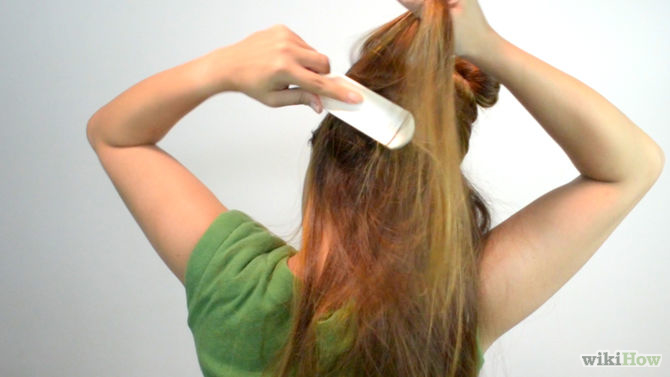
backcombing-to-Attach-Clip-in-Hair-Extensions-causes-traction-alopecia-diane shaweHours spent back combing and coating the scalp with lots of hair spray so that the clips can stay in longer, or even wearing really heavy hair extensions caused by the length of the hair purchased continually irritates the scalp all day whilst at the same time slowly pulling the hair out of it’s follicles.

Cheryl Guttman (2) research found that the continual over processing with Chemical treatment such as bleaches, dyes, or strengtheners disrupts the keratin structure in a manner that reduces its tensile strength.

traction_alopecia_caused_by_hair_clipin_diane_shaweThe hair follicles can become fragile. At first the hair fall out is not so noticeable because the clip on extensions are disguising it. Add brushing and combing your hair, you will note a difference in the reduced thickness of your hair line but ignore it initially. Later on some people might experience heavy fall out which can occur with brushing, combing and washing your hair. On top of that using extreme heat to fashion each day can also permanently damage the hair follicle.

If detected early, traction alopecia is reversible if diagnosed early. However, permanent loss can occur too slowly for immediate detection. Hair loss is often occurs in the front, but is also subject to the immediate adjacent area to where the clip in extension were pulling and damaging the hair root.

According to Basil M Hantash, MD, PhD (1)  The sad truth of the matter is that permanent traction alopecia does not respond to medical treatment such as minoxidil or finasteride since by its nature, the loss is different then genetic hair loss.
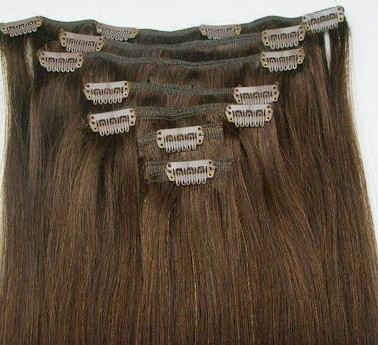
The only way one can treat traction alopecia is with transplants. Follicular unit hair grafting has been identified as the only practical solution to treating traction alopecia. Hair transplant clinics are reportedly seeing a rise in the number of patients with traction alopecia and say the results can be good to excellent.

nickle-clipins-damage-scalp-diane shaweHowever this can be a costly approach especially whilst clip in extensions appear so cheap. What you have to consider is whether wearing clip on extensions for over 5 hours a day versus the value of your own hair. Which is worth more?

There are over 16 different extension techniques. It is important that you find a technique that is suitable for your type and life style. There is a misconception that hair extensions can be worn permanently for up to 6 months at a time.

In today’s society, you need to hold on to what you’ve got, look after what you have and start being kinder to your hair.

Want to find out how to train to become a Hair Loss Hair Extension Consultant then click to view our course prospectus

Get your copy today from amazon.co.uk

Get your copy today from Get a copy of #DianeShawe latest ebook. Visit available on #amazon #amazonkindle and #googlebooks

Sources:
1. Basil M Hantash, MD, PhD, Robert A Schwartz, MD, MPH. (2005) Traction Alopecia, Emedicine.com

2. Cheryl Guttman, May 1, 2003 Alopecia Options for Black Women, Dermatology Times,