Category Archives: mobile phone broadcasting

AVPT Supporting the Global Entrepreneur Week November 2013 after being awarded a High Impact Badge in 2012

AVPT  is back for more after being awarded A High Impact Badge of Honour by the Global Entrepreneur Week in 2012

AVPT awarded High Impact Badge of Honour by Global Entrepreneur  Week 2012

This year we have set up a range of 3hr ‘Jump Start’ your business bootcamp in support of the Global Entrepreneur Week starting on the 18th – 24th  November 2013

3 hour business startup bootcamp 2012

Last year 361 organisations ran activities in 2012 that met the

High Impact criteria set by Global Entrepreneurship Week – AVPT along with other High Impact providers was congratulated this week and awarded their high impact badge of honour.

Global Entrepreneurship Week is the world’s largest campaign to promote entrepreneurship, taking place in 115 countries.  In 2012, the campaign took place 12-18 November and Academy of Vocational and Professional Training supported the week by launching a 3 hour Business Startup Bootcamp which was attended by a group of candidates who enroled on the GEW website.

In the UK, the campaign is hosted by Youth Business International, a global network of initiatives that help young entrepreneurs to start their own business, in partnership with Barclays.

The theme for 2012 was: Pass it On!  AVPT supported Global Entrepreneurship Week UK to pass on the practical help & support needed by early start-ups and individuals who are considering taking the plunge. GEW’s aim was to create a collaborative, local and practical week which enables people to learn more about the wealth of support that is available to entrepreneurs in the UK.

Through the week, they wanted to: Encourage those people who are not yet entrepreneurs to think about starting up their own business Improve entrepreneurship skills for aspiring entrepreneurs and start-ups Help people to access practical support – locally, regionally and nationally We did this by passing on: skills, contacts, knowledge, confidence and resources.

Ruth Onuoho who attended the 3 hour bootcamp wrote on her feedback form: “That they should bring their brother, mother, sister, everyone! I would tell them to bring a dictaphone, note pad and pen and use it until their hands bleed” Abigail Shillingford also wrote: “Informative and professional and the business advice is different and more resourceful than the local government or high street agencies”. Antony Berry said ” “The bootcamp provided a masterclass in the ways to think about yourself & your business.

In the UK, the campaign is hosted by Youth Business International, a global network of initiatives that help young entrepreneurs to start their own business, in partnership with Barclays.

At this years campaign they  believe that a large national campaign to promote entrepreneurship is a vital part of making the UK more entrepreneurial, to encourage more people to start up their own business.

GEWUK’s aim is to create a collaborative, local and practical week which enables people to learn more about the wealth of support that is available to entrepreneurs in the UK. 20% of UK adults have heard of Global Entrepreneurship Week and it remains by some margin the nation’s largest entrepreneurship-focused campaign.

Very practical advice given”. Find out about our forthcoming events by visiting our http://gewuk-jumpstart-3hour-business-bootcamp.eventbrite.co.uk/

http://www.academy-of-vocational-and-professional-training.com Global Life Long Learning 0203 551 2621

AVPTGLOBAL almost 400 courses all globally accredited


AVPTGLOBAL almost 400 courses all globally accredited

BYOD! The change is here.

Bring Your Own Device

1 personal development beta students needed

Try out our LMS system today

Tim T Dingle BSc (Hons) MIBiol PGCE MBA Chief Development Officer at the Academy of Vocational and Professional Training.

AVPT Global is issuing a technological tsunami alert; feel the force of a very real wave of BYOD / BYOT and new mobile learning and learn how to avoid being swamped.

Here at AVPT Global we like to bring you some advanced news and perhaps a serious warning of impending change. I have worked in the education sector for 25 years and seen many changes in technology during that time. There is a clear and present need to improve the soft skills and learning of individuals- whether at School, University or in business. Already at AVPT we are using the latest technology to improve training and it is clear that mobile learning is massive. I came across the term bring your own device (BYOD) in a recent workshop for employers. It means the policy of permitting employees to bring personally owned mobile devices (laptops, tablets, and smart phones) to their workplace and use those devices to access company information and applications. The term bring your own technology (BYOT) is being used more frequently in an educational context. It is a part of a supplementary school technology resourcing model, where the home and the school collaborate in arranging for use their own digital technology to be extended into the classroom to assist their teaching and learning and the organisation of their schooling.

The BYOD / BYOT ‘tsunami’ is rapidly coming over the horizon for educational institutions and businesses. BYOD is making significant inroads in the business world already with about 75% of employees in high growth markets such as Brazil and Russia and 44% in developed markets already using their own technology at work. In most cases, businesses simply can’t block the trend.

We believe that BYOD may help employees be more productive and become genuine Life Long Learners. It can and should increase employee morale and convenience by using their own devices and makes the company look like a flexible and attractive employer.  Many feel that BYOD can even be a means to attract new staff (and we all know how hard it is to get the right person on board): 44% of job seekers now view an organisation more positively if it supports their device.

AVPTGLOBAL almost 400 courses all globally accredited

AVPTGLOBAL almost 400 courses all globally accredited

We have found at AVPT that if businesses are to survive they will need to be proactive and really note and respond to the trends.  They will need to shape the largely inevitable development to the best advantage or try to surpass the deeds of King Canute and prevent the wave from swamping their institutions. Perhaps not surprisingly at this very early stage many of the early BYOT moves are making this mistake, are naïve, simplistic and preoccupied with the relatively mundane, showing little appreciation of what BYOT could entail.

We believe at AVPT global that there are least six global megatrends coming together that will impact on all businesses, schools, institutions to some form of BYOT. These megatrends relate to the normalised use of personal digital devices in every facet of life, the burgeoning digital and educative capacity of the student’s homes, cloud computing, parent digital empowerment, government’s increasing inability to fund state of the art personal technology for all and the inexorable evolution of schooling from its insular paper-based mode to one that is more digital and networked.

Fundamental to BYOT is that personal choice of the technology by the individual (whether in School, Higher Education and Business). While businesses /schools might and probably should provide advice, the final choice should rest with the individual. The will give an enhanced facility for the personalisation of learning in and outside the business and educational premises. That is the secret of the success of online mobile learners. In our online Learning Management System that can be used by the owner of device, at home, work or on the move (found out VTF are driving this change).The individuals are having their ownership of the technology and the information respected and absorbed.

Get qualified whilst on the move with AVPT

Get qualified whilst on the move with AVPT

So the future that BYOD / BYOT is creating will cause a profound educational change. It has immense potential that will assist change in the nature of schooling, teaching, learning and the relationship with homes and work. However, to realise this potential there has to be really strong leadership in education and businesses management. It has to change thinking and begin to understand what is needed terms of the power of mobile learning. Leaders have to take charge of the process, understand the possibilities and appreciate what is required for sustained success and development. At AVPT we see leaders training who are training to be proactive, learning about the forces impelling institutions to some form of BYOT. We see the need to appreciate the real potential for society in educational, social, economic, technical, administrative and political terms.

At the Academy of Vocational and Professional Training we believe these are still very early days with BYOT / BYOD. There isn’t much out there being written about these changes to mobile learning except in some pioneers in the field. The focus of most business and institutions is technical with little thought given the wider educational or financial implications. The greatest challenge with BYOT / BYOD will be human. The technical aspect is easy- and always will be. The key is to understand the historic significance of this development and to recognise that we are moving to a new model of mobile learning, teaching and institutional resourcing where everyone collaborates, facilitates and genuine accepts these changes.

AVPTLTD LOGO  6

12 Benefits of Mobile Learning

Next generation of mobile learning

Learning on the move with
http://www.avptglobal.com

Rapid technology change is here to stay.

article by Diane Shawe M.Ed  CEO Academy of Vocational and Professional Training.

No sense in trying to change the way the world wants to learn. Access to broadband, smartphone, the growth of the mobile tablet has changed the face of how we access knowledge.

But rather than simply program designers and consumers–or even ecological threats–this kind of change also introduces significant threats  or should we say opportunities to education. Throughout the Industrialised delivery of education, there is likely very little that can be actively done to reduce the perceived threats by many faculty heads, especially as the advancement is firstly driven by economic issues. But we can begin to understand them better and view them as opportunities.

Watch the Hard Facts behind Soft Skills by Professor James Heckman

As learning practices and technology tools change, mobile learning itself will continue to evolve. For 2013, the focus is on a variety of challenges, from how learners access content to how the idea of a “curriculum” is defined.

The rapid growth of Technology like tablets, smartphones, apps, and access to broadband internet are lubricating the shift to mobile learning, but a truly asynchronous mobile learning environment goes beyond the tools for learning to the lives and communities valued by each individual learner.

PA9C1822
Training for the jobs yet to be created

It is only within these communities that the native context of each learner can be fully understood. Here, in these communities that are both local and digital, a ”need to learn” is born, knowledge accrues incrementally, progress resonates naturally, and a full picture of each learner as a human being fully emerges as we embark on the true essence of Life Long Learning.

1. Access – Aids voluntary and active learning

A mobile learning environment is about access to content, peers, experts, portfolio artifacts, credible sources, and previous thinking on relevant topics. It can be actuated via a smartphone or tablet, laptop or in-person, but access is constant–which in turn shifts a unique burden to learn on the shoulders of the student.

2. Metrics – Performance of Knowledge

As mobile learning is a blend of the digital and physical, diverse metrics (i.e., measures) of understanding and “performance of knowledge” will be available. It is important that mobile learning supplies and validate that learning has taken place.

3. Cloud – Increased collaboration

The cloud is the enabler of “smart” mobility. With access to the cloud, all data sources and project materials are constantly available, allowing for previously inaccessible levels and styles of revision and collaboration. This also reduces the burden of data storage in the immediate device enabling speed of access to be maintained. Also no complex disaster recovery procedures.

4. Transparent

Transparency is the natural by product of connectivity, mobility, and collaboration. As planning, thinking, performance, evaluation and reflection are both mobile and digital, they gain an immediate audience with both local and global communities through social media platforms from twitter to facebook, linkedin to Pinterest.

5. Play – Learning by doing

Play is one of the primary characteristics of authentic, progressive learning, both a cause and effect of an engaged mind. In a mobile learning environment learners are encountering a dynamic and often unplanned set of data, domains, and collaborators, changing the tone of learning from academic and compliant to personal and playful means that soft skills training is becoming even more apparent.

6. Asynchronous Learning

Among the most powerful principles of mobile learning is asynchronous access. This unbolts an educational environment from a school floor and allows it to move anywhere, anytime in pursuit of truly entrepreneurial learning. It also enables a learning experience that is increasingly personalised: just in time, just enough, just for me reducing the length of time one can qualify.

7. Self-Actuated

With asynchronous access to content, peers, and experts comes the potential for self-actuation. Here, learners plan topic, sequence, audience, and application via facilitation of teachers who now act as experts of resource and assessment.

8. Divergent Thinking

With mobility comes diversity. As learning environments change constantly, that fluidity becomes a norm that provides a stream of new ideas, unexpected challenges, and constant opportunities for revision and application of thinking. Audiences are diverse, thinking is diverse, as are the environments data is being gleaned from by both the student and the teacher.

9. Curation – Evidence storage and Management

Apps and mobile devices can not only support curation, but can do so better than even the most efficient teacher might hope to do. By design, these technologies adapt to learners, store files, compare and evaluate, publish thinking, and connect learners, making curation a matter of process rather than ability.

10. Blending the Learning Styles

A mobile learning environment will always represent a much better path to the whole concept of blended learning. –physical movement, personal communication, Learning styles and digital interaction.

11. Always-On – Classroom never full

AppleAVPTGlobalLogo516Always-on 24hr learning is self-actuated, spontaneous, iterative, and recursive. There is a persistent need for information access, cognitive reflection, and interdependent function through mobile devices. It is also embedded in communities capable of intimate and natural interaction with students.

12. Authentic Learning

All of the previous 11 principles yield an authenticity to learning that is impossible to reproduce in a classroom using the industrialised teaching methods. They ultimately converge to enable experiences that are truly personalised changing the way we think about learning and teaching.

AVPTGLOBAL almost 400 courses all globally accredited


Is Mobile Technology re-wiring the brains of our Children?

Overload or Growth?

Overload or Growth?

Or is there hope in a BRAIN project funded by the President of the USA?

Well you do hear people say that mobile technology and smart tech is rewiring their brains brain, making a new breed of digital natives and even brain washing our children. The facts are that they will spend 11.5 hours a day using smart technology; whether that’s computers, tablets, television, mobile phones, or video games (and in my experience usually more than one at a time). That is a big chunk of their 15 or 16 waking hours. The media tend to exploit these facts and combine them with pseudo-science with outlandish claims of ‘brain rewiring’ and potential harm. I have heard this uttered in alarm, (usually by those concerned that children’s ability to learn and pay attention) and stated as a ‘good thing’ by others, convinced that a generation of digital natives has developed incredible powers of absorbing and applying information.

Indeed 4 years ago President Obama officially announced in 2013 that 100 million dollars in funding for arguably the most ambitious neuroscience initiative ever proposed. The project has the catchy name of Brain Research through Advancing Innovative Neuro-technologies, or BRAIN, and aims to reconstruct the activity of every single neuron as they fire simultaneously in different brain circuits, or perhaps even whole brains. If you have seen Iron Man 3 there is marvellous moment when the evil Aldrich Killian (played by Guy Pearce) shows the beautiful Gwyneth Paltrow inside his brain in real time; a must see moment. The next great project, as Obama called it, could help neuroscientists understand the origins of cognition, perception, and other brain activities, which may lead to new, more effective treatments for conditions like autism or mood disorders and could help veterans suffering from brain injuries. It also might just help people realise why they need to choose a great course and real focus.

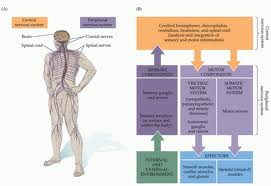
neuroscience and nerve system neuroscience brainSo what are facts about neuroscience and mobile smart technology? Can we learn effectively using smart devices? Well, when our minds are engaged in a simple or complex task, the information relevant to that task is held in our STM or short-term memory. According to the late but great psychologist, George Miller, this mental holding space can only contain four to seven pieces of information at a time. To be retained it needs to be transferred to the LTM (long term memory). We can only move information from short-term to long-term memory using our attention; we have to be paying attention to, and thinking about, a fact or a concept in order for it to be encoded in memory.

To encode properly you need to eliminate distractions, which are often caused by multitasking events. Young people report frequent media multitasking (texting, emailing, surfing the web, Twitter and Facebook) while also doing homework. Their belief is they can do it effectively, but research shows otherwise. In fact, research demonstrates that individuals who multitask the most are actually the worst at it. Whether we’re learning with a tablet, smart device or a book, it’s best to give it our best attention.

The rapid evolution of mobile technology has placed quite a burden on our concentration. The day is constantly being challenged by external sources. Even the most pressing of matters can be interrupted at any moment by a familiar buzzing in the pocket. This gives a friendly nudge to pay attention that the brain responds to and many find virtually impossible to resist; alarmingly even while driving. These all too frequent interruptions, coupled with growing expectations for immediate responses (emails responded to at 2am), will challenge our cognitive control system at its very core.

The cognitive control system is our ability to focus on accomplishing a task in the context of competing demands. You might want to look at a course that explains this in more depth. This special ability is what has allowed humans to achieve remarkable achievements, from developing languages and building complex societies.

It doesn’t matter that we think children are growing up digital natives and somehow addicted to technology. It simply doesn’t change how we come to understand new information. Basic understanding happens when we process new information in terms of its meaning, rather than its surface features. Understanding happens when we connect new information to what we know already.

It seems that the competing noise and multitasking distractions, will have a more significant negative impact for those with undeveloped or impaired focus and cognitive control. Those that easily lose focus such as children and us older adults, or in the presence of neurological or psychiatric conditions like ADHD or Alzheimer’s disease. There is no doubt that we have to be careful about the influence of unending data streams of interference on our minds. We need to make more informed decisions about how best to interact with the technologies around learners and how we use the technology positively every day. Perhaps the BRAIN project will guide us on new ways being effective learners.

The lesson seems to be that when we are engaged in something that requires high quality attention (like one of our excellent express courses in critical thinking we should conduct ourselves in a manner that is most appropriate for how our brains function: in the absolute focus mode.
So it seems that despite all the real concerns, technology is not rewiring young people’s brains or brain washing them. Indeed mobile smart technology must and can be harnessed to improve our minds. This will come as a relief to some and a disappointment to others. This new brain research will shed light on our understanding, our attention and focus systems and better memory that can now be applied to a new generation of humans, not so different from the ones who came before.

Mindfeed ebooks by Diane Shawe

Get a copy of Diane Shawe book from Amazon


 Shawe’s eBooks are available on Amazon right now at: https://www.amazon.com/Diane-Shawe/e/B0052WG8V6

About the Author

Diane Shawe is an author, speaker, trainer, mentor, consultant and entrepreneur with more than 15 years of experience. She has personally trained over 2800 people around the world in a variety of fields and has published a number of works. She has contributed to over 100 Kiva Entrepreneur’s around the world.

She was also one of the producers of a Day time Ladies Talk Show in 2015 and Host of one of the UK’s best loved Annual Hair Extensions Awards.

Diane also enjoys oil painting, sailing and clay pigeon shooting. She focuses on topics that she is passionate about in her writing and has attracted over 36,000 followers on her popular blog.

Media Contact
Company Name: AVPT Short Courses & Hair Extension Training Academy
Contact Person: Diane Shawe MEd
Email: Send Email
Phone: +44 208 1333120
City: London
Country: United Kingdom
Website: http://www.academyexpresscourses.com

Diane Shawe speaks at Business Startup on the 6th & 7th June 2013

business startup show 2013

Welcome to AVPT Global! We will be exhibiting at the Business startup show on the 6th & 7th |June 2013. We will be showing you some of our popular courses, how to turn your mobile device into a learning and teaching tool and how to create a new career doing this.  We get people qualified in days, not years, through our soft skills training courses, which are globally accredited through IAO and are available online or in workshops. All online courses are supported with a personal tutor!

free ticketVisit us on stand 330

business startup show 2013 dIANE sHAWE

Text ‘EARNINGS’ to  0793 798 5077 to get a £100 voucher? Click the Banner!

Diane Shawe M.Ed MIoD IEBE

Hear Diane speak on How to use your mobile phone to learn and earn.

Diane previously spent six years working for the Department of Trade and Industry working with bodies that award funding to business start-ups. In this presentation she will share six ways to raise finance for your company without resorting to banks – important guidance in this period of economic constraint.



About Diane Shawe M.Ed MIoD IEBE

As the CEO of AVPT Global, which provides online fast-track training courses, Ms. Shawe utilises her expertise in education and business administration to oversee individual, one-on-one, group and corporate training. In addition, she ensures that staff members are reporting and achieving and that the business is meeting its target of student recruitment. Ms. Shawe also manages the quality of training, company finances and front-end marketing, while also maintaining the business profile. She has been in the educational field for the last 15 years and has successfully led her company for the past five.

Find out how Diane’s company has created the next best online career!

In addition to handling her day-to-day responsibilities with flair, Ms. Shawe has published several books, including: “How to Cyber Kiss your Business to Success,” and “100 Ways to Generate Quick Emergency Cash.” She believes that people should try to integrate the following practice into their daily lives: “never do anything as though you are a professional amateur.”

Her next publication is due out in June title ‘The digital face of Education’

Share this

Tweet about this seminar

Understanding the Language of Training

questionmarkI know what your thinking…

article written by Tim Dingle MBA
Chief Development Officer  AVPTGLOBAL

Training is about to undergo a revolution and the understanding of body language will be crucial for those undertaking training. Speaking at a conference in Birmingham last year, a leading HR director observed that there was nothing as important as understanding the language of business.  That must mean the non-verbal as much as the verbal expressed language.  Non-verbal communication is commonly known as body language and I spent a lot of time studying the basis of this and its importance in training and interviews. So the question is can it be read and used by individuals, managers and directors- or indeed in their wider professional or social lives?

Body language is a broad term for forms of communication using dress, body movements or gestures instead of, or in addition to, sounds, verbal language, or other forms of communication.  It is part of the category of paralanguage, which describes all forms of human communication that are not verbal language.  This includes the most subtle of movements that many people are not aware of, including, for example, a discreet smile or a slight movement of the eyebrows. Such messages can be communicated instantly and silently through gesture; body movement or posture, facial expression and eye gaze.

Henry Higgins and Eliza Doolittle would not have recognised it, but just watching an accomplished politician, actor, or shopping channel salesperson can give you some insight into the power of gestures or facial inferenceSuch gestures can add to the stagecraft, amplify the message and can provide surprisingly magnetic assurance about what you are being told.   Have a look at the courses we offer at The Academy of Vocational and Professional Training.

Can the use of these non-verbal signatures be imported into the business, training and HR arena?  It can be a risky strategy to attempt to read and rely upon body language signatures without some training and practice. Should individuals be aware of the power of non-verbal communication and seek to harness this aspect in negotiation? If our desire, as individuals in business, training or HR, is to produce our optimum performance then we should employ all of the communication and interpersonal skills with which we individually have been gifted.

We may well consider investing our time to improve our oral questioning and language skills, but very few individuals seem to give much thought to developing the skill of both reading and transmitting non-verbal clues. We can help! Developing those reading skills would be much easier if all our clients were between three and nine years of age – this is rare of course, even if sometimes a negotiation has something of a playground quality about them.  Children wear their emotions on their sleeves and are, except perhaps to other children or their doting grandparents, pretty easy to read.

Mobile Learning, Mobile Earning

Mobile Learning, Mobile Earning

Tightly crossed arms, a screwed-up face and a stamped foot quickly clues you into the internal voice of the child, even if their response to the question, “Are you OK” is “Yes”. A parent’s sixth sense is often nothing more than a demonstration of the superior body language reading skills that child carer’s, of necessity, have learned to develop.  The older we grow the more we learn how to mask our true feelings, which unconsciously includes the toning-down of our body language as well.  Whilst we can try and make our non-verbal communication less obvious, very few people can completely mask it.

HR directors, business people and individuals, might want to learn to look for those more subtle, but tell-tale, signs of stress, hope, agreement, confidence, resistance, and fear in the body language of the clients, and indeed their own clients.  Picking up on these signs could allow us to make progress in a situation of stale-mate and could save a negotiation that is about to crash.  These skills can allow us to zero-in our questioning, to know when a private meeting or a break is essential, and to see the evident bridges and agreements, even when the other side have yet to verbalise them.  How too are we at listening to clients, staff and business partners when they speak to us?  Are we fully engaged with them, having turned our chair, and thus our whole body towards the speaker, leaning forward and maintaining good eye contact?  If you want to be heard in your turn, you need to be seen to be listening.

People will usually only tell us what is really on their mind if they believe that we are really listening.  Do we really listen?  Taking notes whilst staring at out iPad or mobile phone as the person tells their story, does nothing to build confidence in us or the process.  Active listening skills such as reflecting back a summary of what has just been said by the speaker may just persuade, non verbally, a client to listen to you and thereby facilitate success. HR directors, managers and individuals should be encouraged, therefore, think about using their body language positively to enhance the oral skills that they already have, allowing them to maximise their potential as conflict resolution practitioners.

I know what you are thinking. You need to start training, now.   

Please review our VTF  Presentation and let us know if this is an opportunity for you.

Meet some of our current VTF’s: 

Invitation to our Free 2 hour introduction.

AVPTLTD LOGO

Keep Taking the Tablets

Keep taking the tablets

Keep taking the tablets

-More Than 1 Billion Smart Devices Sold Last Year Changes Everything

article by: Tim T Dingle BSc (Hons) MIBiol PGCE MBA  CDO at AVPTGLOBAL

I can remember clearly (it was after all, only 3 years ago on April 3rd 2010) when Steve Jobs unveiled a unique consumer tablet with an unusual name. It had been one of his obsessions for years, even before the iPhone. Many people thought Apple would be better served by coming out with a netbook: you remember netbooks, don’t you?

According to the International Data Corporation[1], worldwide shipments of smart connected devices grew an amazing 29.1% year over year in 2012, crossing 1 billion units sold with a value of $576.9 billion. The market expansion was largely driven by 78.4% year-over-year growth in tablet shipments, which surpassed 128 million in 2012. Quite astonishing and I hope everyone had a great Christmas opening the tablets!

We all know that smart devices can deliver amazing functionality; from constant Internet and social media connection to brilliantly helpful apps. They are genuinely changing the way we operate as a society. The change is happening so rapidly and almost seamlessly that most of us probably don’t realise how much we use and rely on our smartphones and tablets.  How did the business world even operate without employees having constant access to their phones, email and the Internet? How did busy parents keep track of their schedules without a calendar that never leaves their side and actually reminds them of events?

apps galore!

apps galore!

If we pause to consider that now we can use apps to find the best meal when on the road, the nearest petrol station or to locate possible holdups on route. We don’t even have to watch TV or connect to an online news site to get instant national and local news. We can scan rail and plane tickets with our smart phones and check in with no paper for international flights. While smart devices are making everyday activities easier for consumers, some businesses are facing challenges to compete effectively. The challenge is being met by forward thinking companies like AVPT Global[2] who seek to use tablets and smart phone technology to be at the heart of online learning and push forward the rise of mLearning.

The iPad and other smart devices (including my brilliant Samsung Note 10.1) have had huge initial impact on access to information, business sales and social interaction. In fact the pioneering of this new category has in some ways been even more significant than the iPod and even the iPhone, because it has disrupted so many different device manufacturers. It has created a market opportunity for smart device manufacturers and created a challenge to other PC makers and even potentially influencing how we may watch television in the future. It has also extended digital content opportunities to make books and video on-the-go a more practical experience, ending the back breaking march of the child with books to school perhaps?

The iPad was the first device to successfully bridge the gap between the PC and smartphone for consumers. Since it landed in the first consumer’s hands more than 55 million iPads have been sold worldwide, used for watching (and streaming) movies, reading books, magazines and newspapers, Web surfing and playing games. Tablets are becoming familiar common coffee-table fixtures in households around the country. They’re also being stowed in the briefcases and bags of travellers, whether they’re going by car or by plane. And they’re increasingly carried by teachers, doctors, lawyers, real estate agents — a wide range of professionals who find they can do much of their work with a tablet. Put simply, the tablet has become the go-to PC substitute for a variety of activities.

A smarter way to study with www.avptglobal.com

A smarter way to study with http://www.avptglobal.com

People now leave their laptops behind more often, taking advantage of the tablet’s lighter weight, ubiquitous wifi (and 3G /4G) connectivity, its longer battery life and catalogue of useful applications. We are seeing some of the tasks traditionally performed on PCs and laptops, now being performed on the tablet. In fact, all five of the top activities (email, Web surfing, game-playing, social networking and online shopping) shifted towards the tablet in late 2011.

Many of these are activities we do on our smart phones, of course, but doing them on the tablet is not only more pleasurable visually, it leads to entirely new behaviours. Watching video (be it movies, TV or YouTube) is definitely one of the preferred uses of tablet owners who also have smartphones, as is Web surfing and email, according to new research from Nielsen. In a great piece of research called, “Tablets are for meals. Smartphones are for snacks,” Nielsen[3] shows how 10 per cent or less of smartphone owners opt to do those activities on their phones. Social networking (both Facebook and Twitter) is also better done on a tablet than smartphone, as is writing emails. Aside from making phone calls, the only activity right now where the smartphone beats the tablet is instant messaging. But even 18 per cent said they’re doing that on their tablets. It appears that mobile phones tend to be the gateway drug in emerging markets where consumers typically move on to a tablet.

The IDC report that grabbed the headlines last week (1.2 billion smart devices), goes on to say that it expects global smart connected device unit shipments to surpass 2.2 billion units by 2017. Consumers and business buyers are now starting to see smartphones, tablets, and PCs as a single continuum of connected devices separated primarily by screen size. Each of these devices is primarily used for data applications and different individuals choose different sets of screen sizes in order to fit their unique needs. These kinds of developments are creating exciting new opportunities that will continue to drive the smart connected devices market forward in a positive way. The first step on the long road to mLearning is just beginning and the potential for individuals and companies to grasp the opportunity is seen by only a few.

Taking the Tablets has never been so exciting.

AVPT-Logo-ALL-INFO


[2] The Academy of Vocational and Professional Training www.avptglobal.com

[3] Dan Lee, Director of Product, Digital Nielsen July 18th 2012

Revision? Forget it

How to Massively Improve Your Chance of Success, Now!

Become a VTF with AVPTGlobal

Become a VTF with AVPTGlobal

article by Tim T Dingle BSc (Hons) MIBiol PGCE MBA, Chief Development Officer at the Academy of Vocational and Professional Training (AVPTglobal)

I sometimes wonder what an alien might think if they were monitoring our schools, downloading training course and looking at how students try to learn.  They would be forgiven for thinking that they have been artfully designed to train students in the art of forgetting. Throughout the time you take most conventional courses (excepting, of course, the cutting edge ones at AVPT  www.avptglobal.com) it may seem that you spend your time ‘learning’ and ‘revising’ for tests. What then follows is extraordinary; we forget that information within weeks.

This pattern seems continue throughout schools, professional training cycles and college courses. This heroic shuffling in and out of knowledge from our cerebral hemispheres seems to be a constant cycle. Then students are tasked, days before a crucial exam, with relearning everything that they have managed to forget over the course of the year. This is the classic ‘summative assessment’ situation with a history of failure in so many cultures.  This often takes almost as much time as if we were doing it from scratch. It seems that the UK Education Minister, Michael Gove is known to be an admirer of this system.

The reason that forgetting is so common in traditional learning cycles is that the way we are taught to encode and recall memories, causes fading over time. Those memories that can be recalled are the one that get repeated and are strengthened. They are prepared for the long term and placed within the Long Term Memory System (LTM). This is important because (from an evolutionary point of view) repetition correlates with importance. Meaningful or important things tend to happen again; random things tend not to.

One of the problems with most learning systems lies in a distinction between two ways to go about this repetition.  It can be separated into ‘spaced learning’ (SL) and ‘massed learning’ (ML). Massed leaning is sometimes called cramming. You may remember those long sessions; students love them and believe the longer they stare at their notes /books, the more it is effective. The spaced repetition method is where the repetitions are spaced out over a period of time. The best analogy is to think of memories as plants in the garden of your memory; then think of repetition as watering with your watering can.

The ML system is like watering a plant by emptying the whole watering can all at once; then failing to do so for months.  The mechanism for SL Learning is to imagine watering the plant once a week in measured amounts from the can, over a period of months. This regularity, combined with a systematic  approach and by using a ‘chunked up’ seems to be crucial to success; an approach that, we believe at AVPT, is how all online learning must develop. The long term effect of these totally different techniques of watering (but the same total volume of water) results in two very different plants (one is probably dead).

Now imagine something else that can radically improve memory and success. Incredible as it seems the greatest advances in improving our chances of success can be had for free, right now. I’m talking about improving your brain from the outside in. If you take it seriously it can and will lead to faster and more accurate decision-making. It will yield greater productivity and inspire innovation. If you want to be mercenary about it, it’s the kind of smart that starts making money.

All you need to ‘invest’ is approximately 30 minutes a day.  And maybe a decent pair of trainers. Over the last 30 years I have seen many articles describing how aerobic exercise is beneficial to health. There is no doubt there is a lot of truth in what has been written.  Improving oxygen distribution in the body… reducing the chances of heart disease… losing extra pounds… exercise has many benefits. But cardiovascular exercise goes way beyond reducing blood pressure and cholesterol.  Current research shows that exercise can alter the very structure of the nerve cells in the brain. You could read the evidence in (fairly dull) scientific papers, of which over 1000 have been produced in the last 12 months.

There are many people like me who recognise the impact that cardiovascular exercise has had on their career and every aspect of their life. It may surprise you that there is a growing cohort of business people and entrepreneurs who credit exercise not as just a component of their successful lives, but as the biological catalyst in all of their achievements.

In very basic terms, our brains function due to groups of chemicals ‘jumping’ between the neurons (nerves) within.  My research indicates that BDNF – Brain Derived Neurotrophic Factor – is one of the most significant of these chemicals. BDNF is a protein that is controlled by the BDNF gene in our DNA.  BDNF acts on brain cells by encouraging the growth and differentiation (dividing and deciding what they want to be) of new neurons and synapses.  The neurons start growing new connections on their branch- like ends (called dendrites). The more dendrites that grow, the more connections are made.  The more connections you have in your brain, the greater your capacity to think: using another plant analogy, BDNF is a ‘miracle grow’ for your brain cells.

It works in the areas of the brain vital to learning, memory, and higher thinking.  BDNF itself is important for long-term memory.  Which is why it makes you smarter. So, exercise increases BDNF – great!  But… when you are stressed, you release the hormone corticosterone.  This has been shown to decrease the amount of BDNF!

In other words, being stressed makes you less smart and less able to make good decisions.If your exposure to stress is persistent, this can cause an area of the brain called the hippocampus to actively shrink.  This has been shown to take place in humans suffering from chronic depression. The secret of creating change within the brain that can boost your intelligence, memory and decision making qualities (as well as relieving depression) is

The optimal amount seems to be 30 minutes of aerobic activity a day.  Running, swimming, active walking – they’re all good as long as you do them regularly. I’m always interested in finding new ways to learn better and faster. I am a busy and driven individual.  I try to read one book every day on top of a full time business career.  The amount of time I have available to spend learning new things is limited.  It’s important to get as much educational value out of my time as possible, so retention, recall and transfer are critical.

I need to be able to accurately remember the information I learn, recall it at a later time and utilise it effectively in a wide variety of situations. One sure-fire way to become a more effective learner is to learn new things and keep practicing them. The Science backs this up.  A 2004 article in the journal Nature[1] reported that people who learned how to juggle increased the amount of grey matter in their occipital lobes, the area of the brain associated with visual memory.When these individuals stopped practicing their new skill, this grey matter vanished.

So if you’re learning a new language, it is important to keep practicing the language in order to maintain the gains you have achieved. This ‘use-it-or-lose-it’ phenomenon involves a brain process known as pruning. Certain pathways in the brain are maintained, whilst others are eliminated.  If you want the new information you have just learned to stay put, keep practicing and rehearsing it.

One of the key secrets of memory is how brain cells connect without actually touching.  The gaps are called synapses – remember those chemicals that ‘jump’ across the gaps?  Circuits are formed that retain memory, but they disappear if they are not used over and over again.

So go juggle right now!

http://www.avptglobal.com


[1] Draganski, B., Gaser, C., Busch, V., & Schuierer, G. (2004). Neuroplasticity: Changes in grey matter induced by training. Nature, 427(22), 311-312.


Breaking News….. Standby for the roll out of Master Practitioner VTF

master vtf by AVPT Global

AVPT Global about to launch Master VTF practitioner Course

The ultimate course that over an intense and amazing week will develop all the skills necessary to work around the world training new Virtual Tutor Facilitator in their new career. Course topics include: Advanced Facilitation, Body Language, Teaching & Learning Skills, Mediation, Communication, Presentation Excellence and Assessment and online LMS systems.

It is brand new and uses all the latest techniques, theory and experience to deliver simply the best training course (train the trainer) out there. Graduates will get to spend a full day shadowing the professionals and learning the insight track for delivering excellence in learning.

The course will allow the trainers to deliver the workshops anywhere in the world having gained their IAO  global accredited certificate. The demand for such a course has been intense and we are delight to be taking enquiries and reservations for the first course dates. Become the best in the field, be the person you want to be and never except anything less than excellence.

To receive the latest updates for the launch of the  Master Practitioner VTF Course click here

Image

Merry Christmas from AVPT Global

happy christmas from Diane Shawe