Category Archives: become a trainer

The Business Start Up Show 6th & 7th June 2013

Our stand at the Business Show 2013

Our stand at the Business Show 2013

What a fantastic Business Start Up Show 2013 at ExCel!

By Arub Masoodi BA (Hons)
Public Relation Intern at AVPT Global

The Business Start Up Show 6th & 7th June 2013

The AVPT team was kept incredibly busy over the two day Business Startup Show at ExCel on with a estimated turnout of  40,000 attendees over the course of two days. Before the doors had officially even opened, the line to get inside the exhibition hall stretched well outside the main hall on both days.

Diane Shawe the CEO had her first seminar booked which was a hit!  Giving her debut talk on Six different ways to fund your business, she covered topics such as Funding Circles, Crowdfunding, Micro Loans and Grants. Diane said “it was a resounding success with over 100 delegate pack in and around Seminar hall 14”.   Following the seminar, people just simply bee lined for the AVPT stand.

Georgina (who is head of Hair & Beauty) said “They seem to come from everywhere, more and more women and looking at how they can start up their own Hair Extensions trainers business.

The following day, was just as busy but the visitors had a different feel. Diane & Tim Dingle was set to speak again from Seminar room 15 discussing why 1.2 billion mobile units sold is of importance to people was yet again another full house. We attracted over 200 enquiries about becoming a virtual tutor facilitator training,  discount to train as a  hair extension trainer and our famous no nonsense Three hour boot camps for £9.99.

After evaluating the event, the mixtures of enquiries regarding our online soft skills training came from people around the world such as, Nigeria, Tanzania, and Jordan making this a truly global event.. The smashing success of the Business Start Up Show left both the team and founder and CEO Diane Shawe utterly exhausted content!

To contact AVPT Global, please call 0203 651 5675, or visit our website AVPT Global.

AVPTLTD LOGO  6


The Currency of Digital Learning

Using technology for life long learning

Using technology for life long learning

How do we digitally learn?  How do you learn effectively in a workshop? What is the currency of digital learning?

By Tim T Dingle BSc (Hons) MIBiol PGCE MBA

Chief Development Officer at  the Academy of Vocational and Professional Training.

When you want to acquire a new skill or apply some new knowledge, do you learn by passively sitting and listening to an expert lecture for 90 minutes without a break and 150 Power point slides? What do you actually retain that enhances the value and the currency of your learning. The currency is defined  as something of value, or something that represents value: knowledge, gold, respect, or social media following, all represent different kinds of currency. In 2013 it could be that the currencies in digital and workshop learning are changing.

Learning is evolving and not simply by the tools that actuate it. The process of adopting new learning domains and materials (many digital) has exposed the need for new skills. It is debatable whether or not such skills need to be expressly taught, or if they’re simply the residue of intense, well-designed learning experiences. Whether or not they are old learning (content) with a new coat of paint, or genuinely represent a paradigm shift in learning priorities, it is difficult to doubt their constant application in a 21st century world that is super fast connected, digital, omni-social and multi-faceted.

No longer is it considered sufficient to teach children to simply read and write, and fill in the middle with discrete facts about history, mathematics, and scientific processes. There are new skills that transcend content areas, in this way functioning as natural pathways out of old thinking: creativity, problem-solving and collaboration. One can problem-solve across and within topics formerly thought of as science and history and moving between them both moves them beyond academia, and back to the real world. This is possible because flexible cognitive and creative capacities are not rigid.

The brain science literature suggests that workshop learners understand and remember more when they talk about what they are learning.  However, there are some people who attend workshop and training seem to have information wash over them and are uncomfortable with talking or moving.   So, to get improved retention and learning in both digital and workshops:

1.  Do something physical when you learn: incorporate some sort of movement or body activity every 20 minutes, on line or face-to-face.

2.   Walk and talk, walk and learn: I do this a lot in half-day or full-day trainings.   Participants might do an exercise, but the results are on the wall for a debrief. Using a tablet for true learning as you move.

3.  Flip Chart Products: This is where participants will write specific responses on labelled charts on the wall at designated times.    It can be an answer to a question, a question learners still have, a summary statement, an opinion about the content, facts they want to remember, or how they plan to use the content.  Then stick it on the wall. It works with digital media as well- plaster the wall with paper!

With the proper technologies and thoughtful new methodologies, courses can become content infinite. When the learning goals supersede the content areas, things begin to change. As the currencies in digital learning evolve, they necessarily evolve the learning with them.

AVPTLTD LOGO  6


Check out our 1 day business bootcamp

Are you tired of being everybody’s dartboard?

dart-board main

Learn how to stop getting darts thrown at you everyday

So how do you stay calm, composed and maintain your self-esteem when everyone around you is fire fighting?

Article by Diane Shawe MEd

Here are six tips you may wish to consider as a starting point.

Imagine yourself standing around as a Dart Board.

Now take a look around and see who has most recently thrown their dart at you.  What would you actually do if you saw a dart coming towards you? Would you just stand there and take the hit, run for cover or protect yourself whilst your on the move? Without protection these dart will destroy your self-esteem and pull you down.  So which dart pins should you avoid?

Dart Pin 1: Negative Work Environment

Beware of “dog eat dog” theory where everyone else is fighting just to get ahead. This is where non-appreciative people usually thrive. No one will appreciate your contributions even if you miss lunch and dinner, and stay up late. Most of the time you get to work too much without getting help from people concerned.  Stay out of this, it will ruin your self-esteem. Competition is at stake anywhere. Be healthy enough to compete, but in a healthy competition that is.

Dart Pin 2: Other People’s Behaviour

Bulldozers, gossipmongers, whiners, backstabbers, snipers, people walking wounded, controllers, naggers, complainers, exploders, patronisers, jealousy… all these kinds of people will pose bad vibes for your self-esteem, as well as to your self-improvement scheme.

Dart Pin 3: Stale or Stagnant Environment

You can’t be a green bug on a brown field. Changes challenge our paradigms. It tests our flexibility, adaptability and alters the way we think. Change can either inspire, motivate or be stressful when we resist but, only for a while. It is said that a change is as good as a rest, it will help you find ways to improve your self.  The world has changed right in front of our eyes, we must be susceptible to it.

Dart Pin 4: Past Experience

It’s okay to cry and say “ouch!” when we experience pain. But don’t let pain transform itself into fear, spite or vengeance. It might grab you by the tail and swing you around. Treat each painful experience, failure and mistake as a lesson. Stop and reflect and see what message you have been given or taught.  Decide how you can best use that experience to help you grow.

Dart Pin 5: Negative Biosphere

Look at what you’re looking at, absorbing and ingesting daily. Self-reflection.  Don’t wrap yourself up with all the negativeness of the world. In building self-esteem, you must learn how to make the best out of most situations.  How to separate who and what you are and how to repair and protect your self-esteem.  If you cut yourself, you would normally seek to clean the wound, cover it with a plaster until it heals, check it and then when it is much better remove the plaster.  If it’s a serious cut you would normally seek professional help.  Seek out the tools that can help lift you out of a negative mind set.

Dart Pin 6: Fait accompli

It’s not always your fault.  It does not always happen to you.  The way you are and your behavioral traits is said to be a mixture of your inherited traits (genetics), your upbringing (learnt), and your environmental surroundings such as your family, spouse, your job, the economy or your circle of friends. You have your own identity. If your father was a failure, it doesn’t mean you have to believe that your going to be a failure too. Learn from other people’s experience, so you can avoid or recognise mistakes and old patterns in advance.

In life, it’s hard to stay tough or unscathed especially when things and people around you keep pulling you down. Constantly firefighting without the right tools means you could continuously become burnt out.

There are three tools you need to keep polished:

lady with cup of tea

Nothing like a good dose of positive attitude

a) Your attitude,

b) Your behaviour

c) Your way of thinking.

Building self-esteem means we take responsibility for who we are, what we have and what we do. We become clear about our mission, values  all of which aids self-discipline.  You can start right away by thinking more positively, look for more things to be appreciative about and never miss an opportunity to compliment either yourself or others.

Building your self-esteem is essential for confidence and success and it all begins with you. Of all the judgments you make in life, none is as important as the one you make about yourself. Without some measure of self-worth life can be enormously painful. If you want to discover some simple techniques that will dramatically change how you feel about yourself such as how to recognise the importance of learning self-acceptance and nurturing your sense of self, take a look at our On Demand Course Directory and how you can start your own Private Tutors Business or create your own Directory. Click here for more information.

How to create a digital on demand course library


Understanding the Language of Training

questionmarkI know what your thinking…

article written by Tim Dingle MBA
Chief Development Officer  AVPTGLOBAL

Training is about to undergo a revolution and the understanding of body language will be crucial for those undertaking training. Speaking at a conference in Birmingham last year, a leading HR director observed that there was nothing as important as understanding the language of business.  That must mean the non-verbal as much as the verbal expressed language.  Non-verbal communication is commonly known as body language and I spent a lot of time studying the basis of this and its importance in training and interviews. So the question is can it be read and used by individuals, managers and directors- or indeed in their wider professional or social lives?

Body language is a broad term for forms of communication using dress, body movements or gestures instead of, or in addition to, sounds, verbal language, or other forms of communication.  It is part of the category of paralanguage, which describes all forms of human communication that are not verbal language.  This includes the most subtle of movements that many people are not aware of, including, for example, a discreet smile or a slight movement of the eyebrows. Such messages can be communicated instantly and silently through gesture; body movement or posture, facial expression and eye gaze.

Henry Higgins and Eliza Doolittle would not have recognised it, but just watching an accomplished politician, actor, or shopping channel salesperson can give you some insight into the power of gestures or facial inferenceSuch gestures can add to the stagecraft, amplify the message and can provide surprisingly magnetic assurance about what you are being told.   Have a look at the courses we offer at The Academy of Vocational and Professional Training.

Can the use of these non-verbal signatures be imported into the business, training and HR arena?  It can be a risky strategy to attempt to read and rely upon body language signatures without some training and practice. Should individuals be aware of the power of non-verbal communication and seek to harness this aspect in negotiation? If our desire, as individuals in business, training or HR, is to produce our optimum performance then we should employ all of the communication and interpersonal skills with which we individually have been gifted.

We may well consider investing our time to improve our oral questioning and language skills, but very few individuals seem to give much thought to developing the skill of both reading and transmitting non-verbal clues. We can help! Developing those reading skills would be much easier if all our clients were between three and nine years of age – this is rare of course, even if sometimes a negotiation has something of a playground quality about them.  Children wear their emotions on their sleeves and are, except perhaps to other children or their doting grandparents, pretty easy to read.

Mobile Learning, Mobile Earning

Mobile Learning, Mobile Earning

Tightly crossed arms, a screwed-up face and a stamped foot quickly clues you into the internal voice of the child, even if their response to the question, “Are you OK” is “Yes”. A parent’s sixth sense is often nothing more than a demonstration of the superior body language reading skills that child carer’s, of necessity, have learned to develop.  The older we grow the more we learn how to mask our true feelings, which unconsciously includes the toning-down of our body language as well.  Whilst we can try and make our non-verbal communication less obvious, very few people can completely mask it.

HR directors, business people and individuals, might want to learn to look for those more subtle, but tell-tale, signs of stress, hope, agreement, confidence, resistance, and fear in the body language of the clients, and indeed their own clients.  Picking up on these signs could allow us to make progress in a situation of stale-mate and could save a negotiation that is about to crash.  These skills can allow us to zero-in our questioning, to know when a private meeting or a break is essential, and to see the evident bridges and agreements, even when the other side have yet to verbalise them.  How too are we at listening to clients, staff and business partners when they speak to us?  Are we fully engaged with them, having turned our chair, and thus our whole body towards the speaker, leaning forward and maintaining good eye contact?  If you want to be heard in your turn, you need to be seen to be listening.

People will usually only tell us what is really on their mind if they believe that we are really listening.  Do we really listen?  Taking notes whilst staring at out iPad or mobile phone as the person tells their story, does nothing to build confidence in us or the process.  Active listening skills such as reflecting back a summary of what has just been said by the speaker may just persuade, non verbally, a client to listen to you and thereby facilitate success. HR directors, managers and individuals should be encouraged, therefore, think about using their body language positively to enhance the oral skills that they already have, allowing them to maximise their potential as conflict resolution practitioners.

I know what you are thinking. You need to start training, now.   

Please review our VTF  Presentation and let us know if this is an opportunity for you.

Meet some of our current VTF’s: 

Invitation to our Free 2 hour introduction.

AVPTLTD LOGO

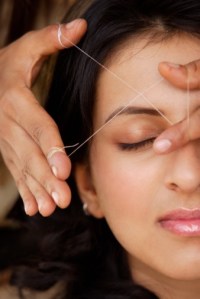
How to start a Home or Mobile Eyebrow Threading Business

Set up your eyebrow threading business anywhere.

Set up your eyebrow threading business anywhere.

An easy cost effective business that can be done anywhere

Article by Diane Shawe M.Ed

Threading in the UK has become a very popular treatment over the least few years and with a few tips and ideas you could benefit from starting your very own threading business.

There is a huge potential for earning good money as a self employed beauty therapist offering eyebrow threading as a service.

Look at most salons and even shopping Malls these days and they have signs for threading in their windows.  Look inside a salon and you will nearly always see them busy.

Customers don’t usually need to make an appointment, they just walk in and wait or get it done after they have had there other beauty treatments.

There has never been a better time to Start your own Threading business from home. Working on your own gives you the opportunity to work your own hours with much more flexibility and freedom then being tied down in a salon.

What’s more you can actually out sell salons with your threading service and make even more money than they do!

1. You can offer very flexible hours.  Working on your own you can offer treatments at unsociable hours such as evenings or weekends.  Just think how limited salon opening times are…

2. You can offer discounted rates.  A salon has huge overheads – staff, rent, heating etc, you can operate at very little cost and undercut salon prices hence making your threading prices very attractive.

Eyebrow Threading is an ancient art with hugh earning potential

Eyebrow Threading is an ancient art with hugh earning potential

3. You can offer a mobile service.  Clients love it when you can offer your threading treatments in their own home. Just think of the business mobile hairdressers get. Many people don’t want to visit a salon – they may have work commitments, young children, don’t drive.  There are many reasons why people can’t get to a salon and offering a mobile threading service is a superb way to make good money.

Setting up a Threading business is not expensive.  Although you should always buy the very best equipment, threading kits, tools and thread is very cheap.

You will have very little over heads, think what would you use for a client? A little talk, some wipes and a few metres of thread.  These products will hardly break the bank expenses wise so your profits margins are very high.

The best place to start is to get some threading training.  Threading courses cost as little as £95 can and be booked on this site with a credit card or even Paypal.  The price to train is very little compared to other similar industries. A hairdressing course would cost you £1000’s.  You can learn eyebrow threading in just one day with our One Day Professional Threading Course Workshop.  Combined with a practice and guidance, you ready to go… A Hairdresser trains for months if not years before they can offer their art for profit.

Once you’re trained getting business can be quite easy.  Start of by printing or writing some adverts with your details and phone number.  Stick these up in your local shops, post office or Supermarket.  Chip shops surprisingly do well as people stand in the queue and read everything! Most places charge a just couple of pounds a week.

You local newspaper classified can be a good place to put a small add.  Currently our local paper the Bolton News charges £25 for 6 lines of text.  You can also try your local supermarkets notice board, local salon, church, women’s group the list goes on.

Also place averts in online directories so people can find you when they search online.

The best way to advertise these days is to get a small website built.  Most people search on the internet for what they need and a nicely designed webpage can be a great source of clients.  Get in touch with us if you want a cheap website, we know a man who can!

Once you get a few clients, word of mouth of is by far the best advert for your services and if you do a good job word gets round quickly and you’ll soon be booked up with peoples mums, sister, aunts, uncles?? calling you.

So, put in basic terms, threading training is fast and cheap, materials are cheap and you can start your business in a short space of time with very little outlay.  Threading is a perfect business model.


The kind of Leaders people want to follow by Diane Shawe

Get the skills you need to lead today

article by Diane Shawe M.Ed

Leadership can possibly be defined as the ability of an individual to influence, motivate, and enable others to contribute toward the effectiveness and success of the organisations of which they are representatives. Leadership is not dependant on title or formal authority and is often feared by some management teams as a potential threat to their job if opened up to other members within the team.

All too often we think of leadership as a higher order of management, something we will develop and apply subsequently rather than earlier in our profession.

This applies to both leadership within our chosen occupational discipline and leadership of our profession. In the early stages of a career, most people naturally focus on the practical aspects of their career. They begin their careers applying the vocational disciplinary information and skills they acquired in college or university and focus on those aspects that will ensure a job, promotion  and success early in their career. However Leadership is something that should be considered and fostered early and often throughout our entire professional career.

Leadership is a subject that has been studied, discussed, and debated across a wide variety of disciplines for centuries. There are numerous books, articles, and self-improvement courses on the subject – so many that the interested student on the subject of leadership might at first be discouraged.

The purpose of this article is not to be exhaustive but instead to signpost you to  a practical on-line training course that will introduce to you a fundamental training that forms the foundation for both the theory and practice of leadership and to outline some of my own tips.

So  what are my seven tips on The Kind of Leader Others Want to Follow

Well before I set out my tips, The key to becoming an effective leader is not to concentrate on making other people follow, but on making your own self the kind of person they want to follow. You will need to become someone others can trust to take them where they want to go.  The seven following tips are also useful:

1. Find out if your ego is getting in the way.

The truly great leaders are not in leadership for personal gain. They lead in order to serve other people.
2. Become a active listener.

Rare is the effective leader who didn’t learn because they could not effectively listen. There is a lot to be said about becoming an effective follower in order to become and effective leader, but you cannot achieve this without listening.

3. Being negative just does not cut it.

Leadership is influence, nothing more, nothing less. If you spend time using that influence to cause a destructive and negative result to an organisation then your potential leadership quality is flawed.

4. Work with excellence.

No one respects and follows mediocrity. Leaders who earn the right to lead give their all to what they do. They bring into play not only their skills and talents, but also great passion and hard work. They perform on the highest level of which they are capable.

5. Rely on intellect and discipline, not emotion.

Leadership is often easy during the good times. It’s when everything seems to be against you– when you’re out of energy, and you don’t want to lead– that you earn your place as a leader when all around you is flagging.

6. Added value, added value and more added value.

Men and women who helped people to live better lives and reach their potential are often revered long after they have gone. That is the highest calling of leadership– and its highest value.

7. Don’t hog your  power.

Leaders are like a river, not a reservoir. If you use your power to empower others, your leadership will extend far beyond your grasp.  People cannot live with air!