Tag Archives: bluetooth proximity marketing

10 Tips for Becoming a Social Media Influencer by Diane Shawe

10 tips on becoming social media influencer by Diane ShaweAre you trying to become a social media influencer?

article by:

CEO at AVPT Ltd. Business Growth Training Provider & CPD Approved by SRA. Startup Loan Mentor

To be considered an influencer, people need to see you as a resource. Consider your audience and share content that they’ll find useful. Post original articles, plus posts from other trusted sources.

Publishing on social media is a great way to share expert knowledge and develop your influencer status.

In this article I’ll share ten tips that can help you become a social media influencer.

Discover ten tips for becoming a social media influencer.

1: Focus on one area and one specialism

To become an influencer, master a specific topic within your niche. If you cast your net too wide, it will be difficult to gain the level of knowledge necessary to be considered an expert.

If your goal is to be an expert in the digital space and become known as an influencer, there are plenty of things you can do to raise your profile. Develop your expertise and use social media to raise yourself to influencer status. To help you find your focus here are some points to consider.

What do you think?
What is your niche?
What platforms get the most engagement?
How have you developed your reputation as an influencer?
In what ways will you engaged your audience and shared your expertise

Either focus on one social media industry such as social media marketing or public relations, or on a single platform like Facebook, Twitter, LinkedIn, Pinterest or Instagram. The Vine is also good for short video clips from your Youtube account.

1: Master one topic to become a true expert.

Get your copy today from Amazon

Start small and learn as much as you can about your desired niche through research and experimentation. That way, you’ll be able to discover the ins and outs of your specialty and form your own ideas, as opposed to simply restating others’ opinions. This is a very important step on your way to influencer status.

Oh and try not to drill down too much in your articles, more and more people access using a mobile device so think about what you would want to see if it was you reading someone else’s blog.

2: Subscribe to Platform Blogs

Social media is unique because it is in constant flux. Stay on top of the latest platform updates, such as algorithm changes, new analytics and added features, as they can drastically change a social channel and the way it’s navigated.

Whether you want to be viewed as the authority on a social channel or a broader industry, read platform blogs regularly: Facebook, Twitter, LinkedIn, Pinterest and Instagram. There’s no better way to keep tabs on any social media channel.

3: Familiarise and Read Relevant Blogs Daily

In addition to platform blogs, read other information outlets to gain valuable insights into your niche. Study news, expert opinions and case studies that are published or shared by people you trust.

Makes subscribing to and reading multiple blogs easy.

By using a tool like Feedly to subscribe to a variety of relevant industry blogs, you will benefit from different viewpoints and helpful advice.

4: Do you use your Alert Settings?

Reading press releases, news alerts and relevant posts is key to staying informed. When you know what’s happening, you can keep your followers in the know.

Since it is impossible to keep track of all of the information from platform blogs and your favourite outlets, invest time into creating alerts directly related to your specialism. A couple of tools that make it easy to stay on top of relevant news are Google Alerts and Social Mention.

5: Populate Your Blog

There is nothing worse than a blog that is several weeks out of date! Write blog posts and publish consistently. You should shoot to publish at least two to three times each week.

To stay on track, create an editorial calendar and stick to it.

Partner with other influencers and reblog them. Interview them, (over the phone, on skype or send them 5 questions to answer. Invite them to contribute to your blog or run a promotion together that gets shared on everyone’s sites.

6: Publish on LinkedIn

In addition to your own blog, re-create your posts on LinkedIn’s publishing platform. Cut and paste your previously published blog posts and add a headline, image and keywords. (I hope you have a linkedin account)

Remember, people generally assume LinkedIn posts are only from the most influential thought leaders. Now, when people in your network and beyond see your articles on LinkedIn, it is likely they will view you as an authority too.

Share your knowledge and get noticed by publishing on LinkedIn.

Through its publishing platform, LinkedIn has created a prime opportunity for influencers to get noticed.

7: Use Sharing tools to share Valuable Content

I repeat again, share content. Once you’ve determined your focus and have implemented a system for keeping on top of the latest news and information within your niche, start sharing high-value influencer content with your audience via social media.

8: Seek out and Contribute to Other Sites

One of the quickest ways to gain influencer status is to contribute your unique content to other blogs and publications. Guest posting increases your visibility, bolsters your credibility and increases traffic to your own blog.

After your content is published, let people in your network know. Tweet a link, share it on Facebook, tell your other online communities and add it to your LinkedIn profile publications. Dare I say it but +google plus is fast becoming a really influential content showcase. Have you got your account set up yet?

9: Be Seen Engaging Online

To be an influencer, you need to be seen and also be engaging. Social media influencers regularly take part in relevant conversations across a variety of networks. Attend and participate in Twitter chats and webinars (and host Twitter chats too), answer questions on Quora and share ideas in LinkedIn groups. Be constructive and you don’t always have to be controversial for the sake of it.

10: Safeguard your Reputation

This area is not often looked at, getting misquoted, having the wrong type of media attached to your blog can often flag up in the search engine above all of your positive content.

Make sure you sign up to a online reputation notify. They are good because they sweep the internet each week and give you a report on any new content found linked to you or uploaded by you. I use www.naymz.com It’s worth becoming a premium user.

Sharing your knowledge is how you’ll truly stand out as an influencer.

How can we help?

We have a Social Media Course that you might find very beneficial. Visit www.shortcourses.expert or give us a call and we will send you the course outline. 0208 1333120

Personality Profiling Highlights Personal Training Needs Analysis

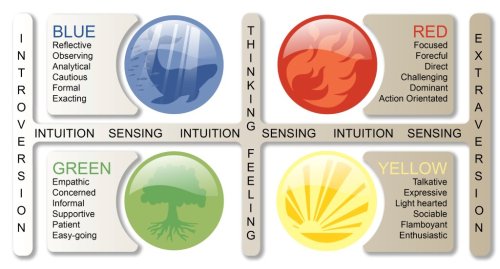
What is your colour combination?

What is your colour combination?

What does your colour say about you?

article by Diane Shawe M.Ed

The Academy of Vocational and Professional Training has teamed up with Clarity4D to offer an affordable, accessible, Personality Profiling to assist with identifying Individuals Communication style and Personal Training Needs Analysis in April 2015.  Both solution incorporating a behavioural model and psychometric tool based on the work of Carl Jung and uses colour to identify the four basic personality traits, supported by a L.M.S Point of Need Training Courses in Softskills is set to improve the direct needs of Individual from small businesses to corporates.

Steve Davies Director of Clarity4d states that ‘Personality profiling helps people to raise self-awareness, to understand their preferred style of communication and to recognise the personality and styles of communication of their work colleagues, suppliers and customers’.

Clarity4D profiles are easy to understand and provide a good basis for a personal development plan and when used in conjunction with personal/professional training and coaching which can maximise the potential of individuals and teams.

Clarity4D is used by many organisations in the following ways:

  1. To improve teamwork and leadership
  2. For management development
  3. To understand how some behaviour could be perceived as “bullying”
  4. To introduce the concept of diversity and inclusion into corporate cultures
  5. For recruitment, appraisals and coaching
  6. To help organisations through cultural change

AVTP specialises in Soft Skills courses which can assist in Continued Competence and Point of Need Training via a mobile device or Short Intense courses. The advantage to the individual is that the courses are colour coded and the candidate can decide if they want to strengthen a low colour grade or improve a medium high colour grade with the most appropriate soft skill.

AVPT is used by many organisation in the following ways:

  1. We understand the business sector inside out – that is why Point of Need training for Clarity4dour main focus is placed upon providing the highest quality training of your staff, in the shortest possible time and to ensure that every person who trains with us goes out more effective than when they came in.
  2. We Are very flexible, student centric and time sensitive.
  3. We Can help you with both compliance and accreditation issues.
  4. Allow real time tracking, monitorng and measure staff progress and achievements.
  5. Impressive lead times that can be delivered over different time scales to suit individual learning needs.
  6. Mobile phone and tablet compliant and secure with no advertising to suck up bandwidth.
  7. We have immediate availability at the very last minute for a large number of effective tailored one day courses including social media marketing, building self esteem, information management, writing reports and proposals, minute taking, business marketing, leadership skills, sales & negotiation and much more!
  8. We are IAO accredited so certificates are recognised around the world.

So if you are involved with young people, teams, individuals, couples or appraisals what have you got to lose? try out one of our quick online profiling now. Click here or you can call us on 0203 551 2621 for a free consultation.

10 Questions You Absolutely Must Ask Before Accepting a Job Offer

Need help with sharpening up your interviewing skills?

Need help with sharpening up your interviewing skills?

How to become a Self Employed Hair Extensions Technician

Becoming a Self Employed Mobile Hair Extension Technician

getting started in the hair extensions business 141364929463..jpgIf you are currently working and are considering going it alone as a hair extension technician, working on a mobile basis can be a fantastic way to go about it. No matter how bad the economy gets, people will always need haircuts and, given the lower overheads involved in visiting people at home, mobile hair extension technicians can generally offer a more affordable service. Traveling to a location that suits your customers also gives you a far larger client base than you would have if you limited yourself to working from a single salon. Sounds good so far? Here’s how to get started.

article by Diane Shawe

What to do next if you have just qualified: the nuts and bolts

A. Create a Business Name
B. Identify the sector that you come under ( hair and beauty, Hairdressing, mobile business)
C. Consider a Trading address other than your private address
D. What services are you going to offer
E. Website with contact details and prices ( try http://www.wahanda.com free websites for beauty/hairdressing)
F. Open a Business bank account
G. Proof of qualifications or experience
H. Data Management registration
I.  Create a Facebook fan page
J. Create a YouTube channel
K. Cost and value of equipment

What do insurance company’s cover?

Insurance companies insure the following

  1. Businesses
  2. Public Liability
  3. Equipment
  4. Professional indemnity (need 5 years experience to qualify for this)

They do not cover specific certificates, however they will want to know if you are qualified or experienced in your chosen field.  But primarily they are going to cover a business and the services you provide.  Ringing up an insurance company without a business name etc as specified above will not get you very far.

How much insurance cover will you get?

AUTOMATIC COVERS WITH MOST MOBILE HAIRDRESSING INSURANCES

  • Public Liability – £3 million or £5 million
  • Products Liability – £3 million or £5 million
  • Treatment Risk – £3 million
  • Financial Loss – £10,000 or £50,000

OPTIONAL COVERS

  • Employers Liability
  • Money
  • Legal Expenses
  • Personal Accident for hands
  • Stock/Equipment

Think about ways to make yourself even more attractive to potential clients:

  • If you’ve specialised in styling hair, could you take a more advanced colourist course?
  • Could mastering intricate hairstyles and up-dos open a whole new market of wedding and special event clients?

There are also various other aspects of being self-employed to consider; it won’t only be about cutting, styling and colouring hair. You will need to learn about self-assessment tax returns, salon management and how to set your prices at a level which is affordable to your clients, attractive enough to have them switch from their current hairdresser and enough to cover your expenses and salary.

Of course, there are some further education courses you could take to help make your self-employment dream a reality – a diploma or even a BA in Salon Management could be perfect. Browse the websites and prospectuses of local colleges and universities to see what you could get yourself enrolled in.

From the beginning of your new venture

We cannot emphasise enough how important organisation is to the self-employed, no matter what industry you are working in.

As soon as you start working as a self-employed hairdresser, make sure to notify HMRC about your self-employed status. Keep an accurate record of every penny that comes in or goes out of your business; you’ll need it when it comes to completing your self-assessment at the end of the tax year, and also when reviewing your finances to make sure your prices and wages are set at an appropriate level.

Don’t forget to record your mileage!

This freelancer take-home pay calculator may also come in handy.

Always, ALWAYS, remember to keep back-ups of all of your records (including your appointments and client details). Don’t rely on any one type of recording – paper can get damaged and computer files or devices can be wiped or destroyed.

Drumming up new business

At first, you will probably find it easiest and most cost effective to promote your new found services on facebook to your friends for a special offer.

There are also quite a few other routes to explore:

  • Bridal/special occasion packagesLearn new hair extensions technique in one day 3
  • School prom or university ball specials
  • Contacting local wedding or ball venues to inquire about becoming one of their preferred suppliers
  • Advertising on bridal or local message boards or forums
  • Delivering leaflets in your local area or advertising in shops, community centres and clubs
  • Working as a advisor with other specialist hairdressers

Remember that, the more you can offer your clients, the more attractive you will be to them. Would it be an option for you to train in nails, spray-tanning or eyebrow threading? This could open up a whole new market to you, particularly when it comes to bridal packages, pamper days and even pampering birthday parties girls Hen Parties.

You could also consider renting a chair in a salon for a day or two a week to give you some guaranteed business and income.

Going forward

The world is your oyster – all you need is a little imagination and a lot of hard work. Good luck in your new venture! Once it is up and running, it’s time to start working on your five year plan…

Online insurances to check out:

Direct Line for Mobile Hairdressers

Simply Business for Hairdressers

Association of Beauty Therapist

Salon Savers (need to be qualified hairdresser)

We are not affiliated to any of the above company’s this is just a guideline to get you going.

Visit our website for more information on our 1, 2 or 3 day hair extensions courses.

Why mentoring for women running a business has become critical

mentoring by diane shaweWhy Mentoring is important

Article by Diane Shawe

It was revealed last year in an article that young women are more likely to fall into personal insolvency than young men of the same age. The figures, which were quite alarming if you’re a woman, showed that nearly eight out of 10,000 young women became insolvent last year, compared to just four men in 10,000

“Mentor: Someone whose hindsight can become your foresight”

Mentoring is a powerful personal and development tool. It is a partnership between two people (mentor and mentee) normally working in a similar field or sharing similar experiences – or conversely, perhaps you are looking to enter a new field and would like support from someone who has been there before. It is a helpful, supportive relationship based on mutual trust and respect.

What is a mentor

Mentoring is most often defined as a professional relationship in which an experienced person (the mentor) assists another (the mentoree) in developing specific skills and knowledge that will enhance the less-experienced person’s professional and personal growth.

What is a Coach

Coaching is training or development in which a person called a “coach” supports a learner in achieving a specific personal or professional goal. The learner is sometimes called a “coachee”. Occasionally, “coaching” may mean an informal relationship between two people, of whom one has more experience and expertise than the other and offers advice and guidance as the latter learns; but coaching differs from mentoring in focusing on competence specifics, as opposed to general overall development.

Some coaches use a style in which they ask questions and offer opportunities to challenge the learner to find his or her own answers. This helps the learner find answers and new ways of achieving their goals based on their own values, preferences and perspectives.

So your mentor is your guide who can help you to find the right direction, be a sounding board and support you in developing solutions for you and your business or lifestyle.

Getting Financed – A fair share for Women startup

Start-Up Loans are funded by the Government both for people starting up and new businesses trading for less than two years. They are easy to apply for and typically people borrow between £2,000 and £10,000, although there is no limit. Enterprising Women’s parent company YTKO has now been approved as a national provider of Start-up Loans, which means that Enterprising Women can now bring them to you!

WHY PRE START UP SUPPORT IS ALSO IMPORTANT

The Enterprising Women  also offer a wealth of pre-start support through their sister organisation Outset, as well as post-finance mentors to help keep you on track. So if you’re a new business (trading for less than two years months) looking to fund your growth or just starting out, – or know someone who is – click here to find out more.

The Start Up Loans Company is a UK-wide, government backed scheme, which offers a repayable loan to individuals over the age of 18 who have a viable business idea but no access to finance. The scheme funds businesses in every sector. As well as financial backing, all loan recipients are given access to a mentor, free training events and exclusive business offers.

If you are yet to start, or in your first two years of trading, then you will probably be eligible to apply. People typically borrow between £2,000 and £10,000 (the maximum loan is £25,000) and all loans come at a competitive, fixed rate of interest at 6.2% APR.


Download your free report on Strategies for Modernising Corporate Elearning by Diane Shawe

Why strategies for modernising corporate learning should focus on learning outcome cover by diane shawe

How to identify your youtube target market

The largest search engine in the world

The largest search engine in the world

10 thing you need to clarify about what your business is all about, what your brand is, and what your purpose is in the marketing world.

Article by Diane Shawe M.Ed

The following questions will help you to clarify and understand what the marketing vision of your business is all about.

1. What kind of people are you trying to reach? I’m really sure you already know the type of people that your services are directed to. You see them constantly, they contact you as well if necessary, and that will tell you what kind of people they are and how you can treat them.

2. What do they look like? Are they fat or skinny? Male or female? Old, young or middle-aged?

3. What are they looking for? What is the final goal they are after based on the service you provide? What feeling are they trying to reach with it? Do they need it to feel happy? Do they need it to survive? A lot of needs must be taken care of for a person to survive.

4. What do you actually do for them? Maybe you are already offering a service for that audience. That will give you a great vision of what exactly you need to inform any new people that fit into that same audience.

5. What kind of information would they be interested to know about and pay for? You already know the needs of your customers. You know exactly what kind of information will be highly helpful to them in order to help them to satisfy those needs. Why don’t you just create a great info-product about it?

6. How much money are they actually paying you for it? Knowing how much you usually charge them for your service is a very important indicator, because if you decide to create a product like a report, a training video, software or something directly related to your audience, you may simply be able to figure out the price tag you can easily stamp to it.

7. How would they like to reach that content? Is it Video, mobile phone, Audio, Written, or Blogging? This is important to know. You may just think about it. Think on their limitations to read, hear, watch or use the computer. If they can do everything you can, just ask them what they would like to know about stuff. Do they like to read? Do they like to watch videos? Do they like to hear audio? Do they like to use YouTube?

8. Where are they from? Maybe you have an audience that comes from other cities or even countries. You need to target every one and adapt your information to all of them at the same time.

9. What are your competitors offering to your audience? In the marketing world, it is very important to study the competition that targets your exact audience. What do they generally offer? What things do they offer that you don’t? Do they have more clients? Do they work additional hours? Do they cover a lot more needs than you?

10. Can you offer a better service/product than your competitors?

Download your Free copy today

Download your Free copy today

Once your know everything about your successful competitors, you can just offer the same thing but with your personal touch plus a lot more great things that they are not offering. You can have special offers, free samples, free phone consultation, special discounts, etc.

These questions are very important in deciding how to establish your business over YouTube. You can position almost any kind of business over YouTube because YouTube is more than just a website; it is a large audience of people with real human needs who are waiting for you and your service to satisfy them.

Click here to download your YouTube Marketing Made Easy Training Guide by Short courses Expert

Does managing change manangement change anything

order your home study manualIt would seem that the world is changing fast, but has it been any slower than it was before?  Technology has helped to give the perception of  speed.  Sometimes we can feel out of control as things around us shift an often the ground from under our feet tremble with change.

article by Diane Shawe M.Ed

Responding to today’s kind of changes requires a new set of skills. Different levels of understanding, self leadership and governance.

What are the seven key areas one needs to consider and build into a Change management programme to aid collective understanding and collaborative progress?

Defining Change?

  • Why organisations or people fail?
  • What are various types of change?
  • What are various phases of growth?
  • What are major established theories on change management and how do they compare with each other?
  • What is the difference between leading and managing?

How Change Affects People

  • How do people respond to change?
  • What goes through people’s mind when they are confronted with change in different stages?
  • How ideas spread and what does this mean for change management?

How Organisational Change Works

  • What are the 8 stages of change and what should you consider in each stage to maximise the likelihood of success?
  • What are the principles of effective change?
  • What are the common problems when managing changes that if neglected can seriously impact the change process?

Managing Resistance

  • Why people resist change?
  • How can you deal with this resistance?
  • What are the techniques available to persuade people on change?
  • How can you engage stakeholders considering their power and interest?

How to Manage Change

  • What are the critical three components of a change management programme?
  • What tools can you use to manage and monitor employee skills and identify skill gaps?
  • How to develop employee skill profile?
  • What are various options in filling these skill gaps and what are each methods advantages and disadvantages?

Mentoring, Coaching and Motivating

  • How critical is motivation in the context of change management?
  • What is Skill/Will Matrix and how can you use it for coaching and managing change?
  • What is mentoring, what is coaching and what is the difference between them?
  • How can you use the GROW model to provide effective coaching?

Management Tools

  • What are the tools used for brainstorming ideas on change and structuring your plans and activities?
  • What tools can you use to identify what works for change and what works against it?
  • What tools can you use to monitor the scope of change and make sure that your plans are consistent and are applied at the right level?

Business Managing public relations home study course Conflict resolution, dealing witn difficult people home study course effective feedback home study course Entrepreneurship home study course Influence and persuasion home study course

What are the 10 less flashy skills employers want?

It can take up to 3 days to gain a new soft skill with expresscourses.co.uk

It can take up to 3 days to gain a new soft skill with expresscourses.co.uk

The less flashy skills are the ones really dominating employers selection criteria.

article by Diane Shawe CEO AVPT

“Knowing which skills are in high demand can help guide decisions around education and work experience,” says Diane Shawe CEO of Academy of Vocational and Professional Training UK. “It can help workers identify where they can potentially transfer their current skill sets or supplement their education to prepare for future opportunities.”

No. 1 Critical Thinking (found in 9 out of the 10 most in-demand jobs)

Using logic and reasoning to identify the strengths and weaknesses of alternative solutions, conclusions or approaches to problems.

No. 2 Complex Problem Solving (found in 9 out of the 10 most in-demand jobs)

Identifying complex problems and reviewing related information to develop and evaluate options and implement solutions.

No. 3 Judgment and Decision-Making (found in 9 out of the 10 most in-demand jobs)

Considering the relative costs and benefits of potential actions to choose the most appropriate ones.

No. 4 Active Listening (found in 9 out of the 10 most in-demand jobs)

Giving full attention to what other people are saying, taking time to understand the points being made, asking questions as appropriate and not interrupting.

No. 5 Computers and Electronics (found in 8 out of the 10 most in-demand jobs)

Knowledge of circuit boards, processors, electronic equipment and computer hardware including applications and programs.

No. 6 Mathematics (found in 6 out of the 10 most in-demand jobs)

Knowledge of arithmetic, algebra, geometry, calculus, statistics and their application.

No. 7 Operations and Systems Analysis (found in 5 out of the 10 most in-demand jobs)

Determining how a system or operation should work and how changes in conditions, operations and environments will affect outcomes. Understanding the needs and product requirements of a particular design.

No. 8 Monitoring (found in 5 out of the 10 most in-demand jobs)

Monitoring and assessing performance of yourself, other individuals or organizations to make improvement or take corrective action.

No. 9 Programming (found in 3 out of the 10 most in-demand jobs)

Writing computer programming for various purposes.

No. 10 Sales and Marketing (found in 2 out of the 10 most in-demand jobs)

Knowledge of principles and methods for showing, promoting and selling products or services. Includes marketing strategy and tactics, product demonstration, sales techniques and sales control systems.

Click to order your copy today

Click to order your copy today


Why employers and training organisations need to take heed of this global trend

Diane Shawe CEO AVPT

Diane Shawe CEO

The Changing face of Skills and Training

article by Diane Shawe M.Ed CEO

In a report conducted by Kelly Global Workforce Index in 2013 over 120,000 respondents from 31 countries across the Americas, EMEA an APAC regions where asked several questions about Skills and Training.

When asked to identify the main motivation for earning new skills or undertaking training, the largest share of employees 57% cited the opportunity for promotion with their current employer. A further 47% cited the opportunity to work in another organisation, and 42% planned to enter a new field of work.

Globally, 60% of worker are either actively seeking further education or training (23%) or considering it (37%).  The APAC region stands out as a skilling hotspot, with 69% of those surveyed either considered or seeking further training for a new field.

Across the globe, there are markedly different approaches to the notion of additional training and professional development. The highest rates of planned upskilling are predominantly in developing economies, while the lowest rates tend to be in some of the most prosperous nations.

Russia heads the list for training intensity, with an astonishing 92% planning some form of training. Also high on the list are Thailand, Mexico, Brazil, Indonesia, Puerto Rico and Malaysia.

Surprisingly the lowest rates of planned training are in France, Luxembourg, the US and Switzerland.

Among professional and technical employees, those most likely to be actively seeking to upgrade their skills are in Math, Engineering and IT, while the least likely are in Science, Health Care and Education.

Investing in Training that Works

For training to be meaningful it needs to be relevant and practical – not “training for training sake”.

When asked to identify the mot desirable means of furhering their skills, the overwhelming preference was for on-the-job experience and training, identified by 70% of respondents, significantly ahead of the next hightest ranked “continued education and training” cited by 58%

Building a durable Skills base

The last two decades have radically altered the way skill are acquired and developed. Skill are no longer “front-end loaded” onto a career. Rather they are increasingly embedded as part of lifelong learning and development.

The upgrading and renewal of skills plays a critical role in personal and professional development. It also has a vital role in broader workforce development, which is the cornerstone of organisational efficiency and productivity.

All skills have a finite life, and in industries subject to high rates of technological change and innovation, the lifespan of skills is becoming shorter. Increasingly, new skills will need to be learned and deployed throughout a working life.

It is clear that decisions about training and professional development are now an integral part of the employment equation, and have an important bearing on employee moral, performance and retention.

What Employers can do

  • Consider opportunities for training and personal development.
  • Help to build a culture of continuous learning so that employees are encouraged to develop and use new skills
  • Encourage employees to think about career plans and the type of skills and training they need to stay equipped.
  • Consider training as a key element in employee attraction and retention.
  • Champion individuals who have devoted time to upskilling so they can become ambassadors for an organisation.

The landscape has changed

The scale and duration of the downturn has forced may employees to look afresh at the whole area of training and professional development – one that was previously guided by employers.  Employees now recognise that they cannot solely rely on an employer to direct in this important element of their lives.

A new generation of workers is taking on much greater responsibility for their training and professional development, including the way it is provided and funded.

The global economic shock-waves have unleashed a new orthodoxy and a unforeseen outcomes has a new generation of employees are more independent, globally focused and adaptive.  The new challenges for global employers is to understand why the landscape has changed and prudently look beyond the present and where the best skilled workforce will be and what work will look like in 10 or 15 years.

Call us to enquiry about our soft skills courses

Call us to enquiry about our soft skills courses