Category Archives: Management

Have you every wondered why people shy away from solving problems?

banner bbb aug 2013 avptglobalDo you spend a lot of time frowning?  are you even aware that you frown?

article by Diane Shawe M.Ed
CEO Academy of Vocational and Professional Ltd.

Do you think more people focus on the half empty glass or the half full. Which are you? At times, it would seem that we have more problems then we can handle, but this all boils down to self responsibility critical thinking skills and optimism. Taking the bull by the horn can be a scary things, so check out a few well know secrets?

1.      Smile!  It is impossible to hold a frown and smile at the same time, try it, you will be amazed at how your brain will help you look and keep on the bright side of life.

2. Separating negative feelings from positive thoughts. This is an important step in solving problems. Only after you have cleared your mind with unnecessary thoughts can you start solving your problems accordingly.

3.      Treat each problem as a challenge an opportunity for self-improvement.

4.      Lose the scapegoat attitude. Are you pointing your finger or blaming others for mishaps? Take responsibilities for your mistakes. No one is perfect, so never put the blames on others unless your trying to say that they are much smarter because they got you to do something you did not intend.

5.      Commit your problem with a pen and paper, and rate the depth of the problem and state the worse that could happen. Face the fear and then write down all the options of solving it.

6.      Keep a journal and treat it as a “secret friend” who is always willing to listen to your grievances. Write your feelings freely.

7.      Develop a noteworthy hobby, for this will help you lessen or minimise stress in your life.

8.      Take time off from work and create variations of your daily schedule. Relax and check out the best movies in town. Travel and meet new wonderful people. You will find these activities worthwhile in the long run.

AVPTGLOBAL almost 400 courses all globally accredited

AVPTGLOBAL almost 400 courses all globally accredited

 4 Steps problem solving tools

1.      To determine the root cause of the problem. Ask a question, answer it, then ask why, answer that, then ask what if, and so on until you run out, that might likely be the root of the problem.

2.      Draw up a strategy, then act upon it. (Pretend you was advising a friend and follow your own advice)

3.      Give yourself a deadline, and reward yourself when you have completed the task

4.      Reflect so you can avoid repeating the same mistakes .

Problems are problems. They are there not to annoy you; but problems are created when you fail to act upon them. Learn to  Let go and you will free yourself of  worry. Remember, less worries mean less stress, so you won’t just spend your time looking at problems, but working to solve them.

If you think that you really want some time out because of problems, visit the next room called “improvement.”

Why not take a look at some of our problem solving courses now.  Click here

AVPT HAIR EXTENSION DEPARTMENT LOGO JULY 2013

BYOD! The change is here.

Bring Your Own Device

1 personal development beta students needed

Try out our LMS system today

Tim T Dingle BSc (Hons) MIBiol PGCE MBA Chief Development Officer at the Academy of Vocational and Professional Training.

AVPT Global is issuing a technological tsunami alert; feel the force of a very real wave of BYOD / BYOT and new mobile learning and learn how to avoid being swamped.

Here at AVPT Global we like to bring you some advanced news and perhaps a serious warning of impending change. I have worked in the education sector for 25 years and seen many changes in technology during that time. There is a clear and present need to improve the soft skills and learning of individuals- whether at School, University or in business. Already at AVPT we are using the latest technology to improve training and it is clear that mobile learning is massive. I came across the term bring your own device (BYOD) in a recent workshop for employers. It means the policy of permitting employees to bring personally owned mobile devices (laptops, tablets, and smart phones) to their workplace and use those devices to access company information and applications. The term bring your own technology (BYOT) is being used more frequently in an educational context. It is a part of a supplementary school technology resourcing model, where the home and the school collaborate in arranging for use their own digital technology to be extended into the classroom to assist their teaching and learning and the organisation of their schooling.

The BYOD / BYOT ‘tsunami’ is rapidly coming over the horizon for educational institutions and businesses. BYOD is making significant inroads in the business world already with about 75% of employees in high growth markets such as Brazil and Russia and 44% in developed markets already using their own technology at work. In most cases, businesses simply can’t block the trend.

We believe that BYOD may help employees be more productive and become genuine Life Long Learners. It can and should increase employee morale and convenience by using their own devices and makes the company look like a flexible and attractive employer.  Many feel that BYOD can even be a means to attract new staff (and we all know how hard it is to get the right person on board): 44% of job seekers now view an organisation more positively if it supports their device.

AVPTGLOBAL almost 400 courses all globally accredited

AVPTGLOBAL almost 400 courses all globally accredited

We have found at AVPT that if businesses are to survive they will need to be proactive and really note and respond to the trends.  They will need to shape the largely inevitable development to the best advantage or try to surpass the deeds of King Canute and prevent the wave from swamping their institutions. Perhaps not surprisingly at this very early stage many of the early BYOT moves are making this mistake, are naïve, simplistic and preoccupied with the relatively mundane, showing little appreciation of what BYOT could entail.

We believe at AVPT global that there are least six global megatrends coming together that will impact on all businesses, schools, institutions to some form of BYOT. These megatrends relate to the normalised use of personal digital devices in every facet of life, the burgeoning digital and educative capacity of the student’s homes, cloud computing, parent digital empowerment, government’s increasing inability to fund state of the art personal technology for all and the inexorable evolution of schooling from its insular paper-based mode to one that is more digital and networked.

Fundamental to BYOT is that personal choice of the technology by the individual (whether in School, Higher Education and Business). While businesses /schools might and probably should provide advice, the final choice should rest with the individual. The will give an enhanced facility for the personalisation of learning in and outside the business and educational premises. That is the secret of the success of online mobile learners. In our online Learning Management System that can be used by the owner of device, at home, work or on the move (found out VTF are driving this change).The individuals are having their ownership of the technology and the information respected and absorbed.

Get qualified whilst on the move with AVPT

Get qualified whilst on the move with AVPT

So the future that BYOD / BYOT is creating will cause a profound educational change. It has immense potential that will assist change in the nature of schooling, teaching, learning and the relationship with homes and work. However, to realise this potential there has to be really strong leadership in education and businesses management. It has to change thinking and begin to understand what is needed terms of the power of mobile learning. Leaders have to take charge of the process, understand the possibilities and appreciate what is required for sustained success and development. At AVPT we see leaders training who are training to be proactive, learning about the forces impelling institutions to some form of BYOT. We see the need to appreciate the real potential for society in educational, social, economic, technical, administrative and political terms.

At the Academy of Vocational and Professional Training we believe these are still very early days with BYOT / BYOD. There isn’t much out there being written about these changes to mobile learning except in some pioneers in the field. The focus of most business and institutions is technical with little thought given the wider educational or financial implications. The greatest challenge with BYOT / BYOD will be human. The technical aspect is easy- and always will be. The key is to understand the historic significance of this development and to recognise that we are moving to a new model of mobile learning, teaching and institutional resourcing where everyone collaborates, facilitates and genuine accepts these changes.

AVPTLTD LOGO  6

Manisha Gaur discusses why Global Accreditation is leading the way to unified integrated accreditation

The rise of International Accreditation

News Title

by AVPT Global

For decades, regional accreditation bodies had been granting educational institutes with primary accreditation after evaluating them on a regional scale. However, as globalization grew, it became extremely important for educational institutes to be acknowledged world over so that when students look for credit transfer and international job opportunities, it does not stand in the way.  This gave rise to International Accreditation. This topic was represented by Ms. Manisha Gaur, Director Operations at Venkateshwara Group of Institutions, India.

She discussed how globalization has affected today’s education systems and the education providers are looking forward to establishing a centralized education system.

The phenomenon is occurring, but at a very slower pace and this is where the accreditation agencies have to play their role. They need to set up a unified and integrated accreditation system for all the educational institutions globally so the standardisation of education can be done successfully.

A smarter way to study with www.avptglobal.com

A smarter way to study with http://www.avptglobal.com

Regional accreditation bodies have existed and also evaluated education providers on a regional scale, thereby granting them Primary accreditation.  However, the rapid growth of globalization calls for a global entity which can evaluate them against internationally proven standards of education and grant them an internationally recognized Secondary Accreditation.

This secondary accreditation is basically known as International Accreditation. With international accreditation, the school, college or university will be internationally accepted. Students of such educational institutes can further study in the educational institute of their choice in any country without the tension of their credits transfer and also, work with any employer without the tension of their degree acceptance.  For these reasons, it has also become a major deciding factor by students when selecting their higher educational institutes/ universities. Additionally, it has also become important to employers. Employers globally feel more comfortable hiring students from internationally accredited institutes.
Based on this information, she presented why international accreditation is needed globally and how, in the last couple of years, it has gained massive importance, even more than national and regional accreditation bodies. Her topic also informed the participants as to how International accreditation bodies evaluate the institute on the basis of their academic and organisational management and provide them with international accreditation. This international accreditation not only enhances the institute’s profile regionally but also internationally which is why, today, we see a majority of the students and institutes around the world demanding international accredited programs.
About the Speaker

Manisha Gaur is a highly respected member of the Indian education community. She is not only involved in the teaching of the students but she takes it as a responsibility where she wants to develop students into becoming pillars of the society. She has been associated with the Indian Education Board and the National Accreditation body where she has conducted various presentations and has published various researches. She has also received numerous awards from the regional and international community for her services.
AVPTGLOBAL almost 400 courses all globally accredited

AVPTGLOBAL almost 400 courses all globally accredited

Diane Shawe launches Switch Momentum Summer TrainingBootcamp for teenagers

LogoTall

Switch Momentum 5 Week Summer Program

Switch on your Momentum!

By Arub Masoodi BA (Hons)
Public Relations Intern, Academy of Vocational and Professional Training LTD

Switch Momentum Summer Program

AVPT has started a unique 5 week summer program for youth that is unemployed or simply bored at home. The purpose is to equip teenagers and young adults with important soft skills and motivate them towards employment.

For those who don’t know, soft skills are attributes that enrich a person’s individual interactions and job skills. Skills like public speaking, project management, time management, and critical thinking are among the many important skills offered.

There is a serious crime problem among the youth today creating a situation where many teenagers and young adults are prisoners in their own home due to fear of falling victim to gang related crimes in their neighbourhood or fear of being pressured to join a gang.

Diane Shawe, CEO and Founder of AVPT Global saw an opportunity to be an advocate for these youths and offered company resources, staff and courses free of charge in order to inspire, motivate and empower young adults with courses covering a wide range of vital skills. Their financial background or neighbourhood of residence has no bearing on whether they can sign up for switch momentum or on what they can achieve.

Certified motivational speakers and soft skill facilitators are present to teach our summer courses. Soft skills for a job or business start up such as critical thinking, problem solving, creating a dynamic job portfolio, business start-up boot camp, budgeting and money, and courses to energize the mind such as confidence building, public speaking are among the several courses offered in the program.

There are prizes and give-aways offered as well. Among them:

1) Scholarship Den: Pitch a business or community project idea to win £2000 worth of soft-skills courses and funding.

2) Switch Momentum 2014 marketing campaign contest: pitch marketing ideas for next year’s summer program to win the latest technology.

3) An interview to win an exclusive internships and apprenticeships.

This fabulous summer program will be offered from our prestigious office on New Broad Street, just moments away from Liverpool Street Station. We’ve got the passion, but we also need your help and support. It doesn’t matter how you choose to help us, but any help will do so please do so!

For the summer program, we need:

  • Give-aways such as business books vouchers, shirt retailers vouchers, note pads and pens
  • To raise £20k to pay for room hire, travel expenses, course material, video equipment hire
  • Guest speakers & travel expenses
  • Food, snacks and beverages
  • Printing, promotions and prizes

Switch Momentum Course List
To find out more, please see Switch Momentum\SM sponsorship proposal May 2013.pdf or email cleo@acee.org.uk directly.

LogoReg

Switch on your Momentum! Program Begins 29th July 2013

The Currency of Digital Learning

Using technology for life long learning

Using technology for life long learning

How do we digitally learn?  How do you learn effectively in a workshop? What is the currency of digital learning?

By Tim T Dingle BSc (Hons) MIBiol PGCE MBA

Chief Development Officer at  the Academy of Vocational and Professional Training.

When you want to acquire a new skill or apply some new knowledge, do you learn by passively sitting and listening to an expert lecture for 90 minutes without a break and 150 Power point slides? What do you actually retain that enhances the value and the currency of your learning. The currency is defined  as something of value, or something that represents value: knowledge, gold, respect, or social media following, all represent different kinds of currency. In 2013 it could be that the currencies in digital and workshop learning are changing.

Learning is evolving and not simply by the tools that actuate it. The process of adopting new learning domains and materials (many digital) has exposed the need for new skills. It is debatable whether or not such skills need to be expressly taught, or if they’re simply the residue of intense, well-designed learning experiences. Whether or not they are old learning (content) with a new coat of paint, or genuinely represent a paradigm shift in learning priorities, it is difficult to doubt their constant application in a 21st century world that is super fast connected, digital, omni-social and multi-faceted.

No longer is it considered sufficient to teach children to simply read and write, and fill in the middle with discrete facts about history, mathematics, and scientific processes. There are new skills that transcend content areas, in this way functioning as natural pathways out of old thinking: creativity, problem-solving and collaboration. One can problem-solve across and within topics formerly thought of as science and history and moving between them both moves them beyond academia, and back to the real world. This is possible because flexible cognitive and creative capacities are not rigid.

The brain science literature suggests that workshop learners understand and remember more when they talk about what they are learning.  However, there are some people who attend workshop and training seem to have information wash over them and are uncomfortable with talking or moving.   So, to get improved retention and learning in both digital and workshops:

1.  Do something physical when you learn: incorporate some sort of movement or body activity every 20 minutes, on line or face-to-face.

2.   Walk and talk, walk and learn: I do this a lot in half-day or full-day trainings.   Participants might do an exercise, but the results are on the wall for a debrief. Using a tablet for true learning as you move.

3.  Flip Chart Products: This is where participants will write specific responses on labelled charts on the wall at designated times.    It can be an answer to a question, a question learners still have, a summary statement, an opinion about the content, facts they want to remember, or how they plan to use the content.  Then stick it on the wall. It works with digital media as well- plaster the wall with paper!

With the proper technologies and thoughtful new methodologies, courses can become content infinite. When the learning goals supersede the content areas, things begin to change. As the currencies in digital learning evolve, they necessarily evolve the learning with them.

AVPTLTD LOGO  6


Check out our 1 day business bootcamp

Is Mobile Technology re-wiring the brains of our Children?

Overload or Growth?

Overload or Growth?

Or is there hope in a BRAIN project funded by the President of the USA?

Well you do hear people say that mobile technology and smart tech is rewiring their brains brain, making a new breed of digital natives and even brain washing our children. The facts are that they will spend 11.5 hours a day using smart technology; whether that’s computers, tablets, television, mobile phones, or video games (and in my experience usually more than one at a time). That is a big chunk of their 15 or 16 waking hours. The media tend to exploit these facts and combine them with pseudo-science with outlandish claims of ‘brain rewiring’ and potential harm. I have heard this uttered in alarm, (usually by those concerned that children’s ability to learn and pay attention) and stated as a ‘good thing’ by others, convinced that a generation of digital natives has developed incredible powers of absorbing and applying information.

Indeed 4 years ago President Obama officially announced in 2013 that 100 million dollars in funding for arguably the most ambitious neuroscience initiative ever proposed. The project has the catchy name of Brain Research through Advancing Innovative Neuro-technologies, or BRAIN, and aims to reconstruct the activity of every single neuron as they fire simultaneously in different brain circuits, or perhaps even whole brains. If you have seen Iron Man 3 there is marvellous moment when the evil Aldrich Killian (played by Guy Pearce) shows the beautiful Gwyneth Paltrow inside his brain in real time; a must see moment. The next great project, as Obama called it, could help neuroscientists understand the origins of cognition, perception, and other brain activities, which may lead to new, more effective treatments for conditions like autism or mood disorders and could help veterans suffering from brain injuries. It also might just help people realise why they need to choose a great course and real focus.
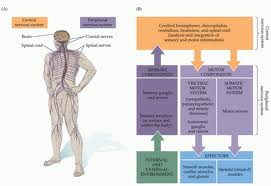
neuroscience and nerve system neuroscience brainSo what are facts about neuroscience and mobile smart technology? Can we learn effectively using smart devices? Well, when our minds are engaged in a simple or complex task, the information relevant to that task is held in our STM or short-term memory. According to the late but great psychologist, George Miller, this mental holding space can only contain four to seven pieces of information at a time. To be retained it needs to be transferred to the LTM (long term memory). We can only move information from short-term to long-term memory using our attention; we have to be paying attention to, and thinking about, a fact or a concept in order for it to be encoded in memory.

To encode properly you need to eliminate distractions, which are often caused by multitasking events. Young people report frequent media multitasking (texting, emailing, surfing the web, Twitter and Facebook) while also doing homework. Their belief is they can do it effectively, but research shows otherwise. In fact, research demonstrates that individuals who multitask the most are actually the worst at it. Whether we’re learning with a tablet, smart device or a book, it’s best to give it our best attention.

The rapid evolution of mobile technology has placed quite a burden on our concentration. The day is constantly being challenged by external sources. Even the most pressing of matters can be interrupted at any moment by a familiar buzzing in the pocket. This gives a friendly nudge to pay attention that the brain responds to and many find virtually impossible to resist; alarmingly even while driving. These all too frequent interruptions, coupled with growing expectations for immediate responses (emails responded to at 2am), will challenge our cognitive control system at its very core.

The cognitive control system is our ability to focus on accomplishing a task in the context of competing demands. You might want to look at a course that explains this in more depth. This special ability is what has allowed humans to achieve remarkable achievements, from developing languages and building complex societies.

It doesn’t matter that we think children are growing up digital natives and somehow addicted to technology. It simply doesn’t change how we come to understand new information. Basic understanding happens when we process new information in terms of its meaning, rather than its surface features. Understanding happens when we connect new information to what we know already.

It seems that the competing noise and multitasking distractions, will have a more significant negative impact for those with undeveloped or impaired focus and cognitive control. Those that easily lose focus such as children and us older adults, or in the presence of neurological or psychiatric conditions like ADHD or Alzheimer’s disease. There is no doubt that we have to be careful about the influence of unending data streams of interference on our minds. We need to make more informed decisions about how best to interact with the technologies around learners and how we use the technology positively every day. Perhaps the BRAIN project will guide us on new ways being effective learners.

The lesson seems to be that when we are engaged in something that requires high quality attention (like one of our excellent express courses in critical thinking we should conduct ourselves in a manner that is most appropriate for how our brains function: in the absolute focus mode.
So it seems that despite all the real concerns, technology is not rewiring young people’s brains or brain washing them. Indeed mobile smart technology must and can be harnessed to improve our minds. This will come as a relief to some and a disappointment to others. This new brain research will shed light on our understanding, our attention and focus systems and better memory that can now be applied to a new generation of humans, not so different from the ones who came before.

Mindfeed ebooks by Diane Shawe

Get a copy of Diane Shawe book from Amazon


 Shawe’s eBooks are available on Amazon right now at: https://www.amazon.com/Diane-Shawe/e/B0052WG8V6

About the Author

Diane Shawe is an author, speaker, trainer, mentor, consultant and entrepreneur with more than 15 years of experience. She has personally trained over 2800 people around the world in a variety of fields and has published a number of works. She has contributed to over 100 Kiva Entrepreneur’s around the world.

She was also one of the producers of a Day time Ladies Talk Show in 2015 and Host of one of the UK’s best loved Annual Hair Extensions Awards.

Diane also enjoys oil painting, sailing and clay pigeon shooting. She focuses on topics that she is passionate about in her writing and has attracted over 36,000 followers on her popular blog.

Media Contact
Company Name: AVPT Short Courses & Hair Extension Training Academy
Contact Person: Diane Shawe MEd
Email: Send Email
Phone: +44 208 1333120
City: London
Country: United Kingdom
Website: http://www.academyexpresscourses.com


TOP 10 HAIR EXTENSIONS TECHNIQUES FOR 2013

Hair extension advert avptglobal small 2013


Why setting up a hair extension business or service in your salon could be profitable

Article written by Diane Shawe M.Ed

We have seen the hair extension market grow over the past 15 years, now there are more hair extension techniques than ever before and it can be confusing to decide which is the right one for you to either apply to your own hair or become a qualified technician.

If you are thinking of becoming a qualified technician, it is important to consider how potential clients might make their decision.  Some people will make a decision based on price, others on their hair type and some based on what they need to achieve. Click to see our training school video

Here are just a few tips to help with your decision making process.

1. Wigs:  Wigs are a quick and easy way to give yourself a quick makeover.  What you need to bear in mind is that the cheaper the wig the more un-natural it will look.  You don’t need to spend a lot of money but it is worth investing in a wig that you can use from time to time.  Client will pay between £120 – £300 for a good quality wig which could last for up to 12 months.

2. Hair Pieces: There are lots of different hair pieces from pony tails to rear hair attachments in all different shades, curly, straight or plaits. There are also specialist hair pieces for thinning hair that can help disguise any problems.  The thing to bear in mind is that hair pieces are not often very secure and could make you feel a little uncomfortable.  Some of the ponytail pieces can be securely fixed, so if you want a demure look go for a ponytail.

popular integrated weave

See what one of our students said about her 2 day course

3. Integrated Weaves: This is when wefts of hair is sewn onto a fine cornrow which is then hide by the bulk of your hair on top.  It is a popular technique because if done correctly it can look very natural and offer up a robust and secure hair enhancement solution.  If you look after the hair you can reuse it when you go back to have it re tightened. Clients could pay between £190 – £330 for the integrated weave.

4. Pre-tips: This is small pieces of hair that have been pre bonded together.  They can be added in sections all over the head to aid thickening, give the impression of highlights or lowlight and length.  Pre-tips can be applied using heat, micro rings or even small elastic bands.  Be aware that they have to be professionally removed so as not to damage your own hair.

5. Strand by Strand (glue gun): This is when hot bond is used to bond small sections of hair to the recipients own hair.  It was a very popular technique in 6 years ago, but requires professional application and removal by a qualified technician.  Can give the appearance of flyaway hair that you could somewhat run your fingers through.  It is a very time consuming technique and is much better for a long term wear over 3-4 months.

6) Clip in hair extensions: These are now very popular.  They are best used for lengthening mid should length hair.  If the hair is shorter they don’t sit very well because they can be a little bulky in appearance.  They don’t offer up much security unless they have been professionally fitted.  This is when a very small cornrow is done and the clips are slipped through for much added security.  Great for an evening occasion but not advisable for long term wear.  click to read more

20121208_180137

net weave for a seamless look

7) Net Weave:  This technique is used when the client wants to partially extend just a section of their hair or if the client suffers from patchy alopecia.  This technique is suitable for 2-4 months wear.

8) Hook and Latch: This technique does not use any glues or threads. It is a beautiful technique, flat to the touch and hair could be worn up.  It works well with shorter hair especially the Micro ring track technique.

9) Lace Wigs: Lace wigs have become very popular. They are really good for girls with short thin hair, damaged hair, hair that needs a rest or a complete makeover.  Top celebrities have made them really popular and you can see why from the video testimonial below. See Radio TV presenters new lace wig

alopeciaconsultant

Hair2Skin is also popular for hair loss.

10) Braides and Plaits: Braides and Plaits have been around for hundreds of years.  A technique that can look very simple or quite exotic.  Braids can be worn for a number of months until the hair grows out, they can even have beads added to the end for that extra special look.

Hair Loss Specialists
Clients also suffer from thinning hair can be helped, click here to hear what one client had to say.

As we see an aging population, people are becoming more confident about getting help to resolve short term or long term hair problems.
HAIR EXTENSION TRAINERS
There is s shortage of qualified hair extension trainers in the UK. Visit this link to find out more and how you can become qualified.

Diane Shawe speaks at Business Startup on the 6th & 7th June 2013

business startup show 2013

Welcome to AVPT Global! We will be exhibiting at the Business startup show on the 6th & 7th |June 2013. We will be showing you some of our popular courses, how to turn your mobile device into a learning and teaching tool and how to create a new career doing this.  We get people qualified in days, not years, through our soft skills training courses, which are globally accredited through IAO and are available online or in workshops. All online courses are supported with a personal tutor!

free ticketVisit us on stand 330

business startup show 2013 dIANE sHAWE

Text ‘EARNINGS’ to  0793 798 5077 to get a £100 voucher? Click the Banner!

Diane Shawe M.Ed MIoD IEBE

Hear Diane speak on How to use your mobile phone to learn and earn.

Diane previously spent six years working for the Department of Trade and Industry working with bodies that award funding to business start-ups. In this presentation she will share six ways to raise finance for your company without resorting to banks – important guidance in this period of economic constraint.



About Diane Shawe M.Ed MIoD IEBE

As the CEO of AVPT Global, which provides online fast-track training courses, Ms. Shawe utilises her expertise in education and business administration to oversee individual, one-on-one, group and corporate training. In addition, she ensures that staff members are reporting and achieving and that the business is meeting its target of student recruitment. Ms. Shawe also manages the quality of training, company finances and front-end marketing, while also maintaining the business profile. She has been in the educational field for the last 15 years and has successfully led her company for the past five.

Find out how Diane’s company has created the next best online career!

In addition to handling her day-to-day responsibilities with flair, Ms. Shawe has published several books, including: “How to Cyber Kiss your Business to Success,” and “100 Ways to Generate Quick Emergency Cash.” She believes that people should try to integrate the following practice into their daily lives: “never do anything as though you are a professional amateur.”

Her next publication is due out in June title ‘The digital face of Education’

Share this

Tweet about this seminar

Understanding the Language of Training

questionmarkI know what your thinking…

article written by Tim Dingle MBA
Chief Development Officer  AVPTGLOBAL

Training is about to undergo a revolution and the understanding of body language will be crucial for those undertaking training. Speaking at a conference in Birmingham last year, a leading HR director observed that there was nothing as important as understanding the language of business.  That must mean the non-verbal as much as the verbal expressed language.  Non-verbal communication is commonly known as body language and I spent a lot of time studying the basis of this and its importance in training and interviews. So the question is can it be read and used by individuals, managers and directors- or indeed in their wider professional or social lives?

Body language is a broad term for forms of communication using dress, body movements or gestures instead of, or in addition to, sounds, verbal language, or other forms of communication.  It is part of the category of paralanguage, which describes all forms of human communication that are not verbal language.  This includes the most subtle of movements that many people are not aware of, including, for example, a discreet smile or a slight movement of the eyebrows. Such messages can be communicated instantly and silently through gesture; body movement or posture, facial expression and eye gaze.

Henry Higgins and Eliza Doolittle would not have recognised it, but just watching an accomplished politician, actor, or shopping channel salesperson can give you some insight into the power of gestures or facial inferenceSuch gestures can add to the stagecraft, amplify the message and can provide surprisingly magnetic assurance about what you are being told.   Have a look at the courses we offer at The Academy of Vocational and Professional Training.

Can the use of these non-verbal signatures be imported into the business, training and HR arena?  It can be a risky strategy to attempt to read and rely upon body language signatures without some training and practice. Should individuals be aware of the power of non-verbal communication and seek to harness this aspect in negotiation? If our desire, as individuals in business, training or HR, is to produce our optimum performance then we should employ all of the communication and interpersonal skills with which we individually have been gifted.

We may well consider investing our time to improve our oral questioning and language skills, but very few individuals seem to give much thought to developing the skill of both reading and transmitting non-verbal clues. We can help! Developing those reading skills would be much easier if all our clients were between three and nine years of age – this is rare of course, even if sometimes a negotiation has something of a playground quality about them.  Children wear their emotions on their sleeves and are, except perhaps to other children or their doting grandparents, pretty easy to read.

Mobile Learning, Mobile Earning

Mobile Learning, Mobile Earning

Tightly crossed arms, a screwed-up face and a stamped foot quickly clues you into the internal voice of the child, even if their response to the question, “Are you OK” is “Yes”. A parent’s sixth sense is often nothing more than a demonstration of the superior body language reading skills that child carer’s, of necessity, have learned to develop.  The older we grow the more we learn how to mask our true feelings, which unconsciously includes the toning-down of our body language as well.  Whilst we can try and make our non-verbal communication less obvious, very few people can completely mask it.

HR directors, business people and individuals, might want to learn to look for those more subtle, but tell-tale, signs of stress, hope, agreement, confidence, resistance, and fear in the body language of the clients, and indeed their own clients.  Picking up on these signs could allow us to make progress in a situation of stale-mate and could save a negotiation that is about to crash.  These skills can allow us to zero-in our questioning, to know when a private meeting or a break is essential, and to see the evident bridges and agreements, even when the other side have yet to verbalise them.  How too are we at listening to clients, staff and business partners when they speak to us?  Are we fully engaged with them, having turned our chair, and thus our whole body towards the speaker, leaning forward and maintaining good eye contact?  If you want to be heard in your turn, you need to be seen to be listening.

People will usually only tell us what is really on their mind if they believe that we are really listening.  Do we really listen?  Taking notes whilst staring at out iPad or mobile phone as the person tells their story, does nothing to build confidence in us or the process.  Active listening skills such as reflecting back a summary of what has just been said by the speaker may just persuade, non verbally, a client to listen to you and thereby facilitate success. HR directors, managers and individuals should be encouraged, therefore, think about using their body language positively to enhance the oral skills that they already have, allowing them to maximise their potential as conflict resolution practitioners.

I know what you are thinking. You need to start training, now.   

Please review our VTF  Presentation and let us know if this is an opportunity for you.

Meet some of our current VTF’s: 

Invitation to our Free 2 hour introduction.

AVPTLTD LOGO

Keep Taking the Tablets

Keep taking the tablets

Keep taking the tablets

-More Than 1 Billion Smart Devices Sold Last Year Changes Everything

article by: Tim T Dingle BSc (Hons) MIBiol PGCE MBA  CDO at AVPTGLOBAL

I can remember clearly (it was after all, only 3 years ago on April 3rd 2010) when Steve Jobs unveiled a unique consumer tablet with an unusual name. It had been one of his obsessions for years, even before the iPhone. Many people thought Apple would be better served by coming out with a netbook: you remember netbooks, don’t you?

According to the International Data Corporation[1], worldwide shipments of smart connected devices grew an amazing 29.1% year over year in 2012, crossing 1 billion units sold with a value of $576.9 billion. The market expansion was largely driven by 78.4% year-over-year growth in tablet shipments, which surpassed 128 million in 2012. Quite astonishing and I hope everyone had a great Christmas opening the tablets!

We all know that smart devices can deliver amazing functionality; from constant Internet and social media connection to brilliantly helpful apps. They are genuinely changing the way we operate as a society. The change is happening so rapidly and almost seamlessly that most of us probably don’t realise how much we use and rely on our smartphones and tablets.  How did the business world even operate without employees having constant access to their phones, email and the Internet? How did busy parents keep track of their schedules without a calendar that never leaves their side and actually reminds them of events?

apps galore!

apps galore!

If we pause to consider that now we can use apps to find the best meal when on the road, the nearest petrol station or to locate possible holdups on route. We don’t even have to watch TV or connect to an online news site to get instant national and local news. We can scan rail and plane tickets with our smart phones and check in with no paper for international flights. While smart devices are making everyday activities easier for consumers, some businesses are facing challenges to compete effectively. The challenge is being met by forward thinking companies like AVPT Global[2] who seek to use tablets and smart phone technology to be at the heart of online learning and push forward the rise of mLearning.

The iPad and other smart devices (including my brilliant Samsung Note 10.1) have had huge initial impact on access to information, business sales and social interaction. In fact the pioneering of this new category has in some ways been even more significant than the iPod and even the iPhone, because it has disrupted so many different device manufacturers. It has created a market opportunity for smart device manufacturers and created a challenge to other PC makers and even potentially influencing how we may watch television in the future. It has also extended digital content opportunities to make books and video on-the-go a more practical experience, ending the back breaking march of the child with books to school perhaps?

The iPad was the first device to successfully bridge the gap between the PC and smartphone for consumers. Since it landed in the first consumer’s hands more than 55 million iPads have been sold worldwide, used for watching (and streaming) movies, reading books, magazines and newspapers, Web surfing and playing games. Tablets are becoming familiar common coffee-table fixtures in households around the country. They’re also being stowed in the briefcases and bags of travellers, whether they’re going by car or by plane. And they’re increasingly carried by teachers, doctors, lawyers, real estate agents — a wide range of professionals who find they can do much of their work with a tablet. Put simply, the tablet has become the go-to PC substitute for a variety of activities.

A smarter way to study with www.avptglobal.com

A smarter way to study with http://www.avptglobal.com

People now leave their laptops behind more often, taking advantage of the tablet’s lighter weight, ubiquitous wifi (and 3G /4G) connectivity, its longer battery life and catalogue of useful applications. We are seeing some of the tasks traditionally performed on PCs and laptops, now being performed on the tablet. In fact, all five of the top activities (email, Web surfing, game-playing, social networking and online shopping) shifted towards the tablet in late 2011.

Many of these are activities we do on our smart phones, of course, but doing them on the tablet is not only more pleasurable visually, it leads to entirely new behaviours. Watching video (be it movies, TV or YouTube) is definitely one of the preferred uses of tablet owners who also have smartphones, as is Web surfing and email, according to new research from Nielsen. In a great piece of research called, “Tablets are for meals. Smartphones are for snacks,” Nielsen[3] shows how 10 per cent or less of smartphone owners opt to do those activities on their phones. Social networking (both Facebook and Twitter) is also better done on a tablet than smartphone, as is writing emails. Aside from making phone calls, the only activity right now where the smartphone beats the tablet is instant messaging. But even 18 per cent said they’re doing that on their tablets. It appears that mobile phones tend to be the gateway drug in emerging markets where consumers typically move on to a tablet.

The IDC report that grabbed the headlines last week (1.2 billion smart devices), goes on to say that it expects global smart connected device unit shipments to surpass 2.2 billion units by 2017. Consumers and business buyers are now starting to see smartphones, tablets, and PCs as a single continuum of connected devices separated primarily by screen size. Each of these devices is primarily used for data applications and different individuals choose different sets of screen sizes in order to fit their unique needs. These kinds of developments are creating exciting new opportunities that will continue to drive the smart connected devices market forward in a positive way. The first step on the long road to mLearning is just beginning and the potential for individuals and companies to grasp the opportunity is seen by only a few.

Taking the Tablets has never been so exciting.

AVPT-Logo-ALL-INFO


[2] The Academy of Vocational and Professional Training www.avptglobal.com

[3] Dan Lee, Director of Product, Digital Nielsen July 18th 2012