Category Archives: apps

The Currency of Digital Learning

Using technology for life long learning

Using technology for life long learning

How do we digitally learn?  How do you learn effectively in a workshop? What is the currency of digital learning?

By Tim T Dingle BSc (Hons) MIBiol PGCE MBA

Chief Development Officer at  the Academy of Vocational and Professional Training.

When you want to acquire a new skill or apply some new knowledge, do you learn by passively sitting and listening to an expert lecture for 90 minutes without a break and 150 Power point slides? What do you actually retain that enhances the value and the currency of your learning. The currency is defined  as something of value, or something that represents value: knowledge, gold, respect, or social media following, all represent different kinds of currency. In 2013 it could be that the currencies in digital and workshop learning are changing.

Learning is evolving and not simply by the tools that actuate it. The process of adopting new learning domains and materials (many digital) has exposed the need for new skills. It is debatable whether or not such skills need to be expressly taught, or if they’re simply the residue of intense, well-designed learning experiences. Whether or not they are old learning (content) with a new coat of paint, or genuinely represent a paradigm shift in learning priorities, it is difficult to doubt their constant application in a 21st century world that is super fast connected, digital, omni-social and multi-faceted.

No longer is it considered sufficient to teach children to simply read and write, and fill in the middle with discrete facts about history, mathematics, and scientific processes. There are new skills that transcend content areas, in this way functioning as natural pathways out of old thinking: creativity, problem-solving and collaboration. One can problem-solve across and within topics formerly thought of as science and history and moving between them both moves them beyond academia, and back to the real world. This is possible because flexible cognitive and creative capacities are not rigid.

The brain science literature suggests that workshop learners understand and remember more when they talk about what they are learning.  However, there are some people who attend workshop and training seem to have information wash over them and are uncomfortable with talking or moving.   So, to get improved retention and learning in both digital and workshops:

1.  Do something physical when you learn: incorporate some sort of movement or body activity every 20 minutes, on line or face-to-face.

2.   Walk and talk, walk and learn: I do this a lot in half-day or full-day trainings.   Participants might do an exercise, but the results are on the wall for a debrief. Using a tablet for true learning as you move.

3.  Flip Chart Products: This is where participants will write specific responses on labelled charts on the wall at designated times.    It can be an answer to a question, a question learners still have, a summary statement, an opinion about the content, facts they want to remember, or how they plan to use the content.  Then stick it on the wall. It works with digital media as well- plaster the wall with paper!

With the proper technologies and thoughtful new methodologies, courses can become content infinite. When the learning goals supersede the content areas, things begin to change. As the currencies in digital learning evolve, they necessarily evolve the learning with them.


AVPTLTD LOGO  6


Check out our 1 day business bootcamp

Is Mobile Technology re-wiring the brains of our Children?

Overload or Growth?

Overload or Growth?

Or is there hope in a BRAIN project funded by the President of the USA?

Well you do hear people say that mobile technology and smart tech is rewiring their brains brain, making a new breed of digital natives and even brain washing our children. The facts are that they will spend 11.5 hours a day using smart technology; whether that’s computers, tablets, television, mobile phones, or video games (and in my experience usually more than one at a time). That is a big chunk of their 15 or 16 waking hours. The media tend to exploit these facts and combine them with pseudo-science with outlandish claims of ‘brain rewiring’ and potential harm. I have heard this uttered in alarm, (usually by those concerned that children’s ability to learn and pay attention) and stated as a ‘good thing’ by others, convinced that a generation of digital natives has developed incredible powers of absorbing and applying information.

Indeed 4 years ago President Obama officially announced in 2013 that 100 million dollars in funding for arguably the most ambitious neuroscience initiative ever proposed. The project has the catchy name of Brain Research through Advancing Innovative Neuro-technologies, or BRAIN, and aims to reconstruct the activity of every single neuron as they fire simultaneously in different brain circuits, or perhaps even whole brains. If you have seen Iron Man 3 there is marvellous moment when the evil Aldrich Killian (played by Guy Pearce) shows the beautiful Gwyneth Paltrow inside his brain in real time; a must see moment. The next great project, as Obama called it, could help neuroscientists understand the origins of cognition, perception, and other brain activities, which may lead to new, more effective treatments for conditions like autism or mood disorders and could help veterans suffering from brain injuries. It also might just help people realise why they need to choose a great course and real focus.

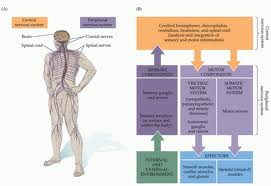
neuroscience and nerve system neuroscience brainSo what are facts about neuroscience and mobile smart technology? Can we learn effectively using smart devices? Well, when our minds are engaged in a simple or complex task, the information relevant to that task is held in our STM or short-term memory. According to the late but great psychologist, George Miller, this mental holding space can only contain four to seven pieces of information at a time. To be retained it needs to be transferred to the LTM (long term memory). We can only move information from short-term to long-term memory using our attention; we have to be paying attention to, and thinking about, a fact or a concept in order for it to be encoded in memory.

To encode properly you need to eliminate distractions, which are often caused by multitasking events. Young people report frequent media multitasking (texting, emailing, surfing the web, Twitter and Facebook) while also doing homework. Their belief is they can do it effectively, but research shows otherwise. In fact, research demonstrates that individuals who multitask the most are actually the worst at it. Whether we’re learning with a tablet, smart device or a book, it’s best to give it our best attention.

The rapid evolution of mobile technology has placed quite a burden on our concentration. The day is constantly being challenged by external sources. Even the most pressing of matters can be interrupted at any moment by a familiar buzzing in the pocket. This gives a friendly nudge to pay attention that the brain responds to and many find virtually impossible to resist; alarmingly even while driving. These all too frequent interruptions, coupled with growing expectations for immediate responses (emails responded to at 2am), will challenge our cognitive control system at its very core.

The cognitive control system is our ability to focus on accomplishing a task in the context of competing demands. You might want to look at a course that explains this in more depth. This special ability is what has allowed humans to achieve remarkable achievements, from developing languages and building complex societies.

It doesn’t matter that we think children are growing up digital natives and somehow addicted to technology. It simply doesn’t change how we come to understand new information. Basic understanding happens when we process new information in terms of its meaning, rather than its surface features. Understanding happens when we connect new information to what we know already.

It seems that the competing noise and multitasking distractions, will have a more significant negative impact for those with undeveloped or impaired focus and cognitive control. Those that easily lose focus such as children and us older adults, or in the presence of neurological or psychiatric conditions like ADHD or Alzheimer’s disease. There is no doubt that we have to be careful about the influence of unending data streams of interference on our minds. We need to make more informed decisions about how best to interact with the technologies around learners and how we use the technology positively every day. Perhaps the BRAIN project will guide us on new ways being effective learners.

The lesson seems to be that when we are engaged in something that requires high quality attention (like one of our excellent express courses in critical thinking we should conduct ourselves in a manner that is most appropriate for how our brains function: in the absolute focus mode.
So it seems that despite all the real concerns, technology is not rewiring young people’s brains or brain washing them. Indeed mobile smart technology must and can be harnessed to improve our minds. This will come as a relief to some and a disappointment to others. This new brain research will shed light on our understanding, our attention and focus systems and better memory that can now be applied to a new generation of humans, not so different from the ones who came before.

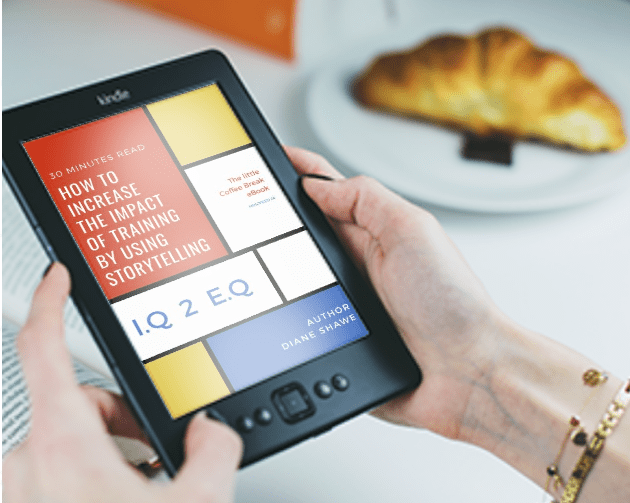
Mindfeed ebooks by Diane Shawe

Get a copy of Diane Shawe book from Amazon


 Shawe’s eBooks are available on Amazon right now at: https://www.amazon.com/Diane-Shawe/e/B0052WG8V6

About the Author

Diane Shawe is an author, speaker, trainer, mentor, consultant and entrepreneur with more than 15 years of experience. She has personally trained over 2800 people around the world in a variety of fields and has published a number of works. She has contributed to over 100 Kiva Entrepreneur’s around the world.

She was also one of the producers of a Day time Ladies Talk Show in 2015 and Host of one of the UK’s best loved Annual Hair Extensions Awards.

Diane also enjoys oil painting, sailing and clay pigeon shooting. She focuses on topics that she is passionate about in her writing and has attracted over 36,000 followers on her popular blog.

Media Contact
Company Name: AVPT Short Courses & Hair Extension Training Academy
Contact Person: Diane Shawe MEd
Email: Send Email
Phone: +44 208 1333120
City: London
Country: United Kingdom
Website: http://www.academyexpresscourses.com

Turning 50 isn’t the end of a business career – new wave of olderpreneurs

Get qualified in days not years

Get qualified in days not years

article by Diane Shawe M.Ed

Turning 50 isn’t the end of a business career – it’s the beginning. And an ever-growing wave of ‘olderpreneurs’, starting a business have 70% chance of surviving their first five years compared with only a 28% survival rate for those younger than them.

Nearly half the self-employment population is over 50, and one in six new businesses started in the UK are set up by post-half-centurions.

So what’s fuelling the entrepreneurial impetus of the ‘silver startup’, and why are they doing so well?

Necessity

The over-50s age group has been particularly hard-hit by the recession. Last year, the Office of National Statistics (ONS) revealed 28% of those aged between 50 and state pension age were out of work – compared with only 20% of those aged under 50.

Why? One of the biggest factors is the rife ageism that permeates practically every industry in the UK, that anyone over 50 who’s been forced to look for employment will testify to with a weary nod. The ONS estimates those who lose their job aged 50 or over have only a 10% chance of being re-employed.

Deciding to use their money from redundancies to fund ta company, over the course of two years the payout had trickled in its entirety into the business. But it was worth the investment – and they often don’t have to rely on the ineffective banks at the moment.

Become a Virtual Teacher Facilitator

Become a Virtual Teacher Facilitator

New challenge

At a fundamental level, sometimes people just want to do something different in their later years.

It’s interesting that recent YouGov and Standard Life research found the average age at which people feel totally confident in their working skills is 37, while the more elusive sense of fulfilment peaks at 50. Perhaps this climax of achievement and sense of ability leads to a need for a new direction, a new challenge, once a person passes the half-century mark.

If  we take a look at the Government statistics below it will give us an overview  Source Office of National Statistics

Summary of labour market statistics published on 23 January 2013

Between June to August 2012 and September to November 2012:

  • the number of people in full-time employment increased by 113,000,
  • the number of people in part-time employment fell by 23,000,
  • the number of unemployed people fell by 37,000, and
  • the number of economically inactive people, aged from 16 to 64, fell by 13,000.

Between September to November 2007 and September to November 2012:

  • the number of people in full-time employment fell by 341,000,
  • the number of people in part-time employment increased by 660,000,
  • the number of unemployed people increased by 854,000, and
  • the number of economically inactive people, aged from 16 to 64, fell by 75,000.

Chart 1: Changes in number of people in the labour market between September to November 2007 and September to November 2012, seasonally adjusted

Changes over 5 years

Source: Labour Force Survey – Office for National Statistics

The employment rate for those aged from 16 to 64 for September to November 2012 was 71.4%. This was up 0.1 percentage point on June to August 2012 and up 1.1 on a year earlier, but it was lower than the pre-recession peak of 73.0% recorded for March to May 2008. The number of people in full-time employment aged 16 and over increased by 113,000 between June to August and September to November 2012 to reach 21.57 million but the number of people in part-time employment fell by 23,000 to reach 8.11 million. Compared with a year earlier:

  • the number of men in full-time employment increased by 237,000,
  • the number of men in part-time employment increased by 95,000,
  • the number of women in full-time employment increased by 77,000,
  • the number of women in part-time employment increased by 144,000, and
  • the total number of people in employment increased by 552,000, the largest annual increase since 1989.

Chart 2: Changes in number of people in employment between September to November 2011 and September to November 2012, seasonally adjusted

Annual employment changes

Source: Labour Force Survey – Office for National Statistics

The unemployment rate for September to November 2012 was 7.7% of the economically active population, down 0.1 on June to August 2012 and down 0.7 on a year earlier. The number of unemployed men aged 16 and over fell by 37,000 between June to August and September to November 2012 to reach 1.41 million, but the number of unemployed women was unchanged at 1.08 million. The number of women unemployed for up to six months increased by 26,000 to reach 571,000. This may reflect changes to the benefits system resulting in more single mothers starting to look for work (see Claimant Count section of this Bulletin for further details).

The economic inactivity rate for those aged from 16 to 64 for September to November 2012 was 22.5%, unchanged on June to August 2012 but down 0.7 on a year earlier. The number of economically inactive people aged from 16 to 64 fell by 13,000 between June to August and September to November 2012 to reach 9.03 million.

The number of people claiming Jobseeker’s Allowance fell by 12,100 between November and December 2012 to reach 1.56 million.

Between July to September 2012 and October to December 2012, the number of vacancies increased by 10,000 to reach 494,000. This is the highest number of vacancies since October to December 2008, but it is 200,000 lower than the pre-recession peak of 694,000 recorded for January to March 2008.

Between September to November 2011 and September to November 2012, total pay for employees in Great Britain rose by 1.5%. This annual growth rate for earnings was lower than the increase of 2.7% in the Consumer Prices Index between November 2011 and November 2012.
Source Office of National Statistics

Image

Merry Christmas from AVPT Global

happy christmas from Diane Shawe

Four Pillars that underpin buyers requirements for eLearning

Get qualified in days not years

article by Diane Shawe M.Ed

Whilst I am in the industry and excited by the latest trends in e-learning  through blended Learning Management Systems (LMS)  learning being hugely of interest at present, I believe that the four  pillars that go to underpin the buyers requirements and therefore still define the industry offerings are centered around the following:

• Compliance and accreditation
• Scalable and flexible whilst achieving a real reduction in Cost
• Improving , track and measuring Learners performance
• Real time management, alignment and communication to support ongoing changes.

The ability to track and report learner performance remains upper most in many procurers mind.

It will become increasingly important to have specified learning strategy which can deliver effectively against all of these requirements, and getting the “e-learning mix” of technologies obviously including content, collaboration and communication environments (social learning) and control mechanisms will be the key to further industry growth.

Under-pining these trends we are seeing growing interest in how e-learning can address softer skills and this is why we have concentrated our LMS content to this area of learning.

Some vendors are following the vertical market and configuring the offer to meet specific needs, others are differentiating by adding social media and social learning functionalists, and others such as us are aligning the LMS to the latest technologies being colonised by the e-learning industry – mobile/smart devices and video driven content. The trend from the USA is strongly toward talent management and we are often lagging behind.

The smart vendors in my view are aligning and integrating with other solutions: HR, ERP, CRM etc…. Content or Content, which to choose…..?

These developments can only be positive for the industry, as the demand for quality and quantative content will grow and grow.

My one but final view is that we will progress from blending to mixing the content provision as this will be the key challenge to the e-learning industry. The importance of content won’t go away, its just changing faster becoming more “Re-purposable” , “Flexible”, “Interoperable”, and “Accessible” learning content!

Now get this, I am so loving the fact that on its way to us is 3 Dimensional technologies, simulation, holographic all of which will increase the demand for new genres of learning content into a learning reality!

http://www.expresstrainingcourses.co.uk

E-learning growth ‘set to rise to £19 billion by 2015

Get qualified whilst on the move with AVPT

article by Diane Shawe M.Ed.

Academy of Vocational and Professional Training (AVPT) finds that the market for e-learning just keeps growing and growing, according to various research and sales figure surveys

A survey by Ambient Insight Research has showed that the worldwide market for e-learning products was $32.1 billion (£20.5 billion) in 2010 and is expected to rise to $49.9 billion by 2015.

Products and methods of online learning that were deemed the most successful in sales rates included “how to” videos, step-by-step interactive guides and course notes which have multi-media inserts and annotations which directed learners to other resources.

Writer for Gadget magazine, Andre Joubert of MWEB Business said that he thinks the availability of media-rich, interactive e-learning content on the internet – and the advent of uncapped, business-strength broadband connectivity is changing the face of e-learning. He based his analysis on South Africa, but his principles apply worldwide as global sales figures show.

We noted from our research that Mr Joubert said: “E-learning has long been recognised as offering considerable advantages over conventional classroom-based training when it comes to training employees and management quickly, efficiently and conveniently.

So what about the Virtual Classroom?

We see 2012/13 as being the breakthrough year for virtual classrooms, as organisations move on from webinars (which are increasingly commonplace) to more interactive environments offered by virtual classrooms.

I am certainly excited by our  online courses which are recognised and accredited in over 200 subject matters.  As  result of this growing trend AVPT has launched the first globally accredited Virtual Tutor Facilitator course. To train

A New Career Opportunity as a VTF

professionals in becoming a qualified online Tutor who want flexibility and positive earning potential to assist individuals gain a professional recognised certificate  using a mobile learning Management solutions through facilitating their online learning.

Training through online learning is now widely available on the internet and can be beneficial to anything from flower arranging, PowerPoint presentations through to health and safety.

Soft skills is now becoming the new hard skills and offering mobile training and  advice  through e-learning are valuable to many people and a range of businesses globally.

Tim Dingle AVPT Chief Development Officer cited many benefits of the virtual classroom, such as convenience, relevance, immediacy, affordability and ease of use. He added that beginning the learning experience can be as easy as starting up an internet browser.

According to research by Key Note from last year, instructor-led training represents the largest sector of the market, although e-learning teaching – which includes blended learning – showed the highest growth over the review period between 2005 and 2009.

Mobile Learning forging forward.

A 2009 research report summarised that they thought mobile learning could be a “maybe just maybe”, In 2010  a definite trend was being recorded and in 2011 they saw mobile learning as a major driver for the growth of the e-learning market.

The driver is not one of simple learning enhancement and support but driven by a requirement for portability and availability made possible by smart phones and tablet devices, the learning “additionality”. The PC might still remain key to many learners for some years to come but I believe that the call for mobility, flexibility and the trends to workforce mobility will win the day.

We are particularly taken with the concept of second screen learning, in that learners will use mobile devices i-pads, smart phones etc… in conjunction with other forms media such as skype, bluetooth and appliances imbedded in a variety of devices such as the TV, car or even on your fridge.

I do not see mobile learning as a straight replacement to existing genres, and accordingly iIdo not advise organisations to rush headlong into mobile learning solutions because they can be an expensive option if not properly planned out.

Mobile learning in appropriate additional ways  can be used to enhance the learning mix. One principle game changer is our ability to upload current or new courses into our LMS, cutting down on project development planning time and costs and enabling a blended Learning proposition to commence not only laterally but securely, scalable and in real time.

For instance the unemployed, people of disability, prison population, senior citizens and excluded children from the educational system could all benefit in real time whilst keeping the overall unit costs down by scaling and up-skilling with an emphasis on inclusion and virtual support.

Content can now increasingly be authored or in many cases converted to become fit for all purpose all range device delivery and in real time.

HTML5 coupled with Cloud based services will further embed e-learning into the all- pervasive always on internet. Indeed the terminology of mobile learning/ e-learning will lose differentiation, as will the nature of the device that the learning is undertaken upon.

Technology coupled with the growing importance of social media learning will lead to greater learner acceptance. I for one have seen a pattern stemming from the services we are offering to date and look forward to 2013 as we believe it is going to be a bumper year for mobile learning.

Visit us on http://www.expresstrainingcourses.com or call us if you would like more information on 0203 551 2621.

Join us now with over 200 courses

Online Learning is where Online Music was five years ago

Article by Andrew Maynard
2020Science

Posted: Jul 6, 2012

YouTube is gearing up to transform the way we learn…We are at the beginning of an exciting revolution in online educational content.

That’s the message that came across loud and clear at this morning’s VidCon breakout panel on education. In an overflowing room of well over two hundred conference goers, head of YouTube Education Angela Lin led a panel of five leading video makers in a lively discussion, that gave a compelling glimpse of the future of online education.  And it was a future that didn’t feature too many conventional lessons or institutionalized videos!

As the panel included John and Hank Green (SciShow, CrashCourse and a gazillion other things) I was expecting a room packed to the brim with their incredibly engaged teen fans – which it was.  An odd audience you might think for a panel on education.  But this was a serious, intelligent and engaged crowd, eager to listen to the panel, ask questions and provide their own insight on online learning.

Joining the Green brothers were physics blogger Henry Reich (minutephysicsminutephysics), science YouTuber Brady Haran (The Periodic Table of Videos), Mike Rugnetta, host of the PBS Idea Channel and Vi Hart of Mathemusician and the Khan Academy.

What was notable was that these panelists are all a) successful online educators (extremely so in some cases), b) not formally trained in teaching (to my knowledge) and c) not representing mainstream educational institutions (not counting PBS).  This is important, because there was no doubt here that the excitement and impact surrounding online education is occurring outside conventional educational circles – and in many cases leaving them standing.  John Green talked about this emerging online education community as being “disruptive,” while brother Hank talked about a “new kind of learning.”

And everyone the panel agreed that education content on YouTube is where online music was five or six years ago, and on the cusp of something really big.  But a big that might not necessarily include conventional educational institutions unless they get their act together!

On this point Henry Reich made the distinction between learning and teaching.  Formal educators (as well as “informal educators” in museums and on educational TV programs) teach to a curriculum or a plan, with competencies, learning objectives and evaluation being the name of the game. But at the cutting edge of community online education, content developers are using their passion and interests to facilitate user-driven learning.  And as John Green pointed out – endorsed by the packed room – people want to learn!

Bridging this gap between learning and teaching is perhaps going to be one of the biggest challenges – and opportunities – of online education over the next few years.  Without question, there is a global hunger for learning, and some very talented individuals who are beginning to satisfy this hunger using an increasing array of online tools.  This will undoubtedly help people develop and grow as individuals – but how do you also give them the tools to “do stuff” as opposed to simply enriching their understanding and satisfying their curiosity?

As new tools come online, educational institutions are jumping on the band-wagon to provide instructional content.  Initiatives like Coursera and edX are bringing college course material to a far wide audience using online video.  But even these innovations are in danger of looking turgid and outmoded in comparison to the new breed of community educators.

There are some moves to close this gap.  Brady’s Periodic Table videos for instance are used by teachers to kick-start classes and inspire kids.  And the AVPT Ltd is leading the field in terms of combining user-driven learning with practical virtual facilitating.  But if teaching institutions want to keep up with the revolution in online learning, it seems pretty clear that they are going to have to radically rethink their ideas of web-based content.  They are going to have to start partnering with and learning from the masters of online community education.  And they are going to have to let go a bit and embrace the mess and madness of online educational content as they respond to a growing community’s desire to learn.

What seems clear after this panel is that we are at the beginning of an exciting revolution in online educational content.  What is not clear is whether the teaching institutions can get their act together fast enough not to be sidelined in the rush toward online learning.


Andrew Maynard is Director of the Risk Science Center at the University of Michigan School of Public Health

Source

Taking SoftSkill2Work

At Academy of Vocational and Professional Training, we care about your success as an individual or organisation. You may have a new job in mind or you may be looking to start a new business, what most of us don’t have is the luxury of time and money!  Whatever your reason you will find that our courses are designed to help you train on the go.

We have developed our e-Training products to serve as a complete training solution to deliver high quality blended learning. We’ve already completed the preparation work for you and if you want to train personally, or are currently training, or planning on developing an organisational training plan, we have all the materials you need.

Diane Shawe M.Ed  CEO  http://www.expresstrainingcourses.co.uk

10 Ways that Education will change in the next 10 years

Get qualified in days not years

Article by

By Tim T Dingle BSc (Hons) PGCE MBA  CDO  Academy of Vocational and Professional Training Ltd

One of my true heroes is Peter Drucker and I love his quotation:

The best way to predict the future is to create it.

Having been in education, training and leaning for the last 28 years (and now as Chief Development Officer for The Academy Of Vocational and Professional Training ) I am involved in creating that future. I came across this morning   poll from Edutopia that asked:  What will online learning look like in 20 years?  And the results were:

Universal. Some type of virtual learning will be mandatory in all schools, and virtual schooling, with no in-person teaching at all, will be widespread.

33% (171 votes)

Prevalent. Online learning will continue to grow, though not every school will have it. Online-only schooling will enjoy greater popularity.

51% (264 votes)

Atypical. The challenges of online courses will restrict their usage; classroom learning will remain the primary place for education.

13% (66 votes)

None of the above.

3% (16 votes)

When I voted, I considered lots of possibilities and my answer was that it would be prevalent and thus continuing to grow, and will be growing in popularity.  This seemed to be the most popular answer.  As I considered this more, I asked myself what education would look like in 20 years.  I started teaching in 1981 and by 1985 we had word processors (the joy of early green screen Amstrads) and presentations were still done with colourful posters that were painstakingly made.  Teachers and students remember ‘Bandas’ (the smell, oh the smell) and Roneo ‘mass production’ via stencils. I used state of the art learning aides: video’s  (Betamax) of David Attenborough’s  Life on Earth were the highlight of the 80’s Biology teaching. I can’t remember when I got my first email address, but I can remember my first home computer in 1991!

So when I ask myself what education will be like in the next 20 years, I imagine it to be a little more advanced with some more bells and whistles with some early adopter teachers that embrace it, some that go with the flow and try to keep up, and some that are “old school”.  I do know a few things:  education is slow to change….slow is fast in education…and innovation & technology are useless unless the teachers are supported and encouraged to try it and use it.

This year proved to be one of great debate surrounding the future and necessity of the Learning Management System. Much of it boils down to whether employee learning should be controlled and tracked, particularly when much of workplace learning occurs through informal channels. Learning Management Systems can enable collaboration, knowledge sharing, and social networking.

So here goes: my top ten predictions for change in the next 10 years:

NO MORE OLD DESKS, BENCHES AND CHAIRS

  1. The 21st century does not fit neatly into rows because we all need to be facing the same way!  I do a lot of stand up comedy and being on the stage is frightening for many. Allow the network-based concepts of flow, collaboration, and dynamism help rearrange education for authentic 21st century learning.

NO MORE LANGUAGE LABS

  1. It is true that foreign language acquisition is only a smartphone away or Google translate away on your iPad. See www.expresstrainingcourses.com . Time to get rid of those clunky headphones,desktops and monitors and do something fun and funky with that room. Make it a space for interaction and global connection.

 NO MORE COMPUTERS

  1. Hmm…how does this work? More precisely this one should read, let’s change our view and concept of what a computer is and does. Because computing is going mobile and over the next decade we’re going to see the full fury of individualised computing via hand helds come to the fore. See Diane Shawe’s blog’s on this! Due to improved infrastructure, slick mobile operating systems and smartphone market penetration, we seemed to hit a tipping point of readiness for mobile content this year. From mini-courses to collaboration to performance support, mobile learning could go mainstream in the near future. In terms of converting legacy courses, it will mean streamlining everything—paring down over-sized multimedia elements as well as implementing a ‘less is more’ philosophy. In terms of new development, designers will have to manage the limitations of a smaller screen and decreased memory capacity. When mobile learning hits critical mass, people of all ages and occupations will reap the benefits.

 NO MORE HOMEWORK

  1. There is no doubt that the 21st century is a 24/7 environment. And the next decade is going to see the traditional temporal boundaries between home and school vanish. Mobile Learning, anytime, anywhere, anyplace…The new Martini generation!

TRUE DIFFERENTIATED LEARNING

The 21st century is absolutely customisable. In ten years, the teacher who hasn’t yet figured out how to use tech to personalise learning will be the teacher out of a job. Differentiation won’t make you ‘distinguished’; it’ll just be a natural part of your work. Most learning will be done via tablets and phones and will happen everywhere.

 LETTING GO OF THE FEAR OF WIKIPEDIA

  1. So many people have a fear of Wiki but in many ways Wikipedia is the greatest democratising force in the world right now. I know it can be wrong. It also challenges the Teacher as the expert.  If you are afraid of letting your students peruse it, it’s time you get over yourself.

NO MORE TEXT BOOKS

  1. Books were nice. In ten years’ time, all reading will be via digital means. Maybe you like the ‘feel’ of paper. Well, in ten years’ time you’ll hardly tell the difference as ‘paper’ itself becomes digitized and a generation od Children will have better posture for not lugging around a ton of text books.

    THE JOURNEY TO AUGMENTED REALITY

Gary Woodill, Ed.D., a Senior Research Analyst at Brandon Hall Research and author of The Mobile Learning Edge, was kind enough to contribute his perspective on the trends affecting Augmented Reality related to mobile learning.

According to Dr. Woodlill, “Augmented Reality (AR) is one of the most disruptive applications for mobile learners. It is an example of location-based services, where information is provided to you based on your location, and even the direction that your phone camera is facing. With that information, your smartphone can supply additional textual information about what you are looking at, or can blend computer generated objects with the video or still image on your screen.

THE END OF  I.T. DEPARTMENTS

  1. I.T. Departments as we currently know them will disappear… Cloud computing and a decade’s worth of increased wifi and satellite access will make some of the traditional roles of IT — software, security, and connectivity — a thing of the past. So the question is what will all those IT professionals do? Simple:  Innovate. Look to I.T. departments to instigate real change in the function of schools over the next twenty years. Dream, design and deliver!

 NEW BLENDED LEARNING  

Blended or hybrid learning came about because one eLearning course is often not the solution to an organisation’s or an individual’s learning needs. Until recently, blended referred to a learning experience that included both instructor-led and online self-paced components. But that was a long time ago in Internet Time.

Now that live synchronous instruction frequently occurs online and that opportunities for individualized learning abound, the definition of blended learning is expanding to include any number of strategies, from learning through a community of practice to mobile performance support. For example, someone might attend a workplace webinar on how people learn, then participate in a video-based Google+ hangout with a cognitive psychologist, and join a LinkedIn community of instructional designers to discuss the application of these ideas.

So  (in my humble opinion) it will be a very different in School in 10 years time and hugely different for learners. We will become genuine Life Long Learners served by technology and we will see fundamental changes for employers, employees and systems. Technology enhanced learning (TEL) has the goal to provide socio-technical innovations (also improving efficiency and cost effectiveness) for e-learning practices, regarding individuals and organisations, independent of time, place and pace.

Can’t wait.

The kind of Leaders people want to follow by Diane Shawe

Get the skills you need to lead today

article by Diane Shawe M.Ed

Leadership can possibly be defined as the ability of an individual to influence, motivate, and enable others to contribute toward the effectiveness and success of the organisations of which they are representatives. Leadership is not dependant on title or formal authority and is often feared by some management teams as a potential threat to their job if opened up to other members within the team.

All too often we think of leadership as a higher order of management, something we will develop and apply subsequently rather than earlier in our profession.

This applies to both leadership within our chosen occupational discipline and leadership of our profession. In the early stages of a career, most people naturally focus on the practical aspects of their career. They begin their careers applying the vocational disciplinary information and skills they acquired in college or university and focus on those aspects that will ensure a job, promotion  and success early in their career. However Leadership is something that should be considered and fostered early and often throughout our entire professional career.

Leadership is a subject that has been studied, discussed, and debated across a wide variety of disciplines for centuries. There are numerous books, articles, and self-improvement courses on the subject – so many that the interested student on the subject of leadership might at first be discouraged.

The purpose of this article is not to be exhaustive but instead to signpost you to  a practical on-line training course that will introduce to you a fundamental training that forms the foundation for both the theory and practice of leadership and to outline some of my own tips.

So  what are my seven tips on The Kind of Leader Others Want to Follow

Well before I set out my tips, The key to becoming an effective leader is not to concentrate on making other people follow, but on making your own self the kind of person they want to follow. You will need to become someone others can trust to take them where they want to go.  The seven following tips are also useful:

1. Find out if your ego is getting in the way.

The truly great leaders are not in leadership for personal gain. They lead in order to serve other people.

2. Become a active listener.

Rare is the effective leader who didn’t learn because they could not effectively listen. There is a lot to be said about becoming an effective follower in order to become and effective leader, but you cannot achieve this without listening.

3. Being negative just does not cut it.

Leadership is influence, nothing more, nothing less. If you spend time using that influence to cause a destructive and negative result to an organisation then your potential leadership quality is flawed.

4. Work with excellence.

No one respects and follows mediocrity. Leaders who earn the right to lead give their all to what they do. They bring into play not only their skills and talents, but also great passion and hard work. They perform on the highest level of which they are capable.

5. Rely on intellect and discipline, not emotion.

Leadership is often easy during the good times. It’s when everything seems to be against you– when you’re out of energy, and you don’t want to lead– that you earn your place as a leader when all around you is flagging.

6. Added value, added value and more added value.

Men and women who helped people to live better lives and reach their potential are often revered long after they have gone. That is the highest calling of leadership– and its highest value.

7. Don’t hog your  power.

Leaders are like a river, not a reservoir. If you use your power to empower others, your leadership will extend far beyond your grasp.  People cannot live with air!

Developing and Maintaining a Succession Plan

Get qualified in days not years!

by Diane Shawe M.Ed

A 1 day Business Succession Planning  training course can be incredibly beneficial to any SME organisation.

Change is a hallmark of today’s business world. In particular, our workforce is constantly changing – people come and go, and move into new roles within the company. Succession planning can help you make the most of that change by ensuring that when someone leaves, there is someone new to take their place.

It is surprising that from a one day  workshop we could  help you learn or teach your staff:

  • The value of succession planning for successful businesses.
  • The key elements of a succession plan in terms of roles, responsibility, function, scope, and evaluation.

Introduction and Course Overview

First you will have an opportunity to identify your personal learning objectives and then we would cover the following areas.

1 day intense workshop lesson Plan:

A Need for Succession Planning

To begin, participants will explore the differences between succession planning and replacement hiring, including some of the advantages of succession planning.

Defining a Succession Plan

This session introduces the SUCCESS acronym, which defines the succession plan process that the remainder of the course will focus on.

Pre-Assignment Review

Next, participants will use information gathered in their pre-assignment to identify the critical people in their organization.

Identifying Resources and Analysing Risks

This session will give participants some tools to identify internal and external successors. We will also look at a sample risk assessment.

Defining Roles, Responsibilities, and Functions

During this session, participants will start creating risk assessments, individualized engagement plans, and succession plan profiles.

Gathering Information

This session will help participants identify ways to look within their own organizations and determine what the critical positions are.

Forecasting Needs

There are six key ingredients to being able to forecast what people you will need when. Participants will explore each item in small groups. Participants will also learn about the role of coaching and mentoring.

Putting the Plan Together

Next, participants will learn about using Appreciative Inquiry and Leadership Quality Assessments to develop a succession plan.

Putting the Plan into Action

During this session, participants will explore the idea of phased implementation. We will also look at using technology to facilitate putting the plan into action.

Evaluating and Reviewing the Plan

This session will look at the importance of evaluation. Participants will also work on modifying an evaluation check list to suit their organization’s needs.

How can you enrol?

It’s simple you can just click here and select if you would like to do the course on-line or attend one of our fast track workshops.