Tag Archives: express training courses

Importance of developing a strategic approach to learning and harnessing the internal skills

Download your free copy today

Download your free copy today

Corporates, enterprises and charities all wish to run their operations at the minimum costs allowed.

Article  by Diane Shawe M.Ed
CEO of AVPTGLOBAL

We all recognise that in today’s environment, business moves faster than ever. Most organisations now recognise the importance of developing a strategic approach to learning and harnessing the internal skills of their teams. Moving away from more tactical based activities associated with training such as measuring skills-based behaviours, to focusing on acquisition of knowledge and learning transfer that result in individual and organisational performance improvements.

E-learning has the potential to fully integrate the benefits of personal freedom with connectivity (belonging to a purposeful group of learners). From an educational perspective the “e” in e-learning stands for more than electronic; it can also stand for extending and enhancing the learning experience.

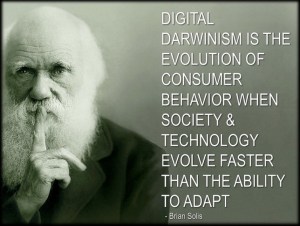
Quote by Darwin rapid-technology-social-changeNew market opportunities open and close at blinding speed, new competitors emerge overnight, product life cycles are getting shorter, and customers are more knowledgeable and sophisticated. This fast-changing environment has led to requirement to change learning and training.  However more often than not, the task of aligning the learning organisation to the business can be challenging and the perception of how the business views the learning organisation in terms of aligning to strategic initiatives is different to how the learning organisation perceives itself.

Downsizing has resulted in a mass drainage and outflow of skills as employees or contractors are let go.  To ensure that an organisation can compete globally and remains at par with the technological changes in the global market committing to the investment of on-going skill training is often viewed as a potential unnecessary incision into the bottom line.  This continued way of thinking comes at a cost because of the risks involved in

developing the professionalism of the staff (Lucey, 2004). The fear of poaching of the staff by other companies after significant investment has been made in upskilling and training from the said company is of real concern, because skilled, experienced staff when pulled in can respond faster to problems brought forward by the customers and ensure high productivity and efficiency in the long run (Corbett & Huggett, 2009).

With the explosion of mobile technology, organisations need to take advantage of the benefits, scalability, and viability of using mobile e-learning, using smart phones, tablets, and notepads that offer a blended solution  to read more click to download white paper…

AVPTGLOBAL almost 400 courses all globally accredited

AVPTGLOBAL almost 400 courses all globally accredited

Revealed: How Improved Confidence Brings Powerful Success

group of people

Confidence can be your key to success.

Confidence in Life and Networking can be learned.

Article by Diane Shawe Author

If you don’t have any shadows, you’re not standing in the light.
Lady Gaga

1. Learn to USE YOUR INNER DNA confidence

I feel it’s something that is always there, something you’re born with that gets lost along the way, or stolen by others. Sometimes you have to dig deep to find it again.
Amy Lee Tempest

 When you were born you did not emerge unsure of your cry or insecure about your umbilical cord. You came out unaware of external judgement, concerned only with your own experience and needs. I’m not suggesting that you should be oblivious to other people. It is just that it may help to remember confidence was your original nature before time started chiselling away at it. When you start feeling unsure of yourself remember: we were all born with confidence, and we can all get it back if we learn to silence the thoughts that threaten it.

2. Success WILL HAPPEN

It might seem strange to say expect success since you can’t predict the future, although according to Peter Drucker, ‘the best way to predict the future is invent it’. Conventional wisdom suggests you should expect the worst because then you won’t be disappointed if you fail and you’ll be pleasantly surprised if you succeed. Research suggests this isn’t universally true; pessimism can undermine your performance creating a self-fulfilling prophecy. Find the successes in every day and you will notice over time that they increase.

3. The unknown IS OK

Control is an illusion, you infantile egomaniac. Nobody knows what’s gonna happen next: not on a free way  not in an airplane, not inside our own bodies and certainly not on a racetrack with 40 other infantile egomaniacs.
Nicole Kidman in Days of Thunder (playing Dr Claire Lewinski)

People often think confidence means knowing you can create the outcome you want. To some extent it does, but this idea is not universally true for everyone. Confidence comes from knowing your competence / skills and acknowledging it’s not solely responsible for creating your world. When you take that weight off your shoulders and realise that sometimes the twists and turns have nothing to do with what you did or should have done, it’s easier to feel confident in what you are trying to achieve. Networking becomes easier and you fear.

4. Learn to receive praise.

It’s amazing how easy it is to believe all the negative things people say and yet discredit the positive. Taking a compliment is an art. Sometimes, it’s instinctive to assume they’re just being nice or that maybe you aren’t really skilled—you just got lucky. Occasionally, this may be true, but for the most part you earn the praise you receive. Don’t talk yourself out of believing it. Instead, recycle it into confidence. You did a fantastic job on your project at work-that means you can do it again. You had an amazing performance-that means you can trust you’re talented. Other people want you to succeed; now you just have to believe them when they show you you’re worthy.

5. Practice WILL MAKE YOU MORE confident

The harder you practice, the luckier you get.
Gary Player (Golfer) 1964

Like anything else in life, your confidence will improve with practice. A great opportunity to do this is when you meet new people. Just like if you were the new kid in school, they have no idea who you are—meaning you have an opportunity to show them. As you shake their hand, introduce yourself, and listen to them speak, watch your internal monologue. If you start doubting yourself in your head, replace your thoughts with more confident ones. Ask yourself what a confident person would do, and then try to emulate that. Watch your posture and your tone. Hunching and mumbling will make you feel and look less confident, so stand up and speak slowly and clearly. People are more apt to see you how you want to be seen if they suspect you see yourself that way.

You may have confidence in some areas and not in others; that’s how it works for most of us. Draw from those areas where you’re self-assured. Above all, remember you are talented and have real ability regardless of what mistakes you think you may have made. Start by acknowledging it and it is the first step to believing it in your heart; believing it is the key to living it. Living it is the key to reaching your potential.

Visit amazon for a selection of Diane Shawe Mindfeed books https://www.amazon.co.uk/Diane-Shawe/e/B0052WG8V6


Is Mobile Technology re-wiring the brains of our Children?

Overload or Growth?

Overload or Growth?

Or is there hope in a BRAIN project funded by the President of the USA?

Well you do hear people say that mobile technology and smart tech is rewiring their brains brain, making a new breed of digital natives and even brain washing our children. The facts are that they will spend 11.5 hours a day using smart technology; whether that’s computers, tablets, television, mobile phones, or video games (and in my experience usually more than one at a time). That is a big chunk of their 15 or 16 waking hours. The media tend to exploit these facts and combine them with pseudo-science with outlandish claims of ‘brain rewiring’ and potential harm. I have heard this uttered in alarm, (usually by those concerned that children’s ability to learn and pay attention) and stated as a ‘good thing’ by others, convinced that a generation of digital natives has developed incredible powers of absorbing and applying information.

Indeed 4 years ago President Obama officially announced in 2013 that 100 million dollars in funding for arguably the most ambitious neuroscience initiative ever proposed. The project has the catchy name of Brain Research through Advancing Innovative Neuro-technologies, or BRAIN, and aims to reconstruct the activity of every single neuron as they fire simultaneously in different brain circuits, or perhaps even whole brains. If you have seen Iron Man 3 there is marvellous moment when the evil Aldrich Killian (played by Guy Pearce) shows the beautiful Gwyneth Paltrow inside his brain in real time; a must see moment. The next great project, as Obama called it, could help neuroscientists understand the origins of cognition, perception, and other brain activities, which may lead to new, more effective treatments for conditions like autism or mood disorders and could help veterans suffering from brain injuries. It also might just help people realise why they need to choose a great course and real focus.

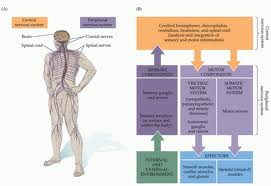
neuroscience and nerve system neuroscience brainSo what are facts about neuroscience and mobile smart technology? Can we learn effectively using smart devices? Well, when our minds are engaged in a simple or complex task, the information relevant to that task is held in our STM or short-term memory. According to the late but great psychologist, George Miller, this mental holding space can only contain four to seven pieces of information at a time. To be retained it needs to be transferred to the LTM (long term memory). We can only move information from short-term to long-term memory using our attention; we have to be paying attention to, and thinking about, a fact or a concept in order for it to be encoded in memory.

To encode properly you need to eliminate distractions, which are often caused by multitasking events. Young people report frequent media multitasking (texting, emailing, surfing the web, Twitter and Facebook) while also doing homework. Their belief is they can do it effectively, but research shows otherwise. In fact, research demonstrates that individuals who multitask the most are actually the worst at it. Whether we’re learning with a tablet, smart device or a book, it’s best to give it our best attention.

The rapid evolution of mobile technology has placed quite a burden on our concentration. The day is constantly being challenged by external sources. Even the most pressing of matters can be interrupted at any moment by a familiar buzzing in the pocket. This gives a friendly nudge to pay attention that the brain responds to and many find virtually impossible to resist; alarmingly even while driving. These all too frequent interruptions, coupled with growing expectations for immediate responses (emails responded to at 2am), will challenge our cognitive control system at its very core.

The cognitive control system is our ability to focus on accomplishing a task in the context of competing demands. You might want to look at a course that explains this in more depth. This special ability is what has allowed humans to achieve remarkable achievements, from developing languages and building complex societies.

It doesn’t matter that we think children are growing up digital natives and somehow addicted to technology. It simply doesn’t change how we come to understand new information. Basic understanding happens when we process new information in terms of its meaning, rather than its surface features. Understanding happens when we connect new information to what we know already.

It seems that the competing noise and multitasking distractions, will have a more significant negative impact for those with undeveloped or impaired focus and cognitive control. Those that easily lose focus such as children and us older adults, or in the presence of neurological or psychiatric conditions like ADHD or Alzheimer’s disease. There is no doubt that we have to be careful about the influence of unending data streams of interference on our minds. We need to make more informed decisions about how best to interact with the technologies around learners and how we use the technology positively every day. Perhaps the BRAIN project will guide us on new ways being effective learners.

The lesson seems to be that when we are engaged in something that requires high quality attention (like one of our excellent express courses in critical thinking we should conduct ourselves in a manner that is most appropriate for how our brains function: in the absolute focus mode.
So it seems that despite all the real concerns, technology is not rewiring young people’s brains or brain washing them. Indeed mobile smart technology must and can be harnessed to improve our minds. This will come as a relief to some and a disappointment to others. This new brain research will shed light on our understanding, our attention and focus systems and better memory that can now be applied to a new generation of humans, not so different from the ones who came before.

Mindfeed ebooks by Diane Shawe

Get a copy of Diane Shawe book from Amazon


 Shawe’s eBooks are available on Amazon right now at: https://www.amazon.com/Diane-Shawe/e/B0052WG8V6

About the Author

Diane Shawe is an author, speaker, trainer, mentor, consultant and entrepreneur with more than 15 years of experience. She has personally trained over 2800 people around the world in a variety of fields and has published a number of works. She has contributed to over 100 Kiva Entrepreneur’s around the world.

She was also one of the producers of a Day time Ladies Talk Show in 2015 and Host of one of the UK’s best loved Annual Hair Extensions Awards.

Diane also enjoys oil painting, sailing and clay pigeon shooting. She focuses on topics that she is passionate about in her writing and has attracted over 36,000 followers on her popular blog.

Media Contact
Company Name: AVPT Short Courses & Hair Extension Training Academy
Contact Person: Diane Shawe MEd
Email: Send Email
Phone: +44 208 1333120
City: London
Country: United Kingdom
Website: http://www.academyexpresscourses.com

Understanding the Language of Training

questionmarkI know what your thinking…

article written by Tim Dingle MBA
Chief Development Officer  AVPTGLOBAL

Training is about to undergo a revolution and the understanding of body language will be crucial for those undertaking training. Speaking at a conference in Birmingham last year, a leading HR director observed that there was nothing as important as understanding the language of business.  That must mean the non-verbal as much as the verbal expressed language.  Non-verbal communication is commonly known as body language and I spent a lot of time studying the basis of this and its importance in training and interviews. So the question is can it be read and used by individuals, managers and directors- or indeed in their wider professional or social lives?

Body language is a broad term for forms of communication using dress, body movements or gestures instead of, or in addition to, sounds, verbal language, or other forms of communication.  It is part of the category of paralanguage, which describes all forms of human communication that are not verbal language.  This includes the most subtle of movements that many people are not aware of, including, for example, a discreet smile or a slight movement of the eyebrows. Such messages can be communicated instantly and silently through gesture; body movement or posture, facial expression and eye gaze.

Henry Higgins and Eliza Doolittle would not have recognised it, but just watching an accomplished politician, actor, or shopping channel salesperson can give you some insight into the power of gestures or facial inferenceSuch gestures can add to the stagecraft, amplify the message and can provide surprisingly magnetic assurance about what you are being told.   Have a look at the courses we offer at The Academy of Vocational and Professional Training.

Can the use of these non-verbal signatures be imported into the business, training and HR arena?  It can be a risky strategy to attempt to read and rely upon body language signatures without some training and practice. Should individuals be aware of the power of non-verbal communication and seek to harness this aspect in negotiation? If our desire, as individuals in business, training or HR, is to produce our optimum performance then we should employ all of the communication and interpersonal skills with which we individually have been gifted.

We may well consider investing our time to improve our oral questioning and language skills, but very few individuals seem to give much thought to developing the skill of both reading and transmitting non-verbal clues. We can help! Developing those reading skills would be much easier if all our clients were between three and nine years of age – this is rare of course, even if sometimes a negotiation has something of a playground quality about them.  Children wear their emotions on their sleeves and are, except perhaps to other children or their doting grandparents, pretty easy to read.

Mobile Learning, Mobile Earning

Mobile Learning, Mobile Earning

Tightly crossed arms, a screwed-up face and a stamped foot quickly clues you into the internal voice of the child, even if their response to the question, “Are you OK” is “Yes”. A parent’s sixth sense is often nothing more than a demonstration of the superior body language reading skills that child carer’s, of necessity, have learned to develop.  The older we grow the more we learn how to mask our true feelings, which unconsciously includes the toning-down of our body language as well.  Whilst we can try and make our non-verbal communication less obvious, very few people can completely mask it.

HR directors, business people and individuals, might want to learn to look for those more subtle, but tell-tale, signs of stress, hope, agreement, confidence, resistance, and fear in the body language of the clients, and indeed their own clients.  Picking up on these signs could allow us to make progress in a situation of stale-mate and could save a negotiation that is about to crash.  These skills can allow us to zero-in our questioning, to know when a private meeting or a break is essential, and to see the evident bridges and agreements, even when the other side have yet to verbalise them.  How too are we at listening to clients, staff and business partners when they speak to us?  Are we fully engaged with them, having turned our chair, and thus our whole body towards the speaker, leaning forward and maintaining good eye contact?  If you want to be heard in your turn, you need to be seen to be listening.

People will usually only tell us what is really on their mind if they believe that we are really listening.  Do we really listen?  Taking notes whilst staring at out iPad or mobile phone as the person tells their story, does nothing to build confidence in us or the process.  Active listening skills such as reflecting back a summary of what has just been said by the speaker may just persuade, non verbally, a client to listen to you and thereby facilitate success. HR directors, managers and individuals should be encouraged, therefore, think about using their body language positively to enhance the oral skills that they already have, allowing them to maximise their potential as conflict resolution practitioners.

I know what you are thinking. You need to start training, now.   

Please review our VTF  Presentation and let us know if this is an opportunity for you.

Meet some of our current VTF’s: 

Invitation to our Free 2 hour introduction.

AVPTLTD LOGO

Four Pillars that underpin buyers requirements for eLearning

Get qualified in days not years

article by Diane Shawe M.Ed

Whilst I am in the industry and excited by the latest trends in e-learning  through blended Learning Management Systems (LMS)  learning being hugely of interest at present, I believe that the four  pillars that go to underpin the buyers requirements and therefore still define the industry offerings are centered around the following:

• Compliance and accreditation
• Scalable and flexible whilst achieving a real reduction in Cost
• Improving , track and measuring Learners performance
• Real time management, alignment and communication to support ongoing changes.

The ability to track and report learner performance remains upper most in many procurers mind.

It will become increasingly important to have specified learning strategy which can deliver effectively against all of these requirements, and getting the “e-learning mix” of technologies obviously including content, collaboration and communication environments (social learning) and control mechanisms will be the key to further industry growth.

Under-pining these trends we are seeing growing interest in how e-learning can address softer skills and this is why we have concentrated our LMS content to this area of learning.

Some vendors are following the vertical market and configuring the offer to meet specific needs, others are differentiating by adding social media and social learning functionalists, and others such as us are aligning the LMS to the latest technologies being colonised by the e-learning industry – mobile/smart devices and video driven content. The trend from the USA is strongly toward talent management and we are often lagging behind.

The smart vendors in my view are aligning and integrating with other solutions: HR, ERP, CRM etc…. Content or Content, which to choose…..?

These developments can only be positive for the industry, as the demand for quality and quantative content will grow and grow.

My one but final view is that we will progress from blending to mixing the content provision as this will be the key challenge to the e-learning industry. The importance of content won’t go away, its just changing faster becoming more “Re-purposable” , “Flexible”, “Interoperable”, and “Accessible” learning content!

Now get this, I am so loving the fact that on its way to us is 3 Dimensional technologies, simulation, holographic all of which will increase the demand for new genres of learning content into a learning reality!

http://www.expresstrainingcourses.co.uk

Mobile Learning is the HOT’s

Helping a Higher Order of Thinking Skills

Get qualified in days not years

article by Tim Dingle CDO Academy of Vocational and Professional Training Ltd.

The world of online learning is changing very rapidly. Instead of the old mantra of ‘e’ Leaning, we can now truly think about ‘mobile’ learning or mLearning. There is no doubt, mLearning is hot. And for good reason. If done right, it can produce great results by decreasing costs and improving performance.

Recently, I had a conversation with someone new to mLearning and it struck me that she didn’t fully understand the value of mLearning.  I think this is common as more people are joining the world of mLearning.  Understanding mLearning’s value helps you make the best decisions about when and why to use it.

So here at the Academy of Vocational and Professional Training, we recopognise the power of mLearning and suggest the following reasons why it will dominate the online education market.

1.      Decreased training costs.  Producing learning content is time consuming whether it’s online or not.  With mLearning, each time the course is accessed your return on investment improves because you are dividing the fixed production costs by number of uses.  You also have savings through decreased travel, reduced material, and hopefully improved (and more efficient) performance.

2.      Less material costs.  Let’s say you have to train how to arrange equipment in a sterile environment like an operating room.  If you had to use the real environment, it would be costly.  Even setting up a fake environment has material costs and labour.  By creating the environment online and letting the learner practice, you never have to worry about the costs associated with set up, use, and clean up.

3. Increased productivity.
 Because mLearning is not bound by geography or time, you can control training’s impact on production by training people during down times.  In addition, with the current economy, you’re asking people to do more with less.  So mLearning is a great way to give them the tools and skills needed to enhance their performance.

4. Getting the message across.  You may have a great facilitator, but that’s no guarantee that the courses are presented the same across sessions.  mLearning allows you to create a standardized process and consistency in the delivery of content.  It also compresses delivery time.

5. Synchronous and Asynchronous Learning  Live learning events require that those who participate align their schedules to the training calendar.  mLearning eliminates this because the course can be accessed anytime, anywhere.
6. Giving the freedom to fail.  Real learning requires some failure.  But no one likes to fail in a classroom full of other people.  mLearning lets you fail without fear.  This encourages exploration and testing of ideas.  With the right feedback you create a great learning environment.  Worst case, you can always start over.  Something you can’t always do in class.

A New Career Opportunity


7. Learning and Retaining.
  The combination of multimedia and instructional design can produce a very rich learning experience that is repeatable.  Throw in some good practice activities with feedback and you have a learning environment that’s going to help your learners retain the course content which will produce results.

8. Student Centred learning.  Look out the window at a car park. My guess is that you’ll see a dozen or more different cars.  They all do the same thing, yet we have personal opinions about what we want to drive. The same for learning.  Learners want control.  mLearning allows you to offer control to the learners in a way that classroom learning doesn’t.
mLearning Nurtures a Learning Organisation and Community

9. Learning Management.  Many people see mLearning as only the authored courses.  But mLearning includes all sort of online technologies.  If you incorporate some of the tools that allow collaboration and conversation, you can capture organizational knowledge that is available for future learners.

10. The Sharing Economy.  The foundation of a learning community is built on sharing what you know with others.  This is where incorporating a forum or wiki really adds value to your mLearning.  Depending on how the course is structured, you can encourage sharing of resources and insight gained from the course.

In addition to all these advantages, mLearning is really good for the environment. An Open University’s study found that producing and providing distance learning courses consumes an average of 90% less energy and produces 85% fewer CO2 emissions per student than conventional face to face courses.

One of the challenges with making mLearning effective is how you manage the courses and access to resources.  I’m an advocate of freeing up the course navigation and giving the learner more control .If you’re using a learning management system you might consider how that impacts the learning.
MLearning is cost effective and can produce great results.  It’s all a matter of how you use it. Have at look at our online learning system, mLearning and the eLearning future. Go to: www.expresstraingcourse.com or call us on 0203 551 2621

Tim Dingle BSc (Hons), PGCE, MIBiol, MBA has been involved in education, management and training for the last 30 years. Tim is a former Headmaster of a top school and gained an MBA with a distinction. His dissertation was on Body Language and Interview skills. He has a unique insight into teaching, leadership and management and has now written 24 books on a variety of topics in education. His background in management also includes being Chairman on England Schools Rugby and running a successful Comedy venue. He is rained in NLP and other advanced brain strategies and lectures on these topics around the world.  His academic pedigree (in Biology, Teaching and Body Language) combined with his Mediation skills, gained him a place on the Board of the Global Negotiation Insight Institute (which used to be the Harvard Negotiation project). He has an inspirational style and his enthusiasm for learning is infectious. Tim was an officer in the Royal Navy Reserves for 20 years and is a Yachtmaster and successful sailor.

Tim Dingle is the Chief Development Officer at The Academy of Vocational and Professional training.

Why 2013 is going to be a bumper year to become a Virtual Teacher

Become a Virtual Teacher Facilitator

I originally blogged way back in 2010 that the growth for professional trainers was going to grow.  But I have since spotted a gap in the market which is now becoming a growing trend throughout 2012.

So why is 2012/13  going to be a different type of bumper year for training organisations or consultant who can help the  unemployed individuals upgrade into a new skill that will help them generate their own income?

Well usher in the new breed of Virtual Teachers!  If your not up to speck with the new direction and growth in the market then you could really find yourself on the old fashion self by 2016!  Make no mistake, becoming a trainer is all about running a business.   Being up to date with the latest techniques, developments, trends and needs is just as essential if you decided to set up a coffee shop.

Institutions of higher learning increasingly embrace on-line education, with 65.5 percent of chief academic officers now calling on-line education ‘critical’ to their institutions! long-term strategy, an opinion that’s risen more than 15% over eight years.

Like any business you still have to source new customers, gain glowing appraisals and testimonials, get your pricing right, court the right type of publicity and sustain credibility.  Oh! and let’s not forget making a profit.

We all know it takes a certain kind of self belief and courage to set up any type of business in today’s climate. You could even make a claim based on sheer desperation, the need to do something to generate an income.

But it even takes more courage to leave your destiny in the hands of many of the businesses today, no matter what their global or brand status might be. Most people are now being spurred into self employment due to the levels of redundancies, job insecurities and the need to meet ongoing expenses.

Participants are more interested in the qualifications and or skills they will gain in the subject at hand, and the experience you have in doing jobs similar to theirs and your track record in ‘doing’ rather than ‘talking about’ the topic.

What is really important is your ability to engage with participants around this experience and help them to translate that into action. That is where the true value often lies for them. Of course we know that there are academic trainers and teacher courses which award accredited or private certificates.

Choosing the entrepreneurial route can bring great benefits, but there are also challenges.

What are some of the considerations before you decide to set up, invest or replicate another successful business model?

  1. Be candid about your strength and weaknesses. What do you have to bring to the table?
  2. Do as much homework as you can before taking the plunge
  3. Look carefully into all aspects of owning and running a business and sound out anyone you know who has already done it.
  4. Be prepared to change your idea or abandon outdated school of thoughts.
  5. Don’t be scared to appraise negative feedback, all businesses have a negative and positive aspect to them.
  6. Prepare a business or marketing plan. You’ll save yourself a lot of time, money and stress if you understand as much about the theoretical side of the business as well as the vocational aspects

Ask yourself these key questions before launching your business:

a) Is there a demand, how long will the demand last, is it scalable, can you bolt it onto anything else, can you partner?

b) Have you got the full support of your family? Your decision is likely to impact on them, so talk to them first. Don’t be put off by their own fears, if you can actively offer up reassurances of how you can cope with whatever concerns them, then will be serve to give both them and yourself the confidence to move forward.

c) Speak to any contacts you have in the sector you plan to work in. If you are going to invest in a Franchise, they try to get some feedback from any previous candidates who have made the investment.

d) Check out the competition. If there isn’t any, why not? You may not have rivals but will you have any customers?

e) Are you prepared to work the long hours to get the business off the ground?

f) Do you have the necessary skills? Can you cope with paperwork? Can you cope with criticism?

g) What about funding? Talk to several banks and consider various options, be careful though, they are not assisting many businesses today they are more interested in protecting their own levels of risk and increasing their profits. Some of the smaller banks might be of interest as they might treat you more like a customer than a commodity.

h) Could your training course attract funding on behalf of the student? This might make it simple for them to enter your training services if some of the costs could be supplemented.

i)  Are you clear at delivering information, can you present subject matters or theory step by step, what training would you need to boost your technique, confidence and presentation skills.  Could you get funding for your own training?

Important advice about redundancy money

If you are considering using your redundancy money, make sure you set aside enough for household bills and other costs. It is important that you think of your redundancy money as your cushion until you get yourself back on your feet.

  1. Invest what you feel you can afford to risk or lose but do so where you have some knowledge and a passion for the subject involved.
  2. Try not be over powered by flash organisations offering huge earning potential subject to you parting with lots of your own money.
  3. Don’t rely on the referrals and testimonial they supply to you.  Do some of your own research.
  4. Remember every business has to start small and keep lean before it can grow to a stable long term business
  5. Don’t rely on marketing short-cuts, this can be very expensive and  not very productive.

More and more people are looking for good quality training courses that can add value to their life, career portfolio and career longevity.

It has been proven that most recessions bring an influx of new businesses, entrepreneurs and even millionaires. One of these new areas of business is the growth of the non surgical hair replacement and hair enhancement sector.

The UK and Europe has a shortage of properly trained trainers who can deliver a variety of hair extension and hair enhancement technique to the non professional and professionally qualified sector.

An opportunity now exists for anyone wanting to enter the vocational training market with a service that has far reaching benefit and impressive revenue streams.

An opportunity exists throughout the UK today to establish your own virtual training school in this very selective and much needed service. Visit our website to read a little more about how you can make the first steps to becoming a Virtual Trainer