Tag Archives: business startup

Millions of grandparents expect to have to help fund their grandchildren through university

Grandparents up skill your grandchildren with a soft skills course

Grandparents up skill your grandchildren with a soft skills course

Millions of grandparents to fund grand children’s university education as students continue to struggle with high tuition fees

article by Diane Shawe M.Ed  AVPT

Due to the rising cost of tuition, it has been reported that grandparents are helping to bail out their family by contributing to the rising cost of education for their grandchildren.

Around one in eight over 55s think they will need to contribute to fees of around £9,000 a year, with many dipping into their savings to help out their grandchildren when they go onto higher education.

Researchers found as people got older more expected to make a contribution, 10 per cent of those aged between 55 and 64 planning to help with funding, which increased to 15 per cent for the over 65s.

Around 637,456 students applied to university in 2013, compared with 618,247 in 2012, which suggests people could be using their families to help them pay fees.

Accessing quality courses online and on the move

Accessing quality courses online and on the move

Ucas reveals 4% increase in the number of applicants to UK universities despite slight decline in number of 18-year-olds according to the Guardian’s report in  January 2014

The study of over 55s by Key Retirement Solutions found as many as one in eight grandparents – equivalent to 1.7 million over-55s – expect to have to pay towards their grand children’s university fees.

“The numbers of grandparents providing financial assistance for university tuition is set to rocket from current levels as the implications of the maximum £9,000 a year tuition fees become clear.

Young people from the worst-off areas in England are now almost twice as likely to apply to university as they were 10 years ago, according to the Ucas data.

But academics and policy experts said the buoyant figures masked some unhealthy trends, with wide gaps in participation and a worrying fall in the number of young men applying to university compared with women.

“With finances for the over-55s under strain from falling annuity rates and historically low savings rates taking on extra commitments requires careful thought and planning.”

Why online education will woo the person with the purse strings?

The higher-education model of lecturing, cramming and examination has barely changed for centuries. Now, three disruptive waves are threatening to upend established ways of teaching and learning.

Around the world demand for retraining and continuing education is soaring among workers of all ages. Globalization and automation have shrunk the number of jobs requiring a middling level of education. Those workers with the means to do so have sought more education, in an attempt to stay ahead of the labour-demand curve. In America, higher-education enrollment by students aged 35 or older rose by 314,000 in the 1990s, but by 899,000 in the 2000s.

So demand for education will grow. Who will meet it? Universities face a new competitor in the form of massive open online courses.
These digitally-delivered courses, which teach students via the web or tablet apps, have big advantages over their established rivals.

With low startup costs and powerful economies of scale, online courses dramatically lower the price of learning and widen access to it, by removing the need for students to be taught at set times or places.

This could eventually be the saving grace for lots of grandparents.

As one of the disruptive effects of the job market is the requirement for more people to develop and have doing skills, entrepreneur skills and all round communication skills, looking at short expert courses could be the best gift a grand parent or parent could give to their child.
AVPTGLOBAL almost 400 courses all globally accredited

AVPTGLOBAL almost 400 courses all globally accredited

Why employers and training organisations need to take heed of this global trend

Diane Shawe CEO AVPT

Diane Shawe CEO

The Changing face of Skills and Training

article by Diane Shawe M.Ed CEO

In a report conducted by Kelly Global Workforce Index in 2013 over 120,000 respondents from 31 countries across the Americas, EMEA an APAC regions where asked several questions about Skills and Training.

When asked to identify the main motivation for earning new skills or undertaking training, the largest share of employees 57% cited the opportunity for promotion with their current employer. A further 47% cited the opportunity to work in another organisation, and 42% planned to enter a new field of work.

Globally, 60% of worker are either actively seeking further education or training (23%) or considering it (37%).  The APAC region stands out as a skilling hotspot, with 69% of those surveyed either considered or seeking further training for a new field.

Across the globe, there are markedly different approaches to the notion of additional training and professional development. The highest rates of planned upskilling are predominantly in developing economies, while the lowest rates tend to be in some of the most prosperous nations.

Russia heads the list for training intensity, with an astonishing 92% planning some form of training. Also high on the list are Thailand, Mexico, Brazil, Indonesia, Puerto Rico and Malaysia.

Surprisingly the lowest rates of planned training are in France, Luxembourg, the US and Switzerland.

Among professional and technical employees, those most likely to be actively seeking to upgrade their skills are in Math, Engineering and IT, while the least likely are in Science, Health Care and Education.

Investing in Training that Works

For training to be meaningful it needs to be relevant and practical – not “training for training sake”.

When asked to identify the mot desirable means of furhering their skills, the overwhelming preference was for on-the-job experience and training, identified by 70% of respondents, significantly ahead of the next hightest ranked “continued education and training” cited by 58%

Building a durable Skills base

The last two decades have radically altered the way skill are acquired and developed. Skill are no longer “front-end loaded” onto a career. Rather they are increasingly embedded as part of lifelong learning and development.

The upgrading and renewal of skills plays a critical role in personal and professional development. It also has a vital role in broader workforce development, which is the cornerstone of organisational efficiency and productivity.

All skills have a finite life, and in industries subject to high rates of technological change and innovation, the lifespan of skills is becoming shorter. Increasingly, new skills will need to be learned and deployed throughout a working life.

It is clear that decisions about training and professional development are now an integral part of the employment equation, and have an important bearing on employee moral, performance and retention.

What Employers can do

  • Consider opportunities for training and personal development.
  • Help to build a culture of continuous learning so that employees are encouraged to develop and use new skills
  • Encourage employees to think about career plans and the type of skills and training they need to stay equipped.
  • Consider training as a key element in employee attraction and retention.
  • Champion individuals who have devoted time to upskilling so they can become ambassadors for an organisation.

The landscape has changed

The scale and duration of the downturn has forced may employees to look afresh at the whole area of training and professional development – one that was previously guided by employers.  Employees now recognise that they cannot solely rely on an employer to direct in this important element of their lives.

A new generation of workers is taking on much greater responsibility for their training and professional development, including the way it is provided and funded.

The global economic shock-waves have unleashed a new orthodoxy and a unforeseen outcomes has a new generation of employees are more independent, globally focused and adaptive.  The new challenges for global employers is to understand why the landscape has changed and prudently look beyond the present and where the best skilled workforce will be and what work will look like in 10 or 15 years.

Call us to enquiry about our soft skills courses

Call us to enquiry about our soft skills courses


How Blended Education Makes Learning Process More Efficient

Photo courtesy of Guilia Frsythe

Photo courtesy of Guilia Frsythe

As internet connectivity and smart devices become every human being’s daily companion, with 1.75 billion users worldwide as eMarketer reported, more and more academic institutions are now leveraging the power of technology to re-invent the traditional classroom learning model.

The 2013’s United States Education & Workforce Committee study said that 31 states are now offering full-time eLearning tools to almost 275,000 K-12 students and 70% of all US school districts are now integrating blended learning (BL) programs in their curriculum.

One of the biggest trends in the academy, BL is a teaching approach that combines face-to-face learning through online-based instructions/activities. To facilitate, students are allowed to use their smart devices to do research, work on activities, complete their assignments, seek consultations, and consume digital learning resources in or outside the campus. But, how can this teaching methodology make learning efficient? Read on our discussion below as we further elaborate the topic.
Learners Are More Engaged

The infusion of online learning tools and traditional classroom lectures expands the learning resources being offered to the students. Apart from textbooks, teachers can pull out relevant video materials online and project it in front of their students to explain the topics further. Educators can also showcase online slideshows and interactive web applications to further strengthen their class discussions.

With BL, the possibilities of getting a reliable learning resource are endless. With the advent of video conferencing, students and teachers can go beyond the four corners the classroom. For instance, in foreign language topics, this innovative tech solution can be maximized in arranging live language lessons from native speakers worldwide. It can also be utilized when facilitating lectures on different cultures worldwide.
Students are safely browsing

The common concern with this learning strategy is that students are widely open to various content online, such as social media and online games that are deemed to be distracting in class. However, with the latest mobile technology today, we are now presented with devices that can block or curate content specifically for students only. One of the biggest brands Apple launched its own Kid’s App Store where students can only access curated educational apps and games. The latest Samsung smartphones, including the Galaxy S5, are also equipped with Kids Mode that let’s one set some parental control on the device, as featured on this source. As for Nokia’s Lumia range of Windows Phone devices, Microsoft also designed a special feature called Kid’s Corner which allows parents to choose the kind of apps and digital content they can only view and access. These innovations minimize the apprehensions that most parents and traditional educators have towards smart devices.

Teachers Can Access and Create Various Educational Content

Since the Bring Your Own Device (BYOD) policy is a part of this learning strategy, educators are given the opportunity to easily design a variety of content types tailored to their students. Apart from online blogs and Massive Open Online Courses (MOOCs) where professors can access a myriad of educational content (infographics and video lectures), they can also access mobile applications and e-Books to accompany their lectures.

The Academy of Vocational and Professional training are also currently the leaders on online Soft skills courses which are mobile device compliant, globally accredited and accessible 24/7

Since mobile devices nowadays are equipped with media creation tools, teachers can even create or design their own content to accompany their discussion. For instance, with many of the apple and android tablets,  are empowered to create slide shows with engaging music. The free movie making tool can also help them create video presentations combining photograph, audio, and text element.  It’s worth checking out the Samsung and iPad apps.
Makes Students More Engaged

Timothy HuneyCutt of National Math + Science Initiative pointed out that when “technology is integrated into school lessons, learners are more likely to be interested in, focused on, and excited about the subjects they are studying.” In subjects that may appear monotonous to selected students (such as Science and Math), teachers can use virtual lessons and one-on-one tutoring to encourage them to learn.

how to get your online website to attract clients free seminar 2014

Students Can Learn At Their Own Pace

Failure to digest the educator’s lecture can lead to students’ discouragement towards learning. With BL, if they fail to understand a particular lecture, they can ask their instructor to give them individualised instruction or learning materials through emails, video-conferencing, and social media channels. Students who are shy to speak out in the class through face-to-face on-campus discussion are also given the opportunity to shine and excel in class through BL.

BL can further enhance students’ learning by integrating technology and online resources to support the traditional face-to-face lectures. As we move to a more digital era, where handsets are now wearable and voice command accessible, we should see more improvements in educational technology in the coming years.

Blog by Jennifer Birch

Blog by Jennifer Birch

About the Author

As an EdTech advocate, Jennifer Birch believes in the power of Blended Learning. For her, the infusion of online learning tools and traditional classroom expands the learning resources being offered to the students. Connect with Jenni via Google +.

Chinese Entrepreneurs Scoops Business Award

Chinese investment hotting up in UK

BCC LinkToChina's avatarBCC LinkToChina

A Chinese student-entrepreneur-led proposal Evercise won a £110,000 award at the UK CTC Entrepreneurship Award on 11th May in London.

Chinese investment in the UK is heating up and investing in UK is no longer the exclusive territory for the seasonal businessmen or large corporates. Five Chinese young entrepreneur groups battled it out in a tense final after winning through two previous rounds against hundreds of competitors in the last two months.

Dr Kegang Wu, who represents BCC LinkToChina, was among the judges in the final, encouraged more young Chinese entrepreneurs to set up businesses in the UK and offered support. The final and his post-award comments can be viewed on Youtube and PropellerTV which is a Chinese invested company and free on Skye 189.

View original post

The power of a Bucket List – Stephen Sutton exceeded his raising over £3million

stephen sutton raises over 3 million report expresstraining coursesThe Power of a Bucket List

Have you made one, or thought about it? Maybe it includes a marathon or to dive in the Great Barrier Reef, walk the Wall of China or a skydive? Well then this should inspire you to get going on that list…

At the age of 15, Stephen Sutton was diagnosed with bowel cancer and two years later he was told it was terminal. Some teenagers would have quit there, given up on their hopes and dreams and let the b*stard that is cancer beat them. But not this one.

Instead, Stephen created a whopper bucket list with 46 tasks on it that he wanted to complete with all funds raised going to the Teenage Cancer Trust. It included:

 ─        Skydive for charity

─        Organize a charity party

─        Write a book

─        Organize a charity football match

─        Organize a charity gig

─        Go busking!

─        Persuade local schools to have a ‘get wiggy with it’ non uniform day

─        Charity quizzes at local pubs

─        Organize a charity ball

 All of which Stephen completed since being diagnosed, really quite amazing let’s be honest. But the best was yet to come. Stephen aimed to raise £10,000 for the trust but thanks to the wonderful world of social media the world spread with #ThumbsUpForStephen trending in the UK and one point donations were being made at a rate of £1,000 a minute.

The result
Stephen has now raised a total of £2,225,152 and it’s still going up. He really is quite the legend and we hope that Stephen feels proud of what he has done and it motivates him to continue fighting his cancer.

So have you created your own Bucket List  it is similar to setting goals, click here to find out how to go about setting your goals and creating your own fantastic bucket list.

1 AVPT Student Recruitment Advert

Does nine different kinds of intelligence make you any smarter?

In this article, I will talk about the different ways in which Multiple Intelligence Theory can be implemented in e-Learning to help the learner effectively acquire, retain, and utilise the information being provided within the e-Learning course.

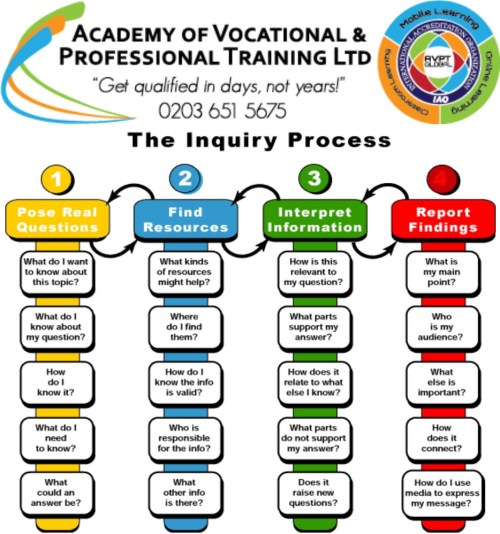
the enquiry process to soft skills training april 2014

The Multiple Intelligence Theory was developed by Dr. Howard Gardner in 1983. Dr. Gardner, a noted psychologist and professor of neuroscience from Harvard University, suggested that every human being interacts with their environment differently. We each possess nine different kinds of intelligence, but our experiences, cultural beliefs, and knowledge base determine their exact configuration.

What is “intelligence”, according to Multiple Intelligence Theory?

According to Gardner, there are three key elements that determine a person’s intelligence:

  1. The ability to create a service or product that will be valued in the person’s society of culture.

  2. A skill set that allows the person to solve real world problems that they may encounter in life.

  3. The ability to potentially create new solutions for problems or to utilize existing solutions. This typically involves the acquisition of new knowledge. 

Multiple Intelligence-Based Activities in eLearning

Multiple Intelligence Theory can be implemented in eLearning based upon the nine multiple intelligences. Let’s take a closer look at each category and which multiple intelligence-based activities can be utilized during instructional design to create the best possible eLearning experience for the learners:

  1. Musical (or Rhythmic) Intelligence
    This intelligence involves the capacity to think and learn in terms of music and rhythm, and to recognize and hear patterns. An activity that would appeal to this type of intelligence is a lesson that includes music or sound, such as a multimedia presentation. Try to use music that emphasizes the subject matter and creates a more immersive experience for the learner. Since there is more of an auditory aspect with this particular intelligence, lectures can also be very helpful. People who demonstrate a high degree of musical intelligence may be ideally suited for musical professions, such as composing or playing an instrument.

  2. Linguistic Intelligence
    This intelligence is associated with expression through language. These people tend to be able to eloquently convey their thoughts and to understand the words of others. Writers and speakers typically display a high degree of this sort of intelligence. Any activities that include discussion, such as online forums or group-based scenarios, are ideal for individuals who lean more toward linguistic intelligence.

  3. Mathematical (or Logical) Intelligence
    This involves the ability to identify principles or structures within a system. This intelligence is often associated with the logic or the manipulation of numbers.  Activities ideally suited for this intelligence may include diagrams, charts, or tables. Critical thinking scenarios are also useful with this group. Accountants and researchers often have a high level of mathematical intelligence.

  4. Kinesthetic (or Bodily) Intelligence
    Body Intelligence involves the use of a person’s entire body to figure out solutions or to create something. People who demonstrate a high degree of kinesthetic intelligence may be ideally suited for performing arts professions, such as dancing, or careers that require an innate knowledge of one’s own body, such as a doctor or athlete. Activities that are best suited for this sort of intelligence include games that involve hand-eye-coordination or interactive scenarios that require physical involvement. The thing to keep in mind about this group is that they are best able to learn when muscular movement is involved. So, include activities that require movement and physical response.

  5. Spatial Intelligence
    This intelligence pertains to a keen sense of space and how one can navigate those spaces. Activities that involve flow charts and graphics are ideal for this intelligence group, as well as games or multimedia that is visually appealing.  Architects, pilots, and sailors often have a high degree of spatial intelligence.

  6. Intrapersonal Intelligence
    This involves an in depth understanding of oneself, such as what you can accomplish and how you react to certain situations. As such, individuals with high intrapersonal intelligence often have a sense of what they should avoid and what they want to achieve in their lives. Professors and philosophers often possess high degrees of intrapersonal intelligence. Activities such as collaborative learning exercises (online forums) and chat programs enable intrapersonal intelligence learners to help others and to share experiences and ideas. This category responds well, first and foremost, to activities, which require introspection.

  7. Interpersonal Intelligence
    This is the capacity to understand and learn from others. People who demonstrate a high degree of intrapersonal intelligence may be ideally suited for service professions, such as teaching or politics. Those who identify more with this category of intelligence may benefit from group discussion activities and in depth questions that make them fully explore the topic. What’s important to remember about interpersonal intelligence is that these individuals are sensitive to others’ moods and feelings. They work well in-group settings and are often able to learn more effectively when collaborating.

  8. Naturalist Intelligence
    This intelligence involves the capacity to differentiate between living organisms and to view the connection between all natural things.  People with a high degree of naturalist intelligence usually have a close bond with nature. Botany and biology are two career fields that closely identify with this sort of intelligence. Activities that involve classification or organization appeal to these individuals.

  9. Existential Intelligence
    This particular intelligence was added later by Gardner, and is not commonly associated with learning environments, as it is geared more toward spiritual and philosophical views. For example, someone who has a high degree of existentialist intelligence may have a tendency to pose questions about life’s purpose or death. 

It’s important to note that instructional designers should not feel obligated to incorporate all of these multiple intelligence-based activities into their eLearning courses, just that it may be beneficial to offer a variety of multiple intelligence-based activities to more effectively illustrate the subject matter. If you are able to offer learners a diverse set of learning tools and eLearning strategies, then you gain the ability to increase comprehension and retention, not to mention enhance the overall eLearning experience.

Call us to enquiry about our soft skills courses

Call us to inquiry about our soft skills courses

The tricky first million

Growth Accelerator Diane Shawe

Growth Accelerator Diane Shawearticle by Diane Shawe M.Ed   AVPT Ltd

It is often assumed that raising external, or third party, equity is a prerequisite to business success. In the majority of cases, this could not be further from the truth. Most businesses start with very limited funding, and as these businesses develop, they bootstrap their growth, using their own profits and assets to finance their needs. As a result, they get to keep their potentially valuable equity in the hands of the founder or the family, along with the choices and freedom that brings.  Often the next step up from that is developing the owner managers skills to take them to the next 2-3 million.

For some companies, however, the size of the opportunity or the need for fixed or working capital exceeds the available resources. In these cases, raising external equity may be the only available option.

Diane caught up with up with Lotwina Farodoye, Growth Manager for Growth Accelerator at Grant Thornton’s Euston offices  last week and put these questions to her:

So What is GrowthAccelerator?

Growth Accelerator is a unique service led by some of the country’s most successful growth specialists.  A partnership between leading private sector business growth experts led by Grant Thornton, and backed by a £200 million investment from the Government, GrowthAccelerator gets to the heart of the barriers that are holding  businesses back;  helping identify the critical steps you need to take to achieve your next phase of growth – rapidly and sustainably.

 How does Growth Accelerator Achieve this?

We’ll work with businesses to develop a growth plan which is completely bespoke to the needs of a business.  It will involve a commitment of  time but with the support tailored to your business priorities and the way you work, we won’t waste your time on issues you’ve already got covered.

So what does Growth Accelerator focus on?

We focus on three core areas: Access to Finance, Business Development or Growth through Innovation.  All three are delivered through a combination of coaching, workshops and masterclasses.

What will GrowthAccelerator do for my business?

GrowthAccelerator will give you the framework to :

  • Build a successful growth strategy
  • Discover new routes to funding and investment
  • Unlock your capacity for innovation
  • Build on the power of your people
  • Unite and inspire your leadership team; and

How is GrowthAccelerator different from other services?

GrowthAccelerator offer matched funding up to £2,000 per senior manager in the business, who’s pursuing training that will help improve their performance and help the business grow.  (This offer is available once the company is a participant on GrowthAccelerator) This is where approved company’s such as Academy of Vocational & Professional Training come in and deliver the bespoke training.

Who is Growth Accelerator right for?

GrowthAccelerator exclusively targets businesses with potential for high growth who want to enter their next growth phase and have the potential and determination to get there.

If that’s not where you are, then GrowthAccelerator isn’t right for you.  But if it is right your business and you fully commit to the support owe give, your business will grow and grow faster.

Who is Eligible for Growth Accelerator ?

To be eligible for GrowthAccelerator, a business must be registered in the UK and based in England, have fewer than 250 employees and have a turnover of less than £40m.

What investment is required?

Your contribution will depend on the size of your business.  With Government co-investing in the growth of your business and making a major contribution towards the cost, you pay only a one-off fee.

 1 to 4 employees………………………………….     £600 + £700 VAT* = £1,300

5 to 49 employees…………………………………. £1,500 + £700 VAT* = £2,200

50 to 249 employees…………………………….   £3,000 + £700 VAT* = £3,700

* VAT is based on 20% of the nominal value of the service – £3,500

if you want to find out more just contact diane on growthaccelerator@expresstrainingcourses.co.uk

AVPT Growth Accelerator Training Providers portrait

Academy of Vocational & Professional training becomes approved training provider for Growth Accelerator

AVPT Growth Accelerator Training Providers 2014The Academy of Vocational and Professional Training are excited to become an approved training provider for GrowthAccelerator through Grant Thornton.

GrowthAccelerator is a partnership between some of the UK’s leading, private sector growth specialists – Grant Thornton, Innovation and Winning Pitch and backed by Government, to help businesses with high growth potential. If you have fewer than 250 staff, and less than £40 million turnover, you may qualify for up to £2000 per person funding for leadership and management development.   Diane Shawe the CEO is delighted to be supporting the new GrowthAccelerator initiative .

GrowthAccelerator, is a new £200m Government backed programme that aims to provide SMEs across England with the know-how and ability to achieve rapid and sustainable growth.

Lotwina, one of the growth managers at Grant Thornton London, explains  “the GrowthAccelerator initiative  incorporates a training grant for bespoke training development programmes for  management team; expert coaching support and tailored business workshops”.

AVPT will be delivering bespoke training courses in Leadership and management which are a key part of GrowthAccelerator, with every participating business given an opportunity to develop the skills of their leaders and senior managers through match-funded training.

Through GrowthAccelerator, businesses can claim up to £2,000 per senior manager to match fund the cost of leadership and management training that supports the growth objectives of the business.

business man hand touch virtual 3d leadership skillMatch funding significantly increases the value of any senior management training your client invests in – and gives you an opportunity to deliver more leadership and management training relevant to your client’s needs.

Currently there is no limit on the number of senior managers who can be supported, and different managers within the business can undertake different training programmes.

GrowthAccelerator has been developed for businesses with the capacity, commitment and ambition to significantly increase their turnover or employment over the next few years. Many of the companies that AVPT works with and supports are exactly those that this service is aiming to attract and engage with. We are therefore working closely with the GrowthAccelerator programme to cross-refer potential clients and to ensure a good fit between our respective offerings and activities.

Growth Accelerator Diane ShaweWe would love to check your eligibility. We can then partner with you in order to build and deliver a 50% funded training programme that will help power your business to the next level.

For more information and to see how GrowthAccelerator could help your business, please email us on growthaccelerator@expresstrainingcourses.co.uk

80% students get qualified

10 reasons why mlearning is vital to SME’s

It is imperative that SME's utilise moble learning to improve the bottom line

It is imperative that SME’s utilise mobile learning to improve the bottom line

Why Online and Mobile Learning is Essential for Small Businesses

article by Diane Shawe M.Ed

The world of online learning is changing the way training can be delivered very rapidly. There is no doubt that mobile learning is hot and for good reason. If it is done right, it can produce great results for small businesses by decreasing costs and improving performance. Understanding mLearning’s value helps businesses make the best decisions about when and why to use it. Here are some compelling reasons.

What most people, employers, entrepreneurs and even some educational institutions do not have in today’s current environment is time the necessary resources and the infrastructure they need to support and achieve their learning objectives

“Continued Professional Training is imperative for SME’s if they are to compete from the bottom line up, & become sustainable business.  It is not a luxury expenditure but a vital investment as we see more and more Global Small Businesses evolving around the world”  says Diane Shawe M.Ed

There are a variety of Mobile Devices to choose from that can be used for Mobile Learning. Some of the more popular ones include: Samsung Galaxy range, Blackberry, Notebook, Palm Pilot, Apple iPhone, Tablets, Apple iPad, Apple iPod Touch, and many other up and coming tablets and notebooks.

So let us take a look at 10 reasons why mLearning is a better approach for training staff within the SME sector…

1.      Decreased training costs.   With mLearning, each time the course is accessed your return on investment improves because you are dividing the fixed production costs by number of uses. You also have savings through decreased travel, reduced material, and hopefully improved (and more efficient) performance.

2.      Less material costs.  Let’s say you have to train how to arrange equipment in a sterile environment like an operating room.  If you had to use the real environment, it would be costly.  Even setting up a virtual environment has material costs and labour.  By creating the environment online and letting the learner practice, you never have to worry about the costs associated with set up, use, and clean up.  There is also the vast savings on BYOD

Information management courses with avptglobak

Information management courses with avptglobal

3. Increased productivity.  Because mLearning is not bound by geography or time, you can control how it impacts on production by training people during down times.  In addition, with the current economy, you’re asking people to do more with less.  So mLearning is a great way to give them the tools and skills needed to enhance their performance.

4. Getting the message across.   mLearning allows businesses create a standardised process and consistency in the delivery of content.  It also compresses delivery time.

5. Synchronous and Asynchronous Learning: Live learning events require that those who participate align their schedules to the training calendar.  mLearning eliminates this because the course can be accessed anytime, anywhere.  Great for businesses and learners!

6. Giving the freedom to fail.  Real learning requires some failure.  But no one likes to fail in a classroom full of other people.  mLearning lets you fail without fear.  This encourages exploration and testing of ideas.  With the right feedback you create a great learning environment.  Worst case, you can always start over.  Something you can’t always do in class.

7. Learning and Retaining.  The combination of multimedia and instructional design can produce a very rich learning experience that is repeatable.  Throw in some good practice activities with feedback and you have a learning environment that’s going to help your learners retain the course content which will produce results.

8. Student Centred learning.  Look out the window at a car park. My guess is that you’ll see a dozen or more different cars. They all do the same thing, yet we have personal opinions about what we want to drive; the same for learning.  Learners want control.  mLearning allows you to offer control to the learners in a way that classroom learning doesn’t.

9. Learning Management: mLearning includes all sort of online technologies. It incorporates some of the tools that allow collaboration and conversation and can capture organisational knowledge that is available for future learners.

10. The Sharing Economy.  The foundation of a learning community is built on sharing what you know with others.  This is where incorporating a forum with the LMS (Learning Management System) adds value to business mLearning. Depending on how the course is structured, you can encourage sharing of resources and insight gained from the course.

In addition to all these advantages, mLearning is really good for the environment. An Open University’s study found that producing and providing distance learning courses consumes an average of 90% less energy and produces 85% fewer CO2 emissions per student than conventional face to face courses.

One of the challenges with making mLearning effective is how you manage the courses and access to resources. If you’re using a learning management system you might consider how that impacts the learning. MLearning is cost effective and can produce great results.  It’s all a matter of how you use it. Have at look at our online learning system, mLearning and the eLearning future. Go to: www.expresstraingcourse.com

“The only thing worse than training people and having them leave, is not training them and having them stay”

“The only thing worse than training people and having them leave, is not training them and having them stay”

Image

Special offer for one week, all bootcamp training just £9.99 + vat

1 a good deal