Category Archives: training courses

The ‘Multi-Generational’ workforce and m-learning

article by Diane Shawe BBA., M.Ed IEEE  CEO Academy of Vocational and Professional Training Ltd

Social Media, New media and e-Networking, whatever we want to call it,  has certainly changed more than the way we work, the way we share and consume knowledge and even complain. The context in which we work is faster and faster, and result can almost happen in real time around the world.

Well they have come up with yet another gadgetry word, wait for it…  The workforce of the 21st century is now being referred to as the  ‘Multi-Generational Workforce’ because it consist of a mixture of baby boomer’s and generation Y.

Generation Y differs from the baby boomer’s because they were brought up in the digital era. They are familiar with the internet and social media and easily post a question into their on-line network and receive all types of answers in seconds!

With this in mind, we see a lot of the old ‘Tanker’ type organisations refusing to initiate, release, set free the use of this new powerful media throughout there organisation because of speculative fear mongering proposed by their IT departments!  I guess these guys need to safeguard their jobs!  I know the truth hurts.  They say a tanker takes a much longer time to turn than a speed boat.  Look at the graveyard of large tanker companies who just did not heed the writing on the wall.

This unstoppable social media era has taken a few large employees by surprise because smaller leaner business have taken the reins by freeing and empowering all their staff to become ambassador’s for their company  enabling not one but many to respond to change and  guarantee online responsive service and  quality to the every fast moving consumer who can complain in nano seconds around the world!

The investment of continuous education (lifelong learning) of any work force is imperative. With more and more titanic type organisations downsizing, multi skilling the remaining staff efficiently is a no brainer!

Research of Harvard shows that in 1986 when the first baby boomer’s started to work they had to rely for 75% on their own knowledge. The other 25% came from sources such as manuals. In 2009 people were relying on only 10% on their own knowledge and on 90% on information from third party sources such as social networks. New media did not merely change the way we work but primarily the way we share knowledge and learn. Therefore, companies need to make sure their workforce knows how to navigate the vast online environment.

In this sense, m-Learning is more than just a cost saving method but a strategic tool to avoid damaging the company’s reputation and to project a positive brand image.

Social Media and employees
One single negative post or tweet of an employee can have a devastating effect on the image of an organisation. For this reason, many organisations have implemented policies which offer support and guidance on the usage of social media. This empowers employees to use social media when necessary while still avoiding the pitfalls that can generate negative PR fallouts. But merely setting up these policies will cut short of these goals. That is why, increasingly, organizations use m-learning to communicate these guidelines and rules in an interesting and interactive manner. There is another major advantage to use m-Learning versus traditional training methods: the costs. Academy of vocational and Professional Training can assist any company deliver to their entire workforce  courses that are significant in  a scalable way. m-learning provides a solution which can be accessed from the desktop, iPad, Tablet, notebook or smartphone at any time and be kept up to date in real time with changes.

mobile-learning
m-Learning is increasingly used for specific training purposes, such as communicating the social media guidelines, but it can also play a major role in the broader development and training of personnel. One of the key characteristics of well-designed m-learning solutions, is that they create a space where workers can be active and inquisitive in their learning.

What’s next?
On the modern work floor we encounter a mix of various generation groups. In the year 2012 knowledge is not the ultimate goal, because knowledge is just a few mouse clicks away. It is about how one is able to apply this knowledge and provide an added value. There are several ways to make learning more interesting for both young and mature workers. Simulations, e-coaching and online peer-to-peer learning can help bring together the generation gap. Below we provide some ideas on how we can help to accelerate learning within the organisation:

1. Keep it simple.
By adding a variety of  layers, a blended learning approach meets the various learning styles with tool that are relevant and challenging for each employee. Keeping it light by a combining video, images and text without eating too much data.  Encourage employees to share experiences and let them contribute to the improvement of m-learning, so that they experience blending learning as one coherent experience.

2. Work with real-life cases
Real-life cases are recognisable and will therefore be motivating. Employees should be encouraged to collaborate and share knowledge and ideas. This can be reached by integrating a familiar environment. Many employees love to learn if this will assist them to execute their daily work.

3. Mirror reality
Learning is most effective when simulations are as closely related to reality as possible. We know that Facebook, Twitter or LinkedIn are the new game shifters in online communications and could be used most effectively in a controlled environement. Competitions or games could help challenge and stimulated the employee to make certain choices or come up with ideas. Be recognised and awarded. These are the most concrete experiences one can gain.

4. Make progress visible
People must be motivated to continue to learn. It is important that one can measure their progress in adopting new ideas, knowledge and behavioural changes. By acknowledging progress, the incentive to continue grows. By creating a competition element, one adds value. The employee can measure the success of the decisions made when they lead to a comparable and competitive result.

In many organisations, there is much to improve in terms of development and training. Sometimes employers forget that the whole organisation could suffer from economic and emotional depression, especially whey no energy is put into real motivation or stimulation.

While everyone knows that knowledge, development and involvement can make all the difference for a company to increase performance. Introducing an m-learning tool to reflect and inspire a higher order of thinking skills which incorporate communications, could reinforce each and every member of staff throughout an organisation.  After all it is not the size of the dog, but the fight in the dog that will set the new trendsetters apart. So  Let’s get to work! Let’s help your organisation stimulate on a scalable and cost effect way with our no nonsense approach to m-learning, courses and certificates that count globally.

For more information about our services visit www.academy-of-vocational-and-professional-training.com or call us on 0203 551 2621 to discuss our bespoke or white labelling services.

Online Learning is where Online Music was five years ago

Article by Andrew Maynard
2020Science

Posted: Jul 6, 2012

YouTube is gearing up to transform the way we learn…We are at the beginning of an exciting revolution in online educational content.

That’s the message that came across loud and clear at this morning’s VidCon breakout panel on education. In an overflowing room of well over two hundred conference goers, head of YouTube Education Angela Lin led a panel of five leading video makers in a lively discussion, that gave a compelling glimpse of the future of online education.  And it was a future that didn’t feature too many conventional lessons or institutionalized videos!

As the panel included John and Hank Green (SciShow, CrashCourse and a gazillion other things) I was expecting a room packed to the brim with their incredibly engaged teen fans – which it was.  An odd audience you might think for a panel on education.  But this was a serious, intelligent and engaged crowd, eager to listen to the panel, ask questions and provide their own insight on online learning.

Joining the Green brothers were physics blogger Henry Reich (minutephysicsminutephysics), science YouTuber Brady Haran (The Periodic Table of Videos), Mike Rugnetta, host of the PBS Idea Channel and Vi Hart of Mathemusician and the Khan Academy.

What was notable was that these panelists are all a) successful online educators (extremely so in some cases), b) not formally trained in teaching (to my knowledge) and c) not representing mainstream educational institutions (not counting PBS).  This is important, because there was no doubt here that the excitement and impact surrounding online education is occurring outside conventional educational circles – and in many cases leaving them standing.  John Green talked about this emerging online education community as being “disruptive,” while brother Hank talked about a “new kind of learning.”

And everyone the panel agreed that education content on YouTube is where online music was five or six years ago, and on the cusp of something really big.  But a big that might not necessarily include conventional educational institutions unless they get their act together!

On this point Henry Reich made the distinction between learning and teaching.  Formal educators (as well as “informal educators” in museums and on educational TV programs) teach to a curriculum or a plan, with competencies, learning objectives and evaluation being the name of the game. But at the cutting edge of community online education, content developers are using their passion and interests to facilitate user-driven learning.  And as John Green pointed out – endorsed by the packed room – people want to learn!

Bridging this gap between learning and teaching is perhaps going to be one of the biggest challenges – and opportunities – of online education over the next few years.  Without question, there is a global hunger for learning, and some very talented individuals who are beginning to satisfy this hunger using an increasing array of online tools.  This will undoubtedly help people develop and grow as individuals – but how do you also give them the tools to “do stuff” as opposed to simply enriching their understanding and satisfying their curiosity?

As new tools come online, educational institutions are jumping on the band-wagon to provide instructional content.  Initiatives like Coursera and edX are bringing college course material to a far wide audience using online video.  But even these innovations are in danger of looking turgid and outmoded in comparison to the new breed of community educators.

There are some moves to close this gap.  Brady’s Periodic Table videos for instance are used by teachers to kick-start classes and inspire kids.  And the AVPT Ltd is leading the field in terms of combining user-driven learning with practical virtual facilitating.  But if teaching institutions want to keep up with the revolution in online learning, it seems pretty clear that they are going to have to radically rethink their ideas of web-based content.  They are going to have to start partnering with and learning from the masters of online community education.  And they are going to have to let go a bit and embrace the mess and madness of online educational content as they respond to a growing community’s desire to learn.

What seems clear after this panel is that we are at the beginning of an exciting revolution in online educational content.  What is not clear is whether the teaching institutions can get their act together fast enough not to be sidelined in the rush toward online learning.


Andrew Maynard is Director of the Risk Science Center at the University of Michigan School of Public Health

Source

Taking SoftSkill2Work

At Academy of Vocational and Professional Training, we care about your success as an individual or organisation. You may have a new job in mind or you may be looking to start a new business, what most of us don’t have is the luxury of time and money!  Whatever your reason you will find that our courses are designed to help you train on the go.

We have developed our e-Training products to serve as a complete training solution to deliver high quality blended learning. We’ve already completed the preparation work for you and if you want to train personally, or are currently training, or planning on developing an organisational training plan, we have all the materials you need.

Diane Shawe M.Ed  CEO  http://www.expresstrainingcourses.co.uk

Can the use of non-verbal signatures be imported into the business and HR arena?

Body Language in HR, Interviews, Business and Negotiation.

By Tim T Dingle BSc (Hons) MIBiol PGCE Mediator MBA
CDO at Academy of Vocational and Professional Training Ltd

With limited resources, a changing global environment, reading body language has taken on a different meaning and has become increasingly important as more and more people are taught to become impressive interviewees.

For employers placing the right person in the appropriate position  has a more strategic approach as we see the need for multi skilled and the emphasis on leadership qualities being sought.

I believe that the delivery and emphasis through training is about to change and the understanding of body language will be crucial for those undertaking training. Speaking at a conference in Birmingham last year, a leading HR director observed that there was nothing as important as understanding the language of business.  That must mean the non-verbal as much as the verbal language.  Non-verbal communication is commonly known as “body language”.  So what is this “body language”?  Can it be read and used by individuals, managers and directors- or indeed in their wider professional or social lives?

Body language is a broad term for forms of communication using dress, body movements or gestures instead of, or in addition to, sounds, verbal language, or other forms of communication.  It is part of the category of para  language, which describes all forms of human communication that are not verbal language. This includes the most subtle of movements that many people are not aware of, including, for example, a discreet smile or a slight movement of the eyebrows.

Non-verbal communication is usually understood as the process of sending and receiving wordless messages. Such messages can be communicated instantly and silently through gesture; body movement or posture; facial expression and eye gaze.   Many things unconsciously communicate a great deal about us, such as our clothing, our hairstyle, our use of symbols and info graphics, and the prosodic features of our speech such as intonation, stress and tone.

Henry Higgins and Eliza Doolittle would not have recognised it, perhaps, but just watching an accomplished politician, actor, or shopping channel salesperson can give you some insight into the power of gestures or facial inferenceSuch gestures can add to the stagecraft, amplify the message and can provide surprisingly magnetic assurance about what you are being told.

As in politics, so in the world of gambling.  Poker players will talk of “tells”- these are movements that are traditionally associated with a person’s subconscious self which can give away the strength of the hand.  For example, when a poor player puts a hand over his mouth, it generally means that he has a strong hand – it may mean that he is concealing a subconscious smile.  A player reaching for a drink, however, is usually a sign of being nervous; it is a displacement, but when a poor or weak player ‘stares you down,’ it generally it means he is bluffing.  These ‘tells’ or signatures can give you away, even when you are trying your best to conceal them. These aspects are just as relevant in sales, personal development, business and management development , career and employment.

Can the use of these non-verbal signatures be imported into the business and HR arena?  It can be a risky strategy to attempt to read and rely upon body language signatures without some training and practice.  For just as at the poker table, a wrong call could be disastrous.  Should individuals then be aware of the power of non-verbal communication and seek to harness this aspect in negotiation? If our desire, as individuals in business or HR, is to produce our optimum performance then we should employ all of the communication and interpersonal skills with which we individually have been gifted.  We may well consider investing our time to improve our oral questioning and language skills, but very few individuals seem to give much thought to developing the skill of both reading and transmitting non-verbal clues.

This is surely an oversight where negotiation at a face to face level is concerned – academics tell us that around 65% of a human being’s communication is non-verbal.  Whilst we use our mouths and pens to communicate facts and information, we use our bodies to communicate our emotions.  In the field of business we are generally dealing with individuals whose emotions are most definitely engaged, and therefore we should have a working ability to read those emotions and respond to them.

Developing those reading skills would be much easier if all our clients were between three and nine years of age – this is rare of course, even if sometimes a negotiation has something of a playground quality about them.  Children wear their emotions on their sleeves and are, except perhaps to other children or their doting grandparents, pretty easy to read.  Tightly crossed arms, a screwed-up face and a stamped foot quickly clues you into the internal voice of the child, even if their response to the question, “Are you OK” is “Yes”.

A parent’s “sixth sense” is often nothing more than a demonstration of the superior body language reading skills that child carer’s, of necessity, have learned to develop.  It becomes less effective in the teenage years as more sophistication develops – and for most people, that is when they stop listening non-verbally.  Adults are much more challenging subjects to observe.  The older we grow the more we learn how to mask our true feelings, which unconsciously includes the toning-down of our body language as well.  Whilst we can try and make our non-verbal communication less obvious, very few people can completely mask it.

HR directors, business people and individuals, might want to learn to look for those more subtle, but tell-tale, signs of stress, hope, agreement, confidence, resistance, and fear in the body language of the clients, and indeed their own clients.  Picking up on these signs could allow us to make progress in a situation of stale-mate and could save a negotiation that is about to crash.  These skills can allow us to zero-in our questioning, to know when a private meeting or a break is essential, and to see the evident bridges and agreements, even when the other side have yet to verbalise them.

The other aspect of non-verbal communication in Business, of course, relates to us as individuals: what we give away, suggest, or infer, without even opening our mouths, can be crucial.  If we, consciously or unconsciously, read other people’s body language, we can be sure that the clients and customers might be reading ours.  Does our dress style, for example, coincide with our role – are we in a dark suit or unprofessional in scruffy shoes?  Should we dress in dark colours or in more open, warm, and friendly attire?  We might not think anything of our style of dress, in fact many of us wear the same style, without a thought, to every event – but be assured that those around us are impacted by what we wear!

From the moment that they first see us, our contacts, clients, and staff are using our dress, our language, our confidence, and our personal approach to assess whether they should have confidence in the negotiation or the business process.  If we appear a shambles, with papers everywhere and our files are a mess, then we are likely to give the impression we are unprepared.

How too are we at listening to clients, staff and business partners when they speak to us?  Are we fully engaged with them, having turned our chair, and thus our whole body towards the speaker, leaning forward and maintaining good eye contact?  If you want to be heard in your turn – you need to be seen to be listening.

People will usually only tell us what is really on their mind if they believe that we are really listening.  Do we really listen?  Taking notes whilst staring at our  iPad as the person tells their story, does nothing to build confidence in us or the process.  Active listening skills such as reflecting back a summary of what has just been said by the speaker may just persuade, non verbally, a client to listen to you – and thereby facilitate success.

HR directors, managers and individuals should be encouraged, therefore, think about using their body language positively to enhance the oral skills that they already have, allowing them to maximise their potential as conflict resolution practitioners.

Tim Dingle BSc (Hons), PGCE, MIBiol, Mediator, MBA has been involved in education, management and training for the last 30 years. He was appointed as the Chief Development Officer by CEO Diane Shawe in June 2012. Tim is a former Headmaster of a top school and gained an MBA with a distinction. His dissertation was on Body Language and Interview skills. He has a unique insight into teaching, leadership and management and has now written 24 books on a variety of topics in education. His background in management also includes being Chairman on England Schools Rugby and running a successful Comedy venue. He is rained in NLP and other advanced brain strategies and lectures on these topics around the world.  His academic pedigree (in Biology, Teaching and Body Language) combined with his Mediation skills, gained him a place on the Board of the Global Negotiation Insight Institute (which used to be the Harvard Negotiation project). He has an inspirational style and his enthusiasm for learning is infectious. Tim was an officer in the Royal Navy Reserves for 20 years and is a Yachtmaster and successful sailor. He is a successful executive and business coach and works with clients in a variety of industries.

www.expresstrainingcourses.com

10 Ways that Education will change in the next 10 years

Get qualified in days not years

Article by

By Tim T Dingle BSc (Hons) PGCE MBA  CDO  Academy of Vocational and Professional Training Ltd

One of my true heroes is Peter Drucker and I love his quotation:

The best way to predict the future is to create it.

Having been in education, training and leaning for the last 28 years (and now as Chief Development Officer for The Academy Of Vocational and Professional Training ) I am involved in creating that future. I came across this morning   poll from Edutopia that asked:  What will online learning look like in 20 years?  And the results were:

Universal. Some type of virtual learning will be mandatory in all schools, and virtual schooling, with no in-person teaching at all, will be widespread.

33% (171 votes)

Prevalent. Online learning will continue to grow, though not every school will have it. Online-only schooling will enjoy greater popularity.

51% (264 votes)

Atypical. The challenges of online courses will restrict their usage; classroom learning will remain the primary place for education.

13% (66 votes)

None of the above.

3% (16 votes)

When I voted, I considered lots of possibilities and my answer was that it would be prevalent and thus continuing to grow, and will be growing in popularity.  This seemed to be the most popular answer.  As I considered this more, I asked myself what education would look like in 20 years.  I started teaching in 1981 and by 1985 we had word processors (the joy of early green screen Amstrads) and presentations were still done with colourful posters that were painstakingly made.  Teachers and students remember ‘Bandas’ (the smell, oh the smell) and Roneo ‘mass production’ via stencils. I used state of the art learning aides: video’s  (Betamax) of David Attenborough’s  Life on Earth were the highlight of the 80’s Biology teaching. I can’t remember when I got my first email address, but I can remember my first home computer in 1991!

So when I ask myself what education will be like in the next 20 years, I imagine it to be a little more advanced with some more bells and whistles with some early adopter teachers that embrace it, some that go with the flow and try to keep up, and some that are “old school”.  I do know a few things:  education is slow to change….slow is fast in education…and innovation & technology are useless unless the teachers are supported and encouraged to try it and use it.

This year proved to be one of great debate surrounding the future and necessity of the Learning Management System. Much of it boils down to whether employee learning should be controlled and tracked, particularly when much of workplace learning occurs through informal channels. Learning Management Systems can enable collaboration, knowledge sharing, and social networking.

So here goes: my top ten predictions for change in the next 10 years:

NO MORE OLD DESKS, BENCHES AND CHAIRS

  1. The 21st century does not fit neatly into rows because we all need to be facing the same way!  I do a lot of stand up comedy and being on the stage is frightening for many. Allow the network-based concepts of flow, collaboration, and dynamism help rearrange education for authentic 21st century learning.

NO MORE LANGUAGE LABS

  1. It is true that foreign language acquisition is only a smartphone away or Google translate away on your iPad. See www.expresstrainingcourses.com . Time to get rid of those clunky headphones,desktops and monitors and do something fun and funky with that room. Make it a space for interaction and global connection.

 NO MORE COMPUTERS

  1. Hmm…how does this work? More precisely this one should read, let’s change our view and concept of what a computer is and does. Because computing is going mobile and over the next decade we’re going to see the full fury of individualised computing via hand helds come to the fore. See Diane Shawe’s blog’s on this! Due to improved infrastructure, slick mobile operating systems and smartphone market penetration, we seemed to hit a tipping point of readiness for mobile content this year. From mini-courses to collaboration to performance support, mobile learning could go mainstream in the near future. In terms of converting legacy courses, it will mean streamlining everything—paring down over-sized multimedia elements as well as implementing a ‘less is more’ philosophy. In terms of new development, designers will have to manage the limitations of a smaller screen and decreased memory capacity. When mobile learning hits critical mass, people of all ages and occupations will reap the benefits.

 NO MORE HOMEWORK

  1. There is no doubt that the 21st century is a 24/7 environment. And the next decade is going to see the traditional temporal boundaries between home and school vanish. Mobile Learning, anytime, anywhere, anyplace…The new Martini generation!

TRUE DIFFERENTIATED LEARNING

The 21st century is absolutely customisable. In ten years, the teacher who hasn’t yet figured out how to use tech to personalise learning will be the teacher out of a job. Differentiation won’t make you ‘distinguished’; it’ll just be a natural part of your work. Most learning will be done via tablets and phones and will happen everywhere.

 LETTING GO OF THE FEAR OF WIKIPEDIA

  1. So many people have a fear of Wiki but in many ways Wikipedia is the greatest democratising force in the world right now. I know it can be wrong. It also challenges the Teacher as the expert.  If you are afraid of letting your students peruse it, it’s time you get over yourself.

NO MORE TEXT BOOKS

  1. Books were nice. In ten years’ time, all reading will be via digital means. Maybe you like the ‘feel’ of paper. Well, in ten years’ time you’ll hardly tell the difference as ‘paper’ itself becomes digitized and a generation od Children will have better posture for not lugging around a ton of text books.

    THE JOURNEY TO AUGMENTED REALITY

Gary Woodill, Ed.D., a Senior Research Analyst at Brandon Hall Research and author of The Mobile Learning Edge, was kind enough to contribute his perspective on the trends affecting Augmented Reality related to mobile learning.

According to Dr. Woodlill, “Augmented Reality (AR) is one of the most disruptive applications for mobile learners. It is an example of location-based services, where information is provided to you based on your location, and even the direction that your phone camera is facing. With that information, your smartphone can supply additional textual information about what you are looking at, or can blend computer generated objects with the video or still image on your screen.

THE END OF  I.T. DEPARTMENTS

  1. I.T. Departments as we currently know them will disappear… Cloud computing and a decade’s worth of increased wifi and satellite access will make some of the traditional roles of IT — software, security, and connectivity — a thing of the past. So the question is what will all those IT professionals do? Simple:  Innovate. Look to I.T. departments to instigate real change in the function of schools over the next twenty years. Dream, design and deliver!

 NEW BLENDED LEARNING  

Blended or hybrid learning came about because one eLearning course is often not the solution to an organisation’s or an individual’s learning needs. Until recently, blended referred to a learning experience that included both instructor-led and online self-paced components. But that was a long time ago in Internet Time.

Now that live synchronous instruction frequently occurs online and that opportunities for individualized learning abound, the definition of blended learning is expanding to include any number of strategies, from learning through a community of practice to mobile performance support. For example, someone might attend a workplace webinar on how people learn, then participate in a video-based Google+ hangout with a cognitive psychologist, and join a LinkedIn community of instructional designers to discuss the application of these ideas.

So  (in my humble opinion) it will be a very different in School in 10 years time and hugely different for learners. We will become genuine Life Long Learners served by technology and we will see fundamental changes for employers, employees and systems. Technology enhanced learning (TEL) has the goal to provide socio-technical innovations (also improving efficiency and cost effectiveness) for e-learning practices, regarding individuals and organisations, independent of time, place and pace.

Can’t wait.

The kind of Leaders people want to follow by Diane Shawe

Get the skills you need to lead today

article by Diane Shawe M.Ed

Leadership can possibly be defined as the ability of an individual to influence, motivate, and enable others to contribute toward the effectiveness and success of the organisations of which they are representatives. Leadership is not dependant on title or formal authority and is often feared by some management teams as a potential threat to their job if opened up to other members within the team.

All too often we think of leadership as a higher order of management, something we will develop and apply subsequently rather than earlier in our profession.

This applies to both leadership within our chosen occupational discipline and leadership of our profession. In the early stages of a career, most people naturally focus on the practical aspects of their career. They begin their careers applying the vocational disciplinary information and skills they acquired in college or university and focus on those aspects that will ensure a job, promotion  and success early in their career. However Leadership is something that should be considered and fostered early and often throughout our entire professional career.

Leadership is a subject that has been studied, discussed, and debated across a wide variety of disciplines for centuries. There are numerous books, articles, and self-improvement courses on the subject – so many that the interested student on the subject of leadership might at first be discouraged.

The purpose of this article is not to be exhaustive but instead to signpost you to  a practical on-line training course that will introduce to you a fundamental training that forms the foundation for both the theory and practice of leadership and to outline some of my own tips.

So  what are my seven tips on The Kind of Leader Others Want to Follow

Well before I set out my tips, The key to becoming an effective leader is not to concentrate on making other people follow, but on making your own self the kind of person they want to follow. You will need to become someone others can trust to take them where they want to go.  The seven following tips are also useful:

1. Find out if your ego is getting in the way.

The truly great leaders are not in leadership for personal gain. They lead in order to serve other people.

2. Become a active listener.

Rare is the effective leader who didn’t learn because they could not effectively listen. There is a lot to be said about becoming an effective follower in order to become and effective leader, but you cannot achieve this without listening.

3. Being negative just does not cut it.

Leadership is influence, nothing more, nothing less. If you spend time using that influence to cause a destructive and negative result to an organisation then your potential leadership quality is flawed.

4. Work with excellence.

No one respects and follows mediocrity. Leaders who earn the right to lead give their all to what they do. They bring into play not only their skills and talents, but also great passion and hard work. They perform on the highest level of which they are capable.

5. Rely on intellect and discipline, not emotion.

Leadership is often easy during the good times. It’s when everything seems to be against you– when you’re out of energy, and you don’t want to lead– that you earn your place as a leader when all around you is flagging.

6. Added value, added value and more added value.

Men and women who helped people to live better lives and reach their potential are often revered long after they have gone. That is the highest calling of leadership– and its highest value.

7. Don’t hog your  power.

Leaders are like a river, not a reservoir. If you use your power to empower others, your leadership will extend far beyond your grasp.  People cannot live with air!

Education and the mLearning generation by Diane Shawe

Education from the Cutting Edge

Article by Diane Shawe

Things are happening very quickly out there. It is changing. Harvard, MIT, Cambridge and Oxford are doing it. Companies, both big and small, are doing it. Solopreneurs are doing it. And some teachers have been doing it … they just haven’t been making any money at it. It’s a trend that many in education saw coming 10 years ago. The “It” is on-line education — and it’s gone from being an interesting sideline to a major social and economic trend.

This trend’s going to be around a little longer than some online trends. Because there are some very solid factors underlying the shift to online education … and they’re only getting stronger. Online education is at a tipping point. And that’s brilliant news if you’re into education and have a mobile device and go to www.shortcourses.expert . Let’s talk about why.

Online education is now a massive juggernaut; more than 8.1 million current college students took a Web-based course beginning September 2011. According to recent research in the US (published in the Boston Globe), nearly a third of students have taken one during their college careers.

You see the traditional model of get a degree and land a great job just isn’t working any more, at least in most professions. I’m still a huge fan of universities, but we have to face the fact that they’re quickly becoming a pricy luxury in the UK and other developing nations. Indeed even with a good degree many students are taking ‘McJobs’ to earn money and are frustrated by the lack of real opportunities. I know many that are angry with unpaid internships.

Students are looking for other ways to learn what they need to learn — without the six-figure price tag. You see normal people live online now! Is your father on Facebook? Mine is. And the weirdest thing about it is … it’s nice. It lets me keep up with what he’s doing, and share the exploits of my charming hooligan daughter.

I first got online in 1991. I remember how long it took me to ‘get online’….those strange handshake noises….and the joy of slow connections.  But the internet doesn’t belong to early adopters like me anymore. The internet, assisted by the smart phone and tablet is woven into our lives like it never has been. My father’s iPad is the new Silver Surfer must have accessory.

That means that normal people, not just web junkies, are willing to consider online activities that never would have occurred to them before. It means they look at online education and think, “Wow, I could do that.”

The world is changing faster than traditional education can evolve. As a former Headteacher, I know that the revolution is here. The (dial m for mobile) mLearning generation are about to inherit the earth.

Almost every aspect of our lives is changing. Making money, learning, socialising, family life and education. Certainly for education, we want it quicker (try just 4 weeks at The Academy of Vocational & Professional Training), we want it better and we want it to have some global ‘value’. All that change is coming faster than most people can handle. In the global economy with huge aspirations, we all need help with some aspect of the change that’s swirling around us.

Which means if you can master some element of the changing world, and stay on top of it, you can help customers do the same. Great businesses are built by solving tough problems. And mastering change is one of the toughest problems we all face … every day, and in every aspect of our lives.

Traditional education has a tough time with this. If you want to study ancient Greek, you should be set. (And more power to you, because I think that is cool.) But if you want to study technology, nutrition and fitness, marketing, communications, or any of the other myriad ways people make a living, you need the latest information. And the only way to do this is with the new Blended mLearning methodology.

You see, Online learners are … well, learning. None of this would matter if online education didn’t work as well as face-to-face learning. But it appears to actually work better. In a 2009 report based on 50 independent studies, the Department of Education found that students who studied in online learning environments performed modestly better than peers who were receiving face-to-face instruction.

Online learning allows students to go at the pace that’s right for them. When online education is well designed (and it really needs the thought process, the design and brilliant content), it gives plenty of opportunity to not only absorb the theories in the material, but to discuss it meaningfully and put it into practice. Put that with the best of interactive learning (Virtual Tutor Facilitators) and you have a winner!

Students can replay lectures if they need to. They can interact with other students online in ways that far surpass traditional classroom discussion. Even something as simple as being able to attend class when you’re at your most refreshed can make a huge difference. (I am pretty convinced that I learned exactly nothing from the early morning University lectures I attended). You don’t have to shuffle into a physical room with an instructor physically present to learn.

That we can take the very best education and make it widely available, instead of limiting it to a few hundred people at a time. That we can learn at our own pace, on our own time, when and where it’s convenient for us.

Top Universities will continue to do a brilliant job teaching law and microbiology. But you may very well be able to do an even more brilliant job teaching small business tax planning or sports nutrition. Or advanced NLP, Business start up, Hair extensions. Or how to get a novel published. Or take my courses in Stand up Comedy! All in 4 weeks. And all globally accredited.

Diane Shawe the CEO is very passionate about how we can extend and touch the lives of anyone wanting to learn through online training!  she says that the way online games have captured the attention of the young,  is what she would like Academy of vocational and professional training to do with online mlearning  sustainable education.

For me the mLearning revolution is here. Online and now.

Catch you there

Preserving Quality in on-line education

Article by Diane Shawe M.Ed.

Various transformations taking place throughout the world had impacted  changes in teaching and learning– one of the activities with the oldest traditions in human history. Globalisation is changing established relationship, practice and culture and destroying territorial boundaries.  An important role in reorganising education systems and the implementation of lifelong learning principles is an obligation of higher education institutions, especially K2 educational institutions.

It is important for higher education institutions to respond to changing social needs for new learning styles and ways.  These include training teacher within the lifelong learning sector and administrators to focus on quality improvement in on-line education.

To continue discussion about on-line study quality and areas of effective use of these studies it is necessary to conceptualise what is quality in on-line studies.  Exploring by what means it can be achieved and what is the impact of technology on these studies. However, analysis of scientific literature shows that still little attention is given to on-line learning quality, more research studies are devoted to analysis of quality of traditional education, although much from the latter is adapted in on-line learning.

The term ‘quality’ can rarely be heard in public discussion about learning. What I mean by ‘quality’ is in the delivery and assessment processes when delivering  blended learning contents via various media’   Opinion about the quality of learning depends on numerous aspects, for example, on a person’s experience, status (teacher, student or other), circumstances and so on.  Even if learning is determined to be ‘quality’ at a certain period, it will not remain forever static, because the assessment of ‘quality’ is forever developing, on-going innovative learning technologies and methods are being discovered, approach to learning is changing and so on.

I believe that we should endeavour  to agree that ‘quality’ in on-line learning is an objective which is improving, continuously being searched for but it is not possible to claim that it is achieved.

Seeking to use modern technological opportunities for the delivery and improvement of on-line learning  several  necessary external conditions need to be satisfied in order to move towards ‘quality’:

  • Both students and teachers must possess satisfactory computer literacy;
  • Learning Management Systems must be synchronous and asynchronous;
  • Both students and teachers have to have access to e-learning technologies;
  • Quality digital contents (courses and learning material) must be designed;
  • Computer networks and the Internet reaching all communities of the country must be established;

E-administration tools that delivery Course Management Systems (CMS) is often confused with Learning Management Systems (LMS);  for  instance Moodle which is predominantly  a Course Management System has probably hampered the real introduction of asynchronous LMS from which real on-line interaction between student and teacher can be directed.  Whilst there is a place for CMS to support self-service,  it is to be viewed as a segment that would contribute to the whole online LMS blended learning  principles.

Every new learning technology (books, computers, the Internet) has caused revolutionary changes in learning. The quality of on-line study is a goal. It can be improved, sought, but the process is never-ending due to changes of conditions, learning technologies and at last– the concept of the quality itself.

Diane Shawe CEO of Academy of Vocational and Professional Training

Can on-line courses be accredited successfully?

Academy of Vocational and Professional Training awarded Global Accreditation by IAO

iao accreditation sealThe International Accreditation Organisation (IAO)  granted full accreditation to Academy of Vocational and Professional Training Ltd., UK, after meeting their rigorous Points Profile© System.

Article by Diane Shawe M.Ed

In February 2012 AVPT Ltd gained Candidacy Status after complying with the first stages of the  assessment criteria.  Full accreditation was granted to the institution, after the IAO’s evaluation commission evaluated the school’s on-line Learning Management System, (LMS) on-line academic courses, supporting Virtual Facilitators and organisational and management structure.

The CEO Diane Shawe is very pleased with this enormous progress. In February she posted a blog about Accrediting organisations recognising the rise of e-learning

The Academy of Vocational and Professional Training Ltd. delivers over 240 courses accessible on-line or as express classroom style learning. To serve as a complete blended solution to deliver high quality learning to students, with supportive personal facilitators that helps get them qualified to the highest standard quickly.

IAO acknowledges that AVPT can deliver on its mission statement.

“The mission of AVPT is to establish, preserve and promote the finest interactive educational standards worldwide that can be accessible to all globally. To use their expertise and resources to support individual study, lifelong learning by bringing education directly into the hands of individuals, communities, businesses and organisations in General. To enhance the quality and impact of teaching and the learning experience.”

IAO’s international accreditation also recognises that Academy of Vocational and Professional Training Ltd complied with the standards and criteria that meet its quality of education responsibility to its students and to the education profession along with all the services and privileges of regional, national and international professional recognition.

Diane Shawe  states

“We have a passion for education and using cutting edge mobile technologies that allow us to get people qualified in days not years.

We have an exciting and special way of doing this including the use of fully trained virtual tutors incorporating psychological shortcuts, brain training, super-learning and the latest e-learning strategies…that encourages a higher order of thinking and doing skills.”

Tim Dingle the newly appointed Non Executive Director states that

“Academy of Vocational and Professional Training offer more than 240 outstanding interactive on-line courses, covering a wide variety of subjects. The courses can also be delivered in classroom style fast track blended learning.  They are flexible, scalable and  student centred. We are committed to supporting the global lifelong learning experience a globally accredited organisation who’s courses and certificates are recognised around the world.”

Visit http://www.expresstrainingcourses.com for more information. We are happy to discuss personal training, scalable training for employers around the world, bespoke online courses for organisations, enterprises and networking groups.

Why 2013 is going to be a bumper year to become a Virtual Teacher

Become a Virtual Teacher Facilitator

I originally blogged way back in 2010 that the growth for professional trainers was going to grow.  But I have since spotted a gap in the market which is now becoming a growing trend throughout 2012.

So why is 2012/13  going to be a different type of bumper year for training organisations or consultant who can help the  unemployed individuals upgrade into a new skill that will help them generate their own income?

Well usher in the new breed of Virtual Teachers!  If your not up to speck with the new direction and growth in the market then you could really find yourself on the old fashion self by 2016!  Make no mistake, becoming a trainer is all about running a business.   Being up to date with the latest techniques, developments, trends and needs is just as essential if you decided to set up a coffee shop.

Institutions of higher learning increasingly embrace on-line education, with 65.5 percent of chief academic officers now calling on-line education ‘critical’ to their institutions! long-term strategy, an opinion that’s risen more than 15% over eight years.

Like any business you still have to source new customers, gain glowing appraisals and testimonials, get your pricing right, court the right type of publicity and sustain credibility.  Oh! and let’s not forget making a profit.

We all know it takes a certain kind of self belief and courage to set up any type of business in today’s climate. You could even make a claim based on sheer desperation, the need to do something to generate an income.

But it even takes more courage to leave your destiny in the hands of many of the businesses today, no matter what their global or brand status might be. Most people are now being spurred into self employment due to the levels of redundancies, job insecurities and the need to meet ongoing expenses.

Participants are more interested in the qualifications and or skills they will gain in the subject at hand, and the experience you have in doing jobs similar to theirs and your track record in ‘doing’ rather than ‘talking about’ the topic.

What is really important is your ability to engage with participants around this experience and help them to translate that into action. That is where the true value often lies for them. Of course we know that there are academic trainers and teacher courses which award accredited or private certificates.

Choosing the entrepreneurial route can bring great benefits, but there are also challenges.

What are some of the considerations before you decide to set up, invest or replicate another successful business model?

  1. Be candid about your strength and weaknesses. What do you have to bring to the table?
  2. Do as much homework as you can before taking the plunge
  3. Look carefully into all aspects of owning and running a business and sound out anyone you know who has already done it.
  4. Be prepared to change your idea or abandon outdated school of thoughts.
  5. Don’t be scared to appraise negative feedback, all businesses have a negative and positive aspect to them.
  6. Prepare a business or marketing plan. You’ll save yourself a lot of time, money and stress if you understand as much about the theoretical side of the business as well as the vocational aspects

Ask yourself these key questions before launching your business:

a) Is there a demand, how long will the demand last, is it scalable, can you bolt it onto anything else, can you partner?

b) Have you got the full support of your family? Your decision is likely to impact on them, so talk to them first. Don’t be put off by their own fears, if you can actively offer up reassurances of how you can cope with whatever concerns them, then will be serve to give both them and yourself the confidence to move forward.

c) Speak to any contacts you have in the sector you plan to work in. If you are going to invest in a Franchise, they try to get some feedback from any previous candidates who have made the investment.

d) Check out the competition. If there isn’t any, why not? You may not have rivals but will you have any customers?

e) Are you prepared to work the long hours to get the business off the ground?

f) Do you have the necessary skills? Can you cope with paperwork? Can you cope with criticism?

g) What about funding? Talk to several banks and consider various options, be careful though, they are not assisting many businesses today they are more interested in protecting their own levels of risk and increasing their profits. Some of the smaller banks might be of interest as they might treat you more like a customer than a commodity.

h) Could your training course attract funding on behalf of the student? This might make it simple for them to enter your training services if some of the costs could be supplemented.

i)  Are you clear at delivering information, can you present subject matters or theory step by step, what training would you need to boost your technique, confidence and presentation skills.  Could you get funding for your own training?

Important advice about redundancy money

If you are considering using your redundancy money, make sure you set aside enough for household bills and other costs. It is important that you think of your redundancy money as your cushion until you get yourself back on your feet.

  1. Invest what you feel you can afford to risk or lose but do so where you have some knowledge and a passion for the subject involved.
  2. Try not be over powered by flash organisations offering huge earning potential subject to you parting with lots of your own money.
  3. Don’t rely on the referrals and testimonial they supply to you.  Do some of your own research.
  4. Remember every business has to start small and keep lean before it can grow to a stable long term business
  5. Don’t rely on marketing short-cuts, this can be very expensive and  not very productive.

More and more people are looking for good quality training courses that can add value to their life, career portfolio and career longevity.

It has been proven that most recessions bring an influx of new businesses, entrepreneurs and even millionaires. One of these new areas of business is the growth of the non surgical hair replacement and hair enhancement sector.

The UK and Europe has a shortage of properly trained trainers who can deliver a variety of hair extension and hair enhancement technique to the non professional and professionally qualified sector.

An opportunity now exists for anyone wanting to enter the vocational training market with a service that has far reaching benefit and impressive revenue streams.

An opportunity exists throughout the UK today to establish your own virtual training school in this very selective and much needed service. Visit our website to read a little more about how you can make the first steps to becoming a Virtual Trainer

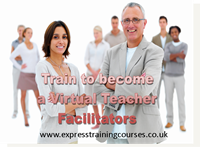
Train to become a globally accredited Virtual Teacher

Train to Become a Globally accredited Virtual Teacher

Trainers fast track training

Next Course date: 14th, 15th & 16th May 2012

The World of education has changed, and this has impacted on personal trainers, teachers and life coaches on how they source and deliver training.
There is an opportunity to train as a Virtual Teacher and start working with students all around the world. This 2 day course will enable you to follow procedure, e-monitor, e-mentor and e-access your students progress and help them to complete their online course.
Institutions of higher learning increasingly embrace on-line education, with 65.5 percent of chief academic officers now calling on-line education ‘critical’ to their institutions! long-term strategy, an opinion that’s risen more than 15% over eight years.
67% believe academic outcomes from on-line classes are equivalent to those in face-to-face learning, but still, one-third of academic leaders think on-line classes are inferior. We do not agree with this but we do understand that resistance to change can often impede new growth.
registration form virtual teacher course
This 2 day workshop will introduce the changing face of virtual education and how you can prepare and adapt yourself and business for this expanding sector.
At this two day event you will understand more about the following:
  • Enhance your understanding of learning styles and trends for 2012
  • Reaction to Change, Early adopters and Diehards.
  • Learning Management Systems
  • Mobile legacy courses
  • Interactive content
  • Blogs and education
  • Digital publishing and learning
  • QR Codes and how it will benefit educators
  • Hosting Learning in the cloud
  • New Blended Learning in community, mobile, webinar and video
  • Augmented Reality related to mobile learning and diversity
  • Virtual Worlds multi learners simulations in 3D
  • Pocket Video Technology for informal learning
  • Social Media integrating across all devices to improve on-line collaboration
  • What is a Virtual Tutor/Trainer Teacher
  • Defining the growth of on-line Soft Skills Training
  • Benefits and Advantages for Virtual on-line Tutor/Trainers
  • Diminished environmental Constraints
  • The New On-line E-Learning Process
  • The Opportunity
  • e-monitoring, e-montoring, e-assessments and reporting.
 iao
There is an opportunity to train as a Virtual Teacher and start working with students all around the world. This 2 day course will enable you to follow procedure, e-monitor, e-mentor and e-access your students progress and help them to complete their on-line course.
iebe logo        skillsforlife   FSB
Labels: online training, life coach, personal development, project management, teachers, trainers, Educators, online courses, heads of departments,educators,universities,colleges
Event Organizer: Diane Shawe M.Ed IEBE (CEO at Academy of Vocational and Professional Training Ltd)