Category Archives: Smartphones

10 Ways that Education will change in the next 10 years

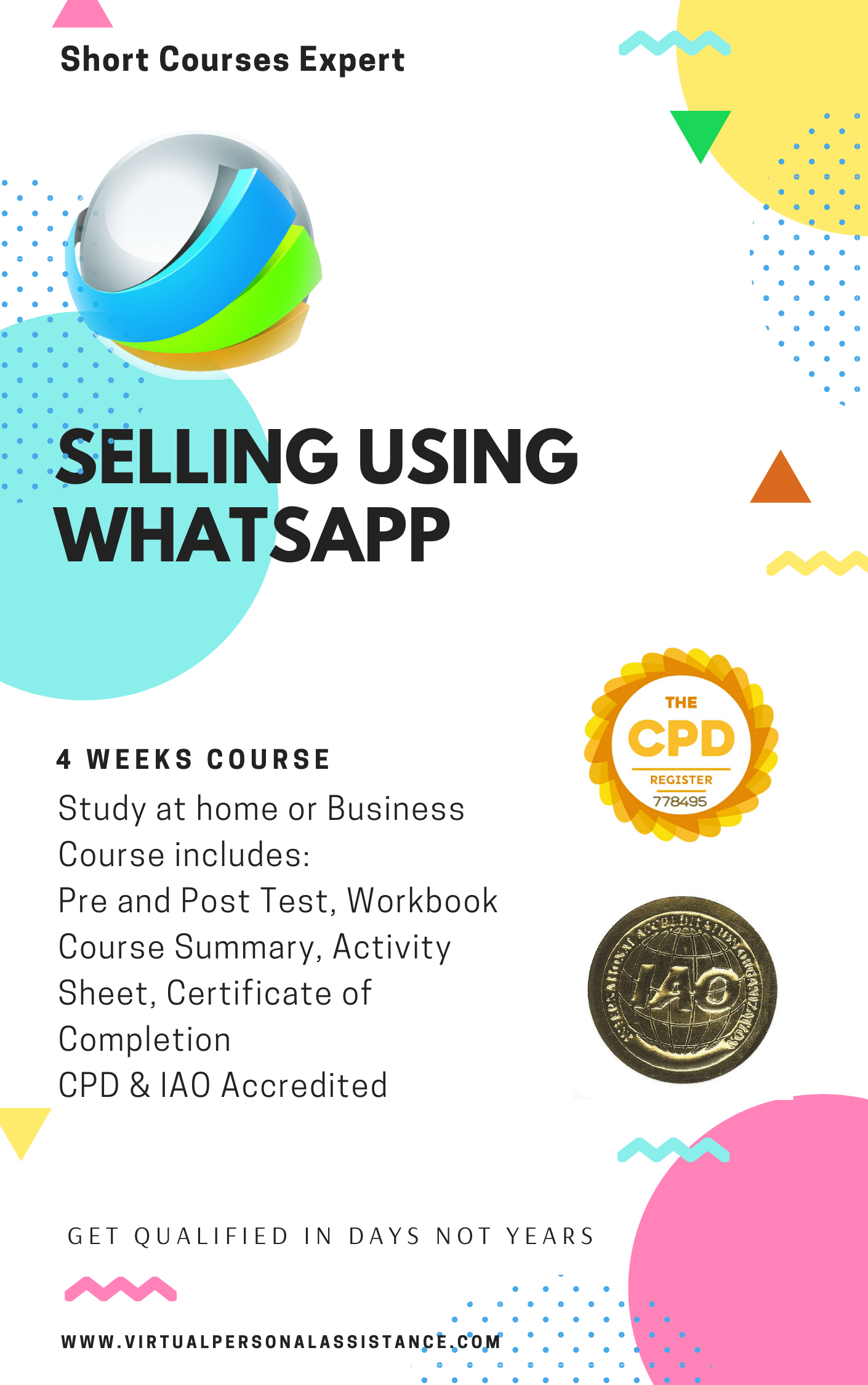
Get qualified in days not years

Article by

By Tim T Dingle BSc (Hons) PGCE MBA  CDO  Academy of Vocational and Professional Training Ltd

One of my true heroes is Peter Drucker and I love his quotation:

The best way to predict the future is to create it.

Having been in education, training and leaning for the last 28 years (and now as Chief Development Officer for The Academy Of Vocational and Professional Training ) I am involved in creating that future. I came across this morning   poll from Edutopia that asked:  What will online learning look like in 20 years?  And the results were:

Universal. Some type of virtual learning will be mandatory in all schools, and virtual schooling, with no in-person teaching at all, will be widespread.

33% (171 votes)

Prevalent. Online learning will continue to grow, though not every school will have it. Online-only schooling will enjoy greater popularity.

51% (264 votes)

Atypical. The challenges of online courses will restrict their usage; classroom learning will remain the primary place for education.

13% (66 votes)

None of the above.

3% (16 votes)

When I voted, I considered lots of possibilities and my answer was that it would be prevalent and thus continuing to grow, and will be growing in popularity.  This seemed to be the most popular answer.  As I considered this more, I asked myself what education would look like in 20 years.  I started teaching in 1981 and by 1985 we had word processors (the joy of early green screen Amstrads) and presentations were still done with colourful posters that were painstakingly made.  Teachers and students remember ‘Bandas’ (the smell, oh the smell) and Roneo ‘mass production’ via stencils. I used state of the art learning aides: video’s  (Betamax) of David Attenborough’s  Life on Earth were the highlight of the 80’s Biology teaching. I can’t remember when I got my first email address, but I can remember my first home computer in 1991!

So when I ask myself what education will be like in the next 20 years, I imagine it to be a little more advanced with some more bells and whistles with some early adopter teachers that embrace it, some that go with the flow and try to keep up, and some that are “old school”.  I do know a few things:  education is slow to change….slow is fast in education…and innovation & technology are useless unless the teachers are supported and encouraged to try it and use it.

This year proved to be one of great debate surrounding the future and necessity of the Learning Management System. Much of it boils down to whether employee learning should be controlled and tracked, particularly when much of workplace learning occurs through informal channels. Learning Management Systems can enable collaboration, knowledge sharing, and social networking.

So here goes: my top ten predictions for change in the next 10 years:

NO MORE OLD DESKS, BENCHES AND CHAIRS

  1. The 21st century does not fit neatly into rows because we all need to be facing the same way!  I do a lot of stand up comedy and being on the stage is frightening for many. Allow the network-based concepts of flow, collaboration, and dynamism help rearrange education for authentic 21st century learning.

NO MORE LANGUAGE LABS

  1. It is true that foreign language acquisition is only a smartphone away or Google translate away on your iPad. See www.expresstrainingcourses.com . Time to get rid of those clunky headphones,desktops and monitors and do something fun and funky with that room. Make it a space for interaction and global connection.

 NO MORE COMPUTERS

  1. Hmm…how does this work? More precisely this one should read, let’s change our view and concept of what a computer is and does. Because computing is going mobile and over the next decade we’re going to see the full fury of individualised computing via hand helds come to the fore. See Diane Shawe’s blog’s on this! Due to improved infrastructure, slick mobile operating systems and smartphone market penetration, we seemed to hit a tipping point of readiness for mobile content this year. From mini-courses to collaboration to performance support, mobile learning could go mainstream in the near future. In terms of converting legacy courses, it will mean streamlining everything—paring down over-sized multimedia elements as well as implementing a ‘less is more’ philosophy. In terms of new development, designers will have to manage the limitations of a smaller screen and decreased memory capacity. When mobile learning hits critical mass, people of all ages and occupations will reap the benefits.

 NO MORE HOMEWORK

  1. There is no doubt that the 21st century is a 24/7 environment. And the next decade is going to see the traditional temporal boundaries between home and school vanish. Mobile Learning, anytime, anywhere, anyplace…The new Martini generation!

TRUE DIFFERENTIATED LEARNING

The 21st century is absolutely customisable. In ten years, the teacher who hasn’t yet figured out how to use tech to personalise learning will be the teacher out of a job. Differentiation won’t make you ‘distinguished’; it’ll just be a natural part of your work. Most learning will be done via tablets and phones and will happen everywhere.

 LETTING GO OF THE FEAR OF WIKIPEDIA

  1. So many people have a fear of Wiki but in many ways Wikipedia is the greatest democratising force in the world right now. I know it can be wrong. It also challenges the Teacher as the expert.  If you are afraid of letting your students peruse it, it’s time you get over yourself.

NO MORE TEXT BOOKS

  1. Books were nice. In ten years’ time, all reading will be via digital means. Maybe you like the ‘feel’ of paper. Well, in ten years’ time you’ll hardly tell the difference as ‘paper’ itself becomes digitized and a generation od Children will have better posture for not lugging around a ton of text books.

    THE JOURNEY TO AUGMENTED REALITY

Gary Woodill, Ed.D., a Senior Research Analyst at Brandon Hall Research and author of The Mobile Learning Edge, was kind enough to contribute his perspective on the trends affecting Augmented Reality related to mobile learning.

According to Dr. Woodlill, “Augmented Reality (AR) is one of the most disruptive applications for mobile learners. It is an example of location-based services, where information is provided to you based on your location, and even the direction that your phone camera is facing. With that information, your smartphone can supply additional textual information about what you are looking at, or can blend computer generated objects with the video or still image on your screen.

THE END OF  I.T. DEPARTMENTS

  1. I.T. Departments as we currently know them will disappear… Cloud computing and a decade’s worth of increased wifi and satellite access will make some of the traditional roles of IT — software, security, and connectivity — a thing of the past. So the question is what will all those IT professionals do? Simple:  Innovate. Look to I.T. departments to instigate real change in the function of schools over the next twenty years. Dream, design and deliver!

 NEW BLENDED LEARNING  

Blended or hybrid learning came about because one eLearning course is often not the solution to an organisation’s or an individual’s learning needs. Until recently, blended referred to a learning experience that included both instructor-led and online self-paced components. But that was a long time ago in Internet Time.

Now that live synchronous instruction frequently occurs online and that opportunities for individualized learning abound, the definition of blended learning is expanding to include any number of strategies, from learning through a community of practice to mobile performance support. For example, someone might attend a workplace webinar on how people learn, then participate in a video-based Google+ hangout with a cognitive psychologist, and join a LinkedIn community of instructional designers to discuss the application of these ideas.

So  (in my humble opinion) it will be a very different in School in 10 years time and hugely different for learners. We will become genuine Life Long Learners served by technology and we will see fundamental changes for employers, employees and systems. Technology enhanced learning (TEL) has the goal to provide socio-technical innovations (also improving efficiency and cost effectiveness) for e-learning practices, regarding individuals and organisations, independent of time, place and pace.

Can’t wait.

The kind of Leaders people want to follow by Diane Shawe

Get the skills you need to lead today

article by Diane Shawe M.Ed

Leadership can possibly be defined as the ability of an individual to influence, motivate, and enable others to contribute toward the effectiveness and success of the organisations of which they are representatives. Leadership is not dependant on title or formal authority and is often feared by some management teams as a potential threat to their job if opened up to other members within the team.

All too often we think of leadership as a higher order of management, something we will develop and apply subsequently rather than earlier in our profession.

This applies to both leadership within our chosen occupational discipline and leadership of our profession. In the early stages of a career, most people naturally focus on the practical aspects of their career. They begin their careers applying the vocational disciplinary information and skills they acquired in college or university and focus on those aspects that will ensure a job, promotion  and success early in their career. However Leadership is something that should be considered and fostered early and often throughout our entire professional career.

Leadership is a subject that has been studied, discussed, and debated across a wide variety of disciplines for centuries. There are numerous books, articles, and self-improvement courses on the subject – so many that the interested student on the subject of leadership might at first be discouraged.

The purpose of this article is not to be exhaustive but instead to signpost you to  a practical on-line training course that will introduce to you a fundamental training that forms the foundation for both the theory and practice of leadership and to outline some of my own tips.

So  what are my seven tips on The Kind of Leader Others Want to Follow

Well before I set out my tips, The key to becoming an effective leader is not to concentrate on making other people follow, but on making your own self the kind of person they want to follow. You will need to become someone others can trust to take them where they want to go.  The seven following tips are also useful:

1. Find out if your ego is getting in the way.

The truly great leaders are not in leadership for personal gain. They lead in order to serve other people.

2. Become a active listener.

Rare is the effective leader who didn’t learn because they could not effectively listen. There is a lot to be said about becoming an effective follower in order to become and effective leader, but you cannot achieve this without listening.

3. Being negative just does not cut it.

Leadership is influence, nothing more, nothing less. If you spend time using that influence to cause a destructive and negative result to an organisation then your potential leadership quality is flawed.

4. Work with excellence.

No one respects and follows mediocrity. Leaders who earn the right to lead give their all to what they do. They bring into play not only their skills and talents, but also great passion and hard work. They perform on the highest level of which they are capable.

5. Rely on intellect and discipline, not emotion.

Leadership is often easy during the good times. It’s when everything seems to be against you– when you’re out of energy, and you don’t want to lead– that you earn your place as a leader when all around you is flagging.

6. Added value, added value and more added value.

Men and women who helped people to live better lives and reach their potential are often revered long after they have gone. That is the highest calling of leadership– and its highest value.

7. Don’t hog your  power.

Leaders are like a river, not a reservoir. If you use your power to empower others, your leadership will extend far beyond your grasp.  People cannot live with air!

Education and the mLearning generation by Diane Shawe

Education from the Cutting Edge

Article by Diane Shawe

Things are happening very quickly out there. It is changing. Harvard, MIT, Cambridge and Oxford are doing it. Companies, both big and small, are doing it. Solopreneurs are doing it. And some teachers have been doing it … they just haven’t been making any money at it. It’s a trend that many in education saw coming 10 years ago. The “It” is on-line education — and it’s gone from being an interesting sideline to a major social and economic trend.
This trend’s going to be around a little longer than some online trends. Because there are some very solid factors underlying the shift to online education … and they’re only getting stronger. Online education is at a tipping point. And that’s brilliant news if you’re into education and have a mobile device and go to www.shortcourses.expert . Let’s talk about why.

Online education is now a massive juggernaut; more than 8.1 million current college students took a Web-based course beginning September 2011. According to recent research in the US (published in the Boston Globe), nearly a third of students have taken one during their college careers.

You see the traditional model of get a degree and land a great job just isn’t working any more, at least in most professions. I’m still a huge fan of universities, but we have to face the fact that they’re quickly becoming a pricy luxury in the UK and other developing nations. Indeed even with a good degree many students are taking ‘McJobs’ to earn money and are frustrated by the lack of real opportunities. I know many that are angry with unpaid internships.

Students are looking for other ways to learn what they need to learn — without the six-figure price tag. You see normal people live online now! Is your father on Facebook? Mine is. And the weirdest thing about it is … it’s nice. It lets me keep up with what he’s doing, and share the exploits of my charming hooligan daughter.

I first got online in 1991. I remember how long it took me to ‘get online’….those strange handshake noises….and the joy of slow connections.  But the internet doesn’t belong to early adopters like me anymore. The internet, assisted by the smart phone and tablet is woven into our lives like it never has been. My father’s iPad is the new Silver Surfer must have accessory.

That means that normal people, not just web junkies, are willing to consider online activities that never would have occurred to them before. It means they look at online education and think, “Wow, I could do that.”

The world is changing faster than traditional education can evolve. As a former Headteacher, I know that the revolution is here. The (dial m for mobile) mLearning generation are about to inherit the earth.

Almost every aspect of our lives is changing. Making money, learning, socialising, family life and education. Certainly for education, we want it quicker (try just 4 weeks at The Academy of Vocational & Professional Training), we want it better and we want it to have some global ‘value’. All that change is coming faster than most people can handle. In the global economy with huge aspirations, we all need help with some aspect of the change that’s swirling around us.

Which means if you can master some element of the changing world, and stay on top of it, you can help customers do the same. Great businesses are built by solving tough problems. And mastering change is one of the toughest problems we all face … every day, and in every aspect of our lives.

Traditional education has a tough time with this. If you want to study ancient Greek, you should be set. (And more power to you, because I think that is cool.) But if you want to study technology, nutrition and fitness, marketing, communications, or any of the other myriad ways people make a living, you need the latest information. And the only way to do this is with the new Blended mLearning methodology.

You see, Online learners are … well, learning. None of this would matter if online education didn’t work as well as face-to-face learning. But it appears to actually work better. In a 2009 report based on 50 independent studies, the Department of Education found that students who studied in online learning environments performed modestly better than peers who were receiving face-to-face instruction.

Online learning allows students to go at the pace that’s right for them. When online education is well designed (and it really needs the thought process, the design and brilliant content), it gives plenty of opportunity to not only absorb the theories in the material, but to discuss it meaningfully and put it into practice. Put that with the best of interactive learning (Virtual Tutor Facilitators) and you have a winner!

Students can replay lectures if they need to. They can interact with other students online in ways that far surpass traditional classroom discussion. Even something as simple as being able to attend class when you’re at your most refreshed can make a huge difference. (I am pretty convinced that I learned exactly nothing from the early morning University lectures I attended). You don’t have to shuffle into a physical room with an instructor physically present to learn.

That we can take the very best education and make it widely available, instead of limiting it to a few hundred people at a time. That we can learn at our own pace, on our own time, when and where it’s convenient for us.

Top Universities will continue to do a brilliant job teaching law and microbiology. But you may very well be able to do an even more brilliant job teaching small business tax planning or sports nutrition. Or advanced NLP, Business start up, Hair extensions. Or how to get a novel published. Or take my courses in Stand up Comedy! All in 4 weeks. And all globally accredited.

Diane Shawe the CEO is very passionate about how we can extend and touch the lives of anyone wanting to learn through online training!  she says that the way online games have captured the attention of the young,  is what she would like Academy of vocational and professional training to do with online mlearning  sustainable education.

For me the mLearning revolution is here. Online and now.

Catch you there

Preserving Quality in on-line education

Article by Diane Shawe M.Ed.

Various transformations taking place throughout the world had impacted  changes in teaching and learning– one of the activities with the oldest traditions in human history. Globalisation is changing established relationship, practice and culture and destroying territorial boundaries.  An important role in reorganising education systems and the implementation of lifelong learning principles is an obligation of higher education institutions, especially K2 educational institutions.

It is important for higher education institutions to respond to changing social needs for new learning styles and ways.  These include training teacher within the lifelong learning sector and administrators to focus on quality improvement in on-line education.

To continue discussion about on-line study quality and areas of effective use of these studies it is necessary to conceptualise what is quality in on-line studies.  Exploring by what means it can be achieved and what is the impact of technology on these studies. However, analysis of scientific literature shows that still little attention is given to on-line learning quality, more research studies are devoted to analysis of quality of traditional education, although much from the latter is adapted in on-line learning.

The term ‘quality’ can rarely be heard in public discussion about learning. What I mean by ‘quality’ is in the delivery and assessment processes when delivering  blended learning contents via various media’   Opinion about the quality of learning depends on numerous aspects, for example, on a person’s experience, status (teacher, student or other), circumstances and so on.  Even if learning is determined to be ‘quality’ at a certain period, it will not remain forever static, because the assessment of ‘quality’ is forever developing, on-going innovative learning technologies and methods are being discovered, approach to learning is changing and so on.

I believe that we should endeavour  to agree that ‘quality’ in on-line learning is an objective which is improving, continuously being searched for but it is not possible to claim that it is achieved.

Seeking to use modern technological opportunities for the delivery and improvement of on-line learning  several  necessary external conditions need to be satisfied in order to move towards ‘quality’:

  • Both students and teachers must possess satisfactory computer literacy;
  • Learning Management Systems must be synchronous and asynchronous;
  • Both students and teachers have to have access to e-learning technologies;
  • Quality digital contents (courses and learning material) must be designed;
  • Computer networks and the Internet reaching all communities of the country must be established;

E-administration tools that delivery Course Management Systems (CMS) is often confused with Learning Management Systems (LMS);  for  instance Moodle which is predominantly  a Course Management System has probably hampered the real introduction of asynchronous LMS from which real on-line interaction between student and teacher can be directed.  Whilst there is a place for CMS to support self-service,  it is to be viewed as a segment that would contribute to the whole online LMS blended learning  principles.

Every new learning technology (books, computers, the Internet) has caused revolutionary changes in learning. The quality of on-line study is a goal. It can be improved, sought, but the process is never-ending due to changes of conditions, learning technologies and at last– the concept of the quality itself.

Diane Shawe CEO of Academy of Vocational and Professional Training

Can on-line courses be accredited successfully?

Why 2013 is going to be a bumper year to become a Virtual Teacher

Become a Virtual Teacher Facilitator

I originally blogged way back in 2010 that the growth for professional trainers was going to grow.  But I have since spotted a gap in the market which is now becoming a growing trend throughout 2012.

So why is 2012/13  going to be a different type of bumper year for training organisations or consultant who can help the  unemployed individuals upgrade into a new skill that will help them generate their own income?

Well usher in the new breed of Virtual Teachers!  If your not up to speck with the new direction and growth in the market then you could really find yourself on the old fashion self by 2016!  Make no mistake, becoming a trainer is all about running a business.   Being up to date with the latest techniques, developments, trends and needs is just as essential if you decided to set up a coffee shop.

Institutions of higher learning increasingly embrace on-line education, with 65.5 percent of chief academic officers now calling on-line education ‘critical’ to their institutions! long-term strategy, an opinion that’s risen more than 15% over eight years.

Like any business you still have to source new customers, gain glowing appraisals and testimonials, get your pricing right, court the right type of publicity and sustain credibility.  Oh! and let’s not forget making a profit.

We all know it takes a certain kind of self belief and courage to set up any type of business in today’s climate. You could even make a claim based on sheer desperation, the need to do something to generate an income.

But it even takes more courage to leave your destiny in the hands of many of the businesses today, no matter what their global or brand status might be. Most people are now being spurred into self employment due to the levels of redundancies, job insecurities and the need to meet ongoing expenses.

Participants are more interested in the qualifications and or skills they will gain in the subject at hand, and the experience you have in doing jobs similar to theirs and your track record in ‘doing’ rather than ‘talking about’ the topic.

What is really important is your ability to engage with participants around this experience and help them to translate that into action. That is where the true value often lies for them. Of course we know that there are academic trainers and teacher courses which award accredited or private certificates.

Choosing the entrepreneurial route can bring great benefits, but there are also challenges.

What are some of the considerations before you decide to set up, invest or replicate another successful business model?

  1. Be candid about your strength and weaknesses. What do you have to bring to the table?
  2. Do as much homework as you can before taking the plunge
  3. Look carefully into all aspects of owning and running a business and sound out anyone you know who has already done it.
  4. Be prepared to change your idea or abandon outdated school of thoughts.
  5. Don’t be scared to appraise negative feedback, all businesses have a negative and positive aspect to them.
  6. Prepare a business or marketing plan. You’ll save yourself a lot of time, money and stress if you understand as much about the theoretical side of the business as well as the vocational aspects

Ask yourself these key questions before launching your business:

a) Is there a demand, how long will the demand last, is it scalable, can you bolt it onto anything else, can you partner?

b) Have you got the full support of your family? Your decision is likely to impact on them, so talk to them first. Don’t be put off by their own fears, if you can actively offer up reassurances of how you can cope with whatever concerns them, then will be serve to give both them and yourself the confidence to move forward.

c) Speak to any contacts you have in the sector you plan to work in. If you are going to invest in a Franchise, they try to get some feedback from any previous candidates who have made the investment.

d) Check out the competition. If there isn’t any, why not? You may not have rivals but will you have any customers?

e) Are you prepared to work the long hours to get the business off the ground?

f) Do you have the necessary skills? Can you cope with paperwork? Can you cope with criticism?

g) What about funding? Talk to several banks and consider various options, be careful though, they are not assisting many businesses today they are more interested in protecting their own levels of risk and increasing their profits. Some of the smaller banks might be of interest as they might treat you more like a customer than a commodity.

h) Could your training course attract funding on behalf of the student? This might make it simple for them to enter your training services if some of the costs could be supplemented.

i)  Are you clear at delivering information, can you present subject matters or theory step by step, what training would you need to boost your technique, confidence and presentation skills.  Could you get funding for your own training?

Important advice about redundancy money

If you are considering using your redundancy money, make sure you set aside enough for household bills and other costs. It is important that you think of your redundancy money as your cushion until you get yourself back on your feet.

  1. Invest what you feel you can afford to risk or lose but do so where you have some knowledge and a passion for the subject involved.
  2. Try not be over powered by flash organisations offering huge earning potential subject to you parting with lots of your own money.
  3. Don’t rely on the referrals and testimonial they supply to you.  Do some of your own research.
  4. Remember every business has to start small and keep lean before it can grow to a stable long term business
  5. Don’t rely on marketing short-cuts, this can be very expensive and  not very productive.

More and more people are looking for good quality training courses that can add value to their life, career portfolio and career longevity.

It has been proven that most recessions bring an influx of new businesses, entrepreneurs and even millionaires. One of these new areas of business is the growth of the non surgical hair replacement and hair enhancement sector.

The UK and Europe has a shortage of properly trained trainers who can deliver a variety of hair extension and hair enhancement technique to the non professional and professionally qualified sector.

An opportunity now exists for anyone wanting to enter the vocational training market with a service that has far reaching benefit and impressive revenue streams.

An opportunity exists throughout the UK today to establish your own virtual training school in this very selective and much needed service. Visit our website to read a little more about how you can make the first steps to becoming a Virtual Trainer

Can difficult or tough conversations be pre-managed?

Managing difficult or tough conversation.

by Diane Shawe M.Ed IEBE

Unless you are on an island, it is not possible to avoid communicating with other people. Just stop for a moment, and think about how much time of your day you spend in conversation with other people? Whether in your car, in meetings, on the phone, by text message, e-mail or social media. Our days are frequently filled with short snippets of conversation and sometimes long exchanges.

Some people are better in conversation, while others prefer to write messages where they can take advantage of the delete key and work out the best wording. Have you taken some time to examine your approach? What are your results like; do you tend to have consistently peaceful conversations where people get heard and are listened to, or do they frequently de-compensate to a level of discussion that is argumentative or unpleasant or they just simply mis-interpret what you though you said or what they thought they heard?

Conversations can be a challenge, and we also have to be aware of the conversation going on inside our head at the same time. What if we say the wrong thing, or we are speaking carefully but our body language or voice is sending a very different message? How are we supposed to manage all that?

Fortunately, we can learn techniques to help prevent conversations from getting difficult and recognise what to do if they go off track. We can also learn how to get to the heart of a problem, move through a conversation, and keep it focused on the future instead of spinning in circles.

We can all benefit from a little education on dealing with difficult or tough conversations. Speaking and presentation coaches can help, but in the heat of the moment they aren’t perched on our shoulders whispering what we should be saying.

Our previous clients tell us that our courses are ideal for workplace training and development. They appreciate that our courses are up to date, relevant, and globally accredited. More than that, they are also excited to see that our courses are available in a format that they can use for e-Learning, either as the approach for the whole course or for a 1 day blended learning approach.

We have just released our Managing Difficult Conversations Training course. We believe that training courses need to be designed with busy people in mind. Our new training course include everything you need to help you, your staff or leaders hold challenging conversations!

From understanding the impact of body language and how your voice is projected, facial expressions, to formulating questions that get to the underlying problem. Our course provide information on many hands-on techniques and will also help you learn how to apply positive intent, how to use our process to plan a conversation, and how to implement and follow up on an action plan.

You can enrol on our course on line in our 4 week e-learning program, or you can opt for a 1 day intense learning experience workshops.

Developing and Maintaining a Succession Plan

Get qualified in days not years!

by Diane Shawe M.Ed

A 1 day Business Succession Planning  training course can be incredibly beneficial to any SME organisation.

Change is a hallmark of today’s business world. In particular, our workforce is constantly changing – people come and go, and move into new roles within the company. Succession planning can help you make the most of that change by ensuring that when someone leaves, there is someone new to take their place.

It is surprising that from a one day  workshop we could  help you learn or teach your staff:

  • The value of succession planning for successful businesses.
  • The key elements of a succession plan in terms of roles, responsibility, function, scope, and evaluation.

Introduction and Course Overview

First you will have an opportunity to identify your personal learning objectives and then we would cover the following areas.

1 day intense workshop lesson Plan:

A Need for Succession Planning

To begin, participants will explore the differences between succession planning and replacement hiring, including some of the advantages of succession planning.

Defining a Succession Plan

This session introduces the SUCCESS acronym, which defines the succession plan process that the remainder of the course will focus on.

Pre-Assignment Review

Next, participants will use information gathered in their pre-assignment to identify the critical people in their organization.

Identifying Resources and Analysing Risks

This session will give participants some tools to identify internal and external successors. We will also look at a sample risk assessment.

Defining Roles, Responsibilities, and Functions

During this session, participants will start creating risk assessments, individualized engagement plans, and succession plan profiles.

Gathering Information

This session will help participants identify ways to look within their own organizations and determine what the critical positions are.

Forecasting Needs

There are six key ingredients to being able to forecast what people you will need when. Participants will explore each item in small groups. Participants will also learn about the role of coaching and mentoring.

Putting the Plan Together

Next, participants will learn about using Appreciative Inquiry and Leadership Quality Assessments to develop a succession plan.

Putting the Plan into Action

During this session, participants will explore the idea of phased implementation. We will also look at using technology to facilitate putting the plan into action.

Evaluating and Reviewing the Plan

This session will look at the importance of evaluation. Participants will also work on modifying an evaluation check list to suit their organization’s needs.

How can you enrol?

It’s simple you can just click here and select if you would like to do the course on-line or attend one of our fast track workshops.

What Impression do you make? How to develop your personal brand

group of people

How to develop your personal brand

Have you given much thought about the impression you make? How much leeway do you have to express yourself at work, at home, and via your social media?

By Diane Shawe, M.Ed. IEBE

If you go to the hospital, they are dressed a certain way, the staff may even speak to each other in a certain way. If you stop at most petrol stations, the salesperson is probably dressed quite differently than your physician, and yet still in a way that reflects and supports the business. You go to these people in order to receive a service or a product, and you probably go to them specifically because they have left some kind of impression on you. We refer to this impression as their personal impact.

Have you given much thought about the impression that you make? How much leeway do you have to express yourself at work, at home, or even via the social media? While the impact you have can be derived from the way you present yourself (through how you behave and what you wear), we also have to look at ways that reflect your personality and individualism. Have you considered yourself to be a brand, and have your considered how you could strengthen your brand in work, business and socially?

When you plan to take a short holiday and ask your neighbor to watch your home for you, what is it that makes you ask that particular neighbor? Are they trustworthy? Friendly? Do they consistently conduct themselves in a way that leads you to think they are a good person? If so, you are feeling some of the impact of their personality.

They present themselves in a particular way, and unless you see some demonstration of inconsistency (which may lead you to question their credibility), to you their impact seems quite clear.

What kind of impact trail are you leaving behind, What impact do you want to make and leave with others?

For more information on personal impact and how to create your personal brand, visit us at http://www.expresstrainingcourses.co.uk

Personal Branding 2 Day training course

Just click HERE to tell us what information you would like us to send you.


Why smartphones & ipads are playing a major part in online learning

The World of education has changed, and this has impacted on personal trainers, teachers and life coaches on how they source and deliver training.
Institutions of higher learning increasingly embrace online education, with 65.5 percent of chief academic officers now calling online education ?critical? to their institution?s long-term strategy, an opinion that?s risen more than 15% over eight years.
67% believe academic outcomes from online classes are equivalent to those in face-to-face learning, but still, one-third of academic leaders think online classes are inferior. We do not agree with this but we do understand that resistance to change can often impede new growth.
Express Online Training Courses
A series of half day conferences will introduce you to the changing face of virtual education and how you can prepare and adapt yourself and business.
If  you interested in finding out what a virtual teacher, trainer or life coaches teaching style would be? The impact on online education and the changes? Then this event could be for you.
At this half day event you will understand more about the following:
  • Enhance your understanding of learning styles and trends for 2012
  • Reaction to Change, Early adopters and Diehards.
  • Learning Management Systems
  • Mobile legacy courses
  • Interactive content
  • Blogs and education
  • Digital publishing and learning
  • QR Codes and how it will benefit educators
  • Hosting Learning in the cloud
  • New Blended Learning in community, mobile, webinar and video
  • Augmented Reality related to mobile learning and diversity
  • Virtual Worlds multi learners simulations in 3D
  • Pocket Video Technology for informal learning
  • Social Media integrating across all devices to improve online collaboration
  • What is a Virtual Tutor/Trainer
  • Defining the growth of online Soft Skills Training
  • Benefits and Advantages for Virtual online Tutor/Trainers
  • Diminished environmental Constraints
  • The New Online E-Learning Process
  • The Opportunity
If you are interested in attending one of the several dates, just click here and register today.

The rise of the Andriod Smartphones

Smartphone are here to stay!  Whilst most people will bow down to the supreme way iPhone has dominated the market, lets take a look at the top 10 android smartphones.

After doing a little research on what’s happening in the market, i-send came across some info set up by  Street.com.

Street.com claims that Apple’s iPhone had a good run atop the smartphone league, but 10 Google Androids aim to bury the tuckered-out leader this year.

Motorola Mobility, Samsung, HTC and LG have promised to deliver supercharged, ultra-thin, 4G Android devices in the coming weeks and months.  (It’s interesting that they don’t mention any Nokia phones but let’s watch this space)

But not always. Before the mobile phone industry got all busy with design makeovers and tummy tucks, there were — and still are — some delightfully hideous phones that represented the other side of the beauty trend. The Street has gone back through the past decade to dig up some of the best examples of designs that make you wince and stare in disbelief. The clueless stylings, the flights of fancy into odd shapes, the obsession with square versus rounded — it is a wonderfully colorful history.

The giant Android attack features bigger screens, better cameras, faster processors and speedier 4G connections than the upcoming iPhone.

The Android’s phone screens, for example, start at 4 inches and go to 4.5 inches, advancing the size standard for this generation of touchscreens. By comparison, Apple’s next iPhone is expected to have a 3.5-inch screen.

The new Androids are 4G phones either on AT&T HSDPA-Plus network or Verizon’s LTE network, and four of the 10 will come with dual core processors.

Apple, on the other hand, is expected to upgrade to a dual-core processor this year, but the 4G LTE iPhone has been delayed to 2012, as first reported.

The presumed delay of the next iPhone from June to September, and the decision to wait a year on 4G LTE upgrade highlight just a few of the areas where Apple has been lagging behind the leaders in the Android pack.

“The processor and display quality improvement in the Android camp is proceeding at such a clip that Apple will be under a lot of pressure to deliver a substantial jump in iPhone specs next autumn,” MKM Partners’ analyst Tero Kuittinen.

“It’s not clear how Apple can battle the rapid Android evolution,” says Kuittinen, “unless it picks up the pace of its iPhone launches.”

Here’s a look at the top 10 Androids that could dwarf the iPhone:

More from
TheStreet.com : 
The Ugliest Phones of the Mobile Era 17 Products That Were Invented by Accident

10 Cities Unaffected by a Bad Economy

Nokia 3620
Samsung Nexus S

Samsung Nexus S, Sprint

This is Google’s second run at making its own phone, only this time Samsung is manufacturing the device and Sprint is selling it. Two years ago, the Nexus One was made by HTC and sold online by Google. It was an experiment in retailing that was far less revolutionary than Google hoped.

The Nexus S runs on Google Android 2.3 Gingerbread operating system and works on Sprint’s WiMax 4G service. Because it is a phone built to Google’s specifications, it includes some of Google’s favorite projects including NFC or near field communications that may one day allow phones to make purchases with a swipe at a sales counter.

The Nexus phones are big among Android fans who see them as more purely Android than other versions in the market. The Gingerbread system has been a little hard to find and the Nexus S will continue to be among the most advanced Androids until Ice Cream Sandwich arrives as early as year-end.

Samsung Cleo
LG Optimus

LG Optimus

The LG Optimus is one of the sleeker members of the new Android class. Even though it has a 4-inch screen, the phone is nearly a third of an inch thick, and at 3.8 ounces, it is a full ounce lighter than the iPhone.

The LG Optimus runs on Android 2.2 or Froyo and is powered by a 1-gigahertz OMAP processor from Texas Instruments, one of the key wins for TI in the most recent round of Androids.

The LG Optimus is expected to debut in Europe this month and arrive in the U.S. later this year. AT&T and possibly T-Mobile will likely get the phone since it is configured for the HSDPA network.

Research In Motion BlackBerry 8700
Samsung Droid Charge

Samsung Droid Charge, Verizon

After a little delay, No. 2 phone maker Samsung finally gets into Verizon’s Droid franchise and continues the robotic theme for another year.

The Droid Charge runs on Android 2.2, has a 4.3-inch LED screen and is powered by a 1-gigahertz Samsung Cortex A8 processor. According to analysts, Samsung has built the phone to consume about half as much battery power than its 4G LTE predecessor the HTC Thunderbolt.

Another area where it exceeds the Thunderbolt is on price. Verizon has a $300 price tag on the phone with a two-year contract.

Nokia 3620
Samsung Function, Verizon

Samsung Function, Verizon

Samsung is pushing hard to get on the 4G LTE bandwagon where Verizon has a speedy lead over the rest of the telco field. The Function is a member of the Samsung Galaxy family and a follow up to the 3G Fascinate, which debuted last year at Verizon.

The Function is a truly muscular phone. It runs on Android Gingerbread, it is powered by a dual-core 1.2-gigahertz processor, with 1-gigabyte of memory and another 32-gigabytes of built-in storage. And the 8-megapixel camera shoots 1080p HD video.

The Function is due later this year, and depending on the timing, may be one of the more formidable opponents to the iPhone next iPhone.

Sony Ericsson t61z
Motorola Mobility Targa, Verizon

Motorola Mobility Targa, Verizon

Speaking of formidable, Motorola Mobility apparently wasn’t happy with how the Bionic was coming together and reworked the phone under the code name Targa. Bionic was expected to be the blockbuster 4G LTE phone for Verizon from Motorola, and aimed not just at the iPhone but at the Android superphones from Samsung and HTC.

There’s not much information about what powers the Targa, but the specs are likely to be similar to the Bionic. That list would include a dual-core processor, and an 8-megapixel camera.

Verizon and Motorola were expected to have the Bionic available by the end of June, but a revamped Targa will likely be a pre-holiday fall arrival. This would also pit it squarely against the next iPhone.

Motorola Nextel i500
HTC Sensation, AT&T

HTC Sensation

When and if it arrives at T-Mobile, the HTC Sensation promises to be a big step up from the HTC Thunderbolt. And that’s no small feat. The Sensation is expected to have one of the first dual-core 1.2-gigahertz Qualcomm Snapdragon processors, which holds big promise for Qualcomm.

The Sensation has a 4.3-inch display, a 8-megapixel camera and it runs on Android’s Gingerbread operating system. The phone has an aluminum unibody structure, a trend Apple started with its laptops.

The Sensation runs on the HSDPA network that AT&T and T-Mobile call 4G. The phone is expected to arrive as early as next month.

Motorola Flipout
LG Revolution, Verizon

LG Revolution, Verizon

LG’s focus on feature phones made it a weak player in the smartphone game, but the Korean electronics giant now wants to make up for lost ground in the super-phone category.

The LG Revolution is the heaviest of the five Androids, weighing 6 ounces. But it carries the weight well in a sleek half-inch-thick form with a large 4.3-inch display screen.

The phone runs on Qualcomm Snapdragon 1-gigahertz processor and has a whopping 16 gigabytes of storage. It has two cameras, one front-facing for video chats and the rear a less-than-robust 5-megapixel shooter.

The Revolution is a 4G LTE phone that was expected to start selling at Verizon in the first quarter.

LG VX9800
Samsung Infuse, AT&T

Samsung Infuse, AT&T

Samsung seems to be trying extra hard to be the iPhone replacement for AT&T. By appearances, the Samsung Infuse looks very much like a large version of the iPhone 4, at least from the front.

Samsung had reasonable success with Android phones in its Galaxy series; with the Infuse, it hopes to take that one more step higher. The phone has a massive 4.5-inch super-AMOLED-plus screen that is designed to provide better resolution and easier daylight viewing.

The Infuse runs on a speedy 1.2-gigahertz Hummingbird single-core processor. Its front-facing camera is a wimpy 1.3-megapixels, but the rear camera captures 8-megapixels. The Infuse runs on the HSDPA-Plus wireless technology, which AT&T started calling 4G.

The Infuse, sort of like the 5-inch Dell Streak, attempts to push the limits of super-phone sizes in an effort to skirt the fringes of the larger tablet market.

AT&T starts selling the Infuse this spring.

 HTC Apache
HTC Thunderbolt, Verizon

HTC Thunderbolt, Verizon

We got our hands on the HTC Thunderbolt when it arrived in March. Its speed is astonishing, but its battery life is terrible.

The Thunderbolt has the best name of the new crop of 4G devices that Verizon has introduced so far. The Thunderbolt looks very much like HTC’s popular EVO at Sprint, with the same convex back and kickstand.

The Thunderbolt runs on Qualcomm’s 1-gigahertz Snapdragon processor, has a 4.3-inch screen and a front-facing camera as well as an 8-megapixel rear camera. All those specs, by the way, are identical to its 4G WiMax brother, the EVO at Sprint.

The difference with the Thunderbolt is that it runs on Verizon’s 4G LTE network. The Thunderbolt arrived in March quarter and was hailed as the first Verizon 4G LTE phone.

LG VX9800
Motorola Atrix, AT&T

Motorola Atrix, AT&T

If there was one phone that caught the most attention at CES, it was the Motorola Atrix, which AT&T had been promoting like crazy.

This Atrix uses a dual-core Nvidia processor like its sister phone the Bionic, and has similar specs. But it also features 1-gigabyte of RAM, the same deployed by small laptops. And curiously, that’s how Motorola is pitching this device — as a pocket computer.

During the Motorola demonstration, the Atrix was docked in an empty laptop shell, which, powered by a keyboard and big screen, made the Atrix the core of a notebook computer. The Atrix is designed to serve as both your super-phone and through a docking system, your PC.

With processing power and memory comparable to a netbook, the Atrix may help push Motorola devices further into the workplace, bumping up against Research In Motion and Hewlett-Packard’s Palm business.

Well they all look very good, but I am a Nokia fan and I am looking forward to purchasing my N7.  It works so well for business users.
In the mean time, as we see the rise of the smart phone, every business needs to look at how they can cost effectively advertise within proximity.  Click here to learn more.
Research In Motion BlackBerry 8700
Samsung Droid Char