Category Archives: online colleges

10 Top Tips on How to Influence Online buying by Diane Shawe

Try out 5 Courses this Christmas for just £25.00

Try out 5 Courses this Christmas for just £25.00

The trends and predictions are already in for 2016. Many digital advancements will be made in 2016, from the rise of mobile messaging apps to mobile commerce finally gaining some mojo. 

You the reader even you are becoming more savvy and intend to be heard when things are not going right.  Smartphone use is driving up the number of inbound calls to businesses. Voice-activated search has been rising steadily. Consumers are talking to personal assistants through their smartphones and cars, and those “assistants” are getting smarter. And with the rise of smart watches and connected home devices, they’re talking to a wider variety of devices from various locations.

Marketers need to be prepared and ready to optimise digital content for speech-based (not keyword) queries and learn how to make sure that content can be discovered by personal assistants.

– So what about small businesses, the lone sole trader, what can you do to influence online buying?

  1. Change your ads Your prospects could get bored seeing the same ad all the time. Statistics show people usually see the same ad 7 times before they actually buy. Just change them enough to keep them from being over-exposed. For example, if your ad said. “FREE Killer Marketing E-book!”, you could change it later on to “FREE Sizzling Marketing E-book!”
  2. Give people a deadline to order. Tell people if they order by January 15 2016, they will get a discount or free bonuses. This will create an urgency so they don’t put off buying. Another example, “Order before 8:00 p.m. and get a second product of your choice for free!”
  3. Publish testimonials on your ad copy. They will give your business credibility and you’ll gain people’s It’s important to include the person’s full name and location with the testimonial.
  4. Allow people to make money reselling the product or Tell people they can join your affiliate program if they order. You could pay them per sale, per click, per referral, etc. Just provide them with proven and tested marketing materials, detailed statistics and plenty of affiliate training.
  5. Offer a buy-one, get-one-free deal. If you sell more than one product, this type of deal works People will feel they are getting more for their money and will order quicker. You could also offer them a ‘buy one, get one half’, ‘buy two, get the third one free’, ‘buy two, get a free watch’.
  6. Have them sign up to get access to download a free e-book. The subject of the e-book should be related to your target audience. You could have them sign up to a opt-in list or your regular The e-book should have high perceived value so they’ll take the time to sign up. Landing pages are really good for this.
  7. Give your visitors a free membership inside your Members Only web site or closed membership group on LinkedIn or Facebook. Have them sign up to receive a user name and password or an exclusive invitation. Members groups are particularly good on LinkedIn and your blogs because each time you post some news they get an automatic update.
  8. Offer your visitors free consulting via e-mail. Have them fill out a web form to e-mail you with their When you answer their questions, include an offer for a product you sell or highly recommend products that could help them. You could join the product’s affiliate program to earn commission if they take your advice.
  9. Give people free bonuses when they order your product or The free bonuses could be books, jewelry, reports, newsletters, etc. Make their bonuses sound extra valuable by listing their retail value, either separately or together in one amount, or limiting how long you will offer the bonuses. (you can partner with free gift websites)
  10. Provide free package and postage with all orders. If you can’t afford it, you could offer free P&P on orders over a specific You could also offer a rebate on their P&P costs. Most customers probably won’t send in the rebate card unless it’s a huge shipping cost, for example, £30 or more

Try our Audio Courses this Christmas.

Niche Marketing Made Easy

Produce Persuasive Copyright

Building online Traffic and List Systems

Email Marketing secrets

How to set up and generate a powerful Blog website

The Affiliate Chemistry

7 Habits of Highly Effective People

Internet Business Optimisation

12 Effective selling techniques

50 Best and Worse Business Deals of all time

20 Advertising Tips

Art of Making money

Breakthrough Sales Solutions

Clever Profit Generating Insights

How to Combine Cooperation & Competition

Customer Tested – Buying Triggers

How to work with change

Explosive Influence Tactics

Extreme Persuasion Strategies

Manage your Intellectual Capital

The Servant Power Leadership

Visit www.crashcourses.academy and select 5 course and start listening, watching and learning today.

Where does the hair come from for Hair Extensions? by Diane Shawe

where does hair extensions come from by diane shaweDiane Shawe Author of “How Hair Extensions are Sourced, Treated and Graded” states that the first question all new customers ask is “where did the hair come from”?

They want to know about the geography and even history of the hair and so should you. In her book she covers this question by explaining the characteristics of each variety and summarises the pros and cons.

For instance dealing with the different hair origins.

Get your copy today from amazon.co.uk

Get your copy today from amazon.co.uk

· Origin: China, Eastern Europe, Russia and India

· Grade: Virgin, Cuticle, Non-Cuticle, Processed, Single Drawn, Double Drawn, Remy and Non-Remy

· Type: Caucasian, Asian

Diane’s book goes on to explain in some detail the differences, here we summarise the pros and cons from different regions.

Chinese Hair (Aka Asian Hair): A thick fibre that is naturally straight and dark brown to black in colour.

Advantages: High Quantity, Durability and Low Cost. It is the strongest human hair and is able to withstand multiple chemical and mechanical processes.

Disadvantages: Chinese hair requires extensive chemical processing to output hair that simulates European texture, colour and body. The majority of the hair is collected and processed as double drawn.

Indian Hair (aka Asian Hair, Italian Hair): A variety of fibre types from fine and straight, medium thick with body wave and curly to thick coarse hair. “Italian hair” is actually Indian hair that has been processed in Italy or Spain and then sold at premium prices.

Advantages: High Quantity, Good Quality, Variety and Low Manufacturing Cost. Indian hair is popular to use for custom made hairpieces because it can be made to resemble European hair. When not cuticle correct (non-remy) hair requires heavy-duty chemicals to remove cuticle layers. It is still at a high risk for severe tangling problems.

Disadvantages: Low Quality and Higher Retail Cost. Indian hair still requires quite a lot of chemical processing to make it appear as European hair. To reduce time and materials, many manufacturers choose to work with non-remy Indian hair that results in a poorer quality and most exporters handle the hair badly.

European Hair

(Aka Russian Hair, Caucasian Hair): A fine to medium density fibre that is naturally straight to slight wave and available in a variety of natural colours, most commonly dark blonds to medium browns. The Virgin colours will often be streaked with lighter shades or the ends will be much lighter than the roots due to weathering.

Advantages: High Quality. True Caucasian hair, whether originating from Russia, Eastern Europe or even the United States, is the best quality for the European and American market.

Disadvantages: Low Quantity and quantity and High Cost. It has always been an availability problem and is becoming more difficult to source lengths longer than 15 inches and of a good quality.

For more information about Diane’s extensive work on hair loss and consultancy, please see her website

For a copy of her book you can visit Amazon and download the full version or a sample “How Hair Extensions are Sourced, Treated and Graded”

Getting you qualified in the Hair Extension Sector

Getting you qualified in the Hair Extension Sector


Managing Pressure and Maintaining work balance

How to manage pressure at work 1 day course

When things are extremely busy at work and you have your hands full with many tasks and dealing with difficult people, having skills you can draw on are essential for peace of mind and growth. This one-day course will help participants understand the causes and costs of workplace pressure, the benefits of creating balance, and how to identify pressure points. They will also learn how to apply emotional intelligence, increase optimism and resilience, and develop strategies for getting ahead.

This one-day workshop will help participants learn how to:

  • o   Apply a direct understanding of pressure points and their costs and payoffs
  • o   Speak in terms related to emotional intelligence, optimism, and resilience
  • o   Create a personalized toolkit for managing stressors and anger
  • o   Work on priorities and achieve defined goals

 Cick to book your seat now.

Course Overview

You will spend the first part of the day getting to know participants and discussing what will take place during the workshop. Students will also have an opportunity to identify their personal learning objectives.

Under Pressure!

To begin the course, participants will explore the causes and costs of workplace pressure as well as the benefits of creating balance. Participants will also learn what their pre-assignment score means.

Getting to the Heart of the Matter

Next, participants will learn how to identify their pressure points and create an action plan to manage them. They will also learn some tips for facing problems and when to seek help.

Emotional Intelligence

In this session, participants will learn about the seven human emotions and Plutchik’s wheel of emotions. They will also learn how to validate emotions in others, build optimism, and develop resilience.

Coping Toolkit

This session will give participants some ways to manage stress, cope with anger, and express themselves assertively.

Getting Organised

To wrap things up, participants will learn some ways to get organised and reduce pressure set up a action plan.

Workshop Wrap-Up

At the end of the course, students will have an opportunity to ask questions and fill out an action plan.

http://academyexpresscourses.com/2014/03/28/high-blood-pressure-hypertension-the-new-aids-epidemic/

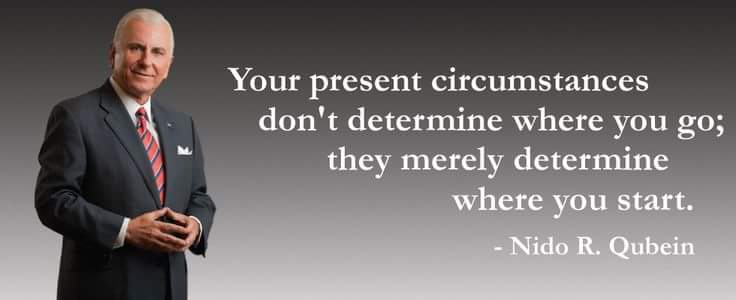
nido how to move forward

http://www.shortcourses.expert

0203 551 2621

Why we can’t blame God

Diane Shawe www.shortcourses.ExpertBilly Graham’s daughter was interviewed on the Early Show and Jane Clayson asked her “How could God let something like this happen?” (regarding the attacks on Sept. 11). Anne Graham gave an extremely profound and insightful response. She said

“I believe God is deeply saddened by this, just as we are, but for years we’ve been telling God to get out of our schools, to get out of our government and to get out of our lives. And being the gentleman He is, I believe He has calmly backed out. How can we expect God to give us His blessing and His protection if we demand He leave us alone?”

In light of recent events…terrorists attack, school shootings, etc. I think it started when Madeleine Murray O’Hare (she was murdered, her body found recently) complained she didn’t want prayer in our schools, and we said OK.

Then someone said you better not read the Bible in school …. the Bible says thou shalt not kill, thou shalt not steal, and love your neighbor as yourself. And we said OK.

Then Dr. Benjamin Spock said we shouldn’t spank our children when they misbehave because their little personalities would be warped and we might damage their self-esteem (Dr. Spock’s son committed suicide).

We said an expert should know what he’s talking about. And we said OK. Now we’re asking ourselves why our children have no conscience, why they don’t know right from wrong, and why it doesn’t bother them to kill strangers, their classmates, and themselves.

Probably, if we think about it long and hard enough, we can figure it out. I think it has a great deal to do with “WE REAP WHAT WE SOW.”

Funny how simple it is for people to trash God and then wonder why the world’s going to hell. Funny how we believe what the newspapers say, but question what the Bible says.

Funny how you can send ‘jokes’ through e-mail and they spread like wildfire but when you start sending messages regarding the Lord, people think twice about sharing.

Funny how lewd, crude, vulgar and obscene articles pass freely through cyberspace, but public discussion of God is suppressed in the school and workplace.
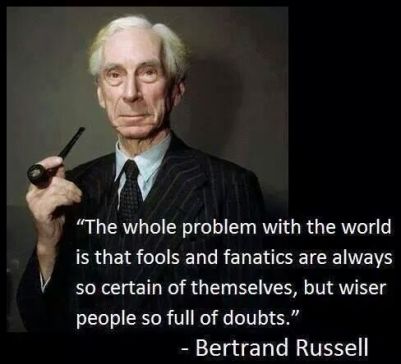
fools and fanatics diane shawe
Are you laughing?

Funny how when you forward this message, you will not send it to many on your address list because you’re not sure what they believe, or what they WILL think, of you for sending it.

Funny how we can be more worried about what other people think of us than what God thinks of us.

Pass it on if you think it has merit. If not then just discard it… no one will know you did. But, if you discard this thought process, don’t sit back and complain about what bad shape the world is in.

How safe is your business, staff, customers and assets?

Deterrence through Preparedness Security Awareness Training Courses by Diane ShaweI am frightened by what has been happening recently and would like to help as many companies and business strengthen their security awareness by keeping busy instead of being scared.

article by Diane Shawe

The main purpose of this post is to see how I could contribute by bringing to your attention three courses that I have that could help your organisation keep it’s personnel, customers and assets as safe as possible.

I want to do something, and I hope you will help me to be of use in a time when we, the general public can only defend with preparedness.

No matter how large or small your company is, you need to have a plan to ensure the security of your personnel, customers, organisation and assets. Such a plan is called A Security Awareness Preparedness Scheme.

Whether yours is five or 200 pages long, whether you have 4 or 5000+ staff the process of creating a security program will make you and your team think holistically about your business or organisation’s security. A security awareness scheme provides the framework for keeping your company at a desired security level by assessing the risks you face, deciding how you will mitigate them, and planning for how you keep the program and your security practices up to date.

With no time to waste, now is the time to make that investment by training as many of your employees to become not just aware but knowledgeable about security practices.

Business disruption can be a very expensive experience and sometime hard to come back from. Download Course manual by clicking here

1. Why is security important?

Lapses in security places personnel, customers, assets, staff and property at risk.  Any responsible employer will wish to take all reasonable steps to protect the lives of its staff, customers and to protect its assets.

With the increasing serious and unanticipated security incidents recently this has also placed the provision of assistance at risk, with the danger that personnel, customers and assets, when assistance is needed in an emergency an overstretched team may be curtailed.  If personnel, customers and staff are aware of how to become more secure, they are able to do a more effective job in both awareness, prevention and bringing assistance to those who need it.

Getting the world back to work with skills we can trust

Keeping the workforce safe

Common protection measures which includes gates, guards, locks, alarms and safes are not enough to be relied on anymore.  Other protection measures are decided on according to the threat in each specific context and we are now in a new paradigm when information on the wider context will assist the working general public to become more vigilant and safe.

There may be some threats to personnel, customers and assets, organisation’s which do not arise from the local community at all.  These may include attacks from terrorist groups, whose decision-makers may be distant or even in a different country, orchestrating violence against personnel, customers and assets, and other organisation’s for political reasons.  If so, protection measures will need to take these threats into account and a higher degree of protection is necessary if the work is to continue.  In this case managers will usually consider whether the work should stop, either temporarily or permanently.

Download the Course Manual by clicking here

2.  Deterrence vs Awareness

Deterrence is a further security approach used by some organisations, notably the police and the military.  They deter attack by threatening retaliation against anyone who attacks them.  This is not an option available to personnel, customers, and localised organisations, whose principles forbid them to attack anyone, or to threaten attack.

The sole possible exception is when personnel, customers and organisation’s can become aware through training to heighten their levels of awareness.

1.2       Risk = Threat x Vulnerability

You may be able to do nothing about the level of threat around you, but you can probably do a great deal to reduce your level of vulnerability in two main ways:  To avoid getting into an accident for instance by:

  • Reducing the chances of an incident happening (e.g. by driving slowly, improving locks, or introducing a neighbourhood watch system)
  • Reducing the impact of an incident (e.g. by wearing seatbelts, or limiting the amount of cash held in the safe)

By reducing your vulnerability, you reduce the risk that the threat will become reality and have a serious impact on you and your business.  A major part of good security management is reducing vulnerability in every way possible.

Download the course Manual by clicking here


You can click here to enrol your company and staff.

Ready to step out on your own and join the growing ranks of the self-employed? by Diane Shawe

So if you are seriously considering becoming Self-employed and leaving your PAYE job behind if this sounds like you, then you are probably half way out the door.

Does this sound like you?

  • Your boss is driving you crazy because of his short-sightedness.
  • You are sick of your great ideas being ignored.
  • You are frustrated at the status quo and the lack of innovation in your field.
  • Maybe you’ve been discriminated against, laid off, restructured, demoted and under-valued.

Well you must be thoroughly fed up and ready for a change.

Being self-employed is a way of life radically different from anything. To be successful at it you will have to make a real turn-about in how you both think and act. We can often be our hardest critic but remember….

“You are not judged on the height you have risen but from the depth which you have climbed.”

 Frederick Douglass, 1881

But will I be successful?

The little doubting voices inside your head start going off

So lets take a look at how we define success?  To some, is all about wealth. To some, success is all about achieving the perfect job, or the perfect marriage, or living the perfect life.

Let’s examine what Webster says about success:

  1. degree or measure of succeeding
  2. favourable or desired outcome,
  3. the attainment of wealth, favour or eminence.

There are many ways in which people have come to define success, but one thing is clear: in order for your success to be defined a goal must be set in order to measure your achievements and success.

So why do some people live their life and go through each days, wasting precious time, effort and other resources without defining their actual goal? The question may sound elementary, but many people live this way and wonder why they fail to achieve anything of substance.

Goal Setting Mistakes

A popular goal setting mistake people make is pursuing someone else’s goal. So I am going to use the driving analogy:

How could you arrive   at your own desired destination, if you focus on where other people are going? Would you get on the motorway and drive north just because other people are driving in that direction?

Where do you really want to go? In order to define your own destination in life, you must take the time to think about who you really are and what will really make you happy. Your success may be to teach small children to read and write, or your success may be to lead a girls football team to a national championship.

Resurrect latent skills and old interests!

Self-employment is a career alternative which requires mental and physically resilient, each moment can change the rest of your life and the course of your direction. If you are not intentional with your actions, you have already planned to fail. Successful people are driven by their vision which is fuelled by their passion. Successful people don’t become successful by accident-it’s sheer, practical application (although I agree that some element of luck goes a long way).

You have to do at least one thing toward your goal every single day. You have to dedicate yourself every day to doing what you love. Don’t just talk about it. Dreams are cheap, passion is Priceless. You may have no concept where you want to be other than theory, and that’s okay. You are guaranteed to get closer to your dreams if you just walk forward with confidence and passion and focus on being of service to those who want your assistance.

So what if you cannot see a way forward, well I am sure you have heard this saying, If you say you can’t your right, if you say you can your right.  So you might as well adopt the ‘I can’ mantra.

Using your imagination

Albert Einstein once said, “Your imagination is your preview of life’s coming attraction.” I believe he’s right. That phrase encapsulates so much of how I try to live each day.

Remember, when you think positively about your future, instead of living in the past which you cannot change, using your imagination in a positive way will help you attract what you desire toward you. It’s about your imagination and no one else’s. I challenge you to take what I’ve already given you this far and start to imagine your future in a constructive way.  To get you going just ponder upon the following question.

“What would you attempt to do if you knew you could not fail?”

Interested in personal development courses then click here.

How to become a Ace Networker by Diane Shawe

CPD FrameworkYou know, sometimes all you need is 20 seconds of insane courage.  Just literally 20 seconds of just embarrassing bravery.  And I promise you, something great will come of it.

Life is meant to be an adventure.

article by Diane Shawe M.Ed

If your life is anything less than interesting and inspiring to other people, you’re doing something wrong. The range of possible thrills and spills at your disposal is limited only by your imagination and the choices you make. You are not too old. You are not too young. You don’t need to wait until you get a promotion, Get that big deal, have a funny success story. You don’t need more savings. You don’t need to wait until you’re finished university. You don’t need to wait for a better time.

Right now is the only moment you ever have. You can apply this to so many aspects of your life. 

Don’t you hate when you’ve showed up at a networking event late or on your own and you’re the only person who isn’t part of the conversation? Every time you try to say something you seem to get interrupted or ignored; and the more you try to take part, the more awkward things get. So you stare off into space, pretend to watch something or pull out your mobile phone and act like you just got a text message.

Nobody enjoys being a networking wallflower. No matter how shy or introverted you claim to be, beyond our fragile, wounded egos, we all so badly want to be a part of the conversation, to be paid attention, to have as much fun as everyone else. Sitting on the side lines is just boring and uncomfortable.

Sometimes all you need is 20 seconds of insane courage.

You reduce your nerves by mastering your start. This is essential because people can get so nervous before a communication that they:

  • Don’t make a good job of it.  For example, their presentations become a robotic read-through of boring slides, with zero personality and charm;
  • Or don’t even do it at all.  For example, when people say “I’m just too busy to go to that networking event”, but really mean “I’m too nervous, so I’ve de-prioritised it”

Both are understandable.  You can often reduce or even eliminate your nerves when you know how to start.  After all, if you’re clear what your first three sentences are and, by clear, I mean you know them word-for-word – you know you’ll start well.  So you do.  And then things tend to go well through the rest of it.

Networking?  You only need to know (1) who you’ll approach and (2) what you’ll say when you do:

  • If you see someone you know and like, go up to them and say “hello”!
  • If you don’t know/like anyone, go to someone standing on their own and say “mind if I join you?”

You’ll choose your own opening lines of course.  But do choose them.  Don’t hope it will turn out well when it matters, because it probably won’t.  Or it won’t be as good as it could have been.  Or you won’t even do it.

The key to making the transition from networking wallflower to networking Ace is to develop strong social skills, a great opening 20 seconds and to go in with the right mind set. The art of talking to strangers is a learnable skill. Through practice, you can go from frustrated networker to choosing your own adventure, by taking massive action to meet new people. It is the core skill of moving from the social side lines to centre stage. If you go out to social gatherings, but are uncomfortable anywhere but in your tiny little bubble of friends, those fake text message moments are virtually guaranteed.

10 tips on becoming social media influencer by Diane Shawe

When you go networking, make it your goal to amuse yourself by exchanging energy with people. This is the state of mind from which your entire social experience will flow. Instead of hanging out, treat networking as an intense form of play. Striving for acceptance is torture. It turns you into an energy vampire and only further annoys people who already weren’t that interested in you. Instead of seeking others’ approval, become the CEO of your own networking environment. Invest your attention into only those people, places, and things that amplify your energy and show you a good time.

Don’t ask yourself what the world needs; ask yourself what makes you come alive. And then go and do that. Because what the world needs is people who have come alive.

Howard Thurman

Identify a communication you’re nervous about. Script, edit and practise how you’ll start. After that, it only takes 20 seconds of bravery and some planning.

Are you ready?

10 Secrets To How To Earn £4000 a month consistently And Start attracting high net work clients every month by Diane Shawe

Hair extension staff training (1)

Creative ways to find new customers

New IS MAKING A STATEMENT OR CREATING A SIGNATURE MORE IMPORTANT? We want to Help You Start attracting high net work clients every month…

Leaving your SIGNATURE as a professional is important if you want to leave a legacy and or be the trendsetter knowing who to work with and how to network is vital and important to your business growth and success.

Search for our bootcamps and we will let you into 10 secrets.   Click here to book your at one of our events.  https://www.signature-masterclasses.com

Learn the art of collaborations and branding. Hear from global Trend setters and designer about the correlation between the fashion world, hair and makeup.

Network and meet your future industry colleagues

HAIR EXTENSIONS THE WAY FORWARD

LEARN HOW TO CONSISTENTLY ATTRACT THE RIGHT TYPE OF CLIENTS AND TURN THEM INTO YOUR NET WORTH BUSINESS IN HAIR EXTENSIONS

It is estimated that the UK and European market for Hair Extensions, Makeup and cosmetics is worth a staggering 400 billion per annum of which the majority expenditure comes from around 20% of the population. WHY because 80% of the female population around the world do not wear makeup or Hair Extensions.

The growing Hair extension and Makeup industry has paved the way to one of the greatest opportunity for Experts in that field to expand their businesses.  Evidence is everywhere that marketers of this segment are dominating retail sales and targeting women with hair and skin problems,

Just check out these stats below:

  • 7 BILLION PEOPLE IN THE WORLD
  • 60 MILLION IN UK
  • £400 BILLION SPENT WORLD WIDE ON COSMETIC
  • 80% OF THE FEMALE POPULATION DO NOT WEAR MAKEUP
  • THE COSMETIC INDUSTRY IN UK WORK APPROX 17 BILLION
  • AVERAGE WOMEN SPENDS 200 PER YEAR ON MAKEUP
  • AVERAGE WOMEN SPEND 600 PER YEAR ON HAIR EXTENSIONS
  • AVERAGE MAKEUP PRODUCT IS MANUFACTURED TO LAST ONE YEAR
  • AVERAGE HAIR EXTENSIONS PRODUCT LAST APPROX 4 MONTHS
  • WOMEN TEND TO KEEP THEIR MAKEUP PRODUCT ON AVERAGE 3 YEARS
  • WOMEN TEND TO CHANGE THEIR HAIR EXTENSION EVERY 4 MONTHS
  • 70% WOMEN DO NOT KNOW HOW TO LOOK AFTER THEIR SKIN
  • 80% WOMEN DO NOT KNOW WHICH HAIR EXTENSION TECHNIQUE IS BEST FOR THEIR HAIR
  • GIRLS FROM THE AGE OF 7 ASPIRE TO WEAR MAKEUP
  • WOMEN FROM THE AGE OF 30 NEED HAIR ENHANCEMENT
  • 90% OF MAKEUP ARTIST ATE NOT COMFORTABLE DOING MAKEUP THAT IS NOT THEIR OWN SKIN COLOUR
  • 90% OF PROFESSIONAL HAIRDRESSERS DO NOT KNOW HOW TO APPLY MORE THAN 3 HAIR EXTENSION TECHNIQUES

WHAT DO YOU PICK UP FROM THESE FACTS?

Just Imagine Being Able To:

  • Provide an addition premium Hair Extension & High profile in under 3 hours
  • Stop having to send on average 4 clients a month away who would spend on average £250 each on hair extensions
  • Introducing a hair extension technique that uses No Glues, Threads or Cornrows and is good for business
  • Offering your current client a safe, non evasive and natural looking hair extensions
  • Being able to help clients with real hair problems and seeing them leaving your salon with a smile
  • Beign able to help clients with all types of skin tone and issues and leaving your salon with a smile

…And that’s just for starters!

Check out our Main website for more details on other conference http://www.signature-masterclasses.com download the latest prospectus here

1 start a hair extension business earn 1000 with 6 clients by diane shawe


Getting started in the hair extension business by Diane Shawe

Starting a Hair Extension business by this ebook from amazon.Co. uk

THE THREE REASONS COMPANY STORIES FALL SHORT OF EXPECTATIONS

Develop your interviewing skills

Develop your interviewing skills

The company story is a composite of how you represent yourself to employees, supplier, customers, and the general public.

It is tied closely to your reputation, reinforced by your integrity, and defined by your behavior. Your story is the essence of who you are, what you believe in, and how you act out your character in a business play. Think of your story as if it were presented in a theater. Your story can be a comedy, a tragedy, or a musical. There will be a cast of characters, some good, others not so good, each telling their own version of the story.

article by Diane Shawe

Most organisations are in trouble because their main characters in the play, the managers or owners, tell stories that don’t  hang  together. Three problems are associated with their composite company story. First, the story is badly told; second, it is not acted out in a coherent manner; and third, it doesn’t ring true. The sales department is living one story while operations follows a different theme. Finance has its own world while marketing occupies still another cloud. Is it any wonder employees are confused? They seem to be working for different companies simultaneously.

When a Story Is Badly Told

A badly told story has its roots in an incomplete business plan. Most organisations have bits and pieces of the items making up the plan. Managers are usually proud they have a philosophy statement posted in the lobby. They point in triumph to the value statements listed in the company literature. Somewhere you will be shown a vision. Each of these elements is appropriate and necessary in both a well-constructed business plan and an authentic story.

If a single element is missing from the plan, the story is incomplete. The danger of an incomplete story is evidenced when the flaws show up in execution of the plan. An incomplete business plan results in a frag- ile document presenting a story that doesn’t ring true. An incomplete model implodes.

When there is no vision statement for instance in a story. any well-written plan with all the pieces will not stack up if the vision portion is lacking.

Time management Mindfeed 4 by Diane ShaweWhen the Story Pieces Don’t Add Up

Failure to virtually linked to the elements  also contributes to an incomplete story. Because the parts and pieces are not interconnected there is no coordinated, disciplined implementation. It is possible to actually have the elements working against each other. For example, values may contradict the philosophy. The vision and mission could be disconnected. Principles could be developed that cancel each other. These disconnected behaviors cause customers and employees to hold the company management suspect. They sense something is not right or it is just not working.

When the Story Isn’t Believable

Another equally fatal flaw in telling a story is to be incongruent. For example, you claim to love customers then treat them badly. You claim to value employees yet they become targets of opportunity for reengineering or down sizing, even in good times. You profess to provide the best products in your industry yet they don’t work as advertised.

People are astute and getting smarter especially with the powerful smartphone in the palm of their hands. They pick up on the fact you don’t live your own company hype. Your story simply isn’t believable. Consider public awareness of a company’s environmental protection position. Let one incident occur then watch the media have a field day with the inconsistencies. Politicians suffer the same fate when they make public promises they cannot keep. They become inconsistent with their story, telling each special interest group what the group needs to hear.

The Antidote to a Badly Managed Story

There is an antidote for a badly managed story. The key is building a congruent story by eliminating the very issues that create incon- gruence. The first step is to get a business plan in place. To do it as defined in this text, you will be forced to deal with the key planning elements as discrete elements and then again as an integrated framework. This is the only known process to make the message authentic, congruent, and believable.

Being authentic requires truth and hard work. It requires an acknowledgment of who you really are in terms of what you believe in, how you behave, and what you expect. If yours is a lethargic organisation, don’t claim high performance. Being authentic means identifying all the problems in your system, communicating to employees that you know the problems, and finally telling them how you intend to fix those problems. Everyone must share this hard work across the range of business activities and down the management structure. Everyone must participate in careful organisational analysis and the required actions to fix the problems.

Being congruent requires constant vigilance on the part of the whole management team. This means you must do what you say— every single time. There are situations where you will slip. Honest mistakes are okay. Employees do not expect their management to be perfect. They do expect them to live up to their word and match word and deed.

Reaching a state where you and your management team are believed is a journey with history working against you. A mis management example made public doesn’t help your case. Building trust to counter this history is not an overnight event. After your story is completed, communicated, and demonstrated you will experience hesitance and resistance from employees. They won’t be quick to jump on your train. There will be a test period to see if you really meant what you said or if this was simply an annual pep talk from upper management. Remember two points: Employees have heard it all before, and actions speak louder than words.

10 Traits That Help Kill a Potential Sale by Diane Shawe

Learn to develop positive communication style

Learn to develop positive communication style

Here are 10 tips on how not to leave 10 Strong worst impressions.

Article by Diane Shawe M.Ed

1. Not knowing your Audience

Trying to sell something to someone that you don’t really know, you don’t know if there is a need or indeed if they have already got what you are selling will kill a potential sale or recommendation.

Persuasive people know their audience inside and out, and they use this knowledge to speak their audience’s language. Everyone is different, and catching on to these subtleties goes a long way toward getting them to hear your point of view.

2. Not getting Connected

The person you are speaking with is a person, not an opponent or a target. No matter how compelling your argument, if you fail to connect on a personal level, he or she will doubt everything you say.

People are much more likely to accept what you have to say once they have a sense of what kind of person you are.

Note: In a negotiation study, Stanford students were asked to reach agreement in class. Without instruction of any kind, 55% of the students successfully reached agreement. However, when students were instructed to introduce themselves and share their background before attempting to reach agreement, 90% of the students did so successfully.

3. Being Pushy

If you tend to come across as too aggressive, don’t be impatient and overly persistent. Pushy people are a huge turn off. The in-your-face approach starts the recipient back pedalling, and before long, they’re running for the hills.

Persuasive people establish their ideas assertively and confidently, without being aggressive or pushy. Focus on being confident but calm. Persuasive people don’t ask for much, and they don’t argue vehemently for their position because they know that subtlety is what wins people over in the long run. Know that if your idea is really a good one, people will catch on if you give them time. If you don’t, they won’t catch on at all.

4. Being Mousy

Constantly seeking approval because you present your ideas as questions or as though they need approval. Using phrases like “I think” or “It is possible that.” makes them seem flawed and unconvincing.

If you tend to be shy, focus on presenting your ideas as statements and interesting facts for the other party to mull over. Also, remove qualifiers from your speech. When you are trying to be persuasive.

5. Negative Body Language

Being unaware of your body movements, posture and gestures can send out the wrong messages.

Get your mindfeed copy today. Available from Amazon

Becoming conscious of your gestures, facial expressions, and tone of voice (and making certain they’re positive) will engage people and open them up to your arguments

6. Sounding unclear and vague

It is not impressive to use phrases such as ‘A little bit of this and that’ when asked what you do.

Persuasive people are able to communicate their ideas quickly and clearly. When you have a firm grasp on what you’re talking about, it’s fun and easy to explain it to those who don’t understand. A good strategy here is to know your subject so well that you could explain it to a child.

7Not coming across as Genuine

Some of the above points could have the result of making you come across and not being genuine. Being genuine and honest is essential to being persuasive. No one likes a fake. People gravitate toward those who are genuine because they know they can trust them. When was the last time you met someone you did not think was genuine and a) welcomed them with opened arms b) had something positive to say about them?

Persuasive people know who they are. They are confident enough to be comfortable in their own skin. By concentrating on what drives you and makes you happy as an individual, you become a much more interesting and persuasive person than if you attempt to win people over by trying to be the characteristics of what is trending on twitter.

8. Not acknowledging that others have a Point of View

Stubbornly sticking to your point of view will demonstrate that you might not be a active listener. An extremely powerful tactic of persuasion is to concede the point. Admit that your argument is not perfect. This shows that you are open minded and willing to make adjustments. You want your audience to know that you have their best interests at heart. Try using statements such as, “I see where you are coming from,” and “That makes a lot of sense.” This shows that you are actively listening to what they are saying, and you won’t just force your ideas upon them. Persuasive people allow others to be entitled to their opinions and they treat these opinions as valid. They do this because it shows respect, which makes the other person more likely to consider their point of view.

9. Asking stupid Questions

How many times have you experienced being asked a ‘non’ question?

The biggest mistake people make when it comes to listening is failing to hear what’s being said because they are focusing on what they’re going to say next or how what the other person is saying is going to affect them. People like to know you’re listening, and something as simple as a clarification question shows not only that you are listening but also that you care about what they’re saying. You’ll be surprised how much respect and appreciation you gain just by asking questions.

10. Leaving a Strong worst Impression

Research shows that most people decide whether or not they like you within the first seven seconds of meeting you. They then spend the rest of the conversation internally justifying their initial reaction. This may sound terrifying, but admit it, you have done this yourself subconsciously! By knowing this, you can take advantage of it to make huge gains in your likeability and ability to persuade. First impressions are intimately tied to positive body language. Strong posture, a firm handshake, a smile, and opening your shoulders to the person you are talking to will help ensure that your first impression is a good one.

Conclusion

People naturally (and unconsciously) mirror the body language of the person they’re talking to. If you want people to like you and believe in you, smile at them during a conversation, and they will unconsciously return the favour and feel good as a result. Persuasive people smile a lot because they have genuine enthusiasm for their ideas. This has a contagious effect on everyone they encounter. Doing this one thing will help to align all the other points and you will be happy when researching your ideal audience.

About the Author

15 Must-Own Books No Serious Entrepreneur Should Ignore

Need help getting organized? Want to learn how to take a business into a global marketplace? Looking for ways to improve leadership skills? Then check out The Little Coffee Break Mindfeed eBooks from IQ 2 EQ by Diane Shawe. This collection of eBooks exposes readers to new ideas and proven strategies, and each can be completed on a lunch break, over breakfast, or while enjoying a cup of coffee.

According to author Diane Shawe, “The idea for the short, powerful eBooks came to my mind when I realized how often people need to brush up on topics, but do not always have time to sit down to read 200 pages. As a result, I have authored several short yet effective eBooks that get right to the point with tips and advice.”

Diane Shawe’s eBooks are available on Amazon right now at: https://www.amazon.com/Diane-Shawe/e/B0052WG8V6